In Tamil Nadu, Raj Bhavan wades into controversy

Tamil Nadu governor Banwarilal Purohit’s working style is seen as aggressive

Inexplicable is the word from political analysts unable to figure out Tamil Nadu governor Banwarilal Purohit’s aggressive posture and threats of getting anyone thwarting his work, including holding review meetings with district officials. If not anything, his threats have only given more ammunition to the principal opposition party, the DMK to retaliate with equal and opposite aggression.

“At best the governor is a glorified rubber stamp,” dismissed DMK spokesperson A Saravanan and said someone was either misguiding the governor or the governor himself was misinterpreting the law. The governor’s role in the state ends with the government formation and has no role in governance, which is the exclusive purview of the elected government. The governor has no business to interfere in governance and work of the elected government, asserted Sarvanan echoing DMK working president MK Stalin’s strong views on the issue.

“We are speaking for the Tamil Nadu government,” Stalin had said before walking out of the Tamil Nadu assembly where he sought to raise the issue of governor’s repeated visits to different districts and the review meetings he was holding with district officials directly.

“This is clear interference in governance but the AIADMK government here has no guts to say anything to the governor or to the BJP-led central government,” Saravanan said.

“We will continue to hold black flag demonstrations and other forms of protests if the governor continues with his review meetings,” Saravanan declared wondering as to why the governor was insisting on doing something that is against all conventions and established norms. The people of Tamil Nadu are watching and by doing what the governor is doing he is only adding to the people’s ire as he is seen as the representative of a government that “worked against the interests of Tamil Nadu.”

Which is why political analysts are perplexed over the aggressively combative stance of governor Purohit. The Raj Bhavan in Chennai had come out with a tough statement that “any attempt to overawe or assault or use criminal force would be dealt with per the law.” The Office of the governor was protected under Section 124 of IPC.

The Raj Bhavan statement said: “whoever, with the intention of inducing or compelling the President of India, or the Governor of any State, to exercise or refrain from exercising in any manner any of the lawful powers of such President or Governor, assaults or wrongfully restrains, or attempts wrongfully to restrain, or overawes, by means of criminal force or the show of criminal force, or attempts so to overawe, such President or Governor, shall be punished with imprisonment of either description for a term which may extend to seven years, and shall also be liable to fine.”

Political analyst Suman C Raman said he found the governor’s actions inexplicable but it was clear that he was acting at the behest of the central government. “But to what purpose,” as it is a docile government in office in Tamil Nadu that is doing the bidding of the Modi government. The governor’s actions and his threats are only making him unpopular and by extension, the central government and the BJP. So, one does not really know why the governor is doing what he is doing, Raman said.

But perhaps to nullify the perception that it was sucking up to the Central government and the BJP, the Tamil Nadu government has sought to block the Dams Safety Bill, duly cleared by the union cabinet. Chief Minister Edapaddi Palaniswami piloted a resolution asking the Prime Minister Narendra Modi to keep the bill in abeyance till a consensus was evolved over the issue by consultations with all the state governments.

The EPS-OPS government also had to publicly take a stand on this because of the strong stand Amma, former Chief Minister J Jayalalithaa took. She was dead against the Bill that would require TN government to give up control over its own Dams located in Kerala.
On the governor’s insistence and threats, Raman felt that the BJP was neither helping itself nor the AIDMK. “The BJP knows it cannot win from Tamil Nadu. As the best-case scenario, it would like the party that wins from the state to support it in the Lok Sabha after the general elections during government formation,” he said.

When viewed thus, the governor’s actions are surely foxing. The BJP local leaders are forced to support the governor but privately wonder whether this will do any good for the party.

letters@tehelka.com

India continues to be dangerous for scribes

As the year rolls on, the Indian subcontinent has slightly improved its journo-murder parameter with less than ten journalists being killed since January 1,2018 till date. However, India continues to be dangerous for scribes, as it tops the list of casualties in the subcontinent with four journalists being murdered in the last six months.

Pakistan follows India with two casualties. Bangladesh reported the murder of one editor-publisher in the first half of 2018. However, Myanmar, Nepal, Sri Lanka, Bhutan, Maldives and Tibet (now under Chinese occupation) have not reported any incident of journo-killing in this period.

The largest democracy in the globe lost three journalists in mysterious accidents within twelve hours in Madhya Pradesh (MP) and Bihar on 25 and 26 March 2018. Sandeep Sharma (36), a dedicated reporter of Bhind locality of MP, was deliberately mowed down by a truck in the morning hours, following which the News World reporter succumbed to injuries in the hospital. Sandeep used to contribute media reports against the sand mafia and he received threats. On the previous night, two scribes namely Navin Nischal and Vijay Singh were hit by a luxury vehicle in Bhojpur locality of Bihar and died on their way to the hospital. Navin (35), who used to work for Dainik Bhaskar and Vijay (26), who was associated with a Hindi magazine, were riding on a two-wheeler when the accident took place. Lately, sensation prevailed in the country following the murder of well-known Kashmiri journalist Syed Shujaat Bukhari, who was shot dead in Srinagar on June 14 by a group of militants. The proprietor and chief editor of Rising Kashmir, Shujaat (59) earlier faced similar attacks in 2000 and 2006. The brave and outspoken journalist was since provided government security. But this time, both of his security guards namely Hamid Chaudhary and Mumtaz Awan also fall prey to the hardliner Islamist forces. Starting his career in Kashmir Times, Shujaat shifted to The Hindu as its Kashmir correspondent. Later he established Kashmir Media House that publishes English daily Rising Kashmir, Urdu daily Buland Kashmir and Kashmiri daily Sangarmal. Hailed from Kreeri locality in Baramulla district, Shujaat left behind his parents, wife and two minor children. He was laid to rest on June 14, the holy month of Ramzaan when everybody fasts, in his home place. India’s troubled neighbour Pakistan lost journalist Anjum Muneer Raja, who used to work in Urdu daily Qaumi Pukaar to assailants on March 1. Raja was shot dead by the miscreants in Rawalpindi locality, while he was on his way to home in the late evening. The second case was reported on March 27, when Zeeshan Ashraf Butt, a journalist from another Urdu daily Nawa-i-Waqt, faced the bullets. Butt was allegedly shot dead by Begowala Union Council Chairperson Imran Cheema.

Bangladesh reported the murder of Bangladeshi blogger and activist Shahzahan Bachchu on June 11 at Munshiganj locality. Editor of weekly newspaper Amader Bikrampur, Bachchu was allegedly attacked by Islamist forces for his free-thinking comments. Various international rights bodies condemned the murder of Bachchu and urged the authority for the genuine probe to find the culprits.

According to various international agencies, nearly 40 journalists lost their lives to assailants till date this year, where Afghanistan (casualty 11) tops the list. It is followed by India, Yemen (3), Pakistan, Mexico, Palestine, Philippines, United States of America, Ecuador (2 each), Bangladesh, Brazil, Nicaragua, Slovakia, Syria (1 each), etc.

India is placed at 138 out of 180 countries in Reporters Without Borders (Reporters Sans Frontières) 2018 global press freedom index, followed by Pakistan (139), Thailand (140), Cambodia (142), Malaysia (145), Bangladesh (146), Mexico (147), Russia (148), Singapore (151), Turkey (157), Iraq (160), Egypt (161), Iran (164), Laos (170), Cuba (172), China (176), Syria (177), etc. (See box to know the number of journalists killed in 2017) Norway and Sweden have maintained their first two positions in the RSF press freedom index, where North Korea continues to be at the bottom of the list. Countries which perform better than India include Myanmar (137), Philippines (133), Sri Lanka (131), Qatar (125), Indonesia (124), Maldives (120), Afghanistan (118), Nepal (106), Bhutan (94), Israel (87), Hong Kong (70), Fiji (57), Mauritius (56), USA (45), South Korea (43), Taiwan (42), United Kingdom (40), Ghana (23), Belgium (7), Switzerland (5), Netherlands (3), etc.

The author is a Guwahati based political commentator

letters@tehelka.com

ICICI Bank CEO goes on leave amid high drama

The latest decisions at the ICICI Bank appear to be a travesty of justice. One important move relates to elevating Sandeep Bakshi as Chief Operating Officer of the Bank. So far so good as it seems that the controversial Managing Director and Chief Executive Officer Chanda Kochhar has met her nemesis over the issue of conflict of interest as her husband and brother-in-law had tried to help Videocon promoters. However, a close scrutiny reveals that Chanda Kochhar remains powerful as a statement issued by the bank says that Bakshi “will report to” Kochhar, “who will continue in her role as MD & CEO” of the bank. It did not miss even this opportunity to praise the controversial CEO by attributing her decision to go on leave according to “the highest levels of governance and corporate standards”.

Though under pressure from regulating agencies, the ICICI Bank has reluctantly agreed to set up an independent inquiry and has made Sandeep Bakshi as COO, but the board’s recent decision seems to be nothing but an eyewash. The board’s latest stand makes it clear that Bakshi, subordinate to Kochhar in the ICICI Bank, will continue to report to her. The leverage given to him is only till Kochhar would remain on leave as he would report directly to Board till then.

CBI probe

It may be noted that the Central Bureau of Investigation (CBI) has already registered a preliminary enquiry into allegations that the ICICI Bank chief ‘s husband Deepak Kochhar-owned company NuPower Renewables received an investment from a Videocon group company as a quid pro quo for a loan from the bank. It was followed by a fresh allegation by a whistleblower Arvind Gupta that the bank favoured the Ruias of Essar for allegedly round-tripping investments into NuPower.

The ICICI Bank’s troubles are rooted in a 2016 complaint by an investor, who alleged a quid pro quo deal between Chanda Kochhar’s immediate family members and the Videocon group, which got a 3,250-crore loan from it. This “conflict of interest” complaint resurfaced in the public domain this year. With the CBI and later the stock market regulator SEBI swooping in, the issue of whether the bank had failed to make adequate disclosures about its dealings with the borrower and a firm related to Chanda Kochhar’s husband made headlines and raised eyebrows.

Insiders at the Board meeting told Tehelka that Chanda Kochhar when told to proceed on leave did not go without making a fuss and showed lot of resistance. In the melee, a high drama ensued. Kochhar reportedly adopted a belligerent stance. She did not accept the decision meekly, it is learnt. Chanda Kochhar has been sent on forced leave till the completion of an independent investigation into the charges against her.

Change of guard Sandeep Bakhshi is seen as Chanda Kochhar’s heir apparent

High Drama at Board meet

At the Board meeting, Chanda Kochhar questioned why she was being asked to go on leave. However, when the chairman of the bank’s largest shareholder, LIC, insisted on the course of action, she had to budge. The independent directors of the bank too gave in and joined the course raised by the LIC boss. She finally agreed to the proposal but not without heated verbal exchanges. No doubt, Chanda Kochhar, a star on the corporate firmament, enjoys a formidable reputation as a banker but the corporate governance practices in the bank have come under scanner because of the way the issue has cropped up.

Interestingly, initially the ICICI Bank had maintained that Chanda Kochhar was on annual leave. However, faux pas came later when the ICICI Bank issued a statement affirming that she will stay away from the office till the completion of an inquiry into the charges levelled against her by the whistle-blower. Till the inquiry is complete the bank will be steered by Bakhshi, the new COO. This is at best a face-saving cover for a board that was reluctant to act since the controversy broke out.

New chairperson

The ICICI Bank board on June 29 approved the appointment of Girish Chandra Chaturvedi as non-executive part-time chairman of the bank. The term of the current chairman MK Sharma comes to an end on June 30.

The appointment of Chaturvedi, who has extensive administrative experience, comes at a crucial juncture when the bank is battling one of its worst management crisis with the MD and CEO Chanda Kochhar going on a long leave to allow retired justice B Srikrishna to complete an investigation into whether there was a conflict of interest in loans given by the lender to the Videocon Group.

Banking sector experts believe Chaturvedi, a seasoned bureaucrat who has been a director at various financial services companies, will help bring an element of stability to the bank and win back investor confidence.

Other banks in dock

In the meanwhile as if the ICICI Bank imbroglio was not enough, Ravindra Marathe of Bank of Maharashtra has become the latest bank CEO to be arrested. The Pune Police have booked him, his executive director and other bank officials for allegedly colluding with real estate developer DS Kulkarni to divert money and cheat shareholders. Sushil Muhnot, the bank’s former CMD, was also nabbed from Jaipur. All accused have been sent to police custody.

The economic offences wing of Pune Police believes that the arrested officials colluded with promoters of the DSK Group for alleged fraudulent transactions. Pune EoW sources claimed that bank officials misused their positions to sanction loans worth 60 crore in two tranches.
They alleged DSK Group diverted the said loans for personal use including renovating promoter’s house. All the accused have been booked under various sections of the Indian Penal Code and the Prevention of Corruption Act amounting to cheating, forgery, criminal conspiracy, criminal breach of trust, among others.

Earlier the then CMD of Syndicate Bank SK Jain was nabbed by the CBI in a 50 lakh bribery case. The agency last month charged many including former IDBI Bank executives Kishor Kharat, now CEO of Indian Bank, and Melwyn Rego, the CEO of Syndicate Bank, in connection with IDBI Bank’s 600 crore loan to entrepreneur C Sivasankaran’s firm.

Other former and current IDBI employees including GM Yadwadkar, the current DMD of the bank, and BK Batra, its former DMD, were also booked. In April this year, CBI booked former CMD of UCO Bank Arun Kaul in connection with an alleged Rs 621-crore loan fraud in which he purportedly facilitated loans to Era Engineering which were not utilised by the company for the sanctioned purpose. In March, RK Dubey, former CMD of Canara Bank, was booked by the CBI for allegedly allowing deviations in sanctioning credit limits to a company during his tenure as executive director at Central Bank of India.

In March, the investigative agency registered a disproportionate assets case against former CMD of United Bank of India, Archana Bhargava, for amassing assets worth over 3.6 crore allegedly disproportionate to her known sources of income. The PNB too made headlines for all the wrong reasons in Nirav Modi scam.

letters@tehelka.com

Talking All Things Desire with Madhavi Menon

Infinite Variety covers the history of desire across a wide range of subjects — religion, legend, myths, poetry, literary and cinematic works. Tell our readers the inspiration for
the book.

My main argument in Infinite Variety is that desire is multiple. By this, I mean both that desire exists in multiple sites and has multiple manifestations. And like desire itself, this book too visits multiple sites and manifestations. An equally important argument is that desire, rather than being exotic and esoteric, belongs to the everyday. This means that desire is everywhere, all around us, all the time. Hence, what you term the wide range of subjects are the natural stomping grounds of desire. We encounter and learn about desire in literature, cinema and religion. What we think of as “our” desires that belong to each one of us individually, are in fact socially generated desires that we are taught and from among which we pick and choose as we go along.

Desire plays a very important role in society and the nation. How is it that its history is not very well documented?

History is always a hotly contested topic, as we see with different political regimes attempting to rewrite history to suit their own purposes. But desire has the ability to puncture political agendas, which is why it is not conducive to producing a definitive history. For instance, if you want to show that “Indian” sexual norms have always been invested in reproductive heterosexuality, then how do you explain the sculptures of Khajuraho or the love poetry of Khusro? Writing the history of desire is an impossible project because desire always surprises us, it always escapes final classification. It is this element of unfixity that makes desire unappealing as an official subject of investigation
because it undermines rather than bolsters official records.

There is a chapter in the book that talks about yoga not being entirely Hindu, but having Muslim influence as well. Tell our readers about this briefly.

Yoga is an excellent example of what I just described as history being rewritten to suit certain political agendas. The repackaging of yoga as India’s great contribution to the world is simultaneously a repackaging of yoga as a “Hindu” artefact. But the histories associated with yoga tell a startlingly different story. Patanjali’s 4th century Yoga Sutra mentions asanas — the embodied form of yoga most popularly practised today — only in 1 of 196 sutras. For the form of yoga that we practice today around the world, we have to go to the Bahr-al-hayat, the 16th century Persian text written by the Sufi Shaykh Muhammad Ghawth Gwaliyari. It is thought that this text was born out of actual conversations between the Sufi saint and practitioners of yoga who had developed the poses over the centuries. This book was beautifully illustrated with the aid of a special commission from Prince Salim, who was later to become the Emperor Jahangir. What we understand as yoga today is thus a perfect example of the syncretic development of ideas and desires in the Indian subcontinent.

The Ayyappan temple in Kerala is a celebrated pilgrim site. What is its significance in a book about the history of desire?

Religion and religious practices play a significant role in what we understand as desire. Most religions set up an antithetical relation between religious tenets and desire; both Judaism and Christianity are examples of this adversarial relationship. India is fairly unique in that most of its religions, perhaps barring Buddhism and Jainism, encourage a productive relation to desire. And Ayyappan is no exception to this general rule. What makes Ayyappan’s shrine even more interesting is that access to it is barred to women between the ages of 12 and 50. This has, quite rightly, invited comments of sexism against the keepers of the shrine. But it also allows us to think about the erotic arrangement of an all-male company of worshippers who are specifically asked to abstain from having sex with women for 40 days before undertaking the pilgrimage to the shrine. For me, these are the crevices in which nestle the most interesting nuggets of a history of desire in India.

The book covers a timeframe extending from the ancient sculptures of Khajuraho to displays of sexuality in modern-day “bhabhis”. Tell our readers about what has changed in the landscape of sexuality through the centuries, and what remains constant? 

Desire changes and moves all the time — it always overflows the bounds, and that is the only principle it follows. This is why writing the definitive history of desire is an impossibility. But if we take seriously this principle of excess, then it becomes possible to think of phenomena separated by several centuries in the course of the same book. The sculptures of Khajuraho are excessive inasmuch as they do not conduce to sexual identities or even to reproductive sex. Bhabhis are excessive since they are fantasised in scenarios that do not conduce to what their roles are socially expected to be. And to be realistic, the phenomenon of bhabhis as vectors of desire is hardly a modern one but dates back at least to the Mahabharata and the principle of niyoga, or delegation, in which one man is “allowed” to have sex with his brother’s wife in order to beget children. Tracing these multiple trajectories of desire makes, quite literally, for the strangest bedfellows!

Section 377 is pending before the Constitution bench of the Supreme Court. Do you see the Court over-ruling its previous decision in the near future?

I certainly hope so. The Supreme Court’s 2013 order overruling the 2009 Delhi High Court judgement that decriminalised homosexuality was a sad document for many of us — not least because the judgement seemed to be based on several false dichotomies about what is and is not “Indian.” The judges seemed to be acting on the assumption that same-sex desire is a foreign import and as such, should not even be considered by Indian courts. This is why they also refused to take on board international best practices in terms of jurisprudence on subjects of sexuality. But what they seemed to forget is that Section 377 was a British imposition on an Indian culture that did not criminalise same-sex desire. Indeed, I like to joke that every single sculpture in the temples of Khajuraho represents a sex act that is now illegal in India.

The third gender has been a part of Indian culture in various ways —spiritual, pedagogical and musical. Yet, the British criminalised their existence by the Criminal Tribes Act, 1871. How do you reflect on their changing fortune in light of the Supreme Court’s NALSA judgment and the current bill pending in the Parliament? How would you explain the duality in our relationship with hijras — on the one hand, we revere them and on the other hand, we criminalise them?

Our attitude to hijras is very similar to our attitude toward homosexuality. The British criminalised hijras for doing things like singing and dancing in public that they had done for several centuries; despite our so-called independence from the British, we have taken on that stigmatisation and made it our own. This adoption and spreading of stigma means that we lose touch with the high regard in which hijras have historically been held in the Indian subcontinent. Even the very term hijra — deriving as it does from the term for the Prophet’s flight from Mecca to Medina in 622 AD — suggests that hijras are a noble people fleeing
from unjust persecution. In their case, the persecution is the straitjacket of gender. They have historically been worshipped for rejecting that straitjacket. But in our current scenario, where we are trying to outdo Victorian England in sexual morality, we see something sinister about the refusal to conform to the rules of one gender alone.

The paan or the betel leaf is an everyday consumable item and yet, it has very important erotic appeal. It has historically been forbidden for use by celibate ascetics and students. What is so powerful about paan? Are there any other everyday objects of erotic appeal that are used by many, and yet, hidden?

Paan is an everyday substance but it also provides extraordinary pleasure. It is ubiquitous on the Indian landscape, and we often take it for granted, not giving it a second thought. But this is precisely the treasure trove that I have mined for Infinite Variety — everyday objects
that we do not associate with desire but that are nonetheless deeply associated with it. There are several examples of this quotidian extraordinariness. One of the other instances in the book is that of hair. We think of hair as deeply “normal” and “natural,” yet how long or short it is, whether we leave it loose or tie it up, what colour it is are all closely linked with questions of desire.

A very interesting chapter in the book is about grandparents’ desires. As a society, have we silenced their desires and portrayed them in a stereotypical way of either caregivers for the family or leading spiritual lives? Why is there a culture of silence around grandparents’ desires, travel and companionship needs?

The silencing of the desires of older people seems to point to our collapsing sex into reproduction. And when we make that collapse, we assume that only people who are of child-bearing age should have sex. Ergo, older people who can no longer reproduce should not have sex or sexual desires. This is an extremely shortsighted view on our part because it drives older people to feel shame about their desires, to suppress them, and never to act on them. And all for what? Because we are becoming increasingly prescriptive about who should feel what kind of desire and when. Such a narrowing of our sexual horizons does not bode well for us as a culture.

What are the future research projects that can be explored in the history of desire in India? Will you contemplate a second edition of this book?

In my Introduction to the book, I have listed several other locations that can and should be mined for their histories of desire — medicines, halwa, widows, call centres, sarees, to name only a few. I also think we should produce a sustained study about the intersections of caste and desire in India over the centuries. As for a second edition of this book, I’d be happy to! Since change is the principle of desire, what better project could there be than to follow desire down the different bylanes in which it moves?

letters@tehelka.com

Row over sarkari bungalow eviction refuses to die down

It was the Supreme Court which had on May 7 made a scathing judgement quashing a law giving lifetime use of bungalows, privileges and perks to former Chief Ministers. A Bench led by Justice Ranjan Gogoi axed the law, saying a former Chief Minister is only a commoner and not a “special class of citizen”. And now the minister Manish Tewari has triggered a public debate by asking why ministers across states are hankering after bigger bungalows and why MPs are getting government houses allotted in their constituencies even though they are not entitled to.

When Tewari tweeted that “As an MP and minister, I lived in my own apartment. Distressing to see ministers hankering after bigger bungalows, former ministers knocking the doors of courts to retain bungalows and MPs getting government bungalows allotted in their constituencies,” it led to a war of words on social media with most supporting the ex-minister.

It may be recalled that the apex court verdict was based on a petition filed by non-governmental organization Lok Prahari and the Supreme Court observed in its judgment that the Constitution recognizes only “one single class of citizens with one singular voice (vote)”. “A special class of citizens is abhorrent to the constitutional ethos,” the court had held.

The court had observed that “the Chief Minister, once he/she demits the office, is at par with the common citizen, though by virtue of the office held, he/she may be entitled to security and other protocols. But allotment of government bungalow, to be occupied during his/her lifetime, would not be guided by the constitutional principle of equality”.

“Bungalows constitute public property which by itself is scarce and meant for use of current holders of public offices”, the court had observed. It said it was necessary that public servants should act in a manner which reflected that “ultimate authority is vested in the citizens” and they were eventually accountable to the people.

The effect of the judgment became apparent within days of its pronouncement when Union Home Minister Rajnath Singh and Rajasthan Governor Kalyan Singh, who were earlier Uttar Pradesh Chief Ministers, informed the Estate Department that they would vacate their government bungalows shortly. For the record, Rajnath Singh and Kalyan Singh were among the six former Chief Ministers who have been asked by the Estate Department to vacate the bungalows within 15 days in pursuance of the Supreme Court’s order. However, in a bid to circumvent the order, the former Uttar Pradesh Chief Minister and BSP supremo Mayawati recently put up a signboard outside her official accommodation in Lucknow announcing that it was a memorial named after the party founder late Kanshiram. The judgment mentioned that States like Tamil Nadu have no provision for providing official accommodation to former Chief Ministers.

It is high time former chief ministers and MPs come clean and vacate government bungalows in line with the orders of the Supreme Court of India and advice tendered by one of their colleagues. Keeping official accommodation in Delhi alloted to them as members of Parliament and also availing government accomodation in their constituencies is not only unethical but also against the rule of law that is equal for all citizens.

letters@tehelka.com

Ranee of Ragamala rules hearts of dance lovers

When in 2012 the then President Obama appointed Twin city based Bharatnatyam dancer and choreographer Ranee Ramaswamy, in a move that “came out of the blue for me” she says, as one of the members of the National Arts Council that advices the National Endowment for the Arts, few could imagine how the story began or played out — partly in India and partly in the USA. Even though Ranee loved to dance ever since she began to learn dance even as a little child, she went in to dance seriously only at the age of 26, recalling to mind another late bloomer in dance — Protima Gauri Bedi.

Landing in Minnesota as a young immigrant wife, mother to a three year old daughter, Aparna, in 1978, even though only with the mandatory four hundred dollars that the Indian government then permitted, Ranee’s life seemed to go the way the family astrologer had predicted. Here as a member of the Tamil Association she was invited by its President to dance for the Diwali event held at University of Minnesota’s Coffman Hall. With a $25 tape recorder playing out two classical compositions of M.L. Vasanthakumari, Ranee put up a show that earned her requests to teach the children of the Indian diaspora. Thus began a slap dash career of going to India and learning enough to continue to teach kids, including her daughter.

Then in 1983 she chanced to see the renowned dancer Allarmel Valli, perform on a Minnesota stage changed Ranee’s life. “I had never seen anything like that. Vallis’ dance was brilliant and soul stirring” recalls Ranee of the magical moment. Both mother and daughter registeredd for Vallis’ two week workshop, but the first challenge was just a day away for after the first class itself Valli asked Ranee to demonstrate. “For me it was like I was dancing at Kennedy Centre”, recalled Ranee with brilliant eyes. She agreed to make Aparna her student, “But I asked her if I could also learn from her,” chimed in Ranee. It was decided there and then that Ranee and Aparna would go to Chennai to train with Valli. “ Every day from 1pm to 8 pm we would train with her privately between September to January, learning everything from scratch, and then eventually joined the other students to learn the items” recalls Aparna who went on to become Valli’s first student to do an arangetram- the professional debut, in 1988. “She made me realize the enormous responsibility on me to carry forward her teaching. I knew I had to dance like an Indian. She remains our role model compass and barometer”, admits Aparna speaking for herself, her mother and younger sister Ashwini.

Unlike Aparna, Ashwini was born in USA. By the time she reached childhood there was dance aall around her, a fact that “didn’t allow her a childhood”. When she was twelve, Ragamala, the world renowned Dance Company that her mother set up, came into being. Ashwini tried her hands at many things, like theatre, singing and even skiing- anything but dance. “I was a book publicist in New York when the Ragamala dance company came to perform in a series of shows at some of the most prestigious venues there. That is when the call came to me,” admits Ashwini. And now mother and two dancers perform every day, in small towns across Minnesota, cities across the USA and important dance centres around the world.

All three of them are McKnight awardees. The McKnight Foundation via its generous and ‘no strings attached grants’ have made huge investment amongst dancers of the state. This is a reflection of the openness with which the community of Minnesotans have embraced their art and supported this non western form. Ranee is a recipient of the United States Artistes fellowship, and the Doris Duke Performing Artist’s award, as is Aparna independently. Aparna has the Joyce award, the Bush fellowship for choreography and was named as one of “25 to Watch” by Dance magazine in 2010.

In 1990 Ranee met the American poet, essayist, activist, and leader of the mythopoetic men’s movement, Robert Bly, who had translated some poems of Meera that portrayed her as a strong independent woman. On a whim, after reading them, Ranee called him up and asked if he would read them while she danced? “Amazingly, he said yes, and Mirabai Versions was premiered in 1991. With poems in English and music by local musicians, it made Indian dance more accessible to western audiences outside the Indian community”, recounted Ranee. Another highlight was ‘Body and Soul: A Tribute to Billy Holiday” a collaboration with local jazz musicians, inspired by the fact that “to me Holiday’s music reminded me of Tamil Padams, songs of love and loss of anger and jealousy” described Ranee. For the Walker Centre, curator Philip Bither commissioned Ragamala dance Company in 2004, to work on a choreography called ‘Sethu’ using over fifty dancers, many from Bali, where also the Ramayan story is well entrenched, albeit with some differences. “She makes the unlikely and irreconcilable possible and beautiful” was Bither’s comment about Ranee on that occasion! Even mentor and guru, Alarmel Valli acknowledges that “They have done much to take our dance to mainstream circles”. 

For Ranee, every cross cultural collaboration starts with a deep personal journey into her own tradition. This is something she owes to her daughter Aparna, she says. “I wanted to go out and Aparna kept showing me the possibilities of within the tradition. We combined both impulses and we met the other art forms but in an India centric perspective”. So using this as a fulcrum they created ‘Sacred Earth’ a combination of Warli paintings, Kolam (rice flour) designs, multi disciplinary visual art, poetry, music and dance. Deeply researched it used five poems from the Sangam era, that talked about the everyday as did the paintings that would fly up and down the side screens. On the central screen the appearing and disappearing images of the kolams being simultaneously created on the floor were being projected. The dancers’ foot work would erase the kolams, soon after they were made, as if to suggest the transitory nature of life! ‘Sacred Earth’ which was made with funding from the National Dance Project and the National Endowment for the Arts, has had seventy performances already including thirty in one year alone. Another memorable choreography of theirs with a deep philosophical meaning is ‘Written in Water’ based on the traditional Tamil game of Snakes and ladders but interpreted to represent the heights of ecstasy and the depths of longing in Hindu and Sufi thought.

Most recently, a creative residency in June at the Rockefeller Foundation’s Bellagio Center in Italy, allowed the mother and daughter team of Ranee and Aparna to craft their new work, “Body, the Shrine,” described as “an exploration of the mythography of the intimate and the infinite,” which will mark the silver jubilee of the Ragmala Dance Company. “It is not often that a mother and daughter can work side by side, arm in arm, to create an artistic product, to run a business, to achieve a vision. We are excited each day to see each other and follow our dreams together. It is only a visionary and extraordinary person who can make this a reality”, acknowledges Aparna co-artistic director and principal dancer of the Ragmala Dance Company of her mother who has been described as determined, brave and generous by many, and by her sister Ashwini, director of marketing and dancer with the Company, simply as a “Superhero”!

letters@tehelka.com

Madhya Pradesh Assembly polls: Opposition unity in delusion

The road to opposition-unity in the upcoming Madhya Pradesh assembly election seems to be a distant reality in wake of the mounting pressure on chiefs of Bahujan Samaj Party and Samajwadi Party, ever since their alliance defeated Bharatiya Janata Party in the by-elections held in Uttar Pradesh for Lok Sabha and Vidhan Sabha. Analysing the impact of the future prospects, the BJP stalwarts have started shrewd moves to counter them on account of alleged corruption and disproportionate of assets during their rules.

Chief Minister Yogi Adityanath and his deputy CM Keshav Prasad Maurya bitterly failed to counter realignments of Dalit, OBC and Muslim resulting in new phenomena, setting aside communal polarisation even in the strongholds of ‘Hindutva’ in Kairana and Noorpur of western Uttar Pradesh. The extension of the alliance in Madhya Pradesh of Congress and other smaller parties appeared to be the most worrisome proposition in the continuance of BJP rule as the crucial assembly polls are barely five-month away and its outcome would indicate emerging public mood to form a political picture for the seventeenth Lok Sabha. 

Questioning the alleged corruption in procedural haste on disinvestment of 21 state-owned sugar mills in 2010-11 during the Mayawati rule, the Yogi Adityanath government referred the matter to the CBI on April 12, 2018, giving it long rope for investigations.  The terms of reference for investigations include, “entire sale proceedings of 21 sugar mills and money trail through shell companies and related documents with regard to the purchase of seven closed mills of Deoria, Bareilly, Laxmiganj, Hardoi, Ramkola, Chittauni and Barabanki.” It is alleged that it had caused a loss of 1,179 crore to the state exchequer. The CBI quickly swung into action acceding to the state’s request and undertook the high profile political case into its hands on May 7, 2018, and launched a fresh investigation into the matter. The terms of reference equipped the premier investigation agency to look into the role of “politicians, bureaucrats and businessmen” involved in the alleged scam.

The UP government also shared the CBI an FIR registered at Gomti Nagar police station in November 2017 against two companies which bought mills — Namrata Marketing Pvt Ltd and Girasho Company Pvt Ltd, which sources said were found ‘fictitious’ in an enquiry report of the state government.

The Comptroller and Auditor General (CAG) also questioned sale of sugar mills at throw-away prices as compare to market rates in its statutory audit report placed before the legislature. CAG found that the then Mayawati government had sold the state-owned 21sugar mills without following a fair procedure and surprisingly ten of these mills were not sick – economically viable and fully functional in production. Besides plant and machinery, these mills were built over 500 hectares worth around 2,000 crores according to present day rates. The matter had been referred to Public Accounts Committee for government undertakings.

Former minister Naseemuddin Siddiqui, who was Mayawati’s close aide, had alleged last year that the “sugar mills were sold on the directives of then CM Mayawati and BSP general secretary Satish Chandra Mishra.” However, Mayawati had asserted that the sale order for the sugar mills was issued by Siddiqui, who was later ousted from the party for anti-party activities. Now, Mayawati is again under the CBI lens. Despite best efforts, Mishra did not respond to the calls and messages of Tehelka to give his version.

Samajwadi Party patriarch Mulayam Singh Yadav and his both sons Akhilesh Yadav and Prateek Yadav along with his daughter-in-law were facing grave charges of amassing immovable assets disproportionate to their known source of income. Despite undervaluing the prime assets the CBI found it disproportionate. The matter is pending before the apex court after many turns and twists in the case. The status report of CBI is still pending. The petitioner, Vishwanath Chaturvedi, is strongly pitching his crusade before the apex court. Talking to Tehelka he said, “I will challenge the orders passed by former CJI Altamas Kabir whereby the name of Dimple Yadav was deleted on the ground that she did not hold public office at the time when alleged offences were committed.” The matter is likely to be expedited next month.

Meanwhile, the CBI and ED are tightening the noose of famous Yadav Singh matter that virtually blocked the way for Samajwadi Party to join “Mahagathbandhan” during Bihar assembly elections. One of the co-accused in Noida Chief Engineer-Yadav Singh bribery and high-level corruption case chartered accountant Mohan Lal Rathi has turned approver and court allowed his application. It may likely lead the Samajwadi-Yadav clan into fresh trouble as Akhilesh Yadav banks on his uncle Ram Gopal Yadav more than anybody else. His son and daughter-in-law were allegedly found hand in gloves with Yadav Singh money trail of disproportionate assets and money laundering.

Madhya Pradesh Congress leaders are keen to have an alliance with BSP as its vote share has gradually increased around six per cent, whereas, Congress stood on just 36.38 per cent in last elections. BSP had a good impact in Rewa and adjoining districts of Bundelkhand region and won maximum 12 seats. BJP with 44.87 per cent vote share won 165 seats out of 230. Anti-incumbency factor is against BJP government but scattered opposition and infighting among Congress leaders for establishing supremacy over other could be damaging the prospects of Congress party.

AICC general secretary in-charge of MP, Deepak Babaria, as a move to consolidate Dalit support base for his party announced that Dalit leader Surendra Chaudhary would be the party’s choice for deputy chief minister post if it comes to power in the state. There is no initiation of alliance talks between Congress, Bahujan Samaj Party as of now. BSP national leaders are tight-lipped over the issue whereas, its state leaders are flexing muscles that they would contest in all the 230 assembly seats. The decision also assumes significance as in Madhya Pradesh, the Congress has plenty of problems within its leaders with all three — Jyotiraditya Scindia, Digvijaya Singh and Kamal Nath — all rivalling to lead in the state.

A BSP-Congress alliance in Madhya Pradesh was predicted to be a game changer, where BJP has been in power for three consecutive terms, as it would have helped the Congress to improve its seat tally. Congress has been actively involved in issues related to atrocities and violence against Dalit and weaker sections, eyeing to consolidate their traditional vote bank at a time when the Dalit anger has emerged as national issue in last few months. The Congress leaders are still hopeful for an alliance but BJP stalwarts playing all sort of political moves to dismantle opposition unity.

letters@tehelka.com

Is India ready to give Modi another chance?

The stage is gradually setting as political parties have sounded prefatory bugle. Opposition parties — including leaders of Opposition from 13 states — have formed a grand alliance for a faceoff with their most formidable opponent BJP. Media has self assigned itself bigger role months in advance as channels are howling ‘élections, elections› throughout the day bulletin after bulletin for affecting and reflecting public opinion. The whole focus is on politics. Development, welfare and security issues, it seems, have been sidelined.

Congress, the main opposition, has sharpened its attack strategy. The ‘Jan Akrosh rally’ at Ramlila Ground in May, their first big rally to set the pitch for national elections, had mustered huge crowd of party workers in a show of strength, anger and feeling of deception by the Modi government. The narrative of Congress has been around Modi and only Modi. A ‘Plan 400” has been chalked out as a strategy to ensure a red face for BJP on 543 Lok Sabha seats. Is Rahul Gandhi hitting the right chord! This, as history has proved that in elections, its the positives rather than negatives that do the work.

Although it would not be audacious to say that India has moved forward as much as backward since the saffron party was voted in office astoundingly in 2014 general elections. Back then it was a vote against corruption, inflation, policy paralysis and social insecurity. Trend analysis says voting in every elections is affected more on the basis of contemporary issues as public memory is short. Health of economy, society, nation at large, security, employment etc decide who the voter will vote for. If India has acquired a reinvented reinvigorated status at the international forum we have moved two steps back on the social security matrix. At the end of the fourth year of BJP lead NDA, bank scams have grown larger by the day, agrarian crisis has taken threatening proportions, growth figures don’t seem to be optimistic, jobs are hard to find and the moral police ensures people live, eat, wear and pray as per their dictates.

No more invincibile

The saffron party shed the invincibility factor when it lost elections of Kairana, Gorakhpur, Phulpur in UP, Araria in Bihar and by elections in Rajasthan and MP. In Karnataka, BJP couldn’t form government inspite of having the public mandate. Amit Shah bandwagon is now up for some real contest in Rajasthan, MP and Chattisgarh. Although with a difficult fight in Gujarat in 2018, Himachal, Tripura and Meghalaya were great political gains. So the BJP now boosts of unprecedented presence in 23 states, more than what Indira Gandhi did.

On the other hand the opposition has just accelerated to the third gear with the energized Congress behind Rahul. The 84th Plenary session of the Congress failed to chalk out an effective strategy to counter BJP. Instead it chose to be in the aggressive mode. Congress President Rahul Gandhi would have done good by spelling out Congress’s road ahead to a corruption-free India, how he will help unemployed and boost growth rate. Despite him trying to give a new face to the party by bringing the youth in its forefront, major latent flaws are more than apparent for the phoenix to rise. Also, the party is not drawing upon its capabilities and strengths for providing a better alternative in term of deliverance and bettering peoples’ lives in the runup to 2019 elections.

There’s a serious reason to think why BJP might stay on unless something unexpected happens. The initial media hating Modi and Amit Shah are often seen on television channels exuding confidence of a much larger numerical win to the Lok Sabha. Media has been tamed and government machinery is instructed to only sing peons of the dispensation’s achievements.  

Rewind to 2004 when BJP was in power at the centre with their ‘India Shining’ campaign, the question in the masses that stayed was ‘What did the common man get’. So regardless of what BJP slogan in 2019 will be, Modi’s stand will be that a lot of work has been left, of continuing journey, delivering by 2022 what had been promised in 2014, 2019. Yet Modi will have to answer a lot of questions not just from the media but the voters too. From soaring unemployment and job losses, stifling of MNERGA forcing rural labour to migrate to cities, not raising the minimum support prices for farmers. The voters at the end of the day will ask what did they get. The government and PM Modi keep publicizing projects like LPG scheme and bank accounts to show that people are getting something tangible in their hand. Abstract notions such as black money being curbed or India becoming cleaner are unlikely to get votes.

There were few reasons for BJP’s success in 2014. First was the prime minister’s image consciously reinvented in the past decade from a strong Hindu leader in 2002 to a ‘development man’ from 2007-14, promising jobs and growth. Modi’s new image, which is being created for past two years, is that of a leader of poor and common people. His speeches now emphasize on rural india, poor Indians, agriculture, poor farmers. It’s a conscious image development because in 2014 they lost Delhi and Bihar because of their image as a party focused more on the well-to-do, the upper middle class and corporates. Through demonetization and other bold moves, Modi was able to carve out a multi class appeal and alliance.

The second strand was Amit Shah’s organizational work. BJP today has the most formidable election apparatus that any political party has had in India at any point of time. There are regional variance like Left in West Bengal, DMK in Tamil Nadu with strong organisations. Congress is a mass based party, has never relied on organizational aspects what Rahul Gandhi is now looking at. BJP today is a party at the national level having components like quantitative expansion of the membership base (claims to be the largest political party larger than the Chinese communist party), qualitative change in the relationship between the party high command and the party grassroots, emphasis on booth level management and activating booth level workers, frequent mass contact, propaganda blitzkrieg, resource mobilization in an unprecedented scale. Then the RSS provides the organizational support with a high degree of convergence between the sangh, a source of their world view and their personnel with its network of pracharaks and a lot of sympathisers to build its opinion for the BJP and mobilize voters on the final polling day.

The BJP, which used to be known an upper caste party, is somewhat more inclusive today and has made a conscious effort to attract the subaltern into the Hindu fold and carve out this multi caste coalition by including sub castes and backward castes.

Finally as political pundits say there is a strong element of communal polarization. BJP is a party that allegedly stokes hatred on the ground, uses lies, deception, propaganda to make the Hindu voter angry, bitter, resentful of the Muslims and all other parties and portray them as sympathetic to only Muslim interests which helps them construct a majority vote. The reason they succeed is because secularism is dead on the ground particularly in the hindi heartland ie north, west and central India.

Invincibility factor

The invincibility factor is rising by the day as the realization of slowdown in growth has sunk in the masses. Whether it will have electoral consequence will have to be seen but it has made them vulnerable. Modi’s multiclass alliance rests on growth, on jobs and welfare and as the government has not been able to deliver on any of these 3 they are going to face challenges.

Nobel Laureate Paul Krugman says India’s growth story could be derailed by lack of jobs. The economist says India has made rapid progress but economic inequality in the country remains elusive. He has compared India’s corruption to neighboring China. ‘You cannot become Denmark with Chinese levels of corruption’ he says. 

There has been a drop in the narrative from the government in the past few months. Nirav Modi and related Bank scams have dented the government’s image beyond repair as much as the GDP data, demonetization and its adverse economic effects manifested over unhappiness over GST. Although it is too early to suggest that the moment of dominance is over, the BJP still remains India’s hegemonic party. The economic narrative will hurt the party.    

Again, the Congress has not been able to make an impact in its criticism of the government. Moreover Indian media has largely become the mouth piece of the govt. Also partly unlike Congress, BJP knows how to use media. But it’s also seen that when BJP meets a strong challenger like the earlier Nitish Kumar in Bihar and Arvind Kejriwal in 2015 in Delhi, it does not appear invincible. As Nitish has committed political suicide and AK in Delhi is struggling hard to save his flock, RG and Congress don’t look so bad with their consolidation of all opposition parties to face the BJP giant in 2019. Gujarat and Karnataka elections have turned RG into a politician, although the vacuum of strong qualitative opposition is more than palpable.

Its believed that projecting the inevitability of victory is half the battle won in Indian elections. Indian voter does not want to be seen as voting for the losing side, which is seen as a wasted vote and BJP has successfully projected that. For BJP, winning elections is like an automatic process, depends on managing people, on manipulation, on keeping the opposition weak, more about innovative social engineering and party organization.

Agrarian factor

The biggest impact of the economy has perhaps been on the agriculture policy including not raising the MSP for the farmers leading to farmers distress which is a greater challenge to this government than demonetization or GST. The rural voter is extremely unhappy with the government’s economic policies. In 2004-05 when for issues like farmers suicide, rural distress, lot of farm loan wavers happened and
MNERGA came to alleviate it. The recent violent farmers agitation spoke all about the deep angst in them that is turning the government now into dole mode with the eye on 2019.  

BJP’s action plan

Modi is a deft hand at politics. Man Friday Amit Shah has proved his mettle in 2014 in UP, then in Tripura, Himachal, Nagaland, Meghalaya. Political pandits identify four issues. One nationalism, strong India, for which they will use surgical strike example, India’s strong image internationally. Second Hindu consolidation that encompasses issue of cow protection which has descended into outright crime, then Ayodhya temple issue depending on the SC verdict, all of it in the heartland, third will be a clean government where people are willing to wait for Modi to deliver. The fourth is welfare, where the tangible things delivered will be bank accts, LPG’s, toilets as part of Swatch Bharat. Power is what they will talk about next. Earlier they had promised that they will electrify 18000 villages now we see Modi say that all households will be electrified by 2020.

Integrity platform was a major point with Modi with which he always thrashed UPA 2. In 2011 Kejriwal did him great service by launching a movement making them aware of cleanliness in politics. Even now there is a lot of faith in the integrity and the intent of the PM which he will play with and package all that he has done from demonetization to GST to efforts to formalize the economy as a part of this anti corruption movement. 

Shivam Vij of Washington Post says ‘Inflation and inflation is the only thing that matters in elections. An interesting survey says that inflation is generally seen going up in the last 2 yrs of every govt. Modi’s economic policy has been to control inflation, the reason why GST was implemented in a hurry in the middle of the financial year was to give it time because GST is known to drive away inflation a bit and historic changes were made for controlling inflation. Demonetization brought down inflation because there was no economic activity to raise inflation.’ Although its intuitive to speak of GST and demonetization in the same breath, but rightly put, ‘Demo was bad economics, good politics but GST is good politics bad economics.’

Caste dynamics has been a major factor in recent elections both in Karnataka and UP. Polarization not only of the Muslim votes and the dominant upper caste but lower castes votes too were heavily managed. Perhaps its not a coincidence that the President of India is a koli. 

The whole caste thing boils down to be a jobs issue the other way round. Political analyst Prashant Jha says, ‘Jobs really won’t be a major issue unless Modi does something that provokes people. Jobs do affect voter behavior and lack of creation of private jobs has been a failure of the government which got reflected in the widespread violence for the reservation policy across India, from Haryana to Karnataka. In Gujarat the whole Patel issue was basically a jobs issue, articulating itself as a reservation issue.’

The problem that this government is facing is that there have been job losses. It’s not a failure of generating jobs but the failure of a policy that has triggered job losses across industries which has affected not just the upper middle class and the middle class professionals in the job market but the labor too. But it is more likely that they will try to take away the narrative from jobs and talk more about social engineering and some other issues. Its only if the opposition rakes it up properly in 2019. But nothing can trump how much money does one get at the end of the day in his pocket. If suddenly we have an inflation in 2019, nothing can save BJP.

Consolidation factor 

Electorally, the BJP may sharpen the rhetoric with new narratives that this is a Hindu country with a pretence of victimhood, that Hindus have not got their fair share and others have only pandered to the minority which is seen through Babri masjid, love jihad, through claiming that electricity was distributed during Eid and not Diwali, by alleging that laptops were distributed on the basis of religion, by suggesting that Muslims were thrown out by Hindu villagers, by talking of forced migration from western UP or suggesting the image of a Muslim as a cow slaughterer, the larger objective being constructing that vote for unifying Hindu society through caste lines. 

However, the 2009 elections were very interesting. Six months before the election, 26/11 happened. Advani fought the election on the issue of national security, the face of the election was Afzal guru, the Muslim that the Congress was not hanging because of its Muslim leanings and yet the BJP lost very badly. So even though Hindutva matters to a lot of Hindu voters, with its appeal and charisma, nationalism equally touches the chord.

Modi’s strategy

Modi is expanding his base. BJP is out to appeal the larger demographics of poor voter of India. In demonetization Modi has totally copied the ‘Garibi hatao’ of Congress. The schemes have never resulted in votes. Bajpai’s golden quadrilateral, Akhilesh’s Agra Expressway did not translate in votes and Modi really understands this. As he said in Gujarat elections in 2014, ‘justice should not only be done but should be seen to be done’. So development in politics should essentially be seem to be done and to show that Modi has planned to make 400 railway stations of India look dazzling new making development visible.

As for Ayodhya, Modi is not doing much. There’s just symbolism around it. The court’s verdict by 2019 and bringing Modi in elections will polarize the electorate (like in UP elections 2012). So it will be naive to underestimate the ability of Modi to come up with something new tomorrow morning by 2019.

Also, they have burdened the country with schemes. Every ministry has new schemes or reinvention of old schemes so now they will just be narrowing down to 4-5 big ticket items which will resonate with the electorate like Ujjwala did in UP, which is what power will do. They will focus on them, on social engineering of OBC’s to win all the 3 big elections by the year end in MP, Rajasthan and Chattisgarh.

What BJP will do nobody knows but political pundits say what they will surely do is put lot of opposition leaders in jail on corruption charges which has seen Lalu Yadav behind bars, 2018 should see some big arrests like Robert Vadra, lots of litigations, cases, for the purpose of scaring them down or making them sit down highlighting the contrast with raids, corruption cases and the arrests that will follow. It has started with former Finance minister and Congress stalwart Chidambaram. This for the larger consumption that even though Modi was not able to deliver at least he was not corrupt.

Modi’s plan A was economy which has bombed due to demonetization and GST shocks. The plan B is going to be Hindutva which we already witnessed in Karnataka and are likely to see in other poll bound states

Apex court issues notice to central government on foreign funding to political parties

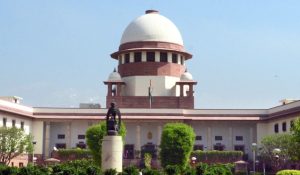
The apex court bench led By CJI Dipak Misra on July 2 issued notices to the central government on a plea challenging that recent amendments made to the Foreign Contribution Regulation Act (FCRA), 2010 have opened the doors to unlimited political donations from foreign firms.

The Bench comprising of Chief Justice Dipak Misra, Justices AM Khanwilkar and DY Chandrachud issued the notice in a writ petition.The PIL was filed by the Association of Democratic Reforms and it claims that amendments were intended to protect suspect political donations by certain NRI-led companies to the Congress and BJP.

In this case, the government will now have to file a formal reply defending the amendments.

“The said amendments have been made in an attempt to overturn the judgement passed by the Delhi High Court (in a PIL filed by petitioners herein) holding the two major political parties (the BJP and the Congress) guilty of taking foreign funding, against which the special leave petitions were dismissed by this court,” read the plea, filed through advocates Prashant Bhushan and Pranav Sachdeva.

“The said amendments have been made in an attempt to overturn the judgment passed by the Delhi High Court (in a PIL filed by petitioners herein) holding the two major political parties (the BJP and the Congress) guilty of taking foreign funding, against which the special leave petitions were dismissed by this court,” plea stated. 

The Foreign Contribution Regulation Act, enacted originally in 1976, prohibits political parties from accepting contributions from foreign companies/sources. While the 2010 FCRA Act eventually repealed the 1976 Act, the Act remained the same insofar as the bar on receiving foreign donations was concerned. The amendments under challenge were made in 2016 and 2018. 

1500 Kailash Mansarovar pilgrims from India stranded on Nepal-China border

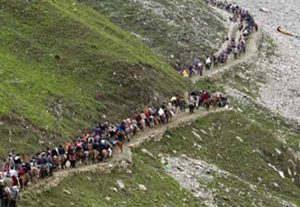
Owing to heavy rain and bad weather conditions nearly 1500 Indian pilgrims (525 pilgrims in Simikot, 550 in Hilsa and another 500 more in Tibet side) who are undertaking Kailash-Mansarovar yatra got stuck in Nepal.

“The Indian Embassy in Nepal has deployed representatives in Nepalganj and Simikot. They are in touch with the pilgrims and ensuring that food and lodging facilities are available to all the pilgrims,” Indian External Affairs Minister Sushma Swaraj tweeted.

“Embassy of India in Kathmandu is in touch with the pilgrims. They are waiting on the evacuation routes but will have to wait till weather improves. Relief and medical facilities are being supplied to them,” the official said.

Nepal Union Minister of State for Tourism K.J. Alphons reportedly confirmed that Leela Namboodiripad from Mallapuram, Kerala, died due to respiratory problems on July 2 morning.

Preparations:

·         Elderly are being provided required medical help in Simikot.

·         In Hilsa Indian mission has requested police authorities for necessary assistance.

·         To evacuate people from Simikot, the Indian Embassy is also looking for alternative routes, including the Simikot-Surkhet, Simikot-Jumla or Simikot-Mugu routes.

·         The embassy is also trying to press in the services of Nepal Army helicopters, which can operate over difficult terrain.

·         The Indian mission is also setting up a hotline for pilgrims and their family members in languages like Tamil, Telugu Kannada and Malayalam, as many of the pilgrims are from states where these languages are spoken.

·         Mission coordinators are trying to prevent any more influx of pilgrims into the Nepali side from Tibet.

·         The Indian mission has asked all tour operators in the region to try and hold pilgrims back in Tibet side

Hotline numbers

Pranav Ganesh, first secretary (consular) – +977-9851107006

Tashi Khampa, second secretary (consular) – +977-9851155007

Yogananda (Hotline – Kannada) – +977-9823672371

Pindi Naresh (Hotline – Telugu) – +977-9808082292

MOST POPULAR

HOT NEWS