 The reason for rise in wholesale price inflation may be varied-hefty rise in petrol prices, costly food and other manufactured goods and services, but wholesale price inflation soaring to a four-and-a-half year high is a big cause of concern for the nation. The Wholesale Price Index (WPI) as a measure of price gains according to the latest data shows a sharp surge in wholesale inflation in June to a 54-month high of 5.77 per cent. It may not be a cause of concern for the Reserve Bank of India because the RBI gives consideration to retail inflation for hiking the interest rates. However, wholesale price inflation is sure to exert added pressure on the RBI to make changes in policy rates. After all monetary policy formulation not only depends on Consumer Price Index (CPI)but equally on wholesale price index. Little doubt the significance of Wholesale Price Index cannot be diminished.
To add to the woes of the nation is the retail inflation, which has shown upward trends. Only in May 2018, the CPI had gone upwards of four per cent and now it has crossed five per cent. At four per cent, the consumer price index is just one per cent lower than the danger mark of six per cent. It is in this light that one notes that the RBI had to hike the repo rate by 25 basis points during May 2018 after the consumer price index went past four per cent.
Double whammy
In such a scenario, the RBI is left with no option but to raise interest rates to contain inflation. The RBI measure aims to protect the poor from price rise for the present and for future. While it happens, the industry suffers because it cannot expect a rate cut from the RBI. When the manufacturing sector and services sectors are hit, the growth rate is automatically hit.
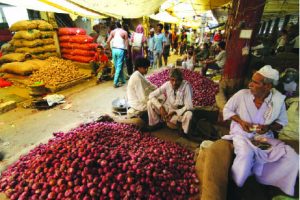
The rising crude oil prices that Tehelka had highlighted in its cover story Fuel on Fire in June have started pushing inflation to a new high. The Index of Industrial Production for June reveals how macroeconomic activity has been affected by contributing significantly to a 214 basis points in June 2018. Thanks to all these contributing factors, the inflation has risen from 4.55 points in February 2018 to 16.18 per cent by June. Then food, fruits and vegetables are another cause of worry. The inflation in vegetable prices more than tripled in pace from 2.51 per cent in May to 8.12 per cent in June. The manufacturing sector is also a cause of worry for the upward trend in inflation. The inflation in the manufacturing sector including basic metals that includes a range of goods from alloy steel castings, stainless steel tubes to copper plates and aluminium sheets showed inflation of 17.34 per cent.
IMF forecast
In its latest report, the International Monetary Fund (IMF) has brought down its growth forecast for India by 10 basis points to 7.3 per cent for 2018-19. Significantly, it has downgraded the growth rate by 30 basis points to 7.5 per cent for 2019-20. The main reason for the downward revision is raising fuel prices. What could add to inflation is that the government has already announced higher minimum support prices (MSPs) for Kharif crops, which will have an inflationary impact.
As general election 2019 is less than a year from hence, it is expected that the government will announce several popular schemes ahead of it to woo voters. This is sure to further increase the fiscal deficit and eventually affect economic growth and lead to further inflation. The monsoon is already deficient and it could add to the miseries of the economy.
The Asian Development Bank (ADB) has also raised its inflation the projection for India to 5 per cent from 4.6 per cent for 2018-19.
Again the reasons are higher crude oil prices, depreciation of the rupee and increase in minimum support prices. The Asian Development Outlook (ADO) released in April observed that the upward revision “responds to higher oil prices, significant depreciation of the Indian rupee in the past few months, and generous increases announced on July 4 in minimum support prices for summer crops, by which the government intervenes in markets to protect agricultural producers from any sharp fall in farm prices.” The International Monetary Fund had also lowered its growth projection for India by 10 basis points to 7.3 per cent because of higher oil prices and speedier interest rate increases by the Reserve Bank of India (RBI) due to higher than expected inflation.
Hope still thrives
However, ADB said India is expected to achieve its earlier growth forecasts of 7.3 per cent in 2018-19 and 7.6 per cent in 2019-20 in view of higher recovery from the goods and services tax (GST). In 2017-18, the Indian economy grew at 6.7 per cent. ADB said growth gained momentum in Q4 of 2017-18 as GDP expansion reached 7.7 per cent.
The ADB report said that the “Other key drivers of growth include an uptick in public consumption, which is typical before elections, and a recovery in exports following shortages of working capital related to a new goods and services tax.
Private consumption is expected to grow at a healthy rate as disruption caused by demonetisation in 2016 fades. Capacity utilisation rates are at its highest in four years and should provide incentives to firms to invest.”
However, many analysts do not rule out the RBI going for another round of rate hike in near future. The RBI had on June 6, 2018, raised the repo rate by 25 basis points to 6.25 per cent. It was the first rate hike in more than four years due to higher risks from rising inflation.
The Economic Survey 2017-18 presented on January 29, 2018 had estimated that every $10 per barrel increase in the price of oil reduces economic growth by 0.2-0.3 percentage points and increases wholesale inflation by about 1.7 percentage points and widens the current account deficit by about $9-10 billion.
This is what is actually happening and it confirms the theory that Wholesale Price Index rise would mean wholesale worries for the economy.
letters@tehelka.com

 Amit
Amit  The Lok Sabha polls are only months away and the campaigning is in full swing. But if anything is lacking, it is a coherent narrative. No political party has been able to neatly weave its promises in a convincing manner. The political attacks also lack sharpness and most of it comes down to an unpalatable level. The failure on the part of the ruling party is more visible. The party, which has ruled with full majority in the Lok Sabha, does not seem to have the courage to ask for votes on its performances alone. The Bhartiya Janata Party is not showing the mettle to assert that it will ask for the votes on what it has done during its rule.
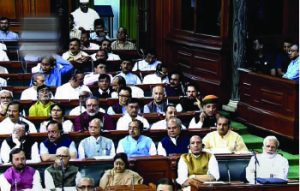 Undoubtedly, the outcome of the no-confidence motion against the BJP-led NDA government headed by Prime Minister Narendra Modi was a foregone conclusion. Nevertheless, it did afford an opportunity for the Opposition to take the government on crucial issues and concomitantly also an occasion for the Modi government to highlight its “achievements” as an anchor-sheet in run up to 2019 elections. Total 325 MPs backed the motion against 126 supports. Zero -record of abstentions after several members from Shiv Sena, Biju Janata Dal and Telangana Rashtra Samithi left the house.
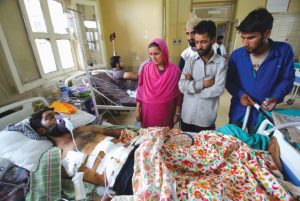 For most of us, when we seek tender loving care, we turn to our mothers, but when it’s illness ravaging our strength, it’s doctors from whom we seek a cure. Sometimes the medicine seems worse than the disease, but they, like mothers, are lifesavers in our midst. Did you ever wonder what to do when medical practitioners are not available when we need them the most. This is the case, majority of us will agree, when it comes to government hospitals, where common people approach when ailments start hurting their health. The reason is: There are not enough doctors.
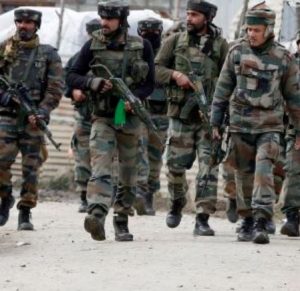 Security forces on Thursday killed two militants during an encounter in Jammu & Kashmir’s northern district of Kupwara.
 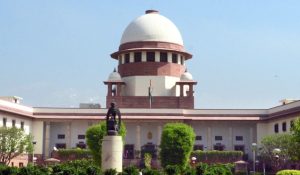 Taking note of the alleged child rapes at a shelter home in Bihar’s Muzaffarpur the Supreme Court issued a notice to the Bihar government and the Women and Child Development (WCD) Ministry on August 2 imposing a blanket ban on publishing any video or images (hidden or morphed) of minor victims.
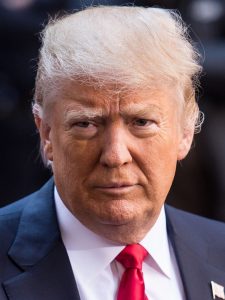 India extended an invitation to United States President Donald Trump to be the special guest on the Republic Day 2019. However, US Press Secretary Sarah Sanders said no decision has been taken on the matter yet.
 Actor Aamir Khan on Thursday said that he won’t be attending the swearing-in ceremony of cricketer-turned-politician Imran Khan in Pakistan, “Aamir said he had not received any invitation and won’t be going for the ceremony in Islamabad.”