Swami Agnivesh stage attack on himself to gain popularity: BJP Jharkhand Minister

Chandreshwar Prasad Singh, Bhartiya Janata Party (BJP) leader from Jharkhand on Wednesday alleged that Swami Agnivesh Staged the attack on himself to come into the limelight.

” As far as I know, Swami Agnivesh is a person who survives on foreign donations. The saffron dress that he wears is to deceive the simple Indians. He is a fraud and not a Swami. He had himself planned this attack to gain popularity,” Singh told the media.

The 80-year-old activist was attacked by a mob on the day the Supreme Court said “mobocracy cannot be the new normal.” He was punched, kicked, and verbally abused by a mob outside a hotel in Jharkhand’s Pakur district.

Chief Minister Raghubar Das has instructed the police to enquire the incident and security has been provided to Swami Agnivesh by Jharkhand state government.

MIG-21 Fighter Jet crashes in Kangra District of Himachal Pradesh

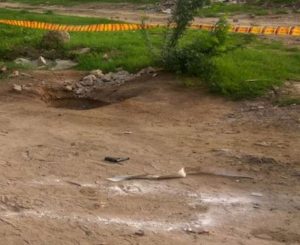
A MIG-21 fighter aircraft of the Indian Air Force on Wednesday crashed near Mehra Palli village in Jawali area of Kangra district.

According to initial reports, the aircraft was coming from Pathankot air base in Punjab and crashed in Kangra district. 

SP Kangra has confirmed about the crash and said it occurred around 1:30pm.

The pilot of the plane was reported to be missing.

According to the sources, rescue teams are on their way.

More details are awaited.

Monsoon session begins, Key Bills lined up

The Monsoon session of Parliament began on July 18 and both the government and the opposition have planned their strategies for both houses of the Parliament.

The current session will have 18 sittings which come to 108 hours, excluding the Question Hour and the Zero Hour, 62 hours will be available for government agenda.

Over the next 18 sessions, it is expected to take up a total of 68 pending bills. During the session of among these 68, 25 bills are listed for consideration and passage and three for withdrawal.

At least, 18 new bills are listed for introduction, consideration and passage.

Lok Sabha Speaker Sumitra Mahajan and Rajya Sabha Chairman Venkaiah Naidu have appealed to all political parties and MPs to stop the blame game and ensure that Parliament functions without unnecessary disruptions.

Prime Minister Narendra Modi reaches Parliament ahead of the session and said that “I hope every MP; every party will make this a fruitful session. I always express this hope and make that effort. I am hoping this time too.”

At the onset of the session, in presence of the PM Modi, the opposition lawmakers staged a protest and started shouting slogans of “We want justice” – a reference to the special status demanded by Andhra Pradesh, as well as for a sudden rise in the number of mob killings across the country.

The Congress says it will support the Telugu Desam Party’s demand for special status to Andhra Pradesh but would also flag other issues that impact people elsewhere in the notices it files.

Key Bills & Ordinances Lined up for Monsoon Session

Fugitive Economic Offenders bill, 2018.

The National Sports University Ordinance, 2018. 

The Criminal Law (Amendment) Ordinance, 2018.

The Insolvency and Bankruptcy Code (Amendment) Ordinance, 2018. 

The Commercial Courts, Commercial  Division and Appellate Division of High Courts (Amendment) Ordinance 2018.

The Homoeopathy Central Council (Amendment) Ordinance, 2018.

The Muslim Women (Protection of Rights on Marriage) Bill, 2017.

Is BJP starting Taliban in Hinduism, questions Shashi Tharoor

Congress MP Shashi tharoor, who had earlier triggered the controversy with “Hindu Pakistan” remark has again lashed out at BJP by questioning them whether they want to start “Taliban in Hinduism”

“They are asking me to go to Pakistan. Who has given them the right to decide that I am not a Hindu like them and I don’t have the right to stay in the country? Have they started a Taliban in Hinduism,” Tharoor said in Thiruvananthapuram on Tuesday.

This comes after Tharoor on Monday accused the BJP youth activists for waving black flags at his office in Thiruvananthapuram in Kerala and damaging his office. He alleged that slogans were raised against him; asking him to go to Pakistan.

“@YUVAMORCHABJP vandals attacked my constituency office in Thiruvananthapuram. They poured black engine oil on signs, doors, walls & gate, drove away innocent citizens waiting with their petitions, put up offensive banners & shouted slogans asking me to go to Pakistan. We have all been warned. The BJP’s answer to the simple question “have you given up the dream of a Hindu Rashtra?” is apparently vandalism & violence.  That is the face they have shown in Thiruvananthapuram today. Most Hindus will say these Sanghi goondas do not represent us,” he had tweeted after his office was attacked.

Stakeholders call for revising Trafficking of Persons Bill, 2018

Representatives from various NGOs, workers unions, and legal experts criticised the Trafficking Bill, which is sought to be introduced by the Minister for Women and Child Development (“MWCD”), Maneka Gandhi in the Monsoon session of Parliament. The group called upon the Minister to reconsider introducing the Bill or alternatively, refer it to a Parliamentary Standing Committee for review and consultations with all stakeholders.

The MWCD claims that there is no law on trafficking for physical and other forms of exploitation, when in fact there a large number of laws against forced labour, trafficking for sexual exploitation, begging as well as a comprehensive provision i.e section 370, Indian Penal Code, 1860 (“IPC”), which was introduced in 2013 on the recommendation of the Justice Verma Committee which punishes trafficking for all forms of exploitation with 7-10 years imprisonment. “What we need is accountability of State actors under existing laws and not new or more laws on trafficking,”said Enakshi Ganguli of the HAQ Centre for Child Rights.

The Bill is being justified as a means to address labour exploitation. Questioning the MWCD’s mandate on labour legislation, Kiran Kamal Prasad, who works with bonded labourers, stated: “Unless the three keys of labour rights—recruitment, wages and working conditions are regulated, forced labour and trafficking cannot be stopped. The Bill is absolutely silent on this aspect.”

The Bill must be seen in light of how it would affect workers, particularly those who are more likely to face difficult working conditions: women, dalits, adivasis – those who are desperate to find better livelihoods and migrate for this reason. The persistent agrarian crisis and lack of sufficient decent jobs – whether in cities or in rural areas has been lost sight of. “Instead of focusing on economic and social security, the Government is criminalising the poor and the vulnerable and their safety net,” remarked Konnonika of the National Federation of Indian Women. 

Gautam Mody, Secretary of the New Trade Union Initiative, said,“The approach of the Bill in focusing on rehabilitation is significantly different from laws like the Contract Labour Act and the Inter-State Migrant Workers Act, which mandate registration of workers and require them to have benefits. The phrasing of the Bill limits responsibility to individuals, taking away from corporate criminal liability for trafficking caused due to their production lines or supply chains.”

Dr Prabha Kotiswaran, who has studied the legal response to trafficking internationally, lamented Bill’s uncritical application of raid, rescue and rehabilitation in “homes”, which are used in sex work to other situations of exploitation. The UN Special Rapporteur on Trafficking in Persons, especially Women and Children and other international experts have criticised detention of victims of trafficking as being incompatible with human rights. Yet, “protection homes” remain the mainstay of rehabilitation for trafficked victims. There is no compensation, monetary assistance or livelihood guarantee, which is what victims need most to rebuild their lives. The Bill has been drafted in a vacuum, devoid of social realities. 

The Bill ignores the recommendations of a Supreme Court-appointed panel on prevention of trafficking and rehabilitation of sex workers who wish to leave sex work.

Dr Smarajit Jana, a member of the Panel from Kolkata, stated that the Panel’s suggestions were based on in-depth analysis and multi-stakeholder deliberations, including with various departments of the Centre and State Governments over five years. One of the key recommendations of the panel was to adopt community-based rehabilitation, i.e. alternatives that are not contingent on trafficked women staying in state-run “homes”. Another suggestion was to revise laws like the ITPA so as to distinguish between those coerced into sex work and those who engage in it voluntarily so that interventions are tailored to those who need them. “None of these ideas have been considered, let alone adopted in the Bill.”

Anand Grover, Senior Advocate, Lawyers Collective criticised the vague and overbroad provisions of the Bill, which kick in even when no trafficking has taken place. The Bill criminalises a host of activities including electronic communication through websites, social media and what’s app which “may lead to” or are “likely to lead to”, trafficking. This is dangerous for civil liberties and the freedom of expression.

​ ​“The Supreme Court has struck down similarly vague provisions of the Information Technology Act, 2000. If this Bill is passed, it will meet with the same fate,”said Grover.

Rejecting the Minister’s claim that the Bill does not target adult, consenting sex workers, Kusum of the All India Network of Sex workers and Nisha Gulur of the National Network of Sex Workers said that the provisions, directly and indirectly, criminalise sex workers. “Clause 39 criminalises “soliciting” through electronic messages and “obscene photographs” this is “clearly curbing our communication. Proposed offences of trafficking and exposure to HIV and pregnancy are aimed at sex workers. Besides, the Immoral Traffic Prevention Act, 1956 is not being repealed and so, sex workers will continue to face arrest and imprisonment.”

“The Bill needs serious reconsideration. It should not be passed in its current form,” urged all the speakers.

Greater Noida buildings collapse: NDRF recovers 3 bodies, rescue operation underway

Two buildings collapsed in Greater Noida near Delhi on July 17 at around 8:30 pm as a six-storey under-construction building fell on top of a four-storey building next to it. Reportedly nearly 18 families were residing in the four-storey building in the Shah Beri village.

Chief Fire Officer Arun Kumar Singh reportedly said that at least 12 labourers were inside the building at the time of the incident and all of them are suspected to be trapped.

So far, three dead bodies have been recovered by National Disaster Response Force (NDRF). Several people are feared trapped under the debris.

“Two male dead bodies have been recovered. Four NDRF teams and dog squad are present on the spot, chances of any victim being alive are scant. Operations will continue until all victims are rescued,” NDRF Commandant, PK Srivastava said.

“District administration and NDRF teams are engaged in rescue and search operations. Some people are feared trapped in the rubble. Our thoughts are with the families of those who died in the incident,” KP Maurya, deputy chief minister Uttar Pradesh.

According to reports three people have been arrested in connection with the incident.

Local, Praveen Srivastava, while blaming the unscrupulous builders for the collapse said, “It took such a long time since the collapse but no rescue workers have reached. Not even an ambulance. Buildings collapsed around 8:30 pm but help only reached an hour and a half later.”

Following the incident Chief Minister Yogi Adityanath took notice of the incident and asked the District Magistrate to follow up with the NDRF team and the police for relief measures and to ensure immediate rescue.

Court can’t wait for ‘majoritarian government’ to act: SC on section 377

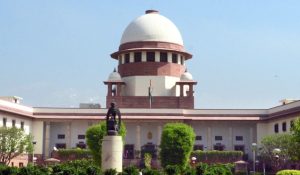
The Supreme Court on July 17 reserved its verdict on whether to decriminalize section 377 saying that courts cannot wait for a “majoritarian government” to decide on enacting, amending or striking down a law if it violates fundamental rights.

A five-judge Constitution bench headed by Chief Justice of India Dipak Misra, while hearing pleas challenging the validity of section 377 of the IPC, made clear that it may not strike down the law completely and deal with it to the extent it relates to consensual acts between two adults.

“If section 377 of the IPC goes away entirely, there will be anarchy. We are solely on consensual acts between man-man, man-woman. Consent is the fulcrum here. You cannot impose your sexual orientation on others without their consent,” the SC said.

The bench comprising of justices RF Nariman, AM Khanwilkar, DY Chandrachud and Indu Malhotra, added that “We would not wait for the majoritarian government to enact, amend or not to enact any law to deal with violations of fundamental rights.”

Justice Nariman added, “The whole object of the fundamental rights chapter is to give power to court to strike down laws that majoritarian governments do not touch due to political considerations. We are not bothered about what government does. They may enact, repeal, do whatever they want. It is our duty to uphold fundamental rights.”

Advocate Manoj George, appearing for two Christian organisations which want gay sex to remain as crime said that holding the law unconstitutional would have a cascading effect on personal laws of many communities and said, “Parliament must deal with it in its legislative wisdom”.

Narendra Modi Chairs all party meeting before the monsoon session

Prime Minister Narendra Modi on Tuesday chaired the all party meeting before the monsoon session of Parliament which will begin from 18th July.


PM Modi asked Opposition parties to collaborate for the smooth functioning of parliament during the monsoon session.


Parliamentary Affairs Minister Ananth Kumar said, “prime minister today wanted the cooperation of all political parties for the smooth functioning of Parliament and a productive session.”The meeting aimed to ensure the smooth functioning of the Parliament especially after the washed-out Budget Session in April. The last session was a near washout with less than 10 percent efficiency in both Houses,” he added.


The meeting ended on the positive note and all parties promised support,” Ananth kumar said.

The Monsoon session will end on August 10.

Leaders from Congress, NCP, TMC, BSP, SP, RJD, DMK, CPM, CPI, JD(S), RSP, IUML, KC-M and others attended the meeting.

Why India is world’s most dangerous country for women?

Though stung by the global survey, the tourism ministry has sent a letter to heads of Indian missions, highlighting a series of initiatives the country has taken to promote women’s safety. The July 6, 2018 letter from the Tourism Secretary has challenged the survey pointing out that “results have not been derived from any kind of proper data and are solely based on the subjective opinion of 548 respondents who have been defined by Reuters as experts focused on women’s issues”.

As per the survey the war-torn Afghanistan and Syria ranked second and third in the Thomson Reuters Foundation survey of about 550 experts on women’s issues, followed by Somalia and Saudi Arabia. The only western nation in the top 10 was the United States, which ranked joint third when respondents were asked where women were most at risk of sexual violence, harassment and being coerced into sex. Experts said India moving to the top of poll showed not enough was being done to tackle the danger women faced, more than five years after the rape and murder of a student on a bus in Delhi made violence against women a national priority.

The survey asked respondents which five of the 193 United Nations member states they thought were most dangerous for women and which country was worst in terms of healthcare, economic resources, cultural or traditional practices, sexual violence and harassment, non-sexual violence and human trafficking. Respondents also ranked India the most dangerous country for women in terms of human trafficking, including sex slavery and domestic servitude, and for customary practices such as forced marriage, stoning and female infanticide.

#MeToo exposes

While India faired poorly in this survey, experts said the surprise addition of the United States in the top 10 most dangerous countries for women came down to the #MeToo and Time’s Up campaigns against sexual harassment and violence that have dominated headlines for months. India, Libya and Myanmar were considered the world’s most dangerous nations for women exploited by human traffickers in a global crime worth an estimated $150 billion a year. The poll of 548 people was conducted online, by phone and in person between March 26 and May 4 with an even spread across Europe, Africa, the Americas, South East Asia, South Asia and the Pacific. Respondents included aid professionals, academics, healthcare staff, non-government organisation workers, policy-makers, development specialists and social commentators.

The world’s most dangerous countries for women

According to the survey:

1. India

2. Afghanistan

3. Syria

4. Somalia

5. Saudi Arabia

6. Pakistan

7. Democratic Republic of Congo

8. Yemen

9. Nigeria

10. United States

Will Sajad Lone be the new J&K CM?

Is the BJP trying to split its erstwhile ally, the PDP to form a new government in J&K? It looks like it is, even though the senior party leaders like Ram Madhav have denied such reports. On ground, the situation looks contrary to Madhav’s assertions. Ever since the state was placed under Governor’s rule on June 19, six PDP legislators including an MLC have raised a banner of revolt against their leader Mehbooba Mufti, blaming her for turning the party into a family fiefdom. Imran Raza Ansari, who is spearheading the rebellion, even termed the PDP as the Family Democratic Party.

But the number of the rebels still falls far shorter than what is needed to form a government. What makes the process further daunting is the state’s stringent anti-defection law which requires at least two-third legislators of a party to defect before it is recognised as a separate group. A member or two short of that would invite disqualification from the Assembly.

With 28 seats the PDP is the largest single party in the 87-member Assembly. The BJP is second largest with 25 followed by National Conference (15), Congress  (12), People’s Conference (2) and Independents. So, a party or a coalition needs 44 seats to form a government.

The BJP already has the support of People’s Conference led by Sajad Lone who is a front-runner for the Chief Ministership should he manage to get the  support of the potential PDP defectors. The BJP also has the support of the independent legislator Pawan Kumar Gupta. So, the party needs just 16 more members to form the government.

But for the PDP to legally split, the rebels would need the support of 19 of the 28 members to be recognized as a separate group.  The group could then ally with or seek support from the BJP to form the government. Similarly, in case of the National Conference, it would take 10 of the 15 members to defect to be counted as a separate group.

But for all its seeming  complications, the defection won’t be too difficult to accomplish. That is, if the BJP is intent on it and is willing to support a breakaway faction. Besides, the prospect of a new government and enjoying the  spoils of power is  too tempting an opportunity to be passed for the most PDP leaders who are not hopeful of being re-elected owing to a deep public anger against their party.

Another factor which aides these efforts is that Assembly election in the state is still two and a half years away. This reality  is  encouraging a rethink  among many legislators about their loyalty to their respective parties, more so among those from the PDP.

Sensing the emerging threat to her party, Mehbooba has already warned the centre against any attempt to break her party, saying “it can have serious repercussions and  strengthen the forces calling for boycott of elections, as it will send out a message that mandate of the people is not being respected.”

She also told a television channel that engineering defections in her PDP to form the government in the state “will erode the trust of the Kashmiris in Indian democracy”.

“If Delhi intervenes and breaks our party, and makes Sajad Lone or whosoever CM, it will erode the trust of the Kashmiris in Indian democracy. Any intervention from Delhi will be taken seriously,” Mehbooba said.

Similarly, Omar Abdullah has called for the dissolution of the Assembly to prevent horse trading. 

“The cure for all these rumours of horse-trading, breaking political parties over government formation will be solved with the dissolution of assembly,” Abdullah said in a statement.  However, he made it clear that his party was not demanding early elections.

“We understand that it will take time to create a climate conducive for elections in Kashmir, but at least for the meantime, you can put an end to this unnecessary and unseemly sort of rumour mongering,” the NC leader said.

Last month, Mehbooba had to resign as the J&K Chief Minister after the BJP dramatically pulled out its support to her.  But for all the allure of a PDP-BJP alliance and its apparent ”one-stop solution” to the state’s ongoing turmoil,  the coalition had become difficult to sustain. Ideological differences apart, which are too fundamental in nature to be easily coalesced, the two parties found even their everyday operation full of contradictions.

Now the effort seems to be to get rag-tag group of the legislators driven by the lure of power than an ideology to form the government. And it is a prospect that seems well within the reach.

There are some sticking points though: the question of who will be the Chief Minister in such a coalition. While Sajad Lone looks to be the obvious favourite for being close to the BJP and also because he is believed to enjoy the trust of the Prime Minister Narendra Modi, the BJP is said to be plumping for a Hindu Chief Minister, preferably Dr Jitendra Singh, the union minister of state in Prime Minister’s Office. But that would be a hard-sell for the potential defectors from the PDP. So, if at all, the possibility of a new government becomes a reality, Lone remains the preferred choice.

The efforts to form a new government, however, are being looked down upon in Kashmir. People already feeling let down by the Mehbooba-led government have little patience for yet another experiment – and a patently illegitimate one at that.

“It looks like all is not hunky-dory with the political situation in the state. Despite Governor rule being in place and apparently for the long term, the efforts are being made to cobble together a new coalition government comprising the disgruntled members from the various political parties, including from the PDP,” an editorial in a local daily said. “A design is already in works which could culminate into a government formation through unfair means. And should this come to pass, this   will be a deeply unfortunate development. Certainly, some people will benefit but its fallout will be profoundly detrimental and long term”.

Meanwhile, the actors involved in the effort are busy with their attempts to cobble together the requisite number. Time is on their side. Things are likely to become clear in the days to come.

MOST POPULAR

HOT NEWS