Congress president Rahul Gandhi along with Priyanka Gandhi Vadra, Robert Vadra and United Progressive Alliance (UPA) chairperson Sonia Gandhi on Monday, paid floral tribute to late prime minister Rajiv Gandhi on his birth anniversary at Veer Bhumi in Delhi.
Congress leaders Ghulam Nabi Azad, former Prime Minister Manmohan Singh and Ashok Gehlot also paid tribute to the former prime minister on his birth anniversary that is celebrated as “Sadbhavna divas”.
Late Prime Minster Rajiv Gandhi was born on August 20, 1944, he represented Uttar Pradesh’s Amethi parliamentary constituency four times.
He was the sixth Prime Minister of India from 1984 to 1989.
On May 21, 1991, he was assassinated in a suicide bombing at Tamil Nadu’s Sriperumbudur and was later cremated at Veer Bhumi on the banks of the river Yamuna.
The Congress president Rahul Gandhi said that Rajiv Gandhi was a “kind, gentle and affectionate man”, whose untimely death left a deep void in his life.
“Rajiv Gandhi was a kind, gentle and affectionate man whose untimely death left a deep void in my life. I remember the times we had together and the many birthdays we were lucky to celebrate with him when he was alive. He is greatly missed, but his memory lives on,” tweeted by Rahul Gandhi.
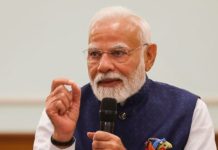
Prime Minister Narendra Modi also said that Rajiv Gandhi would always be remembered for his efforts towards nation.
Prime Minister tweeted, “Tributes to our former Prime Minister Shri Rajiv Gandhi Ji on his birth anniversary. We remember his efforts towards the nation.”
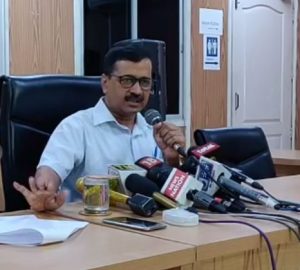
Delhi Chief Minister Arvind Kejriwal on Monday said people are not happy with the Bharatiya Janata Party (BJP) which will cause it to suffer major losses in the 2019 Lok Sabha elections.
The Aam Aadmi Party (AAP) chief also added that the common man is angry with the BJP for “creating hurdles” in the works of the Delhi government under him.
“The public is not happy with BJP MPs. People are happy with the Aam Aadmi Party Government in Delhi. People of Delhi are annoyed with BJP as it created hurdles in Delhi Governments work. BJP will get a shock in upcoming 2019 Lok Sabha elections,” Kejriwal tweeted in Hindi.
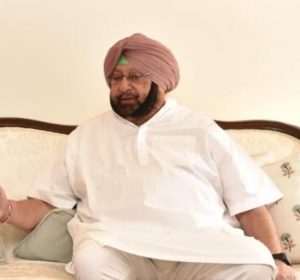
Punjab Chief Minister Captain Amarinder Singh on Sunday said Navjot Singh Sidhu hugging the Pakistani Army Chief was not a nice gesture and was completely avoidable.
Talking to mediapersons on the sidelines of a photo exhibition here, the Chief Minister said Sidhu should have avoided indulging in such a gesture when Indian soldiers were getting killed every day on the borders. After all, it is the Army Chief who gives the orders to kill, with the soldiers merely following the same, said the Chief Minister in response to questions.
Pakistan’s Army Chief Qamar Javed Bajwa is responsible for the deaths of our soldiers and Sidhu should not have shown such niceties towards him, said Capt Amarinder.
As for Sidhu sitting next to the PoK president, Capt Amarinder said the Punjab minister possibly did not know who he was and in any case the sitting arrangement was not in his hands.
The Chief Minister, however, dismissed the Opposition demand for Sidhu’s resignation as not important.
As for Sidhu going for Imran Khan’s swearing-in ceremony, it was in his personal capacity due to his close relations with the former cricketer from their cricketing days, said Capt Amarinder, in response to another question.
In response to a question, the Chief Minister said he would be meeting his counterparts from Haryana and Himachal Pradesh on Monday to discuss the issue of drugs and draw out a joint strategy to combat the problem.
Haryana Chief Minister ML Khattar had called him up yesterday to invite him for the meeting and he had accepted, said Captain Amarinder.
Underlining the need for collective efforts by all the states to counter the menace, Capt Amarinder pointed out that he himself had initiated the process several weeks ago with a letter to the Chief Ministers of the neighbouring states.
No state can afford to ignore the drugs issue, which has extremely dangerous implications for our future generations, he added. While the Punjab government was going all out to wipe out the menace it needed the support of neighbouring states in view of the inter-state smuggling of drugs, many cases of which had come to the fore in recent weeks, said Capt Amarinder.
The Chief Minister congratulated the photographers whose exhibits formed a part of ‘Drishti-2018’, the Members’ Annual Photography Exhibition organised by the Tricity Photo Art Society. He particularly lauded the efforts of young photographers who had come out with exemplary works to mark the World Photography Day.
The Chief Minister announced a grant of Rs 5 lakh for the Society on the occasion.
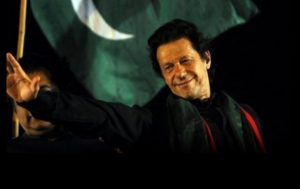
Pakistan’s new Prime Minister Imran Khan announced a 21-member Cabinet on Saturday. Out of the 21 names announced, 16 will be ministers while five others will perform their duties as advisers to the premier, Pakistan Tehreek-i-Insaf (PTI) spokesman Fawad Chaudhry said.
The 21-member Cabinet includes foreign minister Shah Mehmood Qureshi.
Qureshi, the vice president of the party, was the foreign minister from 2008 to 2011 under the Pakistan Peoples Party government.
Pervaiz Khattak has been appointed as defence minister and Asad Umar as finance minister.
Sheikh Rashid has been appointed as Railway minister.
Three women are also part of the Cabinet, includes Shireen Mazari, Zubaida Jalal and Fehmida Mriza.
The five advisors who have minister’s status includes, businessman Abdul Razzak Dawood, former banker Ishrat Hussain and Babar Awan.
On 20 August, the newly-announced Cabinet is expected to take oath at the President’s House.
PTI has nominated Dr Arif Alvi as its applicant for President of Islamic Republic of Pakistan.
On September 4, the presidential election will be held, five days prior the expiry of the five-year term of President Mamnoon Hussain.
As per the Pakistan’s Constitution, the size of the federal cabinet should be not more than 11 per cent of the total strength of the National Assembly and Senate.
Imran Khan took oath as 22nd Prime Minister of Pakistan on Saturday after his party won the highest number of seats in the general election.
The ceremony was attended by Khan’s wife Bushra Bibi, legendary paceman Wasim Akram, Chairman Joint Chiefs of Staff Committee Zubair Mahmood Hayat, actor Javed Sheikh, former Indian cricketer Navjot Singh Sidhu, Punjab Assembly speaker Pervez Elahi, Rameez Raja, singers Salman Ahmed and Abrarul Haq, caretaker minister Nasir-ul-Mulk, Army chief General Qamar Javed Bajwa, Chief of Air Staff Marshal Mujahid Anwar Khan and PTI leaders.
Khan’s party bagged 176 seats while the opponent Sharif, the PML-N president received 96 votes.
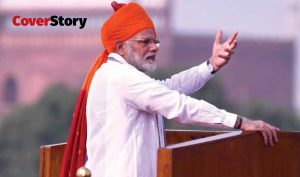
Prime Minister Narendra Modi seems to be replaying ‘Shining India’ of Atal Bihari Vajpayee’s era. Only difference is the tone in Vajpayee’s assertions. Vajpayee has always maintained modesty in his assertion and avoided loudness. Whereas, Modi has been aggressive when it comes to taking on his opponents. And, this is what he did on the 72nd Independence Day while addressing the nation from ramparts of the Red Fort.
On behalf of the nation, he disowned every single contribution made by the grand old part of the country, the Congress and grabbed the opportunity to say that the people did not stop at electing him, but they joined in building the nation. The message was clear that the process of nation building started with the wining of the chair of prime ministership. For him, the Congress, if contributed to the nation building, had been so slow that the country would have waited for decades and centuries to reach the target in many important fields vital for the life of vast majority. He cited pace of rural electrification, LPG connections and construction of toilets. Ahead of 2019 polls, Modi also tried to sell new dreams and declared five-point program: connectivity for all, sanitation for all, health for all, skill for all and insurance for all. He announced the giant health insurance program ‘Ayushman Bharat’ that was announced in the last budget. The program was kept pending for a suitable time that should coincide with the polls in the states and of the Lok Sabha.
Modi’s speech from the ramparts of Red Fort gives a clear indication of the political line he is to adopt in the coming Lok Sabha polls. The corruption is again going to be an election issue. He will reiterate his allegations that Congress rule was corrupt and inefficient. Instead of counting scandals during the Congress rule, he is now claiming that he gave a corruption-free rule. This could not be done in 2014 polls.
“The corrupt and those who have black money would not be forgiven. He said that Delhi’s streets are now free from power brokers, and the voice of the poor is heard,” he said.
Extending the theme of transparent and honest regime, he referred to the increase in the number of tax payers and reduction in the number of beneficiaries of the government schemes. He asserted that better targeting of government benefits has been achieved by weeding out about 6 crore fake beneficiaries. The honest taxpayer of India has a major role in the progress of the nation, he said, adding that it is due to them that so many people are fed, and the lives of the poor are transformed. He also mentioned how registration of fake companies has been canceled.
All these things are parts of his same old and tested theme of Sabka saath, Sabka Vikas which is likely to continue with in the coming Lok Sabha polls. His speech from the Red Fort testified it. He attacked the Congress on corruption and so called ‘policy paralyses’.
“International organizations and agencies were looking at India very differently today, as compared to 2013. He said that from a time of “policy paralysis”, India had moved to “Reform, Perform, and Transform.” He said India is now a member of several important multilateral organizations, and is leading the International Solar Alliance. He also asserted that India has become sixth largest economy of the world.
But in his attempt to popularize a corporate India , Modi has not forgotten to balance the social realities of the country. He not only cited the benefits he has given to farmers, but also asserted how he made OBC Commission a reality.
Will his assertions on corruption remain unchallenged?
“We ask you Prime Minister Narendra Modi today, five years after you have taken over as prime minister, are you ready for a debate on these very issues with Congress president Rahul Gandhi. Will you debate on the issue of corruption and Rafale and Vyapam and other corruption scams of your government for you did not utter a single word from the precincts of the Red Fort on corruption,” Randeep Surjewala reacted.
Surjewala also asked for an open debate with the Congress president on issues such as the state of India’s farmers, mob lynching and insecurity of women. “You did not utter a word, whether on Bihar or Unnao or any other rape incident that happened in the country,” he said.
He also asked, “Will you today debate on the failing economy and falling rupee, for the rupee has hit a new low that is 70 and the trade deficit has gone over USD 18 billion. Will you today debate as to the manner in which China has occupied Doklam, they are intruding into Ladakh and has been engulfing India from all sides.
He also urged the prime minister to debate on Pakistan-sponsored terrorism and unemployment country. Other parties and organisations have also found loopholes in his theme.
Yogendra Yadav of Swaraj India has found fault with PM’s assertion that improved saved life of three lakh children. He said that Modi referred WHO statement wrongly. He also contradicted his assertions on farmers’ issue.
The CPIM has also pointed out how trade deficit has reached a worst phase. “The worst trade deficit in 5 years; he worst performing currency in Asia this year. Modi can’t hide behind the jumla of global factors for the disaster he has unleashed on India”, says CPIM general secretary Sitaram Yechury.
Though it needs no emphasis that Modi has been aggressively pursuing liberal economic policies that are friendly to Indian and global corporate. His new programs also heavily rely on private sector. His programs for internet connectivity, skill development, health, insurance and even sanitation largely depend on the involvement of private sector. The Ayushman Bharat scheme is in fact a revival package for insurance companies. People are bound the quote figures of Crop Insurance Scheme which clearly reveals that it only benefitted insurance companies.
Will he be able to rally people behind him on these programs? The question cannot be answered easily as it depends on several factors. However, the BJP and the RSS is not relying solely on the slogan of development. A careful analysis of his last speech reveals that he will also use communal card. Modi, however, only vaguely hinted at it. He was wearing a saffron turban and he alleged that political parties are obstructing the passage of the Triple Talaq Bill. This is no secret that the BJP is using the issue for stressing that the Congress is adopting a policy of Muslim appeasement. The issue could be used further to target Muslim minority. The opposition has pointed out how he chose not to speak on cases of mob lynching. In his statement on lynching few days ago, he refrained from assuring a strong action by the centre. He also issued no warning to cow-vigilantes.
When my colleague from Lucknow Mudit Mathur called up to inform that Muzaffarpur (Bihar) like incident had been reported from Deoria in Uttar Pradesh, I was shocked. This is our India in 72nd year of its Independence. In fact I had taken with a pinch of salt a recent survey conducted by Thomas Reuters Foundation that ranked India as the world’s most dangerous country for women, ahead of Afghanistan, Syria and Saudi Arabia. Chilling details from shelter homes in Bihar and Deoria add dangerous dimensions to sexual abuse.
In both cases, it has come to notice that hapless girls were being sexually abused with the complicity of the NGO operators who obviously had considerable political clout. For example a person who owned a local newspaper home was running the Muzaffarpur shelter home. The two incidents come on the heels of shocking sexual and physical abuse of inmates inside Apna Ghar, a shelter home in Haryana.
Earlier the incident involving the rape of a 19-year-old mentally challenged girl who gave birth to a girl child in government run shelter home in Chandigarh shocked the nation when it was discovered that she was gang-raped by caretakers and guards. The sordid affairs of shelter homes show that the very homes meant to protect women are being used to sexually exploit them by high and mighty. In all cases vulnerable women are sexually violated with impunity. And when media highlights such incidents, the heads start rolling. In Bihar case, Social Welfare Minister Manju Verma has submitted her resignation to Chief Minister, Nitish Kumar after the name of her husband cropped up in case of sexual abuse of minor girls at the shelter home in Muzaffarpur. While in case of Bihar, the High Court monitored CBI probe has been ordered, in case of UP, Chief Minister, Yogi Adityanath has ordered inspection of all shelter homes in the State.
It happened in case of Apna Ghar in Rohtak where its predator Jaswanti Devi was convicted and in Chandigarh five persons were arrested. However, it seems no lessons are learnt as incidents like these continue happening with impunity. We cannot allow these shelter homes for the poor and destitute to turn into horror houses of exploitation where instead of protecting the inmates, they are considered easy prey. The Centre has initiated a measure by calling for a social audit of all the 9,000 child shelters in the country. In the meanwhile, it’s time we all join hands to vehemently condemn such incidents and press authorities so that such gory tales don’t recur.
Former prime minister Atal Bihari Vajpayee was a great statesman and a true democrat who always had a heart for working classes and even stood with journalists in their struggle against their mighty and powerful management. He was a man of great convictions and always lived to his ideals. He was member of parliament from Lucknow and the management of Times group closed down part of its establishment of Hindi daily ‘Navbharat Times’ (Lucknow Edition) without any prior permission of the state government in June 1993. It rendered 92 newspaper employees including 49 journalist jobless because Times group refused to bear expenditure as per recommendations of the wage board.
The employees were demonstrating against the decision of the management and were sitting on a round the clock Dharna outside its office. Some of the journalist friends informed Atalji about this and he was so hurt that he could not resist himself to join us on Dharna. He sat with us couple of hours to protest the decision and promised all his support to the struggling journalist and employees. He tried to persuade the top management of that time but could not succeed due to their adamancy to crush the movement. Later the battle converted into lengthy litigation.
Atalji never forgot the plight of struggling journalists and used to help some of us at personal level. When he became prime minister the employees won their case in the high court and management went to Supreme Court. Our leader met him in Delhi and expressed inability to contest due to poor resources. He showered his magnanimity and spoke to his Solicitor General Harish Salve and Additional Solicitor General R.N.Trivedi to stand for us before the court. Later he requested Fali Nariman to appear for the employees without charging any fees. His personal staff including Shiv Kumar Mishra and R.P.Singh, IAS knew his sympathies for Lucknow journalists.
I remember one of his press conferences in Raj Bhawan where he broke all the security protocols and closely sat among us. He talked very intimately with journalists. Unlike todays arrogance in political leaders he used to be very humble and polite and very witty. We were just stunned when a just fresher lady journalist shot a question at him to tell, “Are you a bachelor or a virgin?” He frankly and smilingly replied, “Though I am unmarried but not a virgin.” He was a totally transparent and clean hearted person unlike many hypocrite politicos and openly acknowledged his live-in relationship.
Vajpayee worked as a journalist for varies publications including Rashtradharma (a Hindi monthly), headed by Deendayal Upadhyaya, Panchjanya (a Hindi weekly and mouthpiece of RSS) and the dailies Swadesh and Veer Arjun. He had also very close association with veteran journalists like Vachnesh Tripathi and Dr Nand Kishore Trikha. Vachneshji use to prepare him to deliver public speeches. The soul of a journalist in him had always dominated his thinking process that outshine him sometimes at divergence from party line and allowed to attain the stature of an independent and dispassionate thinker within and outside his party as a liberal leader. Perhaps this unique distinction allowed him to manage a coalition government with 23 political parties having divergent ideological streams.
Lucknow has always been close to his heart as he enjoyed tremendous confidence of the people. He was easily accessible to everybody and his closest aide Shiv Kumar and former minister Lalji Tandon proved to be his troubleshooters for addressing civic grievances of peoples of his constituency. The journalists of his times enjoyed special rapport with him as he used to identify them even in the crowded gatherings of Delhi. The people of Lucknow deeply mourned the death of a true and trusted leader who tirelessly shaped the overall development scenario of Lucknow putting it on the international map.
The Prime Minister, Shri Narendra Modi with the business leaders and captains of industry, for a discussion on issues such as economic growth, infrastructure development, policy initiatives, investment, innovation and job creation, in Mumbai on June 26, 2018.
The prime minister does not miss an opportunity to vehemently support his own point of view. The latest was his open defence for industrialists and businessmen, which attracted the Opposition’s ire.
Despite Narendra Modi led government receiving flak after fugitives like Vijay Mallya, Nirav Modi and Choksi fled the country, its staunch support for the business community has taken even the opposition by surprise. A recent investment meet provided the right venue for the prime minister to assert that there is nothing wrong in siding with businessmen. Obviously its timing was well chosen and calculated in build up to the 2019 general election. No opposition party could afford to say a word against the inflow of investment announced at the meet.
The launch of over 80 investment projects worth 60,000 crore and the presence of industrialists such as Kumar Mangalam Birla and the Gautam Adani, explained that Modi meant business. Ostensibly, PM Modi turned a business event into a political opportunity to riposte Congress president Rahul Gandhi’s accusation that his policies helped his capitalist friends. In one shot, he tried to dismiss the Congress’ allegation that the Rafale deal with France was non-transparent and would benefit one industrialist.
The economy has always been central to any political system and Modi government’s support to industry is welcome. Indeed, Prime Minister Narendra Modi went against the accepted political thought of always chiding businessmen and traders and just singing beans in praise of farmers, dalits and women being the vote bank politics.
Addressing a gathering of industrialists, Modi claimed that like labourers, farmers and bankers, businessmen were key to development. Referring to Mahatma Gandhi, who was publicly associated with big Indian industrialists, he said, “When one’s conscience is clear and intention is noble, you don’t get tainted by standing with anybody.”
With this, the spotlight is on how India perceives big businessmen because the scams driven by crony capitalism paint big businessmen as morally corrupt and untouchable. This is why it has been impossible for political leaders and political parties to be both pro-poor and pro-business. A psychosis has been created in public minds and perception that all businessmen were corrupt. There is not enough trust in the private sector because of scams and unethical practices attached with big businessmen in the past. The question is will Modi’s siding with big businessmen prove to be a gamble worth the risk? Will it change the perception how politics thinks about India Inc? Of course the talks of crony capitalism had been chosen by Congress President Rahul Gandhi on umpteenth occasions to target Modi and the NDA government at the Centre.
With the Opposition often accusing Modi government of being a “suit-boot ki sarkaar” the stand taken by the Prime Minister in favour of businessmen was well thought of. He said businessmen and industrialists played a crucial a role in nation development as a labourer, a farmer or an artisan. It was wrong to call them “chor-lutere (thieves)”, he added.
Pointing to former Rajya Sabha MP Amar Singh, who was among the guests, Modi said Singh would know all about it “Public mein milna nahin, parde ke peeche sab kuchch karna hai. Woh dartey rahtey hain . Modi said that those looking for issues to criticise him should note that whatever mistake they find dates back to 70 years ago not from his four years. “I have only four years in my account and you had 70 years.”
Referring to the ceremony as “a record-breaking ceremony instead of a ground-breaking ceremony”, the PM Modi said India had become the world’s second largest producer of cellphones, and that UP was leading this “manufacturing revolution.”
Modi attacked Rahul Gandhi for allegedly denigrating Indian businessmen, seeking to turn on its head the entire argument of the Congress party, which has been claiming that not everything is above board on the recent purchase of Rafale aircraft from France. Speaking at the launch of various development projects, Modi said industrialists too, like labourers, farmers and bankers, play an important role in nation-building and that it was wrong to hold all of them morally deficient. “Should we insult them? Should we call them thieves and burglars?,” he said, before adding, “But yes, one indulges in wrongdoing, he either has to flee the country or has to spend his life inside a jail.”
In a veiled attack on the Congress, the principal opposition party, Modi said he was not among those who feared standing beside industrialists. “When one’s conscience is clear and intention is noble, you don’t get tainted by standing with anybody. Those people have such fears who don’t want to meet in public but will do everything behind the scene,” he said.
The Congress party was quick to respond. “Congress is not against industrialists or capitalists. But it is against crony capitalists. The suit boot ki sarkaar reflects crony capitalism. PM gave a long speech on development. But the question is that if development is happening in the country then why is economy in a poor state and why are farmers selling their produce below MSP (minimum support price)?” Manish Tewari, former Union minister and Congress spokesperson told reporters.
The PM’s response is significant as it comes in the backdrop of Congress party trying to link the National Democratic Alliance to big businessmen. In early 2015, Gandhi had alleged that Modi was leading a suit boot ki sarkaar (pro-rich government). To be sure, the NDA has on several occasions clarified that its government favoured businessmen as they are a key economic agent. Indeed Prime Minister Narendra Modi has very articulately taken the battle to the opposition camp on an issue where earlier he was finding himself and his government on the defensive. The event was also attended by industry bigwigs such as Kumar Mangalam Birla, chairman of the Aditya Birla group; Gautam Adani, chairman of the Adani group; Subhash Chandra, chairman of the Essel group and a Rajya Sabha MP; and Sanjeev Puri, MD, ITC. Top executives of business houses like Walmart were also present.
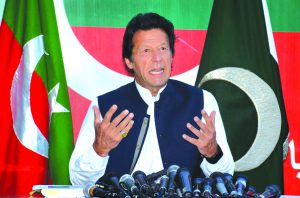
What the army in Pakistan has been aspiring for after then Prime Minister Nawaz Sharif was found to be too inconvenient to be allowed to run the government because of his independent style of functioning, particularly in matters of foreign and defence policies, has become a reality. Nawaz, who had launched a drive to keep his country’s armed forces away from the political power structure with a view to allowing democracy to strengthen its roots, has been shown the door with little chance of revival of his political career.
In this task, the army got considerable backing from the judiciary, which unseated Nawaz from the powerful position he had acquired through the democratic process. The PML(N) leader, barred from having any public office for life, has to languish in jail for 10 years with his charismatic daughter, Maryam, too, having been imprisoned by Pakistan’s anti-graft body, the National Accountability Bureau, for seven years and this may prevent her from throwing any serious challenge to the army-backed Pakistan Tehreek-e-Insaaf (PTI) government headed by cricketer-turned-politician Imran Khan.
However, what is more interesting is that the new Prime Minister is likely to attempt to do what Nawaz had been preparing to accomplish, but without taking the all-powerful army into confidence. Nawaz was believed to be looking for ways to promote India-Pakistan trade relations, and India would have welcomed it. This is what Imran Khan may also do as he has been indicating despite talking of Kashmir. Such a policy shift was not tolerable by the army earlier, whereas this may be welcome now because the people of Pakistan have hinted that they want their country to accord primacy to economic issues.
A new environment involving India and Pakistan is likely to be created with Prime Minister Narendra Modi having made a phone call to Imran Khan to greet him on his victory in the elections and Imran inviting his friends of the cricketing days like Sunil Gavaskar, Kapil Dev and Navjot Singh Sidhu to his swearing-in ceremony as Prime Minister.
With the BJP-led NDA government in India and the formation of an army-supported ministry in Islamabad is an ideal situation to go ahead with an agenda for improving India-Pakistan relations. Though India is soon going to get into an election mode, that should not make much of a difference. Developing stakes in bilateral trade suits both countries. This approach will help the Pakistan army too to acquire a people-friendly face, which it desperately needs after its past operations harmed tribal interests and clandestine moves against Nawaz Sharif.
Though nobody can say with certainty that the Imran Khan regime in Islamabad has this point in its agenda, he gave sufficient hints in his victory speech for trying to improve relations with India — “If India takes one step forward Pakistan will take two steps” to achieve this laudable objective. Of course, only time will tell whether Imran behaves as he has promised.
In any case, most people in Pakistan want their government to focus on spurring economic activity so that there is an improvement in their quality of life. This is being seen as one of the major factors behind the extremist-led parties and others opposed to normalisation of relations with India getting a good dressing-down from the electorate in Pakistan’s July 25 general elections.
The vote share of these parties, all put together, is less than 9 per cent whereas in the 2002 general elections, the Muttahida Majlis-e-Amal (MMA), an impressive conglomerate of mainstream religious parties, secured around 11 per cent votes. The only extremist party which has shown remarkable achievement is the Tehreek Labbaik Pakistan (TLP), the fifth largest group in terms of vote share. The TLP is slightly behind the MMA. The TLP has its support base among the Barelvis, opposed to Wahabis and Salafis, and has emerged as the new favourite of those having a strong religious orientation because of its having eulogised then Punjab Governor Salman Taseer’s killer, Mumtaz Qadri, his own security guard, executed for the crime he had committed.
The position of religious parties is not as strong as it was in 2002 when they captured power in Khyber-Pakhtunkhwa (KP), a province dominated by Pashtu-speaking tribal people. The electorate this time has given these parties a humiliating treatment not only in KP but also in Punjab and Sindh. By rejecting these parties the voters have sent across the message that they are for positive politics with a view to promoting economic growth and peace so that joblessness disappears not only from Pakistan but also from the rest of South Asia.
The people in general would, perhaps, prefer their leaders to give a serious thought to the cause of banishing poverty from the region, home to a large number of the world’s poor.
The global financial crisis and other factors like the war in Afghanistan and the activities of extremists have impacted Pakistan’s growth considerably. As in the case of India, poverty in Pakistan has been more widespread in the rural areas than in the cities. Imran’s speeches show that he is conscious of the fact that this needs to be given top priority.
According to one estimate, poverty rose sharply in the rural areas in the 1990s and the gap in the incomes between urban and rural areas became more pronounced.
Khyber-Pakhtunkhwa, which now includes the Federally Administered Tribal Areas (FATA), has been one of the most backward regions of South Asia. Known for harbouring extremists and terrorists, the people there seem to have realised that they today need only peace and economic development so that there are more job opportunities for the ever growing unemployed population of youth. That is why they have pinned their hopes on the Imran Khan-led PTI.
The voters’ preferences indicate that people in every province are sick of destructive activities in the name of religion. There appears to be a strong desire among the people that the government in Islamabad as well as in the provinces should launch mainly growth-oriented programmes.
The people have tried the PPP, founded by the late Zulfikar Ali Bhutto, who projected himself as the messiah of the downtrodden, Nawaz Sharif’s Pakistan Muslim League, promoting itself as a well-wisher of trade and industry, and the MMA of the mainstream religious parties, and found their performance highly disappointing. They have now shown confidence in a comparatively new party to implement the promises it has made to the people — mainly to take care of people’s economic difficulties.
The success achieved by Imran Khan’s PTI in KP proves that exploiting people’s sentiments in the name of religion is no longer possible when there is a general cry for focusing on poverty-alleviation schemes. The following words of Imran must have gone down well with the electorate, “The biggest challenge we are facing is the economic crisis … we have never had such a huge fiscal deficit. All of this is because our economy is going down because of dysfunctional institutions.”
The new government’s efforts for a bailout package from the IMF may not bear fruit so easily as the US seems to have turned its back on Pakistan as a pressure tactic to eliminate terrorist outfits from that country. There is the possibility that the new government may ignore the US coercive method as countries like China, Russia and Saudi Arabia appear to be forthcoming to help Pakistan out of the economic quagmire in which it finds itself today. This factor may impact Islamabad’s India policy too.
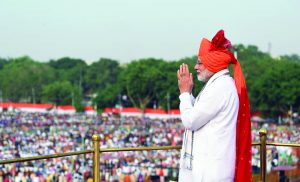
The Prime Minister, Shri Narendra Modi greeting people, at the ramparts of Red Fort, on the occasion of 72nd Independence Day, in Delhi on August 15, 2018.
Prime Minister Narendra Modi’s fifth and last speech during his tenure on the 72nd anniversary of Independence Day was meant to be historic in the run-up to the
Lok Sabha elections 2019. Surprisingly, PM Modi’s speech didn’t weave the same magic this time as his deliverance was nothing more than a report card devoted to his governance. He has delivered five Independence Day speeches since 2014. Like every year, PM Modi addressed the countrymen from the ramparts of the Red Fort with a slogan of ‘reform, perform and transform’.
Sharing his vision of collective growth “team India” PM Modi emphasises: “When 125 crore countrymen become partners, then each and every citizen joins us in the progress of the country. When 125 crore dreams, 125 crore resolves, 125 crore efforts, move in the right direction to attain desired goals then nothing is unattainable.”
Besides a number of other aspirations, Modi assured the nation of “doubling the farmers’ income by the 75th year of Independence, housing for all, electrification for all villages, toilets for all, Kasmiriyat,” etc.
Knowing the criticality of 2019 general elections for the NDA, Modi’s speech continued with the attacks on previous government with the mention of “policy paralysis during the UPA rule.”
In 2014 general elections, the BJP under the leadership of Modi was swept to power at the Centre by a majority and formed the government by reviving the NDA. In his maiden speech in 2014, PM Modi presented himself as an “outsider” to power corridors of Delhi and claimed of having brought a fresh perspective and vision.
Corruption, policy paralysis, unemployment, jobless youth, atrocities on Dalits, non-governance, women’s plight. etc, which was his USP during his electoral campaigns before he rode the crest of power, delivered the main highlights of his maiden speech from the Red Fort in 2014, with added emphasis on sanitation.
Nevertheless, Modi’s fifth and last speech of his tenure as PM has failed to set an agenda like 2014 and seemed to be largely bound by the exigencies of the upcoming elections as he tried to give an account of achievements of the past 50 months. The bulk part of speech looked like a report card of his government, touching upon the achievement of flagship programmes laced with unverifiable facts and reiteration of pledges for various segments of the society with the avowed objective of projecting the scenario that his party’s return to power only could ensure redeeming of those pledges.
Having offered more than 120 new schemes, spending more time in foreign visits and addressing more than 426 election rallies in poll-bound states, PM Modi could spend little time in overviewing the sincere implementation of these schemes and evaluating their monitoring. He did not walk the talk on most of the issues. Foreign policy was almost missing from PM Modi’s last Independence Day speech. Bulk part of PM Modi’s speech was a repetition of what he has been saying for the past one year and there was nothing new, and as one expert calls it “appealing rhetoric.”
While dwelling on the issue of rape and the deterrent effect of death penalty and the general importance of the rule of law, there was no reference to recurring incidents of lynching and atrocities on Dalits which have become a major blot on law and order in many states. According to one expert, PM Modi’s repeated emphasis on his so-called “impatience” and “vision of new India” was perhaps designed to send the message that his “return” to power was inevitable to fulfil that vision.
Some of the highlights from Modi’s speech
SPACE MISSION 2022
India has resolved to send manned spacecraft to the space by 2022. India will be the fourth country to do this.
FARMING SECTOR
The government promises of “doubling farmer’s income by 75th year of Independence.” New avenues of organic farming, blue revolution, sweet revolution, solar farming have emerged on which the government plan to move ahead. In fisheries, India has emerged second largest country of the world. The export of honey has doubled. The focus on Solar farming can contribute to agriculture and at the same time earn money by sale of solar energy.
AYUSHMAN BHARAT
10 crore families will get health insurance benefits. Each family will get 5 lakh rupees health coverage annually.
TRIPLE TALAQ
Those who have not faced the Talaq are spending their lives under pressure. “But I want to assure my Muslim mothers, sisters and daughters that I will not stop till they get justice. I will fulfill your aspirations.”
BLACK MONEY
Mobilised 90,000 crore money to the Government Exchequer.
DIGITAL INDIA
Modi said that Digital India is now making inroads into villages. “As a government sensitive to the needs of people, efforts are being made to turn Digital India into a reality.”
GST
On this PM Modi said: “Today, with the help of small traders, their open-mindedness and their attitude of accepting the new, the country has implemented GST. The small entrepreneurs, small businessmen who faced teething difficulties in adopting GST, accepted the challenge and the country is now moving ahead.”
BANKING SECTOR & ECONOMY
NDA government has enacted laws on Insolvency and Bankruptcy to strengthen the banking sector. Benami Property Law has been implemented with great courage and intention for the good of the country.
“There was a time when the world used to call India’s economy risky. However, today, the same people and institutions have been saying with a lot of confidence that our reform momentum has been strengthening our fundamentals.”
EASE OF DOING BUSINESS
Modi said that India has reached the 100th spot in Ease of Doing Business ranking.
POLICY PARALYSIS
There was a time when for the world India meant ‘policy paralysis’ and ‘delayed reforms’. However, today India is being discussed for ‘reform, perform and transform’.
MUDRA LOAN
13 crore people have availed Mudra loan. Of this 4 crore are youth who have availed loan for the very first time and are self-employed.
NORTH-EAST INDIA
The last village of North-East has been electrified recently. Highways, railways, airways, waterways and information ways (i-ways) coming to the region. The work of installing electric transmission lines across the North-East is progressing at a rapid pace.
Youth from the North-East are establishing BPOs in the region. New educational institutions are being set up and the North-East India is becoming the new hub for organic farming. North-East is going to host the Sports University.
J&K
With three basic elements of Insaniyat, Jamhuriyat, Kashmiriyat (humanism, democracy, Kasmiriyat) under the vison of Atal Bihari Vajpayee, the government plans to develop Jammu & Kashmir, including Ladakh or Jammu or Srinagar valley.
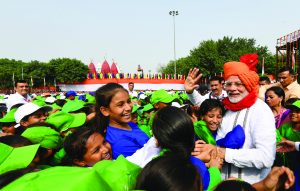
The Prime Minister, Shri Narendra Modi interacting with the school children after addressing the Nation on the occasion of 72nd Independence Day from the ramparts of Red Fort, in Delhi on August 15, 2018.
YOUNG INDIA
About 65 per cent of the population in the country is below 35 years of age. Today, our country is talking about Tier 2 and Tier 3 cities and paying attention to the youngsters engaged in modern agriculture in the rural areas. Today the youngsters of the country are taking the nation to greater heights by exploring and engaging in new fields such as Start-ups, BPOs, E-commerce, mobility etc.
Besides, other pertinent subjects that are of national interest like ‘housing for all’, ‘Swachh Bharat Abhiyan’, ‘power for all’, set up of educational intuitions, etc. were part of the highlights in his speech.
Celebrating the Independence Day is a fair idea that should continue with every citizen because it represents collective articulation of citizens’ sense of gratitude for those who sacrificed their lives to fight the mighty British empire, and imagined the possibility of freedom. It also epitomizes our collective gratitude for innumerable unknown heroes, and reminds us to emulate their example to safeguard this hard-won freedom. As one critic has opined, this occasion “reinforces some sort of group solidarity; and this secular ritual is essentially a form of ‘civic religiosity’ a modern nation needs to define itself.”
Weakening of democratic and constitutional institutions along with the fragmentation of the polity, erosion of secular values and rise of cultural nationalism have cumulatively given rise to a lamentable situation. The present state of affairs is afflicted with some disturbing characteristics which are prone to adversely impact social harmony and peace. Assertion of militant Hindutva encourages violence and intolerance in the garb of religion – be it mob lynching or cow vigilantism – and Dalits, marginalized segments and minorities fall an easy prey to such machinations.
Undoubtedly, India at 71 has come a long way; nonetheless, the defining spirit and mode of its governance and administrative structures still reek of sluggishness and ineptness. Opportunism is rife with the political class and the neo-rich class is mired in aggressive consumerism finding more solace in the material symbolic products than showing some concern for the socially deprived or disadvantaged. Most of the narratives handed out to the citizenry over the past seven decades have remained unfulfilled. Failure as well as inability of the ruling dispensation, irrespective of party politics, in delivering on to the citizens what they deserve in return for taxes they contribute to state exchequer, to liberate them from communalism and hatred, provide them a fair law and order ambience to feel secure, provide them decent and affordable healthcare, education and housing is inexcusable. Social justice still remains a far cry. A common citizen is compelled to ask himself, “Main Azaad HooN?”
One is reminded of the prophetic observation of Babasaheb Ambedkar made sixty-nine years ago: “By independence, we have lost the excuse of blaming the British for anything going wrong. If hereafter things go wrong, we will have nobody to blame except ourselves. There is great danger of things going wrong.”

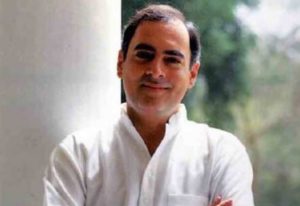 Congress president Rahul Gandhi along with Priyanka Gandhi Vadra, Robert Vadra and United Progressive Alliance (UPA) chairperson Sonia Gandhi on Monday, paid floral tribute to late prime minister Rajiv Gandhi on his birth anniversary at Veer Bhumi in Delhi.
 Delhi Chief Minister Arvind Kejriwal on Monday said people are not happy with the Bharatiya Janata Party (BJP) which will cause it to suffer major losses in the 2019 Lok Sabha elections.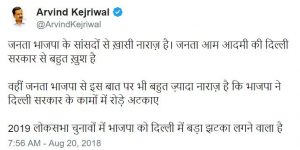
 Punjab Chief Minister Captain Amarinder Singh on Sunday said Navjot Singh Sidhu hugging the Pakistani Army Chief was not a nice gesture and was completely avoidable.
 Pakistan’s new Prime Minister Imran Khan announced a 21-member Cabinet on Saturday. Out of the 21 names announced, 16 will be ministers while five others will perform their duties as advisers to the premier, Pakistan Tehreek-i-Insaf (PTI) spokesman Fawad Chaudhry said.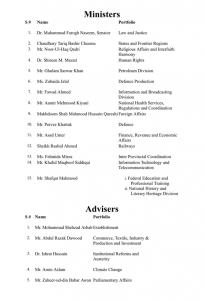
 P
P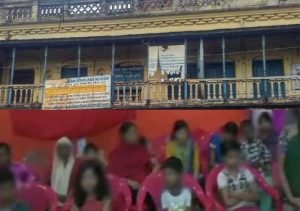 When my colleague from Lucknow Mudit Mathur called up to inform that Muzaffarpur (Bihar) like incident had been reported from Deoria in Uttar Pradesh, I was shocked. This is our India in 72nd year of its Independence. In fact I had taken with a pinch of salt a recent survey conducted by Thomas Reuters Foundation that ranked India as the world’s most dangerous country for women, ahead of Afghanistan, Syria and Saudi Arabia. Chilling details from shelter homes in Bihar and Deoria add dangerous dimensions to sexual abuse.
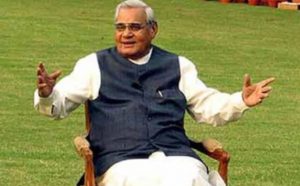 Former prime minister Atal Bihari Vajpayee was a great statesman and a true democrat who always had a heart for working classes and even stood with journalists in their struggle against their mighty and powerful management. He was a man of great convictions and always lived to his ideals. He was member of parliament from Lucknow and the management of Times group closed down part of its establishment of Hindi daily ‘Navbharat Times’ (Lucknow Edition) without any prior permission of the state government in June 1993. It rendered 92 newspaper employees including 49 journalist jobless because Times group refused to bear expenditure as per recommendations of the wage board.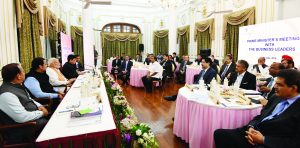
 What the army in Pakistan has been aspiring for after then Prime Minister Nawaz Sharif was found to be too inconvenient to be allowed to run the government because of his independent style of functioning, particularly in matters of foreign and defence policies, has become a reality. Nawaz, who had launched a drive to keep his country’s armed forces away from the political power structure with a view to allowing democracy to strengthen its roots, has been shown the door with little chance of revival of his political career.