Stop hounding activists, whistle blowers now

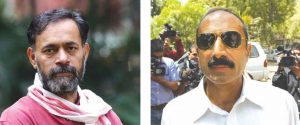
Hounding of activists and academics and whistle blowers continues. The latest to be targeted is Yogendra Yadav, who not just heads Swaraj India Party, but is the man behind the farmers’ stand against the State. Yes, for the last several months Yadav has been ripping off facades and masks from the Modi sarkar’s claims of reaching out to the farmers. Mind you, Yadav is armed with facts and figures. And it is certainly not easy to refute nor veto this articulate academic’s well-researched arguments.

Yadav’s knowledge of the ground realities and his awareness of this sarkar’s tactics, makes him stand out; strong enough to take on the lies uttered by the sarkari men. In fact, from early spring Yadav has been voicing his concerns about the very survival of the farmer. To quote him, “It may seem that the Budget aims to improve the economic conditions of the farmers, but it is all a hoax… The only solution to the grievances of the farmers is an increase in their income, which is directly related to the price.”

Also, had come into focus accompanying realities to the dismal condition of the farmers in the country: the budgetary allocation to agriculture has come down to 2.36 per cent from last year’s 2.38 per cent. Also, the farmers’ income has been stagnant for the last four years, with it now being the lowest in 25 years. Also, the government has not been fulfilling its promise on the MNREGS.

According to the requirements of the States, an estimated 80,000 crore is required, whereas the government is providing only 55,000 crore, which is the same as last year. Also, the Minimum Support Price (MSP) is making little inroads, simply because it is not reaching out to the farmer and is not lessening his plight. It was expected by the farmers that the governmental agencies purchase the entire quantity offered by the farmers at the announced minimum price, but then the ground reality bared a dark, gloomy picture.

Sanjiv Bhatt’s arrest

And yet another Modi critic has been targeted and arrested. Sanjiv Bhatt, an IPS officer of the Gujarat cadre, was arrested on a basis of a 22 year old case against him. Not really surprising, nor shocking when right-wing government is centre-stage! Well, aren’t we too well aware of Sanjiv Bhatt’s ongoing criticism of the Narendra Modi led government and the role it had played during the 2002 Gujarat pogrom!

And if a 22-year-old case could be followed up till it reached its logical conclusion, then what about criminal cases against many of the political characters — the so called top brass!

Last summer (August 2017), a study conducted by the Association for Democratic Reforms (ADR), a non-government organisation working for electoral reforms, brought forth hitting facts on the country’s lawmakers: As many as 51 MPs and MLAs have declared cases of crime against women, including of alleged rape and abduction.

Of the 51, 48 are Members of Legislative Assembly (MLAs) and three are Members of Parliament (MPs)…Giving party-wise details, the study stated that among various recognised parties, the BJP has the highest number of MPs and MLAs (14), followed by the Shiv Sena (7) and the All India Trinamool Congress (6) who have declared cases related to crime against women.

ADR and National Election Watch analyzed 4,852 out of 4,896 election affidavits of current MPs and MLAs. This includes 774 out of 776 affidavits of MPs and 4,078 out of 4,120 MLAs from all the states of India. Out of the analyzed 1,581 (33 per cent) MPs and MLAs with declared criminal cases, 51 have declared cases related to crimes against women. 334 candidates, who had declared cases related to crime against women, were given tickets by recognised political parties.

Among these candidates, 4 were given tickets by parties for Lok Sabha or Rajya Sabha elections. Various recognised parties have given tickets to 294 candidates with cases related to crime against women for state assembly elections. The study also brought into focus the fact that in the last five years, 19 independent candidates with declared cases related to crime against women contested in the LS and RS elections. And 103 independent candidates with declared cases related to crime against women contested in the state assembly polls.

Another fact came to the fore: over the last five years, 48 candidates with declared cases related to crime against women were given tickets by the BJP. The second highest number of candidates (36) who had declared cases related to crime against women were given tickets by the BSP, followed by 27 candidates from the INC which ha contested for LS/RS and state assemblies elections.

Another fact: Among the states, Maharashtra has the highest number of MPs and MLAs (12) who have declared cases of crime against women, followed by West Bengal (11) and Odisha (6)

Also, among the states, Maharashtra has the highest number of candidates (65) in the last five years, followed by Bihar (62) and West Bengal (52) (including independents) who were given tickets by political parties even though they declared cases related to crime against women in their affidavits.

Double standards

Tell me, where are we heading? Double standards in governance have never been so very blatantly stark! Arrests of activists and academics who dare to expose the government but the tainted politicians are left untouched. Even when you have the likes of Sakshi Maharaj(who happens to be Member Parliament from Unnao where a 16 year was raped by BJP’s sitting MLA) inaugurating a night club in Lucknow and roaming about scot free! This is when he has several criminal charges slapped on him.

Taking you still further, criminal charges are pending against Uttar Pradesh Chief Minister Yogi Adityanath.

Not just that, he was in the process of ‘removing’ or ‘dropping’ charges against several of his tainted BJP ministers and political workers. In December 2017, he had announced that his government was bringing a law to withdraw “politically-motivated” cases, registered against ministers, legislators and others in the state. Critics had pointed out that, that proposed law sought to scrap about 20,000 such cases registered in various parts of the state!

Leaving you to introspect on the dark days we are destined to live in, where whistle blowers and activists are hounded, and actual criminals not just roam about scot free but rule!

LETTERS@TEHELKA.COM
Life resumes after floods but livelihood in jeopardy

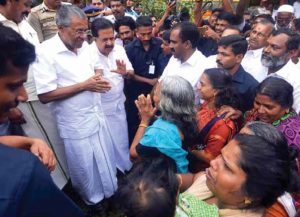
Ravaged and dislocated in the aftermath of deluge-a calamity declared as a worst disaster in the Kerala’s history, the victims of floods have manifested an incredible stoicism and resilience to bounce back. Keeping aside grief and misery, Malayalis were seen celebrating Onam (a 10 day long harvest festival celebrated annually) in the flood relief camps. The ordeal of losing essentials and comforts of life did not dissuade them from welcoming the King Mahabali, whose spirit, as per a popular legend is said to visit Kerala at the time of Onam.

Pinarayi Vijayan, the Chief Minister of Kerala had informed earlier that 483 people lost their lives in rain related incidents. Hundreds were admitted to hospital, besides many reportedly missing.

The loss is colossal. According to the Chief Minister of the state, the loss has been more than the Kerala’s annual plan. The state’s annual plan in the fiscal year 2017-18 was pegged at 26,500 cr. Later, it was claimed by the officials that the damage caused due to the worst floods and landslides in a century is approximately 30,000 cr. A government order said that the government department would not splurge on any function for one year. The government decree has refrained the departments to host any functions that involve expenditure and divert those funds on flood relief and rehabilitation.

The water has started receding and people have started returning to their homes from the relief camps. The psychological and emotional deprivation in the aftermath of floods cannot be measured and may remain seared into the memories of the victims for long time, but the economic impact of such disaster needs to be cured in a shortest possible time. The economic repercussions of such crisis are immense and large number of small scale and medium scale industries have been heavily hit. Besides the industry, the trade (shopkeepers, vendors, and self employed artisans and small distributers) have met huge losses.

Agriculture sector, which constitutes the backbone of the state’s economy, has also been ruined with an estimated 57,000 hectares of crops submerged. One crop is already lost and next i dependent on the timely pumping out of water from the inundated fields. The agriculture in Kerala is already in doldrums due to multiple reasons and the deluge may aggravate the existing crisis

“The loss to agriculture is being assessed but the damage is much morethan feared”, told P C Cyriac, a former bureaucrat who also had a stint as th Chairman of Rubber Board. Agriculture sector in Kerala is already in deep trouble. The rubber plantation has been suffering due to cheap imports from South East Asian countries. China has cut down the imports of rubber from these countries creating a glut in the producer countries. The Tyre companies were naturally inclined to buy cheaper rubber. The rubber grower s are organised but cannot exert pressure on the government to tweak policies in their favour. Close to 10 lakh small growers are engaged in rubber plantations. This calamity has accentuated their troubles.

Spice cultivation is strength of Kerala’s agriculture. Cyriac added that spices producers have been facing stiff competition from the cheap imports of Vietnam via Sri Lanka. Pepper imported from Vietnam is poor-quality. Under SARRC agreement India can import duty-free products from Sri Lanka. So this window of opportunity has helped the importers and traders flourish at the cost of local pepper producers.

Situation is bleak as one crop of paddy has already been swept under floods. Paddy is cultivated in approximately 2.5 lakh hectare. The second crop can be sown only when water is pumped out of the fields to make the land ready for sowing.

The loss of the trade and industry is being assessed by the government departments and insurance companies. The Kerala Chamber of Commerce and Industry has also been aggressively planning the course of action to revive the units damaged during the floods. The Chairman of the Chamber Biju Ramesh apprised that a large number of small traders and shopkeepers have been effected besides the industrial outfits. “A massive project is being designed in collaboration with the Chambers of Gujarat, Vishakhapattanam and other like-minded associations. This would be announced next week, he added. The loss to the tradeand industry has been pegged at 15,000 cr but these are only estimates. The actual value of loss can be higher.

The tourism sector has also endured the wrath of nature as the landslides and floods have caused extensive damage. The connectivity has been disrupted and it may take time to reconstruct the roads.

The tourism sector is hoping to make up for some loss as the Neelakurinji plants have bloomed this year. This occurs only once twelve years in Munnar in Nilgiri hills. This is expected to fetch domestic as well as foreign tourists. The Kerala Travel Mart, a biennial event organised to promote tourism in the state is also lined up in October and the players in tourism sector expect to do a brisk business.

The intelligentsia in the state believes that the crisis in the state would have caused more havoc had the people of state not displayed the exceptional courage and sensitivity towards one-another. The government machinery acts at its own pace but people rose to the occasion. Thanks to education; people in the state have a higher social consciousness to support each other, rising above vested interests.

But why did we let it happen? Why did we not pay any heed to the warning given by the noted ecologist, Madhav Gadgil who headed the Western Ghats Ecology Expert Panel set up by the Government? The panel in its 2011 report had proposed that an ecological crisis had been impending and several areas in Kerala that fall under Western Ghats be classified as ecologically sensitive. The panel had advocated stringent curbs on mining and quarrying and on use of land for non-forest purposes. Gadgil had reportedly indicated that brazen exploitation of natural resources in Western Ghats is purely driven by the greed for infinite profits.

Even the international Community has evinced concerns over the environmental degradation by rich an its consequences faced by the poor. The United Nations Secretary General Antonio Gutters at the launch of the 2018 New Climate Economy Report on 5th September cited the devastating floods in Kerala as a call of the nature to prevent climate change.

He was quoted in media reports saying, “Climate change is running faster than we are. The impacts are devastating and it is usually the poorest and the most vulnerable who are hit first and worst by storms, floods, draughts, wildfires and rising sea”. Natural disasters are unforeseen; even though we are not prepared we need plenty of money rehabilitation and reconstruction at the same time invest time and energy. The environmentalists rightly say that the loss due to environmental degradation is not quantifiable because not only one but many generations of mankind have to pay the price for this.

The laxity on the part of government departments, as no preliminary tests were conducted to examine the impact of opening and closing of dam shutters on the state rivers, took a toll on the lives and livelihood of so many innocent people. As per the reports, 35 out of 54 dams were opened for the first time that submerged vast areas and spelled doom on the lives of large number of people. Financial and material help is pouring in for the victims from all corners but the injury and loss inflicted on the lives of people is irreparable and the painful memories of the deluge will remain seared into the memories for long time.

LETTERS@TEHELKA.COM

BJP sounds a bugle for 2019 Lok Sabha polls

There are challenging policy issues boggling the mind of the masses due to growing price rise, burning the deep hole into the pockets of common man mostly due to its consequential overall impact on their monthly budget due to erratic hike in petroleum products; farmers facing worst ever agrarian crisis resulting rise in suicides cases of debt-ridden farmers and outburst of upper caste resistance to reservation and amendments to the SC\ST Act.

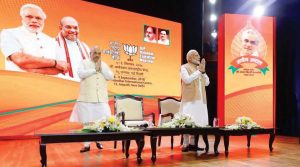
Amid all these developments, Prime Minister Narendra Modi has set an upbeat tone for the coming elections in four state Assemblies and 2019 general elections by giving political theme — “Ajeya Bharat-Atal Bhajpa.”

The move, it seems, is aimed at thriving on the idea of the party’s nationalism and legacy left behind by liberal stalwart and former prime minister Atal Behari Vajpayee. The election campaign would be led by Modi-Shah duo that brought the graph of party at all-time high. Shah’s tenure as BJP chief and his team has been extended till 2019.

Taking potshots on Congress efforts to form grand alliance to give a united fight to BJP, Modi said, “They (opposition parties) could not stand each other, today they are forced to hug each other. We want development with a huma face, equality with humanity.” He shared the podium with his trusted lieutenant Finance Minister Arun Jaitley, Amit Shah and old guard and one of the party’s founders Lal Krishna Advani. Overzealous by performance of BJP in various states since 2014, party President Amit Shah said, “We will win 2019 polls and after 2019 victory, nobody will be able to replace us for next the 50 years.”

Focusing his government’s achievements, the prime minister said ten crore people will be benefited from the coverage of ‘Ayushman Bharat’ scheme. He was referring to recently conceived new flagship scheme of affordable healthcare expanding network of more doctors and medical colleges for the people. “We will strengthen each polling booth, win each nine crore workers and 22 crore people will map the entire nation. We have not been at rest since 2014,” Modi told his top party cadre.

“I am from Gujarat, undefeated for 31 years. It is the same place from where Mahatma Gandhi and Sardar Patel come from. We have no arrogance of power, we see power as an instrument to improve people’s lives,” he said. “We have done great work in the past four years. Our performance of 48 months will be judged against their (Congress’) performance of 48 years. They don’t fight o issues, they fight on lies. Their falsehoods must be refuted strongly.”

Discussing future course of action Amit Shah said that we will win 2019 polls and after 2019 polls victory, nobody will be able to remove us for next 50 years. We are not saying this out of egotism but on basis of our work. The Modi Shah duo were addressing recently held two day meet of national executive, top policy making body of Bhartya Janata Party, at Ambedkar International Centre in Delhi. The meeting was attended by national office bearers and state BJP presidents who discussed the party’s preparations ahead of elections in four states and the national election next year.

Launching a blistering attack on the Opposition in his inaugural address, BJP chief Shah said that Modi government is working for “making India” whereas the Congress is working for “breaking India.” he termed the proposed “mahagathbandhan” (grand alliance) of the BJP’s rivals is an illusion and myth, and will make no difference to its fortunes.

Union Home Minister Rajnath Singh moved political resolution endorsing the party’s pledge to build “New India” by 2022, and said “the opposition has neither a leader nor a policy while Prime Minister Narendra Modi is the most popular leader in the country. The opposition’s plan to defeat the saffron party was a day dream.” “New India’ as proposed in ‘Vision 2022’ will be free of poverty, corruption, terrorism and casteism,” the resolution added.

Supporting the resolution Union HRD Minister Prakash Javadekar said the party is optimistic for return to power with an even bigger majority. “The opposition has no agenda or strategy and they only believe in ‘Modi roko abhiyan’ (Stop Modi),” He added. “Modi government has vision, passion and imagination, and a lot of development work has been done in the last four years under the NDA rule. Internal security has become better and terrorism in Jammu and Kashmir has also come down,” he added.

“Atal ji was a Gentle Giant,”Arun Jaitley described him while moving Condolence Motion. He said BJP is committed to the path and ideal set by Vajpayeeji.

Madhya Pradesh CM Shivraj Singh Chouhan, who is gearing up to face upcoming assembly elections in Madhya Pradesh said, that the party and state government is working in tune of PM Modi’s vision to double the farm income by 2022. He added that an agriculture resolution was passed during the executive meet. “Modi government has been excellently performing on every front, be it improving irrigation facilities for farmers, interlinking of rivers or providing farmers with the soil health card,” he remarked.

On farmers’ distress, the BJP national executive adopted a resolution reiterating its pro-farmer policies targeted to double their income. It enumerated government’s initiatives to provide Minimum Support Price calculating input cost plus 50 percent as a base to fix minimum support price for their produce. It also described steps and finances provided by the government for various integrated schemes for the benefits of farmers such as trade policy for agricultural development, pradhan mantri fasal BimaYojna, Soil Health Card, Fertilizers, Irrigation, Agricultural credit, Employment Generation in Rural Areas, Livestock Development, Green Energy, Operation Green, White Revolution (dairy development) and Blue Revolution(fisheries development). Gujarat Chief Minister Vijay Rupani revealed that Modi will unveil the world’s biggest statue, ‘Statue of Unity’, of Sardar Vallabh Bhai Patel on the occasion of his coming birth anniversary on 31st, October.

“BJP’s stoic silence on real issues like petro hike, inflation, falling value of Rupee, failing economy and Rafale Scam has once again proved its indifference to sufferings of people,” commented congress party spoke person Randeep Singh Surjewala on twitter. Attacking on policy issues Surjewala said, “BJP now stands for -‘Break, Jam and Perish’! ‘Breaking’ the backbone of India’s MSME’s and shopkeepers through flawed GST; ‘Jamming’ the economy through Demonetisation disaster; ‘Perish’ the future of youth and farmers.”

Bahujan Samaj Party chief Mayawati had reacted the day upper castes organised “Bharat Band” terming it a BJP sponsored affair targeted mostly in the states where assembly elections are going to take place. She took a clear stand that her government gave clear directions during her rule that there should not be any misuse of this enactment legislated to protect atrocities on poor and downtrodden people. It is the duty of the government of the day to check its misuse.

The BJP meeting was convened after a year as against the party’s constitutional requirement of holding one in every three months while the national council hasn’t met even once in the last two years. The people were anxiously expecting to know about the structural changes in policies to bring down of high petrol and diesel prices into their monthly budgets but the two day meet did not find inspiring way for their concerns.

The BJP is considered to be a party of upper castes with the overall dominance of Brahmins and Rajput leaders at its helm of affairs. The last general elections witnessed excellent mastery of Amit Shah’s caste engineering to attract alienated caste leaders from Samajwadi Party and Bahujan Samaj Party into his fold. The neglected second line leadership of other political parties fetched rich dividends for BJP in terms of winning 2014 Lok Sabha and 2017 state assembly elections. Perhaps it was the dilemma why it avoided evolving participatory approach to impending crises points at a public platform having divergent views and interests. Upper caste resistance to reservation and amendments to the SC\ST Act has been contentious issue as many BJP stalwarts were opposed the manner such sensitive matter was dealt with.

The deferment of organisational elections till after the 2019 polls and it appears that the top leaders and core strategist would be using some other modus operandi to scuttle ongoing efforts of opposition unity for a grand alliance as it appears to be uncomfortable proposition for 2019 general elections.

LETTERS@TEHELKA.COM

Allahabad court detects fraud in UP teacher selection process

The tall claims of clean, efficient and transparent governance were once again shattered when the selection process adopted by the UP government for the selection of 68,000 assistant teachers in the basic education sector of the state failed to pass the test of its judicial scrutiny. The court summoned the records of answer sheet and other evaluating records with the carbon copy of the candidate and noticed discrepancies. The competition for Assistant Teacher Recruitment Examination 2018 (ATRE 2018) was conducted by the newly created Examination Regulatory Authority  (ERC).

Amid the charges of large-scale corruption and bungling in the selection process, the expose actually came up before Lucknow Bench of Allahabad High Court where a scheduled caste candidate, Sonika Devi, filed a writ petition claiming that her answer sheet was replaced as candidates who secured less than her marks have been called for counselling scheduled for the first week of September. Meanwhile, Justice Irshad Ali, provisionally allowed the petitioner to attend the counselling. The court will resume its further proceedings in the matter on 17th September.

When the answer sheet produced by the Secretary, ERA was compared with the carbon copy of the petitioner before the court it did not tally. Advocate General then persuaded the court to allow him to produce before it bar code bearing on the copy for tallying, to clarify whether this is the copy of the petitioner or not. Court agreed to his suggestion but when Sri Dharmendra Shahi, Technical Expert, examined the copy and found that the bar code bearing on the first page does not tally with the bar code bearing on the rest of inner pages of the answer sheet. It left no room for the court but to entertain the petition and grant interim relief to the complainant.

Failing to satisfy court’s pointed queries, the red-faced Advocate General Raghvendra Singh assured the court that the government would conduct an independent enquiry into the murky affairs and shall inform the court about its outcome. The angry Chief Minister Yogi Adityanath immediately suspended the secretary ERC, Sutta Singh, and ordered disciplinary action against her as per rules, besides removing Secretary, Basic Shiksha Parishad, Sanjay Sinha.

On his directives, later the state government formed a three-member committee headed by principal secretary, Sanjay R Bhoosreddy, Vedpati Mishra, project director of UP Education for All,  and Sarvendra Vikram Bahadur Singh, Director of Basic Education.

Defining the terms of reference assigned to this high level committee, Manisha Trighatia, Secretary, Basi Education said, “The committee will probe the anomaly in assistant teacher recruitment process and fix accountability of those involved. The panel will submit its report in seven days and will suggest measures to plug loopholes to prevent a recurrence of the scam.”

Highly placed sources in the government feel scam of such a big level could not be possible without the active connivance between examination conducting computer agency and senior officers of the department. The manner in which barcodes in the copies were exchanged itself speaks of fairness in the selecting process. The reports of destruction of evidence by burning the answer sheets by the suspended officer in Allahabad office have been videographed and the video going viral on social media further creates doubt in the people about transparency and fairness in the selections. Some aspirants have also knocked the doors of Allahabad High Court.

The state capital is besieged with marches and protests by the unsuccessful candidates who could not be selected in the final list as they are alleging organised scam in the selection process. They are not satisfied with high-level probe and are demanding CBI probe into the matter. “In this examination, a list of 23 examinees was obtained, who had not cleared examination, but were declared as qualified,” they alleged.

They have been staging a continuous protest in the state capital. The exam was conducted on May 27, 2018, whereas the government modified cutoff criterion for the various reserved and unreserved categories on 21st May 2018 just six days before the actual examination date. New norms reduced the number of successful candidates to 41,556 whereas requisition was notified for 68,500 assistant teachers.

Most of the protesters had similar grievances. Expressing their dissatisfaction over the manner this examination was conducted, many candidates registered their allegations during talks with Tehelka , while they went to meet former Chief Minister and Samajwadi Party president Akhilesh Yadav. Puja from Aurriya district (R.N.3535100429) alleged, “Evaluation of carbon copy of my answer sheet with declared answer keys does not match at all. I must secure 80 marks whereas the result sheet gave me just 37 marks.” Manbodh (R.N. 35381105203) from Pratapgarh said, “Instead of 74 marks I got 64 marks.” Yatindra Kumar (4064136) from Hathras district levelled the serious charge of forgery with his answer sheet, “Scanned copy of my answer sheet recorded that I secured 91 marks out of 150, but in the results I was declared failed, securing just 41 marks.” He felt that his answer sheets appeared as replaced with one Miss Sita who secured 41 marks, but in results, she just got 91 marks.

Sumit Kumar from western UP Amroha (R.N.12130302210) complained, “I just got 45 marks whereas my answer sheet accounts for 75 marks.” Similar charges were advanced by Sudhir Singh of Allahabad, Gourav Shukla of Faizabad, Vimal Kumar Mishra of Deoria, Rajnish of Bhadoi, Bhim Sing of Basti, Gaya Prasad Yadav, Rishikesh Paswan and many others who surrounded this correspondent pressing to note down their details.

Addressing the protesting candidates, Akhilesh Yadav took the advantage of the situation and alleged that, “BJP government has committed a big scam in the appointment of teachers in the state. It has cheated the job aspirant youths and is playing with the future of BTC teachers.”

On the other front, pressing the demand for immediate appointment, the passed candidates for BTC teachers’ examination, were mercilessly cane charged, manhandled, arrested and  deported to secluded place after midnight on 8th September 2018 by police force from the office premises of Director Basic Education, where they were staging continuous sit-in for the last nine days. Police did not even spare the protesting women present at the site of the peaceful demonstration.

The ATRE-2018 was conducted to fill 68,500 vacant posts of teachers in government primary schools in pursuance to advertisement dated 23.01.2018. More than one lakh aspirants had appeared in the exam, whose results were declared in August. After the declaration of the result of the written examination of the recruitment, answer key was issued by the Examination Regulatory Authority U.P. Lucknow on 13.8.2018. However, only 41,556 could clear it. The exam was held at 248 centres in the 18 divisions of UP. The first district allocation list for counselling was announced on August 31, 2018, while second district allocation list for counselling was  declared on September 2, 2018.

At a time when BJP is preparing for rejuvenating its popularity graphs, Yogi Adityanath is busy showcasing the pro poor development initiatives to make a front to challenge the united opposition in 2019 general elections. Amid preparations to promote its flagship schemes promising to provide more and more jobs, such oppressive steps with young job seekers can prove counterproductive. Such unfavourable situation could be wisely averted but due to gross mismanagement, insensitivity and lack of concern in the administration about the deteriorating education sector, it happened.

LETTERS@TEHELKA.COM

It’s Singh versus Singh in Fortis feud

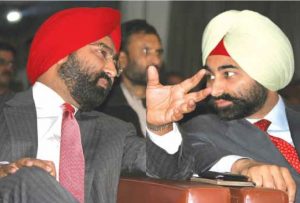
While the financial authorities, including the Serious Fraud Investigations Office (SFIO), were probing the irregularities in Fortis and the Singh brothers who owe $500 million to Daiichi Sankyo over fraud allegations related to the 2008 sale of Ranbaxy Laboratories, the family feud was never open in public domain.

In fact, it is after months of closed door infighting, which is a key feature of many big business houses, the feu between well-known Singh brothers of the erstwhile Ranbaxy group has come out into the open. The younger sibling Shivinder has filed a case of “oppression” against his elder brother Malvinder Singh and family friend Sunil Godhwani. he younger brother has charged the two with systematically undermining the interests of Fortis Healthcare Limited.

Forging wife’s signature

In his 43-page petition, Shivinder alleged that signature of his wife Aditi Singh, who had held the post of managing director of RHC Holdings, was forged. “There are also instances of the petitioner No 3 (Aditi Singh) being shown as present for a board meeting when she was in fact abroad.

Few years down the line nobody close to the family could believe that the corporate dealings would take such a turn. For the record when the Fortis deal was entered, it was touted as one of the biggest acquisitions in the Indian patient-care industry and the 4,500-crore Fortis-IHH deal could intensify competitive intensity in the space. The deal anticipated that postexecution, the IHH-Fortis group of hospitals will be among the biggest in the country, competing directly with some of the large listed hospital chains. For instance, the Apollo has a total capacity of 10,000 beds, including those at its partner networks. Max Healthcare has a network of 14 hospitals, with a combined capacity of 2,500 beds. By contrast, in this deal, IHH would have got access to a network of 34 hospitals of Fortis in India and in international markets.

Together, these facilities would have a capacity of more than 4,600 beds. Although IHH has a significant presence in rest of Asia with hospitals in nine countries and about 10,000 beds, its India footprint is rather modest. Currently, IHH is present in five Indian cities with a network of seven hospitals and less than 1,600 beds in operation.

Nobody could visualise that the matter would reach such a passé. The threepage document from Shivinder Singh said, “I have filed a case against Malvinder and Sunil Godhwani in National Company Law Tribunal for oppression and mismanagement of RHC Holding, Religare and Fortis.”

Singh said, “I mutely watched the organisation I founded come to a point where it was publicly auctioned; where my family and myself have been stripped of our legacy, our finances and my personal credibility.” Oppression charge In a release sent to media houses, Shivinder Singh said that “for two decades he and his brother have been synonymous with one another”. In the petition filed before the New Delhibench of the National Company Law Tribunal (NCLT), the younger of the Singh siblings, who were synonymous with each other for decades, sued Malvinder for “oppression and mismanagement” of their companies. The petition charged Malvinder, 45, and former chairman of Religare Enterprises Limited Sunil Godhwani of putting the company in a debt trap and acting prejudicially to the interest of its creditors and shareholders. It alleged that Malvinder “forged the signatures” of Aditi Singh, Shivinder’s wife, in the documents of RHC Holdings Private Limited, which along with Oscar Investments Limited jointly owned financial services firm Religare Enterprises Ltd. and hospital chain Fortis Healthcare Limited.

The petition goes on to charge that Malvinder and Godhwani “used their respective positions to perpetrate or cause others to perpetrate illegal financial transactions and various acts of mismanagement by and through RHC, leading to massive losses to RHC and its subsidiaries, and a depletion of the wealth.”

Shivinder asked NCLT to declare that Malvinder and Godhwani caused grave prejudice to the interest of the company by acting in “collusion with each other”. He also requested NCLT to “direct Malvinder Mohan Singh and Sunil Godhwani to restitute the undue gains made by themselves which lead to losses being suffered by the petitioners and RHC Holdings”. Shivinder has also petitioned NCLT to direct Malvinder and Godhwani to “restitute and restore the wealth of RHC Holding which got eroded due to their unlawful actions” and disclose “their assets, bank accounts and net worth”. He has asked NCLT to declare that Malvinder and Godhwani caused grave prejudice to the interest of the company by acting in “collusion with each other”. Shivinder alleged in his petition before the NCLT that his elder brother Malvinder perpetrated illegal financial transactions, forged Shivinder’s wife’s signature and led the company into an unsustainable debt trap. Malvinder and Godhwani “used their respective positions to perpetrate or cause others to perpetrate illegal financial transactions and various acts of mismanagement by and through RHC, leading to massive losses to RHC and its subsidiaries, and a depletion of the wealth.”

Injunction sought

The petition filed through law firm RRG & Associates also asked NCLT to direct Malvinder “to return the funds unlawfully taken from Fortis Healthcare and Religare Enterprises”. Shivinder also requested NCLT to direct Malvinder and Godhwani “not to alienate any interest in any asset anywhere so that recoveries can be effected against them”. While seeking interim relief, Shivinder has sought an injunction “to maintain status quo as on filing of the present Petition” over the shareholding of RHC Holdings tillthe time of disposal of the matter. He also sought “status quo to be maintained on board of directors” of RHC Holdings in his petition filed under Sections 241, 241 and 244 of the Companies Act, 2013.

In his 43-page petition, Shivinder alleged that signature of his wife Aditi Singh, who had held the post of managing director of RHC Holdings, was forged. “There are also instances o the petitioner No 3 (Aditi Singh) being shown as present for a board meeting when she was in fact abroad. For the record, the RHC Holding Pvt Ltd is a a non-banking financial company owned by the families of Singh brothers. Currently, Malvinder Singh is the managing director of the firm.

Ghost of other deals

It seems that it is not only Fortis ghost that refuses to leave the two brothers. Daiichi is pressing hard to get 3,500 crore from Singh brothers while Securities and Exchange Board of India (SEBI) is conducting a forensic audit of Fortis and Religare.

Earlier in the year 2018, Siguler Guff & Company filed a case in Delhi High Court accusing Singh brothers of siphoning funds from Religare. The Delhi High Court upheld the Singapore arbitration tribunal’s decision to fine the brothers for around 3,500 crore for “concealing and misrepresenting” facts from Daiichi Sankyo.

LETTERS@TEHELKA.COM

‘China is a cornerstone of Pak’s foreign policy’

With cricketer-turned politician Imran Khan taking over as Pakistan’s Prime Minister with the support of some religio-political parties and others, voices began to be heard that the deal for the China-Pakistan Economic Corridor (CPEC) might be renegotiated as it was considered not being in the long term interest of Islamabad. Those who thought on these lines must revise their opinion now. They were hoping against hope. The new government in Islamabad has re-emphasised the significance of the China factor in Pakistan’s foreign policy with CPEC to remain as its component.

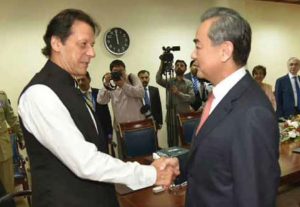
Khan highlighted his country’s all weather friendly relations with China during a meeting with Chinese Foreign  Minister Wang Yi, who visited Islamabad soon after the change of government in Pakistan. In Khan’s own words, “Friendship with China is a cornerstone of Pakistan’s foreign policy”. The two leaders described CPEC as being of “mutual benefit of the people of both countries”. However, third country investors will also be invited to join the $60 billion project, which will acquire two new aspects to it — socio-economic and regional development.

New calculations began to be made with regard to CPEC’s future and the China factor in Pakistan’s foreign policy after the UK’s Financial Times carried a report quoting Khan’s Adviser on Commerce Textile, Industry & Production and Investment Abdul Razzak Dawood. The report had it that “the previous government did a bad job negotiating with China on CPEC; they didn’t do their homework correctly and didn’t negotiate correctly so they gave away a lot.”

In Dawood’s opinion, “Chinese companies received tax breaks and have an undue advantage in Pakistan; this is one of the things we’re looking at because it’s not fair that Pakistan companies should be disadvantaged.”

Elaborating his viewpoint, Dawood pointed out, “I think we should put everything on hold for a year so we can get our act together. Perhaps, we can stretch CPEC out over another five years or so.”

Dawood’s remarks could not be taken lightly as he is a renowned businessmen, who founded Descon Engineering, involved in engineering and construction, chemical, power and inspection projects and, perhaps, the first Pakistani multinational operating in six countries.

The Pakistani leader’s clarification that he was quoted out of the context was not taken seriously till Imran Khan reiterated his government’s commitment on implementing the CPEC deal during the Chinese Foreign Minister’s visit to Pakistan. China, however, does not want CPEC to remain confined to Pakistan. The economic corridor project will reportedly be extended to Afghanistan and beyond obviously to strengthen Chinese presence in the strategically significant region ostensibly on the pretext of creating job opportunities. There is also a plan to involve a number of other countries too, including Turkey, Saudi Arabia and Russia, in the SEZ’s (special economic zones).

CPEC is by far the largest and most ambitious part of the Belt and Road Initiative (BRI), aimed at connecting Asia and Europe along the ancient silk road. It also includes a huge expansion of Pakistan’s Gwadar port in Baluchistan province as well as increasing road and rail links and setting up $30 billion worth of power plants.

Clarifications by Razzak Dawood and glorification of CPEC by Imran Khan notwithstanding, there are serious reservations among certain groups in Pakistan with regard to CPEC. Pakistan’s religio-political parties, particularly, some of which are now part of the government headed by Khan have always been opposed to China’s expanding footprint on Pakistani soil owing to the various kinds of threats involved, including transformation of the socio-cultural reality in Pakistan These parties have been opposed to the harsh treatment meted out to Uyghur Muslims in China’s Xinjiang province.

There is no commonality in the views of these religio-political parties and those of the Pakistan army on the Uyghur movement, the East Turkistan Islamic Movement (ETIM), which can be understood from the remarks of Pakistan army chief Gen Qamar Javed Bajwa, who told the visiting Chinese Foreign Minister that his country was firmly committed to the cause of eliminating the ETIM as part of its counterterrorism drive.

Some people in Pakistan see the China-funded CPEC as the arrival of a new East India Company to subjugate their country on the pretext of helping it become a manufacturing and export hub. Obviously, the billions of dollars the Chinese will be investing in this mega scheme cannot be without a long-term objective. Interestingly, they will be accomplishing this task with the help of the Pakistan army, which has reportedly raised a Special Security Division comprising 15000 troops to provide security to the Chinese working in the various CPEC projects.

Yet the anti-Chinese allies of the Imran Khan government are keeping quiet. Perhaps, they believe that ideological differences can be kept aside so long as Pakistan is getting benefited economically, strategically and otherwise. Over 30 per cent projects linked to the CPEC process are located in Baluchistan, the most backward province of Pakistan. Eighteen of the 22 projects falling within the framework of CPEC involve investment and financial aid. Only four such projects will be implemented with the help of concessional loans. Nine of the CPEC related projects have already been completed and 13 are in the process of coming up. Pakistan has already benefited with the creation of nearly one lakh new jobs with an investment of $19 billion.

CPEC, however, has serious implications for India as the economic corridor passes through Gilgit-Baltistan in Pakistan-occupied Kashmir. “The CPEC passing through Pakistan-occupied- Kashmir challenges Indian sovereignty,” said the Union Defence Ministry in its annual report submitted to Parliament. Prime Minister Narendra Modi expressed India’s serious concerns over CPEC when he met Chinese President Xi Jinping on the sidelines of the G-20 summit in September last year but in vain. Once the CPEC plan begins to be implemented in Afghanistan and then in Iran, as planned, it will have far more serious implications for India.

Pakistan will continue to nurture its relations with China also because of the US getting distanced from Islamabad on the issue of fighting terrorist elements.

A new angle is coming up as Russia and many countries in Europe too are reportedly showing interest in the Chinese economic initiative owing to negative signals from the US administration under President Donald Trump. Under the prevailing circumstances, Pakistan obviously cannot weaken the China factor in its foreign policy. But all this means a serious challenge for India’s foreign policy managers. Are they listening?

LETTERS@TEHELKA.COM

PAK ANNOUNCES VISA-FREE ACCESS TO KARTARPUR SAHIB GURDWARA

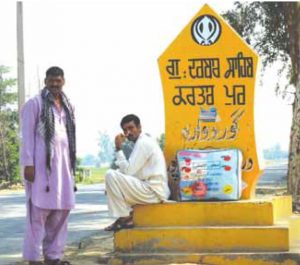
When Pakistan’s information minister Fawad Chaudhry disclosed that the Imran Khan government was planning to give Sikh pilgrims “visa-free direct access” to the historic Kartarpur Sahib Gurdwara, there was jubilation among Sikhs and other people across the border this side. Chaudhry had said the Pakistan Tehreek-e-Insaaf-led government was developing “a system” for Sikh pilgrims to visit Kartarpur Sahib and some forward movement is expected soon. He made it clear that Pakistan will soon open the border at Kartarpur for Sikh pilgrims who will be able to visit Gurdwara Darbar Sahib Kartarpur without visas.”

What led to discussions on the issue was that people are in favour of the opening of the corridor because there has been a longstanding demand in India for opening a corridor for the Sikh pilgrims between Kartarpur Sahib in Narowal district of Pakistan’s Punjab province and Dera Baba the two sites, barely 6-km apart. However, there was a section that was completely opposed to it in view of India’s deteriorating relations with Pakistan, terrorist infiltration from across the border and killing of soldiers in the crossfire and terror activities.

Punjab Minister Navjot Singh Sidhu unfazed by criticism of his recent trip to Islamabad for Imran Khan’s oath ceremony reiterated that he had “no words to thank” the cricket veteran turned- prime minister for opening the corridor of Kartarpur Sahib on Guru Nanak’s 550th birth anniversary in November.

All this happened while Sidhu faced political flak back home for embracing the Pakistani army chief Qamar Javed Bajwa during the oath ceremony. Some attacked him for his newfound “huglomacy” while Sidhu told his detractors when prime minister, Narendra Modi could give hugs to dignitaries why can’t he? He went ahead and requested the central government to reciprocate.

Pakistan agreeing to open up the corridor to Gurdwara Kartarpur Sahib, a historic Sikh pilgrimage 120 km from Lahore is a very significant development. Guru Nanak, the first of the ten Sikh Gurus, had settled down there after his travels thus making the place a sacred place.

Sidhu also pleaded with the Prime Minister and the External Affairs Ministry that when Pakistan has made an effort, we should also reciprocate, adding that this “is not the time for religion based politics”.

However, it was not the BJP that was the only party to criticize Sidhu but within his Congress party, there were murmurs of dissent. Punjab Chief Minister Amarinder Singh too joined the chorus to take on Sidhu for attending Imran Khan’s oath ceremony. At the ceremony, by design or incidence, Sidhu was seated on the front row next to a Pakistan Occupied Kashmir leader. However, Imran Khan supported his cricketer turned politician friend by posting tweets describing Sidhu as an “ambassador of peace”.

To ensure that Indian government reciprocates the Pakistan move, Navjot Singh Sidhu wrote to External Affairs Minister Sushma Swaraj on September 8, 2018, asking her to utilise the opportunity because when opportunity strikes, it is time to make use of it. He mentioned that the Kartarpur Sahib corridor would bring joy and happiness to the Sikh community the world over.

Sidhu wrote that “Such is the sentiment of the pilgrims in India that they visit the border everyday just to have a glimpse of this holy shrine through binoculars arranged by the Border Security Force at the Border in the Dera Baba Nanak region of India. Some touch the holy earth and some depart with tearful eyes”. Now, Chief minister Captain Amarinder Singh too has begun appreciating the efforts of local bodies minister Navjot Singh Sidhu and termed Pakistan’s announcement to open the Kartarpur corridor a welcome move for Sikh pilgrims.

LETTERS@TEHELKA.COM

Kashmiri women aim for financial independence

In conflict-ridden Kashmir, running a business is a challenging norm but becomes double challenging for a women. In a largely conservative society of Kashmir women are aiming for financial independence via entrepreneurship. Although the goals are small but the road is not only rough but sturdy too but more and more Kashmiri women are opting out of jobs and choosing entrepreneurship as a career.


Dressed in a black color track suit and a yellow badge shining on her chest on which Owaisa Khan, Yoga therapist and personal trainer is engraved on. Owaisa started practicing Yoga when she was in college. Her passions for fitness started when her father lost both his limbs due to an neurological stroke. “My father became obese with time and lots of other diseases attacked him. This made me realize that to be fit is very important,” she said.

She thought of doing a full time degree in physical education and finally opted for a B.P.ed course in one of the institutions in Ganderbal, Kashmir. While she was still in the middle of the course she lost her father. Since, she made it her goal to advice and guide people to remain fit and eat healthy.

With no support from home she started training school children in different forms of physical activities like Yoga, boxing etc. It was tough to pursue a career in a field that had really no scope in valley. She did not lose hope and stood firm to her choice and decision “When I started going to train school children people used and mock me. They would say what can a girl do and what training she will impart to boys but it never disheartened me. I took it as an opportunity rather than a challenge,” she said.

With time she got herself trained and certified in Yoga, Boxing, and a course in self defense as well. Currently, she is the only Kashmiri female trainer in the Gold’s Gym Srinagar. She aspires to open a Yoga institute of her own in future.

She means business Anam Siraj had quit her job in Delhi to start her venture The Closet Cloud in Kashmir

Anam Siraj, 27, have studied commerce. She comes from a service class family where her parents have worked in the government sector. However, her extended family was into business, her grandfather and her paternal uncles have been into business of Kashmiri handicrafts. Anam’s venture ‘The Closet Cloud’ basically has its roots in her deep interest for colors, clothes and designing. “Good, pretty clothes have always fascinated me. So this idea came in, when I was working with an MNC in Delhi. I wanted to do something of my own. So I asked myself this question of what I was good at, and the answer was designing clothes,” she said.

She decided to go for it, resigned from her job in Delhi and came back home to get it started. Coming from educationist’s family, her parents thought of her decision as a stupid one. They wanted her to be an educationist too. “Since my parents were not really happy with this idea of starting a business venture, it took me a lot of convincing to get their approval on this. So the basic challenge was to convince my parents that what I wanted to do was a good feasible startup plan,” she said.

Since it was her decision to start a clothing brand, she did not want to ask her parents for any kind of financial help. So raising finances was a challenge which was looked into by a financial institution later. On top of that the unrest of 2016, which was right after she began work, was quite a blow. “It took a great deal of dedication and will to face that and pass it on gracefully. You must relentlessly chase perfection and need a ridiculous amount of passion. Once you are ready to give it your 100 per cent, trust me, no one can stop you.”

Singing passion Nargis Khatoon is following her passion for music

Nargis Khatoon remembers that the passions for music started when as a child she understanding the nuisances of likes and dislikes. She first performed on stage when she was just four years old. Throughout her school days, she performed at every function but things started to change when she got a chance to perform in Radio Kashmir auditorium but support from family was missing. She fought back and never missed any opportunity to perform be that school annual function or any charity show.

Narrating about the interest in music, she said, “Girls are always discouraged to choose singing as but with time I realized that many of my family members especially my uncle had an inclination towards singing & was blessed with a good voice, that’s where I thought the gene came from.”

As soon as she completed her 10th in 2014, she got a chance to give voice to many songs that were featured on DD Kashmir and some jingles as well. Speaking about the formal training, I haven’t got any as such but I have a strong urge to get classically trained.

With no support from family and no good scope in the valley in the field of music demotivated her as an artist particularly being a female but her mother became motivation factor. “I lost my Mom in 2014, she was battling cancer. She was real supporter & would support me in each & every step I took in my life but since she left, I’ve been multitasking. Managing home; pursuing studies and chasing my dream too,” Khatoon said.

Only thing that never lets Nargis forget her dream is the struggle that she has been doing since so many years. She doesn’t have a specific goal even but want to achieve small milestones and build her music career brick by brick. “I want to leave my mark, learn & progress each day & get recognized for my art. I have no formal training and now I am planning to get trained in classical music,” she said.

Since last three years, one thing that she noticed and bothers her, wherever she have performed, She is been the only female artist to perform. “We can’t say girls aren’t inclined towards art particularly music but I fail to reach the conclusion why don’t they come in open, break the barriers & start chasing your dreams.” The message she has to all the girls who aspire to be musicians.

Blend success
Anam has started a unique initiative in the form of a creative studio

A year back when 26-year-old Anam Khan decided to come back to her hometown Kashmir she thought of starting something of her own. Although, her parents have been very supportive throughout the journey but she had to put in some real hard work to make it work.

“My parents always knew my love to create new things. I also knew that my start up wouldn’t be related to any specific field; it would definitely be an amalgamation of several things. So that’s how I came up with blends”, said Anam who hails from Peerbagh, Srinagar. Blends is a unique initiative in the form of a creative studio, based in Kashmir. It’s an amalgamation of Art, Fashion, Interior decor and Make-up.

Anam did her schooling from Tiny Hearts and graduated from Women’s College, Srinagar. Later, she pursued her masters in Linguistics from University of Kashmir but her heart had always been inclined towards art, so she started exhibiting her paintings since she was 16 years old. After completing her Masters in Linguistics she convinced her parents to let her do some diploma courses in Interior Designing and Fashion Designing from Delhi. More options in her aspired field opened after that. She soon started working with different companies in Delhi as an interior designer and as a social media manager.

While starting Blends she Kept in consideration the artistic genome of Kashmiri youth, this is intended to serve as a platform for multiple creative needs. “As time passes, it will grow with greater aspirations and expand its coverage of various other art forms as well,” she said.

LETTERS@TEHELKA.COM

‘Madrasa experience helps Muslim girls expand aspirational horizon’

EDITED EXCERPTS FROM AN INTERVIEW

Why did you opt to focus on the madrasas for Muslim girls?

The core idea of my research stems from my past experience of working with the Muslim community in Delhi as a social worker. Observing the daily lives of people especially the women, hearing them talk about themselves I would often be struck by the manner in which categories such as biradari, religion, class, gender, community fuse to create opportunities and obstacles and shape daily choices. In this work I try to capture the everyday experiences of girls studying in madrasa in their own voice — their views of what they learn in madrasas, how they relate to what they are learning, what they discuss amongst themselves, how they relate what they have learnt to their life at home and in the wider community, how do they perceive their own education and its value, how do they envision their future.

While working in the community I observed that there was a preference for sending boys to low fee paying private schools whereas the girls were sent to govt schools and/or madrasas. Or they were shifted to madrasas from schools generally after class 8th or 10th. This made me look into girls madrasas and I noticed that in academic literature, policy and also popular imagery madrasas were regarded as almost exclusively male institutions. My main aim was to go beyond and challenge these stereotypical imageries. All these factors led me to opt for girls madrasas.

How different was the atmosphere in the madrasas from the typically set, much-in-circulation perceptions? Were you pleasantly surprised or what were your reactions?

The book counters several stereotypes/ much — in-circulation perceptions… My work challenges ideas that regard madrasas as outmoded medieval institutions and assume that such education necessarily inculcates traditional values or produces women whose aspirations conform to normative expectations around homemaking and motherhood.

The book introduces the reader to a variety of girls, many of whom find their educational and aspirational horizons expanded as a result of the madrasa experience. What might seem like a respectable parking place to leave women as they wait for marriage while preparing for pious and conservative lives turns out to offer richer and a more ambivalent set of possibilities.

It also calls for a shift from the top down state led madarsa modernisation programme to bottom up processes moving madrasas towards ‘modernisation’. My book highlights the multiple micro processes at play — the competing interests shaping parental demand for madrasa education and extent to which it is gendered, the discernable trend in madarsas to combine religious (dini talim) with modern (duniyavi talim), role of madarass in fostering peer networks and linkages which aid student aspirations and enable transition to mainstream education/public spaces in unanticipated ways.

Rather than bracketing madrasas in terms of tradition vs modern, religious vs sacred my research highlights its not dichotomies but a continuum at work. The madrasas and mainstream educational institutions do not represent mutually insulated spheres; they are characterised by constant to-and-fro movement and continuity.

These linkages are often self-consciously contrived, with madrasas actively seeking to get recognition for their qualifications from universities and education boards, or spontaneously generated by parents and students. The girls I researched had studied in so-called secular schools, ranging from government to private schools, before joining the madrasa.

Several of them, while in the madrasa, were simultaneously sitting for open school exams through distance learning mode. On completion of their madrasa education many of them opted for higher education in central universities that recognised madrasa degrees.

Before you entered the madrasas and met the teachers and students, were you apprehensive? If so, please detail the whys.

Initially one is apprehensive as the madrasa especially a girls is a highly fenced institution. It prizes its security arrangements. All the girls madrasas I visited listed the fact that they provide a mehfooz mahaul — gates, iron grills, restrictions on visitors — in their brochures.

Gaining ongoing access was one of the biggest challenges I faced in my fieldwork. But I think this is also largely owing to the fact that post 9/11 madrasas are always under the radar so they have to be extra cautious.

There is a hidden agenda behind outside visitors, as the madrasa founder president said generally ‘journalist out to tarnish the images’.

So while it appears intimidating, yet once you meet the students and teachers, it’s like any other educational institution teaming with young students.

What do you think of the madrasas and the students and the teachers?

I graduated from being apprehensive, lost and feeling quite unwanted (as a researcher), overwhelmed by the disciplinary regime and everyday rituals to regarding the madrasa a place where I had friends and found great peace (sukoon as they used to call it). It was a great learning and humbling experience.

Comment on the right-wing’s ongoing propaganda about the madrasas.

The simmering tension between the constitutional morality and popular morality is perhaps most evident in the competing understandings of secular India. Decades of propaganda by the Right Wing has entrenched prejudice against the minorities especially Muslims.

Every motif associated with Muslims is vilified and under attack– Madrasas are right there on top of the list. This is compounded by the international islamophobic narrative — where post 9/11 and the war on terror the genesis of all violence in the name of religion is traced to madrasa.

My book builds the narrative from bottom up, looking at the micro context, the everyday lives.

I demonstrate how despite Constitutional safeguards Muslim communities in India are increasingly having to rely on Muslim networks for basic services- education, health, housing, employment.

There is a discernable impulse for change in Muslim communities- for example for women’s education.

But the wider canvas marked by increasing communalization of social space excludes Muslims and limits choices. Community institutions are seen as safer.

All the parents, community members, girls, I interviewed wanted education but and its was not religious conservatism that led to their opting for madrasa education but a combination of factors- affordability, feeling that community institutions were safe for girls, concerns surrounding marriage and so on.

LETTERS@TEHELKA.COM

Movie Love Sonia tells the ugly truth of human trafficking

The issue of human trafficking or sex slavery is often swept under the carpet, as it makes people uncomfortable most of the times. Culturally, India is projected as a land where family, customs and traditions  are of paramount importance. Cows are worshipped; female goddesses have festivals dedicated to them; women, at least mothers and wives are kept under veils and protected fiercely by men. Over time on ground, these traditions have become tools to coerce, exploit and abuse women and girls for economic benefit, within a veil of hypocrisy that is socially acceptable. Locating centralized data collated by the central government or a government agency is difficult; however a few statistics provide a clear enough picture. According to a study by Sahastra Seema Bal, trafficking of women and girls in the Indo-Nepal border has gone up by 500 percent between 2013 to 2017. Girls are sold to brothels in Mumbai, Delhi and Kolkata. The price of a girl could range from 50,000 INR to a sum as measly as 10,000 INR. Prevention efforts are minimal and demand for young girls forced into sex trade is growing steadily. In 2018, crackdowns across Madhya Pradesh, Karnataka, Uttar Pradesh and Bihar, among other states, have thrown up shocking details of systemic abuse and trafficking of girls that have powerful people with local administration working hand in glove. Changing India’s record of women and child trafficking has become imperative to its development story; hence both central and state governments are working towards correcting this. With a vast, organized network of locals involved in trafficking, rooting it out from India is a hugely challenging task.

As has been Hindi cinema’s record in the past, the ugly truth behind human trafficking has simply been swept under the carpet. It’s not a good, entertaining film story- not the kinds that will get family audiences to flock to and buy popcorn. However, some filmmakers have gone beyond the gloss and begun addressing this nationwide menace. In fact, their films have begun to make people aware of the sheer size and complexity of human trafficking in India. Love Sonia is literally a labor of love for Tabrez Noorani. One of the producers of Slumdog Millionaire, Noorani has combined his Hollywood know how with an inherent Indian story about two sisters. One gets trafficked by a helpless father while the other, Sonia, seeks her out. This leads her to get sucked into an ugly, frightening world of trafficking-one which makes it’s victims cross borders in sea cargo containers and peddle their youth across different cities. With a very impressive cast that includes Anupam Kher, Rajkummar Rao, Manoj Bajpai, Frieda Pinto, Richa Chaddha and Hollywood stars Mark Duplass and Demi Moore, Love Sonia features TV star Mrunal Thakur in the title role. Her performance and the film has been applauded at it’s first outing at a Melbourne based Indian diaspora film festival. Thakur admits to have found this role so tough that she would have nervous breakdowns while filming. Noorani has spent nearly ten years researching for Love Sonia, in the process, collaborating with NGOs to rescue victims in Mumbai and other Indian towns. Bajpai states that this is one of his toughest roles ever, and that this film will become an eye opener in the Indian human trafficking narrative. Love Sonia is produced by David Womark, experienced in making Hollywood films and nominated for an Oscar for life of Pi. Womark brings scale and reach to Western film markets for government or a government agency is difficult; however a few statistics provide a clear enough picture. According to a study by Sahastra Seema Bal, trafficking of women and girls in the Indo-Nepal border has gone up by 500 percent between 2013 to 2017. Girls are sold to brothels in Mumbai, Delhi and Kolkata. The price of a girl could range from 50,000 INR to a sum as measly as 10,000 INR. Prevention efforts are minimal and demand for young girls forced into sex trade is growing steadily.

In 2018, crackdowns across Madhya Pradesh, Karnataka, Uttar Pradesh and Bihar, among other states, have thrownup shocking details of systemic abuse and trafficking of girls that have powerful people with local administration working hand in glove. Changing India’s record of women and child trafficking has become imperative to its development story; hence both central and state governments are working towards correcting this. With a vast, organized network of locals involved in trafficking, rooting it out from India is a hugely challenging task. As has been Hindi cinema’s record in the past, the ugly truth behind human trafficking has simply been swept under the carpet. It’s not a good, entertaining film story- not the kinds that will get family audiences to flock to and buy popcorn. However, some filmmakers have gone beyond the gloss and begun addressing this nationwide menace. In fact, their films have begun to make people aware of the sheer size and complexity of human trafficking in India.

Love Sonia is literally a labor of love for Tabrez Noorani. One of the producers of Slumdog Millionaire, Noorani has combined his Hollywood know how with an inherent Indian story about two sisters. One gets trafficked by a helpless father while the other, Sonia, seeks her out. This leads her to get sucked into an ugly, frightening world of trafficking-one which makes it’s victims cross borders in sea cargo containers and peddle their youth across different cities. With a very impressive cast that includes Anupam Kher, Rajkummar Rao, Manoj Bajpai, Frieda Pinto, Richa Chaddha and Hollywood stars Mark Duplass and Demi Moore, Love Sonia features TV star Mrunal Thakur in the title role. Her performance and the film has been applauded at it’s first outing at a Melbourne based Indian diaspora film festival. Thakur admits to have found this role so tough tha she would have nervous breakdowns while filming. Noorani has spent nearly ten years researching for Love Sonia, in the process, collaborating with NGOs to rescue victims in Mumbai and other Indian towns. Bajpai states that this is one of his toughest roles ever, and that this film will become an eye opener in the Indian human trafficking narrative. Love Sonia is produced by David Womark, experienced in making Hollywood films and nominated for an Oscar for life of Pi. Womark brings scale and reach to Western film markets for this Indie film, thereby ensuring that it reaches critics and audiences globally.

International cinema, by well meaning film professionals and celebrities, has told stories of human trafficking with regularity. Sold (2016), is a poignant and beautiful story about a young Nepalese girl sold into trafficking and the travails of rescuing her. Emma Thompson was executive producer of this story written and directed by Jeffrey D Brown. It stars David Arquette and Seema Biswas, along with Assamese teenager Niyar Saikia as the victim. Despite winning awards and recognition at international film festivals, Sold is yet to release in theatre anywhere. Films with hard-hitting subjects that don’t dilute their message often remain limited to festival audiences, which limit their ability to find Kukunoor, has not prevented the film’s print from being up on YouTube; at least that ensures that the film is being seen here. A documentary Oass — The Dew Drop, also travelled to Cannes seeking buyers. It dealt with the common criminal practice of trafficking of women and children in Nepal through the eyes of a real victim.

In Hindi cinema, Mardaani, the 2014 Rani Mukerji starrer, dealt with the trade of young girls kidnapped and sold into prostitution. While made for commercial viewing, Mardaani had its hard hitting moments; especially in carving out an antagonist (in a stellar debut by Tahir Raj Bhasin) who considered selling, buying girls just everyday business. The film also looks at the nexus of politicians, businessmen and rich men that seek out sex with underage girls routinely. For a Yash Raj film, this is a brave and well-done attempt to highlight the realities of trafficking. In mainstream Hindi cinema, the only other recent film to touch upon systematic human trafficking is Awarapan, made in 2007. Starring Emraan Hashmi and Shriya Saran, the film flopped but it had presented a sensitive portrayal of hapless young girls forced into sex slavery and prostitution and the complete lack of rehabilitation efforts for them. In terms of a subject, human trafficking provides multiple opportunities to tell relevant stories from India. Compulsions of poverty, bias against the girl child, feudal power structures and paid sexual abuse- are relevant social malaises that form layers of India’s trafficking story. The onus on supporting and promoting films that address any aspect of this sordid tale is on the government and it’s cultural bodies. Instead of snipping off this content with a puritan attitude, letting it breathe in movie theatres will go a long way in building awareness against this form of injustice. It’s time that trafficking takes center stage on film; and the government supports such projects.

LETTERS@TEHELKA.COM

MOST POPULAR

HOT NEWS