From subsistence to defensive existence, the queer identity in India has devolved with the passage of time. The Indian LGBTQ community is perhaps as old as the history of the country itself. And yet a draconian law drafted by our erstwhile British colonisers, in 1860, usurped their identity and freedom till now. In a landmark judgement delivered on September 6th, 2018, the Indian Supreme Court in the case of Navtej Singh Johar and Others v. the Union of India has ruled that the part of Section 377 of the Indian Penal Code (IPC), which criminalises homosexuality, is unconstitutional. The Indian Supreme Court, in this case, did not merely strike down a piece of bad archaic law but delivered a judgement which is overwhelming in its reach. Team Tehelka applauds and celebrates this decision, which is the culmination of a long struggle waged by the activists as well as the oppressed, through time and political transitions.
Contrary to popular perception, Section 377 earlier criminalised any sexual encounter ‘against the order of nature’, thus making all sexual acts, except vaginal intercourse, illegal. The fact that this brought the entire LGBTQ community under vigilance, against a fraction of a majority heteronormative community, has not only made their official existence illegal for more than a century but also shaped a biased society along the way. Individual freedom and privacy are constitutional rights that section 377 infringed upon. The Hon’ble Supreme Court of India recognised the fact in its present ruling. The judgement is more than 500 pages long, comprising of four separate judgements written by the five-judge bench of the Supreme Court – Chief Justice Deepak Misra and Justices A.M. Khanwilkar, Rohinton Nariman, Dhananjaya Chandrachud and Indu Malhotra
The ruling explores issues of gender identity, sexuality and sexual orientation. It relies on biology and science as much as all that which makes us human, to arrive at its conclusion. It relies on judicial precedents from India and across the world. It traces the colonial history of this law and looks to a future in which we can leave these unjust and violent pasts behind. It dispels any notion that decries homosexuality being against the order of nature. Justice Chandrachud quoted from an article he read which said that homosexual behaviour existed in all species except those that “never have sex at all, such as sea urchins and aphis.” Chief Justice of India Dipak Misra also wrote, “What nature gives is natural. That is called nature within.” A number of other cases in the High Court of Delhi and the Supreme Court, such as the Naz Foundation case and the National Legal Services Authority v. Union of India, serve as critical markers in this journey.
India is one of the few countries where history celebrates its diversity as well as its love stories. From Khajuraho to the Hijras, we can see symbols of free love everywhere. Though traditional religious literary sources do not speak of homosexuality directly, the Indian history and mythology are replete with references of changes of sex, homoerotic encounters, and intersex or third gender characters often found both in traditional religious narratives as well as in regional folklore. But a law created by a willful king (Henry VIII) but long abolished in the country of its origin, paved the way for a homophobic Indian society as we see today. Though there may not have been many incarcerations over more the 150 years that have passed since an entire community was subjugated to a secret life filled with fear and discrimination.
As Sonia (name changed), a 27-year old software engineer from Bangalore puts it, “During a job interview two years ago, I was asked if I had plans of getting married soon. When I replied that I never planned to, they asked me the reason for it. Once I replied that I did not dig boys, the room fell silent. That’s when I knew the interview was over and I wasn’t getting the job. They never called back. Since then I am very careful about not disclosing my lesbian identity in my workspace. Even my friends, who are from the same industry, don’t know my truth. I sometimes felt claustrophobic in their company. Though the change in the attitude of the society wil take time, I now feel hopeful that day is near after this judgement.” On the other hand, Josey (name changed) from Bhubaneshwar reveals,” A few years ago, a cop who was an acquaintance, blackmailed me for months to out me as a gay man if I did not pay him. The experience scarred me for life. I am so happy the law is on my side now.”
Only a member of the Indian LGBTQ community can understand the sense of independence to love and live, that the rest of us have always taken for granted. The principal petitioner Navtej Johar and his partner Sunil Mehra have been a couple for 24 years under the shadow of India’s archaic law on homosexuality. Mehra, 63, is a well-known journalist (the former editor of the Indian edition of Maxim magazine), while donning many other hats. Johar, 59, travels the world as an award-winning Bharatanatyam dancer, choreographer and yoga teacher. They were a private couple who chose to put their name on a writ petition to abolish section 377. Their petition was accompanied by a clutch of other gay and lesbian personalities who had previously been equall private about their sexuality. They came out in the open about their choices and beliefs, just to give a human face to the long running battle to love freely.
The movement to repeal Section 377 was initiated by AIDS Bhedbhav Virodhi Andolan in 1991. On 24 August 2017, the Supreme Court upheld the right to privacy as a fundamental right under the Constitution in the landmark Puttuswamy judgement. The Court also called for equality and condemned discrimination,stated that the protection of sexual orientation lies at the core of the fundamental rights and that th rights of the LGBT population are real and founded on constitutional doctrine. This judgement was believed to imply the unconstitutionality of section 377.
The road to true inclusiveness is still long and bumpy. This is just the beginning. The LGBTQ community can claim their rights and their love, knowing the law of the land is on their side. But we, as a society, still need to let go of our biases and support our own in this journey. The government and public needs to come together in their efforts to sensitise the young and the old, the rural or the misinformed, about the need for acceptance of our gay brothers and sisters. Let us come together and paint the sky in rainbow colours for Indian society free of prejudice and full of love.
A recent statement by fugitive liquor baron Vijay Mallya that he had met Finance Minister Arun Jaitley to settle matters with the banks before leaving India has sparked fresh controversy. The Bharatiya Janata Party (BJP) and Congress are in a war of words over the remark, with both the parties accusing each other of colluding with the beleaguered aviation tycoon.
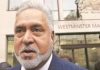
Mallya, while appearing for a hearing of his extradition at London’s Westminster Magistrate Court, added that the banks in India had filed objections to his settlement letters. “I left because I had a scheduled meeting in Geneva, I met the finance minister before I left, repeated my offer to settle with the banks… that’s the truth,” Mallya told reporters outside London’s Westminster Magistrates’ Court, where his extradition case is being heard.
Jaitley, in a Facebook post, denied a settlement had been reached. Jaitley said he had declined to hold an audience with Mallya by telling him there was “no point talking to me”. Immediately after Jaitley’s sharp rebuttal, Mallya appeared to tone down the seriousness of his comments, saying it was “not fair” to create a controversy over this issue as it was not a “formal meeting” and he only “happened to meet” the finance minister. “I happened to meet Mr. Jaitley before in Parliament and told him that I am leaving for London… I did not have formal meetings scheduled with him,” he said. Congress president, however, accused Jaitley and the government of lying on the issue.
On whether he met any other BJP leader before he left India for London, Mallya said, “Over a period of time, I have met many colleagues in Parliament and expressed to them my desire to settle with the banks. I don’t believe I owe any further details.” The 62-year-old Mallya, who was famously known as ‘King of Good Times, also said that he was not “tipped off” by anyone and he had “happened to meet” Jaitley in Parliament — a statement seen as a dilution from his earlier “innocent statement” that he had met the finance minister before leaving India and had told him about his settlement offer for banks. “I can confirm to you that nobody tipped me off. There was no need to run and the allegations are media created allegations.”
But Mallya’s “happened to meet” rectification or clarification could not stop Congress and other opposition parties from targeting the government for “hiding” the information. Demanding the details of Mallya’s meeting with the finance minister, the Congress said, “Mallya’s comment he met Jaitley confirms our assertion that government was fully complicit in flight of people like him and others. The government must explain how Vijay Mallya was allowed to leave India”. The Congress also asked the government to reveal the details of Mallya’s meetings with Finance Minister Arun Jaitley.
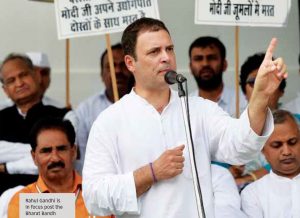
Rahul Gandhi, on his part, accused Jaitley of colluding with a “criminal” and not informing investigating agencies about liquor baron Vijay Mallya’s plan to leave the country. Rahul also questioned Prime Minister Narendra Modi’s role in Mallya’s flight to Britain in 2016. “Why did Jaitley allow Mallya to escape, or was it an order from the prime minister?” he asked. “This is a clear-cut case of collusion. There is some deal between them. Finance Minister Jaitley must resign and this should be investigated,” he said.
Senior Congress leader PL. Punia said that on March 1, 2016, when he was in the Central Hall of Parliament, he had seen Jaitley and Mallya talking “discreetly”. “On March 3, we heard from the media that he (Mallya) fledthe country on March 2. I have clearly stated about this in each of my interviews with the media. There are CCTV cameras, we can all see that for proof. If I am wrong, I will quit politics,” Punia said. He said the meeting between Jaitley and Mallya lasted for 15-20 minutes.
Delhi Chief Minister Arvind Kejriwal, in a tweet said, “Why did the Finance Minister hide this information till now?” “PM Modi meets Nirav Modi before he flees the country. FM meets Vijay Mallya before he flees India. What transpired in these meetings People want to know,” Kejriwal tweeted.
CPM General Secretary Sitaram Yechury said, “It’s a fact that all of us had known earlier. Whatever denials government may issue, it confirms that all those who looted public money by taking loans from banks and absconded, not one of them happened to leave the country without knowledge of the government. They (govt) have to own up to the fact that they allowed this loot to happen and the fact that they are allowing this loot to happen, more are looting.”
Defence minister Nirmala Sitharaman, meanwhile, termed as “motivated” the Congress’s demand of Jaitley’s resignation over his meeting with Mallya, saying it was a strategy to deflect attention from the UPA government’s “cronyism and favoritism” Sitharaman was quoted as sayin that a brief conversation which Mallya had with Jaitley in a corridor of Parliament is being “played up” and asserted that responses to the issue have “reinforced” the fact it was not a conversation of any merit.
Jaitley, she noted, had already explained as to how Vijay Mallya misused his privilege as Member of Parliament to speak to him. To a question about Congress lawmaker PL Punia’s claim that he had seen Jaitley sitting with Mallya in Parliament’s Central Hall and there would be CCTV footage to corroborate it, Ms Sitharaman shot back, asking if the footage would also have audio recording. “It already seems a very motivated allegation,” she said of the Congress’ charge against Jaitley.
Hitting out at the Congress, she said letters were written to the Reserve Bank of India and State Bank of India during the UPA’s rule to help Mallya. “They are in tour face. How favouritism naming that one company has been made… Whose period made it sick? Whose period had favouritism and cronyism entering in to suggest to the central bank and written instructions given to banks to lend to this defaulter,” she asked.
Joining BJP’s counter-offensive, law minister Ravi Shankar Prasad asked whether Gandhi and Mallya were “working in tandem” and claimed the liquor baron had allegedly benefitted from bank facilities during the UPA government. Railway minister Piyush Goyal termed Mallya a ‘criminal’ and said his words could not be taken seriously, adding that banks were pressured by the UPA regime to sanction loans to Mallya due to the Gandhi family’s “relations” with him.
Adding fodder to the Opposition’ charges, former Attorney General Mukul Rohatgi told NDTV it was a “big coincidence” that Mallya left India on the same day a consortium of banks moved to recover their unpaid debt and it was possible that someone could have “tipped him off”.
Retorting to the claims, BJP spokesperson Sambit Patra flashed a bunch of documents at a press conference and told reporters that a series of letters between the Reserve Bank of India (RBI) and SBI show “how the previous dispensation under Sonia Gandhi was biased, partial and kept all norms and regulations at bay to give a sweet deal to Kingfisher. Sometimes it seems the airline was not owned by Mallya, but by the Gandhi family in proxy.”
The boss of the defunct Kingfisher Airline, who has been on bail on an extradition warrant since his arrest in April 2017, is fighting extradition to India on charges of fraud and money laundering amounting to around 9,000 crores. Kingfisher had to be grounded in October 2012 under a burden of over 9,000 crore of unpaid loans and several other liabilities, including defaults on employee salaries and other payments.
The rupee has just hit a new all-time low and for the time crossed the 72 mark for the even as US dollar eased a bit in global markets. When I filed my cover story “Fuel on Fire” sometime back for Tehelka, little did I know that the predictions would be so true and come prophetic. In few months rupee has fallen to abysmally low levels and fuel prices further skyrocketed. The fall is even more than symbolic because this Independence Day India entered in its 72nd year of Independence and Rupee touched its nadir at 72. Naturally hash tag India@72 and Rupee@72 appeared imminent.
All Opposition parties have come together against Modi
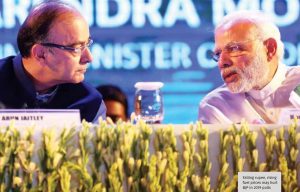
Indian currency has fallen more than 12 per cent on a year-to-date basis, making it one of the worst performing currencies among emerging markets. The trends indicate that the pain might not be just over yet. Finance Minister Arun Jaitley attributed the fall in rupee to global factors and said there was no need for panic or knee-jerk reactions since the RBI was doing whatever is necessary to deal with the situation. Finance minister Arun Jaitley tried to comfort the market by saying that the global risk aversion towards emerging market currencies was due to the recent developments in Turkey.
It was expected that Prime Minister Narendra Modi’s speech on the occasion of Independence Day, which was focused on India’s socio-economic development, would halt this free fall when the markets reopened. However, contrary to expectations, the skeptics had a field day and rupee, showed no signs of recovering and had fallen to a record low. However, Finance Minister’s statement that ‘India’s macro fundamentals remain resilient’ was, indeed, reassuring, especially when the country is back on the higher growth trajectory after showing a robust GDP rate of 8.2 per cent. The growth rate made India, the fastest growing economy of the world, even beating China in the game, but ironically worst was not over.
All parameters suggest that the bearish trends would continue and rupee might weaken further. In fact the rupee had its worst month in three years in August, 2018 as crude rallied on speculation sanctions on Iran will shrink global supplies. The crude import bill for the world’s fastest-growing oil user surged 76 per cent in July from a year earlier to $10.2 billion. That pushed up the trade deficit to $18 billion, the most in five years. Why worst is not over yet and pain still to continue is because India imports nearly 83 per cent of its crude oil requirement.
The rising crude oil prices have deepened concerns about the country’s current account deficit and inflation dynamics as the downslide of the rupee against the dollar continues unabated. About three months ago, it fell to a 15-month low. And now it has plummeted below the psychological 72-mark. While the cushion of over $400 billion forex reserve is comforting, the latest data indicates softening of inflation. The trade war between the US and China and the spat between Turkey and America is another cause of concern. Currency depreciation for any developing economy could be a major stumbling block in its growth. It calls for measures to encourage exports and strengthen manufacturing sector to reduce import overdependence. Prime Minister’s “Make In India” should be given a further push to give required impetus to manufacturing sector to avoid over-dependence on imports.
Continued strengthening of the US dollar, lack of foreign direct investment (FDI) and concerns over rising oil prices are likely to keep the rupee under pressure and push it further down against the US dollar. Analysts said trade war between China and the US is putting pressure on all the Asian currencies, but rupee is the worst hit so far. Foreign portfolio inflows into the domestic equity market have also come down due to the worries over US-China trade war.
EX-ALLY HITS OUT
N Chandrababu Naidu, the chief of the Telugu Desam Party that was part of the ruling NDA till recently, has launched a sharp attack on the BJP-led national coalition over the weakening of the rupee against the dollar and the increase in fuel prices. “Where are we heading to,” the Andhra Pradesh chief minister, the former ally of the BJP who turned into its sharpest critic this year, asked, blaming what he described were the faulty policies of Prime Minister Narendra Modi’s government.
“The value of rupee is falling down rapidly with every passing day. I am not surprised if it touches 100 per dollar in the coming days. The prices of petrol and diesel are shooting up steeply and very soon, the price of petrol might touch Rs 100 per litre.” Naidu said at a media conference in Amaravati where his government the state’s new capital. “They are going to hit a century. And, the rupee will also touch the century mark. You can then buy petrol paying a dollar.” Naidu was unsparing in his attacks on the centre for the state of the economy as well. He claimed that the economy had collapsed in the last two years and “the growth rate is on the decline too… There is no financial discipline in the country now,” the chief minister rued.
The Telugu Desam Party had earlier this year ended its four-year-long alliance with the BJP, complaining that PM Modi did not deliver on his promise to give Andhra Pradesh a special category status that could have given the state access to higher central funding. The TDP’s exit from the national coalition also coincided with sharper attacks on the centre on the economy and his assessment of PM Narendra Modi’s surprise decision to ban high value currency notes in 2016. An early supporter of the currency ban to unearth black money, the chief minister wondered what the centre had achieved by going in for demonetisation. “Every citizen of the country has suffered a lot due to demonetisation. Even now, liquid cash is not available and people are not able to draw money from ATMs,” he said.
Naidu, who was appointed as the convenor of the committee on digital economy soon after the demonetisation, recalled that he had suggested banning of currency of 2,000 and 500 denomination and printing of more 200 and 100 notes so as to help the common man, besides recommending digital currency for higher transactions. “But the NDA government did the exact opposite to what I had suggested as the convenor of digital economy. I demand that the Modi government ban 2,000 and 500 notes at least now and make smaller currency available for the people,” he said.
Delhi Chief Minister Arvind Kejriwal has hit out at prime minister Narendra Modi on the declining rupee vs dollar rate, and the hike in the price of petrol and diesel. Accusing Modi of doing the same thing that he used to blame the Congress for during the United Progressive Alliance regime, the Aam Aadmi Party (AAP) leader said: “Prime minister (Modi) used to talk a lot about rupee and petrol before becoming the prime minister. But now, the BJP is saying what the Congress used to say. Earlier, the Congress was responsible for inflation, now it is the BJP. The common man is the one who is suffering,” he added
BANKERS’ TAKE
A cross section of bankers observe that the Reserve Bank of India (RBI), however, will not be comfortable with the currency touching 70 against the dollar and will strongly defend the domestic currency. “Concerns over widening current account deficit due to higher crude prices and demand for dollar from oil companies and general importers are impacting the rupee, “said a senior bank official. Those companies who have to repay their external commercial borrowing (ECB) debt are also stocking up the US currency, a bank treasurer said.
The apex bank has always stated that it does not target any level of the domestic currency but intervenes in the foreign exchange (forex) market to check its volatility. The forex reserves at $406.058 billion as of June 29, gives RBI enough comfort to intervene in the forex market. The rupee has depreciated as consistent dollar demand from banks and importers, mainly oil refiners, following higher crude oil prices kept the rupee under pressure. Global oil prices have climbed after the US asked its allies to end all imports of Iranian oil by November. Concerns over supply disruptions in Libya and Canada also pushed prices higher. Brent crude was trading at nearly $78 a barrel in Asian trade these days.
Given that India is the world’s third largest oil importer, any hike in global oil prices will inflate the import bill and disrupt the fiscal position. India’s current account deficit (CAD) has already widened 42 per cent year-on-year to $160 billion in FY18, and a high deficit means the country has to sell rupees and buy dollars to pay its bills. This further reduces the value of the rupee.
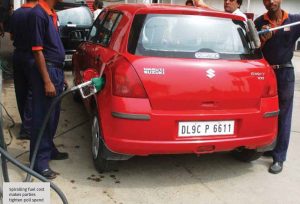
The sustained foreign capital outflows have also played a big role. Foreign portfolio investors have pulled out more than 46,600 crore from the capital markets in the year so far. However, the major factor weighing down the rupee is the ongoing trade turmoil between the world’s two largest economies, the US and China and fears of its escalation, which continues to hit forex market sentiments. A depreciating rupee could put inflationary pressure on the economy. Petrol and diesel prices have risen for the 10th consecutive day and currently petrol is priced at 79.31 per litre and 86.72 per litre in Delhi and Mumbai. Petrol prices in Kolkata and Chennai are 82.22 per litre and 82.41 per litre. Diesel is priced at 71.34 in Delhi, 74.19 in Kolkata, 75.74 in Mumbai and 75.39 in Chennai. CoverStory Spiralling fuel cost makes parties tighten poll spend
OPPOSITION OUTCRY
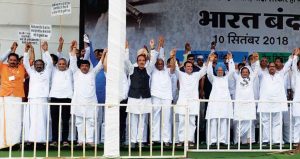
After having focused its attention on the Rafale deal, unemployment and agrarian distress, the principal opposition party, Congress is now planning a nationwide protest by all Opposition parties against rising prices. Congress spokesperson Manish Tewari said that if the government does not reduce fuel prices immediately, the party will launch nationwide protests and also hold a joint rally on the issue. “We will hit streets over the hike… There will be nationwide and elaborate protests from Kashmir to Kanyakumari.”
A meeting has been called to give a final shape to the agitation programme,” he said. Consumer price inflation in July rose 4.17 per cent compared with the same month a year ago, declining from a five-month high of 4.9 per cent in June, according to data from the Central Statistics Office. Then there are cascading effects of rising petrol and diesel prices on overall cost of living of common people. Fuel prices have increased for the tenth consecutive day. Led by a spike in global crude oil prices and the depreciating rupee, the prices of petrol and diesel have surged to record highs.
The Congress aims to build a narrative around the price rise in a manner similar to what the Bharatiya Janata Party (BJP) had done before the 2014 Lok Sabha elections. Congress leaders argue that the common people could be hit hard by the increase in fuel prices given that they have a spiraling effect on the rates of the essential commodities. The Congress has also asked its frontal organizations to gear up for the nationwide agitation. Youth Congress workers, led by their chief Keshav Chand Yadav, have already staged a protest against the “highest ever fuel prices” in Delhi outside the office of the petroleum and natural gas ministry.
BITTER TWEET
Former finance minister P Chidambaram attributed the rising petrol and diesel prices to “excessive taxes”. Taking to his Twitter account Chidambaram tweeted: “Relentless rise in prices of petrol and diesel is not inevitable. Because, the price is built up by excessive taxes on petrol and diesel. If taxes are cut, prices will decline significantly.”
He also termed a “spurious argument” the Central government’s blaming of the states for the problem. “The BJP forgets that its boast that BJP is ruling 19 States. Centre and States must act together and bring petrol and diesel under GST. Congress demands that petrol and diesel be brought under GST immediately,” he said.
Meanwhile, former finance minister Yashwant Sinha also blamed the Centre for unprecedented hike in prices of petrol and diesel and asked why the opposition was not out on the streets to protest. “Petrol, diesel and gas prices are rising and are hitting all time highs daily. Why are opposition parties not hitting the streets? What are they waiting for?” tweeted the former Bharatiya Janata Party (BJP) leader.
Petrol and diesel prices have risen for the 10th consecutive day and petrol is priced at 79.31 per litre and 86.72 per litre in Delhi and Mumbai. Petrol prices in Kolkata and Chennai are 82.22 per litre and 82.41 per litre. Diesel is priced at 71.34 in Delhi, 74.19 in Kolkata, 75.74 in Mumbai and 75.39 in Chennai.
The ruling Biju Janata Dal (BJD) in Odisha too has come down heavily on the BJP-led National Democratic Alliance (NDA) government over the “unprecedented” fuel price increase. The party said fuel prices had gone beyond control as the NDA government “failed to take concrete steps” to tackle the situation. In a statement, the BJD said it would hold a statewide agitation in coming days in protest against the rise in fuel prices.
Former finance minister Yashwant Sinha has also blamed the Centre for unprecedented hike in prices of petrol and diesel and asked why the opposition was not out on the streets to protest. “Petrol, diesel and gas prices are rising and are hitting all time highs daily. Why are opposition parties not hitting the streets? What are they waiting for?” tweeted the former BJP leader.
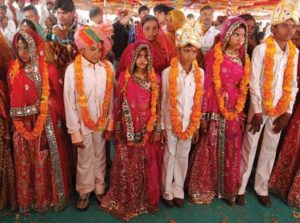
Police in western Assam’s Barpeta district could rescue 16-year-old Amina Khatoon (name changed) hours before her marriage on September 6 only because she had called the Childline helpline (1098). Amina, a Class XII student knew that marriage before 18 is unhealthy and illegal made her seek the help of police as she did not want to get married so early and wanted to continue her study.
“My father is illiterate and is not aware that child marriage is bad. They wanted me to get married as they had got an educated boy working in a good company. But I want to complete graduation and try for a government job before getting married,” Amina had told Child Line officials in Barpeta, hours after she was rescued and the 28-year-old boy with whom her parents had fixed marriage was arrested.
That education of the girls helps in checking India’s serious problem of child marriage has been highlighted in the India Child Marriage and Teenage Pregnancy report prepared by National Commission for Protection of Child Rights (NCPCR) that found India’s child marriage between 15 to 19 years old girls came down from 27 per cent to 11.9 per cent between 2005-06 to 2015- 16. The rate of child marriage among 20 to 24 years old was found to be 26.8 per cent.
The report says higher the level of education, lower the change of child marriage. “Women’s educational level is found to be negatively associated with the prevalence of child marriage for both 15-19 years and 20-24 years age groups. For example, the prevalence of child marriage among women with no education amongst 15 to 19 years and 20 to 24 years age groups is 30.8 per cent and 49.3 per cent respectively. On the other hand the prevalence of child marriage is substantially lower among the women with higher education for both age groups (2.4 per cent and 3.9 per cent respectively),” says the report prepared by the NCPCR based on analysis of the National Family Health Survey 3 (NFHS) in 2005-06 and NFHS 4 of 2015 and16.
Although the survey showed declining trend of the problem of child marriage entrenched mainly among India’s illiterate sections, child marriage rate is higher than the national average of 11.6 per cent in at least 12 states and Union Territory seems to have emerged as a worry for those who see the country to be a child-marriage free country.
West Bengal tops the rate list of 12 states having child marriage problem higher than the national average with 25.6 per cent followed by Tripura (21.6), Bihar (19.7), Jharkhand (17.8), Dadar and Nagar Haveli (17.5), Assam (16.6), Andhra Pradesh (16.6), Rajasthan (16.2), Gujarat (13.1), Telangana (12.9), Maharashtra (12.1) and Arunachal Pradesh (12.1).
Poverty was found to be a contributing factor as it was evident from the findings that a girl from a poor family was more likely to get married at a younger age than a girl from a wealthier family. “The state-level analysis also highlights that child marriage among girls is so entrenched in certain social groups that a substantial proportion of girls from middle and top wealth tercile households are also reported to be married before 18,” said the report.
The report found that completion of secondary education played a significant role in delaying the age at marriage. “Findings show the completion rate of secondary schooling is considerably higher amongst unmarried girls aged 15-19 years in almost all states. Making secondary schooling a fundamental right and ensuring girls from poor households are provided safe learning environments as well as residential secondary schools for remote areas may be considered as necessary steps to prevent early marriage in Indian states. In Bihar, a completion rate of secondary education amongst girls who married before age 18 is only 51 per cent, followed by 54 per cent in Delhi and Rajasthan (57 per cent).
The report said there was a strong relationship between girl child marriage and household wealth index as a girl from a poor family was found to be more likely being married at a younger age than a girl from a wealthier family. “The state-level analysis also highlights that child marriage amongst girls is so entrenched in certain social groups that a substantial proportion of girls from middle and top wealth tercile households are also reported to be married before age 18,” it said. In Assam, child marriage was found to be higher among two sections: the Muslims living in the riverine areas and those in the tea gardens, mainly due to low literacy poverty and role of religious leaders who allow such illegal practice.
The report found that 15 per cent child marriage happened among Scheduled Tribes and 13 per cent among Scheduled Castes.
“However, when we analysed child marriages amongst the top 10 states with the highest prevalence of child marriage we found that this phenomenon is occurring across caste groups. For instance In Arunachal Pradesh, 72 per cent of the sample aged between 15-19 years who had child marriages belong to Scheduled Tribes while 38 per cent of the Other Castes girls in Maharashtra reported the highest percentage of married girls before 18. Furthermore, while Bihar, Gujarat and Telangana report a very high prevalence of child marriage amongst OBC girls, West Bengal has the highest prevalence of child marriage amongst SC girls,” it said.
The report also identified 100 districts having the highest prevalence of child marriage with Murshidabad in West Bengal leading the tally with 39.9 per cent child marriage among 15-19 years old girls. Gandhinagar in Gujarat came second with 39.3 per cent followed by Bhilwara in Rajasthan (36.4 per cent), Shrawasti (36.3 per cent) in Uttar Pradesh, Birbhum (35.2 per cent) in West Bengal, Khagaria (34.4 per cent) in Bihar, Goalpara (33.9 per cent) in Assam, Deoghar (32.7 per cent) and Giridih (32.2 per cent) in Jharkhand. “Analysis of top 100 districts based on the high prevalence of child marriage reveals that 14 states have these high prevalence districts. Bihar has the maximum number of districts with high prevalence (20), followed by West Bengal (14), Jharkhand (11), Rajasthan (10), Assam (9), Maharashtra (9), Madhya Pradesh (8), Gujarat (5), Tripura (4), Andhra Pradesh (3), Uttar Pradesh (3), Telangana (2), Karnataka (1) and Odisha (1).
Adverse impacts:
The report said analysis of NFHS-4 revealed that amongst the married girls aged between 15 to 19 years, 31.5 per cent of the sample girls in this age group were found to have babies. “It is important to note that almost a quarter of the married girls in the 15-16 years age group had at least one baby while more than a quarter of the married teenage girls had at least one child at age 17 while 31 per cent had a child by age 18,” it said.
Further analysis of the number of children born to teenage mothers revealed that 27.3 per cent of married teenage girls had given birth to one child while 4.2 per cent of married girls had given birth to two or more children. At least 12 states had more than 40 per cent of these girls having at least one child or more. Goa, Mizoram and Meghalaya topped the list with 64 per cent, 61 per cent and 53 per cent teenage pregnancies among the early married girls.
Solutions at question
Child rights activists campaigning against the serious problem of child marriage says quality education for girls could have made a major change on further reducing child marriage rate in the country. “Apart from education, we must provide skill development courses to young girls and action against religious leaders who mislead poor and illiterate people in the villages with the misinformation that child marriage is allowed by religious scriptures. At the same time we must have a strong political will to move the agenda of child marriage prevention,” said Chiranjeeb Kakoty, the chair of the National Action and Coordination Group for Ending Violence Against Children (NACG-EVAC), India. Kakoty based in Guwahati also leads Adolescent and Child Rights Network, a forum of nearly 25 NGOs in Assam.
Chairperson of NCPCR, the apex child rights body, Stuti Kacker said in the report, “We hope this report will trigger the required policy decisions at the national and state levels and support formulation of action plans at the district levels focused on preventing child marriage and teenage pregnancies.”
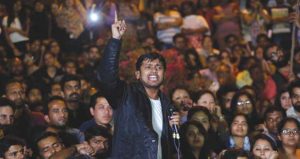
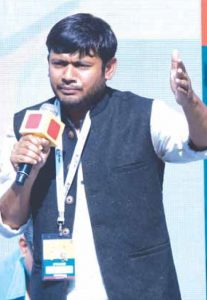
JNU student leader and Azadi guy Kanhaiya Kumar is all set to enter parliamentary politics. He will contest 2019 elections from Begusarai in Bihar. The constituency is presently represented by the BJP. The former JNUSU president belongs to the small backward village of the constituency. He is reported to be extensively touring the area since over a year. People of the area say that he has been a regular visitor, but the frequency of his visit has increased in the past few months.
Obviously, news of his contesting elections has generated curiosity and enthusiasm, particularly among youth across the country for he has come to occupy a special position among the young leaders of the country. Does his entry into parliamentary politics mean something more? Will Kanhaiya be able to infuse any freshness to an otherwise dull political atmosphere of the country? Can he influence the rigidly structured politics in the country where parties hardly allow new idioms or new people to take centre-stage?
For many years now, people in India have been sceptical about political class as a whole and they view new everyone, old or new with suspicion. So, it is but natural that people are questioning and dismissing any high expectation from Kanhaiya. Could we find some hope in him? A close look at his activities certainly gives us some hope that he would be able to prove himself a better politician. He has been showing a high degree of consistency in his assertions and activities. He chooses right kind of issues and acts fearlessly without any show-off. These qualities will certainly help him to maintain the consistency he has been showing all along.
Here, we should not miss the point that he has successfully been transcending his role as a student leader and involving himself in important contemporary agitations. It should also be kept in mind that he is part of ideologically weak organizations like NSUI. He is a cadre of All India Student Federation (AISF) where everyone has to follow a rigid party line. Here, the cadres are supposed to work strictly within the limits of the responsibility they have been assigned. If you are a student leader, you have to carry out the programs chalked out by the party for the benefit of students. They are expected to take up only the issues of students. Any deviation from it may invite punishments which may result in expulsion from the party. In his case, he has to obey the instructions from CPI. There are cases in which student leaders were thrown out of the organization after they were found to be disobeying the diktat of the party. Only a few years ago, a top leader of SFI U was expelled from the organization following his disagreement with the party over some ideological issues. Left parties do not allow you to enjoy the luxury of doing political activities according to your own wishes.
Kanhaiya has been successful in striking a balance between the rigid party line and flexible programs of the agitations he has been participating in. In a very short period, he has been able to carve out space for himself in the mainstream politics without being a rebel in the party. Besides becoming an important name in the student agitation of the country, he is an important figure in the agitations of Dalits and backwards of the country. Despite the fact that mainstream media has covered him widely, it has ignored important aspects of his political manners. This is largely because of its unfamiliarity with the alternative politics in the country.
“We see politics in a very crude manner and that is the reason we fail to realize the significance of the student politics. Most of our leaders come from students’ politics, but they hardly endorse joining students’ politics. This is because they do not want students to do politics independently. This is their selfish attitude. They want us to work as their chamchas. Students’ leaders also choose the same easy path and make themselves subservient to political leaders and end up in entering parliament or assemblies without any commitment for a change in the politics,” Kanhaiya told an audience in Mumbai a few months back.
“We must unionize ourselves because it is our right as a citizen. This is necessary if we want to change the composition of current day politics. Leaders should not come from the political class or families; a common ma should have the opportunity to join politics and contribute to the process of changing the society,” he said.
Very few have noticed the subtle change the Azadi guy has brought into the Left politics. He has changed the language of the Left as far as its communication with the masses is concerned. He never uses Left jargons the way it has been used for many years now. After so many years, the Left has found a leader who can speak politics in a non-political language.
He has also been able to associate with the new social alliance that has emerged against BJP-RSS combine. After the co-operation of leaders like Ramvilas Paswan and Ramdas Athavale and Mayawati ’s losing part of their relevance, a new leadership is emerging among Dalits. He is in close association with this leadership. Since the agitation that followed suicide of Rohit Vemula in the Hyderabad Central University, he has been in the forefront of every agitation at campuses. He is, perhaps, the only non-Dalit leader who wields tremendous clout among Dalits. Even Rahul Gandhi is said to be working with him on issues that concern Dalits and youth. He is close to leaders like Jignesh Mewani.
His clout among the new leadership of the mainstream could be seen in his involvement in his associations with leaders like Rahul Gandhi and Tejaswi Yadav. Recently, when it came to be organizing demonstrations at the Parliament Street against the incident of rape in Muzaffarpur shelter home in Bihar, he was specially called by Tejaswi to address it. Other speakers included Rahul Gandhi and others.
However, there are questions which need attention, Can we ignore our recent experiences with the leaders like Arvind Kejriwal. It is yet to be analyzed as to why he threw out all his comrades one by one after ascending to practically, powerless throne of Delhi. If such a small power can go into one’s head, how could we expect considerable power not invading the senses of a young political leader? The mean manoeuvrings applied by Kejriwal against his comrades-in-arms must make people suspicious. But we should differentiate between the backgrounds the two persons come from. Arvind Kejriwal was working with the government and entered into social work through a voluntary organization. We must keep in mind that NGOs are not ideologically driven and they have a work culture that is infested with a high degree of individualism. This is the reason Kejriwal threw out his former colleagues including Prof Anand Kumar, Prashant Bhushan, Yogendra Yadav and Ajit Jha from the Aam Aadmi Party. His other colleagues also left him in due course of time.
Kanhaiya comes from an altogether different background. He isa hardcore cadre of the Left and has shown no deviation. He is a member of the National Council of CPI and is being seen as an important future o the party. He will fight elections only after his party takes the final decision. Common people are hardly aware of the control exercised by Left parties on their cadres. Public representatives have to deposit their salaries in the party fund and they are given a part of it to spend on their personal needs. Even facilities like accommodation and vehicle is used in accordance with the rules of the party. Many leaders including AB Bardhan spent their lives in one room accommodation provided by the party and died there. These conditions effectively curb individualism.
Moreover, Kanhaiya’s own assertions on the issue are also important. He says that he wants to earn his livelihood on his own and does not to be a politician who survives o the income from politics. “After completing my studies, I am in search of a job. I do not want to make politic the source of my earning,” he told media after the news of his candidacy was broken.
Begusarai: an old Left bastion
Begusarai is important district of north Bihar. The area has been a Left bastion for many years now. Till few years ago, it was nicknamed as the Moscow of Bihar. It was a center of peasant movement before and after the independence. However, the Left has not been able to maintain its hold over the constituency since mid-nineties. The seat is currently held by Dr Bhola Singh of BJP. A former CPI MLA, Bhola Singh is unlikely to contest owing to his old age and poor health. He is also not in good terms with hiss BJP bosses in Patna and Delhi. Sometimes back, the angry old man had praised Kanhaiya at a public function and termed him as future leader.
The name of RSS ideologue and RSS MP Rakesh Sinha is doing rounds as a possible BJP candidate. His paternal village is just few kilometers away from the village Kanhaiya belongs to. The constituency will witness a fierce ideological battle if Rakesh Sinha is pitted against Kanhaiya. Local BJP people are of the view that even if Sinha does not contest, the elections will be fought under his command.
Four visits to Pashupatinath Temple in Nepal by Prime Minister Modi between July 2014 and August-end 2018 and the Congress President, Rahul Gandhi’s proclamation of himself as devotee of Lord Shiva and hi current visit to Mansrovar, have brought focus of political discourse on Lord Shiva on the pattern of Lord Rama, the beginning for which was made by the BJP by the fag end of the 1980s, culminating in the demolition of Babri Mosque and launching of the movement of building Ram Temple at the demolished site in Ayodhya in UP.
The BJP has reaped immense political dividends from the Ram Temple movement irrespective of the fact that the issue of construction of the temple is still mire in controversies and currently it is pending before the Supreme Court for final decision. The Congress president has declared himself as an ardent devotee of Lord Shiva and this adds to his credentials as a devout Hindu. Congress has seemingly adopted the strategy of the BJP by harnessing religion for political gains and enhancing its Hindu credentials.
According to the Puranas, the holy month of Shravan is considered very auspicious to pay obeisance to Lord Shiva during this month. It was during the month of Shravan that the proverbial Samudra Manthan or churning of sea occurred wherein Lord Shiva had to wear a crescent moon on his head due to the grave effects of the poison that he swallowed and all the other gods began pouring water from the holy river Ganga. This was done to reduce the effect of the poison on Lord Shiva. Since then it has become a religious ritual to offer holy Ganga water to Lord Shiva during the holy month of Shravan. It is believed that performance of this ritual, apart from removing away negativity, helps in fulfilling one’s wishes.
Modi’s visits to Pashupatinath Temple
Prime Minister Narendra Modi has paid four visits to Pashupatinath Temple in Kathmandu, Nepal. Soon after taking over as prime minister, PM Modi paid a visit to Pashupatinath temple on 12 July 2014 and second visit took place on 5 August 2014. In other words, he visited Pashupatinath Temple twice in 2014. His third visit to the temple took place on 12 May 2018, after a gap of three years, and incidentally, it coincided with the state assembly elections in Karnataka. Some critics lamented that Modi was more interested in using his pilgrimage to Hindu shrines in Nepal just ahead o Karnataka assembly polls as a photo opportunity during the silent period before voting rather than addressing the grievances of the people of Indian origin in Nepal.
Last days of the month of August 201 witnessed Nepal hosting the Bay of Bengal Initiative for Multi-Sectoral Technical and Economic Cooperation (BIMSTEC) Summit, in which India was represented by Modi On the sidelines of the Summit, PM Modi utilized the occasion to visit Pashupatinath temple on 31 August, 2018. Interestingly, PM Modi has visited the temple twice in 2014 and twice in 2018. Some critics have opined that keeping in view the ensuing state assembly elections in Chhattisgarh, Madhya Pradesh and Rajasthan, three BJP-ruled states crucial for the BJP, PM Modi’s visit to the temple assumes significance as it did happen in May 2018 at the time of Karnataka assembly polls.
Rahul Gandhi as Shiv Bhakt
For past some years, the BJP has been raising hue and cry over Rahul Gandhi’s credentials as a Hindu. This hue and cry was raised to the highest pitch during the November-December, 2017, assembly elections in Gujarat. During the closing part of November 2017, Rahul Gandhi was embroiled in a controversy after his name was listed in the temple book at the famed Somnath shrine as ‘non- Hindu’. As per the tradition of the temple, non-Hindus have to enter their names in the temple book. The book showed the names of Congress leader Ahmed Patel and Rahul Gandhi. In order to clear the air surrounding the controversy, the Congress spokesperson had to clarify that the alleged goof up was made by mistake by Congress media coordinator Congress spokesperson asserted that Gandhi is a Hindu and a Shiv Bhakt.
A day after the controversy broke out over his religion, Congress vice-president Rahul Gandhi said he and his family members were ‘Shiv Bhakts’ (devotees of Lord Shiva) but asserted that he did not want to use his religion for political gains. In order to allay apprehensions about his religion, Rahul Gandhi said on 1 December 2017: “My grandmother (late Indira Gandhi) and my family are Shiv Bhakts. But we keep such things private. We generally do not speak about them. Because, we think it is a very personal matter and we don’t need anyone else’s certificate about it. We don’t want to commercialize this thing. We don’t want to do ‘dalali’ over it. We do not want to use it for political purpose too.”
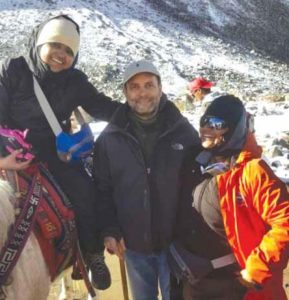
Rahul Gandhi is undertook the Kailash Mansarovar Yatra in accordance with a wish he expressed in April this year when his plane plunged hundreds of feet during the campaign for the Karnataka polls. According to media reports, the pilgrimage, aimed at seeking the blessings of Lord Shiva for prosperity and success of the country and its people, will take about 12 days.
It is worth mentioning here that in 2015, just after the Uttarakhand floods Rahul had undertaken the Kedarnath yatra on foot to once again flaunt his Hindu credentials. The internal assessment undertaken by Congress in the aftermath of its debacle in 2014 elections had reportedly convinced it that its minority appeasement had boomeranged on them with disastrous results, hence the course correction. According to some experts, Rahul is trying to send a larger message of being a devout Hindu as part of his strategy of soft Hindutva.
Way Ahead
Religion has seemingly become an integral part of contemporary political narrative in India and every political entity is ostensibly trying to woo Hindu votes by declaring itself as a devotee of one god or the other. In other words, there has begun a race for exploiting religion for political gains and this tendency bodes ill for the future of democracy in the country. There seems to be no going back from this in the foreseeable future because the level of electioneering is getting worse election after election. Healthy political competition is missing.
The Supreme Court’s judgment at the cusp of 2017 that religion and caste cannot be used by politicians seems to have fallen on deaf years. Electorate in India have been divided and ruled by politicians playing the caste or religion card for many decades. Caste and religion have wreaked havoc with our politics and country. This has neither benefitted the religion nor the caste but the people have fallen an easy prey to these tentacles that entail the potential of killing the democracy and tarnish India’s name as the largest democracy in the world.
Undoubtedly, India has moved into the 21st century not only as a rising power but as a truly secular nation; nevertheless, overwhelming of religious forces over democratic forces is likely to continue in the 2019 elections and occurrence of such an eventuality could be detrimental to India’s future.
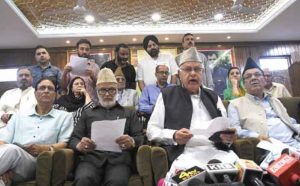
Raising the stakes further for New Delhi in Kashmir, J&K’s major mainstream party National Conference has decided to boycott the upcoming Urban Local Bodies and Panchayat polls Similarly, the PDP has also distanced itself from the exercise — albeit stopping short of announcing a formal boycott. Both parties want the centre to come clean on its stand on Article 35A before they decide to participate.
National Conference has even threatened to boycott the Assembly and parliamentary polls in case centre doesn’t offer an assurance that it won’t tinker with the constitutional provision that bars non-residents from buying immovable property in Kashmir.
“On one hand the centre wants to hold polls here. On the other, they want to revoke Article 35A. Article 370 has been weakened and there are also attacks on the J&K Constitution,” National Conference president D Farooq Abdullah said.
He also took exception to the National Security Advisor Ajit Doval’s recent statement that a separate constitution for J&K was an “aberration”.
“Their intentions are not right. They never were. The NSA has said that a separate constitution for Jammu and Kashmir is an aberration. I want to tell him from this stage that if the constitution is an aberration, then this accession (of Jammu and Kashmir to India) is also an aberration”.
On the other hand, the PDP president Mehbooba Mufti has also threatened boycott unless New Delhi offers assurance on the protection of Article 35A.
“The present situation is not right for elections, and as long as government does not clear position on 35A and security issues, PDP will not take part in the process. Final call will be taken after government clarifies on the party’s fears,” the PDP said.
The new Governor has already announced the dates for the local polls. The municipal polls will be conducted in four phases and polling will be held between October 1 and 5. Panchayat elections will be held in eight phases between November 8 and December 4.
In the absence of the National Conference and the PDP which between them control more than two-third of the mainstream political space in Valley and also wield a significant political clout in Jammu and Ladakh regions, the local polls are unlikely to be a success. What is more, State Congress president Ghulam Ahamd Mir has expressed doubts about the government’s seriousness about the conduct of polls and sought assessing of the ground situation and taking on board of all the political parties before going ahead with the exercise.
However, the state and central government has so far refused to engage the local parties nor offered any assurance on Article 35A. In the last hearing of the case on August 27, the Attorney General of India K K Venugopal and Additional Solicitor General (ASG) Tushar Mehta, representing the Centre and Jammu and Kashmir government respectively told the Supreme Court bench that the issue of Article 35A was “very sensitive” and as such hearing be held in January or March 2019 keeping in mind the law and order aspect and the upcoming Urban Local Bodies and Panchayat poll. The matter has now been deferred to January 2019.
Though the decision relaxed the prevailing tense situation in the Valley it hasn’t put the fears to rest. The PDP has expressed serious reservation about the linkage drawn between the Article 35A and the elections. “Linking Article 35A with the polls has further vitiated the atmosphere,” Mehbooba said. “They (the state government and New Delhi) told the court that it (Articl 35A verdict) will have impact on situation in Kashmir. There are now apprehensions in Valley that they may be up to something on Article 35A which may further vitiate atmosphere and that is why hearing has been deferred.
This has created a difficult situation for the governments in the state and New Delhi which cannot make the polls appear credible if the major parties boycott it. At the same time, they cannot offer an assurance on the Article 35A for two important reasons: one, the case is sub-judice and they obviously can claim little influence in how the court deal with it. And second, the BJP cannot lend its voice to defending the constitutional provision for ideological reasons. Sinc its founding the party has been against the special status guaranteed to J&K under Article 370 and has always vociferously pitched for its withdrawal to ensure J&K’s complete integration into Indian Union. However, over the past two years, the BJP has trained its gun specifically on removal of Article 35A. For Sangh groups, it is Article 35A and not Article 370 which comes in the way of settling Indians from other parts of the country in J&K. They believe that the only way to resolve Kashmir issue is through a sweeping demographic change in the state.
And this is why the centre has refused to defend the law in Supreme Court. And under the Governor rule, J&K is perceived to have become similarly slow in its legal defence for the law. This has made a majority of the people of the state paranoid about the protection of Article 35A.
True, the court has deferred the hearing to January 2019, but this hasn’t allayed the apprehensions as to the fate of the law. New Delhi’s silence about the issue has only deepened these suspicions.
“In such an environment if the mainstream parties participate in the polls, we will be seen as facilitating the scrapping of the Article 35A,” said a mainstream leader. “I Supreme Court, the government has sought the deferring of the hearing on the Article to ensure peaceful local polls in the state. This, in a sense, has signalled that it expects the court to deliver an adverse verdict on the issue. We don’t want that to happen”.
However, for the government the prospect of conducting polls has somehow been shored up by the decision of the All Jammu and Kashmir Panchayat Conference to participate – albeit with a rider: “The elections should be held on nonparty basis and have nothing to do with the politics.”
“We have nothing to do with any kind of politics in the state of Jammu and Kashmir. We are not an institution like assembly to make laws. Our role is only to monitor the development activities in our respective villages,” AJKPC chairman Shafiq Mir said. Incidentally, Mir has also criticized Abdullah’s decision to boycott the local elections. “The Panchayat and ULB elections are restricted to ensuring peoples’ participation at the grass-roots level. It’s absurd to connect party politics to such elections”.
State government has so far silently watched the evolving scenario, so has the central government. The focus of the government right now is on formulating an elaborate security plan to ensure that the contesting candidates are protected. But sooner or later, it will have to respond to the objections of National Conference and the PDP to bring some credibility to the exercise.
On August 31 night, a large contingent of J&K police laid a siege of the house of Asif Sultan, a journalist with a local magazine ‘Kashmir Narrator’. Some personnel scaled the wall and entered the house. They went to Sultan’s home and arrested him. They also seized his laptop and phone.
His family said that Sultan was in police custody for six days before he was formally arrested. “He was not produced in court for six days,” said the father, Mohammad Sultan Saida.
According to the police, they have seized “incriminating material” at Sultan’s home which established his complicity in “harbouring known terrorists.”
On September 8, a court in Srinagar sent Sultan in 15 days judicial custody. He has been shifted to Srinagar Central Jail. Police have told the court that Sultan was in touch with a Hizbul Mujahideen militant Abbas Sheikh and provided him “all the possible help to carry out terrorist activities.” Police have also accused him of “glorifying” militancy through his news reports. The trigger for his arrest is said to be the cover story on the slain militant commander Burhan Wani that he wrote for the magazine in July.
But for the journalists in Valley, Sultan’s arrest is a part of the pattern. Over the past two years, Sultan is the third journalist who has been picked up by the law enforcement agencies for their objections to their work. Earlier, it was Kamran Yusuf and Auqib Javeed who were questioned by the National Investigative Agency (NIA). In fact, Yusuf, a photojournalist, was detained for six-month before being released in March 2018. Similarly, Auqib Javeed, a journalist with ‘Kashmir Observer’ was also summoned to New Delhi and interrogated on July 14 and 15 this year over an interview with the separatist leader Asiya Andrabi.
Sultan’s father Saida said his son is being framed. “My son is a journalist, nothing else. He is being punished for his work,” Saida said.
On September 10, various journalist bodies staged a protest at Press Enclave in Srinagar against Sultan’s arrest. International journalist advocacy groups like Committee for Protection of Journalists (CPJ) and International Federation of Journalists (IFJ) have already issued statements condemning the arrest. Both the organisations didn’t buy the police charges pressed on Sultan.
“Police should immediately release Asif Sultan from jail and halt efforts to pressure him to reveal sources or become an informer,” said Steven Butler, CPJ’s Asia programme coordinator, in a statement.
“By reporting on militant activity, Sultan is performing an important public service, not committing a crime.”
Such intermittent arrests and questioning of the journalists in Kashmir have created fear among the media fraternity. Journalists worry that the Government wants to drastically circumscribe what should be reported and what should be left out.
“It is difficult to work in this environment. One cannot report fairly and reflect the situation as it exists on the ground,” said a journalist who did not want to be identified.
“If this goes on, journalists in Valley will be reduced to covering the government and development activities only. This has to be stopped.”
What makes the situation further fragile is that there is still no trace of who killed Bukhari and why? Police have blamed Lashkari- Toiba and identified three of its militants who have allegedly carried out the murder. But Lashkar on its part has vehemently denied any role in the killing and compared police investigation in to the case of a “Bollywood movie.”
Three months after the murder, police are yet to produce the charge-sheet in the case. “We are trying the loose ends in the case. And, it may take a little more time before we complete it,” said a senior police officer associated with the probe.
Journalists want some clarity on who killed Bukhari and so far the inability of the police to unravel the conspiracy has made the environment fraught for the media in Kashmir. This has created a sense of siege where journalists are feeling sandwiched between two hostile forces: Government on one hand and the militants on the other.
“Freedom of speech cannot be suspended even if the assembly is in suspended animation,” the powerful Kashmir Editors Guild said in a recent statement in response to the increasing pressure on the local media.
“The newspapers have routinely started getting notices to explain things that have gone in to print, there are very disturbing reports about reporters being asked to disclose sources, something that has not happened even during the emergency.”
Bhupinder Singh Hooda, the former chief minister of Haryana, is facing half a dozen major investigations involving hundreds of land deals during his regime, but the latest to hit him and the party relates to Congress chief Rahul Gandhi’s brother-in-law Robert Vadra, could be the ‘brahamshastra’ that the BJP had held back for the ensuing elections.
The facts of the case are that Vadra’s company, Skylight Hospitality, had purchased about 3.5 acres of land in village Shikohpur near Manesar from Onkareshwar Properties for about 7.5 crore in 2008, a few months after the formation of Hooda government. Significantly the cheque of 7.5 crore given by Skylight Hospitality was never encashed by Onkareshwar Properties and there was obviously an understanding between the two parties.
It was agriculture land and there was nothing else one could do with the land. There lies the key to the issue or ‘scam’. Vadra, evidently using his clout and connections with Hooda, was able to secure a Change of Land Use (CLU) permission for the land from agricultural land to land for commercial and residential purposes. The grant of permission skyrocketed the price of the land.
The Company sold the same land, a few months later, to the real estate giant DLF at a whopping 58 crore. Skylight Hospitality thus made over 50 crore within the space of a few months.
The alleged irregularities in the deal were also brought out by the well-known IAS officer Ashok Khemka who had even cancelled the mutation of the land. That was done when Hooda was the chief minister. However the mutation was restored and Khemka sent out of the department concerned in yet another transfer. Even the Comptroller and Auditor General Haryana had questioned irregularities in the case but the Khattar Government preferred to soft paddle the issue.
While these facts and figures had been in the public domain for nearly a decade, the Manohar Lal Khattar BJP government preferred to sleep over it since it came to office four years ago. The BJP had gone to town to expose nepotism and corruption by the Hooda administration during the campaign for the 2014 elections and had promised to institute an inquiry to nail the guilty.
Vadra has been of course denying any wrong doing and saying that it was a clean business deal. He had been challenging the government to investigate the allegations but the government had been shying away from doing so.
Now, suddenly, with a few months left for elections, the government has found a complainant in the case. It took little time in lodging an FIR against Vadra, Sonia Gandhi, Bhupinder Singh Hooda, the DLF and Onkareshwar properties under sections 420 (cheating), 467, 468 and 471 (forgery) of the IPC and Section 13 of the Prevention of Corruption Act.
The complaint was lodged by a little known owner of a medical shop in Gurugram. The complainant, Surender Sharma, is a resident of village Rathivas in Nuh district of Haryana and owns about 10 acres of land.
Sharma has alleged in his complaint that the “accused conspired with influential builders, ministers and top government officers (who) misused their positions and committed a scam worth 5,000 crore”. Little is known as to how he calculated that figure but he asserted that Vadra and Hooda also helped DLF in other ways such as “wrongful” allotment of 350 acres of land near Wazirabad.
But even though the BJP had made a big deal about the CLU granted to Robert Vadra, and had threatened to cancel it, the Khattar Government had been accepting the licence fee from the DLF for the land under question. It has over the last two years accepted 91.84 lakh to renew the commercial license of the controversial land.
The DLF deposited the fee in November 2016. This was in addition to 12.74 crore paid up to July 2014
Significantly, Skylight Hospitality ceased to be a private company in 2015 and was incorporated as Limited Liability Partnership in May 2016.
While this is the latest land deal case taken up by the Khattar Government involving Hooda, the former chief minister is facing several more cases which are likely to keep him tied down during the elections next year.
One of these cases pertains to hundreds of farmers getting deprived of their land in Gurugram in 2005 simply because Hooda as the chief minister had withdrawn a notification issue earlier under Section 4 of the Land Acquisition Act. Under the notification the government expresses its intent of compulsorily acquiring land for public use. Invariably such a notification cases panic as the governments had been paying a measly amount as compensation and that too after a prolonged period. It was at that stage that land sharks purchase land at throwaway price. But once the notification was withdrawn, the value of the land went up manyfolds.
Of the 912 acres of land notified for acquisition for Manesar Industrial Township, over 400 acres was sold in distress sale. The issue of notification and its withdrawal took just 22 days and that’s when an estimated 400 acres was sold by farmers and suffering loss of crores of rupees. Had they not sold their land on distress and had subsequently obtained CLUs, they would have become millionaires.
The CBI has now filed a chargesheet against Hooda and 33 others including senior bureaucrats. Besides 22 real estate companies have also been made a party. They have been charged under sections 420, 465, 467, 468, 471 and 120-B of the Indian Penal Code and under the Prevention of Corruption Act,1988.
In another case, the CBI has registered an FIR against Hooda and others for allotting 14 prized industrial plots in Panchkula to his favourites. The allotments were made in an arbitrary manner.
Yet another case again involves Sonia Gandhi, Rahul Gandhi and several senior leaders of the Congress. It pertains to the grant of prime land to National Herald, founded by Jawaharlal Nehru, in the heart of Panchkula. Documents suggest that the allotment was cancelled due to non-payment for a long period but Hooda violated all rules to restore the land at a highly concessional rate.
With all these cases being investigated by various agencies like the Vigilance Bureau, the CBI, the Enforcement Directorate and the Income Tax, Hooda is likely to remain tied down to defend himself and his government. The latest one involving Robert Vadra may, however, hit his party the hardest.
A historical judgment was delivered by Additional District Judge Jasbir Singh Kundu of the District and Sessions court, Gurugram on September 6 in the controversial 464 acre Gwal Pahari land scam. The judgment said that the 3,000 crore worth land belongs to the Panchayat and it must be returned to it.
Thus the decision has reversed a civil court order earlier this year which had said that this right vested with the private owners. Now the court has also directed Gurugram Divisional Commissioner D Suresh to submit a fact-finding report in 3 months time.
Involved in this land case are powerful men including builders, bureaucrats and some people from the judiciary as well. Considered prime land because of its proximity to New Delhi, Gurugram and Faridabad, everyone wanted to have a share at a considerably lower price.
But while delivering the all important judgment, the District and Sessions court has also given time to the 322 entities who are claiming ownership over the disputed land to file an appeal before the Punjab and Haryana High Court. Incidentally, around 300 of the 322 entities are villagers and owners of several farmhouses. Among them are also two real estate developers. According to reports they have under construction Special Economic Zone (SEZ) projects in the same area which is reported to be very expensive.
In its order, the court directed that in the Gwal Pahari case, status quo must be maintained for construction, possession or change of nature of the land during the prescribed period of limitation to file appeal. This may again complicate the matter more as the owners of the land are high and mighty people and they will certainly not like to let go their prized possession to the Panchayat, which otherwise should have been the rightful owner of the land.
The Panchayat land come under scrutiny from early last year. T L Satyaprakash, the then District Collector and MCC Commissioner had made invalid an earlier judgment of the Revenue Department which had given ownership of the said land to the Municipal Corporation of Gurgaon (now Gurugram). In his order IAS T L Satyaprakash, known to be an upright officer had declared that the villagers, farmhouse owners, as well as the private builders were the rightful owners of the land which was estimated to be worth a whooping 3000 crore.
But in the latest development, the Additional District Judge Jasbir Singh Kundu has ordered that the private owners including the villagers, farmhouse owners and private developers have no reason to claim ownership of the 464 acres of land. In his order the judge declared that the `gair mumkin pahar’ or uncultivated land originally belongs to the local panchayat and it must have its possession as well. He declared that `shamlat’ (common village land) cannot be sold and therefore the process followed by the Panchayat earlier in this regard was illegal.
Now, the district and sessions court has also directed the Municipal Corporation of Gurugram to pay compensation to the panchayat for transferring the ownership to them. The direction came in the court’s order delivered on September 6. But, the corporation can challenge this order in the higher court. For selling and buying the prime land at a very cheap price, the court made some strict observation against some builders, bureaucrats and some members of the judiciary also involved in the process and in whose possession the land is at present.
Supreme Court judge and later the Justice of Punjab and Haryana High Court, Justice Vijender Jain had reportedly purchased 16 canal land way back in 1999 at a price of 80,000. In 2006, retired justice H L Anand also reportedly purchased 16 canal land. Former Justice H K Sabharwal, father of the then Chief Justice of India Y K Sabharwal had reportedly purchased 8 kanal land in 1994. Later in the year 2004 the then CJI, Y K Sabharwal also reportedly purschased 8 canal land.
In its observation on August 31, 2018 the same court had said that despite the stay, the then Gurgaon Collector IAS, N C Vashisht had taken some unpalatable decisions. All the rules and regulations had been kept aside which resulted in wasting the court’s time. The Haryana Chief Secretary must take action in this regard and present a report in three months.
In March last year, the Gwal Pahari land issue had cropped up in the Haryana BJP meeting in Gurugram. A few BJP leaders had accused officials and some party leaders of making certain changes in the metro rail route near Gwal Pahari to help a powerful section of people with vested interest. Among the voices of protest raised were those of Gurugram MLA Umesh Agarwal also. Charges were hurled against an IAS officer, three local leaders and a relater of a minister responsible for the change in the metro rail route. But the state BJP had downplayed the issue then.
The buying and selling of land in Gwal Pahari area had started almost four decades ago. Many farm houses and huge bungalows were built on the said land by the well-to-do people. The court also asked for action against the Sarpanch of the village. The court also asked the Regional Commissioner of Gurgaon to investigate the role of the government machinery in the matter and also find out who all are eying the panchayat land. The Corporation must also compensate the real owners of the land. It was in the year 2008 when a major sale and purchase of Gwal Pahari land took place. When the Gurgaon municipal corporation was formed the same year, the Panchayats in the area also came under it.
It was at this time when the MC began to take possession of the panchayati land. Then those people who had already purchased the land went to the court. But the MC had a readymade answer for this. The MC observed that the panchayat had no right to sell the land.
But on April 16, 2018, the court of civil judge termed it illegal for the MC to send notice to the land owners to release the purchased land. The MC had send Notice under section 408 to the land owners to vacate land. The court asked the MC to release the land. Later as many as 118 people went to the court in this regard.
Now, the villagers, farm house owners, as well as private developers claim that since they had purchased the land even before the formation of the Gurugram Municipal Corporation, they should not be affected by any adverse decision in this regard.
It was in March last year that the Gwal Pahari land issue had cropped up in the Haryana BJP meeting in Gurugram. A few BJP leaders had accused officials and some party leaders of making certain changes in the metro rail route near Gwal Pahadi to help a powerful section of people with vested interest. Among the voices of protest raised were those of Gurugram MLA Umesh Agarwal also.
Charges were hurled against an IAS officer, three local leaders and a relativeof a minister responsible for the change in the metro rail route. But the state BJP had managed to downplay the issue then.

 From subsistence to defensive existence, the queer identity in India has devolved with the passage of time. The Indian LGBTQ community is perhaps as old as the history of the country itself. And yet a draconian law drafted by our erstwhile British colonisers, in 1860, usurped their identity and freedom till now. In a landmark judgement delivered on September 6th, 2018, the Indian Supreme Court in the case of Navtej Singh Johar and Others v. the Union of India has ruled that the part of Section 377 of the Indian Penal Code (IPC), which criminalises homosexuality, is unconstitutional. The Indian Supreme Court, in this case, did not merely strike down a piece of bad archaic law but delivered a judgement which is overwhelming in its reach. Team Tehelka applauds and celebrates this decision, which is the culmination of a long struggle waged by the activists as well as the oppressed, through time and political transitions.