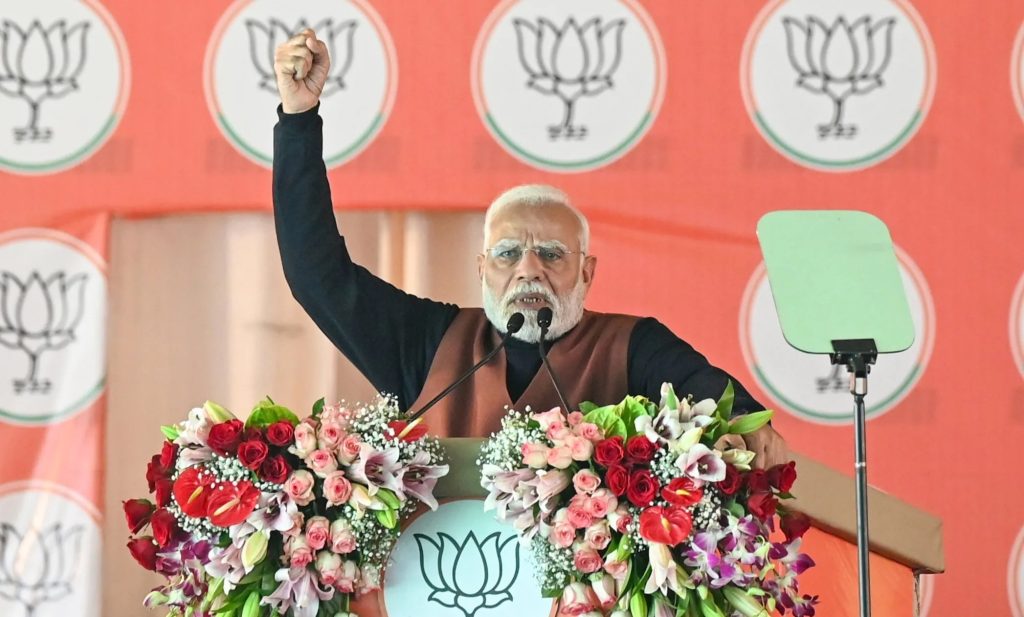
New Delhi: Prime Minister Narendra Modi on Sunday launched a sharp critique of the AAP government in Delhi, calling it an “AAPda government” that lacks vision for the city’s progress.
Speaking at a mega rally in Rohini ahead of the Delhi Assembly elections, the Prime Minister asserted that all significant developmental projects in the national capital have been undertaken by the BJP-led central government.
Amid chants of “Delhi mei bahane nahi, badlav chahiye; BJP ki sarkaar chahiye” (Delhi needs change, not excuses; it wants a BJP government), the crowd welcomed the Prime Minister enthusiastically.
PM Modi emphasised the importance of the next 25 years for India and Delhi, stating, “The coming 25 years are crucial for India’s journey to becoming a ‘Viksit Bharat’ (developed nation). For India to achieve this, it is vital that Delhi progresses in tandem.”
He urged the people of Delhi to give the BJP a chance for a brighter future, stressing that only the BJP can bring real development to the capital.
Highlighting the BJP’s governance record, PM Modi said, “In the last decade, Delhi has experienced a government that is nothing short of an ‘AAPda’ (disaster). Today, the people of Delhi are demanding change, saying, ‘AAPda nahi sahenge; badal ke rahenge’ (We won’t tolerate disaster; we will bring change).”
PM Modi praised the BJP as a party of good governance and nation-first ideology, citing its successes in states like Odisha, Maharashtra, and the Northeast, and at the Centre.
He encouraged BJP workers to connect with Delhi residents and showcase the party’s commitment to development, calling this election a “golden opportunity to win the hearts of Delhi.”
He reiterated his vision of making Delhi one of the world’s top cities with world-class facilities.
“Last year, the Centre allocated over Rs 75, 000 crore for health and development projects in Delhi. We want to make Delhi a capital that reflects India’s heritage and pride, ” he said.
The Prime Minister pointed out that Delhi’s metro expansion, including the Namo Bharat Train, Delhi Metro Phase-IV’s Janakpuri-Krishna Park stretch, and the Rithala-Kundli corridor, are all Centre-driven initiatives. He highlighted the PM Awas Yojana, mentioning the Swabhimaan Apartment in Ashok Nagar as a “Modi ki guarantee” for affordable housing.
PM Modi also listed achievements like Bharat Mandapam, Yashobhoomi, Kartavya Path, and the National War Memorial, which have become symbols of pride for Delhi, attributing their creation to the Centre’s efforts.
He slammed the AAP government for wasting a decade, accusing it of mismanagement in areas like sanitation, public transportation, and law and order.
“Delhi suffers whenever these people are in power, ” he remarked, citing issues in unclean colonies and unsafe conditions.
Touching on the recent controversy over the Delhi Chief Minister’s residence, referred to as “Sheesh Mahal” by the BJP, PM Modi accused the AAP of prioritising luxuries over public welfare.
“When people were struggling during the COVID-19 crisis, they were busy building their ‘Sheesh Mahal.’ This shows their disregard for Delhi’s citizens, ” he said.
The Prime Minister also accused the AAP of not implementing central welfare schemes like Ayushman Bharat for political reasons, depriving Delhi residents of crucial benefits.
“Intention, decision, loyalty and policy are very important in the politics. However, there is a big question on their intention and loyalty, ” PM Modi said, adding that top AAP leaders are today accused of several scams.
The rally was attended by senior BJP leaders, including Delhi BJP chief Virendra Sachdeva, MPs Manoj Tiwari, Bansuri Swaraj, Kamaljeet Sehrawat, and Ramesh Bidhuri.
Outside the venue, replicas of the Delhi Chief Minister’s residence, labelled “Sheesh Mahal, ” were displayed, highlighting the BJP’s criticism of the AAP government.
The recent spate of the blasts reported at or near police posts in the border districts of Punjab, has raised serious concern for the ruling AAP government, because investigations so far suggest the involvement of Pakistan-backed Khalistani elements in these incidents. A report by Rajesh Moudgil
As many as eight incidents of bomb blasts, reported in the past about a month’s time in Punjab, has shaken the ruling Aam Aadmi Party (AAP) government, making it sit up and take a note; for, the common strand in most of the cases was alarming – hand of Khalistani ultras backed by Pakistani agencies. Also, according to media reports, the police investigation reveals the ultras got these acts executed through their modules by involving gullible youths by luring them with money, drugs and promise of a `safe haven’ abroad, through the gangsters and drug smugglers.
While the Punjab police have identified the suspects in all the eights cases, it has also nabbed the suspects of five cases while the investigation into the remaining cases is on. The police probe has learnt that the RDX and Austrian-made Arges grenades used in these blasts were supplied from Pakistan.
According to information, while the RDX was used in the Ajnala (district Amritsar) police station, Arges grenades were used in the remaining seven cases, which were supplied from Pakistan to the modules of Babbar Khalsa International (BKI) and the Khalistan Zindabad Force (KZF) via drones and other means.
The Police have nabbed two accused, including a minor, who worked for a terror module run by BKI terrorist Happy Pashia and absconding drug smuggler Happy Jat in connection with the November 23 Ajnala police station case where a suspected IED weighing about 1.5 kg was planted.
Police traced the BKI module of Jashandeep and his accomplices in the case of November 29 blast near an abandoned police post in Gurbakhsh Nagar in Amritsar.
In the case of December 2 grenade attack at Ansaro police post in Nawanshahr, which did not explode, the police have nabbed three accused who were associated with KZF.
In the case of December 4 grenade blast at Majitha police station, the police have traced the involvement of BKI module of Jashandeep.
Investigation into the December 13 case in which a grenade was thrown near Ghania Ke Bangar police station in Batala town in Gurdaspur – which did not explode – is still on.
Police investigation is also on in the December 17 case in which an explosion was reported near the Islamabad police station in Amritsar, though the police have found a handiwork of BKI module and gangster Jeevan Fauji.
The police probe is also on in the December 20 case in which a grenade attack was reported at the Wadala Bangar police post.
However, in a major action, the Punjab police in a joint operation with the Uttar Pradesh (UP) police shot dead three members of the Pakistan-ISI’s sponsored KZF terror module, involved in grenade attack at a police establishment in Punjab’s Gurdaspur district, in the Puranpur area of Pilibhit district of UP on December 23, last.
The accused operatives were identified as Varinder Singh alias Ravi, 23, Gurwinder Singh, 25, and Jashanpreet Singh alias Partap Singh, 18, residents of Kalanaur area of Gurdaspur.
The trio suspects hailed from poor families with their kin finding it hard to believe they could be involved in such anti-national activities.
The development came in less than week after some unknown persons hurled a hand grenade at Bakshiwala police post under the jurisdiction of Kalanaur police station in Gurdaspur on December 18, 2024. Pertinently, terrorist organisation KZF had used social media platforms to claim responsibility for this act of terror.
Director General of Police, Punjab, Gaurav Yadav said that preliminary investigation has revealed that this terror module is controlled by Pak-based Ranjeet Singh Nita, the chief of KZF, and operated by Greece-based Jaswinder Singh Mannu, a native of Agwan village in Kalanaur.
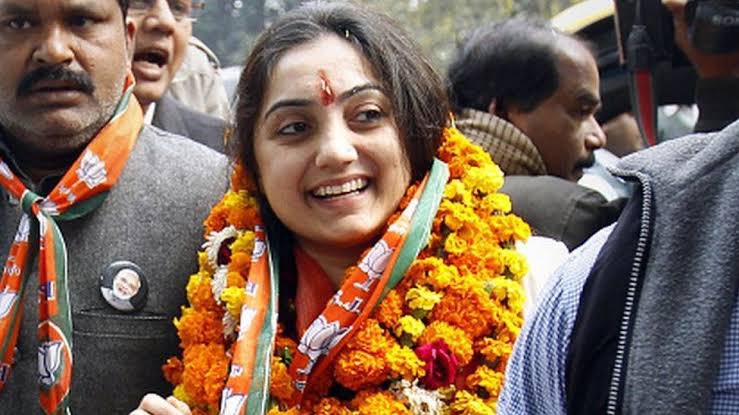
Despite pressure from various quarters, the Bharatiya Janata party is unlikely to revoke the suspension of its former spokesperson Nupur Sharma, and has firmly decided against fielding her in the forthcoming Delhi Assembly polls.
Nupur was suspended from the BJP in 2022 after her alleged controversial comments against Prophet Muhammad.
Over the past few months, a section in the saffron unit was pitching for Nupur as a strong Hindutva face to be fielded in the national capital in the Legislative Assembly polls. However, the BJP, after assessing the possible fallout of the move, has decided against any such adventurous move.
“The matter of revocation of Nupur Sharma’s suspension was discussed briefly and an example of Tiger Raja Singh was cited. The BJP had revoked the suspension of its firebrand legislator ahead of Telangana Assembly polls last year,” sources pointed out.
The revocation was a tactical success for the party in Telangana. However, the party has decided against repeating the formula in the national capital. “Any move to field Nupur could have again stoked the controversy that took an ugly, international turn a couple of years back. The government had to use its diplomatic channels to diffuse the situation, an area where it doesn’t want to dwell again,” sources added.
Ever since her suspension in 2022, Nupur has tried to maintain a low profile as there is a danger of her being targeted by fundamentalist elements. However, despite the restrictions on her movement, she has been spotted publicly a few times over the past few months, fuelling speculation that she may be brought back to active politics.
She was seen at the wedding reception of a top BJP leader’s son, while she later participated in a Ganesh Puja in New Delhi. She was also seen performing puja at Mahakal temple in Ujjain a few weeks back. This intermittent surfacing of the suspended BJP leader was seen as an attempt at testing waters ahead of Delhi Assembly polls.
It is noteworthy that after the controversial statement of Nupur Sharma, a tailor Kanhaiya Lal was murdered by religious fanatics in Rajasthan’s Udaipur. After this, concern was also raised about the safety of Nupur Sharma and Delhi Police provided her special security.
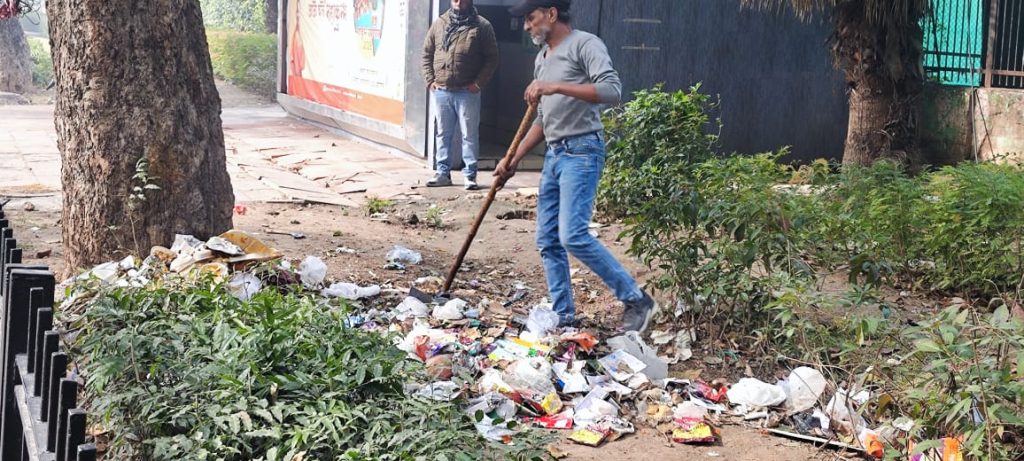
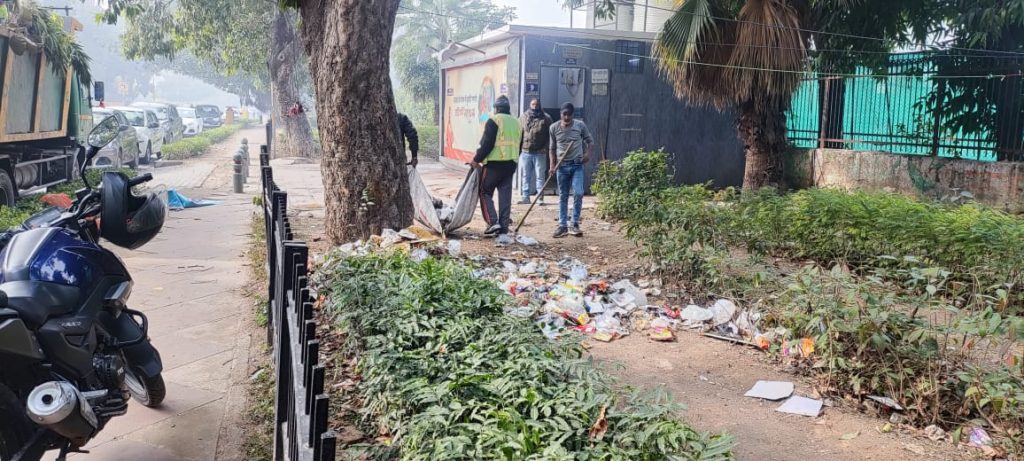
Ahead of the forthcoming Delhi Legislative Assembly polls, inadequate sanitation remains a pressing issue even in the national capital’s VVIP zone of New Delhi Municipal Council.
Less than 200 metres away from Parliament, improper waste management can be witnessed in the area which is being represented in the Assembly by former Delhi Chief Minister Arvind Kejriwal. The seat is witnessing a high decibel contest where Kejriwal is facing Congress’ Sandeep Dikshit and Bharatiya Janata Party’s likely candidate is Parvesh Verma.
Though NDMC claims that these areas are well-maintained, with regular cleaning services and waste management system in place, garbage is often discarded indiscriminately in public space near Press Club of India in central Delhi, leading to unsightly and hazardous conditions.
Photo : Naveen Bansal
Located near Chelmsford Club, the slums in the area suffer from a lack of basic sanitation infrastructure. Piles of untreated garbage accumulate on the footpath, creating breeding grounds for diseases, and the stench of uncollected waste permeates the air in the area which falls in the New Delhi constituency.
The residents of these slums, already grappling with poor living conditions and limited access to healthcare, bear the brunt of this unsustainable waste management system. The improper sanitation in the neighbourhood not only affects the health and well-being of the most vulnerable population but also highlights the urgent need for systemic reform to address waste management across all areas of the city.
Speaking to Tehelka.com, a resident said that no one comes here to clean the area and people are suffering without proper sanitation.
“We are facing difficulties due to this piled up garbage and when we complain about it workers say that they are not deployed in this area. When some officers or political leaders come for inspection, NDMC workers come to clean the area,” a female resident said.
She also claimed that they are provided with a speech and asked to say exactly in front of the officers during inspection.
“Water keeps coming out of the sewers and nobody is listening to us,” she said.
Echoing the same, another resident said that we are bound to sweep the area on our own and pick the garbage to the trolley as no sanitation worker comes here for the garbage collection.
“When there is a checking spree or someone important is coming only then the garbage is picked up from this area otherwise nobody comes here for the sweeping or any other sanitation worker,” the resident said.
However, NDMC Director (PR) Radha Krishnan denied any lapses in sanitation services. “We can’t accept that there is laxity on our part in terms of sanitation in the area. I will take feedback from the department but I cannot accept that there is a laxity on our part as there has been regular drives for cleanliness and inspectors and nodal officers have been appointed for the same,” Krishnan said.
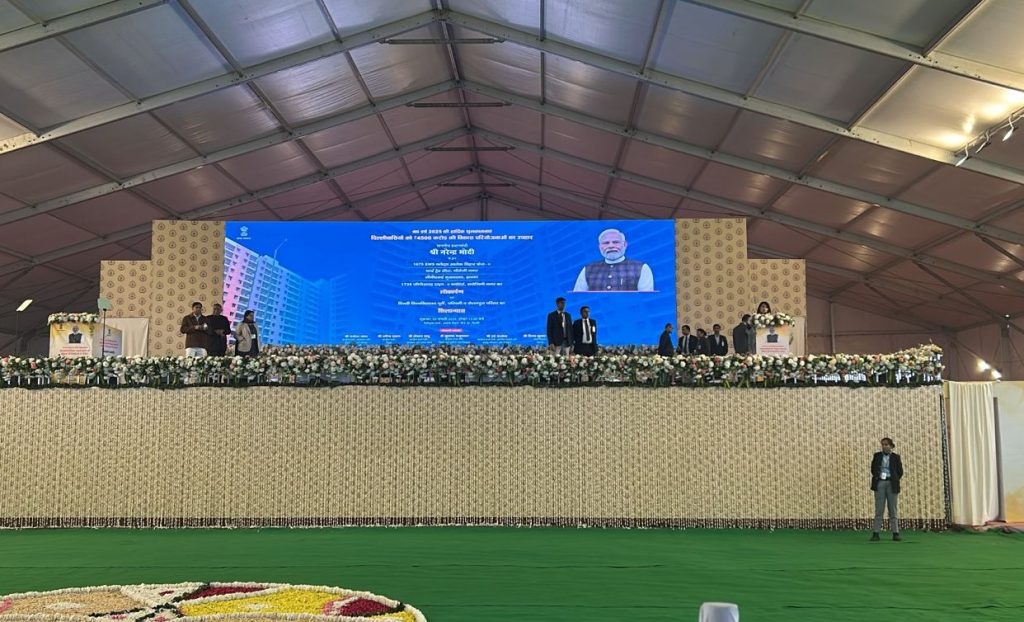
Prime Minister Narendra Modi on Friday is set to lay the foundation stone of Veer Savarkar College in Delhi’s Roshanpura in Najafgarh. This comes at a time when the assembly elections are due in the city next month, fuelling a controversy between Congress and Bharatiya Janata Party (BJP) over the choice of name of the college.
Sharing information about the foundation laying ceremony, Delhi University Vice Chancellor Yogesh Singh said that the Prime Minister will be laying the foundation of three projects including East and West campus of Delhi University and Veer Savarkar College.
He said, “It is a moment of pride for the Delhi University as Prime Minister Narendra Modi will be laying the foundation of three projects which will be completed in Two years. We will be creating new opportunities and new seats with the help of this infrastructure.”
All the projects have been budgeted for Rs 600 crore which is being provided by the central government.
Meanwhile, national president of the National Students’ Union of India (NSUI), Varun Choudhary has written a letter to Prime Minister Narendra Modi, urging to honour the legacy of former Prime Minister Dr. Manmohan Singh by naming the educational institution after him.
The letter highlighted Dr. Singh’s transformative contributions to India’s education sector, including the landmark Central Universities Act, 2009, the Right to Education Act, and the establishment of premier institutions like IITs, IIMs, and AIIMS across the nation.
“As the government prepares to inaugurate a Delhi University college named after VD Savarkar, NSUI strongly demands that the institution be named after Dr. Manmohan Singh Ji instead,” the letter read.
Former Bangladesh Premier Sheikh Hasina’s presence in India will further fuel anti-India feelings in Bangladesh both at the level of the people and the powers that be. But will India ditch a former ally?
By KUMKUM CHADHA
The news about India and Bangladesh just does not seem to end. There is a lull for a few days and the demon rises again: this time, it is regarding the neighbouring country’s demand for extradition of former Prime Minister Sheikh Hasina.
But first, the timeline: In August this year, Bangladesh’s former Prime Minister Sheikh Hasina fled to India following weeks of protests by students over a controversial quota system in government jobs. This was just a few months after she had begun her fourth term as Prime Minister.
She has been in India since, seemingly making this her “second home” and the Indian government, quite willingly, letting her.
Sheikh Hasina has been in India for the past five months in an undisclosed location: much to the chagrin of the Yunus-led interim government in Bangladesh.
Last week, it moved in demanding that India send her back to Bangladesh for trial.
This follows the Bangladesh International Crimes Tribunal issuing arrest warrants against Hasina for committing “crimes against humanity and genocide”.
The extradition request has put India in a precarious situation. It is a toss-up between an ally and a bilateral relationship.
During Hasina’s tenure, the relationship between India and Bangladesh was kind of a dream-run. Diplomatic ties between the two countries strengthened; there was cooperation in multiple sectors and trade was at an all time high.
After the interim government under Nobel Laureate Mohammad Yunus came to power, the relationship suffered a setback.
Bilaterally, India was under a lens; within Bangladesh Hindus were targeted; temples vandalized and a monk arrested on charges of sedition.
India’s Foreign Secretary Vikram Misri travelled to Bangladesh to express India’s concerns: the first high-level visit by an Indian official to Bangladesh since Hasina’s ouster.
On her part, Sheikh Hasina accused the Yunus government of perpetrating “genocide” and failing to protect minorities, especially the Hindus: echoing what the Indian government has been saying all along.
But this is less about Sheikh Hasina and more about India. It is about persecution of Hindus in a country that India helped liberate; it is about the anti-India sentiment that has reignited; and it is about India being an “overbearing neighbor” and Hasina’s subservience to it: “an unequal relationship” to describe the majority sentiment.
As for persecution of Hindus, it is nothing new. Even though Hindu minorities in Bangladesh are seen as supporters of Sheikh Hasina’s Awami League Party, even during her reign, they were easy targets.
In 2021 communal violence had erupted in Bangladesh and over a hundred temples were destroyed. India had then chosen to look the other way. But this year around when Durga Puja festivities in Bangladesh were disrupted, the Indian government slammed it as “Systematic desecration”.
While India’s objections were in order this time around, its silence on communal violence when Hasina was in power has evoked mixed reactions. Also, the finger pointing.
Can one ignore India going overboard in its support for Hasina’s government? How does it justify cajoling her even after the sentiment in Bangladesh is against her? Can one, then, fault the interim government under Dr. Mohammed Yunus to write off India as a reliable and dependable ally?
For starters, the asylum to Sheikh Hasina is under scrutiny. When she fled her country, her obvious and immediate choice was India. She sought asylum and India granted her one.
It is no one’s case to suggest that India should have turned her or any ally or a former Head of State when they came knocking. Giving refuge to one in distress is, as a government source said, “an honourable gesture expected from any neighbour”.
That given, the issue is Hasina’s extended and perhaps indefinite stay in India.
When Sheikh Hasina had landed here after her ouster, it was flagged as a temporary refuge.
There were reports of her seeking asylum in the United Kingdom. A technical glitch has stalled the process.
When India’s Foreign Minister S. Jaishankar had informed the Indian Parliament of her sudden arrival in Delhi in August, he had stated that the initial request was “for the moment only”. That this has extended to months with no signs of an immediate resolution is another matter.
The fact that India does not have any policy for refugees allows the government to be flexible in its response.
The fact that this “flexibility” is working to Hasina’s advantage is not lost to anyone, neither in India nor Bangladesh. If anything, the Indian Government is being slammed for using this as a “convenient tool” to let Hasina stay for as long as she wants.
On its part, the Indian government has not moved an inch to engage with stakeholders for Hasina’s asylum. At least, visibly.
Therefore, the Yunus-led interim government is justified in viewing India with suspicion as also write it off as “an adversarial neighbor”.
Equally, the people in Bangladesh would vent their anger and angst towards India is expected. That it has targeted Hindus and resulted in large scale violence is unfortunate.
Adding fuel to the fire is India’s alleged complicity in letting Sheikh Hasina make political statements against the current regime in Bangladesh from its soil.
In a virtual address ahead of Misri’s visit to Bangladesh, Hasina accused the Yunus regime of being “fascist” and one that has allowed a free run to terrorists.
But what was significant was Hasina’s specific reference to attacks on minorities in Bangladesh. This was seen as a deliberate move to position herself as someone parroting concerns that India is attempting to tackle diplomatically and bi-laterally.
At this junction, one is constrained to ask: Why is the Indian Government not restraining Sheikh Hasina? Why is it allowing her to muddy the political waters? Why is it letting the Indian soil be a convenient platform for political-speak? And why is it letting Hasina hit out at a regime that India has to mend a completely fractured relationship with?
These questions are not restricted to the corridors of power but have spilled to the streets.
Consequently, the targeting of Hindus may be rooted in religious discrimination but one cannot delink the common man’s anger at India “protecting Hasina at all costs”.
All eyes are now on India’s next move: Will it or will it not extradite Sheikh Hasina?
While Bangladesh has confirmed that a diplomatic note has been sent to India seeking Hasina’s extradition, India has said it has “no comments” on the issue.
India is likely to take its time on the request. It may also put to good use its “long tradition of receiving guests”, the Dalai Lama being a case in point.
In any case, the India Bangladesh Extradition Treaty allows India to refuse extradition if the offence in question is political in nature. The Treaty, however, lists crimes which would not be deemed to be politically motivated including murder. Sheikh Hasina has been charged with murder.
But this is less about the written word and more about perception.
There is a mistrust between the two regimes since Hasina’s ouster and her subsequent refuge in India.
The Yunus government has made it known that India needs to “reconfigure bilateral ties in the light of new realities”.
Therefore, India needs to recalibrate its approach and tread with utmost caution.
Hasina’s presence in India will further strengthen the anti-India feelings in Bangladesh both at the level of the people and the powers that be.
But will India ditch a former ally? Or will it risk undermining ties with Bangladesh? Will it give in to the pressure by the interim government? Or will it soft pedal the issue till an elected government is formed? The jury is out.
The recent amendment to Rule 93 of the Conduct of Election Rules, 1961, has sparked outrage among opposition parties and activists, who allege that it curtails electoral transparency by restricting public access to vital election-related records. A report by Mudit Mathur
The Ministry of Law and Justice on December 20, 2024, amended Rule 93 of the Conduct of Election Rules, 1961 triggering political controversy concerning people’s right to inspect and procure a trail of records conducting elections. While the EC said the amendment aims to restrict access to electronic data, the opposition and transparency activists have been up in arms, branding it as an attack on the right to information and electoral freedom. The Congress party is planning to challenge it before the Supreme Court.
The amendment altered a crucial provision aimed to ensure transparency in the electoral process, acting on the Election Commission of India’s recommendation, and notably, without any public deliberation with political parties or stakeholders. Surprisingly, the Union government immediately notified it without consultation. It may be mentioned that the recent assembly elections in Haryana and Maharashtra came under cloud amid serious allegations of rigging, EVM manipulations, suspicion over a hike in vote percentage, mass deletion of registered voters and misuse of government machinery following highly unexpected results.
The amendment came in the teeth of the orders of the Punjab and Haryana High Court given on December 9, 2024, by Justice Vinod S. Bhardwaj, on the writ petition filed by an advocate Mehmood Pracha to supply the videography, CCTV footage and copies of Forms 17-C Parts I and II, pertaining the conduct of Haryana Legislative Assembly Elections, 2024 within six weeks of submission of application on the payment of requisite charges.
The petitioner Mehmood Pracha, through his video appearance, argued that as per the provisions of the Conduct of Election Rules, 1961, the only distinction cast between a candidate and any other person is that while the documents have to be supplied free of cost to a candidate who contested the election, the documents are to be supplied to any other person subject to payment of the fee as may be so prescribed and he is ready for it.
Instead of complying with the orders of the High Court, the Election Commission of India recommended amending the concerned Rule 93 of the Conduct of Election Rules, 1961, to restrict the type of “papers” or documents open to public inspection which now restricts public access to certain election-related documents, including CCTV footage, webcasting data, and video recordings of candidates during elections.
The amended Rule 93 (2) (a) now states that “all other papers as specified in these rules relating to the election, shall be open to public inspection,” whereas previously, it allowed public inspection of all papers related to the election without any exceptions. The government amended Rule 93(2)(a) to restrict the type of “papers” or documents open to public inspection. The amendment inserted the phrase “as specified in these rules” after “papers”.
Rule 93 (2) before the above discussed amendment provided that subject to such conditions and to the payment of such fee as the Election Commission may direct, — All other papers relating to the election shall be open to public inspection; and copies thereof shall on application be furnished.
Clarifying the stand of the Election Commission, it has been stated officially, “There have been instances where such electronic records have been sought, citing the rules. The amendment ensures that only papers mentioned in the rules are available for public inspection and any other document which has no reference in the rules is not allowed for public inspection.”
“The misuse of CCTV camera footage from inside polling booths could compromise voter secrecy. Also, there are chances that this footage could be used to create fake narratives using AI technology,” it added. According to the law ministry, all election papers and documents were still available for public inspection.
The major opposition parties alleged that the rule was tweaked to prevent public inspection of certain electronic documents such as CCTV cameras and webcasting footage as well as video recordings of candidates.
“If there was ever a vindication of our assertions regarding the rapidly eroding integrity of the electoral process managed by the Election Commission of India (ECI) in recent times, this is it,” AICC general secretary Jairam Ramesh said in a post on X.”This move of the ECI will be challenged legally right away,” he added.
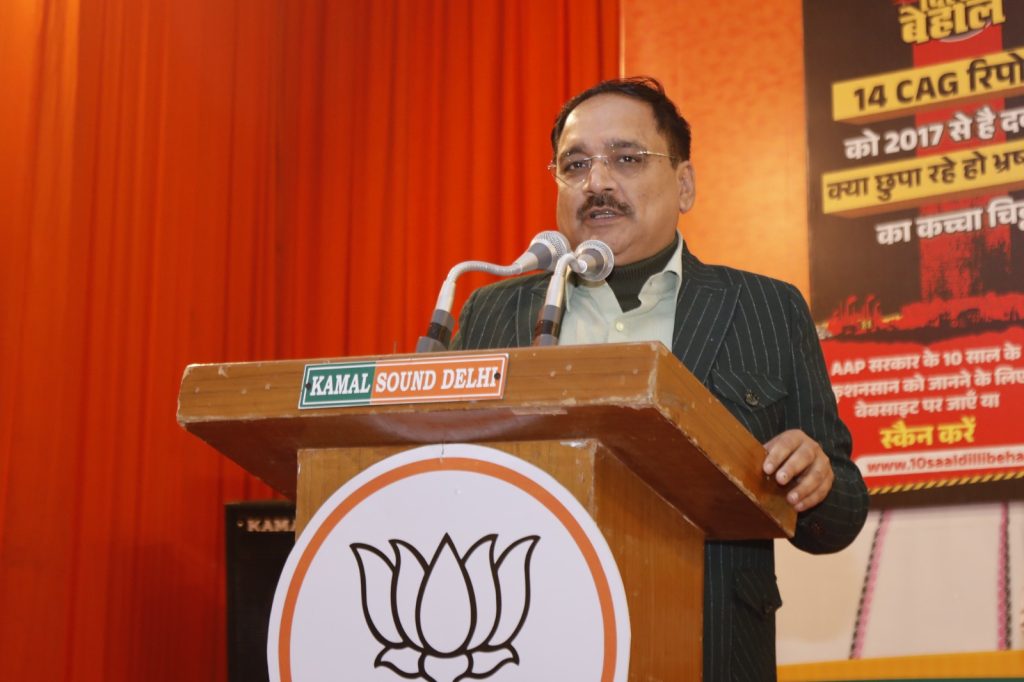
Delhi BJP President Virendra Sachdeva on Thursday accused the Aam Aadmi Party Rajya Sabha MP Sanjay Singh of allegedly deceiving people of the national capital and violating electoral laws by bogus voter registrations.
He claimed that Singh was registered as a voter in multiple constituencies like Sultanpur Municipal Council in Uttar Pradesh, New Delhi Assembly, and Tilak Nagar Assembly constituencies. He also said that they were criminal actions and they should be investigated.
“We have presented facts from official government and municipal council voter lists. Sanjay Singh is listed in three places. He has cheated the Election Commision,” Sachdeva said.
He further said, “On January 4, 2024, he announced that his vote in Sultanpur Assembly has been removed, and on January 8, 2024, his wife submits an affidavit stating she has a vote in Sultanpur.”
He presented the voter lists and affidavits to substantiate his claims and said that when Sanjay Singh became a RS member his vote was registered in the Hari Nagar Assembly constituency but during the same time, his name was present in the voter list of Sultanpur Municipal Council.
He accused Singh of registering votes in the New Delhi Assembly and Tilak Nagar Assembly constituencies as well. “He wasn’t satisfied with Hari Nagar and Sultanpur. He registered in the New Delhi Assembly and Tilak Nagar Assembly too. This is their farjiwada (fraud). These are deceitful practices,” Sachdeva said.
Sachdeva urged the Election Commission and Delhi Police to take cognisance of the matter and initiate action against such violations.
Meanwhile, Singh sent legal notices to BJP social media head Amit Malviya and MP Manoj Tiwari. Amit Malviya and Manoj Tiwari had accused Sanjay Singh of having more than one voter ID card.
The Delhi Assembly polls are due to be held in February 2025. However, the Election Commission has not announced the dates of the polls.
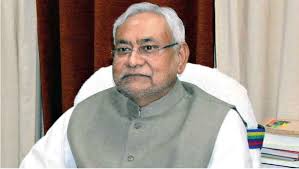
All is not seemingly well in the National Democratic Alliance. There is massive speculation that Bihar Chief Minister Janata Dal United leader Nitish Kumar is considering parting ways with the NDA, yet again.
The speculation of an imminent separation has been fuelled after last week’s visit of Nitish to the national capital when the Bihar CM didn’t meet Prime Minister Narendra Modi or Bharatiya Janata Party chief JP Nadda.
The brief trip by Nitish also drew a barb by opposition Rashtriya Janata Dal, which stated that NDA is not giving importance to the Bihar Chief Minister and claimed that the BJP is preparing to remove from the chair.
Though the JDU and BJP leaders have repeatedly claimed that there is no strain in ties between the two alliance partners, there is seemingly growing unease between them. Nitish had previously severed ties with the NDA in 2022 to form a government in Bihar with the RJD.
Ever since his return to the NDA, there has been repeated speculation about whether Nitish will part ways with the alliance again, as his relationship with the BJP has been tumultuous in the past.
Interestingly, due to his repeated political flip flops, Nitish Kumar has even been termed as “Kursi Kumar” by political friends and foes alike.
Elections to the 243-member Bihar Legislative Assembly are scheduled to take place later this year. And any move by Nitish, with just a few months for polls, is expected to have far reaching consequences on the political landscape of the state.
Over the past few months into Modi 3.0, differences between the two allies have surfaced repeatedly. Despite being an ally, JDU has taken a clear stand against the BJP’s pitch on issues like caste-based census and the Citizenship Amendment Act.
Moreover, if Nitish feels that it would be beneficial for him to leave the NDA to regain power in Bihar, he is likely to join hands with former ally RJD ahead of the crucial polls.
His decision to rejoin NDA ahead of 2024 Lok Sabha polls may have been a strategic move to consolidate power in Bihar, but in state polls he is likely to take a decision on a possible ally after assessing which political outfit suits him to retain power.
Over the past few weeks, Nitish has also been facing protests over alleged irregularities in the Bihar Public Service Commission (BPSC) examination. Protesters, primarily students and aspirants, are demanding the cancellation of the exam, citing widespread misconduct. This is also likely to be assessed for a political fallout before a decision on the issue is made.
With last minute surveys being commissioned in Bihar by political parties, it remains to be seen whether Nitish will remain with the NDA or forge a new path for JDU.
2024 leaves behind a grim legacy of conflict and chaos, with staggering civilian casualties and geopolitical upheavals. As world powers assert dominance, fragile international systems falter, ushering in a perilous 2025.by Gopal Misra
With the sun finally having set on December 31, the tumultuous 2024 is buried. Its dreaded ghost, however, is continuing to haunt mankind. During the first ten months of this erstwhile year, more than 12,000 innocent civilians including 659 children succumbed to avoidable conflicts and an additional number of 27,000 civilians grievously injured in the ongoing fratricide between Ukraine and Russia. These statistics being made available by the office of the United Nations High Commissioner for Human Rights (OHCHR) are not just statistics, but each casualty narrates the sad story of individuals comprising mankind.
The final casualties in the West Asian conflict are yet to be made available, but the ongoing war has further expanded during the last weeks of 2024. With the sudden Islamic uprising supported by the West and the dreaded al-Qaeda against the secular Baath Party in Syria finally leading to the collapse of the Asad government has given a difficult task to the high-profile experts of the Arab politics from Washington to New Delhi to analyse and if possible, make prophecies about how these recent happenings would be influencing the world politics in 2025.
The casualties in the West Asia region are estimated to be 42,000 civilians, including 13,319 children, 3447 women and 3447 elderly people.
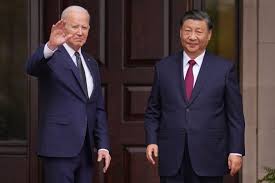
Amidst these heart-rending developments, Chinese President Xi Jinping has become more assertive. His polite refusal to attend the inauguration of President Donald Trump scheduled on January 20, 2025 has given a strong message to the US-led West that the Dragon has become much more assertive during the tenure of the US President Joe Biden. Its Wolf War diplomacy would be more pronounced in the New Year
For mankind, the post World War-II international systems evolved during the past eight decades or so to avoid any war in future, appears to have lost their steam. The institutions like the UN have not only become defunct, they, perhaps, are facing their doom like the League of Nations. The League of Nations was set up after World War-I to avoid a large-scale conflict in future. It is being rightly asked whether the UN too might be doomed like its predecessor.
The West, especially the United States, has cared little to learn from its own history. With the eclipse of the Soviet Union, the US has been dominating geo-politics as the only super power since 1990. It, however, did not care to usher in any substantial measure for strengthening the UN systems. Instead, they have been echoing the West’s colonial agenda.
It may be recalled that the successor state of the USSR, the Russian Federation, had not only disbanded the Warsaw Pact, and it was expecting that the US would also reciprocate by dissolving NATO. The successor leadership in Moscow was keen to be a part of Europe. The US, however, not only refused Moscow under President Yeltsin to end the defence alliance, it also turned down his request for NATO membership.
Interestingly, during the past three decades, Russian oil had been reinvigorating the industries in the Western Europe; but the Anglo-Saxon alliance within the West, i.e. the US and the UK, have expanded NATO in Eastern Europe. For the Russian President, Vladimir Putin, it was unacceptable, because it was felt that those at the helm in the White House were keen to revive the West’s apathy towards Russia in the 20th century.
The colonial agenda
It will be unfair for the world to expect from the descendants of the former colonial powers of Europe, the US, to revisit European literature related to the catastrophic events of the past, especially recorded in the poems and paintings describing or portraying the majesty of death or the Dance of Death. It is believed that these silent efforts had led to the advent of renaissance.
During the late middle ages, Europe was under the strict control of the Churches, especially the Vatican. Their way of life and the political power enjoyed by them, perhaps, was no different than the Muslim clergy’s assertive role in the Muslim majority countries like Pakistan, Bangladesh and in most of the Arab world. During the dominance of the Church in Europe nearly 2.5 million people had succumbed to plague, it is remembered as Black Death, but it didn’t prevent the war between England and France (1337-1453) causing death, poverty and misery to the common people. The Ukraine-Russia conflict took place soon after the pandemic of the Covid-19.
US supports Islamists
The year 2025 is the halfway of the third decade of the present century. It is often stated that contemporary history often repeats the past. The world, perhaps, is repeating the events witnessed during the first quarter of the 20th century. The Russians and the West had almost ended the Ottoman Empire. Its influence was diluted in the region, but its decline in world politics weakened the hold of the Caliph, thus helping Turkey to become a democracy.
It, however, has never been explained why the Indian leaders like Mahatma Gandhi were supporting the Caliph; thus opposing the democratic movement led by Kamal Ataturk.
According to many political scholars, Gandhi supported Khilafat movement during 1919-22 gave Indian Muslims an international identity and connection, but also uprooted and alienated them from their motherland.
Earlier, neither the Delhi sultans nor Mughal emperors had given any importance to the Caliphs. They not only considered themselves as the rulers of India, a civilized country, but they, like Indonesian Muslims considered most of the Muslims of West Asia as barbaric people. On the other hand, the Muslims in Malaysia and Indonesia retain their ancient traditions. For the Islamic University of Jakarta, Lord Ganesh symbolises their faith having a common universal dimension.
Biden has also ensured the end of democracy in Bangladesh. He has not only been supporting the army takeover with the help of the Muslim clergy, but didn’t hesitate to welcome Mohammad Yunus, a Nobel Prize winner. He is seen serving like a Trojan to the ISI, who had conspired with Pakistani intelligence, Inter Services Intelligence (ISI).
The ISI is known for running an international drug business with the blessings of the American Deep State. Meanwhile, Marijuana has been allowed in as many as 24 states in the USA, thus benefiting the drug business involving a number of intelligence agencies.
Apart from successfully installing a sham democracy in Bangladesh, Biden will also be remembered for renewing ties with Islamists, especially with al-Qaeda in Syria.
Covid-19 investigation stalled
Apart from the renewal of the support of the notorious American deep state comprising CIA and FBI and their so-called think tanks to the ISI supporting its drug business, Biden will also be remembered for helping China in avoiding any scrutiny regarding its role in the spread of the coronavirus. It appears history is repeating itself. The world witnessed Black Death caused by a man-made virus unleashing the pandemic, Covid -19 causing innumerable deaths across the continents. The virus developed at a laboratory in Wuhan in mainland China, was liberally funded by the US-based pharmaceutical companies. During 2019-24 Biden Administration successfully wrapped up or deliberately avoided the enquiries related to the Covid virus and its different strains.
It may be noted that the research and development of viruses, which could be used as biological weapons, have been banned by the UN. It is quite well known that these viruses could be weaponized. In spite of being signatories to the international protocols, the research in this field has never been discontinued by the world powers.
Also, these researches are also being used for profits by the international pharma companies.
It has been noticed that apart from funding the development of these dangerous viruses, pharmaceutical companies develop vaccines for their cures before these viruses are unleashed among the poor countries of Asia and Africa
Joe Biden, who has promised cooperation to Trump, appears to be creating formidable challenges before his successor, who has been elected despite the conspiracies of the American deep state. Trump has to invoke the spirit of Hercules to serve his country.