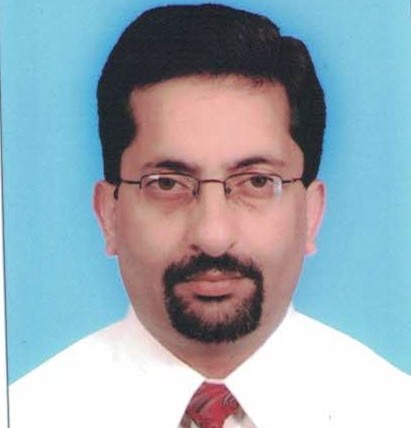
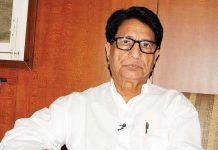
New Delhi : Romesh Kumar Puri has been appointed as the new Secretary General of the Indian Direct Selling Association (IDSA), the apex body representing the direct selling industry in India.
Romesh Puri, besides overseeing all the activities of the association, will also spearhead its envisioned mission and objectives. With a distinguished career spanning over 34 years in the Government of India, Mr. Puri has held various significant roles across multiple ministries and departments.
Notably, Mr. Puri brings a wealth of expertise in policy formulation, program management, and research-driven studies. As a former Joint Director of the Department for Promotion of Industry and Internal Trade (DPIIT), he played a key role in the development of the upcoming e-commerce policy and the national retail trade policy, among other critical initiatives. His extensive experience will contribute significantly to the growth and development of the direct selling industry.
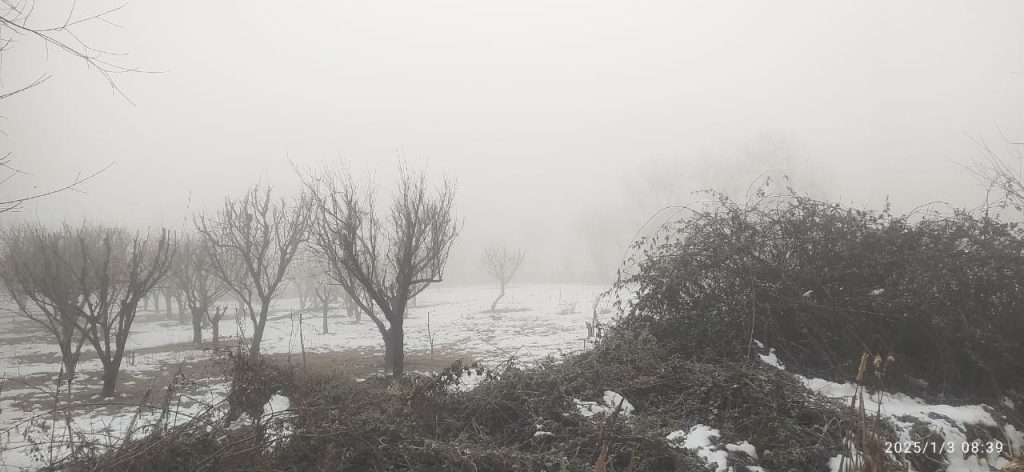
A severe cold wave gripped Kashmir, Jammu, and Ladakh overnight, sending temperatures plummeting across the region.
Srinagar, the summer capital of Jammu and Kashmir, recorded a freezing -4.4°C, intensifying the chill sweeping through the valley.
The coldest spot in the Kashmir valley was Larnoo, which dropped to a numbing -11.6°C. Other notable lows included Pahalgam at -10.4°C, Shopian at -9.9°C, and Gulmarg at -9.6°C. Qazigund froze at -6.2°C, while Anantnag recorded a biting -8.4°C.
In Jammu, temperatures stayed above freezing in most areas but were unusually cold for the region. Jammu city registered 5.5°C, Banihal saw 3.8°C, and Batote recorded 3.3°C. Bhaderwah dipped slightly below freezing at -0.2°C, while Padder experienced a sharp -5.1°C.
Ladakh endured the harshest temperatures, with Drass plunging to a frigid -24.8°C, followed by Kargil at -14.6°C and Leh at -13.3°C.
The ongoing cold wave continues to impact daily life, with residents braving the harshest winter conditions so far this season.
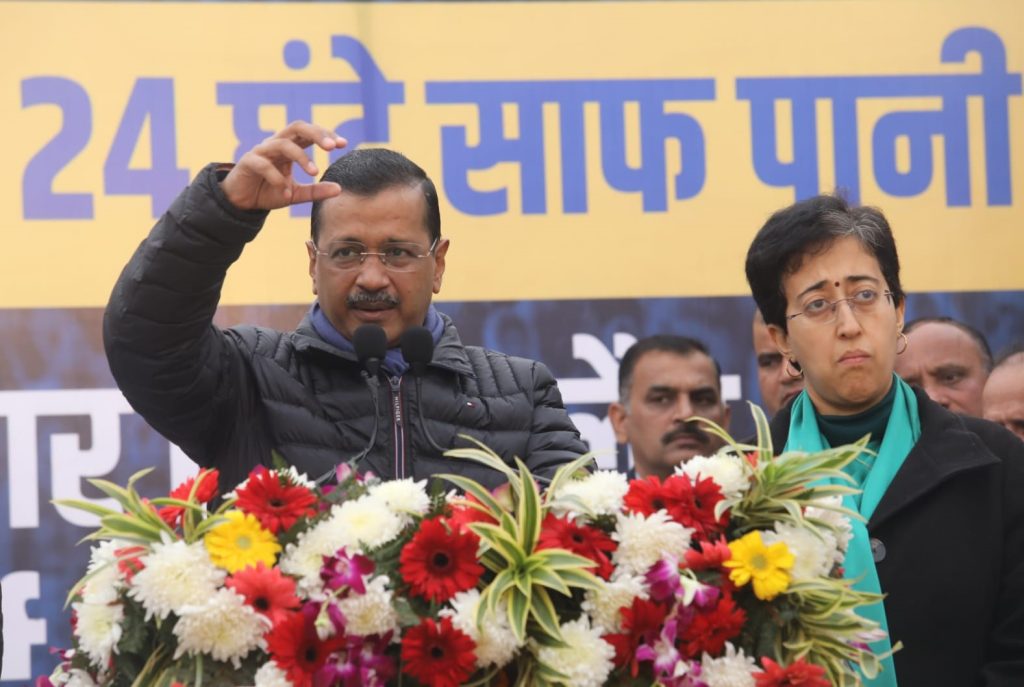
As the assembly elections in Delhi approach, the issues related to water supply, particularly the contaminated water and low water pressure have become a focal point of discussion in the national capital.
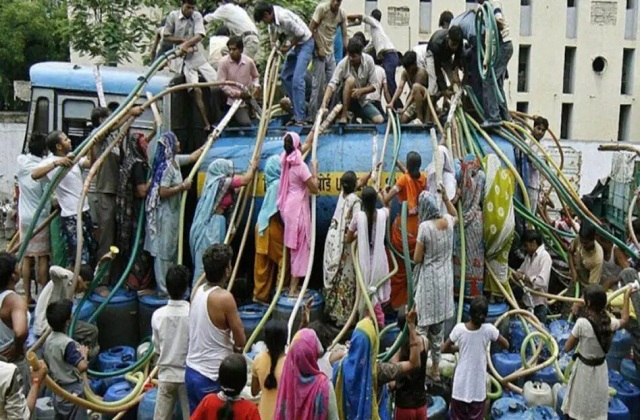
For residents of the city, the persistent water problems are not just an inconvenience but a growing public health concern. At some places where water pipelines are available, the water is contaminated with foul smell and bitter taste, there are many areas where water pipelines have not even reached for people to use.
They are only dependent on local water mafia who run private shops where they have installed big water filters along with submersible pumps and sell the water on a per litter basis.
Where there no water pipelines are available, even the water tankers from Delhi Jal Board don’t reach for the people and by when the water is supplied, the drivers or the in-charges of the tankers ask for money in return.
Speaking to Tehelka.com, Abhishek, a resident of Aali village near Sarita Vihar said that the area does not have a water pipeline and the people are dependent upon the local water mafia who have made this issue a money making scheme.
“We don’t have water pipelines here and no water tankers are sent by the Delhi Jal Board, so we have to purchase the water on a per liter basis which has given an upper hand to the water mafia here,” Abhishek said.
People in Wazirabad, near the Jagatpur Road are suffering from the same problem. Here the water pipeline is available but the water is not drinkable so these people are also dependent on the private water sellers.
“There is a tap in every street here but the water is not drinkable. It is so contaminated that nobody uses this water. The taste is bitter and a foul smell comes from this water. We have to buy water bottles from the private shops here,” Tarun, a resident of Wazirabad told Tehelka.com
Mayank Diwakar, who resides in the East of Kailash said that the water tankers don’t come here and if they come they “ask for money”, so we are using our water purifiers in our home.
Meanwhile, in West Delhi’s Dwarka and Uttam Nagar area the water pressure is low and it only comes for half an hour in a day. The water in Uttam Nagar sometimes becomes contaminated and it stinks.
A local from Uttam Nagar who resides near New Holy Public School said, “The water sometimes is very contaminated and the smell is so bad that we can’t use that water for any purpose.”
These issues directly impact the lives of Delhiites, and political parties are likely to face scrutiny over their promises to tackle the city’s water woes.
The condition of the pipelines and filtration systems, and the inability of the Delhi Jal Board (DJB) to meet the growing demand for clean water have fueled dissatisfaction, particularly in localities where access to water is erratic or contaminated.
According to Chief Election Commissioner Rajiv Kumar, the city will go for vote in a single phase on February 5 and the counting is scheduled for February 8.
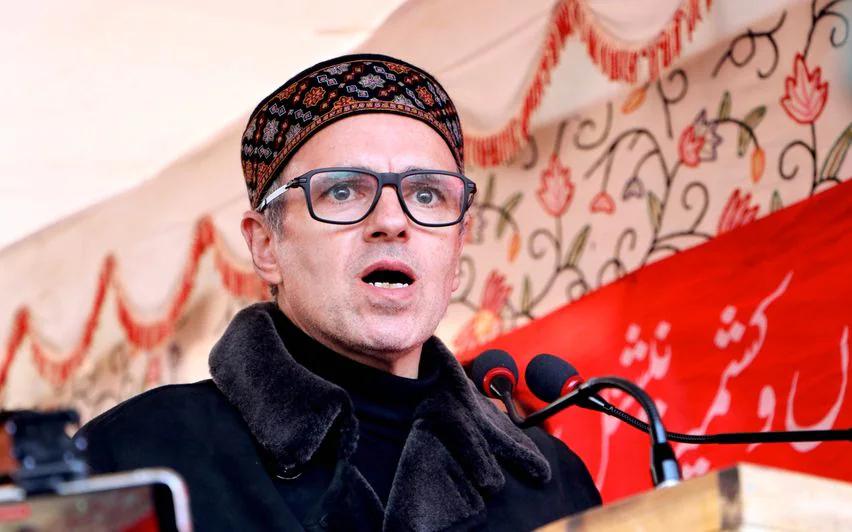
Jammu: Chief Minister Omar Abdullah on Monday assured that the upcoming train connectivity to Kashmir and the newly inaugurated Jammu Railway Division would enhance the region’s economy and bolster tourism.
Speaking at the inauguration ceremony of the Jammu Railway Division, held virtually by Prime Minister Narendra Modi, Abdullah expressed gratitude for the fulfillment of a long-standing demand of the people of Jammu and Kashmir.
“This is a historic milestone for J&K,” the chief minister said, emphasizing that the new rail division would bring administrative control closer to Jammu, reduce reliance on Firozpur, and create local job opportunities.
The Udhampur-Srinagar-Baramulla Railway Link (USBRL) project, including the world’s highest Chenab Rail Bridge, has been a transformative initiative to improve connectivity in the region. The recent trial run of the train between Srinagar and Katra signals further progress, with full operations expected soon.
Abdullah also addressed concerns about potential economic losses for Jammu due to direct rail connectivity to Kashmir. He assured residents that the project would bring significant benefits, including increased trade, tourism, and industrial growth. “Despite challenges, the benefits will far outweigh any disadvantages,” he stated.
The chief minister highlighted ongoing infrastructure development projects, such as the Zojila and Z Morh tunnels and the expansion of Jammu and Srinagar airports, which are expected to complement the enhanced rail connectivity.
The event was attended by Lieutenant Governor Manoj Sinha, Union Railway Minister Ashwini Vaishnaw (virtually), and several other dignitaries. Abdullah extended his thanks to Prime Minister Modi, Railway Minister Vaishnaw, and others for their efforts in making this project a reality.
Facing a tough triangular contest in the New Delhi Assembly constituency, the Aam Aadmi Party convenor and former Chief Minister Arvind Kejriwal is seemingly considering filing his nomination from an additional “safe” constituency.
The most interesting and tough contest is being played out in the New Delhi Assembly constituency, where AAP convenor Kejriwal is pitted against the sons of two former chief ministers of Delhi. While the Congress has fielded Sheila Dikshit’s son, Sandeep, Bharatiya Janata Party has put up Sahib Singh Verma’s son, Parvesh.
Kejriwal has secured three consecutive elections from New Delhi — in 2013, 2015 and 2020 — by big margins. However, sources in the AAP stated that after the BJP and Congress came out with their respective candidates, a section in the party feels that a “safe” seat for the former CM needs to be found in the national capital. “The New Delhi area is cosmopolitan in nature, where the voters are well educated and upwardly mobile. The party is trying to shortlist another constituency where the percentage of minority population is higher and may be considered safe for the party leader,” sources added.
If Kejriwal suffers a loss in the forthcoming Assembly polls, it is expected to create political roadblock for the AAP strongman as his claim to the Chief Minister’s post will weaken. Hence the need to look for a safe seat, sources added.
The move is being planned by the AAP after a strong feeling that Kejriwal is likely to face his toughest electoral battle in the New Delhi constituency so far due to the triangular contest. In the closely fought battle, Sandeep is trying to reclaim the legacy of the former Chief Minister and his mother, who had represented the area in the Assembly repeatedly. By fielding Sandeep, Congress has sent a clear message in Delhi Assembly elections that it wants to reclaim the legacy of its stalwart leader Sheila Dikshit. This move shows the seriousness of the party to reclaim power in the national capital.
On the other hand BJP is also in no mood to give a walkover to Kejriwal and its candidate, Parvesh, is giving a tough time to the AAP strongman by retaining the saffron cadre votes and also appealing to the young population of the constituency.
Meanwhile, ahead of the much-anticipated Delhi Legislative Assembly polls, Aam Aadmi Party has continued to pursue its earlier strategy of promising and enhancing freebies to the national capital’s voters.
Fearing heavy anti-incumbency, the Arvind Kejriwal-led Aam Aadmi Party has announced several schemes promising freebies to various sections of society in an attempt to consolidate its vote base in the forthcoming polls.
The Election Commission of India (ECI) is set to announce the dates for the upcoming Assembly polls today, setting the stage for a fierce electoral fight between the incumbent AAP, the BJP, and the Congress.
The 70-member Legislative Assembly in Delhi is scheduled to go for polls in February 2025. Besides the ruling AAP, the BJP and the Congress are the main contenders.
Over the years, AAP has seen a decline in winning seats in 2020 as compared to 2015. The party won 67 seats in Delhi for the year 2015 and 62 in 2020.
With Delhi Legislative Assembly elections drawing near, the spotlight has shifted to the civic infrastructure and governance, exposing a range of pressing issues in the national capital.
From deteriorating roads and uncollected garbage to waterlogging, these challenges highlight the gap between promises made and their implementation.
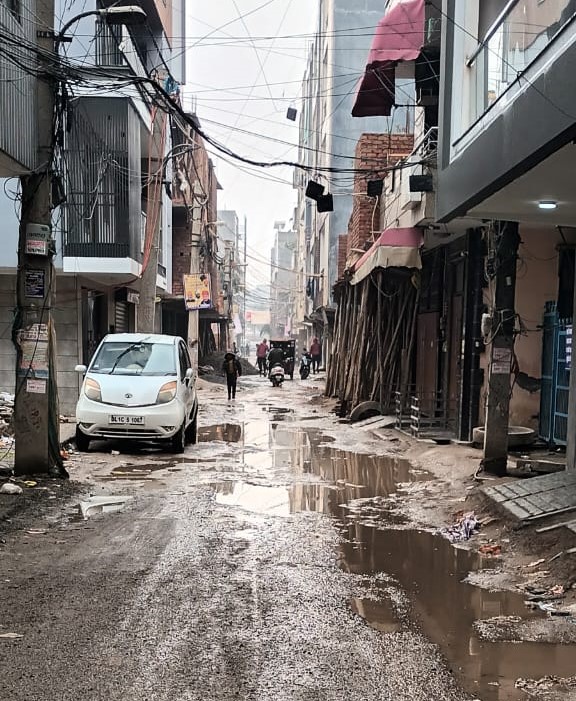
Residents across Abchal Nagar and Chander Vihar area in Nilothi extension near the Najafgarh drain, earlier known as Sahibi river, are voicing their frustrations, emphasizing the urgent need for accountability and effective governance.
Photo- Naveen Bansal
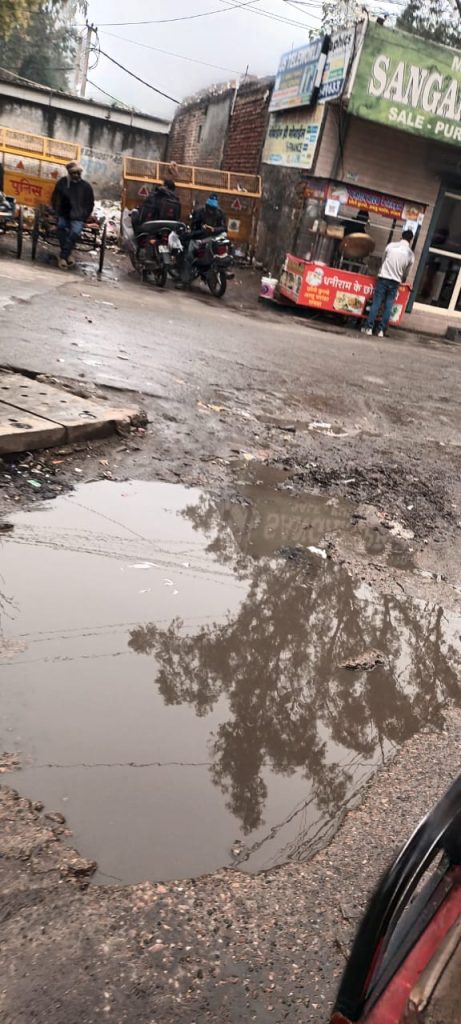
Residents of the area are grappling with dire civic issues that have made everyday life increasingly challenging. Overflowing sewers and an inadequate drainage system have left the area prone to waterlogging, creating a public health hazard and significant inconvenience for locals.
With elections just around the corner, residents are calling for immediate attention to these pressing issues, hoping their voices will be heard amid the political hustle.
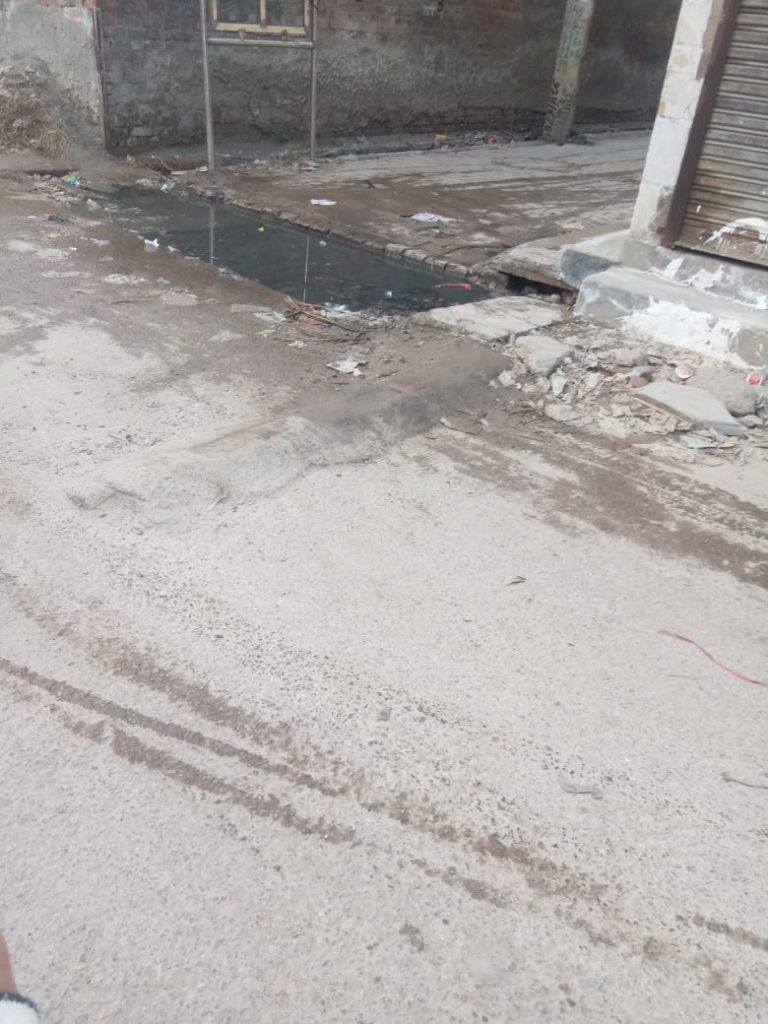
Speaking to Tehelka.com a resident said the sewers were laid a few years back but till today these have not been made operational, forcing the residents to rely on making alternate and unsafe means of disposal of human waste.
“These sewers were laid a few years back and we faced huge difficulties as many water motors were uprooted during the process. However, after the sewers were laid, till now, none of them have been made operational,” said a resident of the colony.
Photo- Naveen Bansal
Compounding the problem are poorly maintained roads, riddled with potholes, which have become a source of frustration for residents and pedestrians alike. The situation of the area underscores a broader neglect of essential civic services, raising questions about governance and accountability.
“Walking on these roads is a nightmare. The condition is so bad that two-wheelers often skid. It’s high time the authorities wake up to our plight,” another resident named Gursimran Singh said.
Speaking on the uncollected garbage, Ramandeep Kaur said, “This MCD vehicle only comes when there are elections otherwise these vehicles don’t ply on the streets. We have hired private people who collect the daily house garbage from our homes.”
Photo- Naveen Bansal
Despite repeated comments by Tehelka.com, sitting MLA Dharampal Lakra refused to respond to the questions.
The 70-member Legislative Assembly in Delhi is scheduled to go for polls in February 2025. Besides the ruling AAP, the BJP and the Congress are the main contenders.
Over the years, AAP has seen a decline in winning seats in 2020 as compared to 2015. The party won 67 seats in Delhi for the year 2015 and 62 in 2020.
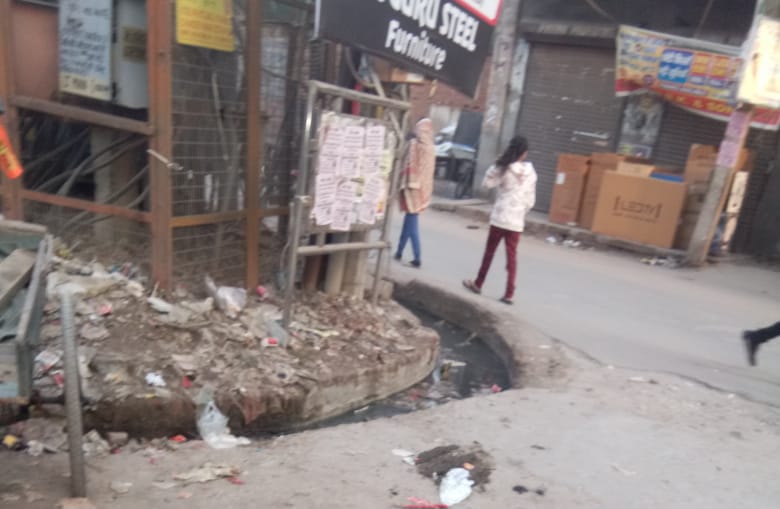
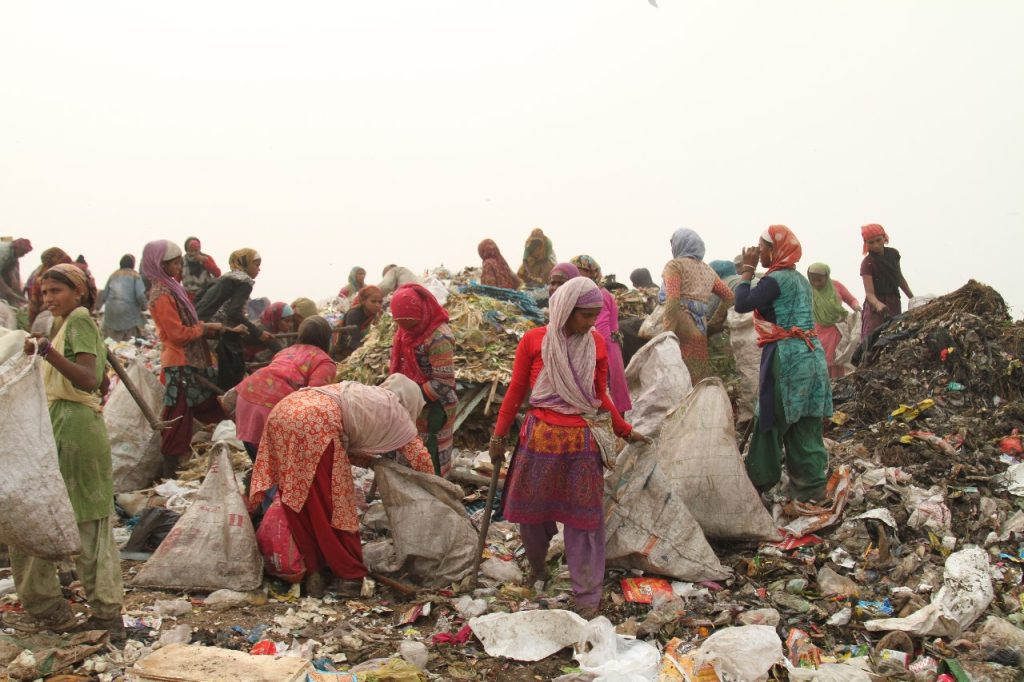
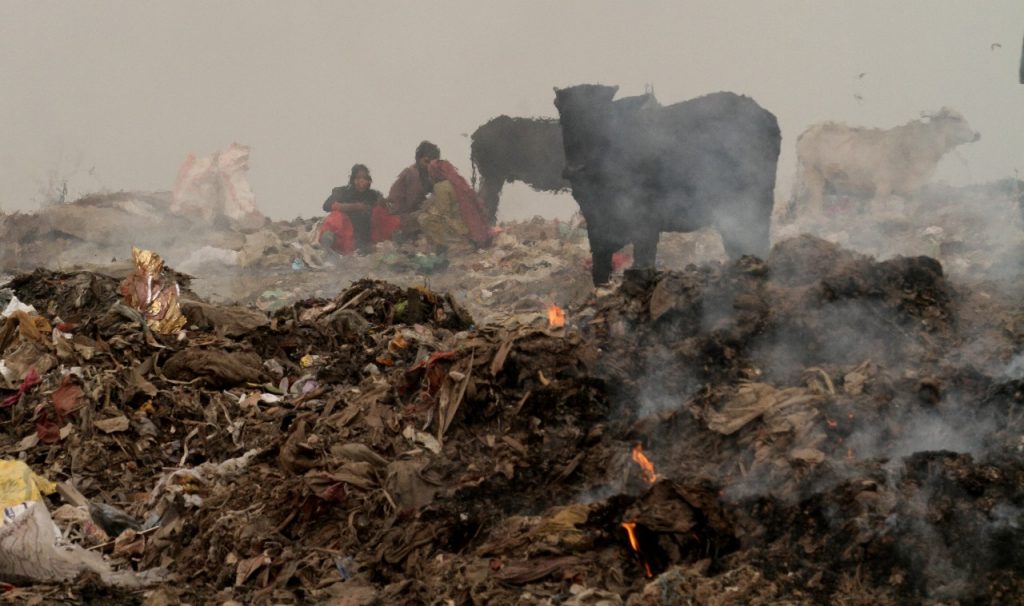
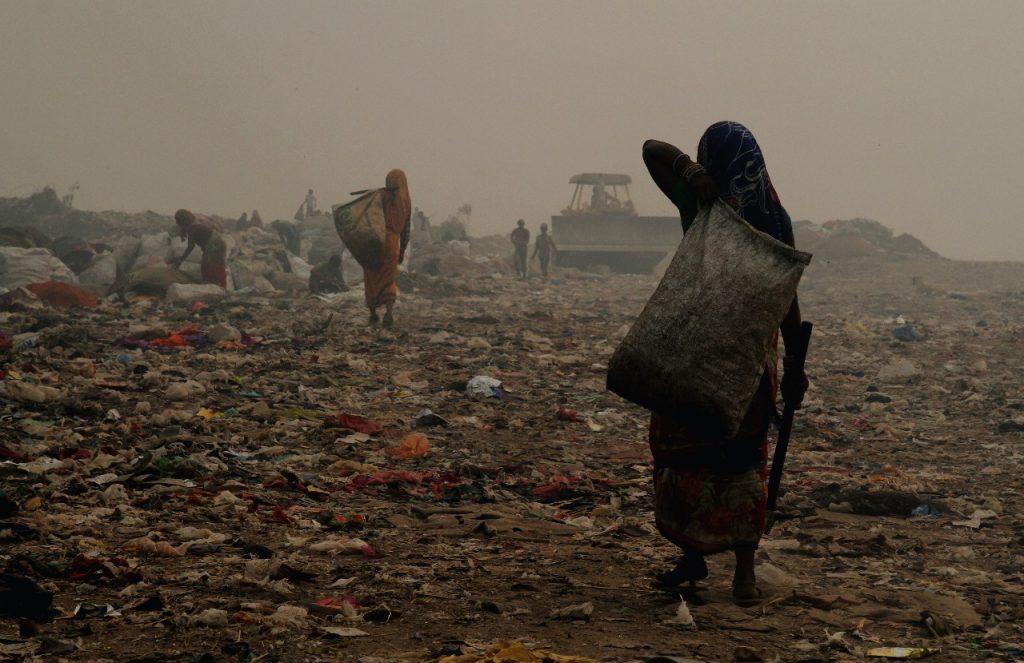
Elections may come and go but one problem that has continued to irk Delhi’s voters over the past few decades is the mountains of garbage which continue to grow in its landfill sites at Ghazipur, Okhla, and Bhalswa.
In 2022, Delhi’s ruling Aam Aadmi Party (AAP) had promised to clear the landfill sites of Ghazipur, Okhla, and Bhalswa by 2023 while campaigning for the Municipal Corporation of Delhi (MCD) poll. However, instead of removal or redevelopment of these sites, the toxic fumes from these garbage dumps have continued to adversely affect the atmosphere of the national capital.
The AAP had come to power after ending 15 year rule of BJP in MCD in December 2023. However, the situation does not seem to be improved as people living near these sites are still struggling with stench and poor living conditions.
Photo : Naveen Bansal
Interestingly, AAP is in power in both the MCD and the Delhi government. And the local opposition candidates are likely to point this out to the voters of the area with Delhi Assembly polls just weeks away.
Speaking to Tehelka.com, a local resident said that Bharatiya Janata Party and AAP are busy trading barbs and none of them is stepping up to address the issue.
“As soon as I approach the Ghazipur landfill stretch, I have to hold my breath, the stench is unbearable. While the BJP and AAP are busy trading barbs, neither is stepping up to address the issue,” said Himanshu Rawat.
Same is the situation at Bhalswa landfill area. The residents of Bhalswa are grappling with an insurmountable crisis involving towering garbage and water shortages.
Suman Devi, a long-time resident of the locality here said, “We have no choice but to live here. The landfill is so close to our homes, and it has caused so many health problems. It’s hard to keep our families safe when the air and water are so polluted.”
Another resident of the locality said that the landfill is a symbol of neglect and it’s time the authorities take responsibility.
Photo : Naveen Bansal
“The condition here is unbearable. We live amidst waste and filth, and yet, we fight for our basic rights,” Rajesh Yadav said.
Recently, there has been uproar in MCD house over the unfulfilled promises of ruling AAP concerning landfills.
Leader of Opposition in the MCD Raja Iqbal Singh accused the AAP of failing to fulfil its promise of eliminating the Bhalswa landfill by December 2024. Highlighting the party’s “false promises,” the BJP councillor criticised AAP’s handling of Delhi’s landfill crisis and alleged that the city’s waste management has worsened under their governance.
Senior Congress leader Jagjivan Sharma said that the AAP government has made only false promises which were never fulfilled.
“I would just say that this government makes false promises for the electoral benefit and never fulfills them when the time comes. People should compare Congress’ work and AAP Govt work done in Delhi and then they should decide who to vote and bring to power,” Sharma said.
Meanwhile, Amit Kumar, Director (P&I) MCD told Tehelka.com that work is in progress to solve the landfill problems of these areas. “The work is being done and it is in progress,” Kumar said and asked for a detailed query to be submitted.
As per the report by MCD to the Delhi Pollution Control Committee (DPCC) in 2024, the Ghazipur landfill holds 8.40 million tonnes followed by Bhalswa at 5.45 million tonnes and Okhla at 3.4 million tonnes
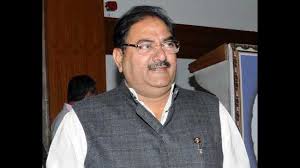
A huge onus lies on Abhay Chautala to uphold the political legacy of his grandfather Devi Lal. With INLD reeling from crushing defeats in the recent Lok Sabha and Assembly polls and recent passing of his father, Om Prakash Chautala, his leadership is under intense scrutiny. writes Pawan Kumar Bansal
Thirty-six years ago, Devi Lal, the grandfather of Abhay Chautala, launched a campaign against the then Prime Minister Rajiv Gandhi, ousting him from power by uniting all opposition parties under the banner of the Janata Dal and installing VP Singh as Prime Minister. However, much water has flowed under the bridge since then, and Devi Lal’s family has faded from Haryana’s political firmament since 2004.
Devi Lal was dismissed from the post of Deputy Prime Minister by the then PM, V.P. Singh. Although about twenty four years ago. Om Parkash Chautala became the CM of Haryana but since the year 2004, the Indian National Lok Dal has been out of power. The death of Om Parkash Chautala on December 20, 2024, dealt another blow to the party. The party had already seen a split with Ajay Chautala, another grandson of Devi Lal, and his son, Duyshant Chautala, forming a separate party, the Jannayak Janata Party (JJP). The JJP had supported BJP in forming the government in Haryana five years ago with Dushyant Chautala becoming the deputy chief minister.
In the recently concluded Lok Sabha and Assembly elections, prominent members of the Devi Lal clan, including Ranjit Chautala, Dushyant Chautala and Abhay Chautala lost the elections. Unfortunately, a few months back, Nafe Singh Rathi, party’s state president, was murdered.
In such an uncertain political scenario, the onus falls on Abhay Chautala to revive the party which has only two members in the current Haryana Assembly. Followers of Devi Lal are divided between INLD and JJP .
Although a large number of party workers had attended the cremation of Om Parkash Chautala at Tejakhera Farm House, it is not certain how many of them actually support the INLD. In the next about five years there is no election due in Haryana barring the local bodies’ polls in urban areas of the state where the party has little support and stakes.
Although Abhay Chautala has been in the forefront for raising the issues of farmers and he had resigned from his MLA’s seat in the last Assembly in their support but again it is yet to be seen whether farming communities accept him as their leader. He has a good chance of winning the confidence of people by raising their grievances as the Congress, the main opposition party with five members in Lok Sabha and 37 legislators in Haryana, is a divided house and it is yet to choose a leader of the legislature party.
Political analyst Devinder Surjewala opines that Abhay Chautala is a born fighter but he has a tough task ahead regarding revival of the party. Abhay may emerge as a leader if like his grandfather Devi Lal, he succeeds in making the party acceptable to leaders of all castes, he claims.
Aam Aadmi Party (AAP) as on date does not have any significant presence in Haryana and only Congress and INLD are the two opposition parties competing in the state’s political landscape. The disadvantage for INLD is that its influence is now confined only to some rural pockets of Sirsa and Fatehabad districts. Beyond these areas, more particularly in urban and semi-urban areas, INLD is no longer relevant and its vote share is fast depleting. Both the Congress and the BJP are fast eating into its vote share.
In the absence of Om Parkash Chautala , it is uncertain how much Abhay would succeed in connecting with the old sympathisers of the party. Abhay is yet to test the waters and has yet to prove his calibre in carrying on the legacy of Devi Lal and Om Parkash Chautala .
Though consecration of Ram Temple in Ayodhya marked a pivotal moment for the BJP, the party quickly realized its fickle nature when it suffered a stunning reversal in the Lok Sabha elections. The state continues to face challenges on the law and order and economic fronts. A report by Mudit Mathur
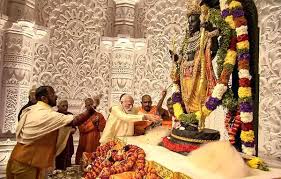
The consecration of the Ram Temple bolstered the Bharatiya Janata Party’s (BJP) position in national politics, reinforcing its narrative of cultural nationalism and Hindutva. This central political strategy helped the BJP consolidate its support base, particularly among Hindu voters in northern India. The event, held in Ayodhya, carried significant political implications, symbolising a major victory for the BJP’s long-standing agenda. The event has been a focal point for the BJP and its supporters, symbolising a significant triumph for its enduring agenda.
However, despite the symbolic weight of the consecration, the BJP faced challenges in retaining its previous success in Uttar Pradesh during the Lok Sabha elections. Economic concerns, caste dynamics, and local sentiments proved critical in influencing voter behaviour, leading to an electoral setback for the party in the state.
It is true that for most, the consecration represented the fulfilment of a long-standing wish and evoked a sense of cultural and religious pride, which further solidified support for the BJP among Hindu voters who view the party as the custodian of their cultural and religious identity. At the same time, the event has polarised the electorate, sharpening divisions over religious and cultural issues.
Despite the symbolic importance of the Ram Temple, economic issues such as unemployment and rising prices overshadowed the temple’s inauguration. Many voters felt the BJP was not addressing their immediate economic concerns. While the BJP secured 33 seats in Uttar Pradesh, the national spotlight fell on its shocking defeat in the Faizabad Lok Sabha constituency, the site of the Ram Temple’s consecration.
Opposition parties, particularly the Samajwadi Party (SP), managed to present a united front and effectively countered the BJP’s narrative. By focusing on local issues and caste-based politics, they struck a chord with a large section of the electorate.
Among rural voters, there was a growing sentiment that the BJP was prioritising the development of the temple town at the expense of addressing their pressing concerns. The SP successfully highlighted how big businesses benefited from the temple’s construction, while small traders and youth bore the brunt of reckless demolition drives for beautification and road-widening projects in the temple town of Ayodhya, often carried out without rehabilitating the affected residents.
Law and order
The crime rate in Uttar Pradesh remains disproportionately high, particularly in cases involving crimes against women and children. Factors such as population density, socio-economic conditions, and fragmented law enforcement contribute to the state’s troubling crime profile. Additionally, concerns about underreporting, political influence, and resource limitations exacerbate the situation.
The Uttar Pradesh Police (UPP) faces criticism for inefficiency and alleged misuse of power. Issues such as police corruption, fake encounters, and custodial or extrajudicial killings continue to plague the system. Allegations that the police have targeted specific communities or exploited political patronage for personal gain have further eroded public trust.
The UP Police’s Special Task Force (STF), often responsible for tackling gang violence and criminal syndicates, has faced accusations of heavy-handed tactics. Both state and national Human Rights Commissions have repeatedly flagged concerns about custodial deaths, extrajudicial killings, police brutality during protests staged by residents and various organizations, and the excessive use of force, particularly in the context of anti-protest measures and criminal encounters.
Despite apex court directives, the Yogi Adityanath-led government continues to face accusations of unilateral demolitions in the wake of communal violence, where homes and businesses of those allegedly involved in riots were razed in the name of delivering instant justice. In 2024, such demolitions persisted in districts like Prayagraj, Kanpur, Sambhal, and Saharanpur, raising concerns about human rights violations and the absence of due legal process. Incidents like the 2024 Bulandshahr riots have further ignited debates over the role of political rhetoric in exacerbating communal tensions.
According to the National Crime Records Bureau (NCRB) 2023, Uttar Pradesh reported over 550,000 criminal cases, making it the state with the highest crime rate in India. Crimes against women, violent crimes, and property crimes remain significant concerns. UP accounted for 25% of India’s total crimes against women in 2023, including rape, domestic violence, and dowry-related deaths. Notably, rape cases in the state increased by 10% over the last two years, with more than 5,000 reported in 2023 alone.
The state has also witnessed an alarming rise in crimes against children, including child trafficking and sexual assault, contributing significantly to the national figures for such crimes. The NCRB 2023 reported nearly 1,500 cases of child sexual abuse in Uttar Pradesh. Additionally, the state recorded an average of 1,200 murders annually, reflecting high levels of gang violence, family feuds, and political rivalries.
The state continues to be a hotspot for violent crimes such as land-related disputes and honour killings, particularly in rural areas. It has also witnessed a high incidence of robberies, burglaries, and motor vehicle thefts, with urban centres like Lucknow, Kanpur, Gautam Budh Nagar, and Varanasi being particularly vulnerable to property crimes.
Uttar Pradesh has one of the highest pendency rates in India’s judicial system, with over four million cases awaiting resolution in its courts. This backlog severely hampers the delivery of justice, prolonging criminal trials and leaving many victims in a state of uncertainty.
The criminal justice system in Uttar Pradesh is plagued by systemic issues, including inefficiency, corruption, and overwhelming delays. The slow pace of justice, coupled with ineffective policing strategies, undermines deterrence against crime. Despite some reforms, the lack of substantial progress in law enforcement and judicial processes remains a pressing challenge.
Economy and development
On the economic front, Uttar Pradesh has made strides in improving its infrastructure, with much of the growth concentrated in urban areas and the industrial sector. Significant investments have been made in projects such as expressways, industrial hubs, and boosting the manufacturing sector. However, this progress has yet to translate into equitable development across rural regions, where agriculture-based employment continues to face challenges. The state government has emphasised on creating an investment-friendly environment through initiatives like the “UP Investor Summit” to attract both domestic and international investments.
Despite this, Uttar Pradesh remains heavily reliant on agriculture, which employs a large portion of its population. The agricultural growth has been uneven, with farmers grappling with inadequate irrigation, weather-related adversities, and high input costs. While government schemes like the “Kisan Samman Nidhi” provide some support, they fall short of addressing the underlying agrarian distress.
Unemployment remains a pressing issue, particularly among the youth. Although the state has pledged job creation in sectors such as electronics and textiles, outcomes have yet to meet expectations. The informal sector continues to dominate employment but offers little security for workers. Migration from rural areas to cities and states like Delhi and Maharashtra persists, driven by unemployment, underdevelopment, and inadequate rural infrastructure.
Social tensions in Uttar Pradesh risk intensifying unless sustained efforts are made towards reconciliation through policies that bridge divides. There is also an urgent need for improved implementation of women’s rights and protection laws. Addressing the rural-urban divide will require increased attention to rural development, focusing on health, employment and infrastructure.
As 2024 concludes, Uttar Pradesh reflects both India’s broader challenges and its immense potential. While the state has witnessed notable advancements across political, social, economic, and educational spheres, it continues to grapple with the structural and systemic issues outlined above.
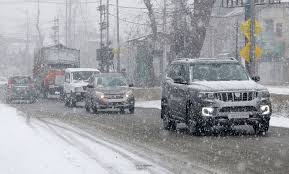
Kashmir experienced fresh snowfall on Sunday, bringing a winter wonderland to the region, while dense fog earlier in the day disrupted air traffic, leading to the cancellation of all flights at Srinagar International Airport. The Meteorological Department (MeT) has predicted scattered snowfall until Monday afternoon.
Snowfall was reported across higher reaches and prominent locations, including Gulmarg, Kokernag, Pahalgam, Srinagar, Kupwara, Baramulla, Sonamarg, and other areas. Gulmarg recorded 21 cm of snow, while Kokernag saw 0.3 cm and Pahalgam received 1.4 cm. Kupwara witnessed 9.1 mm of rain and snow, with Srinagar also experiencing light snowfall and rain.
Authorities launched snow clearance operations along major routes, but roads to Machil, Tangdhar, Keran, and Gurez remain closed due to heavy snow accumulation.
The region continues to endure a severe cold wave, with Kokernag emerging as the coldest location at minus 8.1 degrees Celsius. Srinagar recorded a minimum temperature of minus 2.5 degrees Celsius, while Gulmarg registered minus 4 degrees Celsius. Pahalgam saw a low of minus 3.2 degrees Celsius, Qazigund dipped to minus 3.6 degrees Celsius, Konibal in Pampore logged minus 3.5 degrees Celsius, and Kupwara recorded minus 2.8 degrees Celsius.
Kashmir remains under the grip of Chillai Kalan, the harshest 40-day phase of winter, which began on December 21. This period, known for its freezing temperatures and frequent snowfall, will continue until January 29, followed by Chillai Khurd (20 days of moderate cold) and Chillai Bachha (10 days of mild cold).
The India Meteorological Department (IMD) has issued an orange alert for the region, predicting widespread snowfall, with heavy snow expected at isolated locations. A moderate to strong Western Disturbance has brought light to moderate snowfall across most areas, with peak activity anticipated between Saturday night and Monday morning, especially in middle and higher elevations of Kashmir and the Chenab Valley.
Authorities have advised residents to exercise caution and avoid unnecessary travel during adverse weather conditions to ensure safety and minimize disruptions.
The dense fog caused significant disruptions at Srinagar International Airport, where all flights were canceled on Sunday due to poor visibility.
Airport authorities reported that more than 50 flights were scheduled for the day.