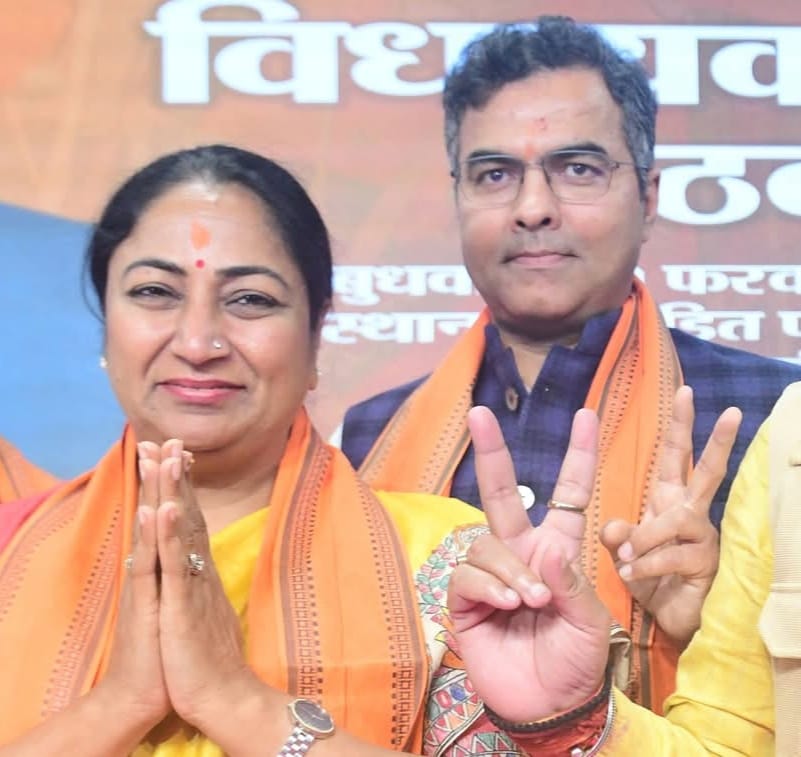
The Bharatiya Janata Party has tried to ensure caste equations, community aspirations in the appointment of Rekha Gupta as Chief Minister and her cabinet colleagues.
Her appointment is seen as potentially historic, as there has been no woman BJP Chief Minister in any of the 21 states where the BJP holds power. Her grassroots engagement, organizational skills, and her victory in Shalimar Bagh are cited as reasons for her selection as CM of Delhi.
By appointing Rekha Gupta the CM, BJP has created many equations at once. She replaces CMs during Aam Aadmi Party tenure, Arvind Kejriwal (Bania) and Atishi Marlena (woman), and fulfilled the aspirations of these communities.
It sends out a positive message to the Saffron cadres that even an Akhil Bharatiya Vidyarthi Parishad worker can rise to become the Chief Minister, if you work relentlessly for the organization.
By appointing, Parvesh Verma (Jat) and Deputy CM, and ministers including Ashish Sood (Punjabi, Bania), Manjinder Singh Sirsa (Sikh, Minority), Kapil Mishra (Brahmin), Ravinder Indraj Singh (Dalit) and Pankaj Kumar Singh (Purvanchali) regional, caste and community aspirations have been fulfilled.
Moreover, senior leader Vijender Gupta who hails from bania community has been accommodated as the Speaker of the House.
Tehelka.com had earlier reported that the BJP is trying to put in place social engineering for 7 cabinet berths in Delhi.
Caste and community combination for Cabinet positions have been accommodated and one candidate each from Poorvanchali, Bania, Punjabi, Jat, Brahmin, Woman and Sikh communities have found a place in the Delhi Cabinet, as was earlier reported by Tehelka.com.
By accommodating these communities, the BJP hopes to ensure representation for all major communities and castes that have supported it in the ousting of the Arvind Kejriwal-led Aam Aadmi Party from power in the national capital.
The social engineering is expected to ensure that voting blocks and communities that supported the BJP in the recent Assembly polls and Lok Sabha polls last year receive adequate representation in the Delhi cabinet. The BJP hopes that this accommodation is expected to boost the political standing of the saffron front in the national capital.
In other states, 15 percent of the Assembly strength can be made ministers. However, in Delhi, only 10 percent of the Assembly seats i.e. a total of 7 ministers can be made. There are 70 members in the Delhi Legislative Assembly. BJP has won 48 seats and Aam Aadmi Party has won 22 seats in the recent polls. According to the formula in Delhi, a total of 7 ministers including the Chief Minister can be in the cabinet. That means one Chief Minister and 6 cabinet ministers.
The nomination of Rekha Gupta as Chief Minister of Delhi has the stamp of approval by the Rashtriya Swayamsewak Sangh. The senior leader hails from the Akhil Bharatiya Vidyarthi Parishad, the youth wing of the Sangh.
The top leadership of the Bharatiya Janata Party is understood to have accommodated the RSS’ candidate for the Chief Minister’s post after a strong backing by the Sangh in recent Delhi Assembly polls. The BJP was, able to secure 48 of the 70 seats in the Delhi Assembly after trouncing the Arvind Kejriwal-led Aam Aadmi Party.
It was only after a massive outreach program by the RSS cadres where about 60,000 meetings were held across the city that the BJP returned to power in the national capital after 27 years.
It is understood that Gupta, a first time MLA, had a strong backing of the RSS ever since the results of the polls were announced. The Sangh had expressed a complete confidence in her and had also conveyed the same to the BJP leadership, sources said.
Ever since the less than adequate performance of the BJP in 2024 Lok Sabha polls, the Sangh has been more hands on in electoral strategy and support to its political affiliate.
The Sangh cadre had upped its outreach, where issues related to nationalism and public welfare measures of the Narendra Modi government were discussed. And the results of these meetings have been seen in recent Maharashtra, Haryana and Delhi Assembly polls.
Last year, in Haryana, the BJP won 48 out of 90 seats for a third consecutive term, while in Maharashtra, the MahaYuti alliance — comprising the BJP, Shiv Sena (Shinde faction), and NCP (Ajit Pawar) — claimed 228 out of 288 seats.
The saffron win in these two states was attributed to the effective outreach by RSS narrative in favour of the party.
In Delhi, the campaign by Sangh was launched soon after the Maharashtra election and the city was divided among eight zones, catering to 30 districts and 173 nagars.
Apart from RSS pracharaks, cadres of various associate organizations also took part in the outreach program in Delhi.
Preparations are underway at Delhi BJP office ahead of the swearing-in ceremony of the new government as the party is set to finalize the name of chief minister of Delhi today.
During the legislature party meeting on Wednesday, senior BJP functionaries said, the 48 newly elected BJP MLAs and the seven Lok Sabha MPs will finalise the name of the new CM, who will then meet the lieutenant governor to stake claim to form the government.
The oath ceremony will be held in Delhi’s Ramlila Maidan tomorrow in the presence of Prime Minister Narendra Modi and CMs of 19 NDA-led states, people aware of the matter said.
The oath ceremony was earlier scheduled to be held on Feb 20 at 4.30 pm. However, it was later rescheduled to be held at 12 pm.
The party has returned to power after 27 years, winning 48 out 70 assembly seats leaving the Aam Aadmi Party (AAP) which has ruled the city for the past 10 years, with only 22 seats. What came as a shock for the AAP was, its senior leaders including Manish Sisodia and Arvind Kejriwal lost their seats.
There are several names that are in the potential names of CM with Parvesh Verma being prominent for the post. The other names include, Rekha Gupta, Vijender Gupta, Satish Upadhyay, Ashish Sood, Pawan Sharma, and Ajay Mahawar.
Meanwhile, preparations are also in full swing at the Ramlila Maidan with its boundary walls repainted, pavements repaired, and authorities sprinkling water to settle dust.
According to the party sources, people and workers from all walks of life have contributed to the victory of BJP in the recently held elections.
Some opposition leaders are also on the list of invitees, including outgoing chief minister Atishi and possibly leader of the opposition in Lok Sabha, Rahul Gandhi.
Days after victory of Bharatiya Janata Party in Delhi Assembly polls, Rashtriya Swayamsewak Sangh chief Mohan Bhagwat will be in the national capital today. He is expected to interact with sangh cadres at the newly-unveiled Keshav Kunj headquarters.
Sources stated this will also be the first such meeting of Sangh chief with saffron cadres at the newly constructed headquarters, Keshav Kunj, in Delhi.
Photo: Naveen Bansal
Covering 3.75 acres, it features three high-rise buildings, each spanning 12 floors plus a ground floor. These buildings, named Sadhna, Prerna, and Archana, collectively house approximately 300 rooms and offices.
Bhagwat’s meeting with the RSS cadres assumes significance as the ideological parent of BJP played a crucial role in securing power in the national capital for saffron front after almost three decades. The Sangh had also played a crucial role in securing BJP’s victories in the recent Haryana and Maharashtra Assembly polls.
The Sangh chief is likely to acknowledge the critical role played by RSS cadres and thank them for their contribution in securing a victory, sources said.
Their coordination with the BJP functionaries during the crucial period is also likely to receive praise.
The Sangh cadres had played a crucial role in implementing grassroots outreach campaign for the BJP in the Delhi polls.
As part of its outreach, the RSS cadres held about 60,000 meetings across the city where issues related to nationalism and public welfare measures of the Narendra Modi government were discussed.
The campaign by Sangh was launched soon after the Maharashtra election and the city was divided among eight zones, catering to 30 districts and 173 nagars.
Apart from RSS pracharaks, cadres of various associate organizations also took part in the outreach program in Delhi.
Last year, in Haryana, the BJP won 48 out of 90 seats for a third consecutive term, while in Maharashtra, the MahaYuti alliance — comprising the BJP, Shiv Sena (Shinde faction), and NCP (Ajit Pawar) — claimed 228 out of 288 seats.
The saffron win in these two states was attributed to the effective outreach by RSS narrative in favour of the party.
Tesla, the US EV maker which was hesitant to enter India due to its heavy import duties, seems to have started recruiting in Delhi and Mumbai, hinting at its plan to enter the country.
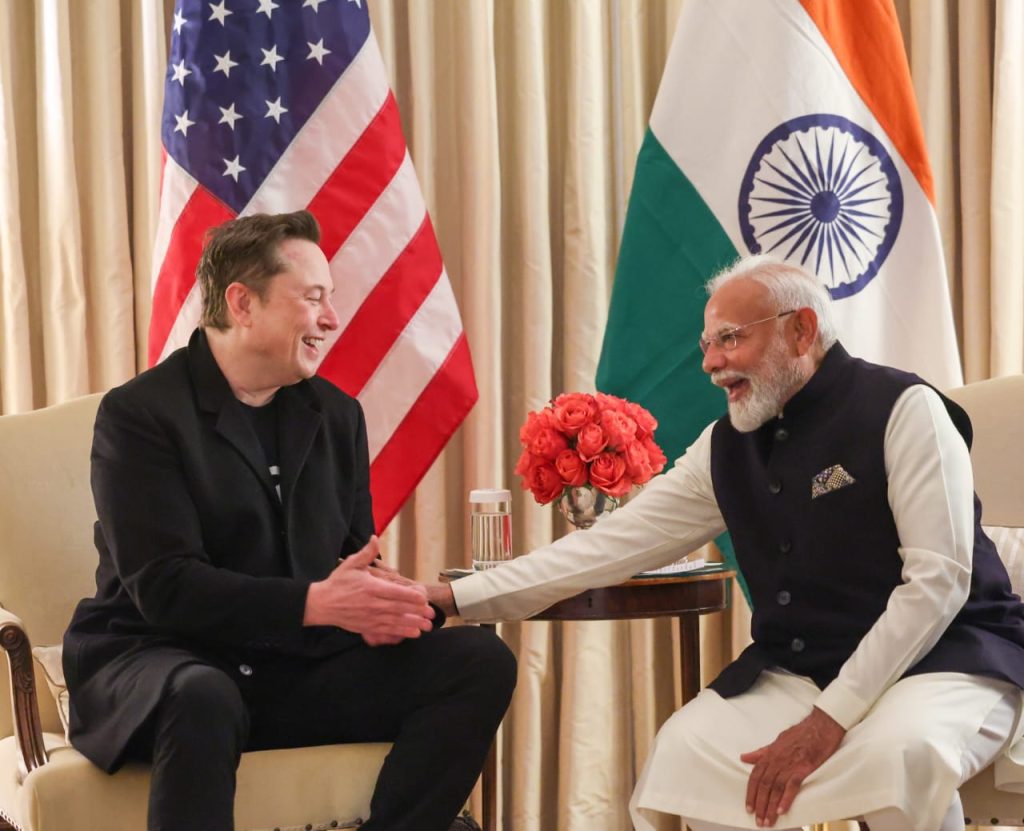
The move seems significant after the recent visit of Prime Minister Narendra Modi to the US where he met Tesla CEO Elon Musk.
There have been job postings on LinkedIn that reveal the company is looking for candidates for 13 positions for various departments including customer-facing, Operations such as Advisor, Order Operations Specialist, and Customer Support Specialist.
The move also follows the recent reduction in Basic Customs Duty (BCD) on luxury EV’s priced above USD 40,000 from 110 per cent to 70 per cent. This has made the Indian EV market more attractive for the company.
With these recent openings in India, the company seems to enter India with plans to import cars first to understand the market, interests, business, and government support before resorting to the local manufacturing of the product.
India’s EV sector is still small compared to China’s, where 11 million electric cars were sold last year. In contrast, India’s EV sales stood at nearly 100,000 units in the same period. Despite this, Tesla sees growth potential in India as the government promotes cleaner energy and provides incentives for EV adoption.
The company’s move also comes amid broader trade discussions. Following the Modi-Musk meeting, US President Donald Trump stated that India and the US were in talks to reduce trade imbalances and increase US military sales, including potential F-35 fighter jet deals.
Chandigarh: Dr. Vivek Joshi, a distinguished IAS officer of 1989 batch of Haryana cadre, has been appointed as the new Election Commissioner of India.
The announcement was made after a selection committee headed by Prime Minister Narendra Modi recommended Dr Joshi’s name for the prestigious post. He will join the three-member Election Commission, which comprises Chief Election Commissioner (CEC) Gyanesh Prakash and Election Commissioner Sukhbir Singh Sandhu.
Dr Joshi, who has been serving as the Chief Secretary of Haryana since November 2024, has rich experience in public administration. On the request of the state government, Dr Vivek Joshi took over as the Chief Secretary of Haryana on November 1 last year after returning from deputation from the Central Government.
Prior to his appointment in Haryana, Dr Joshi has served for a long time on central deputation in the Government of India. He has served as Secretary, Department of Personnel and Training in the Union Ministry of Personnel, Public Grievances and Pensioners. In his illustrious career, he has also served as Secretary in the Department of Financial Services and Registrar General and Census Commissioner of India in the Ministry of Home Affairs. His tenure in the Government of India was from 2001 to 2006 and then from 2010 to 2017 and from 2019 to 2024.
Prior to central deputation, Dr Joshi has served on several important posts in Haryana including Chief Executive Officer of Gurugram Metropolitan Development Authority, Principal Resident Commissioner in New Delhi, Member Secretary of 5th State Finance Commission and Commissioner of Ambala Division. He has also served as Deputy Commissioner of Hisar, Jind and Panchkula, among other posts.
As the Chief Secretary of Haryana, Dr. Joshi has implemented several major initiatives aimed at improving governance and public welfare. One such initiative was the “Swachh Haryana Mission” launched in December 2024. This campaign, which will run till January 31, 2025, aimed to increase cleanliness in government offices across the state, optimize office spaces and dispose of old materials.
Dr Joshi holds a degree in Mechanical Engineering from IIT Roorkee and a PhD in International Economics from the Graduate Institute of International and Development Studies in Geneva, Switzerland. His remarkable academic and professional background establishes him as an asset to the Election Commission, where his leadership and expertise will prove vital in ensuring the smooth functioning of the country’s electoral processes.
In a decisive move that blends tradition, symbolism, and strategy, the Bharatiya Janata Party (BJP) has chosen Ramlila Maidan as the venue for the oath-taking ceremony of Delhi’s Chief Minister-designate. The choice of this historic ground is not just a reflection of its cultural and political significance but also a calculated decision to resonate with a broad spectrum of Delhi’s electorate.
Ramlila Maidan, an iconic venue in the heart of the capital, has been at the center of several key political events, including rallies, protests, and major gatherings. Its historical relevance dates back to numerous occasions when leaders have made significant political announcements. Most notably, it was the site of Anna Hazare’s anti-corruption movement in 2011, which garnered massive national attention. For the BJP, selecting this venue signals a revival of traditional political engagement while positioning itself as a party deeply rooted in Delhi’s cultural fabric.
The BJP’s decision comes after a series of strong electoral campaigns in the national capital, aiming to consolidate its base among the city’s diverse communities. The Ramlila Maidan provides the perfect backdrop to project a sense of accessibility and inclusiveness, inviting not only party supporters but the general public to witness the ceremony. By hosting the event at such a popular and well-recognized venue, the BJP aims to reinforce its image as a people-centric party, emphasizing its connection with grassroots supporters.
Photo: Naveen Bansal
According to party sources, the event will be attended by the residents of Delhi. The swearing-in ceremony would be attended by Prime Minister Narendra Modi, Chief Ministers, NDA leaders, Union Ministers, corporate industry executives, movie stars, cricket players, saints, and sages.
Additionally, the choice of Ramlila Maidan carries with it a powerful symbolic message. Ramlila, a celebration of the triumph of good over evil, holds deep religious and cultural significance, particularly among Hindu communities. The BJP’s decision to hold the ceremony in such a setting is seen as an attempt to further consolidate its appeal among the Hindu electorate, a demographic that has been a core base for the party in Delhi.
Meanwhile it is possible that the BJP leadership may choose a less well-known candidate from among the recently elected MLAs, as has been the case in Rajasthan, Haryana, Madhya Pradesh, Odisha, and Chhattisgarh.
Delhi BJP spokesperson Vaishali Poddar shared a video of preparation for the swearing-in ceremony in Ramlila Maidan.
“The swearing-in ceremony will take place on February 20 at 4.30 PM at Ramlila Maidan. Preparation in full swing. Three stages and 10 gates are being prepared,” she stated.
Sources said that Delhi BJP is inviting Delhi party workers to the event.
“Ramlila Maidan was chosen because of its historic significance, ” sources said.
The BJP’s choice of Ramlila Maidan is not just about the logistics of hosting a high-profile event. It is a calculated move aimed at reinforcing its cultural identity, maximizing public engagement, and strengthening its political narrative in Delhi ahead of upcoming elections.
The Editors Guild of India has expressed shock over the recent blocking of the Tamil magazine web portal Vikatan.Com, without any prior due process, by the Ministry of Electronics and Information Technology (MeitY) about the publication of a cartoon depicting the prime minister.
Cartoons have always been a legitimate means of journalistic endeavour and the sudden blocking of the Vikatan website is a brazen instance of overreach by the authorities.
What is more deplorable is the abrupt manner in which access to the entire web portal was blocked, purportedly, after the state head of a political party complained to the Ministry of Information and Broadcasting (MIB), against the said cartoon. No prior notices were issued and no opportunity was given to Ananda Vikatan – the group behind the web portal – for a fair hearing.
The Editors Guild is further appalled to learn that after the website was blocked, a notice was sent to the publishers, calling them for a hearing by an Inter-Departmental Committee constituted under the Information Technology (Intermediary Guidelines and Digital Media Ethics Code) Rules, 2021 (IT Rules 2021), to consider the request for blocking. In a manner of speaking, after an order was arbitrarily implemented, due process was initiated.
It is to be further noted that there is already a stay by the Bombay High Court, on Rule 9(1) and (3) of the IT Rules 2021, which pertains to the Code of Ethics, and therefore limiting the powers of the Inter-Departmental Committee to examine complaints against publishers on these grounds.
The entire episode smacks of high-handedness and militates against the cherished ideals of a free press. The blocking of the website, coming amid growing concerns over media freedom in the country, does no good to India’s democratic traditions that value fair play and transparency.
The Guild is also saddened to learn that the cartoonist behind the work has been subjected to harsh trolling on social media, as well as death threats.
The Editors Guild of India calls on the MeitY to roll back the blocking order and ensure that it is never guided by any arbitrariness when dealing with free speech and expression.
Srinagar: A court in Jammu and Kashmir has convicted a self-styled faith healer for committing unnatural offences against children who visited him for religious lessons.
Chief Judicial Magistrate, Sopore, Mir Wajahat on Monday found Aijaz Ahmad Sheikh guilty under Section 377 (unnatural offences) of the Ranbir Penal Code (RPC). The case against Sheikh was registered at Bomai police station in 2016 after a complaint was filed by the father of one of the victims.
“The accused, Aijaz Ahmad Sheikh, is convicted under Section 377, RPC for committing unnatural offences against PW3 and PW8. The established legal principles governing sexual offences leave no room for doubt regarding the accused’s guilt. He subjected PW3 and PW8 to unnatural sexual intercourse during their minority, exploiting their vulnerability under the guise of offering blessings,” the court stated in its order.
The court further noted that Sheikh “dominated their will, manipulated their psyche and exerted control,” subjecting them to years of abuse while maintaining a façade of religious authority.
Several prosecution witnesses testified against Sheikh, recounting their suffering. “Their testimonies remain unwaveringly consistent,” the court observed, adding that further investigations will continue to determine if additional victims, including those who were not examined in this case, also deserve justice.
“If this judgment serves as a catalyst for those silent voices who have long endured unspeakable trauma, struggled in the shadows of despair and now look toward the law with the last vestiges of hope, then justice has, in some measure, already begun to prevail,” the court stated.
The court emphasized that while the testimonies of other victims reinforced the prosecution’s case, separate proceedings would be needed to ensure procedural fairness. “These testimonies, while reinforcing the prosecution’s case, require separate determination to uphold procedural fairness and prevent any prejudice to the accused,” it said.
Sheikh now faces sentencing, and further legal action may be taken against him as more victims come forward.
January 2025 saw India grappling with rising temperatures, marking the third warmest January in 125 years for the country. With climate change accelerating, the nation faces a mounting crisis, from crop damage to escalating health risks, caused by extreme heat. A report by Aayush Goel
The environmental nightmare of global warming stares the world in the face. After 2024 was declared the warmest year, it recorded the month of January 2025 as the third warmest in India since 1901. The dreaded global warming is getting real with each passing year.
According to the India Meteorological Department (IMD), the all-India mean temperature recorded last month was 18.98 degrees Celsius, up by 0.94 degrees Celsius. Likewise, the minimum temperature jumped by 1.04 degrees Celsius, taking the all-India monthly average minimum temperature to 12.51 degrees Celsius. The World Economic Forum ranked extreme weather events amplified by climate change as the second most considerable global risk after armed conflict and war.
According to The Copernicus Climate Change Service report, January this year was 0.09C hotter than the previous high of January 2024 – a “sizeable margin” in global temperature terms. Indian meteorologists attributed multiple factors for a warm January, which is normally dominated by cold waves to severe cold waves and cold day conditions.
During the winter season, rainfall or snowfall over the plains of the northwest and the hills of north India is mainly caused by the passing streams of western disturbances and the eastward propagating wind bands that carry moisture. Last month, seven streams of western disturbances moved across north India but didn’t do the expected. “Most of these western disturbances remained devoid of moisture being pumped in from the Arabian Sea, hence there was below normal rainfall or snowfall along the western Himalayas, covering Uttarakhand, Himachal Pradesh and Jammu and Kashmir,” said Mrutyunjay Mohapatra, DG, IMD. Only during a handful of days, rain and snowfall were realized over North and Northwest India leaving January largely dry. IMD’s rainfall statistics for last month showed that the country received 72 percent below-normal rainfall. Interestingly the most rainfall-deficient regions were central India (-96 percent) and northwest India (-80 percent), which are largely agrarian states.
The warming effect has been universal and the key reason remains the weak phase of La Nina. The abnormal cooling of the sea waters along the equatorial Pacific Ocean is one of the reasons why the cool weather evaded large parts of India last month. The story doesn’t end here the Met Department has forecast a warm February over most parts of the country this year, with both maximum and minimum temperatures expected to remain above normal. The impact has rattled scientists across the world. Scientists warn that every fraction of a degree of warming increases the intensity and frequency of extreme weather events like heatwaves, heavy rainfall and droughts.
Weak La Nina Impact
While several parts of the world experienced cold temperatures and winter chills, the planet continued to be warm, breaching past records. The Copernicus Climate Change Service said January was 1.75 degrees hotter than pre-industrial times, extending a persistent run of historic highs over 2023 and 2024, as human-caused greenhouse gas emissions heat the planet. Climate scientists had expected this exceptional spell to subside after a warming El Nino event peaked in January 2024 and conditions gradually shifted to a cooling La Nina phase. But the heat has lingered at record or near-record levels ever since, sparking debate among scientists about what other factors could be driving warming to the top end of expectations.
Scientists worry that the heat waves across the oceans have become so large and strong that they are overwhelming the cooling influence of La Niña. “The fact that we’re still seeing record temperatures outside the influence of El Nino is a little surprising,” said Samantha Burgess, Strategic Lead at the European Centre for Medium-Range Weather Forecasts. Copernicus assesses that La Nina has not yet fully developed, and the world is currently in neutral conditions between the two phases. However, scientists feel even if La Nina does fully emerge, its cooling effect may not be enough to temporarily curb global temperatures – which are also affected by factors like the extreme heat seen in other ocean basins, and the main driver of climate change: emissions of heat-trapping greenhouse gases. It may be noted that greenhouse gas emissions from fossil fuels remain the primary driver of record temperatures. The World Meteorological Organisation (WMO) warned in December 2024 that warming fueled by these emissions might persist in 2025, despite La Nina.
The record-breaking January temperatures align with research suggesting an acceleration in global warming. Bill McGuire, a climate scientist from University College, London, said it was “astonishing and frankly, terrifying” that January remained at record highs despite La Nina emerging.
India faces challenge
Highlighting the consequences of globally increasing climate risks, a recent report by Germanwatch mentions that in the 30 years until 2022, more than 765,000 people lost their lives worldwide due to more than 9,400 extreme weather events, which caused economic damages totalling 4.2 trillion US dollars (inflation-adjusted). India ranked 6th and China ranked 2nd among the ten most affected countries worldwide over the past three decades.
In the wake of the existent trends, the heat wave is expected to emerge as the key disaster in India. Talking of immediate impact in the wake of the likely dry and warm February, IMD has warned of adversity on the health of standing wheat crops. Chickpea and mustard could experience early maturity due to such weather conditions. Fruits like apples could see early bud break, affecting the yield and quality.
“Below-normal rainfall along with higher temperature over the plains of northwest India would have a significant adverse impact on the standing crops like wheat at flowering and grain filling stages”, IMD DG Mohapatra said at the monthly weather briefing. “Crops like mustard and chickpea may also experience early maturity. Horticultural crops like apple and other temperate stone fruits may experience premature bud break and early flowering due to warmer temperatures, resulting in poor fruit setting and quality, which may ultimately reflect in poor yield,” he added. Major wheat-producing states such as Punjab, Haryana and Rajasthan are likely to be the most affected. Other wheat producers, Uttar Pradesh and Madhya Pradesh, were likely to be impacted less with better rainfall, and therefore lower temperatures.
Meanwhile, according to experts, the long-term effect of annual heat wave crises will be multifaceted, affecting public health, agriculture, energy supply, and overall economic stability. It will make ninety percent of Indians vulnerable to heat-related health issues. This will majorly burden not-so-great healthcare systems, especially in rural areas. The health impact would eventually impact the productivity of the workforce. The World Bank estimates that India could account for 34 million job losses due to heat-stress-related productivity decline by 2030.
The elevated temperatures would further enhance water stress in the country which impacts fifty-four percent of India’s land according to the World Resources Institute (WRI). India has 18 percent of the world’s population and only 4 percent of its fresh water. High temperatures can also lead to crop failures, reduced yields, and increased irrigation demands affecting food security and water management. The heat waves will affect the power industry in India with increased demand for cooling systems. This will have an impact on the availability of power for industries and will pose a challenge for the manufacturing sector. Crisil Intelligence noted that India’s electricity demand rose by approximately 2.2% year-on-year to 138 billion units in January 2025, driven by strong industrial activity and warmer winter conditions.
The country is no longer oblivious to the fast-approaching danger and the National Disaster Management Authority (NDMA) has come up with a National Framework for Heatwave Mitigation and Management (2024). The states, districts and cities are being made to develop Heat Action Plans (HAPs), a structured approach to mitigating heat wave impacts at the root level.