Delhi CMO’s X handle retrieved from AAP, to be updated soon

The Delhi government headed by BJP’s Rekha Gupta has received all the credentials of its social media handles and will be updated soon, people aware of the matter said.

“We had written a letter to X that all the credentials should be provided to the newly formed government and we have received them. Within the next two days, we will be updating the platform with new posts about the work of Delhi government,” sources said.

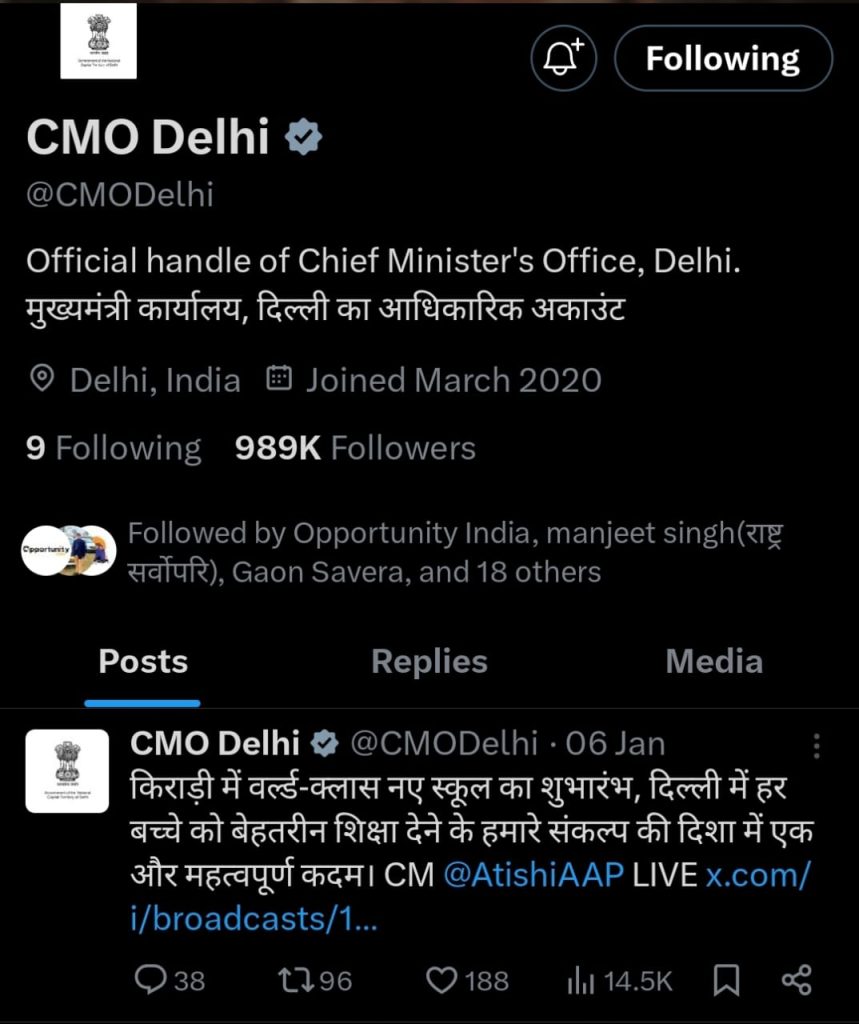
The social media handle of Delhi chief minister office on X has been silent for the past two months. The last post was done by former chief minister Atishi on January 9.

The issue came to light when the Chief Minister’s Office (CMO) Delhi’s X (formerly Twitter) handle displayed the phrase “Arvind Kejriwal at work,” raising concerns among political circles.

The Bharatiya Janata Party (BJP) has accused former Chief Minister Arvind Kejriwal of altering and deleting content from the official CMO Delhi X handle. The BJP termed these actions as “digital loot” and has called for an FIR to be lodged.

Following the recent assembly elections, the BJP has taken steps to reassert control over Delhi’s administrative functions. The party’s victory after nearly three decades in opposition has led to significant administrative shifts, including the appointment of Rekha Gupta as the new Chief Minister of Delhi.

The tussle over social media handles is emblematic of the broader political transition underway in Delhi. As the BJP seeks to establish its governance, issues like the control of official digital assets have become points of contention.

The AAP’s previous administration had a robust digital presence, which the current government aims to reassess and potentially realign with its policies.

The situation remains fluid, with both parties navigating the complexities of governance and digital communication. Observers are keenly watching how this dispute over social media handles will influence the political landscape and public perception in the capital.

Bastar’s Kanger Valley National Park included in UNESCO’s tentative list

In a major boost to Chhattisgarh’s tourism, the state’s Kanger Valley National Park has been included in the tentative list of UNESCO’s World Heritage Sites and has become India’s new UNESCO heritage claimant with its unique biodiversity.

Chief Minister Vishnu Deo Sai termed this success as the result of hard work and commitment of the state government.

“It is a matter of pride for the state that Kanger Valley has been included in the UNESCO Tentative List, which will open up new possibilities in tourism and employment. We will continue to work together to preserve our heritage in the future as well,” he added.

In December 2023, the Chhattisgarh government and the Archaeological Survey of India planned to give global recognition to this amazing site. Experts studied its biodiversity, archaeological heritage and unique ecosystem in depth and then a proposal was sent to include its name in the UNESCO tentative list.

This is the first time that a site in Chhattisgarh has been included in this prestigious list.

Kanger Valley is not just a forest, it is a magical world. There are more than 15 mysterious caves here, such as Kotamsar, Kailash and Dandak caves, which look no less than a mystical world. There are more than 15 limestone caves here—Kotamsar, Kailash, Dandak—which are not only geological wonders, but also contain archaeological stories.

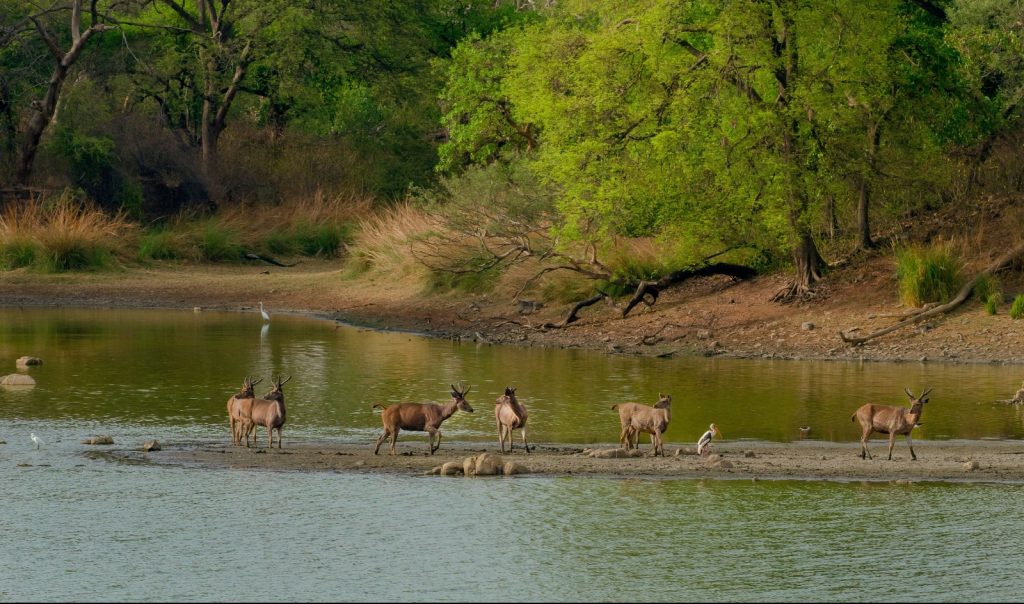
Rare animals live in this park—otter, mouse deer, giant squirrel, Lethis softshell turtle, wild wolf. More than 200 bird species dance in the sky and a colourful carpet of more than 900 plants on the ground.

More than 140 butterflies fill the air with color. Overall, this forest looks like a fairy tale world.

UNESCO’s Tentative List is a special list, which includes those places of the world, which can be declared as World Heritage in future.

This achievement will not only benefit the forest, but also the surrounding villages. For the Dhruva and Gond tribes here, this forest is not just a forest, but a part of their culture and life. 

BJP’s Holi Milan: Strengthening Ties with Grassroots Ahead of Key Polls

Photo: Naveen Bansal

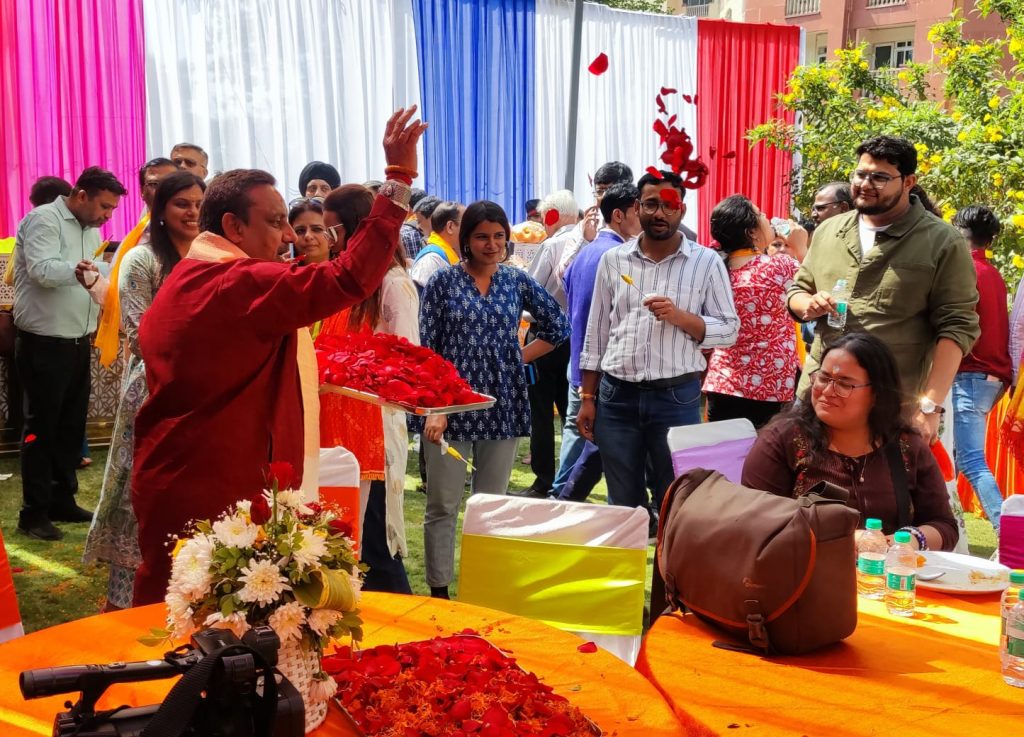
Lok Sabha MP Praveen Khandelwal on Wednesday hosted Holi Milan celebration in Delhi where several party workers and supporters were present.

With key polls ahead, the Bharatiya Janata Party (BJP) has been engaged in hosting Holi Milan celebrations at various locations including the party’s state office, Malviya Nagar among others to directly connect with its party workers, and supporters.

Earlier, Delhi BJP chief Virendra Sachdeva hosted a Holi Milan event at its state office in the city. The event which saw senior leaders like union minister Piyush Goyal, CM Rekha Gupta, and Anurag Thakur in attendance, served as a vital outreach initiative, aligning with the party’s current focus on strengthening its grassroots presence ahead of the upcoming elections.

These Holi Milan gatherings have become a staple for the party in Delhi, serving as both a festive occasion and a platform for political engagement.

This year, the event stood out for its emphasis on building relationships with party workers, who are the backbone of the BJP’s electoral success in the city. Leaders took the opportunity to address the cadre, celebrating their efforts while reaffirming the party’s commitment to their support.

The BJP organizes the Holi festival every year, and this year’s celebration was particularly attractive as, after 27 years the BJP came back into power and several ministers participated.

Sachdeva emphasized that just as the colors of Holi bring joy to everyone, BJP workers must strive to fill the lives of Delhi’s citizens with all kinds of colors of services.

Meanwhile, Rekha Gupta said that Holi 2025 is special with their government in Delhi.

She stressed the need to reaffirm their commitment to serve everyone without discrimination and, in collaboration with the organization, to deliver the benefits of the double-engine government to every individual.

The significance of these Holi Milan events goes beyond the celebrations. BJP has consistently focused on reinforcing its presence in urban areas through a series of outreach initiatives that blend political engagement with cultural ties. By meeting party workers and common people in a relaxed, festive atmosphere, BJP leadership emphasizes its accessibility and approachability—an important message as the party aims to enhance its rapport with the electorate.

As BJP prepares for the upcoming municipal and state elections, these grassroots outreach efforts are seen as a key component of their strategy. The Holi Milan celebration in Delhi exemplifies the party’s push to connect with its base, reaffirm loyalty, and galvanize support at a critical juncture.

Is There Friction in AAP After the Delhi Defeat? 

Photo: Naveen Bansal

With the Aam Aadmi Party’s crushing defeat in the Delhi Assembly elections —where it secured only 22 out of 70 seats compared to its previous landslide victories—has sparked intense speculation about internal dynamics in the political unit. 

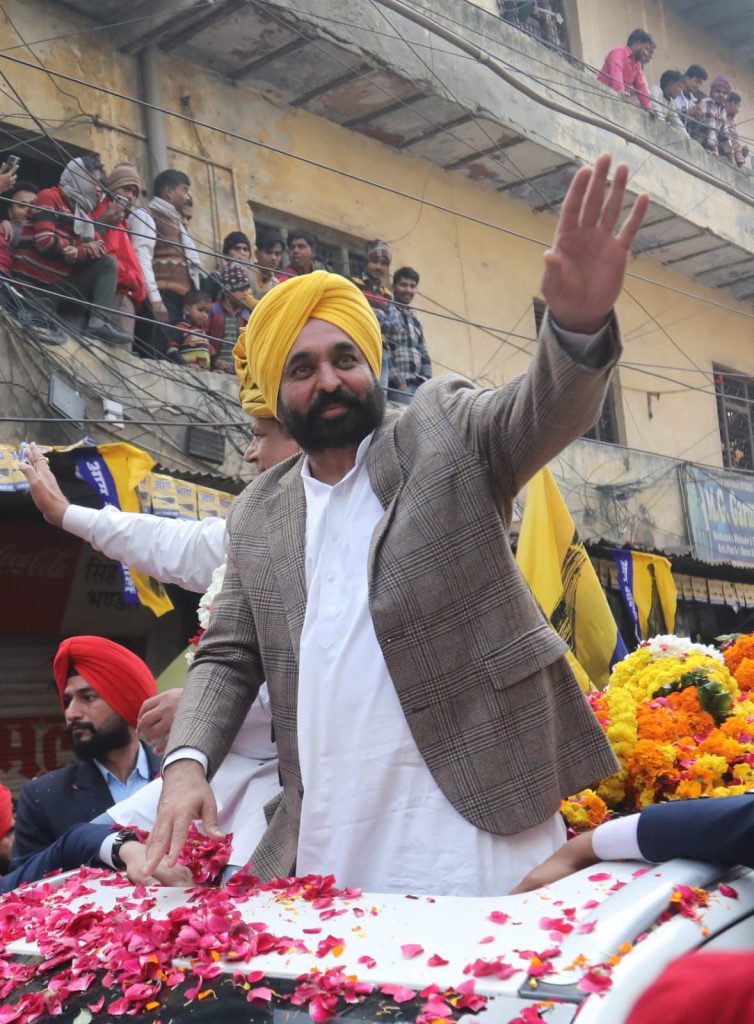
With AAP’s stronghold in Delhi lost to the Bharatiya Janata Party (BJP) after a decade of dominance, attention has shifted to Punjab, the only state where AAP remains in power. At the heart of this scrutiny is the relationship between AAP’s national convener, Arvind Kejriwal, and Punjab Chief Minister Bhagwant Mann. 

Sources stated that Mann is seemingly unhappy with the continued interference in the state government work by AAP’s national leadership. Almost the entire top leadership, including Kejriwal and Manish Sisodia, has been camping in Punjab for extended periods of time ever since the Delhi loss, sources pointed out. 

This continued presence is leading to increased friction within the party, sources said. 

It is understood that with Delhi no longer under AAP’s control, Punjab has become the party’s sole bastion, amplifying the stakes for both Kejriwal and Mann.

Moreover, Punjab is now seen as the testing ground for its survival ahead of the 2027 state elections.

Post-Delhi loss, Kejriwal convened a meeting with Mann, Punjab ministers, and AAP MLAs on February 11, in the national capital. Officially, the meeting was framed as a strategy session to analyze the Delhi results and chart the way forward for Punjab. AAP termed it a “routine” exercise, emphasizing that feedback from party units is a continuous process. However, the timing and context have fueled speculation about underlying tensions. It has been suggested that Kejriwal may be seeking to tighten his grip on Punjab’s governance, potentially at the expense of Mann’s autonomy.

Critics have often accused the Punjab government of being “remote-controlled” from Delhi, a charge that gained traction when Kejriwal’s former aide, Vibhav Kumar, was appointed as Mann’s Chief Advisor in October 2024. The Delhi defeat has intensified this narrative, with some arguing that Kejriwal may now exert even greater control over Punjab to compensate for his loss of direct political power.

Reports suggest that during the February 11 meeting, Kejriwal instructed Punjab MLAs to bypass bureaucrats and approach him directly if their demands were unmet—a move that could undermine Mann’s authority as Chief Minister. 

Though talk of friction between Kejriwal and Mann has been denied by AAP, the potential for tension exists. The Delhi defeat has undeniably shifted AAP’s internal dynamics, placing Mann in a pivotal role while Kejriwal seeks to reclaim relevance.  Punjab is now AAP’s lifeline, and the Kejriwal-Mann partnership—or power struggle—will shape its fate. For now, the party must regroup, rethink, and redefine its approach, lest the Delhi rout foreshadow a broader decline.

Why Modi chose to gift Makhana, Mahakumbh water to the Mauritius PM

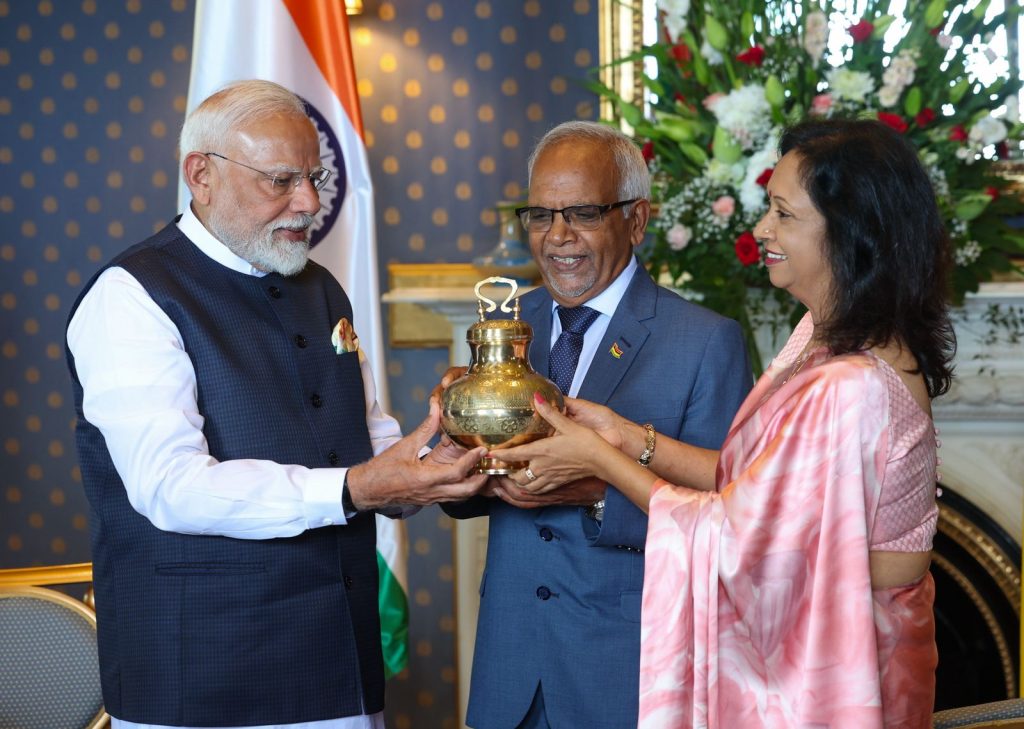
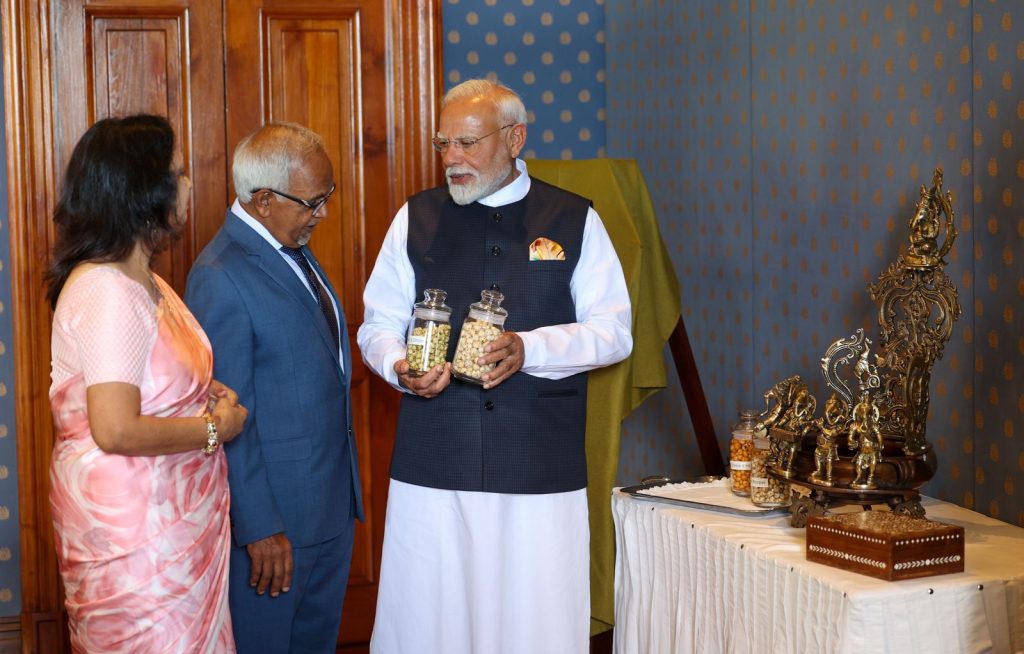
Prime Minister Narendra Modi presented a symbolic yet deeply meaningful gift to Mauritius Prime Minister Navinchandra Ramgoolam: makhana (fox nuts) and holy water from Prayagraj, the site of the recently concluded Maha Kumbh Mela.

This gesture, rooted in cultural heritage and spiritual symbolism, underscores the enduring historical, civilizational, and diplomatic ties between India and Mauritius while reflecting Modi’s vision of fostering unity and collaboration between the two nations, sources said. 

The choice of these culturally significant gifts honors the spiritual and historical bonds between the two nations, promotes economic possibilities, and reinforces a partnership poised for growth. As PM Modi stated during his visit, this engagement with a “valued friend” opens new avenues for collaboration, ensuring that the ties between India and Mauritius continue to flourish in an ever-changing world.

The inclusion of holy water from Prayagraj, drawn from the Triveni Sangam—the confluence of the Ganga, Yamuna, and the mythical Saraswati rivers—carries profound spiritual significance. 

By gifting this water to Ramgoolam, PM Modi extended a piece of this sacred legacy to Mauritius, a nation with a substantial population of Indian Hindu origin, many of whom trace their ancestry to indentured laborers brought during British colonial rule.

This act resonates deeply with Mauritius, where Indian cultural and spiritual traditions, including reverence for the Ganga, remain vibrant. 

Alongside the sacred water, PM Modi gifted makhana, a nutrient-rich aquatic seed known as fox nuts or lotus seeds, cultivated extensively in India, particularly in Bihar. Often hailed as a “superfood” for its health benefits—low calorie, high in antioxidants, and rich in protein—makhana represents India’s agricultural heritage and its growing global appeal. 

A Gesture of Unity and Sustainability

Modi’s visit also featured a tree-planting ceremony with Ramgoolam at the Seewoosagur Ramgoolam Botanical Garden, part of the “Ek Ped Maa Ke Naam” initiative, highlighting a shared commitment to sustainability. 

PMs gift to the wife of Mauritius President

The Banarasi saree, originating from Varanasi, is a symbol of luxury and cultural heritage, known for its fine silk, intricate brocades, and opulent zari work. This exquisite saree comes in a royal blue shade, adorned with silver zari motifs, a broad zari border, and a richly detailed pallu, making it ideal for weddings, festivals, and grand celebrations.

Complementing this saree is a Sadeli box from Gujarat, featuring intricate inlay work, designed to store precious sarees, jewelry, or keepsakes.

Delhi remains most polluted capital globally

Photo: Naveen Bansal

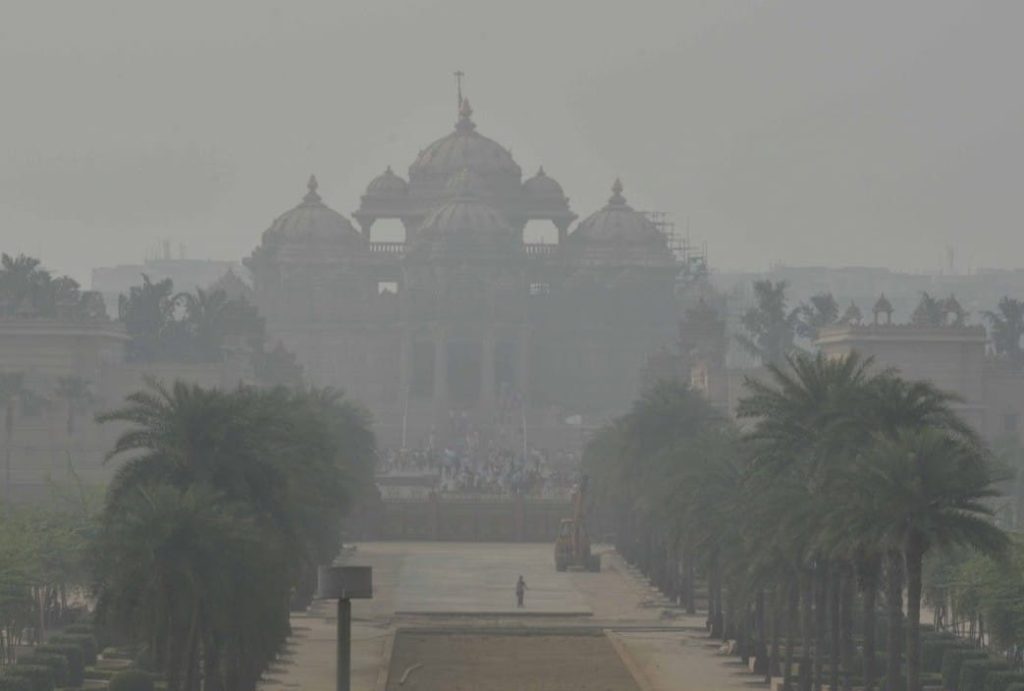
Delhi remains the most polluted capital city globally, the World Air Quality Report 2024 by Swiss air quality technology company IQAir said.

According to the report, thirteen of the world’s top 20 most polluted cities are in India, with Byrnihat in Assam topping the list. India ranked as the world’s fifth most polluted country in 2024, down from third in 2023.   

India saw a 7 per cent decline in PM 2.5 concentrations in 2024, averaging 50.6 micrograms per cubic metre, compared to 54.4 micrograms per cubic metre in 2023. Yet, six of the world’s 10 most polluted cities are in India.

Delhi recorded consistently high pollution levels, with an annual average PM2.5 concentration of 91.6 micrograms per cubic metre, nearly unchanged from 92.7 micrograms per cubic metre in 2023.

The 13 Indian cities in the world’s top 20 most polluted cities are Byrnihat, Delhi, Mullanpur (Punjab), Faridabad, Loni, New Delhi, Gurugram, Ganganagar, Greater Noida, Bhiwadi, Muzaffarnagar, Hanumangarh and Noida.

Overall, 35 per cent of the Indian cities reported annual PM2.5 levels exceeding 10 times the WHO limit of 5 micrograms per cubic metre.

Air pollution remains a serious health risk in India, reducing life expectancy by an estimated 5.2 years.

According to a Lancet Planetary Health study published last year, about 1.5 million deaths in India every year from 2009 to 2019 were potentially linked to long-term exposure to PM2.5 pollution.

PM2.5 refers to tiny air pollution particles smaller than 2.5 microns, which can enter the lungs and bloodstream, leading to breathing problems, heart disease and even cancer. Sources include vehicle exhaust, industrial emissions and the burning of wood or crop waste.

PM Modi arrives in Mauritius for two-day visit to strengthen bilateral ties

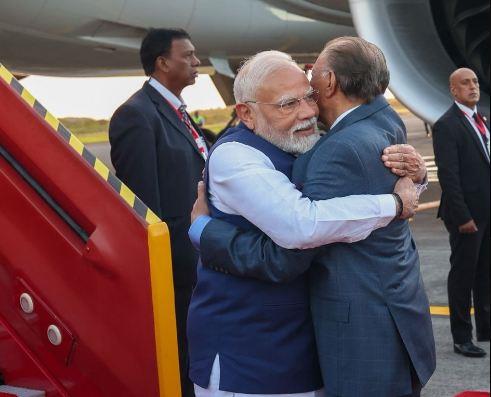
Prime Minister Narendra Modi arrived in Port Louis on Tuesday morning for a pivotal two-day visit to Mauritius, which aims to further strengthen the relationship between the two nations.

Upon arrival in the East African country, the Prime Minister was given a ceremonial welcome at the Sir Seewoosagur Ramgoolam International Airport by his Mauritian counterpart Navinchandra Ramgoolam.

Adding to the enthusiastic reception, members of the Indian diaspora gathered outside the Oberoi Hotel in Port Louis to greet the Indian Prime Minister.

PM Modi is scheduled to attend the National Day celebrations of Mauritius as the Chief Guest on March 12, following an invitation from Prime Minister Ramgoolam.

This visit holds special significance as it marks PM Modi’s first trip to Mauritius since 2015, when he unveiled India’s Vision SAGAR (Security and Growth for All in the Region), underlining the importance of cooperation in the Indian Ocean region.

During his visit, PM Modi will meet with the President of Mauritius, Dharam Gokhool, and engage in discussions with Prime Minister Ramgoolam and other senior officials.

His itinerary also includes interactions with leaders of various political parties and members of the Indian-origin community, who play an integral role in Mauritius’ cultural and social landscape.

As part of the visit, PM Modi will inaugurate two key projects — the Civil Service College and the Area Health Centre — both constructed with grant assistance from India. These projects reflect India’s continued commitment to supporting Mauritius’ development.

The visit is expected to see the signing of several Memorandums of Understanding (MoUs), strengthening cooperation in areas such as maritime security, healthcare, small and medium enterprises, trade, and capacity building. The visit also aligns with India’s ‘Neighbourhood First’ policy, aimed at fostering stronger ties with regional partners.

A significant highlight of the National Day celebrations will be the participation of Indian Defence forces. An Indian Navy contingent, along with an Indian Navy ship, will take part in the event.

Additionally, an Indian Navy helicopter, the Akash Ganga Skydiving Team from the Indian Air Force, and a group of NCC cadets will showcase their skills during the celebrations.

Foreign Secretary Vikram Misri confirmed that both countries will sign a technical agreement for sharing white-shipping information between the Indian Navy and Mauritian authorities.

This move is expected to boost Mauritius’ maritime security by improving surveillance in its trade corridors and enhancing regional cooperation for real-time data sharing.

Foreign Secretary Misri further highlighted that PM Modi and PM Ramgoolam will jointly inaugurate projects implemented with Indian support and oversee the signing of several MoUs focussed on capacity building, bilateral trade, combating cross-border financial crimes, and promoting small and medium enterprises.

High-level diplomatic engagement between India and Mauritius has remained consistent in recent years. President Murmu had graced Mauritius’ National Day celebrations in 2024 as the Chief Guest, while Mauritius has been a notable participant in PM Modi’s swearing-in ceremonies in 2014, 2019, and 2024.

Mauritius was also a special invitee at the G20 Summit in 2023 and co-launched the Global Biofuels Alliance alongside India and other nations.

The visit not only reinforces the strong historical ties between the two nations but also marks a new chapter in their strategic partnership, with fresh collaborations set to enhance development and security in the region.

Green Hydrogen: India moving towards growth, says Hardeep Singh Puri

Photo: Naveen Bansal

India is in a very comfortable position and moving towards the growth in terms of green hydrogen concerning its infrastructure, storage and supply in the country, union minister for petroleum and natural gas Hardeep Singh Puri said.

Speaking on the matter, the minister said, “green hydrogen is the future of fuel and it is very important for the environment as it emits only water vapour and warm air. However, it will only be successful when every industry in the country will start using it.”

He further said that the cost of green hydrogen production is USD 4.5 per Kg as of now, which makes it very expensive and limited in use.

“Once the cost of the green hydrogen will come down to USD 1 per Kg it will be beneficial for the economy. It will not only allow the country to transition from fossil fuel to green fuel; but it will also free India from the financial burden of energy imports,” the minister said.

Earlier, Union Minister for New and Renewable Energy Pralhad Joshi said that with an allocation of Rs 19,744 crore, the National Green Hydrogen Mission aims to establish India as a key player in hydrogen production, storage, and application across various sectors.

He noted that India has already made remarkable progress, awarding 4,12,000 TPA of Green Hydrogen production and approving 3 GW of electrolyser manufacturing capacity per annum. Additionally, seven pilot projects have been launched across transportation, shipping, steel, and storage, alongside the publication of 88 standards to ensure safety and scalability.

India started its National Hydrogen Mission on 4 January 2023, aiming to become a global leader in green hydrogen production by 2030, with at least 5 million metric tonne (MMT) annual capacity, attracting more than Rs. 8 lakh crore (US$ 95.9 billion) in investments. The initiative aims to reduce the country’s dependence on fossil fuels, develop job opportunities and foster economic growth.

Fraud in PM Kisan Samman Nidhi: Who Let the Loot Go?

By Jag Mohan Thaken

Rajasthan, March 10: How government money is siphoned off under the guise of government schemes? How the government officials misuse their power, post and lacunas of the system and how the officers, responsible for the check and balance, keep their eyes closed to overlook the ruining of the system? A sample of this came into public domain, when a question was asked on Monday by a member of the house in the Rajasthan Assembly regarding misuse of public money under Prime Minister Kisan Samman Nidhi scheme? 

On Monday, Minister of State for Cooperation (Independent Charge) Gautam Kumar in a written reply to the original question of MLA Kesa Ram Choudhary in the Assembly, informed that a total of 13 thousand 858 ineligible persons have been registered under the Pradhan Mantri Kisan Samman Nidhi Yojana in Marwar Junction Assembly constituency, who have received the benefit of Rs 826.66 lakh through various instalments under the scheme. He placed the details of the amount transferred to these ineligible persons on the table of the House. He informed that out of these 13 thousand 858 ineligible persons, the names of 13 thousand 720 persons are such who are not residents of those villages. District Collector Pali has been directed to investigate this matter. After investigating the entire matter of showing ineligible farmers eligible and providing benefits, disciplinary action will be taken as per rules against the officials and personnel found responsible.

The Minister said that the recovery will be made soon by following the prescribed procedure from the ineligible persons who took unfair benefits under the Prime Minister Kisan Samman Nidhi. He said that an Additional District Collector has been appointed to investigate the case of improper transfer of funds under Kisan Samman Nidhi in Pali district. Action will be taken against the culprits after investigation.

The Minister of State for Cooperation was answering the supplementary questions asked by the member in this regard during the Question Hour. He said that at the beginning of the Kisan Samman Nidhi Yojana, the benefit amount was transferred only on the basis of the declaration form given by the farmer. Later, uploading the land report was also made mandatory. The Central Government has also given instructions to recover the amount of Samman Nidhi from ineligible persons.

He said that after the cases of benefits given to ineligible persons in Pali between the years 2019 to 2023 came to light, FIRs have been registered in Tehsildar Desuri, Marwar Junction and Rani on the instructions of Pali District Collector.

What a fun – out of these 13 thousand 858 ineligible persons, the names of 13 thousand 720 persons are such who are not residents of those villages and the loot continued to go on for five years from 2019 to 2023 without any check. The minister stated that the Central Government has also given instructions to recover the amount of Samman Nidhi from ineligible persons, but how the money involved will be recovered when the minister himself admits that the ineligible persons were not even the residents of these villages. How will the government  trace these persons?

This is the story of a single assembly seat, Marwar Junction Assembly constituency; what shall be the picture, if an enquiry is made in all the 200 constituencies of the state? Will the present government dare to widen the sphere of investigation? If it is fairly investigated, not only the village level employees, the big fish will also come into the net. Role of all the officials from Patwari to District Collectors should be thoroughly examined, so that the actual line of corruption can be detected and penalised for.   

Why Rahul Gandhi Needs to Win Bihar, Other States Set for Polls in 2026

Photo: Naveen Bansal

With the 2025 assembly elections in states like Bihar approaching fast, Rahul Gandhi and the Congress party should look ahead to 2026, a year that promises another round of high-stakes state polls in Assam, West Bengal, Tamil Nadu, Kerala, and Puducherry.

While Bihar’s 2025 election is a critical battleground for Congress to reclaim relevance, Rahul Gandhi’s strategic plan for these states could lay the groundwork for a sustained revival of the Congress across India’s diverse political landscape.

Bihar, with its assembly elections slated for late 2025, serves as a testing ground for strategies that could define Congress’s fortunes in 2026. With Chief Minister Nitish Kumar-led government facing heavy anti-incumbency, the Congress is hoping for a comeback in the state.  

Photo: Naveen Bansal

Rahul Gandhi’s frequent visits to the crucial state—such as his January 18, 2025, trip to Patna for the ‘Samvidhan Suraksha Sammelan’ and his February 5, 2025, appearance to honor Dalit icon Jaglal Choudhary—signal an intent to rebuild the party’s base among OBCs, Dalits, and EBCs. Success in Bihar could provide momentum and a blueprint for states like West Bengal and Assam, where caste and community dynamics similarly influence voting patterns. Interestingly, in all these states going to polls, Congress used to be the leading political force till a few years ago.    

Ahead of the Bihar polls, the Congress scion will also need to work on the Mahagathbandhan with the Rashtriya Janata Dal and Left parties. A cohesive alliance here could inspire confidence in Tamil Nadu (with Dravida Munnetra Kazhagam) for 2026.

Sources stated that the Congress leader is also expected to push for a caste census and higher reservation caps which resonate beyond Bihar, appealing to marginalized groups in West Bengal (SCs/STs) and Assam (tea garden workers), setting a thematic continuity for future campaigns.

It must be pointed out that the Congress has struggled with weak grassroots structures in states set for 2026 polls. Rahul Gandhi’s repeated visits to these states and better political strategy is also expected to energize party workers and leaders.

Though each of these states presents unique challenges, the sooner the Congress’ high command engages in preparations, the better will be the chances of revival for the grand old party.

The Congress’ critique of the National Democratic Alliance’s economic record could evolve into a national narrative by 2026. Glaring vulnerabilities like the unprecedented volatility in share markets, growing unemployment and inflation, weak rupee and repeated mishaps on the railways network, could turn into issues that may be highlighted by the opposition.  

MOST POPULAR

HOT NEWS