India’s Direct Selling Industry Surpasses ₹22,000 Cr, Direct Sellers Rise to 88 Lakh: Survey

Wellness products top all segments with cosmetics and personal care in second place

New Delhi:   Marching ahead with sustained growth, India’s direct selling industry has achieved an all-time high with a turnover of Rs. 22,142 crores in FY 2023-24, marking a 4.4% year-on-year (YOY) growth from Rs. 21,282 crore in the previous fiscal year, according to an Annual Survey Report released by the Indian Direct Selling Association (IDSA) here on Tuesday.

The survey, conducted by IPSOS, the knowledge partner of the IDSA, an apex association of direct selling industry in India, was unveiled by  Chirag Paswan, Union Minister for Food Processing Industry, during an event highlighting the growth of the direct selling sector and sustained expansion, with a CAGR of 7.15% over the past five years, growing from ₹16,800 crore in FY 2019-20 to ₹22,142 crore in FY 2023-24.

The Country’s northern region leads with 29.8% of gross sales, followed by the East (24.2%), West (22.4%), South (15.3%), and Northeast (8.3%). Among states, Maharashtra holds the highest share at 13%, followed by West Bengal (11.3%), Uttar Pradesh (10%), Bihar (6.2%) and Karnataka (5.7%). Wellness & Nutraceuticals reign supreme, accounting for a staggering 64.15% of total sales, while Cosmetics & Personal Care contribute 23.75% and Household Goods 3.1%. Together, these three segments drive a remarkable 91% of all direct sales, according to the survey.

The report indicates a significant increase in the number of active direct sellers, rising to 88 lakh from 86 lakh in the previous year. Notably, women now constitute 44% of the total direct seller workforce, up from 37% in FY 2022-23, showcasing a growing role of women entrepreneurs in the industry.

Chirag  Paswan, while addressing the gathering on the occasion, lauded the direct selling industry for its significant role in providing self-employment opportunities, aligning seamlessly with the government’s vision of more job creation. Emphasizing the importance of high product quality, he reaffirmed the government’s commitment to fostering a business-friendly environment through its various strategic initiatives. He encouraged the industry to adopt good manufacturing practices and capitalize opportunities for sustainable growth. Furthermore, he assured the industry’s stakeholders of his department’s unwavering support, pledging to address concerns regarding the nutraceutical segment and streamline loan processes to help direct selling businesses thrive.

 Vivek Katoch, Chairperson, IDSA, said, “The report showcases an encouraging trend for the direct selling industry in the country. The growth trajectory of the industry has been on a surge over the years. A CAGR of 7.15% is a testament to the fact that direct selling businesses in the country have made steady growth and are poised to strengthen further in the years to come on the back of a promising regulatory framework by the government for the industry.”
DTC unable to recover operational cost: CAG Report

Photo: Naveen Bansal

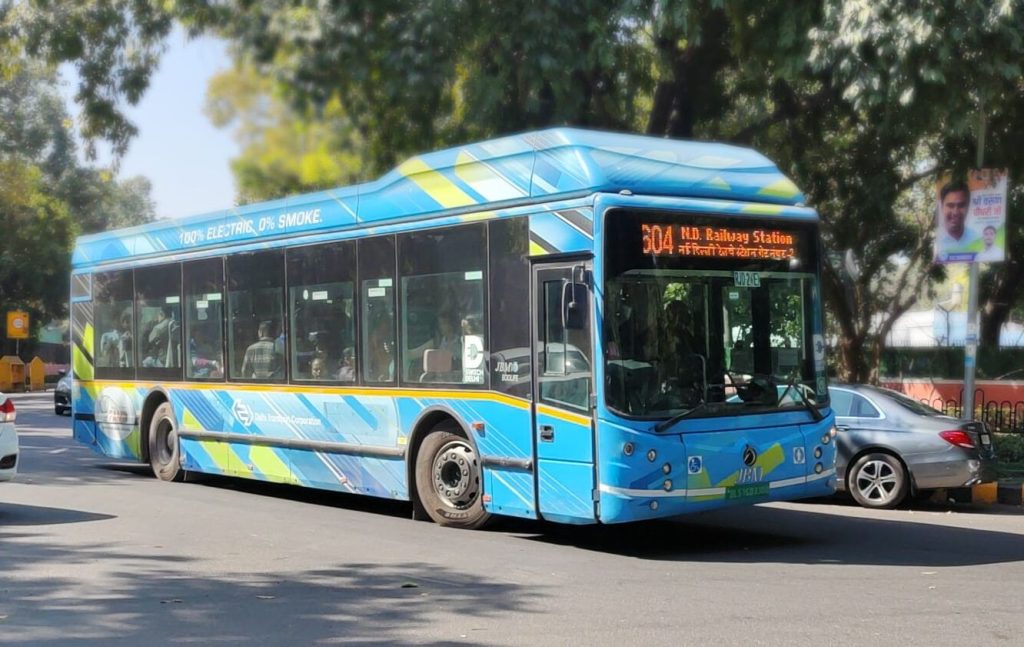
The Delhi Transport Corporation was unable to fully recover its operational cost due to lack of autonomy for fare determination. The fare of the Corporation buses was last revised and made effective from 3 November 2009, said Comptroller General of Auditor said in its report on functioning of Delhi Transport Corporation.

The corporation has suffered operational loss of Rs 14,198.86 crore on operations during 2015-22 due to route planning deficiency.

According to the report, the Corporation was operating on 468 routes (57 per cent) out of 814 routes as on 31 March 2022. The Corporation was unable to recover its operational cost in any of the routes operated by it.

“The scheduled Kms missed by buses ranged from 7.06 to 16.59 per cent and number of breakdowns ranged from 2.90 to 4.57 per 10,000 Kms of operations during 2015-22. This resulted in loss of potential revenues of Rs 668.60 crore due to missed scheduled Kms and higher rates of breakdowns during 2015-22,” it further added.

This was the third CAG report among 14 that are being tabled in the Delhi assembly by chief minister Rekha Gupta.

According to the key findings in the report, during the period 2015-23, fleet of the Corporation reduced from 4,344 (2015-16) to 3,937 buses (2022-23).

“The Corporation could procure only 300 Electric buses (EBs) during 2021-22 and 2022-23 despite availability of funds from Government of National Capital Territory of Delhi (GNCTD). There was delay in addition to EBs in the fleet for which a penalty amounting to Rs 29.86 crore for delayed delivery was not imposed on the operators,” the report stated.

The report found multiple discrepancies in the functioning of the transport department leading to huge losses and liabilities.

According to the data available, CCTV System was installed and commissioned in 3,697 buses in March 2021 and payment of Rs 52.45 crore was released to the contractor but pending the user acceptance test of the system, it was not declared Go live. Thus, this system was not fully operational in buses as of May 2023.

The Corporation had outstanding dues of Rs 225.31 crore recoverable from the Transport Department against unreceived rent, service tax and water charges for space transferred for operation/parking of Cluster buses. Further, Property Tax and Ground Rent of Rs 6.26 crore on these depots and Rs 4.62 crore in providing vehicles to the Transport Department also remained unrecovered.

The DTC had also not prepared any business plan or prospective plan. “No MoU was signed with

GNCTD for setting targets in respect of various physical and financial parameters to contain its working losses. It did not benchmark its performance with parameters of other State Transport Undertakings (STUs),” it added.

The Corporation incurred avoidable liability of interest and penalty of Rs 63.10 crore due to wrongly availing of Input Tax Credit for Goods and Services Tax on exempted services.

The report further stated that there were inefficient managerial controls and lack of accountability. Audit noticed indecisiveness in finalizing the tenders for purchase of new buses, weak operational control, lack of coordination amongst divisions, lack of follow up with debtors, delay in statutory compliances, led to losses to the Corporation.

Meanwhile, there has been a significant increase in the use of low floor overaged buses in the cooperation between 2015 and 2023.

The number of low floor overaged buses in the Corporation during 2015-22 increased from 0.13 per cent (five buses) to 17.44 per cent (656 buses) which further increased to 44.96 per cent (1,770 buses) as on 31 March 2023 of its total fleet. “The proportion of overage buses would be rising further if the Corporation does not make sincere efforts to procure or add new buses. The operational efficiency of the Corporation vis-à-vis All India Average in respect of fleet utilization and vehicle productivity was on the lower side,” it said.  

Central government notifies hike in MPs’ salaries, allowances and pensions

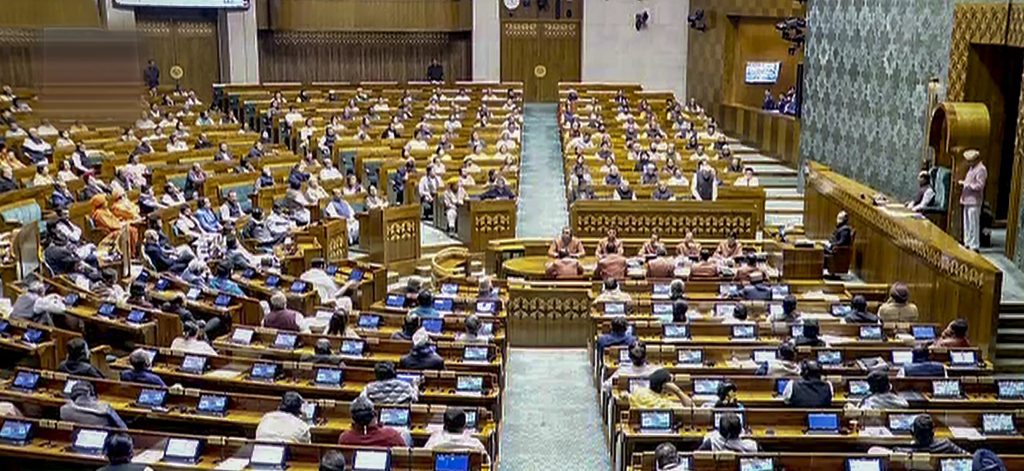
The Central Government has notified an increase in MPs’ salary, daily allowance, pension, and additional pension. The monthly salary for both Lok Sabha and Rajya Sabha MPs has been increased from Rs 1 lakh to Rs 1.24 lakh, while their daily allowance has been raised from Rs 2,000 to Rs 2,500. 

The hike will be effective from April 1, 2023. There are 543 Lok Sabha MPs, 245 Rajya Sabha MPs, and numerous former lawmakers who will benefit from the increased pension.

Additionally, the pension for former MPs has been revised from Rs 25,000 to Rs 31,000 per month, with an increase in additional pension for every extra year of service beyond five years from Rs 2,000 to Rs 2,500, according to the Ministry of Parliamentary Affairs.

This revision comes during the ongoing Budget Session of Parliament. The last update to MPs’ salaries, allowances, and pensions took place in April 2018. 

Additionally, MPs also enjoy 34 free domestic air journeys per year for themselves and their immediate families, as well as rent-free accommodations in prime locations. Those who opt out of official housing can claim a monthly housing allowance of Rs 2 lakh.

Additional benefits include 50,000 units of free electricity annually, 4,000 kilolitres of free water per year, and comprehensive healthcare coverage under the Central Government Health Scheme (CGHS) for MPs and their immediate family members.

Delhi Assembly session begins, BJP to present budget after 27 years

Photo: Naveen Bansal

The Delhi Legislative Assembly’s budget session started on Monday setting the stage for the first budget of the newly elected Bharatiya Janata Party government after 27 years. The session which has been termed as ‘Viksit Delhi’ budget will run until March 28, with provisions for extension if needed.

The session started with the preparation of ceremonial kheer. Chief Minister Rekha Gupta will present the budget on Tuesday along with discussion on key financial and policy matters affecting the national capital.

The budget session started at 11 am with national song Vande Mataram followed by the question hour which allows members to pose starred questions with responses provided by relevant authorities.  

During this session, the members will raise pressing issues with the chair’s permission under Rule 280.

Rekha Gupta will move the motion for election of financial committees. The motion will witness selection of nine members each from amongst themselves to serve as Members of the Committee on Public Accounts, Committee on Estimates and Committee on Government Undertakings beginning from 1st April, 2025.

Deputy Speaker  Mohan Singh Bisht, and member Om Prakash Sharma will present the First Report of the Business Advisory Committee.

Meanwhile, Sanjay Goyal and Poonam Sharma will present the First Report of the Committee on Private Members’ Bills.

The session will include discussions on pressing governance and infrastructure issues. Members Surya Prakash Khatri, Mohan Singh Bisht, and Raj Kumar Bhatia will continue their debate on water shortage, waterlogging, sewerage blockage, and drain desilting, a topic that was initiated on March 3, 2025.

The Budget Session is a critical period in Delhi’s legislative calendar. With financial governance, infrastructure, and public services on the agenda, the Budget Session is expected to set the tone for BJP’s governance strategy in Delhi.

Photo: Naveen Bansal

Meanwhile, Aam Aadmi Party (AAP) members staged a protest demanding Rs 2500 to each woman of the city, at the Vidhan Sabha premises.

AAP LoP Atishi who is leading the protest at the Delhi Assembly said that it has been proved that Prime Minister Narendra Modi lied to the residents of the city about the promise of Rs 2500 to every woman till March 8.

“Modi has betrayed the women of Delhi on the pretext of guarantee,” she added. 

Despite Stalin’s attempts, delimitation issue unlikely to create Opposition unity

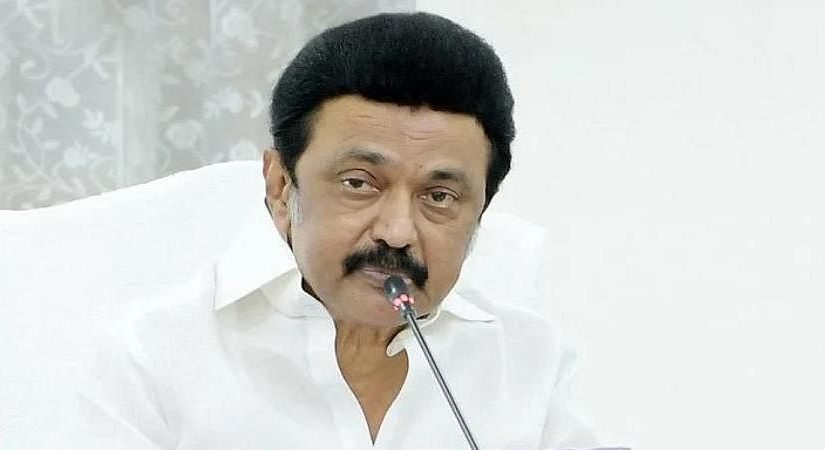
Tamil Nadu Chief Minister MK Stalin is unlikely to succeed in uniting the opposition on the delimitation issue. Despite attempts to rally opposition leaders by hosting the first Joint Action Committee (JAC) meeting on March 22, in Chennai, a united opposition may be far from becoming a reality.

Though this gathering brought together leaders from parties such as the Dravida Munnetra Kazhagam, Bharat Rashtra Samithi , Biju Janata Dal and Aam Aadmi Party.

However, not all opposition parties are on board—Trinamool Congress (TMC) and YSR Congress opted out of the Chennai meeting, indicating potential fissures. TMC’s absence, for instance, was linked to its focus on other issues, suggesting that delimitation may not be a universal priority.

It is also learnt that northern players like the Bahujan Samaj Party, Samajwadi Party and Rashtriya Janata Dal might quietly welcome additional seats, even if they oppose the BJP on other fronts. This misalignment of interests could splinter any coalition on the issue before it gains traction, sources said.

Moreover, the Congress, still the largest national opposition party, struggles to assert leadership over regional giants who view it with suspicion.

As the country navigates its complex political landscape, the issue of delimitation—the process of redrawing electoral constituency boundaries based on population changes—has emerged as a potential flashpoint.

Delimitation in India is not merely an administrative exercise; it is a deeply political one. The process adjusts the number of parliamentary and state assembly seats based on population data, a mechanism frozen since 1976 to encourage population control in states.

Southern states like Tamil Nadu and Kerala, which have successfully controlled population growth, fear losing seats to northern states like Uttar Pradesh and Bihar, where population numbers have surged. This north-south divide threatens to exacerbate regional tensions, and is unlikely to help attempts at opposition unity, sources stated.

According to government statistics, between 2001 and 2011, Uttar Pradesh had a population growth rate of about 20%, Bihar 25%, while Tamil Nadu had around 15%, Kerala 4.9%, and West Bengal 13.8%. Northern states have higher growth rates. Therefore, southern states and some eastern states might be more concerned about losing relative representation.

According to the 84th Amendment Act of 2001, the delimitation of constituencies based on the census was frozen until the first census after 2026. So, the next delimitation will be based on the census after 2026, which would probably be the 2031 census.

The opposition would need to carefully craft their narrative and find common ground amidst their diverse interests. They would also need to propose constructive alternatives, perhaps advocating for a more nuanced approach to delimitation that considers multiple factors beyond just population.

Though the delimitation issue is likely to be a significant point of debate in Indian politics in the coming years, and how it plays out will depend on the strategies of both the ruling party and the opposition.

Municipal Corporation bulldozes Nagpur violence mastermind Fahim Khan’s house

The Municipal Corporation of Nagpur on Monday carried out a bulldozer operation at the residence of Fahim Khan, the alleged mastermind behind the March 17 violence that erupted in response to Vishwa Hindu Parishad’s (VHP) demand to remove Aurangzeb’s tomb in Maharashtra’s Chhatrapati Sambhajinagar.

A team from the Nagpur Municipal Corporation arrived at Khan’s residence with bulldozers to demolish an unauthorised structure. Authorities stated that Khan had previously been issued a notice citing multiple violations, including the absence of a valid building plan approval. Despite warnings, he failed to act, leading to the demolition.

Fahim Khan, who is also the chief of the Minority Democratic Party (MDP), has been booked for sedition along with five others. He was arrested and sent to judicial custody until March 21.

The Nagpur Police have also been investigating more than 300 social media accounts in connection with the riots, with 140 found to contain objectionable posts and videos. The process of registering cases against these accounts is underway.

The DCP said the objectionable content was circulated from an account outside Nagpur. “Support for the riots has been expressed through some posts. This account is being investigated, and it is also being looked into if they are from outside the country. Along with this, the social media account of the main accused, Fahim Khan, has also been investigated. Objectionable content was found on his account, and the cyber department has registered a case in this regard also, ” he added.

So far, four FIRs have been registered in the Nagpur riots case, listing over 50 allegations. Authorities have indicated that more FIRs will follow as the investigation progresses.

Maharashtra Chief Minister Devendra Fadnavis, who also holds the Home Ministry portfolio, has taken a firm stance on the matter. He announced that the cost of properties damaged during the violence would be recovered from the rioters. If they fail to pay, their properties will be seized and auctioned to cover the losses.

“My government will not rest until those responsible for attacking the police are found and dealt with sternly, ” Fadnavis asserted, reinforcing the administration’s commitment to law and order.

Respond promptly to MPs and MLAs: Delhi Govt to officers

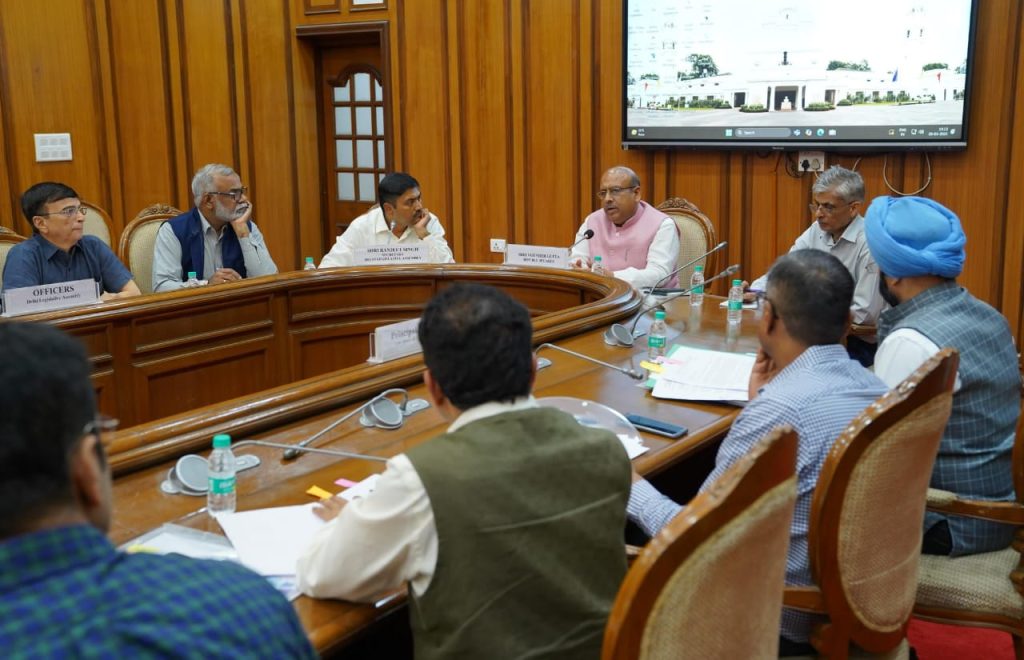
The Delhi government has directed officers of all the government departments to respond to communications from MPs and MLAs promptly and warned them of disciplinary action against those who fail to adhere to the instructions.

The move came after the Delhi Assembly speaker Vijender Gupta wrote a letter to the chief secretary about the non-responsive behaviour of the section of officers.

 “The matter has been viewed seriously by the chief secretary,” said a circular issued by the General Administration Department (GAD) of the Delhi government.

The instructions need to be strictly adhered to in letter and spirit, said the circular issued by Additional Chief Secretary (GAD) Naveen Kumar Choudhary to all additional CSs, Principal Secretaries, Secretaries,Head of Departments asking non compliance of instructions will attract disciplinary action against the officials concerned.

“There should be no occasion that MLAs or Members of Parliament are constrained to make such complaints. Non-compliance to these instructions will invite commensurate disciplinary action and will be an important input in evaluation of the officer concerned,” the circular read.

It further stated, “The Delhi Vidhan Sabha Speaker has addressed the communication to the Chief Secretary bringing into notice non-acknowledgement of letters, phone-calls and messages of members of Delhi Legislative Assembly by the officers. The matter has been viewed seriously by the Chief Secretary. The government has issued comprehensive instructions with regard to engagement and protocols to be observed while dealing with the MLAs or the MPs.”

The circular also shared a standard operating procedure (SOP) regarding official dealings of administration and MPs and MLAs, prepared by the GAD in 2020.  It laid down that communications received from an MP or MLA need to be promptly attended.

A communication addressed to a minister or secretary, should be replied by themselves as far as possible.

The information sought by an MP or MLA should be supplied, unless it is of such nature that it would be denied to him, said the SOP.

Further, it said that each communication received from an MP or MLA should be acknowledged within 15 days, followed by a reply within the next 15 days.

Police removes concrete barriers at Singhu border

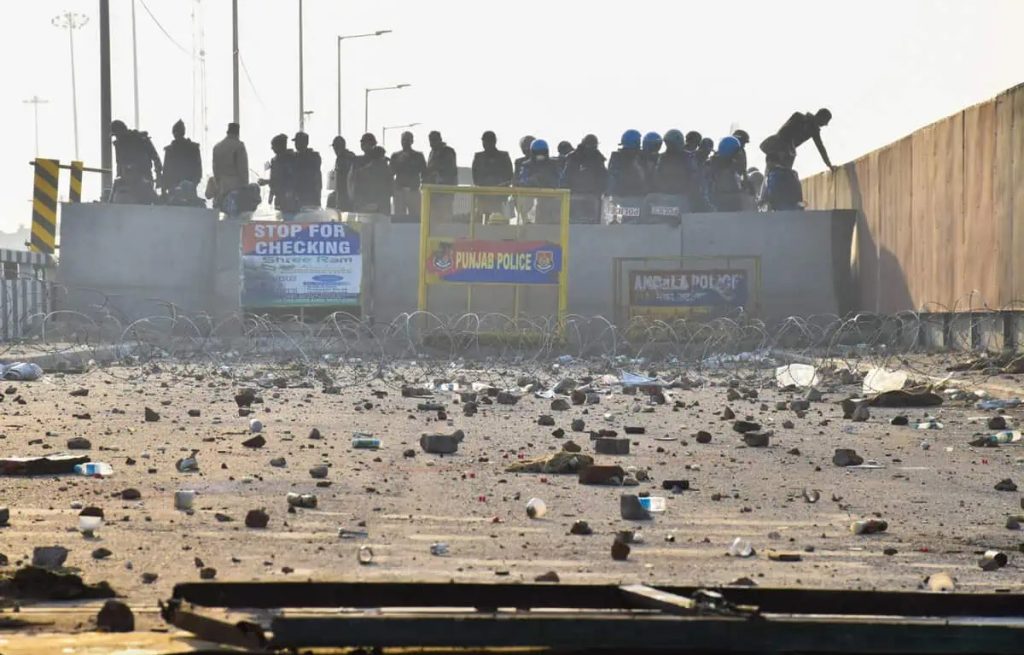
A day after the farmers were removed from Shambhu border of Punjab-Haryana the police and administration began removing permanent structures from Singhu border to restore normal traffic flow.

The police are facing difficulties in removing cemented barricades and to break the concrete iron mixed boulders and walls which have been there for the last 13 months.

The police had sealed the Singhu border with multiple layers of barricades with concrete blocks, cemented walls and barbed wires last year on February 13 due to farmers’ call to protest in the national capital.

Earlier, nearly 10 JCBs were pressed into the service at  the Ghaggar bridge at the Shambhu border to dismantle the concrete barricading to start the traffic.

This came after the surprise police action at the protest sites. Both Punjab and Haryana used heavy machinery throughout the day to remove the cemented barricades put up to stall the farmers on the two different national highways leading to New Delhi from different places in Punjab.

Patiala and Sangrur police detained over 500 farmers and lodged them at different police stations and other places on Thursday. A committee of SKM in a meeting in Patiala condemned the repression against the farmers. The police also handed over tractor-trailers and their belongings to farmers after verifying their identities, including Aadhaar cards.

Singhu border witnessed severe traffic disruptions since the farmers’ protests of 2020-2021. Despite the protest ending two years ago, concrete barriers remained in place, reducing the previously free-flowing three-lane stretch to a single-lane bottleneck.

The area, home to several factories and surrounded by villages such as Singhu and Kundli, serves as a vital trade route with heavy traffic flow throughout the day. The blockade at the border, which was a key site of the farmers’ protest, had a debilitating impact on the daily lives of locals.

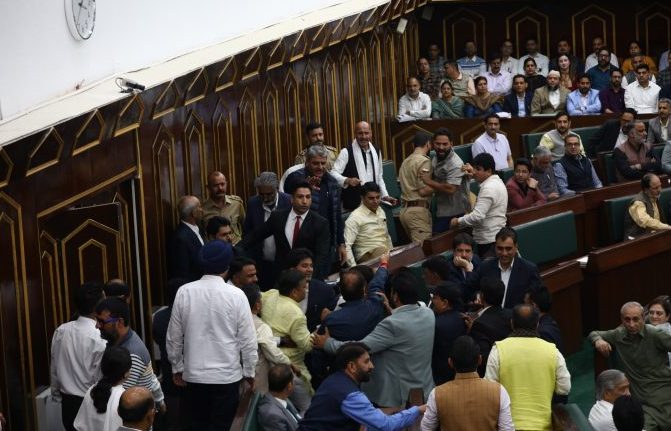
J&K Assembly witnesses uproar over ₹35 crore chartered flight expenses

Jammu: The Jammu and Kashmir Assembly saw heated exchanges on Thursday as members debated an Independent MLA’s call for a probe into alleged excessive spending on chartered flights and hospitality in the Union Territory.

MLA Shabir Ahmed Kullay from Shopian raised concerns over ₹35 crore spent on flights and guest expenses, including during G20 events. He questioned who authorized the expenditure and demanded an investigation.

Members of the ruling National Conference (NC) and Congress supported the demand, with NC’s Javaid Beigh calling for a house committee to probe the matter. Congress’s Nizamuddin Bhat also backed the proposal, stressing the need for accountability.

However, BJP members defended the spending, stating it was used for G20 guests and tourism promotion. BJP leader Balwant Mankotia argued that any probe should also cover expenditures since 2009.

The debate led to disruptions, with verbal clashes between the treasury and opposition benches. Independent MLAs Shabir Ahmed and Mehraj Malik presented documents they claimed as evidence.

PDP’s Fayaz Mir also supported the demand, emphasizing the involvement of state guests. Speaker Abdul Rahim Rather urged members to maintain decorum, assuring that Chief Minister Omar Abdullah would address the concerns in his response to the grants discussion.

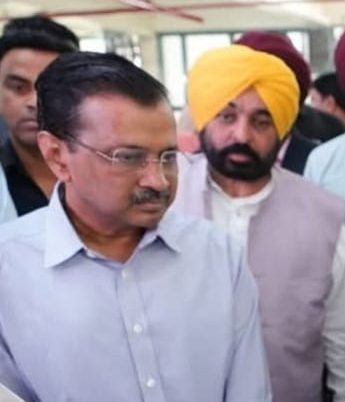
Why AAP’s Action Against Farmers May Be a Strategic Mistake

Photo: Naveen Bansal

Once a vocal champion of agrarian causes, Aam Aadmi Party’s confrontational stance—marked by police action, arrests, and eviction of protesting farmers—may turn out to be a strategic mistake by the political outfit. 

The AAP, under the leadership of Punjab Chief Minister Bhagwant Mann, has recently found itself at odds with one of its most crucial support bases, the farmers of Punjab.

While this shift in strategy may stem from immediate governance pressures, it risks alienating a community that played a pivotal role in AAP’s rise to power in Punjab in 2022. In fact, many in the party termed the eviction of farmers as a short sighted move by AAP government. 

AAP’s ascent in Punjab was intricately tied to the farmers’ movement, particularly the 2020-2021 protests against the Centre’s contentious farm laws. During that period, AAP positioned itself as a staunch ally of the agrarian community, with leaders like Arvind Kejriwal offering logistical support to protesters at Delhi’s borders and criticizing the central government’s policies. 

This solidarity resonated with Punjab’s rural electorate, where agriculture remains the backbone of the economy and identity. The party’s promise of a legal guarantee for Minimum Support Price (MSP), compensation for flood-affected farmers, and a comprehensive agriculture policy further cemented its pro-farmer image, helping it secure a landslide victory in the 2022 Punjab Assembly elections.

However, now the narrative seems to have shifted dramatically. The Mann-led government has faced mounting farmer unrest over unfulfilled promises, leading to protests. Instead of dialogue, the AAP government responded with preemptive arrests, police blockades, and eviction of protestors. This pivot from ally to adversary has left many questioning AAP’s long-term strategy.

Punjab’s farmers are not just an economic force; they are a political powerhouse. With small and marginal farmers constituting over 86% of the state’s agrarian workforce, their votes can sway elections. AAP’s 2022 triumph was built on rural support, particularly from regions like Doaba and Malwa, where farmer discontent with previous governments—Congress and Shiromani Akali Dal (SAD)—opened the door for AAP’s populist appeal. By cracking down on protests and failing to deliver on key promises like MSP for all crops, AAP risks eroding this trust.

The recent standoffs, including the police action have provided ammunition to opposition parties. The Bharatiya Janata Party (BJP) and Congress have seized the opportunity to paint AAP as “anti-farmer,” a label that could stick in a state where agrarian identity runs deep. 

However, with the 2027 Punjab Assembly elections looming, the party cannot afford to antagonize a group that has historically dictated electoral outcomes. The farmers’ protests of 2020-2021 not only forced the Centre to repeal the farm laws but also reshaped Punjab’s political landscape, weakening SAD and Congress while elevating AAP. Repeating that cycle of discontent could embolden rivals, particularly Congress, which has expressed open sympathy for the farmers, and the BJP, which is keen to expand its footprint in Punjab.

The timing of AAP’s farmer crackdown is particularly precarious given its recent loss in the Delhi assembly elections. Punjab remains AAP’s only major state in power, making it a critical battleground for the party’s survival and expansion. Alienating farmers could jeopardize its 2027 prospects. 

By alienating a core constituency, misreading the political mood, and contradicting its own history, AAP is gambling with its future in a state it cannot afford to lose. Farmers have proven their ability to shape Punjab’s politics, and their memory of betrayal is long. If AAP hopes to retain power beyond 2027, it must pivot back to dialogue and deliverables, lest this misstep become a defining mistake in its Punjab story.

MOST POPULAR

HOT NEWS