Yamuna revival: Challenges remain amid renewed political resolve

Yamuna took the centre stage during the Delhi poll campaign, when AAP supremo Arvind Kejriwal accused Haryana of polluting the river’s water flowing into Delhi. Now, with BJP at the helm in Delhi, the task of cleaning the river demands swift and coordinated action. A report by Pawan Kumar Bansal
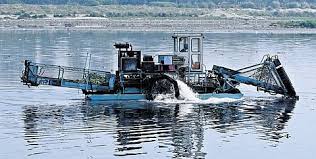
During Delhi assembly elections, Yamuna pollution turned into a major campaign issue with Arvind Kejriwal alleging that Haryana had poisoned Yamuna water coming from its side and flowing  into Delhi. Haryana CM Naib Saini challenged the claim of Kejriwal and even drank Yamuna-water to demonstrate that it is fit for drinking. Now with BJP having formed the government in Delhi, urgent steps need to be taken for cleaning Yamuna.

Prime Minister Narender Modi has also promised that Yamuna will be cleaned and developed on the pattern of Ahmedabad’s Sabarmati riverfront. With Delhi, Haryana, Uttar Pradesh, and the Union government under BJP rule, the cleanup should progress swiftly.

Delhi Chief Minister Rekha Gupta has rightly said that handing over the security of Yamuna to the territorial army is under consideration to check encroachments and dumping of waste in it. During the last about two decades, several schemes were made and crores were spent for cleaning Yamuna but neither it got cleaned nor were encroachments and dumping of waste checked. Dr Shiv Singh Rawat, former Superintending Engineer, Irrigation and Water Resources Department, Haryana, and convener of Yamuna Bachao Abhiyan, said that political disputes that previously hindered clean-up efforts may no longer pose a hurdle. Rawat has done Ph.D from IIT Delhi on “Yamuna river and water resources of Haryana.” However, the success of the initiative will depend on strict enforcement, sustained financial support, and active public participation.

Despite renewed political commitment, several challenges remain. The enforcement of pollution control laws has been weak, allowing industries and residents to discharge waste into the Yamuna unchecked. Unauthorized colonies, which continue to expand, lack proper sewage systems, leading to massive amounts of untreated waste entering into the river. Encroachments along the riverbanks further reduce its natural flow. Coordination between Delhi, Haryana, and Uttar Pradesh also remains a critical issue, as multiple states contribute to the river’s pollution.

Going into the background of the issue, R.K.Garg, retired Engineer-in-Chief, Irrigation, Haryana and former member of Delhi Jal Board, opines, “ Ecologically, the stretch of the Yamuna river in Delhi was killed,” adding that “aquatic life survived in Delhi stretch of the river at least till 1970.” As our political system started having stakes in the unplanned growth of the city, the river started dying. Unfortunately, the administrative infrastructure not only tamely yielded to the political authority but gradually started having its own stakes in non-compliance. DDA, the agency given the responsibility of urban planning of the city, failed to control the dynamics of urban growth and it led to coming up of thousands of unauthorized human habitations across the city over the time.”

These areas had come up without any sewerage infrastructure or any other facilities, the waste generated in these areas finally reached Yamuna, which, paradoxically, turned into a natural drain of the city. In 2006, 46% of Delhi areas had no sewerage infrastructure, perhaps something exceptional in reference to any national capital of the world. It’s not that elected representatives were ignorant about the malady, they felt compelled to join the game being part of the competitive populism. Besides entry of untreated waste, both domestic and industrial, the river suffered because of the rampant encroachment of its floodplains. Historically, Yamuna waters were shared between erstwhile Punjab, now Haryana, and UP. Delhi got Yamuna share for the first time when in May, 1994, an MOU was signed by the basin states. Delhi, however, had been using these waters since 1930 when its first WTP, namely Chanrawal, was completed.

With increasing demands of Delhi, all releases of fresh water downstream Wazirabad stopped and the river stretch from Wazirabad to Okhla started receiving mostly the untreated sewage, including the industrial waste, through various drains of Delhi, converting this portion of the river into an open sewer instead. Since it would not have been possible to provide sewerage- infrastructure in the unplanned habitations quickly, and the growth of such habitations kept growing, things worsened instead of improving.
Abhay Verma’s appointment as chief whip of Delhi BJP marks significant move ahead of Bihar elections

In a strategic move that underscores the growing influence of the Purvanchali community in Delhi’s political landscape, Abhay Verma, a two-time Member of Legislative Assembly (MLA) from Laxmi Nagar has been appointed as the Chief Whip of the Delhi BJP Legislative Party.

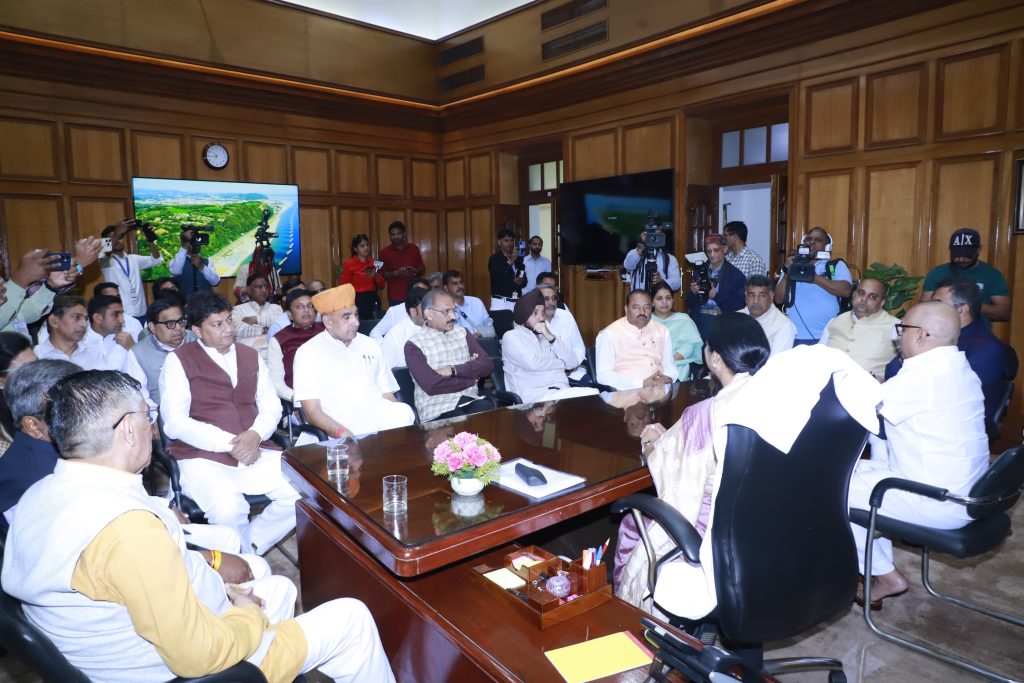
The announcement was made during a meeting of the BJP Legislative Party held at the Delhi Assembly complex, in the presence of Delhi BJP President Virendra Sachdeva and Chief Minister Rekha Gupta.

The meeting, which focused on the smooth functioning of the legislative party, saw the decision to appoint a Chief Whip being entrusted to Delhi BJP President Virendra Sachdeva. After discussions with the Legislative Party Head and the Chief Minister, Sachdeva declared Verma’s appointment, emphasizing his experience and legal acumen as key factors in his new role.

Verma, who has been serving as the chief spokesperson for the Delhi BJP since 2021, is widely recognized within the Purvanchal community—a demographic that has gained significant political traction in Delhi. His leadership roles, including serving as the president of the Delhi BJP Purvanchal Morcha and vice president of the Delhi BJP for four terms, have solidified his position as a prominent figure in the party.

“Abhay Verma is a well-known face of Purvanchal in Delhi politics, and his appointment as Chief Whip is a testament to the BJP’s commitment to this vibrant and growing community,” said Sachdeva.

Verma’s appointment comes at a time when the Purvanchali community is playing an increasingly important role in both Delhi and Bihar politics. As the BJP gears up for the upcoming Bihar elections, Verma’s strategic positioning is seen as a critical move to strengthen the party’s connection with the Purvanchali electorate in Bihar—a key battleground for the party.

With the community’s substantial presence in Bihar and its growing influence in Delhi, Verma’s role as Chief Whip is expected to resonate beyond the Delhi Assembly, creating a ripple effect in Bihar’s political dynamics.

As the BJP sets its sights on consolidating support in Bihar, Abhay Verma’s appointment could signal a renewed focus on strengthening the party’s ties with the Purvanchali community, a critical demographic that could play a pivotal role in the outcome of the upcoming elections.

J&K drafting new media policy to address social media, digital platforms

The Jammu and Kashmir government is working on a new media policy to incorporate emerging platforms, including social media and news websites. This initiative comes five years after the 2020 New Media Policy, which faced strong opposition from both media organizations and political parties.

“The formulation of the New Media Policy aims to align with the evolving media landscape and adhere to the standards set by the Directorate of Advertising and Visual Publicity (DAVP), Government of India,” Pulwama MLA Waheed-ur-Rehman Para said n response to a cut motion in the Assembly. 

Addressing concerns about the Srinagar Press Club, the government clarified that the club had been operating from a building provided by the Estates Department in Press Enclave, Srinagar. However, due to internal disputes among its members, the building was vacated and is currently occupied by the Jammu & Kashmir Police.

During the Assembly session in Srinagar last November, Chief Minister Omar Abdullah had emphasized that his government would not be influenced by social media platforms such as WhatsApp, Facebook, and Twitter. 

“I write a lot on Twitter, but I do not read anything,” he remarked, assuring the people that the government’s agenda would be determined by them, not by social media users.

The Media Policy of 2020 was introduced to establish a structured approach for government communication during crises such as health emergencies and natural disasters. According to officials, the policy aimed to create a sustained narrative around government initiatives while maintaining journalistic standards in the Union Territory. It also sought to counter misinformation and prevent the misuse of media to disrupt public order or national security. However, media organizations and several political parties in J&K had strongly opposed the policy, calling it restrictive and detrimental to free speech.

Kejriwal’s security detail during Vipassana retreat piques parties

AAP chief Arvind Kejriwal’s 10-day meditation retreat in Punjab has sparked a political storm, with opposition attacking his extensive security at taxpayers’ expense. Once a VIP culture critic, Kejriwal now faces accusations of hypocrisy amid speculation over his political future, writes Rajesh Moudgil

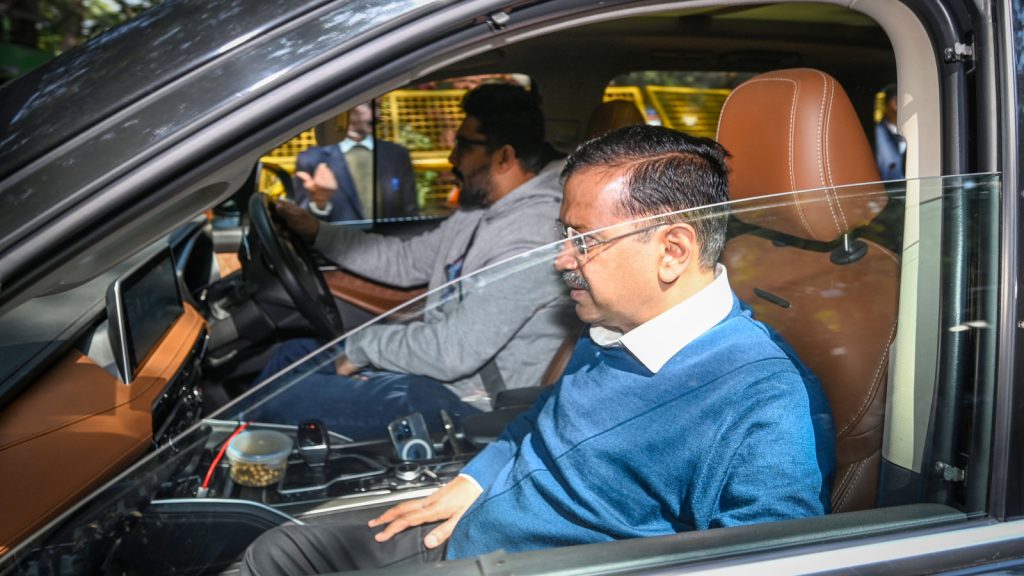
New Delhi, India – Feb. 11, 2025: Arvind Kejriwal, AAP’s National Convenor arrives to attend a meeting with the AAP’s MLA’s from Punjab in presence of Bhagwant Mann, Chief Minister of Punjab at Kapurthala House in New Delhi, India, on Tuesday, February 11, 2025. (Photo by Sanchit Khanna/ Hindustan Times)

Kejriwal and his wife Sunita were in Punjab’s Hoshiarpur district to attend a 10-day meditation camp at the Dhamma Dhaja Vipassana Centre, village Anandgarh, near Hoshiarpur from March 5.

Though it is his second meditation course here, it is the first time he has come under heavy fire from opposition parties for his “lavish security cover at the cost of taxpayers’ money’’. The opposition leaders slammed what they termed as Kejriwal’s “hypocrisy’’ reminding how the AAP top leadership once vowed to end VIP culture.

Kejriwal had come to attend a similar course here from December 21 to December 30, 2023.

Vipassana, an ancient meditation technique rooted in the teachings of Gautam Buddha, is taught in a 10-day residential course at the said centre during which the participants are not allowed any kind of communication – verbal or gestural – with anyone, except for meditation related discussion.

The couple had reached the Forest Rest House, village Chohal, Hoshiarpur, reportedly in a huge cavalcade of 30 vehicles including bulletproof Land Cruisers and about 80 commandos and Punjab police personnel.

Senior Punjab Congress leader Partap Singh Bajwa, who is also Leader of Opposition in Punjab assembly, took a dig at the AAP leader stating that when AAP emerged, its leaders promised to end VIP culture and said that the leaders who demanded security should leave politics.

“Regretfully, yesterday, the cavalcade (of Arvind Kejriwal) contained 32 cars…Even today, 80 commandos of Punjab Police are in Kapurthala House to safeguard Kejriwal ji…Bhagwant Mann, who is both not mentally and physically stable, needs ‘Vipassana’ the most…They have done everything opposite to what they had said’’, Bajwa told newspersons.

Pargat Singh, Congress MLA from Punjab’s Jalandhar Cantt, flayed the AAP leader saying “Vipassana is for peace and relaxation of mind and what is the idea behind Kejriwal’s high-decibel entry for this. He went on further quip that a leader who used to boast that he was still using his WagonR car is misusing the resources of Punjab and it is because of such leaders that people have lost faith in politicians.”

AAP MP (Rajya Sabha) representing Delhi Swati Maliwal also slammed Kejriwal, saying Kejriwal, who criticised the whole world for VIP culture, was roaming around with a security cover bigger than Donald Trump’s.

BJP leader and Delhi minister Manjinder Singh Sirsa also hit out at asking what kind of Vipassana required a huge security parade funded by Punjab taxpayers.

He took to X to hit out at Kejriwal: “Arvind Kejriwal, who once pretended to be a common man in a WagonR, now moves in a lavish convoy of bulletproof Land Cruisers, 100+ Punjab Police commandos, jammers & ambulances—like a VIP Maharaja all for Vipassana, a retreat meant for peace! If power was his test, he has failed miserably. What kind of ‘Vipassana’ requires a grand security parade funded by Punjab taxpayers? Even CM Bhagwant Mann isn’t in the convoy! AAP’s truth is out—deception, hypocrisy, and VIP arrogance at its peak!’’

BJP national general secretary Tarun Chug asked in which capacity does Kejriwal use Punjab resources as he is neither Delhi CM nor an MLA and has even been holding Punjab department meetings.

Shiromani Akali Dal (SAD) spokesperson Daljeet Singh Cheema too assailed the AAP leader asking why the entire Punjab administration is on duty for a man with no constitutional post.

However, AAP state president Aman Arora hit back at the opposition leaders asking what is wrong if Kejriwal went in convoy while going to Hoshiarpur Vipassana Centre? Stating that Kejriwal is the convenor of a national party, he asked, what is wrong in giving him security. Arora further said that Kejriwal also has `Z’ category security cover given by the Union ministry of Home Affairs (MHA).

Pertinently, the controversy has been whipped up at a time when speculations are agog about Kejriwal’s potential entry into the Rajya Sabha after AAP’s drubbing in the recent Delhi polls. The BJP came to power in Delhi after 27 years by winning 48 out of 70 seats while AAP got only 22 seats thus ending its decade-old regime there.

No one seeks peace: Ukraine war as a theatre for political posturing

One thing is clear in this complex web of interests: none of the major actors are genuinely interested in peace. Each is playing a longer game, seeking strategic advantages while Ukraine faces mounting challenges in its fight for survival. A report by Bijoy Patro

The recent confrontation between Ukrainian President Volodymyr Zelensky and US President Donald Trump has exposed a stark reality: none of the key players in the Ukraine conflict are truly invested in peace. While public statements and diplomatic efforts are often framed as moves towards resolution, the underlying actions and motivations tell a different story. The ongoing war, now in its third year, is driven more by geopolitical ambitions, economic interests, and political manoeuvring than by any real effort to end hostilities.

Let us first examine the Washington Breakdown. Does it really mean an end to US support for Ukraine?

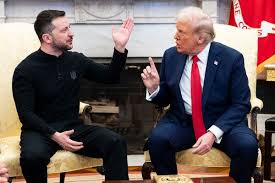
The Zelensky-Trump meeting at the White House was meant to reaffirm US support for Ukraine. Instead, it highlighted the widening rift between Kyiv and Washington. Trump, long critical of NATO and sceptical of Ukraine’s strategic value to the US, dismissed Ukraine’s NATO aspirations, blaming the war itself on the alliance’s eastward expansion.

Trump’s approach was transactional — he sought a $500 billion rare earth minerals deal with Ukraine in exchange for continued military and economic support. Zelensky, in contrast, aimed for firm security guarantees, viewing them as essential to Ukraine’s survival. When neither side budged, the meeting dissolved into acrimony, resulting in the suspension of US military aid and intelligence sharing.

As a Democratic Party leader said, Zelensky “flew to Washington but walked into the Kremlin.” Zelensky refused to apologise. But, days later, he described the meeting as a “regrettable” gathering.

In the aftermath, Zelensky signalled a willingness to negotiate, hinting that Ukraine might revisit the minerals deal in a bid to restore US backing. However, by then, Trump had already initiated direct talks with Russia, bypassing Ukraine entirely. Indeed, the question the episode seemed to raise was whether Zelensky’s virtual turnaround was really an effort to woo the Americans – particularly after the action of thanking each European Leader individually, and, publically.

A crumbling western alliance

The fallout from the Washington meeting revealed fractures within the Western alliance. Europe, while publicly maintaining solidarity with Ukraine, has struggled to provide the military and economic backing needed to sustain the war effort. The EU’s counteroffer to Ukraine – promising a “mutually beneficial” minerals deal – underscored its desire to assert influence, but it lacked the security assurances Kyiv so desperately needs.

At the United Nations, the US demonstrated a significant shift in its stance. It first voted against a Ukrainian resolution condemning Russia’s 2022 invasion. Then, Washington abstained from a resolution it had originally sponsored, following European amendments led by France and UK. The weak 93-vote passage of this resolution revealed a declining international consensus on Ukraine. A subsequent US-led resolution at the Security Council was passed unanimously, with France and the UK quietly falling in line with Washington’s changing position.

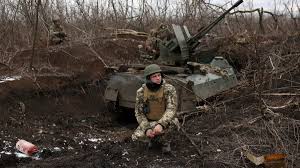
While Ukraine struggles with declining Western support, Russia remains firmly entrenched. Moscow controls about a fifth of Ukrainian territory and, despite recent Ukrainian gains in Kursk, has shown no sign of retreat. The Kremlin is playing a long-term game, capitalising on Western divisions and strategic missteps. In an audacious attempt to keep escalations going, Russian soldiers used a gas pipeline to emerge on former Russian land to recover it from Ukrainian forces.

Trump’s diplomatic gamble – his attempt to peel Russia away from China and Iran – has been met with scepticism. Russian Foreign Minister Sergei Lavrov, a seasoned diplomat, understands Moscow’s leverage. Unlike Trump, who is eager to showcase his deal-making prowess, Russia is in no hurry to reach an agreement.

Chinese President Xi Jinping’s remarks reinforce the challenge Trump faces in reshaping alliances. Xi declared that “China and Russia are good neighbours that cannot be moved away, and true friends who share weal and woe.” This, despite US efforts to drive a wedge between them.

As the third anniversary of the war passed, the absence of US representatives at a solidarity event attended by 40 world leaders was a telling sign of Ukraine’s growing isolation. Zelensky is now caught in a geopolitical tug-of-war between the US, Russia, and Europe – none of whom seem truly committed to his nation’s long-term stability.

There is a growing sentiment among US policymakers that corruption within Ukraine’s elite is a major factor prolonging the war and Trump’s demand for rare earth mineral concessions in exchange for aid puts Ukraine in an unenviable position. It also shows how America is engaging its strengths for transacting business.

Even Elon Musk weighed in, tweeting, “Place sanctions on the top 10 Ukrainian oligarchs, especially the ones with mansions in Monaco, and this will stop immediately. That is the key to the puzzle.”

Meanwhile, US intelligence-sharing with Ukraine has been suspended, a move described by US Special Envoy Keith Kellogg as akin to “hitting a mule with a 2×4 across the nose” to force compliance. This loss of intelligence support severely hampers Ukraine’s ability to conduct military operations effectively.

Europe’s response to the conflict has been largely rhetorical. As US Defence Secretary Pete Hegseth and Vice President JD Vance pointed out, European nations remain militarily weak and unable to significantly contribute to Ukraine’s defence. Despite promising aid, European countries have struggled to meet their own defence commitments, let alone provide meaningful support to Kyiv.

French President Emmanuel Macron has proposed deploying European peacekeeping troops in Ukraine, with Spain agreeing to participate in such a hypothetical peacekeeping mission in Ukraine – a plan reportedly accepted by Putin. However, without American backing, such an initiative is unlikely to alter the course of the war.

The conflict could have ended much earlier. Lavrov recently revealed that in April 2022, Ukraine was close to signing a peace deal in Istanbul that proposed that Ukraine would end its plans to eventually join NATO and have limits placed on its military. But the negotiations were scuttled by then British Prime Minister Boris Johnson’s intervention. Johnson, acting on behalf of NATO interests, feared that a peace deal would be perceived as a victory for Russia, thereby reinforcing Putin’s position.

Instead of ending in 2022, the war continued, escalating into a prolonged conflict fuelled by western arms and Ukrainian resistance. The decision to prolong the war has come at a devastating cost: hundreds of thousands of lives lost, entire cities reduced to rubble, and millions displaced.

Will Zelensky acquiesce to Trump plan?

Zelensky’s refusal to accept a peace deal under Putin’s terms keeps the war going. But his options are narrowing with US support dwindling and insufficient European aid.

Trump has made it clear that he intends to end the war on his terms. His direct negotiations with Russia suggest that Ukraine will not be at the centre of the final settlement. While Zelensky continues to push for the return of all occupied territory and war reparations, Russia’s demands remain firm: Ukraine must remain neutral, demilitarised, and recognise Russia’s annexation of Crimea and other occupied territories.

The US is now weighing how much it can pressure Russia without pushing Moscow further into Beijing’s orbit. For Washington, a deal that neutralises Ukraine while keeping Russia diplomatically flexible would be ideal. For Kyiv, such an agreement would be a bitter pill to swallow.

In this complex web of interests, one thing is clear: none of the major actors – Russia, Ukraine, the US, or Europe – are genuinely interested in peace. Each is playing a longer game, seeking strategic advantages while the war grinds on.

For Zelensky, the inevitability of bending to Trump’s demands is becoming clearer. It may not happen immediately, but the pressure is mounting. Ukraine, caught in the crossfire of global power struggles, is running out of options.

At the time of writing this report on Monday, Zelenskyy headed to Riyadh to meet with Saudi Crown Prince Muhammad bin Salman. The trip comes a day before crunch talks between Ukrainian and US delegations in the Saudi city of Jeddah.

But the question of whether all the parties are invested in peace remains open.

Takht Jathedars’ removal sparks turmoil in embattled Akali Dal

With several senior Akali leaders opposing the `unceremonious’ removal of Jathedars of Akal Takht and Takht Sri Kesgarh Sahib by SGPC, the crisis in SAD is set to deepen further. The SGPC move follows the clergy’s indictment of Sukhbir Badal for religious misconduct, writes Rajesh Moudgil

With several senior Akali leaders including Birkram Majithia opposing the `unceremonious’ removal of heads priests of Akal Takht and Takht Sri Kesgarh Sahib by SGPC, and the party warning against `indiscipline’, the crisis in SAD is set to deepen further, writes Rajesh Moudgil

The removal of Akal Takht Jathedar, Giani Raghbir Singh and Takht Sri Kesgarh Sahib Jathedar, Giani Sultan Singh from their respective posts, by Shiromani Gurdwara Parbandhak Committee’s (SGPC’s) on March 7, last, has sparked sharp divisions within the Shiromani Akali Dal (SAD). Founded in 1920, SAD is the second oldest party (after Congress) in the country.

Pertinently, since the SAD-controlled SGPC had removed Jathedar of Takht Sri Damdama Sahib, Giani Harpreet Singh, about a month ago and hence, now all the three Jathedars, who had sentenced former SAD president Sukhbir Badal for religious misconduct on December 2, last year, have been removed.

While the SGPC is a religious body responsible for managing gurdwaras in Punjab, Chandigarh and Himachal Pradesh, Sri Akal Takht Sahib in Amritsar and the Takht Kesgarh Sahib in Anandpur Sahib (district Rupnagar) and Takht Damdama Sahib (Talwandi Sabo, Bathinda), are three of the five seats of temporal authority in Sikhism. The remaining two are Takht Sri Patna Sahib (Patna, Bihar) and Takht Hazur Sahib (Nanded, Maharashtra).

With senior Akali leader Birkram Majithia and several other party leaders opposing the “unceremonious’’ removal of the three Jathedars, the differences between former SAD chief Sukhbir Badal and Majithia have come out in the open.

It is the first time that Majithia, who is also brother-in-law of Sukhbir, and other leaders have aired their views after the Akal Takht sacked the party leadership (including Sukhbir Badal) for committing mistakes since 2007 that, it had held, had harmed the Sikh panth.

However, reacting to Majithia and other leaders’ statements, the SAD acting president Balwinder Singh Bhundar, said that the removal of Jathedars is a decision of SGPC and that the SAD is also committed to every directive issued by Akal Takht. Bhundar said that Bikram had wrongly questioned the decision of SGPC – of which his great-grandfather, Sundar Singh Majithia was the first president. The SGPC decision regarding the Jathedars was made after long deliberations, he added and advised him and other leaders to stop becoming part of the “opposition’s conspiracy’’. He has also warned the leaders opposing the said removals, stating that the “indiscipline will not be tolerated at any cost’’.

Meanwhile, reacting over the developments, Punjab chief minister Bhagwant Mann slammed the Akali leadership for, what he held, taking revenge from the Jathedars by unceremoniously removing them. He alleged that the Akalis had indulged in theatrics by apologising for the sins committed by them in full public glare at Sri Akal Takht Sahib. However, after the Jathedars declared the Akali leadership guilty of “unpardonable sins,” they have since been targeted, he added.

The chief minister further alleged in a statement that out of vengeance, the Akali leadership is removing the Jathedars which is unwarranted and undesirable. He said that this has bruised the psyche of the entire Sikh community and they will never forgive them. Mann held that this trend of picking and removing the Jathedar Sahib from the pocket of these ‘rejected leaders’ reflects the sorry state of affairs. The chief minister further said that Jathedars are highly revered by the entire Sikh community and this type of behaviour with them is unwarranted and undesirable.

It may be recalled that in August 2024, a group of senior Akali leaders had revolted, formed an “Akali Dal reform movement’’ and approached the then Jathedar of the Akal Takht – the highest Sikh temporal seat – Raghbir Singh to dissolve the party leadership and roll out the process for setting up a new leadership.

The Akal Takht had on December 2, 2024, declared the then SAD president Sukhbir Badal and some other Akali leaders “tankhaiya’’ (guilty of religious misconduct) for mistakes committed by the SAD and its government from 2007-2017 when he was also Punjab’s deputy chief minister, and formed a panel to carry out a membership drive of the party and elect new leaders. It held that being the deputy chief minister of Punjab and president of the SAD, Sukhbir Badal took such decisions that deeply harmed the image of the Panth and greatly weakened the SAD. This damaged Sikh interests, too, it added.

Among other “mistakes’’, the SAD was also accused of violating the Akal Takht Sahib edict issued against Sirsa-based Dera Sacha Sauda in 2007; while no Sikh is supposed to have any relationship with this Dera, under Sukhbir’s presidency, the SAD had got political support from the Dera.

Rekha Gupta discusses ‘Viksit Delhi’ budget with MPs and other stakeholders

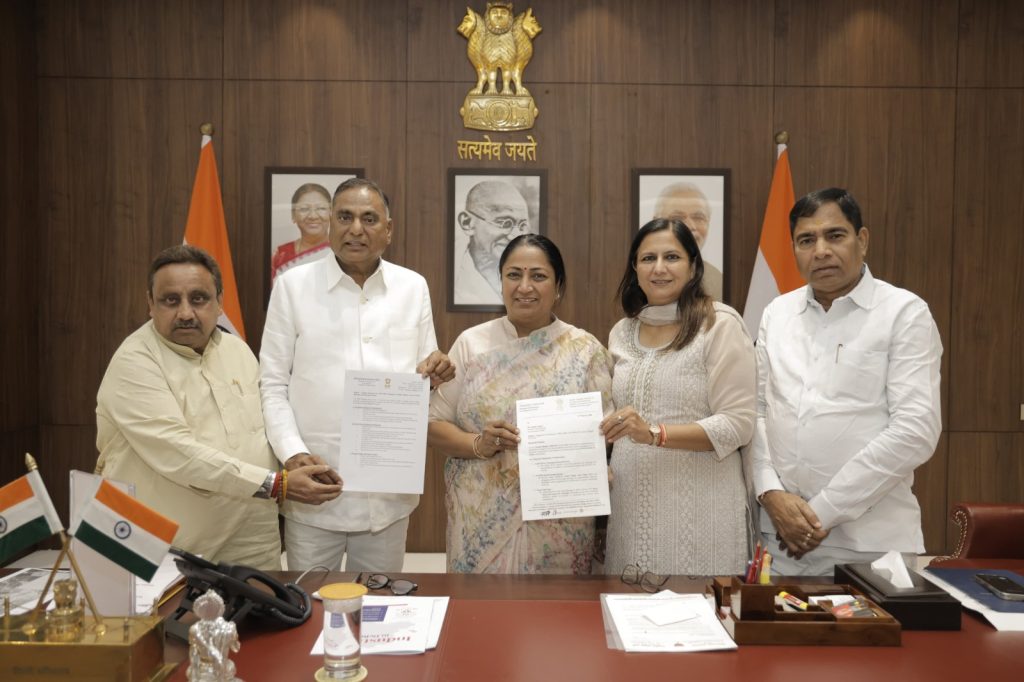
Delhi chief minister Rekha Gupta met BJP MPs to discuss various aspects of upcoming ‘Viksit Delhi’ budget 2025-26 and said that it will be a roadmap for the bright future of residents of the city.

In the meeting held at Delhi Secretariat, BJP MPs Ramvir Singh Bidhuri, Kamaljeet Sherawat and Praveen Khandelwal gave their suggestions to her on the proposals of the upcoming budget.

Gupta who also holds the Finance portfolio will present the new BJP government’s first budget in Delhi Assembly on March 25.

After the meeting, Gupta said “The Viksit Delhi Budget 2025 will not just be a document of numbers, but a roadmap for a bright future for every citizen of Delhi.”

In order to gather feedback from various sections of the society over the budget, the CM has been holding meetings with different stakeholders.

She also met a delegation of teachers and discussed strengthening education and infrastructure in the budget.

“Our aim is that students get better resources, modern facilities and quality education. We are working to make Delhi a centre of excellence for education,” she said.

The chief minister also met digital creators and held a meeting with chartered accountants to discuss their role in developing the national capital.

She said that their contribution in awareness, positivity and youth empowerment is important. “I invited them to actively participate in the development of Delhi. Their suggestions and expertise will help in preparing a balanced, transparent and progressive budget, which will benefit every citizen. Our goal is to ensure a strong economy, inclusive growth and more opportunities.”

The BJP government’s objective is to present a budget that brings major benefits to the people of Delhi and enhances their prosperity and well-being, she added.

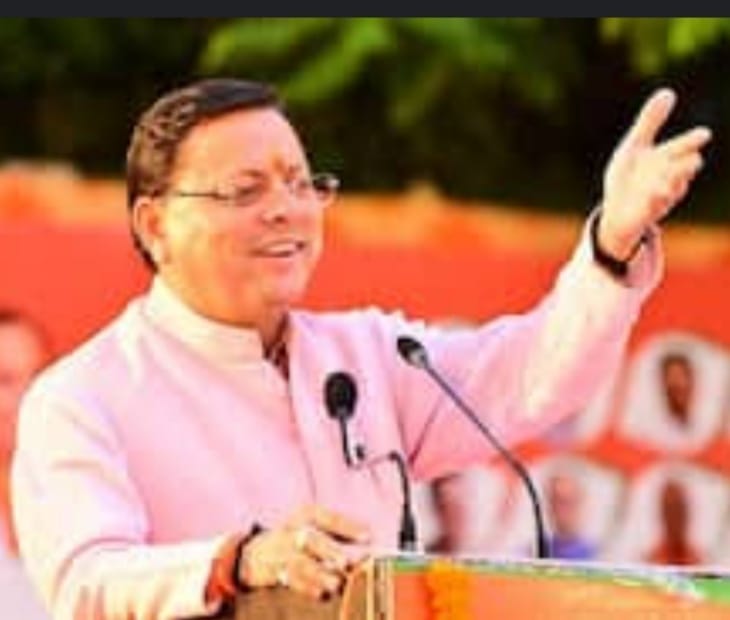
Is BJP planning Uttarakhand leadership revamp?

Photo: Naveen Bansal

The Bharatiya Janata Party (BJP) is seemingly planning to make widespread revamp in its Uttarakhand government and organizational unit. 

Sources stated that the revamp in the BJP will be done keeping in mind the next Assembly polls in the state, which are still about two years away. 

The strategic overhaul will be aimed at consolidating its dominance in the state and also to remove the anti-incumbency against the present Chief Minister Pushkar Singh Dhami. 

It is understood that a cabinet reshuffle in the state government is expected soon, along with major changes in organizational unit.

The revamp in Uttrakhand has been a regular feature for the saffron party, with its last government also seeing such changes at the helm, sources pointed out. 

This ambitious restructuring is expected to gain momentum after the appointment of the new BJP national president. 

The BJP’s preparations for the Uttarakhand elections come with a clear focus on refreshing its leadership lineup. The current Chief Ministerhas been steering the state since the party’s last victory. 

Speculation is rife that a BJP leader from the Centre could play a pivotal role in this transition by taking on a leadership position in Uttarakhand. 

Uttarakhand holds a unique place in the BJP’s electoral calculus. Despite its modest size, with 70 assembly seats, the state’s cultural and strategic significance—home to revered pilgrimage sites and bordering sensitive regions—makes it a high-stakes battleground. The BJP has governed Uttarakhand since 2017, but it faces mounting pressure from the opposition, particularly the Congress, which is eager to exploit any signs of incumbency fatigue.

With issues like unemployment, infrastructure deficits, and environmental concerns dominating public discourse, the BJP appears to be banking on a leadership overhaul to project a renewed focus on governance. By acting decisively now, the party aims to strengthen its organizational machinery and address voter grievances well before the election cycle heats up.

Srinagar man arrested for posting extremist content on social media

The Counter Intelligence Kashmir (CIK) has arrested a Srinagar resident for allegedly posting extremist content on social media, officials said on Tuesday.

In a statement, a CIK spokesperson said the individual was operating a radical Facebook handle, ‘Shaddy Kashmir Dryfruits’, which was being used to spread extremist propaganda with the intent of disturbing peace.

“Upon receiving input about the online activity, a swift investigation was launched, social media handle was resolved leading to the identification of the suspect as Showkat Ahmad Dar, son of Ghulam Ahmad Dar, a resident of Doodh Mohalla, Shalimar, Srinagar,” the statement read.

According to the CIK, Dar was actively engaged in sharing content that glorified terrorism and its commanders while inciting anti-national sentiments among youth. Security forces faced challenges in tracking him due to his frequent movement, but a coordinated operation led to his arrest along with his electronic devices.

A preliminary inspection of his digital records revealed access to the radical Facebook account, as well as incriminating material, including a video of slain terrorist commander Zakir Musa and other extremist propaganda.

The CIK further stated that Dar had a history of radical activities. “He was previously arrested in 2019 by Harwan Police Station of Srinagar for involvement in stone-pelting incidents. Additionally, in 2022, he was detained by Cyber Police Station Srinagar for engaging in the online dissemination of radical content,” the statement added.

The agency also highlighted ongoing efforts by intelligence units and social media companies to monitor and curb radical propaganda in Jammu and Kashmir. “On the request of intelligence agencies in Jammu and Kashmir, all the social media service providers have established special units to monitor the radical propaganda especially in J&K. The moment any such radical activity is witnessed by their monitoring unit, it is reported to the security agencies immediately,” the spokesperson said.

These coordinated efforts, according to the CIK, have helped bust several radical modules and identify potential threats in the region.

Battling to rescue the Great Indian bustard from the brink

From setting aside designated grasslands to conservation breeding facility, the government and Bishnoi community, known for its dedication to flora and fauna, besides other concerned individuals are toiling to save the species now confined only to Jaisalmer,  writes Deepanwita Gita Niyogi

Photo: Pankaj Bishnoi

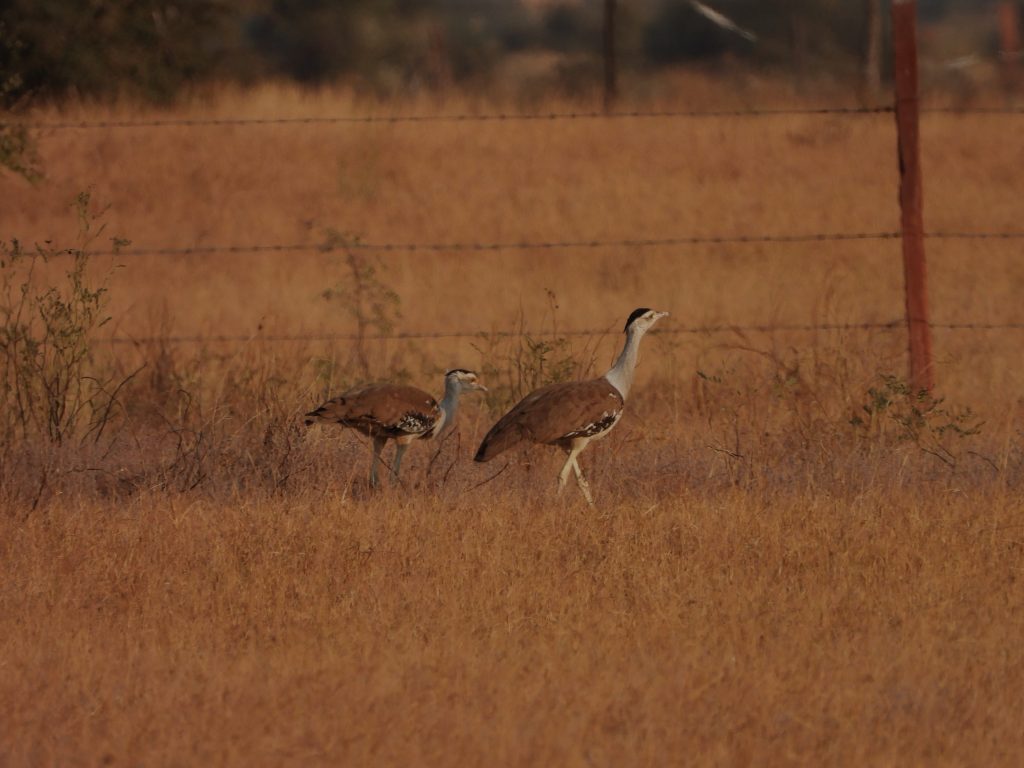
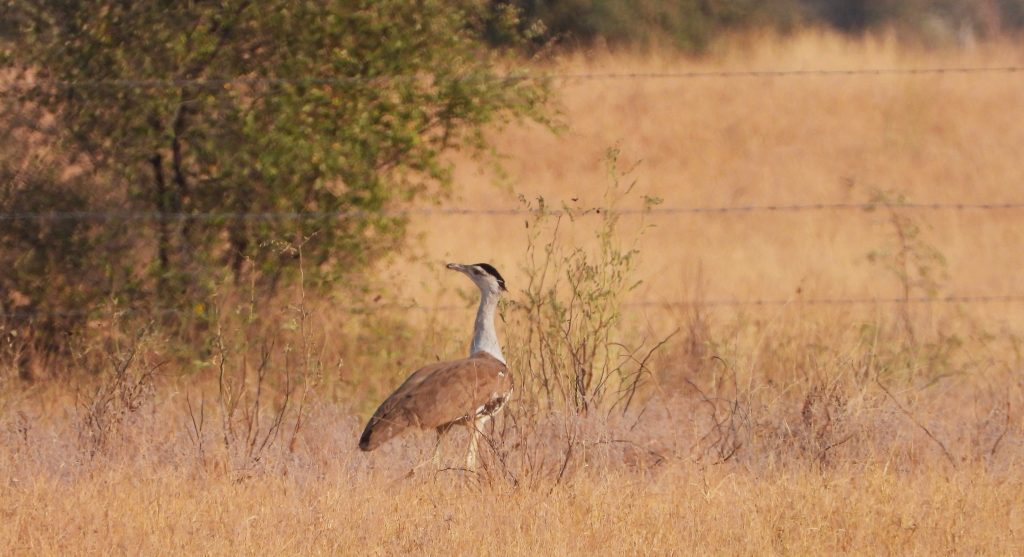
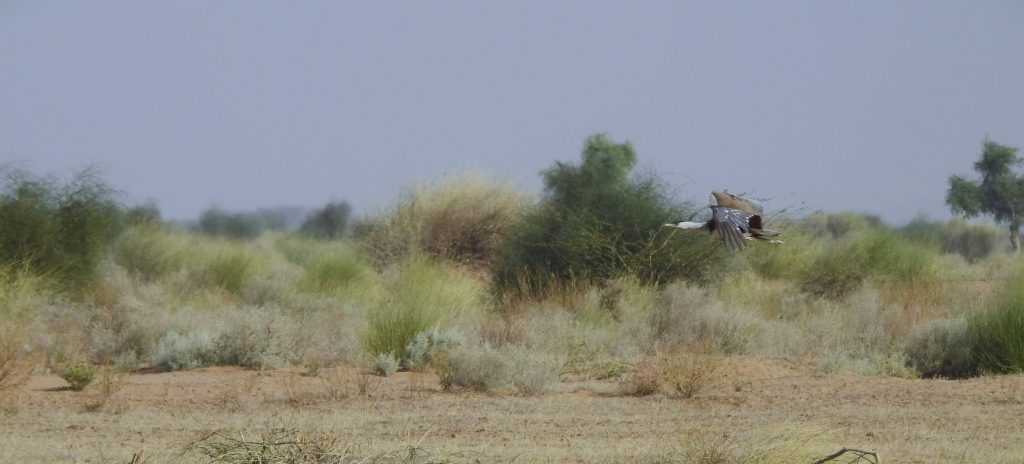
Once found in states like Uttar Pradesh, Odisha and Haryana, the Great Indian bustard is now limited only to Rajasthan. Currently, there are two sets of population found in Jaisalmer district of the state. One is in the Desert National Park, which is a protected area. The other one is found in Pokhran, where India conducted a series of nuclear tests in May 1998.

“Though Pokhran is an Indian army base, the Great Indian bustard also uses the area as its habitat. They breed here and come out in the winter season,” said Sujit Shivaji Narwade, the deputy director of the Bombay Natural History Society (BNHS). According to Narwade, who is based in Rajasthan, the society has set aside a grassland for the protection of the Great Indian bustard, which is a critically endangered species.

Photo: Sujit Shivaji Narwade

Land use changes due to agricultural activities and a focus on renewable energy like solar have impacted the habitat of the species. Over a phone conversation, Narwade said that the local Bishnoi community, who resides in and around Pokhran, supported the society’s conservation efforts.

“The community liked the idea that the BNHS wanted to conserve the bird and protect its habitat in Jaisalmer. So, many of them showed willingness to work with the society. In this regard, around 35 hectares of land was set aside for the bird’s protection and fenced,” Narwade added.

Photo: Neelkanth Bora

As almost all the areas inhabited by the Great Indian bustard are overgrazed, this particular patch owned by the Bishnois at Khetolai is now under protection. After two years, BNHS will allow some amount of grazing to control the extent of overgrown grasses. It is a small, but a major habitat for the species.

Over the years, the population of the Great Indian bustard declined due to several reasons. The birds collide with power lines as a result of poor frontal vision and meet with death. There are ground disturbances, such as the presence of human beings and dogs. These are direct threats as the birds lay eggs on the ground which make them vulnerable. The Great Indian bustard also reproduces slowly.

Conservation on a local level by setting aside lands in some designated places in Jaisalmer is vital for conservation. To ensure a natural habitat for the birds, BNHS has not grown any kind of grass on its own. The idea is to study how regeneration will take place here. The birds need vegetation which is conducive to them. The species prefers grasslands which are considered wastelands in India.

Protection in place

Efforts are on to conserve the Great Indian bustard at the government level too. Jaisalmer Deputy Conservator of Forest (wildlife) Ashish Vyas spoke about the conservation breeding project.  “As the bird’s population declined, it became a critically endangered species. Conservation breeding works as an insurance policy that if anything goes wrong in the wild, the programme will help sustain the population of the Great Indian bustard.”

According to Vyas, there are at present 45 chicks at the two conservation breeding centres, one at Sam in Jaisalmer and the other one is in Ramdeora. A survey conducted in 2017-18 by the Wildlife Institute of India and the forest department of Rajasthan found there were about 128 birds in the wild.

Individual efforts

Apart from conservation efforts, a few committed individuals are also trying to protect the Great Indian bustard. One is Oishimaya Sen Nag, who is covering a story for BNHS as a science communicator. This is a great way to spread awareness about the species.

“The Pokhran Field Firing Range is an important habitat area for the bird. But the areas nearby it are unprotected. The entire region is a mosaic of villages, croplands and grasslands. This gives rise to disturbances. But the Bishnoi community is ever ready for conservation,” said Sen Nag, who is a conservation storyteller.

In the 16h century, Guru Jambheshwar taught the Bishnois 29 principles, and of them, six are related to environmental conservation. Radheshyam Pemani Bishnoi attended a conference organised in Madhya Pradesh’s Bhopal in January. Belonging to the Bishnoi community, he is a resident of Dholia village in Jaisalmer.

“I was interested in the conservation of the species. In 2014, I attended a seminar in Jodhpur. I was trained there on how to carry out wildlife rescue operations. After that, I took my task seriously and carried out anti-poaching awareness, patrols and rescues,” Bishnoi said. According to him, high-tension power lines pose a threat to the Great Indian bustard. On his part, Bishnoi documents all kinds of threats faced by the species.

On an individual level, Sumit Dookia runs a conservation project in Jaisalmer. Dookia explained that there is a greater focus on community initiatives outside protected areas where people are engaged in pastoral and farm activities.

 “Through the Ecology, Rural Development & Sustainability (ERDS) Foundation, registered in 2019, local residents are urged to protect the bird which showed signs of decline from the 1980s and 90s. Through the help of the Great Indian bustard, mitras like Pemani, who record sightings, information is used to find out how the species is faring outside the protected area,” Dookia said.

MOST POPULAR

HOT NEWS