Saturday, December 27, 2025

Haryana begins course correction as Beti Bachao gains start slipping

Once a flagship social mission, Beti Bachao, Beti Padhao, launched by PM Modi about a decade ago with much fanfare from Panipat, is now floundering in Haryana. As the sex ratio at birth starts to slide again, the state seems to have finally woken up to the grim scenario, writes Pawan Kumar Bansal
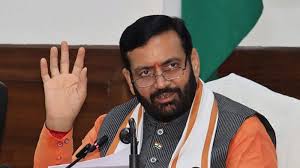
 “Beti Bachao,Beti Padhao” programme, launched by PM Narender Modi about a decade ago with much fanfare from Panipat in Haryana, is losing steam. The program which was at one time a priority programme of the Haryana government is no longer so.

The Program has lost its ownership and the government, although evincing its concern, has lost its interest in the programme. Sex ratio at birth, which was at its peak at 923 against 1,000 about five years ago, has slumped to 910 now. Although the government has taken some action to check sex detection tests, it seems that the issue is not on the priority list of political bosses.

The State of Haryana which was notorious for honour killings and female foeticide had established a benchmark by making appreciable improvement its sex ratio at birth from 871 ( 871 girls per 1000 boys) in 2014 to 923 in 2019 after Beti Bachao, Beti Padhao campaign was launched by the Prime Minister. “Save the Girl Child” campaign was undertaken by the state as a challenge and was looked after personally by the then Chief Minister Manohar Lal Khattar, who had designated Dr Rakesh Gupta, additional PS to the CM, to take it forward.
Monthly review meetings with Deputy Commissioners, quarterly divisional meetings at Division level to review the progress of campaign and coordination with adjoining state administration helped the CM office to get the state out of the red in a short span.
Efforts of the state bore fruit and the state crossed SRB 900 in 2016. The state was appreciated throughout the country as well as globally.
As a part of planned strategy, District PNDT teams conducted more than 1000 decoy operations using pregnant women as decoy to unearth an unholy nexus of sex detection and illegal abortion leading to female foeticide. Ultrasound machines of such unscrupulous elements were sealed, seized, FIRs lodged and wrongdoers were put behind jail. It was indeed a “War against female foeticide” situation in the state.
Sex Ratio at Birth continued around 920 till the year 2023 (SRB 916) however after 2023, it started down trending and is presently pegged at 909 till March 2025. Due to multiple reasons, the program lacked the muscle to reach 950, which was the target and perfect figure from a public health point of view. 

Worried over the declining sex ratio, the government finally seems to have found some verve, as it is reportedly launching fresh initiatives to stem the slide. The Hisar nodal officer for PNDT (Pre-Natal Diagnostic Techniques) has been suspended, and officers in some of the poorly performing districts have been replaced.
Some of the doctors incharge, paramedics of those health institutions with skewed sex ratio are being proceeded against. Sex ratios of various health institutions are regularly being monitored by DHS (NHM) designated for this program. Strict directions for the sale, use and supply of MTP kits in the state have been issued. Sudhir Rajpal, additional chief secretary, Health, is reviewing the progress of the programme on a weekly basis with health, WCD and other concerned officers. Besides, senior medical officers have been asked to explain the reasons for low sex-ratio at birth documented  in their centres. The State drug controller has been asked to ensure that MTP kits are only sold to registered MTP centres.

Besides, pregnant women with one or more female children are being counselled against female foeticide. It is believed that crackdown happened as PM Narender Modi is personally monitoring the success of the program. It is believed that half-hearted official measures can only be effective if backed by strong political will. Meanwhile, Union Minister, Manohar Lal who as CM, had ensured the programme’s successful implementation, is also in touch with CM Naib Saini over the issue.
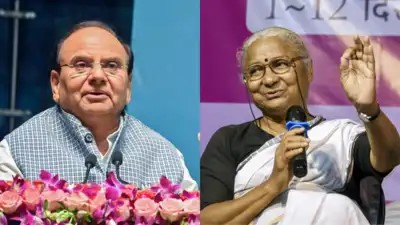
Delhi Court Orders Medha Patkar’s Release after Arrest in L-G Defamation Case

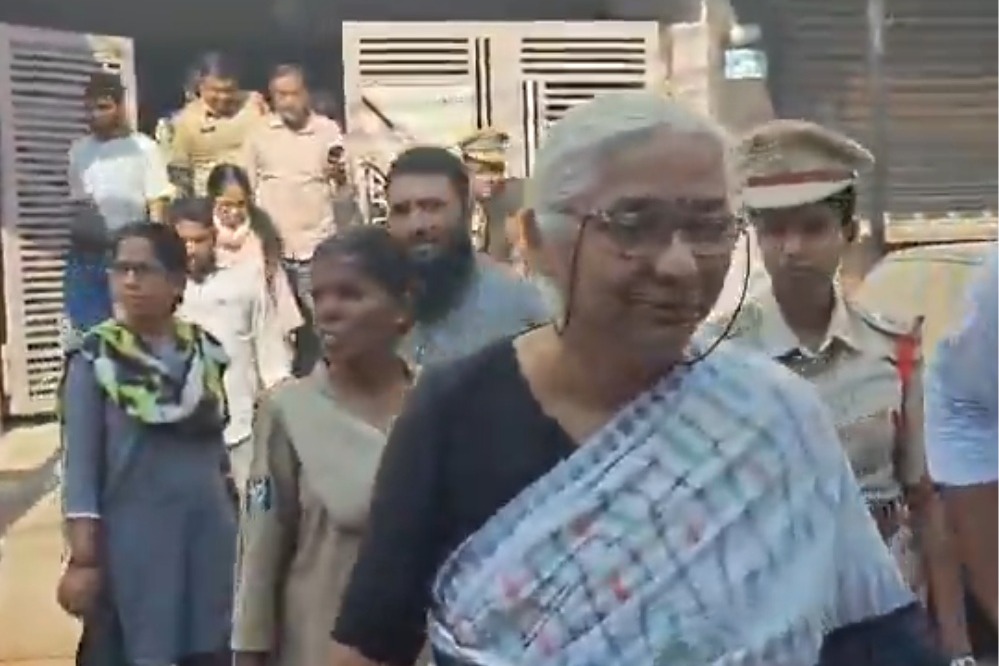
New Delhi: Offering relief to activist Medha Patkar, a Delhi court on Friday ordered her release on furnishing a Probation Bond and payment of Rs one lakh compensation in a defamation case filed in 2001 by Delhi Lt Governor V.K. Saxena. The order came within hours of her arrest at a city railway station.

In a related development, Patkar withdrew her plea from the Delhi High Court against the orders of lower courts.

A subordinate court ordered her release within hours of being arrested on her arrival at a Delhi railway station at 6 a.m. for being presented before a judge in the Saket district court complex.

She was arrested to execute a non-bailable warrant (NDW) issued against her in the defamation case. The court had observed that she was deliberately flouting its sentencing order to submit probation bonds and Rs one lakh as fine in the defamation case.

The Delhi court had on Wednesday issued an NBW against Patkar over her non-appearance and non-compliance with the sentence order in connection with the 2001 defamation case linked to developments in Ahmedabad, where Saxena headed an organisation called National Council of Civil Liberties.

In 2001, Saxena filed two defamation suits against Narmada Bachao Andolan (NBA) leader Patkar. One pertained to allegedly derogatory remarks she made during a television interview, while the other involved a press statement.

The legal tussle arose from an earlier suit filed by Patkar in 2000, accusing Saxena of publishing defamatory advertisements targeting her and the NBA.

In the High Court on Friday, Patkar’s counsel sought permission to withdraw her plea against the orders of the sessions court and the trial court, with the liberty to file a fresh petition, which was allowed by Justice Shalinder Kaur.

“Counsel for the petitioner seeks to withdraw with liberty to file afresh. The petition is dismissed as withdrawn with liberty as prayed,” Justice Kaur said.

Earlier, Additional Sessions Judge Vishal Singh of Saket court had observed that instead of appearing before the court to comply with the sentencing of April 8, the 70-year-old social activist had remained absent.

On April 8, Patkar was ordered to be released on probation of good conduct for a period of one year, subject to prior deposit of a compensation amount of Rs one lakh, to be released in favour of the complainant (Saxena).

The appellate court had modified the order of the trial court, which sentenced Patkar to five months of simple imprisonment, apart from ordering her to pay Rs 10 lakh as compensation to Saxena for the harm caused to his reputation.

Advocates Gajinder Kumar, Kiran Jai, Chandra Shekhar, Drishti and Somya Arya, represented Saxena, before the court.

Five Dead in Tragic Fire at Rice Mill in UP, 3 in Critical Condition

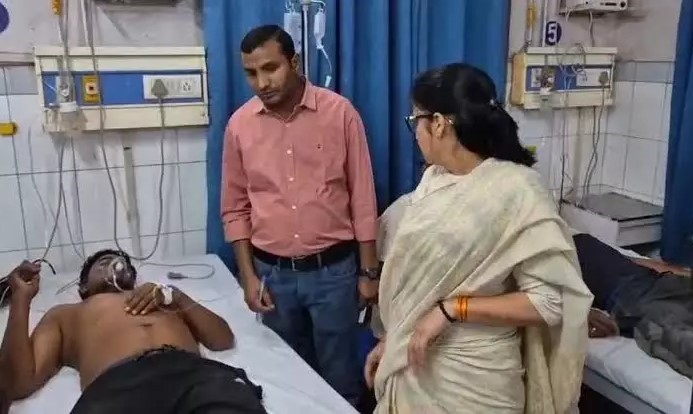
At least five people died in a major industrial fire at the Rajgarhia Rice Mill located in the Dargah area of Bahraich district, Uttar Pradesh on Friday, officials said. Three others are injured and undergoing treatment at a nearby hospital. Their condition is critical.

According to reports, the fire started in the upper section of the rice mill around dawn, triggering chaos among the workers present.

In an attempt to control the blaze, eight workers rushed to extinguish the fire but were quickly surrounded by the dense, toxic smoke filling the facility. Tragically, five of them lost their lives after suffocating inside the mill.

Bahraich District Magistrate Monika Rani confirmed the incident and explained the circumstances leading to the mishap. “The workers were engaged in operations related to drying paddy. A machine was being used to remove moisture from the grains, and the smoke that emanated during this process proved fatal. Unfortunately, five workers died due to smoke inhalation,” she stated.

Meanwhile, Chief Medical Superintendent (CMS) Dr M.M. Tripathi of the local hospital shared further details about the victims. “We received eight people. Sadly, five were already deceased upon arrival. The remaining three are undergoing treatment. The incident occurred in a mill located in the Dargah area,” he said.

Local administrative authorities have launched an investigation into the incident to determine the exact cause of the fire and whether any safety protocols were violated. Fire safety and labour rights activists have also raised concerns over the working conditions in such mills, particularly during high-risk operations.

Officials have assured that strict action will be taken if any lapses in safety or negligence are found.

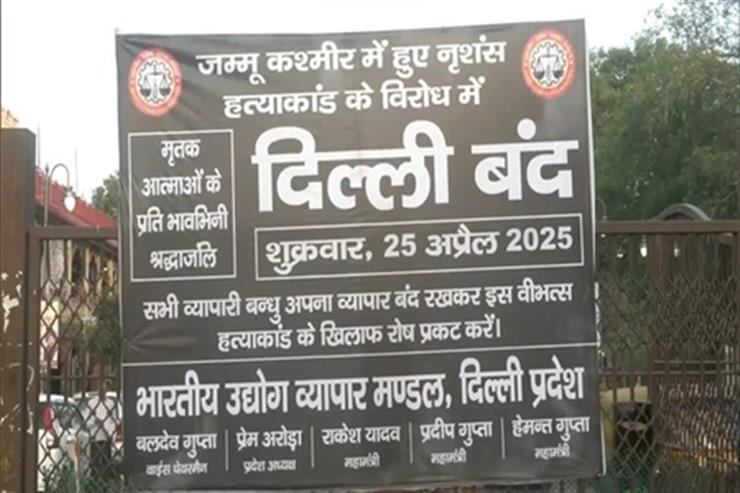
Delhi traders observe bandh in tribute to Pahalgam terror attack victims

New Delhi: In a strong display of solidarity and national mourning, trade unions and market associations across Delhi have called for a one-day bandh on Friday, to honour the victims killed in the April 22 terror attack in Jammu and Kashmir’s Pahalgam.

The Confederation of All India Traders (CAIT), which is spearheading the initiative, announced that over 900 markets in the national capital will remain closed.

According to reports, the shutdown is being voluntarily observed by the trading community and is not intended as a protest but rather as a symbolic tribute.

CAIT Secretary General and BJP member of Parliament Praveen Khandelwal stated, “This bandh is not a form of protest but a national tribute. We stand with the families of the victims and the government in this moment of grief. All traders are urged to participate voluntarily and ensure the bandh is observed peacefully.”

The organisation has also appealed to Delhi Police and administrative authorities to maintain law and order throughout the day and assist in ensuring a calm and respectful environment during the market closures.

Many leading trade associations are backing the shutdown and have expressed their grief over the attack, calling for unity and resolve in the face of terrorism. The bandh is being seen as a collective expression of national sentiment and a message against such brutal acts of violence.

While most commercial markets are expected to remain shut, essential services, banks, government offices, and public transport, including the Delhi Metro, are operating as usual.

There has been no official directive from the Delhi government or police regarding the enforcement of the bandh, and participation remains voluntary.

Notably, establishments that choose to remain open will not be compelled to shut, as organisers have emphasised peaceful observance over forced participation.

On Thursday, the Chamber of Trade and Industry (CTI) protested by tying black bands in Connaught Place and took out a candle March.

Twenty-six tourists, including a Nepali national, were brutally killed by terrorists in the Baisaran region near Pahalgam on April 22. Following the attack, India has taken strong measures against Pakistan, including the suspension of the six-decade-old Indus Water Treaty.

Medha Patkar arrested in Delhi L-G Defamation Case

New Delhi: Activist Medha Patkar was arrested here on Friday after the court issued a non-bailable warrant against her in a defamation case filed by Delhi Lt Governor V.K. Saxena.

She was arrested by the Delhi Police in the morning and will be produced in the court later in the day.

A court here on Wednesday issued a non-bailable warrant (NBW) against Patkar over her non-appearance and non-compliance with the sentence order in connection with a decades-old defamation case filed by Delhi L-G Saxena. The court had observed that she was deliberately flouting its sentencing order to submit probation bonds and Rs one lakh as fine in the defamation case filed in 2001.

Additional sessions judge Vishal Singh had observed that instead of appearing before the court to comply with the sentencing of April 8, the 70-year-old social activist had remained absent and deliberately failed to comply with the order to avail of the benefit of probation subject to furnishing the compensation amount.

“The intention of convict Medha Patkar is apparent that she is deliberately violating the Court order; she is avoiding to appear before the Court and also avoiding to accept the terms of the sentence passed against her,” said an order passed by Additional Sessions Judge (ASJ) Vishal Singh of the Saket Court.

The court said that Patkar, instead of appearing before it and complying with the sentence order, remained absent and deliberately failed to comply with the order on sentence. “The Court is left with no option but to enforce the production of convict Medha Patkar through a coercive order. Issue NBW (non-bailable warrant) against convict Medha Patkar, through the office of the Commissioner of Police, Delhi Police, for the next date,” the judge said.

Further, ASJ Singh cautioned that if the convict fails to comply with the terms of the order on sentence by the next date, then it will be constrained to reconsider the benevolent sentence and will have to alter the order on sentence. The court said that Patkar’s plea for adjournment of the proceedings was frivolous and mischievous and was only calculated to hoodwink it.

On April 8, Patkar, a leader of the Narmada Bachao Andolan (NBA), was ordered to be released on probation of good conduct for a period of one year, subject to prior deposit of a compensation amount of Rs 1 lakh, to be released in favour of the complainant (Saxena). The appellate court had modified the order of the trial court, which had sentenced Patkar to five months of simple imprisonment, apart from ordering her to pay Rs 10 lakh as compensation to Saxena for the harm caused to his reputation.

The defamation case dates back to 2001, when Saxena — then chief of the Ahmedabad-based NGO National Council for Civil Liberties — filed two defamation suits against Meha Patkar. One pertained to allegedly derogatory remarks she made during a television interview, while the other involved a press statement.

The legal tussle arose from an earlier suit filed by Medha Patkar in 2000, accusing Saxena of publishing defamatory advertisements targeting her and the Narmada Bachao Andolan.

Advocates Gajinder Kumar, Kiran Jai, Chandra Shekhar, Drishti and Somya Arya, represented Saxena, before the court.

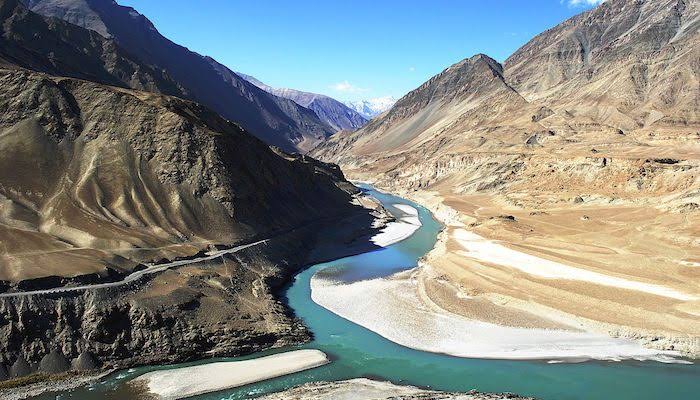
Can India stop water supply to Pakistan?

The historic Indus Water Treaty, signed in September 1960 which governs the use of six rivers shared between India and Pakistan has now been suspended by the central government following the barbaric terror attack on tourists in Kashmir’s Pahalgam.

The move is one of the five strict measures taken against Pakistan which has triggered concern in the country. While this may have significant consequences in the long-term, the immediate effects are expected to be minimal.

Under the agreement, India has exclusive control over the eastern rivers, including Sutlej, Beas, and Ravi while Pakistan relies on the western rivers, Indus, Jhelum, and Chenab. Over 80 per cent of water supply comes from these rivers which turn this water treaty into a lifeline for the agriculturally vital provinces of Punjab and Sindh.

However, the question remains if India can stop water to enter Pakistan and leave it dry? Already grappling with groundwater depletion and a growing dependence on private water tankers in urban areas like Karachi, Pakistan’s water vulnerability is stark. Yet, India’s suspension of the treaty is more symbolic than immediately impactful.

On ground, India at present lacks the storage infrastructure to completely block or divert the flow of water from the Indus system.

India could reduce water flow to the neighbouring country by five to 10 per cent in the near future. The treaty also bars India from constructing storage dams on the western rivers, permitting only “run-of-the-river” hydroelectric projects that do not obstruct water flow.

By suspending the treaty, India effectively removes these self-imposed restrictions. However, any significant move to construct reservoir dams would take years to materialize, involving complex environmental assessments, substantial investment, and extensive planning.

Meanwhile, Pakistan has called the suspension an act of “water warfare” and an illegal move. Vowing to challenge the move legally, Pakistan said India cannot unilaterally exit from a treaty that involves global organisations like the World Bank.

“India’s reckless suspension of the Indus Waters Treaty is an act of water warfare; a cowardly, illegal move. Every drop is ours by right, and we will defend it with full force – legally, politically, and globally,” Pakistan’s energy minister Awais Leghari posted on X.

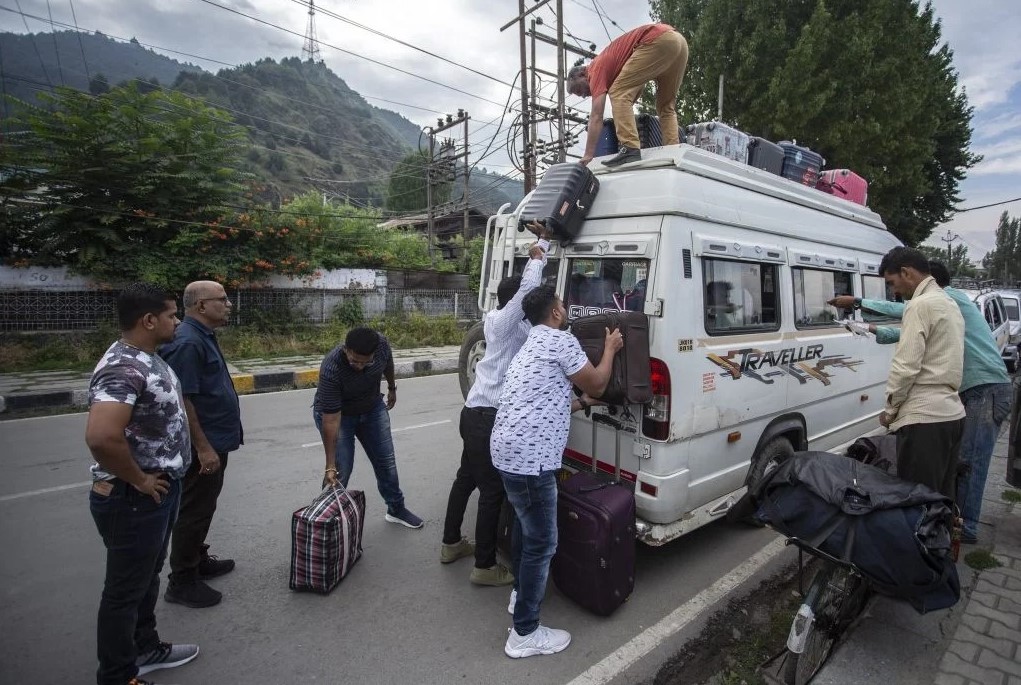
90% Kashmir tour bookings cancelled after Pahalgam attack

Srinagar:  Nearly 90 percent of tourist bookings for Jammu and Kashmir have been cancelled following the terror attack in Pahalgam, according to a Press Trust of India (PTI) report quoting several Delhi-based travel agencies.

The cancellations come in the wake of Tuesday’s attack in Baisaran valley, a popular spot in Pahalgam, where terrorists opened fire on tourists. At least 26 people, including two foreigners and two locals, were killed in what has become the deadliest terror incident in the Valley since the 2019 Pulwama bombing, PTI reported.

Travel agents said popular destinations like Gulmarg, Hajan Valley, and the Tulip Gardens were among the most-affected. 

In Kashmir also, the hoteliers and travel agents are reporting cancellations. Lal Chowk and Boulevard which used to be full of tourists now wears a deserted look. 

“All tourists at our guest house left,” said Mohammad Imran, a staffer at a guest house in Srinagar. “We had bookings for May and June. They too have cancelled.”

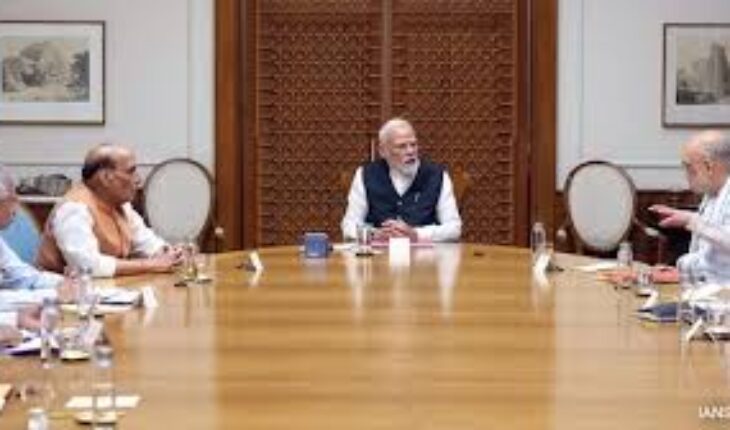
PM Modi leads CCS in Historic Retaliation: India Strikes Back at Pakistan

In a decisive response to the deadly terror attack on April 22 in Pahalgam, Jammu and Kashmir, India has taken a series of robust diplomatic measures to hold Pakistan accountable for its role in cross-border terrorism. The Cabinet Committee on Security (CCS), chaired by Prime Minister Narendra Modi, on Wednesday evening discussed the implications of the attack, which claimed the lives of 25 Indian nationals and one Nepali citizen, with several others sustaining injuries.

The CCS expressed deep condemnation of the attack and offered heartfelt condolences to the families of the victims and wishing for the swift recovery of those injured. The attack, which targeted tourists in a popular destination, was attributed to Pakistan-backed terror groups, sources said.

India has also received strong expressions of support from governments worldwide, condemning the attack and reaffirming their commitment to zero tolerance for terrorism.

The meeting also noted that the attack occurred against the backdrop of successful elections in Jammu and Kashmir and the region’s ongoing progress toward economic development and stability. These achievements, India believes, are viewed as a threat by terrorist factions seeking to destabilise the region.

Recognising the seriousness of this attack and its cross-border linkages, the CCS took the following unprecedented measures:

Indus Waters Treaty suspended – In one of the most significant decisions, India has placed the Indus Waters Treaty of 1960 in abeyance with immediate effect. This historic move effectively halts decades of cooperation on water-sharing between India and Pakistan. The decision will remain in force until Pakistan takes credible and irrevocable steps to abjure its support for cross-border terrorism.

Closure of Attari Integrated Check Post – In a direct response to the terrorist attack, India has announced the immediate closure of the Integrated Check Post (ICP) at Attari, which serves as a key border crossing between the two nations. Indian authorities have granted Pakistani nationals with valid travel endorsements until May 1, 2025, to return to Pakistan through this route. After this deadline, all land travel between India and Pakistan will be completely suspended.

Cancellation of SAARC Visa Exemption Scheme for Pakistani Nationals – In another strong step, India has decided that Pakistani nationals will no longer be allowed to travel to India under the SAARC Visa Exemption Scheme (SVES). Any SVES visas previously issued to Pakistani nationals have been cancelled, and those currently in India under this scheme have been given 48 hours to leave the country.

Persona Non Grata Declaration for Pakistani Diplomats – In a sharp diplomatic move, India has declared Pakistan’s Defence, Military, Naval, and Air Advisors in the Pakistani High Commission in New Delhi as Persona Non Grata. These officials have been given one week to leave India.

India also announced the withdrawal of its own Defence, Navy, and Air Advisors from the Indian High Commission in Islamabad, with all such posts deemed annulled. Moreover, five support staff of these service advisors will also be withdrawn from both High Commissions.

Reduction in Diplomatic Staff – In a further diplomatic escalation, India has decided to reduce the overall strength of the Indian High Commission in Islamabad and the Pakistani High Commission in New Delhi. The two embassies will be cut to a staff strength of 30, down from the current 55. This reduction will be implemented by May 1, 2025.

The CCS also reviewed the overall security situation and directed all Indian forces to maintain the highest level of vigilance. India has resolved to ensure that the perpetrators of the Pahalgam attack are brought to justice, and that their sponsors will be held accountable. In line with its unyielding approach to combating terrorism, India reaffirmed its commitment to pursuing those responsible for terror attacks, referencing recent high-profile extraditions like Tahawwur Rana.

India’s diplomatic actions signal a shift toward total isolation of Pakistan until it ceases its support for terrorism. The measures reflect the government’s resolve to push back against Pakistan’s continued involvement in fomenting violence on Indian soil, and to send a clear message to the international community that terrorism will not be tolerated.

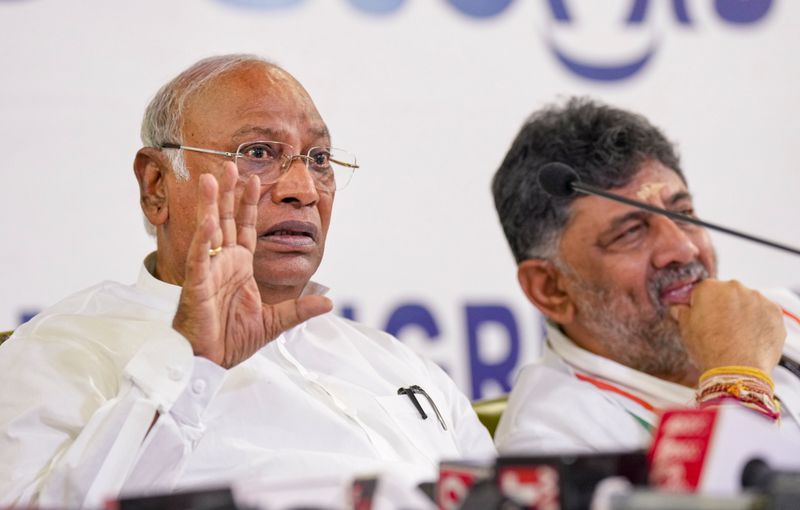
Kashmir Economy has collapsed due to Pahalgam Terror Attack, says Kharge

Congress President Mallikarjun Kharge said on Wednesday that J&K Chief Minister Omar Abdullah has conveyed to him that Kashmir’s economy has collapsed following the Pahalgam terror attack.

“The summer season has just begun, and this is the time when tourists start visiting the region. Tourism is also the biggest source of income for J&K, especially Kashmir. They depend entirely on tourism income. Omar Abdullah told me that this year’s economy has collapsed. He also said that tourism is their main source of livelihood and that they are devastated by this attack,” said the Congress President, addressing a press conference at the Congress Headquarters in Bengaluru.

Kharge also offered his deepest condolences to the families and to all those who have lost loved ones in this tragic incident.

“Let us not forget, it is the Government of India that is administering the region – it is still a Union Territory and not yet a state. Therefore, the responsibility lies even more with the Government of India,” he said.

Kharge said among the killed was Manjunath from Shivamogga, a well-known builder, while Bharat Bhushan from Bengaluru, originally from Haveri, was also killed.

“I spoke to both their wives, Pallavi and Sujata. They told me they are safe for now, but they are grieving and deeply worried about the future,” he said.

The Congress President said that the Karnataka Pradesh Congress Committee has deputed the Labour Minister, Santhosh Lad, to the region.

“I spoke to him, and he has met the two bereaved families and is also meeting around 200 tourists from Karnataka who are currently staying in various hotels. After meeting them, he is arranging flights to help them return to Bengaluru or their respective hometowns,” he explained.

Kharge added that he has also requested Chief Minister Omar Abdullah to coordinate with other state governments to assist their citizens.

He said that the Union Home Minister has also promised him that the government would take care of all those affected.

“I spoke to him (Amit Shah) last night at 10:40 pm,” Kharge added.

On Prime Minister Narendra Modi, the Congress President said he was abroad. “We stand united, and this is not the time to debate who was present or not.”

On the security lapse, he said: “I am not here to identify loopholes. These issues can be addressed tomorrow when the all-party meeting is held. At this moment, we are in a state of shock. We want to address the immediate grievances. The security failures can be discussed at an appropriate time.”

Kharge also informed that the Congress Working Committee will meet on Thursday at the AICC office in New Delhi to discuss the issue.

At least 26 tourists were killed on Tuesday after gunmen opened fire on innocent civilians in Baisaran in Jammu and Kashmir.

According to eyewitness accounts, a group of heavily armed terrorists emerged from the nearby forests and opened indiscriminate fire on civilians, most of whom were tourists.

Baisran is a small meadow three to four km from the Pahalgam market, and tourists take horses to reach the place as there is no motorable road to it.

Prime Minister Narendra Modi arrived in New Delhi on Wednesday morning after cutting his Saudi Arabia trip short due to the terror attack.

He had a brief meeting with NSA Ajit Doval, External Affairs Minister S Jaishankar, and Foreign Secretary Vikram Misri at the airport. PM Modi strongly condemned the terror attack on Tuesday, stating that the guilty will be brought to justice and reaffirming India’s “unshakable” resolve to fight terrorism.

Delhi Traffic Police partners Zenzo to prepare city for civic emergency

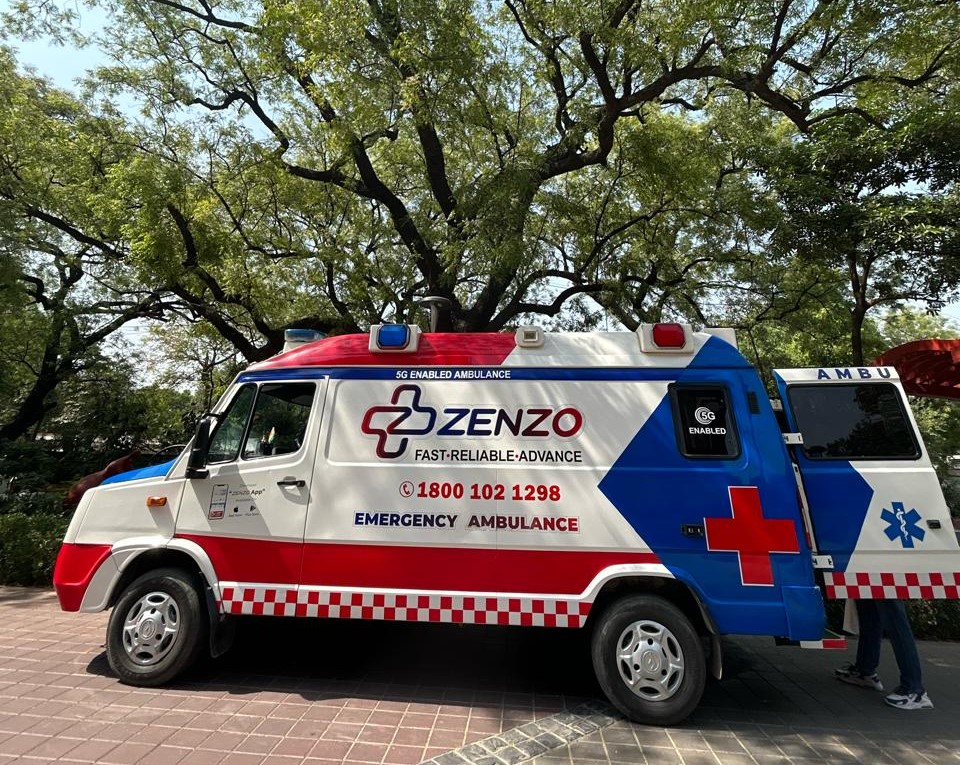
In order to make Delhi Emergency Ready and prepare it for civic emergency, the Delhi Traffic Police on Wednesday joined hands with Zenzo – an emergency response service provider with the launch of over 25,000 ambulances across 450 cities and 671 ambulances in Delhi NCR.

This network includes basic, cardiac and 5G enabled ambulances which uses real-time patient monitoring, enabling paramedics to share vital stats with hospitals instantly, and improving pre-hospital care.

ACP Anil Tomar, Delhi Police emphasized the critical need for civic emergency preparedness.

He also acknowledged Zenzo’s contribution in training more than 100 Delhi Traffic Police personnel in First Aid and CPR, conducted by medical experts on April 21 and 22, 2025.

Tomar said, “We are proud to partner with Zenzo in their mission to ‘Make Delhi Emergency-Ready’, by training our traffic personnel in First Aid and CPR, we aim to make the first responders on the ground equipped to save lives. This collaboration will enhance the city’s readiness and help provide timely medical assistance when every second counts”.

In 2024, Delhi recorded 5,834 road accidents, resulting in 1,457 fatalities, making it the most affected city in India. Delays in hospital arrivals and traffic congestion worsen emergency response times.

India records 1,50,000 road traffic deaths annually, with 30 per cent of fatalities attributed to delays.

Meanwhile, Sweta Mangal, Co-Founder and CEO of Zenzo said, “Zenzo is proud to partner with the Delhi Traffic Police in our shared mission to make Delhi Emergency Ready by training traffic personnel on First Aid and CPR and by launching a network of 671 aggregated ambulances in Delhi NCR to serve people in medical emergencies”.

MOST POPULAR

HOT NEWS