WB tops MGNREGA charts, but awaits Rs 2,786 cr dues

According to statistics recently provided in Rajya Sabha by the Minister of State for Rural Development Ram Kripal Yadav, West Bengal generated more than 28.21 crore work days under the scheme so far and spent more than Rs 7,335.31 crore for it, reports Bharat Hiteshi

“Under @MamataOfficial’s exemplary leadership, Bengal ranked first among all States in ‘Total Persons Worked’ (Employed) in MGNREGA (2021-22). Bengal Govt. gave work to nearly 1.1 Cr people through MGNREGA! This is the #BengalModel that @narendramodi ji could only dream of!” the Trinamool Congress tweeted.

“Bengal ranked 2nd among all States in Person-Days-Generated (2021-22), having generated 36.4 Cr of person days. Rs 2,876 Cr is PENDING from the Central Govt upto March 31st, 2022. We’re still awaiting payment and wondering if the Govt spends more time sleeping or spewing venom!” the party said in another Twitter post.

According to statistics recently provided in Rajya Sabha by the Minister of State for Rural Development Ram Kripal Yadav, West Bengal generated more than 28.21 crore work days under the scheme so far and spent more than  Rs 7,335.31 crore for it.

The Minister was replying to a question from Trinamool Congress MP Manas Ranjan Bhunia. He also said that Tamil Nadu occupied the second spot with 22.17 crore work days and spent  Rs 5,981.75 crore. Andhra Pradesh was third with 18.16 crore work days, and funds worth Rs 5054.17 crore.

BJP ruled states slacken

Bhunia pointed out that the performance of BJP-ruled States such as Goa, Gujarat and Uttar Pradesh was “not impressive.” Goa is ranked at the bottom of the list with 94,000 work days and spent funds worth Rs 2.47 crore. Gujarat generated 2.93 crore work days and spent funds worth Rs 793.50 crore, while Uttar Pradesh generated 15.6 crore work days and utilised funds worth ₹3701.54 crore.

TMC in protest mode

West Bengal’s ruling party Trinamool Congress will start a massive agitation against the Union government on the issues of MGNREGA and GST dues and BSF excesses in the border areas of the state. Soon after the upcoming by polls for one Lok Sabha and one Assembly constituency, the party would launch these protests. The by polls in West Bengal will be conducted on April 12, and the results will be announced on April 16.

Besides, the Trinamool Congress leadership will also contact the chief ministers of non-BJP ruled states and urge them to be a part of a joint nation-wide movement on the issues.

Political observers feel that this initiative is prompted by Banerjee’s long-term plan to ensure that her party plays a key role in forging a unity of the anti-BJP forces in the country.

Wondering whether the Centre spends more time “sleeping or spewing venom”, Trinamool Congress has claimed that West Bengal was yet to receive MGNREGA dues amounting to Rs 2,786 crore from the BJP-led Union government.

The party, quoting a list recently issued by the Centre, said that the eastern state has topped the chart in providing employment under the Mahatma Gandhi National Rural Employment Guarantee Act (MGNREGA), giving work to 1.1 crore people in 2021-22, and has come second in generating man days under the scheme.

BJP’s unsavoury politics over meat

The recent ban on selling meat during Navratri makes one sit up and ask: Is this my India? Is this the country that works to favour Hindus over Muslims? Gives precedence to Navratri over Ramzan?

If Hindus pay obeisance to the goddess, Muslims pray to Allah; if Hindus celebrate Navratri, Muslims observe Ramzan or Ramadan as it is now come to be better known; if Hindus fast during the nine days, Muslims observe roza for 40 days; if Hindus are strict vegetarians during the nine days, Muslims devour all kinds of meat.

Yet nothing stops Hindus from going to Delhi’s Jama Masjid or Lucknow’s Chowk, the city’s food hub, to savour the shahi tukda, the special kulfi or sherbets.  If Muslim shopkeepers prepare sherbets from poppy seeds during Navratri for their Hindu customers, Hindu shopkeepers especially prepare dishes for their Muslims customers with sabza seeds.  Some go that extra mile to improvise the sabudana kheer with dollops of malai or rabri. During Navratri sabudana is a staple food.

Pitch this against the recent ban on selling meat during Navratri and one sits up to ask: Is this my India? Is this the country that works to favour Hindus over Muslims? Or give precedence to Navratri over Ramzan?

If recent developments are anything to go by then unfortunately the answer is yes.

It started with South Delhi Municipal Corporation (SDMC) Mayor Mukesh Suryan spearheading a move to ensure closure of all meat shops operating in the area during Navratri. The ground: People’s sentiment when most Hindus turn vegetarian apart from the fact that a large number fast through the nine days.

That Suryan woke up two days late is another matter. He geared up on April 4 to rope in the area Commissioner to enforce the ban. The Navratri festival commenced on April 2 through April 11.

Dates apart, Suryan conveniently forgot that the “people” he was talking about in South Delhi, the area he had targeted, has a sizeable Muslim population. And they are essentially meat-eaters.

More importantly, Navratri coincides with Ramzan: also a month of fasting for the Muslims. And even while they stay without food and water from sunrise to sunset, they break their fast with a sumptuous non vegetarian meal. Hence depriving  them of their ”staple” is not only unjust but also insensitive and inhuman.
Therefore, Suryan and the BJP need to redefine “ people”; they need to ask themselves if in their scheme of things people are synonymous with Hindus only or do they include Muslims as well. And if they do, then imposing vegetarianism on Muslims during Hindu festivities is one sided and unfair.

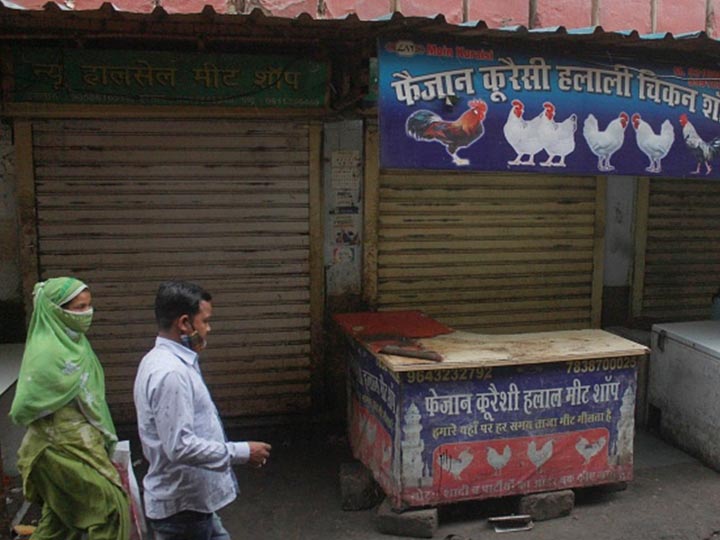
Equally unfair is the fact that the so-called meat ban adversely affected the sellers because owing to Ramzan they had not only stocked up sufficient quantities but were also expecting to do good business during this period. The sudden announcement was a setback because many of the traders were forced to shut shop and suffer losses.

Adding to this insanity is a Member of Parliament, Parvesh Sahib Singh who said that meat shops across the country should be shut during Navratri.

Decidedly, politics is top of the mind for the BJP as it should be for every political party. That the BJP takes the lead is a given. It is common knowledge that the BJP thrives on decisive politics, namely targeting the Muslims and thereby get Hindu votes in the party’s kitty.

While on politics, one cannot fault the BJP for pursuing the agenda of Hindutva because it has worked to its advantage. Not only did it propel it to power in 2014 but has helped it go from strength to strength in the years that have followed.

In 2019, the spectre of demonetization had loomed large and one  heard BJP MPs saying that they dread going back to their constituencies: “Joote marenge log”, they will beat us with shoes, was then the refrain for fear that people were angry at the hardship that they had to undergo when they were unable to draw their own money from the banks, thanks to the restricted cash flow.  In the elections that followed the BJP improved its tally.

Post Covid, people were angry once again: as  bodies piled up and even crematoriums were full up, the people felt that the government and more particularly Prime Minister Narendra Modi had let them down.

It is true that the entire BJP machinery and the big guns, Prime Minister included, were busy fighting West Bengal Chief Minister Mamata Banerjee even while the country was running from pillar to post for oxygen, hospital beds and medical care. Once again the death knell of the BJP was sounded but in 2022 of the five states that went to polls, BJP bagged four.

In the crucial state of Uttar Pradesh, the BJP  well crossed the halfway mark and state Chief Minister Yogi Adityanath  created history by being the first Chief Minister to return to power after a full term.

It is against this backdrop that the Party’s Hindu agenda fits in well with its electoral game-plan. Viewing it from a narrow prism, it perhaps makes sense for the stakeholders too. But looking at it nationally, the damage is far greater than one can comprehend. It will damage the social fabric to its core and unwittingly make one community blood thirsty for another with the BJP calling the shots. Therefore the meat politics, as the recent ban can be best termed serves a purpose that the BJP can milk to its advantage.

While on meat, there is the jhatka versus halal controversy also raging.  The two are different forms of slaughtering the animal.

Muslims follow the practice of halal wherein the animal is slaughtered slowly while reciting lines from the Holy Quran. Jhatka, as the word implies in Hindi, is chopping the head of the animal in a single stroke. Most of the meat sold in India is halal.

Because of the religious significance of halal, non-Muslims are excluded from this process. As compared to jhatka, halal is a thriving industry.

Hindu groups have woken up to this and are demanding a ban on halal establishments to encourage jhatka meat shops.

Taking the lead is the state government of Karnataka that has mooted for compulsory stunning of animals in slaughter houses in Bengaluru.

For the uninitiated, slaughtering of a stunned animal is not halal. In other words, it is kind of taboo for Muslims on grounds that it goes against the ritual of halal and defiles the religious significance of the process.

The timing of the state government’s diktat is interesting: the government order enforcing “compulsory stunning” came just ahead of the Ramzan month. Right wing groups did their bit by starting a campaign against the purchase of  halal meat. Linking it to the Muslim community, these groups called upon the Hindus to boycott halal meat.

But this was perhaps a precursor. The flashpoint was to the run up to the Ramnavami festivities which were marred by violence.

Ramnavami is celebrated every year to mark Lord Ram’s birthday.

To begin with, clashes broke out in Jawaharlal Nehru University in Delhi. The flash-point: non-vegetarian food being served in a hostel mess on Ram Navami.

According to reports, members of the Akhil Bharatiya Vidyarthi Parishad or ABVP, a right-wing students organisation, allegedly attacked students who had eaten meat in the hostel mess on Ramnavami. As against this, the ABVP accused the “leftist” for obstructing the Ramnavami Puja celebrations.

That apart, incidents of violence, stone pelting, and arson were reported from several states including  Madhya Pradesh, Gujarat, Jharkhand and West Bengal among others.

Communal clashes in Gujarat led to a 65-year-old man being killed in the violence; curfew had to be imposed in Madhya Pradesh when matters escalated after people of a particular community objected to the loud music being played during celebrations; arson attacks occurred in Jharkhand; shops were ransacked in West Bengal and locals were assaulted in Goa.

The BJP has alleged that in West Bengal, the Police attacked people who participated in the Ramnavami festival. Meanwhile, Maharashtra Home Minister Dilip Walse Patil has alleged that “some people” are instigating riots and creating differences between two communities.

Of course, there are allegations and counter allegations without any clarity on who started it all.

This is one part but there is another which is grave and puts a question mark on the rules of governance. It is also one that brings back grim memories of the Emergency: an assault on the democratic rights of the citizens of India.

Those were bulldozer days when homes in the walled city of Delhi were targeted. It was in April 1976 that the first bulldozer reached Turkman Gate to raze the structures to the ground. For the Indira Gandhi regime, remote controlled by her younger Sanjay Gandhi these were illegal structures but for the people they were homes, many of them rich with memories of their ancestors.

The period and the actions that came with it remain a blot on India’s history: it is a horrific saga of blood and bullets and one that is difficult to erase.

The terror of the bulldozer has come alive yet again.

The BJP led state governments  under the current regime have  unleashed them on its citizens. In this context, two Chief Ministers can be called out: UP’s Yogi Adityanath and Madhya Pradesh’s Shivraj Singh Chouhan.

The seer turned Chief Minister has been renamed “Bulldozer Baba” by his people after his government used bulldozers to demolish properties of criminals and mafia dons.

Chouhan, popular as Mama in his home state, earned the nomenclature of  “Bulldozer Mama” when he ordered bulldozers to bring down houses of those accused in the Ramnavami violence. Houses of rioters were demolished. Clashes in Madhya Pradesh, like in several other parts of the country, erupted during  the Ramnavami processions in the state. One of Chouhan’s minister’s declared: “Jis ghar se pathar aaye hain, us ghar ko hi patharon ka dher banaenge”, the houses from where the stones were hurled at us will be turned into rubble.

Focus has now shifted to  the state government’s overdrive to take revenge on alleged rioters. Instead of balming wounds, those in power are scraping them.

At this point one needs to stop and ask duly elected governments whether revenge rather than action is the new normal?  Is the bulldozer terror being revived in BJP’s India? And will saviours turn criminals? These are obvious questions which the roar of the bulldozers cannot drown.

Recent developments have seen one community pitched against the other. The BJP that carries Ram on its sleeve is witness to festivities turning bloody. Instead of counting blessings, the people are counting the dead; instead of chanting hymns in the name of Ram the final prayer is being read.

The trigger may be the processions but the violence that has followed threatens to disturb harmony and disrupt whatever little goodwill there is left between the two communities. Battle lines are drawn between those who worship Ram and those who do not.

It is a wedge that is here to stay at least till divisive governments are calling the shots. Ramnavami may be over but the battle has just begun.



Denial be damned, Indian Rly fast-tracks privatization!

Union Railway Minister’s declaration that the government will not privatize Indian Railways sounds fantastic in view of the Cabinet Secretary’s letter to Chairman , Railway Board, asking him to intimate his office about the monthly progress of privatization of IR, writes M.Y.Siddiqui

With a recent letter from Cabinet Secretary to Chairman and Chief Executive Officer, Railway Board in the Ministry of Railways asking him to intimate his office about the monthly progress of privatization of Indian Railways, the process of its all round privatization has been fast tracked. This follows recommendations of a Panel on Rationalisation of Government Bodies and Proposal for the Ministry of Railways, headed by Principal Economic Advisor Sanjeev Sanyal in the Ministry of Finance. Modes of privatization will be Public-Private-Participation (PPP), Joint Venture (JV) or outright privatization of major activities like train running, asset maintenance, station management, project management, execution, production units, school management, medical services and so on. All relevant domain will reside in the private sector, supported at the lower level by Group B managers and supervisory technical cadres. Privatisation involves major restructuring that could lead to the closure of major establishments, merger of some organisations and private participation in operations of railway schools and railway hospitals.

In this backdrop, Railway Minister’s declaration in during this year’s budget session of Parliament that the Government will not privatize Indian Railways sounds fantastic, surprising and hollow in view of the Cabinet Secretary’s impugned letter. The Cabinet Secretary reports directly to the Prime Minister (PM). His words to Secretaries in the Government works as gospel as in the present Union Cabinet, no Minister has authority. Ministers just enjoy power and pelf. Entire governance is driven by the PMO. Ministries/Departments are there just to implement the PMO’s orders. Railway Minster’s assertions, therefore, sounds far fetched and unconvincing. The government is going whole hog in implementing Sanyal panel recommendations on privatisations. Well, in the scheme of the Constitution of India, a Minister is in himself/herself constitutes Government of India in respect of areas under his/her charge enjoying unbridled reservoir of power whose decision cannot be changed or modified by even the PM except the Union Council of Minister, a hallmark of cabinet system of democratic governance. But for all practical purposes, no words of individual Minister can be taken for granted in the current one man Union Government.

As a sequel to this, IR will lose its social responsibility. All sops and concessions to the people except in respect of select few cases already have been withdrawn. Concessions to people in different categories are given as a hallmark of responsive political and democratic governance to generate public goodwill and trust that the government is caring. Net result of railways privatisations will increase all round costs of rail services to the nation. Employment has shrunk to about over 800,000 with approximately 300,000 vacancies existing and about matching number of employees working on sheer contract with no job security and other benefits like accommodations, children education allowances, medical facilities, pension benefits etc. taking advantage of massive unemployment, rampant poverty and insecurity of people. All such regressive actions and its ill effect on people are for every one to see. Situation is likely to worsen further if people do not rise against such anti-people move to halt such mischiefs in its track.

Privatisation of remunerative high-density track passenger services is progressing at fast pace. Freight trains on the Dedicated Freight Corridors (DFCs), currently under progress, on Delhi-Kolkata and Delhi-Mumbai and Kolkata-Delhi-Mumbai DFCs, are sought to be privatized. Already, bread and butter yielding container services of high rated commodities by CONCOR, the Container Corporation of India have been privatized. So is the case with the ticketing and tourism arms of IR, IRCTC, the Indian Railways Catering and Touring Corporation. Both have been hived to private players. Privatisation has already taken a toll of Central Organisation for Railway Electrification (CORE), which has been closed. Central Organisation for Modernisation of Workshops (COFMOW) and Indian Railways Organisation for Alternative Fuel (IROAF) have been closed, signaling that Sanyal panel report is being implemented. Information Technology arm of IR, Centre for Railway Information System (CRIS) that develops software capacity like passenger ticketing, freight invoicing, passenger train operations including strategic one, management of train crews, management of fixed/rolling assets, is being disbanded and all such works are being transferred to IRCTC, where because of part privatization, national security on train operations for strategic purposes will be jeopardized.

Going by the plan, RailTel, the largest telecom infrastructure on IR that focuses on modernizing operations and safety systems through optic fibre networks along railway tracks is being merged with IRCTC. RITES (Rail India Technical and Economic Services Ltd) that provide consultancy on transport systems, exports rolling stock, is taking over Kolkata based Braithwaite & Co. Ltd. that produces rolling stock for IR is now sick since 1992. Rail Vikas Nigam Ltd. (RVNL), which implements creation and augmentation of rail infrastructure on the Golden Quadrilateral connecting four metros and major ports, is being merged with IRCON (Indian Railways Construction Company Ltd) ostensibly on the ground that their work profile is almost common. Besides, 94 Railway schools imparting education up to senior secondary standards to the wards of railway employees across the country are being privatized. One of the options under consideration in this context is to hand over these schools to Kendrya Vidyalaya. Final decision is expected to be announced soon. Added to this, 125 Railway hospitals and 586 health units (wellness centres) are being privatized and opened to general public to enhance health infrastructure with private participation.

Railway factories known as departmental Railway Production Units are sought to be brought under the Central Public Sector Enterprises (CPSEs). When decided, assets, infrastructure and employees of all the eight Railway Production Units would be transferred to the CPSEs, as proposed. Railway Production Units are: Integral Coach Factory (ICF), Chennai, Rail Coach Factory (RCF), Kapurthala, Modern Coach Factory (MCF), Rai Bareilly, Chittaranjan Locomotive Works (CLW), Diesel Locomotive Works (DLW), Varanasi, Diesel Loco Modernisation Works (DLMW), Patiala and two Rail Wheel Units at Yelahanka, Bengaluru and Bela (Bihar) are being transferred to the CPSE. This would enable the government to list it in the capital market for IPO or privatization. Right now, these production units are departmental.

Each of the Central Training Institutes for eight organized Group A services (five from Combined Engineering Services Exam and three from Central Civil Services Exam) is being merged with the National Rail and Transportation Institute of National Importance following merger of eight Group A services into a single service cadre titled Indian Railways Management Service (IRMS) with reduced combined services strength from more than 8,000 to fixed 5,000 cadre strength (reduced by 40 per cent) of IRMS, signaling a leaner managerial cadre to oversee rail services to the nation and growing privatisation of IR and ever curtailing workforce therein!


BJP deals a body blow to fledgling AAP in Himachal

When in a surprise political development, Union Minister Anurag Thakur tweeted that AAP was finding it difficult to keep its flock together, it was clear that new entrant was in for a jolt in HP. Later, seven of AAP’s key office bearers jumped the ship and joined BJP, reports Anil Manocha

Soon after the cryptic tweet in chaste Hindi by Anurag Thakur, came a tweet by AAP leader, Satyender Jain, Delhi’s Minister of Health, Home, Power, PWD, Industries, Urban Development & Flood and Irrigation and Water.  The MLA from Shakurbasti tweeted that “Himachal Pradesh’s Aam Aadmi Party state working committee has been dissolved. The new state working committee will be reorganised soon.”

Former Chief Minister and senior leader of BJP, Prem Kumar Dhumal observed that Aam Aadmi Party has no future in Himachal Pradesh and BJP would retain power in the state. Hailing the leadership of Prime Minister Narendra Modi, Dhumal said that people were very happy with the performance of the government at the Centre and state.  He said that after the demise of former CM Virbhadra Singh, the Congress had become leaderless in the hill state.  Dhumal is a grass root leader and is very active these days. However, he humbly says that he is a loyal soldier of BJP and would do everything at the party’s command.

Aam Aadmi Party dissolved Himachal Pradesh’s AAP’s state working committee after seven of its key office bearers deserted the party and joined BJP giving a body blow to the fledgling state unit ahead of the state assembly elections.

The defection of the seven officer bearers of state AAP unit to BJP came on the heels of Arvind Kejriwal-Bhagwant Mann’s big road show in Mandi, the home district of Chief Minister Jai Ram Thakur. BJP has avenged its similar humiliation from AAP as its former councilor Gaurav Sharma from Shimla, now AAP spokesperson and his associates had left the BJP and joined AAP last month.  It was on April 8 that the state president of the AAP Anup Kesari, state organisational secretary Satish Thakur and district AAP president of Una Iqbal Singh had joined the BJP in the presence of BJP national chief JP Nadda. Thakur added that leaders were deserting AAP in protest against the anti-Himachal style of functioning of AAP national convenor Arvind Kejriwal.

AAP’s election in-charge for Himachal Pradesh and Delhi’s Health Minister Satyendra Jain announced the dissolution of the state unit. The Units of the assemblies will continue to function as it is. Soon a string organisation will be formed, it said. AAP’s announcement came after its state president Anoop Kesari along with the party’s organisation secretary joined the saffron party hours before BJP National President JP Nadda’s  roadshow in Shimla.

Thereafter, AAP’s women wing chief Mamta Thakur, along with five other office bearers, joined BJP at its central office in New Delhi. Others include vice president of AAP’s women’s wing Sonia Bindal and Sangeeta, D.K Sharma, vice president of AAP’s industrial wing and social media vice president Ashish Kumar.

Union Information and Broadcasting Minister Anurag Thakur, who is believed to be a key player behind the defection, said that more AAP leaders will join BJP in the coming days.  It is learnt that Anurag Thakur was instrumental in making Mamta Thakur, state president of the Mahila wing of the AAP, join the saffron party. Union Minister Meenakshi Lekhi was also present on the occasion.  “It has become difficult for the AAP to virtually save its party in Himachal,” said Anurag Thakur.

It is understandable because BJP does want to take chances. In a major upset for the ruling Bharatiya Janata Party (BJP), the Congress managed to stake a claim on all three Assembly and one Lok Sabha seat in Himachal Pradesh, where by-polls were held on October 30 last year. Little doubt, its reaction against AAP has been swift.

The AAP had launched their poll campaign for the state assembly elections from Mandi, the home turf of incumbent chief minister Jai Ram Thakur, on April 6 with a roadshow by Delhi Chief Minister Arvind Kejriwal and his Punjab counterpart Bhagwant Mann. This was the party’s first major event in the run-up to the assembly polls, to be held by the end of this year, and would also reflect the mood of the public in the hill state. The AAP had also announced plans to contest the Shimla municipal election, the schedule for which is expected to be announced soon. AAP  leader and Delhi Chief Minister Arvind Kejriwal’s big hoardings have appeared in key locations and AAP has launched a membership drive to increase its footprints in the capital city to contest all the 41 wards.

As a clever strategy, BJP put the whole show  of AAP leaders joining BJP live and prominently  on social media and other media to show AAP in poor light after mass defection ahead of the coming  assembly elections this year. However, it is a clear indicator that BJP fears that the AAP wave and  formation of AAP government in neighbouring state of Punjab can impact elections in Himachal where the AAP has already declared that it would contest polls on all 68 seats in the coming assembly elections.  It had also launched its membership drive. During the membership drive ceremony, apart from Anurag Singh Thakur, Meenakshi Lekhi, Party General Secretary Arun Singh and National co-media in-charge Sanjay Mayukh were also present.

Interestingly, former AAP Himachal Pradesh president Anoop Kesari, who had left the Aam Aadmi Party and joined the BJP, organization general secretary Satish Thakur were also present to make the message louder and clearer for the AAP.

While AAP and BJP are engaged in fierce fight and drama of joining and defection, the state Congress appears to be in a state of delirium and political isolation. The party leaders remain embroiled in their game of one-upmanship over the leadership issue like what happened in neighbouring Punjab recently.


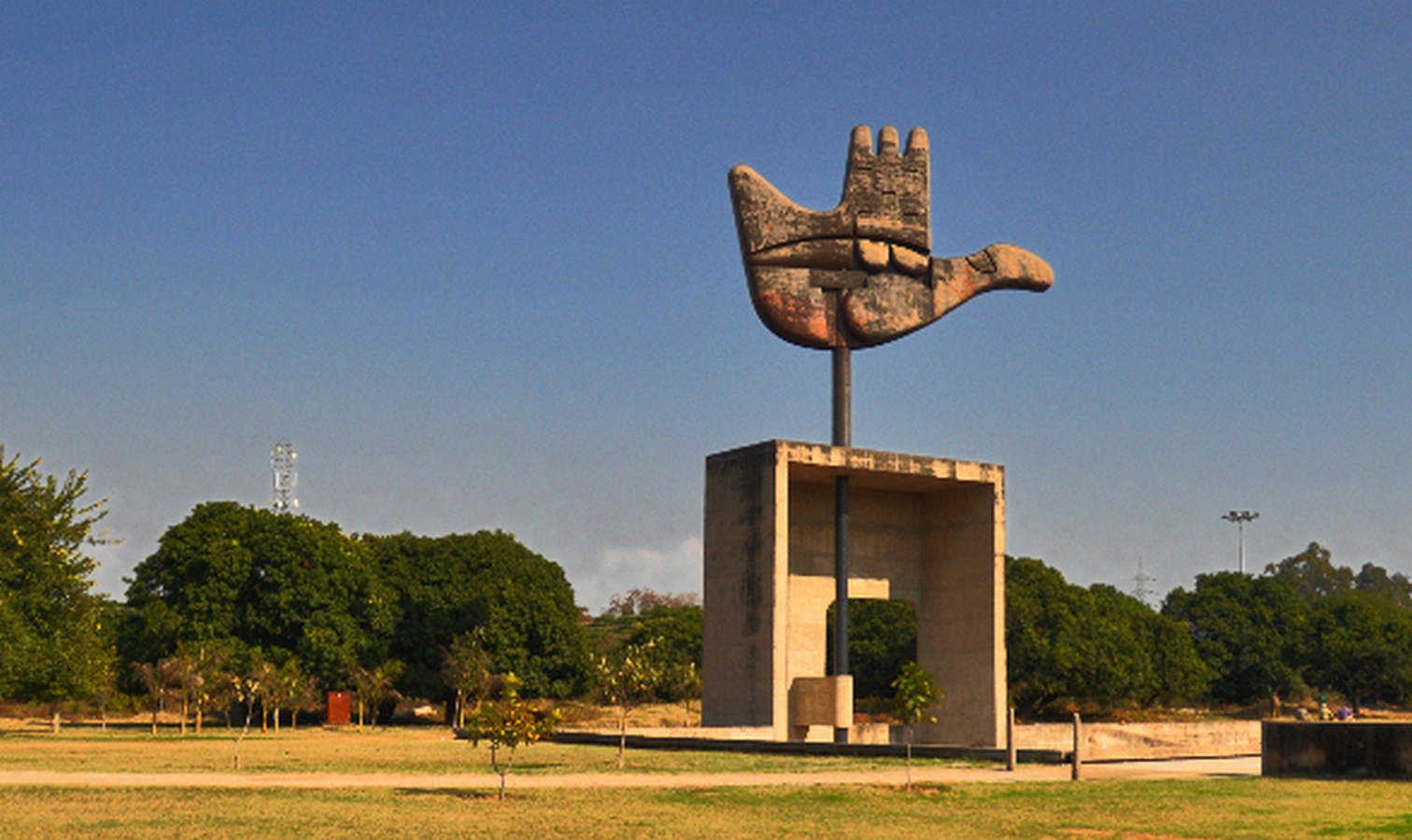
Haryana, Himachal fret as Punjab stakes claim to Chandigarh

The AAP government in Punjab has created  a furore by demanding transfer of Chandigarh to Punjab. While Chandigarh has been the joint capital of Punjab and Haryana since Punjab’s Re-organisation in 1966, Himachal Pradesh has also flagged its share, writes Rajesh Moudgil

While Punjab and Haryana’s differences over their respective rights and territories since Punjab’s Re-organisation in 1966 are oft-reported, the recent move of the newest Aam Aadmi Party (AAP) government in Punjab to demand Chandigarh’s immediate transfer to it has stirred up a hornet’s nest.

The Punjab assembly had on April 1, 2022 unanimously passed a resolution at a specially called assembly session, seeking immediate transfer of Chandigarh to the state subsequent to which all the political parties of the neighbouring state Haryana have torn into Punjab’s stance and highlighted various issues associated with the subject since the Re-organisation of Punjab in 1966.

The said resolution was moved by Punjab chief minister Bhagwant Mann in the one-day assembly session which saw a walkout by both the BJP legislators from the House. However, members of all the other political parties, namely the ruling Aam Aadmi Party (AAP) which has a whopping majority of 92-members in the House of 117, Congress, Shiromani Akali Dal (SAD) members and others supported the resolution.

The special session was hurriedly convened on April 1 subsequent to a political row whipped up by Union Home Minister Amit Shah’s announcement made on March 27 that Central service rules would apply to the employees of Chandigarh.

Under the rules, the retirement age of the Chandigarh employees increases from 58 to 60 and the women employees would get child care leave of two years instead of the current one year. The Centre has notified the rules. Under the Central Civil Service Rules, all employees would not only get the Central pay-scale but also an enhanced retirement age from 58 to 60 and the maternity leave for women employees for two years from the existing one.

Speaking on the resolution, the Punjab Chief Minister Bhagwant Mann accused the Centre of trying to upset the balance in the administration of the UT and other common assets. Later while interacting with the media, Mann said that in the coming days, the Punjab MLAs would seek time from the President, the prime minister and the Union home minister over this issue and put up the Punjab’s stance on the same before them.

Mann took to Twitter to say that the Central government had been step-wise imposing officers and personnel from other states and services in the Chandigarh administration. This goes against the letter and spirit of the Punjab Reorganisation Act 1966. Punjab will fight strongly for its rightful claim over Chandigarh, he said.

The Shiromani Akali Dal (SAD) supremo and former chief minister Parkash Singh Badal said that when the states were re-organised on the basis of language, the parent states were given the existing capitals. While several of the Congress MLAs including Partap Singh Bajwa and Sukhpal Singh Khaira flayed the Shah’s decision, the AAP MP Sanjay Singh raised the issue in Rajya Sabha urging the Union government not to override the rights of the elected government of Punjab.


HARYANA FLAYS PUNJAB MOVE

Countering Punjab’s move, the Haryana assembly also hurriedly convened a special session on April 5 and passed a resolution flagging its stakes over Chandigarh.

Haryana chief minister Manohar Lal Khattar who moved the resolution in the specially called one-day session said Haryana came into existence as per the Punjab Reorganisation Act, 1966 which also provided for several measures to give effect to the Reorganisation of Punjab into Punjab, Haryana, Himachal Pradesh and union territory Chandigarh.

Highlighting Haryana’s right to share waters of the Ravi and Beas rivers by the construction of the Sutlej Yamuna Link (SYL) canal, Khattar said while the House had unanimously passed resolutions on at least seven occasions urging the early completion of the SYL canal, Punjab, contrary to several agreements, accords, Tribunal’s findings and judgments of the highest judiciary had enacted legislation to deny the claims of Haryana in the past.

Khattar said that the transfer of Hindi speaking villages from Punjab to Haryana had also not been completed either, and added that the state also noted that the recent amendment in the rules of the Bhakra Beas Management Board by the Central government for the appointment of whole-time members were against the spirit of the Act, which treats the river projects as common assets of Punjab and Haryana.

The House resolved to urge the Central government not to take any steps that would disturb the existing balance and maintain harmony till all the issues emanating from the reorganisation of Punjab were settled.

Meanwhile, the former two-time Chandigarh MP Satya Pal Jain, who is also currently additional solicitor general of India, said the charges of infringement of the rights of Punjab over Chandigarh were baseless.

He held that while the Punjab government was not able to accept the recommendations of various pay commissions for its employees, the Centre had in one go accepted a long-pending demand of UT employees. Earlier the UT employees got salary and allowances etc on the Punjab pattern, they would now get the same on the pattern of the Central government, which were more beneficial to them, he said clarifying that the same was applicable to UT employees only and not on the ones coming on deputation from Punjab (60%) and Haryana (40%). About 24,000 employees of all the departments under the Chandigarh administration are set to benefit from the decision.


POLITICAL JUMLA OF AAP GOVT: HOODA

The Congress legislature party (CLP) leader Bhupinder Singh Hooda, who is also the Leader of the Opposition also questioned the AAP’s intention to pass such a resolution and termed it as a “political Jumla” as it held no meaning. He said that Punjab should not disrupt communal harmony between the two states by taking such undemocratic steps and added that all political parties in Haryana would unitedly fight the neighbouring state in this matter. Punjab is Haryana’s elder brother but the former should not try to act like a “big brother’’, he said.


CHANDIGARH MC FOR UT STATUS

Meanwhile, the Chandigarh Municipal Corporation too passed a resolution on April 7, 2022, demanding that the city should remain a union territory and that it should also have its own legislative assembly.

However, while only the BJP councillors were present when the resolution was passed, the Congress, AAP and the SAD councillors staged a walkout. The House also passed a resolution that the Centre ask Punjab and Haryana to have their own capital cities.

The Chandigarh Mayor Sarabjit Kaur Dhillon, a BJP councillor said that the two states had called their respective special sessions to stake their claims over Chandigarh while the city residents were not heard on what they wanted.

The House also thanked Union Home minister Amit Shah for allotting projects worth around Rs 600 crore to the UT and for announcing Central service rules for the UT employees.


ANALYST STANDPOINT

Prof Ronki Ram, Shaheed Bhagat Singh Chair Professor of political science, Panjab University, Chandigarh, however, held that the political reaction of the Punjab government was in the wake of fear that the Centre is trying to directly control Chandigarh. Stating that the fear among the two states of losing their respective stakes in the UT triggered the discussions and reactions. He nonetheless welcomed the Centre’s decision to introduce the Central Civil service rules for Chandigarh employees which he held was long due.


We aren’t reacting enough to unfolding Ukraine tragedy

There are none of those full-throated cries against the human tragedies taking place. We need to cry out, now and immediately: Halt this war…please halt this war!

Seeing those shots of Russia’s military might unleashed on Ukraine and its people, I feel we Indians, as a people, are not reacting enough to those deadly disasters taking place. Mind you, though a large percentage amongst us are against Russia’s war-cum-invasion of Ukraine but there are none of those full-throated cries against the human tragedies taking place! We need to cry out, now and immediately: Halt this war…please halt this war!

As a collective lot we aren’t reacting enough to the human disasters unfolding each single day. It wouldn’t be amiss to say that by the time some sort of a truce or ceasefire could get announced thousands in Ukraine would have perished in one way or the other.

We were perhaps much more vocal and strong-voiced in the  90s …Before America’s aggression into Iraq, the Iraqi Embassy in India, situated in New Delhi’s posh Jor Bagh, was ‘alive’, with over  40  Iraqi  diplomats at work. As the ‘mother of all wars’ peaked in the 90s, I had visited the Iraqi embassy on several occasions to interview the then Iraqi envoy to India. I had also met Sikh and Hindu and Muslim families gathered there in large numbers, chanting slogans in support of Saddam Husain, for taking on the super power of the world — America!

I saw many, many well-to-do Indian families carrying rations and medicines, pleading with the Iraqi diplomats that those huge cartons/ containers be sent to the Iraqi soldiers fighting the American forces. It was such a forceful-impactful- touching-sensitive sight of that great human bonding that it gets difficult to describe…After all, it was humans here, standing up for humans out there— across seas and  mountains and desert stretches, thousands of miles away.

Why no such human bonding today? Is this because we have become exhausted and fatigued and weak, fighting our own survival battles? Or is it because there’s so much of hopelessness spreading out, with  that there’s little hope left?

The fact is that many amongst us are sitting baffled:  Where are the United Nations protecting powers! Where are the world’s political who’s who, who never miss an opportunity to give speech after speech on peace! Where are all those peace-brokers who are forever to be seen on the international summits and circuit, talking of the welfare schemes and protective formats!  Where are those statesmen who can carry the grit to take on arms lobbies and dealers!  Where are all those world leaders who are seeing the plight of the ever increasing number of the refugees – children, women, men running away from their homelands towards the unknown terrains!

Non-issues being made into issues!

Ground realities don’t look good here too, in our country.We have begun tearing each other’s flesh on any alibi, with the communal virus unleashed in our midst, hovering around in the background or foreground!

With rising prices of the essential commodities and very little on the platter, we are being distracted by the spread of the communal hatred. Uncontrolled, made to spread out. Non- issues being made into issues!

The manner in which Haldiram’s store manager was very recently verbally assaulted by one of godi media’s channel women reporters, on the alibi that the   packing-cover of the ‘Falahari’ packet had ‘Urdu’ text on it! That TV reporter spoke in that typical communal aggressive way. And she was so  very  busy pursuing the  communal agenda, that she didn’t  quite realize that those product description  words were in Arabic, as  Haldiram’s  snacks are  popular in  the Arab and  Middle  East countries. Thankfully, till date there isn’t any discrimination in those countries.  Definitely not along the lines of whether the manufacturer of eatables is from a this or that religion, caste or country.

In fact,  this   incident reminds me of what  Jesuit  priest, Father Cedric Prakash  had once  told me in the  context of the communal virus  made to spread out in  Gujarat, resulting in the 2002  pogrom. He had told me that in Gujarat the communal poisoning had been on, along the set definite agenda.  He had even narrated an incident to relay the petty narrow-mindedness along the communal strain: “One day an influential citizen of Ahmedabad called me over to his  home for  breakfast and  told me I should keep away  from the Muslim community. He kept saying, ‘Muslims ought to be settled! We are going to teach these Muslims a big lesson…you boycott them’. Mind you, whilst he was saying all this, he offered me seedless dates with ‘Made in Iran’ label printed on the packet!”

And till about recent years there wasn’t ever any controversy about  halaal or the jhatka meat but now there’s come up petty politics in this too! With many from the ignorant communal lot, joining the bandwagon without even being aware of the basic difference between halaal and jhatka. Why the preference for the halaal meat? Said to be healthier, as the blood together with the clots, flows out slowly and gradually, during the zeebah — slow mode of cutting the animal’s neck.

And as I have been writing all along, the biggest myth going around is that the Indian Muslims devour meaty chunks along with kababs all day long. This  notion  seems so well embedded  that  I’ve  myself  been  ridiculed  for my  preference for vegetarian food. “Tum kaise Musalmaan ho, jo gosht nahin khatee ho!” (what sort of a  Musalmaan are you, you  don’t eat  meat!). As though it is almost certain that every Musalmaan will hold a big fat boti …perhaps, tucked in a roti!

Many Muslims like me are vegetarians or semi -vegetarians by choice. On an Eid evening, when I visited the home of Islamic scholar Maulana Wahiduddin Khan, there was no meat dish on the table.  Curiosity hitting to such an extent that I to ask him the ‘why’ to it. “Because I ‘m a vegetarian. Though the family eats gosht but I don’t…I’m hundred percent vegetarian.”

I have before me two books written by the Lucknow based botanist, Dr M.I.H.  Farooqi. The very  titles of these two  books  —‘Plants of  The Quran’ and ‘Medicinal Plants In The Traditions of Prophet Muhammad’ (Sidrah  Publishers) — relay the  significance of plants, herbs, fruits, grains, spices  and  vegetables in our daily  intake.

This botanist has quoted extensively from the Quran and the Hadith. In the ‘Plants of The Quran’, plants and plant-products mentioned in the Quran have been highlighted, in the context of their botanical identification, medicinal properties and the health benefits they carry. And the  volume ‘Medicinal Plants in the Traditions of  Prophet  Muhammad’ is a  scientific study of the medicinal, food and aromatic  plants mentioned in the Traditions (Ahadith), of the well-known  collections of Bukhari, Muslim, Tirmidhi, Abu Dawud, Ibn Maja, Nasai.

Also, stands out the fact that the meat industry in India is one of those  traditional industries which provides jobs to hundreds from the different communities. Fauzan Alavi, heading APEDA (All India Meat and Livestock Exporters Association of India), had detailed during the course of an interview, that a substantial percentage of workers in the meat industry are non-Muslims.

It is also relevant to mention that several meat exporters in India are non-Muslims.  Also, stands out the fact that today more non-Muslims consume the non – vegetarian fare than the Muslim community.

Above all, why should a citizen of this democratic country have to give explanations or apologies what he or she eats or cooks! It is pathetic that we have reached such a day when we have think twice what to eat or cook or wear or speak!


Concern voiced as UP police turn the heat on journalists

The recent arrest of three  scribes in UP’s Balia, including two representing a leading newspaper chain Amar Ujala, has shocked the journalist fraternity. The incident came on the heels of the arrest of Agra-based journalist for reporting rigging in UP Assembly polls, writes Mudit Mathur.

Amid unacceptable undemocratic treatment to most vibrant pillar of parliamentary democracy, press and media, and growing targeted attacks on the journalists in many states causing anxiety among the intelligentsia of the society about the future of their rights to express themselves freely and voice dissenting views against the governments and their agencies highlighting their shortcomings and failures in governance. The freedom of the press is in peril and under continuous stress so as the future of our composite democratic behaviour.

Free speech and expression are inherent guarantee under Constitution of India and no pre-restraints can be imposed on this right by the government. The apex court has also taken cognizance of the matter using draconian laws on the journalists and social activists in a brazen use of power and arbitrary imposition of such laws on account of their conflicting views on various policies, programmes, political ideology and selective implementation of programmes from public exchequer. So, if you enter in such conflict areas, be ready to face the music. The more serious trend is acceptance of dissent and in reaction an effort is to criminalise expression of dissent with branding it anti-social, anti-national, inflammatory and incitement of hate. Even exposing corruption could be like inviting problems for the journalists.

Call of duty demand for a journalist is to bring true and correct facts in the public domain without fear or favour, affection or ill will – maintaining this equilibrium is the most challenging job for him with all official channels by and large closed for him to have their version on a story. Now with the new model of governance there is very limited scope for free and fair journalism. Beyond the unilateral press release or twitter handles all sort of media communications are restricted to selective leaks that are often one-sided loaded with aim to score political targets. Thus, space for free and unbiased expressions are rapidly shrinking impacting people’s right to know – which is a constitutional guarantee as a fundamental right of every citizen.

The latest trend that was seen behind the arrest of three local journalists in Balia including two representing leading newspaper chain Amar Ujala sent shock waves in journalist fraternity all over the country on whose exposure with regard to syndicate operating to leak and send solved key answers to contracted students qualifying the examinations securing high marks. Compromising the sanctity and purity of examination ultimately hurt the prospects of innocent, brilliant and meritorious students due to mass coping syndicate flourishing under patronage of corrupt system responsible to conduct fair examinations.

The case of Balia journalist is unique example of administrative callousness and high-handedness as it has in retaliation falsely implicated the journalists for paper leak and arrested them in the most brazen manner. Days after the Uttar Pradesh Board Class 12 English exam paper was leaked in Ballia district, the police have arrested three local journalists who reported the incident. On March 30, the question paper for the Intermediate English exam was leaked and copies of the solved paper went viral on the internet, following which the exam was cancelled in 24 districts.

Ballia’s District Inspector of Schools (DIoS) Brajesh Kumar Mishra was suspended and later arrested in the matter. So far, a total of 34 people were arrested in connection with the incident, including three scribes – Ajit Kumar Ojha, Digvijay Singh and Manoj Gupta under grave offenses.

In his statement, Singh wrote that he reports from Ballia district’s Nagra for Amar Ujala and is also the Block President of the National Union of Journalists (India) .“OnMarch 29, I received a copy of the solved question paper for the Class 12 Sanskrit examination from his sources and immediately reported the same to his newspaper’s office. The story was published by the daily, followed by another report published the next day about Class 12 English question paper leak,” He added, “I merely performed my journalistic duties towards the society at large, yet administration got me arrested along with another scribe (Ojha). What is my fault? I have done nothing wrong exposing paper leak syndicate and its active connivance with the top administration who protected such unscrupulous unlawful activities,” he pleaded.

Earlier, Agra-based journalist Gaurav Bansal (39) was arrested for allegedly reporting rigging in the Uttar Pradesh assembly elections. Bansal alleged that he was arrested while he was asleep at home, at around 1 am on the night of March 24. He alleged that he was brutally thrashed by the police before being produced in the court the next morning.

Bansal had gone to Mandi Samiti to report after some videos of protesting SP had gone viral. Bansal was booked by the police on March 9, under IPC Sections 147 (rioting), 149 (unlawful assembly), 332 (voluntarily causing hurt), 353 (assault or criminal force to prevent public servant from discharging his duty), 504 (intentional insult with intent to provoke breach of the peace), as well as under Section 7 of the Criminal Law Amendment Act.

The Editors Guild of India has demanded a court-monitored independent inquiry into the arrest of Gaurav Bansal. The organisation said in its statement, “The Editors Guild of India is shocked by the way Agra-based journalist Gaurav Bansal was arrested and allegedly tortured for reporting alleged rigging in the recently held assembly elections.”

The EGI also urged the Ministry of Home Affairs (MHA) to take cognisance of police excesses against journalists and civil society members and issue directions to all law enforcement agencies to respect democratic values and freedom of press. “At the same time, strict action needs to be taken against those who misuse State power,” it stated. The EGI, in a statement, said it was “shocked and outraged by the manner in which the police… arrested, stripped, and humiliated a local journalist as well as some members of the civil society, on April 2, 2022…”

The action was in retaliation to a protest and associated news coverage of arrest of another member of civil society, it noted. “Kanishk Tewari, a local reporter was covering the protest against the arrest of a theatre artist who had allegedly made some indecent remarks against a Bharatiya Janata Party MLA and his son… shockingly, the police shot pictures of the journalist and activists and released them on social media in order to shame and humiliate them.”

Incident in Odisha

“In another incident in Odisha on April 7, police in the Balasore district chained a journalist’s leg to a hospital bed after an alleged case of assault. The journalist Loknath Delai though has claimed that he was arrested in response to his reporting of corruption by the police and various irregularities in their affairs,” it pointed out.

“The inhumane manner in which journalists, stringers, and district reporters are often treated by the police, in an effort to suppress any independent reporting is a matter of grave concern,” it added.

In a joint statement, the Press Club of India (PCI) and the Indian Women Press Corp (IWPC) also condemned “the reprehensible manner in which journalists, theatre artistes and other citizens were stripped and paraded naked in a police station in Seedhi district in Madhya Pradesh”.


Sri Lanka’s economic crisis may cast its shadow on India

Sri Lanka President Rajapaksa’s offer to the opposition parties to join the cabinet has been rebuffed by the latter. With the crisis in the island nation deepening, the threat of a huge influx of refugees looms large on the Indian horizon.  A report by Gopal Misra

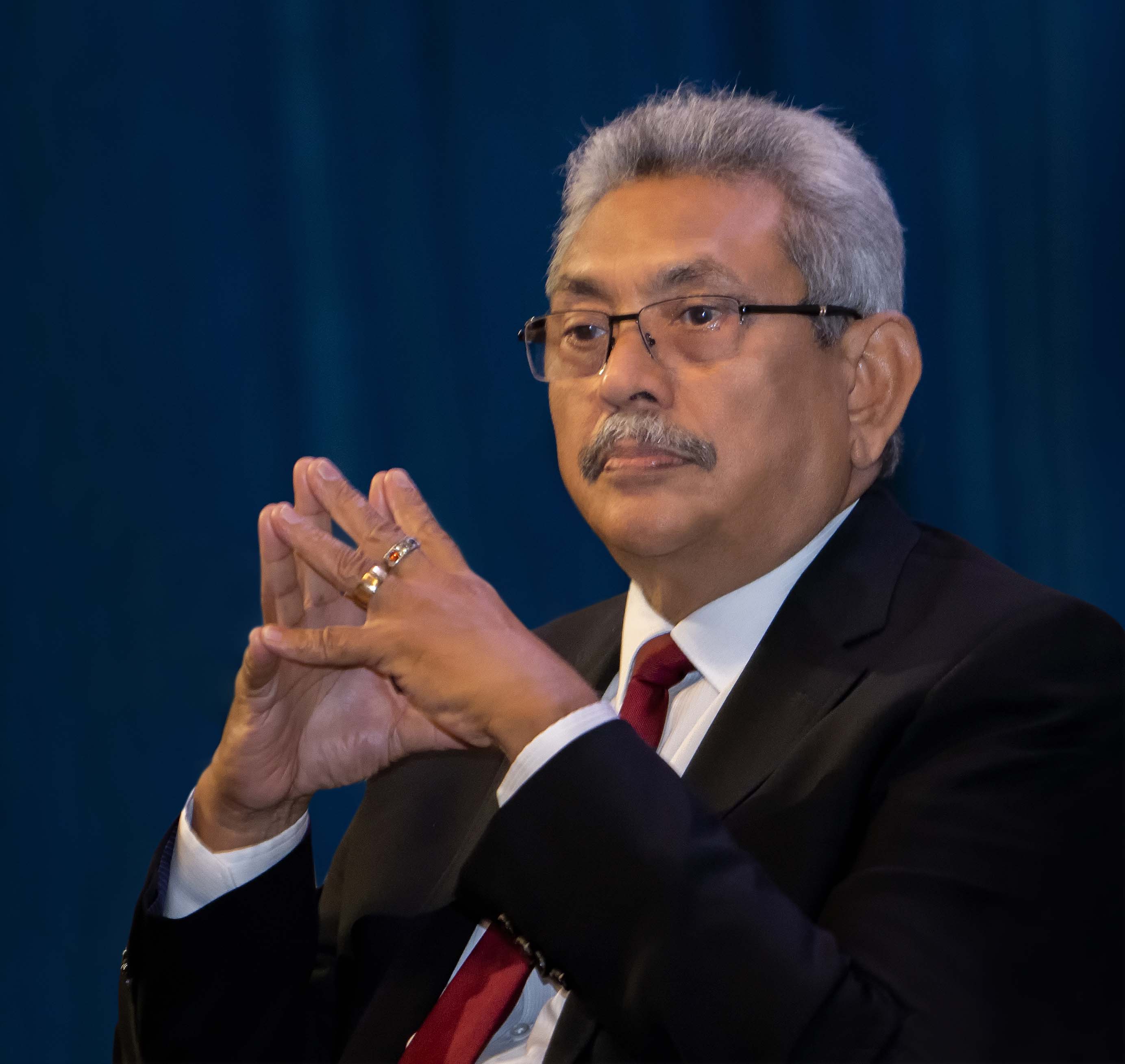
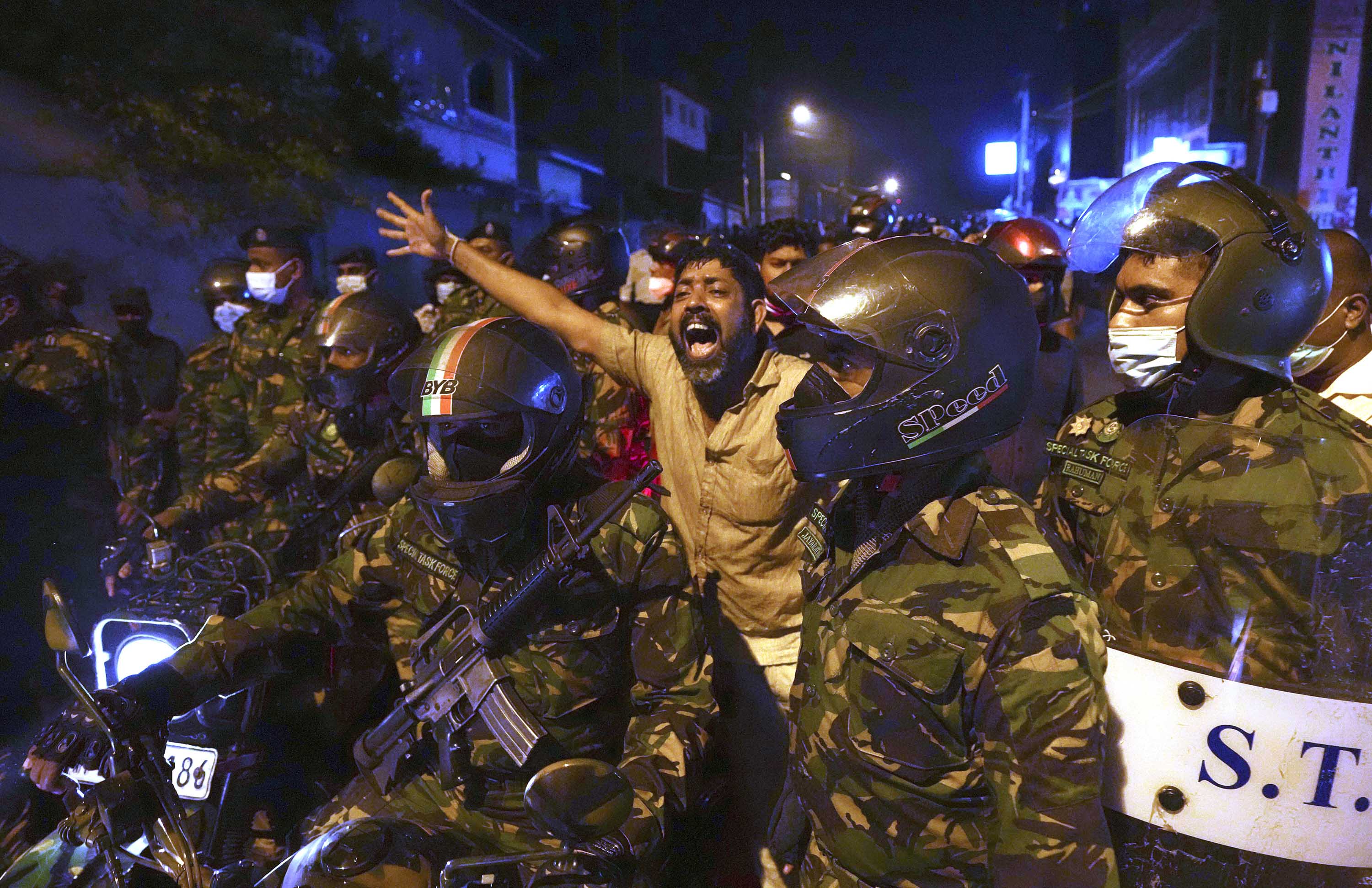
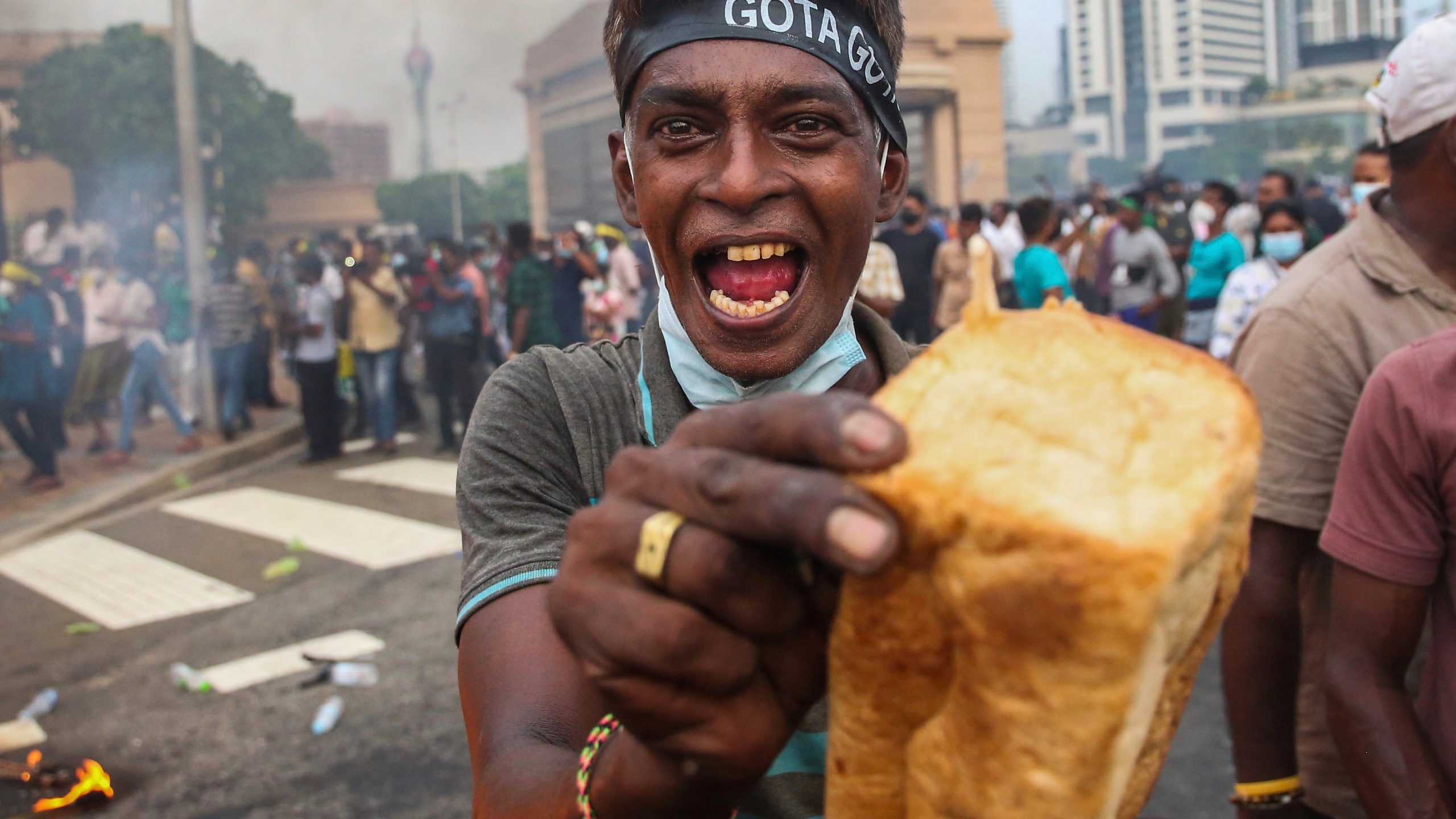
There is now a countrywide demand for the Sri Lankan President, Gotabaya Rajapakasa, and his clan to step down, but he and his cronies do not give any indication of leaving the levers of power in this island nation.

In the parliamentary polls in 2020, the ruling party, Sri Lanka People’s Front, had secured a two-thirds “super majority” by winning 145 of the 225 seats and additional five seats of its allies’ seats, but it appears that within a short period of two years, the government has frittered away its support base among the people.

Amidst the deepening economic crisis, Sri Lanka is now under an unprecedented grip of political instability following the exit of at least 41 MPs leaving the treasury benches, thus, forcing President Rajapakasa to revoke the state of emergency proclaimed, a few days earlier, for tackling the countrywide protests erupted in the wake of shortage of food, petroleum products, essential goods and breakdown in power supply. The ruling coalition has less than 113 members’ support in the 225-member House.

In his bid to salvage his political grip on the island nation, the president has offered the opposition parties to join the cabinet under the proposal of an all-inclusive unity government. It, however, was promptly rejected, because the presidential office did not contact them directly, but they learned about it only through media. It has irked the opposition parties, who believe that the proposal of the unity government is a new game plan of the President to cling to the office, and is being done to convince the donors like India and the International Monetary Fund (IMF) that the country’s entire political establishment is on board in the government’s bid to salvage the economy.

It cannot be ruled out that the trust deficit between the government and the opposition parties has already erupted in the countrywide mass protests. It is being widely feared this growing disenchantment expressed might turn into a mass rebellion, if the international efforts could not be harnessed to help the country. It, naturally, has caused apprehensions and anxiety among the neighbouring countries especially India, which is increasing with each passing day. The new finance minister, Ali Sabry, quit the post ahead of the crucial talks with the IMF. The situation for the government, reluctant to resign, is getting much grimmer with each passing day, especially when it has lost the support of the majority in Parliament and without the draconian powers to crush the agitation against its misrule. Earlier, in his address to Parliament, the Leader of the Opposition, Sajith Premadasa asked for ending the executive powers of the President, These unbridled powers, has allowed the present incumbent to take unilateral decisions regarding the key issues to economy. M.A. Sumanthiran, the opposition legislator from Jaffna demanded that the government should put its recently imposed Emergency regulations to vote, but the government succumbed and meekly withdrew the state of emergency.

The Financial Mess

The financial breakdown did not happen suddenly. It may traced to the year 2010, when after the Sri Lankan Civil War, military emerged as a major power centre in the country’s political spectrum. Many among them became part of the government. These former military officers had little idea of economics and the state finances. Under their influence, the Sri Lankan Government embarked upon obtaining huge loans without preparing a plan for the repayments of the debts. The financial debt and its repayment schedule became 88 per cent by 2019. During the financial years of 2021 and in March 2022, it became 101 and 135 per cent respectively of the Gross Domestic Production (GDP).

According to estimates, the country had just 2.4 billion USD in its foreign reserves in February this year; out of it less than one billion USD is available for payment to its lenders. The country is expected to pay seven billion USD this year which includes four billion USD  IMF loan and repayment of other international obligations.

A knowledgeable Indian investor from Sri Lanka has confided to this writer that there are multiple reasons which have caused this financial disaster. They include tax concessions without studying their implications, liberal financial packages to the sectors which failed to contribute to increase the GDP, the bank interests were reduced, thus discouraging remittances from the non-resident Sir Lankans, the decision to promote organic farming without evaluating the country’s overall needs of the food grains.

Referring to the government’s ignorance or lack of knowledge for evolving economic policies and its foolish monetary policies, he confided that the Rajpaksa government had scripted the on-going financial crisis, when it embarked upon obtaining investment bonds and started mortgaging country’s assets without ensuring that whether the high-rate investments would really generate wealth. Asked , whether he really believes that the president and his family have siphoned off  billions of American dollars to safe havens, his reply was that it is not new. He said the politicians of the Indian sub-continent, not excluding India, steal people’s money; and this is the reason that the Swiss banks continue to overflow with Indian accounts. He was referring to the allegations of Patali Champika, a prominent opposition leader and former power minister, that the Rajpaksa clan has stolen more than USD 19 billion from Sri Lanka.

Referring to tax concessions, he Indian investor further spelt out the reasons for the steep financial down-trend that the Sri Lankan Government withdrew the sales tax, equivalent to the GST in India, tax holiday for the companies having less than Rs. 30 crores turnover, extended lockouts during the Covid-19 pandemic, issuing bonds and the money generated invested in non-performing assets and similar government actions in other areas too such as agriculture etc. It may be noted that the contribution of smaller companies and business to the country’s tax collection has always been much more than the big entities.

India’s Dilemma

The New Delhi is worried that how to help the people of Sri Lanka suffering due to the misrule of their government. The Indian Government is also being cautioned by the leaders like Patali Champika, who have forewarned that any liberal financial assistance to the present rulers would be considered as funding the enemies of the people of Sri Lanka.

Interestingly, the key portfolios in the government were under the control of the Rajapaksa clan; Gotabaya Rajapaksa became the president, but also held the crucial defence ministry, the office of the prime minister was occupied Mahinda Rajapaksa, president’s elder brother. Mahinda also has also been assigned urban development and Buddhist affairs ministries, and other family members also help top positions indifferent departments.

Amidst this deteriorating grip of the ruling clan, India has to provide succour to the people without empowering the ruling oligarchy by any big financial support.

Modi Govt made similar mistakes, but got away

The economists quietly confide that in India, the Modi Government has repeated some of mistakes being committed by Sri Lankan, such as the dilution of the strong professional-base of the Reserve Bank of India by installing a non-descript civil servant, and replacing financial advisers frequently, and often it appeared that the government is under the spell of some favourite corporate interests.

India, however, fortunately has escaped a similar disaster. It could be attributed to the successive good monsoon and bumper agriculture crops. Also, despite announcements, the government did not extend any substantial economic packages to any sector. The Indian government’s efforts to ensure free ration to 600 million citizens and vaccinations kept the Covid-19 pandmeic challenge under control.

The demonetisation could have dealt a setback to the country’s economy, but the government successfully steered the economic challenges by introducing better tax regime, emphasising on the faster development of infrastructure etc. The cost cutting and controls on the government expenditure has given huge financial cushion to the country’s economy with more tax collections and having adequate foreign exchange reserves.

The Crisis May Impact India

It is now being evaluated that how the ongoing economic disaster in Sri Lanka would adversely affect India, whether the two billion USD assistance to the country would give substantial relief to the common people struggling in Sri Lanka for essential goods. The prices have skyrocketed; an egg is sold for Rs.35-40, rice is priced at Rs. 300 per kg., sugar has touched 300 too, chicken at Rs.1000, petrol over 330 per litre, milk powder is being sold at the exhorbitant price of Rs. 4000 per kg. and even a cup of tea is available if one is ready to cough up 100 Rupees.

The Apprehension of Refugee Influx

The threat of huge influx of refugees looms large on the Indian horizon. The straight line distance between Rameswaram in Tamil Nadu in India   and Jaffna in the northern Sri Lanka is estimated to be about 88.5 kilometres and if someone wants to travel via Colombo, it would be about more than 7500 by ship or flight, but the refugees arriving to the Indian shores are paying Rs. 10,000 to the ferry for each person. The trickling of refuges has begun, but it may become much bigger influx, if remedial steps for improving the country’s’ economy were not taken by the Sri Lankan government.


Security agencies worried as ultras target migrants

What is making things difficult is that about 2,105 migrants have returned to Kashmir valley to take up jobs provided under PM’s Development Package. But if the attacks on minorities continue to grow,  the government could face a tough situation, reports Riyaz Wani

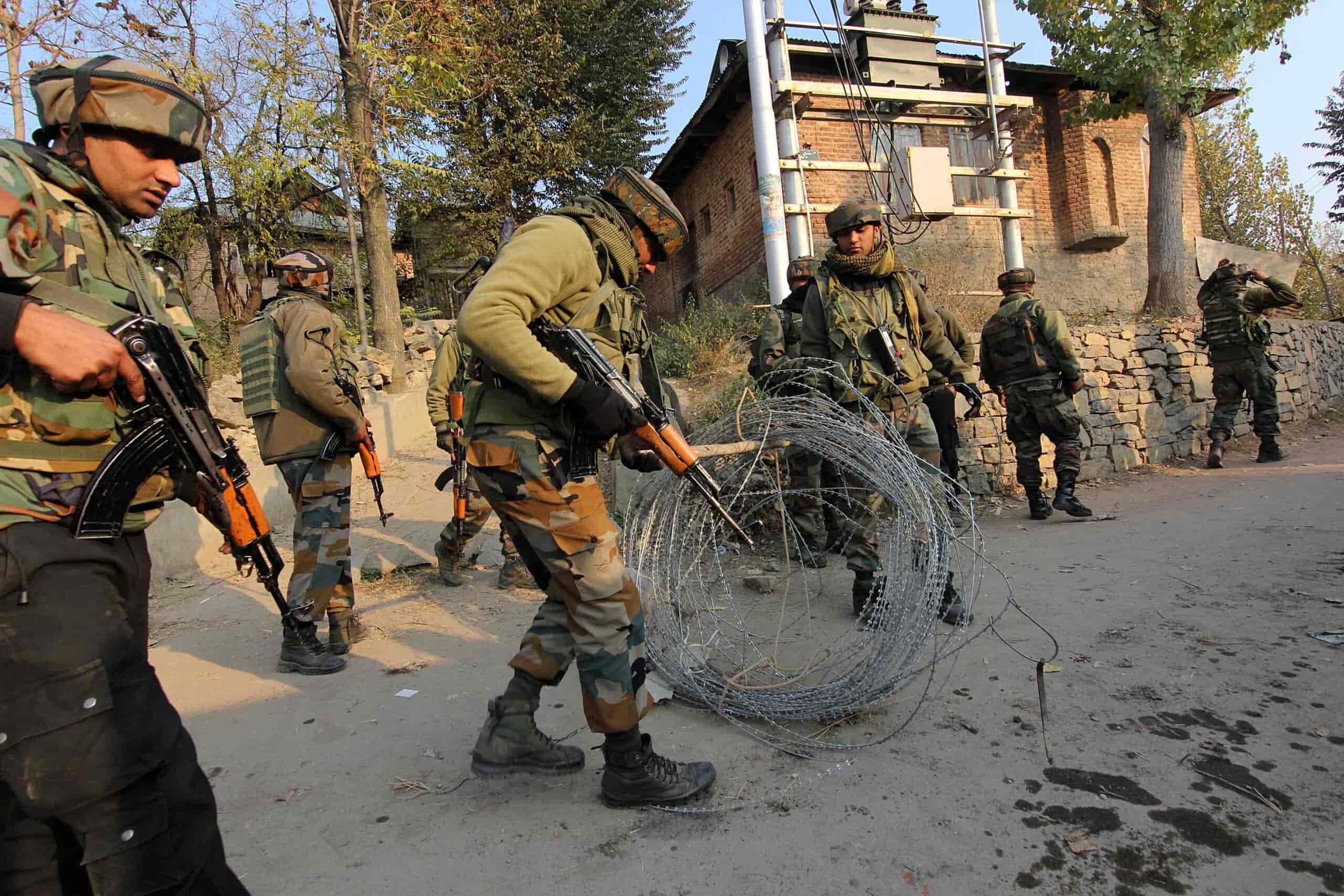
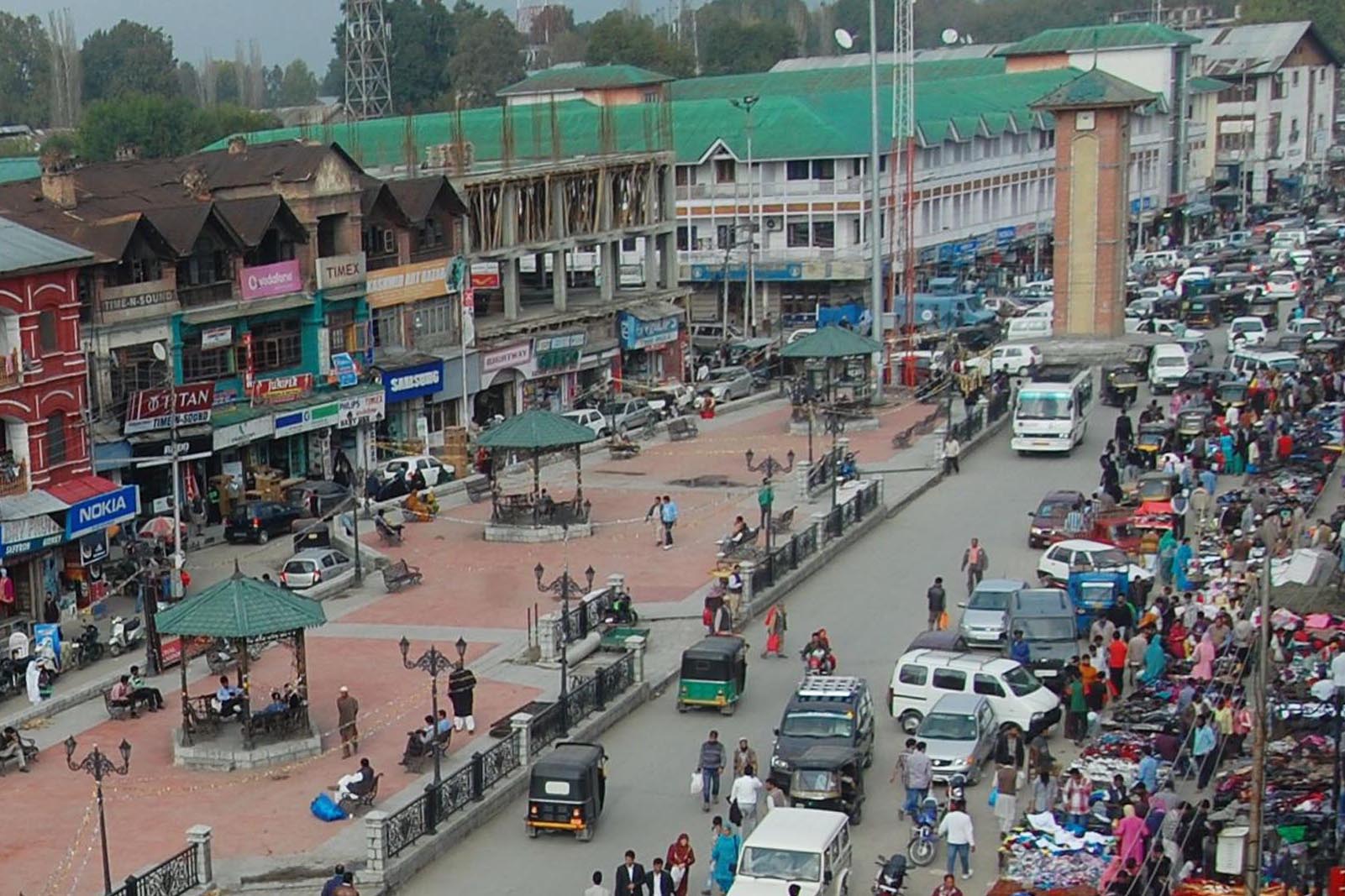
On April 4, Bal Krishan Bhat and his brother Anil Kumar Bhat, residents of Chotigam village in Shopian, had set out from their home early in the morning for their nearby medical shop. It was a daily routine for them for many years  An hour or so later, two youths drove up on a motorcycle. One of them went inside the shop and shot at the hand and leg of Bal Krishnan. He came screaming out and called to his brother who luckily was outside at the time. Bal Krishan was soon moved to Army’s 92 base hospital in Srinagar where his situation is stated to be stable.

This was the second attack on a non-migrant Kashmiri Pandit in the last five months. In October last, militants had killed a noted Kashmiri Pandit businessman, Makhan Lal Bindroo, incidentally also a chemist.

However,  Bal Krishnan was not the only one to be attacked on the day. Militants also shot at and critically injured the three migrant labourers.

As winter ends in Kashmir, the militancy is once again rearing its head and one of its targets is the migrant labourers and occasionally a Kashmiri Pandit, including those who have never migrated from the Valley in the last three decades.

Bal Krishan and his brother had been living in Shopian – one of the Valley’s most volatile districts which have witnessed a resurgence of militancy over the last seven years – without any fear of harm.  But the situation seems to have changed following the revocation of Article 370 on August 5, 2019 which has thrown Kashmir open to settlement by outsiders and people are fearing a demographic change. And lately, the movie Kashmir Files has further vitiated the atmosphere.

The Union Minister of State for Home Nityanand Rai recently told Parliament that 87 civilians and 99 personnel of Indian forces have been killed up to November 2021 since the union government scrapped the region’s autonomy. Among the slain civilians, fourteen are Hindus, including Kashmiri Pandits – eleven of them were killed in 2021.

In 2020, the government informed Parliament that 62 military personnel were killed and 106 more were injured in the violence, including along the borders. In 2021, 42 personnel were killed and 117 were injured.

Militants have also stepped up attacks on local policemen, many of whom have been killed while off duty or on vacations, as well as mainstream political workers and military personnel.

The parliament was also told that  264 civilians and 505 Indian forces personnel were killed by militants in Jammu and Kashmir from May 2014 to November 2021.

The fresh spurt in killings and the attacks, especially on minorities and outsiders, have been a source of worry for the security agencies which can’t provide security to each and every one of them. Police are now patrolling again at Chotigam, where two Pandit families, including that of Bal Krishnan, have been living as they didn’t migrate in 1989 with the other members of their community.

What is making things further difficult is that about 2,105 migrants have returned to Kashmir valley to take up jobs provided under Prime Minister’s Development Package. A total of 841 appointments were made in 2020-2021 under Prime Minister’s Development Package followed by 1,264 in 2021-2022, according to home ministry data.

But if the attacks on minorities continue to grow, as they have over the last year, the government could face a tough situation protecting all of them. Already last October, many Pandit government employees fled after the killing of Bindroo.

Militancy remains undiminished

From December 2021 and March 2022, about 66 militants have been killed in Jammu and Kashmir, according to Inspector General of Police, Kashmir, Vijay Kumar.  This further dealt a blow to militancy in the Valley.

But the attacks on minorities and also on the security forces have once again proved that militancy remains a formidable challenge for the security forces despite the killings of a large number of militants in recent years. According to an estimate, close to  500 militants, most of them the local youth,  have been killed since the revocation of Article 370 on August 5, 2019. Though the new estimates have put the number of militants under 200 – the first time the figure has fallen below this important psychological threshold – there has been little reduction in the levels of violence.

What is more, security agencies have already warned that the violence could once again scale up this year, with the local militancy expected to be reinforced by the influx of foreign militants – albeit, there have so far been no indications that this is happening. Militancy is largely led by the local youth who come from a demographic of 15 to 25 year olds.

“The omens for the future look grim, what with the Taliban back in power in Afghanistan which has naturally emboldened the militant groups,” read an editorial in a local newspaper. “Security agencies have also time and again expressed these fears and warned about the influx of Afghan militants and their sophisticated weaponry into Kashmir”.

But the last year’s situation gives the lie to such claims. Evolving geo-politics and even the US exit from Afghanistan have impacted Kashmir but little. Contrary to the apprehensions, the foreign presence in the Valley’s militancy has only increasingly diminished over the years.  In 2021, just 58 infiltration attempts were made, according to Inspector General of Border Security Force, Kashmir, Raja Babu Singh, in which five militants were killed, 21 returned and one surrendered. Singh said about 135 militants are present at launch pads across the border, waiting to infiltrate into India.  But so far there is little evidence that the foreign militants are present in Kashmir in any sizable number.

The Kashmir militancy is now mainly composed of the local youth who are untrained in armed combat and have fewer weapons to use.  So, they have posed little challenge to the security forces beyond some occasional attacks on the policemen.

The militancy in the union territory apparently looks on a shaky wicket. But it is premature to make predictions about Kashmir. The situation in Kashmir remains far too complex to lend itself to linear analysis. A case in point can be the sudden heightened violence in Jammu in October last year, which worsened the security situation in Poonch and Rajouri. The militancy had all but ended in the twin districts since early 2000. But since the middle of 2021, the area witnessed a sharp resurgence in violence, led by the militants infiltrating from across the Line of Control.  Fourteen soldiers, eight militants including one in custody, and a civilian were killed in the twin districts until October and then the peace mysteriously restored again.


Bridges promise connectivity to Abujhmar

Two bridges, one inaugurated in January this year and another under construction, bring a ray of hope to Dantewada’s rural population, reports Deepanwita Gita Niyogi

Not so long ago, Pilsuram Netam had to rely on wooden boats to cross the mighty Indravati river. A tributary of the Godavari, the Indravati is considered the lifeline of the entire Bastar sub-division comprising seven districts in southern Chhattisgarh. It is the most important river in central India.

A resident of Pahurnar village in Geedam block of Dantewada district, Netam recalled his fearful experiences of trying to cross the Indravatri, especially during the peak monsoon months of June to September, when the river is swollen.

“The residents of my village used boats to cross the river to reach the other side for essential supplies like food grains and medicines. It used to be a huge problem for us, especially during the rains. Many of us feared for our lives,” the youth said.

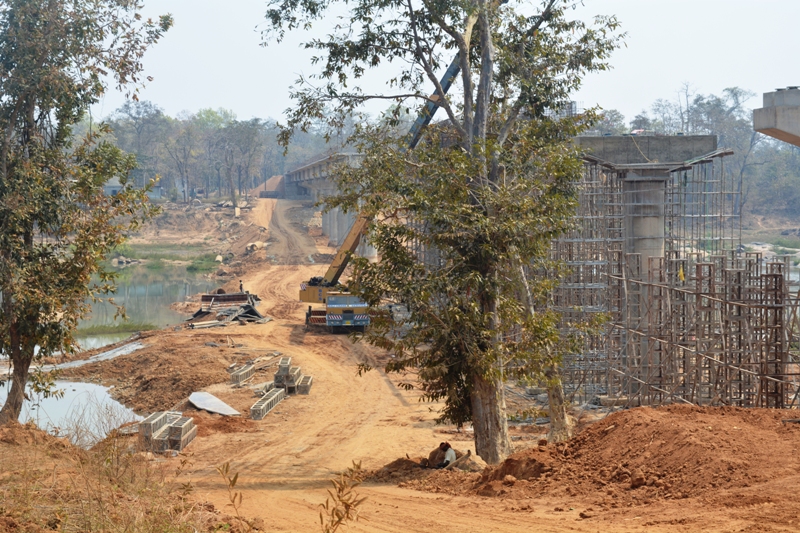
Netam’s troubles are now over. The 712-metre long Chhindnar bridge, built at a cost of approximately Rs 45 crore, has answered his prayers and that of many others like him. The bridge was inaugurated on January 25 by Chhattisgarh chief minister Bhupesh Baghel as part of development aimed at connectivity with remote cut-off areas.


Connecting Abujhmar

The heavily forested Abujhmar region, spread over 4000 sq km in central India, covers Narayanpur, Dantewada and Bijapur districts of Chhattisgarh and Gadchiroli district in Maharashtra. Even today, Abujhmar remains largely inaccessible with 95 percent of its area under Maoist domination. Government services hardly reach the deep forests of Abujhmar, depriving its tribal population of basic health facilities, educational opportunities and supplies under the public distribution system.

Other than coming as a source of relief to Pahurnar residents, the Chhindnar bridge has also opened up connectivity with remote villages inside Abujhmar. The entire Bastar sub-division is a Maoist-affected region. But the state government is making efforts to connect Abujhmar to the outside world which remains totally isolated during the monsoon. Altogether, six bridges are being planned on the Indravati.

Many people like Netam feel that the bridges will facilitate the movement of essential supplies and aid in the movement of central paramilitary and police forces. The structures will also open up Abujhmar to outsiders and benefit its residents by giving them access to irrigation, power supply and medicines.


Ray of hope

Whereas Netam and others once crossed the river to get the basic supply of rice, Pahurnar resident Patiram Kashyap said his village now has a ration shop and supplies are being brought regularly after the Chhindnar bridge opened up.

He added that work on similar bridges is on at present at Badekarka and Pundri village in Bijapur district. “The bridges will connect Orchha block in Narayanpur district which is part of Abujhmar. After the Chhindar bridge was inaugurated, movement by people is being noticed regularly. Four to five gram panchayats will be connected through these bridges linking Dantewada with adjoining Narayanpur and Bijapur districts. People will also consider marriage proposals from these places which were not much thought of earlier. Mostly, marriages used to take place within nearby villages,” Kashyap added.

Kashyap’s neighbour Shivram Kashyap has an elder sister living in Orchha block of Narayanpur after her marriage. Though he visits her on bike, both feel that now such journeys will increase.

A few kilometres away from Pahurnar, contractor Pappu Sahani is monitoring the construction of the semi-finished Badekarka bridge, which is expected to be completed by June. “Some 100 people are working daily at the site. Earlier, boats were the only means of crossing the river. A CRPF camp has been stationed for providing security to the workers and work is going on smoothly,” Sahani said.

Development professional and social worker Pramod Potai, who works for the cause of tribals in Bastar, pointed out that the bridges are a godsend to people. Accidents often used to happen and boats capsized during the monsoon season.

As a result of the bridges, several remote areas will witness rapid development in future. Remarking on the progress, Dantewada district collector Deepak Soni said that the Chhindnar bridge which was completed in just two years has sent out a good sign among the people of the district.

“After the Chhindnar bridge was inaugurated, it has become easy for the district administration to provide facilities to people living in far-flung villages. Now, mobile medical units are reaching villages and so are ambulances. Health camps are also being organised. Construction of schools and anganwadi centres has started in remote areas,” Soni added.

A government engineer, on the condition of anonymity, said efforts are being made to complete the Badekarka structure in two months. He admitted that workers at the site cannot have a free hand always and have to work under heavy protection, especially on the other side of the Indravati.

“Sometimes the security personnel have to go on other duty like ROP (road opening party) and hence, we do not get protection every day. Two other bridges are also being constructed on the downstream of the Indravati in Bijapur.”


MOST POPULAR

HOT NEWS