Rahul slams Modi govt, accuses it of misgovernance

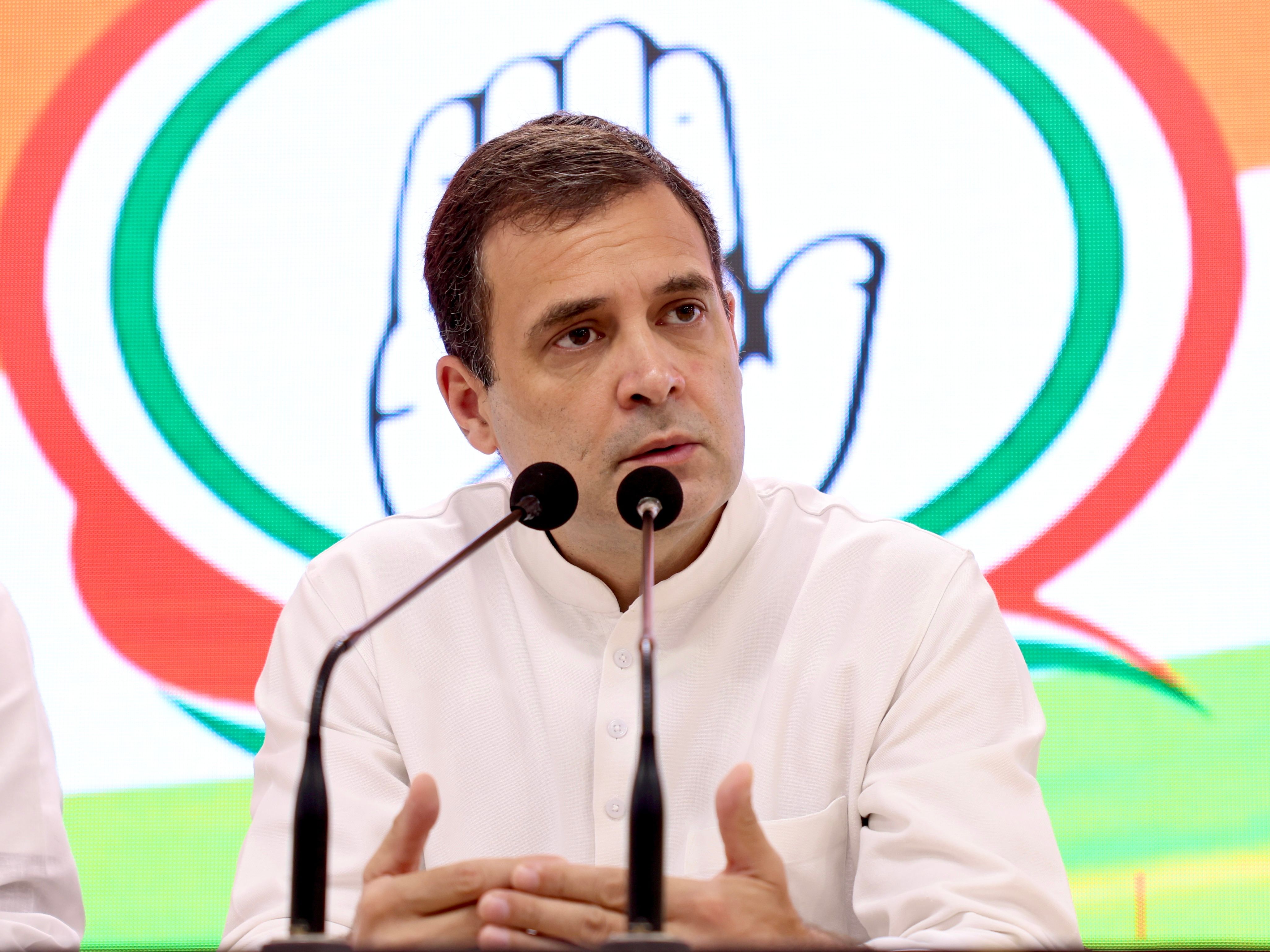
Congress leader Rahul Gandhi on Monday hit out at the Modi government, alleging that its “misgovernance” is a case study of how to ruin what was once one of the world’s fastest growing economies.

His tweet came in the midst of a power and coal shortage in the country amid peak summer demand.

“Power Crisis. Jobs Crisis. Farmer Crisis. Inflation Crisis. PM Modi’s 8-years of misgovernance is a case study on how to ruin what was once one of the world’s fastest growing economies,” the former Congress chief said on Twitter.

Gandhi and his Congress party has been attacking the BJP government over rising inflation and unemployment.

India’s covid positivity rate past 1 % again after two months

India’s Covid case positivity rate went past one per cent again after over two months as the country witnessed a single-day rise of 3,157 infections and 26 fatalities, according to the Union Health Ministry data updated on Monday.

The rise reported on Monday pushed the country’s overall Covid tally to 4,30,82,345 cases and 5,23,869 deaths, the data said.

The number of active cases rose by 408 in a 24-hour span to reach 19,500, the data updated at 8 am showed.

At 1.07 per cent, the daily positivity went past one per cent again after a little over two months, the ministry said. It was at 1.11 per cent on February 27.

The weekly positivity rate was 0.70 per cent, according to the health ministry.

Positivity rate refers to percentage of all coronavirus tests performed that return positive result. A higher positive rate means higher transmission rate for the virus.

The death toll has now climbed to 5,23,869 with the latest 26 fatalities being reported, 21 of them from Kerala alone.

The active cases constitute 0.05 per cent of the total infections. The country’s COVID-19 recovery rate was recorded at 98.74 per cent, the health ministry said.

The number of people who have recuperated from the disease rose to 4,25,38,976, while the case fatality rate was recorded at 1.22 per cent.

The cumulative doses administered in the country so far under the nationwide COVID-19 vaccination drive has exceeded 189.23 crore.

India’s COVID-19 tally had crossed the 20-lakh mark on August 7, 2020, 30 lakh on August 23, 40 lakh on September 5 and 50 lakh on September 16.

It surpassed the one-crore mark on December 19.

India crossed the grim milestone of two crore on May 4 and three crore on June 23.

The 26 new fatalities include 21 from Kerala, two from Odisha and one each from Karnataka, Uttar Pradesh and West Bengal.

A total of 5,23,869 deaths have been reported so far in the country including 1,47,843 from Maharashtra, 69,068 from Kerala, 40,102 from Karnataka, 38,025 from Tamil Nadu, 26,175 from Delhi, 23,508 from Uttar Pradesh and 21,202 from West Bengal.

The health ministry stressed that more than 70 per cent of the deaths occurred due to comorbidities.

Our figures are being reconciled with (those of) the Indian Council of Medical Research, the ministry said on its website, adding that state-wise distribution of figures is subject to further verification and reconciliation.

Nata Pratha, an alibi for no fringe Live-in Relationship

Over the years, Tehelka has made a name for its investigative journalism and sting operations. Its odyssey with sting began with the expose of cricket match-fixing scandal and then came the bigger undercover “Operation West End” that nailed corruption in defence deals.  This triggered a national debate and led to the resignation of the then Defence Minister, senior members of the ruling coalition, and later the denouement came in the form of a Special CBI Court convicting a Major General, who had retired by then.  For Tehelka, it was the journalism of public interest that won it the International Press Institute (IPI) Award for Excellence in Journalism twice. There were many other important sting operations carried out by Tehelka in subsequent years, ensuring that it was a turning point in journalism.

In keeping with the lofty ideals set by Tehelka, we have come with another exposure in this issue of the magazine with our cover story “Nata Pratha or Live-in Relationship”.  Unknown to many, the old custom is still practiced in tribal belts of Rajasthan, Madhya Pradesh, and Gujarat. This practice was in vogue initially to empower women, mostly widows and victims of child marriage to remarry, but has now gone awry. However, this is still being misused by men as a licence to enter into extra-marital relationships. The hapless women are sold, auctioned and the booty is used by their husbands to buy new women for them. Also traditionally, both the man and the woman were supposed to be married or widowed, but the custom has so evolved that it in present times includes single people as well.

Marriage is and has always been considered sacrosanct but as the word, “Nata” suggests just a relationship, under this custom the prospective husband does not need to perform any marriage rituals but just requires the man to pay some amount either to the woman with whom he wants Nata or to her husband.  As it is not a legal marriage the women under Nata Pratha can neither claim maintenance, nor she or her children born out of this arrangement have any inheritance rights. The custom is akin to modern-day “Live-in Relationship” but sans any rights. Actually, under Nata Pratha lives of women and children born out of this arrangement mostly get ruined and fall apart. Children face verbal and physical abuse at schools if their mothers have gone to other men under this ancient practice, different studies have found.

Tehelka has done its job and now it is up to the Centre and States to come to the aid of women victims and the children born out of this arrangement under this custom.  Perhaps the root cause is poverty, illiteracy, and lack of awareness about the Rights.  These hapless women and children need their Fundamental rights as enshrined under Article 14 of the Constitution viz Right to equality, Right against exploitation, Right to life and personal liberty, and Protection of Women from Domestic Violence Act.  For children, the authorities need to work on other aspects too – such as emotional and skill development – for holistic development of the children.

Is someone listening?


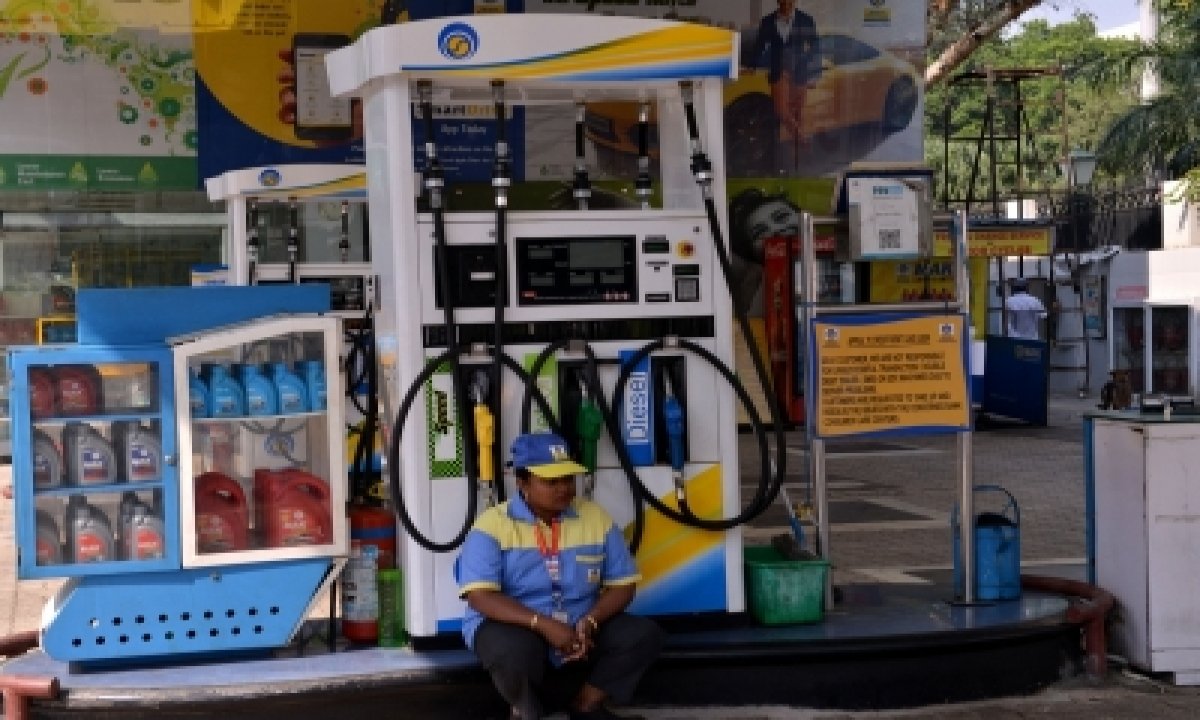
Govt’s defence on back-breaking fuel price hike rings hollow

Have you ever wondered that the government takes away more than 50 rupees out of every 100 rupees worth of petrol or diesel that you buy at a Petrol Pump or a Filling Station? The Central government gets the lion’s share of 29 rupees and the states the balance. However, in 2021 the government share was as high as 60 rupees. Dehra Dun-based veteran journalist RAJ KANWAR has the answer!

The elections in the five states’ in February 2022 had prompted the Central government to reduce the excise duty roughly by Rs 5 on petrol and Rs 10 on diesel. Likewise, the States too were urged to commensurately reduce the VAT on petrol and diesel in order to give relief to the consumers. As a result the selling price of both the petrol and diesel had considerably come down at the point of sale.

Post the elections results on March 10, the government took a breather for about 10 days before returning with a vengeance to its price-raising ritual. Rather than increasing the retail price in one go, the BJP government at the Centre instead resorted to a daily dose of price rise. Starting from March 22, prices were increased each day by about 80 paise. Thus the price per litre of both diesel and petrol saw an increase of Rs.6.40 in the last 10 days of March alone.

This ritual of daily rise in prices also continued during the first six days of April when the retail price of both diesel and petrol saw an increase of 80 paise every day. Perhaps bored with the monotonous routine of daily price increase, both the oil marketing companies and the government then took a much needed respite for the following 17 days during which the prices had remained unchanged.

It is being officially claimed that the oil marketing companies daily revise the fuel prices in line with the ‘benchmark international prices and foreign exchange rates’. Such a claim does not hold water considering that daily retail fuel prices continued to be revised upward irrespective of any decline in international crude prices or the exchange rate. Consider the following: A barrel of Brent Crude on 21 March 2022 costs $122.29. Its price came down on 6 April to $100.81 – a decrease of nearly $21.48. Despite the reduction in international price, there was no corresponding price reduction in India. Instead, the government kept the prices unchanged from April 7 to 23.

 A windfall for BJP government

When the BJP came to power at the Centre in 2014-15, the Central government had collected just about Rs.72,160 crore as the excise duty on petrol and diesel. Six years later in 2020-21, the revenue collected from 81,099 petrol pumps across the country had jumped approximately five times from Rs.72,160 crore to a massive Rs.3,35,000 crore — that makes it quite tidy amount from a single source. Thus for the incumbent government in New Delhi, these petrol pumps spread across the country are like hens that lay golden eggs.

There has been much hue and cry against the high excise duties on the retail sale of fuel. The Congress and other opposition parties had the other day staged a walkout from the Lok Sabha protesting against the hike both in the automobile fuel and domestic cooking gas and demanding their rollback. The government, however, via its numerous ministerial functionaries headed by the Prime Minister Modi himself had proffered several reasons why the fuel charges were rising and why these could not be reduced?

Prime Minister Modi used his ‘standard excuse’ of blaming the ‘previous governments’ for their failure in reducing India’s dependence on imported crude, forgetting that his own government too had failed to do so despite its avowed policy of reducing by 2022 the import of crude by 10 per cent. Instead, the quantum of imported crude increased from 189.44 MMT in 2014-15 when the Modi government took over to 226.96 MMT in 2019-20 – an increase of 37.52 MMT.

Import of crude will always rise

Two years ago in one of my articles in Tehelka, I had clearly visualized that India’s import of crude oil would increase year-by-year rather than decline since our domestic production was falling and the consumption rising. India’s domestic production of crude, for instance, in 2017-18 was 35.7 MMT, in 2018-19 34.20 MMT, and it declined further to 32.17 MMT in 2019-20. While on the other hand, its consumption that was 251.9 MMT in 2017-18, increased to 257.2 MMT in 2018-19 – an increase of 5.3 MMT just in one year.  

Former Petroleum minister Dharmendra Pradhan had somewhat naively put the blame on the international oil prices for high retail fuel prices in the country, forgetting that the incidence of Central Excise Duty and VAT by the states constituted more than 50 per cent of the retail price of both petrol and diesel. On another occasion later, while conceding that the high prices hurt the consumer, he added that Rs.35,000 crore were spent on free vaccination. He also blamed the previous Congress governments for leaving unpaid oil bonds worth crores of rupees for repayment by the BJP government. Subsequently, a Congress spokesperson and a former Union Petroleum minister Dr. M. Veerappa Moily had more than adequately refuted Pradhan’s contention. Incidentally, Prime Minister Modi too had claimed in one of his statements that he was spending one lakh crore rupees on providing free food grains to the poor under the Pradhan Mantri Garib Kalyan Yojana.  To attribute the current retail high prices of diesel and petrol to the unpaid oil bonds issued by the previous UPA governments that the incumbent government has had to pay is untenable to say the least.

In a well-argued column in the Indian Express of April 18 on the ‘Economics of Oil Bonds’, Udit Misra writes, “When the NDA government under the Prime Minister Narendra Modi took charge in 2014, there were oil bonds worth Rs 1.34 lakh crore that had to be paid between 2015 and 2021, the NDA government has fully paid off four sets of oil bonds – a total of Rs.13,500 crore. Each year, the BJP government have had also to pay interest on oil bonds that have not matured. Thus the government has paid a total of Rs.93,686 crore towards interest as well as the principal.”

 In contrast, what have the governments, both the Central and the States, collected from the variety of taxes levied on the retail sale of petroleum products?  In 2014-15, the contribution of the retail oil sector to the exchequer was Rs. 3,32,620 crore. The following year, this contribution rose to Rs.4,34,506 crore. This revenue kept on increasing with each passing year reaching Rs.6,99,846 crore in 2021-22 – more than seven times the interest and the principal paid on oil bonds,” adds Misra.  

The man in the street is greatly overburdened with all kinds of government levies and taxes such as Goods and Services Tax (GST) both by the Central and the State governments virtually on every product that he buys.  The GST ranges from five per cent to 28 per cent, depending on the essentiality of a particular product. There are nearly 1300 products and about 500 Services that fall under the four tax slabs of 5%, 12%, 18% and 28%. The kitchen provisions including pulses, rice, spices, flour et al too fall under the five per cent GST. The government has not spared even the laddoos that form part of religious ceremonies that too are taxed at five per cent.

The government is now left with no excuse whatsoever to not to reduce excessive taxes and levies on the retail sale of petrol and diesel. But will this revenue-hungry government listen?


(Raj Kanwar is a Dehra Dun-based veteran journalist, writer and author)

Bid to twist historical facts is a sheer folly

CBSE’s  latest decision to remove several chapters from the history and political science syllabi of Classes 11 and 12 is in tandem with the trend seen in recent years

On 23 April morning, when Tehelka’s editor-in-chief, Charanjit Ahuja, reminded me it’s the World Book Day, I was certain to focus on the freshly published books. But as I got started, collecting updates on the new titles, what struck were hitting news reports on text books, focusing on the CBSE’s (Central Board of Secondary Education) latest decision for the removing several chapters from the history and political science syllabi of Classes 11 and 12, including the Non-Aligned Movement, the Cold War era, the rise of Islamic empires in Afro-Asian territories, the chronicles of Mughal courts and the industrial revolution. And in the class 10 syllabus, the topic “impact of globalisation on agriculture” from a chapter on ‘Food Security’ has been dropped.

Much more, along the off-with- it strain! According to  latest news reports, the CBSE 2022-23 curriculum, has removed translated excerpts from two poems in Urdu by Faiz Ahmed Faiz in the “Religion, Communalism and Politics — Communalism, Secular State” section of NCERT’s Class 10 textbook “Democratic Politics II”.

Chapters on “democracy and diversity” have also been dropped. Also axed is a chapter on “Central Islamic Lands” from the History course content for Class 11…Social Science themes that have been axed include “impact of globalisation on agriculture” from a chapter on Food Security in the Class 10 curriculum. A chapter on “Cold war era and Non-aligned Movement” has been dropped from the Class 12 Political Science curriculum.

To quote from the news reports: “The CBSE has also dropped the course content from chapters on ‘democracy and diversity’. The dropped chapter “Central Islamic Lands” in the class 11 history syllabus talks about the rise of Islamic empires in the Afro-Asian territories and its implications for economy and society. The chapter focused on arenas of Islam in reference to its emergence, the rise of the caliphate and empire building….Similarly, in the class 12 history syllabus, the dropped chapter titled ‘The Mughal Court: Reconstructing Histories through Chronicles’ examined the chronicles of Mughal courts to reconstruct the social, religious and cultural history of the Mughals.”

*****

In fact, this latest news on text books comes with backgrounders! As in these recent years, the RSS’s intrusion into the education sphere was more than apparent, when the RSS-affiliated Shiksha Sanskriti Utthan Nyas, headed by Dina Nath Batra, had sent a list of recommendations to the National Council of Educational Research and Training (NCERT) demanding a host of changes in its textbooks. Batra had asked the NCERT to remove English, Urdu, and Arabic words, a poem by the revolutionary poet Pash and a couplet by Mirza Ghalib, the thoughts of Rabindranath Tagore, extracts from painter MF Husain’s autobiography.

Batra  had also wanted  references to the Mughal Emperors as “benevolent”, the BJP as a “Hindu” party, the National Conference as “secular”, an apology tendered by former prime minister Manmohan Singh over the 1984 riots, and a sentence that “nearly 2,000 Muslims were killed in Gujarat in 2002”  —  to be  all removed!

News reports also stated that Nyas objected to certain  facts—  the Class 11 political science textbook mentions   “the massive majority of Congress in 1984” but “does not present the 1977 election details” …Also, the Class 12 political science textbook, “terms National Conference of J&K a secular organization”, and the Class 10 English textbook “places nationalism against other ideals”  as “an attempt has been made to show a rift between nationality and humanity by citing thoughts of Rabindranath Tagore”… It also wanted that the Hindi textbooks to mention that the medieval Sufi mystic Amir Khusrau “increased the rift between Hindus and Muslims.”

Nyas had on earlier occasions demanded the removal of AK Ramanujan’s essay, Three Hundred Ramayanas: Five Examples and Three Thoughts on Translation, from the undergraduate syllabus of the University of Delhi. It also went to court demanding Wendy Doniger’s book, The Hindus, not be sold in India. Mind you, those demands were fulfilled. Ramanujan’s essay was removed from University of Delhi’s reading list. And Penguin India, the publisher of Doniger’s book, pulled it from circulation.

It gets relevant to mention that in 2014, government schools in Gujarat were given six textbooks written by Batra as “supplementary literature”, that claimed cars were invented in ancient India! Also, school children were told to draw an ‘enlarged nation’ which would include the neighboring countries — Pakistan, Bangladesh and Afghanistan.

Not to overlook the distortion of the very meaning of particular words like ‘Roza’ (Muslims’ observe Roza or fast during the holy month of Ramzaan), published in text books taught in Gujarat schools. And in the summer of 2017, the ICSE board’s class VI text book ‘blamed’ mosques and Azaan for causing noise pollution! A chapter on noise pollution, in the text book published by Selina Publishers, focused on the sources that cause noise pollution. Besides images of trains, cars, planes as the usual or regular sources of noise pollution, there was also an image of a man shutting his ears in frustration right in front of a mosque! Relaying that the Azaan is a source of noise pollution!

*****

And in these recent years, there have been distortions if not deletion of entire chapters. Together with that, twisted versions of the historical facts. I would call this nothing short of lynching of facts.

Around the autumn of 2016, news-reports had come in of the then Rajasthan government’s plans to remove from the text books the particular chapter on Pandit Jawaharlal Nehru.

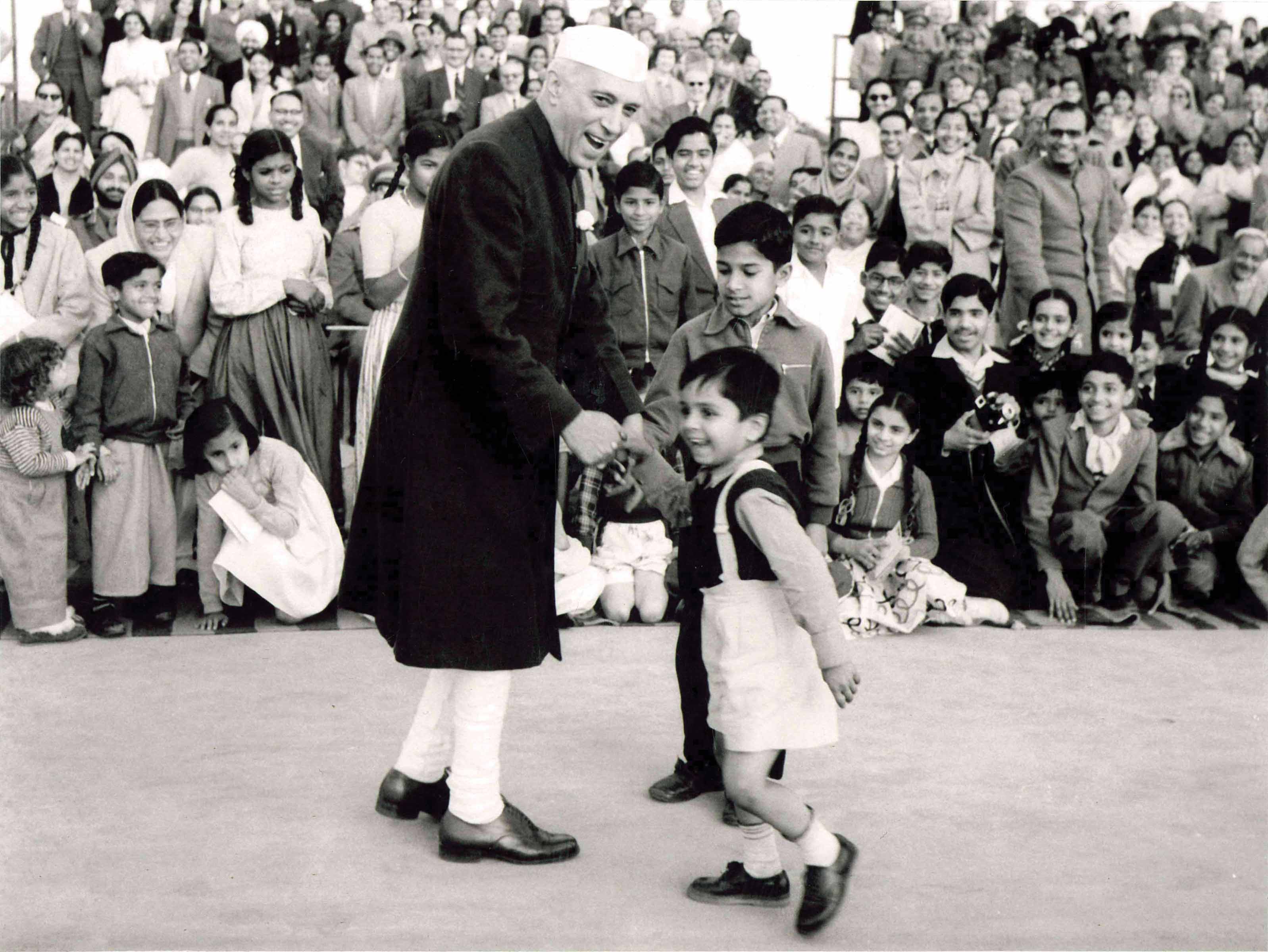
Tell me, why should this generation or future generations sit deprived of details to a statesman like Nehru? After all, ‘Panditji’, as Jawaharlal  Nehru  was  popularly  called, stood  for democratic values, for the  rights and  dignity of the minorities and the disadvantaged. He was looked upon as a saviour. That feeling of security was intact because he was himself secular.

News reports had also stated that under the previous BJP-led sarkar, students in Rajasthan were to be taught incorrect and twisted versions of historical facts:  Maharana Pratap defeated the army of Mughal Emperor Akbar in the Battle of Haldighati some 450 years ago. This is incorrect. To quote historians on this: “This is factually and historically incorrect as historical evidence shows that Maharana Pratap, ruler of the Mewar region, had fled the battlefield, although in the later years he continued his guerilla war against the Mughals.”

And the then BJP-led government in Rajasthan had even renamed the Ajmer Fort — from Akbar Ka Qila to ‘Ajmer ka Qila and Sangrahalaya’. No expert committee of historians and academics was involved in the decision. Just by the order of the then Rajasthan education minister, Vasudev Devnani, the name of this historical fort was changed. Mind you, this fort built by Akbar in 1570 was left untouched even during the rule of the Rathors, Marathas and the British. The original name of the Ajmer Fort was legally sanctioned by a Gazette notification in December, 1968. It was named as ‘Akbar ka Qila’ or ‘Daulat Khana’ and this name continued till, of course, Right-Wing came centre stage.

In fact, Right-Wing government’s dislike for the Mughals could be judged from the fact that not just the very title ‘Great’ was removed  from Mughal Emperor Akbar’s name, but also the relevant focus on him from the text books taught in the state of  Rajasthan.

And chief  minister of  Uttar Pradesh, Yogi Adityanath’s aversion for the  Mughals and their  built monumental wonders was more than apparent, when the annual  budget for 2017-2018 made no mention of  Taj Mahal in the  section  ‘Hamari Sanskritik Virasat’ (Our  Cultural Heritage) incorporated in the finance minister’s 63-page speech. This attitude for the upkeep of the Taj Mahal! Not to overlook the fact that the Taj Mahal is one of the seven wonders of the world. It is also UNESCO world heritage site that draws thousands of tourists and earns crores in terms of revenue for the government.

On previous occasions, Yogi Adityanath had publicly commented that the Taj Mahal, built by the Mughal Emperor Shah Jahan, did not reflect India’s ancient culture. Also, he made it amply clear that no replicas of the Taj Mahal would be presented to the foreign dignitaries visiting Uttar Pradesh; instead copies of the Hindu scriptures would be presented to them.

The Maharashtra government under the earlier BJP rule had almost near-defaced the names of Muslim rulers from its history text books. It planned to omit from the text books, vital details to the Delhi Sultanate and the Suri Empire in India. Without realizing that without those, the very history of India would be incomplete, if not riddled with gaps. As a commentator put across,  “Without  focus on the Bijapur Sultanate, Aurangzeb’s rise to power over other contenders to the throne and the invasion by Ahmed Shah Durani, cannot be put in the historical context. Also, one cannot bypass other vital historical facts —  In the third battle of Panipat, where the Marathas were defeated by the Durani Empire of Afghanistan, the Marathas sided with Shah Alam II (Shah Alam II was only a puppet under the Marathas) and then led an army to punish the Afghans for their atrocities in 1772. They attacked the fort of Pathargarh and forced the Rohilla Afghans to pay a huge war indemnity… Muslim rulers hold out much in terms of the historical past. And it would be a folly if not unethical to cut or omit or trim or distort historical facts.”

******

Verse of Faiz Ahmed Faiz will always hold out. For generations to come. Such  intense verse cannot ever be crushed or erased or bypassed.

Leaving you with Faiz’s  this particular verse:

Love’s Prisoners

Wearing the hangman’s noose, like a necklace,

The singers kept on singing day and night,

kept jingling the ankle-bells of their fetters

and the dancers jigged on riotously.

We who were neither in this camp nor that

just stood  watching  them enviously.

shedding silent tears.

Returning, we saw that the crimson

of flowers had turned  pale

and on probing within, it seemed

that where the heart once was

now lingered only stabbing pain.

Around our necks the hallucination of a noose

And on our feet the dance of fetters.


2024 polls: Congress goes back to the drawing board

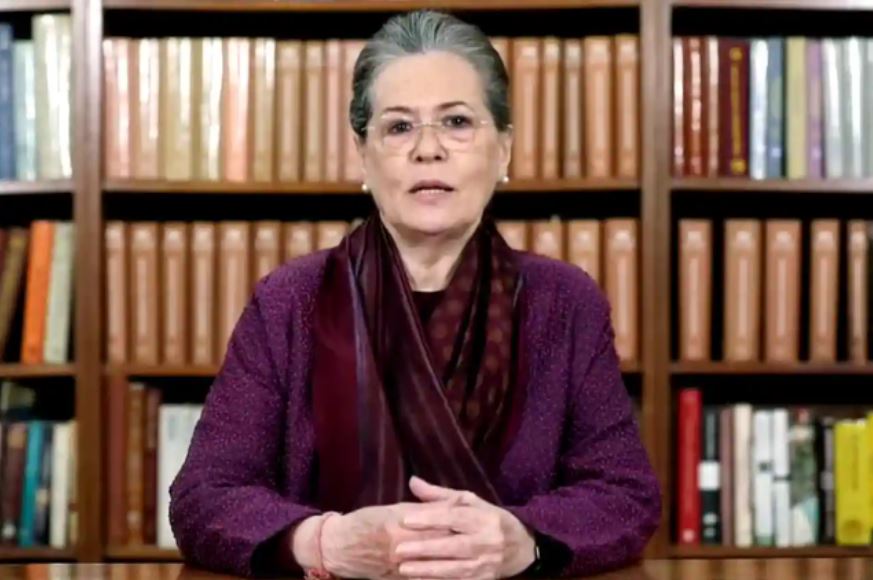
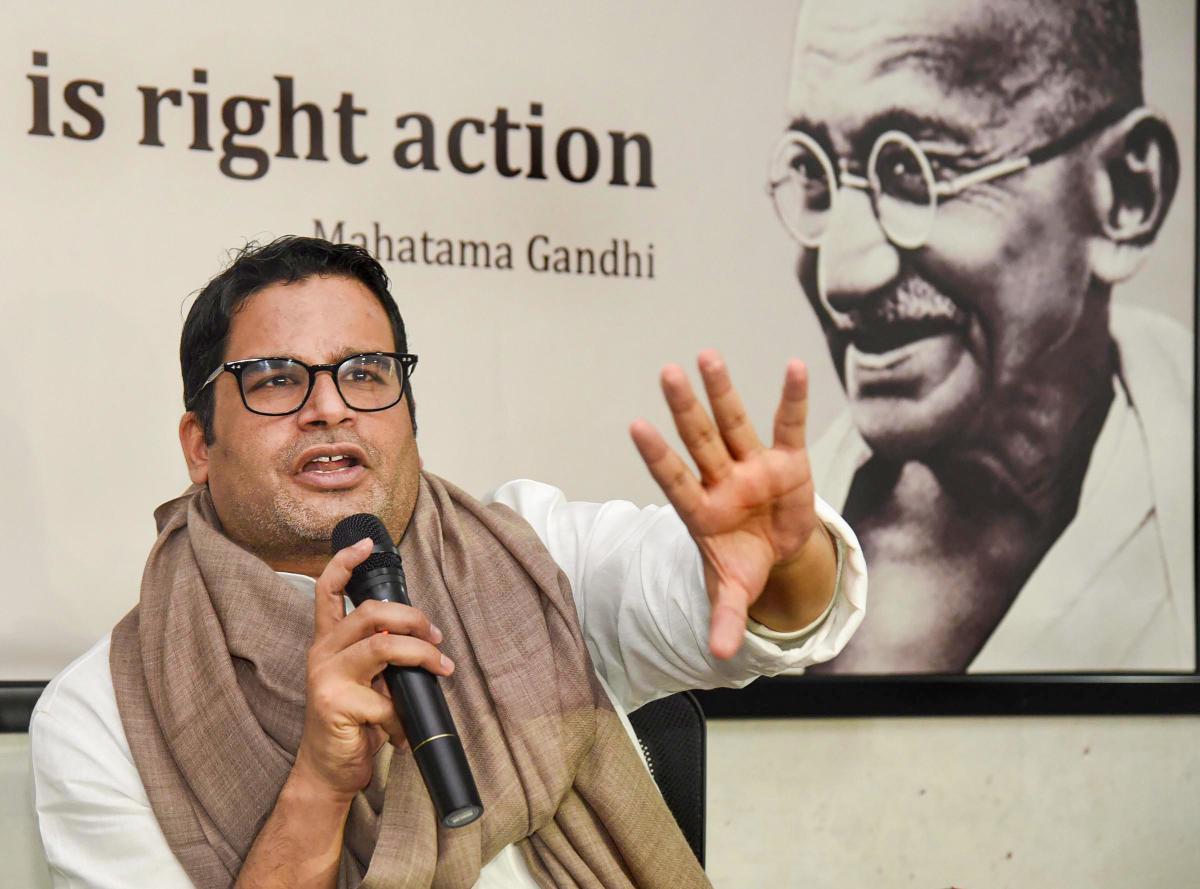
Congress President Sonia Gandhi has formed an Empowered Action Group after reviewing a plan presented by poll manager Prashanr Kishor to revive the party. Kishor, however, has declined her offer to join the party,  reports Amit Agnihotri

Poll manager Prashant Kishor tried hard but failed to join the Congress and work towards the party’s revival ahead of the 2024 national elections.

“I declined the generous offer of Congress to join the party as part of the EAG (Empowered Action Group) and take responsibility for the elections,” Kishor tweeted.

“In my humble opinion, more than me, the party needs leadership and collective will to fix the deep-rooted structural problems through transformational reforms,” he said.

The poll manager’s reactions came shortly after the Congress said he had declined an offer to join the party.

“Following a presentation & discussions with Sh. Prashant Kishor, Congress President, has  constituted an Empowered Action Group 2024 & invited him to join the party as part of the group with defined responsibility. He declined. We appreciate his efforts & suggestion given to party,” Congress chief spokesperson Randeep Surjewala tweeted.

The Congress response came 10 days after party chief Sonia Gandhi along with selected senior leaders reviewed a plan presented by Kishor to revive the party on April 16.

This means the Congress will now work out its 2024 strategy on its own. Party chief Sonia Gandhi has already set her eyes on the next national elections and formed an empowered action group for the big contest.

The panel will also work out strategy for the assembly polls that will take place over the next two years, namely in Gujarat, Madhya Pradesh, Rajasthan, Chhattisgarh and Karnataka.

The grand old party will also convene a Nav Sankalp Chintan Shivir in Rajasthan’s Udaipur from May 13-15 where over 400 leaders from across the country will debate and finalize the broad roadmap for the 2024 national elections.

The Chintan Shivir will review the current political, social and economic challenges before the grand old party as also the trampling upon the rights of the weaker sections and minorities across the country and other issues affecting the people.

The Congress galvanized into action after the party’s poor show in the five recent assembly polls shocked and pained the leadership as well the workers across the country.

Noting the recent poll defeats in five states, Uttar Pradesh, Uttarakhand, Punjab, Goa and Manipur were “both shocking and painful”, Sonia told the party MPs that the road ahead for the Congress was challenging more than ever before and unity at all levels in the party was paramount.

“Holding a Chintan Shivir is very necessary.  That is where the views of a larger number of colleagues and party representatives will be heard.  They will contribute to put forward a clear roadmap on the urgent steps to be taken by our party on how best to meet the challenges we are confronted with,” she said.

“Our revival is not just a matter of importance to us alone — it is, in fact, essential for our democracy itself and indeed for our society as well,” she said.

Soon after, Prashant Kishor made a detailed presentation before Sonia Gandhi and Rahul Gandhi on April 16 on how to revive the Congress party, following which the party chief reviewed the proposals with several senior leaders for many days.

Others who reviewed the proposals included AK Antony, Ambika Sonia, Mallikarjun Kharge, P Chidambaram, Digvijay Singh, Kamal Nath, Jairam Ramesh, Ajay Maken, Mukul Wasnik, KC Venugopal and Priyanka Gandhi Vadra.

The group advised the Congress chief on the merits and demerits of Kishor’s plan and whether the party should induct the poll manager as a leader or hire him as a consultant.

Sonia also discussed Kishor’s plan with chief ministers of Rajasthan and Chhattisgarh, Ashok Gehlot and Bhupesh Baghel, respectively. Both Gehlot and Baghel are important in the Congress system not only because they lead party governments in the two key Hindi-speaking states, but also because Rajasthan and Chhattisgarh will have assembly polls in 2023, a year before the national battle.

At present, Rajasthan and Chhattisgarh are the only two states where the Congress rules on its own. The party shares power in Maharashtra, Jharkhand and Tamil Nadu.

Before the meeting at Sonia’s 10 Janpath residence in the national capital began, Gehlot made an important remark that Kishor had become a big brand in the country.

“This is professional work. There are others also like him and we keep in touch with them also. But everybody is talking about Kishor today as he has become a big brand in the country,” Gehlot said.

“The opposition can benefit from his experience,” he said.

Gehlot’s remarks assumed significance as they came a day after party veteran M Veerappa Moily backed Kishor’s proposed entry in the Congress.

Moily claimed that Sonia Gandhi was keen to induct Kishor and dubbed those opposed to the idea as anti-reform. Interestingly, Moily was part of the group of senior dissenters (G23) who had written a letter to Sonia in 2020 demanding internal elections for all party posts.

A range of senior leaders like M Veerappa Moily, Tariq Anwar and Digvijay Singh backed the proposal to induct Kishor in the Congress, but noted that Sonia Gandhi would take the final decision in the matter.

Moily said he had suggested the idea to Sonia earlier, Anwar said that Kishor was ready to join the Congress without any pre-conditions while Singh said the strategist had made a nice presentation which was liked by the veterans.


The plan

PK’s plan 2.0 for the revival of the Congress ahead of the 2024 national elections was basically an updated version of the document he had presented before the party high command last year.

The reworked plan mostly drew from the last year’s plan, which had suggested that the grand old party should go in for a reincarnation meaning same soul but new body. The route to reincarnation would be through rebuilding the party and democratising it, says the new plan.

The new elements are the idea to focus on contesting 370/543 Lok Sabha seats alone in 2024. The other related point is that the Congress should go alone in big states like Uttar Pradesh and Bihar, which send 120 seats to the Lok Sabha, while forging alliances with like-minded regional parties in states like West Bengal and Tamil Nadu.

“It is about Winning India in 2024,” the new plan said.

It listed reasons like failure to capitalize on legacy and achievements, structural weaknesses and lack of connection with the masses as being responsible for the grand old party’s slide from 1984 to 2019.

One of the key recommendations in the earlier plan also finds place in the new suggestions. This relates to the high command and mentions that while Sonia Gandhi should be at the helm of the AICC, Rahul Gandhi should take charge of the Congress Parliamentary Party. At present Sonia heads the CPP.

On the need for a non-Gandhi as party chief, the new plan suggests that such a person may be appointed a vice president or a working president to silence the critics of the Gandhi family, especially the BJP, which often slams the grand old party over dynastic politics while conveniently practicing it.

On re-strengthening the party, the new plan suggests that the Congress needs to reclaim its founding tenets and create an army of grassroots leaders and foot soldiers.

Among other suggestions include the creation of a new Congress for the masses, protecting its values and core principles, destroying a sense of entitlement and sycophancy, fixing the alliance conundrum, follow one family, one ticket rule to counter prevalent nepotism, reconstituting organisational bodies via elections across all levels, fixed term and fixed tenures for all posts including Congress President and Congress Working Committee, identifying and meaningfully engaging 15,000 grassroots leaders and activating 1 crore foot soldiers across India.

Kishor had made a similar presentation last year before the Gandhis and suggested a few ideas to revive the Congress and restructure the organization. The proposals were reviewed by select party veterans but did not go ahead.


The planner

Kishor is a well-known poll strategist and has worked with several parties in the past, including PM Modi in 2014.

He had joined the Janata Dal-United in 2018 after he helped party chief Nitish Kumar win the 2015 Bihar assembly polls. Kishor, who was appointed as JD-U vice president, was expelled in January 2020 due to his disagreement with the party over the Citizenship Amendment Act.

He was also behind YSR Congress chief Jagan Mohan Reddy’s victory in the 2019 Andhra Pradesh assembly polls.

In 2021, Kishor made a significant contribution towards chief minister Mamata Banerjee’s historic win over the BJP and quit the role of a poll manager immediately after the results saying he was looking for a change.

He also advised DMK chief MK Stalin in the 2021 Tamil Nadu polls.

For the past one year, Rahul Gandhi had been exploring ways to induct Kishor in the Congress. Kishor was poll manager for the Congress party in the 2017 Uttar Pradesh and Punjab assembly elections. While Punjab was a success, UP turned out to be a disaster.

Later, then Punjab chief minister Amarinder Singh had appointed Kishor as his principal adviser for the 2022 assembly polls but the strategist had resigned saying he was taking a break from an active role.

Since then, Kishor has been focussed on the 2024 national elections.


Congress allies

The Congress lost the 2014 and the 2019 Lok Sabha polls to the BJP led by PM Modi and is desperate to dislodge the saffron party at the Centre in 2024.

Kishor, who played a key role in the historic third term win of West Bengal chief minister Mamata Banerjee last year against the BJP juggernaut, had expressed his desire to join the Congress and help the grand old party work out a strategy for the 2024 Lok Sabha polls but the talks did not go forward.

Since then, the Congress has been trying to forge a coalition of like-minded opposition parties but has at times faced resistance from regional parties the TMC and AAP, who think they are more aggressive than the grand old party.

Recently, during the Goa assembly elections, the Congress had blamed both the AAP and TMC for contesting the polls in the coastal state but was in turn blamed by them for being too soft on the BJP.

The managers of AAP in Delhi and TMC in West Bengal believe they are more capable of defeating the BJP nationally.

With that thought, Mamata had even suggested a federal front of regional parties minus the Congress but NCP leader Sharad Pawar differed with her. Pawar argued that any such front was not possible without the Congress as it was the second largest party in the country.

The regional parties were flexing muscles as the Congress has suffered a series of poll losses since 2014. The Congress recently lost Punjab to the AAP mainly due to infighting.

Yet, the Congress thinks that it is the only natural anchor to any national anti-BJP front and must take lead in that direction. Prashant Kishor’s latest presentation was the next step towards that direction and suggested a host of radical moves.

The senior Congress leaders who reviewed Kishor’s plan suggested that the poll manager should sever his connections with the regional parties like TMC and TRS.

Kishor had a detailed meeting with Telangana chief minister and TRS president KC Rao, who later signed a deal with Kishor’s organization, the Indian Political Action Committee. TMC also has a similar contract with I-PAC for the 2024 national elections.

Rao said that Kishor was an old friend and that the two had been planning to bring about a change nationally in 2024. Recently, Rao has been attacking the Centre’s policies to counter the BJP’s growing influence in Telangana.


Inflation pinching pockets but govt data confusing

RBI governor’s inflation forecast and a separate data released by the Ministry of Statistics & Programme Implementation are at variance, and have only created confusion.

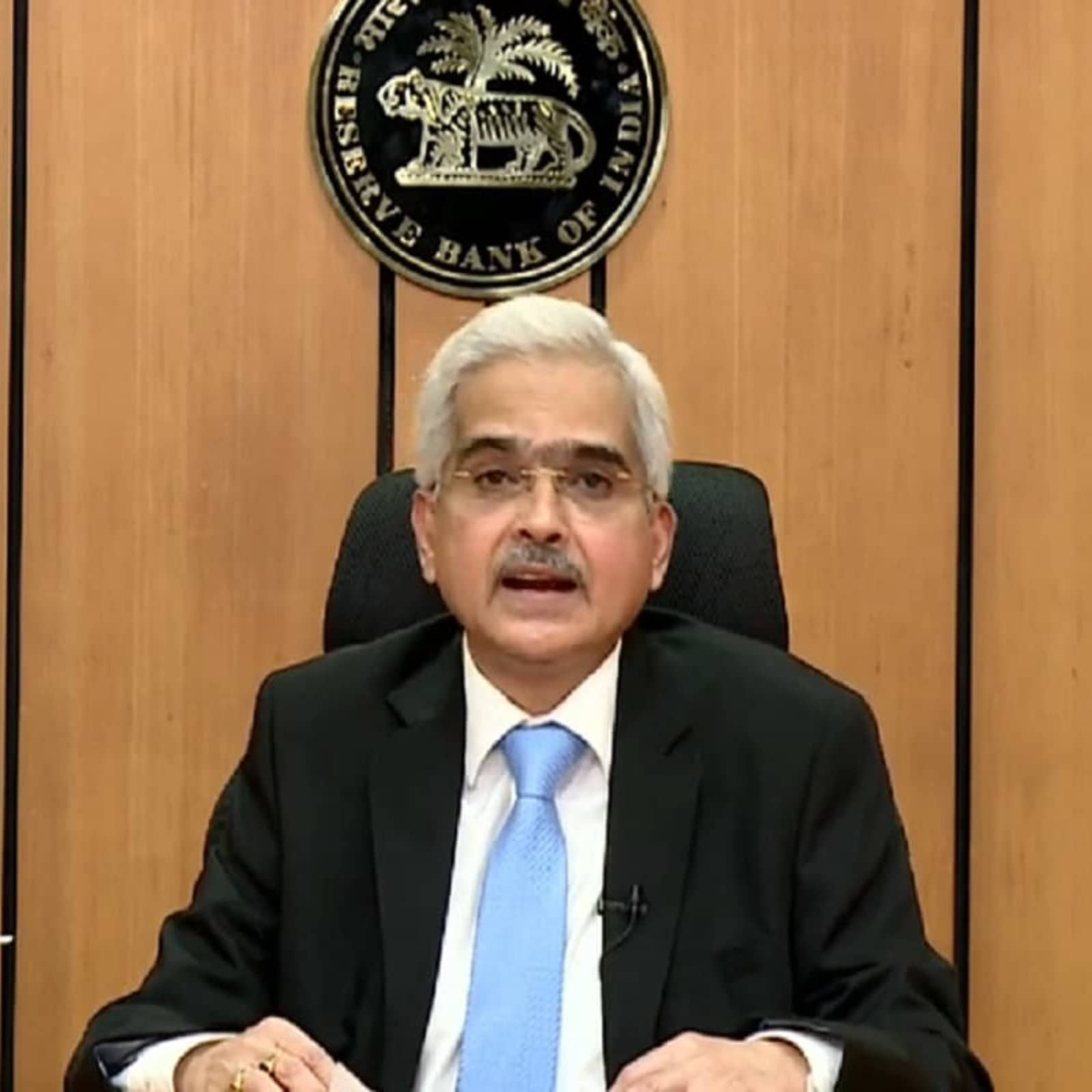
The RBI Governor Shaktikanta Das has clearly observed, “Global food prices along with metal prices have hardened significantly. Economy is grappling with a sharp rise in inflation”. However, separate data released lately by the Ministry of Statistics & Programme Implementation, have only created confusion. Somehow this picture does not seem to be getting adequately reflected on India’s consumer price index (CPI).

Not only that, even the RBI governor’s inflation forecast appears to be totally misleading in the context of the government’s own inflation data for February and March, this year. The retail inflation in March was recorded at 6.95 percent, the highest in the last 17 months, and the wholesale price spurt in February was 13.11 percent.

Last month, the wholesale price (WPI) inflation soared to 14.6 percent. The Reserve Bank of India raised the retail inflation target for the current financial year to 5.7 per cent on the back of rising global prices amidst the ongoing geo-political tensions, even as it expected the prices of cereals and pulses to soften on prospects of good winter crop harvest.

The RBI said that “Inflation is now projected at 5.7 per cent in 2022-23 with Q1 at 6.3 per cent; Q2 at 5 per cent; Q3 at 5.4 per cent and Q4 at 5.1 per cent.”  In its earlier policy review in February, the RBI had projected retail inflation to be at 4.5 per cent in 2022-23.

The Monetary Policy Committee (MPC) also decided unanimously to remain accommodative, while focussing on withdrawal of accommodation to ensure that inflation remains within the target going forward, while supporting growth. This is the 11th time in a row that the Monetary Policy Committee (MPC) has maintained the status quo.

At the same time, the RBI Governor observed, “It may, however, be noted that given the economic volatility on global crude oil prices… the evolving geopolitical tensions, any projection of growth and inflation is fraught with risk.” The RBI, however, hoped that the likely good harvest from the rabi (winter) crop will keep prices of cereals and pulses under check.

It may be noted that the Reserve Bank has been mandated to keep retail inflation at 4 per cent with a bias of 2 per cent on either side. The fact is that the costs of food, clothes, housing, transportation, medicine and healthcare have all gone up by 50 to 60 percent or even more since the middle of last year. The high fuel prices are impacting the prices of almost all commodities and services. The trend is global.

According to the UN Food and Agriculture Organisation, global food prices rose by 27.3 percent in the 12 months to November, last. Prices have jumped further in the last three months, more so after the Russia-Ukraine war. Prices of essential items such as food, transport and utilities have soared. Over two-thirds of the people around the world are feeling the pinch.

Two separate data released lately by the Ministry of Statistics & Programme Implementation showed the country’s retail inflation rose to 6.95 percent in March. The retail inflation in February was 6.07 percent.

Even these inflation data don’t seem to be quite reliable. Wrong international fuel price projections — based on $70 per barrel until the middle of last year — by finance ministry economists involved for the preparation of the 2022-23 national expenditure budget are already facing a flak.

International fuel prices are hovering around $110 per barrel. Back home, fuel prices are already sky-high. During this April alone, the prices soared by over 10 percent.   Do consumers really have much faith in the officially pronounced inflation rates?

According to the latest report of the Ministry of Commerce and Industry, the wholesale Price Index based Inflation maintains a declining trend. It says that the annual rate of inflation is 12.96% (Provisional) for the month of January, 2022 (over January, 2021), which is a continuous decline from 14.87% in November, 2021 and 13.56% in December, 2021.

The inflation which has been on the rise since September last year, touched 6.07 per cent in February this year, according to the data released by the National Statistical Office (NSO). In January this year, the retail inflation was at 6.01 per cent.

March was the third consecutive month that the inflation remained above the 6 per cent mark. The previous high at 7.61 per cent was recorded in October 2020.

The Ministry of Commerce report further claims that the high rate of inflation in January, 2022 is primarily due to rise in prices of mineral oils, crude petroleum & natural gas, basic metals, chemicals and chemical products, food articles etc as compared the corresponding month of the previous year.  The Food Index consisting of ‘Food Articles’ from Primary Articles group and ‘Food Product’ from Manufactured Products group have decreased from 169.0 in December, 2021 to 166.3 in January, 2022. The rate of inflation based on WPI Food Index increased marginally from 9.24% in December, 2021 to 9.55% in January, 2022.

“The high rate of inflation in March, 2022 is primarily due to rise in prices of crude petroleum and natural gas, mineral oils, basic metals, etc  owing to disruption in the global supply chain caused by the Russia-Ukraine conflict,” the Commerce and Industry Ministry said in a statement.

As per the CPI data, inflation in ‘oils and fats’ in March soared to 18.79 per cent as the geopolitical crisis due to the Russia-Ukraine war pushed edible oil prices higher. Ukraine is a major exporter of sunflower oil. In vegetables, inflation quickened to 11.64 per cent in March, while in ‘meat and fish’ the rate of price rise stood at 9.63 compared to February 2022.

The Office of the Economic Adviser, Department for Promotion of Industry and Internal Trade (DPIIT) has released index numbers of wholesale price in India (Base Year: 2011-12) for the month of January, 2022 (Provisional) and for the month of November, 2021 (Final).

Now coming to the Consumer Price Index, the CPI covers commodities. It is calculated by considering the retail price change of goods and services and by taking the average weighted value of each item in the basket. The price data are collected from some selected 1,114 urban markets and 1,181 village markets covering all states and union territories through personal visits by staff members of the field operations division of the National Statistical Office (NSO).

A nation-wide reliable retail price computation in India may be easier said than done. The country has as many as 28 states and union territories. Each of them has a unique demography, history and culture, festivals, language, food habits and, more importantly, distinct consumer preferences. India has a total of 775 districts, of which Gujarat’s Kutch is the largest, West Bengal’s North 24 Parganas most populous and Central Delhi most congested. As of 2019, India recorded 6,64,369 villages. Not many of these villages boast proper rail-road connections and organised markets. Under such circumstances, retail price and inflation tracking are neither easy nor quite dependable.


Delivering vigilante justice in the garb of demolitions?

The Supreme Court has intervened to stop a worrying trend under which various states and NDMC bulldozed many structures allegedly without following due process of law. The demolished structures mostly belong to targeted religious minorities, reports Mudit Mathur

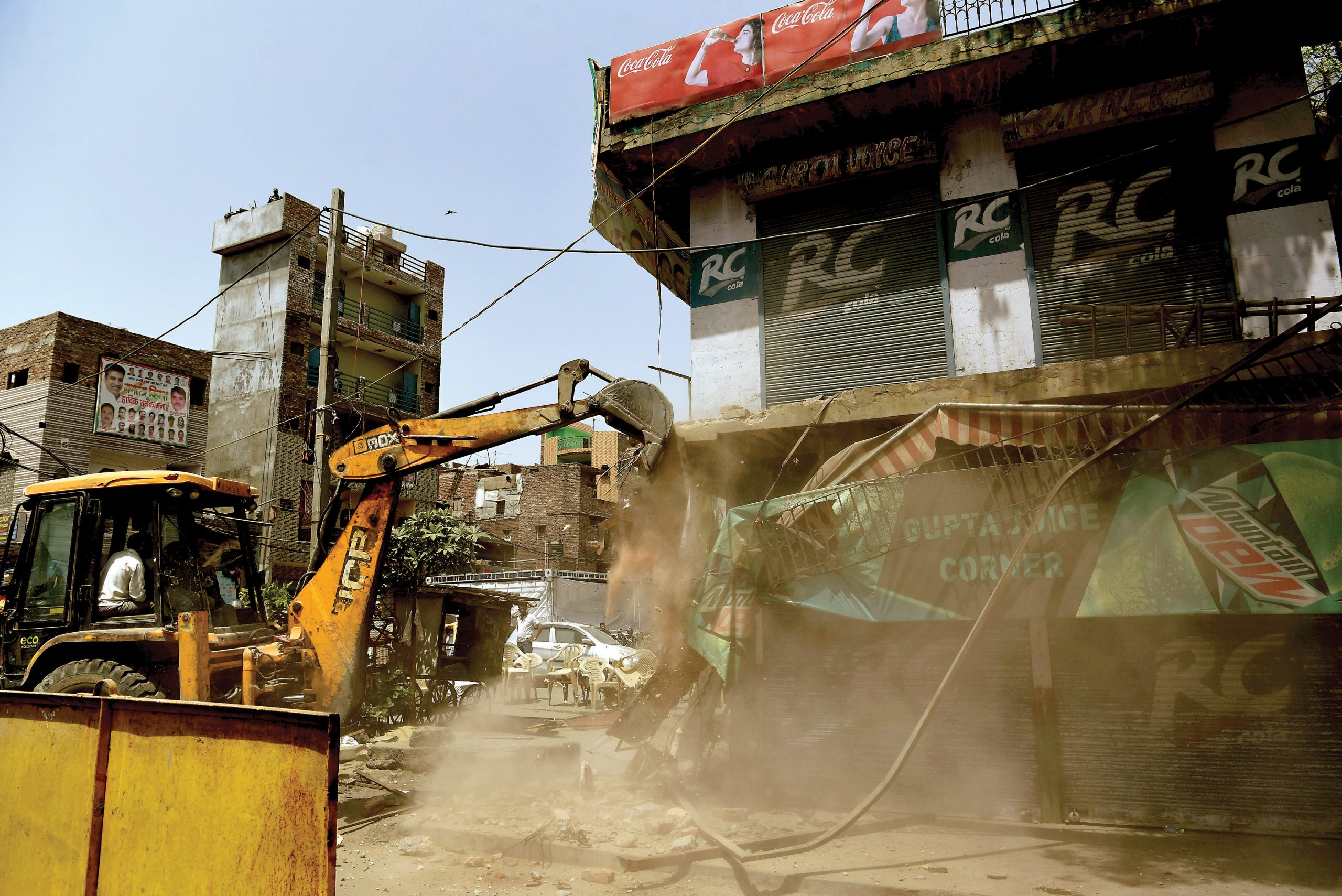
The Supreme Court of India has finally intervened stopping the worrying trend of demolition which saw various states and NDMC demolish many structures using bulldozers, allegedly, without following due process of law in the name of removing illegal encroachments which by and large belong to targeted religious minorities.

The apex court has to examine the allegations as to whether the states and its civic bodies have assumed the role of the judge, jury and executioner – all by themselves, and have been undertaking demolition drives to punish persons who have not even been found guilty by any process of law – showing total disregard for the settled law as well as the directions of the top court while executing demolitions.

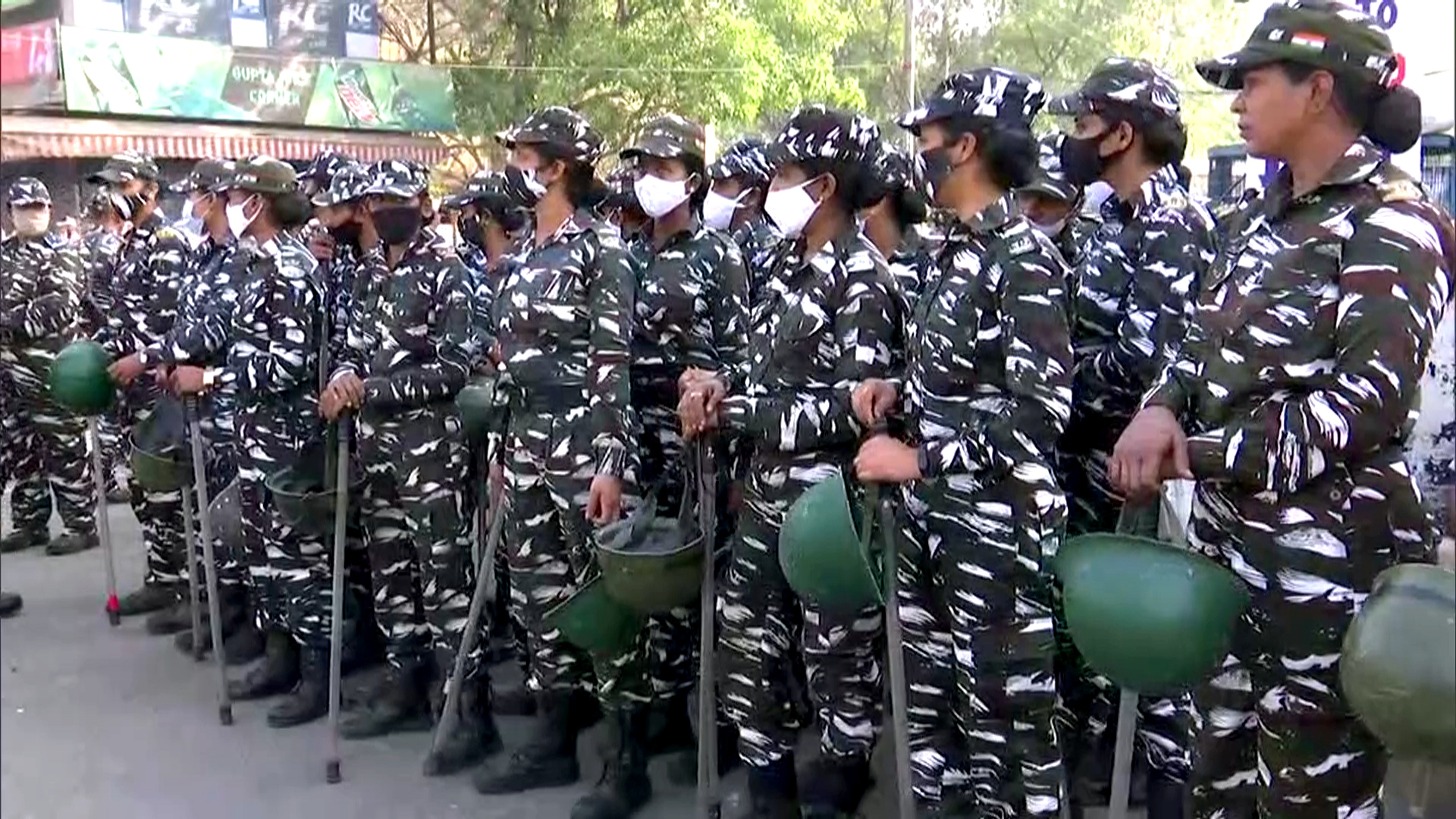
The apex court has taken serious view on non-compliance of  its orders in continuing demolition drive by NDMC in Jahangirpuri area where communal riots had broken out during “Hanuman Jayanti” processions just a few days earlier disturbing peace and harmony in the area. Reports of such demolitions with rolling bulldozers hogging limelight in media are appearing from Uttar Pradesh, Madhya Pradesh, Gujarat, Rajasthan and Delhi where allegations of targeted violence against the people belonging to minorities and weaker sections have surfaced with political overtones.
The writ petitions were filed by Jamiat Ulama-i-Hind and many other public personalities including CPM leader Brinda Karat, Advocates Madhu Saran, Rebecca George, Amita V Joseph, Pyoli, Somesh Chandra Jha, Purvish Jitendra Malkan, Aldanish Rein, Mohd. Asad Khan, Adil Sharfuddin, Mary Mitzee Mayne and Sumita Hazarika in the interest of the poor persons who have now been rendered homeless or without a source of livelihood. The authorities brought bulldozers for demolishing shops, houses and parts of religious places etc. mostly belonging to poor citizens residing there for many decades.

In their PIL the advocates, mostly practicing before the apex court, narrated the instance of Jahangirpuri demolition in the background of violence that rocked the Jahangirpuri area of Delhi on April 16, 2022 during an aggressive Hanuman Jayanti procession where violence erupted.

The incidents happened when a “Shobha Yatra” was taken out on the occasion of Hanuman Jayanti and attempts were made to enter the mosque with saffron flags chanting slogans such as ‘Jisko is desh mein rehna hoga, Jai Sri Ram kehna hoga’ (if you want to live in this country, you must say Jai Sri Ram), as claimed by one of the persons whose shop was near the Mosque.

Clashes had erupted which ultimately led to stone pelting and property of people being vandalized. Reports were published that two communities clashed against each other in front of a mosque.

Initially, an FIR was registered against certain accused persons and 14 arrests were made in the matter. However, by April 19 over 25 arrests had been made in the matter of people belonging to both Muslim and Hindu community.

The PIL stated that the Delhi BJP Chief Adesh Gupta on April 19 wrote to the Mayor of North Delhi Municipal Corporation to identify the illegal constructions of the ‘rioters’ in Jahangirpuri and demolish it using bulldozers. The same day a notification was issued by the North Delhi Municipal Corporation (NDMC) on 19.04.2022 for carrying out an ‘encroachment removal action programme’ comprising of PWD, local body, Police and the Works/Maintenance Department, Health Department, Sanitation Department, Veterinary Department and the Enforcement Cell in the Jahangirpuri Area within a span of three days.

The NDMC directed all these officials to be present at Jahangirpuri for ‘encroachment removal action programme’ at 2 pm on April 20.  Despite the Apex Court’s Order dated April 20 staying this demolition drive, the demolition drive continued for more than an hour causing demolition and destruction of many houses, shops, religious places and carts of hawkers, etc.

The same Mosque suffered some damage as part of the demolition drive which happened on April 20. Apart from this, there are other shops and houses mostly belonging to the poor citizens in the area which were demolished. According to the PIL, even after the order of Supreme Court, the Authorities continued with the demolition on the technical ground that the order was not supplied to them despite the fact that about passing of the said order, the electronic media reported and the reporters conveyed the said facts to them in person.

The petitioners alleged that the NDMC has not followed the due process of law as had been laid down in the Delhi Municipal Corporation Act, 1957, and  rather they have breached the law laid down as per the Act. The Act clearly specifies in Section 343 that the Commissioner has to notify the persons whose house or establishment falls under the encroached area and shall be demolished and should await proper show cause from such person as to why such property should not be demolished. No notice was ever served upon the residents of Jahangirpuri as per law.

The petitioners also contended that appeal against the orders of demolition orders is maintainable before Appellate Tribunal, which after giving the parties to the appeal an opportunity of being heard, pass such orders thereon as it thinks fit, confirming, modifying or annulling the order or notice appealed against or may refer the case back to the authority or officer against whose order or notice the appeal is filed, for a fresh order or notice, after taking additional evidence, if necessary, or such other action as the Appellate Tribunal may specify.

In another writ petition filed by Jamiat Ulama-i-Hind through Advocate on Record Kabir Dixit agitates a disturbing trend that has emerged in several States of precipitative punitive action by way of demolition of residential and commercial properties being undertaken by civil and municipal authorities against persons accused in criminal cases, without any due process of law being followed. Petition seeks directions to the Union of India and all the concerned States directing that no precipitative action be taken against the residential or commercial property of any accused in any criminal proceedings as an extra-legal punitive measure and any demolition exercise of any nature must be carried out strictly in accordance with applicable laws, and only after due notice and opportunity of hearing to each of the affected persons.
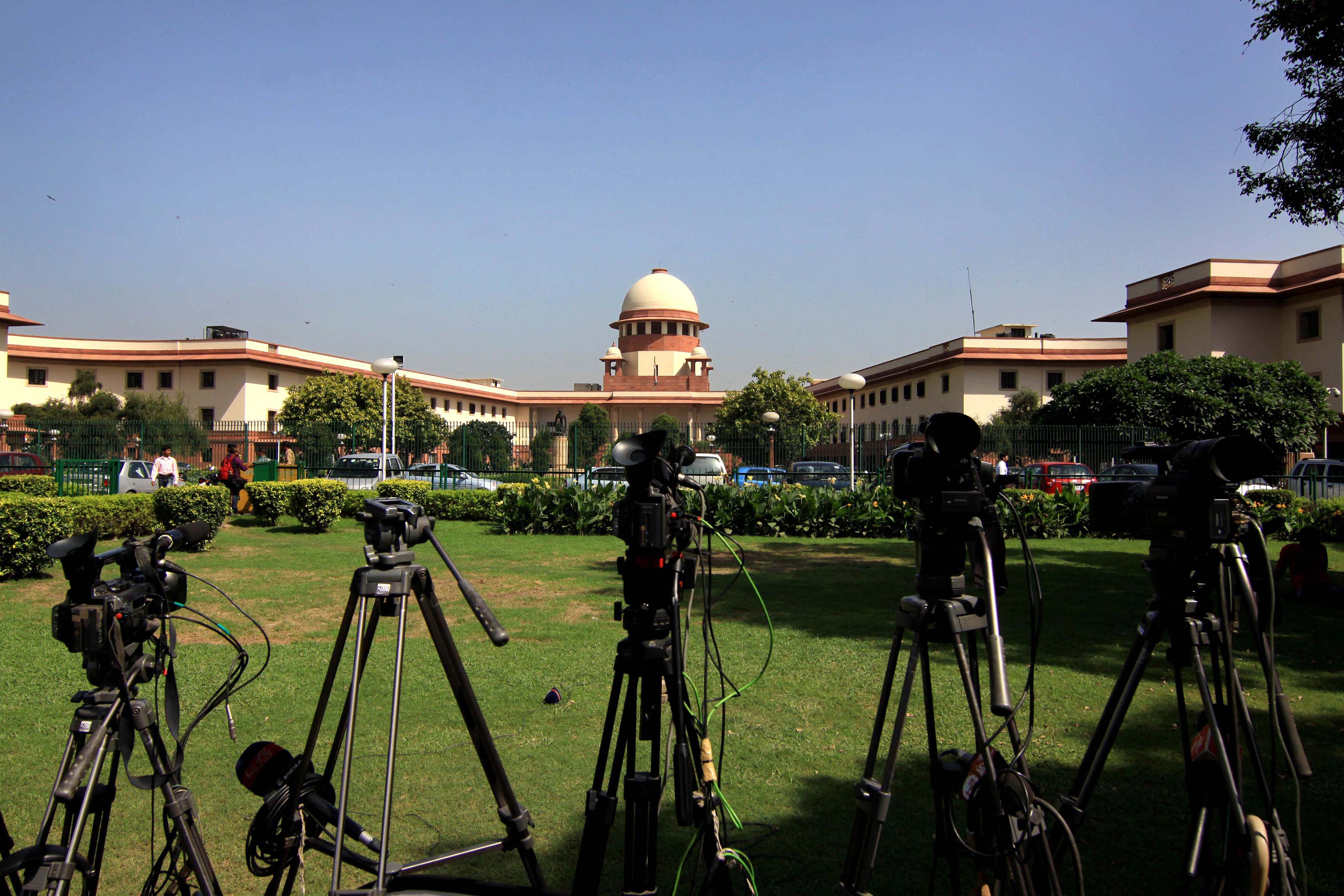
The petitioner represented through its Secretary of the Legal Cell of Gulzar Ahmed Noor Mohammed Azmi further prayed that directions be issued for strict action to be taken against officials of the State machinery who participate in such an illegal exercise of demolition and urged strict action be taken against Ministers, Legislators and officers of the State/Central government unconnected with the criminal investigation who make statements apportioning criminal responsibility publicly or through any official communication regarding crimes reported to have been committed until determination by a criminal court.

The petition reveals that in response to alleged acts of communal violence, the administration in several States including Madhya Pradesh, Uttar Pradesh, Gujarat and Delhi has been employing bulldozers to raze down the houses of persons suspected to be involved in such acts/ incidents. A number of ministers and legislators in each of these States, including the Chief Minister and the Home Minister of the State of Madhya Pradesh, have made statements advocating such acts and have especially threatened the minority groups with destruction of their homes and commercial properties in case of communal riots.

The petitioner alleged targeted destruction of residential and commercial properties has been carried out to a great extent against persons belonging to minority groups such as Muslims, Dalits and tribals. The statement of Narottam Mishra, the Home Minister for Madhya Pradesh, is important in the light of such events who gave disturbing statements widely reported in the media, “We’ll destroy the houses from where stones were thrown” and “If Muslims carry out such attacks, then they should not expect justice”.

“Such acts amount to use of the State machinery for dispensing vigilante justice, and threaten to destroy rule of law and people’s faith in the social contract. Resorting to such measures/ actions is unknown to law and is clearly against our constitutional ethos and the criminal justice system, and is also a gross violation of the rights of accused persons who are made to suffer through such acts of vigilante justice before any Court of law has found them guilty,” the petitioners contended.

Urging rhe Supreme Court to step in to stop the situation from escalating any further and also prevent such acts from being repeated in other States as well, the petition said, “Such measures by the governments undermine the rule of law and make a mockery of the criminal justice system of our country, including the important role of the courts. The legal process, including the pre-trial and trial stage, is hindered by these acts of the State. Therefore, immediate action is needed to prevent such incidents from occurring. The States wherein such measures are being employed by the administrative authorities have been carrying them out with impunity as they are being supported by the top leadership in the said States.”

“These acts of illegal demolition of properties also violate the constitutional right of affected persons to enjoy peaceful possession of their properties guaranteed under Article 300A. The fact that at least one of the demolished property was built under the Central Government’s initiative called “Pradhan Mantri Awas Yojana” to provide affordable housing to the economically weaker sections of the society proves the falsity of the justification being given in such incidents of the properties being built illegally,” the petitioner argues.

‘Bulldozers have become an instrument of state policy’

A bench of Justices L. Nageswara Rao and B.R. Gavai while ordered continuance of status quo on the grounds of Jahangirpuri, issued a notice to the NDMC, the Union government, and the state governments of Madhya Pradesh, Uttar Pradesh and Gujarat in petitions filed by the Jamiat Ulama-i-Hind.

Jamiat, in its petitions, had said that actions like razing a house in a criminal proceeding as a punishment are unknown to criminal law. “We’ll take serious view of demolition that took place after information was given to Mayor,” the bench said.

The NDMC’s demolition drive with bulldozers continued until hours after the Supreme Court’s order asking to maintain status quo. Senior advocate Dushyant Dave came back to the court urging it to pay attention to the fact that the demolitions were still continuing. Chief Justice of India N.V. Ramana then asked the court registry to convey the order to the DCP and police immediately.

Next day before nominated Bench of justice L. Nageshwar Rao and Justice B.R. Gavai,the senior advocate Dave submitted that this was a matter of “national importance” and that it had become “state policy” to target a particular section of the society using bulldozers. He also asked how bulldozers had become an instrument of state policy?

“This is not an issue confined to Jahangirpuri. It is a matter affecting social fabric of our country. If this is allowed, there will be no rule of law left. How is it that the President of the BJP writes a letter to the Municipal Commissioner to start demolitions and they demolish after that? The Municipal Corporation Act provides for service of notice, appeals. Look at the Olga Tellis case,” Dave submitted.

Delhi BJP president Adesh Gupta had alleged after clashes that the violence was the result of the AAP government aiding illegal stay of “Rohingya and Bangladeshi immigrants”. On Tuesday, Gupta wrote to the NDMC mayor to identify the illegal constructions of  “rioters” in Jahangirpuri and demolish it using bulldozers. Dave also highlighted the presence of legislation in Delhi which regularised colonies.

“There are 731 unauthorised colonies in Delhi with lakhs of people and you pick up one colony because you target single community!” he remarked.“Our [residents] homes are more than 30 years old…our shops are beyond 30 years old…we are in a democracy and how can this be allowed,” Dave further said. Dave highlighted that those whose establishments were destroyed were poor people and delivered searing lines on the inequality of such a measure.

“If you want to act against unauthorised constructions, you go to Sainik Farms. Go to Golf Links where every second home is an encroachment. You don’t want to touch them, but target the poor people,” Dave submitted.

Senior advocate Kapil Sibal who appeared for Jamiat in its second petition – against similar drives in other states – said that the problem of encroachment was being singularly associated with Muslim residents.

To Justice Rao’s question if no Hindu properties were affected, Sibal said there were isolated instances. “When processions are carried out and frictions occur, homes of only one community is bulldozed,” Sibal submitted.

Sibal highlighted comments by Madhya Pradesh chief minister Shivraj Singh Chouhan and the fact that residents in Jahangirpuri were locked inside gates while their property was demolished.“What is this process, to instill fear to side-line rule of law?,” Sibal queried.

To Sibal’s request that an order be passed to stop demolitions like this, the Supreme Court said it cannot pass a blanket order on a country-wide basis.

Communist Party of India (Marxist) leader Brinda Karat has also moved the Supreme Court against the demolitions that took place, highlighting that they continued for several hours even after the apex court had ordered status quo.

For Brinda Karat, senior advocate P.V. Surendranath pointed out the timing of the demolition and the fact that the CPI(M) leader had to physically stand in front of the bulldozers to stop them.

“Had she not been there the entire C block would have got demolished,” Surendranath said. He also said that while the mayor had said at 11 am that the Supreme Court’s order will be complied with, the drive continued till after 12 noon.

Solicitor General Tushar Mehta, for the NDMC, submitted that Wednesday’s demolition drive was part of one which began in January. He also claimed that notices were given but his claim was refuted by senior advocate Sanjay R Hegde, who appeared for one Ganesh Gupta whose juice stall was destroyed.

Mehta also disputed the claim that the drive targeted Muslims, claiming that in Madhya Pradesh’s Khargone more Hindu property than Muslims’ was destroyed.


Bulldozers come in handy to get even with rioters, gangsters

After clashes between the Hindu and Muslim communities took place in Manawar Tehsil of Madhya Pradesh’s Dhar district on December 23, 2021, a house belonging to three Muslim persons accused of being involved in the said incident was destroyed by the State administration.

After violent clashes between the Muslim and tribal community took place on the occasion of Holi on March 18, 2022 in Raisen district of Madhya Pradesh, houses of Muslims were destroyed by the authorities in retaliation.

Houses of three persons of minority religious community accused of gang-rape in Sheopur District, Madhya Pradesh were demolished after the incident as punishment on March 20, 2022.

The house of two brothers belonging to Muslim community and accused of gang-rape was partially demolished in Saharanpur, Uttar Pradesh by the police authorities on March 30, 2022 in order to get them to surrender. The police station in-charge also praised his team for bravery after the demolition drive was carried out.

After clashes between two groups belonging to Hindu and Muslim communities on the occasion of Ram Navami and Ramzan on April 10, 2022, numerous shops and residential premises belonging mostly to the Muslim community were destroyed in different parts of Madhya Pradesh.

Twelve houses including some built under the Pradhan Mantri Awas Yojana demolished in Khargone, Madhya Pradesh, as part of a ‘drive’ against ‘illegal properties’ following communal clashes during a Ramnavami procession. One such example is that of a lady named Hasina who was provided the house under the said scheme/ initiative by the Madhya Pradesh Government just a short while before her premises was razed down.

The house of a murder accused was demolished using a bulldozer in Rampur on April 13, 2022 in Uttar Pradesh after the accused persons purportedly escaped from their home after committing the said crime.

Razing of houses and commercial properties was initiated in several districts of Madhya Pradesh after clashes took place between the Hindu and Muslim communities on the occasion of Ram Navami a few days earlier on April 15, 2022. At least 45 properties, including 29 houses and 16 shops, have been demolished till date as a punitive measure for the communal clashes that took place in the State.

Properties, mostly shops, belonging to persons accused in riot cases in Khambhat, Gujarat were demolished by the State Government on April 15, 2022.

An FIR was registered against three persons who are already in custody since the past one and a half month in Sendhwa, Barwani District, Madhya Pradesh in connection with the communal clashes that took place in the district. The house of one of the accused was also demolished as punishment on April 15, 2022.

Demolition exercise undertaken by the North Delhi Municipal Corporation in Jahangirpuri, New Delhi reportedly against persons suspected to be accused in the incidents of communal violence that occurred in the area on April 20, 2022

The Uttar Pradesh government used bulldozers to evacuate illegal properties worth Rs. 813 Crores from the 25 listed Mafias gangs and its 636 associates. Putting them behind the bars in criminal offences, the government has confiscated their allegedly ill-gotten immovable properties and got released government land from their illegal possession.

These gangs from eastern UP include Atiq Ahmad of Allahabad, Mokhtar Ansari of Mau, Brajesh Singh of Varanasi, Dhurv Kumar Singh of Azamgarh and Khan Mubarak of Ambedkar Nagar.

The government bulldozed to rubbles the properties of Mokhtar Ansari’s sons Abbas and Umar worth five crores in the posh locality Dalibagh of Lucknow alleging to be an evacuee property unlawfully got inserted in the revenue records. The SDM, Lucknow, passed an order in 2020 restoring it back to evacuee property but subsequently High Court set aside the SDM’s orders. Meanwhile the Mokhtar’s two sons’ property was demolished. However, his brother Afzal Ansari got judicial reprieve from the High Court securing stay orders on demolition and cancellation of map by LDA on just adjoining house.

The gangs from western UP include the names of Uddham Singh, Yogesh Bhadura of Meerut, Ajit Happu of Bagpat, Shushil alias Muchh, Sanjiv Maheshwari alias Jeeva of Muzaffarnagar, Akash Jat of Shamli, Sunder Bhati, Singraj Bhati, Ankit Gujjar, Anil Dujana, Anil Bhati of Gautam Buddha Nagar, Amit Kasana of Ghaziabad, Muneer of Bijnor and Om Prakash Srivastav alias Bablu of Lucknow and others.



Ashish Mishra suffers blow as SC cancels his bail

The Supreme Court while setting aside the Allahabad high court order, granting bail to Ashish, held that the court passed the order taking into account irrelevant considerations and denying the right of hearing to the victim, reports Mudit Mathur

The Supreme Court set aside the Allahabad high court order on April 18, granting bail to Ashish, saying that the victims were denied “a fair and effective hearing” in the high court that adopted a “myopic view of the evidence.” A report by Mudit Mathur

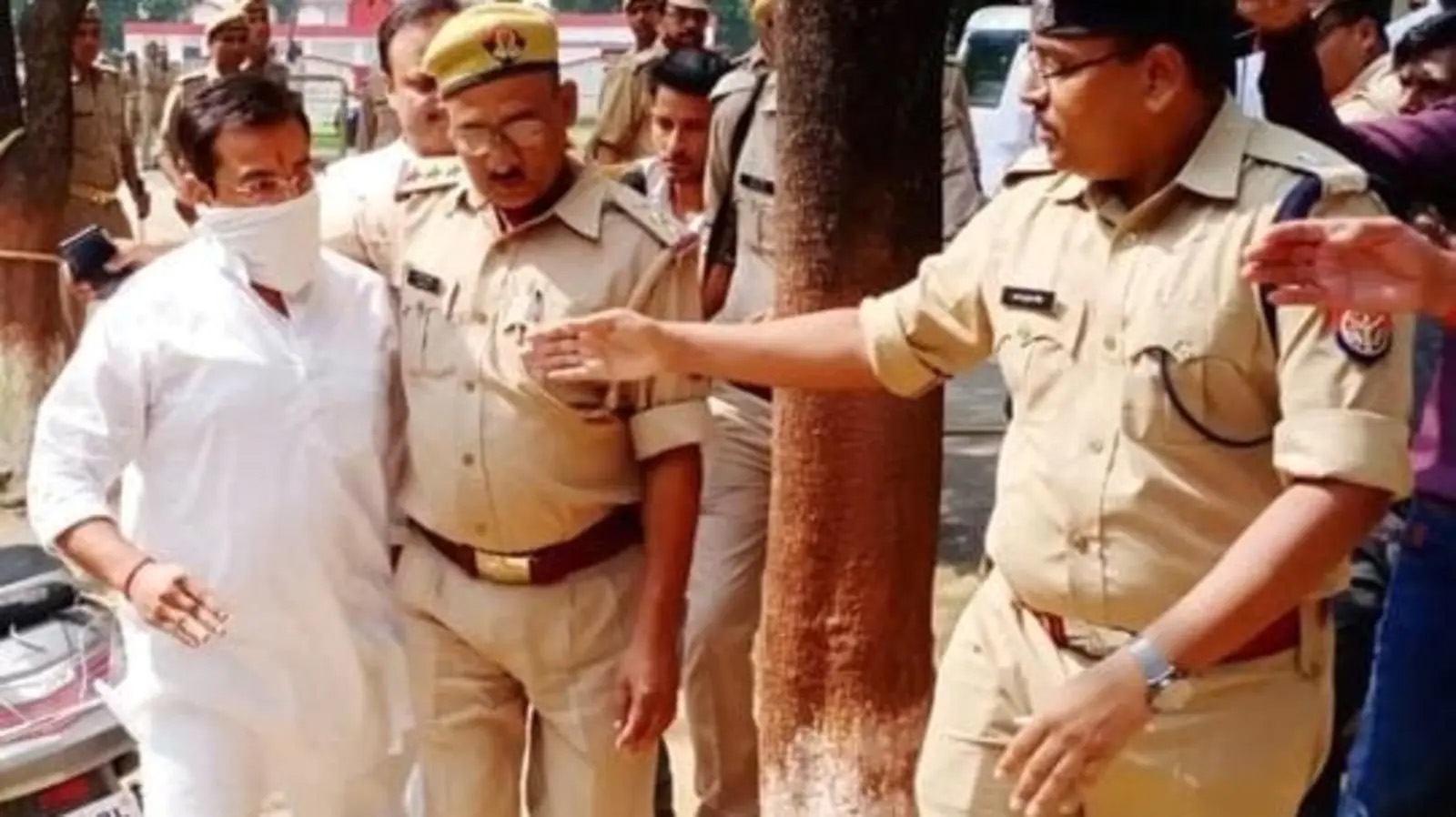
Union Minister Ajay Mishra’s son Ashish Mishra on April 24 surrendered at a local court in Lakhimpur Kheri  days after the Supreme Court cancelled his bail in the Lakhimpur Kheri carnage case. The Supreme Court had cancelled the bail granted to Ashish Mishra and asked him to surrender in a week.

The Supreme Court set aside the Allahabad high court order on April 18, granting bail to Ashish, saying that the victims were denied “a fair and effective hearing” in the high court that adopted a “myopic view of the evidence”. Holding that the High Court passed the order taking into account irrelevant considerations and denying the right of hearing to the victim, the Court set aside the bail order and asked Mishra to surrender within a week. The bail application has been remanded back to the High Court for fresh decision on merits after taking note of relevant considerations and after affording right of hearing to the victim.

A bench comprising the Chief Justice of India NV Ramana, Justice Surya Kant and Justice Hima Kohli issued the above mentioned directions in a special leave petition filed by the family members of the farmers who got killed in the Lakhimpur Kheri carnage challenging the February 10 order of the Allahabad High Court passed by Justice Rajeev Singh granting bail to the accused, Ashish Mishra, son of Union Minister Ajay Mishra Teni.

“Instead of looking into aspects such as the nature and gravity of the offence; severity of the punishment in the event of conviction; circumstances which are peculiar to the accused or victims; likelihood of the accused fleeing; likelihood of tampering with the evidence and witnesses and the impact that his release may have on the trial and the society at large; the High Court has adopted a myopic view of the evidence on the record and proceeded to decide the case on merits”, the judgment authored by Justice Surya Kant observed.

“The High Court has taken into account several irrelevant considerations, whilst simultaneously ignoring judicial precedents and established parameters for grant of bail. It has been ruled on numerous occasions that a FIR cannot be treated as an encyclopaedia of events. While the allegations in the FIR, that the accused used his firearm and the subsequent post mortem and injury reports may have some limited bearing, there was no legal necessity to give undue weightage to the same. Moreover, the observations on merits of a case when the trial has yet to commence, are likely to have an impact on the outcome of the trial proceedings,” the bench held.

“We are, thus, of the view that this Court on account of the factors like (i) irrelevant considerations having impacted the impugned order granting bail; (ii) the High Court exceeding its jurisdiction by touching upon the merits of the case; (iii) denial of victims’ right to participate in the proceedings; and (iv) the tearing hurry shown by the High Court in entertaining or granting bail to the respondent/accused; can rightfully cancel the bail, without depriving the respondent-accused of his legitimate right to seek enlargement on bail on relevant considerations”, the judgment added.

The bench observed that the victims have an unbridled right to participate in all proceedings, including bail hearings. The top court also criticized the High Court for entering into factual merits, which are the subject of the trial. The bail application has been remanded back to the High Court for fresh decision on merits after taking note of relevant considerations and after affording right of hearing to the victim.

Summing up its judgement, the court observed, “This Court is tasked with ensuring that neither the right of an accused to seek bail pending trial is expropriated, nor the ‘victim’ or the State are denuded of their right to oppose such a prayer. In a situation like this, and with a view to balance the competing rights, this Court has been invariably remanding the matter(s) back to the High Court for a fresh consideration. We are also of the considered view that ends of justice would be adequately met by remitting this case to the High Court for a fresh adjudication of the bail application of the Respondent Accused.”

Senior Advocate Dushyant Dave and Advocate Prashant Bhushan appeared for the petitioners. Senior Advocates Mahesh Jethmalani and Ranjit Kumar represented the State of UP and Ashish Mishra respectively.

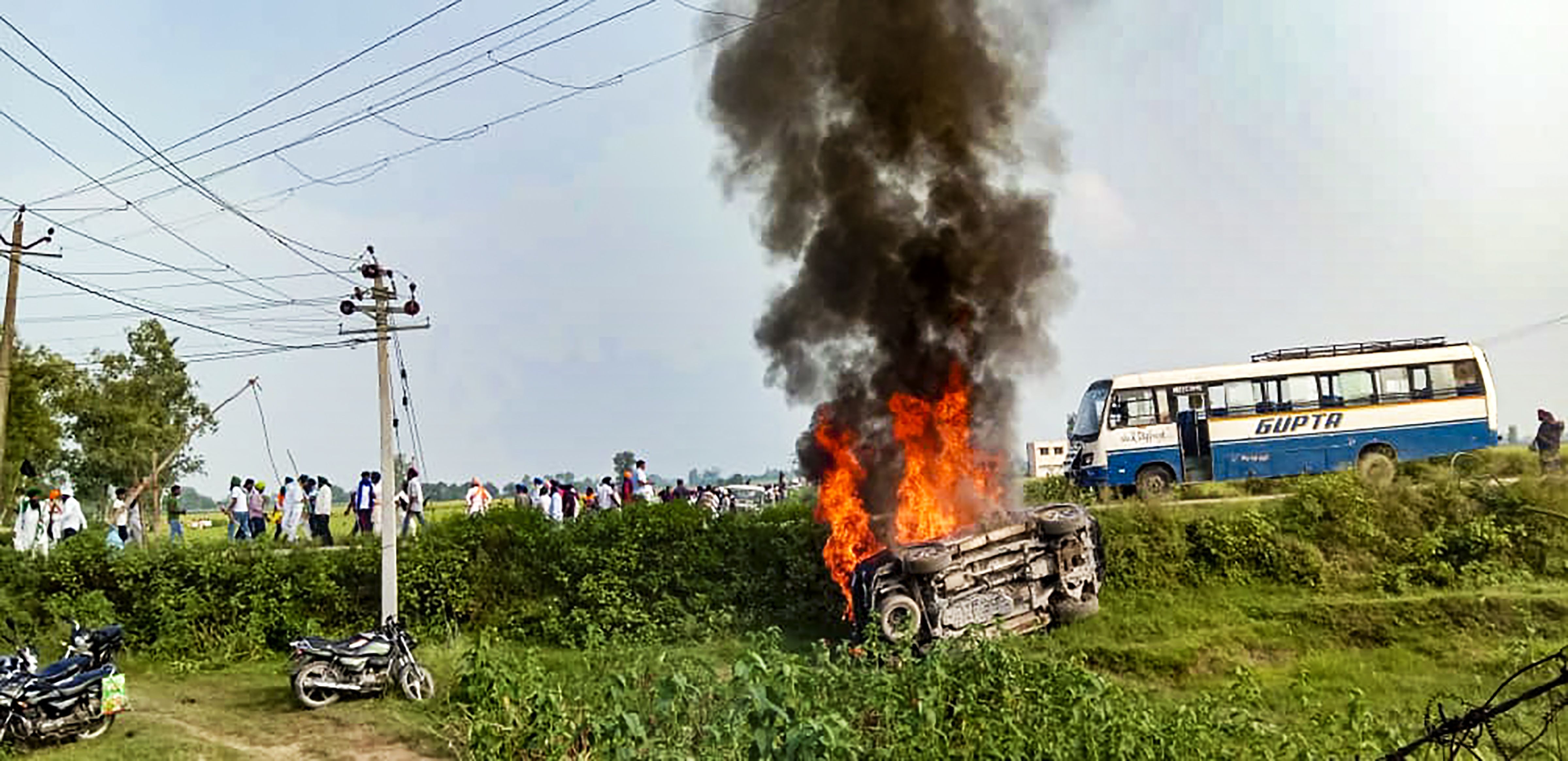
It may be recalled that eight persons had lost life in the most atrocious incident of mowing down the protesting farmers killing four of them and a journalist in bone-chilling attack from the behind in Lakhimpur Kheri on October 3rd, 2021. Three BJP workers too were killed in retaliatory violent clashes while their vehicle overturned soon after it lost control nearby into trench a few meters away from the crime scene. The farmers were protesting against the Union MoS for Home Ajay Mishra Teni and also Deputy CM Keshav Maurya who was visiting Kheri on the fateful day.


AAP’s Kashmir foray may remain a non-starter


AAP is likely to be hamstrung by its position on the revocation of Article 370.  Kejriwal’s party was the first to support withdrawal of the constitutional position in Parliament which was something that shocked people in Kashmir.  A report by Riyaz Wani

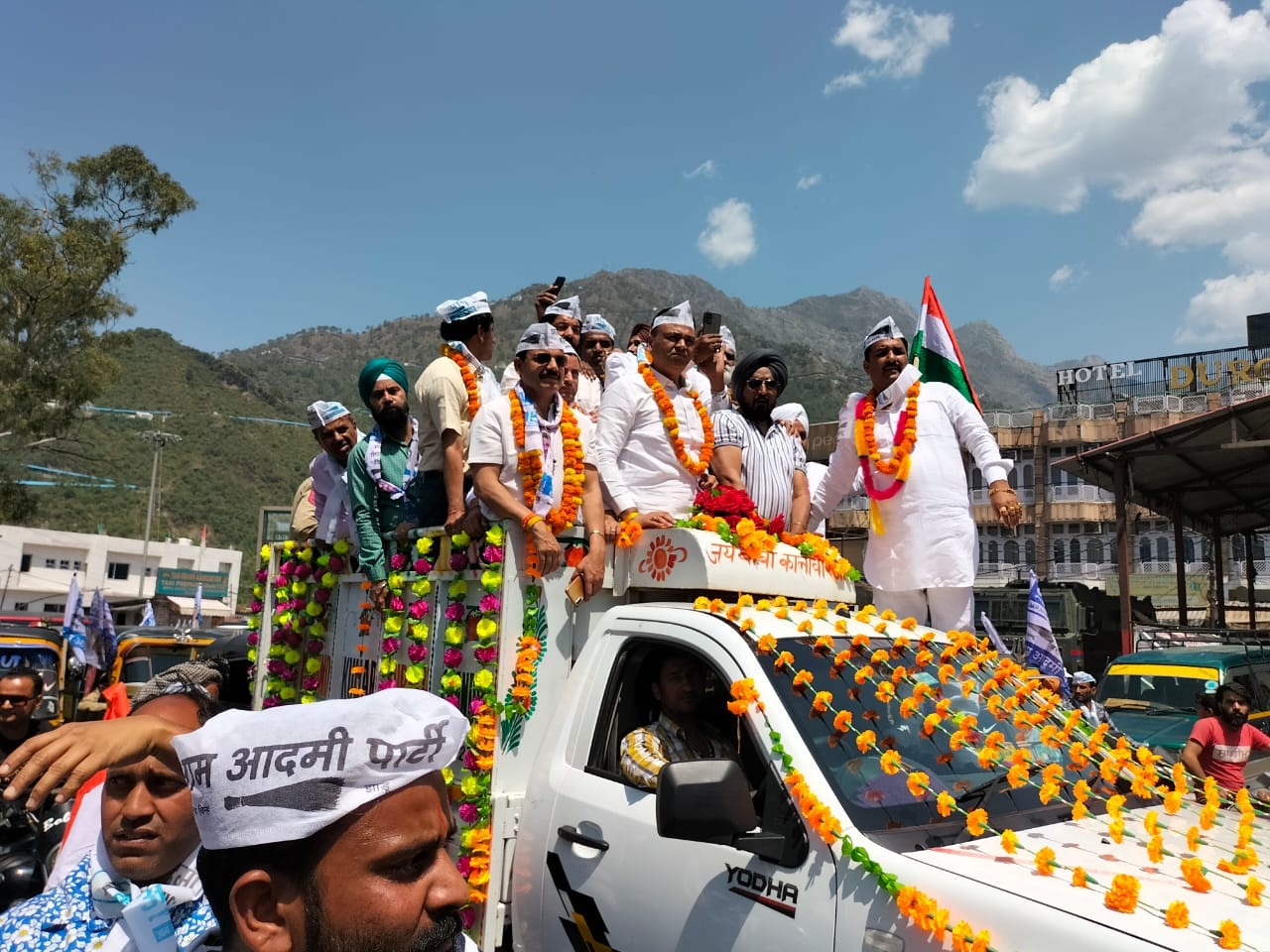
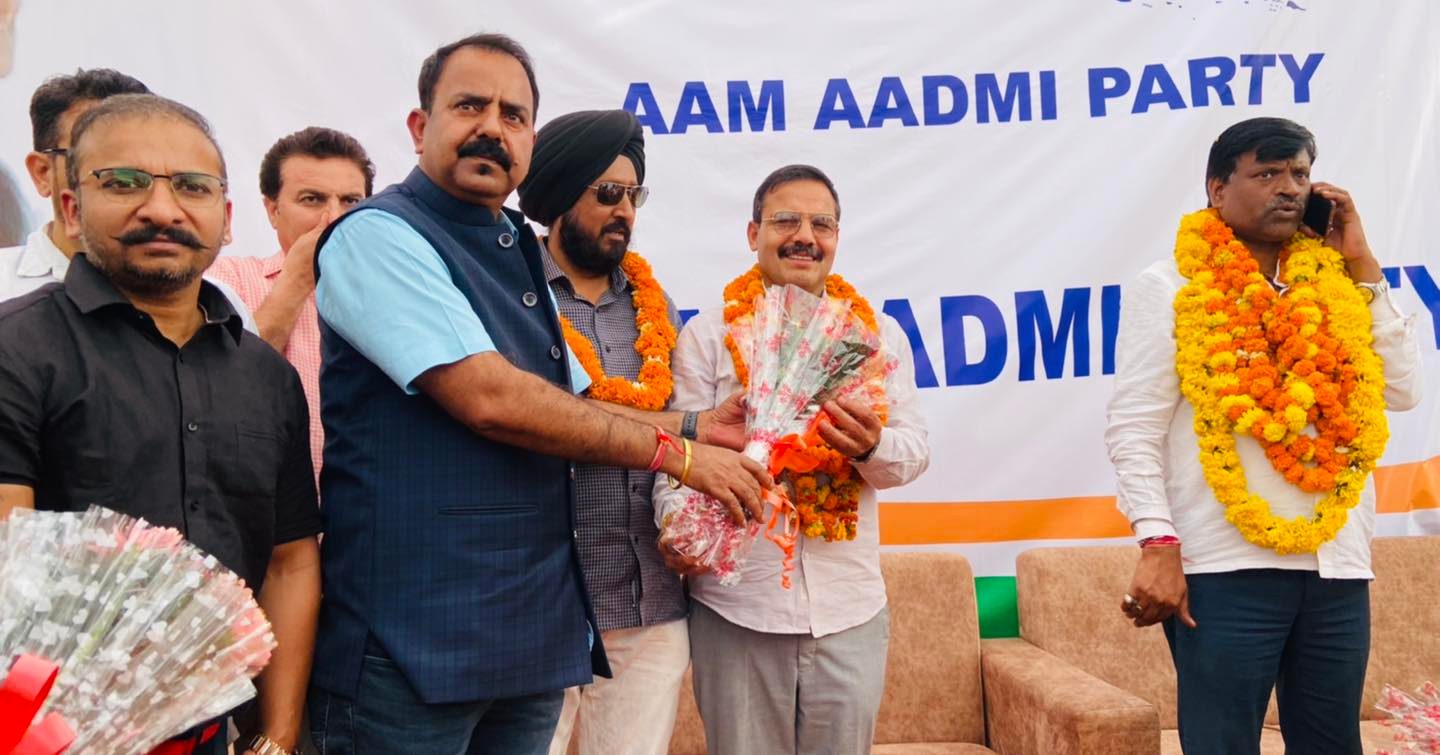
Bolstered by its landslide victory in Punjab, Aam Aadmi Party is trying to make forays in other states of the country in its bid to become a national party. Jammu and Kashmir is one of them.  And over the last year, the party has been trying to expand its footprint in the union territory, both in Kashmir Valley and the Jammu region. What is more, its message is resonating among some sections of people, more in Jammu than in Kashmir.

On April 14, the party held a grand show in Udhampur, attended by ex-MLA Balwant Singh Mankotia, who quit the J&K Panthers party, to join the AAP. Singh was effusive in his praise for the AAP’s Delhi model and promised to replicate it in the union territory.

“People of J&K want Delhi model and Kejriwal model – and therefore, we see this wave for change,” said Balwant Singh Mankotia. “I was at AAP office in Delhi – someone had written a slogan – Kejriwal mera hero, because my power bill is zero.”

People who had gathered for the show were receptive to Mankotia’s message. The AAP is banking on a political mobilization centered on the development backed by its Delhi model of governance.

According to the AAP J&K convenor Om Prakash Khajuria, their manifesto is “on the issues of youth, education, health, power and water”.

“People are attracted to the AAP because of our agenda on these things,” said Khajuria. “There is a huge support for the AAP  as we are seen as a party that will bring change.”

Earlier also the party has tried to set up a base in the then state of J&K but didn’t get much traction. The party later gave up on the project. But this time it has become serious with the Punjab victory putting wind in its sails.

The party says it wants fresh faces in the union territory to carry its political message.

“Many senior politicians from the other parties in J&K want to join the AAP,” Dr. Nawab Nasir Aman, general secretary of the AAP’s J&K chapter, said. “But we want youth to be our vanguard. We want common men to carry forward our agenda. We don’t want vested interests to hijack our message which is focussed on issues of governance.

The emergence of the AAP as a major political force in the country with its recent triumph in Punjab has created a buzz in the country. Though the party led by Delhi Chief Minister Arvind Kejriwal has still a long way to go before it could emerge as a credible rival to the BJP, the party seems to offer a sort of new politics that has been effective against that of the saffron party.

And in Kejriwal, the party has a leader who is shaping up to be a match for Prime Minister Narendra Modi’s extraordinary rhetorical skills. If anyone had any doubt, these were put to rest by his recent speech in the Delhi Assembly which hit the BJP where it hurt the most – its perceived authoritarian style of functioning. The speech which went viral ended up showing the BJP in a poor light, something no other opposition leader, least of all Rahul Gandhi, has been able to successfully accomplish so far.  And therein lies the threat to the existing invincibility of the BJP.

But would the AAP be able to replicate its Punjab performance in J&K anytime soon. Very unlikely.

“Jammu and Kashmir is an entirely different political ball game,” said a political analyst who didn’t want to be identified. “It is a place riven by conflict and violence. Besides, politics in Kashmir has never been about sadak, paani and bijli.”

In Kashmir Valley also, the AAP is likely to be hamstrung by its position on the revocation of Article 370 in August 2019. Kejriwal’s party was the first to support withdrawal of the constitutional position in the parliament which was something that shocked people in Kashmir who earlier looked up to his politics with admiration. Kejriwal didn’t even oppose divesting J&K of statehood and downgrading it into two union territories. This is so even when he has been seeking statehood for Delhi.

And in early 2021, when centre disempowered him by vesting most the powers of the Delhi administration in Lieutenant Governor, many Kashmiris trolled him on Twitter saying he deserved it. Kejriwal’s unqualified support for the withdrawal of

J&K and dismantling of the state would thus be a perennial liability for the AAP. That is, unless the party modifies its approach, a risky political proposition considering such a policy shift won’t go down well in the rest of India. More so, when the AAP has now been trying to project a soft Hindutva image to encroach into Hindutva vote bank or at least not give the BJP an opportunity to show it anti-Hindu. And J&K is too small a place in terms of its political weightage at the national level to risk a backlash from the majority community. So, the AAP is staying focussed on a patently apolitical approach to politics with convenient nods to Hindu religion if not to the explicit majoritarianism.

There is, however, a chance that the AAP’s politics will appeal to the voters in Jammu who over the last two years have developed some degree of disaffection with the BJP’s policies. While the Hindu majority province has welcomed the erasure of J&K autonomy, the people are deeply apprehensive about the loss of land and businesses to outsiders who are now eligible for a domicile status. Jammu is expected to be most affected by the implementation of the new domicile law, as people from outside the UT are finding it safer  and culturally favourable to settle in the province. The new law has already granted citizenship to around three lakh West Pakistan refugees who live in Jammu.

Further easing the AAP’s entry into Jammu is the virtual decimation of Congress in the province. This has opened a political space for a new party to step in. And there is no party better placed to do so than the AAP. It lacks the baggage and on the governance front is believed to have performed well in Delhi, a model which it is now taking to Punjab.  Should the AAP succeed in building a significant presence for itself in the run up to the anticipated Assembly polls, it won’t be a good news for the BJP which is hopeful of sweeping the province to retain its political dominance in the UT. While it is not possible to predict the future, one thing is certain, with the AAP’s entry, politics in J&K is becoming more interestrig.


MOST POPULAR

HOT NEWS