Tata Technologies offers to set up EV Production Centre in Punjab

Chandigarh: In a major initiative aimed at giving a fillip to the industrial development of the state on one hand and opening new vistas of employment for youth on the other, the Tata Technologies has offered to set up its ambitious Electric Vehicle Production center in Punjab.

A delegation of the Tata technologies called on the Punjab Chief Minister Bhagwant Mann on Wednesday here at his official residence.

During the deliberations, the delegation comprising Global CEO of Tata Technologies Warren Harris, President Global HR, and IT Pawan Bhageria and others evinced keen interest to set up this unit in the state with current investment of Rs 250 crore and future investment of Rs 1600 crore.

The delegation said that it will lay thrust on the development of MSME in EV segment with a focus on cleaner mobility and creating jobs for youth in Punjab. The visiting delegation opined that the company will also ensure Skill development of Youth in the state.

Welcoming the initiative, the Chief Minister assured fulsome support and cooperation to the Tata Technologies for this project. He said that Punjab government is committed for accelerating industrial growth in the state and no stone will be left unturned for this noble cause.

Bhagwant Mann said that the government is duty bound to reverse the trend of Punjabi youth going abroad in search of green pastures for their careers by ensuring that best employment opportunities could be created here through such projects.

Pointing out further, the Chief Minister categorically said that the state government is already roping in more industrial tycoons from across the country to set up their ventures in the state.

He said that Punjab has emerged as the most investment-friendly destination in the country.

Mann said that investment-friendly policies of state government coupled with hard working, dedicated and skilled Human Resources are a boon for any industrial development.

Meanwhile, it was also decided in the meeting that Shaheed Bhagat Singh Nagar based Lamrin Tech Skill University (LTSU) will collaborate with IBM, an anchor partner and with Tata Technologies and Ansys Corporation for a setting up high end technology labs through Innovation Centre for Education with the investment of Rs 602 crore. This will help in producing a pool of skilled labour required for industrial houses in the state.

Prominent amongst others present in the meeting included Additional Chief Secretary to Chief Minister A. Venu Prasad and Principal Secretary Investment Promotion Jaspreet Talwar.

On the occasion Chancellor Lamrin Technical University Dr Sandeep Singh Kaura, President RERT Nirmal Singh Rayat and Director Lamrin University Satbir Singh were also present.


Will not allow Census till demand on OBC headcount met: Tejashwi

RJD leader Tejashwi Yadav on Wednesday upped the ante on the issue of headcount of Other Backward Classes by declaring that he will not allow any census in Bihar unless the Centre acceded to the demand for coming out with the numbers of OBCs, besides the SCs and the STs.

Yadav also lambasted the BJP for having displayed an anti-social justice mindset by getting Union minister Nityanand Rai, incidentally an OBC from Bihar himself, to give a written statement in Parliament that the government will not take up a headcount of social groups other than Dalits and tribals.

BJP has been an anti-social justice party. Two times have resolutions been passed unanimously by the Bihar assembly in favour of a caste census. But the Centre, and Union minister Mr Rai have shown their reluctance in writing. Without this, we will not allow any census in Bihar, Yadav tweeted.

Notably, Yadav was part of a delegation headed by the Bihar Chief Minister, that met Prime Minister Narendra Modi last year to press the demand for caste census.

The RJD leader, who is the leader of the opposition in the state assembly, was also of the view that if the Centre did not agree, the state government should consider an exercise making use of its own resources .

Chief Minister Nitish Kumar has, in principle, agreed to such a state-specific exercise though it has been hanging fire for want of the BJP’s willingness to attend an all-party meeting to discuss the modalities.

Of late, Yadav has been charging Kumar with dragging his feet and wondering where was the need for yet another meeting after two unanimously passed resolutions in the state legislature where BJP members had also voted in tow.

Quotas for OBCs have been an article of faith for political leaders like Nitish Kumar and RJD supremo Lalu Prasad who owe their rise to prominence to the social churning that took place in the Mandal era.

It has been their contention that the last time a caste census took place was in 1921 and a fresh exercise could ascertain current population of various social groups and enable better formulation of policies.

Meanwhile, the BJP which draws its support primarily from the upper castes but has been aggressively trying to win over a section of OBCs and Dalits, hit back at Tejashwi Yadav.

BJP OBC Morcha national general secretary and state spokesman Nikhil Anand came out with a statement underscoring his party’s practical approach towards social justice which got reflected in many historic decisions of the Narendra Modi government.

Anand cited constitutional status to OBC Commission, inclusion of 27 OBCs in the Union cabinet, and quotas in the pre-medical test NEET and Kendriya and Navodaya Vidyalayas and Sainik schools as proof of the Modi government’s wonderful job on the social justice front.

He also alleged that the previous UPA government at the Centre, of which the RJD was a part, had indulged in a scam by splurging Rs 5500 crore on a caste headcount that fell outside the purview of the Census Act and, hence, had no legal validity and the report of which was shelved as it caused an embarrassing number of 10 crore errors .

Anand demanded an inquiry into the fraud whereby the UPA had helped its favoured private agencies and NGOs to mint money in the name of collecting data as part of the exercise.

ISRO plans mission to Venus, eyes Dec 2024 launch window

New Delhi: After sending missions to the Moon and Mars, the ISRO is now readying a spacecraft to orbit Venus to study what lies below the surface of the solar system’s hottest planet, and also unravel the mysteries under the Sulfuric Acid clouds enveloping it.

Addressing a day-long meeting on Venusian science, Indian Space Research Organisation (ISRO) Chairman S Somnath said the Venus mission has been conceived, a project report made and “money identified”.

He urged scientists to focus on high-impact outcomes.

“Building and putting a mission on Venus is possible for India in a very short space of time as the capability today exists with India,” Somnath said in his inaugural address.

The space agency is eyeing the December 2024 window for its launch with orbital maneuvers planned for the following year when earth and Venus would be so aligned that the spacecraft could be put in the neighbouring planet’s orbit using a minimum amount of propellant.

The next similar window would be available in 2031.

Somnath cautioned against repeating experiments conducted by previous missions to the Venus and focus on unique high-impact outcomes as were achieved by Chandrayaan-I and Mars Orbiter Mission.

Among the experiments planned include an investigation of the surface processes and shallow sub-surface stratigraphy, including active volcanic hotspots and lava flows, studying the structure, composition, and dynamics of the atmosphere, and investigation of solar wind interaction with the Venusian Ionosphere.

Delhi stares at water crisis, sends SOS to Haryana

Delhi is staring at a water crisis amid the rising heat, with the water levels at the Wazirabad pond depleting alarmingly due to less flow in the Yamuna, officials said.

The city government has written to the Haryana Irrigation Department, for a second time in a week, asking it to release additional water in the river to prevent disruption in water supply in the capital, they said.

An official said the water level at the Wazirabad Barrage dropped to a critical low of 672.30 feet on Wednesday morning, against the normal level of 674.5 feet.

“Also, the raw water flow in the Carrier Line Canal has decreased from 683 cusec to 566 cusec. The water production is affected,” the official said.

Haryana supplies a total of 610 million gallons of water a day to Delhi through two canals — Carrier-Lined Channel (CLC) and Delhi Sub-Branch (DSB) — and the Yamuna.

CLC and DSB are supplied water from Hathni Kund via Munak canal and the Bhakra Beas Management Board.

Besides, Delhi receives 253 MGD from Uttar Pradesh through the Upper Ganga Canal and 90 MGD is drawn from ranney wells and tube wells installed across the capital.

The low level at the Wazirabad pond and the low flow in CLC has reduced the operational capacity at several WTPs, including Chandrawal, Wazirabad, Haiderpur, Nangloi, and Dwarka, another official said.

Chandrawal and Wazirabad WTPs have a capacity of 90 MGD and 135 MGD, respectively. The two plants lift raw water from the Wazirabad pond, treat it and supply to northeast Delhi, west Delhi, north Delhi, central Delhi, south Delhi, including Delhi Cantt, and New Delhi Municipal Council areas.

The Haiderpur WTP, the largest in Delhi which supplies around 225 MGD of water to the city residents, is facing operational issues.

Due to excessive floating material choking the filter beds, the treatment process has slowed down at the Haiderpur WTP, the DJB said in a statement.

“DJB is endeavouring to rationalize the water supply, however water will be available at low pressure till the situation improves. Affected areas include north Delhi, northwest Delhi, west Delhi and parts of south Delhi,” it said.

According to government data, Delhi required 1,380 MGD of water in 2021, while the DJB could supply around 950 MGD.

The government has now targeted increasing the water supply to 998 MGD to meet the growing demand this summer season and to 1,180 MGD by June 2023.

With scanty rains owing to feeble western disturbances, Delhi had recorded its second hottest April this year since 1951 with a monthly average maximum temperature of 40.2 degrees Celsius. The weather department has forecast above normal temperatures in May too


Booking Rana couple for sedition was stupidity: Fadnavis

Nagpur: Mumbai Police’s decision to invoke the sedition charge against Independent MP Navneet Rana and her husband and MLA Ravi Rana was stupidity, BJP leader Devendra Fadnavis said on Wednesday.

The legislator couple, arrested on April 23 amid a row caused by their announcement that they would recite the Hanuman Chalisa outside Maharashtra Chief Minister Uddhav Thackeray’s residence in Mumbai, got bail earlier in the day.

“There can not be anything more stupid then arresting someone for reciting the Hanuman Chalisa. This was foolishness of the government and the grant of bail establishes that,” Fadnavis, a former chief minister, told reporters here.

The Rana couple were arrested on April 23 by the Mumbai police under various provisions of the IPC, including sedition and `promoting enmity between groups’, even after they dropped their plan to recite the Hanuman Chalisa outside the Thackeray residence. On Wednesday, a court allowed their bail plea.

Economy faces headwinds from global spillovers: RBI

Mumbai :  The RBI on Wednesday cautioned that while the Indian economy appears capable of weathering the deterioration in geopolitical conditions amid the ongoing Russia-Ukraine war, it faces headwinds from global spillovers from geopolitical tensions, elevated commodity prices and moderating external demand.
The RBI, however, did not tinker with the GDP growth projection made in April. It had slashed the GDP growth projection for the fiscal 2022-23 to 7.2 per cent from its earlier forecast of 7.8 per cent.

The Reserve Bank’s rate-setting panel Monetary Policy Committee (MPC) decided to hold an off-cycle meeting on May 2 and 4, and raised the benchmark lending rate (repo) by 40 basis points and hiked CRR by 50 basis points to contain the rising inflation.

The MPC decision was announced by RBI Governor Shaktikanta Das on Wednesday afternoon.

“I would, therefore, like to emphasise that our monetary policy actions today aimed at lowering inflation and anchoring inflation expectations will strengthen and consolidate the medium-term growth prospects of the economy. We remain mindful of the possible near-term impact of higher interest rates on output. Our actions will, therefore, be calibrated,” the governor said in a statement.

The committee said that in this high-voltage global environment, it is useful to take stock of the domestic macroeconomic and financial conditions.

The rebound in domestic economic activity that took hold with the ebbing of the Omicron wave is turning out to be increasingly broad-based.

“As regards the outlook for domestic economic activity, the forecast of a normal southwest monsoon brightens the prospects for kharif production. The recovery in contact-intensive services is expected to be sustained, with the ebbing of the third wave and the growing vaccination coverage,” the central bank said.

Also, investment activity should get an uplift from the robust government capex, improving capacity utilisation, stronger corporate balance sheets and congenial financial conditions.

“On the other hand, the worsening external environment, elevated commodity prices and persistent supply bottlenecks pose formidable headwinds, along with volatility spillovers from monetary policy normalisation in advanced economies,” the committee said.

On balance, the Indian economy appears capable of weathering the deterioration in geopolitical conditions, but it is prudent to continuously monitor the balance of risks, said the six-member panel headed by Governor Das.

The governor also said even as the drivers of domestic economic activity are getting stronger, they face headwinds from global spillovers in the form of protracted and intensifying geopolitical tensions; elevated commodity prices; COVID-19 related lockdowns or restrictions in some major economies.

The economy is also facing headwinds from slowing external demand, and tightening global financial conditions on the back of monetary policy normalisation in advanced economies.

These risks are evolving on the lines anticipated in the April statement after the MPC meeting and appear to be lingering, Das said.

Punjab is land of Gurus-Fakirs, seeds of hatred don’t bloom here: CM Bhagwant Mann

Punjab  Chief Minister  Bhagwant  Mann on Tuesday said hatemongers have no place in Punjab and seeds of hatred don’t bloom on this land, remarks which come days after two groups clashed in Patiala.

Anything can be planted in the fertile land of Punjab but not the seeds of hatred, he said addressing a gathering in Malerkotla after offering prayers at the local Idgah on the occasion of Eid-ul-Fitr.

Mann said, “Punjab’s social bonding is very strong. We live in brotherhood and those who spread hatred find no place here”.

“Punjab is the land of gurus, pir, fakirs, poets and martyrs, seeds of hatred don’t bloom here,” he said giving a stern warning to elements trying to disturb peace and harmony of the state.

Two groups had clashed on Friday last in Patiala over an anti-Khalistan march, hurling stones at each other and brandishing swords, forcing police to fire in the air to bring the situation under control.

Beginning his speech by saying “Assalamualaikum, Eid Mubarak”, Mann said he was happy to come to Malerkotla on the occasion of Eid.

He also talked about the significance behind the Muslim holy month of Ramzan.

The Eid festival symbolises universal brotherhood, peace and amity, he said.

In his address, Mann said his government has started taking action against the corrupt and land encroachers.

Noting that his government is about 45 days old, he sought time to put the “spoilt system” back on track.

“We have started the work to go after those who are corrupt, against the encroachers,” he said, adding, “You will find good results”.

Mann said those who looted Punjab will be held accountable and every single penny will be recovered and used in development works and in improving health and education and roads.

“You have reposed trust in me and this has added to my responsibility even more,” he said.

Mann said that people can give suggestions and promised that in the coming time they will see a positive change in Punjab.

“Inshallah, in the coming one or two years you will find a changed Punjab, a rangla (vibrant) Punjab,” he said.

He said the previous Congress government had just given district status to Malerkotla but a lot has to be done to make it a district in a real sense.

Mann said he was well aware of the needs of Malerkotla and development of education and health infrastructure in the district would be given top priority and there would be no dearth of funds in carrying out development works.

The chief minister said he does not make promises which he cannot fulfil. Reiterating his government’s commitment to regain the lost glory of the state, Mann said after the AAP formed government people of the state have witnessed initiatives to provide clean and transparent administration besides creating enormous job opportunities for the youth.

Giving out an assurance that his government will break the tradition set by previous governments of allegedly registering false cases against their political opponents, the chief minister said previous governments have done nothing but “mercilessly plundered” the resources of the state.

Referring to the Cabinet giving approval for amending the relevant law for limiting only one pension for an MLA, Mann said earlier some MLAs were drawing a monthly pension of Rs five lakh for multiple terms.

While referring to the system prevalent earlier, he said, “Some MLAs had benefit of losing elections because if they win they would get a salary which is less than what they would get as pension”.

Referring to the stalwarts from various parties who lost the Punjab polls held in February, Mann said those who used to say nobody can defeat them, people made them bite the dust.

“Big stalwarts lost,” he said and added in a lighter vein that “Sukhbir Badal is saying he lost due to Parkash Singh Badal, Parkash Singh Badal says he lost due to Capt (Amarinder Singh), Capt says he lost from one seat but (Charanjit Singh) Channi lost from two seats. Channi says he lost from two seats but Navjot Sidhu and Bikram Majithia both lost from one seat itself”. The Aam Aadmi Party had stormed to power in Punjab winning 92 of the 117-Assembly seats.

Kejriwal yet to comply with SC orders of removing loudspeakers from places of worship: Delhi BJP

Amid a controversy over the use of loudspeakers, Delhi BJP chief Adesh Gupta on Tuesday said the Delhi government has not yet complied with the Supreme Court orders regarding the removal of loudspeakers from mosques and other religious places.

According to the norms, loudspeakers are prohibited within a circumference of 100 metres of silent zones such as hospitals, courts and schools among others.

In my survey of many temples and gurudwaras, I found that there was no noise pollution. Bhajan and keertans were taking place only inside the temple or gurudwara premises. The Delhi government did not do its duty (of removing loudspeakers from other religious places), Gupta said in a press conference.

On Monday, he had written to Chief Minister Arvind Kejriwal in this connection, hours after BJP MP Parvesh Sahib Singh Verma made a similar request to Lieutenant Governor Anil Baijal and commissioners of the three municipalities in the capital.

Verma apprised Bajail that the Uttar Pradesh government had cracked the whip on loudspeakers and sought to nudge the Delhi government to follow suit.

The Supreme Court in 2005 banned the use of loudspeakers and music systems in public places between 10 pm and 6 am, except in cases of public emergency, citing the serious effects of noise pollution on the health of local residents.

In his letter to Kejriwal, Gupta wrote that noise pollution in Delhi had turned out to be a major issue.

He referred to a survey that attributed noise pollution as the reason for the rise in cases of high blood pressure, hearing problems, irritation and sleeplessness.

As per the Supreme Court’s order, loudspeakers installed at religious and other places should be removed. They are the main source of noise pollution. The Supreme Court has also said that the limit of their sound should be prescribed so that students, patients and people working in offices are not disturbed.

Therefore, I request you to remove loudspeakers from all these places following the court’s order, on lines of other states. Violators should be punished as per the law. This is a demand of all our Delhi MPs and MLAs, Gupta said in the letter on Monday evening.

He also tweeted the copy of his letter to the chief minister. In Uttar Pradesh, a drive to remove unauthorised loudspeakers from religious places and to set the volume of others within permissible limits began on April 25.

Nearly 54,000 unauthorised loudspeakers were removed from religious places and the volume of another at least 60,000 were set to permissible limits across the state following a government order.

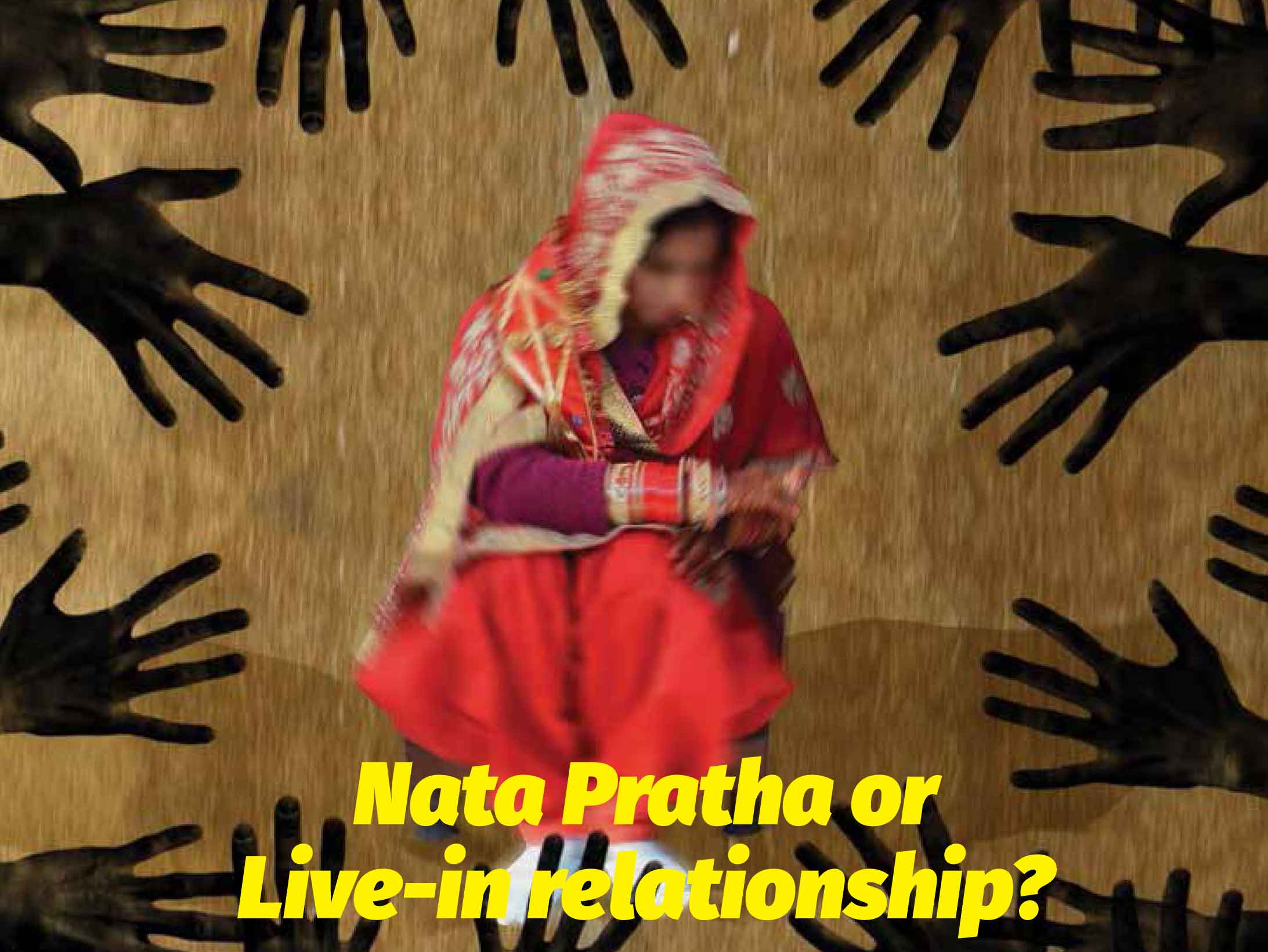
Nata Pratha or live-in relationship?

Nata Pratha,  practiced in some tribal belts, allows women to shun unhappy marriages. But this remarkable avant garde instead of empowering women, has given men licence for extra-marital relationships. An investigative report by Tehelka SIT.

In January this year, when India was talking about “Bulli Bai”, and “Sulli Deals” apps  involved in fake online “auction” of hundreds of Muslim women, not many would know that women are actually auctioned — albeit offline! – in some parts of India in the centuries old tradition of  Nata Pratha, prevalent in tribal belts of Rajasthan, Madhya Pradesh and Gujarat.
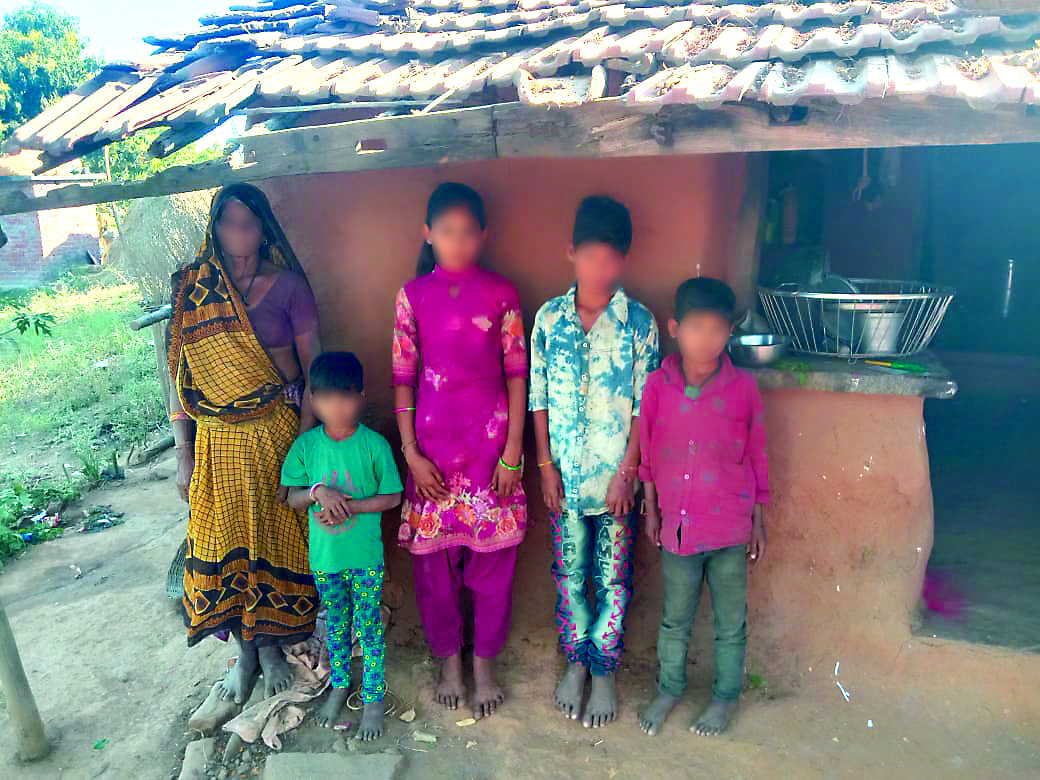
Nata Pratha is mainly practiced by the Bhil tribe, one of the largest tribes in South Asia. Traditionally, both the man and the woman who enter into a relationship are supposed to be married or have been widowed, but the custom has evolved to include single people as well. The word “Nata” means relationship. Under this system, no formal marriage ceremony is required to live together. Couple can perform all obligations of husband and wife without entering into wedlock. According to the practice, man has to pay money to live — a la modern day live-in relationship — with a woman of his choice, after the woman’s first husband walks out of the marriage and pass on his wife to other man in return for money. This money, the “bride price,” is fixed by members of the community, or middlemen, who may receive a cut for doing so. The sum may range from a few thousand bucks to even a few lakhs depending upon the paying capacity of the person concerned. Interestingly, men sometimes use this amount for “buying” themselves new wives!.

Tehelka carried out an investigation into Nata Pratha in the villages of Banswara district of Rajasthan, where many such cases crop up every year.  Investigation suggests that this custom was introduced against male domination, giving wives the authority to get out of marriage if their husbands have betrayed them or are making them suffer through domestic abuse and violence. Ancestors of the Bhil community created this custom and the tribe is of the firm belief that it cannot be wrong. However, the thought of this primitive custom has evolved over the years in a negative manner.

Tehelka has learned that outcome of such a custom has been fourfold. People have exploited Nata Pratha as an easier option of getting into an extra-marital affair. A man has to pay a certain amount of money to enter into a ‘Nata’ that is to live with a woman to whom he is not married and the amount is decided by the panchayat comprising people from side of both the man and the woman. Which, if thought upon holistically, replicates the supposed auction of women on the pattern of “Bulli Bai” and “ Sulli Deals” apps.

Children from the first marriage are also left behind when mother goes for Nata Pratha. They, in majority of the cases, face neglect when a new woman comes into the family, says a report prepared by an NGO Vaagdhara in association with UNICEF. The report states that 2% of the 35 lakh tribal children in the age group of 4-14 have been impacted due to ‘Nata’ practice. Disturbed childhood, unhappy families along with financial crisis, force them into miserable conditions often exposing them to unethical activities such as drug abuse. Also, at times these kids are forced into flesh trade to forgo the requirements of their healthy upbringing or sustainable future by their parents.
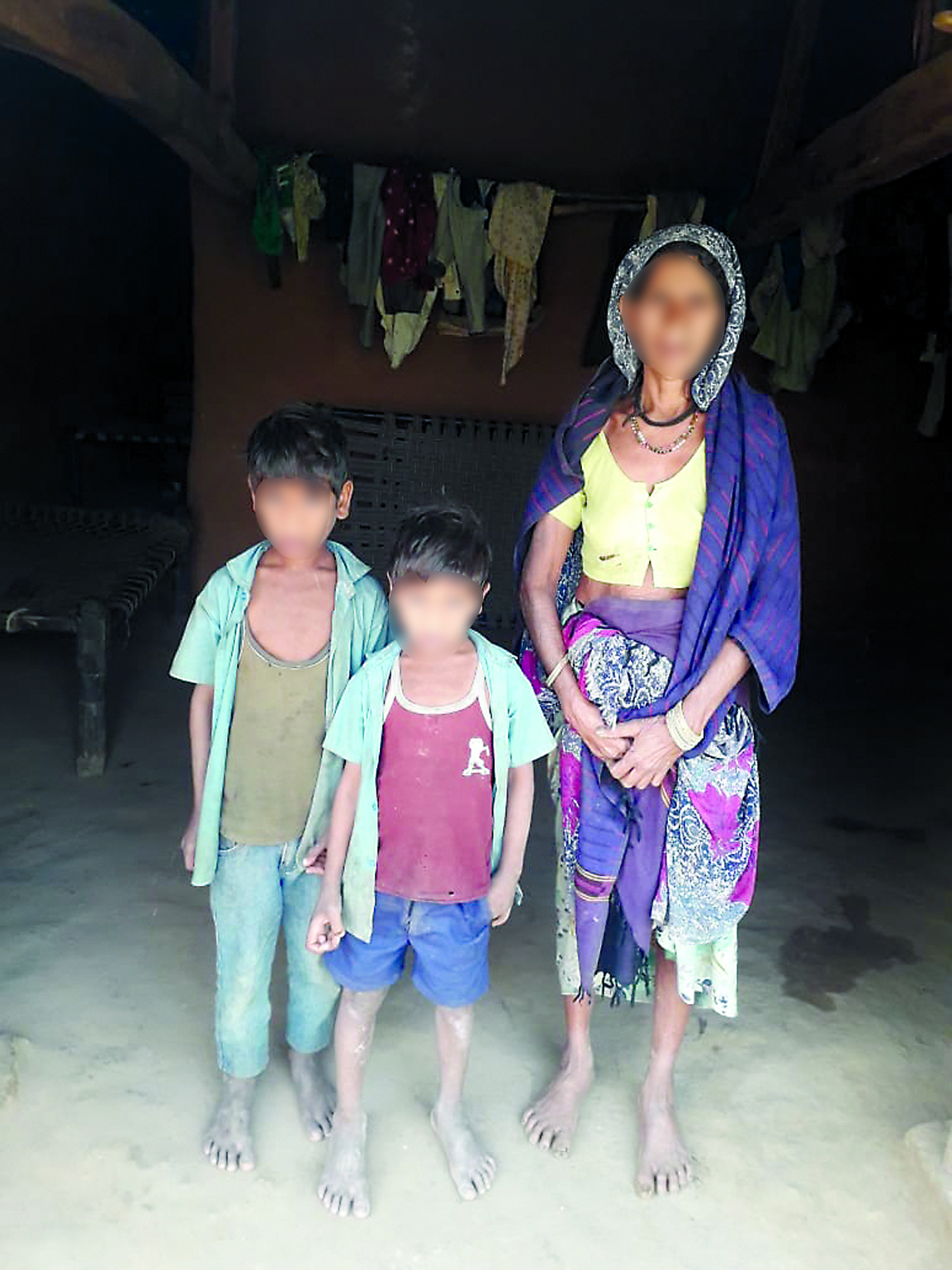
Nata Pratha is practiced by the Bhil tribe. Traditionally, both the man and the woman who enter into alliance are supposed to be married or have been widowed, but the custom has evolved to include single people as well

Nata Pratha is a poor practice. It should be done only when required. Families fall apart and children’s life get ruined. When I was a sarpanch of Rohanwari village, I introduced a rule to impose fine and socially boycott the couple who do ‘Nata.’ The fine ranges from Rs 25,000 to Rs 51,000. So far, eight couples of my village who did ‘Nata’ have been punished under this rule,” says Daulat Ram Baria, a former sarpanch of Rohanwari village.

“The fact that money is involved during ‘Nata’ doesn’t sound all right. As is the practice, village panchayat sits and negotiate the rate of  ‘Nata.’ Sometimes, demand as high as Rs 5 to 6 lakh is made. Then they call me and I bring it down to somewhere around 1.5 lakh. This is an auction of a woman.  If woman is a widow, her parents take this money. If her first husband is alive, then the money goes to him. But in many cases women’s parents also take the “nata” money decided by the village panchayat along with her first husband. The government has not yet framed any law to stop this practice,” adds Daulat Ram Baria.

‘Nata’ allows a woman to marry another man after her marriage breaks down. That sounds reformist, except that in most cases, it’s the husband who walks out of the marriage and pass on his wife to someone else in return for money. Money plays an important role in ‘Nata’. In some cases even father of a woman forces her into one marriage after another, making money from each deal. With breaking and fixing of marriages a lucrative proposition, there are many who try to dissolve marriages and fix new ones to get a cut of the “bride price”. It is also common for girls’ families to slap false cases of dowry and torture on men to deny them their share of the “bride price” on the subsequent marriage of their wives.

Homing in on ‘Nata’ cases

In Kherda village of Banswara district of Rajasthan, Vimla (name changed) was married to Bhan Singh (name changed) 14 years ago. They had three children from the marriage. Bhan Singh was a labourer and Vimla looked after her three children at home. One day while returning from his work, Bhan Singh met his friends who forced him to have liquor at a wine shop. Bhan Singh after having liquor for the first time fell down and couldn’t go home. After a long wait, Vimla decided to go out and look out for her husband while leaving her three children back at home.

After sometime she managed to trace her husband and took him home. Bhan Singh promised Vimla that in future he would not touch the liquor again. But Bhan Singh couldn’t keep his promise and became a habitual drunker, which became a reason for frequent fights between him and Vimla. Finally, Vimla walked out on Bhan Singh leaving her three children behind to do ‘nata’  with some other man during Covid time in 2020.  Village panchayat after negotiations fixed Rs 1.50 lakh for Vimla’s ‘nata.’

“ Panchayat decided that Vimal’s new man should pay Rs. 1.50 lakh to Vimla’s first husband to do Nata. But so far, Vimla’s new companion has only paid Rs 46k to her first husband. For the remaining amount, Vimal’s husband is building pressure on Vimla’s companion,” says Manohar, an activist of the area.

According to Manohar, wives of abusive husbands are doing ‘Nata.’ According to a rough estimate, nearly 10-12 ‘natas’ take place every year in the Banswara district. In each case, a woman is allowed to do ‘nata’ after the panchayat decides her money. That money is a must for her second man to pay to her first husband. If the latter fails to do so, the woman is not allowed to go with him. In some cases if a woman goes without paying money, it leads to two villages locking horns with each other over the issue. The woman is finally brought in front of the Panchayat which decides on the money. She is allowed to go with the second man after payment is made , adds Manohar.

‘Nata’ allows a woman to marry another man after her marriage breaks down. That sounds reformist, except that in most cases, it’s the husband who walks out of the marriage and pass on his wife to someone else in return for money

“Like women, children also suffer because of  ‘nata.’ In Vimla’s case after Nata, she left her three children with her first husband. The children are surviving on the limited income of their father, with the result that the children have stopped going to the school. And there is none in their family to look after them, after their father goes out for a labourer’s job,” says Manohar.

Tehelka discovered another ‘Nata’ case in the Mahori village of Banswara district. Woman Samta Devi (name changed) underwent ‘Nata’ after her first husband left her. Samta was married a few years ago to a man named Veerpal Singh (name changed).  They had two children, out of which one died. A few years after the marriage, Samta and Veerpal, who is a labourer, started fighting with each other very often. With the result that Samta decided to leave Veerpal and did ‘Nata’ with another man in 2019. The village panchayat decided that Samta’s second man should pay Rs 1 lakh to Veerpal after which she was allowed to go with him.


“It was decided by the village panchayat that Samta’s second husband should pay Rs 1 lakh to her first husband. Samta did ‘Nata’ with a man who is already married. She was going for a labourer’s job in Rajkot, Gujarat, with her husband where she met the second man with whom she later did ‘Nata.’ The village panchayat tried hard to bring Samta back to her first husband because she had a son. But she refused to return. After her decision, I have broken all relations with her,” says Samta’s uncle Kamlesh to Tehelka.


After Samta, another case of ‘Nata’ surfaced in Covid time in 2020. This time it was Maya (name changed), a mother of two, who was married to Rohan Lal (name changed). Maya and Rohan were living a happy married life before their relations started to fall apart. And finally Maya decided to go with other man after doing ‘Nata.’ According to ‘Nata’ custom, Maya was forced to abandon her two children from previous marriage. The village panchayat decided that Maya can go with other man only after paying Rs.1.50 lakh to her first husband. The amount fixed by the panchayat in the presence of then sarpanch of Rohanwaari village Daulat Ram Baria, was paid to Maya’s first husband, after which she was allowed to go with the man of her choice.

“Our then sarpanch, Daulat Ram Baria played a major role in fixing a ‘Nata’ amount of Maya. A village panchayat was held and it was decided that Maya’s second man should pay Rs 1.50 lakh to Rohan Lal. The amount was paid and Maya was allowed to walk on Rohan Lal,” says Basu (name changed), Maya’s brother-in law.

Another Covid time ‘Nata’ was done in a village of Dungarpur District of Rajasthan. Rano Devi (name changed) did Nata two months ago. She was married in 2014. She had a son after two years of marriage. She started having a dispute with her husband after realising that her husband is having an affair with another woman. When she confronted her husband on the issue, he started beating her, with the result that Rano returned to her parents. Her parents made futile efforts to re-unite Rano with her husband, prompting them to arrange a married man for their daughter’s ‘Nata.’ In this case, Rano was not asked by the village panchayat to pay money to her first husband before doing ‘Nata,’ because the first husband gave divorce to Rano. According to the tradition ‘Nata’ money is paid only when the first husband did not divorce his wife, and the wife after leaving him decided to live with another man without marriage.

“ Rano’s husband was very abusive and had an affair with another woman. When Rano objected, he started beating her. With the result that Rano’s parents arranged a married man for her ‘Nata.’ In this case, Rano was not asked to pay any money to her first husband, because he had already divorced her. According to the ‘Nata’ tradition, money is paid only when women, after running away from her first husband, start living with a second man, without taking a divorce from the husband,” says Motilal, social activist of the area.

“Rupa (name changed) was another woman from Tori village in Banswara district, who did ‘Nata’ a year after her husband died in 2017. We don’t know the amount Rupa’s parents got from another man. But the two children from the first marriage who are living with their grandparents are in a pathetic condition. They have no future, no schooling,” says Mansingh, a social activist of the area.

Covid also lets a woman do ‘Nata.’ Beena Devi (name changed) of Patiya village district Banswara was married to Sohan Lal (name changed)  in 2005-2006. They have five children. Sohan Lal, who was a daily wage worker, going to Gujarat for the labour, lost his job in Covid and was forced to sit at home with no work and no money. Without money, it was difficult for Sohan Lal to run the household. Realising this, his wife decided to do ‘Nata’ with another man, and ran away with him. It has been one and a half year since. But Rupa’s  where about is not known to her husband Sohan Lal, who is financially in a very tight situation.

“Sohan Lal lost his job due to Covid, resulting in his wife running away with another man after going ‘Nata.’ Her five children are now living with Sohan Lal and surviving on the government’s free ration support. Sohan Lal is looking for his wife so that he can claim ‘Nata’ money from him,” says Kailash Chandra, a local activist.
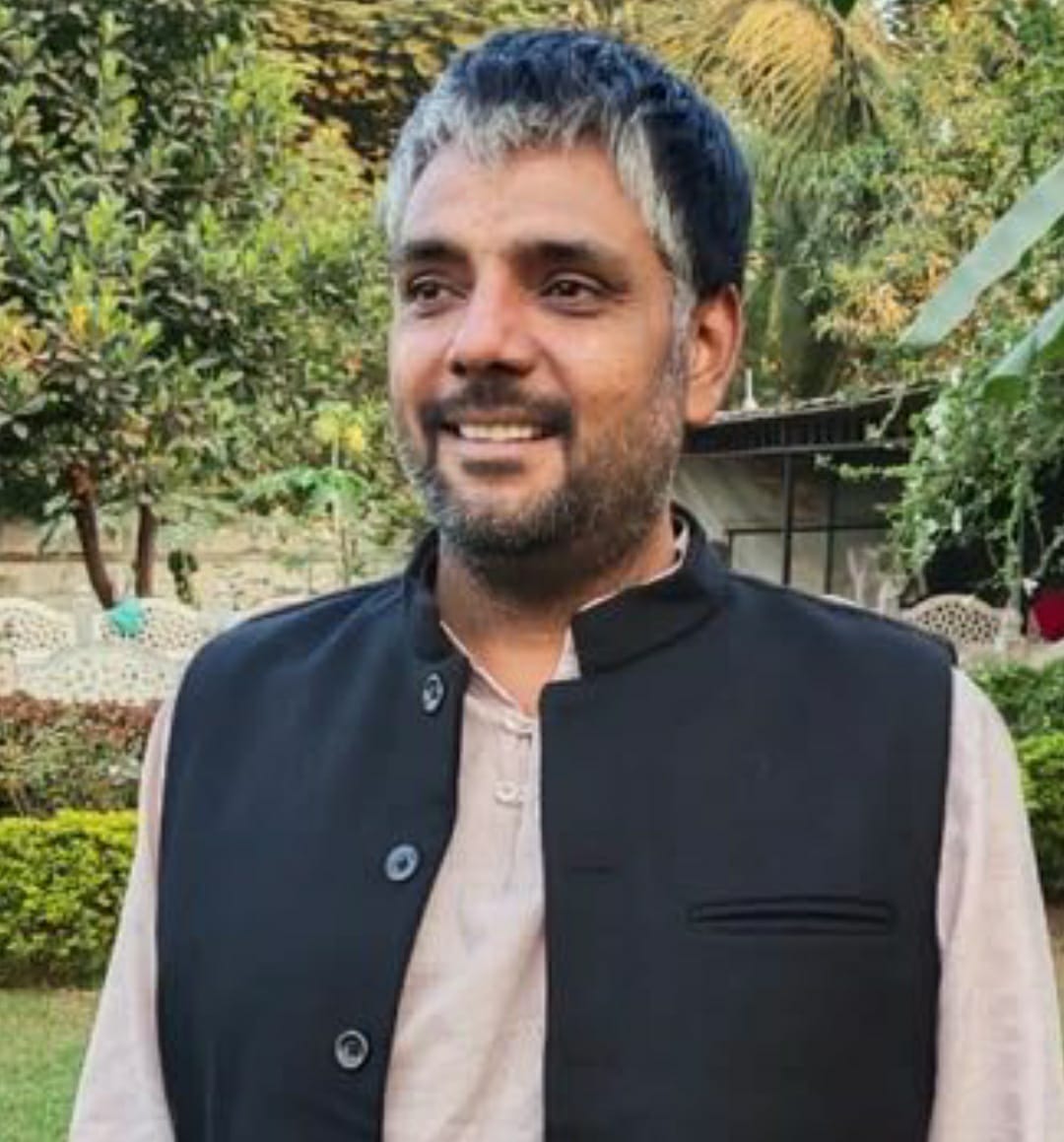
Nata Pratha indicates how advanced the Tribal culture was. It gives the right for widow re-marriage and also gives the right to the women to leave their abusive husband, which is tough in our culture. This tradition is of women empowerment. But over the years things have changed. Children are most affected by ‘Nata.’  Women are not allowed to take their children from their first marriage with them if they do ‘Nata.’ Actually money in ‘Nata’ is not the rate of the woman; it is their tradition. But the outside world thinks that women are auctioned in this practice. There is no law so far to curb Nata Pratha. But the educated among the Bhil tribe are coming out of this Nata Pratha”, says Jayesh Joshi, Secretary, NGO Vaagdhara.

Anita Damor, the woman rights activist of the area, describes Nata Pratha both good and bad. Good in the sense that it empowers women. And bad because money is involved in it. Unmarried girls’ parents demand Rs 4-5 lakh from the man’s parents in the marriage unlike in our society where girl’s parents give dowry. And married women going for “Nata” also give money to her first husband. Sometimes it so happens that the first husband who demands money from his wife’s second man also demands his wife back. The involvement of money is bad in Nata Pratha, says Anita Damor even as she demands that there should be some law to curb this practice.
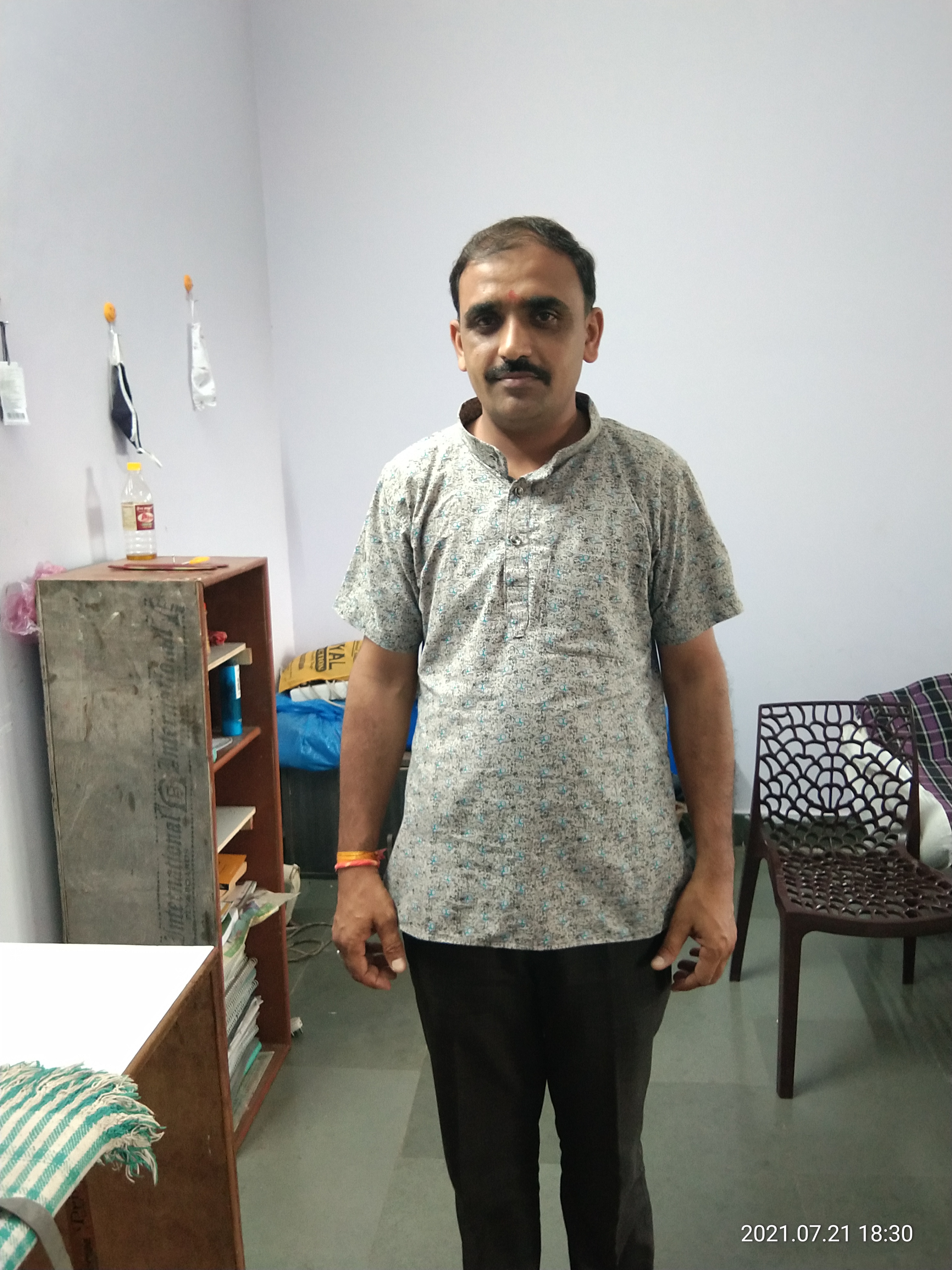
 

Parmesh Chandra Patidar, a theme leader associated with Vaagdhara, an NGO, also demands a law to curb Nata Pratha. For him it is bad for both women and children. The children left behind after ‘Nata’ suffer a lot. And involvement of money in the custom is also bad. Unfortunately,  children do not get anything from the money which changes hands in Nata Pratha. Money is generally used by the husband to pay his debt.

In this practice, middlemen also play a vital role in deciding the money to be paid to a woman’s first husband by her second man. They get their cut out of the money fixed by the panchayat. Sometimes, the panchayat appointed for deciding money goes on for a month if consensus is not reached on the money.

When contacted, Rajesh Meena, Superintendent of Police (SP), Banswara, said that there is no law to curb Nata Pratha. When asked about his views on women being auctioned in front of Panchayat as per the practice, Rajesh Meena said that since he had no knowledge of the subject, he would not comment on this.

For a simple want of having more than one partner, people have modified ‘Nata’ custom into as many forms as they wanted, suiting their unworthy desires, summarily ignoring the fact that their actions are not only affecting women and children but also impacting the society on a whole, further subjugating human values that forms the basic foundation of a ethical life.



Nobody can be forced to undergo COVID-19 vaccinations: SC

The Supreme Court on Monday said that no person can be forced to get vaccinated against COVID-19 and asked the Centre to make public the effect of such an immunisation.

A bench of Justices L Nageswara Rao and B R Gavai said bodily autonomy and integrity are protected under Article 21 of the Constitution.

The top court said the current COVID-19 vaccine policy cannot be said to be manifestly arbitrary and unreasonable.

“Till numbers are low, we suggest that relevant orders are followed and no restriction is imposed on unvaccinated individuals on access to public areas or recall the same if already not done,” the bench said.

Regarding segregation of vaccine trial data, subject to privacy of individuals, all trials conducted and to be subsequently conducted, all data must be made available to the public without further delay, it said.

The apex court also directed the Union of India to publish reports on adverse events of vaccines from the public and doctors on a publicly accessible system without compromising data of individuals.

The court delivered the judgement on a plea filed by Jacob Puliyel seeking directions for disclosure of data on clinical trials of COVID-19 vaccines and post-jab cases.

MOST POPULAR

HOT NEWS