School in Maoist heartland provides a ray of hope

The densely forested Abujhmarh region, spanning three districts of Chhattisgarh and spread over 4,000 sq km, is home to India’s Adivasis. It is also a Naxal stronghold, writes Deepanwita Gita Niyogi

As the bike travelled along the red gravel road, blue hills rose in the distance; at times obstructed by trees and dense jungle. There was heavy silence all around. Except a few mahua flower gatherers, the sight of humans was rare.

Entering Abujhmarh produced a different kind of feeling. This densely forested and hilly region spread over 4,000 sq km spans across three districts in Chhattisgarh: Narayanpur, Bijapur and Dantewada. Abujhmarh is home to India’s Adivasis. It is also a Maoist stronghold. Villages here lie scattered.

On the way to Handawara, a village which lies in Orchha block of Narayanpur in the Abujhmarh region, a few memory pillars came into view. A red coloured memorial paying tribute to a slain comrade was also seen.

The destination is a residential school in Handawara, the Mata Rukmani Balak Ashram. Though located in Narayanpur, Handawara lies on the border of adjoining Dantewada district. There are about 30 students who live and study at the ashram even though the accommodation is for 100.

Light of education

Over a chat, school peon Sunil Dhruw said, the school set up in 1988, is government aided. The Mata Rukmani Seva Santhan, a non-profit organisation based in Bastar district, runs it. The organisation has 36 ashram schools in the entire Bastar region comprising seven districts, of which 21 belong to girls and the rest are for boys.

“I look after the students (4-15 years) who live here, cook food for them and wash utensils. They come from poor families and most of them are unwilling to return home. The distance is also huge. Many come from villages 15-20 km away. Their parents are farmers. However, during the mahua collection season, some go to extend help,” Dhruw added. Tribal families across Chhattisgarh collect mahua flowers, an important minor forest produce, during the summer months.

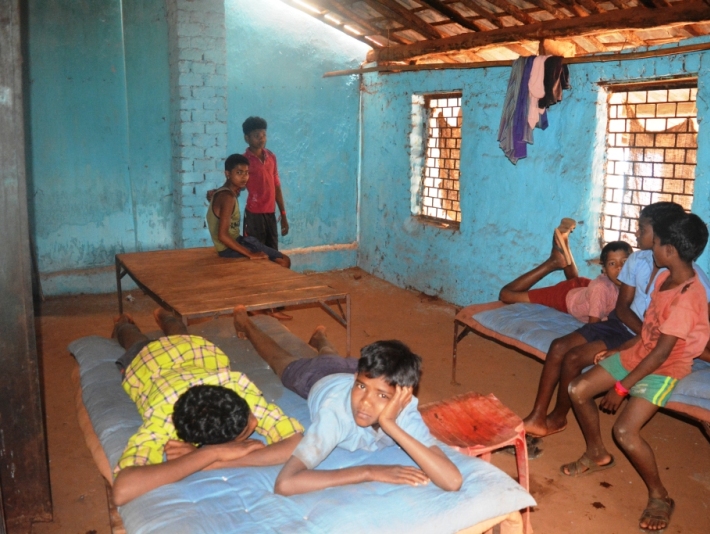
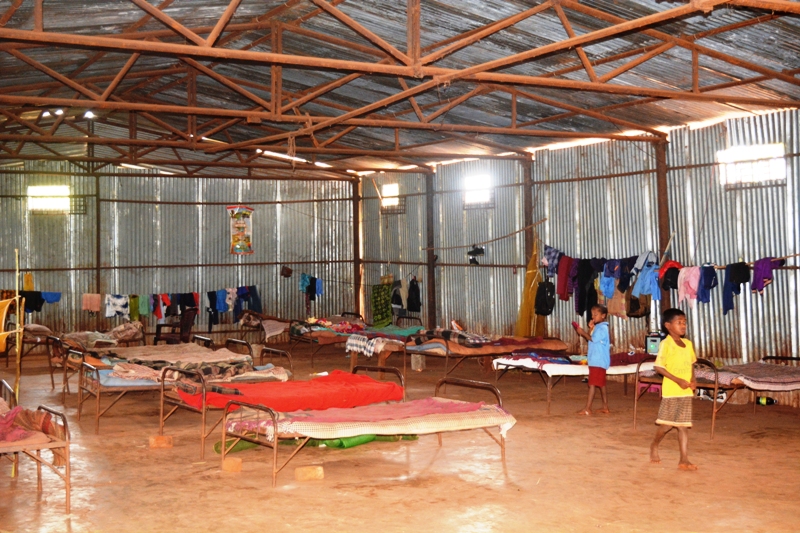
The condition of the school is unsatisfactory. There are only four teachers and no classrooms. Of the two structures located in the compound, one is used by teachers who reside here. Food is cooked in the adjoining kitchen. The other space has beds for the boarders with clothes and books lying all around. In the absence of power connection, there is dependence on solar energy.

There is another dilapidated building which, according to Dhruw, has been lying like that for some time. It was abandoned after snakes entered during the lockdown. On approaching it, one could make out the writings in Hindi on the blackboard on the outside wall saying Narendra Modi is the prime minister of India. Another blackboard had English alphabets.

Classes start from 10.30 am and go on till 4 pm. Due to the lack of benches students sit wherever space is available. The peon added that there is a government school in Hitampara close by but most of the times teachers don’t turn up.

Under the shadow of Left-wing extremism

Sources not wishing to be named said Maoists have damaged schools in the interiors of Narayanpur. Still, after the inauguration of the Chhindnar bridge over the Indravati by Chief Minister Bhupesh Baghel in January, things are looking up. The bridge, which has come up in Dantewada, promises connectivity to Abujhmarh. Earlier, boats were the only means of crossing the river.

While most students were at lunch when this reporter turned up at the school in Handawara, Bishnu Berta sat on his bed clutching a copy in his hand. An Adivasi boy of 14 years, he is in a junior class due to late joining. Unlike many students, his home is nearby.

Berta, who likes playing volleyball, read out haltingly from a textbook and later wrote English alphabets in his copy. Dhruw explained that most students find English and Hindi difficult to read and learn. “Though they know the alphabets in English, they struggle to write. Many cannot speak in Hindi. At home they speak only in Gondi.”

Narayanpur has two blocks: Narayanpur and Orchha. Social workers, who work in the district, said schools were destroyed to prevent security forces from occupying them. In some areas, they are non-existent till date.
Handawara, which is also a gram panchayat, has a beautiful waterfall five km from the ashram school. “But it lacks basic amenities. In many areas of Abujhmarh, there aren’t schools as supply of building materials is a challenge due to the lack of proper roads. For any work to be carried out here, permission has to be taken from the rebels. Such is the condition,” a source said.

Santosh Mandavi, a government school teacher based in Sukma district, said every school in Bastar sub-division receives adequate funds. But it may be that due to some kind of fear or hesitation, government officials and teachers sometimes avoid going to the Abujhmarh area.

School superintendent RS Baghel said the residential school, which is short staffed, is till class 8. After that students go elsewhere if they want to continue studies. “It is my duty to stay on and teach them. I have been here since 1990. The Chhindnar bridge promises development in Abujhmarh. Many are in favour of inclusion of Handawara in Dantewada instead of Narayanpur district.”

Educationist and social activist Dharampal Saini of Mata Rukmani Seva Sansthan said about seven to eight years ago, many school buildings were destroyed. So, classes have to be organised either in the verandah or any open space available. “It was a challenge in those days as the bridge was not there. Building materials had to be carried through a circuitous road,” said Saini, who was instrumental in getting girls to school, in Bastar.

This reporter tried to contact the Narayanpur district collector but did not receive any reply to her questions.
 

India reaches out to Europe under the shadow of Russia-Ukraine war

The hectic three-day tour of PM Modi to Europe under the shadow of  Russian invasion of Ukraine has sent a strong message to the NATO members as well as to Russia that “the peace is the only option for resolving the conflict”

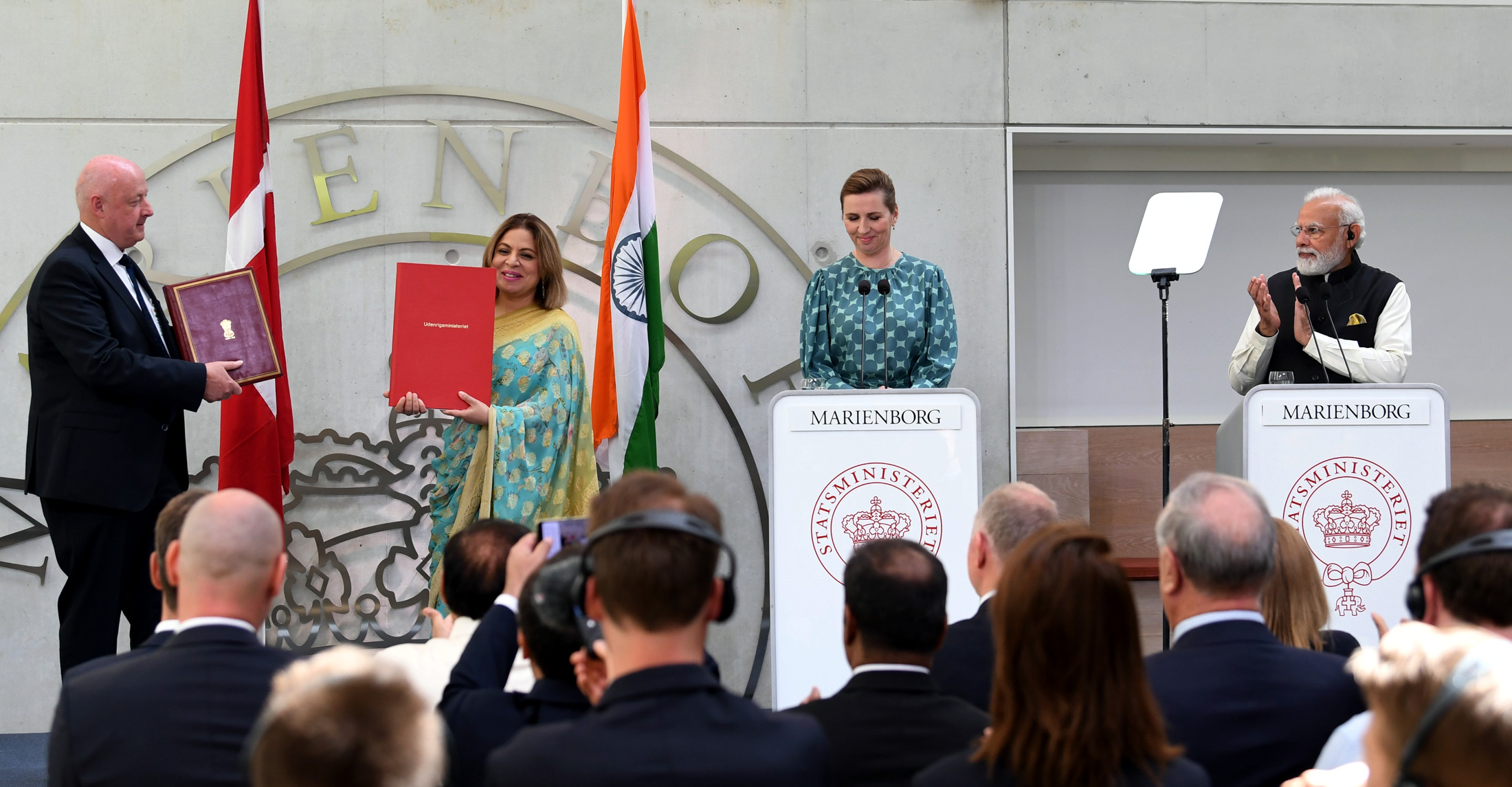
The hectic three-day tour of the Indian Prime Minister, Narendra Modi, to Europe, including meetings with the leaders of the Nordic countries, that too under the shadow of the avoidable Russian invasion of Ukraine, gives a strong message to the NATO members as well as to the Russian friends that “the peace is the only option for resolving the conflict”. The visit was significant as it took place just on the heels of the visit of the president of the European Union, Ursula von der Leyen and the British Prime Minister, Boris Johnson, to India. India has been under pressure of the US-led western powers to condemn Russia for invading Ukraine since February this year. Russia is also keen that India should formally join the new strategic alliance, RIC-Russia, India and China. However, in this geo-power game, India is strictly adhering to her non-aligned policy.

It is hoped that the comment of Netherland’s ambassador, Karel van Oosterom, to the UN, asking India that she should not have been abstaining during the crucial voting against Russia in UN forums would not cast any adverse impact on the visit. It only reveals that most of the diplomats in the developed world are still living in the cold war era. It may be recalled that about a quarter of century ago, the American scholar, John Kenneth Galbraith, who had also served as the US Ambassador to India, had cautioned the developed world that “What is this military power and what are the sources of its strength? This first source to strengthen the military power in democratic countries is the belief that any government, any governmental instrument, is naturally subject to democratic process. It is strong in our rhetoric, but the modern military establishment and the organization it controls, the money it deploys, the captive politicians it commands, the scientific community that it subsidizes, and under the cloak of patriotism that protects it, has become a polar force in its own right”. The ongoing Russian-Ukrainian conflict needs to be studied with this perspective.

Galbraith had further stated that “The military services, the defence department civilians, [and] the serving industries now employ about six and a half million people and generate over $146 billion in business to private enterprise.”

India’s Pro-Democracy Stand 

India is stressing for a free-trade agreement with the European powers, and has so far declined to sign the Chinese sponsored Regional Comprehensive Economic Partnership (RCEP) in South Asia. India is keen to engage China, but refuses to lower her vigil regarding the expansionist policies of the autocratic regime. Its signatories, however, include Australia, Brunei Darussalam, Cambodia, Japan, New Zealand, Singapore, Thailand and Viet Nam. The European leaders were also told that while America, Japan and Australia seek India’s active participation in the QUAD, an informal strategic alliance for keeping a vigil in the India-Pacific region, while they are for closer economic ties with Beijing.

Amidst these developments in the India-Pacific region, India is trying to further cement her ties with Europe. It is being suggested that the Chinese support to Russia too has a financial agenda. The cooperation will enable it to access untapped energy sources and natural wealth of Eurasia.

Initially, the Indian perspective to the ongoing European war was communicated to the European Union president, Ursula von der Leyen, during her visit to New Delhi in April 2022. Modi was present when she made the inaugural address at the Raisina Dialogue. Several European foreign ministers too attended this conference. India has been stressing upon that the efforts of encircling Russia is counter-productive and only strengthening of economic ties can usher in peace in the region.

India is ready to use her closer ties with Russia for peace, but the Russian concerns regarding its security needs to be addressed. With this perspective, the European visit of Modi during the first week of May was quite significant and perhaps, timely. It was an opportunity for evolving closer economic ties and technological collaborations, especially in the field of blue technologies and the protection of environment. There is a vast potential for augmenting the economic ties with the EU countries, which is about USD 100 million, according to the 2020 statistics. There is also possibility of increasing the EU investment in India, which is estimated to be just USD 109.55 billion. The collaboration with India offers a new possibility of enhancing business for the European powers with an Asian country like India poised for much faster growth than other countries of Europe, Africa and Latin America that too amidst the slowing down of the global economy.

It is also being stated that the growing role of the regional economic blocs and the rising anti-globalisation sentiment in developed economies too might be adversely affecting the world trade. The growing economic ties with India may help in boosting the European economy with India, especially when WTO’s protocols are not being strictly adhered to. Meanwhile, India is keen to have free trade agreement (FTA) with the Australia, Canada, UAE and UK by the end of 2022.

In this backdrop, India’s bilateral summit with Nordic group nations – Norway, Sweden, Finland and Iceland is likely to trigger off much clooser cooperation of the region with India.   Modi had bilateral talks with Finland’s Prime Minister, Sanna Martin, Iceland’s Prime Minister Jakobsdottir, Swedish Prime Minister, Magdalena Andersson and Norway’s Prime Minister, Jonas Gahr Støre. The European leaders explored the possibility of closer collaboration in the fields such as blue economy, renewable energy, green hydrogen, solar and wind projects, green shipping, fisheries, water management, rainwater harvesting, space cooperation, long term Infrastructure investment, health, communication research such as 5-G and 6-G and culture.

Impact of Modi’s visit

It is too early to assess the impact of Modi’s whirlwind visit to Europe. However, it is to be remembered that the diplomacy is the only way to end wars. His meeting with his European counterparts, especially with Germany and France, is quite meaningful and heartening. It may further intensify ongoing backdoor diplomacy to end the Russia-Ukraine war. There is a near unanimity among the foreign issue specialists that war begins when diplomacy fails. It is happening in Europe, but had succeeded during the 1962 Cuba crisis. The then US President, John F. Kennedy, was ready even for a nuclear confrontation with the USSR, if it did not remove the nuclear missile complex in Cuba. The two powers had ultimately succeeded in working out a compromise that led to the removal of the American nuclear warheads from Turkey, and the USSR finally dismantled its missiles capable of carrying nuclear warheads from Cuba.

During the visit, Modi’s meeting with the new German Chancellor, Scholz, might promote much closer economic ties with the world’s most advanced country in the crucial fields of clean energy and other fields related to science and technology. It is not known whether Germany would soon be manufacturing weapons, which it had decided not to produce. He also met for the first time the French President, Emmanuel Macron after being re-elected in the recently held elections. Modi knows that why Macron’s commitment to Russia regarding the peace agreements, Minsk-I and Minsk II, were not implemented by the Ukrainian president, Volodymyr Zelenskyy, a comedian-turned  politician.  However, it goes to the credit of Modi that he promptly issued an appeal for the cessation of violence and immediate ceasefire between Russia and Ukraine. The response from Indian Prime Minister was following an emotional appeal of the Danish Prime Minister Mette Frederiksen. She had expressed hope that India would “use its influence” over Russia and Vladimir Putin to end the war in Ukraine. Modi too agreed with her that the issues should be resolved through dialogue and diplomacy. The peace, however, will remain elusive unless the American establishment decides not to expand NATO in the region for ending the conflict.

(A New Delhi-based independent columnist offers an in-depth study. The views expressed are his own.)


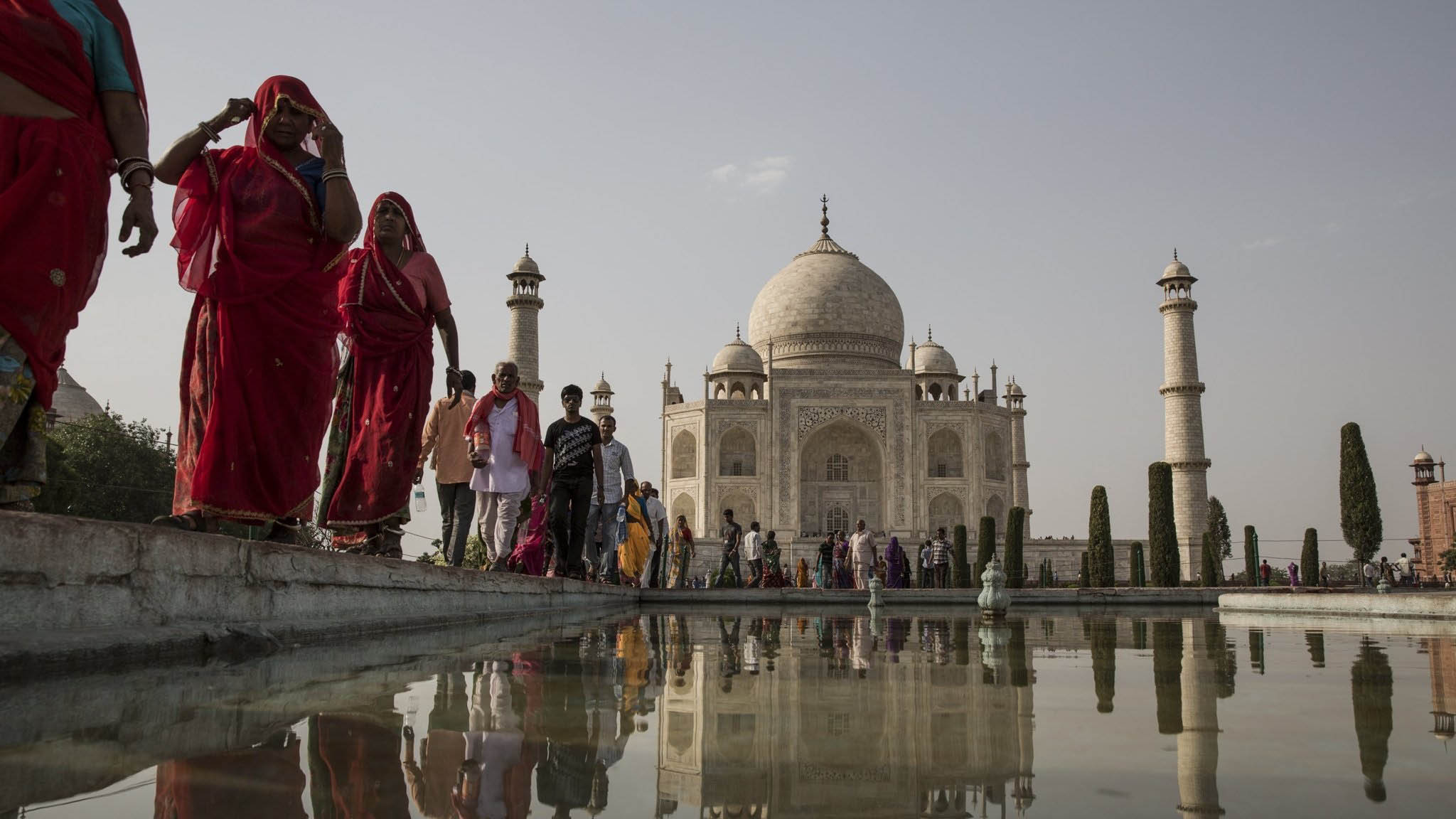
Yet another bid to re-ignite religious row over Taj Mahal

An office bearer of BJP Ayodhya unit has filed a PIL  before the Lucknow Bench of the Allahabad High Court pleading that Taj Mahal is a temple  — Tejo Mahalaya, even as he prayed for grant of permission to worship in the monument’s premises, reports Mudit Mathur

The old controversy over Taj Mahal is reignited by saffron leaders – whether Taj Mahal is a tomb or a temple? The controversy travelled from the Agra Civil Court to High Court and even before the Supreme Court with no anticipated relief. Even the originator of this controversial theory Purushottam Nagesh Oak (P.S. Oak) was reprimanded by the Supreme Court for such claims over the Taj Mahal to be a “TejoMahalaya”, a Lord Shiva temple, but his saffron followers continue to repackage the same issue again and again with different identities.

Despite clear stand of Modi government on the issue, an office bearer of BJP Ayodhya unit  has now filed another Public Interest Litigation before the Lucknow Bench of the Allahabad High Court with same pleadings about Taj Mahal to be a temple – known as “Tejo Mahalaya,” and right to worship be allowed by declaring the provisions of the Ancient and Historical Monuments and Archaeological Sites and Remains (Declaration of National Importance) Act, 1951 (71 of 1951) and the Ancient Monuments and Archaeological Sites and Remains Act, 1958,  unconstitutional being ultra vires to Article 19 (1) (a), 25, 26, 49 and 51-A (f) (h) of the Constitution of India.

Interestingly, all the litigations raised up in the Taj Mahal controversy taking motivated Hindutva angle, relied upon a book published by P.S. Oak titled “Taj Mahal: The True Story.” The author himself failed to convince the apex court and academic world with the authenticity of his alleged claims. Further, the Narendra Modi-led government informed the Lok Sabha on 30th November, 2015 that it has found no evidence that the Taj Mahal in Agra was a Hindu temple as claimed by P S Oak.

The Taj Mahal is a UNESCO World Heritage site and Indian government has rejected claims by a group of lawyers that the Taj Mahal monument was a Hindu temple. The then Union Culture Minister Mahesh Sharma told the Lok Sabha that the government didn’t find any evidence that Taj Mahal, the 17th century Mughal monument, was a Hindu temple. The response came in the wake of a controversy which erupted after a declaratory suit was filed by a group of advocates in Agra Civil Court to have the Taj Mahal declared as a Hindu Temple and the right to offer worship in the Taj Mahal.

Interestingly, the lawyers in their suit have named Lord Agreshwar Mahadev Nagnatheswar Virajman as main plaintiff to the claim of ownership of the property, as has been successfully done in the case of Ayodhya dispute to claim ownership rights. The suit claiming that the Taj Mahal was originally a Shiva temple and demanded permission for worship for Hindus and restriction for Muslims from offering prayers at the location.

The Taj Mahal is a white marble mausoleum located on the southern bank of the Yamuna river in the Indian city of Agra. It was commissioned in 1632 by the Mughal emperor Shah Jahan to house the tomb of his favourite third wife, Mumtaz Mahal. One of the seven wonders, the Taj Mahal is regarded by many as the best example of Mughal architecture and is widely recognized as “the jewel of Muslim art in India”. On 7 July 2007, it was declared one of the seven winners of New 7 Wonders of the World (2000–2007) initiative in Lisbon.

The right-wing writer, P N Oak, in his book – “Taj Mahal: The True Story”, claimed: The Taj Mahal was originally a Shiva temple and a Rajput palace named “Tejo Mahalaya” seized by Shah Jahan and adopted as a tomb. This temple might have been built by Indian King Jai Singh I. Mahal is a word to describe a royal palace and not a tomb and after seizure by Shah Jahan, the name was changed to Taj Mahal.

Oak’s claim is based on some western authorities on architecture including Ernest Binfield Havell, Mrs Kenoyer and William Wilson Hunter who have written that the Taj Mahal is built in the Hindu temple style. Asserting this, Havel says the plan of the ancient Hindu temple of Java, the Prambanan, is identical with that of the Taj Mahal. The octagonal shape of the Taj Mahal has a special Hindu significance, because Hindus alone have special names for the eight directions and the celestial guards assigned to them. The finial of the Taj Mahal is a Trishul with a Kalash, holding two bent mango leaves and a coconut, which is a sacred Hindu ritual’s theme.

As founder and president of the Institute for Rewriting Indian History, the former official, P.N. Oak, is the author of 15 books asserting that the Mughal and other Muslim rulers merely desecrated and occupied architectural masterpieces that were designed by Hindus. However, most of the historians do not subscribe to his views based on unsustainable evidences. Oak asserts in his book that the monument is a 12th-century Hindu temple that was converted into a palace by Muslim rulers and commandeered by Shah Jahan to serve as his wife’s tomb. Most of the historians disagree with his claims and maintain that the Taj Mahal was built in the 17th century at Agra in northern India on the orders of Shah Jahan, the Mughal emperor, after the death of his favourite wife, Mumtaz Mahal.

Many historians say that Oak was not a historian nor an archaeologist or a linguist. He was a soldier in the Indian National Army of Subhash Chandra Bose. Subsequently, he worked as a journalist. His books and writings revolve on four central themes: 1 All cultures in the world originated from Indian culture. 2 All languages in the world originated from Sanskrit. 3 All religions in the world are sects of Hinduism or originated from Hinduism. 4 What is referred to as Bharat in ancient texts refers to the whole world.

On Taj Mahal controversy the noted historian Rana Safvi, quoting W.E. Begley (Contributor), Z.A. Desai’s book entitled “Taj Mahal: The Illumined Tomb: An Anthology of Seventeenth-Century Mughal and European Documentary Sources, said that “there is no question” of revisiting the history of the Taj Mahal, and that there is no evidence a temple ever existed on the site. “There was a haveli [mansion] owned by Hindu ruler Jai Singh which existed before the Taj was built there. “Shah Jahan officially bought the haveli from him. An official farman [order] was issued about this and it still exists. The farman also shows that the Mughals were very particular about recording their deeds and history,” she said. Another noted historian, Harbans Mukhia, also agrees to her views. “Recorded history proves beyond any doubt that the Taj Mahal was built by Shah Jahan in memory of his queen,” Mukhia said. “School text books and various government websites also describe the monument as an example of Indo-Islamic architecture,” he added.

The petitioner of the present PIL, Dr Rajneesh Singh, is the media in charge of the BJP Ayodhya unit. “I have been trying to ascertain facts about the 22 locked rooms of the Taj Mahal since 2020 through the Right to Information Act (RTI),” Singh said adding that I filed an RTI in 2020 with the union ministry of Culture seeking information about the rooms. Replying to the RTI, the union ministry of Culture informed the Central Information Commission (in Delhi) that these rooms were locked due to security reasons,” Singh said. And no detail was provided about these rooms, he added.

“When all my efforts failed then I approached the Lucknow High Court seeking directives to the government to open these 22 rooms and constitute a fact-finding committee to find out whether Hindu gods and scriptures are inside,” he added. The PIL expressed apprehensions of communal clashes as happened in Ayodhya because some saffron clad Jagadguru Paramhans Acharya was stopped to enter Taj Mahal where he went to worship Lord Shiva.

The petition also sought mandamus with regard to certain provisions of the Ancient and Historical Monuments and Archeological Sites and Remains (Declaration of National Importance) Act 1951, and the Ancient Monuments and Archeological Sites and Remains Act 1958, to be unconstitutional under which the Taj Mahal, Fatehpur Sikri, Agra Fort, Itimad-ud-Daulah’s tomb and many monuments all over India were declared protected historical monuments. Besides, it prayed for other directions to constitute fact finding committee and opening up 22 closed room inside the Taj Mahal to ascertain facts and truth.

The Uttar Pradesh is just witnessing spurt of communal tides over pre-independence contentious conflicts by right-wing hardcore Hindutva forces despite existence of the Places of Worship (Special Provisions) Act, 1991, whereby it was declared that the religious character of a place of worship existing on the 15th day of August, 1947 shall continue to be the same as it existed on that day.

It was further provided in Section 4(2) of the Act 1991, that any suit, appeal or other proceeding with respect to the conversion of the religious character of any place of worship, existing on the 15th day of August, 1947, is pending before any court, tribunal or other authority, the same shall abate, and no suit, appeal or other proceeding with respect to any such matter shall lie on or after such commencement in any court, tribunal or other authority.

But despite legislation barring the jurisdiction, the Civil Courts are entertaining claims of right to worship at the Shrigar Gauri temple located in Gyanvapi mosque premises adjoining Kashi Vishwanath temple and Shahi Idgah mosque near the Krishna Janmabhoomi temple in Mathura.

Court dismisses PIL, says plea nonjusticiable

The Lucknow bench of Allahabad High Court on Thursday dismissed a plea to constitute a fact-finding committee and the “opening of 22 rooms” on the monument’s premises to find out the “real truth” behind the Taj Mahal construction, calling it a “non-justiciable” issue. A non-justiciable issue is something, which the Court cannot decide or go into.

During the hearing, Justices Devendra Kumar Upadhyay and Subhash Vidyarthi said, “We are of the opinion that petitioner has called upon us to give a verdict on completely a non-justiciable issue. “The first prayer (to constitute a fact-finding committee to study “real history” of Taj Mahal) cannot be adjudicated by this court,” the bench ruled.

“We are not convinced with your prayers. What are you seeking is the exploration of facts through a fact-finding committee? That’s none of your rights and it’s not under the ambit of the RTI Act,” the bench contended.

The judges also ridiculed the petitioner who sought a declaration that certain provisions of the Ancient and Historical Monuments and Archaeological Sites and Remains (Declaration of National Importance) Act 1951, to be ultra-vires, which stood repealed about sixty-four years ago.


Will delimitation redraw the political map of J-K?

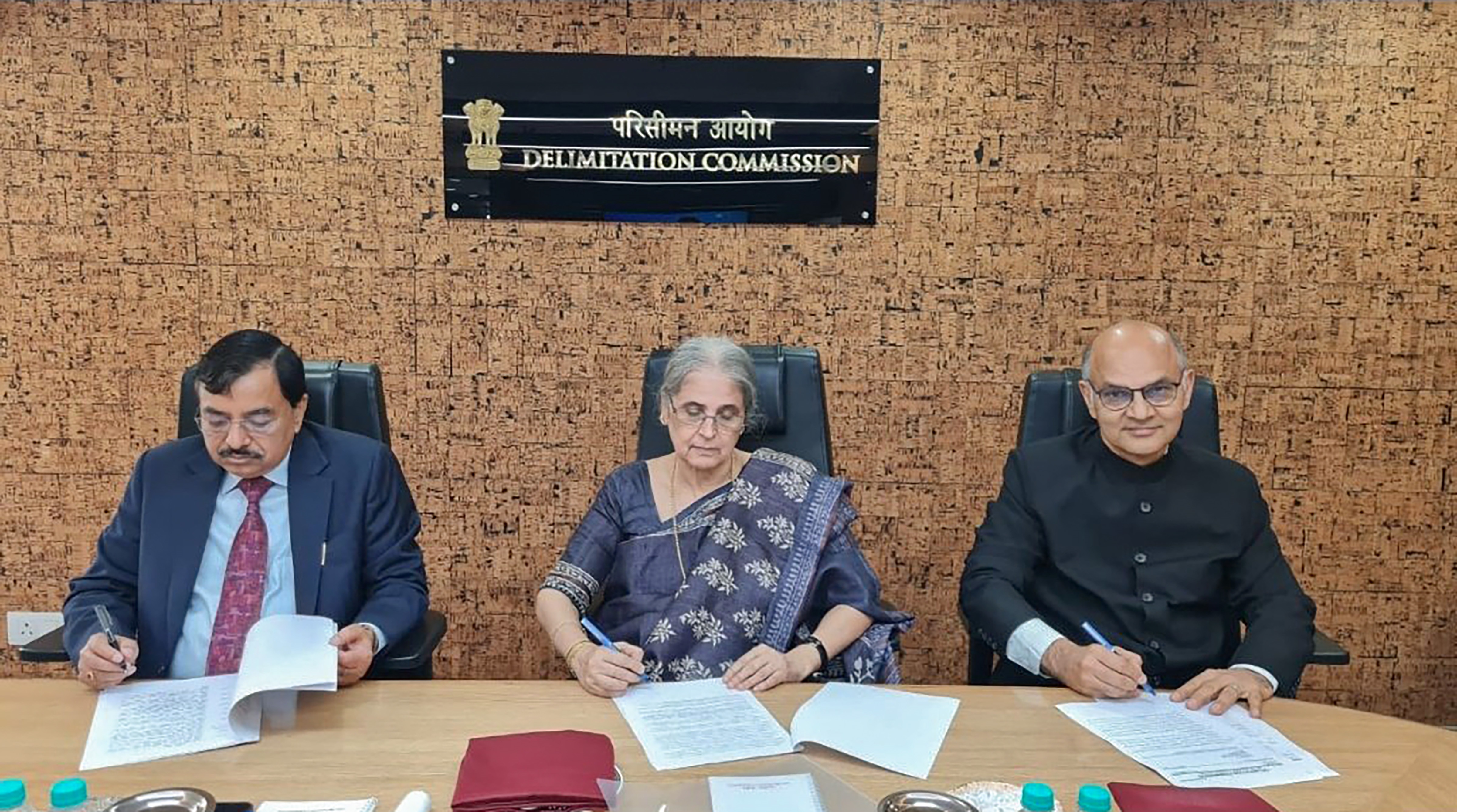
The Delimitation Commission is in the eye of storm over its recommendation of not only granting more seats to the Jammu division but also redrawing the boundaries of the electoral constituencies to suit what some say is the ideological agenda of the BJP, writes Riyaz Wani

As was expected, the finalizing of its order by the Jammu and Kashmir Delimitation Commission has run into serious controversy in the union territory over its recommendation of not only granting more seats to the Jammu division but also redrawing the boundaries of the electoral constituencies to suit what political opponents say the ideological agenda of the BJP.

Out of seven additional Assembly seats, the Commission has given Jammu six and just one to Kashmir Valley. Similarly, the Commission has been accused of gerrymandering to reduce the electoral weight of the Muslim majority constituencies.

The new additions have taken the total Assembly constituencies in Jammu and Kashmir to 90.  The number of seats in Jammu has increased from 37 to 43, while the number of seats in Kashmir has gone from 46 to 47.  This is despite the fact that an estimated 70 lakh people live in the Valley, according to 2011 census, compared to 53 lakhs in Jammu division.

However, the number of Parliamentary constituencies, which was earlier three for Kashmir and two for Jammu hasn’t been changed.- although their boundaries have been altered.

The commission has also recommended reserving nine seats for Scheduled Tribes on the basis of population. Seven seats are proposed for the Scheduled Caste community. These seats will be chosen from among the 90 seats of the legislature.

The glaring difference in the seat-sharing between two regions has become a huge bone of contention in J&K with political parties like National Conference, the PDP, the People’s Conference and even the Apni Party terming the new delimitation as unacceptable.

Gerrymandering?

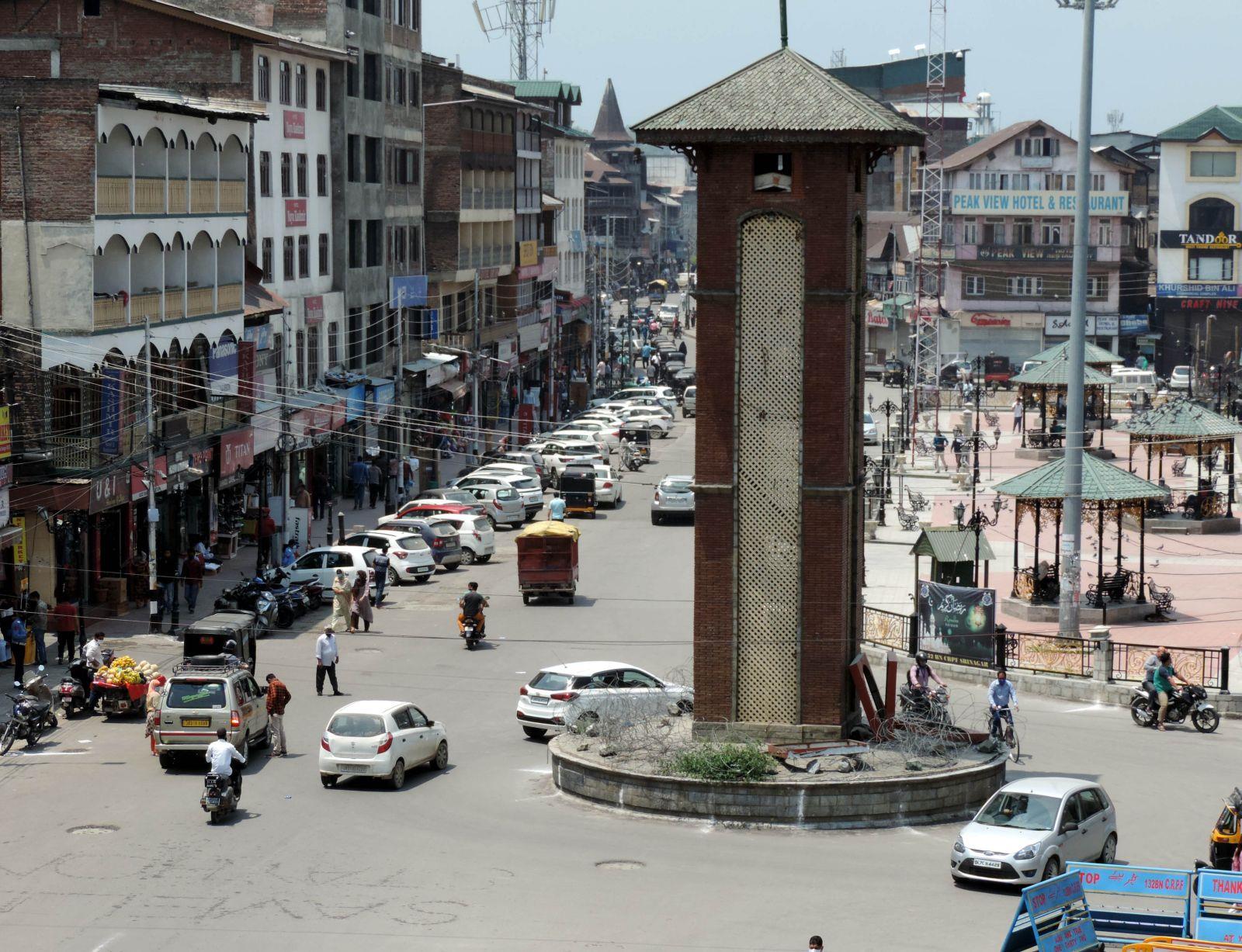
The Commission has radically changed the boundaries of the constituencies in Baramulla, Kupwara, Srinagar, Kulgam and Anantnag districts of the Kashmir division.

In Kashmir Valley, the only additional seat has been carved in Kupwara district. The new seat has been named after the township of Trehgam and it includes Keran, parts of Kralpora tehsil among others.

Similarly in Baramulla district which has five Assembly segments, two seats have been renamed as Kunzer and Tangmarg constituencies and they have been carved by splitting Gulmarg and merging the Sangrama constituency. Gulmarg and Sangrama constituencies as they were named earlier have ceased to exist.

This radical splitting of constituencies has also been done in South Kashmir, a traditional stronghold of the People’s Democratic Party. For example, the Shangus tehsil has been split between Anantnag East and Larnoo constituencies. Similarly, Kokernag constituency has also been split between Larnoo and Dooru.

Kulgam, another South Kashmir district that earlier had four Assembly seats will now have only three with one of its seats Hom Shali Bugh being included in the Devsar constituency in the district.

Srinagar district will now have a separate constituency in Chanpora area. It is being created by redrawing some other constituencies of the district.

Another far-reaching change is the redrawing of the Anantnag constituency in South Kashmir by merging with it Rajouri and Poonch from the Jammu region.

J&K population statistics

With a population of around 13.6 million, J&K, according to Census 2011, has 68.3 percent Muslim population, while Hindus constitute 30 percent, Sikhs 2 percent and Buddhists, who inhabit the separated Ladakh region, a little more than 1 percent.  The census shows the population of Kashmir as 69,07,623, Jammu as 53,50,811 and the now separated Ladakh as 2,90,492.

But when broken down into two regions – Kashmir and Jammu –  a different picture emerges. Kashmir’s population of around 70 lakh is over 97 percent Muslim, with the remaining 3 percent comprising Kashmiri Pandits and Sikhs. In contrast, Jammu’s population of more than 53 lakh comprises 65 percent Hindus, 31 percent Muslims and 4 percent Sikhs.

The demographics of the majority of the Assembly constituencies in Kashmir Valley favours the majority community as all 47 constituencies  are Muslim dominated. Similarly before delimitation, Muslims were in majority in around 17 of 37 constituencies of Jammu.

Power shift to Jammu

Six more seats to Jammu are expected to alter the electoral game. This is where the political engineering enters the picture. The BJP has a multi-pronged strategy to ensure there is Hindu consolidation in Jammu in its favour. It has already benefitted from this consolidation in three successive elections since 2014 – two parliamentary and one Assembly. In 2015 state election, the party won 25 of 37 seats in Jammu, enabling it to share power with the PDP which secured 28 seats, a predominant majority of these in Kashmir Valley.

But the reduction of the gap in the Assembly seats between Jammu and Kashmir is set to remake the political map of the union territory. The BJP which has a deep presence in Jammu could expect to have more political weight in the future J&K Assembly. And even if a Kashmir based party were to form or lead a future government, it would have little manoeuvring space to carry out its agenda or overturn the laws passed by the New Delhi backed administration over the last two years.

The dilution of the political dominance of Kashmir Valley has already been a project in works for the last over two decades now. Ever since 1996 when the National Conference got an absolute majority securing 57 out of 87 seats, no party in the state turned UT has secured a majority on its own. From 2002 onwards J&K has had three successive coalition governments – PDP-Congress, NC-Congress and PDP-BJP.

Over to Assembly polls

The submission of the Commission’s report will clear the decks for Assembly elections in the Union Territory. There is a possibility that J&K could see elections later this year. The political parties are already getting into an election mode. The National Conference Working President Omar Abdullah has made a case for the PAGD jointly contesting the polls to keep away, what he said, “the BJP and its B and C teams.” The PDP led by Mehbooba Mufti also appears to be in favour of  this proposal.

Elections, in turn, will shift the discourse towards the grant of statehood.  However, the centre has already made it clear that statehood would be granted only after an elected government is formed, staying short of giving a timeframe. So, this could take a longer time than expected. New Delhi has indicated it would see the performance and the behaviour of the elected government before it decides to restore the statehood. It is expected that a government led or influenced by the BJP could pave the way for a faster return to the statehood than a non-BJP government.

“For now, however, the people would be happy if elections are held at the earliest,” read an editorial in a local newspaper. “An elected government would be in a better position to understand and address the local grievances and issues.”


Sisodia urges Amit Shah to stop demolition drive in Delhi

Delhi Deputy Chief Minister Manish Sisodia has written to Union Home Minister Amit Shah urging him to stop the ‘destruction’ ensuing in the national capital due to the anti-encroachment drive being carried out by the three BJP-ruled municipal bodies.

In an online briefing, Sisodia claimed that the civic bodies have a plan to raze 63 lakh dwellings in the national capital.

“Of these, 60 lakh houses are in unauthorised colonies while the remaining three lakh are those where people have extended their balconies or covered them. We have learnt that notices have been sent to them, Sisodia said.

This will lead to a huge destruction in the national capital. Almost 70 per cent of the population of Delhi will be rendered homeless,” he added.

The Aam Aadmi Party will oppose the demolition drive and I have written to the Union home minister to seek his intervention in the matter, he said.

“I have written to him (Shah) saying that this (demotion drive) should be stopped. If bulldozers are to be used, they should be used to demolish the houses of those BJP leaders and civic body representatives who took bribes to allow such structures to be constructed,” he said.

An anti-encroachment drive in Delhi’s Madanpur Khadar on Thursday sparked protests and pelting of stones where the locals claimed that legal structures were bulldozed.

AAP MLA Amanatullah Khan, who was a part of a protest in the southeast Delhi locality, was arrested on charges of rioting and obstructing public servants in discharge of their duty, police officials said.

Terrorists kill policeman in J-K’s Pulwama

A policeman was shot dead by terrorists at his residence in Pulwama district of Jammu and Kashmir on Friday.
Constable Reyaz Ahmad Thokar was shot at in Gudoora in the district this morning, a police spokesman said.
The injured cop was rushed to the Army’s 92 base hospital in the city but succumbed to injuries.
This is the second attack by terrorists within 24 hours. A Kashmiri Pandit government employee was shot dead by terrorists inside his office at Chadoora in Budgam district on Thursday.

Active COVID-19 cases in country dip to 18,604

New Delhi : India records 2841 new coronavirus infections being reported in a day, India’s tally of COVID-19 cases rose to 4,31,16,254, while the active cases dipped to 18,604, according to the Union health ministry data updated on Friday.

The death toll climbed to 5,24,190 with nine fatalities, the data updated at 8 am showed.

The active cases comprise 0.04 % of the total infections, while the national COVID-19 recovery rate was recorded at 98.74 % the health ministry said.

A decrease of 463 cases has been recorded in the active COVID-19 caseload in a span of 24 hours.

The daily positivity rate was recorded at 0.58 % and weekly positivity rate was 0.69 %, according to the health ministry.

The number of people who have recuperated from the disease surged to 4,25,73,460, while the case fatality rate was recorded at 1.22 %.

The cumulative doses administered in the country so far under the nationwide COVID-19 vaccination drive has exceeded 190.99 crore.

India’s COVID-19 tally had crossed the 20-lakh mark on August 7, 2020, 30 lakh on August 23, 40 lakh on September 5 and 50 lakh on September 16.

It went past 60 lakh on September 28, 70 lakh on October 11, crossed 80 lakh on October 29, 90 lakh on November 20 and surpassed the one-crore mark on December 19.

India crossed the grim milestone of two crore on May 4 and three crore on June 23. The nine fatalities include eight from Kerala and one from Maharashtra, according to the data.

Minimum temperature in Delhi settles above normal : IMD

A fresh spell of heatwave is likely to sweep the national capital on Friday with the maximum temperature likely to touch 44 degrees celsius, according to the India Meteorological Department (IMD).

The minimum temperature settled at 28.1 which is three notches above normal. The relative humidity at 8:30 was recorded at 62 per cent, the weather office said.

The city air quality was recorded in the moderate category. The AQI was 158 at 9:47 am, according to the data from SAFAR-India Air Quality Service.

An AQI between zero and 50 is considered good, 51 and 100 satisfactory, 101 and 200 moderate, 201 and 300 poor, 301 and 400 very poor, and 401 and 500 severe.

The IMD has issued a yellow alert, warning of a heatwave at most places in the capital on Friday and Saturday.

An orange alert has been issued to caution people about a severe heatwave on Sunday.

The IMD uses four colour codes — green (no action needed), yellow (watch and stay updated), orange (be prepared) and red (take action)– for weather warning.

The maximum is predicted to touch the 45-degree mark at the Safdarjung Observatory on Sunday. Temperatures may leap to 46-47 degrees Celsius at isolated places, weather experts said.

A heatwave spell was predicted over Delhi from Sunday last, but easterly winds prevailing in the national capital under the impact of Cyclone Asani shielded the city against it.

Back-to-back patchy rain, thunderstorms, and strong winds had provided some respite from the intense heat last week.

Delhi had witnessed a hot and dry March, gauging nil rainfall against the normal of 15.9 mm. It got 0.3 mm of rainfall in April against a monthly average of 12.2 mm.

Piyush Goyal invites the Government of Oman to increase their pharma trade with India

Union Minister of Commerce and Industry, Consumer Affairs, Food and Public Distribution and Textiles, Piyush Goyal today said that India was considering entering into a Preferential Trade Agreement (PTA) with Oman. 

He was delivering the Keynote Address at the 10th Meeting of

India-Oman Joint Business Council (JBC) in New Delhi today. He also added that India was already looking at a comprehensive trade agreement with Gulf Cooperation Council (GCC) nations, of which Oman is an important member. 

Union Minister said that the Joint Commission Meeting (JCM) that took place yesterday between India and Oman, that had been long overdue, was a very productive one. He expressed confidence that the discussions with business leaders on both sides would complement the discussions under JCM, come up with new ideas to boost our already deep bonds of friendship, and turn our vision into reality.

Observing that India and Oman have been connected for more than 5,000 years through friendship and brotherhood and very warm and strong people-to-people ties, the Minister said that despite such close relations, the bilateral trade and investment in the two nations were yet to reach maximum potential.  Shri Goyal stressed that all the engagement that happened in the JCM, the friendship between him and his counterpart in Oman, the visionary leadership of the heads of both nations and the warm people to people ties between the two nations should and must lead to significant increase in business to business engagement. 

Paying his respects to Late HM Sultan Qaboos, Piyush Goyal said that he was held in very high esteem in India and was conferred the Gandhi Peace Prize. He was one of the architects of close India-Oman bilateral relations, the Minister added. We owe it to him to strive to transform his vision into reality and take the partnership between India and Oman to the heights it truly deserves, the Minister noted. 

He expressed confidence that the Joint Business Council (JBC) will supplement the efforts of govts of both countries to deepen engagement. He underscored that these agreements would only reach their true potential if businesses display that enthusiasm which will in turn help political leadership take bold decisions. He urged businesses in both nations to look at new opportunities, especially in services, investment, food security, sustainability, renewable energy and startups.

The Minister acknowledged the care, concern and love that was showered on expatriate Indians by the people of Oman, especially during the pandemic. He added that Oman was the 1st country in the GCC to authorize the use of India made Covaxin. Referring to cultural and culinary affinities between the two nations, the Minister said that these ties have brought the people of both the nations even closer.

The Minister invited Government of Oman to increase their pharma trade with India. Mentioning the market study on the cooperation in the pharma sector that was unveiled at the JCM yesterday, the Minister expressed confidence that the report would be invaluable to Indian companies wishing to enter Omani market. Our pharma companies will bring quality products at competitive prices to consumers in Oman and help bring down the cost of healthcare, he assured. He also thanked Oman for agreeing to fast-track approval for Indian medicines that had already been cleared by strong regulatory environments like UK, EU AND USA.

The Minister urged both nations to leave no stone unturned when it comes to working together to improve lives of people in India and Oman.

H.E. Qais bin Mohammed Al Yousef, Minister of Commerce, Industry and Investment Promotion of the Sultanate of Oman said that the two nations had a successful Joint Commission Meeting and added that India and Oman had great trust and confidence in each other. He also invited Indian companies to invest and do business in Oman. 

H.E. Qais bin Mohammed Al Yousef, Minister of Commerce, Industry & Investment Promotion of the Sultanate of Oman, H.E. Sheikh Hamad Bin Saif Bin Abdul Aziz Al-Rawahi, Ambassador Extraordinary and Plenipotentiary, Sultanate of Oman, Amit Narang, Indian Ambassador to Oman, captains of Indian and Omani industry and other dignitaries were present on the occasion. 

Road crash on Yamuna Expressway leaves five dead

Five people, including four from Maharashtra and one from Karnataka, were killed in a road crash on the Yamuna Expressway in Uttar Pradesh’s Greater Noida on Thursday morning, police said.

Two other people who were along with the deceased in an SUV have been hospitalised with injuries, the police said.

“The seven people were in a Mahindra Bolero. They were on the way from Agra towards Noida when their car hit a dumper truck from the rear side near Jewar toll plaza,” a Gautam Buddh Nagar police spokesperson said.

MOST POPULAR

HOT NEWS