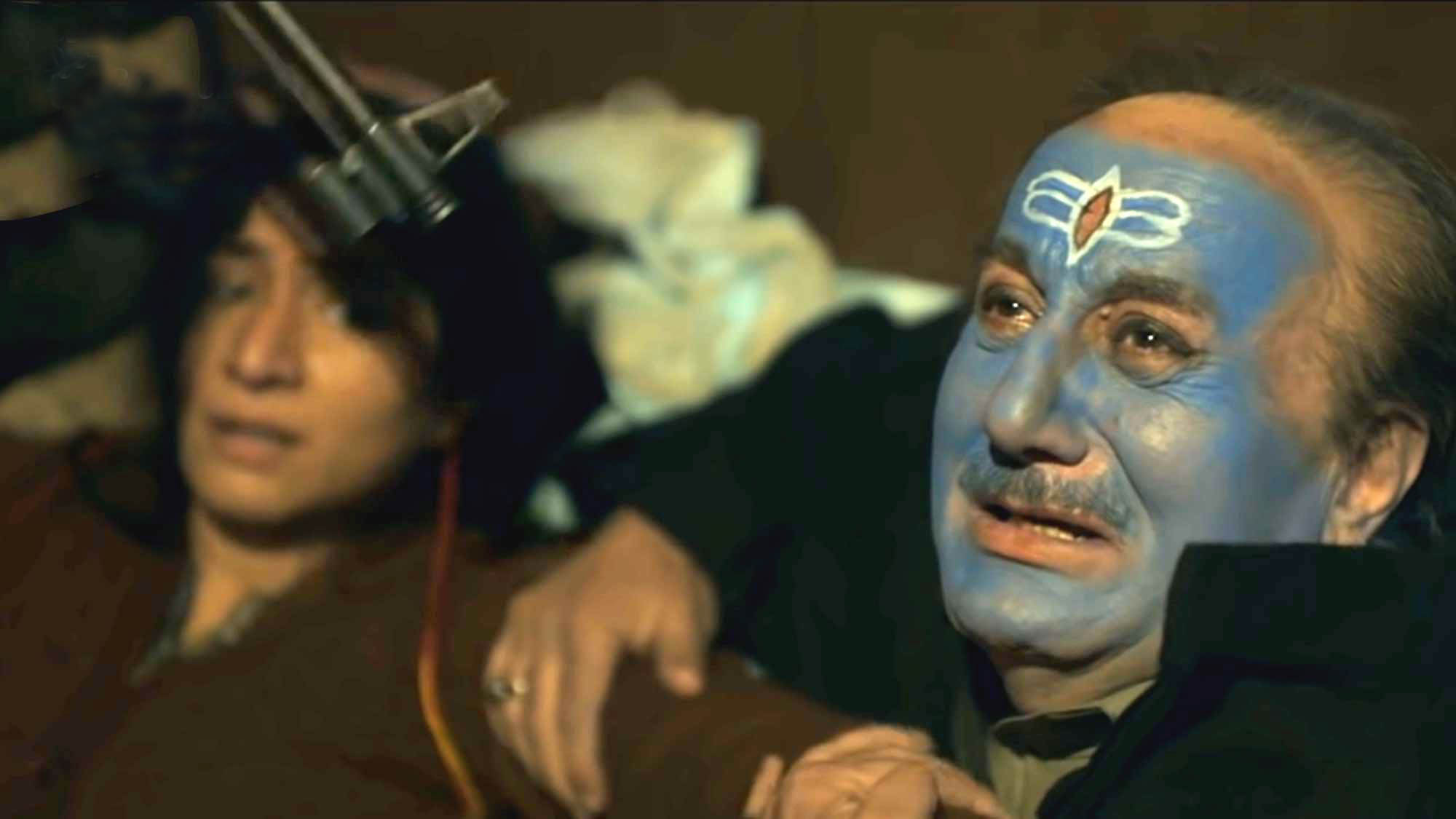
Is Kashmir Files makers’ rant against media clubs justified?

The two clubs, Foreign Correspondents Club of South Asia and the Press Club of India, who denied their premises to the makers of controversial film are within their rights to do so

Back in the good old days, the power to build or to destroy was with the media, be it print or visual. Now a new appendage is added: the word social. This is one which neither has any norms nor barriers but it sure has the power to disseminate unverified information, often fake, and destroy reputations if not institutions and its people. And even if correctives follow, they are of little use because the damage is already done.

This is quite like in the past when a screaming headline grabbed eyeballs and if turned out to be “not so correct”, given that the word wrong or false was blasphemy to the media back then, a one -line apology or correction would be buried in an insignificant corner, where one would need a microscope to even find it, leave alone read it.

Also, the media, both print and visual used their discretion on which stories to use or play-up based on newsworthiness followed by reader-interest. Simply put, this means that a stringent selection process was in place and a wannabe really never made it. Editors were discerning and news space was sacred. But that is History.

Fast forward to the social media era where tools like Twitter and Facebook, in that order, can and do play havoc. They pedal half-truth that subscribers willingly lap it up: less for its accuracy and more for the spice it brings.

In a limited sense, it is gossip redefined but looking at it at the macro level it is a machine set to destroy and create a non-existent narrative. In other words, manufacture fake news and milk the advantages of a slander campaign and unleash demons where none exist.

A case in point is a controversial film-maker’s rant about being denied access to two media clubs in India’s capital city New Delhi. For starters, he had teamed up with a television network, owned by a BJP MP to globally launch the controversial and divisive film Kashmir Files. 

For the uninitiated, Kashmir Files, is, to put it simply, a truth half-told: a saga of the trauma of Kashmiri pandits at the hands of savage, blood thirsty Muslims: yes, not terrorists but Muslims. For effect, the JNU has been liberally used as a platform to harbour an anti-India sentiment.

On the face of it, the film showcases the exodus of Kashmiri Pandits, flagged as genocide by the film makers. But what it actually does is to present a distorted and factually inaccurate trajectory of events and a narrative designed to cash in on wounds.

It is no one’s case that Kashmiri Pandits  did not suffer. Of course they did but is it right to sensationalize the tragedy and blow it out of proportion? Or distort the tragedy to showcase Muslims as a community who are savage:  actually projected as devils baying for Hindu blood.

That the ordeal of the Kashmiri pandits should be shown is a given. The dispute is about the deliberate and wilful exaggeration which questions the credibility of the film makers. They have been accused and perhaps rightly so of pushing a divisive agenda, creating a communal wedge, of blood and bullets and worse still of dirty politics.

Therefore, credible organizations, including those in question, are well within their rights to deny their premises to further propel hate propaganda. Or have a rethink if objections from within or even outside are forthcoming, particularly if an event threatens to damage the social fabric. That the Kashmir Files fits well into this box is beyond doubt. This perhaps was what led one club, namely the Foreign Correspondents Club of South Asia, to cancel the event and the other, the equally reputed Press Club of India, to deny space to the controversial filmmakers.

Instead of respecting decisions of institutions, the film makers are hopping mad levelling allegations which only show their desperation.

Short of calling names, the film makers have done exactly what they did in the film: pedal half-truth. Their initial contention that the event was cancelled at the behest of the “powerful foreign media” came to a naught when the Press Club of India, comprising Indian journalists, also cancelled the press conference.

Instead of crying foul, the film makers need to look within and ask themselves: why did two credible journalists clubs did not accede space to the event? Of course the answer is clear but it is one that they do not wish to accept. Instead, they want to twist developments and present them a conspiracy by international media houses who to quote the filmmakers “are actually political activists”. Yet, while slamming them, the film makers conveniently forgot that they were the same people they had initially partnered with. It was only after the cancellation that they were seen as being “agenda driven, threatening India’s sovereignty”. This is a sudden spurt of nationalism on their part, to say the least.

Had it not been for the social media, the filmmakers’ rant would not have got any space. It got attention because there was social media where they could say what they wished, irrespective of facts.

When it comes to social media, facts are the biggest casualty. People have the freedom to log on and post whatever they wish to. And this causes more harm than good because sometimes deliberately and often in ignorance incorrect, inaccurate and often misleading stuff is posted. The gullible lap it up and take it as a gospel truth.

Taking the recent example of Rahul Gandhi’s Nepal trip. A video went viral on social media that Congress MP Rahul Gandhi was spotted at a nightclub with a Chinese diplomat: Hou Yanqi, the Chinese Ambassador to Nepal. Hell broke loose with the BJP slamming Gandhi for meeting a Chinese diplomat.

Investigations later revealed that the lady Gandhi was with, was not a Chinese diplomat but a friend of the bride at the wedding that Gandhi had gone to attend.

According to confirmed reports, Gandhi was in Kathmandu to attend the wedding of a journalist-friend, who is the daughter of a former Nepali envoy.

But the video which was completely misleading pointed fingers at the Congress scion and accused him of hobnobbing with a Chinese diplomat and that too at a nightclub.

This of course did not come without its share of a political spat between the BJP and the Congress.

The BJP tweeted a video stating that Gandhi was at a nightclub when “his party is exploding”. The Congress hit back with what is wrong with attending a marriage reception and why “sanghis are afraid of him?”

This was enough for BJP loyalists and supporters, followers and others to circulate false claims on social media and level accusations at the Congress leader. By the time the truth was out, the damage had already been done.

So, are these innocent mistakes? Or deliberate moves designed to damage reputations, political or otherwise?

When it comes to politicians, it certainly is deliberate and clearly intended  to propagate lies and falsehood using and misusing the social media tool. The practice is rampant because the social media platforms liberally provide space which would otherwise be denied by the discerning, particularly ever vigilant editors who would verify and cross check every bit of information indiscriminately pouring in from dubious quarters.

Here, the checks and balances are in place unlike in the social media where it is a free for all; the rule being share content, in whatever form irrespective of its authenticity. Whether this does more harm than good, whether it damages reputations or whether it is true or false is of no consequence. And understandably so because social media is propelled by the need to make known and share as quickly as possible whatever information is at hand.

What makes this possible is the absence of the dreaded Editor, so to say, whose job is to cast a hawk’s eye and scrutinize every sentence before it can be put out for others to see or read.

Looking at the way things have shaped up and the damage the unbridled and editor-less social media has caused and the havoc it threatens to play as we go along, one can only say: Thank God for editors and their being vanguards of the traditional media.
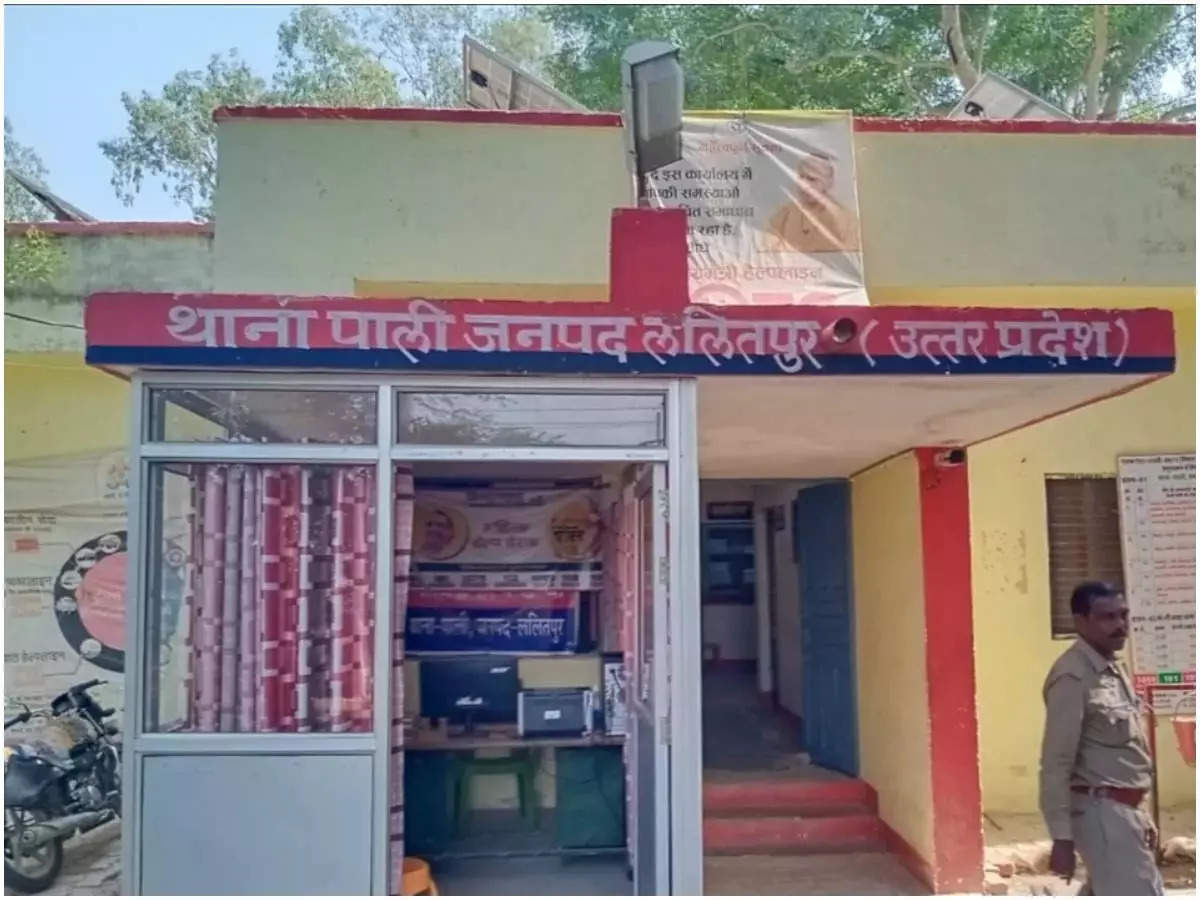


Dalit teen gang rape victim raped again at PS, 6 held

Close on the heels of a shocking brutal gang rape of a seven-year-old girl in Ayodhya, a 13-yr-old minor Dalit girl was raped by SHO at Pali police station in Lalitpur district of UP, where she had gone to lodge complaint of a gang rape by four persons, reports Mudit Mathur

Even before the public anger over the brutal gang rape of a seven-year-old girl in Ayodhya could die down, another shocking news rocked the nation when a 13-year-old minor Dalit girl was allegedly raped inside the premises of Pali police station by the incharge station officer in Lalitpur district of Bundelkhand. The girl had gone to file an FIR against four persons who had allegedly gang raped her after abducting her to Bhopal.

The state government swung into action mode soon after some political leaders highlighted the incident questioning tall claims of the BJP about safety of the women and law and order in the state. With the incident sending shockwaves across the country, the National Human Rights Commission issued notices to the Uttar Pradesh chief secretary and the Director General of Police, asking them to submit a report in this regard within four weeks.

The leader of Opposition and Samajwadi Party chief Akhilesh Yadav also visited Lalitpur and met the rape survivor at the district hospital. The Congress Party highlighted the vulnerability of the women in the state wondering where they should go to file their complaint and whom they should trust. BSP chief Mayawati and Congress general secretary Priyanka Gandhi Vadra took to Twitter to attack the Yogi Adityanath-led state government over the incident. The victim is from Dalit community.

The chief minister Yogi Adityanath expressed his displeasure over the Lalitpur incident involving the alleged rape of a 13-year-old rape victim by the Pali police station’s SHO and sought a reply from the district police chief. He was reviewing law and order in the Bundelkhand region of the state after meeting the public representatives. He also stressed the need to take strict action against the land grabbers and maintain law and order.

Seeing the escalating political temperature over the matter, the state police quickly nabbed all the six accused persons including station incharge of Pali, Tilakdhari Saroj from Priyagraj district near High Court building.  As soon as the allegations of rape surfaced against him, he had gone absconding and changing his locations and mobile sim cards to evade his arrest. Police also arrested maternal aunt of the victim for her suspicious role behind the crime.

The additional DGP of Kanpur Zone, Bhanu Bhaskar told media that the department has set up a departmental inquiry and suspended the accused police station incharge with immediate effect. Rest of the police officials of the police station have been sent to police lines.

According to the complaint lodged by  victim’s mother, “My daughter went to Pali police station for lodging FIR on 27th April. In the meantime, on the pretext of recording her statement the SHO took her to his room and raped her.” “She was abducted to Bhopal by four men – Chandan, Rajbhan, Harishankar and Mahendra Chaurasia on April 22 and then raped for four days. They then dropped her back at the police station in her village and escaped.” she alleged.

“The woman’s aunt was then called to pick her up, and told to bring the girl back the next day to record her statement. The aunt allegedly did not tell the girl’s parents of her whereabouts. Instead, she took the girl back to the accused the next day, and Saroj took the girl into a separate room and raped her,” the FIR alleges.

The matter got prominence when the girl was approached for counselling by Child Line NGO and she narrated her ordeal to its volunteers. The volunteers informed the SP on whose instructions her report under the charges of conspiracy, kidnapping, gang rape under Sections 363, 376, 376B, 120B of IPC and Section 3, 4 of POSCO and Section 3(2)(V) of SC-ST Act were registered against accused persons. On April 30, the girl again came to the police station, at which point she was handed over to workers from the NGO ChildLine. The NGO workers spoke to her and detailed her allegations.

Lalitpur police said they have charged Saroj for rape and under the POCSO (Protection of Children from Sexual Offences) Act. “The SHO is suspended and he is a named criminal so we have formed teams to arrest him. An NGO brought the girl to my office. She had given them the details. After I was informed of it, I ensured that a case was filed,” Lalitpur police chief Nikhil Pathak said in a statement.

Criticising the government’s failure, Congress General Secretary Priyanka Gandhi Vadra tweeted, “The gang-rape of a 13-year-old girl in Lalitpur and then raped by a SHO after taking a complaint shows how law and order reforms are being suppressed in the noise of “bulldozers”. ”If police stations are not safe for women, then where will they go to lodge  complaints? Has the UP government seriously thought to increase the deployment of women in police stations, to make police stations safe for women?” she enquired.

“The Congress party had kept many important points for women’s safety in its women’s manifesto. To prevent such incidents, serious steps have to be taken for women’s safety and women-friendly law and order,” she added.

Samajwadi Party chief Akhilesh Yadav also strongly criticised the incident and went  to Lalitpur to meet the victim. Appealing his cadre to fight injustice, he tweeted, “If all of us do not stand together today against the rape of a daughter in Lalitpur, then the unbridled law and order will reach our doors.” “The BJP government has mortgaged justice in the police stations by politically misusing the police. Expecting justice from such a government is meaningless,” he added.

The Aam Admi Party has taken out strong protest march all over the state and handed over memorandum to district authorities over the murder of a daughter in Chandauli by ‘Adityanath’s police’ and the rape of a daughter in a police station in Lalitpur. The protesters demanded justice for daughters and strict punishment to the culprits, demanding a CBI inquiry under the supervision of the High Court.

In another incident in Lalitpur district of Uttar Pradesh where National Human Rights Commission (NHRC) has taken suo motu cognisance of media reports that the police personnel of Mehrauli police station “subjected a woman domestic help to extreme torture by stripping her and brutally beating with a belt. The Commission has issued notices to the Uttar Pradesh government and the state’s police chief over these reports. The police officer and his family have not only “misused their position” but also subjected the victim to physical torture and cruelty, the NHRC observed.

Deputy Superintendent of Police Imran Ahmad said that a constable Anshu Patel and his wife first badly beat up their 32-year-old housemaid and her husband at their home. Later, the constable took her to Kotwali police station where he and a woman sub-inspector again mercilessly beat her up. The state police taking strong view of the matter, suspended constable Patel and the woman sub-inspector Parul Chandel. A criminal case has been registered against them.

Meanwhile, there is no further progress in the shocking violent gang rape case reported from the Ayodhya where a seven-year-old girl was brutalised by three persons but the police has just arrested only one labourer despite her testimony recorded before a judicial magistrate. However, no further financial assistance was provided for victim’s treatment who has to undergo multiple operations in KGMC Lucknow.

Court dismisses PIL, says plea nonjusticiable

The Lucknow bench of Allahabad High Court on Thursday dismissed a plea to constitute a fact-finding committee and the “opening of 22 rooms” on the monument’s premises to find out the “real truth” behind the Taj Mahal construction, calling it a “non-justiciable” issue. A non-justiciable issue is something, which the Court cannot decide or go into.

During the hearing, Justices Devendra Kumar Upadhyay and Subhash Vidyarthi said, “We are of the opinion that petitioner has called upon us to give a verdict on completely a non-justiciable issue.””The first prayer (to constitute a fact-finding committee to study “real history” of Taj Mahal) cannot be adjudicated by this court,” the bench ruled.

“We are not convinced with your prayers. What are you seeking is the exploration of facts through a fact-finding committee? That’s none of your rights and it’s not under the ambit of the RTI Act,” the bench contended.

The judges also ridiculed the petitioner who sought a declaration that certain provisions of the Ancient and Historical Monuments and Archaeological Sites and Remains (Declaration of National Importance) Act 1951, to be ultra-vires, which stood repealed about sixty-four years ago.


Cong should heed Kishor’s advice and reincarnate itself

The party must connect with the masses, become their voice and capture their aspirations. It should protect and build upon its legacy and values and liberate itself from inertia, mediocrity, and status quo
When news reports revealed that Prashant Kishor, the brilliant election strategist from the land of the legendary Chanakya, was in talks with the Congress Party, there was a wave of excitement and hope in old Congress supporters and those who firmly believe in democracy. Maybe, the man with the Midas touch could revive the comatose Grand Old Party which has nearly been decimated in the country? After all, isn’t Kishor the man who has delivered sure-shot electoral victories for many a political party in India?

Though, knowing the rigid nature of the Grand Old Party which has resisted every attempt at modernising it and rescuing it from the stranglehold of the dynasty, it was too much to hope that Kishor would be able to make a difference. But optimistic Congress-watchers thought maybe it was providence that the 45-year-old who had snatched victory from the jaws of defeat for many a political party, had offered to give the gasping 135-year-old party the kiss of life?

The “will they, won’t they” get married drama played out in full public view with the country’s media following every move and giving a blow by blow account. Those who wish the country well were hoping against hope that for once, the Grand Old Party — which is now just Old and nowhere near Grand — and those who run it and swear allegiance to it, would embrace this opportunity to set their house in order. When I say ‘those who wish the country well’, I don’t mean that it is only the Congress who can run the country well and the rest just make a hash of it. Far from it! The present dispensation may have its faults and may justifiably be called out for its politics of polarisation and strong arm tactics where the minorities are concerned. However, one cannot deny the good that they have done for the country in many ways.

If there is the threat of demolition for opponents and selective arrests and punishment for communal riotors, there is also ‘Make in India’ and the fact that the armed forces are being pushed towards becoming more Atma Nirbhar. The Government’s push towards modernising the military with a two-pronged approach: Reforms, alongside the hastening of weapons acquisition, and upgrades in the three services and the push towards making India a global defence manufacturing hub cannot be overlooked.

If there is silence on cow vigilantism we do have the Government to thank for abolition of Triple Talaq, a tool that has been used by Muslim men in India for ages to harass and subjugate womenIf there is a deafening silence on attacks on places of worship of the minority community there is also the determination to bring the Uniform Civil Code in the country that will not only simplify laws and speed up the justice delivery system in India, but will also provide protection to vulnerable sections like women and religious minorities.

Then how can we forget the move to digital currency and Ayushman Bharat? These were some much-needed policies and reforms that only a Government that stands on its own with an outstanding majority could bring. Because, as we all know, coalition politics always gives us a Government which is standing on legs of clay that can be broken any time by a disgruntled alliance member.

But, while there are advantages of having a strong dispensation at the helm, there is always the danger of absolute power corrupting or going to the head and making the Government arrogant to the extent of it forgetting the fact that it is here to serve and not to rule and ride roughshod over the wishes of the janata janardan, because after all, we are a democracy.

This is where a strong Opposition serves the nation and the cause of democracy by making sure that the powers that be, don’t overreach. A strong Opposition is as much responsible for the good of the nation as the incumbent Government. By the very nature of its responsibility and position, it serves the great purpose of providing the much-needed checks and balance without which democracy is in danger of getting pushed aside and marginalised. A strong Opposition serves as the voice of the people which will go unheard if their representatives cannot make themselves heard.

By losing its position as the main Opposition party of the country, the Congress is guilty of depriving the citizens of the country with a safety net. There is no one to question the Government or stop its policies from going awry on issues that matter to the common man.  Remember, absolute power corrupts absolutely, as does the knowledge that ‘There Is No Alternative’, the much-dreaded and talked-about ‘TINA’ factor. Nothing turns a democratically-elected Government into an authoritative rule faster than knowing that there is no one to challenge its authority and the people have no one else to vote for because of a lack of a strong and credible party that can take over the reins of the country and lead it on the path of progress and development.

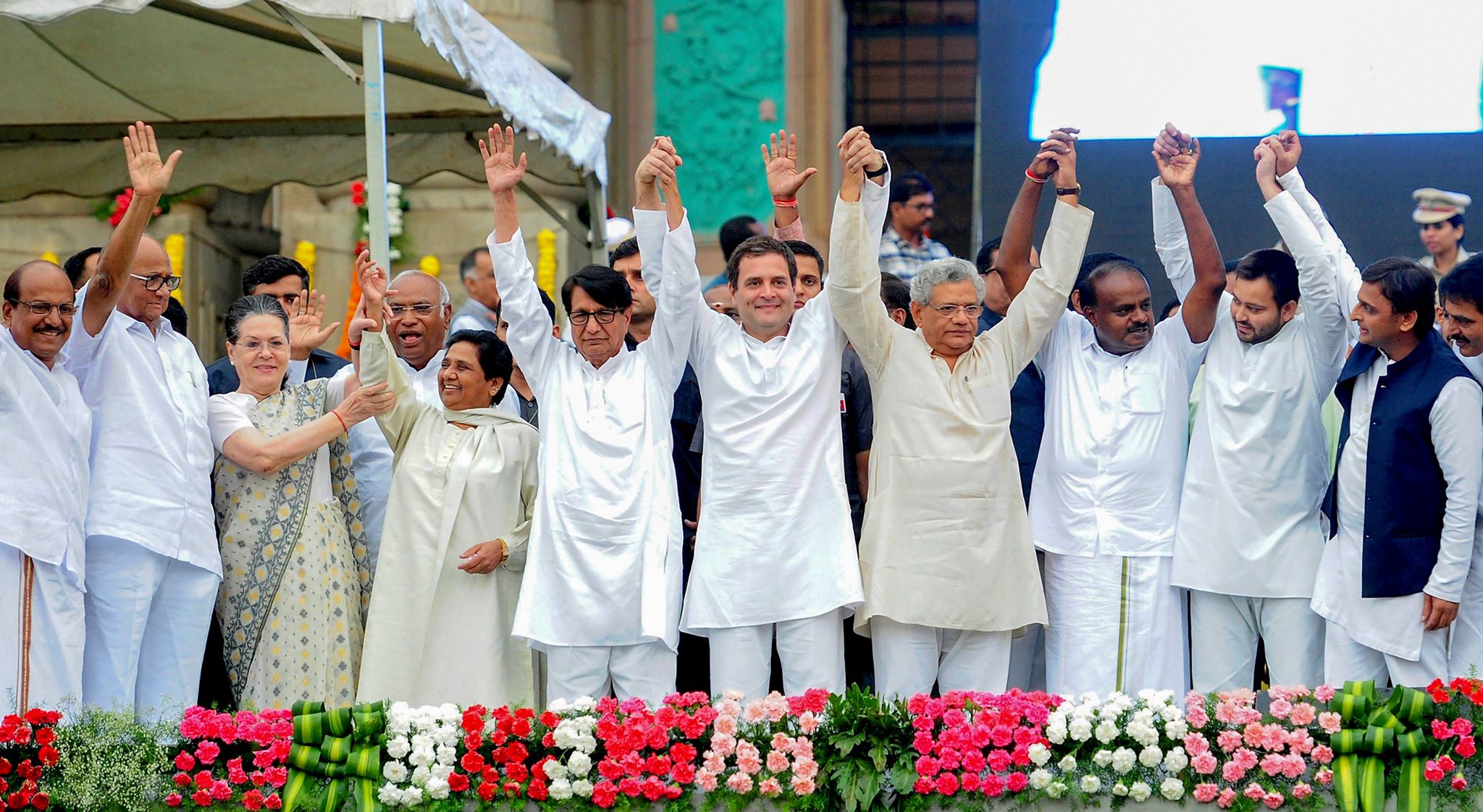
The Opposition has been trying to cobble together a Mahagathbandhan for the last several years, but each time it all falls apart because, let’s get real, why would stalwarts like Sharad Pawar, Mamata Banerjee, Nitish Kumar, Chandrababu Naidu to name a few, bow before the triumvirate? These senior leaders are ruling or have ruled States at one point or the other. Let’s not kid ourselves that netas serve the people. All political correctness and niceties aside, a Chief Minister of a State wields a lot of power and commands respect and enjoys his/her clout. Hence, come hubris and ego, both by-products of the power they wield. Why would they bow before people who have never even run a State on their own accord and whose only claim to the country’s top job is that they come from a long line of Prime Ministers?

So, by rejecting Kishor’s offer to turn the electoral fortunes of the party around and save it from total annihilation and irrelevance in India’s political firmament, the Congress has failed the people of this country. It has handed them the TINA factor. And unless some miracle happens and the highly divided Opposition is able to cobble up a motley crew to pose a credible challenge to the largest political party of the day, the country will have to resign itself to be ruled by a single party for a long time to come. And that cannot in any way be healthy for any democracy.

One can only hope that the party which cannot think beyond the dynasty, will at least take heed of the advice given by Kishor. He made an insightful diagnosis of the malaise that ails the Congress and suggested the remedy too.

He pointed out, and rightly so, that the party has been in a state of decline since 1985, from after the assassination of Indira Gandhi, one of the most iconic Prime Ministers this country has ever had. Under the questionable leadership skills of the current bunch the Congress has had a poor track record of winning direct contests with the BJP. It has not only failed to capitalise on its legacy and achievements of the past. It has, in fact, managed to erode them due to the culture of sycophancy, unquestioning authority and entitlement that it has nurtured.

It is rife with structural weakness and there is an obvious lack of connect with the masses. And what to say of its jaded and aged leadership, the Old Guard which is so afraid to lose its clout and the protection of the high command that they don’t let the young Congress leaders have their way or say, resulting in frustration, and in some cases like that of Jyotiraditya Scindia, defection.

The Congress has nurtured a stifling culture of unquestioning obedience to the High Command and to point out the party’s weaknesses a la the G-23 results in castigation and humiliation. One wonders how is it that some of the smartest and brightest minds in the Congress like Kapil Sibal, Shashi Tharoor, Mani Shankar Aiyer, Anand Sharma, Manish Tewari, Bhupinder Hooda, Akhilesh Prasad Singh, Prithviraj Chavan, Raj Babbar, PJ Kurien and Sachin Pilot continue to bear the yoke and don’t do what Indira Gandhi did in 1978 and form their own party? Surely the nation deserves to benefit from the knowhow and expertise of such veterans? It deserves to be able to choose from one strong party capable of leading the country to another strong and equally capable one that takes everyone along without tearing the social fabric asunder.

Failing that, the Congress should heed Kishor’s advice and reincarnate itself by creating a new Congress which will become political platform of choice for the people. It should protect and build upon its legacy, values and core principles and liberate itself from inertia, mediocrity, and status quo.

It must destroy the culture of entitlement, lack of accountability and sycophancy that pervades it right now and throw off the baggage of nepotism and corruption.

It must connect with the masses, become their voice and capture their aspirations. In a way the party has already begun on that path by Rahul Gandhi calling out the Government repeatedly on the price rise and other issues that are relevant to the people. However, to be taken seriously, Rahul must commit wholeheartedly to politics once and for all or walk his path. Sonia must rid herself of putra moh and let her daughter, Priyanka, who is more than willing, take over the reins of the party. There are enough capable hands in the party to guide her if she so wishes.

Kishor has shown them the way, it is up to them to pay heed to his advice. Ironically, the Kishor debacle reveals all the things he said were wrong with the Congress. They have a communication team incapable of outsmarting trolls, their political opponents and even Kishor’s team. Their inability to handle affairs, public perception and the media let a private affair turn into a public one, with the whole country watching the drama unfolding in front of them. And their leadership, which could not show the open mindedness to accept what was in their best interest. He was their shot at revival and political relevance and they didn’t take it. Hopefully they will put their reluctance and hubris aside and deeply consider the advice he has given them.

As veteran Congress leader Digvijay Singh, who was also a part of the eight-member committee set up by Sonia Gandhi to study Kishor’s presentation, very aptly put it: “It is ultimately the Congress which has to move and put its house in order. Consultant or no consultant.”

I hope the Congress High Command, the ‘Old Guard’ and ‘Team Rahul’ is listening, because they owe it to the nation to pick themselves up from the mire they find themselves in and give the country a credible and strong Opposition party which can hold any Government at the Centre accountable. They have to do it for the nation, if not for the sake of the 135-year-old party itself. And as Kishor said, only the Congress can save itself. The Grand Old Party that has seen many ups and downs in its fortunes doesn’t need the brilliant kingmaker but a “leadership and collective will to fix the deep-rooted structural problems” within itself “through transformational reforms”. Maybe the Chintan Shivir where Sonia has asked for big ticket changes and reforms is a step in the right direction. Only time will tell…


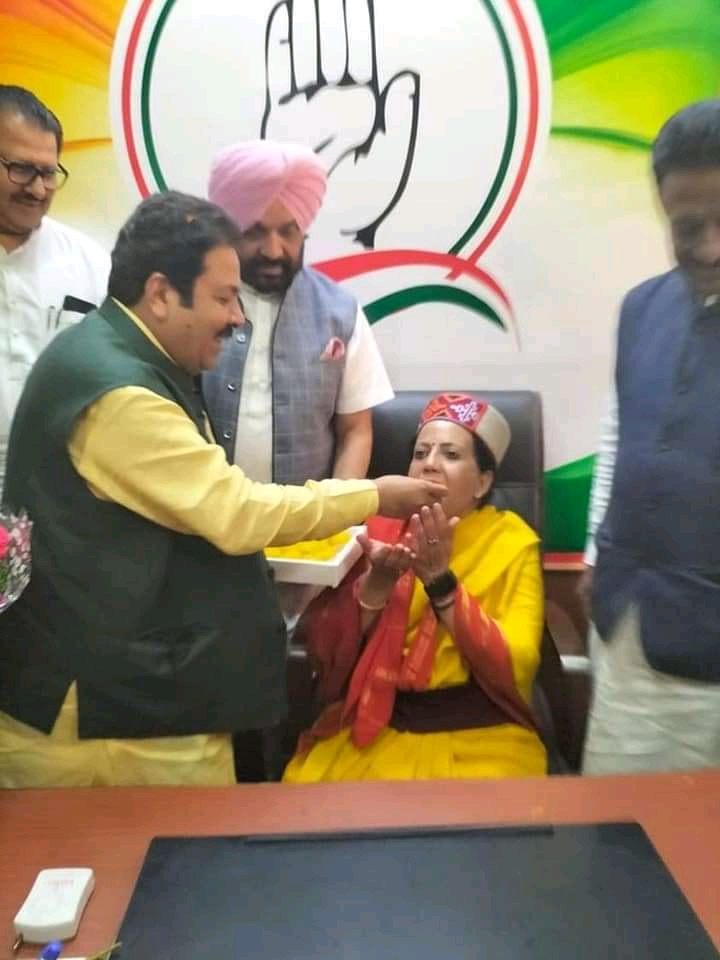
Pratibha leans on Virbhadra legacy, makes light of AAP challenge  

Is Congress in Himachal Pradesh heading the way it did in Uttarakhand, Punjab and Goa in the recent Assembly elections or has it turned a new leaf? The newly appointed  HPCC  President, Pratibha Singh sounded confident of Congress coming up trumps in the next Assembly elections in an interview by Anil Manocha

Pratibha Singh has observed that people of Himachal loved and respected former chief minister and tallest leader of the hill state, Virbhadra Singh. She claimed that during the last by-elections to one Parliamentary seat and three assembly seats, the Congress had emerged victorious on all these three seats. That was a clear message that the legacy of Virbhadra Singh was larger than life.

During the interview, she recalled his association with former prime minister Indira Gandhi who handpicked him to serve the people of Himachal Pradesh. She said that she would follow the footsteps of Virbhadra Singh to serve the masses.

About the entry of a new party, AAP, she said there was no place for a new entrant other than Congress and BJP. It may be noted that in neighbouring Punjab, AAP has come to power relegating Congress to second spot. She says Himachal is different and here people respect the legacy of Virbhadra Singh. There is as such no challenge from AAP.  “Carrying forward the legacy of the former Chief Minister Virbhadra Singh is a challenge, but people have seen his work. I am aware of the aspirations of the people and collectively we will ensure that Congress comes back to power in Himachal,” said Pratibha Singh.

In an exclusive interview with Tehelka after taking charge, Pratibha Singh dismissed the rising challenge from the AAP. “Although the AAP thinks that it is making inroads in Himachal, it will not have any impact on the elections. Our straight fight is with the BJP. No third party has ever had any presence in Himachal,” she said.

Similarly, the ruling BJP will not be able to repeat its performance, she said even as she lashed out at the Central Government for burdening every household with an exorbitant hike in fuel prices. She said that BJP had learnt nothing from the bye-election results.  She noted that the Central Government is trying to divert attention from the burning issues of people by shifting the focus to emotive issues.

She lambasted the Jai Ram Thakur government for jeopardising the future of over 70,000 candidates by cancelling the police recruitment test. The government has failed to conduct the recruitment test fairly, she charged. After she assumed her new charge at the Rajeev Gandhi Bhawan,  Pratibha Singh called upon the Congress workers and leaders to work as a team to create synergies for  ousting the BJP regime in the coming assembly elections.

When the new Pradesh Committee President Pratibha Singh and chairman of Campaign Committee and other office bearers of the revamped Congress committee took over their new assignments in presence of Congress leaders ahead of the state assembly elections, the party leaders showed a team work to create synergies for ousting the BJP regime in the coming assembly elections.

When the new Pradesh Committee President Pratibha Singh and chairman of Campaign Committee and other office bearers of the revamped Congress took over their new assignments in presence of Congress leaders ahead of the state assembly elections, the party leaders showed a united show of strength attacking the BJP during a rally.

The Abhinandan rally at Chaura Maidan  near  the statue of Dr BR Ambhedkar saw Himachal affairs incharge Rajiv Shunkla, co-incharge  Sanjay Dutt, Gurkirat Singh Kohli and Tajinder Pal Singh joining hands.  This was nothing short of a show of strength when Congress Member of Parliament and wife of former Chief Minister late Virbhadra Singh, Pratibha Singh, formally took over as the party’s new state chief. The CLP leader Mukesh Agnihotri, Party Vidhan Sabha election campaign committee in charge Sukhvinder Singh Sukhu, Former HPCC chief Kaul Singh Thakur and member of assembly Ram Lal Thakur etc were all present.

Addressing the rally, HPCC chief Pratibha Singh said that AICC chief Sonia Gandhi had shown her respect to a woman of Himachal by elevating her as party Chief. She added that she would commit to continuing the legacy of Virbhadra Singh. Congress would carry forward the roadmap and developmental programmes launched by Virbhadra Singh after coming into power again.

However, what was surprising is that Himachal affairs incharge Rajiv Shunkla, addressing the party workers and leaders said it was the dream of  Virbhadra Singh that the Congress came back to power in Himachal but in the same breath  added that the fight is not for the top chair, it is for the party high command to decide who will be the next CM if Congress comes to power.  Shukla said the Gandhis have given responsibility to Pratibha Singh, Sukhu and Agnihotri- Trimurti –  to bring the party back to power in Himachal.

Interestingly, four working presidents – Harsh Mahajan, Rajendra Rana, Vinay Kumar and Pawan Kajal have also taken over their new responsibilities to bring back the party to power in Himachal Pradesh. Political observers question what was the rationale in appointing four Working Presidents leave aside a number of other functionaries, just to please everyone? Is it not belittling the authority and influence of the newly appointed President on the eve of elections?

How she can keep the flock together when her authority has been diluted. What does the statement by the Congress Incharge, Rajiv Shukla at the installation ceremony of Pratibha Singh that “Congress ki Trimurtee Pratibha, Agnihotri aur Sukhu banayenge naya Himachal” and “ Virbhadra aur Sukhram ke sapno ko karenge pura,” convey to the party cadre. However the new President of Congress in Himachal when asked if the Congress would go to polls with a chief ministerial face, said, “Our first motive is to win the elections. Once that objective is achieved, the elected MLAs will decide their leader.”

However, while ruling out major infighting within the state unit, Singh said she would attempt to take along all party leaders to defeat the ruling party. She admitted that she had little time, but was confident they would chalk out a strategy soon. “There is very little time left and the Congress has to put its act together and reach out to the voters. I will soon sit with all senior leaders of the party and strategize on how to counter the BJP on the promises they made to people before coming to power,” Pratibha Singh concluded.


WHO’s Covid mortality report draws India’s ire

WHO has pegged the India’s death toll at 47.4 lakh due to Covid which is nearly 10 times the official figure of 4.8 lakh. However, India says robustness of the models used and methodology of data collection are questionable

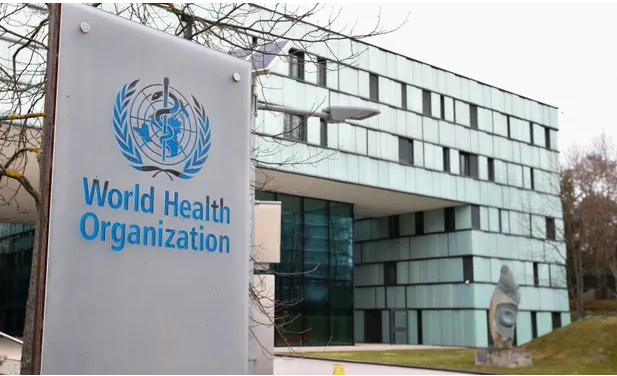
The World Health Organisation’s (WHO) report on excess mortality due to Covid-19 has pegged the India figure at 47.4 lakh, nearly 10 times the official figure of 4.8 lakh. However, India has strongly objected to the use of mathematical models for projecting excess mortality estimates in view of the availability of authentic data.

The “excess mortality” figures released by the World Health Organisation have raised several questions as India says that validity and robustness of the models used and methodology of data collection are questionable.

India has been consistently objecting to the methodology adopted by WHO to project excess mortality estimates based on mathematical models. Despite India’s objection to the process, methodology and outcome of this modelling exercise, WHO has released the excess mortality estimates without adequately addressing India’s concerns.

India had also informed WHO that in view of the availability of authentic data published through Civil Registration System (CRS) by Registrar General of India (RGI), mathematical models should not be used for projecting excess mortality numbers for India. Registration of births and deaths in India is extremely robust and is governed by decades old statutory legal framework that is “Births & Deaths Registration Act, 1969”. The Civil Registration data as well as Sample Registration data released annually by RGI has been used by a large number of researchers, policy makers and scientists both domestically & globally.

The RGI is over a century old statutory organization and is assisted by Chief Registrars of states/UTs and about 3 lakh Registrars/Sub-Registrars across the country. Based on reports submitted by states/UTs, National reports – Vital Statistics of India based on Civil Registration System (CRS) are published annually by RGI.

The last such National Report for the year 2019 was published in June 2021 and for the year 2020 has been published on 03rd May 2022. These reports are in public domain. India firmly believes that such robust and accurate data generated through Legal Framework of a Member State must be respected, accepted and used by WHO rather than relying on less than accurate mathematical projection based on non-official sources of data.

India had pointed out the inconsistencies in the criteria and assumption used by WHO to classify Countries into Tier I and II as well as questioned the very basis for placing India into Tier II countries (for which a mathematical modelling estimate is used). India had also underlined the fact that given the accuracy of the Mortality Data collected through an effective and robust statutory system, India doesn’t deserve to be placed in Tier II countries. WHO till date has not responded to India’s contention.

India has consistently questioned WHO’s own admission that data in respect of seventeen Indian states was obtained from some websites and media reports and was used in their mathematical model. This reflects a statistically unsound and scientifically questionable methodology of data collection for making excess mortality projections in case of India.

Throughout the process of dialogue, engagement and communication with WHO, WHO has projected different excess mortality figures for India citing multiple models, which itself raises questions on the validity and robustness of the models used.

India objected to the use of Global Health Estimates (GHE) 2019 in one of the models used by WHO for calculating excess mortality estimates for India. GHE itself is an estimate. Therefore, a modeling approach which provides mortality estimates on the basis of another estimate, while totally disregarding the actual data available within the Country exhibits lack of academic rigour.

The test positivity rate (another key variable used by WHO) for Covid-19 in India was never uniform throughout the country at any point of time. Such a modeling approach fails to take into account the variability in COVID positivity rate both in terms of space and time within the country. The model also fails to take into account the rate of testing and impact of different diagnostic methods (RAT/RT-PCR) used in different geographies.

Owing to its large area, diversity and a population of 1.3 billion which witnessed variable severity of the pandemic both across space and time, India consistently objected to the use of “one size fits all”, approach and model, which may be applicable to smaller countries but cannot be applicable to India. In one of the models, India’s age-sex distribution was extrapolated based on the age-sex distribution of excess deaths reported by other countries incomparable in terms of demography and size with India and India’s request to use the available data from authentic Indian source was not considered.

The model assumed an inverse relationship between temperature and mortality, which was never substantiated by WHO despite India’s repeated requests. In spite of these differences, India continued to collaborate and coordinate with WHO on this exercise and multiple formal communications (10 times from November 2021 to May 2022) as well as numerous virtual interactions were held with WHO.

The CRS data of 2020 published by RGI on May 3, 2022 clearly reveals that the narrative sought to be created based on various modelling estimates of India’s Covid-19 deaths being many times the reported figure is totally removed from reality.

The figures of all-cause  mortality for the years 2018 and 2019 are also available in public domain. Since RGI figures capture “all – cause mortality” for a particular year, mortality figures of COVID 19 could at best be considered a sub-set of the “all- cause mortality” in that year.  Therefore, reliable figures released by the Statutory Authority captured through a rigorous process across the country are presently available for analysis and support in policy planning. It is a known fact that modelling, more often than not, can lead to over-estimation and on few occasions, these estimates may stretch to the limits of absurdity.

The data released by the Civil Registration System (CRS) report-2020 under the aegis of the office of Registrar General of India (RGI) was shared with WHO for preparation of mortality report. Despite communicating this data to WHO for supporting their publication, WHO for reasons best known to them conveniently chose to ignore the available data submitted by India and published the excess mortality estimates for which the methodology, source of data, and the outcomes has been consistently questioned by India.

For India, the WHO said about 8.3 lakh deaths are estimated to have happened in 2020 itself. The numbers come just two days after India released its annual data for registration of births and deaths for the year 2020, recorded in its civil registration system (CRS), which showed about 4.75 lakh more deaths than in previous years, consistent with the trend of rising registrations being seen over the last few years. The CRS does not record cause-specific mortality. The Government has repeatedly objected to the process and methodology adopted by the WHO to calculate the excess deaths, and had sent at least ten letters to the global organisation in this regard. The  Government said in a statement, “WHO has released the excess mortality estimates without adequately addressing India’s concerns.”


With scarce coal stocks, power crisis set to worsen in Punjab

The power demand in the state has increased by about 35% this year. Given the fast depleting coal stocks at all the five power thermal plants ahead of the upcoming water-guzzling paddy sowing period through tubewells, the crisis seems set to aggravate. A report by Rajesh Moudgil

The power pangs in Punjab, which is already experiencing long outages for the past over a month, are set to aggravate during the next few weeks given its empty exchequer, scarce coal stock and a steep rise in the demand this summer.

While the maximum power demand in Punjab this summer season is above 9500 MW (peak hours), the daily power supply is about 2,000 lakh units. The power demand in the state has increased by about 35% this year and so has the power supply by the Punjab State Power Corporation Limited (PSPCL).

Last year, during the same period, the maximum power demand  was about 6,000 MW and the daily power supply was about 1,300 lakh units. Against this, the total installed thermal capacity of all the five plants this summer season is 5,680 MW. The total installed hydel capacity is 1180 MW.

However, given the steep jump in the power demand and the fast depleting coal stocks at all the five power thermal plants this time ahead of the upcoming water-guzzling paddy sowing period through tube-wells, the crisis seems set to aggravate.

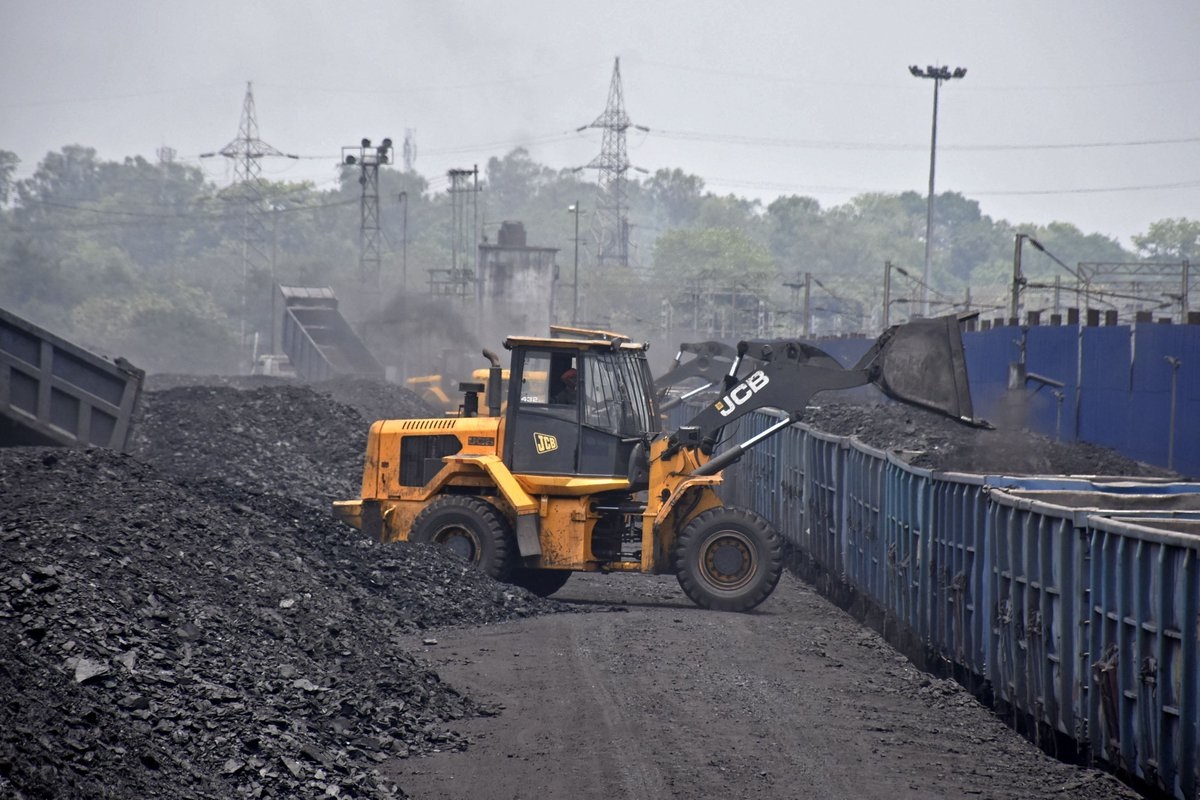
The fast depleting coal stock at the Ropar thermal power plant, the Lehra Mohabbat thermal plant (Bhatinda), Talwandi Sabo thermal plant (Mansa), and the Goindwal Sahib plant (Tarn Taran) had only for a few days, though the only exception was, the state’s fifth thermal plant at Rajpura, which had coal stocks for about two weeks.
Experts in the power sector anticipate that the peak demand during the forthcoming paddy season – from around mid-June to mid-September – would be 16,500 MW and hence the enhancement in total transfer capacity/available transfer capacity (TTC/ATC) from the grid has been enhanced to 8,500 MW and 9,000 MW, from 7,000 MW/ 7,600 MW last year. Under banking arrangements with other states, the PSPCL is likely to get 2,000-2,500 MW during peak paddy season from June to September this year, they say.

The All India Power Engineers Federation (AIPEF) spokesperson V K Gupta says that the PSPCL is facing financial strain due to non-payment of pending electricity dues by various government departments and on account of free power to agriculture and subsidised power to other sets of domestic and industrial consumers.

In the absence of timely support from the Punjab government, the PSPCL has been forced to go for the short-term loan of Rs 500 crore even for the purchase of power in April this year.

The pending payments of electricity bills up to April ending this year from 45 government departments to PSPCL is Rs 2,650 crore and the PSPCL resorts to maximum power purchase from the start of paddy season from June 10 to September 10. For purchasing power, through exchange, only cash payment is done.

According to information, the pending subsidy for the last year stands at about Rs 7,000 crore while the subsidy for the current financial year would be about Rs 13,000 crore and that does not include the additional subsidy for free 300 units for every household from July next announced by the new Aam Aadmi Party (AAP) government. The same was one of the main promises made by the AAP – which won 92 seats out of the total 117 – ahead of February polls.

The AAP is, however, already at the receiving end due to long power cuts for all the sectors, and protests from people, especially farmers are commonplace in the state. The leaders of the main opposition party – Congress – in Punjab have also torn into the chief minister Bhagwant Mann-led AAP government.

The leader of the opposition (LoP) Partap Singh Bajwa has appealed to the union government to bail out Punjab as the state nears a blackout, while the former state Congress chief Navjot Singh Sidhu held a protest outside the Rajpura thermal power plant while a farmers’ union led by Joginder Singh Ugrahan protested in Mansa.

Bajwa said that if the government of India would not bail Punjab out, there would be a complete blackout in Punjab in the coming days. It is a very serious situation and Bhagwant Mann is touring Delhi to see the swimming pools while his own state is sweating and is in the worst electricity crisis, Bajwa added.

THE WAY AHEAD

However, in a first in the state, the conventional method of sowing paddy saplings in puddled fields has been staggered into four phases beginning June 18 by dividing the state’s 23 districts into four zones, with an aim to lessen the burden on the use of power and conserve the subsoil water.

According to the experts, the staggering of transplantation would conserve the subsoil water as with the delay, sowing would coincide with the monsoons and the power would also be saved.

The paddy sowing in the state by direct-seeded rice (DSR) method would start from May 20 and is likely to be over by May 31 while the setting up of nurseries for preparing saplings for transplanting paddy would not be allowed before May 18.

The Punjab government has announced an incentive of Rs 1,500 per acre for the paddy cultivated with the DSR method. The total cost of the incentive is likely to cost the state exchequer about Rs 450 crore.

The experts say that by staggering the paddy cultivation, the burden on PSPCL would be eased as the previous system of starting cultivation in the entire Punjab on a single day pushed the peak load to 15,500 MW. However, if it is staggered by a week, the transplantation in the districts that come in the first phase would be almost over when the district in the fourth cluster gets the turn.

Meanwhile, in another development, the state power minister Harbjahan Singh has also said that the power generating units would soon start getting coal supplies from Punjab’s coal mines in Pachwara of Jharkhand. He said that in comparison to the previous years, demand for power had increased by about 40% and a few power-generation units were shut down due to different reasons that hit the power supply.

After Kumar Vishwas, Punjab on backfoot in Bagga case too

Punjab police was left with egg on its face when it was forced to forgo the custody of BJP leader Tajinder Pal Singh Bagga to Delhi police after his arrest in Delhi. Earlier, the HC stayed the arrest of poet Kumar Vishwas a criminal case registered at Ropar, reports Rajendra Khatry

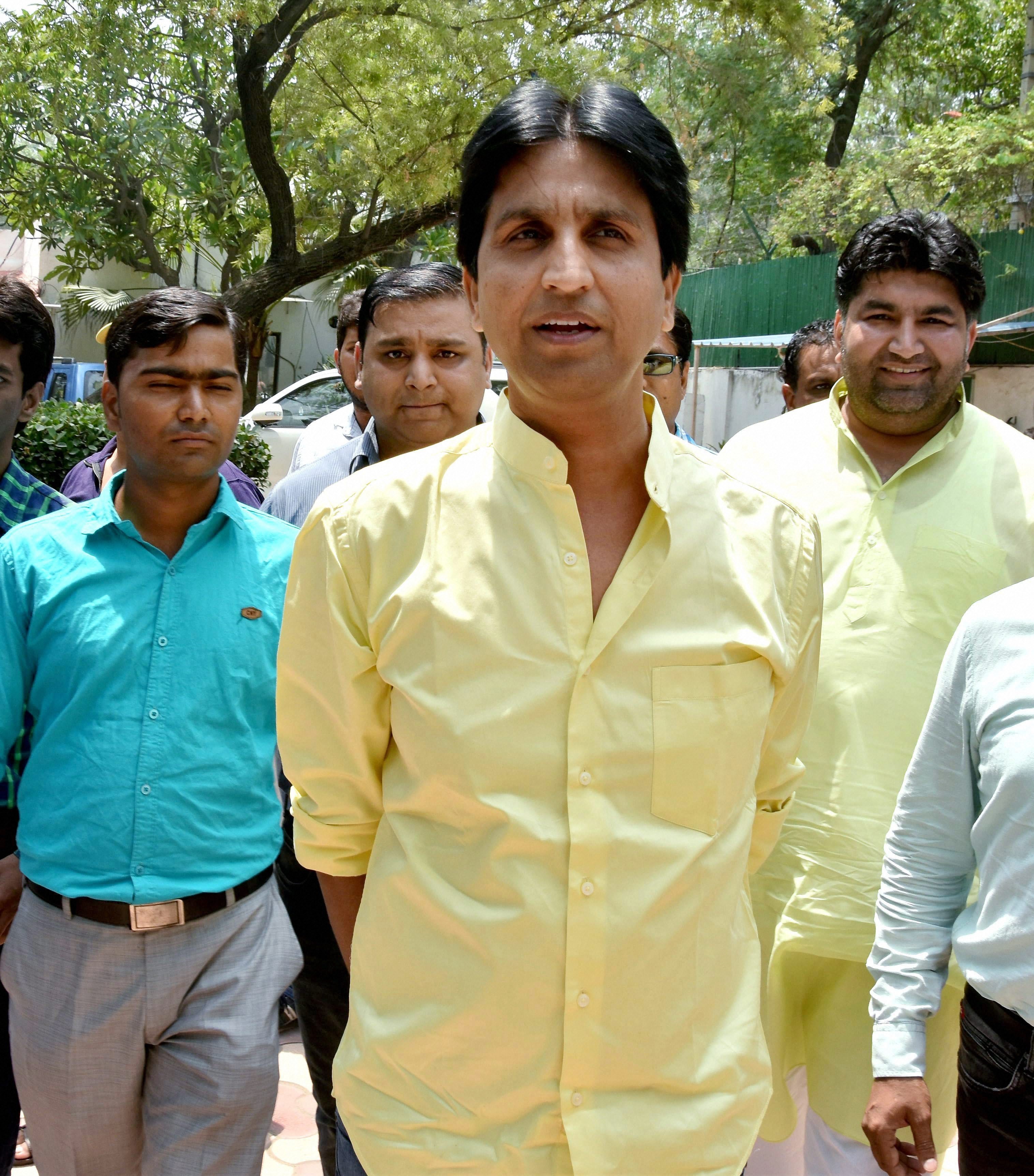
The newly formed Aam Aadmi (AAP) government in Punjab was left red faced recently when the Punjab and Haryana High Court stayed the arrest of former Aam Aadmi Party (AAP) leader and poet Kumar Vishwas in a criminal case registered against him by the Punjab Police in Rupnagar on April 12.

The Punjab and Haryana High court hinted that it could not be ruled out that the FIR lodged by the Punjab Police against former AAP leader and poet Kumar Vishwas was politically motivated. With this assertion, Justice Anoop Chitkara stayed further proceedings with regard to Vishwas, including his arrest.

As if this was not enough, there was more embarrassment in store for the AAP government when Congress party’s firebrand leader Alka Lamba also appealed against the FIR lodged against her for speaking against Kejriwal.

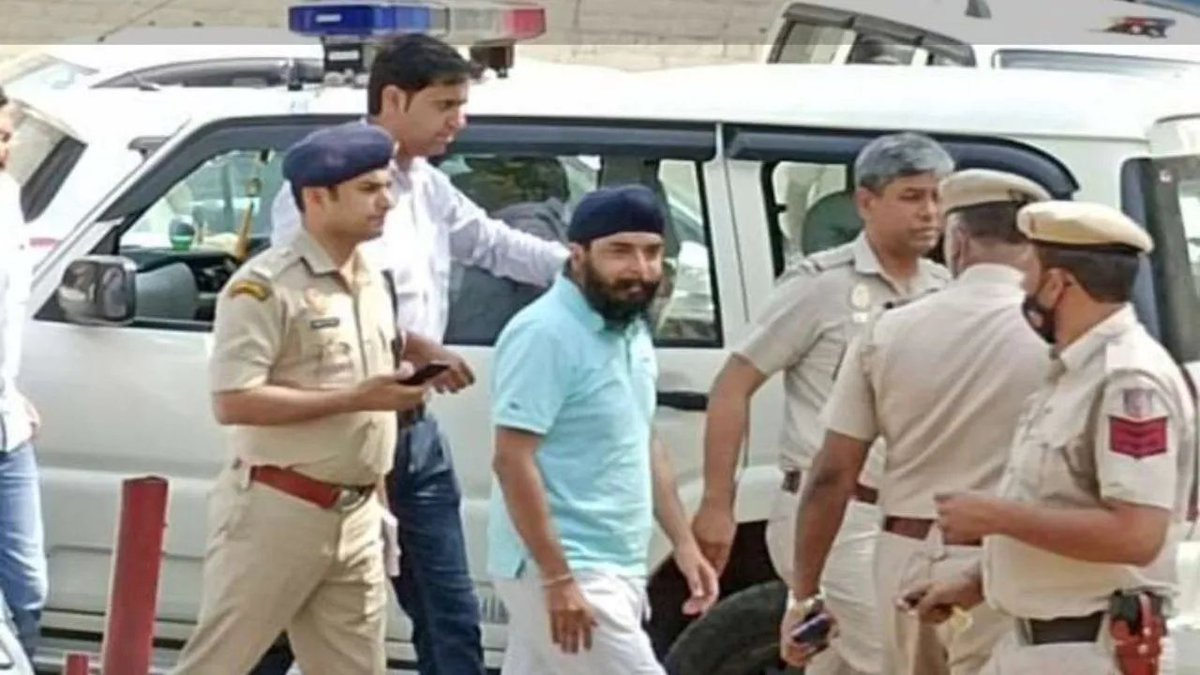
Meanwhile Punjab police courted controversy in its action in arresting Tajinder Pal Singh Bagga, the Delhi BJP leader from his home. Bagga was booked last month after AAP leader Sunny Singh filed a complaint against him alleging that he had made provocative statements, spread rumours, and tried to create religious and communal enmity. Bagga allegedly had threatened Delhi CM Arvind Kejriwal during a protest on March 30 last. The complainant also submitted statements and video clips of Bagga to the police.

The Punjab police was on its way back with Bagga when it was accosted by the Haryana police in Kurukshetra. This led to a dramatic development involving police of three states of Punjab, Haryana and Delhi. In a high voltage drama, the BJP accused Punjab police of abducting its leader who had been vocal in his criticism of Arvind Kejriwal. Bagga was brought back to the national capital by the Delhi police which took his custody. This led to a slugfest between the BJP and the AAP leaders of Delhi and Haryana and later the matter reached the court.

Punjab police drew flak for not following proper legal procedure in arresting Bagga from another state. Punjab DGP V K Bhawra later instructed the police force not to make any such arrest in future in another state without strictly following legal procedure. The legal advice must be sought from the Advocate General in such matters.

Earlier the AAP said Bagga was arrested for allegedly stoking communal tensions in Punjab. The Punjab government moved the High Court against the detention of its police in Kurukshetra of Haryana. It is true that AAP rules both Punjab and Delhi, but the Delhi police comes under the Union Home Ministry and not the AAP ruled Delhi government.

In a reprieve for Delhi BJP leader Tajinder Pal Singh Bagga, the Punjab and Haryana High Court late Saturday night directed that no coercive step be initiated against him till May 10 after he sought a stay on the arrest warrant issued by a Mohali court earlier in the day. With BJP leader Tajinder Bagga expressing fear over his safety, the Delhi Police on Saturday said they would make necessary security arrangements for him. Punjab on Saturday moved the Punjab and Haryana HC seeking the preservation of CCTV footage of the police stations in Delhi and in Kurukshetra district.

Taking up the matter during a special hearing just before midnight, Justice Anoop Chitkara said that the order would remain in operation at least till May 10 — the date fixed by the HC for hearing Bagga’s petition for quashing the FIR against him.

Kumar Vishwas

Earlier former Aam Aadmi Party (AAP) leader and poet Kumar Vishwas was on April 12 booked by Punjab Police for allegedly promoting enmity between groups, criminal conspiracy, publishing or circulating a report with intent to create enmity on grounds of religion and race. It was on the complaint of Narinder Singh that Kumar Vishwas was booked by the Punjab Police for promoting enmity between groups, criminal conspiracy, publishing or circulating a news report with intent to create enmity on the grounds of religion and race besides the Representation of People Act.

Both the accused -Kumar Vishwas and Alka Lamba had been asked by the police to appear in person before a three-member Special Investigation Team at 10 am on April 26., the date for Lamba’s appearance of Lamba was postponed to April 27.

Kumar Vishwas then moved the Punjab and Haryana High Court seeking to quash the FIR registered against him for allegedly giving inflammatory statements against Delhi Chief Minister and AAP supremo Arvind Kejriwal.

Kumar Vishwas, incidentally, had been accused by the Punjab government of making provocative statements against AAP’s national convener Arvind Kejriwal. He was alleged to have done so in interviews from February 16 to February 19. Vishwas had alleged that Kejriwal had involvement with certain nefarious and anti-social elements.

Incidentally it was on April 12, when some unknown persons tried to assault Kumar Vishwas. Later the FIR was registered within two hours of receiving the complaint without even a preliminary inquiry or investigation to confirm the veracity of the allegations.

In his observation, Justice Chitkara asserted that “The penal provisions under which the petitioner stands arraigned are not prima facie made out against him. The submission that the FIR is politically motivated cannot be ruled out.”

Judge Chitkarta concluded that, “It is a fit case for this court to prevent the abuse of the process of law because the allegations made in the complaint and the investigation carried out by associating the spot witnesses do not contain any material which even remotely links the incident of April 12 with the interviews of the petitioner,”.

Meanwhile another Delhi Congress leader, Alka Lamba also approached the Punjab and Haryana high court seeking quashing of an FIR registered on April 12 in a case of “inflammatory statements” against Delhi chief minister Arvind Kejriwal.

The Congress alleged that this was a case of vengeance by the AAP party government in Punjab. Calling it a political vendetta, the Congress accused the Punjab Police of acting at the behest of AAP leadership. It is a move by using the Punjab police to browbeat the political opponents of AAP, said the Congress leaders.

In February 2015, Lamba was elected to the Delhi Legislative Assembly from Chandni Chowk on an AAP ticket. But in September 2019 Alka Lamba quit the AAP to join back the Congress which she had served earlier for 20 years as she was disenchanted by the AAP leadership.


Does Nitish’s meeting with Lalu kin hint at churn in Bihar politics?

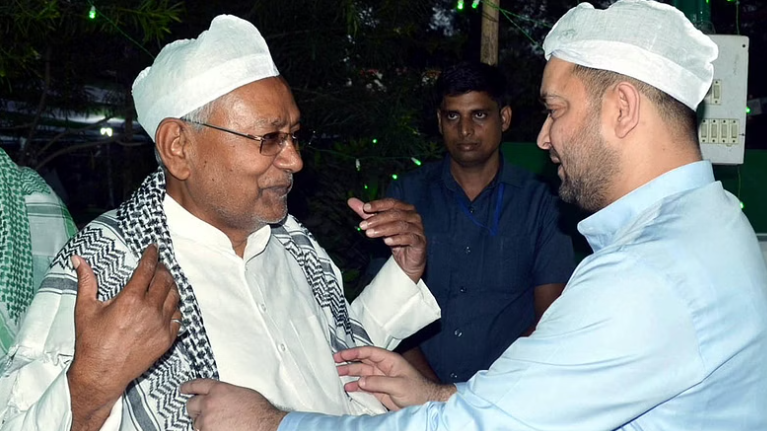
Speculations are rife after Bihar CM and JD (U) supremo Nitish Kumar met the family members of RJD chief Lalu Prasad Yadav twice within a short span of a week on the sidelines of the Iftar party in the month of April.

Two meetings between the JD (U) supremo Nitish Kumar and the family members of Lalu Prasad Yadav within a short span of a week on the sidelines of the Iftar Party, first on April 22 and the second on April 28, also coinciding with the grant of bail to Lalu Prasad Yadav in a fodder scam case, have been instrumental in giving rise to multiple political speculations of varied types. Different political circles in and outside Bihar are decoding the message of these two meetings according to their own convenience. Given the past behaviour of over two decades of the JD (U) supremo, it is hard to predict which way the political wind will blow. Undoubtedly, respective major political players – Bharatiya Janata Party (BJP), Janata Dal (United) or JD (U) and Rashtriya Janata Dal (RJD)  – have either worked out are working on their respective strategies to win the ongoing chess game of Bihar politics.

BJP’s Stratagem

It has been a long-term strategy of the BJP to administer Bihar of its own, which till now has been part of a coalition government in partnership with JD (U) led by chief minister Nitish Kumar since 2005, with the exception of 18 months when Nitish Kumar partnered with RJD after the 2015 Bihar Assembly elections and then again joined hands with the BJP to be saddled into power.  Like other BJP-ruled states, the BJP is keen to have full sway over the reins of power in Bihar to implement its agenda; nevertheless, on many occasions, Nitish Kumar has opposed some of the moves of the BJP, especially the application of Uniform Civil Code (UCC).

The JD (U) under the leadership of Nitish Kumar has been demanding a caste-based census by arguing that enumeration of the backward castes is the key to the effective implementation of welfare schemes. However, the BJP is reluctant to concede to this demand of JD (U) and the Modi government’s affidavit in the Supreme Court with regard to the non-feasibility of caste census in 2021 has seemingly not gone well with the JD (U) leadership.

Recent media reports are rife with speculations with regard to the BJP strategy of exerting full control over Bihar by moving Nitish Kumar out of Patna to Delhi either as a presidential candidate of the NDA for the ensuing election of the President of India, or for the post of Vice President of India which is also due for election, or as a Member of Rajya Sabha. Acceptance of either of the three options by Nitish Kumar entails the potential of paving way for the BJP to easily manage the affairs in Bihar according to its choice.

Despite frequent denials by JD (U) spokespersons of Nitish Kumar shifting to Delhi for a top constitutional slot, many senior BJP leaders in Patna have seemingly not stopped from quietly indulging in political posturing. The name of Union minister of state for home affairs Nityanand Rai is being touted as being the BJP’s probable chief ministerial candidate in the eventuality of Nitish Kumar moving out of Bihar prior to the 2025 Assembly polls. Other potential chief ministerial faces in Bihar BJP camp are Rajya Sabha MP and former Bihar deputy CM Sushil Kumar Modi and the firebrand Union minister Giriraj Singh who has been deftly displaying his Hindutva credentials.

Nevertheless, political observers in Patna opine that the forthcoming cabinet expansion is likely to unveil the future strategy of the BJP, especially if it replaces one of its two deputy CMs or both. Induction of all three MLAs of Vikassheel Insan Party into the BJP has raised the party’s strength to 77 MLAs as well as bolstered the party’s morale. Given the JD (U)’s strength of 45 MLAs, the BJP seems in a commanding position to step up its pressure on the junior ally. However, the loss of the Bochaha by-poll is said to have sent strong political signals within the Bihar BJP with regard to the possible split in EBC votes and the distancing of a section of upper caste votes from the party.

Nitish Kumar’s Adeptness

The BJP commands the mastery over putting its rivals or immediate contenders on the horns of dilemma through the blitzkrieg of its propaganda machinery. Having emerged as the single largest party in the state of Bihar, the BJP leadership is sending signals to Nitish Kumar to be moved out of Bihar to Delhi either as a candidate of the BJP for presidential polls or to be named as the next Vice-President of India or a seat in Rajya Sabha. Nevertheless, the BJP may not like to name Nitish Kumar as its presidential candidate because it may not suit the party to implement its agenda under the presidency of Nitish Kumar in view of the sharp differences between the BJP and Nitish Kumar on issues like Uniform Civil Code, CAA-NRC, Population Control, and the caste-based census, etc.

Even the offer of the office of vice-president may not lure Nitish Kumar because he may not like to be dictated by the terms of the ruling dispensation, and with regard to the offer of Rajya Sabha membership, one fails to understand why Nitish Kumar should feel obliged to the BJP when his own party commands enough numbers to send him to Rajya Sabha. Moreover, Nitish Kumar has recently told media persons that he had no personal interest in going to the Upper House as the people of Bihar have mandated him to power in Bihar and he had a lot of work to do in the state.

Various kinds of speculations have cropped up in the aftermath of Nitish Kumar’s participation in the Iftar Party of April 22 and April 28 and his meetings with RJD leaders there; nonetheless, on his part, he has been maintaining studied silence and not reacting to comments of leaders from the BJP as well as to counter-comments from his own party leaders. Many Bihar observers feel that irrespective of having emerged as the largest party and the enthusiasm of a section of the Bihar BJP to see the party attain electoral self-sufficiency in the state, the road to such a success is prone to be a direly uphill climb for the BJP sans Nitish.  These observers also argue that the BJP can ill-afford a confrontation with Nitish Kumar and the former will have to adopt an accommodative approach keeping in view the 2024 Lok Sabha polls and the 40 Lok Sabha seats in Bihar.

The JD (U) cannot be easily wished away either by the BJP or RJD because it continues to comprise the third significant axis in Bihar’s triangular politics. According to some experts, Nitish’s vote base is numerically significant because it comprises Extremely Backward Castes (EBCs), Mahadalits (most marginalised among Scheduled Castes), and caste-neutral women, and three sections constitute over 45 per cent of the Bihar electorate and Nitish is reported to garner the largest chunk of his votes from these sections. In Bihar’s triangular politics dominated by the BJP, the JD (U), and the RJD, as and when two join hands they are at the helm. Thus, Nitish is valuable for both the BJP and RJD because of his social grouping which commands over 40 per cent of votes, often determining the poll winner. One expert has opined that in the aftermath of the Bochaha drubbing, the BJP is bound to closer to Nitish Kumar than before.

What Lies Ahead?

Uncertainty is the hallmark of politics like cricket, and anything can happen anytime in politics.

The victory of the RJD at the Bochaha by-polls may be a morale booster for it where its candidate defeated the BJP candidate by a margin of over 36, 500 votes. Bochaha has proved to be· a shocker for the BJP. And this defeat still continues to rile the BJP. Amidst these developments, Nitish Kumar’s participation in the Iftar Party hosted by the RJD on April 22, not only stirred the hornet’s nest in Bihar’s politics but also stoked fire at a time when there is a buzz of a reported rift in the NDA in Bihar. According to media reports, JD (U) and the BJP are at loggerheads on plenty of issues like caste-based census, liquor ban, and law and order situation in the state. A section of the Bihar BJP has expressed serious concern over the huge debacle not just in Bochaha but also in the Legislative Council election for 24 seats from urban local bodies, wherein both JD (U) and the BJP together ended up losing 10 of their seats, while the RJD was the biggest gainer. What happens in the ensuing weeks in Bihar will be worth watching.


All eyes on top court as Delhi, Centre lock horns over control of ‘services’

Arvind Kejriwal

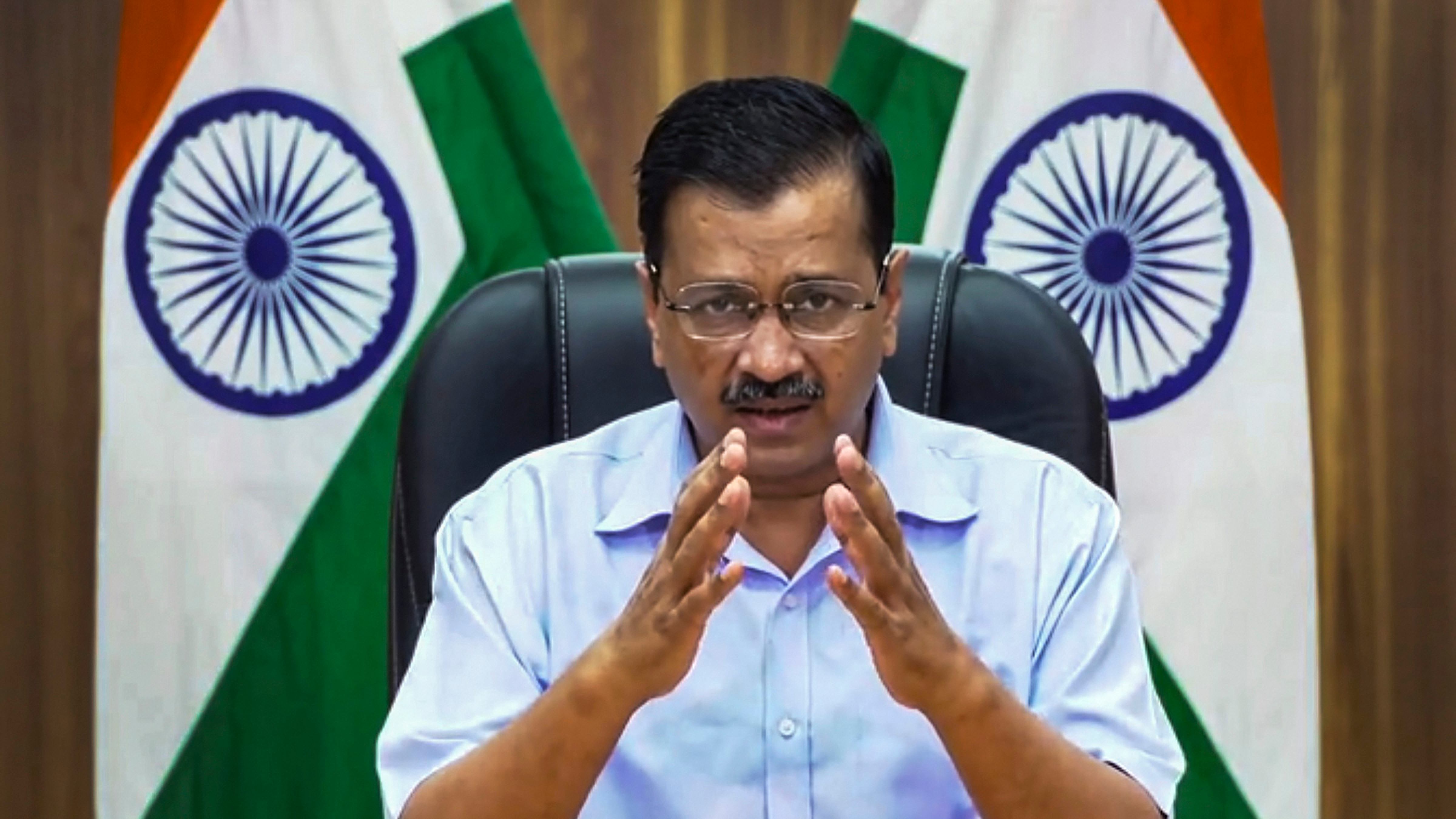
The deadlock  between the Delhi government and the Centre over who should control bureaucracy in the national capital has now reached a five-judge Constitution Bench of the Supreme Court of India. A report by Amit Agnihotri

The old dispute between the Delhi government and the Centre over who should control bureaucracy in the national capital has now reached a five-judge Constitution Bench of the Supreme Court of India.

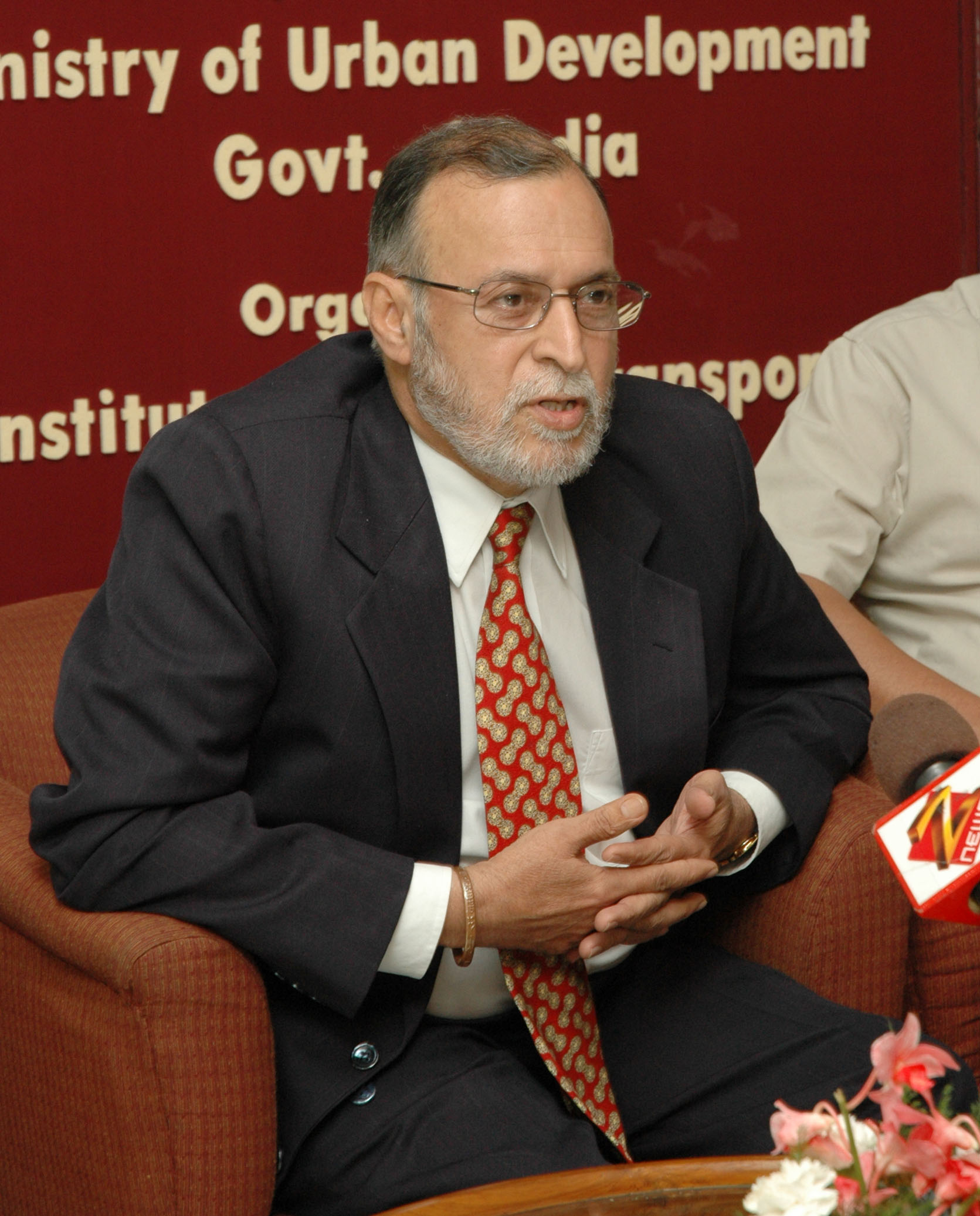
The issue started with a tussle between Lt Governors Najeeb Jung and then Anil Baijal, and the elected government of chief minister Arvind Kejriwal and has remained unresolved since the top court delivered a split verdict on February 14, 2019 over control of administrative services in Delhi.

The matter had been referred to a three-judge Bench which took it up along with the Delhi government’s fresh petition against the amended Government of NCT of Delhi Act, 2021.

The top court recently agreed to the demand made by the Centre that the interpretation of Article 239 AA should be examined in a holistic way and referred the matter to a five-judge Constitution Bench.

A three-judge Bench headed by Chief Justice of India NV Ramana, and comprising Justice Surya Kant and Justice Hima Kohli, said the issue related to ‘Services’ alone shall be decided by the Constitution Bench, which will commence hearing from May 11.

On April 28, the Supreme Court had reserved its verdict on the Centre’s plea to refer the issue to a Constitution Bench after hearing Solicitor General Tushar Mehta who insisted that the matter should be considered by a larger Bench as earlier judgments didn’t give “any roadmap” to decide if the Centre or the Delhi government was competent to deal with the dispute at hand.

Mehta had described Delhi as the “face of the nation”, and defended the Centre’s control over transfers and postings of bureaucrats in Delhi but the Delhi government, represented by senior advocate Abhishek Manu Singhvi, took exception to his submissions.

Singhvi opposed the demand for referring the issue to a five-judge Bench, saying “This court is not here to refer every time the slightest thing is pointed out. How does this matter, if there were three or five judges. It is not about why not, it is about why.”

Arguing that there was no ambiguity in the 2018 Constitution Bench judgment, Singhvi said that if there was any ambiguity in the case, the three judge Bench too could decide it.

The dispute arose in 2016 and the matter reached the high court. In 2018, the elected government had appealed to the top court against a Delhi High Court order that said that the LG was the administrative head of Delhi.

Later, the five-judge Constitution Bench of the Supreme Court had held that while the Lieutenant Governor must be informed about Delhi cabinet decisions, his concurrence was not needed except in the case of police, public order and land.

The status of the Lieutenant Governor of Delhi is not that of a Governor of a State, rather he remains an administrator, in a limited sense, working with the designation of Lieutenant Governor,” the judges had said.

he judges had ruled that the Lieutenant Governor was “bound by the aid and advice of the council of ministers” and that “the Lieutenant Governor had not been entrusted with any independent decision-making power”.

The issue came into focus again in 2021 when President Ram Nath Kovind on March 28 gave his assent to the Government of National Capital Territory of Delhi (Amendment) Bill that gave more powers to Delhi’s Lieutenant Governor.

According to the bill, the ‘government’ in Delhi meant the ‘Lieutenant Governor’ in the context of any law made by the assembly and it would be mandatory for the government to take the opinion of the LG before taking any executive action.

The legislation had riled chief minister Arvind Kejriwal, who, along with Aam Aadmi Party leaders, had staged a protest at Jantar Mantar and alleged the Centre wanted to weaken his government.

Kejriwal had said the BJP ruling the Centre was scared of the development work done by his government and his Aam Aadmi Party which had won 62 of 70 seats in 2020 assembly polls. The BJP had got only eight seats and Congress had nil.

Kejriwal had further alleged that the Central government had ignored the 2018 Supreme Court order which had clarified that the elected government should have more powers and the LG should act as per the advice of the council of ministers.

Interestingly, while the previous tenure of the Kejriwal government was marked by bitter confrontation with the then LG Najeeb Jung and later LG Anil Baijal on almost every issue, his approach has been more reconciliatory in the second term.

After the Kejriwal government’s tussle with the Delhi LG had reached the Supreme Court, in July 2018 a five-judge Constitution Bench had laid down broad parameters on how the national capital should be governed.

According to the top court, the LG had no independent decision-making power and he had to make decisions on the advice of the cabinet.

Anil Baijal

In September the same year, the Centre had told the top court that Delhi’s administration cannot be left alone to the government and that the Centre had an extraordinary position as Delhi was the national capital.

The Congress, which usually targets the AAP government, had backed the ruling party on the controversial bill saying the grand old party “was against the autocracy of the central government which wanted to murder democracy through the legislation.”

Delhi Congress chief Anil Kumar Chaudhary had questioned the bill saying if the government meant LG, what was the meaning of an elected government. “Where will people go if the Delhi government means the LG? Then why elections were conducted. Why did people vote,” he said.

Calling for Constitutional pragmatism and underlining the clear separation of powers, the Bench of then Chief Justice of India Dipak Misra and Justices A K Sikri, A M Khanwilkar, D Y Chandrachud and Ashok Bhushan, in three separate yet concurring orders had made it clear that “the status of the Lieutenant Governor of Delhi was not that of a Governor of a State, rather he remained an Administrator, in a limited sense, working with the designation of Lieutenant Governor”.

The Bench had also said that “at the same time, the Council of Ministers being headed by the Chief Minister should be guided by values and prudence accepting the Constitutional position that the NCT of Delhi is not a State”.

The judges had ruled that “the scheme that had been conceptualised by the insertion of Articles 239AA and 239AB read with the provisions of the Government of National Capital Territory of Delhi Act, 1991 and the corresponding Transaction of Business Rules, 1993 indicated that the Lieutenant Governor, being the administrative head, shall be kept informed with respect to all the decisions taken by the Council of Ministers”.

In September 2021, the Delhi government had challenged the amended Government of NCT of Delhi Act, 2021 in the top court.

On March 3, 2022, the top court had issued notice to the Centre on Delhi government’s petition challenging the validity of said Act and Rule 13 of the Transaction of Business Rules, 1993 which allegedly gave more powers to the Lieutenant Governor.

The law was controversially cleared in Parliament in March amid opposition protests in both the Houses. When the Bill was cleared in Parliament, Delhi Chief Minister Arvind Kejriwal had called it a “sad day for Indian democracy”.

The government, while bringing the Bill in the March session, claimed it would “further define” the responsibilities of the elected government and the Lieutenant Governor “in line with the constitutional scheme of governance… as interpreted by the Supreme Court.”

Arvind Kejriwal had then called the development an “insult” to the people of Delhi and said it “effectively took away powers from those who were voted by people and gave power to run Delhi to those who were defeated.”

Kejriwal had accused the BJP of trying to rule Delhi by proxy through the Lieutenant Governor and blocking the elected government’s plans.


Mewat’s Nuh remains laggard despite proximity to capital

Shockingly, when a new  jail came up in Nuh, celebrations broke out in the nearby villages, in the backdrop of the fact that hapless parents wouldn’t have to travel far and wide to meet their jailed sons

I just read this by-line story of Sumedha Sharma in The Tribune. It focuses on another of those dark realities. I have been covering the Mewat region for decades and it is definitely a long neglected region on any given sphere.

First let me focus on Sharma’s new report published in The Tribune, on May10, 2022: Two months into the new academic session in Haryana, the students of government schools in Nuh are yet to receive free textbooks from the Education Department…The wait for books, in fact, has been continuing for two years as the students didn’t get books during the Covid pandemic. The primary students have been the worst sufferers as they, in view of the government’s no-detention policy, were promoted to the next class and they can hardly read or write, says a teacher…The district has 499 primary, 306 middle, 23 high and 115 senior secondary schools. It also has five Kasturba Gandhi, five Aarohi Model and 11 Sanskriti Model schools. As per records, there are 1.40 lakh primary students, 55,000 in Classes VI to VIII and over 2.30 lakh in Classes IX to XII. All of them have not received books…’Children here come to school only because education is free. They spend the day loitering around or playing in ground. Despite repeated reminders to the higher-ups, books haven’t arrived,’ says a teacher at Kasturba Gandhi Balika Mahavidyalya. “With no books, how do we teach? The district already suffers from staff crunch and high student-teacher ratio. Books should have been arranged before March,” says Rajesh Sharma, president of Haryana Primary Teachers Union….While District Education Officer AR Khan was unavailable for comment, a senior official said they were in touch with the government for early delivery of books.”  ( end of  Sharma’s news report)

*****

I would consider the Nuh region in Haryana’s Mewat belt as one of the most backward Muslim populated regions in the country. This, when it is situated close to the capital city, New Delhi.

Also, stands out the vital and significant fact that Meos of the Mewat region, fought for the country’s Independence. With that, the Meo freedom fighters were hated by the British rulers. Hated to such an extent that the entire Mewat region was kept backward on all possible fronts and spheres.

Ironically, even today, the Mewat region continues to be one of the most backward Muslim-populated regions in the country. It has been kept sans development by the successive political rulers. This, when Meos did not want to shift to Pakistan, at the time of the Partition. They had opted to stay back in their home country, Hindoostan.

I have travelled to the Mewat region several times, right from 1990 till date, and each time have returned feeling pained and upset. It seems a tough-rough survival for the majority of the Meos residing that belt. Grim reports on the health and socio-economic conditions and the dismal education facilities.

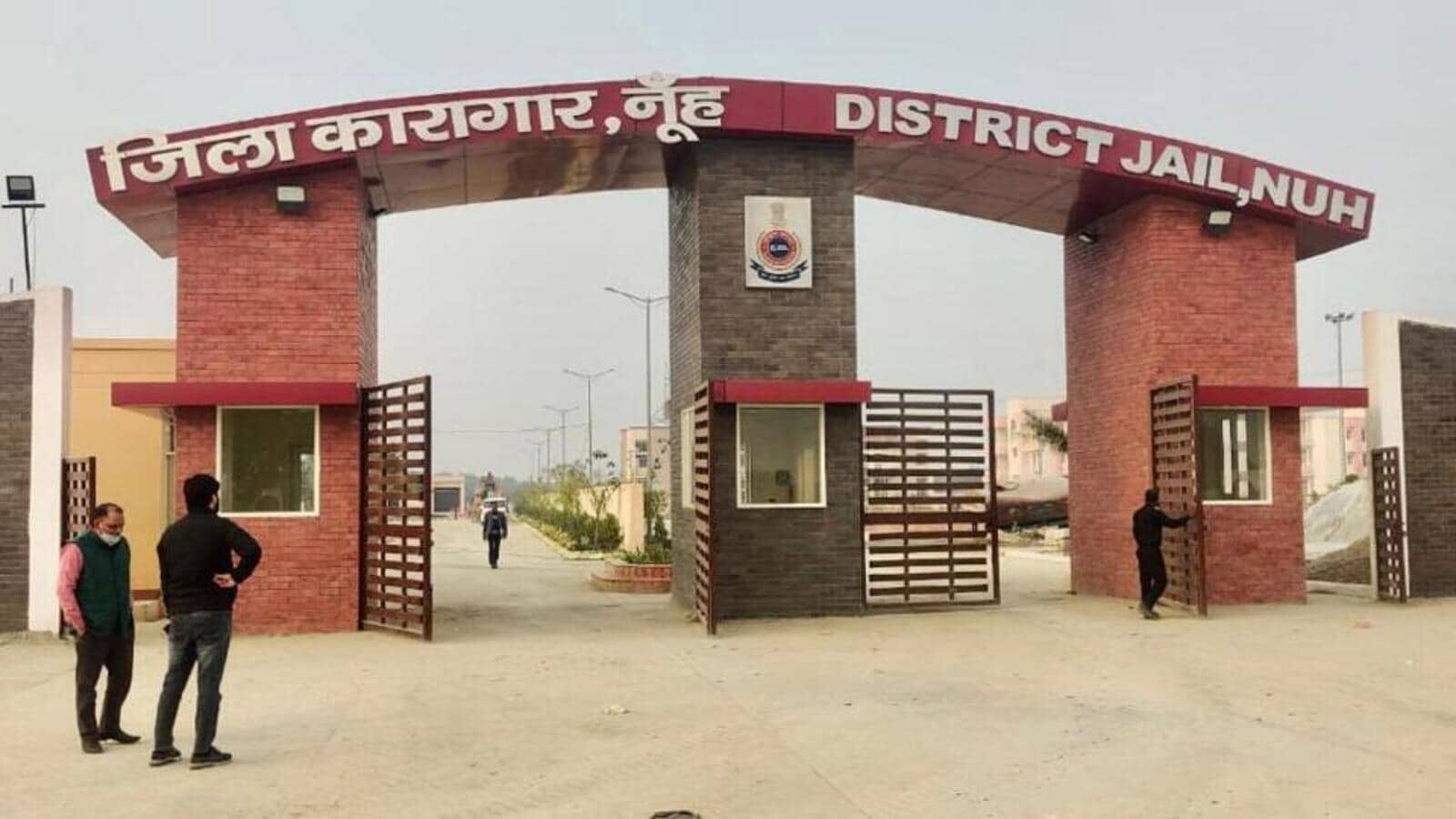
In fact, earlier this year another of those shockers came up when news reports focused on the fact that a substantial percentage of the Mewat  population sits imprisoned. In fact, when a  new  jail came up in Mewat’s Nuh, celebrations broke out in the nearby  villages, in the  backdrop of the  fact that the hapless parents of the  jailed wouldn’t  have to travel  far and wide to meet their jailed sons.

To quote from earlier published news reports: “Celebrations broke out in many villages of Nuh as a long-pending demand of residents was fulfilled on Monday. Nearly 30,000 residents of Haryana’s Jamtara Jamalgarh and Nai in Punhana distributed sweets after the inauguration of a new facility in district. It was neither a school nor a hospital, but a jail… “It’s a boon as almost one boy from every second home is lodged in Faridabad prison or Bhondsi jail in Gurugram. We have to spend money to travel. The new jail will be nearer and we can now easily meet our children,” said Abida Noor of Jamalgarh. Police officials claimed that new facility will reduce the pressure on Gurugram’s Bhondsi jail and the Faridabad jail. Incidentally, around 40 per cent of the inmates in two jails hail from Nuh. Presently, the Bhondsi jail has a capacity of 3,000 inmates and around 600 of them belong to Nuh, and families travel over 60 km to meet their kin.

*****

This  fact  brings me to  focus   on another of those dark realities of the  day – The  number of the  jailed  Muslims is  much higher than their population percentage. Why?

After I had viewed the late Shubhradeep Chakravorty’s documentary ‘After The Storm’ it got  more than writ large that innocents can get framed, and with that their lives ruined! The seven young men — Mukhtar Ahmed, Md. Fassiuddin Ahmed, Umar Farooque, Moutasim Billah, Harith Ansari, Md. Musarrat Hussain ‘Bobby’ and Shaikh Abdul Kaleem — focused on in the documentary,  were imprisoned on false charges till they were  acquitted by the Courts.

In fact, Chakravorty had told me that these seven men were amongst the hundreds arrested, falsely implicated with bogus charges. He detailed that young Muslim men can be detained if not arrested by the police on the flimsiest of charges, at times even without a charge! On mere suspicion or to create an atmosphere of fear. And even if acquitted, they sit ruined and devastated for times to come. With nobody even bothering to ask the basic — What happens to the lives and livelihood of innocent men, caged for so many years?

As activists point out, when the police arrests a Muslim, biases and slants erupt at the very first stage. Details of his or her so called ‘terror links ‘ or ‘anti–national’ stand get splashed! And because of the poisonous propaganda and twisted perceptions and notions, the situation stands compounded.

Dr Javed Jamil details, “In India, Muslims, criminals or innocents, are more likely to be arrested, more likely to be detained as under-trials, more likely to be convicted, more likely to be sentenced to death or life imprisonment and more likely to be actually executed…Though Muslims comprise only 14.2 percent of the population of the country according to a recent census data, they constitute 26.4 percent of the total prison population. Of course, they are also more likely to face torture of all kinds in the police custody. They also have lesser chances of a fair trial because they are in no position to hire good advocates to defend them. And, of course, when high-profile terror cases are involved, Muslims are more likely to be hanged…Yakub Memon has already been hanged and the other Muslims involved in Mumbai attacks and other such cases are likely to be “brought to justice” by Indian legal system sooner than later. But the persons responsible for the riots after Babri Masjid demolition, Mumbai riots and Gujarat riots are nowhere in queue for being brought to justice.”

In fact, in  his latest book, ‘Justice Imprisoned’ (Yenepoya Publishers, Mangaluru), Dr Javed Jamil focuses on custodial deaths and also on the official executions of the prisoners in the different countries of the world. To quote  him, “The net result of the campaign by the economic fundamentalists against capital punishment and the system of justice developed in accordance with their wishes is that now more people are  ‘punished’ by the police than by the courts. The capital or corporal punishment has officially ended as per the constitutions. But it is now given by the police, based on their own assumptions and biases, and not by the courts, based on the evidences. There are more deaths in police custody and encounters than through death sentences executed at the orders of the courts…It can easily be estimated that the annual global number of deaths in police custody is in tens of thousands. It is not only the deaths but severe torture is also common in police custody and prisons…And yet, politicians routinely dismiss these accusations and, instead, always give the police the benefit of the doubt by highlighting the difficulty of police work.”


MOST POPULAR

HOT NEWS