Opportunism triggers collapse, bumpy road ahead for Uddhav Thackeray

Poetic justice was in full play in Maharashtra where sheer opportunism, which had led to the formation of the Maha Vikas Aghadi government, has also caused its downfall too. This is perhaps the first instance when a government has fallen on the issue of Hindutva and a new dispensation is set to take over on the same plank. A report by Sunny Sharma

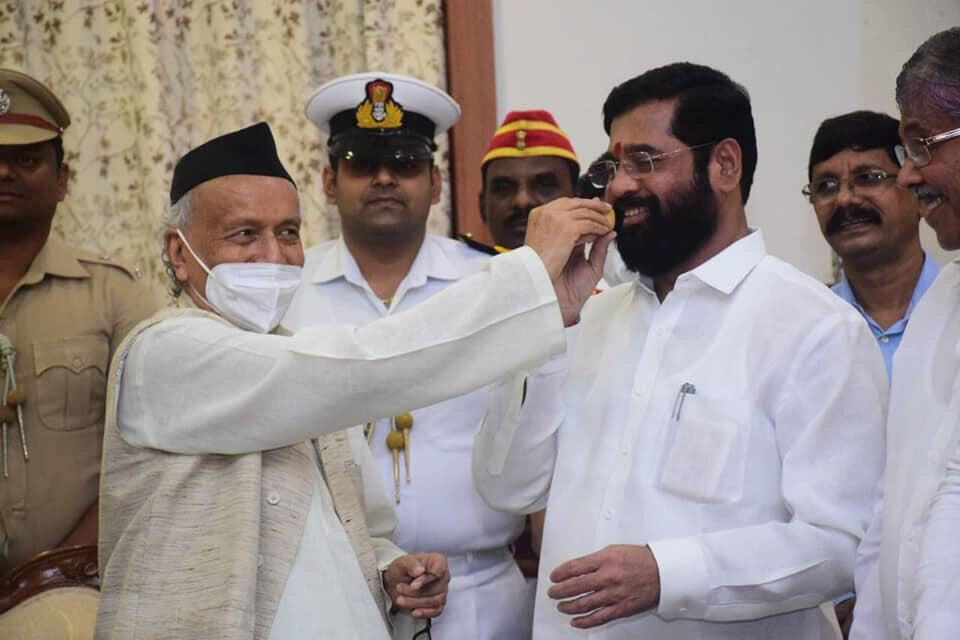
In a dramatic turn of events, the Shiv Sena rebel leader Eknath Shinde has been sworn in as the 20th Chief Minister of Maharashtra and BJP leader and former Chief Minister Devendra Fadnavis, as the Deputy Chief Minister. The resignation of Uddhav Thackeray as Maharashtra Chief Minister had brought down mid-term curtains on the MVA government.

With this Uddhav has met his nemesis and it’s a time of reckoning for him because the BJP had comfortably emerged as the single largest party after the October 2019 Assembly elections, having won 105 seats in the 288-member House. But the Shiv Sena, which bagged only 56 seats, parted ways and tied up with the NCP and the Congress, which had won 54 and 44 seats, to form the government. The alliance of the three parties that had virtually nothing in common except selfish political ambitions, looked absurd from day one.

It is clear that the BJP and Fadnavis in particular took his 2019 defeat as a personal affront after his unseemly haste in forming the half-baked 80-hour government with Ajit Pawar. The Sena had at that time severed its ties with its long-term partner BJP. The latter was waiting for the opportune moment to make its next move. A BJP leader privy to the thinking in the party leadership said that it was Fadnavis who identified Eknath Shinde as the ‘potential bait’ to voice rebellion in Shiv Sena. In the last few days, Fadnavis made three known trips to Delhi, keeping the central leadership apprised of every step of the operation. Sources say he personally looked into the logistics involving the moving of Sena MLAs to Surat immediately after the MLC elections on June 20th and then their move to Guwahati and finally to Goa, as also ensuring the safe passage of other MLAs who joined the rebel camp subsequently.

Ironically, Uddhav Thackeray had repeatedly emphasized that he never wanted the chief ministership. His words have come true and as he resigned as the chief minister of Maharashtra, Thackeray said he came to the post “unexpectedly”, and was going out “unexpectedly”. In the initial months of his chief ministership, Thackeray was reluctant to move to Varsha (the official residence of the chief minister) but later shifted to the official CM residence for ease of government functioning. Faced with the revolt and a possible defeat, Thackeray moved out of the bungalow in Malabar Hill to his family home, Matoshree in Bandra East.

To his credit goes the government’s handling of the Covid-19 pandemic. However, CM’s blind trust in the loyalty of his warriors has turned out to be misplaced and Shiv Sena MLAs who had been complaining about lack of access to the chief minister and his son and Minister Aaditya Thackeray finally revolted. Little doubt, Shiv Sena, the party of Bal Thackeray, who had earned the moniker of ‘tiger’ due to his rabble-rousing firebrand speeches is facing a severe crisis. Uddhav Thackeray always remained behind the scenes and perhaps that was his mistake that could even dent the Thackeray legacy?

Significantly, the collapse of one state government after another in recent years — Madhya Pradesh, Karnataka, Puducherry and now Maharashtra has raised a question mark over the relevance of elections. Questions are being raised as to which state would be in the firing line next?


Real threat from fake notes

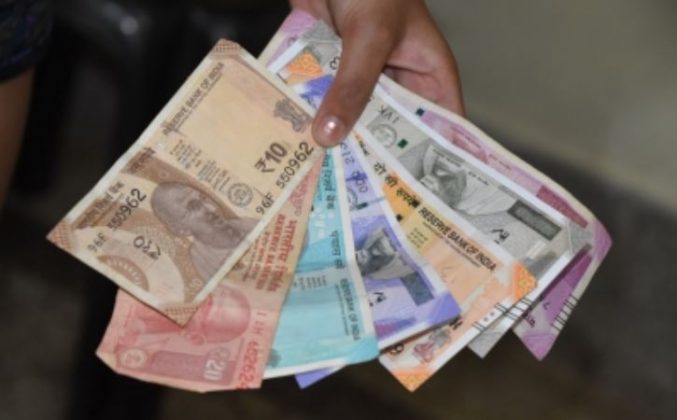
Counterfeit notes recorded a 10.7 percent uptick in 2021-22. Of these, fake notes of Rs 2,000 denomination increased by 55 percent  in 2021-22 over the previous fiscal year. Similarly,  Rs 500 denomination fake notes rose by a whopping 102 per cent. This is not any exaggerated version but as per the latest Annual Report of the Reserve Bank of India. According to the RBI report, during 2021-22, out of the total Fake Indian Currency Notes detected in the banking sector, 6.9 per cent were detected at the RBI and 93.1 per cent at other banks.  In fact, replying to a question in the Rajya Sabha, Minister of State for Home Affairs Nityanand Rai provided a data of counterfeit notes seized in five years since 2016 confirmed that as per the data, 8,34,947 pieces were seized in 2020, 2,87,404 in 2019, 2,57,243 in 2018, 3,55,994 in 2017, and 2,81,839 in 2016.

This shows that the threat from fake notes is real because these look akin to real ones and seem to have been printed on the same security paper and have security features that only government security presses can provide.  In keeping with our investigative journalism, Tehelka cover story ‘Fake notes network still up and running’ by our Special Investigative Team lays bare the modus operandi of the operators.  In fact, participants of a conference of the Director-Generals of police, organised by the Intelligence Bureau, described as the proverbial “tip of the iceberg”, the seized counterfeit currency. A former chairman of SBI had jokingly told me that of the total notes that I am carrying in my wallet, one third could be fake.  The quality of the latest fake notes is so fine that a banker commented, “It seems the fakes were printed in the same press where we print our genuine notes.” Pakistan is said to be fighting a proxy war in India, with Indian money by trying to pump in surplus money to shoot up inflation, reduce the value of real money and to create trust deficit in our own bills.

The magnitude of the problem is enormous. It’s a long time ago when a fake note could be detected by touch and feel. The counterfeiters are now organised and tech-savvy. There is an urgent need to deploy the right technological options on a massive scale at all retail sales counters across the country and banks to catch and root out the counterfeiters.  Also the RBI should incorporate more security features in currency notes so that genuine could be distinguished from fake even by a lay person.  The RBI’s focus on creating a “less-cash” society is a welcome move and already it has started reaping fruits. The volume of digital payments in India has increased by 33 percent during 2021-2022 with a total of 7,422 crore digital payment transactions recorded during this period, up from 5,554 crore transactions seen in 2020-21. Indeed, this is a challenge worth investing in!


Govt gropes for answers amid Agnipath blowback

As is Modi govt’s wont, it announced a major policy shift in defence sector without taking all the stakeholders into confidence triggering  a large-scale angry protests from youth across the nation. A report by Mudit Mathur

The shocking trend began with abrupt announcement of demonetisation, continued with hyper style of the Modi government while announcing its major policy decisions, obviously without following any consultative mechanism with stakeholders, thumbing nose at the basic ethos of participatory democracy. Those unemployed youths, who trusted and supported him for his electoral promises including creating two crores jobs every year, now failed to reconcile with fatal successive shocks unleashed on them through new employment scheme – Agnipath – ruining their long-cherished dream of serving the nation with pride of a solider of Indian defence forces.

It has become a mockery of Modi government that it first announces a major policy decision without taking all the stakeholders into confidence but subsequently, due to widespread backlash or discontent or both, it announces a series of alterations, abandonment or rollback like it did in the case of farm laws. The pattern has been more or less the same, be it demonetisation, GST rollout, Land Acquisition Bill, farm laws, or, the CAA and NRC legislation. The original version of the policy is hardly left recognisable with rounds of tweaks, U-turns and overhaul.

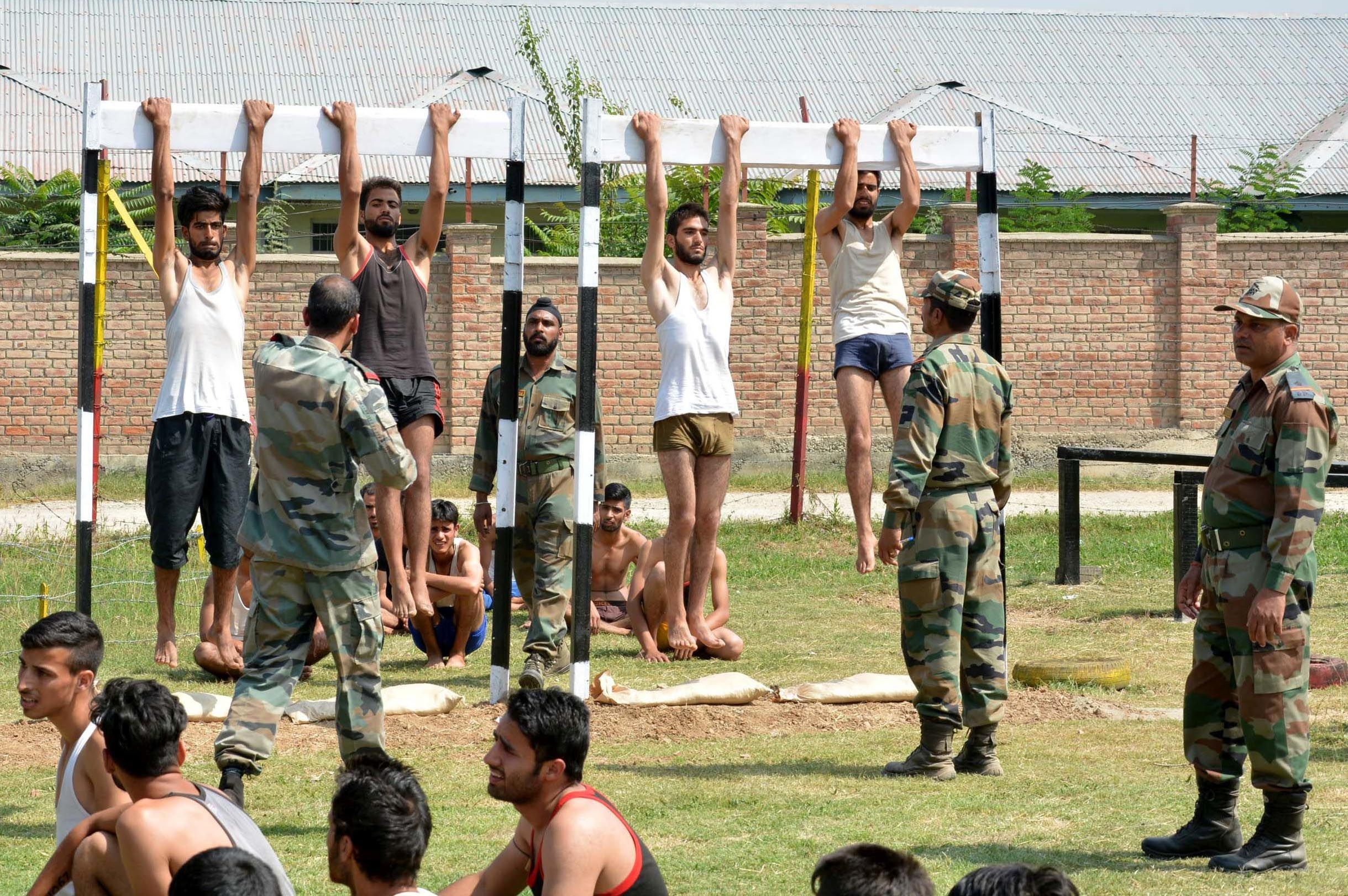
Agnipath, a short-term military recruitment scheme, is the latest one in the series of major policy shift in defence sector after Independence. The Agnipath scheme triggered a large-scale angry protests across the nation over ill-conceived dramatic announcement which saw the patience of the youths, who were eagerly waiting for the resumption of recruitment drive in the Indian Army and para-military forces which were pending for the last four years including two years of pandemic pretext, giving way. Escalating discontent among armed forces job aspirants has compelled the Centre to make a few damage control announcements in less than a week after rolling out the new scheme.

The ‘Agnipath’ scheme, announced on June 14, offers employment to youths in the Army, Navy or Air Force between the age bracket of 17.5 to 21, for a period of just four years, with a provision to retain 25 per cent of them for 15 more years. Witnessing a large-scale unrest on the streets, mainly in the North, which send maximum members to Parliament, the Centre modified the upper age limit for recruitment of  ‘Agniveers’ to 23 years, citing lull in hiring during the pandemic period as a reason, for the current recruitment season only. Protests have been raging in several states against the Centre’s scheme since then.

The salient features of the scheme failed to attract targeted sections of youth who forms large chunk of votes. Agniveers will essentially not be soldiers trained for combat or security-related duties. Now the entire burden of damage control has fallen on the three service chiefs and government has gone into silence mode. So, nobody actually knows why was the Agnipath scheme brought in? What were the motives to be served? Who does it help in the short and long term? It’s an enigma shrouded in mystery.

In view of alleged Chinese incursion in Indian terrain and escalating concerns over cross-border terrorism, the Indian Army right now needs employment of soldiers because no recruitment drive has taken place after 2018 and Covid pandemic further delayed the process. The argument that Army needs young blood found totally misconceived, misleading and unconvincing since soldiership duties are not the focus of hiring of Agniveers, even after completion of four years of service. The 25 per cent who will be retained will largely be men trained in menial jobs like cooks, peons, clerks etc. Absorption in other sectors to the tune of 10 per cent is unlikely since 50 per cent reservation in paramilitary forces, PSUs etc already exists, therefore, it may result in legal and social conflicts in the society.

The scheme is called ‘Agnipath’ and the youth selected under this scheme will be known as Agniveers. “Agnipath allows patriotic and motivated youth to serve in the armed forces for a period of four years,” the Ministry of Defence said on June14. “The registrations will be opened from July onwards by the respective Army Recruitment Offices (ARO) for Agniveer General Duty, Agniveer Technical, Agniveer Technical (aviation/ammunition examiner), Agniveer clerk/storekeeper technical, Agniveer tradesman (10th pass) and Agniveer Tradesman (8th pass) as per the ARO rally schedule,” the notification stated.

The Agnipath scheme envisaged that Agniveers will not be part of any regiment or brigade and will wear a different identity sign than regular army recruits. Thus, they will be civilians on contractual employment. Such terms of employment can have a demoralising impact on the psyche of armed forces job aspirants, who vent their anger violently on the streets due to unexpected shock from the Modi government.

Agnipath – as employment generation scheme – is not inspiring any hopes to redress huge problem of unemployment of the nation. It is not going to train Agniveers for market-oriented skills. No private employer would need an ammunition examiner, army store keeper. So their future after four year of service hang in darkness of uncertainties. Further in fourth year,  an Agniveer will get Rs. 40,000 per month. On completion of the service period, they will receive a tax-free service fund package of Rs 11.71 lakh which is akin to provident fund type accumulation of employee-employer equal monthly contribution plus interest thereon. The scheme further provides that up to 25% of each specific batch of Agniveers will be enrolled in regular cadre of the armed forces. Presently market hiring of a security guard is between Rs.10000-15000 per month. Such a steep cut in salary after four years is bound to create social tensions and could result in violent turmoil.

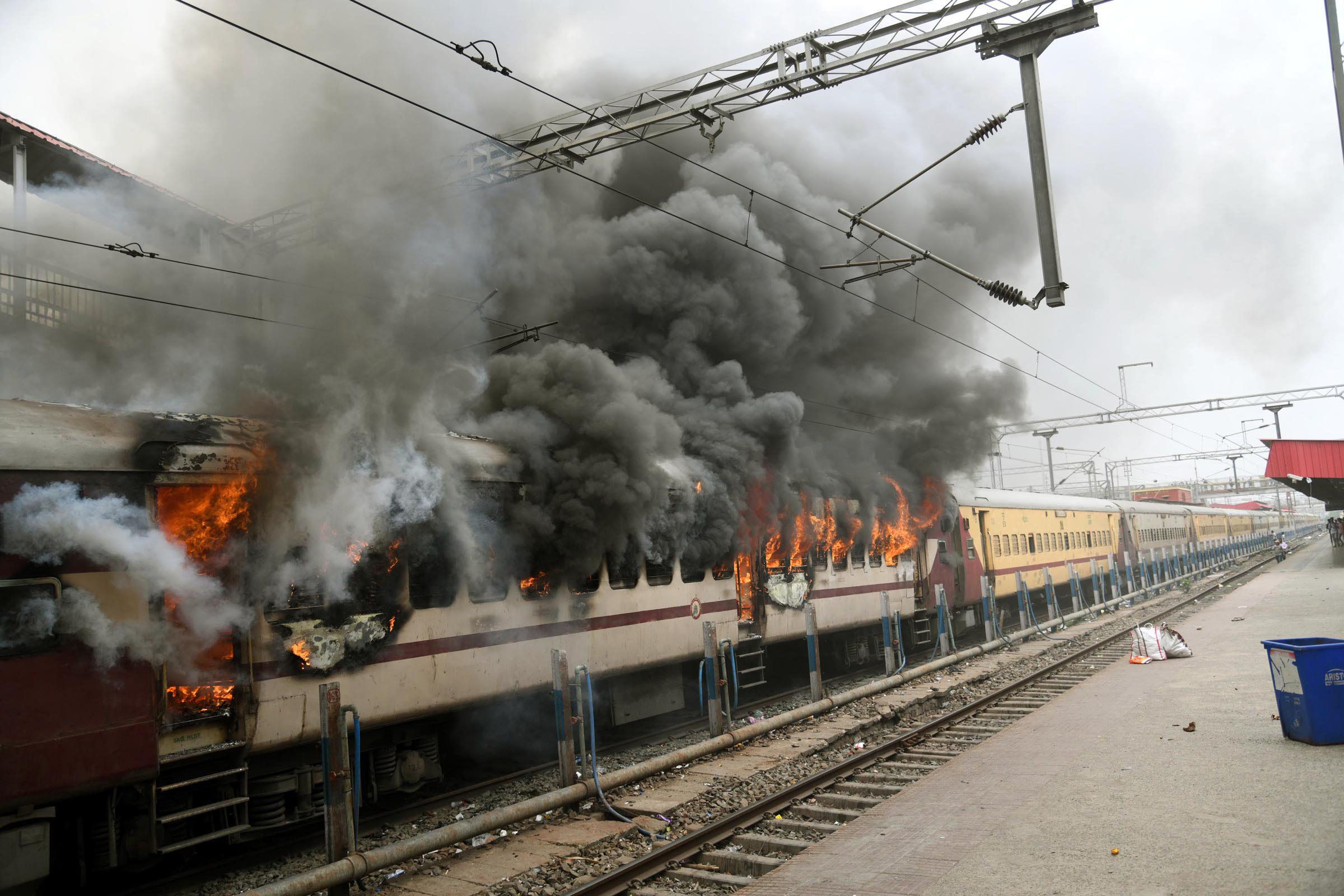
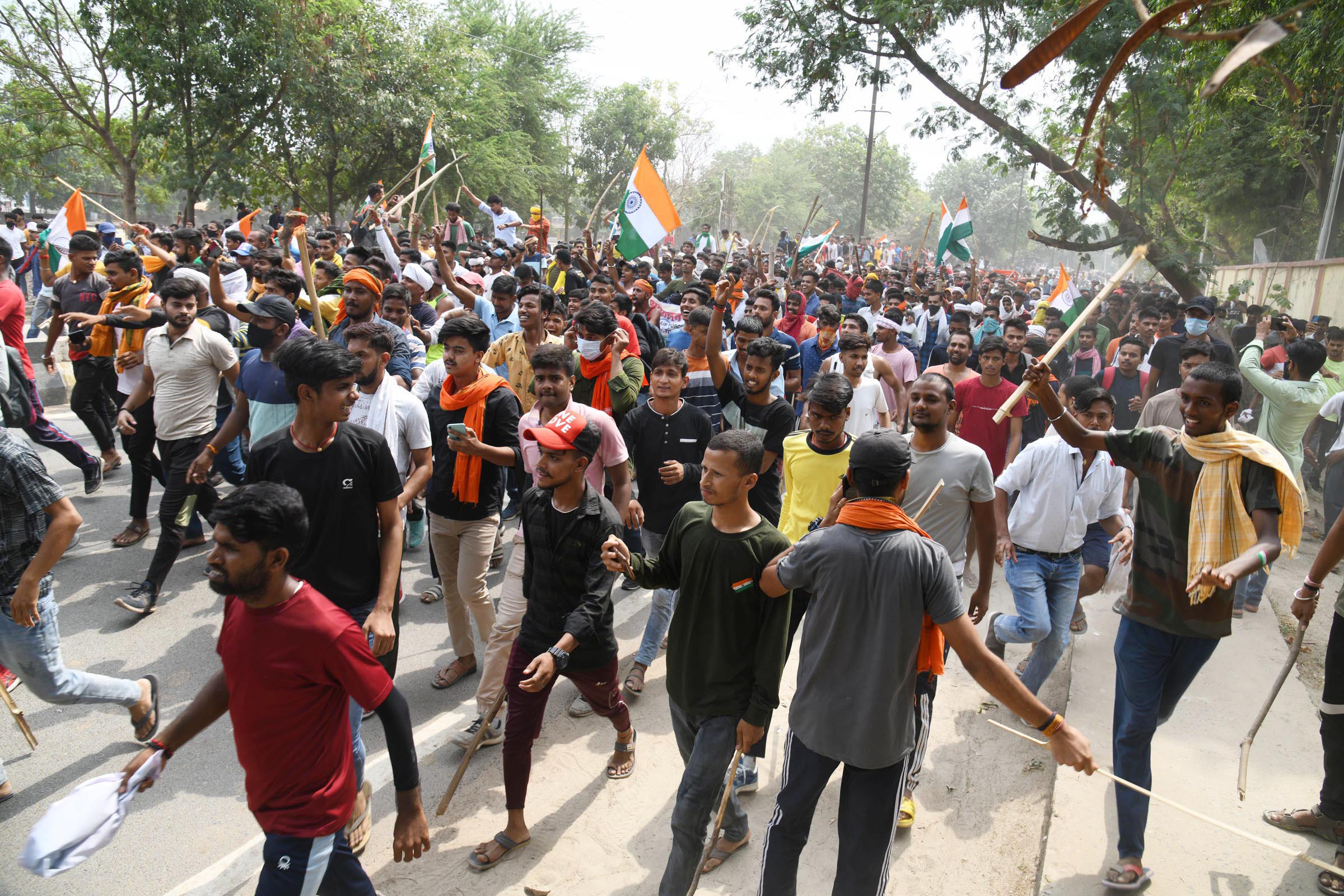
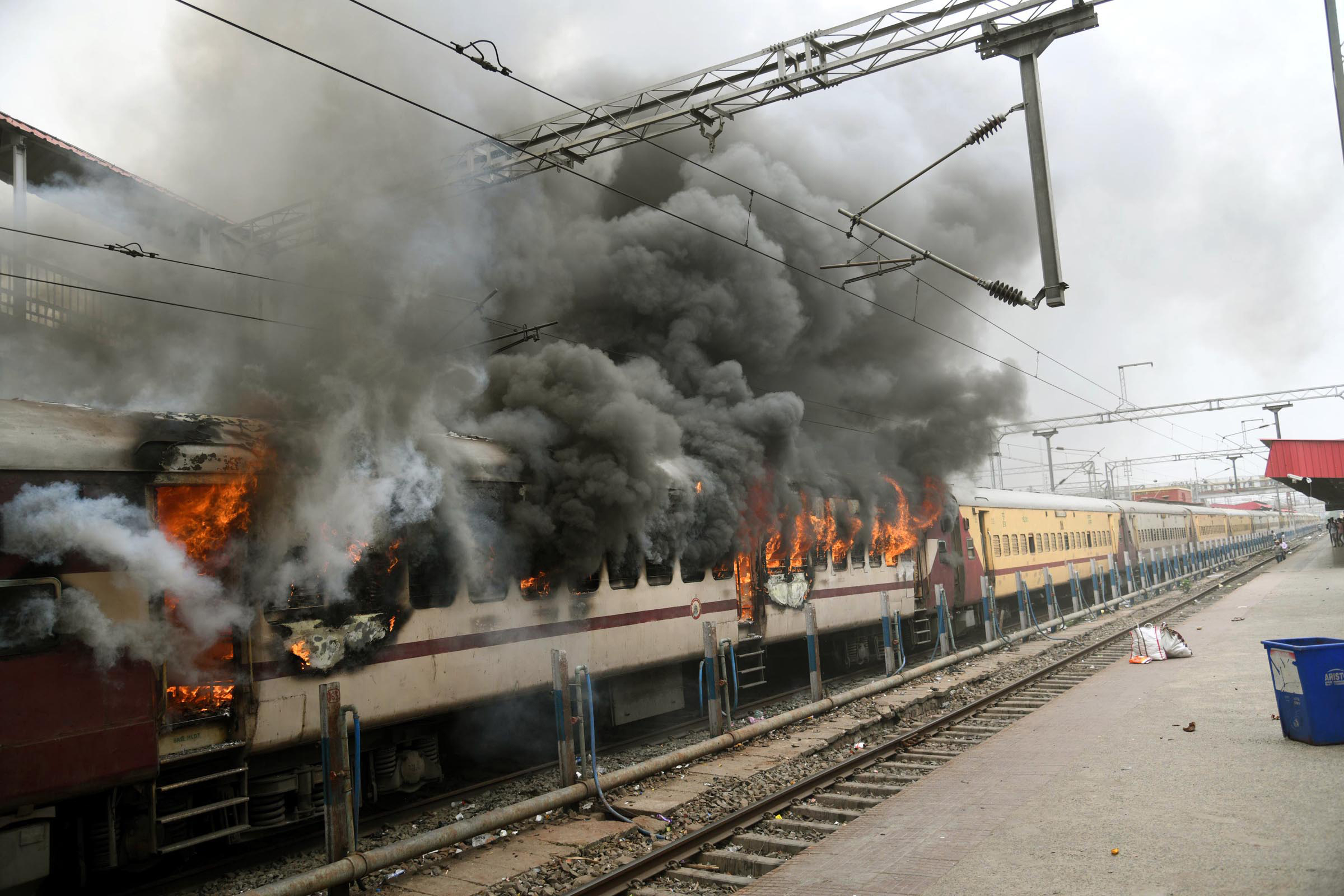
After the policy was announced on June 14, protests erupted in various states including Delhi, Uttar Pradesh, Bihar, Haryana, Telangana, Odisha, West Bengal, Madhya Pradesh, Punjab, Jharkhand and Assam. As the agitation intensified in some places, protestors went on the rampage setting trains on fire, torching vehicles and damaging both private and public properties. Protests had disrupted rail services in several parts of the country. Around 600 train services have been affected throughout the country due to the ongoing agitation. The Uttar Pradesh Police arrested more than 1120 youths in connection with violence and anticipated breach of peace. The police registered 64 criminal cases over Agnipath protests.

So, enrolment of Agniveers is not going to make any revolutionary reformative change to the unemployment scenario in the country since it is mere a drop in the ocean.  In nutshell, the scheme has failed to excite the young generation. Of late, it has been realised in the ruling echelon of power that the scheme will not pay the expected political dividends to BJP.

Thus, without referring to the protests over Agnipath, Modi defended in a function that several well-intentioned schemes of the government have been politicised. Soon after that India Inc pitched in with enthusiastic face saving offers for future Agnipath retirees to pacify growing dissatisfaction. Industrialists like Ambanis, Tatas and Mahindras, have been brought in to assure that these Agniveers will get appropriate placements after retirement in corporate world. The Biocon to RPG to News-X, and many corporate houses made similar commitments. A prominent Bharatiya Janata Party leader from Madhya Pradesh even assured Agniveers of a security guard’s job in the party office.

Scheme draws Opposition fire

Reacting sharply to Agnipath scheme, Congress leader Rahul Gandhi said, “PM Modi will have to withdraw Agnipath. Government is weakening armed forces,” Taking a dig at the Centre over the ‘Agnipath’ scheme, the Congress leader also said those who talked about ‘one rank, one pension’ were bringing in ‘no rank, no pension.’

“The BJP government, which calls itself nationalist was weakening the armed forces through the ‘Agnipath’ scheme,” Rahul said, adding, “Prime Minister Narendra Modi will have to withdraw the military recruitment initiative just like he rolled back the farm laws.””No matter what the government does, it will not be able to give jobs as Prime Minister Narendra Modi has handed the country to two-three industrialists who cannot ensure jobs to the youth,” Gandhi reacted. “Now, they have “closed” even the last resort for the youth — to get into the armed forces,” he said.

West Bengal Chief Minister Mamata Banerjee alleged that the central government was trying to create their own “armed cadre” with the help of the programme. “The BJP is trying to create its own armed cadre base through this scheme. What will they do after four years? The party wants to give arms into the hands of the youth,” Mamata added. Mamata also slammed BJP general secretary Kailash Vijayvargiya for his remarks on giving priority to the people recruited through the Agnipath scheme when it comes to guarding BJP offices.

Echoing similar views, Janata Dal Secular leader HD Kumaraswamy said, “This is a plan to bring the army under RSS (Rashtriya Swayamsevak Sangh) control and use the 75% (out of the 10 lakh) who come out of the army and will be spread out around the country. Is the Agnipath scheme to create Agniveers a ploy to implement the same measures (agenda).”

Khap Panchayat leaders and some farmer union representatives held a meeting at Sampla town of Rohtak district where in various khaps and other community groups from Haryana, Rajasthan, Himachal Pradesh and Punjab participated. Members of student organisations also joined meeting. It was resolved at the meeting chaired by Om Prakash Dhankar, head of the Dhankar Khap, to “socially isolate” youths who participate in the Agnipath recruitment scheme for the armed forces in Haryana. They have also declared a boycott of politicians from the ruling BJP-JJP combine, and of corporate houses that have supported the scheme.

In a separate statement, senior Congress leader and former Haryana chief minister Bhupinder Singh Hooda said that the Agnipath scheme is neither in the interest of the country nor in the interest of the youth “as the future of 75 per cent of the youth who are recruited under this scheme will plunge into darkness.”

Indian National Lok Dal’s senior leader Abhay Singh Chautala said that if the government feels the Agnipath scheme will help cut the salary and pension bills of the armed forces then it should start with imposing curbs on hefty allowances, facilities and pensions of MPs and MLAs.

Amid the row over the Centre’s newly-launched Agnipath scheme for recruitment to Armed Forces, Haryana Chief Minister Manohar Lal Khattar said the `Agniveers` after their four years of service will be provided guaranteed jobs in the state government. After a function on Yoga Day, Khattar said, “Those (75 per cent of Agniveers who would return after four years of service) who want to get Haryana government jobs will be given guaranteed jobs.” It is ironical that maximum posts in government are lying vacant in his state of Haryana.


For govt, Agnipath is a test by fire

In the face of a short-term tenure, Agniveers may fall short of the commitment that the armed forces expect. However, the pride of donning a uniform could surpass all the negatives of the scheme.

By announcing a half-baked scheme of recruitment in the armed forces, the Government has dangled a carrot. And that too, one which is raw rather than ripe.

Sugar-coating it with a fancy name, the Narendra Modi led government recently launched the Agnipath scheme, christening its beneficiaries as Agni-veers.

Announced mid-June, the scheme is aimed at recruiting half a lakh soldiers across services every year.

A plus point of the scheme is its gender neutrality wherein both men and women in the age group of 17.5 to 21 years will be recruited. A beginning will be made in the Navy.

The recruitment will however be time bound:  a mere four years. However, there is a provision to retain 25 percent for a period of 15 years after the completion of their four year “engagement” to quote the official document.

The remunerative package will kickstart at Rs 30,000 per month and the exit package will be a little less than Rs 12 lakh: a one-time payment.

The catch, however, is that 50 percent of this amount would accrue from the earnings of the Agniveers. This is thanks to the compulsory deposit provision wherein 30 percent of the monthly salary would be put in a corpus and an equal amount matched by the Government as contribution.

Add to this the fact that the scheme does not weave in a pension benefit.

It is difficult to say how the Government zeroed in on the Agnipath and Agniveer nomenclature.

Chances are that it was inspired by well-known poet Harivansh Rai Bachchan who wrote a verse about taking a vow to carry on, irrespective of the daunting path. Literally meaning the path of fire, the name is perhaps ominous.

Aimed at igniting a spark, little did the Government know that the scheme would be its test by fire.

No sooner was the scheme announced, there were protests followed by large scale violence.

Trains in Bihar were set on fire; buses attacked; violence in several states including Punjab, Telangana, Jharkhand and Uttar Pradesh; arson and stone pelting in eastern parts; and vandalism of public property. The Police fired tear gas shells and arrested hundreds of protestors in many parts of the country.

Opposition parties jumped in lending support to the protestors, some going as far as demanding a roll-back of the controversial scheme.

Having tasted blood, the Opposition is flexing a muscle based on the calculation that when the farmers’ agitation became too hot to handle the Government relented, so why not push it to the brink this time around too?

The logic is not entirely misplaced because the Government is clearly on a backfoot. Yet, it cracked the whip when it stated that potential recruits would have to take a pledge that they were not part of the protests before they could be inducted.

The jury is also out on whether those protesting were potential recruits. If reports are anything to go by they are either political workers trying to ignite the fire or students fomenting trouble.

Either ways, the Government can ill afford a volatile situation because the BJP is in the eye of a storm for igniting passions.

People, in the past, took to the streets be it on the issue of the Citizens Amendment Bill, the farmers agitation, the hijab controversy, the Prophet row or the Agnipath scheme. This substantiates that violence is perhaps the new normal under the BJP regime.

The narrative: With the BJP in the saddle, the country will always be on fire. Its goons will never let Peace prevail.

This perception is something the BJP can ill-afford. Under fire for its politics of bulldozers and razing houses to the ground, the BJP can well do without yet another taint particularly when it had designed a scheme as a positive.

With the scene getting murkier by the minute, the Government did attempt a damage control. It announced several concessions: a one-time waiver of raising the upper age limit from 21 to 23 years for this year’s recruitment cycle; 10 percent reservations for Agniveers’ in various Central government jobs after completion of the four-year service tenure; state governments and Union ministries promising to absorb 75 percent soldiers released after four years among others.

Whether these assurances will be backed by action, only Time will tell. Given its track record of hollow promises, there is a trust deficit between the people and Government.

In this context, people are quick to point out the ruling Party’s poll promises remained mere promises be it the “achche din” or good days; creating two crore jobs a year; doubling farmer’s incomes; bringing back black money stashed abroad or depositing Rs 15 lakh in the bank account of every citizen.

It is against this backdrop that the assurances being touted in the Agnipath scheme are being viewed with suspicion. Instead they are being construed as a clever ploy to diffuse a volatile situation.

The scheme is also flawed because it kind of short-changes the recruits by showing them the door after four years.

At 23, they would be at a loose end, having invested their productive years in a set-up which is like a tenancy but one that comes without a respectable and long lease.

So the key question: what will they do after four years?.

As things have panned out, the government’s post-protest sops or assurances have failed to cut ice. Or the pipe dream that after four years they would be skilled enough to be employed in the private or public sector undertakings. With unemployment levels at an all-time high, the possibility seems remote.

The recruitment scheme has put the BJP in a Catch 22 situation.

On the one hand, the current dispensation is being damned for handing out a half-baked scheme; on the other it is being charged with actually hoodwinking the electorate into believing that jobs are being provided by flagging a scheme which is a stop-gap arrangement to stem the no-jobs criticism of the Modi government.

The fear that this stop gap arrangement will add to resentment among the youth is not entirely baseless.

The contention that this may lead to “militarisation” of society could be far-fetched but frustration among the youth could lead to serious consequences particularly with India’s immediate neighbours ever keen to fish in troubled waters.

Even if that were not to be, recent statements by Union Ministers and Party’s top brass have stirred up a hornet’s nest.

If one of them said that post service, Agniveers could be hired as security guards, a Union Minister has said that they could be employed as “drivers, electricians, barbers and washermen”.

Taken as an insult to injury, both the Party and the Government drew flak. They went into a huddle, issued a clarification but the damage had been done.

If Jairam Ramesh of the Congress asked whether this is what the BJP meant when it launched the Main Bhi Chowkidaar campaign before the 2019 general polls, some recall Union Minister Amit Shah’s “pakora speech” in Parliament wherein he said that it is better to sell pakoras than being unemployed: “Selling pakoras is not shameful” Shah had then said.

The crux: instead of a forward looking India, the current dispensation intends to convert the progressive youth of today into chowkidars, cooks and washermen.

As of now the scheme vacillates between extremes: there are apprehensions of 75 percent Agniveers being labelled as rejects thereby jeopardizing their future prospects.

As against this, there is the advantage of their being trained and having served in one of the most skilled and professional services of the country. Therefore the chances of the private sector absorbing them could be high. Critics have, of course, dismissed this idea as flawed.

Add to this, the something is better than nothing or some job better than no-job argument.

A four-year engagement does take care of the immediate crisis even though this is not a long term or permanent resolution for the youth. On that count, the job-hunters could get reprieve.

Also, in today’s day and age, jobs in the corporate world are on a hire and fire basis so a sense of entitlement simply because one is dealing with the Government does not hold.

The flip side, however, is that a soldier cannot be compared to a company employee because there is an issue of national security. Trivializing that could cost the nation dearly.

On this score, there could be a question mark on the loyalty of the recruits as also their sense of commitment. In the face of a short-term tenure, they may fall short of the commitment that the armed forces expect and demand from those who serve there.

However, the pride of donning a uniform could surpass all the negatives of the scheme. The recruits could treat this as a once in a lifetime opportunity, however short, and make the most of it rather than demanding more.

If pro-government groups term the scheme being a “golden tomorrow”, the adversaries say that it will sound a “death knell”.

After four years the “tomorrow” may not be golden but a sunrise cannot be ruled out. The Agniveers would have hung up their uniform earlier than others and reached a dead end street. But the end of one road does not obviate the chances of treading many more.

Therefore to dismiss the scheme as a “death knell” is adding an element of drama by those playing dirty politics.


Tailor’s gruesome murder sparks communal tension

The barbaric daylight murder of a Hindu tailor in Rajasthan’s Udaipur town by two men on June 28 has sent shock waves all across, reports Sunny Sharma

The tailor was murdered and videos were posted online by the assailants who said they were avenging an insult to Islam after the victim had allegedly made social media posts in support of suspended BJP spokesperson Nupur Sharma. The post mortem of Kanhaiya Lal revealed that he died due to excessive loss of blood. He was attacked 26 times with a sharp weapon, and stabbed eight to 10 times in the neck.

The gruesome murder triggered outrage and stray incidents of violence in the state, where prohibitory orders have been clamped for a month. Curfew has been imposed in seven police station areas of Udaipur city. The two accused have been arrested. The state government constituted a Special Investigation Team (SIT) to probe the matter. In the meanwhile, investigation into the savage Udaipur murder has revealed links of the two self-radicalized murderers with Karachi-based Sunni Islamist organization Dawat-e-Islami, which has links with Barelvi pan-Islamic Tehreek-e-Labbaik extremist organization in Pakistan, according to people familiar with the investigation.

Initial reports show that two misguided men attacked the tailor, Kanhaiya Lal, with sharp weapons because the shopkeeper had allegedly backed controversial comments made by former Bharatiya Janata Party spokesperson Nupur Sharma on Prophet Mohammed.

The men videographed their attack and were later seen gloating with their weapons, issuing threats to even Prime Minister (PM) Narendra Modi. The gruesome murder has flared up tensions in the town, prompting the government to suspend internet services and deploy a large posse of police forces.

The Ministry of Home Affairs has directed the National Investigation Agency to take over the investigation of the brutal murder of Kanhaiya Lal Teli committed at Udaipur. The ministry has said that the involvement of any organisation and international links will be thoroughly investigated. Now NIA has taken over the probe and filed an FIR under stringent anti-terror law.

The horrific beheading of the Udaipur- based tailor Kanhaiya has evoked strong reactions nationwide. Maulana Mahmood Madini, head of Jamiat Ulema-i-Hind took to Twitter saying,” Udaipur incident is a disgrace to humanity; It is disgrace to humanity & an act of defaming Islam. No matter whosoever is a killer, no one has the authority to take the law and order into his own hands.” Another religious body Jamaat-e-Islami Hind also took to Twitter to condemn the brutal events of Udaipur. They said, “the Udaipur incident is barbaric, Uncivilized and there is no room for Justification of violence in Islam…Peace should not be disturbed. Nobody should try to take advantage of this ugly crime…”.

The All India Muslim Personal Law Board (AIMPLB) too condemned the cold-blooded murder saying that “taking law into your own hands is highly condemnable, regrettable and un-Islamic”. In a media statement, Hazrat Maulana Khalid Saifullah Rahmani, General Secretary of AIMPLB said, “It is a grave crime to defame and slander any religious personality. The derogatory words spoken by (former) BJP spokesperson, Nupur Sharma against Prophet Muhammad are very painful for the Muslim community. The inaction of the government against this crime is nothing but rubbing salts on our wounds. But in spite of this, nobody can be allowed to take the law into their hands and declaring someone a criminal and then murdering them is a highly condemnable act.” He further stated, “Neither the law nor the Islamic Sharia allow it.”


ED probe against Gandhis galvanises Congress

The Congress had earlier locked horns with the government on the issues of high fuel prices, high prices of essential food items, farm laws, atrocities on Dalits, but the demonstrations did not attract so much public attention as they did in the ED case. A report by Amit Agnihotri

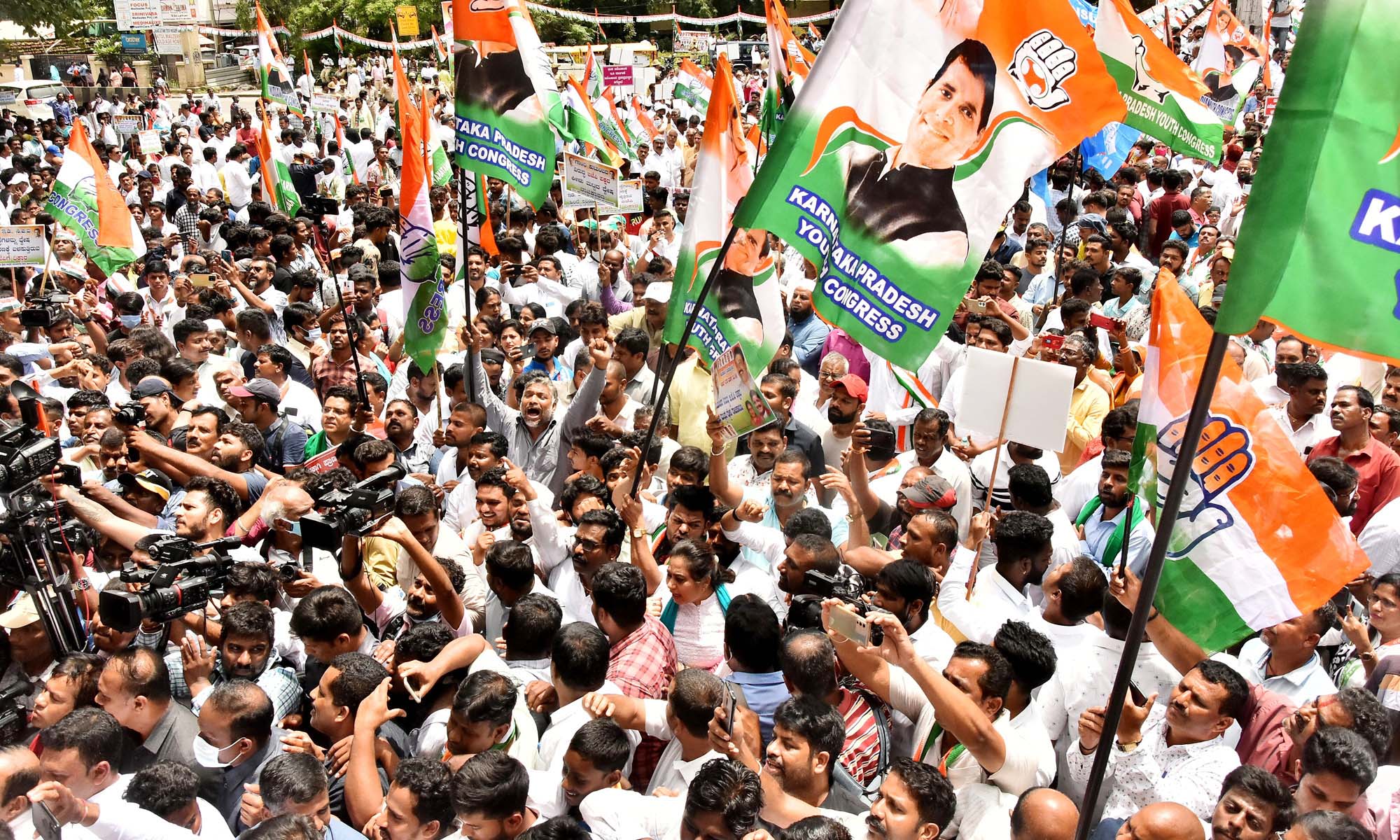
The Congress appears to be getting into a protest mode even though the recent outburst of party leaders across the country was over targeting of the Gandhis in the National Herald alleged money laundering case.

After a long time since the party lost power in the 2014 national elections, the entire Congress top leadership was out on the streets in Delhi and across the states on June 13 when Rahul Gandhi was asked to appear before the ED in the National Herald case.

Before that, the party had been protesting on issues like high fuel prices, high prices of essential food items, farm laws, atrocities on Dalits, handling of Covid and migration of workers, which impacted the common man, but the demonstrations did not attract so much public attention as they did in the ED case.

In the past, the low impact of Congress protests was attributed to a weak organization and the fact that such demonstrations did not bring all the top leaders on the streets.

This time, however, the case was different. The party, which has been trying to revive itself, realized that if the targeting of its high command was not opposed strongly, the credibility of the Congress as a strong opposition would be severely dented.

This, in turn, would further push the Congress in a downward spiral, and would have also impacted its plans to forge an anti-BJP front at the national level ahead of the 2024 Lok Sabha elections.

In a way, a meek response to the ED summons for the Gandhis would have also meant that the party did not learn any lessons from the past defeats and had organized a mega conclave, the Udaipur Chintan Shivir, without any clarity of purpose.

According to party insiders, a slack protest over the ED issue would also have jeopardized the Congress’ claims of changing its party systems to suit the young voters and would have raised question marks on the organization’s ability to conduct the much talked about Kashmir to Kanyakumari Bharat Jodo yatra against the divisive politics of the BJP in October.

From April to June, the Congress Seva Dal carried out a 1300 km-long march from Ahmedabad to Delhi to highlight the ideology of Mahatma Gandhi and the Congress role in the freedom struggle of the country.

Before the Bharat Jodo nation-wide yatra, the Congress held protests across the country on June 27 against the Agnipath defence recruitment scheme and will take up ‘Rozgar Do’ protests in August to mobilize the youth over high unemployment in the country.

Speaking at the Udaipur chintan shivir, Rahul had said that the Congress needed to go back to the people as the party’s connection with the voters had severed over the past years.

In a way, the grand old party is trying to revive the spirit of the freedom movement when it played a key role in uniting the people against the ruling British and was ultimately able to push the foreign rulers out.


Planning

The planning for the ED protests started soon after the Congress announced on June 1 that party chief Sonia Gandhi had been summoned by the agency in the Herald case on June 8.
However, on June 2, she was tested Covid positive and advised rest. The party then sought a fresh date of appearance twice and may get a chance for Sonia to appear in July.

Before that, Rahul, who was abroad, told the agency that he would be available only after June 5 and was subsequently given the date June 13 to appear.

He was grilled by the agency for five days and over 50 hours which provoked the party leaders and workers to come out on the streets and protest against the targeting of their leader.

A battery of Congress veterans like Ambika Soni, Digvijay Singh, Mallikarjun Kharge, Jairam Ramesh, Harish Rawat along with Rajasthan chief minister Ashok Gehlot, Chhattisgarh chief minister Bhupesh Baghel, AICC general secretary in charge Organization KC Venugopal, Randeep Surjewala, Youth Congress chief BV Srinivas, Meenakshi Natarajan besides several others courted arrest in protest against the summons.

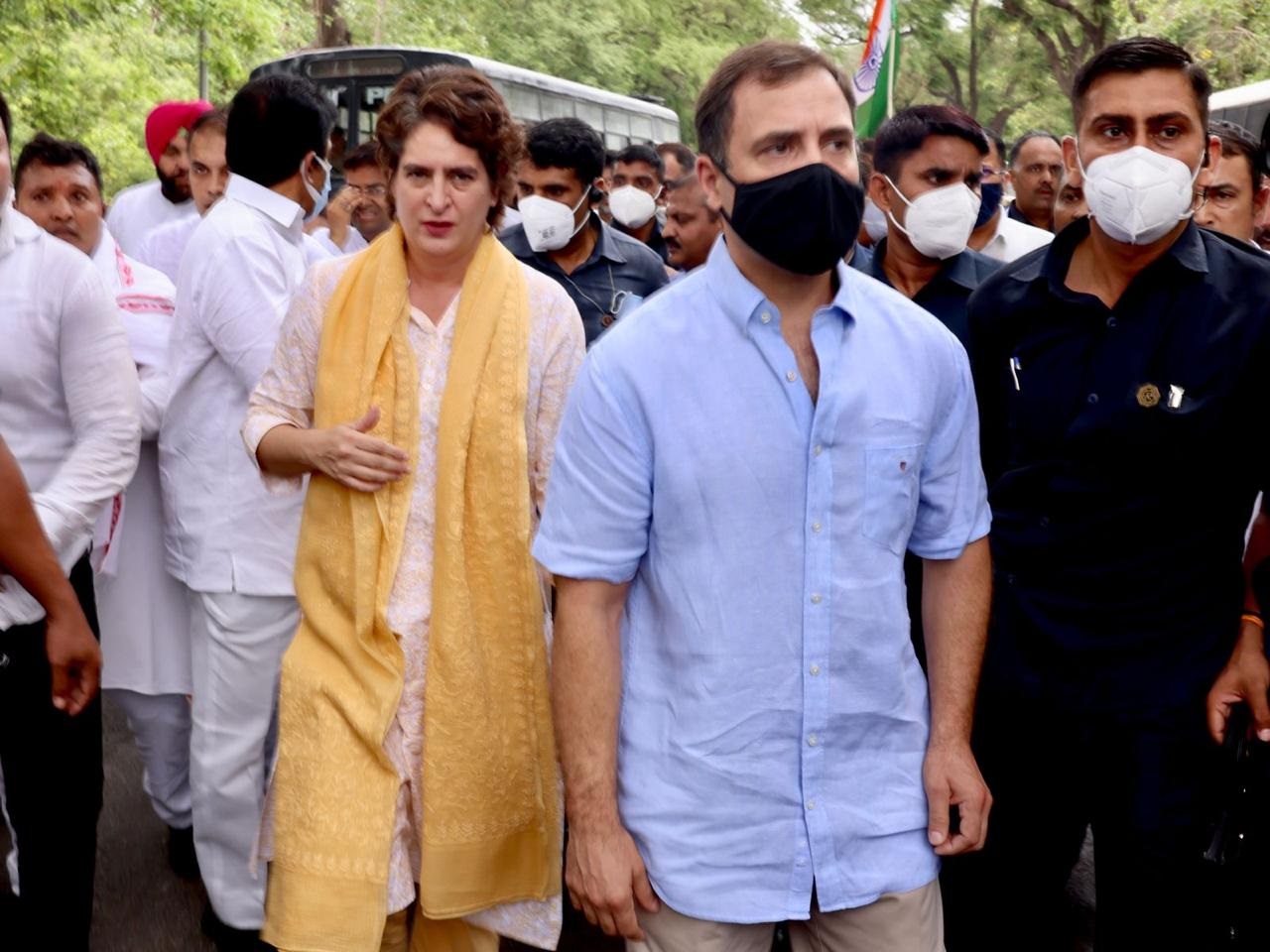
Priyanka Gandhi Vadra, walked beside Rahul to the ED office, to express solidarity with her brother at a time when their Covid positive mother was recovering in a hospital.

The leaders had gathered at the party headquarter in the morning even as the police blocked entrances to the venue from all sides, making it impossible for the leaders to stage a march. Yet, they protested, both in Delhi and across the country.

A general secretary said that the summons had given an opportunity to the party to brace for street protests that they plan to stage over public issues in the coming months.

The idea, again, flows from Rahul, who believes there is room for mass movements against the central government’s policies.

Later, a furious Congress alleged that its senior leaders P Chidambaram, KC Venugopal and Shakti Sinh Gohil were attacked deliberately and said the violence was akin to murder of democracy after day-long protests over ED summons for Rahul Gandhi.

Noting that the Congress and Rahul Gandhi were prepared to do anything to safeguard the National Herald newspaper and the country, the Congress leaders said that “all these atrocities were being recorded and the party will seek an explanation for them one day.”

Rajasthan chief minister Ashok Gehlot and Chhattisgarh chief minister Bhupesh Baghel, who were part of the protests in Delhi, slammed the probe agency for summoning Rahul Gandhi and Sonia Gandhi in the National Herald money laundering case.

“The NH newspaper was founded by Jawaharlal Nehru ji and played a role in the freedom struggle of the country. The British had also banned it for three years but we threw them out. Now this government is targeting the paper, we will throw them out also,” said Gehlot, adding “the Congress also tried to save the paper.”

He warned the probe agency, saying, “The widespread protests against the summons for the Gandhis are an expression of their anger. The agency should take note of it.”

Gehlot alleged the ruling party was playing divisive politics and ignoring burning issues like unemployment and high prices of food items.

“The central agencies are being used to silence the opposition leaders. The ED summons to our leaders is an attack on democracy and we will oppose it,” said Baghel.

On June 14, an angry Congress warned the Centre and the Delhi Police hours after the police forcibly entered the party’s national headquarters and beat up party workers.

“The BJP’s central government and the police backed by it broke open the gates of the party headquarters, entered the premises and beat up our workers,” Congress communication chief Randeep Surjewala said.

“This has not happened in the past 75 years. How could they do this? This was an act of goondaism. This was done at the behest of the BJP,” he said.

The Congress leaders warned the Centre and the police over the incident, saying the police action was like trampling upon the Constitution.

“We are peace loving but don’t test our patience. The Centre and the police will have to account for this atrocity. We demand FIRs and departmental action against all such police officers who did this,” said Surjewala.

In protest against the Centre’s highhandedness, the Congress staged sit-ins outside the Governor Houses across the country on June 16 and at the district headquarters on June 17.

Blaming the Centre for deploying the probe agency to deliberately harass the Gandhis, the Congress leader said the party was against the selected targeting of its leadership as the National Herald money laundering case had been closed by the agencies in 2015 but reopened again at the behest of the BJP.

“We challenge the PM to come to the ED office and ask questions from Rahul Gandhi over the NH in front of TV cameras so that the world can see the truth,” said Surjewala.

He said the probe agency was asking silly questions from Rahul Gandhi like why did you pay electricity bills or why did you pay Rs 67 crore salaries to the employees of the newspaper.

“Yes, we deposited the electricity bills. Yes, we paid salaries to the employees. Because it is our paper. It was launched during the freedom movement and it is our duty to protect it,” said Surjewala, adding “This is our paper, our money and our decision to run it. Why are you bothered, BJP?”

The Congress leader said the Centre was trying to defame the Gandhis as it wanted to suppress the voice of Rahul who was asking questions over lack of jobs from the government.

“This probe is a ploy to deflect attention from the burning issues affecting the people. The Centre wants to avoid these questions,” said Surjewala, as he alleged that the same police had treated a woman MP shabbily by dragging her on the road and beating her up.

The Congress later upped the ante over the ED questioning Rahul issue by lodging an FIR for the alleged trespass of party headquarters by police on June 15 and urged Lok Sabha Speaker Om Birla to act over the alleged mishandling of women lawmakers by the police.

The FIR was filed by AICC secretary in charge of Organization Challa Vamshi Chand Reddy at the Tughlak Road police station, urging the authorities to take note of alleged atrocities against the party workers and leaders.

Congress Lok Sabha leader AR Chowdhury led several Lok Sabha MPs to lodge a protest with Speaker Om Birla against the police officials who misbehaved with the Congress leaders and workers and forcibly entered the party headquarters.

He argued that the Congress workers had been facing police action for the past three days for merely trying to accompany Rahul to the ED office peacefully.

“The clothes of one of our women MP Jothi Mani’s were torn by the police. She was denied water in this hot weather,” he said.

“The area around party headquarters has been sealed and the entire city has been converted into a fortress. What for?,” he said.

Later, a group of leaders met Vice President and Rajya Sabha Chairman Venkaiah Naidu at his residence over the alleged atrocities and misbehavior against the party lawmakers.

The state units staged similar protests across the country in a rare coordination with the AICC.


The National Herald case

According to the Congress, the National Herald case is based on false charges of money laundering and the summons to the Gandhis had been issued as part of political vendetta by the ruling BJP.

“I want to make it clear that the fake issue of AJL (Associated Journals Limited) is an attempt by BJP’s propaganda machinery to deviate, divert and digress the attention of citizens from the multifarious vital issues of inflation, falling GDP and social unrest, social divisiveness in this country,” Congress spokesperson Abhishek Manu Singhvi said.

The Congress leader accused the BJP of using the central probe agencies to threaten its political rivals.

“This is a part of a larger disease. A disease, which will consume the ruling party ultimately. The disease is one of attacking every political party purely on vendetta terms from Kashmir to Kanyakumari, from Farooq Abdullah to DMK functionaries, from Gujarat to West Bengal, from Mevani to Mamata Banerjee and the family of Mamata Banerjee. The BJP has brought or tried to malafide every political opponent under the net of puppet agencies like ED, CBI, IT etc,” said Singhvi, who is a senior Supreme Court advocate.



Prez  poll: How BJP outsmarted Oppn by fielding Murmu

The BJP’s overreach to tribal folks with the nomination of Droupdi Murmu, a tribal woman and former Governor of Jharkhand, for the top constitutional office would ultimately consolidate its political base among tribal voters, writes Mudit Mathur

The way prime minister Narendra Modi and his closest aide Home Minister Amit Shah checkmated the opposition parties over fielding Droupdi Murmu, a tribal woman and former Governor of Jharkhand as the NDA’s presidential candidate, has once again proved their unassailable political acumen over rival politicians. Her victory to the highest constitutional post of India, in the pending poll process, is just a mere formality now. The opposition parties played their cards so badly as most of its proposed candidates backed out at the last moment and refused to leave active politics to be in public life.

The decision to field the 64-year-old Murmu as NDA nominee was taken soon after the collective leadership of 17 opposition parties, “unanimously” backed the 84-year-old bushed Yashwant Sinha, a Vajpayee aide and staunch critic of the Modi-Shah duo, as their consensus candidate for the July 18 Presidential election. The BJP finalised the name of Droupdi Murmu under the stewardship of Narendra Modi and Amit Shah displaying unmatched foresightedness and political savvy electoral permutations and combination – setting the future narrative for engaging its rivals.

By nominating Murmu, a tribal leader from Odisha, the BJP has not only ensured the support of Odisha CM Naveen Patnaik and his Jharkhand counterpart Hemant Soren, a tribal leader, in the polls, but also paved the way to win the tribal votes in poll-bound Gujarat, Madhya Pradesh, Rajasthan and Chhattisgarh– where deep resentment prevail over their involuntary land acquisition related conflicts hurting corporate interests for mining activities and human rights violation in anti-insurgency operations of central security forces.

The symbolism behind Murmu’s candidature is of much bigger importance than her actual political profile for BJP as it conceived much wider outreach plans for such sections.  She is the first tribal woman to hold the post of Governor and completed full five years in the Ranchi Raj Bhawan. She was barely known earlier beyond her home state of Odisha where she had served two terms as a BJP legislator and as minister in the erstwhile BJD-BJP coalition government under Naveen Patnaik.

The Congress leader Rahul Gandhi has been trying to woo tribals for a long time. He has launched ‘Adivasi Satyagrah’ of his party for the welfare of tribals as its outreach efforts. These efforts suffered a setback when he failed to field a single tribal candidate in the recently held Rajya Sabha polls in Chhattisgarh which is having a substantial population of tribals. Thus, the Congress is pitted in a catch 22 situation if it opposes Murmu, then the  BJP may easily brand them anti-Adivasi.

The saffron party has already been on an overdrive to reverse its electoral losses in Rajasthan, Chhattisgarh, Madhya Pradesh and Gujarat by celebrating the tribal community’s icons such as Birsa Munda. Now its overreach to tribal folks with Murmu’s nomination for the top constitutional office would ultimately consolidate its political base among tribal voters.

The BJP campaigners would amplify the massage that it was only Modi who had the guts to nominate a tribal women for coronation to the highest constitutional office of the nation. The saffron party would take credit for this political symbolism – something the Opposition, particularly the Congress party, failed to do in the 75 years since Independence despite having no dearth of tribal leaders in their party.

The Opposition parties had cut a sorry figure even before announcing Yashwant Sinha’s name.The opposition parties first tried to convince NCP chief Sharad Pawar than former J&K CM Farooq Abdullah and former Bengal governor Gopalkrishna Gandhi but all preferred not to enter the fray. The Opposition parties repeatedly shot of names of people they approached only for these eminent  people – Pawar, Abdullah and Gandhi – to publicly turn down the offer.

The repeated rejection only helped build the perception that none of these leaders wanted to enter a race they knew they were bound to lose. Pawar clan and Abdullahs are subject of investigation by various agencies and these cases continue to hang over their heads like the sword of Damocles.

Sinha’s candidature was finalised “unanimously” at a meeting of various opposition parties called by NCP chief Sharad Pawar in Delhi on June 21 evidently as a ‘last ditch effort’. Leaders of the Congress, NCP, Trinamool Congress, CPM, CPI, RJD, DMK, AIMIM, National Conference, AIUDF and the SP were present at the meeting. Approval for Sinha’s candidature had also been obtained from the RLD, PDP and the Shiv Sena.

Sinha performed important roles in government – both as an officer of IAS cadre (1960 batch) and then as Union Minister under two prime ministers, Chandra Shekhar and Atal Behari Vajpayee. Sinha is in the presidential race which is just heading for a symbolic fight.

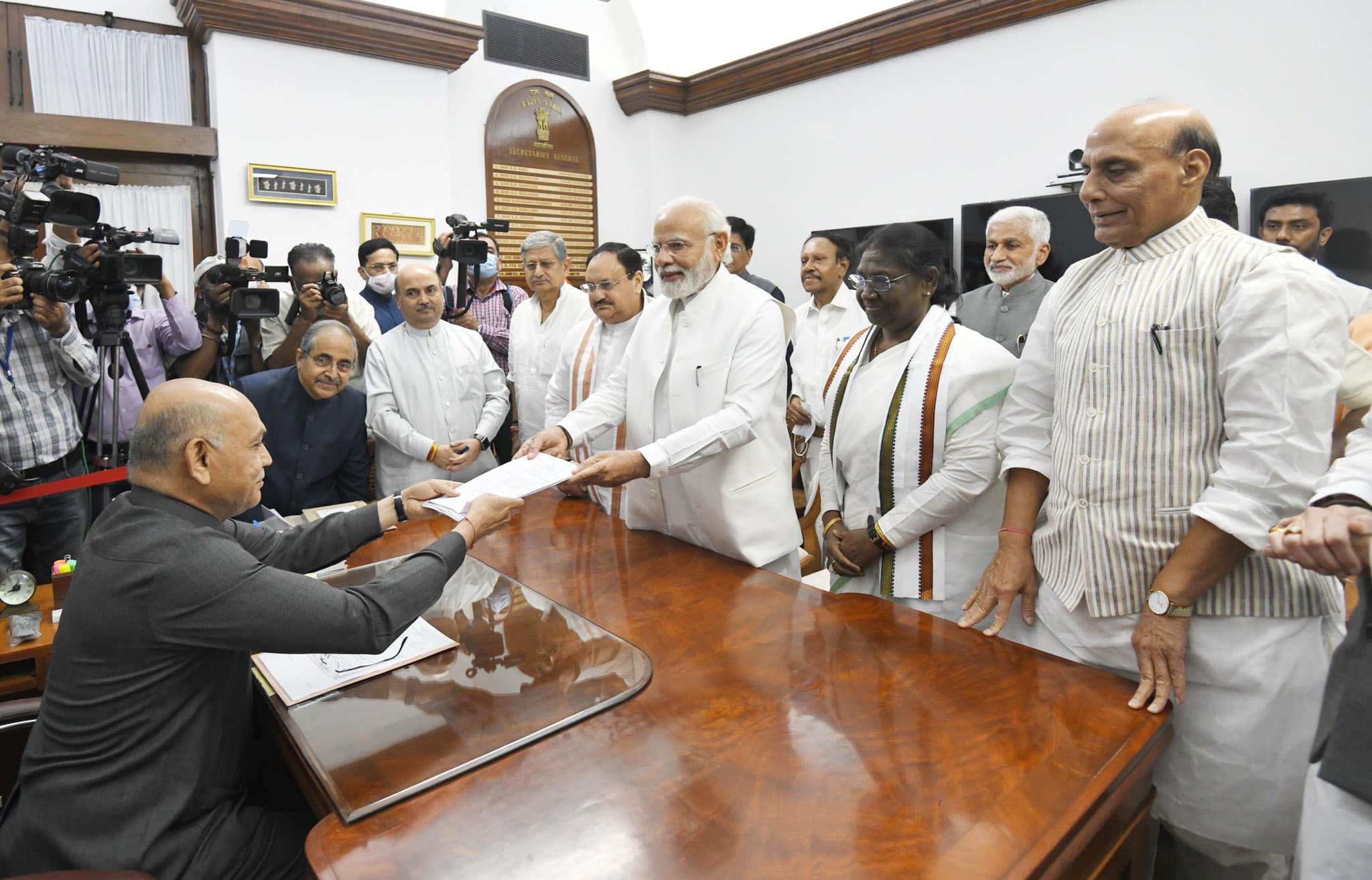
NDA candidate Droupadi Murmu called key opposition leaders including Congress chief Sonia Gandhi, NCP’s Sharad Pawar and West Bengal CM Mamata Banerjee ahead of filing her nomination. BSP leader Mayawati has supported her candidature. Odisha CM Naveen Patnaik extended support to the NDA’s Presidential candidate, Draupadi Murmu in a tweet.

Patnaik congratulated Murmu and said, “I was delighted when Hon’ble PM @narendramodiji discussed this with me. It is indeed a proud moment for people of Odisha.”After Jitan Ram Manjhi’s HAM and Chirag Paswan’s LJP-Ram Vilas, Bihar’s ruling Janata Dal-United (JD-U) announced support to NDA presidential candidate Draupadi Murmu.

Opposition’s nominee Yashwant Sinha said, “If I am not able to win the election, should I withdraw? When we are on the battlefield, we fight with full might. I have already said we do not have any personal fight with Droupadi Murmuji. I know her very well and convey my best wishes.” “But this is a battle of issues. It is to save the Constitution of India and I can tell you with confidence that I will be more constitutional when I will be in the President House than the NDA candidate,” Sinha added.

The total value of votes for MLAs for the 16th Presidential Election is 5,43,231 and the total value of votes for Members of Parliament (MPs) is 5,43,200. The total value of votes of electors for the Presidential Election 2022 is 10,86,431.The total number of electors for the election will be 4,809 – 776 MPs and 4,033 MLAs. These include 233 Rajya Sabha members and 543 from Lok Sabha.


Trust in news declining, more so in India

The findings contained in the Reuters Institute Digital News Report 2022 reveal declining interest in the news, lower trust as well as growth in number of people selectively avoiding news

A growing number of people are selectively avoiding important news stories such as the coronavirus pandemic, Russia’s invasion of Ukraine, and the cost-of-living crisis, according to a report released by the Reuters Institute for the Study of Journalism.

India is one of seven countries that are in the minority where trust in the news has increased. It rose by three per cent to 41 per cent. Finland remains the country with the highest levels of overall trust (69 per cent), while news trust in the US has fallen by a further three percentage points and remains the lowest (26 per cent) in the survey.

It should be noted trust in news is still higher today than before COVID but lower when compared to 2015. These findings are contained in the Reuters Institute Digital News Report 2022 which was commissioned by the Reuters Institute for the Study of Journalism, part of the Department of Politics and International Relations at the University of Oxford. It is to help understand how news is being consumed in a range of countries. The research was conducted by YouGov using an online questionnaire at the end of January and the beginning of February 2022.

In India, among the most used social media platforms, 53 per cent of respondents say they use YouTube and 51 per cent use WhatsApp for accessing news. In an analysis involving 12 major countries in the survey, Facebook remains the most popular social network for news (30 per cent), followed by YouTube (19 per cent) and WhatsApp (15 per cent). The popularity of Facebook as a medium for accessing news has declined 12 per cent since 2016.

India with a relatively young population is also a strongly mobile-focused market with 72 per cent accessing news through smartphones and just 35 per cent via computers. News aggregator platforms and apps such as Google News (53 per cent), Daily Hunt (25 per cent), Inshorts (19 per cent), and NewsPoint (17 per cent) have become important ways to access news and are valued for convenience.

The report also showed that 84 per cent of those who responded to the survey in India access news online including social media, an increase of two per cent. 63 per cent sourced their news on social networks, 59 per cent on television, and 49 per cent on print.

Overall trust in news scores rose three per cent to 41 per cent with legacy print brands like Times of India, Economic Times, and Hindustan Times among the most trusted brands together with public broadcasters such as DD News and All India Radio.

A total of 46 countries were surveyed including 11 in Asia, five in South America, three in Africa and North America, as well as 24 in Europe, representing over half the world’s population. There were over 2,000 respondents in each country. While the majority of people surveyed consume news regularly, 38% said they often or sometimes avoid the news – up from 29% in 2017 – the Reuters Institute for the Study of Journalism said in its annual Digital News Report. Around 36% – particularly those under 35 – say that the news lowers their mood.

Trust in news is also declining. “Large numbers of people see the media as subject to undue political influence, and only a small minority believe most news organisations put what’s best for society ahead of their own commercial interest,” wrote Reuters Institute Director Rasmus Kleis Nielsen in the report, which is based on an online survey of 93,432 people, conducted in 46 markets.

Younger audiences are increasingly accessing the news via platforms such as TikTok, and have a weaker connection to news brands, the report found. Each week 78% of 18 to 24-year-olds access news via aggregators, search engines and social media. Forty percent of that age group uses TikTok each week, with 15% saying they use it to find, discuss or share news.

The growth in the number of people who pay for online news may be levelling off, with a large proportion of digital subscriptions going to a few national brands. Across 20 countries where payment for news is widespread, 17% of survey respondents paid for any online news, the same figure as last year. Payment for local news varies across markets.

The Reuters Institute for the Study of Journalism is funded by the Thomson Reuters Foundation, the philanthropic arm of Thomson Reuters. The poll has a margin of error of 2-3 percentage points up or down.

The study goes on to highlight another discovery which is the rise in selective news avoidance resulting in people in many countries becoming increasingly disconnected from the news. The majority of the disengaged say there is too much politics and COVID-19 in the news or that news has a negative impact on their mood.

“Despite the huge difference independent professional journalism can make in helping people understand the world beyond personal experience, we find declining interest in the news, lower trust – after a positive bump last year – as well as a growth in active news avoidance amongst some groups,” said Professor Rasmus Kleis Nielsen, Director of the Reuters Institute, in the preface of the report. “Large numbers of people see the media as subject to undue political influence, and only a small minority believe most news organizations put what’s best for society ahead of their own commercial interest.”

The report also highlighted that those under 30 are much less interested in directly connecting with the news media, have different views on what journalism ought to look like, and most have a side-door route to news consumption such as social media platforms, search, and mobile aggregators.

For the younger generation, TikTok now reaches 40 percent of this age group, and 15 percent of them use this social platform for news. Other visually focused platforms such as Instagram and YouTube have also become more popular for accessing news within this group, while Facebook continues to have a smaller and smaller footprint in their digital life.

Indeed, for all the markets surveyed, this year saw a preference for news access originating through a social media platform (28 percent) higher than direct access (23 percent) for the first time. This is down nine points since 2018. “A clear through line in this year’s report is the changing habits of younger groups, specifically those under 30, whom news organizations often struggle to reach,” the report said. “We find that this group that has grown up with social media is not just different but more different than they were in the past.”


Govt looks the other way as Aravalis turn into a junkyard

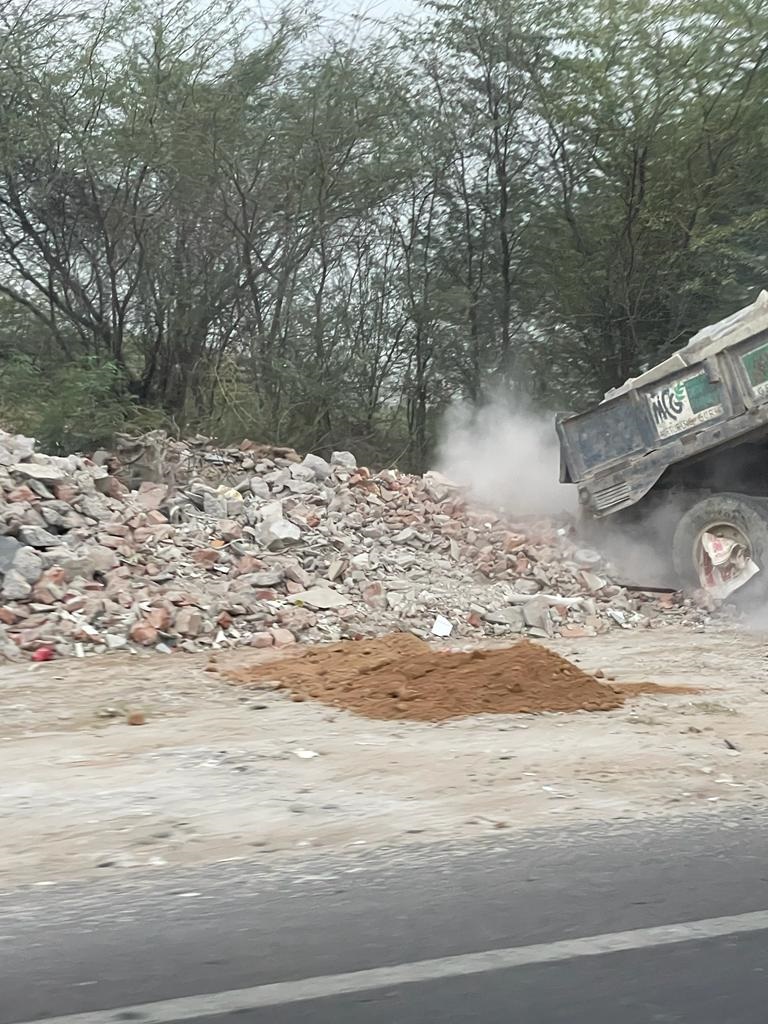
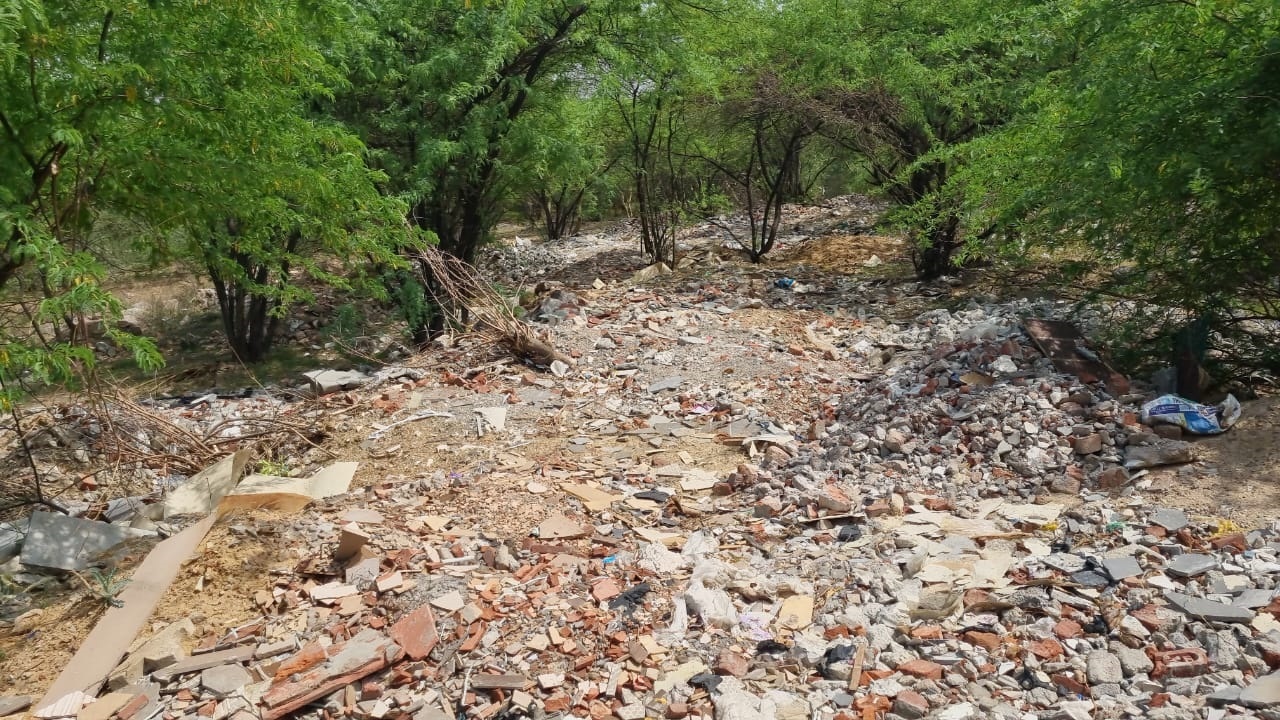
Thanks to rampant construction activities in Gurugram and Faridabad and lack of any plans to deal with the waste, the forests are witnessing a dumping of around 2000 tonnes of C and D waste on daily basis leaving them gasping for breadth,reports Aayush Goel

Having struggled with illegal mining, diminishing tree cover and official apathy for decades, Aravalis in South Haryana has the final nail in its coffin: Illegal dumping of construction and demolition waste.

The ‘forest’ covering 30,000 hectares of South Haryana spread across five districts of Gurugram, Faridabad, Mewat, Mahendargarh, and Rewari is fast turning from an endangered green lung or water recharge zone to acres of debris covered dump yard. All thanks to rampant construction activities in ever evolving Gurugram and Faridabad and lack of any plans to deal with the waste, forest is losing its last bit shred by shred. According to authorities, around 7000 construction projects are currently on in Gurugram and Faridabad with former accounting for almost 5000. These include not just mammoth societies or government infrastructure upgradation like flyovers, roads etc but also demolition and reconstruction of properties across the city. Gurugram, like any urban disaster, is going ahead commercialising and concretising and not caring about the dealing with by product which is dumped rampantly across roads, empty plots, green belts and then ultimately in Aravalis. The forests, according to environmentalists, are witnessing a dumping of around 2000 tonnes of C and D waste on daily basis which is pushing it towards its ultimate death. “The forest has been converted into dumpyard. Day and night, trolleys carrying tonnes of non-biodegradable debris come and dump here. The debris is concretising the forest, degrading the sand quality and killing existing flora and fauna and aquifers. When there are forces trying to save the dying forest, this unchecked dumping is defeating the purpose,” said Jatinder Bhadana of Save Aravali Trust.

Gurugram biggest culprit

The city has been under-construction since what seems an eternity now. Ask any resident, construction activities are apparently a never-ending phenomenon. Be it highways or infrastructure upgrade or foot over bridges, development of new residential sectors or housing projects or rampant illegal constructions in every single lane and street, it has become an inevitable part of their lives.

The city has, as per Municipal Corporation survey, been producing 2500 tonnes of debris each day. While as per norms it is the responsibility of the builder to arrange for its disposal and treatment but lack of enforcement has given way to one of the biggest mafia in NCR (National Capital Region) : The dumping mafia being run by local contractors, goons and even councillors. These tractor, trolley and arms equipped men go around city collecting debris at whooping 5,000 to 7,000 rupees a trolley and dump it in Aravali. While local residents of forest try to protest but they can’t do much. Things had taken a hopeful turn during Lockdown in 2020 when a Haryana IAS officer Vinay Pratap Singh spearheaded the move to clear the waste. The authorities with help of its contractor Pragati Natural Resources Private Limited went on to clear around one lakh twenty five thousand tonnes of construction and demolition waste in last seven months making it highest annual clearing ever in NCR . The amount stood at meagre 4643 tonnes in 2019. The move won authority laurels and it even made to NITI Aayog’s report asking other cities to follow the suit but this was short lived as the authorities grew lackasidical in 2021 and ever since Aravalis is going down the drain.

Storm water drains and Ground Water Recharge zones blocked Indigenous Flora lost.

Gurugram and Faridabad have been subjected to flash floods every monsoon since last 6 years. The reason behind same is cited as lack of any rain or storm water drains. The debris dumped in forest has clogged these drains leaving to biggest civic fiascos. It has also almost covered the ground water recharge zones leading to ever depleting water tables in Gurugram, Faridabad and Mewat. The civic agencies while clear intercity drains, hardly any attention is spared for clearing these foothill drains and entire city is drowned in just an hour of rain. Over 80 identified storm water drains and 30 recharge zones have been covered by debris in Aravalis so far. The forest is also witnessing loss of its indigenous flora comprising Dhau (Anogeissus pendula), dhak (Butea monosperma) and salai (Boswellia serrata), kadam (Mitragyna parvifolia), bistendu (Diospyros cordifolia) and basa (Albizia odoratissima), which cannot fight this concretisation.

Forest Inhabitants left to Suffer

“We have been fighting for decades to keep this forest our home intact. Currently Mangar Bani is only intact patch of forest but don’t know for how long we can hold up. You can fight against builder, those come to cut trees and governments but how do you fight against faceless mafia that just comes and dumps?,” says Sunil Harsana of Mangar Bani. This is not a lone case as  residents of villages like Sakatpur, Gairatpur Bass, Naurangpur, Bargujjar, Tikri, Gahmroj, Aklimpur, Bhondsi, Alipur, Hariyaheda and Shikhohpur, Kota, Khandewala, Gangani, Mohammadpur Ahir, Kharak, Jalalpur, Chehlka and Bhango are facing the same plight. The state government in its pompous declaration has announced an Aravali safari park on 10,000 acres but residents are doubtful.

“What will you show people these mounds of debris? The trees, berries and fodder are dying. We are traditionally a cattle-bearing community and now we cannot do so because our self-sufficient forest is a dump yard,” says Suchet Dhar, a Kota resident.

Lack of Enforcement: Aravalli task force a distant dream

Despite being demanded for years, an Aravalli task force is yet to be set up. The state government had in 2018 approved a detailed plan to set up a task force that would have curtailed the mafia along with ills of poaching but it is yet to materialise. A senior environmentalist Vaishali Rana Chandra has been fighting for the cause for decades. “They need to have an Aravali Task Force…a team comprising of forest guards, MCG officials and some volunteers from the city working for the cause. There should be patrolling of Aravalis on Gurgaon-Faridabad road to check C&D waste dumping as well as municipal waste dumping (mixed municipal waste plant a havoc at Bandhwari forest area). I have been recommending this to the authorities for almost 4-5 years now. But the authorities just don’t care as long as the bureaucrats keep getting their salaries, they while away their time here till they are transferred out!!! And the CM is equally clueless who has made multiple visits to Bandhwari, Aravallis and seen the situation on ground but has taken no action,” she says.

The forest authorities say that it’s high time that civic agencies take up enforcement dealing with the debris at source.

“We do not have enough staff to go chasing the dumping mafia now. The civic authorities lack enforcement which encourages illegal dumping. They should get contractors or their officers to check illegal dumping in Aravalis,” said a senior official of forest department Gurugram

Haryana Forest Cover

Haryana is amongst states with poorest forest cover. The current forest cover in the state is 1,603.48 square km, which is 3.63% of the state’s geographical area. The forest cover of the state was recorded as 1,602.44 in 2019, 1,588 square kms in 2017 and 1,580 square km in the 2015 reports. Among districts, Gurugram has lost nearly 2.5 sq km of forest cover — the highest in the state. There were nine other districts – Faridabad, Bhiwani, Hisar, Jhajjar, Karnal, Mewat, Palwal, Rohtak and Yamunanagar. While Gurugram lost 2.47 sq km of forest cover during the four-month study period, Bhiwani saw a loss of 2.39 sq km, Nuh 0.55 sq km, Rohtak 0.74 sq km, Faridabad 0.71 sq km, Karnal 0.60 sq km and so on. Gurugram’s total forest area now stands at 113.71 sq km. The state leads the country in maximum diversion of land for non-forest activities.

Forgotten solution: Construction and Solid waste treatment Mobile Units

Gurugram had long found the solution but never cared to utilise it properly. An ambitious plan was once made to recycle its construction waste in tiles and use it to beautify and support public constructions. As per the initial plan a mobile C&D waste recycling plant was to be operationalise in the city. The units which would have moved around using a tractor would have changed the current approach to waste treatment to a more proactive one. The units would approach construction sites and treat the non-contaminated concrete or masonry waste on spot. There was a plan to set up a semi-mobile and stationary C&D waste recycling unit that would have been responsible for removal of contaminants using magnetic separation for removal of ferrous material. The waste then be converted into grout, filler and tiles that would be used to make roads in city benches in parks etc.


Modi forays perk up Himachal BJP as it looks to break 35-yr-old jinx

It is for the first time that a prime minister has made two visits to Himachal within 2  weeks.  PM Modi visited the hill state on May 31 and again on June 16 and has literally kickstarted the poll campaign in the state which goes to polls by the end of this year, writes Anil Manocha

Prime Minister Narendra Modi received a grand welcome in Himachal Pradesh on May 31 as a huge number of supporters gathered to witness a roadshow in Shimla to mark the eighth anniversary of the Bharatiya Janata Party’s government at the centre. Taking a trip down the memory lane, Prime Minister Narendra Modi recalled the times he spent in the state, particularly Shimla. It may be noted here that he had spent a few years in Himachal when he was in-charge of the state’s affairs in late 90s.

On his second visit to Himachal Pradesh in a fortnight, Prime Minister Narendra Modi on June 16  led a roadshow in Dharamshala, kicking off the BJP’s election campaign in the electorally significant Kangra region.  Modi, accompanied by chief minister Jai Ram Thakur, was seen waving from a flower-bedecked open jeep at BJP workers and residents as he covered the kilometre-long roadshow. The BJP, which aims to achieve Mission Repeat in the hill state, is focusing on Kangra as it sends about a quarter of MLAs to the 68-member state assembly. The party that wins maximum seats in Kangra normally forms the government in the state.

Dhumal confident of BJP win

Dhumal who had a sore throat when Tehelka caught up with him at Hamirpur said that he is “a disciplined worker of the party for the last 45 years and as a soldier will do everything on behest of the party. The Prime Minister Narender Modi is loved by the masses and BJP will again form the government in the Dev Bhoomi”.   Dhumal claimed that BJP will romp home victorious breaking the jinx of never repeating a party government during the last 35 years.

The PM’s visits come at a time when the Arvind Kejriwal-led Aam Aadmi Party is also trying to gain a foothold buoyed by its electoral success in neighbouring Punjab. Interestingly, it  is also the first time that the Delhi Chief Minister Arvind Kejriwal has recently made three visits to the hill state.  The unprecedented frequent visits come on the heels of Congress making a determined bid under the newly appointed State Congress President Pratibha Singh to wrest power.

Traditionally Himachal Pradesh has witnessed only bipolar contests.  However, last time, there was a Loktantrik Morcha Himachal Pradesh, which took 4-5% of votes. Before that, Pandit Sukh Ram’s party was there, which took around 6% of the votes. When the Bahujan Samaj Party (BSP) tried to enter Himachal Pradesh, in one of the speeches, party chief Mayawati appealed to the electorate to give her party a chance so that Himachal Pradesh could be turned into Uttar Pradesh. People totally rejected her in the elections and BSP could win only one seat and subsequently faded away from state politics.  The state had witnessed a coalition government for the first time in 1998 when the Himachal Vikas Congress launched by late Sukh Ram formed an alliance with the BJP.

Jai Ram Thakur, Himachal Pradesh CM claims that the State has performed well on most social development indicators. At nearly 83 percent literacy rate, it is one of the most literate states in the country. It has also done reasonably well in improving primary healthcare. Despite its topography, Himachal has a hundred percent electrification and a good road network. However, BJP has a lot at stake when it goes into the election later this year, as its national president Jagat Parkash Nadda and Union Minister Anurag Thakur hail from Himachal

Pratibha Singh, Cong trump card

In the past, Himachal Pradesh has never seen a party forming government for two consecutive terms during the past 35 years. It is in this context that the Congress is all geared up after Pratibha Singh was made party president. She said, “Nobody can be compared to Virbhadra Singh and none will be able to provide the leadership and the governance like him. We shall follow his footsteps. Himachal politics has no space for parties like AAP. The latter is just daydreaming and their competition is only with the BJP.  Congress is promising a ‘Transparency Act’ under which public representatives and government servants will disclose their assets every year. It also says that it will bring in a “Responsibility Act”, wherein officials and government servants will be held responsible for the quality of services.

Revival of the old pension scheme for government employees is also on the Congress agenda. Pratibha Singh told Tehelka at her Holy Lodge residence in  Shimla that the party has held discussions with a few former chief secretaries about it to include it in the manifesto of Congress party. She also had a dig at the “Agnipath” scheme against which protests are going on and described it as a “blunder”. She also criticised the alleged misuse of public funds on a water supply scheme as there was no water and water supply pipes worth crores were lying ideal. She agreed that she is from a royal family but understands the problems of common people and was meeting Congress ticket aspirants to listen to them and curb any sort of infighting within Congress. She felt the PM should have announced some big announcements to meet the aspirations of the masses. She described the alleged hounding of Congress leaders Sonia Gandhi and Rahul Gandhi by the Enforcement Directorate as witch hunting and vendetta politics.

Kejriwal hits out at Cong, BJP

The ruling BJP and opposition Congress remained on the target of Kejriwal during the Hamirpur, Kangra and Mandi visits. He prominently raised the issues of political corruption, lack of teachers in schools, poor health amenities, unemployment and rising prices in his rallies and interactions. He says that the people of Himachal Pradesh voted for Congress for 30 years and BJP for 20 years. It is worth mentioning that Himachal Pradesh, despite not having a huge population, has the fifth highest unemployment rate.

Political analysts with an eye on Himachal’s politics are quite certain that it will not be so easy for the AAP to make an impact in the politics of Himachal. For the Aam Admi Party, the road to Himachal Pradesh will be full of hurdles because the state has always traditionally been a two-party state, with the Congress and the Bharatiya Janata Party taking turns to rule the state.

There were several attempts in the past by political parties to make an entry into the state but people always believed in their leaders. The social and political realities of Punjab and Himachal Pradesh are quite different.  The leaders of Punjab usually moved in long cavalcades with a staff of armed security guards, which made them unapproachable to the public, resulting in a disconnect between leaders and the public.


MOST POPULAR

HOT NEWS