It is time to humanise the dehumanised sex workers

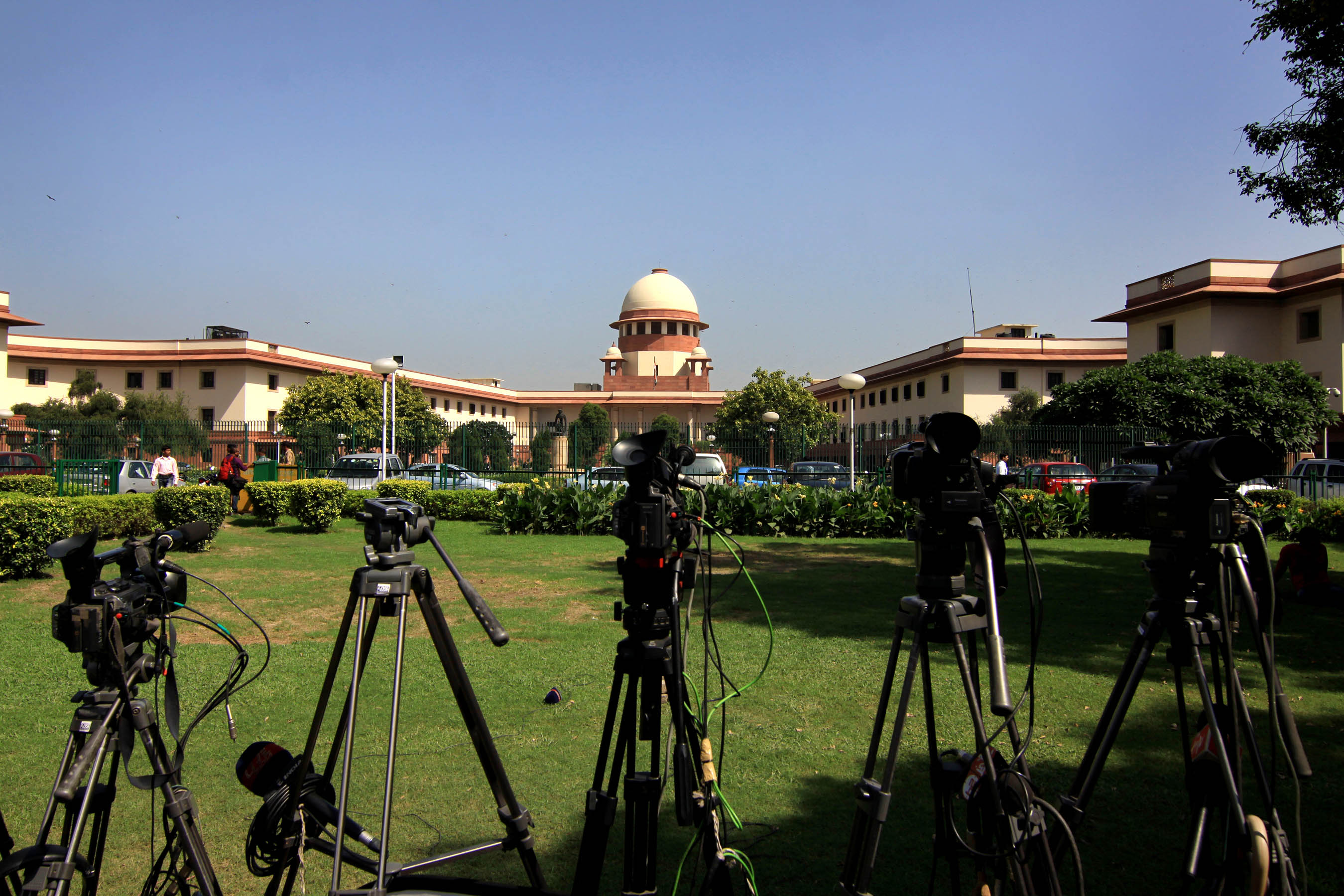
The apex court’s ruling that “prostitution is a profession and sex workers are entitled to dignity & equal protection under the law” is pathbreaking.

It is a call to put an end to widespread inequitable mindsets.

Years ago, a news item created a sensation in Delhi. It turned out that a female sex worker was caught by some hotel security guards leaving the premises of a prominent hotel in Delhi and then was gang-raped by the hotel staff, the hotel manager included. It was only towards the morning that someone reported the matter and she was rescued in a half-dead state. Thankfully the law swung into action and some arrests were made. Though I can’t recall what happened in the case after that, as this crime took place 22-23 years ago, why this case has stuck in my memory was due to the reaction of the people around me. While I was shocked and angered by the violence and cruelty of the crime perpetrated, a few people laughed and some even made bawdy jokes. I got into a heated argument with someone about the fact that it’s not “ok” to rape a sex worker just because of her profession. The other side stuck to their side saying that as she is a sex worker she has no rights over her body and bodily integrity and doesn’t have the right to say “no”.

The whole argument incensed me because I could not believe that an educated person from a good family background could have such an insensitive, chauvinistic and misogynistic mindset. Over the years it dawned on me that I was being naive, because a majority of the male or even female population has the same attitude towards sex workers. They are dehumanized. I won’t go too much into the woes of sex workers or the treatment meted out to them at the hands of pimps, clients, the brothel owners and the cops, because by and large, thanks to the media, movies, Non-Governmental Organisations and the Internet, a large part of the population is aware of what goes down. But I do want to talk about the recent ruling of the Supreme Court of India, which came as a breath of fresh air and will go a long way in making sex work safer and the lives of the women engaged in it a little better.

In a landmark judgement the three-judge Bench led by Justice L. Nageswara Rao recognised sex work as a profession. It exercised its powers under Article 142 (any decree or order passed by the Supreme Court to do complete justice is enforceable throughout the territory of India) to issue a bevy of directions to all stakeholders to uphold the dignity of sex workers. These orders are based on the recommendations made by a committee set up by the top court in 2011 on the emancipation of female sex workers.

The apex court’s ruling that “prostitution is a profession and sex workers are entitled to dignity and equal protection under the law” is pathbreaking. It is a call to put an end to widespread inequitable mindsets and to frame welfare policies that would give female sex workers respect, dignity, protection and basic human rights. For those who missed the ruling, in a nutshell the court’s order states that ‘voluntary’ sex work engaged in by an adult is not illegal. It has ordered that the police must be sensitized to ensure that sex workers are treated with dignity and are not verbally and physically abused. The court issued guidelines to the media not to publish the identities of sex workers. It has ordered that in cases of sexual assault not only should the police act upon the complaint of the woman but also provide medical assistance like it would to any other citizen of the country. The SC has ordered that no criminal action be taken against consenting adult sex workers when a brothel is raided and that the children of sex workers should not be separated from their mothers merely because they are in the sex trade. And, in a highly progressive move it has asked the Government to give the women engaged in prostitution a role in framing policies about sex work.
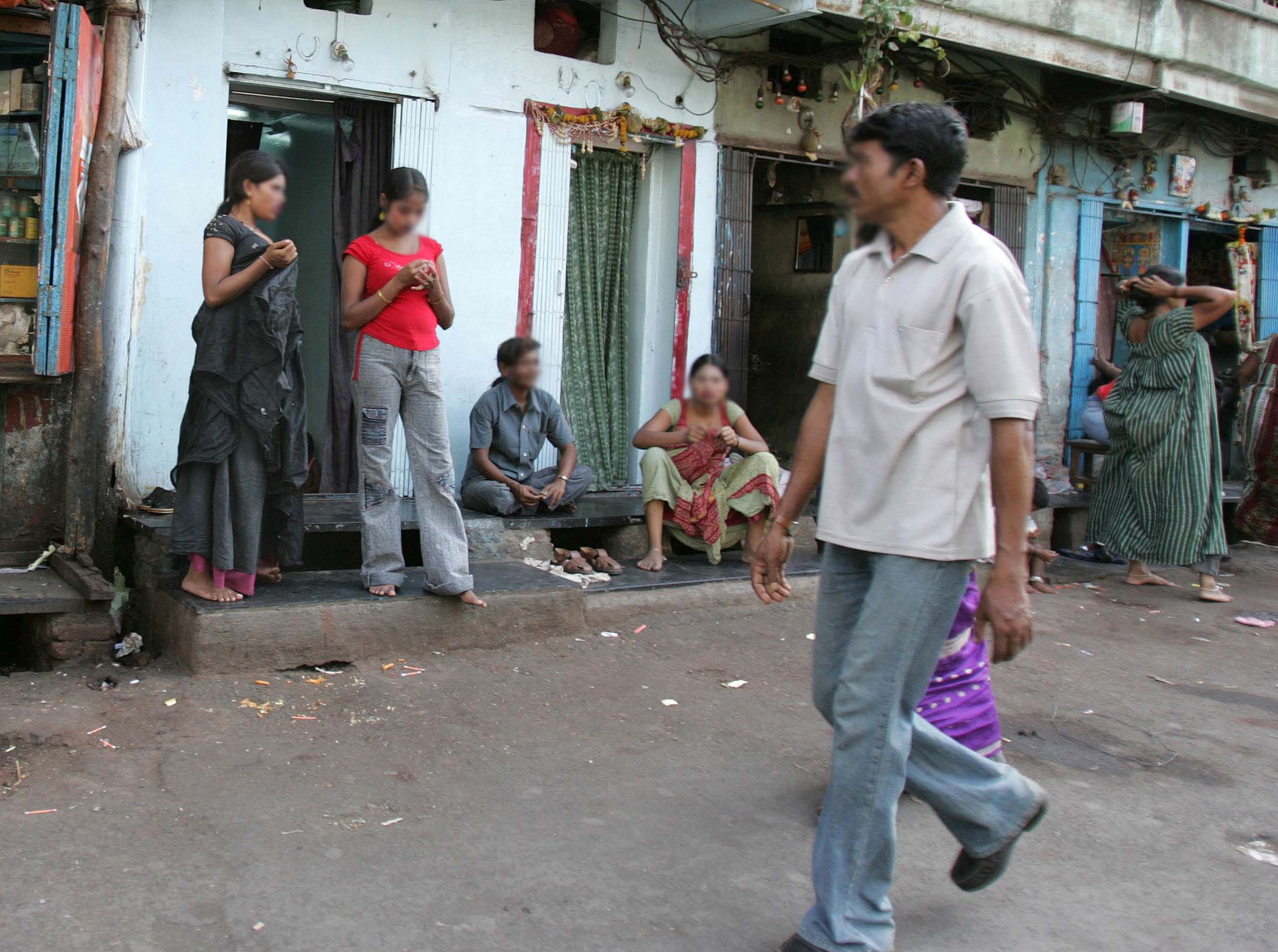
While, all these orders issued by the court are commendable and will go a long way in improving the lot of these women, to my mind the most important is the directive that when sex workers want to lodge a complaint of sexual assault, they should not be turned away by the law just because of their profession. Because, horrifyingly, according to Cambridge Documentary Films which produced the documentary, “Rape is…,” as one part of the global effort to stop rape, “about 80 per cent of women sex workers globally have been the victim of rape. Prostitutes are raped, on the average, eight to ten times per year. They are the most raped class of women in the history of our planet.” Similar studies on the subject report that 68 per cent to 70 per cent sex workers are raped.

According to Pornography and Prostitution in Canada: Report of the Special Committee on Pornography and Prostitution, women in prostitution have a mortality rate 40 times higher than the national average because of various reasons and sexual assault is also one of them. Sadly in India we don’t have any such study, because the numbers would be telling.

So, it is vital that they be protected and their complaints of sexual assault be taken seriously by the law and the perpetrators brought to justice. Keeping this need in mind, the top court has ordered that assistance be in line with Section 357C of the Code of Criminal Procedure and guidelines and protocols for survivor and victims of sexual violence issued by the Health Ministry.

This will make a huge difference to the often battered and bruised women, because according to the World Health Organisation (WHO) violence against sex workers is frequent and seen by many as an “occupational hazard.” Frighteningly the police and the laws on sex work, which are very, very ambiguous in India, often fail to protect the women, increasing the risk of violence against them by pimps, clients and the public at large. Now, the SC’s directives will give them the much-needed protection.

The court’s direction that the sex workers present during a brothel raid should not be arrested or ill-treated will go a long way in sensitizing the police force and protecting the women, because if the numbers of a study conducted by the WHO are anything to go by, 70 per cent of sex workers in India were beaten by the cops and more than 80 per cent were arrested without evidence.

The court has shown its humane side by ensuring that henceforth no child of a sex worker would be separated from the mother but has also closed all doors for the trafficking of minors by stating, “If a minor is found living in a brothel or with sex workers, it should not be presumed that he/she has been trafficked. In case, the sex worker claims that he/she is her son/daughter, tests can be done to determine if the claim is correct and if so, the minor should not be forcibly separated.”

It has ordered that Governments should comply with these directions till the time legislation is enacted which would enable sex workers to live with dignity. In the words of the SC, these orders “provide hope that the profession will be treated with respect and given all the protection that other professions enjoy.”

What the court has done here is commendable. Because it is only when such highly respected institutions of justice stand up for the abused and the marginalized, living on the fringes of society, despised, ridiculed, looked down upon and shunned by all “respectable” people, that things will change and societal attitudes will improve. Because, it is shocking that as usual, the women who are the victims of circumstance and poverty, lack of education and abuse have to bear the stigma too.

Everyone conveniently forgets the fact that the men who visit these sex workers come from within our own society. If there was no demand there would be no supply. This is the first and most fundamental rule of business. The only difference here is that the commodity being sold here is the dignity and bodily integrity of an individual. Yet, society conveniently forgives the men and castigates the women. Sadly, it is very few people in this world who actually think of sex workers as humans, who have feelings and rights as everyone else.

The SC has shown the way and hopefully, the Government, too, will be up to the task given to it by the apex court, even though right now it has shown some reluctance to involving the women sex workers in framing the policies that will govern sex work and will benefit them.

Because, the court’s responsibility doesn’t end at just giving the directives. As we all know it is the implementation on the ground that really is the litmus test of the will of the court, the Government and all the stakeholders.

But, why is it that we, as a society, never look to the welfare of the unfortunate living among us. Why do we treat sex workers with derision and shun them and treat them as sub-human. Are we not aware of the reality that a large majority of them are forced into sex trade at a very young age, with coercion, rape and beatings being the norm rather than an aberration?

Also, the ones who are in it voluntarily are there because their circumstances drove them to it as they were not qualified for anything else. Otherwise who in their right mind wants to be raped and abused and beaten on a daily basis?

No matter how many laws are made or orders are passed by the SC, the lot of sex workers will never improve till society changes its attitude towards them. We must accept that it is the oldest profession in the world and it’s not going to die out anytime soon. So, why not take a page out of Amsterdam’s book and ensure a safe and dignified life and working environment for the women to work in. At one time sex work in Amsterdam was a criminal offence too. But in 2000, the Dutch Government pushed by changing social attitudes passed a Bill abolishing the ban on brothels. Among other things, this put sex workers on par with other professions, which also included income tax and access to social security. As we all know, today sex tourism is a source of revenue for the Government and this in turn once again made life easier and safer for the sex workers.  The court’s ruling is a first step towards giving a life of dignity and safety to these unfortunate women and de-stigmatise the work that they do. Hopefully, society and the Government will also aid and abet in helping the court achieve its aim of improving the lot of sex workers in the country. It is time to humanise dehumanised sex workers.
 

Rajnath’s visit raises hope for J-K poll this year

Redrawing of the electoral constituencies and handing over six of the seven constituencies to the Jammu division and only one to the Kashmir division has brought about parity in the political weight of the two regions like never before. A report by Riyaz Wani

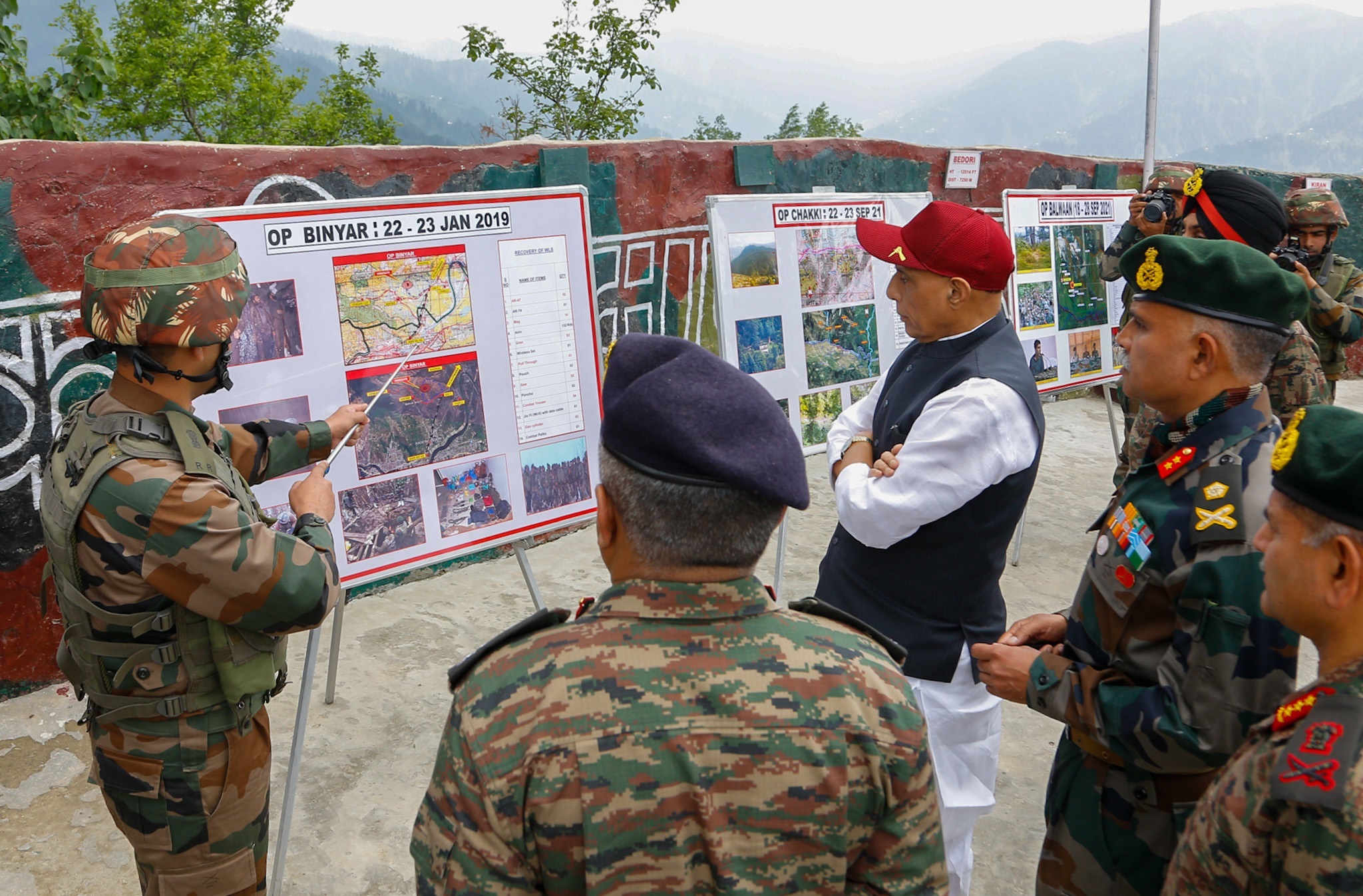
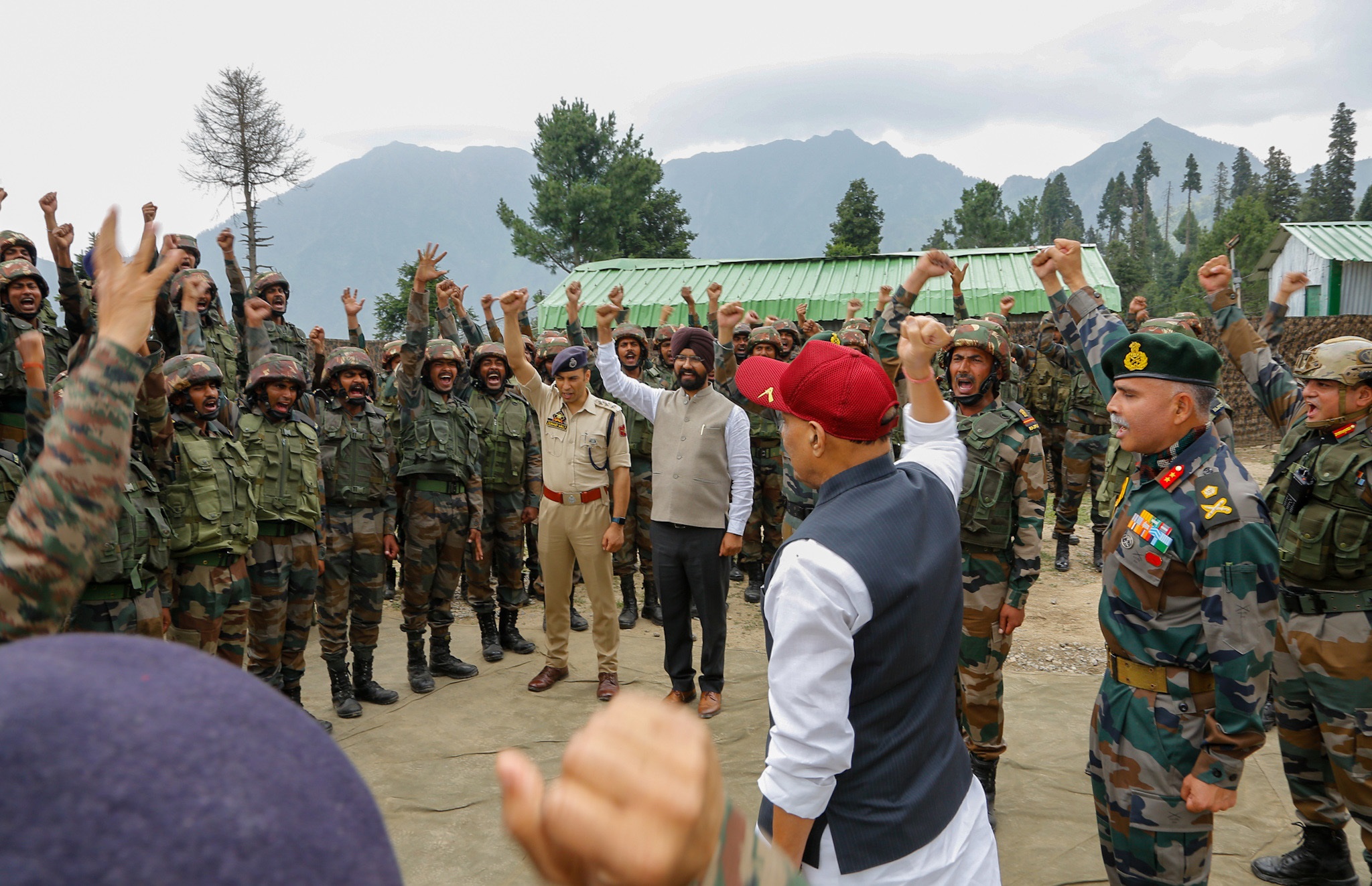
With the completion of the contentious Delimitation Commission, Jammu and Kashmir is looking forward to Assembly elections to be possibly held later this year. Although the centre is yet to take a call on the timing of the election, Defence Minister Rajnath Singh said during his recent visit to the union territory that the decks had been cleared to hold the exercise by the end of this year.

“I think the electoral exercise may also commence by the end of this year. There is a strong possibility,” Singh said at a function organised to mark 200 years of the coronation of Maharaja Gulab Singh, the first Dogra ruler of the princely state of J&K.

Singh’s tentative timeline came two days after the Election Commission started the process to revise the electoral rolls for the union territory. The process to prepare the draft rolls will be completed by August 31, setting potentially the stage for elections.

J&K has not had an elected government since June 2018 when Governor’s rule was imposed after the PDP-led coalition government lost its majority following the withdrawal of support by the BJP. The last three years have witnessed a drastic political makeover of the state-turned-union territory, so much so that in many aspects, the current J&K bears little resemblance to what it was pre-August 2019.

Change of guard in the offing?

Meanwhile, the centre is reportedly planning to replace the J&K Governor Manoj Sinha with senior BJP leader Mukhtar Abbas Naqvi. The news agency IANS reported that Naqvi had “finally emerged as the top choice for the Lt Governor`s post in J&K after the growing concern in New Delhi over the recent targeted killings and its eagerness to have a democratically elected government in office sooner than later”

This has been cited as the reason for the BJP not fielding Naqvi in the recent Rajya Sabha polls. Should this happen, people are likely to read this as a sort of  political outreach considering Naqvi will be the first-ever Muslim Governor of J&K, India’s only Muslim-majority region. And the likely change of guard acquires further resonance when squared up against the BJP’s longstanding agenda to work for the election of a Hindu chief minister for the region. Whether this agenda would be implemented remains to be seen.

Some chinks in PAGD ranks

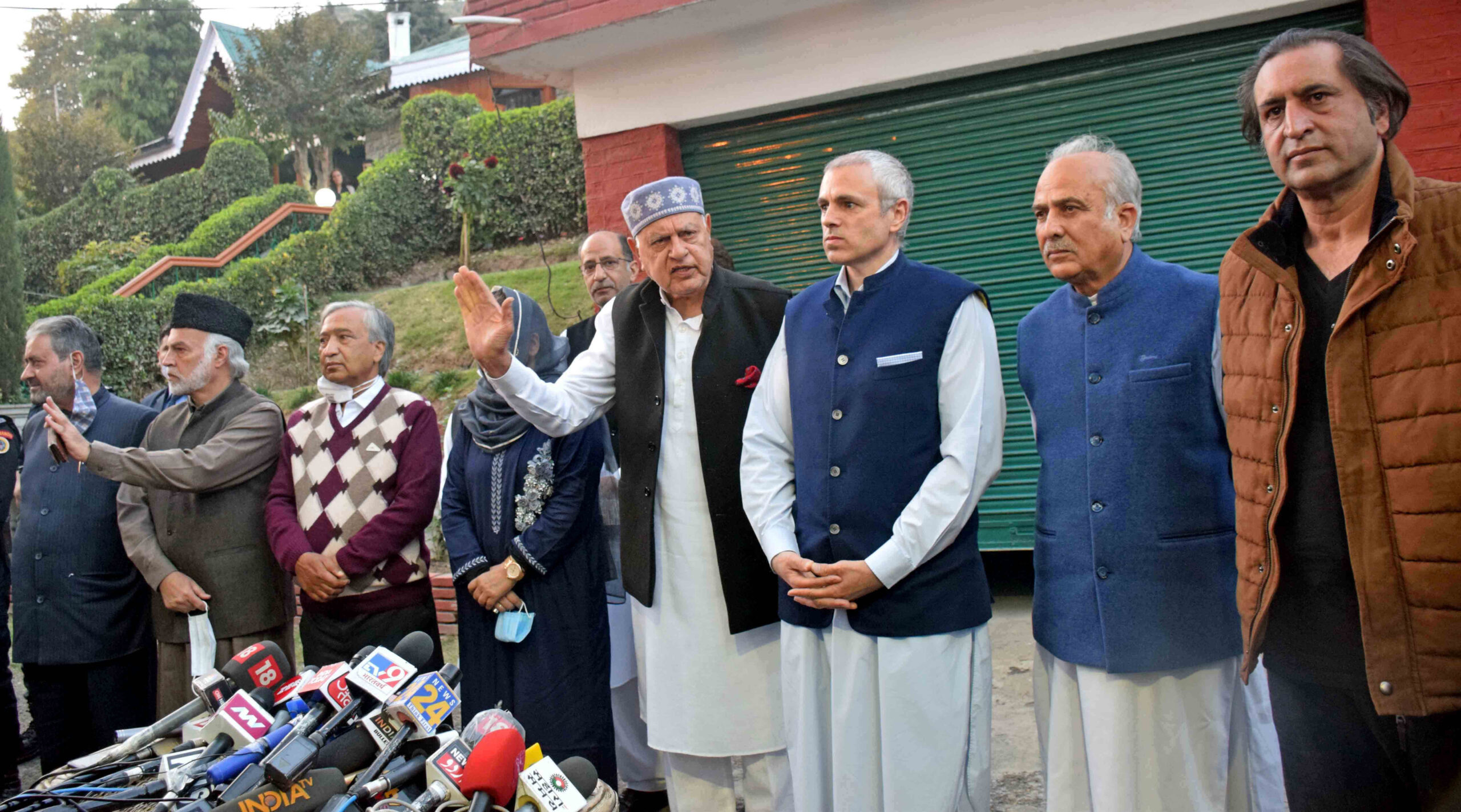
The People’s Alliance for Gupkar Declaration (PAGD) has already indicated that it will contest the future Assembly elections jointly. Although the alliance includes four parties – the National Conference, the PDP, Communist Party, and Awami National Conference – the first two parties have the largest support bases giving the alliance a good chance to emerge as a majority.

Speaking to the media in May, former J&K Chief Minister and the NC working president Omar Abdullah made a case for the PAGD fighting elections together to keep the BJP and what he called its “B and C parties” away from grabbing power.

Later, the PDP leader Mehbooba Mufti expressed a similar sentiment. “When you look at the larger picture, larger interests of the state we need to do whatever is to be done, whatever is required, to stand up to the onslaught by the BJP government against Jammu and Kashmir,” Mufti said. “We need to stay together, whether during elections or otherwise.”

However, the parties have yet to formally make an announcement. And they may not do it before the polls are announced in the weeks or months ahead. Though it may appear logical for the alliance to decide to contest jointly, their experience doing this during the District Development Council polls doesn’t inspire much confidence. The parties squabbled with one another over seat-sharing and later also fielded proxy candidates against each other. Though the PAGD managed to win a majority of seats in the DDC elections, the bickering caused a bad blood  among the partners.

Soon after the elections were over, the People’s Conference led by Sajjad Gani Lone quit the PAGD citing the issue of proxy candidates. Or so he claimed. Lone has since gone about strengthening his party in the north. Apni Party is another political outfit which was formed in the wake of the withdrawal of J&K autonomy and is perceived to be close to the BJP, though its leader Altaf Bukhari has sought to distance himself from the saffron party.

It is therefore difficult to predict how things will eventually pan out. Redrawing of the electoral constituencies and handing over six of the seven constituencies to the Jammu division and only one to the Kashmir division has brought about parity in the political weight of the two regions. This has altered the political landscape of J&K like never before. It could very well pave the way for a future chief minister who is from Jammu.

Or alternatively, an ideal arrangement from the BJP’s point of view would be a government dominated by the party, whose chances following the delimitation of seats look brighter. Or, at least, a government of the party or parties which have reconciled to the loss of the autonomy as a fait accompli. And such a scenario looks very much feasible. Over the last three years, the centre has successfully formed parties which if not directly toeing its line would dare also not question it.

“As things stand, it looks unlikely that the centre would let any situation arise following the polls, that challenges its Kashmir project or threatens to reverse the gains made in recent years,” an editorial in a local daily read.

Statehood to come with riders

Would elections lead to restoration of statehood? That is what is expected. The centre has already made it clear that statehood would be granted only after an elected government is formed, staying short of giving a timeframe. So, this could take a longer time than expected. New Delhi has indicated it would see the performance and the behaviour of the elected government before it decides to restore statehood. It is expected that a government led or influenced by the BJP could pave the way for a faster return to statehood than a non-BJP government.

It is, however, not certain whether the statehood to be granted would be full or a truncated one – one that resembles a Delhi-type arrangement where the real power remains vested with the lieutenant governor. Such an arrangement would hardly be enough to make a redeeming difference to the existing state of affairs in J&K, as fundamentally there wouldn’t be much that would change on the ground.

“The centre’s main concern would be to discourage the possibility of formation of a government that aggressively plumps for restoration of Article 370,” said a political analyst who didn’t want to be identified. “And as things stand, it doesn’t seem likely that the situation would remarkably depart from the centre’s expectation.”


Civic polls: Boost for BJP-JJP, downer for Cong in Haryana

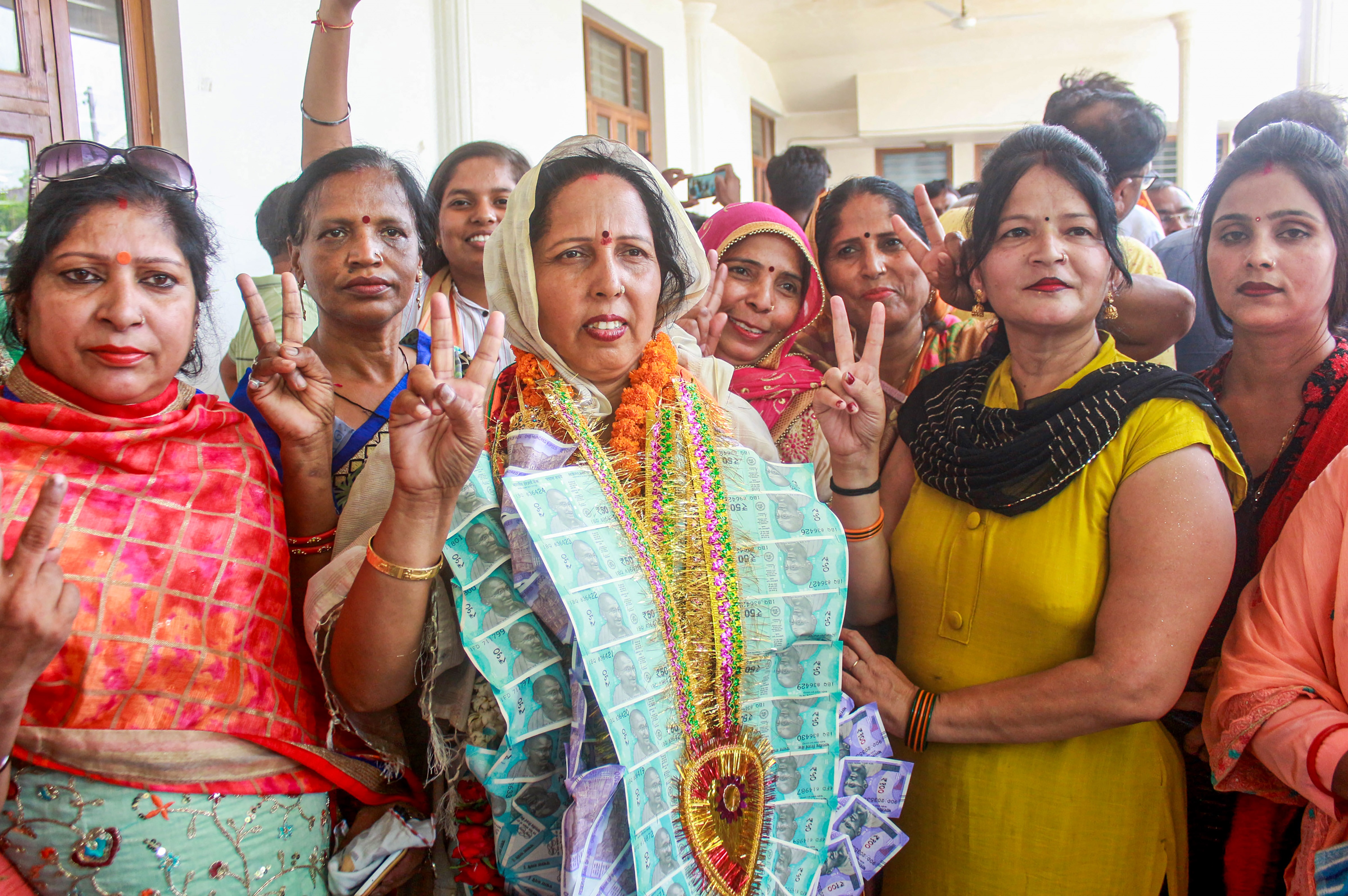
With the ruling BJP-JJP combine winning 25 of the total 46 local bodies’ presidential posts in Haryana, the poll results are being interpreted as thumbs down for the Congress which did not fight the polls on party symbol , reports Rajesh Moudgil

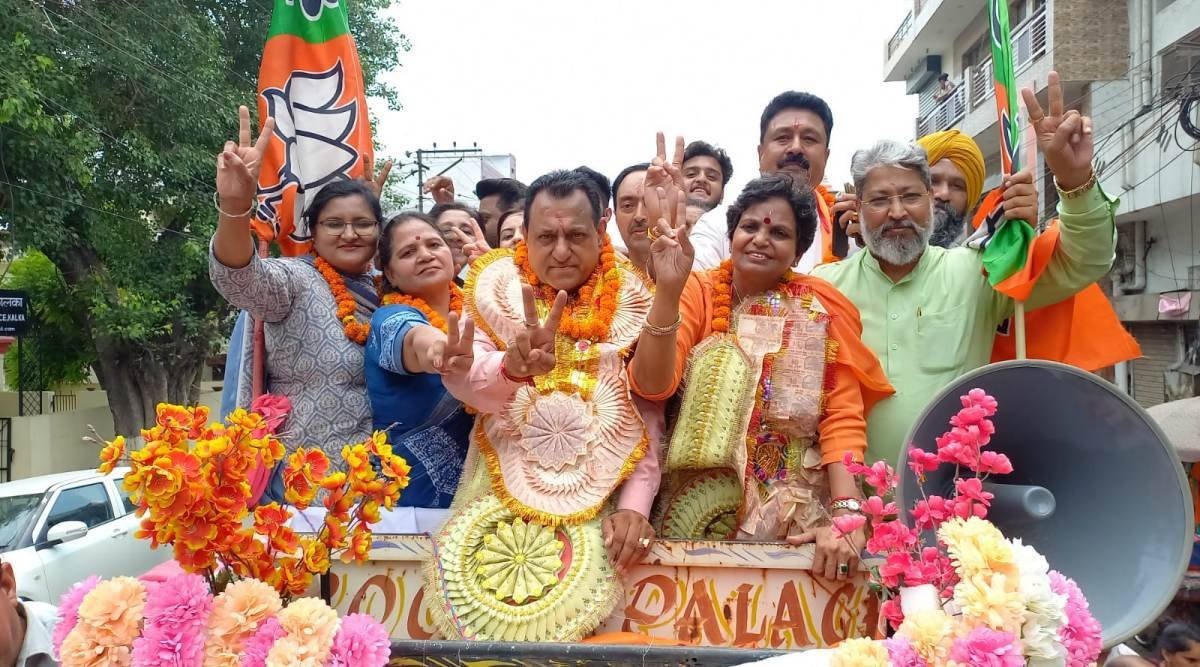
The going seemed to getting tough for the ruling BJP-Jannayak Janta Party (JJP) combine in the recent elections to the 46 civic elections in Haryana initially when the two sought to fight the civic polls separately – even against each other at a few places. However, BJP and JJP finally reached an agreement and thus managed to win 25 of the total 46 local bodies’ presidential seats on their respective party symbols.

The main opposition party Congress which decided against entering  the fray on party symbol, has been left red-faced though it claims most of the independents who have won belong to them. The claims and counter-claims between the ruling coalition and the Congress have not ended as yet.

The election for the 18 municipal councils and 28 municipal committees was held on June 19 and the results of the same were declared on June 22. The results also sprang a surprise; the Aam Aadmi Party (AAP) opened its account in Haryana by winning one post of president of Ismailabad municipal committee in district Kurukshetra.

The AAP fought the local bodies’ elections on the party symbol for the first time, though it had fought Lok Sabha and assembly polls in Haryana in the past but faced a drubbing. Kejriwal had even held a rally on May 29 in Kurukshetra with an eye on the upcoming local bodies’ polls and showcased the Delhi model as well as the recent landslide victory in Punjab.

Notably, it was the first time that the direct election of the presidents of the councils and committees was conducted this time even though it was first done for the election for mayors of municipal corporations in 2018. The councils and committees’ elections were due in 2021 though could not be held due to the Covid-19 pandemic and a case in the Punjab and Haryana High Court.

The Results

According to the state election commission, the chairperson/presidential candidates of BJP won in 10 councils and one of JJP out of the total 18 municipal councils. The Indian National Lok Dal (INLD) candidate won at one council. Independent candidates won in six councils though some of whom, Congress claims, were backed by it.

Likewise, the BJP presidential candidates won at 12 of the total 28 committees, independents at 13 places, JJP at two, and an AAP candidate at one committee, namely, Ismailabad municipal committee in district Kurukshetra. The AAP was, however, hoping for a better start and having a better foothold in Haryana and hence fought on its symbol after its landslide win in Punjab in March this year.

BJP’s Loss in CM’s District

Even though the chief minister Manohar Lal Khattar and the BJP state president O P Dhankar held the results showed the people’s continuous support for the government, the defeat of the saffron party in the CM’s district, Karnal, has put the party in poor light. The BJP lost three out of four municipal committees in Nissing, Taraori and Assandh.

Reacting to the poll result, the Congress state president. Udai Bhan took a dig at the BJP-JJP combine, and said that the Congress did not fight the election on the symbol as there were more than one aspirants for tickets at all places but most of the candidates backed by it had won.

Stating that the defeat of BJP and its ally JJP in CM’s home district Karnal and deputy CM’s own constituency Uchana shows that the ruling combine has been out-rightly rejected by people at most of the places, Bhan said that the BJP had won 35 in the previous civic polls. This time, the BJP has got only 26% votes which also shows its rapidly falling graph.

Other Congress leaders including Rajya Sabha member Deepender Hooda also held that if BJP is happy with about 3.33 lakh votes out of total 12.71 lakh votes polled in Haryana civic elections, then it is the beginning of its political downfall. He went on to say that in these civic elections, 74 % of the people of the state rejected the BJP.

Congress’ defeat

The claims of win of several of the candidates backed by it notwithstanding, Congress’ loss in its own citadel – district Sonepat – shows a downer for it.

The municipal committee, Kundli, located on the border of Delhi which remained the epicentre of the farmers’ protest for one year saw a close contest between the ruling party BJP and AAP for the post of chairperson. BJP’s Sharmila defeated AAP candidate Anjali by a margin of 77 votes. An independent candidate, having Congress support, finished a poor third.

Likewise, in Ganaur municipal committee, the BJP’s Arun Tyagi defeated Congress-backed independent candidate Sat Prakash Sharma by a margin of 6,110 votes. Sharma was considered to be a close associate of former Speaker Kuldeep Sharma.

In Gohana municipal council, the BJP candidate Rajni Virmani bagged the president post by a margin of 3,040 votes for the second consecutive time while the Congress-supported independent candidate Shashi Kumar finished as poor third. It is pertinent to mention here that Gohana is considered as a stronghold of former chief minister Bhupinder Singh Hooda and Congress’ Jagbeer Malik.

Meanwhile, even though some of the political observers were of the view that the BJP might face the electoral wrath in the wake of widespread protest against Agnipath scheme, its win in the civic polls indicates the ruling alliance was consolidating its grounds also in the backdrop of contentious farm bills which the Centre was forced to repeal about following a year-long stir by farmers. It was because of the farmers’ anger against the said laws that the BJP lost its both by-elections in Haryana – Baroda and Ellenabad.

The Congress on the other hand has suffered two back-to-back setbacks in the past few days, courtesy the internal bickering. Besides the poor show in the civic polls, the Congress saw a humiliating defeat after it failed to ensure victory for its Rajya Sabha nominee Ajay Maken from Haryana despite having numbers and the BJP-JJP got independent candidate Kartikeya Sharma elected, a few days ago.

Bilawal’s speech stirs speculations about India, Pak returning to table

Pakistan’s foreign minister Bilawal Bhutto Zardari took political observers by surprise when he advocated an engagement with India during a speech made in Islamabad, writes Riyaz Wani

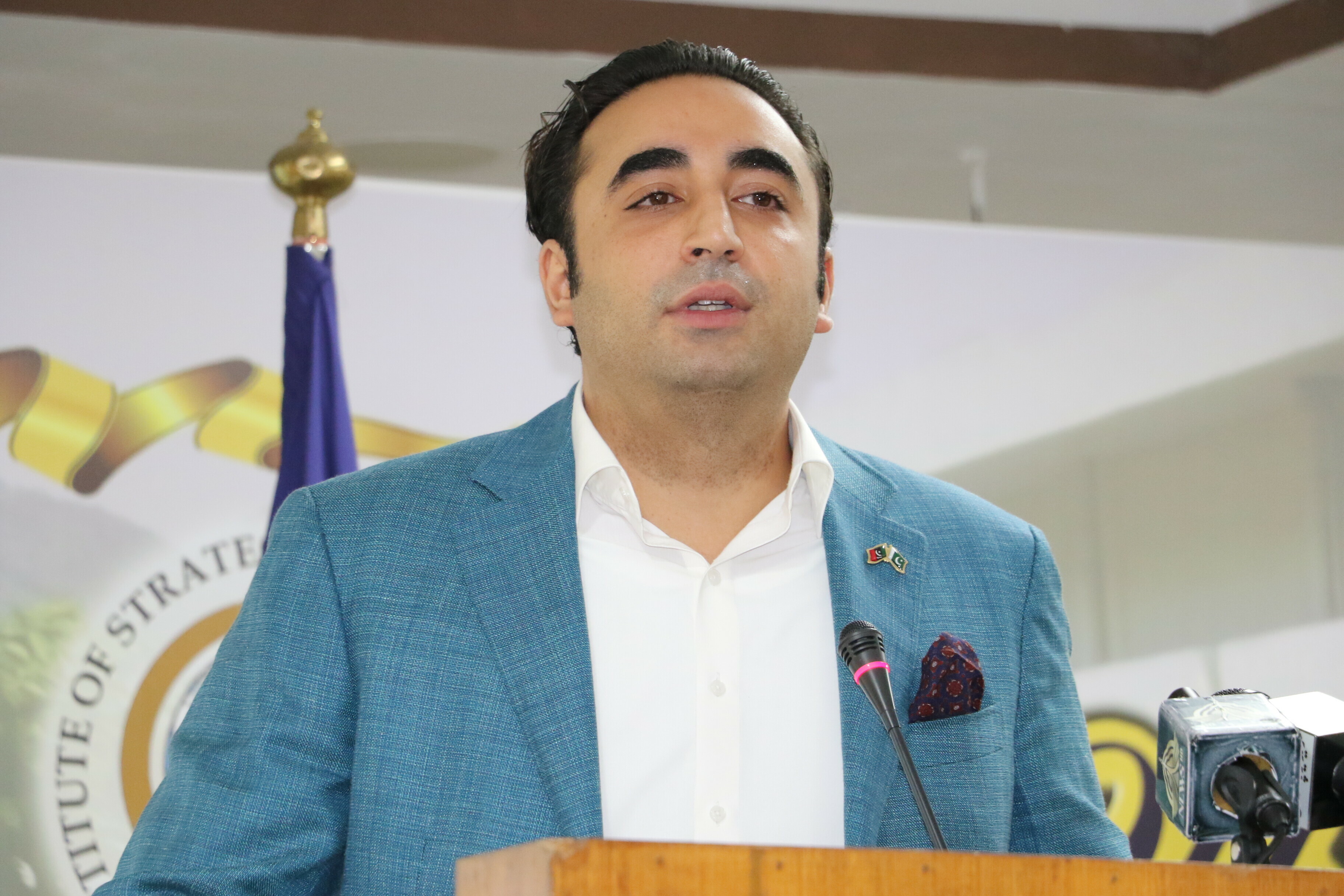
When Pakistan’s young foreign minister Bilawal Bhutto Zardari advocated engagement with India during a recent speech at the Institute of Strategic Studies Islamabad, it took many people across South Asia by surprise, more so in Kashmir Valley. It was the first time since the withdrawal of J&K autonomy in August 2019 that a top Pakistani leader had batted for a relationship with New Delhi despite the implacable differences between the two nations.

Bilawal questioned the merit of past policies pursued by Pakistan with regard to India, asking if these had helped Pakistan achieve its objectives, “be it Kashmir, be it the rising Islamophobia,”

He stressed that despite a “long history of war and conflict” with India, disengagement is not productive. Bilawal acknowledged that Pakistan had been isolated globally due to its past policies adding that if his country had achieved economic engagement with India in the past, it would have been in a better position to influence Delhi’s policy and prevent both countries from taking extreme positions.

Does this signal that Pakistan is ready to engage India? Quite possible since Bilawal is Pakistan’s foreign minister, so his statements to this effect assume greater significance. Is any back-channel dialogue taking place between the two countries? Again, it can be anyone’s guess.

The last time this engagement was supposed to be taking place was towards the end of 2020, leading to the two countries re-affirming the 2003 ceasefire agreement along the Line of Control. But they were unable to build on it to resume dialogue.  The two countries have not  held a meaningful dialogue since the 2008 Mumbai attack. And between 2003 and 2007, the two countries had held sustained negotiations over Kashmir that had nearly culminated in the resolution of the Kashmir issue.

But as is apparent there are some reservations as for as conducting an open dialogue is concerned. The reasons for it are both historical and recent. The relations between the two neighbours have plunged to their lowest low since New Delhi withdrew Article 370 that granted Jammu and Kashmir a semi-autonomous status under India’s constitution and forbade people from the rest of India to buy property in the Valley.

It is thus no surprise that the two countries have failed to translate the goodwill generated by the LoC truce into a dialogue. There have been no further measures, nor does it look likely there will be any in the near future. New Delhi seems in no hurry to do this. If anything, this only goes on to show that India feels little pressure to relent. Nor does it want to make even any minor concessions to push engagement with Islamabad.  The unmistakable signal to Pakistan is to temper its expectation about the extent to which India can accommodate it on Kashmir. As always, India wants terrorism to be the central issue and wants Islamabad to stop supporting militancy in Kashmir. Pakistan doesn’t accept it backs terrorism.

This has created a fraught situation. As things stand, both the countries are putting the onus on each other to take the first step toward resuming engagement. Islamabad has made any re-engagement conditional to New Delhi reversing the August 5 move or at least providing a roadmap for doing so. New Delhi continues to insist on an end to cross-border terrorism before talks begin. But neither country is in a position to meet the condition.  It would be interesting to see how the two countries negotiate their respective hard positions before reaching out to each other, something that looks highly unlikely.

Does Bilawal’s conciliatory tone underline that something may be in works between the two neighbours? It can very well be. Or it cannot be so also considering there is no change in the overall approach of the leadership of the two countries towards each other.


Hounding the hapless refuge-seekers

The communal virus so well spread out here in our country has reached such lows that even refugees not spared.

The World Refugee day – 20 June, came and passed by. Without we coming up with anything substantial for their wellbeing and safe survival in our cities and towns.

It’s time to sit back and contemplate: The refugee needs protection and security. After all, he or she and entire families have fled their homelands in utter despair. Also, who knows about the destined turns in our own lives. Who all amongst us will be rendered refugees in the days to come!

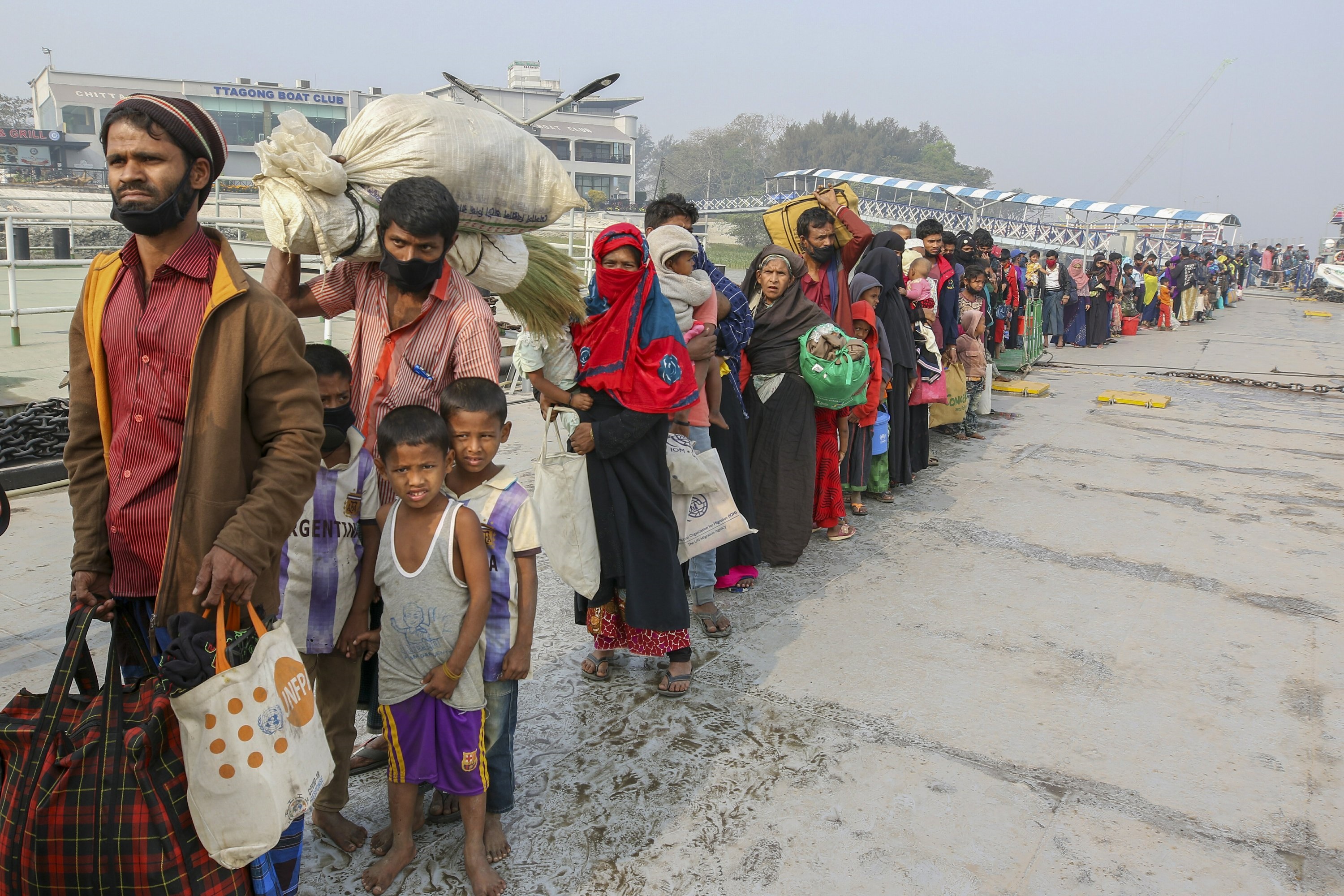
It is disgusting-cum-frightening to see how we are hounding the hapless refuge- seekers!  Under severe crisis they fled from their native home countries, seeking shelter here in our country, without realizing that they would be treated in the worst possible ways. The communal virus so well spread out here in our country has reached such lows that even refugees not spared. Not to be overlooked the fact that a great majority of the refugees from Bangladesh and Burma happen to be Muslims.

Shouldn’t the UNHCR (United Nations High Commission for Refugees) step in and veto the politicians’ reckless accusations, heaping all possible blame for all the civic woes on the hapless Bangladeshis and Rohingyas living in refuge in our country.

It is actually frightening to visualize the growing numbers of those displaced from their homelands. And with internal strife and outside interventions only intensifying, their numbers would only be increasing. Yet, we are not getting emotionally trained nor sensitized enough to reach out. Tell me, in how many schools or educational institutional there are discussions or meets or talks focusing on the plight of the refugees in today’s so called developed times? Tell me, how many young adults have thought of ways to reach out to the refugee  families  living in one of their towns and cities? Mind you, surviving in the most dismal of situations with the barest possible means to survive. Not to overlook the fact that the Right-Wing lobbies and mafias under their control all set to target them on any given alibi! Hounding them, pushing them from here to there, in the most humiliating and insulting and barbaric ways.

Each time we see the Rohingya refugees fleeing from one locale to the next, as the government agencies threaten to deport them to Myanmar, many amongst us are left thinking aloud, “Maybe a day comes when we are also forced to flee…Maybe we are Rohingyas in the making. Maybe we end up with the same fate. Look what’s begun in the North East!” Many furthering their apprehensions, “See, what’s happening in Palestine, Syria, Iraq, Yemen… Haven’t you seen shots of the dying Syrian children and also of the hapless Palestinian teenagers and the starving Yemeni kids? Those shots just too hitting!”


What a memorable meeting!

As Eid –ul-Adha is to be observed soon, in the second week of July, so let me write details to one of my earlier meeting with the late Khwaja Hasan Sani Nizami —who was a direct descendant of Sufi Sheikh Nizamuddin Aulia.

I’d met him on Eid-ul-Adha/ Eid of sacrifice, at his New Delhi situated Basti Nizamuddin, where stands out the dargah of Sheikh Nizamuddin Aulia. And it was such a memorable meeting that all those details have remained unmoving!

After reaching the Nizamuddin dargah I walked a very short distance before reaching his home. A well spruced-up tidy place with a courtyard. I was ushered inwards, towards the veranda where he sat reclining on the takht. Didn’t look well but was receiving visitors. Soon a young  man  came with a  tray full  of  kachoris, qeema  with  onion  slices sprawled  by  its side, and  a  bowl  of  siwain. The food spread gave me an excuse to ask him about the qurbani. How many goats were sacrificed in his home that Eid morning?

“None!” said Nizami sahib. And his answer took me by surprise. As all along one had heard that qurbani was a must. Of course, for those who could afford it and surely this family could.

Perhaps, seeing me look somewhat bewildered, he continued, “For the last 74  years I  haven’t had any  qurbani done. Because in keeping with the Sufi traditions before the day ends we distribute all the  money we have,  so that when we retire for the  night we are penniless. We live day to day, with just the minimum. And whatever donations are given to the dargah, they are distributed that very day, nothing remains for tomorrow. Who has seen tomorrow! Tell me, who’s seen tomorrow or the day after! This is  what  our forefathers  have been practising all along. But, yes, our relatives whose wives  have jewellery do not fit into this  category. But I haven’t married, and so there’s no wife and no jewellery!”


What if there’s an emergency… a no- money situation?

“It happened just once, during the Partition upheaval. We had  just no  money, not even  for  food, so  had to  borrow  to survive, but  no matter what  happens we continue to live on a day to day basis, like Hazrat Nizamuddin Aulia did…at  times he  had  not a penny to  him but  continued.  After all, sufis and darveshes are not made of the average fabric! Only the present that matters. I must tell you that the day after the Babri Masjid demolition, a senior diplomat from one of the Western countries was going around here in this area for what  he  called his ‘own survey of the  situation’. And he asked me, ‘Would you be able to see tomorrow’s sun?’ I told him I have left things to God and was confident of seeing the coming morning’s sun and also of having morning tea with him!”

And as my conversation with Nizami sahib went on and  more visitors joined  in, more snacks and sweetmeats were  placed on the table, but Nizami sahib didn’t  touch a thing. He didn’t seem inclined to have anything beyond tea. At this point one of the visitors asked him whether it was viral fever he was recovering from.

His this answer made each one of us look taken aback. “No, no viral fever…no fever at all. Actually  one of  my  nephews, Salman, passed away just  two days  back … he died in Pakistan and I couldn’t even  travel for his burial. I have been feeling very upset after we got the news. He had grown up in this very house, scribbled on these walls here… those memories are coming back.”

Why he didn’t tell us this? Why serve us all these snacks?

“Why should my sorrow be a burden for you! Sorrow is anyway a personal experience.” He then went on to tell us more along the strain, “Years  back  when my  mother had been ailing and we had  a  guest who though  was  not  staying with  us but  food were taken  for  him by my father. Even the day  my mother passed away, my  father took  the  evening meal and as this guest asked about her  health my father replied, ‘She  is now resting.’ Its only after that   gentleman had finished eating, my father broke the news of my mother’s demise; adding that she’s resting in her grave!” His rationale was: Why tell others of your sorrows. After all, sorrow is yours alone!”

Railway staff strike multiplies troubles for the British economy

It is estimated that the three-day strike beginning from June 21 has cost more than 100 million pounds (Rs. 955.48 crores) to the country’s economy already under distress due to the rising fuel prices caused by on-going Ukraine-Russia conflict

Within weeks of re-establishing his writ in the treasury benches, the British Prime Minister, Boris Johnson, faces a formidable challenge of keeping the working classes satisfied amidst soaring prices. The on-going Ukraine-Russia conflict has aggravated the economic crisis. The inflation has reached to dangerous level, perhaps more than 40 per cent forcing the transport workers serving the underground railways as well as train services to go on a three-day strike.

Johnson, a journalist-turned politician, was able to regain the confidence of the conservative party members in the House of Commons on June 4, 2022, and the agitation hit the people on June 21.  If it continues, it may be repeat of “winter of discontents of 1978-79”, when industrial workers had agitated. This time the strike of the tube railways has combined with a rail strike, the Transport for London (TfL) and Network Rail.

It is difficult to predict the outcome of the agitation joined by more than 40,000 workers, but it is clear that it has deeply hurt the transport services and may become a prolonged “Summer of Discontent”. Unless Johnson takes initiative and intervenes, the threats of his ministers might become counter-productive. There are few takers to the statement of the Transport Minister, Shapps, that the government would amend the laws to force train operators to resume the services and that they would be able to recruit on temporary basis new staff for operating the system.

Amidst this agitation, the allegation of the Labour leader, Sir Keir Stamer, that Johnson was trying to appoint his girl friend, Carie Symonds, who later became his wife, as the chief of staff in the foreign office, is being taken as a comic relief, in this tense atmosphere. It is also being stated that the news was removed from the Times due to the pressure of the Downing Street (official residence of the British PM).

In spite of the challenges or many scandals being faced by his government, Johnson is confident of winning the political challenges with his charismatic personality. Amidst the strike, he holds a lavish fund-raising party, where one has to cough up 120,000 pounds (Rs. 1.15 crores) to join the dinner with the PM or 37,000 pounds (Rs. 35.37 lakhs) for participating in a shooting weekend.

If Johnson could successfully face his existential challenge from the party’s back-benchers, he is also confident of winning the economic crisis. He has stated the British railways must shed off their 19th century practices; perhaps, his predecessors did not dare to raise the issue. He, however, has dared, perhaps knows how to play a political game, re-organize it and again play the game. He is also not scared of the reports that the separatists might again raise their demand for a separate Scotland.

Many commentators have stated that the he himself is to blame for the economic crisis accompanied by the new political challenges facing the government. It, perhaps, happened due to his scant regard for norms and laws. It is being apprehended that the strike, which has adversely affected the British economy might snowball into a political storm adversely affecting the political fortune of the ruling Conservative Party. The issue is whether Johnson can repeat the Conservative Party’s resounding victory in the next elections, which was attained 30 month ago under his leadership. It is also being pointed out that the economic challenges might also give legitimacy to a racist political outfit like the British National Party (BNP) and its leader, Adam Walker. The BNP is a far-right, fascist political party, which has so far failed to get any elected seat in the House of Commons, but the economic challenges might enable it to blame the minorities and Asians for the plight of the British. The recent success of Marine Le Penn’s National Rally Party from its meagre nine-member strength to 89 in the recently held elections in the French National Assembly could inspire and reinvigorate such ultra-rightists in Britain.

The Financial Impact

It is estimated that the three-day strike beginning from June 21 has cost more than 100 million pounds (Rs. 955.48 crores) to the country’s economy already under distress due to the rising fuel prices. The protest has begun against the unchecked rising cost of essential goods and skyrocketing inflation.

More than 25,000 people could not use the public transport system to reach their respective work places almost hitting every section of the population. The strike has hit the country after a lapse of 30 years, when tens of thousands of rail workers had taken part in a mass walkout protesting against frozen salaries, changing working conditions and the apprehension of job cuts.

The on-going stir has been joined by as many as 40,000 railway staff of the National Union of Rail Maritime and Transport Workers (RMT). It had begun following the collapse of the talks between the union leaders and the train operating companies.

The Johnson Government cannot claim that the workers had resorted to strike without any notice. Earlier, on May 24, RMT union members had voted overwhelmingly to conduct a strike over salary and proposed job cut disputes. The economy has been under tremendous pressure since the outbreak of war between Ukraine and Russia during February this year. The conflict has pushed the price of oil to its highest level for nearly 14 years at one point and this has had a knock-on impact on fuel costs, with UK petrol prices hitting record highs.

Gas prices have also soared, leading to warnings that average energy bill could jump to 3000 pound (Rs.2.86 lakh approx.) annually in next four months from the existing 2000 pounds (Rs.1,91,120.55). “The war has increased the risk of a recession derailing the supply of critical commodities to many sectors of the economy,” according to  Suren Thiru from the British Chambers of Commerce.

The UK is facing its highest rate of inflation in 40 years; consumer prices rose by nine per cent in April 2022. The Bank of England has warned that it could increase by more than 11 per cent later in the year, due to rising energy prices.

The RMT workers have repeatedly stated that despite the economic turmoil, their salaries have not increased for the past 2-3 years. To meet the rising cost of living, they are demanding raises of at least seven per cent. The union has said that Network Rail’s offer of a two per cent increase, with the possibility of another one per cent, is “unacceptable”. The unions have also refused to accept the proposal for modernizing the National Rail, which is expected to result in increase in working hours and the removal of around 2,500 maintenance jobs in order to save two billion pounds over the next few years. The RMT claims these jobs are critical to maintain the safety standards of the railways.

Johnson has claimed that the strike is “wrong and unnecessary”, and would further damage businesses recovering from Covid-19 disruptions. However, the RMT secretary general Mick Lynch has stated that the protests would continue until a settlement was reached. “RMT members are leading the way for all workers in this country who are sick and tired of having their pay and conditions slashed.”

A wide range of other public sector workers too have threatened industrial action. In response to the increasing costs of living in Britain, unions representing teachers, airport staff, health workers, barristers, waste disposal workers, civil servants and local government workers have all threatened to go on strike unless their demands for pay increases are met.

The Scottish Dilemma

The issue of independence has always been high on the Scottish political agenda – and Brexit has cemented its salience. The Scottish government is currently seeking the transfer of power from Westminster to hold another independence referendum, but Johnson appears to be in no mood to concede this request. The demand, however, for a fresh referendum on the issue of independence is likely to haunt the British politics and might become more pronounced during the economic turmoil.

The transport workers’ strike appears to have unleashed new challenges for the leadership of Johnson. It is being ruled out at least for the present that he might agree to abdicate in favour of Rishi Sunak to lead Britain in this crisis. The issue of Carry Symonds, now officially married to Johnson after being blessed by a son, is the daughter Mathew Symonds, one of the founders of the British daily, The Independent. It is for the first time in the past 250 years that a PM has raised a family while in office. The optimists are hopeful that Sunak will successfully tackle the economic crisis and convince the unions as well as the trade chambers and, perhaps, Scottish people that British unity is in the interests of everybody.


A love story gone sour: Judge’s daughter held in Sippy Sidhu murder case

Seven long years after the cold-blooded murder of 35-yr-old national shooter and lawyer Sippy Sidhu, which had shocked the nation, the CBI has arrested Kalyani Singh, daughter of acting Chief Justice Himachal Pradesh High Court, for her role in the murder. A report by Gurvinder Kaur

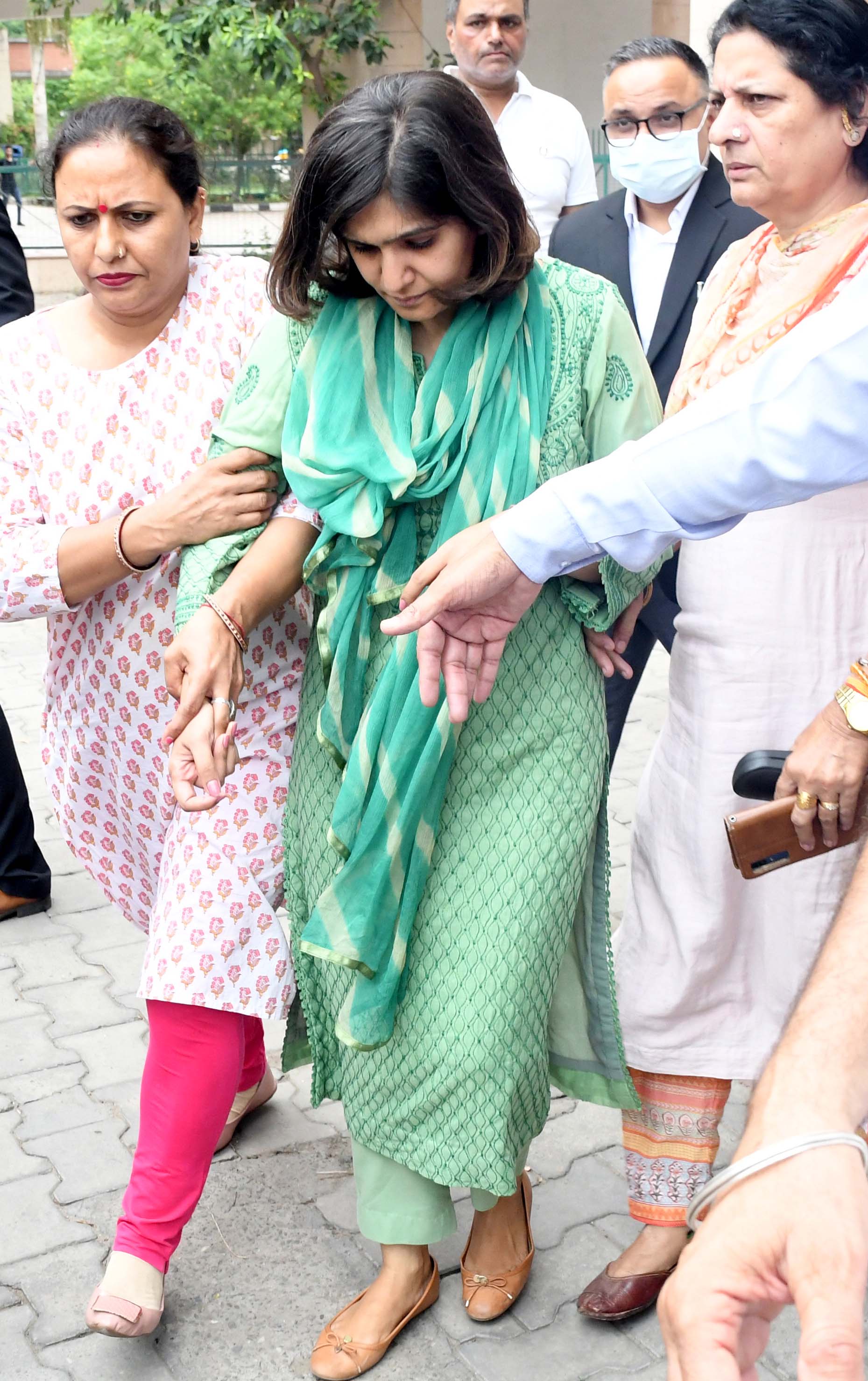
Seven long years after the cold-blooded murder of 35-year-old national shooter and budding lawyer Sukhmanpreet Singh Sidhu (Sippy Sidhu), the case finally seems to be making some headway with CBI arresting 38-year-old Kalyani Singh, daughter of Justice Sabina (acting Chief Justice Himachal Pradesh High Court) on June 15, 2022, in Chandigarh.

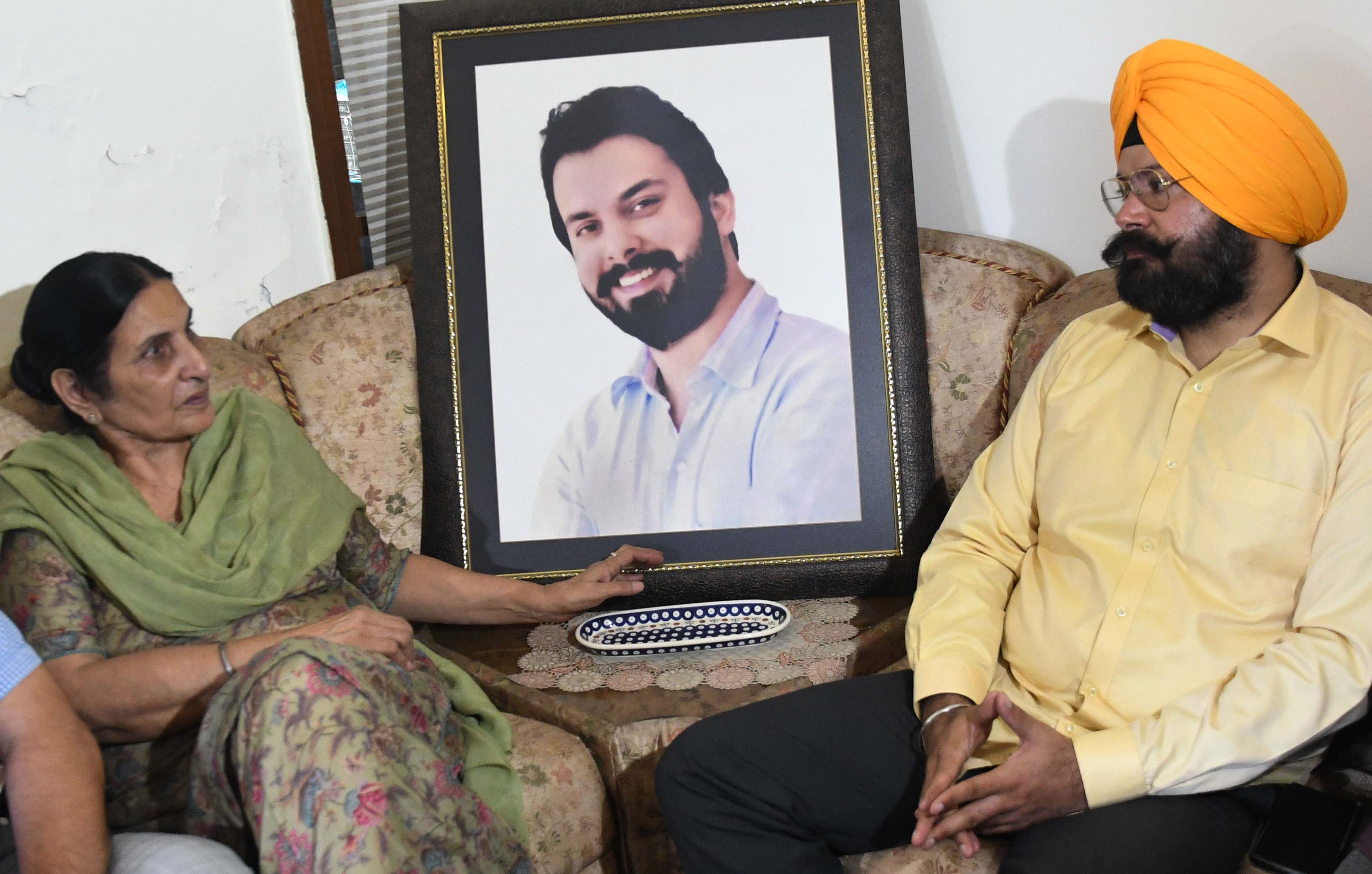
Sippy Sidhu, besides being a national level shooter and an advocate, was the grandson of a former judge of Punjab & Haryana High Court Justice S.S. Sidhu and son of the late Inder Pal Singh Sidhu, Additional Advocate General of Punjab. The alleged accused Kalyani is the daughter of Justice Sabina (the then Judge in the Punjab & Haryana High Court) and Parminder Singh, an advocate. Both the families were close friends for almost 30 years and Sippy and Kalyani gew up as childhood friends.

While in the university, Sippy started participating in shooting competitions along with famous Indian shooter Abhinav Bindra. He won many awards in rifle shooting competitions and was also the joint secretary of the Paralympic Committee of India. He then pursued law and later opened his law firm in Chandigarh. Three days before his murder, Sippy had returned from Canada after participating in a shooting competition there.

Trouble started brewing between the families when Sippy rejected Kalyani’s proposal for marriage. “When pressed by Kalyani’s parents as to why he was refusing to marry their daughter, Sippy told them that he could not marry her as she was already in relationship with other people, including a relative”, stated Deepinder Kaur Sidhu, mother of  Sippy and Jasmanpreet Singh Sidhu aka Jippy Sidhu, younger brother of Sippy Sidhu, while talking to Tehelka. “Sippy even forwarded some objectionable pictures of Kalyani and some people to her father as a proof,” they added.

Following this, there was bitterness between both the families as it was a cause for major embarrassment for Kalyani and her family. However, according to Sippy’s family, Kalyani’s parents and Kalyani continued to press Sippy for marriage. “Kalyani was relentless in the pursuit of my son”, said Deepinder Kaur. “She would ring him, send him mails, visit his office and meet him regularly. She even threatened and asked Sippy’s to-be fiancé to stay out of his life or face the consequences,” added Deepinder Kaur.

Before leaving home on that fateful evening on September 20, 2015 Sippy had reportedly told his mother that he was going to meet Kalyani. “She had been calling him daily (from 18th September, 2015) and asking him to meet her in a park in sector 27 ever since he returned from Canada three days ago. Sippy told her that he was very tired but she would not take no for an answer,” said Sippy’s mother.

“When I asked Sippy why did she want to meet him in that park in sector 27, he explained that she had started working as a dietitian in a clinic near the park,” she said.

‘I regret sending Sippy to meet her that evening, but as a mother I was fearful of her threats and felt the need to pacify her. She used to force Sippy for meetings threatening she would cut her wrist or kill herself,” Sippy’s mother added.

That very night Sippy was shot dead in that park in sector 27, Chandigarh. His murder had provoked nation-wide outrage and shock.

Kalyani was working as an Assistant Professor, Department of Home Science in a girls’ college in Sector 42, Chandigarh, when she was arrested by CBI a few days back. While seeking her remand, the CBI had stated in its report, “Kalyani had been in a romantic relationship with the victim which eventually went sour. Kalyani wanted to marry Sippy but her proposal was rejected by Sippy and his family. Sippy had leaked her objectionable pictures to her parents and friends, which had caused embarrassment to Kalyani and her family”. In its report, the CBI further stated “upon his return from Canada, Kalyani had contacted Sippy using mobile phones of random people and “compelled’ him to meet her in a park in sector 27. They met between September 18-20 in that park”. The CBI also stated, “Investigation has revealed that one unknown assailant and Kalyani Singh killed Sippy by using firearms. Thereafter both of them were seen running from the spot”.

Investigations by the CBI also revealed that though Kalyani was in regular contact with the victim, even asking about his journey plans through mail exchanges, she stopped contacting him a day before his return to India. Finally, the CBI summoned Kalyani for questioning and arrested her after it found she was ‘evasive in her responses’.

Kalyani’s lawyer Sartej Singh Narula told Tehelka that his client was innocent and was being framed to deflect attention from the real killers. “Anyone could have borne him a grudge as  he had six girlfriends. Or it could be that he was involved in money laundering or other shady deals with the rich and influential; it could also be a contract killing by a business associate. Kalyani is not involved at all. It was Kalyani who had rejected his proposal for marriage as per an email written by Sippy, he had asked her for forgiveness. There are no witnesses and she has an alibi at the time of the murder, she was present in a party”.

When asked about the objectionable pictures of Kalyani, including some with a relative, Narula said, “No one has seen the pictures, they could just be innocuous too. If a girl, for example, kisses her uncle on the cheek, it’s a normal thing to do, nothing wrong in that”.

Kin allege power and police nexus

“The investigation in the murder case was botched up completely in the initial stages itself by the handling officers of Chandigarh police. There are glaring lapses and omissions as they were under lot of pressure”, said Jippy Sidhu while talking to Tehelka. “The CBI has mentioned this in its report and recommended disciplinary action against certain police officers by name’, added Jippy.

The CBI in its report states, “Certain lapses were found on the part of Inspector Poonam Dilawari, the then SHO of the sector 26 police station, and Guriqbal Singh, the then ASP, in destruction of evidence which led to the delay in the arrest”

Timeline of events

September 20, 2015- Sippy Sidhu is shot dead at night in a public park in sector 27, Chandigarh. An FIR was registered by the Chandigarh police. Family members point at Kalyani Singh as suspect.

October 18, 2015- Kalyani Singh, daughter of Justice Sabina, the then Judge in Punjab & Haryana High Court, is questioned by Chandigarh police twice and then let off.

November 2015- A CSFL report suggests that a .12 bore gun is used in Sippy’s murder.

December 13, 2015- Family members of Sippy Sidhu demand the transfer of investigation to the CBI.

April 14, 2016 – Investigation is transferred to the CBI which registers a fresh FIR a week after Justice Sabina is transferred to the Rajasthan High Court.

September 6, 2016 – CBI announces a reward of Rs 5 lakh for anyone providing information about the killers.

2017- CBI puts out an advertisement in newspapers stating that there is a reason to believe that a woman was accompanying Sippy’s killers at the time of the murder. “The said woman is also being given this opportunity to come forward and contact us if she is innocent. Otherwise, it will be presumed that she was party to the offence”.

December 2020- CBI submits a status/untraced report in the court asking that the investigation be allowed to continue.

December 11, 2021 – CBI increases the reward money from Rs 5 lakh to Rs 10 lakh.

February 2022 – Kalyani is questioned by the CBI.

June 15, 2022 – Kalyani is summoned for questioning by CBI. She is arrested as she is “evasive” in her answers and remanded in 4-day police custody which is later increased by two more days.

At the time of writing this article, Kalyani is in judicial custody for 14 days.


Nort-East Delhi riots: Delhi Police goes round and round

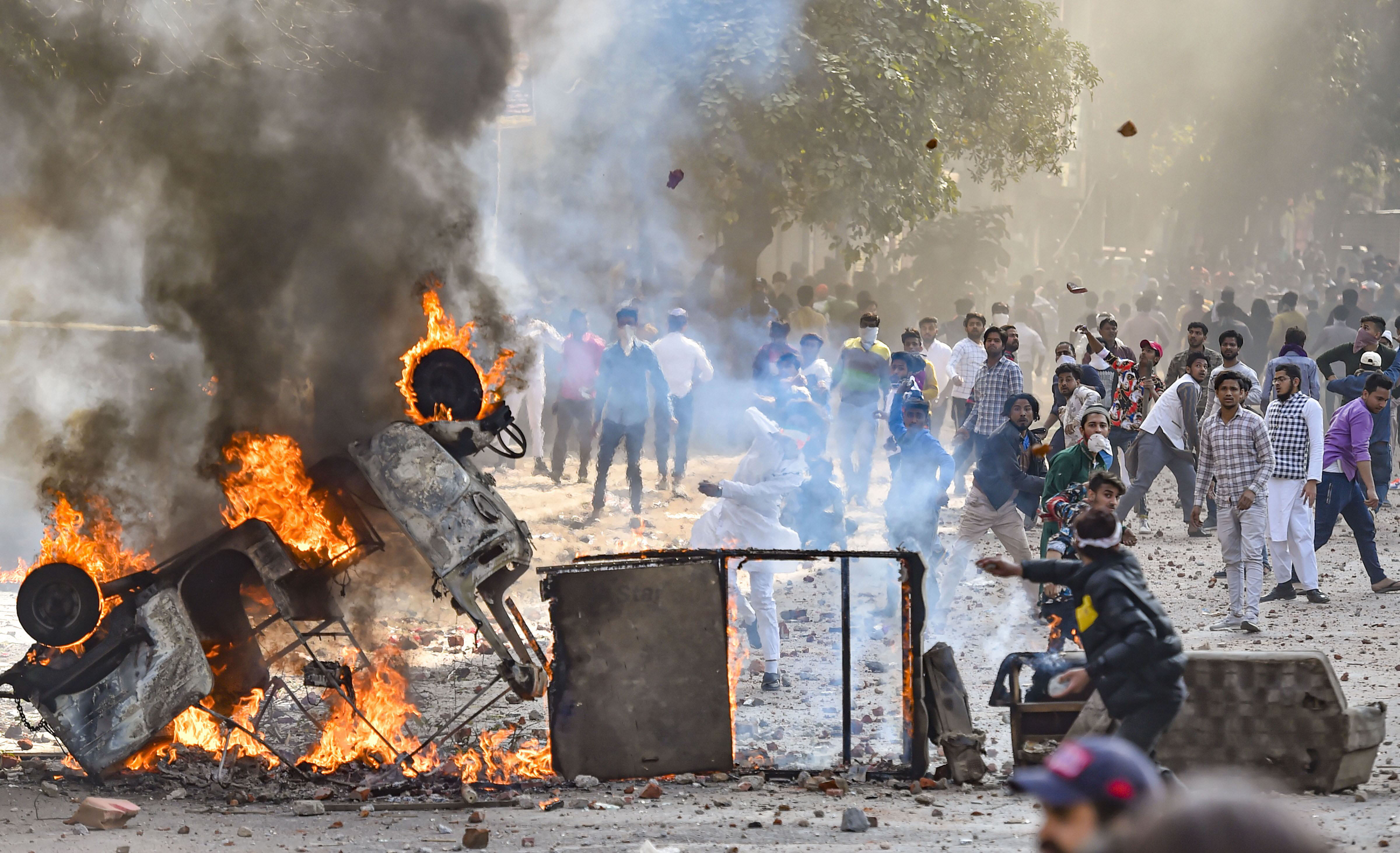
During the four-day riots beginning February 24, as Donald Trump was visiting India, 53 lives were lost and 755 were left injured. Despite the two trials, the Delhi Police has been able to obtain only 2 convictions so far. A report by Amitabh Srivastava

The farce that the Delhi Police has been engaging in the name of investigating the riots in North East Delhi in 2020 stands exposed as it announces a reward to find its own constable involved in the riots.

During the riots, a video had gone viral showing some policemen assaulting some Muslims and forcing them to sing the national anthem in Delhi’s Bhajanpura.

One of the men who died after the assault, reportedly of bullet injuries, was 23-year old Faizan, but his parents allege he died of police beating.

They went to court and in February 2022, the Delhi High Court expressed its displeasure in identifying the culprits who allegedly assaulted Faizan and the others with him and forced them to sing the national anthem.

According to reports in the media, the police maintains that after the case was taken over by the crime branch, it had questioned about 250 policemen and checked various documents and duty charts of policemen identified from outside during the riots to identify the culprit.

They were finally able to identify a head constable of the Delhi Armed Forces but denied his involvement. His polygraph test was negative but since it is not admissible in court, the Delhi Police has now announced a reward of Rs.1 lakh to anyone who can identify the culprit.

Apart from this, the senior officers of the crime branch have also asked the SIT formed by the Commissioner Rakesh Asthana to change the investigating officer in the case to get out of this embarrassing situation.

But this creates its own set of problems. Many other investigating officers in the case have already been changed in the case that hangs like an albatross around the neck of the Delhi Police Commissioner as his one year term come to an end this July end.

Only two weeks ago, he issued an order saying that all those officers who have been  posted elsewhere (for their incompetence), must be present in the court whenever the issue of the riots is taken up for hearing.

The riots which began on February 23, 2020 continued for four days leaving 53 dead. To solve these cases, four special courts were created to fast track the cases.

But the results have become an embarrassment for the Delhi Police which comes directly under the Home Minister and it seems to be looking for an alibi.

They maintain that of the 758 cases, 440 have been solved and 2456 people arrested. Chargesheets have been filed in nearly 52 per cent cases against 1610 persons in these cases.

In view of allegations that Hindu provocateurs were not arrested, the Delhi Police told the media on record that 798 Hindus and 812 Muslims had been taken into custody for the riots which were basically against the passage of the CAA Bill by parliament in December 2019.

This effectively means that 42 per cent cases including 15 murders have not been tackled even till date.

Senior police officers who had to face the brunt in the Delhi High Court for this laxity are now telling the media under strict anonymity that they had acted in haste and that motivated complaints, lack of evidence and unclear information about location of crime and suspects had led to this embarrassing situation.

Under these circumstances, their prize catch Umar Khalid, former JNU leader, arrested under the UAPA for a speech in September 2020, seems to be the only face saving ‘culprit’ and the Delhi High Court also keeps on rejecting his bail plea again and again.

In his last appearance, his advocate told the court that the whole case against him was clearly based on hearsay from a witness which was yet to be corroborated.

The former student of Jawaharlal Nehru University (JNU) was arrested on September 13, 2020, in a case under the Unlawful Activities (Prevention) Act (UAPA).

“The prosecution really needs to make up its mind as to what is the case against me,” Khalid’s counsel said, adding,“I have to bear the brunt of two years of imprisonment because you have a statement.”

A bench of Justices Siddharth Mridul and Rajnish Bhatnagar heard the student activist’s petition challenging a trial court’s order that had rejected his bail application on March 24.

Lashing out at the controversial laws like sedition and UAPA, he said, “Basically UAPA is now this, you just get a person to make a statement and that is it. That is the difficulty in which I have been arraigned in this matter,” he charged.

In one of the hearings the Judges took objection to the word ‘ Jumla’ used against the Prime Minister by Khalid that really surprised people.

Talking about the case against Khalid, a senior police officer retired from a very active term with the Delhi Police, has admitted that holding Umar Khalid in jail would boomerang on them.

“Senior officers of the IPS who regularly interact with each other are clear that it is time for not only the sedition law but also for laws like UAPA to go from India because they have no place in a democratic set up like ours. We have to keep up with the modern trends in policing and jurisprudence,” he said.

Khalid’s case is also now directly linked with the fate of the sedition law that is pending for disposal in the Supreme Court.

Some history of the police cases and the Courts orders in the riot cases are given below to show how incompetent and biased they had been.

Even the  Supreme Court had expressed its displeasure with the handling of the cases a year ago. It’s landmark order read, “The capital of the country can ill afford another repetition of the occurrence (Delhi riots) and the role of the Facebook in this context must be looked into by the powers that be”.

The exasperation of the Supreme Court was due to the fact that litigation had been going on for more than a year (two years now) about those arrested for the riots, most of whom had to be released for no evidence by the Delhi High Court.

This comes after the Delhi police commissioner SN Shrivastava boasted at a press conference in February 2021 that “extensive use of technologies like facial recognition, drone mapping, retrieving deleted data from electronic devices, CCTV footage, GPS, DNA and finger prints had helped in arresting the accused in northeast riots, leading to the arrest of 231 accused.


  1. 7 accused released on June 30, 2021

Sagir Ahmad, Naved Khan, Javed Khan, Arshad, Gulzar, Mohd Imran, Chand Babu1.

They were in jail on the charge of trying to murder Vinod Kumar of Brahmpuri. ASJ Amitabh Rawat said they can’t be incarcerated till the conclusion of the trial which would take a lot of time due to the pandemic. He said they had already spent one year in jail and were being released on bail. They are 7 of the 12 accused.


  1. On June 16, three students Devangana Kahita, Natasha Narwal and Asif Iqbal Tanha were granted bail by the Delhi High Court. The former 2 were arrested on May 29 under UAPA and Tanha also being part of a conspiracy. JNU students were members of Pinjra Tod while the third was from Jamia.

A Bench of justices Sidharth Mridul and Anup J Bhambhani while granting bail to Kahita,  said, “We are constrained to say that it appears in its anxiety to suppress dissent and in the morbid fear that matters might get out of hand, the state has blurred the line between the constitutionally guaranteed right to protest and ‘terrorist action’. If such blurring gains traction, democracy will be in peril.”


  1. On June 21, Mohammad Furkan arrested for the murder of 24 year Salman was released by ASJ Vinod Yadav. The judge said that having spent one year in jail, he cannot be kept in jail because the other accused have not been arrested.

“The applicant has been arrested on the basis of CCTV footage at the scene of crime on date of the incident wearing religious caps and a bluish T shirt having white and red strips. He was made the accused on the basis of this footage. The judge said he has been implicated on the basis of one CCTV footage but nothing had been recovered so far.


  1. On March 17, the Delhi High Court granted bail to four men arrested for a case as there was no evidence such as CCTV footage, video or photo. Justice Suresh Kumar Sait said that none of the four had been particularly named.
  2. In an incident of February 24 last year. The judge noted that even though four police officers were examined by the Prosecution, none of them called a PCR or made a DD entry.

Three accused, Liyaqat Ali, Arshad Quyyom and Gulfam were arrested on March 23 while Irshsad Ahmad was arrested on March 18 for riots that broke out on February 24 in Chand Bagh area in Khazuri Khas.

The ongoing riot cases which have been taking prime place in the media had their own humorous angle.

During the trial of a JNU activist Natasha Narwal who is a Pinjra Tod member, the lawyers on both sides extensively used references from the Ramayana and Mahabharat to prove a point.

The Delhi police told court that just like the Sanskrit epic Mahabharata was a story of conspiracy, the northeast Delhi riots was also an alleged conspiracy whose ‘Dhritarashtra’, was yet to be identified.

The accused, who was seeking bail tried to match the police by saying this case cannot be like Ramayana “where we are going to wait 14 years to see if we can finally come out.”

Natasha’s counsel claimed that over the past eight odd hearings a ‘Chakravyuh’ had been prepared by the prosecution and the accused would attempt to become an ‘Abhimanyu’ and try to break out of it.

Referring to the accused’s contention that the chargesheet was the second biggest document after the ‘Mahabharata’, Special Public Prosecutor Amit Prasad, appearing for the police, said the WhatsApp group Delhi Protest Support Group (DPSG) was like the mythological character of ‘Sanjaya’, who was narrating all the events to ‘Dhritarashtra’.

Prasad told Additional Sessions Judge Amitabh Rawat that DPSG allegedly controlled and monitored all the protest sites and the intent was not a protest but a disruptive ‘Chakka Jaam’, with an end result of violence.

“The accused’s counsel said the chargesheet was the second biggest document after the ‘Mahabharata’. He had argued the Mahabharata was 22,000 pages and the charge sheet was 17,000 pages. I would like to point it out that ‘Mahabharata’ was a story of a conspiracy and incidentally this case is also that of a conspiracy. In ‘Mahabharata’, ‘Sanjaya’ was the one who was able to see everything.

“The ‘Sanjaya’ of this conspiracy was DPSG, ‘which was narrating everything to ‘Dhritarashtra’. The ‘Dhritarashtra’ here is yet to be identified,” the prosecutor submitted.

Advocate Adit Pujari, appearing for Narwal, said, “Over the past eight odd hearings, a ‘Chakravyuh’ has been prepared by the prosecution. Let’s be very clear the reason that this is being done is that the chargesheet does not really contain a prima facie case.

As his computer system crashed in the middle of the hearing, Pujari again commented on the bulkiness of the chargesheet and said that it was so heavy that it often slowed down the computer.

Prasad, whose system also crashed during the hearing, said,”The accused further argued that protest is not crime. I agree, but we have seen that clearly through and through the intent was not a protest, a disruptive Chakka  jam and with clear indication that the end result was violence.”

In the submission made through video conferencing, the prosecutor said Narwals’ contention that the statements of the witnesses were extorted from them by putting pressure, was a “figment of imagination”.

The accused’s counsel had argued that the witnesses despite being aware did not report it at that time. “Let me say, this is a case where the witnesses have come forward and said they did not trust the local police at that time. We would not discuss the delay and that is a matter of trial,” he said.

“The statements recorded under section 164 (recording of statement before the magistrate) Code of Criminal procedure are corroborated with contemporaneous chat records. In any case, the credibility of the witnesses cannot be tested at this stage,” said the public prosecutor.

He further said ‘Chakka Jaam’ started on February 22 and chats, which were part of the chargesheet, showed that till February 23, nothing happened on the site where the protestors supporting the Citizenship Amendment Act were present.

“Narwal was brought on to the DPSG group after she was able to set up the protest site at Seelampur. She was part of the DPSG group which was controlling and monitoring all protest sites. She attended the alleged conspiratorial meeting of February 16 and February 17. The chats have clearly revealed that there was a proposal to incite violence,” said the public prosecutor.

“She was privy to the principal conspirators. She was coordinating with the Jamia Coordination Committee. Detailed elaborations not required on merits at this point. The prima facie case stands established,” the public prosecutor alleged.

Pujari alleged that 53 people died in the riots but the chargesheet revolved around the deaths of only three persons- Head Constable Ratan Lal, Rahul Solanki and Intelligence Bureau official Ankit Sharma.

Narwal was subsequently released as there was no evidence against her.


Sirpur set to get a Buddhist heritage site tag

Efforts are on to develop Sirpur under the PRASAD (Pilgrimage Rejuvenation and Spiritual Augmentation Drive) scheme of the Union Ministry of Tourism, writes Deepanwita Gita Niyogi

Sirpur, a gram panchayat in Mahasamund district of central Chhattisgarh, is an archaeological gem. The place known as Shripura in ancient times was the capital of the Dakshin Koshala kingdom during the 6th and 7th centuries CE. Today, it comprises three villages with a population close to 2,000.

According to P Anbalagan, Chhattisgarh tourism secretary, the place lying near the Mahanadi River is being developed as a Buddhist heritage site. “The detailed project report is under preparation. The state government has formed a special area development authority for Sirpur,” he said.

Tourists usually visit Sirpur during weekends or on important holidays. The area enjoys location advantage. It lies just 37 km from Mahasamund and about 80 km from Raipur. Sirpur is famous for Hindu, Buddhist and Jain structures. The most famous king of Dakshin Koshala was Mahashivgupt Balarjun. His mother Vasata, who was the wife of king Harshgupta, came from Magadha.

Two places near Sirpur already come under the Ram Van Gaman Paryatan Paripath. This special project was inaugurated by Chief Minister Bhupesh Baghel  last year to develop sites related to the exile of Lord Ram. So, Sirpur will derive benefit.

Shubdha Chaturvedi from the Chhattisgarh tourism board said efforts are on to develop Sirpur under the PRASAD (Pilgrimage Rejuvenation and Spiritual Augmentation Drive) scheme of the Ministry of Tourism, Government of India, launched in 2014-15. It focuses on the identification of pilgrimage spots and religious sites.

“We have submitted a plan to the ministry recently to consider Sirpur under PRASAD. We have received Rs 5 crore from the state government’s annual budget. After inclusion in PRASAD, the budget will naturally increase. There is a tourist information centre in Sirpur to guide travellers.”

Manifold attractions

In 2014, Dalai Lama visited Sirpur. Chinese traveller Hiuen Tsang had also made his appearance in 639 AD during his travels in India. However, unlike Sanchi in Madhya Pradesh which is world famous, not many people know about Sirpur. Thus, the state government’s plan to give it the Buddhist heritage tag will draw more tourists.

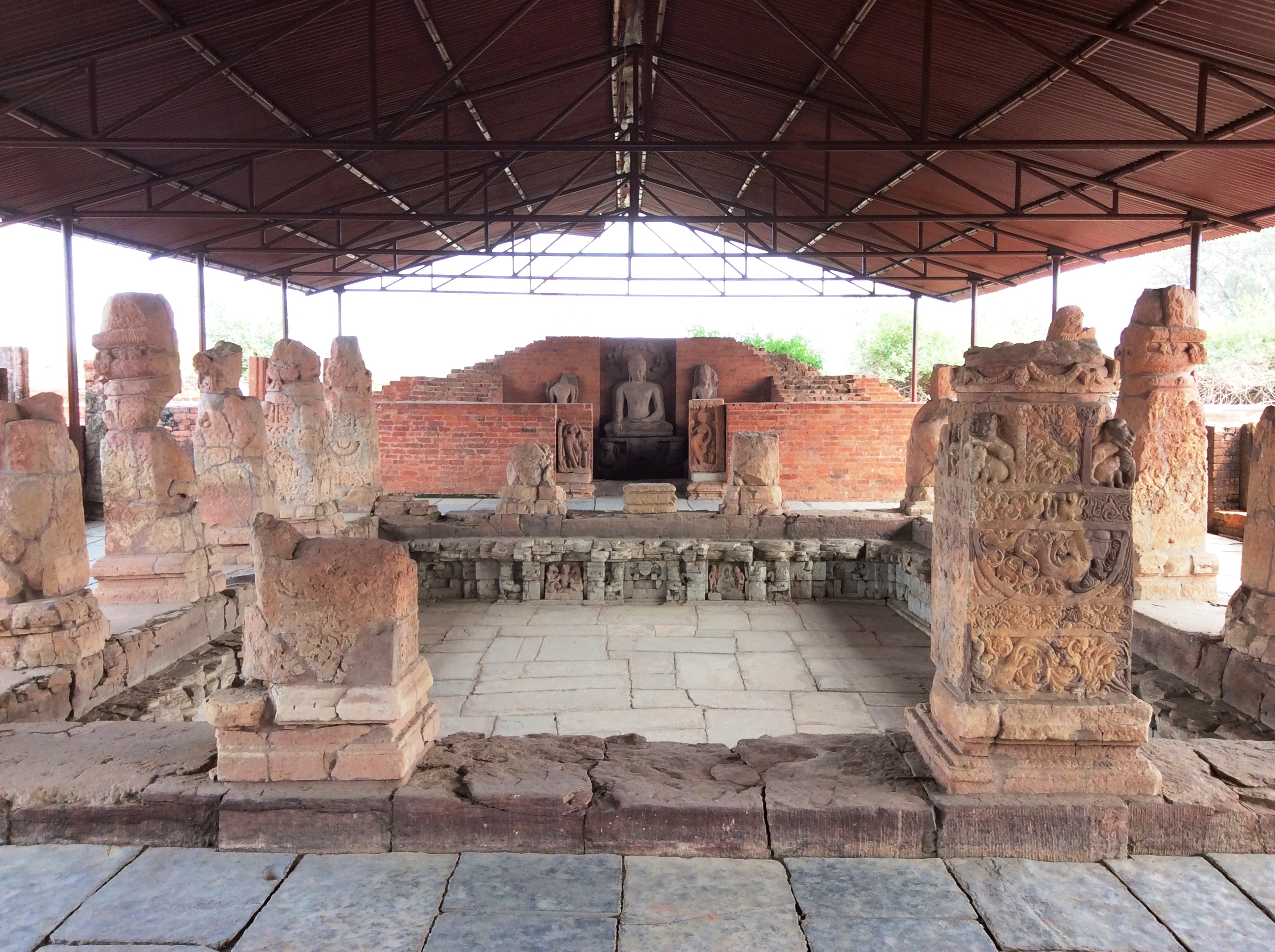
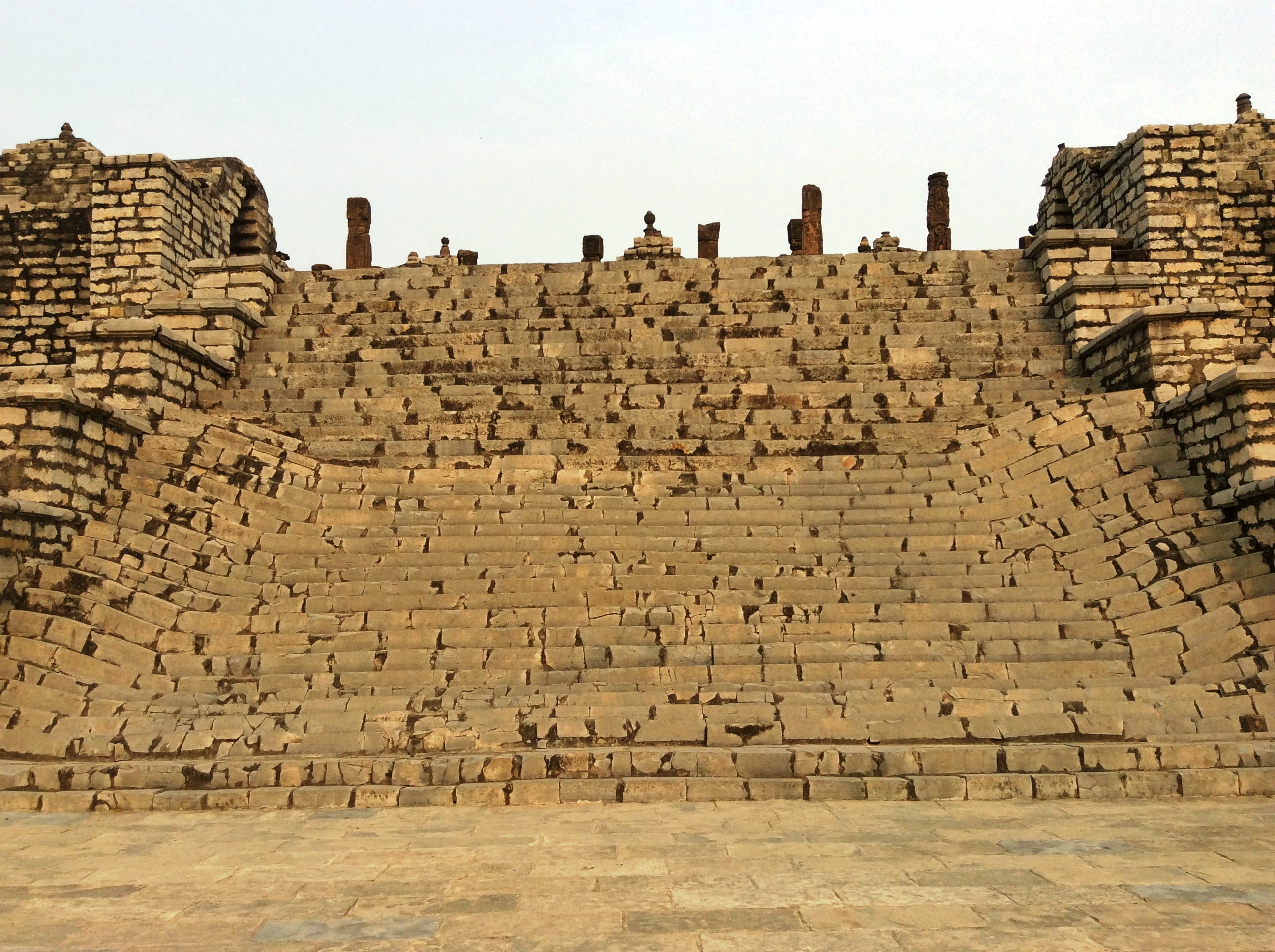
The main attractions of Sirpur are its 10 Budhhist viharas. There are Hindu wonders too, like the famous Lakshmana temple, made of red bricks and dedicated to Lord Vishnu, an ancient market place by the river side where merchants dealt in trade and Surang tila, a Shiva temple, with many winding and uneven steps leading to the top. Surang Tila was buried under the earth due to an earthquake and excavated around 2005-06.

According to local guide Tejram Yadav, as a result of floods and earthquakes, many of the structures found in Sirpur today were unearthed during excavations. In 1953, excavation was carried out for the first time here by MG Dixit and then again between 2000 and 2011 by Arun Kumar Sharma. Besides Yadav, there are 20 guides in Sirpur who have received training by the district administration and the state tourism board.

Today, there are 36 sites in Sirpur which are under the Archaeological Survey of India. The state government has two sites which are the Swastik Vihar and the Anand Kuti Vihar.

Buddhist viharas

Of the 10 Buddhist viharas in Sirpur, four of them are situated in one spot. There are interesting carvings on the walls of the viharas depicting human figures, flowers and wild animals like elephants. Even today, elephants are found in Mahasamund. The animals cross the Mahanadi and enter the district.

Pointing out figures of couples at the famous Teevardev Vihara or monastery, Yadav explained that in those days artisans used to make beautiful carvings on walls. A few women figurines depicted with kamarpattis or waist bands have striking details. There are flower motifs in plenty. An engraving on the wall of a flower is still in bloom in the kartik (October-November) month. The summer season is depicted by carvings of the mango fruit. Then there is the depiction of Garuda, the mythological bird of Hindu mythology.

The vihara has small rooms where two to three monks used to live in those days. These chambers have walls lined with bricks which are different from those made today. “At that time, paddy was mixed in bricks to make them porous and light. These are five times lighter than today’s bricks and used to be locally made,” Yadav added.

Of the two famous temples in Sirpur, the Lakshmana temple built in the 7th century is also made of red bricks. Visitors also throng the Surang Tila. It is a Shiva temple built on an elevation as at that time floods used to be frequent.

The haat bazaar or the market place where boats used to arrive full of travellers by the Mahanadi is another place of attraction in Sirpur. It is now believed that people used to keep rice in godowns here covered with stone slabs. Goldsmiths and ironsmiths frequented the market place, an important centre of commerce in those days.

Bhuneshwar Dhruw, who is from the Chhattisgarh tourism board, acts as a caretaker in Sirpur. As the plan is to include it under Buddhist heritage, bike rallies are being organised for awareness. One such rally was held in mid-March. “We want more people to come here and enjoy its history. So, the tourism department is marketing the place. The busiest season starts from June to December.”


First monsoon showers in Delhi

The first monsoon showers drenched Delhi on Thursday morning, providing respite from the oppressive heat.
However, the India Meteorological Department (IMD) is yet to declare the arrival of the monsoon in the capital.

“An official statement will be made after reviewing the rainfall data in the region,” a senior IMD official said.

The MeT office had earlier said the monsoon would reach the capital on Thursday or Friday.

The southwest monsoon usually arrives in the national capital on June 27.

However, Mahesh Palawat, vice-president (climate change and meteorology), Skymet Weather, confirmed these are the first monsoon showers in the region.

Most parts of the capital reported a fresh spell of rain.

The IMD has issued an orange alert, warning of heavy rainfall in some areas in the city on Thursday and moderate rainfall on Friday. The maximum temperature will come down to 34-35 degrees Celsius.

Last year, the IMD had forecast that the monsoon would arrive in Delhi nearly two weeks before its usual date. However, it reached the capital only on July 13, making it the most delayed in 19 years.

Weather experts say a gap of three to five days is considered normal.

According to IMD data, the monsoon covered Delhi 29 times in June and 33 times in July in the last 62 years.

The IMD had in 2020 revised the date of monsoon arrival in Delhi from June 29 to June 27.

Weather experts have said the monsoon is expected to yield good rainfall in Delhi in the first 10 days and help cover the rain deficit.

From June 1, Delhi has received just 24.5 mm of rainfall against the normal of 74.1 mm till Thursday morning.

MOST POPULAR

HOT NEWS