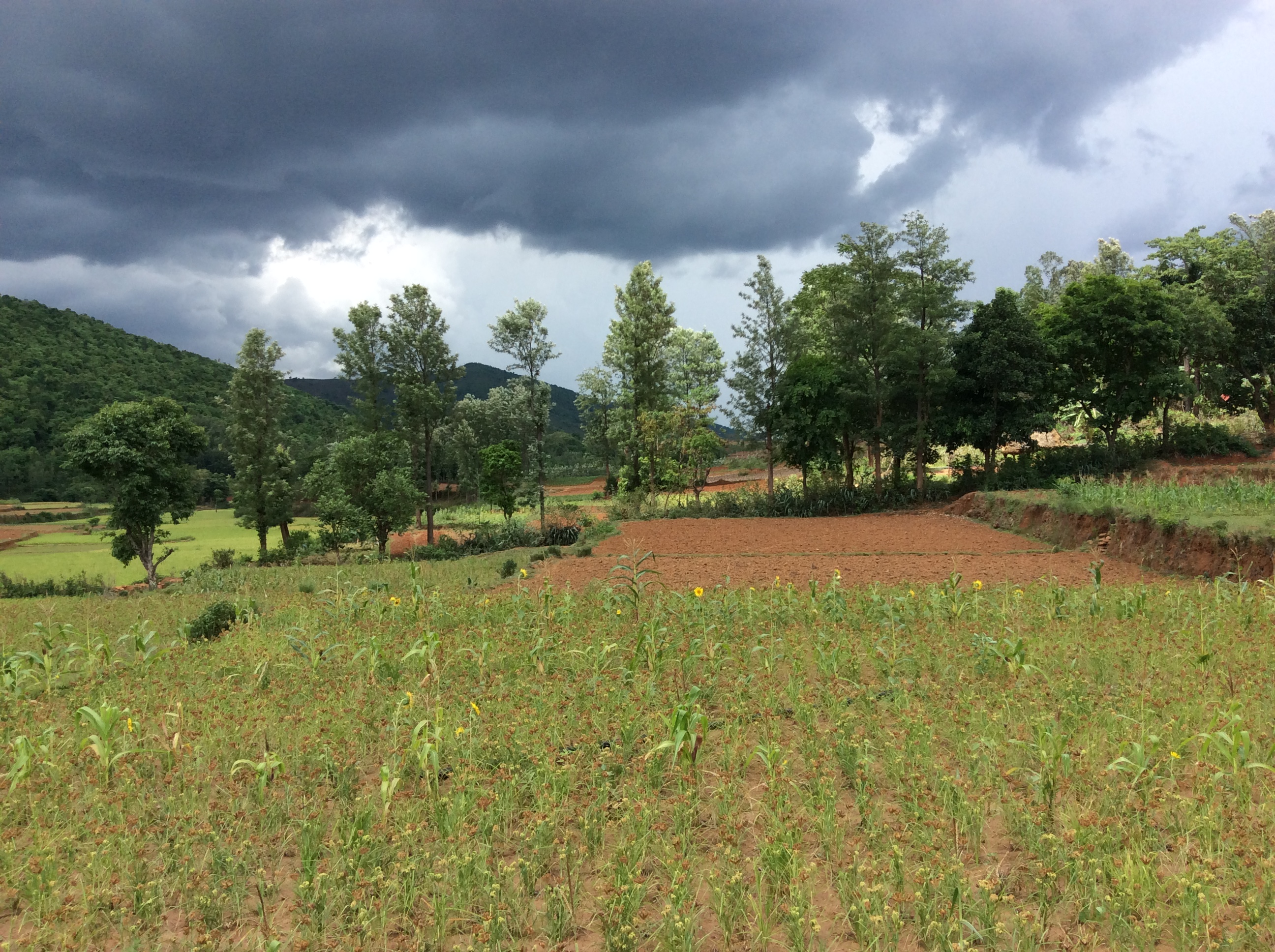
AP farmers adopt Guli ragi for enhanced production

The Guli method of ragi cultivation is a scientific way of growing it with wider spacing  between rows of crops. It has helped revive the important crop among
farmers. A report by Deepanwita Gita Niyogi

When Masaiah, a resident of Kusumi village in Srikakulam district of Andhra Pradesh, adopted the Guli method of ragi cultivation in his one-acre plot of land during the Rabi season four years ago, he scripted a success story.

In the month of January 2017, he witnessed a bumper yield of 14 quintals of ragi which was three times more than the productivity received from the conventional method of direct broadcasting. Gradually, Masaiah’s farm became a model plot for other farmers and agriculture officials.

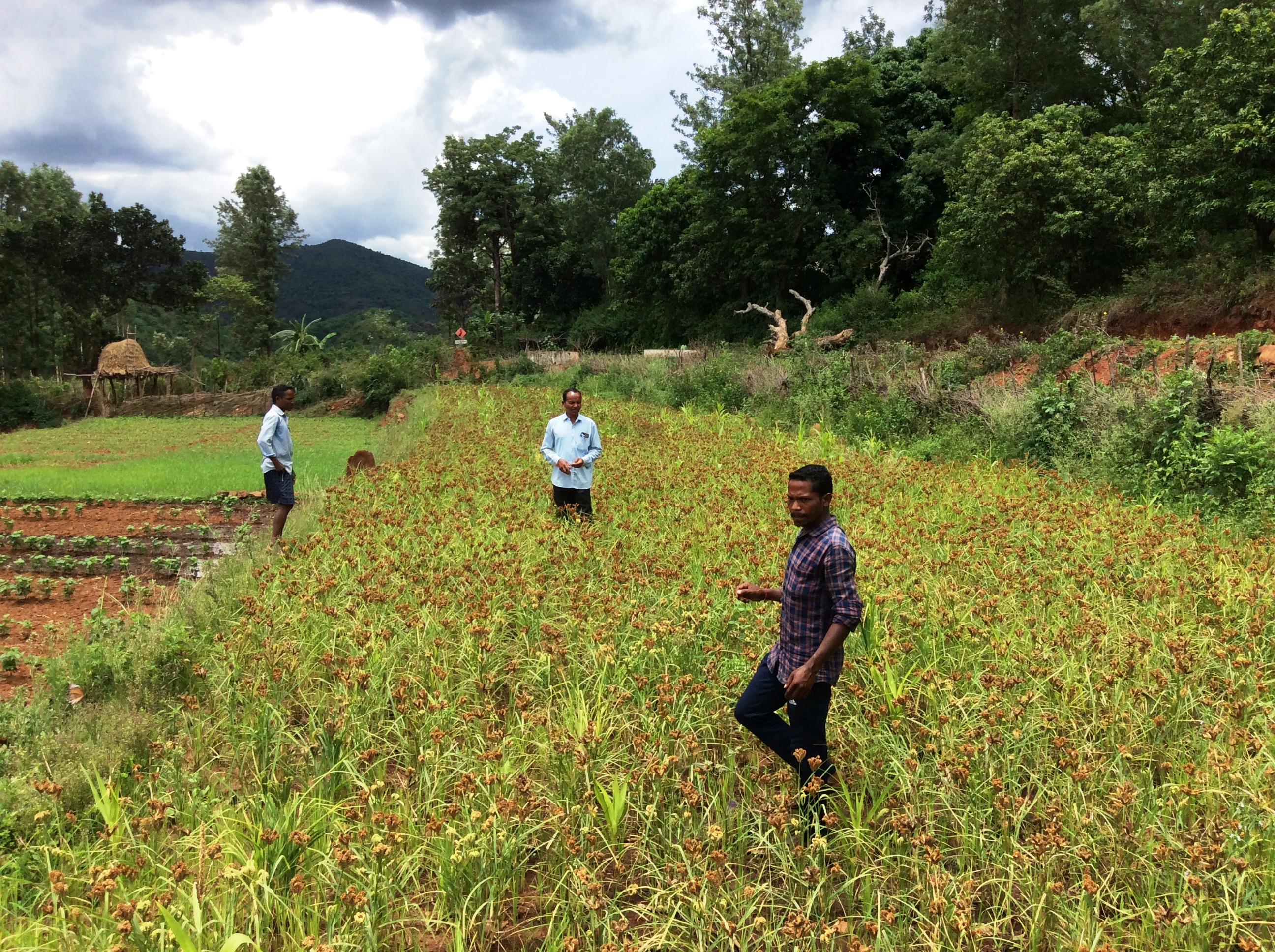
In Andhra Pradesh, ragi is a major crop, along with paddy. But the traditional method of broadcasting or direct seed sowing produced low yields of three to four quintals of ragi per acre. However, after the Guli method of ragi cultivation was introduced from 2017 onwards, many farmers have recorded yields of up to 10-16 quintals per acre.

The Guli is a scientific way of growing ragi with wider spacing between rows of crops. It is helping revive millets in the tribal-dominated belts of the state like Araku where today the focus is on coffee and pepper vines for enhanced income.

The United Nations has declared 2023 as the International Year of Millets. Thankfully, with this the focus on millets has been revived. There was a time when millets were categorized as coarse grains fit for consumption by the poor. Over the years, lucrative crops like cotton and maize replaced millets.

Farmers too abandoned millets due to low yields, lack of minimum support price, absence of processing facilities and zero market linkages. But today millets have been recognized as climate resilient crops.

Switching over to Guli ragi

Initially, a few small-scale farmers adopted the Guli method of ragi cultivation. At present, thousands of farmers have adopted the method across several districts of Andhra Pradesh.

WASSAN, a Hyderabad-based non-profit, is steering the process in 25 clusters of three districts in the northern coastal belt and two districts in the arid Rayalaseema region of the state. Several local organizations are also working towards championing ragi under the state government’s zero budget natural farming initiative, a chemical-free farming method, inspired by traditional practices.

WASSAN programme manager Sanyasi Rao, based in Vishakhapatnam, said that Guli method of ragi cultivation was scaled up in Andhra Pradesh from 2017 onwards. During the Kharif season of that year, the method was scaled up in Visakhapatnam, Vizianagaram and East Godavari districts. A total of 712 farmers tried this method covering 508 acres. A crop cutting experiment conducted in the field of farmer Samareddy Mahadev of Hukumpeta mandal of Araku on November 25, 2017 resulted in a yield of 14.08 quintals per acre.

Two years later, during the Kharif season of 2019, 1572 farmers adopted the Guli method in 845 acres to cultivate ragi. For checking the yields, 85 cross cutting experiments were carried out in Visakhapatnam, Vizianagaram and East Godavari districts.

“The ragi plants have now more tillers and healthier panicles. Farmers who adopted this practice are getting good yields. A few are also growing sunflowers as intercrop in ragi fields for extra income,” Rao added. This is a common practice in Dumbriguda mandal of Araku where ragi crop intercropped with sunflowers can be seen.

In the last Kharif season, the Guli ragi method spread to 3500 acres in Andhra involving 5000 farmers under the zero budget natural farming programme. However, it is no more monocropping of ragi as farmers are experimenting with jowar and maize apart from sunflowers.

From fields to plates

Besides increasing the production of ragi, the aim was also to promote its consumption at the community level through well-made strategies. Focus was laid on spreading awareness on the nutritional value of all millets, including minor millets, popularizing millet-based recipes, building linkages with local flour millers for processing and ensuring the availability of millets at household levels. Efforts were also made to introduce millet-based recipes at anganwadi centres.

Though consumption of ragi was once common among the millet growers in the north coastal and the arid Rayalaseema regions, over the years its intake drastically declined leading to malnutrition.

To promote millet consumption, particularly among women and children for nutritional intake, apart from organizing rallies involving school children, members of local self-help groups and farmers were selected for training on making delicious millet items.

Women acted as resource persons at cluster levels and tried to spread awareness among the community on the importance of millets. On the whole, 30 women acted as community campaigners and organized recipe contests in several villages. In 25 clusters of Rayalseema region and the coastal belt, women covered 1394 families.

Limited availability of processed millets in the market is one of the main reasons behind low consumption. Keeping this in mind, the local rate of millet processing was explored with members of self-help groups. An action plan was prepared with help from women members for increasing the availability of processed millets in villages.
Locally, women process millets at home with the help of stone and wooden grinders. It is a laborious process. To help them, suitable changes were made in available machines in the market so that these could be used at the household level by women to process little millets. In some places, a few women came forward and offered to process millets on a service basis.

Jacob Nellithanam, who works with farmers across India, said that he organized a workshop in Karnataka on Guli ragi. After that the method was implemented in Vishakhapatnam and Vizianagaram which involved training to farmers. For the Guli method, bullock-driven tools are needed. It is convenient to adopt the practice in low rainfall areas and is hence, ideal, for dry places.

 

Eknath Shinde govt will collapse as treachery not acceptable in Maha says Aaditya Thackeray

Maharashtra never tolerates treachery and  Eknath Shinde-led government will collapse for sure, Yuva Sena chief and former minister Aaditya Thackeray said on Monday.

Addressing Shiv Sena workers during his tour of the Konkan region, he said the Shinde government’s focus is on “dirty politics” and not the welfare of the people.

“This entire political drama is of the one-and-half months. The government will collapse for sure. Maharashtra never tolerates treachery, said Aaditya, son of Shiv Sena chief and former chief minister Uddhav Thackeray.

Attacking the Shinde government in which Devendra Fadnavis of the Bharatiya Janata Party (BJP) is the deputy chief minister, Aaditya said the current government’s focus is on “dirty politics” and not the welfare of Maharashtra and the people.

The state witnessed incessant rains and floods, but the government is not bothered, he alleged.

The rebellion by Shinde and 40 MLAs of Shiv Sena led to the collapse of the Uddhav Thackeray-led Maha Vikas Aghadi (MVA) government last month.

169 dengue cases in Delhi so far this year, highest since 2017

Nearly 170 dengue cases have been reported in the national capital this year till July 30, the highest for the period since 2017, according to a civic body report released on Monday.

At least 26 cases of the vector-borne disease were recorded in July, it said,

According to the Municipal Corporation of Delhi (MCD) report, the city recorded 23 dengue cases in January, 16 in February, 22 in March, 20 in April, 30 in May and 32 in June.

The total count of dengue cases reported in the capital this year stands at 169 till July 30.

Till July 25, the city had logged 159 cases. So, 10 fresh cases have been reported in a week, the report stated.

Also, in 2017, Delhi had reported 185 cases during the January 1- July 30 period, it said.

The count of dengue cases reported in Delhi between January 1 and July 30 last year was 52. The corresponding figures were 31 in 2020, 40 in 2019, 56 in 2018, the report said.

No death has been reported so far this year due to the disease, the MCD report said.

Cases of vector-borne diseases are usually reported between July and November, sometimes stretching till mid-December.

Civic officials said dengue cases were being recorded earlier this year due to a weather condition that is congenial for mosquito-breeding.

Last year, 9,613 dengue cases were recorded in the national capital, the highest since 2015, along with 23 deaths, the maximum since 2016.

In 2016, 10 deaths were reported due to dengue. Delhi had recorded two deaths due to dengue in 2019, four in 2018 and 10 in 2017.

According to official data, 4,431 dengue cases were recorded in Delhi in 2016, 4,726 in 2017, 2,798 in 2018, 2,036 in 2019, and 1,072 in 2020.

In 2015, the city had witnessed a massive outbreak of dengue with the number of cases crossing 10,600 in October alone. It was Delhi’s worst dengue outbreak since 1996.

Delhi also has reported 33 cases of malaria and nine cases of chikungunya so far this year, the report said.

Sanjay Arora to be new police commissioner of Delhi

Sanjay Arora, a Tamil Nadu-cadre IPS officer who headed the paramilitary force ITBP, was appointed as the Delhi Police commissioner on Sunday.

Arora, who was once part of the Tamil Nadu Police’s special task force which later hunted down forest brigand Veerappan, will succeed Rakesh Asthana, a Gujarat-cadre IPS officer who retired on Sunday after nearly 38 years in service.

Arora is the second successive non-AGMUT cadre IPS officer to head the Delhi Police and the third since the Delhi Police Act was passed in 1978 and a commissionerate was established.

Before Arora and Asthana, Ajai Raj Sharma, a 1966-batch IPS officer of the Uttar Pradesh cadre, was appointed as the Delhi Police chief in 1999 when L K Advani was the Union Home Minister.

The Delhi Police functions under the Union Home Ministry and its officers belong to the Arunachal Pradesh-Goa-Mizoram and Union Territory (AGMUT) cadre.

According to an official order, the competent authority has approved the inter-cadre deputation of Arora.

Arora, a 1988-batch IPS officer, will take charge on Monday and will continue till further order. He is due for retirement in 2025.

He served as the Superintendent of Police of the Tamil Nadu Police STF which was set up to hunt down forest brigand Veerappan and he was awarded the chief minister’s gallantry medal for bravery during this stint. He served as Coimbatore police commissioner between 2002 and 2004.

Arora was appointed the Director General of the paramilitary Indo-Tibetan Border Police (ITBP) in August last year. He also had stints in the Central Reserve Police Force (CRPF) and the Border Security Force (BSF). He holds a B.Tech degree in Electrical and Electronics Engineering.

In a separate order, the Home Ministry said his tenure as DG ITBP has been curtailed and his inter-cadre deputation from the Tamil Nadu cadre to the AGMUT cadre will begin from the date of joining the AGMUT cadre and up to his date of superannuation i.e. up to July 31, 2025, or until further orders, whichever is earlier, in relaxation of inter-cadre deputation guidelines.

In yet another order, the home ministry said Director General of the SSB, S L Thaosen, a 1988-batch IPS officer of Madhya Pradesh cadre, will hold additional charge of DG ITBP till further order.

Gyanvapi case: Lawyer representing masjid committee dies

Lawyer representing the masjid committee in the Gyanvapi-Shringar Gauri complex case case died due to cardiac arrest, family sources said here. He was 62.

Abhay Nath Yadav died on Sunday night and will be cremated on Monday, they said.

Yadav was a prominent lawyer representing the Anjuman Intezamia Masjid Committee in the case.

The Allahabad High Court had last week adjourned the hearing of the case till August 3 challenging the maintainability of a 1991 suit seeking right to worship by Hindu petitioners.

Delhi govt withdraws new excise policy

Delhi government has decided to withdraw the new Excise Policy for the time being and directed the sale of liquor through government-run vends, Deputy Chief Minister Manish Sisodia said on Saturday.

Targeting the BJP, he alleged they were “running an illegal liquor business in Gujarat” and they wanted to do it now in Delhi also.

The deputy chief minister, who also holds the excise portfolio, said in a press briefing that the Delhi chief secretary has been directed to ensure that liquor is now sold through government shops only and there is no chaos.

He also alleged the BJP was using agencies like the CBI and ED to threaten liquor licensees, many of whom have now shut shops, and the excise officials who were scared to start open auctions of retail licences.

“They want to create a shortage of liquor so that they can run an illegal liquor trade in Delhi like they are doing in Gujarat. But we will not let this happen,” Sisodia said.

Under the new excise policy, nearly 468 liquor stores are running in Delhi at present. The policy, that extended twice after April 30 for a two-month period each, will end on July 31.

No new tax or VAT increase in UP: CM Adityanath

Uttar Pradesh Chief Minister Yogi Adityanath on Friday said that keeping in mind the larger public interest, the government has neither increased the VAT and nor has imposed any new tax in the state.

Chairing a meeting of the state tax department pertaining to revenue collection at his residence, he said that Value Added Tax (VAT) will not be increased in the near future too.

Adityanath said the amount collected from the public will be spent on developmental and public welfare works, according to an official statement released here.

He directed that for financial year 2022-23, concrete efforts should be made pertaining to revenue collection with an aim to collect Rs 1.50 lakh crore as Goods and Services Tax (GST) and VAT.

The chief minister also directed officials that the number of GST-registered traders should be increased to 4 lakh in the next 6 months.

The traders should be told about the benefits of GST registration/return, the statement said quoting the chief minister.

Forex reserves fall USD 1.15 bln to USD 571.56 bln

India’s foreign exchange reserves declined USD 1.152 billion to USD 571.56 billion for the week ended July 22, according to RBI data.

The reserves has been declining amid continuing volatility in the rupee which has also significantly depreciated against the US dollar.

In the previous reporting week, the overall reserves had declined by USD 7.541 billion to USD 572.712 billion.

Defending the rupee amid pressures due to rising interest rates in the developed world, high commodity prices and foreign portfolio investment outflows has resulted in heavy decline in the forex assets, which had touched an all-time high of USD 642 billion in September 2021.

For the reporting week ended July 22, the foreign currency assets declined USD 1.426 billion to USD 510.136 billion, the Reserve Bank of India (RBI) said in its weekly report released on Friday.

Expressed in dollar terms, the foreign currency assets include the effect of appreciation or depreciation of non-US units like the euro, pound and yen held in the foreign exchange reserves.

The value of the gold reserves increased USD 145 million to USD 38.502 billion, the apex bank said.

The Special Drawing Rights (SDRs) with the International Monetary Fund (IMF) went up by USD 106 million to USD 17.963 billion.

The country’s reserve position with IMF increased by USD 23 million to USD 4.96 billion in the reporting week, the data showed.

Lilly Singh, Diljit Dosanjh, Priyanka bow down in respect to each other

Indian actress Priyanka Chopra Jonas has shared some candid pictures with Punjabi singer-actor Diljit Dosanjh and social media personality Lilly Singh from their time together in Los Angeles.

Priyanka took to Instagram sharing a slew of pictures. In one picture, the three are seen bowing down to each other. Priyanka and Lilly recently attended Diljit’s concert in Los Angeles.

Priyanka wrote: “There are a few things that will warm your heart as much as a taste of home. Also, when your people are in town! You show the F up!!”

“I had a much-needed super fun night out watching @diljitdosanjh doing what he does best! He had the audience wrapped around his finger! None of us sat even for a moment! You’re such a superstar, @diljitdosanjh. I highly recommend you get tickets to Diljit’s current tour!”

“Also, kudos to the team that made it so comfortable and awesome for my friends and me! Thank you, @lilly, for always having the best ideas for nights out! Lots of Love! PS- watch us trying to outdo respecting each other! I’ll bow lower! Lol! #DesiThings #DesiCrew.”

On the work front, Priyanka will now be seen in Russo Brothers”Citadel’

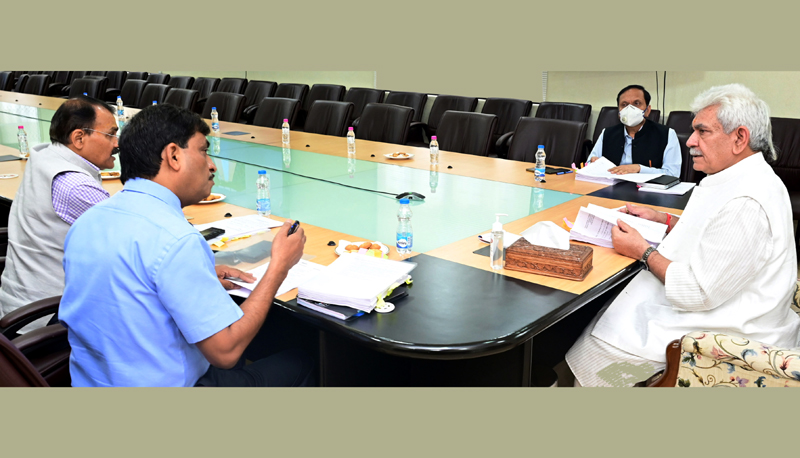
&K Govt to name 18 schools after martyrs

Jammu and Kashmir administration has started the process of naming 18 schools after martyrs and eminent personalities, especially those who gave up their life in the service of the nation.

“Sanction is hereby accorded to naming of infrastructure assets after the martyrs, eminent personalities,” an order issued by Manoj Kumar Dwivedi, principal secretary to government, General Administration Department said.

The administration has ordered the school education departments to start the naming process in right earnest.

The divisional commissioners of Jammu and Kashmir have been asked to personally monitor the naming of the schools in their respective divisions. Similarly, the deputy commissioners have been tasked to ensure that suitable events are held on the occasion of naming ceremonies.

So far, Government Higher Secondary School Soaf Shali, Anantnag in South Kashmir has been named after late Sarwanand Kaul Premi, Government Boys Middle School, Wanpora, Gurez after martyr Reyaz Ahmad Lone and GMS Chandanwari after martyr rifleman Mohammad Safeer Khan.


MOST POPULAR

HOT NEWS