How many times India was partitioned?

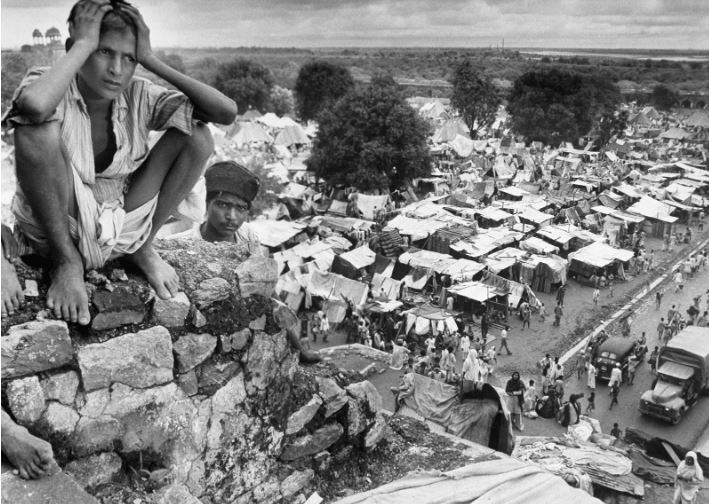
Recently Twitterati raised an interesting question as to how many times India was partitioned? Most people replied that India was partitioned in 1947 when India and Pakistan became two separate dominions. But actually there is more to it than that.

Did you know India was partitioned seven times by the British in 61 years. It of course is besides the secession of Bangladesh from Pakistan in 1971. Also it does not include the earlier separations of Burma now Myanmar and Ceylon now Sri Lanka from India.

Recently Twitterati raised an interesting question as to how many times India was partitioned? Most people replied that India was partitioned in 1947 when India and Pakistan became two separate dominions, called the Republic of India and Islamic Republic of Pakistan.

There are some important questions about the Indian sub-continent that still remain unanswered. Let’s find answers to the perplexing question:

Q: Partition of India was done how many times ?

Answer: Seven times in 61 years by British rule.

Afghanistan was separated from India in 1876

Nepal in 1904

Bhutan in 1906

Tibet in 1907

Sri Lanka in 1935

Myanmar (Burma) in 1937

Pakistan in 1947

 India’s Partition of Akhanda Bharat 

Unbroken India extended from the Himalayas to the Indian Ocean and from Iran to Indonesia. India’s area in 1857 was 83 lakh square kilometers, which is currently 33 lakh square kilometers.

Sri Lanka: The British separated Sri Lanka from India in 1935. The old name of Sri Lanka was Sinhaldeep. The name Sinhaldeep was later renamed Ceylon. Sri Lanka’s name was Tamraparni during the reign of Emperor Ashoka. Mahendra, son of Emperor Ashoka and his daughter Sanghamitra went to Sri Lanka to propagate Buddhism. Sri Lanka was a part of united India.

Afghanistan: The ancient name of Afghanistan was Upganasthan and Kandahar’s was Gandhara. Afghanistan was a Shaivite country. The Gandhara described in the Mahabharata is in Afghanistan from where the Kauravas’ mother was Gandhari and maternal uncle Shakuni. The description of Kandahar that is Gandhara is found till the reign of Shah Jahan. It was a part of India. In 1876 Gandamak treaty was signed between Russia and Britain. After the treaty, Afghanistan was accepted as a separate country.

Myanmar (Burma): The ancient name of Myanmar (Burma) was Brahmadesh. In 1937, the recognition of a separate country to Myanmar i.e. Burma was given by the British. In ancient times, the Hindu king Anandavrata ruled here.

Nepal: Nepal was known as Deodhar in ancient times. Lord Buddha was born in Lumbini and mother Sita was born in Janakpur which is in Nepal today. Nepal was made a separate country in 1904 by the British.  Nepal was called as Hindu Rashtra Nepal. Until a few years ago, the king of Nepal was called Nepal Naresh. Nepal has 81 percent Hindus and 9% Buddhists. Nepal was an integral part of India during the reigns of Emperor Ashoka and Samudragupta. In 1951, Maharaja Tribhuvan Singh of Nepal appealed to the then Prime Minister of India, Pandit Jawaharlal Nehru to merge Nepal with India, but Jawaharlal Nehru rejected the proposal.

Thailand: Thailand was known as Syam until 1939. The major cities were Ayodhya, Shri Vijay etc. The construction of Buddhist temples in Syam began in the third century. Even today many Shiva temples are there in this country. The capital of Thailand, Bangkok also has hundreds of Hindu temples.

Cambodia: Cambodia, derived from the Sanskrit name Kamboj, was part of unbroken India. The Kaundinya dynasty of Indian origin ruled here from the first century itself. People here used to worship Shiva, Vishnu and Buddha. The national language was Sanskrit. Even today in Cambodia, the names of Indian months such as Chet, Visakh, Asadha are used. The world famous Angkor Wat temple is dedicated to Lord Vishnu, which was built by the Hindu king Suryadev Varman. The walls of the temple have paintings related to the Ramayana and the Mahabharata. The ancient name of Angkor Wat is Yashodharpur.

Vietnam: The ancient name of Vietnam was Champadesh and its principal cities were Indrapur, Amravati and Vijay. Many Shiva, Lakshmi, Parvati and Saraswati temples are still be found here. Shivling was also worshiped here. The people were called Cham who were originally Shaivites.

Malaysia: The ancient name of Malaysia was Malay Desh which is a Sanskrit word which means the land of mountains. Malaysia is also described in Ramayana and Raghuvansham. Shaivism was practiced in Malay. Goddess Durga and Lord Ganesha were worshiped. The main script here was Brahmi and Sanskrit was the main language.

Indonesia: The ancient name of Indonesia is Dipantar Bharat which is also mentioned in the Puranas. Deepantar Bharat means the ocean across India. It was the kingdom of Hindu kings. The largest Shiva temple was in the island of Java. The temples were mainly carved with Lord Rama and Lord Krishna. The Bhuvanakosh is the oldest book containing 525 verses of Sanskrit.

The names or mottos of the leading institutions of Indonesia are still in Sanskrit :

Indonesian Police Academy – Dharma Bijaksana Kshatriya

Indonesia National Armed Forces – Tri Dharma Eka Karma

Indonesia Airlines – Garuda Airlines

Indonesia Ministry of Home Affairs – Charak Bhuvan

Indonesia Ministry of Finance – Nagar Dhan Raksha

Indonesia Supreme Court – Dharma Yukti

Tibet: The ancient name of Tibet was Trivishtam which was divided into two parts. One part was given to China and the other to Lama after an agreement between the Chinese and the British in 1907. In 1954, India’s Prime Minister Jawaharlal Nehru accepted Tibet as part of China to show his solidarity with Chinese people.

Bhutan: Bhutan was separated from India by the British in 1906 and recognized as a separate country. Bhutan is derived from the Sanskrit word Bhu Utthan which means high ground.

Pakistan: There was partition of India on August 14, 1947 by the British and Pakistan came into existence as East Pakistan and West Pakistan. Mohammad Ali Jinnah had been demanding a separate country on the basis of religion since 1940 which later became Pakistan. In 1971 with the cooperation of India, Pakistan was divided again and Bangladesh came into existence. Pakistan and Bangladesh were once parts of India.

Interesting, but how many of us are really aware of this history?



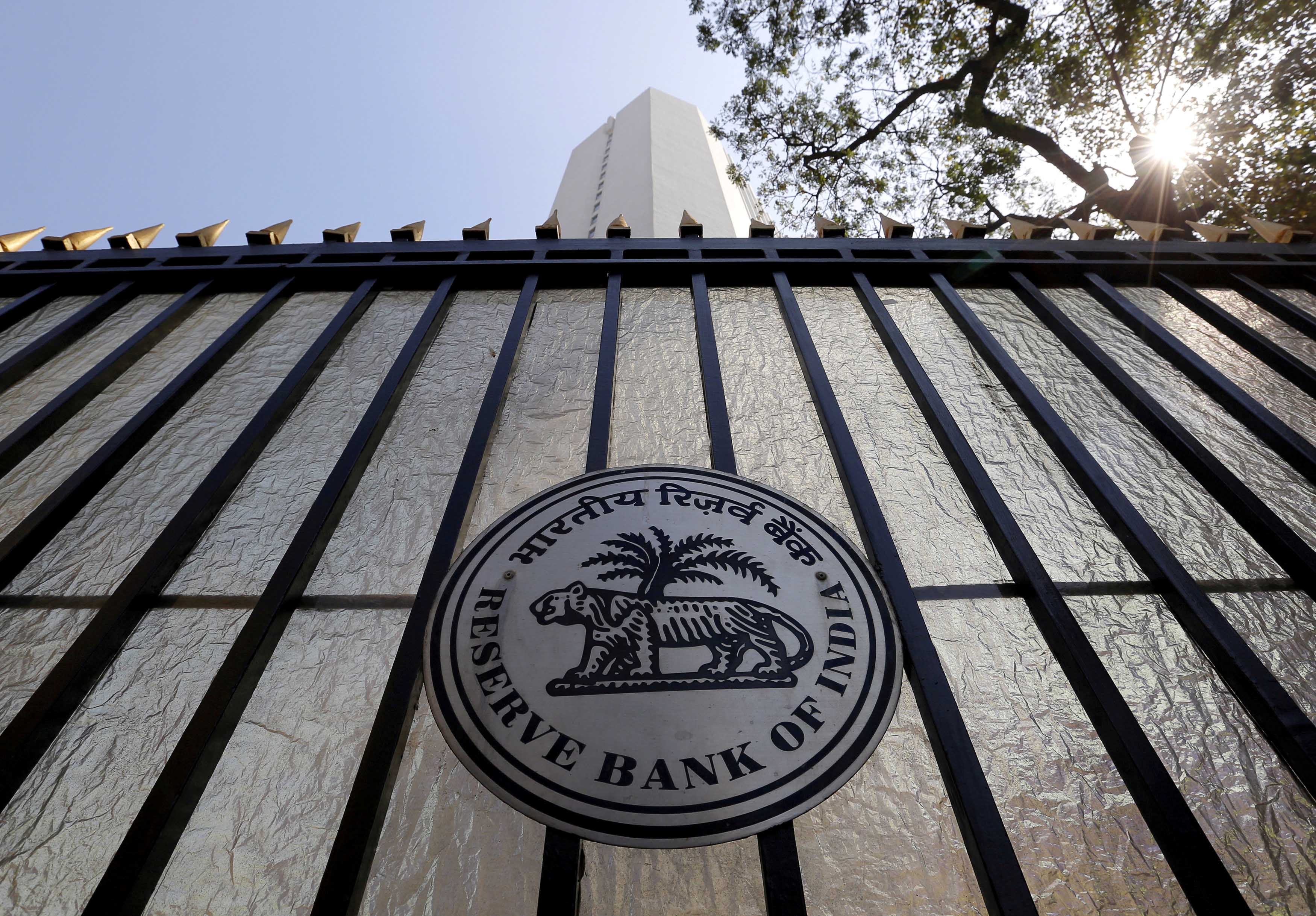
Is RBI’s move to ban cryptos a good idea?

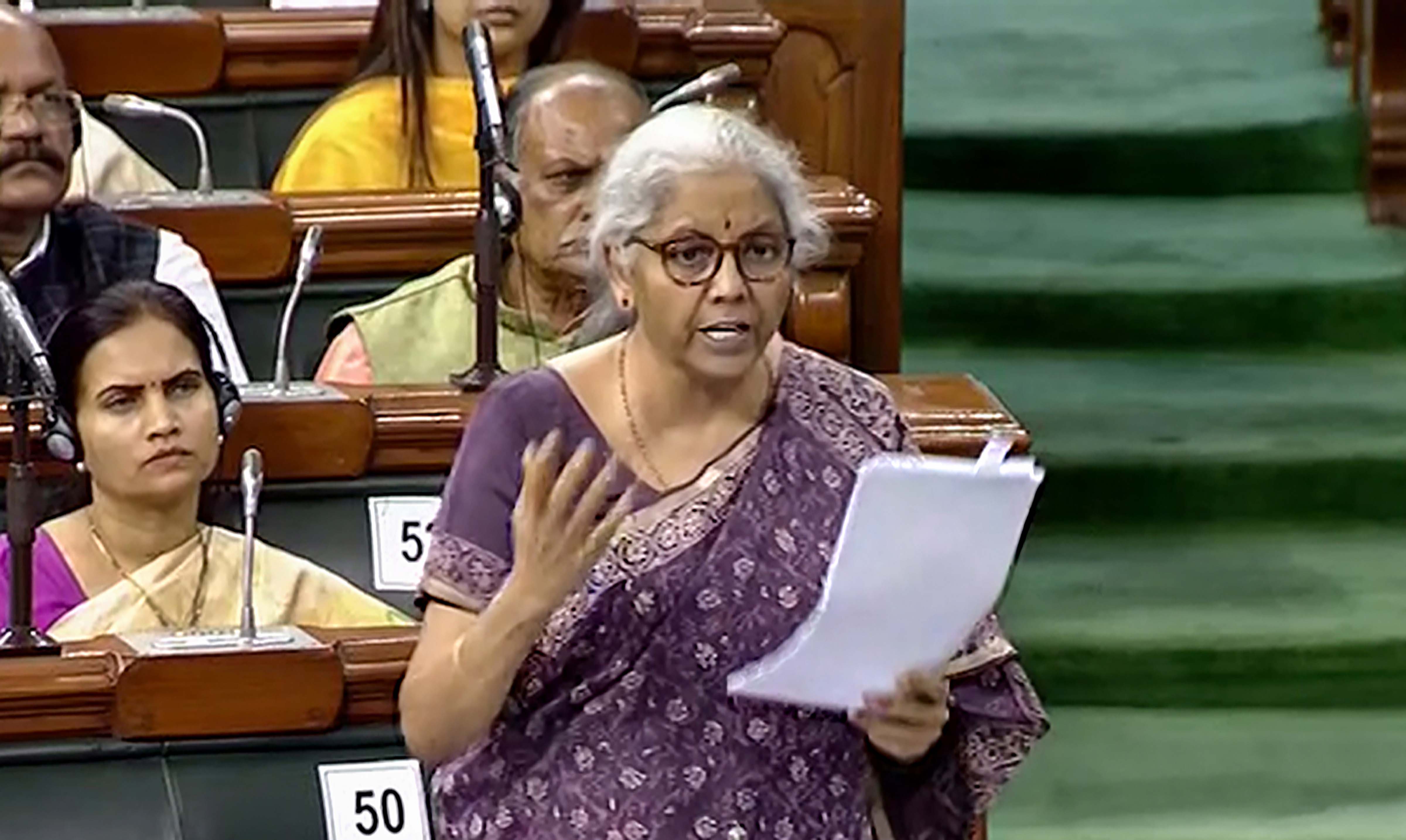
Union finance minister Nirmala Sitharaman said in the Lok Sabha that the RBI is in favour of banning cryptocurrencies. While there are genuine concerns over the usage of virtual currencies, regulating them rather than imposing a ban could be a viable option, writes Narvir Rooprai

Money has three main attributes: it is used as a unit of account, as a medium of exchange, and as a store of value. In most countries, money is issued by a government backed authority (such as RBI in India) and carries sovereign guarantee. Entities authorised to hold money and enable payments (such as banks, credit cards and payment wallets) are licensed by a government agency. This means that there is a government-regulated centralised system of validating transactions and keeping track of money flow.

The Union Finance Minister said, “In view of the concerns expressed by RBI on the destabilising effect of cryptocurrencies on the monetary and fiscal stability of a country, RBI has recommended framing of legislation on this sector. RBI is of the view that cryptocurrencies should be prohibited.”

As at present, cryptocurrencies are not regulated in India.  The Finance Minister had announced the launch of India’s own digital currency by the RBI next year 2023 that will be based on Blockchain technology. With this, India will join certain countries that have their own central bank digital currency (CBDC) that refers to the virtual form of a fiat currency. “Digital rupee to be issued using Blockchain and other technologies by the RBI starting 2022-23,” said Sitharaman in Parliament.

However, the much-expected Cryptocurrency Bill is yet to see the light of the day. One reason is that effective legislation on this matter is possible only through international collaboration. Cryptocurrencies are by definition borderless and require international collaboration to prevent regulatory arbitrage. Therefore, any legislation for regulation or for banning can be effective only after significant international collaboration on evaluation of the risks and benefits and evolution of common taxonomy and standards.

What is Cryptocurrency

Historically, currencies were devised as means to replace the barter system. Currencies that we use in our regular life are also known as “fiat currencies” since they are backed by a convertible or a commodity. In simple terms, the currency that we use is issued by the Government and is a promissory note issued by the Government promising to pay the bearer the amount specified on the currency.

The Virtual Currencies are basically a collection of binary data, which is stored using cryptography to secure the transaction records. VCs are not fiat currencies and are not backed by the Government. VCs are based on the concept of decentralised control and have no single authority regulating its issuance. VCs do not exist physically. They are distributed over a vast network of computers. Unlike regular currencies, VCs have a limit. Every ASCII computer file specifies the quantity of a coin. Thus, as the demand for VCs increase, so does its value. It works on the principle of demand and supply.

VCs also have the advantage of eliminating third party merchants such as Visa or Master Card and therefore an end user does not have to pay commission, bringing down the transaction cost. They are also irreversible. So, if a transaction is carried out, it cannot be reversed. The VCs are stored in a digital wallet, which can only be accessed by a private key. It is like an unbreakable vault, which can only be opened with the set of keys provided. If you lose the key, you lose the contents in the vault. There is a popular saying in crypto : “not your keys, not your coins”, meaning that if you don’t hold your own private keys, you can’t really be in control of your own funds.

If VCs have so many benefits, then why are the Governments sceptical of considering them as legal tender? The VCs are based on blockchain technology, which is highly secure. A wallet is linked to a private key rather than an individual person. Therefore, the Governments find it challenging to trace the origin of a transaction. Because VCs use pseudonyms to carry out transactions, it has the potential of being used for illegal activities. Another concern is that since VCs are not backed by Government or any commodity and therefore can lose their values if the promoter of the VCs stops trading activity.

However, the most vocal advantages of VCs are that they can be “mined” by a computer that involves a process of solving arithmetical problems or algorithms, which are used to verify transaction blocks to be added to the blockchain. As stated earlier, VCs are secured by blockchain, which is an ever-growing list of transactions. One can use a computer to validate these transactions and, as a reward, receive a cryptocurrency. The size of bitcoins block rewards is halved after the creation of every 10,000 blocks, which takes around four years. At bitcoin’s inception in 2009, each block reward was worth 50 BTC. In May 2020, the block reward was halved a third time to 6.25 BTC. The 6.25 BTC is approximately $ 140,000 USD and 50 BTC is $ 1.1m.

Unlike a physical currency note, Cryptocurrencies address this problem using ‘blockchains’.  All users in the system have access to the account balance of all other users (code-names may be used to protect privacy). When a set of payments happen, they are bunched together in a “block which is connected to the previous block using cryptography, and published on the system.  A chain of such blocks of transactions is called a blockchain.  As this ledger is available to all users and validated by them, it is a form of Distributed Ledger Technology (DLT).

Cryptocurrency emerged as a person-to-person electronic cash system that allows online payments to be sent directly from one party to another, without the need of a financial institution. They are also used as utility tokens which provide the holder access to a company’s goods and services.

Why RBI is apprehensive

The RBI has been apprehensive about cryptocurrencies because of their cryptic nature and absence of any intrinsic value and a slew of so-called crypto exchanges, many playing their business online, and soliciting customers through mass media advertising promising superlative returns. The crypto crash in some cases has served up a dose of reality to customers, at least some of whom do not really understand crypto currencies and saw them as instruments that could generate high returns.

In India, the Crypto trading platforms WazirX, CoinDCX, and Unocoin are experiencing a substantial jump in volumes. It is at the same time that the RBI has been cautioning users, holders and traders of Virtual Currencies (VCs) vide public notices that dealing in VCs is associated with potential economic, financial, operational, legal, customer protection and security related risks. The RBI on May 31, 2021 also advised its regulated entities, such as banks to continue to carry out customer due diligence processes for transactions in VCs, in line with regulations governing standards for Know Your Customer (KYC), Anti-Money Laundering (AML), Combating of Financing of Terrorism (CFT), and obligations under Prevention of Money Laundering Act (PMLA).

This was in addition to ensuring compliance with relevant provisions under Foreign Exchange Management Act (FEMA) for overseas remittances. The central bank also registered its concerns over the adverse effect of cryptocurrency on the economy. It has clarified that the value of fiat currencies is anchored by monetary policy and their status as legal tender, however the value of cryptocurrencies rests solely on the speculations and expectations of high returns that are not well anchored, so it will have a de-stabilising effect on the monetary and fiscal stability of a country.

The central bank has been working on modalities for central bank digital currency. However, it has expressed reservations on private cryptocurrencies. The RBI Governor Shaktikanta Das has already said that cryptocurrencies are a very serious concern from the macro-economic and financial stability perspective. However, more than 80 per cent of central banks are looking at digital currencies.

Global regulation

China’s digital RMB was the first digital currency to be issued by a major economy. On September 27, 2021, Tajikistan announced the creation of a CBDC with the Fantom Foundation, and Nigeria was the first African country to launch its CBDC on October 25. The Bank of America said in its recent report that a US CBDC would differ from the digital money currently available to the public because it would be a liability of the US Federal Reserve, not a commercial bank, and so would have no credit or liquidity risk. The US Fed has also published a discussion paper on the benefits and risks of a CBDC.

Countries like Canada regulate VCs under their money laundering laws, trading in VCs is permitted on an open exchange and the revenue generated is taxed under their income tax laws, VCs are also used to avail products and services. Further, Japan permits the use of VCs as payment systems.

What is the Crypto Bill

The text of the Bill is yet to be released to the public. But sources said ‘The Cryptocurrency and Regulation of Official Digital Currency Bill, 2021’  seeks ‘to create a facilitative framework for creation of the official digital currency to be issued by the Reserve Bank of India. The Bill also seeks to prohibit all private cryptocurrencies in India; however, it allows for certain exceptions to promote the underlying technology of cryptocurrency and its uses’.

The proposed Bill may ideally serve to introduce a level of uniformity of understanding and serve to bring the various government agencies involved onto the same page while also providing security and helping regulate the otherwise unregulated markets and prevent its misuse. On the surface, the Bill seems to be very restrictive in nature as it seeks to ban all private cryptocurrencies including mining and trading therein. The Bill further seeks to promote the ‘official digital currency’ that is to be issued by the Central Government and the RBI. Further, the penalties prescribed under the Bill seem to be disproportionately harsher when compared with similar economic offences.

It is learnt that the draft Bill seeks to prohibit mining, holding, selling, trade, issuance, disposal or use of cryptocurrency which is defined as any information, code, or token which has a digital representation of value and has utility in a business activity, or acts as a store of value, or a unit of account. The draft Bill bans all cryptocurrencies based on the risks associated with them such as potential use for money-laundering, risks to consumers and threat to the country’s financial stability.

The way forward

The question now is whether banning all private VCs and having a single regulated ‘official digital currency’ defeats the purpose of VCs in general or is justified given the volatility as well as the potential for misuse. If properly regulated, the Government can tax the revenue generated, which can be a win-win situation for both the Government as well as investors. While there are genuine concerns over the usage of VCs, regulation rather than prohibition could be a more viable option.


Self-sufficiency in domestic crude: Is it a pipe dream?

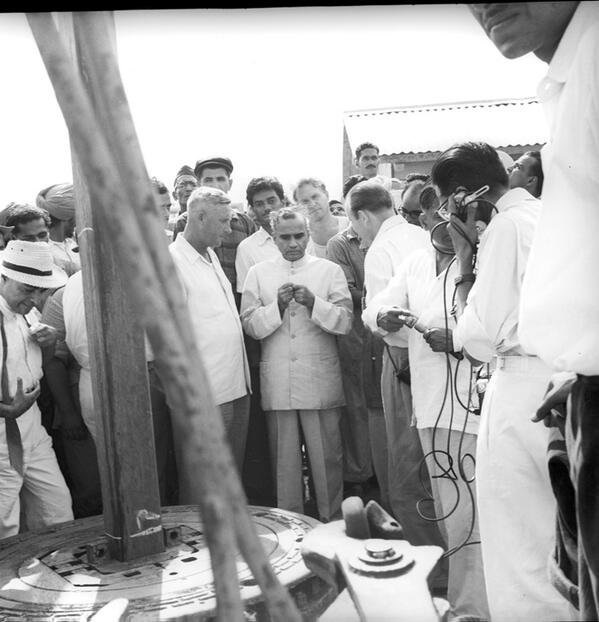
Achieving self-sufficiency in domestic oil production has been the recurring Indian dream since mid-1950s. The then Petroleum minister, KD Malaviya, whose untiring efforts led to the birth of ONGC, had set his heart on making India self-sufficient in petroleum energy, writes Raj Kanwar

It goes to his credit that he did achieve some success with the discovery in quick succession of three on-land oilfields. First of these discoveries came in Cambay in September 1958; less than two years later, a much bigger oilfield was discovered in Ankleshwar in May 1960. Both these discoveries were made in Gujarat. And a few months thereafter in December, a hat-trick was performed with the discovery of Rudrasagar field in Assam.

Though the discovery of a few small and medium-sized oil and gas fields at that time in Gujarat and Assam did not justify such exuberance, yet it was the beginning in the right direction. However, it was the discovery later of the relatively high-yielding Bombay High field on 20 May 1976 that had caused countrywide jubilation and justifiably so.

Perspective Plan 2030

Ten years ago on 28 May 2012, ONGC’s Board of Directors had approved an ambitious PERSPECTIVE PLAN (PP) 2030 that had aimed at, among other objectives, enhancing by 2030 its domestic oil production by five per cent. Sudhir Vasudeva was then its Chairman & Managing Director.

For the record, ONGC had produced a total of 20.5 Million Metric Tonnes (MMT) of domestic crude in the year 2012-13. Thus the five per cent stipulated increase should take India’s domestic production to 21.52 MMT by 2030. However, during the 10 years that have since elapsed instead of rising, its production paradoxically has fallen by nearly two million metric tonnes to 18.5 MMT in 2021-22. And thus goes for a toss ONGC’s dream of enhancing domestic production.

The Perspective Plan 2030 that aimed at increasing the domestic production by five per cent had only been in operation for barely eight years when ONGC Board under the chairmanship of Shashi Shanker introduced in April 2019 the new Energy Strategy 2040 that aimed at, among other objectives, doubling of the domestic oil and gas production by 2040.

Is then the decision by ONGC of doubling the oil production in the country a reality or just a pipe dream? Oil production in India both offshore and onshore has been seen many ups and downs, downs and ups, but largely downs and downs.

Way back in 1947, India’s domestic production of crude was minuscule 2,50,000 metric tonnes – all from Assam. In the following 13 years i.e. by 1960-61, it rose to 4,50,000 metric tonnes – a negligible increase of barely 2,00,000 metric tonnes. Twenty years later in 1980-81, its production was 10.51 MMT. And in another 10 years i.e. by 1990-91, the country’s domestic production stood at 33.02 MMT– an impressive increase of 22.51 MMT. However, surprisingly it fell to 32.45 MMT in the year 2000-2001 – a decrease of 0.57 MMT. In the following 10 years i.e. by 2009-10, it decreased to 31.40 MMT – a decline of 1.05 MMT. The declining trend unfortunately and paradoxically continued, and the domestic production further fell to 28.40 MMT in 2021-22 – a sharp decline of three MMT.

26 Sedimentary Basins in India

IT is a universal geological dictum that oil is mostly accumulated in sedimentary rocks. In India there are 26 Onshore and Offshore Sedimentary Basins, covering an area of 3.36 million square kilometers, 1.63 million square kilometers, i.e. 49% of the total area, is onshore, while 0.41 (zero point four one) million square kilometer i.e. 12% is in shallow water and the remaining 1.32 million square kilometers i.e. 39% in ultra deep sectors. These Basins were divided into three categories based on the maturity of their hydrocarbon resources viz. Category-I, II and III as per a Hydrocarbon Resource Re-Assessment Study carried out in 2017. Category-I Basins have already established commercial production of hydrocarbons while Category-II Basins have made discoveries but their commerciality is yet to be established. And the Category-III Basins have prognosticated resource potential, but discoveries are yet to be made.

In the Category I, there are seven Basins namely Cambay, Assam Shelf, Bombay Offshore, Krishna Godavari, Cauvery, Assam Arakan Fold Belt and Rajasthan covering a total area of 9,98,325 square kms that have been under commercial production since 1958. It is the Category I Basins that today produce virtually all of India’s crude. And if the domestic production is to be increased, it is only the Category I Basins from where it would need to be optimized. However, that seems like an improbable task; the cumulative production that was 20.8 MMT in 2014-15 in the Category I Basins had sharply declined to 18.50 MMT, by nearly 7.7 per cent in 2021-22.

Like flogging a dead horse

THE reasons are obvious. Most of the onshore fields of ONGC are more than 50 years old with declining yields. The high producing Bombay Offshore fields too are 46 years old. Thus even to bring about any incremental increase in the production of these ageing fields is like flogging a dead horse.

In the Category II with a total Basinal area of 7,80,974 square kms, roughly 23 per cent, there are five Basins viz Vindhyan, Kutch, Saurashtra, Mahanadi and the Andaman Islands that have known accumulation of hydrocarbons.

The Category III with 14 Basins cover a total area of 15,86,150 square kms or 47 per cent. These are Kerala-Konkan, Bengal, Ganga, Pranhita-Godavari, Satpura-South Rewa and Damodar, Himalayan Foreland, Chhattisgarh, Narmada, Deccan, Bastar et al. Even though the Bengal onland field has recently been put on commercial production, it is not expected to add much to India’s domestic oil kitty.

Thus in desperation, ONGC Board at its meeting on 26th May firmed up its “Future Exploration Strategy” that would further explore the Indian Sedimentary Basins over the following three fiscal years 2022-2025 at a cost of Rs 31,000 crore for discovering additional ‘Fuel Reserves’. It is beyond one’s comprehension why ONGC has earmarked the enormous amount of Rs 31,000 crore on ‘further exploring the Indian Sedimentary Basins’ when it has already explored to its bone the Category I Basins. Here it needs to be pointed out that it is the only Category I Basins that have enough oil and gas reserves. The remaining Basins in Category II and III barely have any oil and gas reserves to write about.

What is the way out for ONGC?

WHAT is then the way out for ONGC? It is here that ONGC’s wholly-owned subsidiary ONGC Videsh Limited (OVL) needs to be further strengthened and made more aggressive in its overseas operations. Currently OVL has its footprints in 15 countries such like Brazil, Colombia, Bangladesh, Azerbaijan, Libya, Myanmar, Russia, South Sudan, Syria, Vietnam et al. It has developed strong partnership alliance with a host of International and National Oil Companies such as ExxonMobil, British Petroleum, Petrobras, Rosneft, Petro Vietnam, Petronas, Abu Dhabi National Oil Company et al.

Fortuitously, ONGC Videsh has already developed oil and gas production from 14 of its Assets. In four of these Assets, hydrocarbons have been discovered, and are at various stages of development. Now under the leadership of its dynamic new managing director Rajarshi Gupta, OVL is bound to go places. Thus what ONGC now needs is to take a piggyback ride on OVL’s back and convert itself into a major international oil operator and substantially expand its presence in most of these countries.


Complicated characters, situations growing at maddening pace!

Where’s simplicity and innocence gone? Where are all those who lived life with the basics and were seemingly happy and content and unbothered about what tomorrow or the day after day holds out?

About  twenty  years back I  would regularly visit the  Bhai Vir Singh Sadan situated in  New  Delhi’s  Gole  Market. To be nearer precision, I used to spend hours in its library. And during those visits to the library I would  have those long and short conversations with the then librarian, Jagjit Singh Anand. He was a very fine person, knowledgeable and spiritually inclined. One afternoon, Anand asked me, what in my  opinion, could be considered the  biggest  blessing for any human being. I recall telling him, “Of course, health.”

He shook his head and said, “No …the biggest blessing for a human being is not being complicated, because complicated characters not just ruin their own lives but also of all those around them! They demolish and ruin peace of mind and just bring about negativity.”

Anand’s simple stark words of wisdom stand out to this day. Sit back and introspect how complicated characters around you can make everyday life  hell…hellish! Sadly, in today’s world, complicated characters and situations seem growing at some maddening pace. Multiplying, spreading out, causing mindless destruction and disasters.

Ask yourself: where’s simplicity and innocence gone? Where are all those who lived life with the basics and were seemingly happy and content and unbothered about what tomorrow or the day after day holds out? Where are all those who’s who of yesteryears who carried the guts and grit to stand for the disadvantaged? Where are all those men and women who died with simplicity and honesty and  genuineness intact;  unbothered about frills and fanciful living?

Today, even the weather is getting more than complicated! Whoever had thought that Europe would be hit by intense heat; rising temperatures killing so many in several European lands. And  if  one were  to  focus  on the  South Asian countries, though rising temperatures were  part of the summer stretch  but this  year the heat wave went berserk, killing many more than previous heat waves. Monsoon and winter hold no promises too, as in spite of all the forecasts and weather updates and predictions the fact that hits out is this – we, the average and ordinary citizens, are unprepared to face of the onslaughts, heat or rains or intense cold!

Today, the so called development slogans and political promises and all those speeches of the politicians raised hopes. Till all the tall claims came crashing down. Crushing expectations.  Compounding the mess spread around. Hitting all those in long queues for jobs and rations and the very basic food.

Today we are at a very crucial juncture. We ought to be focusing on how to feed and educate and employ the hundreds and thousands of our citizens, but we seem gripped by complicated political turns and twists.

*****

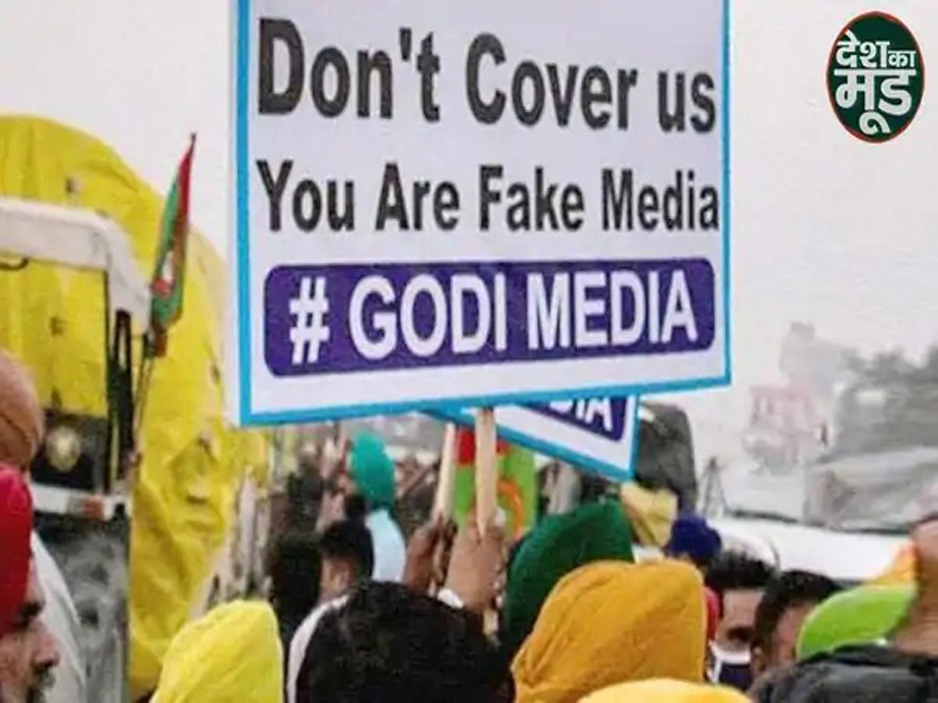
And in  the recent years the sheer harassment that  journalists  face has only been spreading out …In fact, whilst on journalists and writers, the going can be termed difficult. It  is a  tough  profession and the  going gets  tough when there’s worry of the  political rulers backing the godi media and trying their utmost to run down  independent journalists and editors and all those trying to keep afloat  against the turbulent political  tide.

 Have you ever wondered why Investigative Journalism hasn’t really picked up in our country? It is precisely because the going can be very risky- dangerous -tough. No, not easy to write against the police and the politicians and to unravel the layers to the entire system under their direct control…One  instance after another how  journalists have been  hounded and attacked in our  cities and towns and qasbahs for  exposing the  nexuses and the actual political culprits and the key players!

 In fact, during the Brit rule in India, no criticism of the gora rulers was to be tolerated so the Indian writers had found a discreet way to do so. They did so through cartoons and poetry and subtle prose. That’s how the Avadh Punch first got published in Lucknow. So successful it was that soon several editions were simultaneously published from several other cities of the country. Punches all the way!

 In fact, getting back to day, there’s worry amongst journalists and writers on how to report fearlessly in this atmosphere, where political bulldozers are ever on the alert to pull down structures, human or otherwise.

                                                                             ******

And to add to the complicated mess is the communal surcharge in just about everything! We are witnessing the aftermath of the communal poisoning unleashed all around. There are brutal killings, hate speeches and hateful utterances, cries for revenge and counter-attacks. Little traces of calm and tranquility in the everyday life.

No other way to counter the mafia but try get back to those days when the un-complicated and the apolitical held sway. When simplicity and those basic values to daily life were all that actually mattered. And human forms and emotions and were not crushed, nor trampled upon. Every human life seemed to matter and given that much needed cushioning.

I am trying to find some level of refuge  in these  harsh hitting turbulent  times in the verse of Mirza Asadullah  Baig Khan …Born in Agra on December 27, 1797, as Mirza Asadullah Baig Khan, he used pen name ‘Ghalib’ (the conqueror). When still very young he shifted to Delhi and during his stay in Delhi he’d witnessed turbulent times during the 1857 revolt and also the subsequent changes that followed, the changing socio- political scenario… Ghalib wrote the Diwan-e-Ghalib at his house in  Old  Delhi , Ghalib ki Haveli,  (now a heritage site). And its in this haveli he spent the last  years of his life till he died on February 15, 1869. He was buried close  to the  dargah of Nizamuddin Auliya and the  grave of Amir  Khusro.

This verse of Ghalib- from Khushwant Singh’s volume –‘Celebrating the Best of  Urdu Poetry (Penguin):

“Love gave me the lust for living – /

To ease my pain it gave me something for sure;/

It gave me such pain that nothing can cure.”

And also Ghalib’s this verse:

“To be united with my beloved was not writ in my fate/

Had I lived any longer, it would have been the same long wait/

I lived on your promises, I knew they were not true/

Would not I have died of joy had I  believed  in you?/

Ask my heart about the pain of love and it will tell you /

The half–drawn bow’s the assassin, not the arrow that pierces through /

The stone’s veins would burst and nothing would stem blood’s flow/

If these weren’t sparks of anger, but outpourings of my sorrow. /

To whom can I speak of sorrows that come with the fading of light/

Death would be welcome, if it did not stand at my door every night.”

******

Also these verses from Ralph Russell’s – A Thousand Yearnings: A Book of Urdu Poetry and Prose. (Speaking Tiger). A remarkable book by a remarkable Urdu-lover –  Ralph Russell.

Verses and prose tucked in this volume seem laden with bare emotions. In fact, there is an entire segment holding out love poetry. Ghazals and verses of Mir and Ghalib more than beckon …

Of course, long gone are the romantic poets of yesteryears, leaving back their emotion laden lines for you and I to read along. Quoting these lines of Ghalib from this volume:

“You stand away, and purse your lips/

and show their  rosebud  form/

I said ‘How do you kiss?’ Come, kiss my lips and say ‘Like this!’ ”

And also these lines of Mir:

“My love, I cannot tell the tale of all the things I want from you /

A hundred longings fill my soul, a thousand yearnings throng my heart.”


UP police has egg on face as court grants bail to Zubair

The court has disbanded the SIT constituted by the UP DGP for probing the case. even as it  transferred  the investigation in all the six cases to the Special Cell of the Delhi Police. The apex court has also turned down the UP govt’s plea to stop Zubair from tweeting,, reports Mudit Mathur

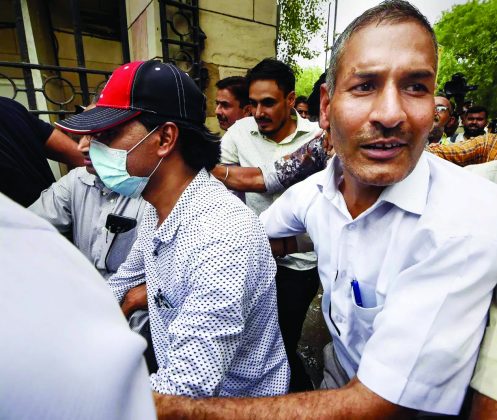
The Supreme Court while upholding right to free speech and expression of a journalist, transferred all the six cases registered against Mohd. Zubair, cofounder of fact checking website Alt News in Uttar Pradesh to the Chief Judicial Magistrate, Patiala House Courts Delhi, and granted interim bail, subject to his filing a personal release bond in the amount of Rs 20,000 in connection with all the cases registered in UP. Zubair came out of Tihar jail the same evening.

“The direction and the protection of the interim bail will also apply to future FIRs which may be registered on the basis of Zubair’s tweets,” the court added. The Uttar Pradesh government was hugely embarrassed when it tried to justify its stand on sustained persecution of Mohd Zubair before the Supreme Court hearing.

The court also disbanded the SIT headed by Inspector General Dr Preetinder Singh which was specially constituted by the Director General of UP Police. The investigation in all the six cases and further case on this account stood transferred to the Special Cell of the Delhi Police. Significantly, the apex court has also turned down plea to stop Zubair from tweeting raised by Garima Prasad Additional Advocate General of Uttar Pradesh.

On Uttar Pradesh government’s plea to bar Mr Zubair from tweeting, the bench headed by Justice DY Chandrachud said, “It’s like telling a lawyer not to argue any further. How can you tell a journalist he cannot write? If he does something that violates the law then he is answerable to law. But how can we take anticipatory action against a citizen when he is raising his voice?” “Every citizen is answerable for what he does in public or private. We will not pass any such order. He will be answerable as per the law. Evidence is all in public domain,” the bench said.

Justice Chandrachud said there was absolutely no justification in keeping Zubair in custody when the Delhi court has granted him bail in an FIR registered by a special cell of Delhi police. The special cell is investigating a whole gamut of tweets and securing funding by Zubair. “Existence of power of arrest must be distinguished from exercise of power of arrest, which should be pursued sparingly,” the court remarked.

Zubair was first arrested by the Delhi Police on June 27 for allegedly hurting religious sentiments for a tweet in which the journalist shared a still from a 1983 Bollywood film. Later, police in Uttar Pradesh sought his custody. Six dormant cases were suddenly revived on him during the period of his incarceration– two in Hathras and one each in Sitapur, Lakhimpur Kheri, Muzaffarnagar, Ghaziabad, and at Chandauli police station – on almost similar charges with regard to his tweets.

Justice Chandrachud had remarked earlier when matter was mentioned, “the practice of repeated charging and arresting was a “vicious cycle” and asked the Uttar Pradesh Police on July 18 to not take precipitative action against Zubair in these cases till next hearing on July 20.

The bench considered the case – one of seven against Zubair on which police decided to act within a period of three weeks – registered by Lakhimpur police on September 18, 2021, based on a complaint by a correspondent of Sudarshan TV, a channel which is known for airing intemperate Hindutva content.

In 2020, the Supreme Court took strong objection to the “Bindas Bol” programme by Sudarshan TV that claimed to expose a “conspiracy to infiltrate Muslims in government service.” The court then said a message must be sent across the media that “a particular community cannot be targeted” in the name of investigative journalism and that the “country cannot survive with such an agenda”.

The FIR charged Zubair under Section 153-A (promoting enmity between two groups) for accusing this channel on Twitter of using a doctored image of the famous Medina Mosque in a graphic depicting an Israeli rocket attack on the Gaza strip in 2021.

Appearing for Mohd Zubair, senior advocate Vrinda Grover, a champion of human rights and women’s rights, sought to point out that there is little by way of incitement in Zubair’s tweets – and that incitement was actually being done by the channel, Sudarshan TV, whose coverage Zubair was bringing to light.

“Please see the tweets, there is no incitement whatsoever. He is pointing out as a fact checker that the picture of mosque used in a graphic of Sudarshan TV is wrong mosque. And I tag the police saying hope they will take action,” she explained.“Who is actually inciting? The graphic shared by Sudarshan TV channel. I, as a fact checker, place the actual image of Gaza bombing and image of real mosque. For this, FIR lodged for 153A, 295A. This is about silencing,” she added.

Noting that police got 14-day custody for allegation of offences under sections that do not attract more than three years in jail, she also sought to point out the seizure of devices that were unconnected with Zubair’s tweets. “What kind of police remand application is this? They will take me into custody and take me to wherever they want to investigate tweets from 2014 to take into custody of all devices. Is this not a statutory abuse of the power of investigation?” she asked. Grover highlighted the order of the Supreme Court granting bail to journalist Prashant Kanojia, who had been arrested in 2019 over tweets critical of Uttar Pradesh chief minister Adityanath.

Grover pointed to a distinct threat faced by Zubair by virtue of his job, she contended, “In this digital age, the job of someone who is debunking false information may draw the ire of others. But the law cannot be weaponised against him. The dormant FIRs are activated the moment I secure bail in any case. Dormant FIR gets suddenly activated. That is why I say there is more than meets the eye. There is a scenario of encircling me.”

The Supreme Court while protecting free and fair journalism, bailing out Mohd Zubair from the prison is expected to deliver a detailed judgement dealing with the various aspects of freedom of the press and abuse of criminal law muzzling dissent by facing strategically planned multiple proceedings to harass and silence free expressions.


Stamping out gangsterism from Punjab is a big task for police

The Punjab police deserves kudos for killing two shooters involved in Moosewala murder case in an encounter recently, but to claim it would soon make state free of gangsters seems easier said than done, given the culture of gangsterism in the state, reports Rajesh Moudgil

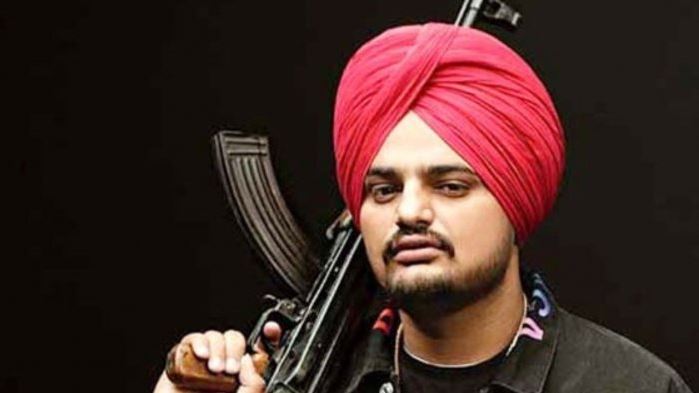
After hunting the shooters of popular Punjabi singer Shubhdeep Singh aka Sidhu Moosewala for over one-and-half months, the Punjab police finally chased and shot two of them in a remote Cheecha Bhakna village on Attari border in Amritsar district on July 20, last. It was the first major action of the state police in the May 29 Moosewala’s murder case that shook the state.

Hundreds of rounds were fired from both sides in the said encounter which began around 10 am and lasted for at least three hours. Three cops were also shot at and were hospitalised.

The action by the Punjab police’s anti-gangsters task force (AGTF) was being seen as its first major action as, so far, the Delhi police’s special cell had made the crucial headways in the case by quickly tracing phone calls made from members of notorious gangster Lawrence Bishnoi from inside Delhi’s Tihar jail to other gangsters living abroad with a motive to kill the popular singer.

Immediately after the murder, its responsibility was taken by Goldy Brar – who is said to be currently in Canada – of Lawrence Bishnoi Gang. The rivalry between these gangs with the former manager of Moosewala was already well-known.

It was the Delhi cops only who made the first three crucial arrests and concluded with the inputs from Punjab police that at least six shooters carried out the killing of Sidhu Moosewala, 28, on May 29 near his native village Jawaharke in Mansa district, a day after his security was withdrawn by the Punjab police among 424 others. He had joined the Congress in December last year ahead of the February assembly elections this year.

The anti-gangster task force (AGTF) of Punjab which got a tip-off that the two gangsters – Manpreet Singh aka Manu and Jagroop Singh aka Rupa were hiding in an isolated house in Cheecha Bhakna village in Attari border area rushed to the spot, cordoned off the area asking people not to come out of their homes and asking the accused to surrender. 

However, the encounter followed in the wake of no response from the accused following which both of them were killed.

The AGTF also recovered an AK-47, a 0.30 mm pistol and heavy ammunition from the two accused. A bag was also recovered from the spot though it was yet to be inspected and examined by the forensic team, police said.

According to the police, Manu and Rupa were the first to overtake Moosewala’s car and open fire at it. Two cars had been following Moosewala and the second car was carrying four shooters who were identified as Priyavrat alias Fauji, Kashish alias Kuldeep, Ankit Sirsa and Deepak Mundi. Except for Mundi, the other three had been arrested by Delhi police.

Police said that the two accused had been on the run since the murder. They had re-entered Punjab from Rajasthan recently and were on its radar. A CCTV footage which had recently surfaced, showed the two rode a bike at Samalsar in Moga district on June 21. 

They belonged to the Jaggu Bhaganpuria gang which had provided these shooters to Lawrence Bishnoi for the Moosewala killing.

Mann pats cops

Commending the police encounter, chief minister Bhagwant Mann, said that the state would soon be free from gangsters and drug peddlers. He said it was his guarantee to the people of the state that his government would not allow anyone to disturb hard earned peace in the state and every effort would be made to maintain peace and communal harmony in Punjab by making it free from gangsters and drug smugglers.

Gangsters nurtured by the previous government leaders were running the crime rackets sitting in jails and some even from abroad, he said and added that the state government had started a planned action plan and results would soon follow on ground.

Director general of police Gaurav Yadav said the AK 47 found from the spot of encounter was being forensically examined keeping in view of the chances of its use against Moosewala. Besides AK 46, a pistol, a lot of ammunition had also been recovered, he said and added that the police was also tracking the left out gangster, Deepak Mundi, who would soon be arrested. Red corner alert against Goldy Brar has also been issued, he said.

Easier said than done

However, wiping out gangsters from Punjab in a short span of time did not appear to be an easy task, given the huge fan following of several gangs who have been active on social media platforms since years. Reason? Youngsters are easily attracted to fast money, late night parties with drugs and alcohol as well their flashy lifestyles and gun culture shown by them on social media.

According to reports, huge money comes to them from illegal businesses of extortion, kidnapping, arms smuggling, drugs and even controlling kabaddi leagues. In some cases, these criminals also have political patronage, it is alleged.

However, a bigger worry for the police has been that some of the gangsters were in touch with the Sikh terror outfits and got their weapons from across the border.

However, to the advantage of the police, there is also bitter rivalry between some of these gangs.

Sample this: Immediately after Sidhu Moosewala’s murder, at least two gangs took to social media to vow revenge for his (Moosesala’s) killing. Taking to Facebook, the Neeraj Bawana and the Davinder Bambiha gang vowed revenge for the singer’s murder.

Both of them are said to be the sworn enemies of the gangster Lawrence Bishnoi. It may also be recalled that Canada-based gangster Goldy Brar and associates of Lawrence Bishnoi had already taken the responsibility for Moosewala’s killing.

The connection of the rivalry between the two gangs – Punjab police believes – is the shocking August 2021 killing of Vicky Midukheda, a Youth Akali Dal leader, who was reportedly close to some members of the Lawrence Bishnoi gang.

It is alleged that Shaganpreet, who was the manager of Sidhu Moosewala, was involved in this murder. He has been absconding since. Brar and his associates also accused the Punjab police of not digging deep enough into the case of Midukheda’s killing.


Border tense as China dithers on restoring status quo ante

There is a growing apprehension in New Delhi of a massive flare-up on India’s borders with Tibet. It is feared that the Chinese President, Xi Jinping in his bid to re-assert his leadership,  may resort to a misadventure

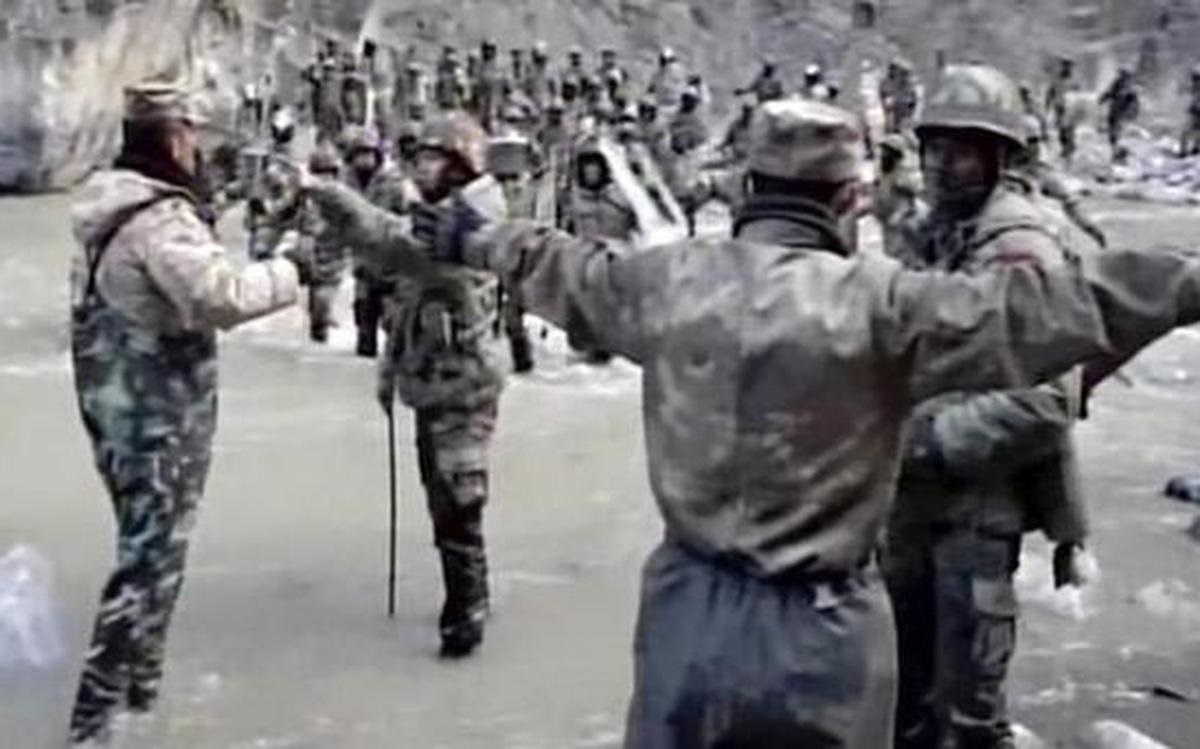
India has decided to maintain her troops on an alert mode on the nearly 3000 kilometres of India-Tibet border following the Chinese reluctance, if not totally refusal, to withdraw its troops to the pre-Galwan deployment position of 2020 and restore status quo ante.

It, however, was expected that the recent meetings between India’s External Affairs Minister, S. Jayashankar, and his Chinese counterpart, Wang Yi, might result in substantial progress in recent weeks, during the 16th round of India-China talks held during the middle of July 2022.

The Chinese stubbornness, thus, thwarts, at least for the time being, the possibility of cementing any strategic alliance of Russia, India and China (RIC). The RIC is the brainchild of Russian President Vladimir Putin. It is believed that Putin’s recent visit to Iran and his efforts of warming up towards Turkey was a part of the RIC strategy. He travelled to Iran amidst the Ukraine-Russia conflict. He was in the region during the US President, Joe Biden’s visit to the West Asian countries. Biden’s visit is being called a great success for establishing close ties among the nations of West Asia, which could be achieved in spite of the traditional animosity between Israel and the Arab nations.

It appears that China is deliberately cold shouldering the RIC, by delaying the unnecessary standoff on the India-Tibet border. It has given enough reasons to India to strengthen QUAD as well as join the American efforts for peace in the West Asian region. Putin has advised India to keep off from QUAD, the strategic cooperation among the four key nations in South-East Asia comprising India, USA, Australia and Japan.

Amidst these developments, there is a growing apprehension in New Delhi of a massive flare-up on India’s borders with Tibet. The decision to ignite the tense borders between the two Asian giants solely depends upon the Chinese President, Xi Jinping. Apart from threatening India for promoting QUAD, there could be domestic compulsions for Xi Jinping, who is seeking third term for retaining his supreme position in the country as its president and the chief of its military commission. There is also disquiet within China, where people are demonstrating against the government for the return of their funds deposited in local banks. It is alleged that their lifetime savings have been quietly siphoned off by local communists manning the rural banks.

Amidst these developments, Xi Jinping may resort to a full scale war, perhaps, on the basis of his assessment about his political expediency, against India. Therefore, it did not surprise anyone that the July 17 meeting held at Chushul-Moldo between Lt. General Anindya Sen Gupta, and Major General Yang Lin, the commander of the South Xinjiang military division, has concluded without any substantial agreement for withdrawing troops to the position of pre-Galwan clashes of 2020.

In India, the Government is facing severe criticism from the country’s main opposition, the Congress Party. It has accused during the ongoing monsoon session of Parliament that China continues to infiltrate and violate Indian borders, and the government is deliberating ‘hiding’ the facts. It has also blamed Prime Minister Narendra Modi for ‘denying’, ‘distracting’, ‘lying’ or ‘justifying’ the present situation at the LAC.

The situation, however, on the borders continues to be grim with the two sides having deployed massive artillery and more than 50,000 well-equipped armed forces on the sensitive India-Tibet borders, especially the region which had witnessed armed clashes in 2020 in the Galwan Valley of Eastern Ladakh. The Chinese aggression may take place in any sector of the 3000-km long borders.

Xi Jinping’s Political Agenda  

There is a general apprehension in New Delhi that in a bid to re-assert his leadership, Xi Jinping, may try to annex a part of Indian territories from Ladakh to Arunahcal before the Communist Party meets in November this year. According to the Chinese document circulated by its official news agency, attack on India has been on the third position of the six wars in 2021; China has to fight for asserting its super power status. The satellite images and movement of the Chinese forces on the Tibetan side of the borders have already alerted Indian security forces that the war may take place anytime.

The six ‘inevitable’ wars being discussed in various Chinese documents indicate that it has to assault on Southern Tibet (Arunahcal) during the period 2035-40. The war for unifying Taiwan is scheduled for 2020-2025; and the time frame for the war to recover the South China Sea islands has to be waged during 2025-2030. The Indian establishment is not totally unaware of any possible Chinese misadventure, especially when Xi Jinping needs to improve his declining political image.

It, however, is for Xi Jinping to assess whether an invasion of India will improve his political clout in the domestic politics and China’s international image, especially before the 19th Central Committee session of the Communist Party  of China scheduled on November 8-11. He needs to claim big successes for seeking third term of his presidency.

India: A Soft Target

There is a general impression that the People’s Liberation Army (PLA) considers India a soft target than Taiwan or any military activity in South China Sea. The road map of Xi Jinping’s vision of imperial China, according to the strategic documents circulated by the Chinese media has announced that the 1st War: “Unification” of Taiwan (Year 2020 to 2025), the 2nd War: “Reconquest” of Spratly Islands (Year 2025 to 2030), the 3rd War: “Reconquest” of Southern Tibet (Year 2035 to 2040), the 4th War: “Reconquest” of Diaoyu Island (Senkaku) and Ryukyu Islands (Year 2040 to 2045), the 5th War: Unification of Outer Mongolia (Year 2045 to 2050) and the 6th War: Taking back of lands lost to Russia (Year 2055 to 2060).

The apprehension in India is that since the two wars for merging Taiwan with the Mainland China and wresting the Sparty Islands may not be possible according to the schedule, it could be easier to annex Arunachal from India. The Indian war room discussions include an in-depth study of the age-old Chinese war strategy, popularly called Wei, which focuses on cheating the rivals by sudden moves while adorning the mask of innocence or peace.

It is different than the chess board, but the Indian military science experts believe it is a Chinese version of the “Pasha” played for defeating the Panadavas in gambling against the Kauravas in ancient India. It was mastered by the Duryodhan’s maternal uncle , Shakuni, to cheat and oust the Pandavas. It was brought to China by the mariners navigating between China and Indian coasts.

The Chinese military strategists, perhaps, consider India a ‘soft target’, much easier to humble her than to attack Taiwan having committed security umbrella comprising the conventional weapon systems as well as nuclear shield.

India, however, is ready to pick up the gauntlet; and the repercussions of this unwanted confrontation. The flare-up might also end the Chinese dream of becoming a Super Power. In that case, India might also not hesitate to support the subjugated people of the Muslim-majority province, Xinjiang Uygur Autonomous region, suffering all sorts of repressions, the Buddhists of Tibet and freedom-loving people Taiwan.

The Chinese imperial vision is now blended with the political aspirations of  Xi Jinping’s, who wants to be remembered as the three legendary figures of his country, Mao, Zhou and Deng. Therefore, it is difficult for him to quietly ignore the greetings from Prime Minister Modi to Dalai Lama, who has also been to Ladakh recently.

Book, film to bolster morale

The book, ‘China Is Not Afraid — New Threats to National Security and Our Strategic Responses’, published by China is being considered a part of a larger PLA strategy to invigorate and bolster the morale of domestic constituencies, both military and otherwise.

It is interesting to note that a PLA-inspired film and a news agency article also give an insight of the Chinese narrative of the 21st century. The Chinese film Silent Contest was controversial as soon as it appeared on Chinese and global websites. It suggests that the United States is trying to subvert China through five avenues: (1) undermining China politically, (2) engaging in cultural infiltration, (3) warfare in terms of ideas, (4) the training of fifth column agents and (5) the fostering of opposition forces within China. The overall message is that the United States seeks not simply to dismember China but aims to find ways to take it under control.

Apart from the PLA, the National Defence University, the Chinese Academy of Social Sciences and the China Institute of Contemporary International Relations, which is subordinate to the Ministry of State Security, participated in the production of the film. First, the film, and later the articles on the six wars China must fight indicate that Xi Jinping is keen to silence his political opponents by indulging in hyper-nationalist attitude.


Punjab farmers lock horns with Centre over MSP panel

The Punjab Sanyukta Kisan Morcha (SKM) laments that among those included in the central government committee on MSP are supporters of the three contentious farm laws which the government was forced to repeal after a year-long farmers’ agitation, writes Rajendra Khatry

The exclusion of farmers’ representatives from both Punjab and Haryana in the recently announced Union government’s MSP committee is brewing discontent in the farmer organisations of both the states. Farmers are also angry that the government is again not ready to guarantee MSP on their crops which has been their long-pending demand. If not addressed on time, the vexed issue has the potential to lead to another round of farmers’ protests in Punjab as well as Haryana in the coming days.

Punjab is acknowledged as the food bowl of the country along with Haryana. Farmers of both the states staged a successful year-long agitation demanding repeal of the three contentious agricultural laws and the Union government finally bowed down to their demands last year. At that time the government promised the farmers to form a committee on MSP which has been done now. But the non-inclusion of the representatives of the farmers from Punjab and Haryana has raised the hackles of farmers as well as the politicians across the states.

Punjab Chief Minister Bhagwant Mann has urged the Central Government to reconstitute its newly-formed committee on MSP (Minimum Support Price) giving due representation to the state. The Chief Minister wrote separate letters to Prime Minister Narendra Modi, Home Minister Amit Shah and Agriculture Minister Narendra Singh Tomar and urged them to get the committee on MSP reconstituted as the panel has no representative from Punjab.

Earlier, the Union Government formed a committee on MSP, nearly eight months after it promised to do so when the year-long farmers agitation ended. Mann slammed the Union government for ignoring Punjab while constituting the committee for recommending Minimum Support Price (MSP) for crops. He called it a discriminatory move. Mann claimed that the stiff resistance by the Punjab farmers to the draconian three agricultural laws last year had unnerved the central government.

“Without the Punjabi farmers’ representation, the committee is like a body without soul,‘’ said Mann. He charged the central government of settling political scores instead of aiming at farmers’ welfare. Punjab is the main food grower of the country. How can it be kept out of the MSP committee, he wondered.

Similarly, AAP’s Rajya Sabha member Raghav Chadha feels discussions must be held in Parliament during the Zero Hour on the MSP committee for farmers. He said it is ironic that Punjab, which gave the suggestion for forming the committee on MSP is itself out of the panel now.

Punjab’s political leaders believe that MSP is the legal right of the farmers and if the union government wants that the farmers should be benefitted, then Punjab farmers should have been included in the committee.

According to SAD leader Daljit Singh Cheema, the Union government should recast the committee and include stakeholders, representatives from Punjab as well as agri-experts. Cheema said there’s a need to not only finalise the MSP guarantee but also the guarantee of assured purchase on the MSP. He said the Central government had earmarked MSP for all crops, but why is that only wheat and paddy are being purchased on MSP? These issues need to be addressed urgently, he said.

It is not just AAP and SAD who are upset by the non-inclusion of the Punjab farmers in the MSP committee, the Congress also felt the central government’s committee on MSP was an ‘eyewash’.

The Congress too demanded the government to recast it. Punjab Congress chief Raja Warring stated that the key demand of the farmers was a legal guarantee for the MSP for various crops, but while setting the terms of reference, there was no mention of a legal guarantee for the MSP. Warring said it was a betrayal of the farmers in the country as they had lifted their year-long ‘dharna’ only after they had been assured that a committee will be constituted which will also look into a demand for legal guarantee for the MSP.

Meanwhile, to protest the non-inclusion of farmer representatives from Haryana in the MSP committee, the Haryana Sanyukta Kisan Morcha (SKM) announced a Chakka Jam in Haryana on July 31, according to the decision taken in the national meeting of the front. It was decided to block the major roads for four hours across the state the same day.

The SKM stated that preparations would be made for the farmers’ stir by holding district level conferences in all the districts till July 30. They said that the farmers had demanded a legal guarantee of minimum support price, which was not even mentioned in the notification of the formation of the committee.

The Morcha leaders regretted that those who have been included in the central government committee on MSP have been long-time supporters of the three contentious agricultural laws brought by the government earlier. The farmers argued that these members cannot be expected to protect the interests of the farmers.

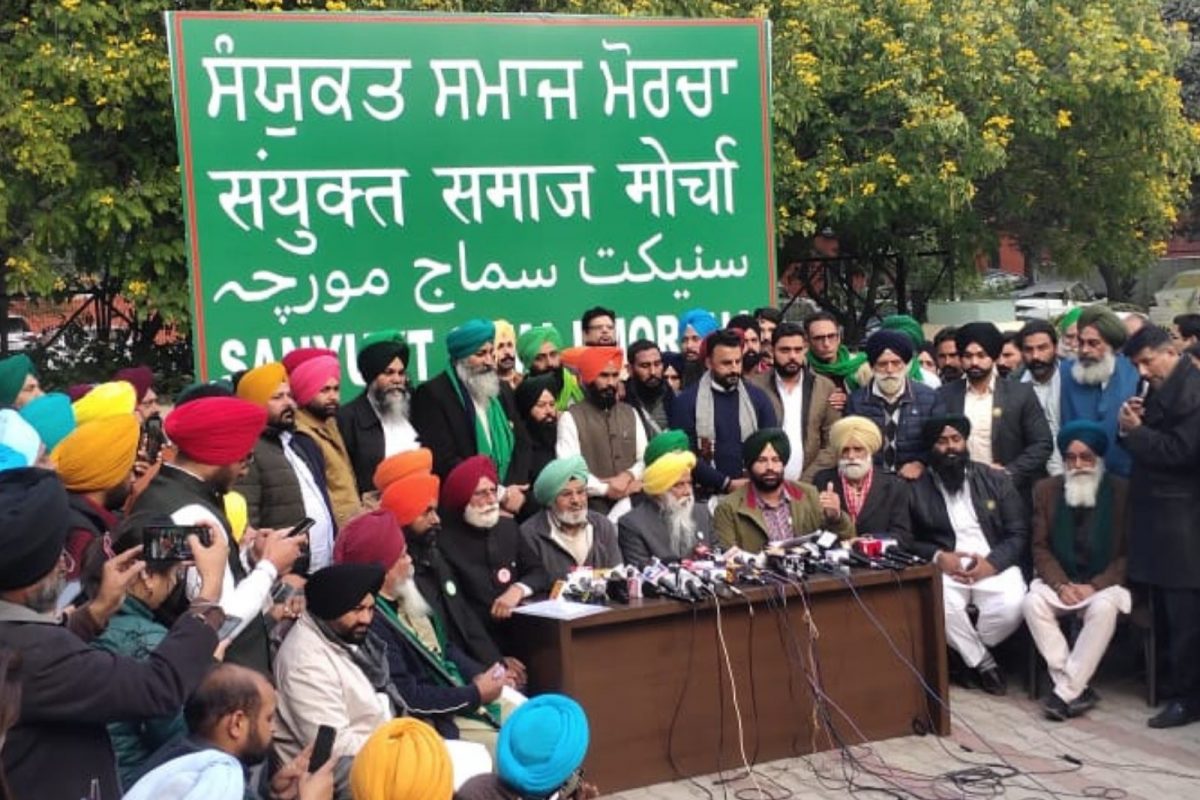
Meanwhile the Punjab SKM, a joint group of  farmers’ organisations which spearheaded the more than year-long  protest against three contentious central farm laws, said it has no plans to send three representatives to join the Union government’s 29-member panel.

Resenting the government committee, Krantikari Kisan Union president and SKM coordination committee member Dr Darshan Pal said that their fears came true after they read the names of the committee members. Five representatives of farmers’ unions supported the farm laws while the SKM was given only three spots. Many others are government officials. It seems it will be pro-government members versus three SKM members. Sending members will create more confusion as they will hardly have any say in the committee, feels Darshan Pal.

The MSP panel announced by the union government is headed by former Agriculture Secretary Sanjay Agrawal and also has representatives of the Central government and state governments, farmers, agricultural scientists and agricultural economists. The five alleged pro-government farm union leaders in the committee are Gunwant Patil, Krishna Veer Chaudhary, Guni Parkash, Syed Pasha Patel and Pramod Kumar Chaudhary.

Looking at the growing controversy over the MSP committee to make agriculture progressive and be able to face future challenges, Union Agriculture Minister Narendra Tomar invited the SKM members several times to join the committee and give their suggestions which will be discussed. He said the MSP committee was formed on the announcement of the Prime Minister.

Tomar said the committee is represented by farmers, economists, members of Niti Ayog, representatives of the government etc. He said the forum was still open and the SKM could send names of its representatives any time. But in reply, the SKM said there is no provision for talks now because the committee has included those pro-government people who formed the three vexed farm laws.

The farmers claimed the committee will only be a suggestive one and not an implementation body. Recommendations will remain just on paper and will not be implemented, feels the SKM. No legal guarantee for the MSP has been promised by the government. The committee has been formed to hoodwink the farmers, charged the SKM.  Faced with stiff opposition the government finds itself in a quandary even as the deadlock continues.

Cloud of uncertainty looms over J-K Assembly election

The public perception in the UT, more so in Kashmir Valley, is that the centre is unlikely to hold polls this year. The government seems wary of the possibility of a Kashmir-based party coming to power with fallout of Article 370 revocation still unfolding. A report by Riaz Wani

As August rolls around, serious doubts are growing about the Assembly elections being held in Jammu and Kashmir this year. For the elections to be held, the revision of electoral rolls, which is still underway, has to be finished first. The Election Commission of India has set a deadline of October 31 for the completion of the exercise. Should this happen in time, it would be the end of autumn and the start of winter. Though elections have also been held in the region in November-December before, there is no indication that there are any plans to hold them this time.

On its part, the Ministry of Home Affairs has said that the elections in Jammu and Kashmir will be decided by the Election Commission.

“The Election Commission of India has initiated revision of electoral rolls of voters of the Union Territory of Jammu and Kashmir,” Minister of State in MHA, Nityanand Rai said in reply to the question by parliamentarian A. Ganeshamurthi in the ongoing Monsoon Session of the Parliament. “The decision to schedule elections is the prerogative of the Election Commission of India, ” he said.

However, the public perception in the union territory, more so in Kashmir Valley, is that the centre is unlikely to hold polls this year. The reasoning is that New Delhi is unlikely to let go of control of the state of affairs in the UT at a time when it is in the middle of addressing the fallout of the revocation of Article 370 in August 2019.

“There seems a clear reluctance on the part of New Delhi to hold elections in J&K this year,” said a mainstream politician on the condition of anonymity. “An elected government led by local politicians will assert control, something that the centre seems to be loath to part with at this time.”

Some observers also point to the wariness of the centre about letting a Kashmir based political party lead or dominate the future government. Though it will still be subservient to the Lieutenant Governor in a union territory framework, the centre is expected to be not in favour of letting a local party or parties partake in the governance.

The emergence of the People’s Alliance for Gupkar Declaration (PAGD) which mainly comprises the major J&K parties such as National Conference (NC) and the PDP, has challenged the centre’s discourse on Kashmir. And the hopes of Kashmir-based parties ruling J&K have been brightened further after the PAGD decided to contest the elections jointly. With a strong support base, both in Kashmir Valley and Jammu divisions, and also being former ruling parties, the NC and the PDP together have a high chance of securing a majority.

But will this happen? There are many ifs and buts about such a prospect. For one, the BJP remains a dominant force in the Jammu division, having largely swept the last Assembly election in the region by winning 25 out of 37 seats. The party, in all likelihood, seems headed to repeat the performance in the next election. Or it could very well improve its score.

Another fact that could go to the advantage of the BJP is the recently concluded delimitation exercise. Not only was the Jammu division given more seats but as per the BJP’s political opponents, the electoral constituencies  were also redrawn to benefit the saffron party in the future election.

Out of seven additional Assembly seats, the Delimitation Commission gave six to Jammu and just one to Kashmir Valley.   Similarly, the Commission was accused of gerrymandering to reduce the electoral weight of the Muslim majority constituencies.

The new additions have taken the total Assembly constituencies in Jammu and Kashmir to 90. The number of seats in Jammu has increased from 37 to 43, while the number of seats in Kashmir has gone from 46 to 47.  This is despite the fact that an estimated 70 lakh people live in the Valley, according to 2011 census, compared to 53 lakhs in Jammu division.

The fallout of the delimitation exercise on the electoral map of the UT is likely to be far-reaching. Six more seats to Jammu are expected to alter the electoral game. This is where political engineering enters the picture. The BJP has a multi-pronged strategy in place to ensure  there is Hindu consolidation in Jammu in its favour. It has already benefited from this consolidation  in three successive elections since 2014 – two parliamentary  and one Assembly. In the 2015 state election, the party won 25 of 37 seats in Jammu, enabling it to share power  with the PDP which secured 28 seats, a predominant majority of these in Kashmir Valley .

But the reduction of the gap in the Assembly seats between Jammu and Kashmir is set to remake the political map of the union territory. The BJP which has a deep presence in Jammu could expect to have more political weight in the future J&K Assembly.  And even if a Kashmir based party were to form or lead a future government, it would have little manoeuvring space to carry out its agenda or overturn the laws passed by the New Delhi backed administration over the last two years.

Elections, in turn, will shift the discourse towards the grant of statehood.  However, the centre has already made it clear that statehood would be granted only after an elected government is formed, staying short of giving a timeframe. So, this could take a longer time than expected. New Delhi has indicated it would see the performance and the behaviour of the elected government before it decides to restore the statehood. It is expected that a government led or influenced by the BJP could pave the way for a faster return to statehood than a non-BJP government.

What explains the delay?

Despite the odds that the BJP will play a dominant role in the future elected government in J&K, it is seen as intriguing that the Assembly election continues to be delayed in the UT. And, in turn, this is delaying the prospect of early statehood to J&K.

The timeframe for elections that people are now looking at is the spring or summer next year. It will be a crucial year for the BJP as the party will also be preparing for the general elections in 2024. A robust performance in J&K polls will thus be a headstart for the party. But this is likely to push the statehood for the UT further into the future and the BJP might wait for its return to power at the national level before restoring it.

“Many people would most likely prefer the elections to take place regardless of the season,” an editorial in a local newspaper said. “If for no other reason than at least for approachability, there is a palpable desire to see local politicians return to government”.


Some stocktaking in the Azadi ka Amrit Mahotsav year of India

As India prepares to celebrate the Azadi ka Amrit Mahotsav (75 years of freedom) this August, it is time to find out where it stands in protecting the three most vulnerable sections of its population – women, children and senior citizens in this year 2022, reports Amitabh Srivastva

Let us look at some important reports and projections in order to know how India fares in taking care of the three most vulnerable sections of the society.

Adhi Abadi

As far as the Adhi Abadi is concerned, the recently released Global Gender Gap Index report  prepared by the World Economic Forum (WEF) is a shocker.

The Report 2022 released in July ranks India at 135 out of 146 countries on its rolls. Although this is an improvement over its 140th position out of 156 in 2021, it is a sharp drop from the 105 rank out of 135 in 2012. When the gender gap report was first released in 2006, India was at 98th position among 115 countries. But we don’t talk of India before 2014, the Amrit Mahotsav being exception.

The Index grades the status and evolution of gender parity under four dimensions, Economic Participation and Opportunity, Educational Attainment, Health and Survival, and Political Empowerment.

Shockingly, India is at the lowest position among the 146 nations in the Health and Survival sub index, at 143 in economic participation and opportunity, 107 in educational attainment and 48th in political empowerment.

Comparisons are not a very healthy way of judgment but they do turn the spotlight  inwards in view of the figures and statistics thrown at us by the PIB and parroted by the ruling party and its followers aggressively on the social media day in and out.

It should be a sobering reality that India ranks rather poorly among its neighbours, being behind Bangladesh (71), Nepal (96), Sri Lanka (110), Maldives (117) and Bhutan (126). If it is a satisfaction, Pakistan is at 145 in this list and Iran (143) with Afghanistan the lowest ranking which stands at (146) in south Asia.

This is not all. This blessed ancient country called Bharat keeps making news for the wrong reasons.

In November 21, a set of findings released in the latest report of the National Family Health Survey 5 (NFHS 5) have shocked people who don’t even know how to react.

The report released at an official program by Dr.VK Paul, member, NITI Aayog, and Rajesh Bhushan, Secretary of the Ministry of Health and Family Welfare, on November 24,2021 gave out a list of seven questions it had asked married women and asked them to rank in order of choice as to which offence they deserved to be beaten up by their husbands.

More than 30% women from as many as 14 states and Union Territories said, “Yes’ they deserved to be beaten up if they committed  the Seven Cardinal Sins.

Among all the states, women from states of Manipur (66%), Kerala (52%), Jammu and Kashmir (49%), Maharashtra (44%) and West Bengal (42%) topped the list of those where women justified being beaten up by husbands.

Among the offences listed in this official survey were refusing to have sex when the husbands demanded it, refusing to cook food for the family etc. However the maximum women said that ‘disrespect to in-laws’ was the top most justification for men beating their husbands making many wonder whether the regressive questions were asked to married women or their mother-in-laws. Reacting to this survey, Shashank Shekhar, a prominent lawyer of the Supreme Court and former member of the Delhi Commission for Protection of Child Rights, says, “The questions and the responses are a reflection of our society where we teach our girls to tolerate whatever happens to them after marriage because we have ‘donated’ them in Kanyadaan. I am personally protesting against the concept of Kanyadaan where we are supposed to give our daughters in Daan and that is why I don’t even attend marriage programmes.”

Asked whether this was a move to further dilute the Domestic Violence Act 398-A, he said, “The Domestic Violence Act is long dead. When you start talking about creating a ‘Home’ for victims of the Act as some NGOs are demanding in the Supreme Court you are only doing what the in-laws want. Section 398-A clearly reiterates the right of residence to the wife who has lodged a complaint.”

Women in India have also to suffer the obnoxious crime of Marital Rape already banned in several countries because both the Ministers of NDA heading the Ministry of Women and Child Development Maneka Gandhi earlier and Smriti Irani have gone on record in parliament to say that if this came into effect it would ruin every family. This logic was repeated by the Solicitor General of India Tushar Mehta when some NGOs filed a writ in the Delhi High Court demanding criminalisation of marital rape.

Child Rights?

A similar attitude of preserving the Indian Sanskar and respecting the Divine Right of the head of the Indian family appears to colour our views in the way we treat our children (who constitute 39 per cent of population).

India had signed the United Nations Convention on the Rights of the Child formulated in 1989 as early as 1991 (the US being the only country that has not signed it as of now).

Among the numerous rights declared by the UNCRC, four fundamental rights of the child are 1- Non discrimination, 2-Best interests of the Child, 3-Right to survival and development and the most ‘dangerous’ 4- The views of the Child.

Talk to anyone irrespective of their literacy or economic status and the response of parents, teachers and any one in authority towards any talk of opinion of the child is that of shock.

“What opinion? They are my children. I know what is best for them. I have spent (invested)  so much money on them unlike other countries where they are left to fend on their own. How can someone else tell me how I treat my children” is the first reaction because we treat children as our property.

The biggest villain in this appears to be the National Crime Records Bureau (NCRB) which reels out details of children involved in crime year after year creating fear and anxiety in society.

True, it also tells us that only 3 per cent of the juvenile offenders had studied beyond higher secondary and double that number were illiterate. It also tells us that most offenders come from a very disturbed family background. This becomes a very important factor when judging Children in Conflict with Law.

It turns out that actually the biggest offender in this is the media which takes a sadistic pleasure in painting the picture of children as monsters particularly after 2012 when a minor was one of the accused in the Nirbhaya gang-rape case in Delhi.

What the common man does not know is that for legal purposes, juveniles are divided in two categories: Children in Conflict with Law and Children who Need Care and Protection. What the NCRB figures highlight are the child offenders which form a very minor percentage of total juveniles. In any case, our children are much sober compared to say the USA. Moreover, what the NCRB data does not tell us about are the huge numbers of homeless and marginalised children who need state protection and all the rights guaranteed  under the United Nations convention and the Indian constitution.

Our indifference to their welfare becomes evident from the fact that we do not have any authentic data about their numbers. Statistics about the actual numbers of street or homeless children victims of circumstances, brown families, trafficked, victims of child marriage range from 11 million to 44 crores.

“There are over 2 crore orphans in India;  more than the total population of Sri Lanka” says a report by SOS Children’s Villages. The ChildLine portal of the Government states that “UNICEF estimates that there were 25 million orphaned children in India in 2007.” Another study estimated that there were about 44 million destitute children and over 12 million orphan and abandoned children in India”.

What the media and the NCRB do not reveal in their data is that in most cases, the two categories overlap. For instance, in a recent case, a boy of 15/16 was arrested for stealing an ATM machine. But a child activist lawyer argued at the police station that the minor could not have done this job alone. The police agreed that he was a victim of a gang that exploited his situation and the case was turned upside down.

Deepshikha Singh, working with Prayas Juvenile Aid Centre at Tughlakabad, has an interesting observation.

“Judging by the beneficial schemes given out by the government for women and children, I feel that women get preferential treatment as there are empowerment schemes like Aanganwadi and several health schemes including Mother and Child Tracking System, Indira Gandhi Matritva Sahyog Yojna, Conditional Maternity Benefit Plan, Rajiv Gandhi Scheme for Empowerment of Adolescent Girls etc because they are vote banks. In the recent elections, the women voter turnout has outnumbered men in many districts. But poor children are in no man’s land because they do not have voting rights,” she notes.

Senior Citizens

This year India has one distinct occasion to celebrate its lead over traditional rival China. It has been projected by no less than UN that India will beat China as far as population is concerned by 2023, much earlier than projected earlier thanks to their one child norm which has now been increased to two and women are even being asked to have three children with the proviso that they should be from official marriage. That’s a tricky issue and not many Chinese women are falling in the trap which means advantage India all the way.

The demographic challenge that this development poses for China will soon become the problem for the entire world as a UN report of 2017 on World Population Ageing has projected that by 2030, the population of elders would outnumber children under 10.

In India, the situation for the senior citizens (people above 60) is equally ‘rosy’. An analysis of the report of National Statistical Office (NSO) shows that from 2011 to 2021 while the average Indian population increased by 12.4 per cent, thanks to better health facilities and consciousness, the population of elderly increased by 35.8 per cent. By 2031, it will go up by 40.5 per cent.

What is more crucial in this report is that it showed that there will be a huge rise in dependency ratio which is projected to rise from 10.9 in 1961 to 16.9 in 2031.

How unwelcome are the senior citizens forced to stay alive without jobs, medical benefits, without pensions (95 per cent) was evident from the fact that when the government recently declared that it was doing away with the concessions given to them in the railways there was not even a whimper of protest from political parties as such.

It was a lone Varun Gandhi who said that doing away with these concessions was not fair when the parliamentarians and the MLAs and the other entitled citizens are still availing it.


MOST POPULAR

HOT NEWS