No light at the end of the tunnel for media

It would be a herculean task for the media, which has deservingly received a dressing-down from the former Chief Justice of India N.V. Ramana for its transgressions, to free itself from the ills affecting it

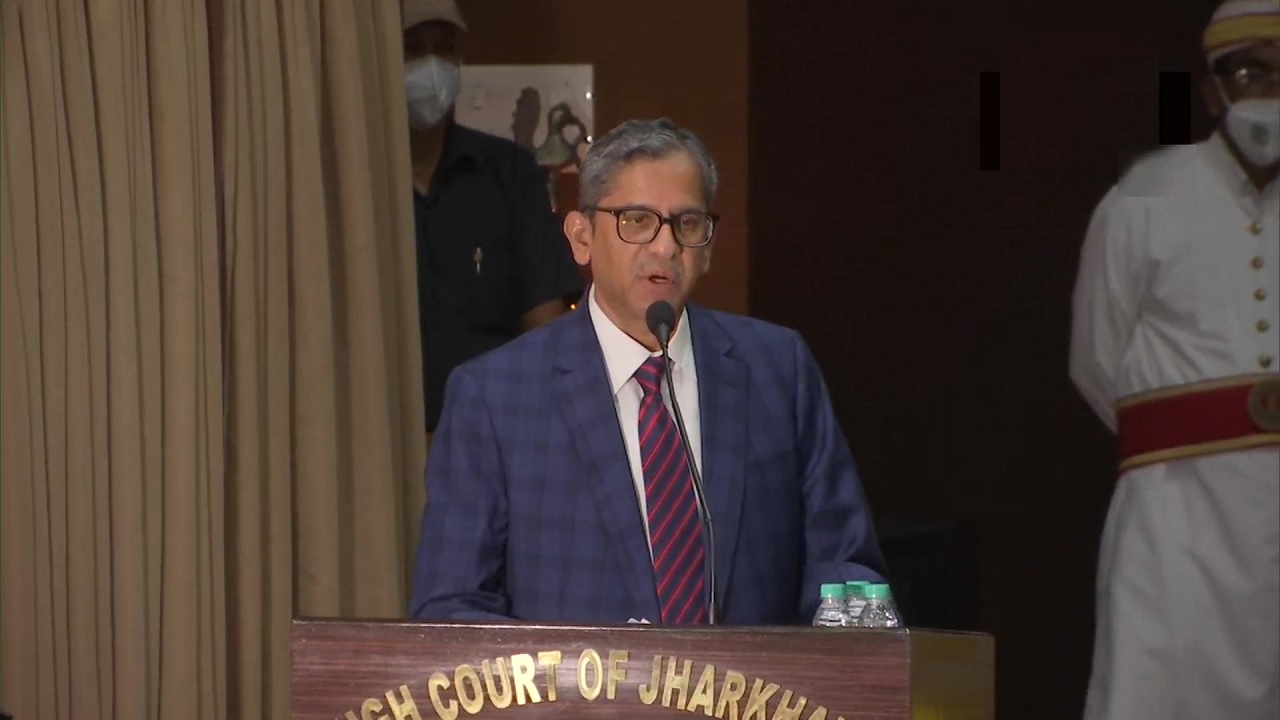
The other day former Chief Justice of India NV Ramana gave a good dressing-down to the media for its habit of crossing the constitutional limits set for each pillar of democracy. Chastising the media, he stated at a function at Ranchi that the judiciary would be
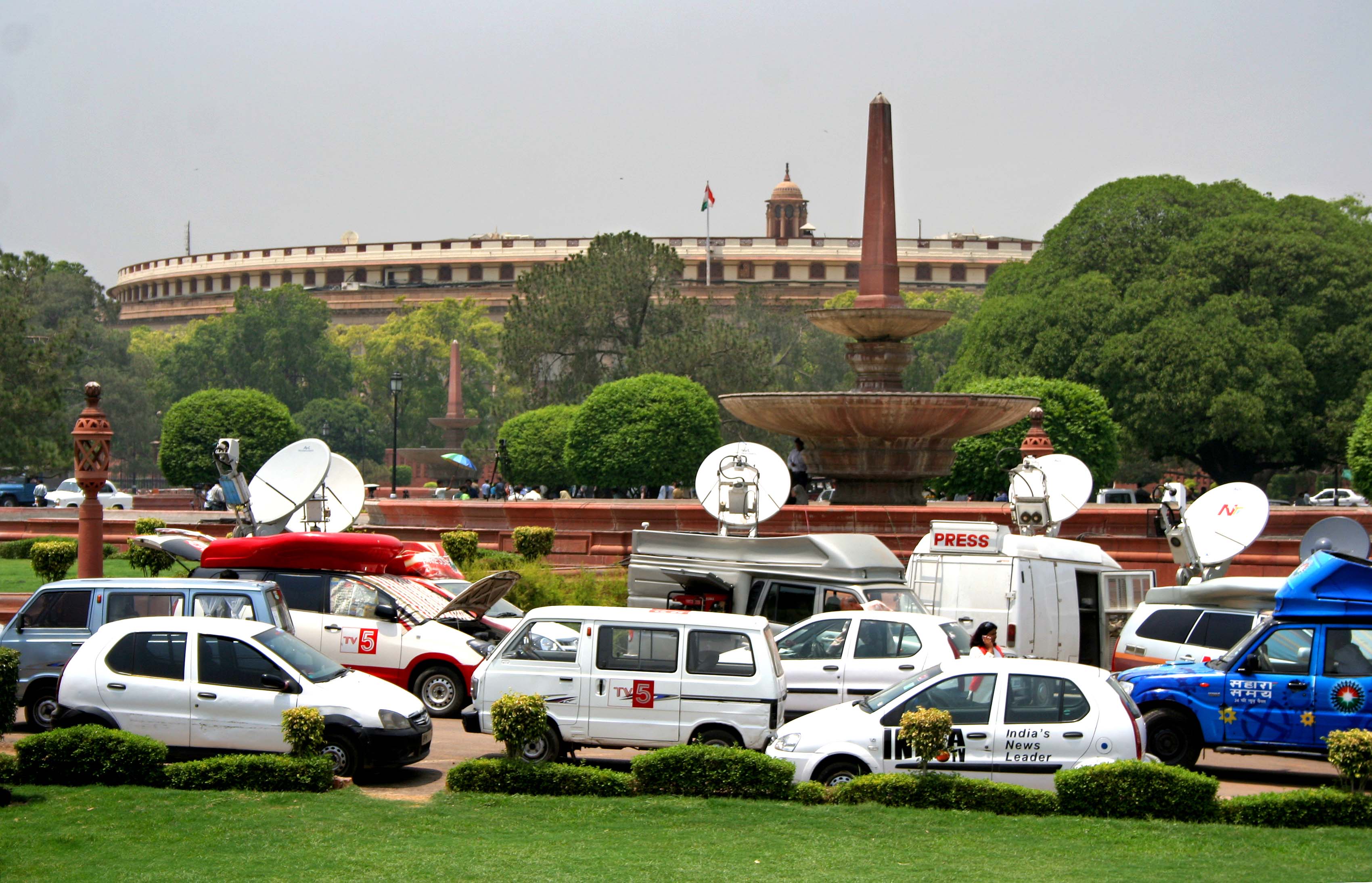
forced to ensure that the media functioned in accordance with the constitutional scheme of things if the latter did not initiate a process of course correction on its own. He came down heavily particularly on television news channels for running what he called “kangaroo courts”, which came in the way of the justice delivery system.

“Media trials”, Justice Ramana pointed out, “cannot be a guiding factor in deciding cases. Of late, we see the media running kangaroo courts at times on issues even experienced judges find it difficult to decide.” In his opinion, if a course correction is not done, the judiciary will have to step in. He particularly mentioned the “ill-informed and agenda-driven TV debates on issues involving justice delivery and observed that this was “proving to be detrimental to the health of democracy”.

What he said had been required for a long time as some media outlets, particularly TV news channels, have acquired the habit of doing “media trials” to punish the “guilty” as they saw it, indirectly doing the job of the courts. This must come to an end before the constitutional scheme of things gets damaged beyond repair.

Giving grace marks to newspapers, the former CJI stated, “Print media still has a certain degree of accountability whereas electronic media has zero accountability as what it shows vanishes into thin air. Still worse is social media.” This proves how difficult it is these days for the courts to pronounce their verdict on any given matter.

The irresponsible behaviour of electronic media, keeping aside some honourable exceptions, is affecting the image of the entire media fraternity. Very few people these days give journalists the respect they once commanded and the decline is mainly because of
trivialisation of the profession by TV channels. During a conversation on the state of the media today, a friend told me that a few years back he felt elated beyond description following the hero’s welcome he got at a West Asian airport when he disclosed his identity that he was a “sahafi” (journalist) from India. This can hardly be expected nowadays.

Journalists are hardly treated seriously these days for their reporting or views. The media scene has got more muddied because people generally get carried away by what they receive from social media, though it has no system of “checks and balances” or checking
and cross-checking of facts.

There are reasons why print media gets grace marks in any discussion involving the role of journalists or newspapers, TV channels and news websites. Almost every newspaper continues to have a system of checking and cross-checking of news stories and opinion pieces before these get into print. This system is either not there in most news portals and TV channels or is not as strong as it is in print media. Social media functions unbridled and that is why it plays a major role in creating chaos in society. Most of what is carried in electronic
media is unedited and without undergoing a system of at least quick checking and cross-checking.

So far as TV news channels are concerned, they have been getting flak from various quarters not only because of media trials but also owing to their maximum concentration on TRPs (television rating points) and carelessness with regard to checking and cross-checking of facts. There is an urgent need to find an effective way to handle these issues before the fourth pillar (fourth estate) of our democracy comes crumbling down.

Last year, the Parliamentary Standing Committee on Communications and Information Technology too remarked that the media was gradually losing its credibility and integrity as a result of controversies relating to paid news, fake news, TRP manipulation, media trials,
sensationalism and biased reporting.

In its 27th report on “Ethical Standards in Media Coverage”, the committee, headed by Congress MP Shashi  Tharoor, lamented that it was a  matter of grave concern that the media, once the most trusted weapon in the hands of the people and which acted as the trustee of the public interest, was gradually losing its credibility and integrity with values and morality being compromised.

The media’s primary job is to keep the people informed of what happens around the world and discuss these developments in a manner so that readers or listeners are in a better position to find out what is right and what is wrong. However, the problem arises when journalists not only do their job but also try to occupy the judge’s position and pronounce their verdict on the developments of the day in accordance with their own understanding of things or agendas.
Here I am reminded of the days when I was associated with a highly respected English language daily enjoying mass circulation. While writing what were called editorials (unsigned opinion pieces), we had to keep in mind that we should never appear to be sitting in the judge’s chair in a court of law. We could raise questions over an issue, give our opinion, take a stand or simply point out what could be the implications of the issue under discussion. All that we had to say was said within the given length in words. We would always try to the best of our ability to prevent our edits from getting affected by
our own prejudices and ideological moorings because these pieces were supposed to reflect the viewpoint of our institution. A senior colleague, a well-known leftist, would often say that what was most challenging for him was how to ensure that his writings, unless these
had his personal byline, were free from any kind of bias. This is how independent journalism can survive and how media persons can regain the respect they once commanded.

However, it is a herculean task for the media to free itself from the charges levelled against it unless there is a conducive atmosphere. Such an atmosphere is nearly impossible to find unless those in authority, those controlling the levers of power help create it.
Whether one likes him or not, independent India’s first Prime Minister, Jawaharlal Nehru, remains on top of the list of those who promoted independent journalism and tolerated criticism gracefully. It was not without reason that M. Chalapathi Rau, a celebrated journalist of India, wrote on Nehru’s death, as carried in The Economic Weekly (now Economic and Political Weekly), “To Jawaharlal Nehru, who was accustomed to self-inquisition and self-criticism, criticism was the breath of life and had to be tolerated. No other public man of his standing tolerated criticism as much as he did. It was the democratic way of life, and life itself.”

The writer is a Delhi-based political commentator.
 

It’s about time women who matter speak up

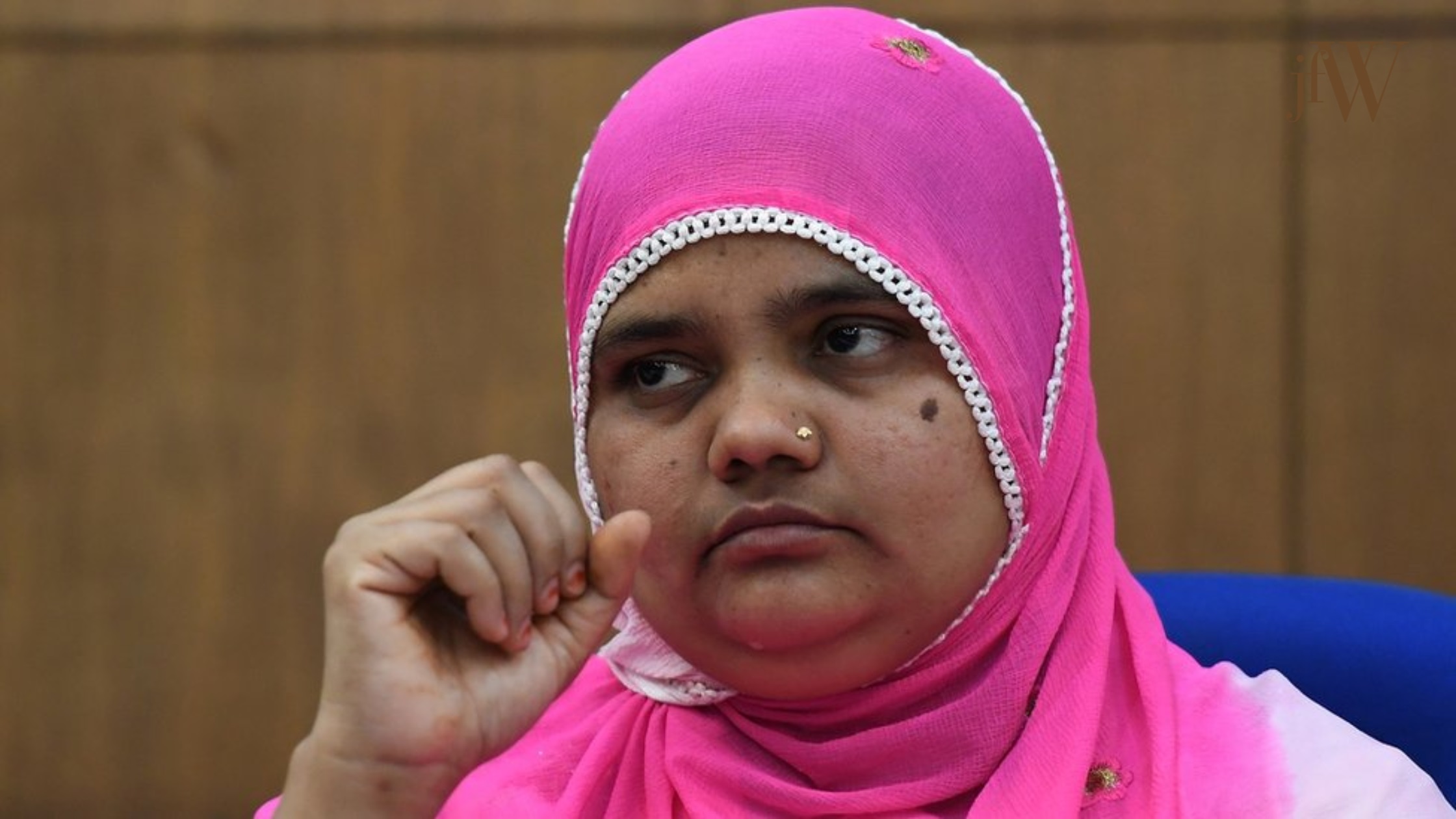
The incident which became a litmus test to judge their response was the release of 11 convicts of Bilkis Bano gangrape case on August 15. The silence was loudest from the 11 women Central Ministers, the highest number of women ministers in the last 17 years, writes Amitabh Srivastava

We have been calling them our ‘better half’, the ‘Adhi Abadi’, ‘Stree Shakti’ the ‘Durgas’ of the family to tell ‘Women’ that they are different from us the Men.

But are they?

Their loud silence when they need to speak out and at times their seeming connivance when brutal atrocities are being committed on their own species makes one wonder if they are just a part of Adam’s rib.

The Genesis tells us how God created Eve from the rib of Adam and this was interpreted to mean that Eve was supposed to be by Adam’s ‘side’ all the time and equal to him.

But looking at the way women, particularity in India, have been reacting to issues where they need to speak out it would appear that they have become a part of men’s persona, their psyche and are no different from them. Sometimes even worse.

The most recent incident which becomes a litmus test to judge their response was the release of 11 rapists of Bilkis Bano on August 15, the day India was celebrating it’s Azadi ka Amrit Mahotsav.

As we know Bilkis Bano was a 20-year-old and several months pregnant who was assaulted by men she had known for years in 2002. One of those who attacked her she had been calling ‘Chacha’ (uncle). She along with the others, known as brothers, gang-raped her. Not only that she became witness to her 14 family members being killed and their heads buried in sand with salt stuffed in so that they would permanently rot there. And yes, her three-year-old daughter was also murdered on that fateful March 3, 2002.

All these convicts are now out being ‘good Brahmins’ leaving Bilkis and her family once again cowering in fear.

The ‘silence of the lambs’ is loudest from the 11 women Central Ministers, the highest number in the last 17 years.

Nirmala Sitharaman, the second woman Finance Minister in the country was recently heard and seen taking on Sonia Gandhi in an incident involving her colleague Smriti Irani in Parliament. All that Sonia Gandhi had told Smriti Irani was ‘Don’t talk to me’ and the Finance Minister took it as ‘terrorising’ my colleague.

Smriti Irani who broke the glass ceiling, so to say, by defeating Rahul Gandhi from the traditional Nehru family bastion of Amethi sent defamation notices to news channels and senior Congress functionaries because the name of her daughter was mentioned in connection with a restaurant in Goa. But where does the Sas Bhi Kabhi… Loudmouth stand when a case of proven atrocities against Bilkis Bano is making headlines.

This is not to say that women are not reacting. Mohua Moitra from TMC did file a petition in the Supreme Court. But she is a usual suspect and sometimes even her party chief Mamata Banerjee has to disown her statements.

Another group of 600 prominent personalities including women rights activists and other NGOs also filed a Public Interest Litigation (PIL) in the Supreme Court to revoke the remission of the 11 convicts involved in the Bilkis Bano case.

For their courage under such adverse circumstances they need to be named. These organisations include Saheli Women’s Resource Centre, All India Progressive Women’s Association, Uttarakhand Mahila Manch, Forum Against Oppression of Women, Pragatisheel Mahila Manch,Centre for Struggling Women, Stree Mukti Sanghthana, Women and Transgender Joint Action Committee among others.

But a wider concern arising out of such attitude of women MPs of the ruling BJP is whether women reservation in Parliament and state assemblies would really help women.

Do women in powerful positions help women? Here it would be interesting to recall that during Indira Gandhi’s tenure as the Prime Minister from 1967-71, 1971-1977 and again during 1980-84, not a single woman was appointed as a cabinet minister.

However, the second and third ministries of Indira Gandhi included Dr Sarojini Mahishi, Nandini Satpathy, Sushila Rohatgi and Saroj Khaparde as ministers of state.

Even so for whatever its worth, the Women Reservation Bill story is worth a look.

The first Constitutional Amendment Bill for Reservations was passed in 1993 to reserve one third seats for women in local elections as Sarpanch.

But trouble arose when this was sought to be extended to parliament and state assemblies although it was clarified that this was meant to be done on rotational basis.

There have been several attempts to introduce the bill both by the UPA and the NDA.

Parties of the north, especially Rashtriya Janata Dal and Samajwadi Party have been hostile every time the Bill was sought to be brought up because they wanted a quota within quota to be introduced. The BJP appeared quite positive officially although later it also succumbed to the quota criteria when Uma Bharti opposed it in its current form.

The situation today is that the reservation bill has been passed by the Rajya Sabha but is yet to be passed by Lok Sabha.

Such was the hostility of these parties that in May 2008, when Law Minister HR Bhardwaj was introducing the bill in the Rajya Sabha, he was sitting in the middle row of the treasury benches between Kumari Saileja and Ambika Soni while other MPs like Jayanti Natarajan, Alka Balram Khashtriya stood guard to protect him from the MPs of the Samajwadi Party ready to snatch the Bill and tear it off.

An angry Abu Asim Kazmi of SP attempted to snatch it from Bhadwaj but Renuka Chowdhary, the then Minister for Women and Child Development, literally pushed him away.

There was a time when all women MPs irrespective of party affiliations including Sonia Gandhi and Sushma Swaraj who had contested against each other, joined hands to get the bill passed but a hostile Lalu and Mulayam combine resisted all such attempts.

Can all Women MPs even think of coming together on the basis of issues today and will it be worth it?

With 303 BJP MPs in Lok Sabha is it not surprising that there is no talk of 33 per cent reservations for women in parliament now.

A recent case is that of the Marital Rape Act which has not been passed by Indian Parliament so far despite the Verma Committee recommending it.

As of today, 77 out of 185 countries criminalise marital rape while 74 allow women to file complaints. Thirty four countries do not allow any such provision according to Amnesty International.

One would have expected this law to be enacted in India as we have had two very powerful and vocal Ministers of Women and Child Development in the Modi cabinet – Maneka Gandhi earlier and Smriti Irani currently, but both have expressed strong resentment against the law, which they said would break the Indian families. This when a survey by it’s own NFHS survey conducted in 6.37 lakh households in 28 states and UTs has revealed that 32 per cent of married women have suffered spousal physical, sexual or emotional violence and 27 per cent said that they suffered one form of violence in the last 12 months prior to the survey.

The matter went to Delhi High Court which delivered a split verdict because the Centre abdicated its responsibility and refused to take a stand.

It’s also time today to recall the three-decade old sexual assault case of Chandigarh involving 14 year old Ruchika Girhotra by an IPS officer SP Singh Rathore. Her family was harassed for years finally leading to her committing suicide.

I recall this case today only because throughout the trial, the wife of Rathore, an advocate, was fighting his case.

I had once asked Maneka Gandhi whether any SHO had been removed for non-registration of an FIR of sexual assault even though Justice Verma committee set up after the Nirbhaya case had recommended very strict deterrent for this lapse.

Maneka Gandhi is no longer in that Ministry but she was also falling for the myth that women are more sympathetic to girls than men.

But statistics of the honour killings in the western UP and Haryana etc clearly indicate that the grandmothers in the families are the fiercest about the family honour. They don’t mind beheading both defaulting girl from their family and her lover’s and throwing their bodies in the river or hanging them on trees. Hence, even if we have more women in the police force it would not really change the ground situation.

As recent as January 21, 2021 Justice Pushpa Ganediwala, a single Judge Bench of Bombay High Court ruled that merely groping did not amount to sexual assault unless the accused removed the top of the girl and slid his hand inside her clothes.

This judgment sent such shock waves across the country and that the Supreme Court condemned her casual approach to the crimes under POCSO and reversed her judgement.

However that brings me to the point. Does being a woman really matter or they chips of the same ‘Rib’ like Adam and Eve?


India quietly carries on  with non-aligned role  as Cold War-II unfolds

Similar to the Cold War-I, the new Cold war-II appears to be dividing the world again, but the situation is much more complex. The Cold War-I was led by the USSR, but China having much bigger economy should be the natural leader of the new anti-western bloc

It goes to the credit of the India’s policy makers that irrespective of having different ideologies, representing either the rightist or left perspective, they are in unison that the country must have an active role in the current geo-politics, when the world is coming out of  the era of the uni-polar world under the spell of the USA as the only super power to the play of the multiple powers, especially China and Russia. Within India, the country’s role as a non-aligned nation too has always been under scrutiny. During the post Emergency years i.e. 1977 onwards, the then foreign minister, Atal Bihari Vajpayee, had spelt out the doctrine of equidistance between the USA and the USSR. The situation, however, underwent a paradigm change following the collapse of the USSR in 1990s, when on December 25, 1991, the Soviet hammer and sickle flag lowered for the last time over the Kremlin, replacing it by the Russian tricolour.

The Charter of Paris

The final end of the communist regime was followed up by the resignation of the USSR’s then President Mikhail Gorbachev. He was replaced by Boris Yeltsin as the president of the new independent Russian state. Earlier, the Summit of the Heads of State or Government held in Paris on 19–21 November, 1990, had adopted the Charter of Paris for a New Europe. It welcomed the end of an ‘era of confrontation and division’ and proclaimed the desire to ‘build, consolidate and strengthen democracy as the only system of government’.

On its part, the Russian Federation, the successive state of the USSR, dismantled the Warsaw Pact, which had been established as a counter weight to the North Atlantic Treaty Organisation (NATO), established by the hawks in White House in 1949. The Warsaw Pact was formed six years later comprising the USSR, its affiliated Communist nations in Eastern Europe in 1955.

The European powers enjoyed unprecedented peace during this period, especially when the   two former Cold War enemies, America and Russia embarked upon a process of disarmament. The negotiations had led to the signing of agreements for the progressive reduction of the number of conventional and nuclear weapons on European soil. The relations between them had begun to normalise, but the United States refused NATO membership to the Russian Federation. A number of former members of the Warsaw Pact, however, were enrolled in NATO.

The Visegrád Group comprising four Central European countries, the Czech Republic, Hungary, Poland, and Slovakia had decided to 21 December 1991 that their aim was seeking membership of NATO. They were concerned about the stability of their frontiers because of the revival of nationalism in Central Europe. They were also apprehensive of a possible resurgence of Russian assertion. Initially, the new Russian leadership expected that with the end of their country would be allowed to be a part of Europe, but it was denied by successive American administrations. Meanwhile, the induction of a number of the former Communist bloc members in the NATO had alarmed the Russian leadership. They felt that the US-led western powers are keen to weaken Russia’s traditional pre-eminent position in the region.

The Genesis of the Cold War-II

It is stated that the Cold War-II has not suddenly appeared on the world stage.

Nearly a quarter century ago, on May 1998, Gorge Kennan, a former diplomat and historian, had predicted that the decision of the US Senate to expand NATO to include Poland, Hungary and the Czech Republic would be “the beginning of a new cold war”, and further stated that “the Russians will gradually react quite adversely and it will affect their policies”. The veteran diplomat is also remembered as one of the leading figures of the group of foreign policy elders known as “The Wise Men”. He died seven years after making this prophecy on March 17, 2005, at the ripe age of 101.

It may be recalled that he had led the campaign for containing the USSR, which finally led to setting up power blocs during the Cold War-I years. In his series of articles, including “The Sources of Soviet Conduct”, had justified President Truman’santi-Soviet policy. In later years, he, however, began to criticize the ‘anti-USSR’ policies, he, earlier, had been championing.

The prediction regarding the Cold war-II was  also made in Edward Lucas’s book, ‘The New Cold War: How the Kremlin Menaces both Russia and the West’ in 2008.

Enacting the Great Game

With the collapse of the USSR, there was no longer a global military threat in Europe. The local or regional conflicts could have erupted, but they could be peacefully addressed by focusing on economic, social and political issues. There is a common perception that the US-led western powers deliberately provoked Russia to invade Ukraine, and thus to bleed its economy by engaging it in a prolonged war. It is being asked, whether the USA being a successor imperial British power has served the cause of peace by invoking the past animosity between the rulers of Britain and the Russian emperor, Czar.

The Great Game was a political and diplomatic confrontation that existed during most of the 19th century and the beginning of the 20th century between the British Empire and Russian Empire. It had impacted the politics of Afghanistan, the vast lands of Central Asia and having direct consequences in Iran, India and Tibet. The British feared of a Russian invasion of India following its growing assertion in the Central Asia, the Russians were apprehensive of the expansion of British interests in Central Asia.

It is widely believed that the western powers engaged Russia in various diplomatic initiatives, but did not allow full participation in the European politics. The much trumpeted initiative of the United States and Germany, of a North Atlantic Cooperation Council could not make any real headway for ensuring a participative role for Russia in Europe matching its size and position in the region. These efforts had led to the Founding Act on Mutual Relations, Cooperation and Security between NATO and the Russian Federation. It was signed, thus creating the NATO-Russia Permanent Joint Council, but it could not prevent the eight-year old Russian-Ukrainian conflict in the region. The ongoing war in Ukraine has now entered into its eighth month, but no serious peace efforts are being made to end this conflict.

India’s New Assertion

During the post-1947 years, India had adopted a non-aligned approach in dealing with the erstwhile colonial powers. These powers had jointly defeated Hitler’s Germany with the help of the USSR. However, the collapse of the pro-West government in Beijing led to the formation of the anti-Communist or anti-Soviet bloc in the world. It adversely affected peace during the post- World War-II years. The Vietnam War, the conflicts in Africa and Latin America symbolized the new power rivalry on the earth. These conflcits had led to the Cold War-I. It, however, ended following the end of the Communist rule of the USSR in 1991.

Earlier, during the period following the collapse of the USSR, India had embarked upon a close economic cooperation with the western world. She, however, did not try to join any western defence alliance, but continue to obtain the sensitive state-of-the art weapons from Russia. It is stated that the present standoff between the USA and Russia could have been avoided if the US President, Joe Biden, had reassured the Russian President, Vladimir Putin, during their summit meeting held on 16 June 2021, in Geneva, Switzerland, that it had no intention to dilute the Russian influence in the region. Six months later, Putin rushes to New Delhi in December 2021 asking India to team up as a key partner with China in the proposed strategic alliance, Russia, India and China (RIC) for peace in the region. The proposal, however, could not make any headway due to the reluctance of China to withdraw its troops on India-Tibet borders, especially in the Galwan valley.

Similar to the Cold War-I, the new Cold war-II appears to be dividing the world again, but the situation is much more complex. The Cold War-I was led by the USSR, but China having much bigger economy should be the natural leader of the new anti-western bloc. There cannot be a straight dividing line in the contemporary world, when the American companies use the cheap highly skilled Chinese labour for manufacturing their products for marketing them worldwide. Amidst this troubled complex situation, India is quietly pursuing her non-aligned role benefitting her economy as well as in the geo-strategic politics, especially when uncertainty has engulfed the world.


Assured price for kodo, kutki cheers Chhattisgarh farmers

In order to promote millets, Chief Minister Bhupesh Baghel announced the procurement of kodo and kutki under the minimum support price last year. The step assumes importance in view of 2023 declared the International Year of Millets by the UN, writes Deepanwita Gita Niyogi

On a hot afternoon post lunch, Mangalsingh Dhurwe, a resident of Salhewara in Chhattisgarh, led the way to a godown where gunny bags were stacked on all sides.

Salhewara is a tribal-dominated village which was formerly a part of Rajnandgaon district of the state. At present, it falls in Khairagarh-Chhuikhadan-Gandai district which became the 33rd district in April.

At the spacious well-lit godown with whitewashed walls, Dhurwe showed off several gunny bags containing small millets kodo and kutki. “The millet crops stored here were purchased this year in January-February from mostly Baiga tribal farmers across 18 villages located near Salhewara. The rate offered was Rs 3,000 per quintal under Minimum Support Price (MSP),” Dhurwe, who is the manager of the godown, said.

In order to promote millets in the state, Chhattisgarh chief minister Bhupesh Baghel announced the procurement of kodo and kutki under MSP for the first time in January last year. The step assumes importance in view of 2023 having been declared the International Year of Millets by the United Nations.

Since the start of Covid-19, women self-help groups have facilitated the purchase of minor forest produce like mahua and tamarind across Chhattisgarh. This was done to minimise the influence of middlemen who offer low rates to tribals. The same method was followed in the case of kodo and kutki which were once traditionally cultivated in tribal areas. But millets slowly fell out of favour as the government favoured paddy by announcing the MSP at Rs 2,500 per quintal.

Dhurwe added that the higher MSP now in favour of kodo and kutki may revive the crops. “The women’s group in Salhewara bought 3368.45 quintals of kodo, two quintals and 35 kg of kutki and one quintal of ragi. They approached farmers at the local level directly and then helped transport the produce at this Van Dhan Kendra godown. Most villages from where the purchase was made lie within 8-10 km.”

The Van Dhan Scheme is a special initiative of the Ministry of Tribal Affairs introduced in 2018. Through it, the Centre tries to improve tribal livelihood in Adivasi areas.

Favouring kodo and kutki

A few kilometres away from the godown, the village of Nawagaon greets the eyes with its neat and colourful houses on both sides of the narrow lane. Middle-aged Ramesh Bai came out smiling. Bai’s family owns six acres of land. Of this, paddy is cultivated on five acres and the rest is for millets.

“What choice do we have other than paddy? It fetches us more money as the MSP of Rs 2,500 offered per quintal is high. But at present the rate of kodo and kutki is more. It is a good sign as middlemen who used to offer half the rate would be discouraged now,” Bai said.

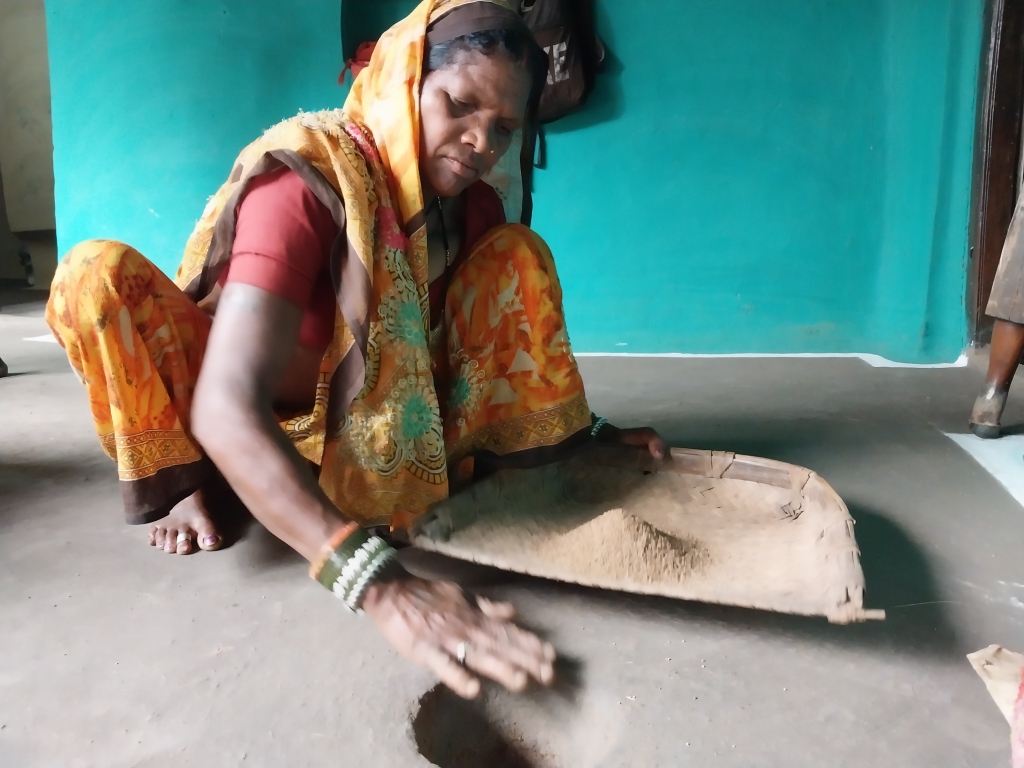
For Bai and several other women, growing kodo and kutki has been a glorious tradition for several generations. Most people here love to eat bhat and khidchi made from minor millets. However, she admitted that processing millets with the traditional jaata, a round tool made of mud which has to be spun by hand to remove the husk, and musar, a long wooden pole used for beating and pounding millets for separating husks, at home is tedious. The final process for cleaning is using the bamboo supa for blowing away the chaff. “Women process millets at home. It is a long three-step process but that has always been the way always.”

As Bai’s son, Karan Patel watched his mother using the jaata and the musar for processing by sitting on the ground, he said that the MSP would greatly benefit farmers who left millet cultivation due to low rates. “Some 50 percent of households in the village grow kodo and kutki. We also store the crops in the house in specially made mud containers called kothis.”

A youngster, Patel enumerated the benefits of eating millets in the harsh summer months for keeping the body cool. Cultivation of kodo and kutki takes place along with paddy in the Kharif season and the crops are ready by October-November.

The youth added that most farmers have reduced the cultivation as well as consumption of kodo and kutki. Earlier, many people used to eat millets but now there is reduced intake and more sale for cash. “Families are also entitled to 35 kg rice under the public distribution system and then there has always been an MSP for paddy. So, who wants to work hard and do millet processing? On top of that, some middlemen offered rates as low as Rs 1,200 per quintal.”

Over a cup of tea, Patel led the way to a dark room where two kothis were present. One of these was so huge that he had to climb a short flight of steps to reach its top and prise open the lid. Millets kept in mud kothis can be retained for many years. “This year my family could not sell millets. We have to do registration of lands for selling kodo and kutki at the MSP. Now that the rates are good, most farmers would carry out land registration. Purchases are also happening without processing and so everything seems easy.”

Millets: Back in favour

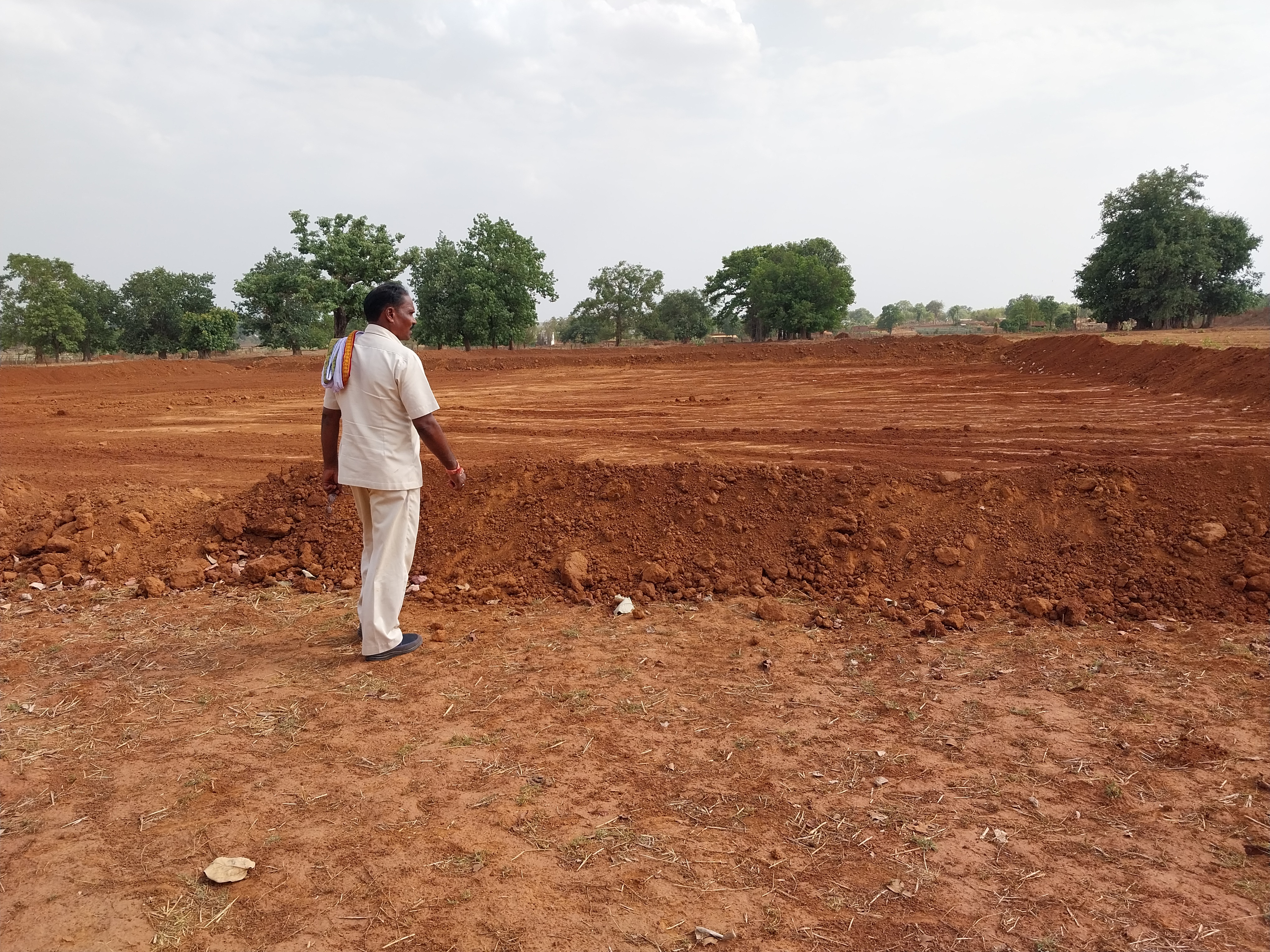
A short drive to an open area revealed that many kodo and kutki plots have been converted into paddy lands by farmers in Nawagaon. Some of these areas where millet cultivation was once the norm have been bordered with mud piled up on all sides so that water can be retained for paddy cultivation as the crop needs standing water. On the other hand, millets, including kodo-kutki, do not need much water. Hence, they are climate resilient crops and are back in favour at the time when climate change is a huge concern.

Khairagarh divisional forest officer Dilraj Prabhakar said the Indian Millets Research Institute based in Hyderabad has entered into an agreement with the state government and district collectors for value addition from millets. More than 2000 beneficiaries have been given direct financial support through the purchase of kodo and kutki in Kabirdham or Kawardha and Khairagarh-Chhuikhadan-Gandai.

Procurement of kodo and kutki has happened in Kawardha district too, two hours from Khairagarh. Tarkesh Yadav, beat guard of Pandariya Paschim forest range in the district, said that the production was good and in his range about two quintals of kodo was procured.

Jacob Nellithanam, who works with millets farmers in India, said along with the MSP, focus should be laid on ensuring higher productivity of kodo and kutki. Right now, the productivity is low and is only about three to four quintals per acre. “Just because the MSP is higher, it won’t be helpful for farmers. It will only cover their cost of cultivation. Unless an intensive cultivation approach is promoted, it will fizzle out in a few years.”

Citing the example of the Odisha Millet Mission, the expert added that it is a government-supported programme where the productivity of ragi is eight quintals per acre on an average. “It is a viable yield and farmers are getting good prices. One needs a definite policy to increase the yield per acre.”

Chhattisgarh’s principal chief conservator of forest Rakesh Chaturvedi said that the decision to procure kodo and kutki from farmers by the forest department was taken at the cabinet level. Under it, the crops would be purchased, processed, packaged and marketed by the Chhattisgarh State Minor Forest Produce (Trading & Development) Co-operative Federation Limited in Raipur, an apex body with a cooperative structure which helps in the collection of minor forest produce. The profit earned would be shared with farmers.

At the godown, Dhurwe explained that farmers who sold off their produce were happy as they received money in their bank accounts within a fortnight. “When the minimum support price was not there, farmers mostly sold off the excess produce to middlemen and small traders at Rs 1,800 quintal. Usually they kept a small amount for household use.”

In Kabirdham, kodo collected in 2021-22 stands at 21,252 quintals and kutki is 21 quintals. In the entire Khairagarh, kodo procured stands at 7656.130 quintals and kutki at 1150 quintals.


Shivpal Yadav announces formation of new outfit

Pragatisheel Samajwadi Party Lohia founder Shivpal Yadav on Thursday announced formation of a new organisation for the Yadav community, and said it will fight for the cause of social justice.
Yadav said the organisation — Yadav Renaissance Mission — was not for or against any political party.

While Shivpal is the patron of the organisation, former MP from Sambhal DP Yadav is its president while writer Vishwatma is founder member of the Mission.

“We will soon be constituting the unit of the Mission across the state and country,” Shivpal Yadav said at a press conference.

Among the issues which the new outfit is going to take up include demand for conducting a caste census and formation of ‘Ahir (Yadav) regiment’ besides others.

Yadavs are considered as the core vote bank of the Samajwadi Party and the formation of new outfit is seen as an obvious attempt to woo the community.

The socialist leader had recently parted ways with his nephew and Samajwadi Party chief Akhilesh Yadav, months after both leaders came together for the Uttar Pradesh Assembly polls. Shivpal formed the Pragatisheel Samajwadi Party-Lohia in 2018.

SpiceJet Delhi-Nashik flight returns midway due to ‘autopilot’ snag

A SpiceJet flight that took off for Nashik in Maharashtra from the Indira Gandhi International Airport here on Thursday morning returned midway to the national capital due to an ‘autopilot’ snag, a DGCA official said.

The Boeing 737 aircraft landed safely, he said.

SpiceJet B737 aircraft VT-SLP, operating flight SG-8363 (Delhi-Nashik), on Thursday was involved in an air turnback due to an autopilot snag, the official said.

The airline in a statement later said its Delhi-Nashik flight returned to Delhi after the flight crew experienced a malfunction with the autopilot system.

The aircraft made a normal landing at Delhi and passengers disembarked normally, SpiceJet said in the statement.

Facing financial turbulence amid high fuel prices and rupee depreciation, SpiceJet aircraft have been involved in a series of incidents in the past as well, following which the Directorate General of Civil Aviation (DGCA) had issued a show-cause notice to the airline.

On July 27, the aviation safety regulator had also ordered the airline to operate a maximum of 50 per cent of its flights for eight weeks.

Ghulam Nabi Azad to address rally in Jammu on Sep 4

Former Jammu and Kashmir chief minister Ghulam Nabi Azad will address a rally in Jammu on September 4, his first after quitting the Congress.

The rally is planned on the day Congress leader Rahul Gandhi is slated to address a ‘Mehngai par Halla Bol’ event in the national capital.

With the timing of Azad’s launch event in Jammu and Kashmir coinciding with Gandhi’s rally, it will be seen if there are more fireworks on the day the former Congress chief addresses the mega event at Delhi’s Ramlila Maidan.

Azad has said his resignation letter was just a “tip of the iceberg”, indicating that he would step up his attack on the Gandhis in the coming days.

He has already stated that he would float his own party in Jammu and Kashmir soon, where assembly elections are due to be announced.

Ahead of Azad’s Sunday rally in Jammu’s Sainik farms, there has been a spate of resignations in the Jammu and Kashmir Congress.

Sixty-four more leaders, including former deputy chief minister Tara Chand, tendered their resignation and joined the Ghulam Nabi Azad camp on Tuesday, leaving the unit of the national party in the Union Territory in tatters.

The former Union minister had targeted Rahul Gandhi in his five-page resignation letter to Sonia Gandhi last Friday.

Azad had launched a stinging attack on Rahul Gandhi describing him as “immature” and “childish” and accusing the leadership of “foisting a non-serious individual” at the helm of the party.

Azad mentioned Rahul Gandhi seven times, accusing him of running the party through a “new coterie of inexperienced sycophants”.

Azad, 73, who ended his nearly five-decade association with the Congress, also attacked party chief Sonia Gandhi for applying the “remote control model that demolished the institutional integrity of the United Progressive Alliance (UPA) government” to the party.

He also reminded Sonia Gandhi that she was just a “nominal figurehead” and all the important decisions were being taken by Rahul Gandhi or “rather worse his security guards and PAs”.

Azad slammed Rahul Gandhi’s conduct within the party and singled out his action of tearing up a government ordinance in “full glare” of the media.

“One of the most glaring examples of this immaturity was the tearing up of a government ordinance in the full glare of the media by Shri Rahul Gandhi,” he said.

“The said ordinance was incubated in the Congress Core Group and subsequently unanimously approved by the Union Cabinet presided over by the Prime Minister of India and duly approved even by the President of India.

“This ‘childish’ behaviour completely subverted the authority of the Prime Minister and Government of India,” said Azad, who served as Health Minister in the UPA-II government.

Fast increase in crime against women cases in Haryana says Kumari Shelja

Addressing media persons at Chandigarh, former HPCC president and Union Minister Shelja member congress working committee expressed deep concern over fast increasing crime against women in Haryana state since past couple of years. She said, ruling government in Haryana state during last Vidhan Sabha session claimed that crime against women are decreasing in the state which is untrue since such crimes are fast increasing in the state since past couple of years.

Shelja said, according to National Crime Record Bureau (NCRB) recent report 28% increase in crime against women cases was reported in 2021  as compared to year 2020 in Haryana state when 16658 such cases were registered at police stations in the state during year 2021 thus on an average 45 cases were registered daily. Similarly, last year 1716 rape cases were reported at police station in the state during year 2021 although the actual number of rapes was much higher officially having 25% increase as compared to previous year 2020. According to NCRB report, 2249 cases were registered under Poksey Act allegedly sexual molestation of minor girls in police stations in Haryana state during year 2021 which was 21% higher as compared to year 2020.

 Shelja said, according to NCRB report, 34.5% increase was recorded in case of cases registered against those belonging to backward classes. Report further revealed that 89 person were reported died due to having overdose of drugs during year 2021, whereas the situation during present year turning worst when 43 persons, mostly youths have already lost lives after consuming excessive quantity of drugs so far In-spite of the fact state government has set up a separate Narcotic cell in the state and still unable to control smuggling , sale and drug addiction among youths. 

Maruti very important part of Suzuki Japan; organisational changes in offing: RC Bhargava

Maruti Suzuki India Chairman RC Bhargava on Wednesday hinted at organisational changes going forward in the backdrop of the company’s increased contribution to parent Suzuki Motor Corporation’s overall global business.
In his address to the annual general meeting of the company, the first physical meeting after two years following disruptions by COVID-19 pandemic, he said in future Maruti Suzuki India’s contribution to Suzuki’s global production will go beyond 60 per cent, which was achieved last year.

Bhargava also said the company will chart out its strategy for entering the compressed biomethane gas fuel as suggested by Prime Minister Narendra Modi at the company’s 40th year celebration at Gandhinagar on Sunday.

“It’s clear that Maruti has become a very, very important part of Suzuki Japan,” he said referring to the statement by Suzuki Motor Corporation President Toshihiro Suzuki that in the last fiscal Suzuki group produced about 28 lakh automobiles all over the world, out of which more than 16 lakh units, or about 60 per cent, were produced in India.

Also, he said Suzuki’s announcement to set up a wholly-owned research and development company in India also comes at a time of Maruti’s growing importance in Suzuki’s operations.

“… Which raises in my mind also the fact that with the growing volumes of production in India, the growing importance of India, the availability of capable manpower in India, do we not need now to look at how we are organising in India to deal with (future growth)?… ,” he said.

From a challenge to achieve two million units a year this fiscal to three million units possibly in a few years, the company needs to prepare for its future, he added.

“What is the most efficient way of preparing for the future in all areas of production or sales and marketing or R&D? I think we can all now apply ourselves and think of the future and see what must ensure your company grows in the most efficient manner in the coming years,” Bhargava said.

He further said, “And I hope that when we come up with any changes in the future, we will have your backing and support.”

He, however, did not elaborate on what would be the changes.

On electric vehicles, Bhargava said when Maruti enters the EV segment in 2024-25, it will be in the upper-end of the market and not the lower-end.

On compressed biomethane gas fuel, Bhargava said Maruti Suzuki is “immediately looking into this area because it has enormous potential for the country” as a source of energy, it is not only renewable but extremely clean.

On Sunday, the company had signed a memorandum of understanding (MoU) with the National Dairy Development Board for setting up two biogas plants in Gujarat.

CBI has found nothing in my locker : Sisodia

CBI found nothing during its search of his locker, Delhi Deputy Chief Minister Manish Sisodia said on Tuesday.

A four-member team of the CBI conducted the search at a Punjab National Bank branch in Vasundhara, Ghaziabad, for nearly two hours. Sisodia and his wife wre present at the time.

The CBI was acting under pressure, Sisodia told reporters after the search was over.

“I am happy that I got a clean chit from the CBI in searches today. They have found nothing (incriminating) from searches of my locker or residence,” Sisodia told reporters here.

MOST POPULAR

HOT NEWS