Indian student succumbs to injuries sustained during shooting rampage in Canada

A 28-year-old Indian student has succumbed to the injuries sustained during a shooting rampage in Canada’s Ontario province that also claimed two other lives, including that of a police constable, police said.

Satwinder Singh, who was injured in the shooting last Monday in Milton, died at the Hamilton General Hospital with his family and friends by his side, the Halton Regional Police Service (HRPS) said in a statement on Saturday.

Singh was an international student from India who was working part-time at MK Auto Repairs at the time of the shooting, the statement said on Saturday.

Ayodhya gets temple dedicated to CM Yogi Adityanath

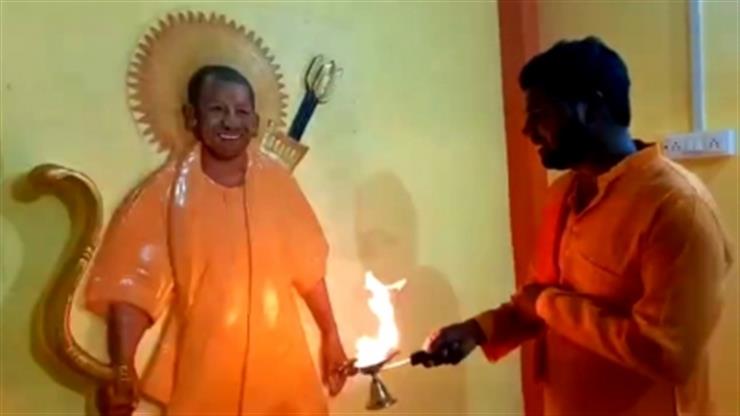
Even before the Ram temple reaches completion, Ayodhya now has a temple that is turning out to be a major tourist attraction.

A temple dedicated to Uttar Pradesh Chief Minister Yogi Adityanath has come up about 25 kilometres from Ayodhya on the Ayodhya -Prayagraj highway in Bhadarsa village.

The temple is located near the Bharat Kund.

The idol of the chief minister shows him carrying a bow and arrow and an ‘aarti’ is performed at the temple every evening.

Prabhakar Maurya, who built the temple, said, “Yogi Adityanath has built the Ram temple for us and I have built this temple for him.”


Punjab CM Bhagwant Mann deplaned in Frankfurt as he was ‘too drunk to walk’

Punjab Chief Minister Bhagwant Mann was deplaned in Frankfurt for Delhi-bound Lufthansa flight as he was “too drunk to walk”.

As per media reports, Mann, who was on a trip to Germany from September 11-18, delayed his departure as he was reportedly in ‘an inebriated state’.

However, his party, Aam Aadmi Party (AAP), has strongly denied the rumours, saying Mann was not deplaned at the Frankfurt airport. The party termed it false and frivolous propaganda by political rivals.

A co-passenger in a message said, “the CM was not steady on his feet as he had imbibed excessive alcohol n had to be supported by his wife/security”.

“Our political opponents are spreading these rumours to defame our CM. They cannot digest that CM Mann is working hard to get investment in Punjab. The CM returned as per schedule, ” party Chief Spokesperson Malwinder Singh Kang told the media.

Officials in the Chief Minister’s Office claimed that the Chief Minister could not board the flight because of an emergent health concerns.

With many different versions floating around, Shiromani Akali Dal (SAD) President Sukhbir Singh Badal Monday said the reports of the Chief Minister being deplaned from Lufthansa flight as he was “too drunk to walk” have “embarrassed and shamed Punjabis all over the globe”.

In a post on Twitter, Badal said: “Disturbing media reports quoting co-passengers say Punjab Chief Minister Bhagwant Mann was deplaned from Lufthansa flight as he was too drunk to walk. And it led to a 4-hour flight delay. He missed AAP’s national convention. These reports have embarrassed & shamed Punjabis all over the globe.”

He also said that Arvind Kejriwal should come clean on the issue.

He asked the Indian government to raise the issue with its German counterpart if Mann was deplaned in Frankfurt.

“Shockingly, Punjab government is mum over these reports involving their Chief Minister Bhagwant Mann. Arvind Kejriwal needs to come clean on this issue. Government of India must step in as this involves Punjabi and national pride. If he was deplaned, GoI must raise the issue with its German counterpart, ” Badal tweeted.

Setting aside the rumours, AAP’s director of media communication Chander Suta Dogra said Mann was a little unwell.

‘Mission 2024’ : BJP set on Mission 80 in UP, many senior MPs may be retired

After winning the Azamgarh and Rampur Lok Sabha seats in Uttar Pradesh bypolls recently, the BJP has swung into action and is now preparing for winning all 80 Lok Sabha seats in the most populous state as per its ‘Mission 2024’.

To win all the Lok Sabha seats in the state, the BJP has already started working at a fast pace on several fronts simultaneously.

The primary focus of the party is on the 16 Lok Sabha seats it lost in 2019 elections in Uttar Pradesh as well as the seats from where the BJP MPs have been winning elections continuously, especially those where the same party leader has won both the previous Lok Sabha elections.

Prime Minister Narendra Modi continues to remain the party’s most popular leader ahead of the 2024 Lok Sabha elections, but the popularity of MPs at the local level and their connect with the masses also plays an important role in determining the election results.

The BJP has cancelled tickets of its elected leaders on a large-scale to thwart anti-incumbency against them in different states many times in the past and the saffron party has benefited electorally.

Therefore, MPs who have won consecutive elections from the same Lok Sabha seats on BJP tickets, especially those who have won in 2014 and 2019 elections from the same constituencies, will have to prove their credibility once again to retain their seats in the 2024 Lok Sabha election as well. This means that to win the Lok Sabha ticket from the party for the third time in a row, the sitting MPs will have to prove their popularity in their respective constituencies.

Top BJP leaders are constantly visiting different areas of Uttar Pradesh and taking feedback from the people about the work done by the party MPs in their respective constituencies.

Uttar Pradesh Chief Minister Yogi Adityanath, Deputy Chief Ministers Keshav Prasad Maurya and Brijesh Pathak, newly-appointed state party President Bhupendra Chaudhary and Uttar Pradesh BJP General Secretary (Organisation) Dharampal are frequently visiting different districts of the state to review the preparations for the 2024 Lok Sabha elections and taking feedback from the people about the performance and popularity of party MPs.

According to party sources, the BJP will also conduct a survey on the selection of candidates at various levels, and on the basis of the report of all these surveys, it will be decided from which seat which leader should be fielded, whose seat should be vacated and whose ticket should be cancelled.

The NDA had to face defeat in 16 of the 80 Lok Sabha seats in 2019 in Uttar Pradesh. It won 62 seats and its ally Apna Dal got two seats. In the same election, the BJP had won Congress’ bastion Amethi but could not defeat the Congress interim President Sonia Gandhi from Rae Bareli constituency.

The Samajwadi Party (SP) was still able to save its strongholds like Mainpuri, Azamgarh and Rampur in 2019 Lok Sabha elections in Uttar Pradesh (although the BJP has won both Azamgarh and Rampur in the recent by-elections), while Mayawati’s BSP also managed to win 10 Lok Sabha seats by stitching regional caste equations and taking advantage of the alliance with the SP.

But in the 2024 Lok Sabha elections, the BJP wants to win all the 80 Lok Sabha seats in the state by wresting the stronghold areas of Congress leader Sonia Gandhi and SP founder Mulayam Singh Yadav, including all opposition leaders.

‘Stop threatening media’, Kejriwal to PM’s media advisor

Addressing Aam Aadmi Party’s (AAP) first Rashtriya Janpratinidhi Sammelan here on Sunday, Delhi Chief Minister and AAP convenor Arvind Kejriwal accused the Prime Minister’s media advisor of threatening the media.

“There’s one gentleman named Hiren Joshi who works in the Prime Minister’s Office. He is the media advisor to the Prime Minister. Editors and owners of big news channels have shown me the vulgar abuses and threatening notes he sends them, ” the AAP chief claimed.

Kejriwal alleged that Joshi sends messages saying ‘if you show Kejriwal on your channel, we will do this or that’, ‘there is no need to cover AAP, you are misusing your channel’ etc.

“Is this how you’ll run the country, by threatening people, ” the Delhi CM asked.

“Today, I want to tell Hiren Joshiji that if someone leaks the screenshots of the messages you have sent to these editors on social media, you and the Prime Minister won’t be able to show your faces in this country, ” Kejriwal said.

For the first time, all the elected representatives of AAP from across the nation met at the Rashtriya Janpratinidhi Sammelan on Sunday. The meeting was called to discuss ways to strengthen the party organisation.

Talking about allegations levelled against AAP MLAs, Kejriwal said, “Had Satyendar Jain been in any other country, he would have been given him the Bharat Ratna.”

“They raided Manish Sisodia’s house alleging liquor scam of Rs 144 crore. But nothing came out. On Saturday, they caught Amanatullah Khan. They will put everyone in jail. So everyone should prepare to go to jail for 3-4 months, but they cannot harm you. Jail is not that bad, even I have spent 15 days there. If everyone has the courage, then they can’t do anything, ” Kehriwal said in his address to party representatives.

IBC has kept pace with emerging market requirement by frequent amendments: Sandip Garg, ED, IBBI

“Insolvency and Bankruptcy Code (IBC) has kept pace with emerging market requirement by frequent amendments. It will continue to do so to remain pertinent for all times to come. This reform has to keep evolving, the key thing to remember is that embracing the future is not an option but necessity,” said Sandip Garg, Executive Director of Insolvency and Bankruptcy Board of India (IBBI) at ASSOCHAM 9th International Summit on Corporate Restructuring, M&A and Joint Venture.

He also informed that the enactment of IBC in 2016 came from a need for comprehensive insolvency resolution legislation which focussed on resolution of debtors, while taking care of the interest of creditors. He elaborated, “The Code recognises that insolvency is an outcome of market forces. It incentivises, facilitates, enables, and empowers market participants to resolve insolvency. The main objective of the Code is resolution. Liquidation is resorted to only in cases when market is not able to give any viable resolution plan.”

Reiterating that IBBI is deliberating on several concerns of IBC, CIRP and is taking steps to address them, Garg said, “The Code envisages resolution of the firm as a going concern, as closure of the firm destroys organisational capital. It facilitates continued operation of the firm as a going concern by moratorium on institution or continuation of suits or proceedings against the firm during the resolution period. It enables raising interim finances which has super priority in payment.” He added, “LegalPay, a tech-focused start-up, has identified interim finance as the moderate return low-risk investment in view of the super-priority it receives in the waterfall.  I hope more players analyse it closely and come forward to provide interim finance.”

While speaking of challenges, he highlighted the need to reduce the number of litigations and suggested that “ASSOCHAM, being an association, can take an initiative to evolve a code of conduct” that will help the entire industry win.

Jyoti Jindgar Bhanot, Secretary (I/C), Competition Commission of India (CCI), Government of India, described the merger and acquisitions (M&A) landscape in India as dynamic. She elaborated, “In fact, in the wake of the pandemic, it has seen a paradigm shift in the way the industry functions and has given rise to issues and challenges for regulators and policymakers. The need of the hour is to have a healthy market environment that facilitates corporate restructuring and mergers. And it is imperative for regulators to have a proactive engagement with stakeholders to evolve systems and practices that balance facilitation and enforcement.” She added, “CCI is responding dynamically to the changes in the merger and acquisition landscape, particularly with the emergence of the new-age market.”

The next stage for the enterprises and partnerships should be a multidisciplinary approach, CA (Dr) Ashok Haldia, Chairman, Board of IIIP-ICAI said in his special address. To enable a trustworthy cooperation, there are some legal intricacies that shouldn’t be overlooked. Instead of making a significant investment in diversification for long-term benefit, core competency is the current approach, he added.

CS Ranjeet Pandey, Former President & Council Member, Institute of Company Secretaries of India (ICSI) shared that the magnitude of M&A transactions happened recently is huge and government proposing structural reforms in the relevant sectors is a steppingstone for ease of doing businesses and boosting economy. Prior to structuring the deal it is crucial to comprehend the business and transactions, he added.

Corporations have begun succession planning and to carry business forward in a consolidated manner, stated Pavan Kumar Vijay, Chairman, ASSOCHAM Task Force on Corporate Restructuring and M&A; Founder Corporate Professionals, in his introductory remarks. The future is promising for core businesses, he said, adding that “114 Bn direct transactions took place in 2021, primarily for M&A.” Adv.  GP Madaan, Co-chairman, ASSOCHAM Task Force for Corporate Restructuring and M&A; & Managing Partner, Madaan Law Offices while applauding the steps taken by the NCLT by coming up with draft Orders stated that some legislative changes are desired specially pertaining to powers of CoC and introduction of arbitration in dispute arising in insolvency sector.

Basudev Mukherjee, ASG, ASSOCHAM gave his welcome address and said mergers and acquisitions are increasingly accepted in business strategy as Indian economy has undergone a massive transformation after the pandemic. This is a sign for giving a boost to private sector, ease of doing business and protecting the interests of stakeholders. The international summit organised by the Department of Corporate Affairs of ASSOCHAM had participation of eminent experts included from Industry, Regulators, Government,  Legal professionals from India and overseas.


The Great Heist? Mystery of the Missing Train Bogies

Intro: For years, the bogies of the goods trains carrying food grains have been disappearing into thin air even as the authorities search for answers. An investigative report by Tehelka SIT

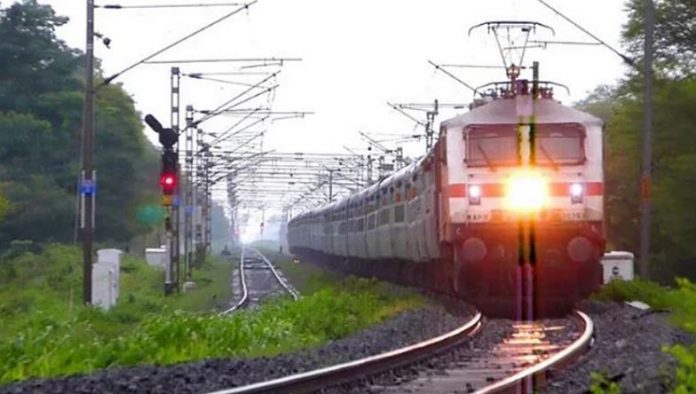
A goods train is running with speed on the railway track, carrying wheat and rice belonging to the Food Corporation of India [FCI]. It has to reach its destination after covering thousands of kilometers in two-three days. But after it reaches its destination, it is discovered that 40 coaches of this goods train are missing! This is neither a scene from a film nor a dream. It is a reality. For years, the goods train bogies carrying the FCI food grains have gone missing in India. We all have heard about the incidents of missing trucks, cars, motorbikes, tractors etc. But we have never heard stories of train bogies going missing which, incredibly, have been happening for years. But today, Tehelka with the help of its painstaking investigation done through several RTIs, is going to bring out the tales of missing goods train coaches in India. This type of investigation has not been done before, nor this kind of story has been heard so far.

Normally, the goods trains have 42 to 58 compartments. These are also called special trains and racks. Whenever these incidents of missing bogies occur, the FCI people start investigating the matter. The Indian Railway is also informed about it. The matter then gets sandwiched between FCI and Indian Railways. Both the departments start investigating this matter to unravel the mystery of missing train bogies. In some cases, it has been more than 35 years since the incident happened but the matter of  missing bogies remains unresolved. When the FCI fails to get any clue of its missing wagons [containing wheat and rice], the department makes a case for compensation for the lost items before the Indian Railways.

According to the experts, one bogey carries nearly 60 tonnes of grains. There are various varieties of wheat and rice in our country. The cost of these grains are decided, according to the quality of wheat and rice that is loaded in the train. It is estimated that one bogie carries the goods costing at least Rs 15 to 20 lakh. Such incidents of missing coaches have been happening for years but it is only after the filing of RTIs since the last four years, that this matter has come out in the open. RTIs are still being filed in the courts.


Though this is a serious matter, very few zonal offices of FCI have come forward to report this matter. Till now, the RTIs have been filed on the basis of complaints of a few zonal offices only. The zonal offices of Guwahati have lodged more complaints as compared to others.

We all are familiar with cases of theft of vehicles such as cars and other small vehicles since our childhood, with many of us having dealt with it first hand. Everyday, cases of lost cars, bikes and other vehicles are registered in our country. But today, the story we are presenting before you will not only shock you but will also leave you bewildered. After reading this exclusive expose by Tehelka, you will be left wondering how theft of train coaches is even possible. Is it so easy to hide these huge iron boxes somewhere for so many years?. Who all are responsible for this crime, and where have these loaded bogies gone?

Goods trains on railway tracks are a familiar sight in India. Transportation of  huge quantities of loads is mainly done through these trains. After going through the FCI website, we found that the transportation of wheat and rice is mainly done through goods trains. Though we have also seen these grains transported through roadways also, but the capacity is very low as compared to the goods trains. One can get complete data of this on the FCI website.

In the year 2021-22, the number of trains that carried wheat and rice grains from one place to another were 39773. There are five zonal offices of FCI: North-East, East Zone, South Zone, North Zone and West Zone. All these special goods trains went to these zones only. The number of special trains that reached the North East zone were 2333 while 15762 were sent to the North zone.

The missing 40 coaches

As per the RTI which was filed in this case on 14 June, 2022, the North-East zonal office of FCI situated at Guwahati filed the missing wagons complaint. According to the information provided by them, on 21st June 2003, one special train/rack number/23/342612 (KNN) left the Khanna railway station in Punjab for (NBQ) new Bongaigaon junction in Assam. This special train carried rice in bulk. Every coach carried around 1156 to 1184 big racks of rice. The weight of one bag was around 50 kg. The secret code of KNN to NBQ was mentioned on these trains. Though the information provided by the FCI does not make it clear as to how many total coaches the train had, it was only after the train had reached Assam that it was discovered that forty coaches of this goods train had gone missing. The number of some missing coaches like SC-38655, SE-108285 and SR-181117 etc are mentioned in the RTIs.

143 coaches go missing in a year
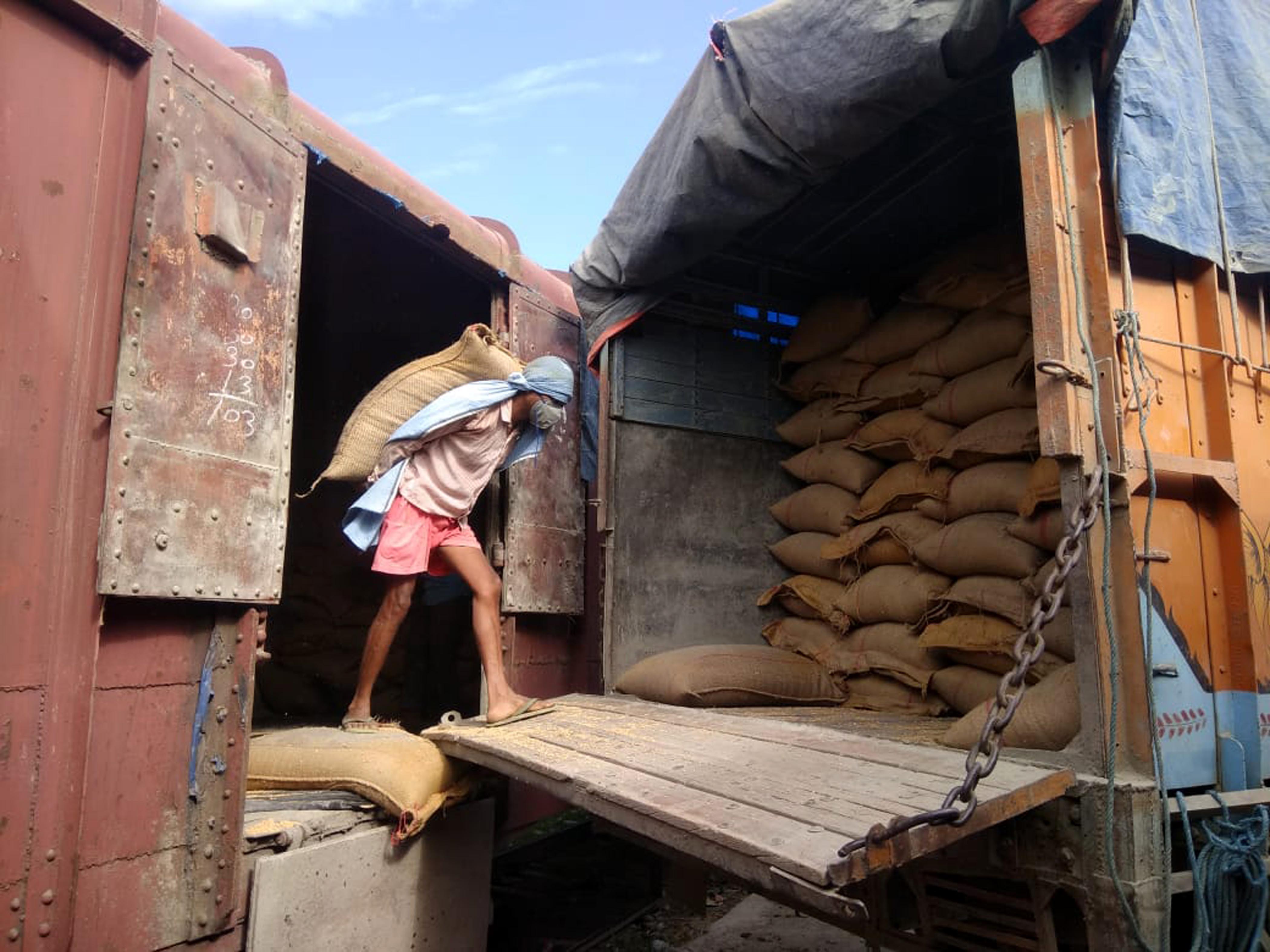
On 14 June, 2022, an RTI was filed in this regard, and the information provided in it clearly states that 143 racks from the goods trains that reached the North East zone in 2003-04, were found missing. Of these, 132 coaches contained rice while 11 were loaded with wheat. More than 17 years have passed since but there is no clue to these lost coaches so far, the Guwahati division says.

The North-East zonal office of FCI, Guwahati, has given a complete list of lost coaches in the RTI from 2000-01 to 2005-06. The list is mentioned below:


  1. 2000-01 – This year, 66 coaches of grains failed to reach their destination, of which 59 were of rice and seven were of wheat. On 1st December 2000, 16 coaches were found missing from a special train with number RR03/054367. Each bogie carried 620-639 bags of rice with each bag weighing 95 kg .


  1. 2001-02 – This year, 68 coaches were found missing from the special trains, of which 54 were loaded with rice and the remaining 14 with wheat. On 3rd September 2001, 20 coaches could not be traced, and they all went missing at the same time. The number of this special train

which lost 20 of its coaches was RR13/211770. Every coach carried 610 to1158 bags of rice and these bags were of different weights of 50kg, 75kg and 95 kg.


  1. 2002-03 – This year, 111 coaches failed to reach their destination, in which 99 were of rice while 12 bogies were of wheat. On 21st June 2002, 11 coaches were found missing all together. The number of this special train was RR04/119643. Every coach carried 1162 to 1195 bags of rice, with each weighing 50 kg. The same year on 1 August, 11 coaches were found missing from another special train with number RR 08/138029. Every coach had 1097 to 1204 bags of rice with each weighing 50 kg. On August 2, 2002, 11 bogies of another train with number RR15/211921 went missing. Each bogie carried 742-758 bags of rice with each weighing 75kg. On November 9, 2002, 12 coaches of yet another special train were found missing, with every bogie carrying 884 to 1180 bags of rice and each bag weighing 75kg .
4. 2003-04 – Around 143 bogies (132 of rice and 11 of wheat) were found missing during this year. On 21st June 2003, there was no clue to 40 coaches of the special train (RR 23/342612), which was carrying around 1156 to 1184 bags of rice grains in it, with each bag weighing nearly 50 kg.


  1. 2004-2005 – This year also, 96 bogies of a goods train were found missing, in which 83 were of rice while the remaining 13 contained wheat. Eighteen coaches of the special train (RR06/030994) disappeared with around 1163 to 1186 bags of rice in it.


  1. 2005-2006 – This year, 28 coaches of a special train went missing with 23 bogies of rice and 5 bogies of wheat.


  1. 2006-07- This year, seven coaches disappeared with four of rice and three of wheat grains.


The above mentioned list gives us an idea of how serious this theft is and how difficult it is to resolve this matter. The details of all such missing coaches are registered with FCI. Their documents carry all details of this so-called theft. After doing research on their end, the FCI departments file the complaint with the Indian Railways. Top officials of both the departments sit together and discuss the matter. This is called a reconciliation meeting. In this meeting, concerned officers of both the departments discuss the details of missing coaches of special trains and the food grains that are being transported through this route. After the reconciliation meeting and mutual understanding, the FCI files a complaint with Indian railways of the lost /missing coaches, and demands compensation for their lost food stocks. Details of such data is given below.

The first meeting of Indian railways officers and zonal office Guwahati was held on May 3,

2005, at the Chief Commercial Manager’s (claim) office at Malegaon. The officers from FCI who attended the meeting were Joint Manager Movement ML Solanki, AG first (D) and SB Sharma while deputy CCM (Claim), SK Karmakar and CIG Guha Rai represented the Railways. The agenda of this meeting was to discuss the 220 coaches of rice and 46 bogies of wheat that went missing in the year 1996-98. This matter was further sent for reconciliation.

On April 13, 2005 also a meeting was held between railways and zonal officers Guwahati , at the Chief Commercial Manager’s office, Malegaon. The agenda of this meeting was to discuss the missing coaches from the year 1986 to1996, which carried around 5100 rice bags and 2178 bags of wheat. The data was discussed till 28 December 2004 only. This meeting was attended by Manager Movement M L Solanki, AG first (D) and S B Sharma from FCI and deputy

CCM (Claim), S K Karmakar and CIA Chattopadhyaya from the Railways.

After that on 22 February 2007 also, one such meeting was held between the railways officials and FCI’s zonal officers (Guwahati). The agenda of this meeting was to discuss the wagons which had gone missing between 2000-01 and 2004-05. Four hundred and twenty seven wagons of rice and 57 wagons of wheat were found missing during this period. The officers from FCI who attended the meeting were Joint Manager Movement M L Solanki, AG first (D) S B Sharma and AG second (M) R N Dutta. From the Railway, S K Karmakar and CEO A K Prasad took part in the meeting held at Chief Commercial Manager’s (claim) office at Malegaon.

FCI’s N-E zone most vulnerable

The RTI that has been filed in the missing wagons case reveals that from the year 2000-2001 to 2004-05, around 500 wagons of food grains have disappeared, of which most wagons were loaded with rice. According to the RTI, the FCI and the Railway officers have been discussing more than 5.5K missing wagons till now. In the details that we got from our sources and the RTI, the North-East FCI zone has lodged most complaints about missing wagons till date.

List of missing wagons 

According to the RTI, on 3 December 2021, the regional office of FCI, Karnataka, filed a claim of 54 wagons to the Indian Railways. These 54 wagons had gone missing during the intervening period between 2015 and 2020. Apart from this in another RTI, the FCI officers have lodged a complaint of four more missing wagons of rice, from February 28, 2019 to March 20, 2019. The RTI says that the West Zone Mumbai office (FCI) has given the missing wagons information to them on 20 May. On 15 March, 2011, the officials of FCI West Zone, Mumbai, and Railways officers held a meeting in Mumbai to discuss the matter of missing wagons. This meeting was attended by M L Sehgal (GM Movement), KK Barua (DGM Movement), B K Tyagi (AGM Movement), Kamna Gyan (Manager Movement) from FCI and S R Sethi (TC claim), Virendra Kumar, (SO) TC third and Anil Kumar Gupta, CMI from the Railways. In this meeting, the missing wagon cases from 1986-96 to 1996-2000 were discussed mainly. In this regard, meetings at Mumbai, Goa, Mysore and Kolkata had already been conducted. In all, 51 wagons were found missing. Fifteen wagons went missing during 1986-96 only of which 10 were of wheat and 5 were of rice. During the period 1996-2000, around 36 wagons went missing, 20 of wheat and 16 of rice.

In an another RTI of 13 March 2019, we found that West Zone office of the FCI has made a claim

to the Railways for five missing wagons. On 25 February 2004, one wagon with number ER 39873 (BCXT) in special train (396427) carried 1098 bags. The cost of the grains was around 3.34 lakh. This train had left Ferozpur, Punjab for Gondia in Maharashtra. On 15 July 2018, a special train with number 2620000366 became the target, with its three wagons, WN ECOR74377, WR18115, NWR96310 carrying 1155, 1150 and 1149 bags of food grains having gone missing. The cost of the grains was 39.19 lakh approximately. This train had left Narwana in Haryana for Baramati in Maharashtra.

On 21 July, 2018 another wagon with number FCRO42692 of special train (262000360) that carried 1274 bags left Safidon in Haryana for Parli in Maharashtra but vanished into thin air before it reached its destination. The cost of grains was around 14.23 lakh.


  1. Various such missing wagon incidents had occurred in Kerala also, but the Kolam district of Kerala had not lodged any such complaint. It was only when RTI activists appealed to them that they came forward and filed a case of one missing wagon with number NWR BCNA 10994. This information was provided on 10 April 2019 and the wagon was missing from 22 February 2019. There were 1269 bags of food grains (No details were provided whether these bags were of wheat or rice).

According to the RTI, the zonal office of Chennai said that till 28 February 2019, two wagons of food grains costing Rs 30.45 lakh had gone missing. They also said that in the last six years, 2503 metric tonnes of wheat and rice had been ruined during transportation. But how did the food grains get damaged and have the lost wagons recovered? No such information has been provided by them.


  1. On 13 March 2019, the regional office of Bhubaneswar, gave information about one missing wagon SE 98210 from a special train with number 26000702. This wagon was missing from 29th April 2018 and carried food grains of 63.32 metric tonnes in 1275 bags. The cost of the grains was nearly 17.80 lakh.


  1. According to the Area officer of FCI Gurdaspur, Punjab, on 30 July 2018, the wagon SNF ABCNA 60056, as part of a special train with number RR 150, was on its way to West Bengal from Gurdaspur. But when this special train reached its destination, this wagon was not found. There are no details about the food grains the train was carrying. The FCI wagon was still missing when RTI was being filed. They were summoned to Kolkata. The FCI’s regional office of Kolkata was also asked to provide the information of missing wagons. But the officials replied with a letter stating there was no such information with them. Citing an Act, they were summoned to Kolkata to give details, the RTI says.

Case under CBI scanner

On 9 February, 2018, the Patna office of the CBI registered an FIR (RC 02320180004). This FIR was registered by the Chief Vigilance Officer of Eastern Railways. Referring to the second appeal of the RTI, the Railway Ministry has said that the FIR registered at RPF post Jamalpur, West Bengal, clearly states that 86 wagons of the special trains were missing. The Central Bureau of Investigation (CBI) is now investigating this missing wagon case. In the CBI’s FIR, the number of missing wagons are 100 and their cost is around 34 crore. Though the railway is not using these wagons now. These wagons are now at another site of railways i.e. Dhobighat where repairing is conducted. As per Tehelka sources, the wheels and other parts of these wagons have been removed.

Some cases hang fire for 33 yrs

It is really surprising to know that such a huge number of wagons have been missing for so many years and still there is no clue to their whereabouts.

It has been a long span of more than 32-33 years but there is still no trace of the missing wagons. The information shocks you and makes you laugh at the same time. How could some of the wagons disappear when the entire train is running on its track? After all these are huge iron boxes and it would be impossible for anyone to take them away as if it is a walk in the park. That there is no clue to the wagons that disappeared in the period between 1987 and 2019, is baffling to say the least.

According to the RTI, one wagon with number ERC22283 of a special train (RR310625) which was supposed to go to Ernakulam, Kerala from Chattisgarh was also missing. This special train was loaded with 24.5 metric tonnes of 256 bags of rice. Surprisingly, FCI’s claim is still pending with the railways.

Sugar stock worth Rs 48 cr goes missing

 The FCI not only transports wheat and rice but other food grains and food stocks as well. These are also sent to other states by special trains. Earlier, the FCI also transported stocks of sugar to the other states. Like wheat and rice, the wagons of sugar were also used to be sent from one state to another. There have also been cases of sugar wagons having gone missing, and the zonal office of North East has already given details in this regard in the RTI.

From the year 1984-85 to 1994-95 many special trains with sugar stocks were sent to the North East zones but some of the wagons failed to reach the destination. FCI has sent many written complaints to the railway about their loss but did not receive any satisfactory reply. On 24th March, 2015, FCI sent another letter to the railway reminding them about a claim of Rs 48.18 crore. The zonal office of FCI is still in discussion with the railway, but has failed to get any satisfactory reply so far. The RTI says eight wagons of sugar have been the missing since 1993-1997, the details of

which are enclosed in the letter sent to the railway on 1 January, 2008.

What could be the possible reasons?

According to the Railway sources, the reason behind missing wagons cases could be heating or over heating of axle boxes. Hot axle box in a railway vehicle occurs when inadequate wheel bearing lubrication causes an increase in temperature. If undetected, the bearing temperature can continue to rise, until there is a bearing “burn off” which may cause derailment or fire. So this could be the reason that some wagons are detached from these special trains, but we can’t deny the possibility that under the cover of the hot axle phenomenon, some more wagons could also have been removed.

According to the experts, the railway keeps record of all the trains that are running on tracks or laying in yards. These records are maintained by a department of Indian Railways named CRIS. They keep track of all its trains online. They are aware of all the routes of trains; when these trains reach their destination; and when the special trains are loaded and unloaded. When everything is maintained online it is hard to imagine how these wagons of special trains could get disconnected. But equally baffling is the possibility of such incredible thefts taking place.

Queries stonewalled

When contacted for his comments, Rajiv Jain, ADG Railway, PIB denied having any  knowledge of missing train bogies. According to him, as the matter has been brought to his knowledge by us, so he would gather information from all the Railway zones, for which he said he needs time. When contacted after a few days, he said he is still waiting for the information from the zones. But thereafter he never took our calls nor responded to us on whatsapp.

On the other hand, when the Food Corporation of India [FCI ] Public Relation Officer [PRO] D.P. Shukla was contacted in FCI head office in Delhi for his version, he said, “Whenever we receive a complaint of missing wagons, we immediately inform railway about this, and the railway starts investigating the matter on its end. If wagons are traced, then the railway and FCI jointly examine those wagons. The food grains kept in the wagons are checked: whether its quantity is the same or not. Quality of the food grains is also checked: whether it is of the same good quality or some decay has occurred. And if the food grains show some decay, then a report is prepared as to what percentage of decay has occurred. On the other hand, if the railway doesn’t find the missing wagons, then we follow the procedure and file a missing wagons claim with the railway”.

So, Tehelka has unearthed the story of missing bogies from the goods trains in India. We have seen fans and light fixtures going missing from railway coaches. Even wash basins have been stolen at times. But this is a strange case where bogies of goods trains, carrying FCI food grains are found to be mysteriously missing for years. So the next time you watch any goods train, do not be surprised if you see fewer coaches than usual. The missing goods train bogies have become a big mystery in India.



All is not well with the Indian Railways!

Over 90 per cent of internal revenue of Indian Railways comes from its core business of freight and passenger services. However, it is railways’ freight service that has come under scanner. Our Cover Story in this issue of Tehelka, “The great heist?: Mystery of the missing train bogies”, unearths how for years,  the bogies of the goods trains carrying food grains and sugar have been disappearing into thin air even as the authorities search for answers.

An investigative report by Tehelka SIT through several RTIs has found that goods trains run with speed on the railway tracks carrying wheat and rice belonging to the Food Corporation of India. However, on many occasions, it is discovered that when these goods trains reach their destination, many coaches along with wheat, rice and sugar consignments are mysteriously found to be missing. The first of its kind investigation found that in some cases, of the 42 to 58 compartments of these goods trains, as many as 40 had disappeared on the way.  And mind it, one bogey carries as much as 60 tonnes of grain costing between Rs 15 lakh to Rs 20 lakh.  The murky matter then gets sandwiched between FCI and Indian Railways without any resolution though some cases are over three decades old.  Even some cases of missing wagons are under the CBI scanner.

On 14 June, 2022, an RTI was filed and the information provided in it clearly states that 143 racks from the goods trains that reached the North East zone in a single year were found missing. Of these, 132 coaches contained rice while 11 were loaded with wheat. Shockingly there is no clue to these lost coaches which are huge iron boxes and which can’t be hidden. Our story gives year-wise details about the missing coaches from the goods trains during the period from 1987 to date.

While the RTIs confirm the mysteriously missing bogies, the Railways coming under a debt trap is also a matter of concern.  The Indian Railways Finance Corporation during 2021-22 mobilized Rs 38,917 crore. With this, total borrowings raised by IRFC stand at Rs 3,42,697 crore over the corresponding period ending September 2020 at Rs. 2,45,349.32 crore, up by 40 per cent. The borrowings and loans mobilized by Ministry of Railways during the last over seven years is about Rs 700,000 crore-Rs 342,697 crore mobilized by IRFC, Rs 150,000 crore loans from LIC, Rs 100,000 crore from Japan for High Speed Mumbai-Ahmedabad Bullet train and the rest from the World Bank and the Asian Development Bank.

Also, the Railways’ operating cost is very high, as to earn one rupee, it has to spend 96.2 paise, which means the surplus that it earns is too little for its upkeep and augmentation. All this explains that there is something seriously amiss in the Indian Railways!


Shimla Development Plan 2041 runs into green hurdle

The new plan is aimed at addressing the city’s development needs in accordance with the increasing population. However, there are concerns over the plan’s alleged failure to address the specific development requirements for hilly topographies. A report by Aayush Goel

Shimla, the Queen of hills after evolving and developing the same way for over 43 years has now got its very own ‘The Shimla Development Plan, 2041 (SDP41). Aimed to contour the city’s development in accordance to increasing population, smart city requisites and metro needs, the plan however is facing a huge resistance.

Various quarters have snubbed it for failure to address the specific development requirements for hilly topographies as well as Shimla’s rich architectural heritage. The SDP41 that was introduced by the Jai Ram Thakur-led BJP government in April 2022 was struck down by the National Green Tribunal (NGT) the very next month in May. The plan has earned the ire of the environmentalists who even moved the NGT that went ahead staying the plan. The government challenged the stay in High Court saying NGT does not have the jurisdiction to pass orders in matters that do not fall within the purview of forest, water and environment-related enactments. As the legally tangled plan has become the biggest political issue in the state bound for elections, Himachal Pradesh’s biggest city Shimla continues to be stuck in time.

Stuck in time, Shimla indeed needs a plan

Built by the British in the early 19th century, the town of Shimla had one of the first municipalities in the country, dating back to 1851. Until Independence, the town was guided mostly by British architectural laws and stood stagnant. After Independence, Shimla was run by several different governments. It was first the capital city of the East Punjab province and, after the formation of the state of Himachal Pradesh in 1971, it became the state capital. The city got its interim development plan in 1979. Today it’s the biggest city of Himachal Pradesh that has a population of nearly 3 lakh according to SDP41. Situated at a height of 2,276 metres above sea level, the city is expanding haphazardly horizontally by the day and struggling to accommodate more and more people. The draft plan pins its floating population at about 85,330 as of 2021. The number of houses, commercial establishments, vehicles, hotels and tourist influx has increased. Ironically however, since the last 43 years the infrastructure has been based on an interim development plan formulated in 1979. The lack of monitored development has brought Shimla to the brink of catastrophe. The city is in dire need of a development plan but the recently announced SDP41 apparently fails to fit the need.


Main features of Shimla Development plan 2041

The SDP proposes to allow construction on sandwiched plots in 17 green belts, provided it does not involve cutting of trees. There has been a complete ban on the construction in the green belts since 2000. The plan proposes to allow construction in the core area (banned by the NGT) and enhance the limit of two-and-a-half storey and three-and-a-half storey in the non-core area.·

It proposes four satellite townships at Ghandal, Naldehra, Fagu and Chamiyana to decongest the capital town.·

Development of multi modal hubs, tunnels and multilevel parkings for better urban mobility.·

Development of heritage walks, walking/running trails and sky bridges in the core area.·

To ease traffic congestion, SDP41 proposes a non-motorised transport system. This will include integration of ropeways and rapid transport system development. Launch of heli-taxi to promote tourism.·

Increasing the area under commercial use from 0.41 to 0.53 per cent. Of the developed area, the commercial use has been increased from 2.75 to 4.16 per cent.·

Enhancing residential land use from 5.51 to 12.15 per cent to accommodate the population increase. Of the developed area, the residential area has been increased from 56.44 to 63.25 per cent.·

Commercial land use has been provided in the form of mixed land use, along with the main roads, which has been increased from 3.99 to 9.36 per cent.·

The area under industrial use has been increased from 0.15 sq km to 0.24 sq km which is 0.51 per cent of the total proposed developed area.·

The area under public and semi-public use has been increased from 1.15 to 1.39 per cent based on the identification of government land available in the SDP41.·


Plan Figures

Shimla Development Plan (SDP) period: 2041·

Area of operation of SDP41: 22,450 hectares·

Population (2011 Census): 2,41,429·

Projected population for 2041: 6,25,127·

Commercial use enhanced from 0.41 to 0.53%·

Residential land use enhanced from 5.51 to 12.15%·

Mix land use up from 3 to 9.36%·

Area under industrial use enhanced from 0.15 sq kms to 0.24 sq km·

Additional area requirement at the rate of 120 persons/hectare: 2,789   hectares·


What raised the greens’ hackles

SDP41 has earned ire for not sparing a thought for ecology. It allegedly fails to talk about dealing with risky slopes, fragile assets like water tanks or deteriorating ecological balance.·

  • It fails to lay much thought for conservation for Shimla’s rich cultural heritage (natural and built) as well as beautiful and significant architectural buildings, areas and precincts.
  • Instead of creating a typology and vocabulary for spatial planning in mountains, the new plan falls back on the old designations of areas as core, non-core, sinking, heritage and green belt. This understanding is erroneous since no justification has been provided while deciding which area should fall in which category.
  • No study to justify the proposed heights of buildings in the areas.
  • No scientific studies of the slopes of the mountains and just a general division of space on lines of plains.The city is built on highly unstable slopes above 60 degrees against the official permissible construction limit of 45 degrees and the plan doesn’t consider the same.
  • Arbitrary division of green area. Some constructed spaces have been made into ‘green’ areas whereas dense forests have been left out in many areas.
  • Overstated figures, especially population. SDP41 estimates that the population of Shimla will jump from nearly three lakh today to more than six lakh in the next 20 years. This goes against the current population growth rate as well as the scope of migration.
  • The draft plan is silent on the mobility aspect improving public transport
  • No thought about public housing, rental housing and labour hostels.
  • No evident study or review and planning for infrastructure at the city level, such as electricity, water supply, transportation, parking, sewerage and storm water and the like.

‘A final nail in city’s fragile ecology’

Tikender Panwar, former deputy mayor of the city and an urban planning expert says the current draft of the plan is a damp squib owing to “lack of understanding” and “populism” of the current ruling party. “90 percent of Shimla is built on risky slopes but this has not been taken into consideration while making the development plan. The new plan has no scientific basis as it randomly allows construction activities in core, non-core and green areas,” he explained.

Ecologist Yogendra Mohan Sengupta, on whose petition the NGT imposed a stay on the implementation of the new plan, says Shimla is a high risk zone as it is built on steep slopes of 60 degrees and above in many areas. “Several experts have recommended immediate decongestion of the city to mitigate human loss in case of disaster be it of earthquake or flash floods. The town has exhausted its carrying capacity and falls in seismic zone IV and V. The people are already living under the threat of disaster. The new plan is allowing construction and modifications in sensitive and fragile core areas like The Mall and Ridge which will unleash the ultimate destruction for the town. Plans like a new tunnel from Lift to Lakkar Bazar will prove to be suicidal as it would threaten the water tank. If broken the 10,000 gallon water tank shall submerge the entire town and risk lives of at least 20,000 people in the immediate vicinity as the area is already the centre of a huge and growing sinking zone and are showing high soil erosion. One can’t imagine the scale of disaster here,” said Sengupta while speaking to Tehelka.

Why the green tribunal imposed a stay

On May 12, 2022, NGT stayed the implementation of the Shimla development plan 2041. However, it was not the first time that the city’s poor condition was on the radar. The NGT stayed the plan observing that the new Shimla development plan was in violation of their November 17, 2017 order. In November 2017 the NGT prohibited new construction of any kind – residential, institutional and commercial – in any part of the core and green/forest area falling within the Shimla planning area.

The NGT order had also said that construction beyond core and green areas will also not be permitted beyond two floors plus attic except in case of public utility buildings such as hospitals and schools. The core area is basically the central part of Shimla city bounded by the circular cart road starting from Victory Tunnel and ending at Victory tunnel via Chhota Shimla and Sanjauli and the area bounded by Mall Road and nearby area.

Govt says plan historic, game changer

“This is historic. Things which were never thought about in 40 years will see the light of the day soon. Town would have a GIS-based development plan and deal with several issues, besides providing relief to people of the town. The people who own plots but could not earlier construct for lack of funds and owing to restrictions will now be able to use their land for living. The plan will make Shimla a smart city in true sense and help it cope up with increasing population and tourists. The city is expanding unplanned but this plan will develop it in true terms while balancing ecology. Besides taking care of the needs of the city, Shimla’s planning area was extended to nearby towns. The plan was drafted in a scientific manner under due process of law by hiring a consultant, which properly conducted a survey before drafting it. Thereafter consultation was held with various stakeholders. It is not part of the NGT’s jurisdiction to dwell on the Town and Country Planning Act, under which the plan was prepared,” said TCP and Urban Development Minister Suresh Bhardwaj while talking to Tehelka.

Bhardwaj says the logic behind allowing construction in green areas of the city was simple. There was already construction there and the new plan just allowed the construction of houses for residential purposes on a few vacant plots among already built houses. “Suppose a few people having vacant plots in the city area could not build their houses due to some reason. Is it now justified to not let them build houses? Residents are fully supporting the plan as it provides the much needed momentum of development to their otherwise stagnated city life,” said Bhardwaj.


Adani vs Ambani: A battle of the tycoons

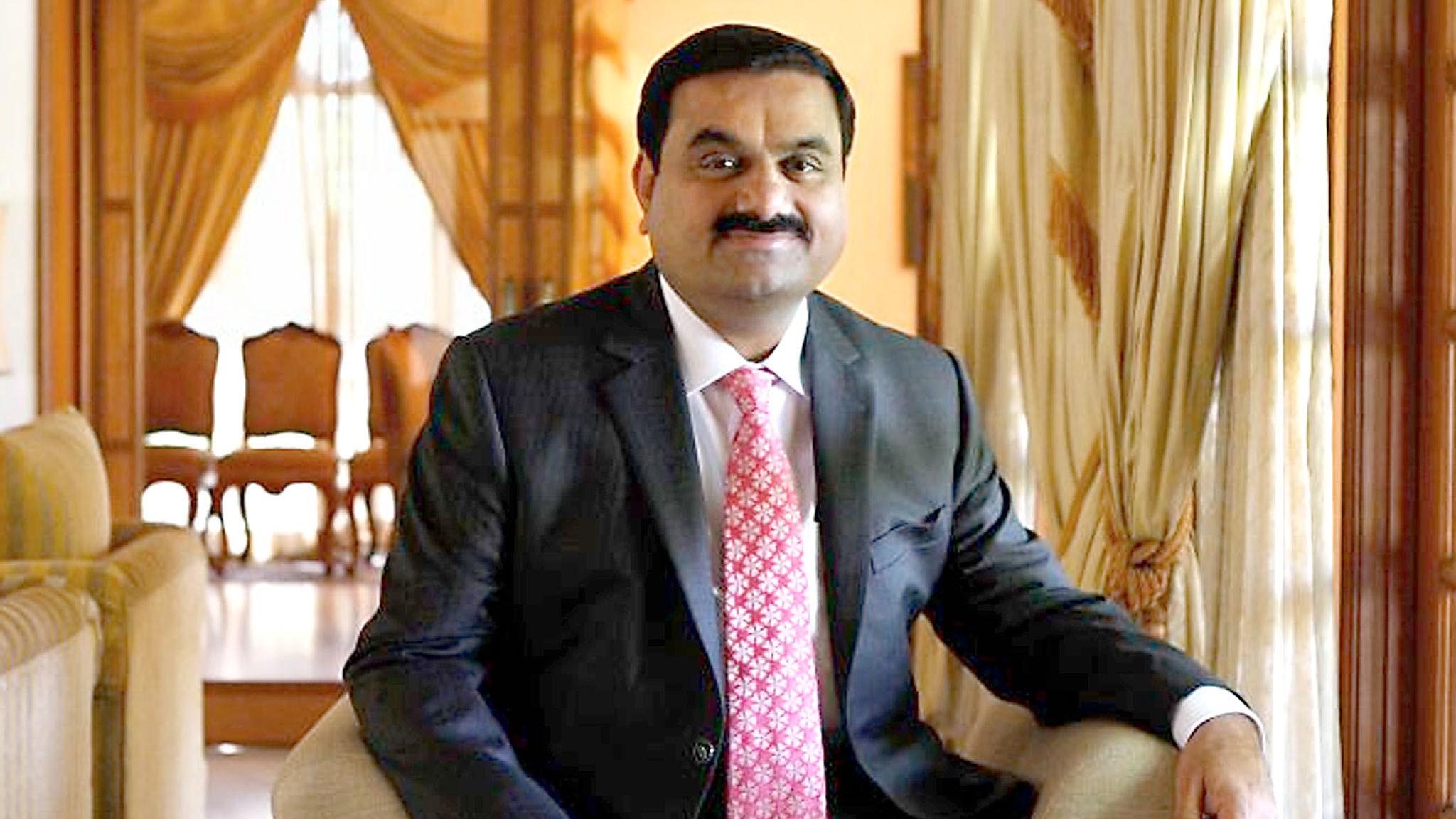
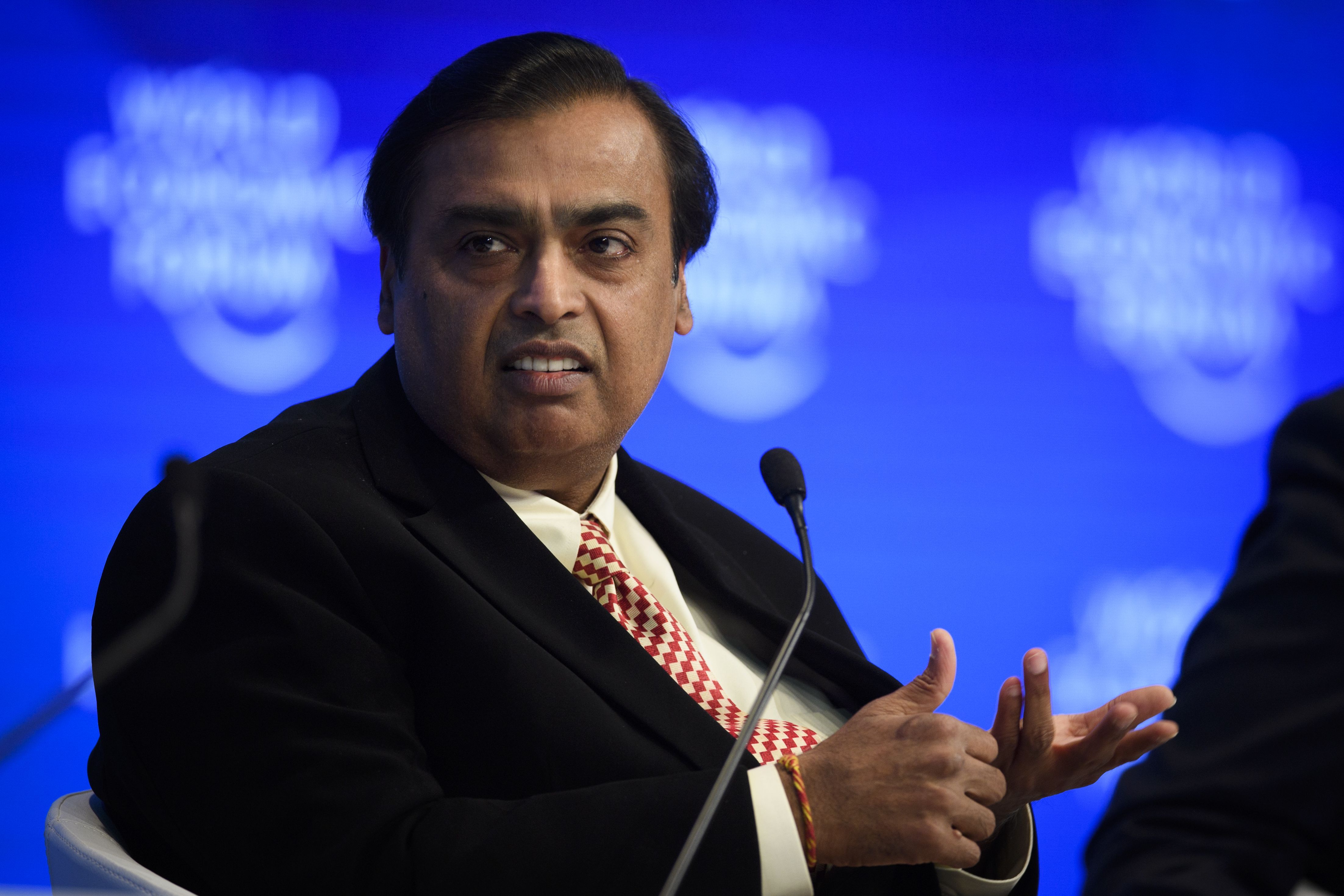
Gautam Adani and Mukesh Ambani, both billionaires, have in recent years become the best-known faces of Indian business. To supporters, they are patriotic nation-builders. To critics they are only in it for themselves. Their motivation seems to lie somewhere in between. 

The commanding heights of India’s economy are up for grabs, observes an article that first appeared in the Business section of the print edition of The Economist under the headline “The AA economy”.

From the pier at Mundra, the biggest private port in India, it is possible, on a clear day, to spot the world’s largest oil refinery, 50km south across the Gulf of Kutch. In the early 1990s both sites in the state of Gujarat were malarial swamps and farmland. Today they are monuments to India’s economic promise—and to the tycoons who built them. Gautam Adani and Mukesh Ambani, both billionaires, have in recent years become the best-known faces of Indian business. To supporters, they are patriotic nation-builders, using their sway and resources to further India’s economic progress. To critics they are only in it for themselves. Their motivation seems to lie somewhere in between.

The duo’s rising influence over Indian business is undisputed. Many observers now talk of the “AA economy”. That is an exaggeration, but the combined revenues of the companies controlled by Messrs Adani and Ambani are equivalent to 4% of India’s GDP. They are also responsible for 25% of the capital spending of listed non-financial firms at a time when overall investment has been subdued. “Never have we walked away from investing in India, never have we slowed our investments,” asserted Adani at the annual meeting of his group on July 26th. Not to be outdone, Ambani, at his own annual meeting on August 29th, pledged to double the size of Reliance, the conglomerate that he runs, adding “patriotism inspires and energises everything we do.”

They play such an important part in India’s economic development because they have succeeded where others in the country have all too often failed, by creating businesses that are both large and fast-growing. Under Ambani’s stewardship Reliance, founded by his father, Dhirubhai, has gone from dealing in petrochemicals and refining to encompass retail, telecoms and renewable energy.

Adani’s operation is more speculative and generates modest cash flows but he has progressed in a decade from a small office in Mumbai to an empire of ports, airports and energy utilities spread across seven public companies and various private ventures. The two men’s publicly listed companies are worth a combined $452bn, up from a collective valuation of $112bn four years ago.

Both have amassed considerable wealth along the way. Over the past four years their personal fortunes have swelled four-fold, according to Hurun India, a research firm, from $65bn to $237bn combined. Adani is now reckoned to be the world’s third-richest man behind Elon Musk and Jeff Bezos.

Much can be attributed to the fact that their vast ambitions fit with those of India’s prime minister, Narendra Modi, for the country’s economic development. The government still oversees hundreds of state-controlled companies but confidence has long since disappeared in their ability to spur growth. Instead, for the economy’s commanding heights, heavy industry and infrastructure, the government’s hopes increasingly rest on a handful of private firms which appear able to handle India’s debilitating red tape and erratic allocation of projects. Both men have so far been able to navigate the country’s treacherous judicial and political currents.

Yet there are strong arguments that they are not merely favoured industrialists collecting rents. Their desire to invest appears to have little regard for profits. Reliance hasn’t generated a return on capital in excess of 10% in a decade. Only two of Adani’s listed companies do better and both are ventures with foreign firms: Adani Wilmar, a food processor co-owned with a Singaporean firm (which returns 15%), and a natural-gas distribution business held jointly with Total, a French energy giant (which returns 19%).

That urge to invest is bringing the firms into closer competition. Perhaps that is unsurprising. Reliance and the Adani Group share many characteristics. The founders of each were born in the north-western state of Gujarat, as was Modi, whose own ascent was tied to the state’s impressive record of economic growth during his time as chief minister. Both firms have grown largely by building dominant positions in existing industries then moving into related areas. Thus they have become interwoven with, and vital to, India’s economy—and Modi’s vision.

In Reliance’s case, trading of textiles was followed by the production of textiles, then the manufacture of the polymers used in textiles and finally the production of the petrochemicals used to make those polymers. Refining, energy and petrochemical businesses accounted for 91% of revenues and 99% of profits as recently as 2017. Since then Reliance has undergone a transformation. Jio, the firm’s telecoms arm, signed up its first customer in 2016 and now has 421m subscribers using its mobile network. That in turn is being used to create other new businesses such as providing access to computing at central hubs through the network.

A retail division includes 2,500 grocers and 8,700 electronics stores. Its 4,000 fashion outlets, in combination with an online operation, sold 430m garments in the past year. Dozens of big international retail companies in clothing, food and toys, hamstrung by India’s crippling regulations, have entered the country through joint ventures with Reliance. Those that have chosen to compete independently, notably Amazon and Walmart, are perpetually hamstrung by murky policies. A large media organisation includes three news networks, film production and a sizeable online financial portal.

Adani began trading in diamonds in the 1980s. Metals and grains followed until he won the government concession to develop Mundra port. Begun in 1998, it now has a rail link and freight airport, as well as facilities allowing for shipments of petroleum, natural gas, aviation fuel, dry cargo and containers. In terms of traffic, the port ranks 26th globally. Adani’s intention is for it to be the world’s largest by 2030. He has also acquired a dozen other smaller ports, and now controls 24% of the country’s capacity as well as 43% of container traffic and 50% of port revenues. Such expansion fits neatly with the government’s objectives for India to become an exporting powerhouse.

Other businesses often dovetail with existing operations. Adani-controlled entities import over a third of the country’s coal and transmit 22% of its electricity, much of it generated using coal but a growing amount from a network of solar farms. Its expanding warehouse operations hold 30% of the country’s grain. Seven airports, acquired in 2019, handle a quarter of India’s passenger traffic and a third of air freight. A vast empty field in an area known as Navi Mumbai is intended, within two years, to be the location of the city’s second airport. The other was one of those bought by the Adani group. Among other Adani ventures are 13 large road-construction projects in nine states and the acquisition of a controlling interest in Israel’s Haifa port, a potential stepping stone to trade across the Mediterranean. Last year, after a decade-long struggle, a combined mine, railway and port was completed in Australia, and coal is slowly starting to be exported to India.

Inevitably, the frenetic activities of these two business groups had to collide. In August Adani launched a hostile takeover of NDTV, a broadcaster, a move that follows the purchase of a 49% stake in Quintillion Business Media, another firm. Each of these entities will compete with Reliance’s media ventures. Both Adani and Ambani have announced plans to spend upwards of $70bn on energy projects encompassing batteries, hydrogen and solar power. To knit his expanding empire together, Adani in August became a surprise bidder at the government’s auction of 5g bandwidth, a possible prelude to competing with Reliance in telecoms. Among Adani’s industrial projects at Mundra is a refinery which will give Ambani’s operations close by some competition.

That sort of competition “could lead to some imprudent financial decisions from both sides”, warned CreditSights, a research firm, hoping one of the men might listen. As is often the case with Indian industrial giants, there is already cause for concern. A consequence of Adani’s frenetic expansion is that his operations are “deeply overleveraged,” says CreditSights. Yet the rivalry between the two may turn out to be transitory.  Adani, a 60-year-old, has become an elevated presence in India’s business firmament; Ambani has withdrawn.

Many suspect Ambani, five years older than Adani, is unwell (a rumour the company has denied). Reliance’s annual meeting was held online, despite many such meetings now taking place in person as pandemic precautions have relaxed. Perhaps sensing the questions this raised, Ambani noted that he had attended all 45 of Reliance’s annual meetings, the first held when the firm occupied one room with two tables and a shared phone. But the role played by Ambani’s three children on the occasion has been widely interpreted as a succession plan unfolding.

That leaves the possibility that even as the prominence of the AA economy grows, its days under the current leadership could be numbered. Given India’s needs, there would seem to be abundant space in the country for the efforts of both men. Finding two new bosses more suited to this environment might be impossible.


MOST POPULAR

HOT NEWS