MELOW holds an International Conference to mark 100 years of T.S. Eliot’s The Waste Land  

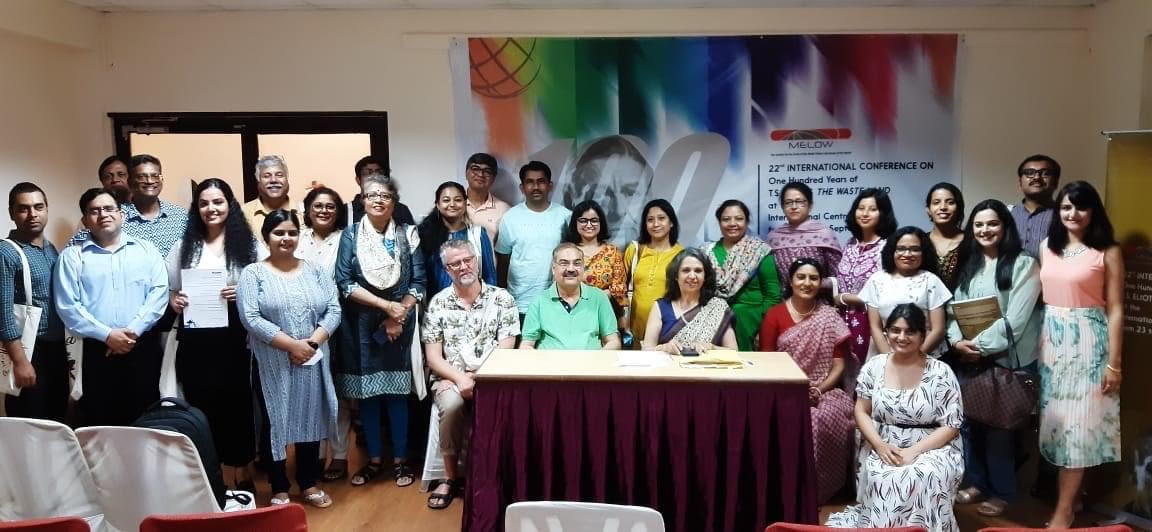
The Society for the Study of the Multi-Ethnic Literatures of the World (MELOW) organised a three day International Conference at Goa to celebrate the 100th anniversary of T. S. Eliot’s masterpiece The Waste Land.  

The Waste Land is arguably even more relevant now and finds deep resonance today than it was when it was written 100 years ago in 1922. The Vice-Chancellor of Shoolini University, Prof. Atul Khosla who was the chief guest stressed the importance of poetry and bringing it back into our lives. He spoke about his strong belief in the amalgam of creativity and science and how creativity powers output. He appreciated the efforts of MELOW in pushing the frontiers of literature.

Prof. Manju Jaidka, President, MELOW, in her presidential address familiarized the delegates with the history of the society which has been holding conferences for the past twenty-five years.  In her address titled, ‘Many People, Many Tongues: The Plurality of Perspectives in The Waste Land.’ Prof. Manju Jaidka traced the critical reception of The Waste Land when it was written. She also welcomed Professor Sripad Bhat, Department of English, University of Goa, Goa to the conference.

Prof. Manpreet Kang, Indraprastha University, New Delhi and Secretary, MELOW introduced the audience to the theme and the twentieth-century poet, critic and essayist, T. S. Eliot at the  22nd MELOW International conference held from September 23 to 25.

In the plenary session chaired by Prof. Roshan Lal Sharma, Central University of Himachal Pradesh, Dharamshala, the first speaker of the session- Sanjay Mukherjee, Prof. Department of English and CLS, Saurastra University, Rajkot, Gujrat, gave his insights on The Sense of ‘Shantih’ in The Waste Land. Jason Wiens, Department of English, Associate Dean, Faculty of Arts, University of Calgary, discussed the Appropriative Poetics in The Waste Land and the multiplicity of voices which enter the poem.

Kalpana Purohit, Professor and Head, Department of English, Jai Narain Vyas University, Jodhpur, made a presentation on Traversing Through Eliot’s The Waste Land: A Cultural and Philosophical Kaleidoscopic Views. Her paper reconstructed Eliot’s The Waste Land from the cultural and philosophical point of view.

The session chaired by Dr Roshan Lal Sharma focused on the Isaac Sequeira Memorial Lecture K. Narayana Chandran, Department of English, University of Hyderabad presenting his paper  poke on Shoring Fragments of the Waste Land Centennial and approached The Waste Land as a post-modern poem written in the Modernist era. The ISM Lecture was in the memory of Prof. Isaac Sequeira who was a great support in the initial years of MELOW. Every year MELOW awards a cash prize and a certificate to the best paper presented by a young scholar at the conference.

Ashish Kumar Pathak, Assistant professor, Department of English, BHU discussed the contemporary Environmental Crisis and The Ecological Wisdom in The Waste Land. The second speaker, Sayantani Sengupta, Department of English, The Bhawanipur Education Society College examined Eliot’s Detective and Rowson’s The Waste Land. Deeksha Vats, presented a paper on “The Waste Land” and the stage; relevance of Art in a Dilapidating world.   Sreejit Datta made an interesting discussion on “The Waste Land” as a cross-civilizational Dialogue. The Isaac Sequeira Memorial (ISM) prize was awarded to Sreejit Datta, Assistant Professor, Rishihood University, Sonipat for his paper titled ‘Reading T.S. Eliot’s The Waste Land as a Cross-Civilizational Dialogue.

In the session chaired by Prof. Sanjay Mukherjee,  two presenters in this session were Bipasha and Navreet. The first presenter, Bipasha, presented a paper titled “Vision of Tiresias: Desire and Disability in The Waste Land.    The second presenter, Navreet Sahi, presented a paper titled “Journeying into the ‘Mental Wasteland’: A Psychopathological Reading of T.S. Eliot’s Th Waste Land.

The session chaired by Dr. Navreet, Pia Bakshi, the first presenter, suggested that the presence of dead characters in The Waste Land allude to the impossibility of a return to the past in her paper titled “Nostalgia and Spectrality in The Waste Land.  Rajguru Santosh, the second presenter explored the aesthetic aspect of the poem in his paper titled “Aesthetics in T. S. Eliot’s The Waste Land: A Dantean Approach.” Sree Prasad presented his paper “Human Stage of Musical Noises: The Waste Land as a Rhyme of Shambolic Modernity” in which he focused on the significance of musicality taking into account Eliot’s thoughtful and pragmatic metrical composition. Subham Dutta, presented a paper titled “Spatiality, Narrative and the Poetics of Representation in The Waste Land” where he explored the relationship between narrative and spatiality focusing on the fluid representation of “I” narrator.

At the session chaired by Dr. Brian, Vaishali Sharma, presented a detailed account of the relevance of the notes in the poem to make the reader aware of the satire in the work in her paper titled “Hollow and Ignored Voices in the Unattended and Plaintive Waste Land.” The second presenter Sukriti, presented her paper titled “Fragments of Past and Present: Use of Allusions and Mythologyin T. S. Eliot’s The Waste Land in which she examined the various temporal and cultural contexts that are woven together in the poem.

Surabhi Chandan, made a comparative study of Margaret Atwood’s Oryx and Crake and Eliot’s The Waste Land, in her paper titled “Environmental Apathy and Denial to Change: A Comparative Study of Oryx and Crake and Eliot’s The Waste Land. 

Dr. Vandana Sharma, presented her paper titled “What does the Thunder Say? 3 Da’s to Shanti Paath in The Waste Land.  She explored the Vedic connection of the poem also examining Eliot’s antidote to spiritual bleakness for the restoration of the individual.  The session chaired by Prof. Jap Preet had two presenters. The first presenter, Tarika’s paper titled “Antiquated Indian Voices in European Modern Cities: The Uses of Planetarity in The Waste Land explored the postcolonial and planetary engagement of the Western and Oriental landscapes.

The last presentation of the day was made by Sumegha. Her paper titled “Mapping the Contours of Changing Social Spaces in The Waste Land” dealt with the concept of social spaces and how it relates to the images of transforming social spaces in The Waste Land.

In session chaired by Neela Sarkar, the first presentation was made by Amitrajeet Mukherjee, “Trenches in the Mind: The Waste Land and T. S. Eliot’s Legacy as a Wartime Poet.” Brian Mendonca’s “The Waste Land as a Palimpsest of the Pandemic” posited that The Waste Land was a poem written during the pandemic and drawing examples from the text itself established a coherent thesis on the same.

Hariom Singh’s “Modernity as ‘Other’: Technology and Gender in T. S. Eliot’s The Waste Land. The paper sought to elucidate “the impact of the industrial revolution on the female sex.  Ishita Sareen presented a paper titled “Topophrenic Spatiotemporalities in The Waste Land: Revisiting Eliot’s Poem as a Produced Space.”  Jap Preet Kaur Bhangu in her paper titled “T. S. Eliot’s The Waste Land. A Metaphor for the Contemporary World” analyzed the poem as an attempt to find a sense of a multicultural creation.

Manika Ahuja was the final presenter. Her paper was titled, “Allusions to Illusions: The Influence of Indian Thought on T.S. Eliot” examined the intent of Eliot’s Indian connection from an Orientalist perspective. It was followed by an engaging discussion on the relevance of literature, the significance of literary allusions and the relevance of Eliot in the modem world and the need for a Dalit interpretation of the poem.

Neela Sarkar and Bulu Mukhopadhay presented their paper “Traversing The Waste Land with T. S. Eliot and Bishnu Dey” drew incredibly insightful parallels between the British-American poet and the Bengali poet.  The second paper was presented by Nitika Gulati. Her paper “Mapping the Modem Mind: Mental Health Echoes in The Waste Land” drew relevant examples from the poem to show how the poem can be read as an indirect and a direct reflection on and of mental health issues afflicting humanity both in the past and the present. Rajesh Williams, through his paper “Echoes of The Waste Land in Literature, Popular Culture and Art highlighted the relevance of Eliot’s imagery in the modem world and how echoes of it may be seen in contemporary literature, art as well as popular culture across the globe.

In the session chaired by Santosh Rajguru, Shehreen Ataur Khan’s novel presentation titled “Reading Banksy’s Street art through the verses of The Waste Land” included the print outs of the paintings being handed out.  Mary Mohanty, the second speaker, in her paper “Impact of The Waste Land on Odia Literature: Revisiting Guru Prasad Mohanty’s Kalapurusha” gave us a glimpse into Odia literature, specifically Kalapurusha.

The session chaired by  Prof. Anil Raina had three presenters. Shimi Moni Doley presented a paper on  “Eliot’s The Wasteland: Deconstructing the Morality of Mankind.”  Smita Verghese  presented her paper on “Sustenance, Indulgence, or Decadence: Edibles in T. S. Eliot’s The Waste Land.”  The third paper was presented jointly by Srishti Sharma and Sakshi Sundaram titled “The Waste Land and Its Cinematic Afterlives: Critical Analysis of Select Diegetic Readings of the Poem. In the session chaired by Dr.  Jason Wiens, the first presenter, Prof. Manpreet Kaur Kang, who presented her paper titled “Madame Sosostris and Her Tribe: A Study of the Women in The Waste Land.” The speaker aimed to take a re-look at The Waste Land from the lens of contemporary feminist debates to study the women in the poem who have been used by Eliot to portray the agony, horror and decay of the modern world.

Prof. Roshan Sharma presented his paper “Upanishadic Notions of Datta, Dayadhvam and Damyata as Antidotes to Varied Waste Lands.” The speaker intended to analyse Upanishadic notions of Datta, Dayadhvam and Damyata as antidotes to diverse kinds of desolate and hopeless wastelands as depicted in the poem, He further delved into the ‘why’ of Eliot’s considered choice of them as the only viable and sustainable correctives.  At the concluding session of the conference the report of the three days of the conference proceedings was read by Dr. Navreet Sahi while the report was compiled by Navreet Sahi with inputs from Surbhi Chandan and Sayantani Sengupta Certificates were handed over to all the participants and their feedback was sought. Prof. Manpreet Kaur Kang announced that the selected papers would be published in the journal MEJO after a double-blind peer review.
Punjab CM Mann moves confidence motion in state Assembly

Punjab Chief Minister Bhagwant Mann on Tuesday moved a confidence motion in the state assembly.
Punjab Governor Banwarilal Purohit on Sunday gave his nod to convene the House on September 27 after days of squabble between the Raj Bhavan and AAP government over holding a session of the Assembly.

The CM tabled the Motion of Confidence, but two BJP MLAs — Ashwani Sharma and Jangi Lal Mahajan — had earlier walked out of the House after Speaker Kultar Singh Sandhwan announced that Mann would move the confidence motion.

PM Modi meets Japanese counterpart Fumio Kishida

Prime Minister Narendra Modi on Tuesday met his Japanese counterpart Fumio Kishida here and conveyed his deepest condolences over the sudden demise of former prime minister Shinzo Abe as he underlined the late Japanese leader’s contributions in strengthening the bilateral partnership as well as his vision of a free, open and inclusive Indo-Pacific region.

Modi, who is here to attend the state funeral of Abe, met Kishida ahead of the ceremony and the two leaders renewed their commitment towards further strengthening the India-Japan Special Strategic and Global Partnership, and in working together in the region and in various international groupings and institutions.

“The two leaders had a productive exchange of views on further deepening bilateral relations. They also discussed a number of regional and global issues,” the Ministry of External Affairs said in a brief statement.

During the bilateral meeting, Prime Minister Modi conveyed his deepest condolences for the demise of Abe and noted his contributions in strengthening India-Japan partnership as well in conceptualising the vision of a free, open and inclusive Indo-Pacific region.

“I am feeling very sad about the sudden death of former premier Abe… He took Japan-India relations to a greater level and also expanded it in many areas,” Modi, who shared a close friendship with the slain Japanese leader, said.

Modi recalled that when he visited Japan last time, he had a long conversation with Abe.

“India is missing Shinzo Abe,” he added.

Abe, 67, was shot dead while making a campaign speech on July 8 in the southern Japanese city of Nara.

“I am confident that under your leadership, India-Japan relations will deepen further and achieve greater heights,” Modi told Kishida.

On his part, Kishida thanked Prime Minister Modi for taking India-Japan ties to new heights and assured that he will continue to cooperate with him to realise the vision of a free, open and inclusive Indo-Pacific region.

Kishida visited India for the annual summit in March while Modi visited Japan for the Quad Leaders’ Summit in May.

“These meetings underscored the two leaders’ commitment towards deepening India-Japan ties, particularly in the context of shaping a post-pandemic regional and global order,” Foreign Secretary Vinay Kwatra said on Monday ahead of the Prime Minister’s visit to Japan.

Kwatra said there is deep convergence between India and Japan in the Indo-Pacific region.

Representatives from over 100 countries, including more than 20 heads of state and governments, are expected to attend Abe’s funeral on Tuesday.

President Droupadi Murmu Inaugurates Historic World Famous Mysore Dussehra Festival

President Droupadi  Murmu  inaugurated  the Historic world famous Mysore Dussehra festival on Monday  by offering a special pooja to Goddess Chamundeswari  at Chamundi hill.  This is the first time that the President inaugurated  the Dussehra festival and   her first visit to the state as the president of India. The festival begins on the first day of Navratri  with nightly pujas and ends with the Jambusawari  procession on the day of Vijayadashami .

Earlier Karnataka chief minister Basavaraj Bommai  along with Karnataka Govervor Thawar chand Gehlot welcomed president Murmu at the Mysuru airport and felicitated her. After  formal light lamping ceremony at Chamundi Hills, Droupadi Murmu inaugurated the 10-day Mysuru Dasara festival. Like every dusshera The streets of Mysuru were already lit up with colourful lights as the city is going to witness a grand festival celebration for the next few days. Starting from Monday, the celebrations will go on till October 5.  Lakhs of  tourists  expected to visit Mysuru this year to experience the grand celebrations.

According to the  statement issued by Rashtrapati Bhavan, the president will attend a felicitation function, ‘Poura Sanmana’, which will be organised by the Hubli-Dharwad Municipal Corporation in Hubli. She will later inaugurate the new campus of the Indian Institute of Information Technology in Dharwad.

According to HAL statement  President Droupadi Murmu will Inaugurate HAL’s State-of –art  integrated Cryogenic Engine Manugacturing Facility (ICMF) on Tuesday. This facility will cater to the entire Rocket Engine Manufacturing under one roof  for ISRO and boost self-reliance in manufacturing of high-thurst rocket engines. The Facility is set up over and area of 4500 sq mts housing over 70 hi-tech equipmentand testing facilities for manufacturing Cryogenic (CE20) and Semi-cryogenic (SE2000) Engines of Indian Space Launch Vehicles.

Dussehra festival will be held for  starting from Monday  till October 5 and  For this Rs. 36 crores has been allocated by the Karnataka  government according to sources.


Punjab Police arrest one more accused in Amritsar IED case

Punjab police have nabbed the key accused Yuvraj Sabharwal resident of  Gali Ghumiara vali, Navi Abadi Faizpura, Amritsar from Kullu, Himachal Pradesh who  had planted IED under the Bolero Car of Punjab Police Sub Inspector Dilbagh Singh in the posh Ranjit Avenue Locality.

Deputy Commissioner of Police Mukhwinder Singh Bhullar, said that the arrested accused Yuvraj Sabharwal was the main kingpin of this case, who executed the operation on directions of Lakhbir @ Landa.

Police said that two pistols, five cartridges, one detonator, some packaging material, remains of explosive substance were seized from Yuvraj Sabharwal during the course of investigation after his arrest.

On the intervening night of 15/16 August 2022, he along with his accomplice Deepak  (already arrested and lodged in Amritsar Central Jail) retrieved I.E.D. from village Khan Kot, Amritsar and planted it under the Bolero Car of Punjab Police Sub Inspector Dilbagh Singh. So far eight accused have been arrested in the I.E.D. case including the aforesaid Yuvraj.

Police said that accused Yuvraj Sabharwal was presently facing eleven FIRs registered in the different police stations of Amritsar, Batala, Bholath in Kapurthala and Tarn Taran in murder, dacoity, arms and ammunition, threatening under sections of 302,  336,323,324,506,148,149, 45,427, 379and 395 of IPC.

On his further interrogation he confessed that Ashok Kumar and Gurcharan Singh of Garhbagha of PS. Noorpur Bedi District Ropar gives them shelter after installing IED in Amritsar, said police.

Roopnagar police booked them (Ashok and Gurcharan )for giving Shelter to Yuvraj FIR number 129/25/9/22 u/s 212,216-A, IPC and 19 of UAPA and arrested Gurcharan Singh for harbouring the accused in Amritsar police information. Further investigation is on.


Stone pelting is history now: Jammu and Kashmir DGP

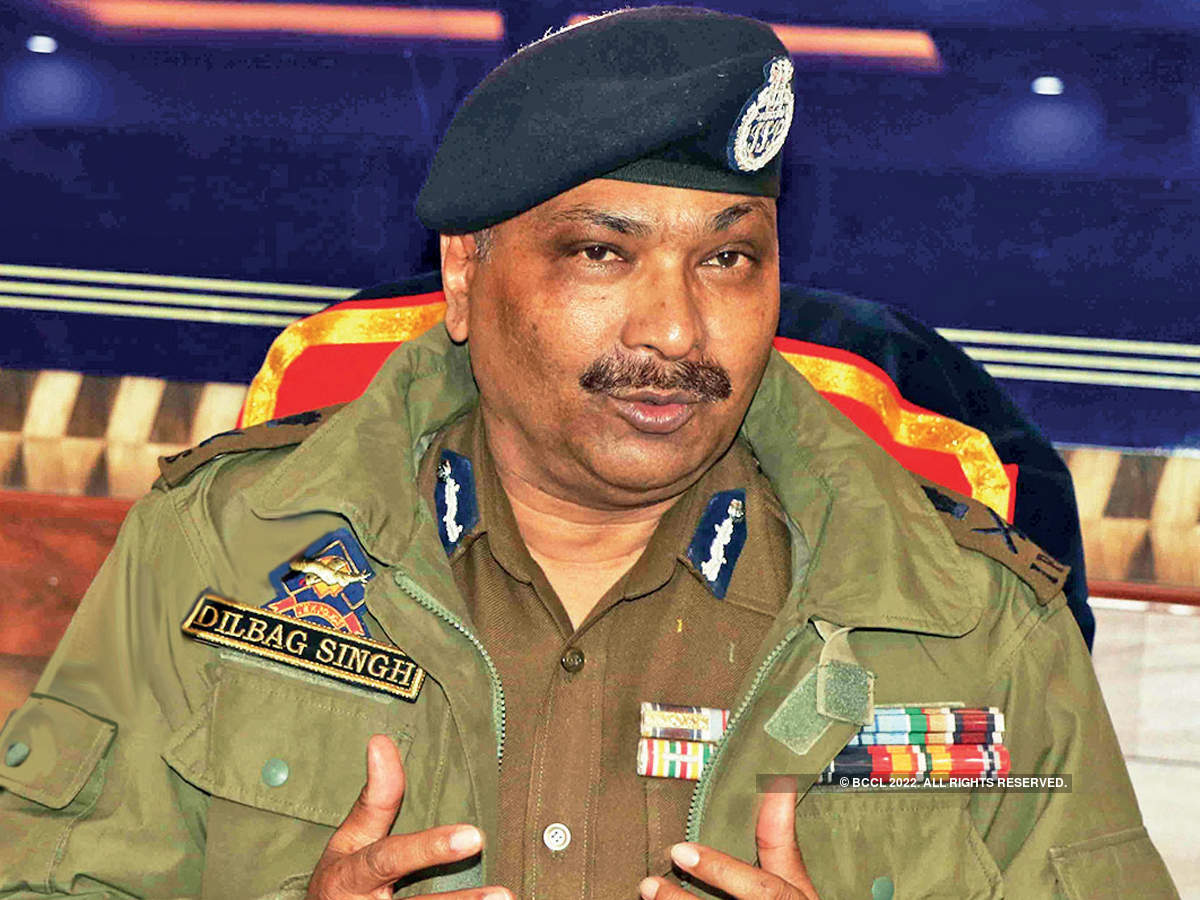
Jammu and Kashmir Director General of Police Dilbagh Singh has said that the stone pelting in Kashmir is history now.  He said the wiping out of the separatist elements like Hurriyat and Jamaat-i-Islami had contributed to peace in the Valley.

“Stone-pelting in Kashmir was promoted by elements who worked at the behest of Pakistani agencies. Elements like Hurriyat and Jamaat-i-Islami were responsible for this,” the DGP Singh told media in Srinagar on Friday. “Also, youth of Kashmir deserve appreciation as they have understood the games being played by Pakistan and its supporters in Kashmir.”

He called the anti-national elements in Kashmir “thorns”.

“We have cleared Kashmir most of these thorns,” he said. “We will clear the rest of them also.”

The DGP Singh that the government is taking appropriate steps to eliminate the remaining “thorns” from the society and that the government was receiving all the support from the people to accomplish this task.


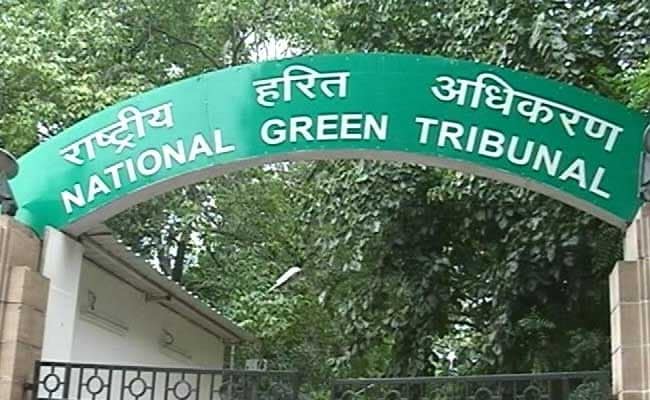
National Green Tribunal slaps Rs 2,000 crore fine on Punjab for failure to treat waste

New Delhi : National Green Tribunal has imposed a penalty of over Rs 2,000 crore on the Punjab government for its failure to treat solid and liquid waste, leading to a huge gap in their generation and treatment.

A bench headed by NGT Chairperson Justice AK Goel said corrective action could not wait for an indefinite period and health issues could not be deferred for long.

“Responsibility of the state is to have a comprehensive plan to control pollution which is its absolute liability, which is not being understood.

“If there is deficit in budgetary allocations, it is for the state and the state alone to have suitable planning by reducing cost or augmenting resources,” the bench said.

It said the compliance of environmental norms on the subject of waste management had to be high on priority.

According to the NGT, the total compensation is rounded off at Rs 2,180 crore.

Out of this, the Punjab government has already deposited with the tribunal Rs 100 crore for its failure to prevent discharge of untreated sewage and solid waste.

“The remaining amount of Rs 2,080 crore may be deposited by the state of Punjab in a separate ring-fenced account within two months,” the bench said.

The NGT is monitoring compliance of Municipal Solid Waste Management Rules, 2016, and other environmental issues by states and Union territories.


Congress intensifies its ‘PayCM’ campaign against BJP govt in Karnataka

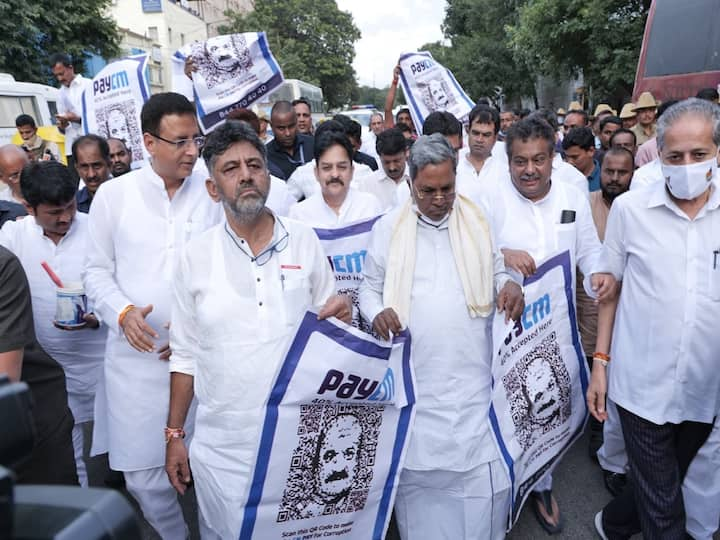
Bengaluru:–Karnataka Congress Leaders intensified its ‘PayCM’ campaign against Karnataka BJP government  and its Chief Minister Basavaraj Bommai.

Congress functionaries  including opposition leader s Siddaramaiah and BK Hariprasad and state president D K Shivakumar and AICC general Secretary Randeep singh Surjewala along with Legislators and workers posted the posters on compound walls at racecourse road and other places in bengaluru. However,  police quickly ripped off posters and took some of functionaries and workers into preventive custody and later let off after some hours.

Poster contains CM Basavaraj Bommai face along with QR code by the word ‘PayCM’ written on them  -a campaign launched by the congress party against the BJP government in Karnataka.

The PayCM  QR code bearing the photograph of the chief minister gets directed to website-‘40% Sarkara’-accusing the bommai-led bjp government was charging 40 percent commission on public works .The website was lunched by Congress few days ago. Posters were also seen on several Vehicles, especially autorickshaws  but thease did not have the image of the CM Bommai or the ‘PayCM’ caption although it had the QR code along with slogans like ‘raise voice against corruption’ along with the phone number to record complaint against the government.

Responding to the allegation CM Bommai lashed at the congress party, calling the entire campaign stunt a “politically motivated evil design”  refuting the currption allegations by congress leaders bommai said that none of their claims are true.

However, Opposition leaders Siddaramiah told reporters that the campaign will continue and  party workers at district level pasting posters  to intensify the campaign.

Congress in its social media  ran a  ‘PayCM’  campaign. Highlighting various alleged irregularities under the present Bommai dispensation , Like recent PSI  recruitment scam.


Waterlogging after rains leads to traffic jams in Delhi

Many areas in Delhi witnessed traffic jams on Friday as continuous rainfall led to waterlogging at several key stretches. Delhi Traffic Police issued an alert, asking commuters to plan their journey in view of the rainfall.

“Waterlogging has been observed near Hanuman Setu on Shanti van to Hanuman Mandir Carriageway, Libaspur underpass, Maharani Bagh Taimur Nagar cut, CDR Chowk, Mehrauli towards Gurugram, Andheria Mode towards Vasant Kunj, under Nizamuddin bridge, Singhu Border near petrol pump, MB Road towards Sainik Farm carriageway,” it tweeted, advising the commuters to avoid these stretches.

Some commuters also took to the microblogging and shared the traffic conditions on the ground. One of the commuters said that the traffic was heavy in Nangloi. Another user requested the police to control the heavy traffic between Batla House and Okhla.

There were also reports of traffic jams in the Mahipalpur area and Preet Vihar in east Delhi.

The national capital has been witnessing an incessant spell of light to moderate rain for the past two days. The weather department has predicted more rains on Friday.

The Delhi Traffic Police helpline had said they received 23 calls related to traffic jams, seven regarding to waterlogging and two related to uprooting of trees from different parts of Delhi on Thursday.

Nitish Kumar and Lalu Prasad to meet Sonia Gandhi on Sep 25

Bihar Chief Minister Nitish Kumar and RJD national President Lalu Prasad Yadav will meet Congress chief Sonia Gandhi in Delhi on September 25.

Both the leaders of Bihar will go to New Delhi for the meeting.

Nitish Kumar is currently flexing his muscles to unite opposition parties in the country. He went to Delhi for the three days and met several leaders including Rahul Gandhi, Sitaram Yechury, D. Raja, Arvind Kejriwal, Mulayam Singh Yadav, Akhilesh Yadav and others. As Sonia Gandhi was not present at that time, he did not meet her.

Following the meeting with Sonia Gandhi, Nitish Kumar will go to Haryana’s Fatehabad for former Deputy Prime Minister Chaudhary Devi Lal’s birth anniversary. It is expected that leaders of opposition parties of the country will assemble there during the rally.

The Indian National Lok Dal (INLD), headed by Om Prakash Chautala, used to organise a rally every year on the occasion of the birth anniversary of “Tau” Devi Lal.

MOST POPULAR

HOT NEWS