Sunday, December 28, 2025

Congress’ Solilada Sardara represents status quo

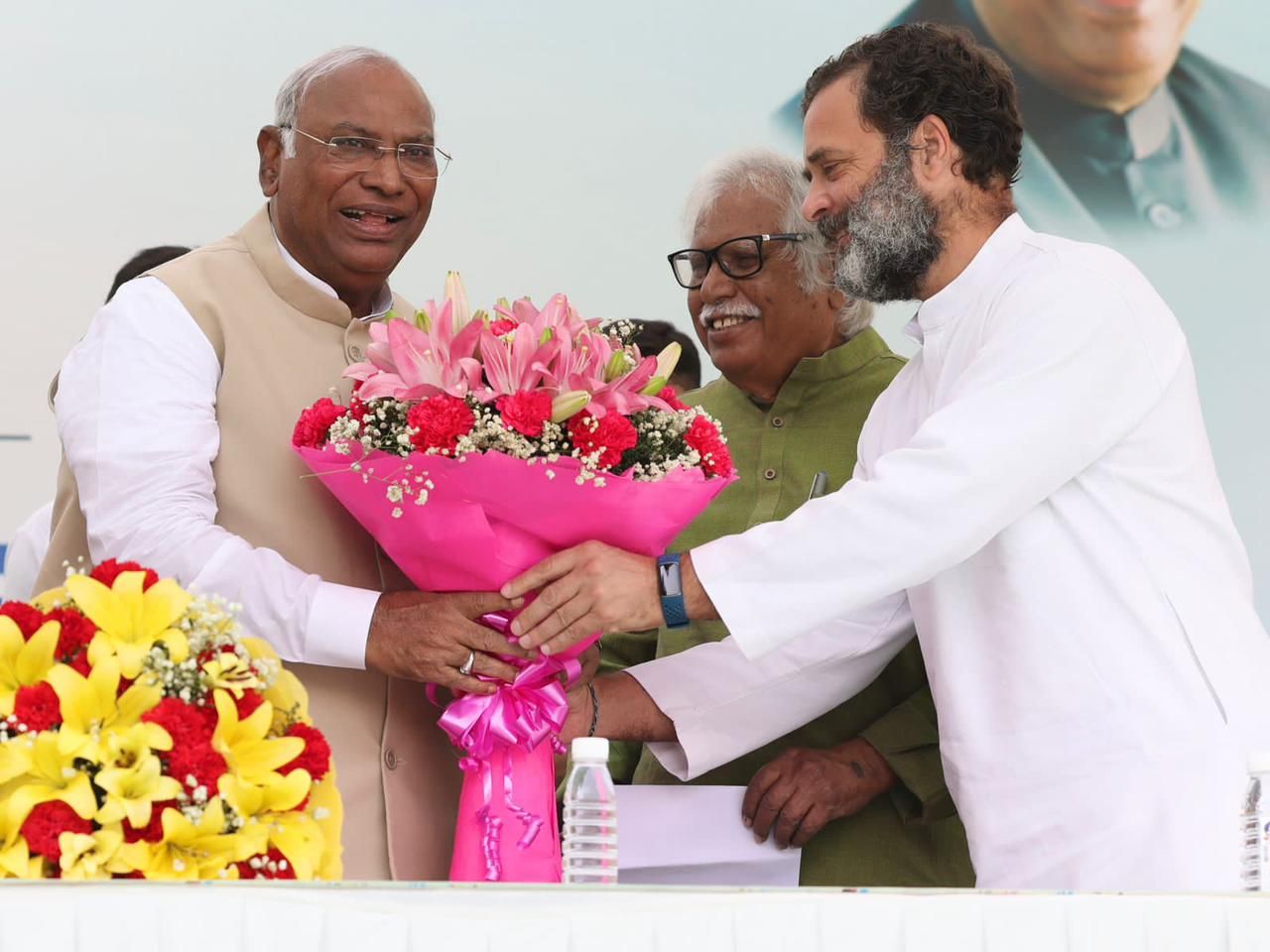
Finally, the Nehru-Gandhi clan has ceded space to a non-Gandhi.  However it is quite clear that the new party chief Kharge will look over his shoulder and always be on tenterhooks.

In victory, Mallikarjun Kharge has proved yet again that he truly is ‘solilada sardara’: a warrior who knows no defeat.

His track record: Contested 12 elections, losing only one.  This time around not only did he trounce Shashi Tharoor but rode to victory with an impressive vote share of over 84 percent.

The suspense has ended as has the will they won’t they question vis-a-vis the Gandhis.

Finally, the Nehru-Gandhi clan did cede space to a non-Gandhi and made way for what Congressmen imagine would be a refurbished Congress.

But have the Gandhis really given up their hold? Will the new incumbent, in this case the 80-year-old Mallikarjun Kharge, actually work independently? Or will he be remote-controlled by the powers that be? Does Congress scion Rahul Gandhi’s statement that his future role will be decided by the newly-elected President hold? Or is it mere optics?

While there are no prizes for guessing this one, it is quite clear that the new Chief will look over his shoulder and always be on tenterhooks. That apart, despite the Gandhi clan publicly stating that they would follow a hands-off policy, past experience has it that their writ will run. Remember Dr Manmohan Singh or even Narasimha Rao’s tenures as heads of Governments?

For the uninitiated, Kharge defeated contestant Shashi Tharoor by a margin of over 7,000 votes. Victory apart, his feat is that he is the first non-Gandhi to assume office as Congress chief after 24 long years.

Judging from a narrow prism, Kharge’s choice sends a positive signal to the Dalit community which is miffed with the Congress because they were denied what they deserved.

Kharge’s appointment may placate them particularly in the poll-bound state of Karnataka, which is Kharge’s home.

Kharge is the second Dalit leader, after Jagjivan Ram, to be the Congress President.

Apart from consolidating the Dalit vote base, Kharge could also act as a bridge between the faction-ridden state unit.

A top contender for the office of Chief Minister more than once, Kharge lost out to SM Krishna in 1999 and later to Dharam Narayan Singh.

When his supporters asked him to stake a claim, he declared that he would never go against the Gandhis.

In 2013 too, he was a mute spectator to Siddaramaiah being sworn in as Chief Minister.

Therefore to say that the Gandhis handpicked Kharge because of his loyalty would be missing the wood for the trees. Quite clearly he was chosen because he is a “safe” bet and would toe the dotted line. In all likelihood, he would be powerless even while being at the helm.

But Kharge is only one part of the story. The other is Shashi Tharoor who even while congratulating Kharge on his victory, did allege irregularities in the elections including “voter fraud” as the Tharoor camp chose to describe the electoral process.

Even while the results were a foregone conclusion and Kharge’s victory was a given, the key was the number of votes Tharoor would score.

Backed by Gandhis, Kharge was unofficially the official candidate. So it remained to be seen whether he would be solidly backed by the rank and file or whether his victory would be merely cosmetic. And it is here that the victory-margin comes into play.

This is not about a numbers-game at all but one that reflects the level of discontent in the Party.

Tharoor, it is well known, was part of the group, popular as G-23, who had demanded a stronger leadership and internal reforms within the Party. In a departure from the norm, 23 senior leaders actually wrote to Sonia Gandhi demanding a complete overhaul of the Party.

Therefore when Tharoor threw his hat in the ring, it was largely believed that his candidature represents the discontent within the Party. Therefore, if Congressmen were really looking for a change they would root for Tharoor.

This despite the fact that Tharoor neither brings in years of experience on the table or knows the nitty gritty of running a vast and complex organisation such as the Congress.

Unlike Kharge, he is not in sync with ground reality. He is elite and has millions of followers on social media: a kind of disqualification for the rank and file. A run of the mill Congress worker, particularly from the Hindi heartland, would be hesitant to approach him. Born in the UK, by Tharoor’s own admission, he speaks “adequate Hindi”.

Yet his adequate Hindi may not be good enough to woo the commonplace Congress worker. Also his assertion that he would bring a fresh set of ideas to the table did not cut ice.

But this is less about Tharoor and more about the questions his defeat throws up.

Is the dissidence for real? Or is it confined to a handful, ambitious leaders who want a share in the power-pie? Were it not so, wouldn’t he, even in defeat, have secured more votes?

The dismal 1000 plus something count in his kitty is nothing to beam about. But Tharoor supporters are smug because the 66-year old fought to the finish.

Going by percentage, Tharoor bagged 11.4 percent votes which his supporters see as “impressive”.

They dig into History and tend to compare the vote count to the party elections in 1997 when Pawar took on Sitaram Kesri. Unlike Tharoor, Pawar did not even touch the 1000 mark. In 2000, when Jitendra Prasada took on Sonia Gandhi, he could not cross a double digit, securing only 94 against Sonia Gandhi’s 7000 plus votes.

But those were different times, and comparisons, therefore, are irrelevant.

Back in those days, the Congress was a force to reckon with and dissidence was perhaps symbolic. A Jitendra Prasada or a Pawar could neither dent the Party nor challenge the Gandhis.

However, 2022 is neither 1997 nor 2000. The Congress fortunes have dipped and the decline is a constant. There is a large-scale exodus with  loyalists like Jyotiraditya Scindia, Kapil Sibal,  Ghulam Nabi Azad and others  snapping  ties with the Party they swore by. Discontent and disillusionment has, perhaps, peaked.

Therefore when Tharoor decided to contest, it was felt that he would get enough support and even if he were to lose, the margin would be narrow.

But his not being anywhere close to Kharge’s landslide victory signalled that the much hyped dissidence was perhaps magnified. As was the move for the Gandhis to give up their hold on the grand old Party.

Otherwise, how does one explain the tremendous support that Kharge got as a Gandhi nominee?  Were the need to replace the Gandhis as strong as the dissidents wanted us to believe, then the first step in this direction would be to defeat Kharge, who was unofficially the official candidate. Or at least help Tharoor to get a decent number of votes and shine even in defeat?

So what is the message of this election?

Simply put, it is that the dissidence that the disgruntled G-23 are talking about is a perception and not a reality. Were it real, then Tharoor would have been where Kharge is and vice versa. In other words, he would be Party President and Kharge out in the cold, as Tharoor now is.
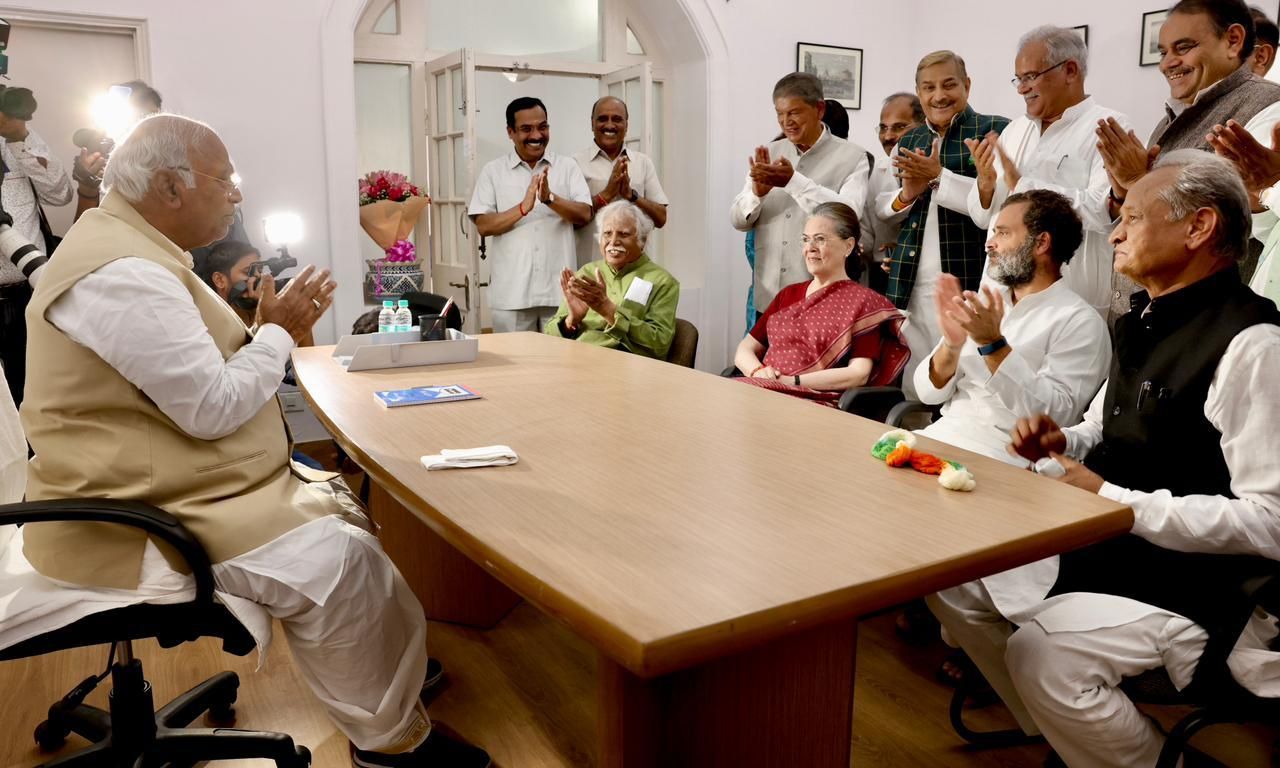
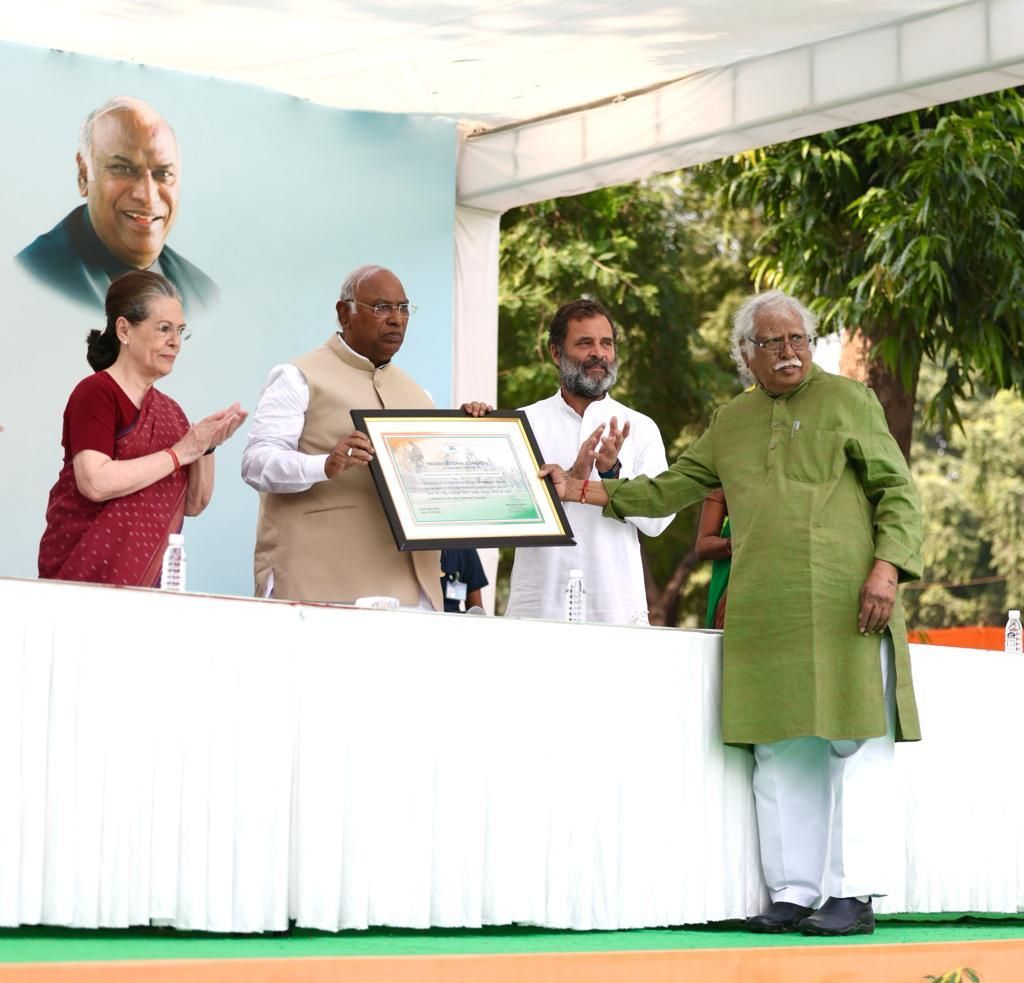


With 2024 polls on horizon, Kharge will have to hit the ground running

The biggest challenge for new Congress president Kharge will be proving to all, in the party and outside, that he is not a ‘yes man’ of the Gandhis and that he can take independent decisions for the good of the party 

So, at long last, after 24 years to be precise, the Grand Old Party has a non-Gandhi as its president. Veteran Congress leader Mallikarjun Kharge, who pipped rebel leader Shashi Tharoor in a keenly-watched and widely publicized election, was sworn in on October 26 as the party chief. It was a one-sided contest from the beginning, with the odds heavily loaded against the suave Tharoor and no one was surprised at the outcome. The down-to-earth Kharge, who incidentally has the formidable reputation of almost never having lost an election, earning him the sobriquet of ‘Solillada Sardara’ (someone who does not know defeat), was obviously more acceptable to the Congressmen who come from diverse backgrounds and from all parts of the country, than the anglicised, polished and urbane Tharoor.

However, full marks to Tharoor for showing to the world that inner party democracy was well and alive in the Congress and also to the High Command for staying neutral in public, whatever their personal choices might have been. Even though he lost, the party would do well to give Tharoor an important role in the organization. Because he can bring in fresh ideas and his vast international experience to put his weight behind Kharge and steer the party towards its regeneration and make it more relevant and attractive for the coming generation of Indians too, while Kharge deals with the many tasks that await him as party chief.

The new Congress chief will have to hit the ground running because the 2024 general elections will be upon us before we even know it and Kharge has a mountain-load of work to do and challenges to meet because the party has over the years lost a lot of its political relevance and resonance with the masses.

Thankfully, Kharge has taken over at a time when the ‘Bharat Jodo Yatra’ has revived the people’s interest in the Congress and the party cadre is enthused. At least in the South, there has been a major revival and emotional connect, but then, South India has always been the playground of the Congress. After the ‘Bharat Jodo Yatra’ passes through Telangana, the Yatra will continue in Maharashtra, Odisha, Assam, West Bengal, Madhya Pradesh, Uttar Pradesh and end in Kashmir by February. How they fare when the Yatra goes into this phase only time will tell. But one thing is for sure, its progress will be watched keenly by friends and political opponents alike if the new “trend” of yatras that Rahul Gandhi has sparked is anything to go by.

That said, if the 80-year-old Kharge has to steer the party towards the 2024 Lok Sabha elections in any sort of decent fighting form, he has to put the Congress’ house in order first. And that is a huge challenge because like any old organization, the 137-year-old party comes with its unique set of problems and baggage.

First and foremost, Kharge has to clamp down on the infighting in the party with an iron hand, and stop senior leaders from fighting wars in the full media glare. A case in point being the happenings soon after the party president’s election took place. The Congress election in-charge Madhusudan Mistry lambasted Tharoor and called him “two-faced.” It took away the feel-good factor that the democratic exercise of choosing a non-Gandhi president had created in the minds of the people and threw up a picture of a highly divided party with bitter quibbling among senior leaders.

Second, Kharge would do well to sit down with whatever leaders are left from the original G-23 and listen to their gripes and criticism. After all, criticism coming from people who have given their whole careers to a single party and are die-hard Congressmen cannot be all negative or vested. There must be something constructive and true in it too. So, in order to go forward the party must learn from its mistakes of the past and for this, it has to give a patient and serious hearing to those who have its best interests at heart.

This exercise, in turn, might stem the exodus of veteran Congressmen, who left because they were feeling suffocated and unappreciated due to the atmosphere of sycophancy that prevails in the Congress and due to the inability of the High Command to make them feel valued and appreciated. It might soothe the hurt egos over the indifference shown to their genuine concerns about issues that mattered to them and stop them going over to other parties that are more than willing to poach them. Keeping the flock together at this time is one of Kharge’s key tasks, so he has to be accessible to the leaders and workers alike.

Taking a few pages out of political strategist Prashant Kishor’s famed presentation to the Congress will also stand the Grand Old Party in good stead, because the man obviously knows a thing or two about politics and winning elections, going by his track record of delivering wins to many a grateful party.

Apart from the South, it is also imperative for Kharge to create a niche for himself and the Congress in the Hindi heartland because all roads to the Centre lead through there.  The Grand Old Party has been unable to make an impact in the key States of Uttar Pradesh and Bihar that account for 120 Lok Sabha seats and has performed miserably at the hustings, being unable to touch even the double digit mark. This is an alarming state of affairs as UP is being handled by Priyanka Gandhi Vadra herself and the party losing its grip there is in effect the failure of the leadership to translate the goodwill that the Congress used to enjoy in the State and in the family pocket boroughs into votes. How Kharge revives the Congress in UP without stepping on Priyanka’s toes remains to be seen, but it will be a major exercise in diplomacy for sure.

Of all the challenges of leading the party, the biggest one for Kharge will be proving to all, in the Congress and outside, that he is not a “yes man” of the Gandhi family and that he can take independent and tough decisions for the good of the Congress.

Obviously, given the loyalty to the Gandhis in the party he will have to strike a fine balance because while he cannot be seen as a rubber stamp president who is subservient to the Gandhis, he also cannot be perceived as a challenge to their authority. Thankfully, his authority has already been given a big boost in the eyes of the Congressmen by Rahul Gandhi saying openly during his brief interaction with media in the midst of the Bharat Jodo Yatra in Adoni that the new Congress president would decide on “what my role (will be) and how I will be deployed”. “Obviously”, Rahul replied when asked if he would be reporting to the new president. “President is the supreme authority in the Congress and everyone reports to him. My role… I am very clear… Congress president will decide what my role is and how I will be deployed,” he had remarked. Even though, everyone knows that Rahul will continue to call the shots to a large extent in the party, but this was a message for the rank-and-file and for the Opposition too.

Plus, Sonia will play the role of a mentor and continue to be the chairperson of the Congress Parliamentary Party (CPP). How much room Kharge will get to manoeuvre in such a scenario, remains to be seen because of the Congress culture of looking towards the Gandhis for guidance. Whatever Kharge does, he can be sure each move that he makes will be scrutinized, particularly by the Opposition which had all through the campaign for the party president polls labeled the veteran Dalit leader as the “official” candidate of the Gandhis. Now it is up to him to prove that he can be his own man and lead the party through a series of challenges that it is currently facing.

Kharge also has the unenviable task of resolving the Rajasthan imbroglio which saw Chief Minister Ashok Gehlot “retiring hurt” from the presidential race. It will take all of Kharge’s political acumen to ensure that the ego clash between the two leaders from different generations does not hurt the party in the Assembly elections next year. He has to placate Gehlot and at the same time ensure that the ambitious and keen Sachin Pilot finds his rightful place. He has to exploit the strengths of both these leaders to ensure that the party emerges a  winner in the end. How and if he can do this, remains to be seen.

But the desertions in the Congress party will only stop if Kharge creates a win-win situation for both the generations of leaders, especially the ‘Young Turks’ and the ‘Old Guard’ whose rivalry within the party is legendary. The ‘Old Guard’ doesn’t want any changes that challenge their supremacy and hold over the party and are unwilling to let the restless ‘Young Turks’ get a toehold on their turf. Now, Kharge will have to manage both sides and create a balance so that the party works as a cohesive unit. The ‘Young Turks’ will lead the people and workers in the future and Kharge has to prepare them for the role while ensuring that the ‘Old Guard’, too, doesn’t get sidelined. It’s a tightrope walk but his victory speech in this regard was very promising as he made it clear that “no one is small or big and we all have to work like karyakartas (workers) to strengthen the organization.” This is exactly what is needed, “working like a team.”

He has vowed to implement the ‘Udaipur Declaration’ which holds the promise of reserving 50 per cent of party posts for those below 50 years of age and allotting 50 per cent of seats in the 2024 Lok Sabha elections to them too. He has to deliver on this promise and also hold the election to the Congress Working Committee, nominate his team and constitute the Parliamentary Board. He owes this to the G-23 who supported him in this election to the party’s top post instead of  Tharoor, who was one of the “rebels.”

The fact remains that the 2024 elections are round the corner and Kharge needs to set up an effective election machinery to challenge rival parties, if the Congress has to make any sort of comeback. The party would be well-advised to consider the looming Assembly polls in Gujarat and Himachal Pradesh as a testing ground and play the game the best it can. Kharge has to devise a new strategy which will resonate with the workers, get the votes and counter its rival parties to deliver a convincing victory. And all this has to be done within a very short time.  Solillada Sardara Kharge has his task cut out for him.


When displacements take place amid fear

On those earlier occasions in the past, if people shifted out, it would be because they wanted to! Unlike today where anyone from disadvantaged groups or  minority communities can be forced to shift out.

In those earlier, less complicated times, departures and arrivals from here and there were along the expected norms and there seemed less of havoc or strain on the human psyche and nerves. Displaced persons were accepted without any hue and cry, and not looked at with suspicion and distrust. Read any of the historical backgrounders to the Sufis of that era and invariably they’d  travelled from those far flung lands. Settling down in Hindoostan. And never really getting back to their home countries.

Internal shifts seemed frequent in those good old days. Entire clans and families would shift from one State to the next and the settling down process was rather smooth. If  writer Saadat  Hasan Manto’s entire  clan  had  moved from  the Kashmir Valley  to  the undivided Punjab, several who’s who had  shifted to  reside in Kashmir. One such couple was parents of film star Kabir Bedi – Freda  and B.P. L  Bedi. The two had got married in England in 1933, before shifting to India, moving on to reside in the Kashmir Valley for a few years. They’d then even resided in the undivided Punjab, Delhi, Burma…Movements and travels were along the liberal and uncomplicated mode.

*****

In these recent years our fellow citizens are getting internally displaced. Natural calamities are one of the reasons for forced shifts-cum-displacements. Another significant reason is the prevailing political climate in the country. In the backdrop of communal provocations, victims are forced and compelled to flee, to protect themselves and their families.

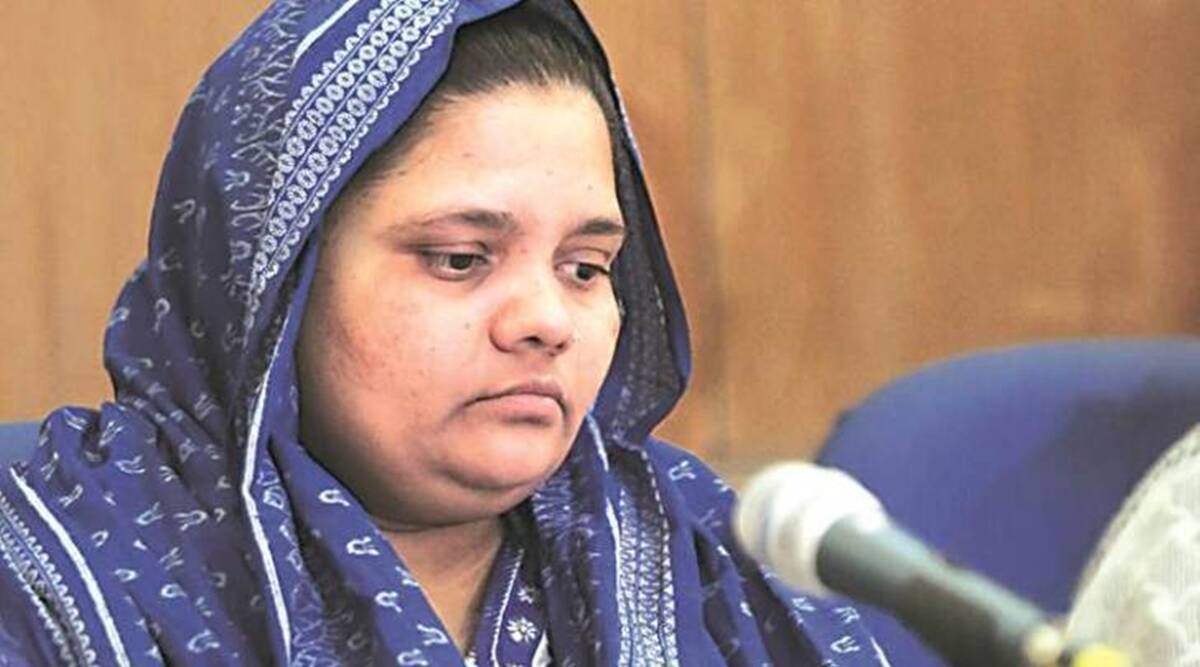
The most significant example is that of Bilkis Bano. After all, she and her family have been shifting from village to village, in Gujarat, for safety and security and survival. They have been going through displacement…ongoing displacement.

The  reality is that the political mafia together with the land mafia have  been using shrewd strategies, for forced shifts in several locales of Outer Delhi, Haryana, Uttar Pradesh, Gujarat, Madhya Pradesh. The Right-Wing is perhaps seeing to it that no pogrom or major rioting takes off, instead an atmosphere of fear and apprehension and insecurity prevails.

Yes, in the midst of fears and apprehension, displacements have been taking place. Not taking you very far back into history, but in these recent years, soon after communal violence in several pockets of Uttar Pradesh, what had surfaced was this shocking trend: Several Muslim families left their ancestral homes and lands; fleeing to Muslim populated areas. A similar pattern emerged in the outlying villages of Delhi, and also in Haryana, Madhya Pradesh and Rajasthan, where dozens of Muslim families left homes amidst fears of death and destruction. They detailed there was no other option but to flee, otherwise their families would be attacked by the political mafia.

Forced shifts in the rural belts are pointers to bigger disasters. After all, when communal politics reaches rural stretches and hits the farmers and cultivators and the land owners, it reeks of eerie build-ups. After all, for the farmer his fields are his life! On those ancestral acres he and his clan had been living for decades; a great majority of them even unmoving during that big Partition. Yet, today, entire families could be getting uprooted from their base, forced to become overnight beggars!

And a few years back, it was the All India Secular Forum team led by L.S. Herdenia, which was one of the first forums to have focused on a series of communal incidents in two villages, Gandhwani and Pipalya, in the Dhar district of Madhya Pradesh. Those incidents were severe to the extent that Muslims families fled from their homes. To quote from that report — “On  October 12, more than 40 houses and about the same number of shops owned by Muslims were set on fire  in two villages…After setting shops on fire in Gandhwani, the violent crowd entered Pipalya village and set many houses on fire. In order to escape the fury of the violent crowd, residents left their houses. This gave free hand to the crowd which burnt everything in the houses or looted … In fact nothing was left. The crowd attacked every Muslim they came across. One woman told us it was a ‘war like situation’. Members of the crowd were hurling choicest abuses, ‘Why are you here? Go to Pakistan, you traitors!’ ”

And when the Modi government was flaunting ‘Start Up’, there was an artisan family of Yusuf Khatri in Madhya Pradesh, who were on the verge of shifting base. Pack up time for them! Yes, one of India’s prominent families in the field of art, producing and exporting award-winning Bagh prints, were considering shifting to the United States, when Yusuf Khatri’s brother and nephew were attacked by goons at the start of 2016. After those communal attacks, they found it difficult to live in their ancestral place. According to news reports two members of the Khatri family were brutally attacked with rods and swords, when they were returning from the masjid after namaaz. One news report quoted Yusuf’s son, Mohammed Bilal Khatri, “We identified some people involved in the assault. They are all members of local Right-Wing units, but are yet to be arrested.” Incidentally, one of the victims, that is, a member of the Khatri family attacked by the goons, had received a national award for his work just a few days before that brutal attack.

And in 2018, when Prime Minister Narendra Modi was speaking at the Davos summit, asking investors to come to India, a Muslim family in Haryana’s Sonepat was threatened to get out of their ancestral village, to get moving towards Pakistan! This, when their fore-fathers had been living in that village for 300 years! The only saving grace was that sense prevailed amongst the village elders and that Muslim family was not bullied out …They did not get uprooted!

I do realize that deterioration has been spreading out over the years, but it’s never been so traumatic! Also, as I have already pointed out, on those earlier occasions in the past, if people shifted out, it would be because they wanted to! Unlike today where anyone from the dis-advantaged groups  or  minority communities  can be  forced to shift out. From here to there, to just about anywhere! Towards a nowhere of sorts!

******

Leaving you with these lines of Devi Prasad Mishra:

“Remains of me

Here I was born

On this stone

On a face like

My own face

I put my face and

Wept for days

Here I sat holding my head

And there flowed my blood

Somewhere here

On this part of the earth

I was threatened to vacate the earth

And here perhaps

In the neighbourhood of me

Are traceable

Remains of me.”

Helping them pick up threads and weave handloom dreams


Five centres in Mayurbhanj district of Odisha cater to women from tribal and weaver communities in a bid to ramp up rural employment opportunities. Before this, the women either stayed at home or worked in fields, writes Deepanwita Gita Niyogi

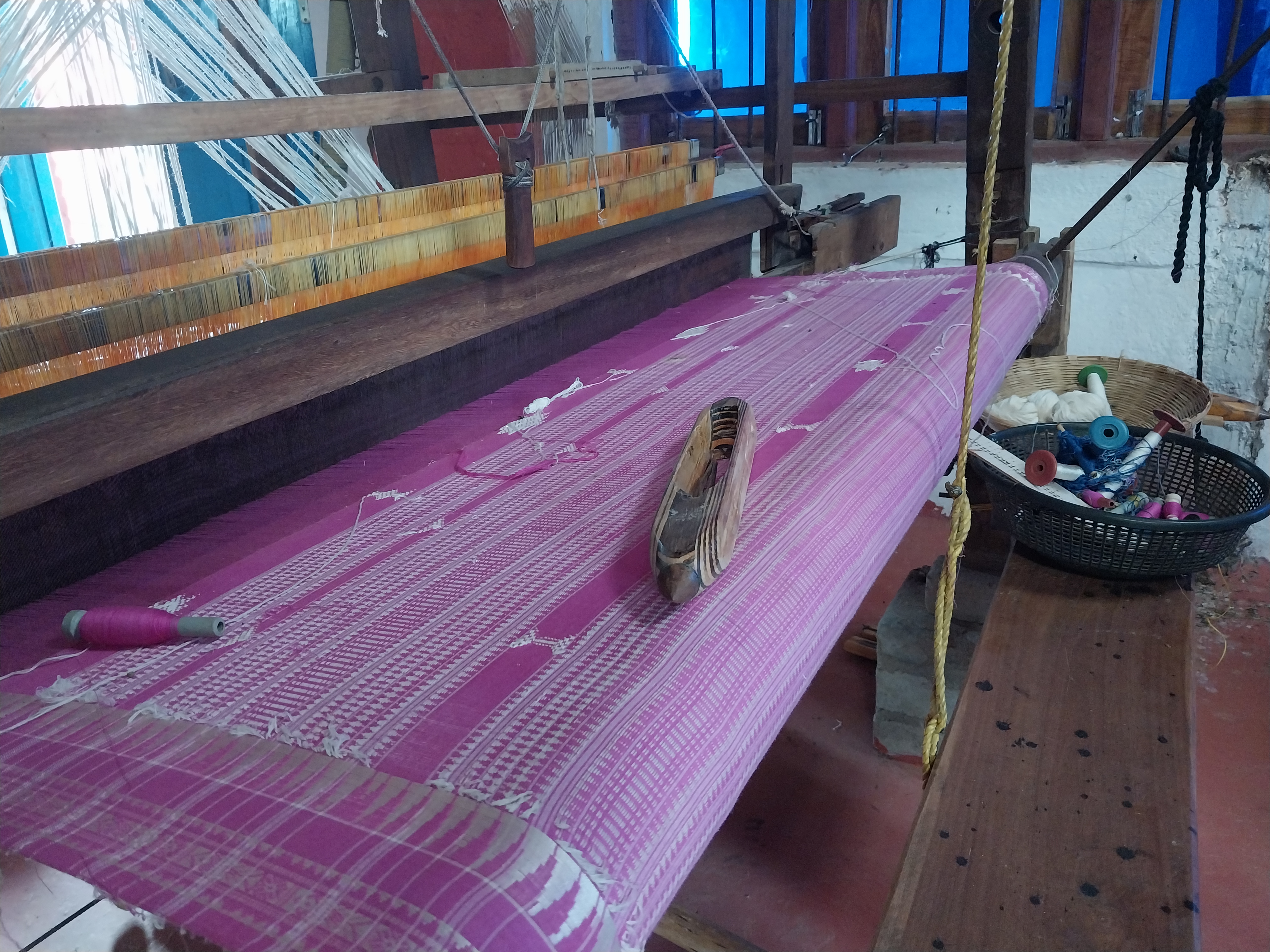
In the midst of noise made by looms, Sashmita Prushti carried on with her work post lunch. The woman was making a handloom cotton saree, known as the Kumbha, which takes 15 days to finish.

Prushti’s family comprises her husband, in-laws and two children. “I had no work. Luckily, this handloom centre came up at Chuliaposi village which is my home. My in-laws’ house is in a different place. I got interested while visiting parents and picked up weaving during a one-year training period,” the woman said. On an average, she makes two to three sarees a month. Prushti likes working here and has made friends with her co-workers.

Welcome to the handloom centre at Chuliaposi in Mayurbhanj district of Odisha. Situated in Udala block, it caters to rural women from nearby villages who make sarees and bags, the latter for Synergy Marine Group, a shipping management company. The women work according to their production target every month. Their earnings depend on the number of items they make.

The centre is an initiative of Mauna Dhwani Foundation, a non-profit in Bengaluru, which runs four other centres in Mayurbhanj. The women who work at these centres either stayed at homes or worked in agricultural fields before this. All of them received training. The Chuliaposi centre came up on a barren land where everything was built from scratch. Now, it is an attractive place with frame looms, a kitchen in the backyard for lunch and space for relaxation.

Reaching out to women

The five centres located at Chuliaposi, Sunapal, Astia, Atanati and Bhandgaon employ about 400 women. They come by 10 am and leave by 5 pm. All of them are offered lunch. Sunday is a holiday. At Chuliaposi, training started in October 2018 and the new building was inaugurated in 2020.

Each saree is differently priced. Some are premium ones and range from Rs 15,000 to Rs 20,000. There is the famous Mayurbhanj saree once supposedly worn by the women of the royal family. It was lost after people stopped making it. After its revival, efforts are on for a geographical indication tag. Many weavers had left handloom in this region for over 20 years but were brought back, thanks to these centres. The Mayurbhanj saree was displayed on the occasion of the National Handloom Day held on August 7 in Bhubaneswar.

The revival effort took time. It was a difficult process, said Yajnaseni Dasmangaraj as not much information was available. Inspiration was derived from the Odisha State Tribal Museum and the Weavers’ Service Centre, Ministry of Textiles, Government of India.

Dasmangaraj is the manager at Chuliaposi where there are 40 women and most of them are tribals. Many are also from the weaver community. “In total, there are some 14 master trainers who helped the women learn weaving.”

While working on the Kumbha saree which is priced around Rs 15,000, Prushti said she is paid Rs 3,000 for each saree. Temple design on the border is the unique feature about this saree. “I have been working here for four years. Because of the intricate motifs, the sarees take time to finish.”

Sarojini Patra from the weaver community also received training. According to her, master trainers give workers designs to work on. A rather interesting saree made at the centre is called the Jhoti. Its designs are inspired from jhotichita, an Odia art made from rice paste, near the entrance of rural homes. The minimum starting range for Jhoti sarees is Rs 9,000. It is an innovated saree and not a traditional one, Dasmangaraj said.

A dream come true


Amidst the vibrant display of colours, master trainer Ramchandra Meher said he is from Sonepur district, which is two hours from Sambalpur. The latter is famous for the traditional Sambalpuri saree. Meher comes from a generation of weavers. He works for eight hours as overstretching the limit puts stress on the eyes.

“I was mostly into making Bomkai and Ikkat sarees, known all over India. As the women did not know weaving, intensive training had to be imparted to them. “Even now, some of the sarees made for practice range from Rs 3,000 to Rs 5,000.

In many sarees like the Mayurbhanj one, there are tribal motifs inspired from nature. The peacock features prominently in the sarees. Apart from the Bomkai, Kumbha and the Mayurbhanj sarees, there is the Kabir Raj saree named in honour of a weaver who died a few years back. He was a weaver of the Bomkai saree.

Founder of Mauna Dhwani Foundation, Bindu Vinodhan said it was a dream come true for her. At present, her organisation is expanding to cover other districts in Odisha like Koraput and Khordha.

“We are also making men’s shirts, diaries, laptop bags and home furnishings. Many people prefer sustainable products these days as it is a lifestyle choice.”

An Oxford University alumni, she was in the corporate sector living abroad and returned to India. “As I wanted to do something meaningful, I joined an NGO as a volunteer. I did research on tribal and Dalit populations. When we started training at Chuliaposi, it was inside a livestock shed and made space amidst the goats. There were only eight women at that time. Slowly we built the centres. By the end of next year, the aim is to touch 1,000 weavers.”


How regional parties grew to become a force to recoken with in India 

Aaku Srivastava in his book, “Sensex of regional parties” may not have delved deep from the point of view of sociological or political science, but the detail in which regional parties operate in the country – their what, when, how and now – makes it an important document. A book review by jyoti

There has been a continuous emerging of cults out of other cults in our country. This is also seen in the fragmentation of political parties and the rise of new parties from them.

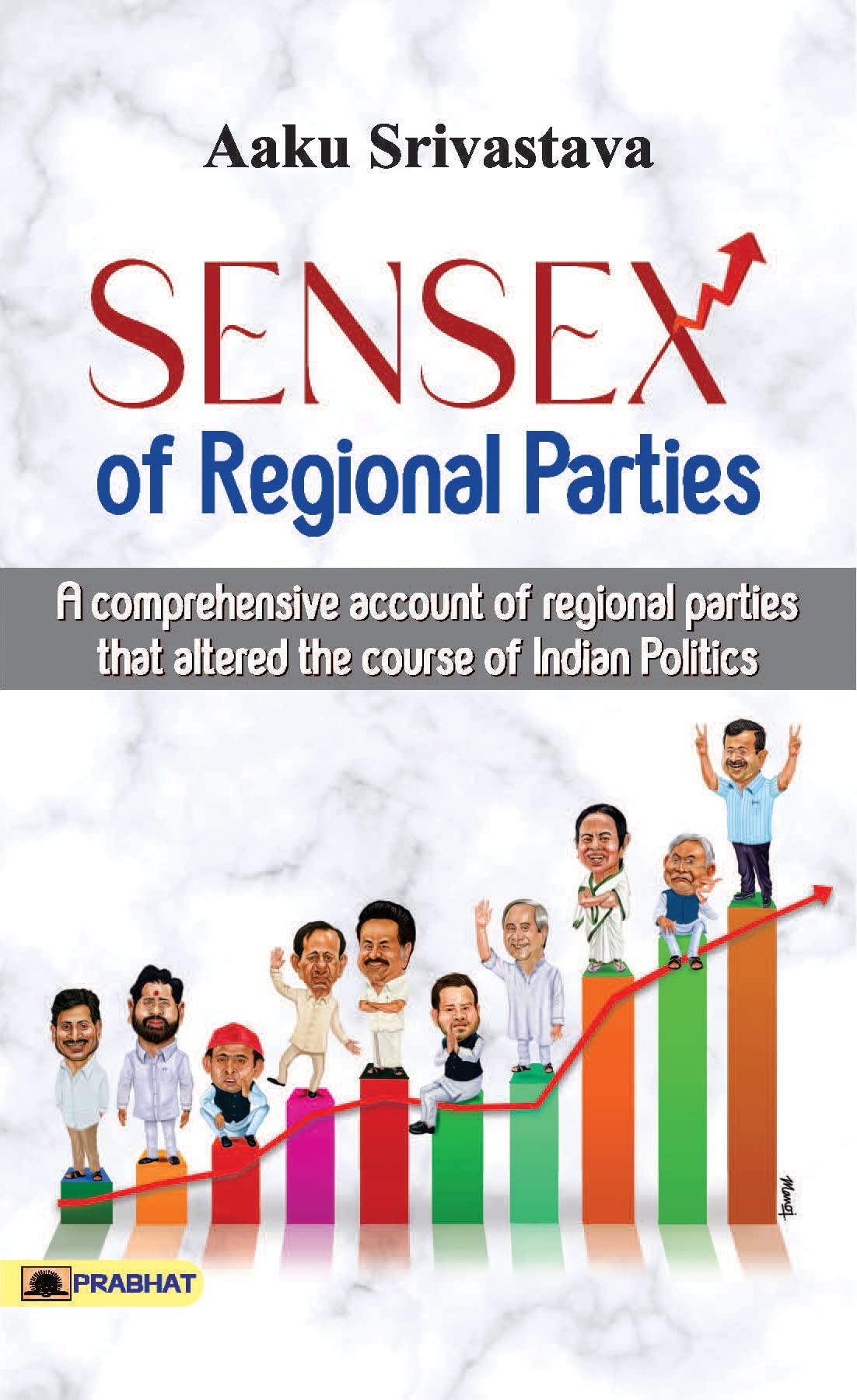
Aaku Srivastava, who has played a long innings in journalism and authorship, in his new book, Sensex of Regional Parties, may not have delved deep from the point of view of sociological or political science, but the detail in which regional parties operate in the country – their what, when, how and now – makes it an important document.

For those preparing for competitive exams and media persons, this book is not only a one-stop useful reference material but also a ready reckoner. The presentation of the subject is very appropriate for the overall depiction of the subject. The subtitle written on the cover of the book “A comprehensive account of regional parties that altered the course of Indian Politics” signifies this. It is very interesting to know when a particular party was formed, what circumstances led to its formation and how it is doing now. This is first book of its kind in English which caters to all these curiosities.

After the unprecedented rise in the status of regional parties in the early 1990s and late 1990s, a new balance of power emerged in the electoral competition at the national level that caste and community politics lapped up soon. There, regional parties registered their strong presence not only in their respective states but also in national politics. And now the voters who vote for their favorite regional party within the state change their attitude in the Lok Sabha elections. Underlining this new trend, interesting stories from regional parties are in this book.

The author considers the rise of regional parties as “one of the most important events in post-independence history.”  Also, the monopolistic attitude of Indira Gandhi also gave rise to many regional parties opposing the Emergency. In the book, the author elaborates a new perspective about Shiromani Akali Dal (1920), DMK (1949) as the oldest regional parties of India.

Book details

Name : SENSEX OF REGIONAL PARTIES

PUBLISHER : PRABHAT PRAKASHAN

PAGES: 422

PRICE :RS.500


Morbi bridge collapse death toll mounts to 160

Morbi: The death toll in Morbi suspension bridge collapse in Gujarat rose to 160 on Monday with rescue personnel recovering more bodies from the Machchhu river, a police official said.

The over a century-old bridge, which had reopened five days ago after extensive repairs and renovation, was crammed with people when it collapsed around 6.30 pm on Sunday. “At least 160 deaths have been reported so far,” the official said. Gujarat Minister of State for Home Harsh Sanghavi told reporters at Morbi, around 300 km from the state capital, that the state government has formed a committee to probe the collapse.

Eyewitnesses said there were several women and children on the British era “hanging bridge” when it snapped, plunging them into the water below. Some people were seen jumping on the bridge and pulling its big wires, an eyewitness said, adding the bridge may have collapsed due to the “huge crowd” on it.

Sardar Vallabhbhai Patel’s ironclad will united India: Rahul Gandhi

New Delhi: The Congress on Monday paid tributes to India’s first home minister Sardar Vallabhbhai Patel on his birth anniversary, with former party chief Rahul Gandhi saying the most fitting tribute to him would be to keep the flame of unity he ignited shining brighter than ever.

Patel is considered the chief architect of integration of the erstwhile princely states with the Union of India.

“Sardar Vallabhbhai Patel’s ironclad will united India. The most fitting tribute to him would be to keep the flame of unity he ignited shining brighter than ever,” Gandhi said in a tweet.

Chhath Puja declared as Dry Day in Delhi for first time

New Delhi: For the first time, Chhath Puja has been declared as Dry Day in the capital city. This year, the Puja falls on October 30 (Evening) and October 31 (Morning).

Delhi Lt Governor V.K. Saxena has declared Chhath Puja that falls on Sunday on October 30 as Dry Day in the Capital. The LG, in his capacity as “Government” as per Section 2 (35) of Delhi Excise Act, 2009, has declared the Dry Day.

Meanwhile, the LG has also written to Chief Minister Arvind Kejriwal to ensure that sufficient manpower and logistics must be put in place well before time at all designated sites.

“It has been brought to my notice that more than 840 sites have been identified and designated for this purpose by the departments concerned. Anticipating large gatherings this year and keeping in mind the zeal and fervour with which the festival is celebrated, it becomes imperative on part of the administration to leave no stone unturned in the unfettered organization the festival at all designated Chhath Puja Ghats, with utmost professionalism, ” LG Saxena has said in the letter.

The LG has said that the responsibility on part of the government to ensure cleanliness at the Chhath Puja Ghats before, during and after the religious ceremony, is also of paramount importance.

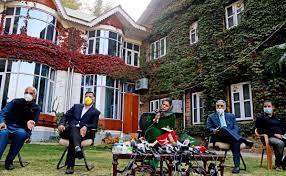
Following eviction notice, Mehbooba to move to relative’s house on Srinagar outskirts

Mehbooba Mufti, the former chief minister of Jammu and Kashmir and leader of the Peoples Democratic Party (PDP), will relocate to the outskirts of the city by November 15.

She was recently asked by the government to vacate her official residence on Gupkar road.

“Mehbooba Mufti will vacate the official house within seven to 10 days,” a party leader told the media.” She has decided to shift to a relative’s house on the outskirts of city at Harwan. Many people offered the former CM accommodation, but she declined.”

Mufti, her chief spokesperson Suhail Bukhari said,  had been offered a dilapidated place in Tulsi Bagh, which she found unsuitable.

Another PDP spokesman Mohit Bhan said that everyone knows that Mehbooba Mufti does not have a house to live in.  “This is why the government is weaponising the accommodation,” he said.

Drug smuggling through darknet, cryptocurrencies increased: Amit Shah

New Delhi:  Union Home Minister Amit Shah said that there has been an increase in drug smuggling through the darknet and cryptocurrencies, which is also responsible for terrorism.

The Home Minister made the remarks at a high-level regional meeting on drug trafficking and national security in Gujarat’s capital Gandhinagar on Wednesday.

Shah said that on the one hand narcotics are eating the youth like termites and on the other hand the illegal money coming from the narcotics trade nurtures terrorism.

He said that to keep the youth safe and to combat the financing of terrorism, all the Central and state agencies have to fight this as a common battle and have to win.

Shah said that the major drug smuggling issues in western states include the increasing maritime smuggling of heroin from the west coast, illegal cultivation of narcotics such as opium, ganja, and poppy, use of couriers and parcels in drug smuggling, darknet and increase in drug smuggling through cryptocurrencies.

Shah said that during the recent investigation of cases, new trends have emerged in drug trafficking in western states and necessary action needs to be taken to tackle these new trends.

The Home Minister said that among the states of the western region of the country, Gujarat, Maharashtra, Goa and the Union Territories of Dadra and Nagar Haveli and Daman and Diu have a vast coastline, additionally Rajasthan and Gujarat share borders with Pakistan.

Shah said that there has been an increase in the smuggling of South Central Asian heroin through the sea route as well as the increasing cases of heroin smuggling through the Indo-Pak border is a matter of concern.

Sharing details drug smuggling cases, the Home Minister said that from 2006 to 2013, a total of 1, 257 cases were registered, while from 2014 to 2022, 3, 172 cases were registered, which is a total increase of 152 per cent.

Similarly, from 2006 to 2013, a total of 1.52 lakh kg of drugs were seized, which increased to 3.33 lakh kg from 2014 to 2022, earlier its value was Rs 768 crores, which has now increased to Rs 20, 000 crores.

Shah said that a drug addict is not a criminal, but a victim. He stressed on the need to destroy the entire network of drugs by attacking both the source and destination of drugs by adopting top-to-bottom and bottom-to-top approaches.

The Home Minister also stressed on strict implementation of various provisions of the NDPS Act. He stressed the need to consider setting up fast-track courts to ensure speedy trials.

MOST POPULAR

HOT NEWS