Sunday, December 28, 2025

4 militants killed in anti-militancy operations in Kashmir: J&K Police

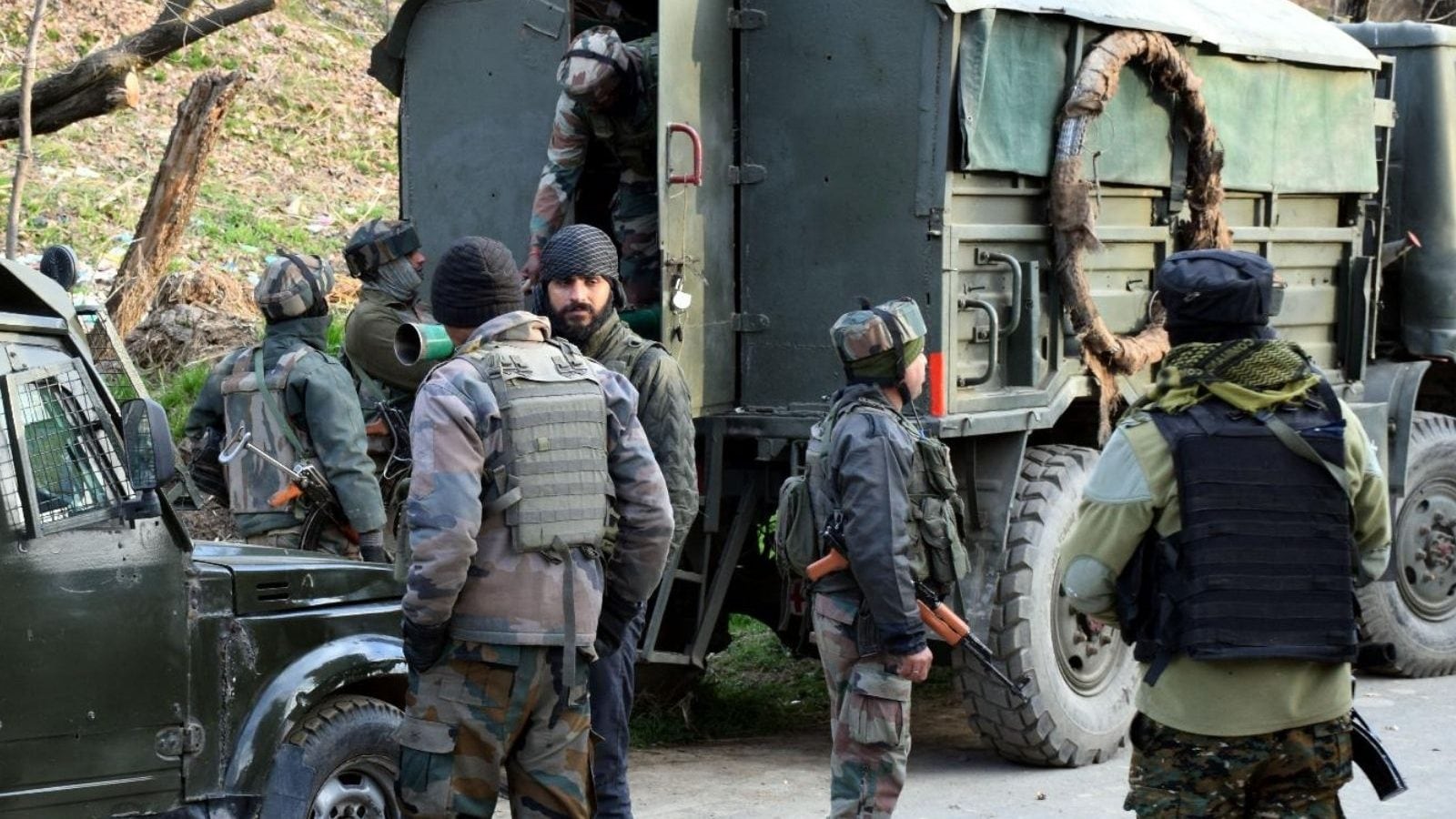
Four militants were killed in two separate anti-militancy operations in south Kashmir’s Anantnag and Pulwama districts on Tuesday.

Two militants killed in Pulwama were planning to carry out a suicide attack on a security forces’ camp,  the J&K Police said.

“Lashkar-e-Taiba (LeT) commander Mukhtar Bhat is among the three killed terrorists [in Pulwama’s Awantipora area],” Additional Director General of Police (ADGP) Vijay Kumar said. “As per source, he, along with a foreign terrorist, was going for ‘ fidayeen’ attack on security forces’ camp. The Awantipora police and the Army averted a major terror incident.”

The ADGP said Bhat was involved in the killing of one Assistant Sub-Inspector of the Central Reserve Police Force and two Railway Protection Force personnel.

One AK-47 rifle, one AK-56 rifle and one pistol were recovered from the encounter site at Pulwama’s Awantipora.

Police also arrested three militants in Srinagar and “10 kilogrammes bucket Improvised Explosive Device (IED) and two hand grenades” were recovered from them.

“The IED is being destroyed in-situ in the Rangreth area by the Bomb Disposal Squad. A case has been registered under Sections of the Unlawful Activities Prevention Act, Arms Act, and Explosives Act,” the police said.

Morbi bridge collapse: Gujarat CM has no right to continue, says Kejriwal

AAP convenor Arvind Kejriwal on Tuesday said that Bhupendra Patel has no right to continue as Gujarat Chief Minister after the Morbi bridge collapse.

While addressing a press briefing here, Arvind Kejriwal said, “Morbi bridge collapse in Gujarat was a result of massive corruption. Prayed for those who lost their lives in the incident. The CM has no moral grounds to continue on the post”.

“This is a case of big corruption and efforts are being made to suppress it. A watch company was given the contract to build the bridge. Maintenance work was given without any tender. Neither the name of the company nor the owner is mentioned in the FIR. The CM has no moral right to continue”, said Delhi CM Kejriwal.

On the ongoing tussle between Delhi government and the L-G over discontinuation of Yoga classes in the city, CM Kejriwal said, “Last December, we had started ‘Dilli ki Yogshala’ programme. We have made excellent health arrangements but we think why should anyone need treatment, people should do Yoga Pranayama daily. For this, 25 people from any locality can call a yoga trainer. In 11 months, 17, 000 people were taking advantage of it. From today it is closed”.

Without taking names, he said that from today onwards, he has said that there will be no yoga classes. They have done this intoxicated by power and arrogance. People are very angry about this.

“Today I announce that yoga classes will not stop. Two crore people of Delhi will get this done together. Will ensure that it happens even if I have to pay by begging”, he said.

“I have spoken with the Punjab Chief Minister on this. If we get into power in Gujarat, we will start free Yoga classes in both the states”.

On the allegation of money being paid to jailed minister Satyendar Jain, Kejriwal said this is an attempt to divert attention from the Morbi bridge collapse.

“Before the Punjab elections, he had brought Kumar Vishwas, now Gujarat is in such a bad condition that PM Modi needs a thug like Sukesh Chandrasekaran locked up in Tihar. This is an attempt to divert attention from Morbi”, he stated.

AAP contesting Gujarat polls to help BJP Jairam Ramesh

Congress general secretary Jairam Ramesh on Tuesday alleged that AAP is contesting elections in Gujarat to help BJP.

Claiming that the fight in Gujarat is between Congress and BJP, he said Aam Aadmi Party (AAP) entered the fray to cut into Congress votes.

He was addressing a news conference during Rahul Gandhi’s Bharat Jodo Yatra which entered Hyderabad this morning.

The former union minister claimed that AAP has no presence on ground in Gujarat and that it is engaged in shadow boxing with BJP. “The way AAP leaders are campaigning and raising issues, we see no difference between BJP and AAP. The two parties are engaged in shadow boxing, ” he said.

He alleged that through advertisements issued by AAP governments in Delhi and Punjab, a false impression was created about the party’s strength. “In Gujarat the fight is between Congress and BJP. AAP is the B team of BJP. AAP is contesting to divide the Congress votes, ” he said.

The Congress leader alleged that AAP was born out of RSS supported agitation in 2012. He said India against corruption was front of RSS and AAP was born out of it.

The Congress MP also trained guns on Majlis-e-Ittehadul Muslimeen (MIM) and described it as B team of BJP. “Both AAP and MIM are B team of BJP who contest elections in various states to cut into Congress votes, ” he said.

Replying to a query, he said MIM was earlier part of UPA and on the oxygen cylinder of Congress. “Today MIM is on BJP’s oxygen cylinder. MIM gives booster dose to BJP. They are together.”

He virtually ruled out Congress renewing friendship with MIM. “The way they are busy contesting elections in Bihar, Uttar Pradesh, Maharashtra and other states at BJP’s instance to cut into Congress votes, I don’t think this will happen, ” he said.

He remarked that a divorce has taken place. “This is a single Talaq, not triple talaq, ” he added without elaborating.


Congress leader Rahul Gandhi’s Bharat Jodo Yatra enters Hyderabad

Congress leader Rahul Gandhi’s Bharat Jodo Yatra entered Hyderabad on Tuesday to a huge response by the party cadres and supporters.

After covering Narayanpet, Mahabubnagar and Rangareddy districts, the yatra entered Hyderabad on the seventh day of its journey in Telangana.

Rahul Gandhi along with other party leaders and workers resumed the walkathon from Matha temple at Shamshabad on the city outskirts and entered the city through Bangalore-Hyderabad highway.

Congress MP and yatra coordinator for Telugu states Uttam Kumar Reddy, Congress Legislature Party (CLP) leader Mallu Bhatti Vikramarka, former MP Madhu Yaskhi Goud and other leaders along with hundreds of party workers were participating in the yatra.

The yatra will halt at Bahadurpura, where Rahul Gandhi will meet various groups and will have lunch and take rest.

The foot march will resume in the evening and reach the historic Charminar after passing through Puranapul, Hussaini Alam and Khilwat. At the historic monument, Rahul Gandhi will hoist the national flag.

It was at the Charminar that Rahul Gandhi’s late father and former Prime Minister Rajiv Gandhi had launched Sadbhavana Yatra on October 19, 1990 for communal harmony in twin cities of Hyderabad and Secunderabad.

Every year, the Congress party organises Sadbhavana Yatra commemoration day at Charminar and presents awards to personalities working for peace and communal harmony.

From Charminar, Rahul Gandhi will lead the Bharat Jodo Yatra to Necklace Road on the banks of Hussain Sagar lake, which divides the twin cities of Hyderabad and Secunderabad.

The yatra will pass through busy areas like Patthergatti, Madina Circle, Afzal Gunj, MJ Market, Nampally, Saifabad and Secretariat to reach Necklace Road.

The Congress MP will then garland the statue of his late grandmother and former Prime Minister Indira Gandhi at Necklace Road and address a corner meeting. Congress leader and incharge for Telangana Manickam Tagore said Rahul Gandhi will also pay tributes to late Prime Minister P.V. Narasimha Rao, whose Samadhi is located at Necklace Road.

Newly-elected Congress president Mallikarjun Kharge will also be joining Bharat Jodo Yatra in Hyderabad later in the day.

He will walk for some distance with Rahul Gandhi and is likely to address the corner meeting at Necklace Road.

Hyderabad police have made elaborate security arrangements for the yatra. They have imposed restrictions on movement of traffic on the yatra route.

Rahul Gandhi will have a night halt at the Gandhi Ideology Centre at Bowenpally in Secunderabad.

The yatra will continue in Telangana till November 7 with a one-day break on Friday.

It will cover a total distance of 375 km in 19 Assembly and seven Parliamentary constituencies in the state.

A requiem for journalist and author Raj Kanwar

Raj Kanwar, a prolific journalist and author, died in Dehradun on October 31 at the age of 92.   The grand soul is no more but every journalist who wishes to be called a journalist has a lot to learn from the man who was actively writing till the last days of his life for leading publications like Garhwal Post, The Tribune, Punjab Government’s publication “Advance”, Tehelka and some other newspapers. He was commissioned to write the history of the ONGC which was published as ‘Upstream India’ and released to mark the Golden Jubilee of ONGC. Subsequently, he wrote “ONGC-The Untold Story”. His book, titled “Once Upon a Time in Doon” edited by Ruskin Bond, was an anthology about Dehradun with a lot of nostalgia. He was recently writing a book, titled “Writer of Obituaries”.

 Celebrated journalist and author, Anil Maheshwari philosophically questioned as to who was qualified to write an obituary of the one who himself was a “Writer of Obituaries” and had encyclopaedic knowledge about Dehradun. Incidentally, Maheshwari had written about Raj Kanwar in his memoir ” Instant History: A Memoir” published by Bloomsbury.

It goes on like this: Way back in 1953, Raj Kanwar was a rookie sub-editor on the staff of The Indian Express, Delhi. That paper had just started its Delhi edition from a dilapidated building in the Mori Gate area in the walled city.

Kanwar was then a regular visitor to the libraries and reading rooms of both the United States Information Services (USIS) and the British Council that were located on Curzon Road, now Kasturba Gandhi Marg, New Delhi. One day he found out that Sir Arnold J. Toynbee – the world-famous historian and author of the multi-volume “A Study of History” would shortly be visiting Delhi and would stay with Sir Girija Shankar Bajpai, the then secretary-general in the Ministry of External Affairs. Kanwar decided to interview Toynbee, come what may. For the next three consecutive days, he studied laboriously in the USIS and British Council libraries to put together whatever material he could find on Toynbee.
Current and old issues of TIME Magazine came in handy as they had substantial
inputs on Toynbee. He also consulted other American and British newspapers and
made his notes.

Knowing well that Toynbee would not have enough time for a detailed interview, Kanwar prepared a list of questions to be asked and wrote possible answers as well, based on the published information. Thus he had a full text of an expected conversation with Toynbee with questions and answers ready for publication even before the interview could be sought.

The following day, Kanwar cycled to the residence of Sir Girija on Teen Murti Lane to
interview the historian without any appointment. Those days there was scant security, and one could walk into a VIP residence. There were nearly half a dozen chairs in the verandah, and Kanwar sat on one. In a while, a peon appeared, and Kanwar told him that he wanted to see Professor Toynbee. The peon, as was his won’t, haughtily said that the Sir had no time as he was just about to leave for the airport to catch a flight.

Carrying a briefcase, Toynbee appeared briefly. Kanwar wished him good morning and introduced himself, saying that he would like to interview him. Toynbee politely said that he was on his way to the airport and had no time for an interview. Kanwar looked at him, beseechingly and pleaded for just five minutes. Before he could say ‘No’, Kanwar handed him a bunch of handwritten papers which had both the questions and the answers. A smile appeared on Toynbee’s face as he read those papers. “These would have been my exact answers to your questions. Where did you get them from?” “Sir, I picked these from the published material at the USIS and British Council Libraries. I would appreciate it if you would kindly approve these,” Kanwar answered. Toynbee looked admiringly at the young reporter and signed the handwritten papers. “Yes young man, go ahead and publish this interview as mine.”

The same day Kanwar typed out the interview and handed it to his resident editor who read the story and congratulated Kanwar. It was the first lead front page story in
Sunday Standard (Sunday edition of The Indian Express) the following day. Kanwar
earned the admiration and envy of his senior colleagues.

Chief Minister Pushkar Singh Dhami and many senior journalists, authors, people from all walks of life have condoled the passing away of Kanwar. Indeed, Raj Kanwar had a full innings and has left us a wealth of fond memories as he could build an instant rapport with everyone whom he remembered by name. Surely, one feels, he is still around.

Russia-Ukraine war, Europe in Peril

Unprecedented economic crisis has gripped Europe following the war as the continent’s rich nations struggle against severe energy crunch and sharp price rise, writes Gopal Misra 

The ongoing Russia-Ukraine war is a perilous affair. The death-dance accompanied by un-measurable destruction has converged with human misery of refugees seeking livelihood across Europe to bring unspeakable hardships to the people of the continent. The human tragedy might end in a catastrophe, if Russia uses tactical nuclear weapons.

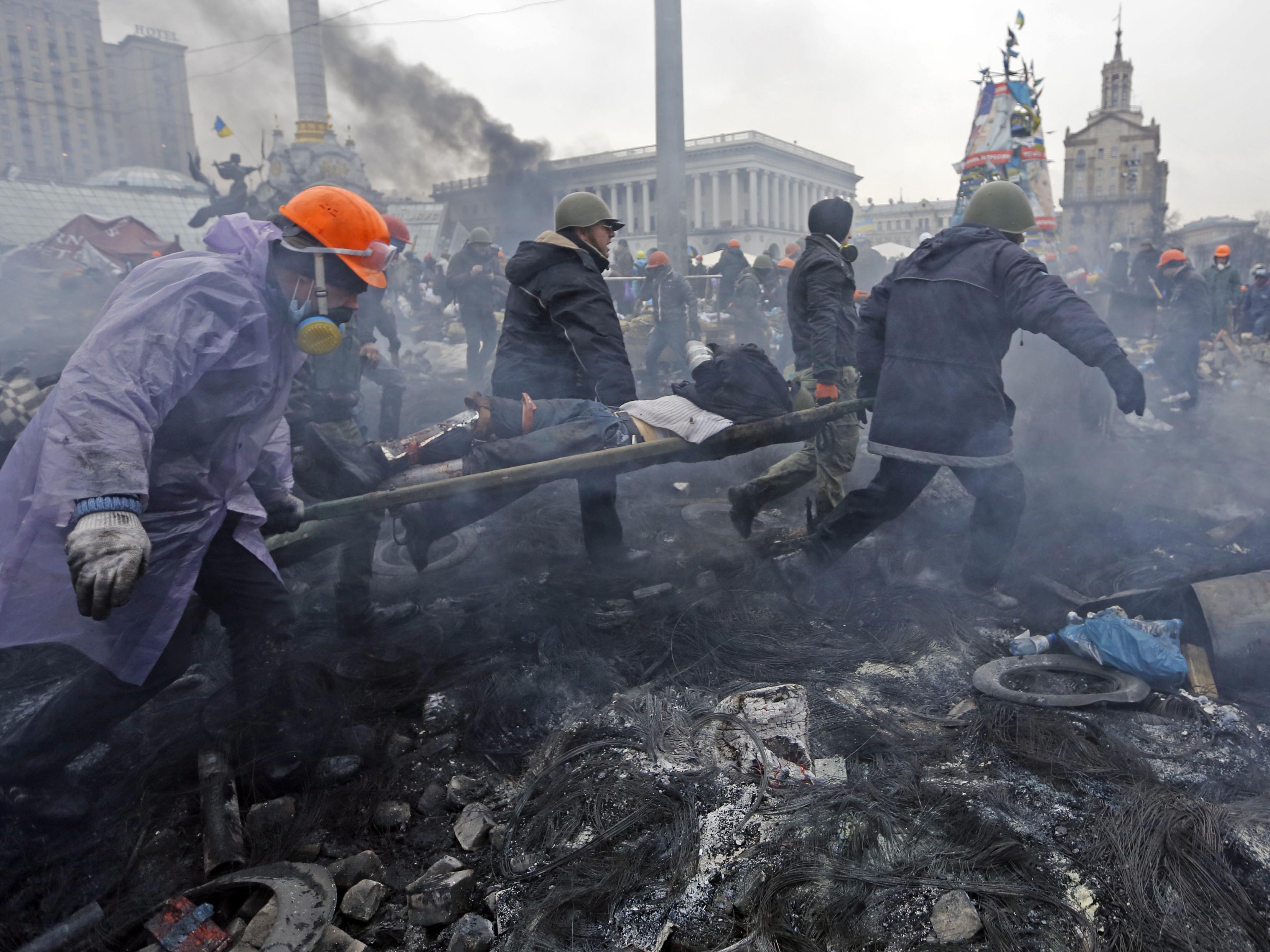
With nearly one third of Ukraine plunging into darkness after electricity lines were hit by the Russian bombings, and thousands of people facing acute shortage of drinking water, a dead of winter awaits Europe. And instead of any resolution to this conflict, the dark war clouds continue to threaten European existence. It has ushered in a winter of rising discontent for the people in different parts of Europe. They are getting themselves warmed by burning biomass. In Poland, in villages, trees are being cut to obtain logs for heating purposes.

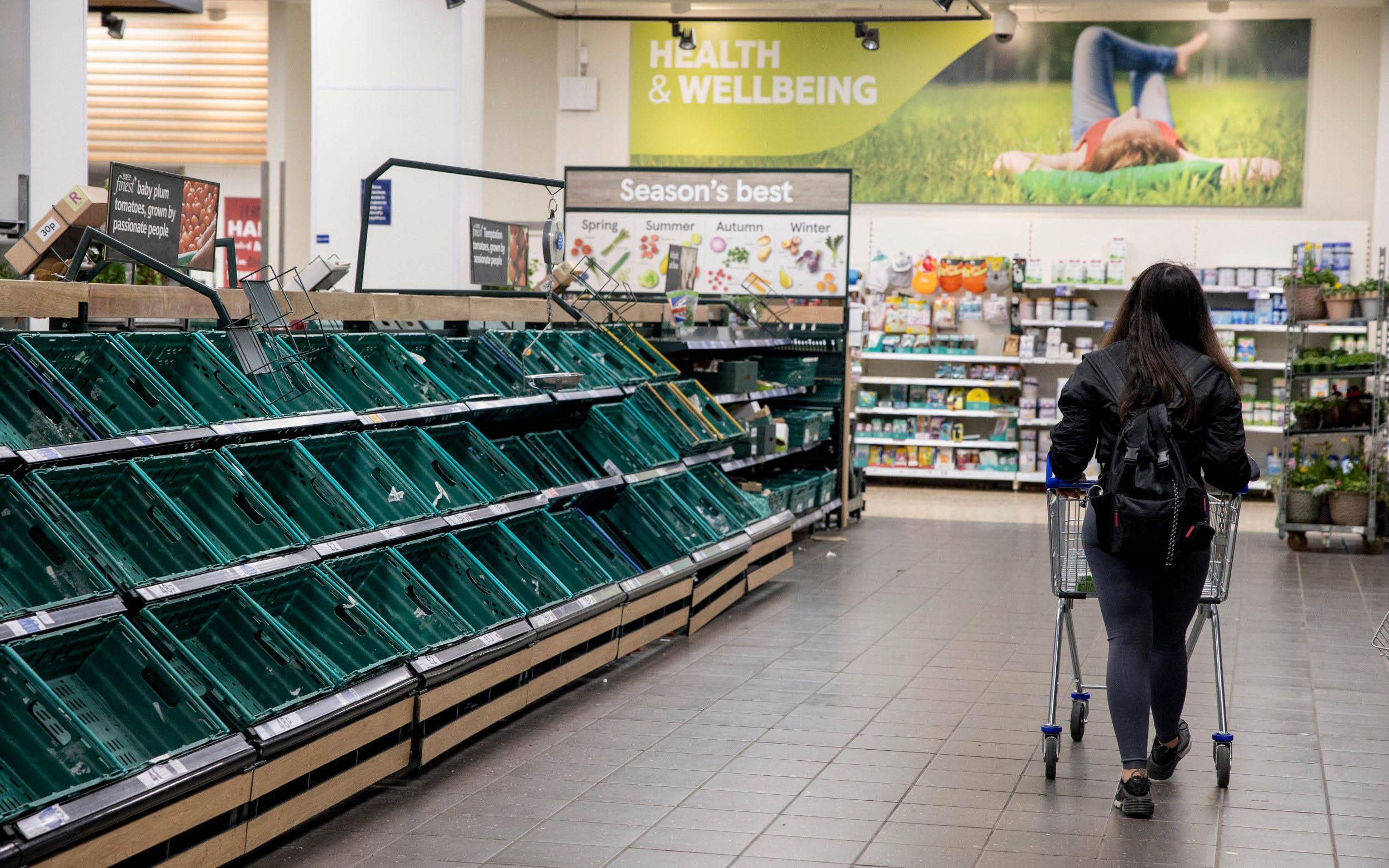
In France, the rationing of petrol has already begun. One has to be in a long queue to get just 30 litres of petrol for a car and 100 litres for a truck, respectively. There were also some reports of violence at a few petrol pumps forcing their owners to close them down. In Germany, the traffic lights are being shut during the night to save energy. In the UK, restaurants are closing down due to the imposition of power restrictions. In Spain, there is a blanket ban on the use of air-conditioners. And its violation has been made an offence.

The present crisis can be traced to the Russian annexation of Crimea in 2014. It is stated to be the root cause of the war. It was followed by the US-led sanctions against Russia, but no serious international efforts were made to resolve the discord.  Earlier, Ukrainian president Yanukovych had left the country with Russian help thus paving the way for the new elections, thus enabling Zelenskyy, to become the president in 2019. He is also stated to have annoyed Russians by seeking a membership of NATO.

Ukraine is yet to be inducted in NATO and the European Union (EU), but president Zelenskyy has succeeded in enlisting full support of the western powers since the war broke out in February this year. US President Joe Biden and his NATO allies, mostly members of the EU, have imposed stiff sanctions against the sale of Russian oil and gas in the international markets. But instead of weakening Russia’s economic power, the measure has strengthened the rouble. On the other hand, it has also led to the near collapse of the European economy leading to an unprecedented unrest in the continent.

In recent weeks, the protests against NATO and the European Union (EU) have intensified. In France, Germany and many other countries demonstrators are marching through the streets demanding that their respective countries must radically change their stance on NATO and the EU. In Brussels, more than 10,000 people dressed in green, blue and red, the colours of the three main unions, were seen demanding immediate relief for people reeling under rising food prices and startling energy bills.

It, perhaps, is the biggest tragedy the continent is facing during the post World War-II years. It is bigger than the Christian-Muslim clashes of Balkans, when Muslim women of Bosnia were humiliated and violated by the Serbian Christian goons. During the past eight months, history is being repeated in Europe, where the Ukrainian refugees, especially children and women, are being subjected to all sorts of humiliation for survival. Instead of ending the conflict, US-led western powers are provoking the Russians to further enhance the war zone, without realizing that the war may trigger off nuclear catastrophe, even if the tactical atom bombs were used.

Disenchantment with the war

The war this time has erupted with Europe as a venue of the big powers’ rivalry or an experimental laboratory for testing the latest weapons. The war zone is neither Asia nor Africa, but Europe, the land of the formidable powers of the colonial era such as Britain, France, Germany, Portugal, Spain, Netherlands and other smaller countries. After WW-2, they are facing a turmoil of this scale for the first time during the past 77 years.
During the past three centuries of the colonial era, these powers had looted the immense wealth of Africa, Asia, Australia and Americas. The wealth they accumulated cannot be measured even in trillions of the USD, and how they had evolved a business model is quite mesmerizing. The Europeans armed with papal bull had successfully subjugated the people across the continents, enslaved them, and unleashed small-pox to decimate millions of people in the Americas. During the 20th century they had fought perilous wars in WW-I and WW-2 among themselves for establishing their respective hegemony on the earth. However, the wars weakened these colonial powers, thus paving the way for the political independence of a large number of countries in Asia and Africa.

In a bid to sustain their erstwhile colonial lifestyle, these wealthiest countries decided to shield their acquired wealth through various institutions. One of them is the EU and a formidable defence shield, NATO. However, the Russia-Ukraine War has exposed the myth of EU unity, and the disenchantment with NATO is getting more and more pronounced.

There appears to be a belated realization in Europe that the recent American move to hold a secret meeting of the UN Security Council against Russia might trigger conflicts across the world. The conflicts may not hurt the USA, which is quite far away from the war zone. Joe Biden’s aggressive mood against Russia has disenchanted the common people in Europe about the role of the US-led NATO as a formidable security alliance. They believe that Europe is directly facing the repercussions of this war due to the aggressive postures of the EU and NATO. They also suspect that the war, perhaps, has been deliberately engineered to trap Russia in a conflict.

With bitter harsh winter setting in, the ‘romance of war’ cleverly sold by the NATO and EU is now withering away. Europeans have been hit hard by the war as they face acute energy shortages, economic hardships accompanied by the closing down of their industrial units and an influx of never ending flow of refugees from Ukraine. The economies of these wealthiest nations are staring at near collapse impacting their fragile political systems. The British Prime Minister Liz Truss has already resigned and the new Italian PM may embark upon an independent political line. Initially the new Italian premier, Giorgia Meloni has criticised the former PM Berlusconi for sending sweets and wine to Putin, but there is a strong possibility that she may not toe the NATO and EU’s policy of confrontation, as the street protests become more and more vocal.

The protests and demonstrations have erupted in Europe seeking dismantling of NATO and EU. There has been a growing realization that neither Joe Biden nor EU president, Ursula von der Leyen, is interested in the resolution of the conflict by peaceful processes. It is being questioned why the EU has not audited the impact of the progressively imposed sanctions on Russia since 2014, following the annexation of Crimea.
The EU members are surprised that during the on-going war, their currency Euro has weakened while dollar and rouble have become stronger. The European countries have to subsidise their citizens with billions of Euros to enable them to maintain a semblance of their normal lives, because they have refused to buy Russian gas. They were shocked and for them it was quite intriguing that America promptly shipped liquefied natural gas (LNG) after the explosion that disrupted the Nordic-1 pipe line. However, the US used this as a huge business opportunity by charging a price four times higher than the price of the Russian gas. Similarly, Norway too has been fleecing its brother countries in the continent by refusing to conform to the price cap suggested by the EU.

Instead of focussing on the need for getting it repaired on war-footing, the western media is blaming Russia for the explosion that disrupted the Nordic-I. Russia is also being accused of disrupting the pipe line to get the Nordic-II pipeline commissioned immediately. On the other hand, the Russian side suspects that the disruption was done by some American proxies to enable America to sell its LNG at a much higher price.

Existential Challenge for EU

With the Russian-Ukraine war entering into a critical phase, the use of fifth-generation high-tech aircrafts and missiles are being frequently used. Instead of resorting to diplomacy for addressing the security and strategic issues, the war sentiment against Russia is being whipped up. Meanwhile, the Americans and Russians are testing their latest weapons in the war zone at the cost of the European people.

The spirit of the US-led ‘democratic alliance’ has suffered due to this European conflict. The western powers under the US are known for fanning conflicts, but the Ukraine-Russia conflict has brought the reality of war before the new generation of Europe born after WW-II. It has been knocking the continent since February 2022, when Russia was provoked to invade Ukraine.

Ukraine, meanwhile, has been its most favourite republic or province during the USSR years. The Russians always trusted and admired Ukrainians for their sacrifices against the Nazis during WW-II. Both sides being Christians, the Biblical narrative that angel Lucifer had tried to overthrow his Creator could not justify this war. The war may end one day, but it will always haunt the world leaders why the spirit of the UN Charter was being forgotten and what purpose did the war serve, but it may never dare to identify the villain, Lucifer.

The rigors of this prolonged Russia-Ukraine War is now being felt across Europe, with thousands of Ukrainians dead, or grievously injured with a large number rendered crippled for life. Many of them are fleeing and are being forced to seek refuge in neighbouring countries. It has not only adversely affected the social and political life of the region, but has also brought the European economy on the verge of a collapse. The unemployment has hit the continent hard, facing a bitter winter sheath of white snow in the coming months. Unless efforts to bring about peace are made on a war-footing, the EU nations will face turmoil on an unprecedented scale.

It is being questioned across Europe why America is not seeking an end to the conflict, when the sanctions have so far failed to browbeat Russians. The Russians are not showing any weakness in the war, but the US allies in Europe are facing the brunt of the conflict. While the ordinary Europeans are questioning the reason for the American reluctance to end the war, at the political level the major powers in Europe are unable to prevail upon Biden and his team for a diplomatic initiative.

The impact of the conflict is visible across the continent. Demonstrations for ending the war are taking place in almost every country of the EU. It appears that Joe Biden is still hopeful of  “isolating” Russia or getting Putin toppled by engineering an internal coup in the Kremlin. The move to hold the secret UNSC meeting has further alienated Putin and has dimmed the prospects of resolution of this conflict through negotiations. The allegation levelled by Ukrainian president Zelenskyy that Iran is supplying drones to Russia has further angered Putin. The Russians have denied this allegation and might retaliate by intensifying the drone attacks hurting more vulnerable targets in Ukraine.

Biden Outwitted

Interestingly, it appears that both China and Russia have successfully countered Biden’s geo-political strategy. Germany is reportedly moving its automobile major, Volkswagen, to China, and despite American advice to the contrary, it is seeking closer financial and technological tie-up with China. Similarly, Putin’s offer to supply gas to Europe in spite of the damage to the Russian gas pipeline, Nordic 1, is yet another effort to isolate America in NATO and EU. Earlier, the western media had accused Russia of deliberately damaging Nordic-1 for cutting off Russian gas to Europe, but very soon Europeans realized that the real beneficiary of this disruption is the USA.

In a bid to give relief to his citizens during the post Covid-19 months, Biden could print trillions of USD without causing much inflation, but now the US allies are facing existential crisis due to this war. For energy, they are paying four times more to Americans this winter than they would have paid for the Russian gas. Since the beginning of the Russia-Ukraine conflict in February this year, the American companies have benefited immensely as they have earned huge profits by supplying petroleum products to Europe. The US exported nearly three quarters of all its liquefied natural gas to Europe during the first four months of 2022, with daily shipments to the region more than tripling from last year’s average. It means, Americans are pushing or fanning the war for profiteering from their own allies!

Another key supplier of natural gas, Norway has rejected the suggestion to cap the gas prices. It is highly unlikely that the American companies would agree to the price cap suggestion of Ursula von der Leyen either.

While the blowing up of a strategically important bridge in Crimea has recently been reported as a success of the Ukrainian army, Russia has responded by enforcing strict martial law in all the Russian-speaking areas under its control.

During the past eight months since the war broke out, Russia has successfully thwarted the American sanctions. The rouble has become stronger, and the European economy is at the verge of collapse. Europe is in peril.  Any success of Ukrainian forces in the war front invites harsher punishment to the country, which was once a part of the USSR. If Ukrainian forces have successfully destroyed a key-strategic bridge in Crimea, Putin has countered this aggression by imposing martial law in Crimea.

The Russian forces are now using fifth generation weapons, including aircrafts and missiles. Russia had annexed Crimea in 2014. During the current war, Putin has taken back some key Russian-speaking areas in Ukraine, where the Russian speaking population was being attacked. Putin has taken the territories, especially Crimea, following the reports that Ukraine is keen to join NATO and EU. It was given to the people of Ukraine for their courage and sacrifices in defeating the Nazi aggression during the World War-II.

Ukraine had decided to become an independent nation following the collapse of the Soviet Union. During the initial years, the relations between Russia and Ukraine were quite brotherly. However, their ties suffered following the reports that Ukraine is seeking a NATO membership. It intrigued Russia, which had been denied its membership. On the other hand, its former republics or provinces and the allies of the Warsaw Pact were being inducted into NATO.

After the collapse of the USSR, the Warsaw Pact was dismantled and thus the cold war ended. The US-led western powers should have also dismantled NATO, but they did not reciprocate. Apart from inducting the East European nations, the Russians were alarmed, when they learnt about the emergence of neo-Nazis in Ukraine’s Russian majority areas attacking Russians to leave the region. It further alerted Russians, when they found they were functioning like the jihadists inducted into Jammu-Kashmir by Pakistan. These proxies were being called ‘the non-state players’, but the Ukraine’s pro-American lobby was using them against Russia. They were reportedly operating to “cleanse” the cities of Crimea, Donetsk, Luhansk and Zaporizhia dominated by Russian speaking people by triggering violence against them. The Russians also realized that America wanted to weaken their hold in the Eastern Europe and in Eurasia, and these neo-Nazis were just American proxies.

Europe on the Edge

Ukraine being the frontline state is facing unprecedented devastation and deaths, but the rest of Europe is also on the edge. It is in the grip of an energy crisis, and faces shortage of food grains and phenomenal price-rise that too under the shadow of a nuclear catastrophe.

The protests against NATO and EU have hit the entire continent with harsh European winter quietly setting in.  The situation is feared to worsen in December onwards. The average temperature is expected to vary between -1 to -3 degree Celsius during the winter months.

There is a general impression among Europeans that like the legendary Pied Piper of Hamelin, Biden, who has the final say in NATO and commands unquestioned influence in the European Union, is deliberately leading the innocent brave people of Ukraine to their final annihilation. His agenda is to get Putin deposed, who is now being considered the main impediment in the expansion of the western influence in Eurasia.

Similarly, Ursula von der Leyen is also being questioned for following a ‘mindless strategy’ in her anti-Russian policy, which has proved counterproductive so far. For example, there are few takers of her suggestions regarding the capping of the gas prices or preventing European companies from insuring the Russian ships. It is being doubted whether refusal to insure the ships will really deter the Russians to discontinue their supplies worldwide.

The recent oil agreement between Russia and Turkey, a NATO member, has reconfirmed America’s declining influence on its allies. Russia has decided   to set up a massive oil distribution centre at a Turkish town, a part of Europe, near the Black Sea. It will ensure supply of Russian gas to Europe without any hindrance. With the Russian fleet present in the area, it will be difficult, if not impossible, to disrupt the new oil supply line.

It is being announced that the President of Turkey, Recep Tayyip Erdogan, has accepted the Russian offer and decided to set up a gas distribution centre as early as possible.

The timing of this announcement has an element of surprise in that as soon as China officially declined that it would not be possible for it to supply liquefied natural gas or LNG to Europe and Asia, the CNG prices went up.

Meanwhile, a report from Norway says that Norwegian Prime Minister Jonas Gahr Stoere has rejected the idea of any price cap, as suggested at an emergency meeting of the EU energy ministers held in Brussels in October. They had asked the European Commission to propose broad gas price caps. Norway has been supplying huge quantities of petroleum products meeting almost 25 per cent of the EU and United Kingdom gas demand.

Both the UK and EU are largely dependent upon Norway, which is not an EU member. It has become the EU’s largest supplier of gas after Russia’s export cutbacks giving the Nordic nation a record income from its petroleum industry as prices continue to soar.

Is EU losing its clout?

With food and energy costs spiking across the continent, the Europeans are apprehensive of the forthcoming harsh winter. The dwindling Russian gas supply is going to hit the common man hard in Europe. Europeans are shocked that neither the USA nor the EU is making any serious effort to end the war. Meanwhile, reports are emerging that Russia is using its fifth generation stealth fighter, Su-57, against Ukraine. It is claimed to have recently been sighted over the city of Zhytomyr.

Amidst these developments on the war front, it is a legitimate question to be asked whether European nations are on ‘decline’. Europe’s major colonial powers, Britain, France, Portugal, Spain, Germany and others who ruled the earth for the past three centuries are facing existential challenges.

Buckling under the US pressure to not to buy Russian gas, countries such as Germany, Italy, France and Spain have been forced to suspend their respective industrial production units rendering thousands of workers jobless. The non-availability of the Russian gas is also forcing people not to use the domestic heating system during the coming winter months. It is going to be a nightmare for most of the people in the region.

Across Britain, country-wide demonstrations against the price rise and the gas cut leading to unemployment have erupted amidst the ongoing political upheaval and economic crisis. It has already led to the resignation of PM Truss. The agitation indicates that the people are keen that the conflict ends as soon as possible. They are not happy with the British decision to supply state-of-the art weapons to Ukraine to be used against Russia, which they believe has fuelled the conflict. The Bank of England has projected the inflation to accelerate to 13 percent during September-December 2022.

Similarly, protests are taking place in other European nations known for their fabulous wealth. Both France and Germany have indicated that they would not be participating in the war and those who are still under the spell of Biden’s war doctrine are facing strong protests against NATO and EU in their respective countries, thus weakening the fragile unity of the erstwhile colonial powers. It is being repeatedly asked in the mainline news channels as well as on social media platforms whether the US-led sanctions against Russia could make any adverse impact on the Russian economy. In fact, the Russian currency, the rouble, has become stronger during the past eight months. Both the USA and Russia are not suffering from the conflict, and the main victims are the Europeans. The European governments are unable to explain that when there are no sanctions on the transportation of the agriculture products, why have the prices of essential goods have sky-rocketed during the past one month?

The resentment against the USA and the EU leadership is becoming more and more pronounced with each passing day. Few European nations are ready to subscribe to Biden’s ‘pro-democracy’ assertions that the European nations should be ready to ‘sacrifice’ to stop the “imperialist Russia”. The European powers, thus, face a decline in their strategic value worldwide.

Another dimension of this war is that whether the Neo-Nazis are changing sides and they are supporting Russia. Before annexing Crimea in 2014, Russia had accused Ukraine of nurturing ‘neo-Nazis’ to attack the Russian-speaking people in the country. However, recently, a German intelligence report has claimed that two neo-Nazi groups are fighting alongside Moscow in Ukraine, despite the Kremlin’s claim to be ‘denazifying’ its south-western neighbour, Ukraine. In this era of ‘misinformation’, it is difficult to believe such reports. Apart from this claim, a few western countries’ media platforms have unleashed a propaganda war that involves sharing old pictures from past conflicts to ‘demonise’ Russia and lavishing praise on Ukrainian leadership for standing its ground against the invasion.

Continent-wide recession fears loom

The Ukraine war has led to a “giant leap” in food prices, according to the UN.  It has cut off supplies from the world’s biggest exporter of sunflower oil which means the costs of alternatives have also climbed.

Ukraine is also a major producer of cereals such as maize and wheat, whose prices too have also risen sharply.

The UN said “war in the Black Sea region sent shocks through markets for staple grains and vegetable oils”. The UN Food Prices Index tracks the world’s most-traded food commodities measuring the average prices of cereal, vegetable oil, dairy, meat and sugar. It has already crossed 13 per cent and is the highest recorded during the past 60 years. It has fuelled a cost-of-living crisis that has sparked warnings of social unrest across Europe.

Meanwhile, reports indicate that the Czech inflation is expected to touch 20 per cent during this winter. The governments across the continent are unable to prepare a feasible strategy to tackle this challenge, when the erosion of household income might cause a Europe-wide recession.

 

Amidst chaos in Europe, Rishi Sunak’s elevation gives glimmer of hope

Amidst rich nations facing existential challenge, the UK has just got in Rishi Sunak, the  first Indian-origin Prime Minister, who calls himself a “proud Hindu” who took oath on the Bhagavad Gita after becoming an MP and has become the first person of colour to occupy this chair. The 42-years old is the youngest UK PM in two centuries, the country’s third prime minister in three months and its fifth in just over six years. It is a reflection of deep problems in the economy.

The Cover Story in Tehelka this time is by Gopal Misra “Economic Crisis Hits Europe” as the Rich Nations Face Existential Challenges. Misra writes that the ongoing Russia-Ukraine war is such a perilous affair that has not only plunged nearly one third of Ukraine into darkness, with acute shortage of drinking water but a dead winter awaits Europe which is facing existential crisis. It has ushered in a winter of rising discontent for the people in different parts of Europe. They are getting themselves warmed up by burning biomass. In Poland, in villages, trees are being cut to obtain logs for heating purposes. In France, the rationing of petrol has already begun. In Germany, the traffic lights are being closed down during night to save energy. In the UK, restaurants are closing down due to the use of power restrictions. In Spain, there is a blanket ban on the use of air-conditioners and its violation has been made an offence.

In such a scenario, one section that is upbeat is the diaspora which finds in Rishi Sunak’s elevation, a man of Indian origin ruling over the former colonial rulers. His ascendancy to 10 Downing Street after Liz Truss’ blink-and-you-miss-it truncated tenure as the UK Prime Minister is indeed a watershed in contemporary British history. Earlier, her predecessor Boris Johnson faced an ignominious exit in the wake of alleged inept handling of the coronavirus pandemic to allegations of corruption, cronyism and the cost-of-living crisis pushing erstwhile colonial rulers below India on the economic front.

Shakespeare’s famous lines, “Uneasy lies the head that wears a crown” are most befitting for Sunak who himself has described that UK is facing a ‘profound economic challenge’ with estimated budget deficit of $45 billion and growing inflation of around 10 per cent and recessionary trends.  Challenges for Sunak are daunting but in his first speech as PM, he emphasised he is “not daunted”.  Let it not be just the plain euphoria.

A key takeaway of Sunak’s ascendancy to 10 Downing Street is that people can look beyond colour and creed to embrace competence to meet the new challenges. India has for long shown to the world that the nation can be better run with presidents and prime ministers from minority communities and humble backgrounds.


Challenges await Indian-origin Sunak as he beats odds to become UK PM

After a keenly contested power game, Rishi Sunak, 42, wrested the coveted office of the British Prime Minister. He got the better of his rivals with his sheer talent, surpassing racial or religious considerations, if any, to become the first non-white PM, writes Gopal Misra

The curtain on a high-pitch political drama having worldwide attention of nearly eight weeks was finally drawn on October 24, when Rishi Sunak, 42, wrested the coveted office of the British Prime Minister. In this keenly contested power game, Rishi trounced his rivals with his sheer talent, commitment to the nation, surpassing racial or religious considerations, if any. It also reaffirmed that the traditional British appreciation for meritocracy is still alive.

The power game had started unfolding during the difficult Covid-19 pandemic in 2020-21, when irrepressible and charismatic British PM Boris Johnson’s social behaviour finally sealed his fate. He, however, in a bid to ensure his return route to power supported Liz Truss, Foreign Secretary, considered to be a dumb-wit; thus preventing Chancellor of Exchequer, Rishi’s march to the apex office. It cannot be denied that Johnson’s initial strategy was well-planned. However, the Truss government collapsed within 43 days forcing the ruling Tory Party to elect a new PM.

The excitement of this ongoing drama reached a crescendo, when Johnson indicated his desire to contest for the high office to challenge Rishi. Earlier, just a few days before Jonson’s announcement to join the contest, former Defence Secretary Penny Mordaunt, who was considered much brighter than Truss, had jumped into the fray. The ruling party’s MPs, however, decided to choose the best among the three instead of experimenting in the name of race or religion, especially when the country’s economy is at the edge.

The Tory agreed to elevate Rishi, as an immediate resolution of the Russian-Ukrainian conflict appeared to be remote. They finally chose a ‘Punjabi munda’ or Punjabi young man for bailing the country out from the financial mess, when the menacing war clouds were hovering on the European sky. During the WW-1 and WW-2, Indian soldiers had scripted the Pax Britannica, now the Indian talent will be restoring the British glory. It may be recalled that during thirties, Rishi’s grandfather had migrated from India to East Africa. Later, the family shifted to Britain.

The decks for Rishi’s elevation were cleared, just a few hours before the worldwide Deepawali illuminations having snowballing effect on the markets. On the evening of Monday, October 24, even before him assuming the new responsibility officially, Britain’s main equity indexes closed higher. The British pound rose in volatile trading. The optimism was based on the known capabilities of Rishi that he now would successfully be steering a country, which was once considered as one of the most prosperous nations of the earth.

During his innings as Finance Minister, former Indian PM, Dr. Manmohan Singh had triggered the revival of the economy. A a similar role awaits Rishi, whohas  also has served as the Chancellor of Exchequer. Earlier, he had cautioned the outgoing PM, Liz Truss, that her policy would be hitting hard the country’s ailing economy. Rish, now, would be reinvigorating his country’s fragile economy facing a down turn due to the dark clouds of the ongoing nine-month old Russia-Ukraine War. Indeed, a formidable task for any leader.

Interesting, the families of the two leaders belonged to Punjab. Rishi’s grandfather had migrated from Gujranwala to East Africa; later the family had moved to Britain. Dr. Manmohan Singh too hails from a Punjabi village, Gah, Chakwal; both places became a part of Pakistan after India’s partition in 1947. They, however, represent the genius of India propelled by the Punjab’s daring enterprise; always ready to pick up the gauntlet in any challenging situation. Rishi’s elevation also reasserts that with the Indian genius, British society has finally unshackled its racist mindset inherited from the colonial era.


RSS’ population imbalance pitch: Is it real or just scaremongering?

RSS chief Mohan Bhagwat has reiterated his concern over the population imbalance issue at the four-day long meet of the RSS arm at Prayagraj. However, the data shows that fears of Muslims overtaking the Hindu population are far-fetched. A report by Mudit Mathur

Amplifying the pitch of his Vijayadashmi rally message in Uttar Pradesh during its four-day long RSS Akhil Bharatiya Karyakari Mandal (ABKM) meeting at Prayagraj, the Rashtriya Swayamsevak Sangh (RSS) chief Dr Mohan Bhagwat, said, “Population imbalance leads to changes in geographical boundaries. Population control and religion-based population balance is an important subject that can no longer be ignored. So, a holistic population policy should be introduced which should be equally applicable to all.”

The UP chief minister Yogi Adityanath also joined Bhagwat at lunch in the meeting to share his concern. However, the move was also aimed at accelerating the poll promise of BJP to introduce a Uniform Civil Code – but it is easier said than done, in view of a pluralistic society governed by diverse personal laws guaranteed as fundamental rights under the Constitution of India.

Equally interesting is the stand of the Law Ministry before the Supreme Court on a series of Public Interest litigations (PIL) seeking directions for the enactment of the Uniform Civil Code (UCC) in the country. The counter affidavit of the union government was loud and clear that the court cannot direct Parliament to frame or enact any law. The Law Ministry sought dismissal of all such PILs even filed by some of its popular party leaders toeing party lines–Ashwini Kumar Upadhyay, Shazia Ilmi and others. The PIL filed by advocate Ashwini Upadhyay sought uniformity in the personal laws regulating marriage, divorce, maintenance and alimony.

The law Ministry mentioned in its reply, “This is a matter of policy for the elected representatives of the people to decide and no direction in this regard can be issued by the court. It is for the legislature to enact or not to enact a piece of legislation.” It added that the Article 44 of the Constitution is a directive principle requiring the state to endeavour to secure UCC for all the citizens, and the purpose behind Article 44 is to strengthen the object of “secular democratic republic” as enshrined in the Preamble of the Constitution.

The union government argued that the provision is provided to effect integration of India by bringing communities on the common platform on matters which are at present governed by diverse personal laws. Therefore, against the backdrop of the sensitivity of the subject matter, in-depth study of provisions of various personal laws governing different communities is required, the affidavit added.

It further stated that the matter was under in-depth examination of 21st Law Commission but its term completed in August 2018 and thereafter the government is waiting for a report of 22nd Law Commission on the subject. The government would examine the recommendations once it receives its report and hold consultations with various stakeholders.

Shazia Ilmi, a prominent Muslim face of BJP,  on September 30,2022,  moved the Supreme Court seeking direction to the Centre to formulate a standardised uniform common code (UCC) for grant of alimony and maintenance to obviate hindrances caused by diverse set of personal laws prescribed by different religions.

A bench of Justices Sanjiv Khanna and J K Maheshwari tagged her petition with a pending plea seeking a “gender and religion-neutral” mechanism for grant of maintenance and alimony to all citizens in keeping with the spirit of the Constitution and international conventions. Ilmi said in her petition since there are many sets of personal laws (both codified and uncodified) in Hindu, Muslim, Christian and Parsi communities, the grounds for maintenance also vary.

The Uttar Pradesh State Law Commission had last year submitted to Chief Minister Yogi Adityanath a draft population control bill and made a slew of recommendations, including additional incentives to public servants for adopting the one-child norm and banning those who violate the two-child policy from contesting local bodies polls. The recommendations were made in the 19th report on Population Control, Stabilisation and Welfare. The report along with the draft of Uttar Pradesh Population Control, Stabilisation and Welfare Bill, 2021 was handed over to the CM. But no further action was initiated yet.

The ramifications of such a law could lead to further complications as coercive population control measures would encourage sex-selection and unsafe abortion given the collective desire for a male child. Women will seek abortions as an alternative, jeopardising their health and increasing illegal practises.

Uttarakhand Chief Minister Pushkar Singh Dhami had urged all states to enact a Uniform Civil Code like Uttarakhand is going to do. Addressing an event in Udham Singh Nagar district, Dhami said that a committee has been constituted under the chairmanship of retired justice Ranjan Prakash Desai to implement a Uniform Civil Code in Uttarakhand, after interacting with all stakeholders and the public. He said a Uniform Civil Code would be implemented in the state soon.

Minister for Social Welfare of Karnataka, Kota Shrinivas Poojari was quoted as saying that the controversial Uniform Civil Code will be implemented in the country one day. “The BJP is committed to bring in the Uniform Civil Code and it is going to implement it. It was the BJP, which had terminated Article 370 in Jammu and Kashmir,” he said.

In Bihar, the Janata Dal United chief minister Nitish Kumar resisted the BJP move to bring Uniform Civil Code. JD(U) Minister Ashok Choudhary explained, “Our leader Nitish Kumar has always maintained that there should be peace, mutual-respect, and harmony in the society. We have been successful in ensuring that. So there seems to be no need why we should have a uniform civil code here.”

The All India Muslim Personal Law Board (AIMPLB) said in a resolution passed in its 27th public session that the Uniform Civil Code (UCC) is neither suitable nor useful for a vast multi-religious country like India. It further said that the UCC was negating the fundamental right to practice religion as enshrined in the Constitution. “India is a multi-faith country, and every citizen is guaranteed to practice and profess his faith and religious beliefs, and to act on and preach the same. Any attempt in this direction is discordant with the fundamental rights enshrined in our Constitution,” the resolution added.

It is worth mentioning that the Supreme Court of India has in large number of cases rejected attempts to seek issue of writs praying for the introduction of Uniform Civil Code or declaring certain enactments relating to family law alleged to be discriminatory as unconstitutional. Some petitions before it came to declare Muslim Personal Law which allows polygamy as void as offending Articles 14 and 15 of the Constitution. Other petitions raised issues such as Muslim Personal Law enables a Muslim male to give a unilateral Talaq to his wife without her consent and without resorting to judicial process of courts to be violative of Articles 13,14 and 15 of the Constitution of India. The apex court stayed away from such cases saying these involve policy matters.

All India Majlis-e-Ittehadul Muslimeen (AIMIM) chief and MP Asaduddin Owaisi denied RSS chief Bhagwat’s assertions on population control and said the Muslim population is declining. “The population of Muslims is not increasing, instead it is declining. The gap between children is also increasing among Muslims. Who is using condoms the most? We are,” Owaisi remarked recently at a gathering of Jalsa Rahmatullilaalameen in Nampally. Quoting National Family Health Survey-5, he said the total fertility rate (TFR) of Muslims has seen the highest drop.

In such a backdrop, the RSS chief’s address to its core cadre about population imbalance resulting in demographic changes appears to be a new ploy of diverting people’s attention from the utter failure of the BJP government on the economic front. Earlier Bhagwat outreach to Muslim intellectuals in a Delhi Mosque was weighed as a fallout of Congress leader Rahul Gandhi’s Bharat-Jodo Yatra, which is drawing huge crowds, and dismantling false propaganda about his being a dim witted “Pappu”.

The Covid-19 pandemic was not only confined to India but it hit hard globally. America suffered the worst in terms of Covid deaths but was able to restore and revive its economy. The American dollar is strengthening and Indian Rupee is declining sharply amid acute shortage of foreign reserves, growing NPA of Banks due to loan defaults and ever rising repayment bills of international debts. The Indian government did not give any cash bailout package to farm or MSME sectors that caused huge unemployment and imminent danger of economic recession.

Realising the tough times of the corona global pandemic, even the then US President Donald Trump announced a $19 billion bailout package for farmers who were hurt financially by the coronavirus crisis. The aid plan included $16 billion in direct payments to farmers to boost their incomes, along with $3 billion in government purchases of meat, dairy products, and other foods. Most of the other countries have followed suit. But in India, farmers have battled to have an identical bailout economic package released for them to tide over the difficult period, but Prime Minister Narendra Modi has not obliged them.

Narendra Modi returned to power in May 2019. During his Independence Day speech that year, the prime minister raised concerns over India’s “population explosion,” underlining the need for greater discussion and awareness on the issue. Since Independence, the two-child policy has been tabled in Parliament more than 35 times. However, it has failed to become a law in view of constitutional provisions and international treaties. Amid ongoing explosive debate over the issue, the Union Minister of State for Health, Bharati Pravin Pawar, had stated before Rajya Sabha, “The Centre is not contemplating any legislative measures to control India’s population.”

The share of Hindus in the total population came down marginally from 80.5 per cent in 2001 to 79.8 per cent in 2011—a decline of 0.7 per cent. While the share of the Muslim population, which in 2001 was 13.4 per cent, went up marginally in 2011 to 14.2 per cent, a 0.8 per cent increase.

In terms of absolute numbers, Population Foundation of India (PFI) figures reveal that the Hindu population increased by 139 million during 2001-11, while the Muslim population increased by 34 million. A far cry from the vision of Muslim demographic domination being propagated to mobilise Hindus. Overall, while the fears of Muslims overtaking the Hindu population are far-fetched, in some states there needs to be greater awareness created to ensure a uniform decline in population growth.


Kashmiri orchardists reap bitter harvest despite bumper apple crop

The orchardists suffered as apple-laden trucks were left stranded on the Jammu-Srinagar highway for days on end resulting in rotting of a large portion of the crop. The halt dealt a blow to the apple growers already struggling to keep their heads above water,  writes Riyaz Wani

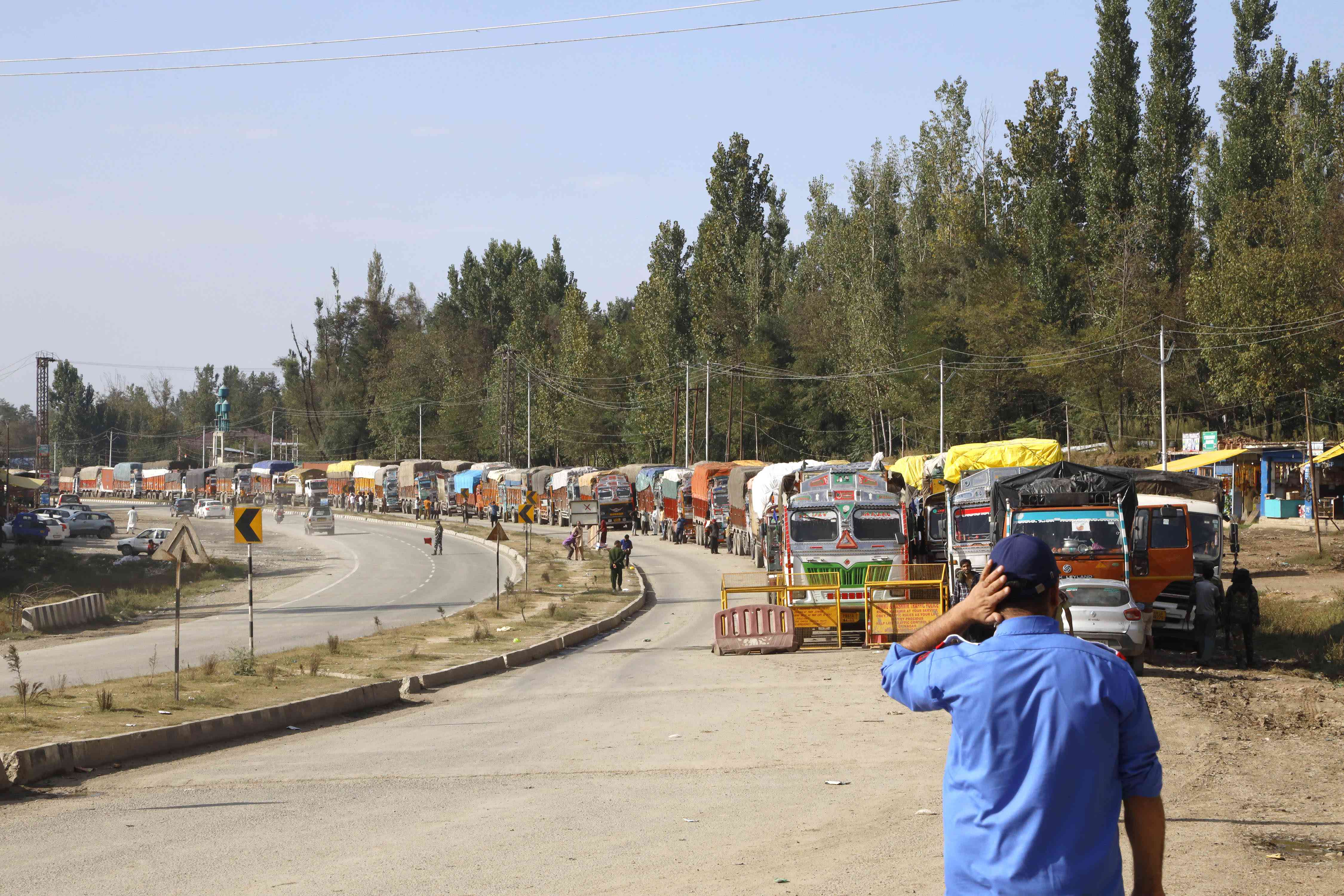
Kashmir has witnessed a bumper apple crop this year but despite that farmers have found themselves struggling to make a profit. A considerable portion of the crop rotted this year due to transportation issues after apple-laden trucks were halted on the Jammu-Srinagar highway for days on end in September and early October.

At one point in September, around 8000 trucks were stranded on the highway carrying apples worth Rs 8000 crore. Road repairs along the highway halted thousands of trucks carrying apple produce to the markets in other parts of the country. This triggered protests by apple farmers who feared that further delay would perish the produce.

The issue also took a political turn with the former Jammu and Kashmir Chief Minister and the PDP chief Mehbooba Mufti joining orchardists to protest the extended closure of the highway. She termed it an “economic terrorism.”

The apple produce touched 2.1 million metric tonnes of apple in Kashmir this year, according to a statement by the divisional commissioner Pandurang K Pole.

Other challenges

The delay in reaching markets in New Delhi and the other parts is not the only problem bedeviling Kashmiri apple. It faces multiple challenges like price crash, vagaries of weather,  lack of cold storage and the competition from imported apples, especially from cheap Iranian apples.

Already, the growing costs of pesticides and transportation have considerably reduced  the returns from exports. Till the time apple is harvested, a farmer has to spray pesticides between 10 to 15 times to save crop from scabs and other ailments. This involves a huge cost.

“The returns from the apple crop have been diminishing over the years,” said Basharat Bhat, an orchardist from Sopore, Kashmir’s one of the prominent apple towns. “Costs of spraying pesticides and transportation have gone up manifold. This has eaten into returns.”

Bhat said that over the years pesticides rates increased by almost Rs 1,000 per kilo. The pesticides save the crop from scab, mite, leaf infection, and other diseases. The price of wooden boxes in which apples are packed has also gone up to over Rs 100. Labourers who pick apples from trees charge Rs 800 per day. To top it all, the rising cost of transportation has further raised the cost for orchardists.

“The cost of a Kashmiri apple box goes up to Rs 600,” Bhat said. “And to earn a reasonable profit, a box of apple should fetch us around Rs 1000. But the import of apples from other countries has put further pressure on margins.”.

Though a bumper crop this year should have gone some way to make up the loss, the transportation hitches and consequent rotting of some portion of fruit as well as the price crash has undercut the earnings.

Imported apple

A big factor in the Apple crop’s declining returns is the price crash occasioned by the import of apples. According to the East Fruit Information and Analytics Platform, the volume of apples imported by India has doubled and exceeded 400 metric tons for the first time during 2020-21.

Kashmiri apple has in recent years also faced competition from the imported Iranian apple which growers in Kashmir allege is “illegally” imported into India.  Though Kashmir accounts for more than 75 percent of India’s total apple production, the Iranian apple has threatened to further undermine its profitability.

Last year, finance minister Nirmala Sitharaman proposed the imposition of a 35 percent Agriculture Infrastructure and Development Cess in the Union Budget on the apples. However, the cess was not levied on the domestic production of apples.

“It didn’t impact Kashmir apples or for that matter internally produced fruit in any other state,” said Bashir Ahmad Bashir, the president of the Kashmir Fruit Growers Association. “What the government did was to reduce the 50 percent customs duty on apple imports to just 15 percent and impose 35 percent cess that would be used to develop the agriculture infrastructure”.

Bashir added that in actual terms there has been “no increase or decrease” in customs duty on the imported apple.

“In fact, we would have been happy if the cess on imported apples would have been in addition to the earlier 50 percent customs duty. This would have made our apple cheaper and increased its demand,” he said.

So, the government move hasn’t translated into any tangible benefit for Kashmiri apple.

Horticulture which is spread across 1.87 lakh acres of land employs more than three million people in Kashmir, earning over Rs 10,000 crore for the region. Over the two years following the revocation of Article 370, the crop suffered the heaviest loss. The security lockdown and communication blockade and later the successive Covid-19 lockdowns and the killings of the traders and labourers associated with the apple industry dealt a body blow to it.

Export prospects?

The growers are hopeful that things will improve going forward. For the first time, Kashmir apples are being exported to Dubai. In 2020,  Dubai’s Lulu Group started importing apples from Kashmir and also plans to set up a fruit processing centre in Kashmir.

The UAE-based group, which runs more than 180 hypermarkets and shopping malls across the Middle East, has started importing apples from Kashmir every week from Kashmir.  In 2020, around 200 tonnes of apples were exported.

The group will take the Kashmir apple to Middle East countries like UAE, Bahrain, Saudi Arabia, Qatar, Kuwait and Oman. Apart from apples, the Lulu group is also interested in importing saffron, basmati rice, cherries and pulses from Kashmir.

In October 2020, a team of five members of the company spent two days in Kashmir to discuss an investment proposal. The team met representatives of apple and saffron associations, and visited apple orchards and cold stores at Lassipora industrial estate in south Kashmir’s Pulwama district.

The Chief Executive Officer of Fruit Master Agro Fresh Pvt Ltd, Izhan Javed told Tehelka then that his company has signed a Memorandum of understanding with Lulu Group for supply of apples. He said they have been dispatching the consignments of apples to Dubai.

“We hope with the situation in Kashmir improving, things will look up for the apple industry,” said Fayaz Ahmad Malik, president of the Fruit Growers Association of Sopore Mandi. “We also expect the government to proactively look into the issues of the apple industry and remove bottlenecks to ensure a smooth trade.”

The local media has also sought the role of the government in saving the all-important industry.

“It is incumbent on the government to intervene and ensure that the trucks are given a smooth passage. In fact, the government needs to do more to ensure that the apples get a fair price as lakhs of families depend on the trade for their livelihood,” read an editorial in a local daily. “And to that end, hassle-free transportation is critical and the government needs to step in to ensure that everything is done to save the apple trade. The government needs to ensure not only a safe environment and safe passage for the trade but also an effort not to politicize the sector.”


MOST POPULAR

HOT NEWS