Covid: No need to press the panic button and hurt the economy

India’s Covid caseload per million people was 0.13 on December 27 (total 3421 cases). In view of the fact that majority of the population in India have already been vaccinated in India and have developed hybrid immunity, there is no reason to overreact, writes Anil Manocha

 For India, It would be economically damaging to overreact. The nature of a pandemic always calls for caution but not getting panicked. Measures such as mock drill, masking mandates and enhanced vaccination drive should be the priority. This approach will keep infections under check without derailing economic growth. Days after it faced nationwide anti-government protests against its stringent zero-Covid policy, China’s National Health Commission announced that Covid-19 management will be downgraded from Class A to B from next month. It will fall in the same category as less-severe diseases such as dengue fever. China will cancel inbound quarantine for international arrivals starting from January 8, 2023, it said. Officials argue that the Omicron variant was not as lethal as the Delta strain, which caused massive casualties all over the world.

China is the last major economy in the world to move to “living with Covid” after three years of lockdowns, closed borders and mandatory quarantine for Covid cases and contacts. The so-called zero-Covid approach battered the economy and made citizens weary of restrictions and repeated tests. Resentment against the policy exploded into rare public protests. Authorities said they would also “optimise” visa arrangements for foreigners wishing to come to China for work and study, as well as family visits and reunions. Chinese citizens wishing to apply for passports to travel abroad will also be able to do so from 8 January, the immigration authority announced. Prior to the pandemic, the number of outbound tourists from China stood at 155 million in 2019, this number dropped to 20 million in 2020.

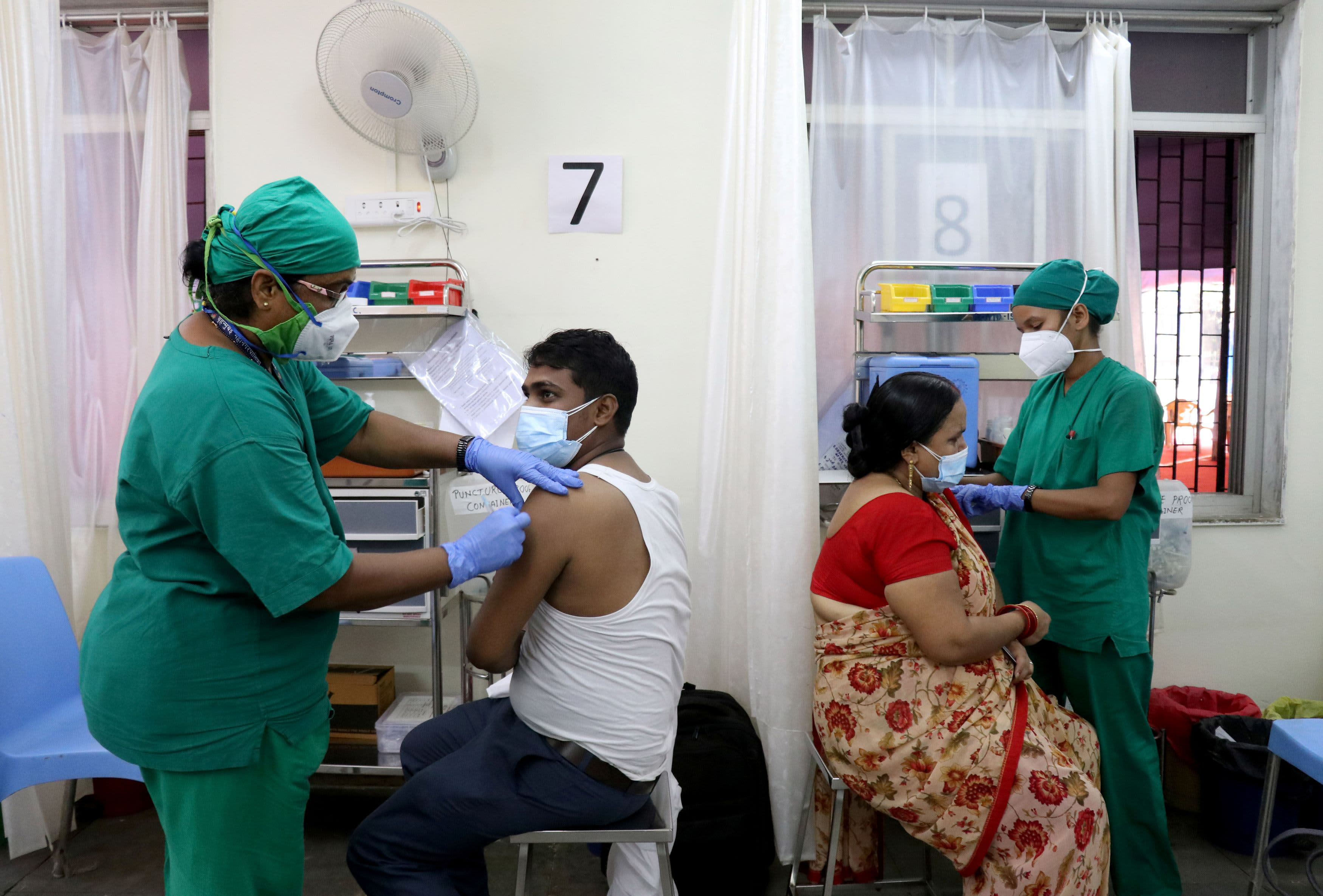
India’s healthcare system has gone through a mock drill to cope with a scenario where Covid cases surge.  Hospitals across the country held “drills” to assess capacities in case there is a surge in Covid-19 cases. There are, however, no signs of any spike in India based on case numbers, which have dropped consistently from a little under 300 in the week leading to December 1 to 173 in the seven days prior to December 26.

Dr Ashok Seth, chairman, Fortis Escorts Heart Institute, in Delhi said, “The mock drill is important to know how well our system is functioning on ground. How ready we are. Experts have also pointed out the need to focus on vaccination as part of being alert. The government last week included a new vaccine, a nasal delivery dose known as iNCOVACC, adding to its arsenal of tools to fight the pandemic and hoping that the new dose helps rid the hesitancy. As of December 28, India recorded fewer than 500 cases a day on average for four weeks now.

Dr Arvind Deshmukh of Microbiologist Society Of India observed that there is no need for a panic reaction. The only solution is vaccination.  He said that a corona outbreak is re-emerging in China, Korea, Japan and a few other countries. People are afraid due to a new wave of corona spread through the mutated variant called BF7 that arose from Omicron, At present it seems that it is a mild variant and does not cause hospitalization but other countries are worried and taking utmost care. In India, the government has started sequencing the corona variant, as well as doing PCR of travellers coming from these countries at the airports.

Many temple trusts as well as district collectors are making masks compulsory. According to the opinion of Dr Deshmukh, making a mask compulsory is creating fear among the people. No person can put the mask on for 8 continuous hours on the nose. “It has become a show business but masks will never prevent spread of the disease. We are not using masks for preventing measles, mumps or any other respiratory disease. Secondly, checking travellers by PCR test cannot prevent the entry of virus in our country because citizens of China can go to Dubai and enter India or can go to Sri Lanka and enter into India, So making masks compulsory and checking travelers by PCR test cannot prevent the entry of virus in India.  Masks can be used by old and co-morbid people to protect themselves”.

He mentioned one more thing here that many times people may require doses of more than one vaccine for example a person above 65 years old may require pneumonia vaccine, flu vaccine and corona vaccine. Naturally there is a question in his mind whether I can take three vaccines at a time. So I can say that he or she can take more than one vaccine doses at a time but only with a gap of one week the reason behind it is that by injecting vaccine sometimes you get reactions like fever, swelling and pains. So it is better to give some time to subside the symptoms and then take another vaccine.

As per his opinion,  only vaccination can prevent the 4th wave of Covid 19 because it is scientifically proven that immunity of corona vaccine lasts only for 9 months to 1 year. Now it is the time to have one more dose of vaccine.  He urged the government to make doses of vaccine available and people should take one more dose of vaccine which will protect us.  In history we will find that all epidemics and pandemics are controlled only by vaccines. Corona will persist on the earth for a long time and there is a need to increase our immunity. Of course we got immunity from natural infections also. But this immunity lasts only for 1 year so it is the time again to take one more dose of corona vaccine and  relax. He suggested:

  1. Mask compulsion should stop. Suggest it only for old and co-morbid people.
  2. Gathering and travelling should not be stopped.
  3. Not necessary to establish Task force again
  4. Stop random testing of travellers on air ports. Only suspected patients should be tested.
  5. Quarantine measures should be stopped.
  6. Take one dose of vaccine every year.


Three expulsions leave Azad’s two-month old party floundering

The success of Rahul Gandhi’s padyatra and the grand old party’s good showing in the recent Assembly elections seems to have sparked a rethink among the DAP leaders who had thrown their weight behind Azad after he decided to part ways with the Congress, reports Riyaz Wani

Almost two months after former Congress leader Ghulam Nabi Azad formed his own party in Jammu and Kashmir, he is finding it difficult to keep the flock together. On December 22, Azad expelled three senior leaders for anti-party activities, with Tara Chand, former J&K Deputy Chief Minister, among them. Other two are Dr Manohar Lal and Balwan Singh.

Tara Chand was considered a confidant of Azad and he was the first senior Congress leader who had announced his support to Azad when he floated his party. Chand is reportedly returning to the Congress and tipped to join Rahul Gandhi’s padyatra when it reaches the union territory.

Soon after being expelled, Chand alleged that Azad’s new party is “dividing secular votes” in Jammu and Kashmir.

There are rumours that the other Congress leaders who had joined Democratic Azad Party are also deserting. Around 50 Pradesh Congress Committee members had left the Congress to join Azad. If this happens, it will unravel the fledgling party which was shaping up to be a viable opponent to the BJP in the region.  And this could leave Azad crippled as a leader striking out on his own.

Analysts see the rethink among the DAP leaders as the outcome of some rejuvenation in the Congress party brought about by Gandhi’s padyatra. This is believed to have enthused the party’s rank and file across the country, including in the union territory. Besides, Congress good showing  in the recent Assembly elections has also offered some hope, albeit, it was overshadowed by the BJP’s landslide victory in Gujarat.

Where does Azad go from here? There are no easy answers. With the centre apparently reluctant to hold Assembly elections in the UT in the near future, it will be difficult for the former veteran Congress leader to keep his party together. More so, if they sense that the DAP is generating less than expected public response.

The DAP has still senior leaders such as Taj Mohiuddin, Ghulam Mohammad Saroori,  Pirzada Mohammad Sayeed, and the like in its ranks.  This is expected to enable the DAP to make deep inroads into the constituencies of the other parties, particularly the Muslim vote bank in the Jammu division which may or may not go to the advantage of the BJP in the future Assembly election whenever these are held.

However, it is too early to say that Azad’s loss of three senior leaders will be a gain for the Congress, albeit Tara Chand can boast of some following in the Jammu region. It is also true that sans Azad, the Congress has been left without any identifiable support base. More so, in Jammu region where Azad’s following straddles the Hindu-Muslim divide.

Let alone not being charismatic, Congress’s new J&K president Viqar Rasool is known to be a political lightweight. He isn’t a mass leader unlike some of the leaders in the regional parties such as the National Conference and the PDP. Nor is his predecessor Ghulam Ahmad Mir or anyone else.

This has hobbled the party in the union territory. Making things worse, Congress in the UT has no engaging political narrative to draw support from the public. Its position on the revocation of Article 370 remains ambiguous. It supports the revocation of Article 370 but not the manner of doing so, something that has alienated its followers in Kashmir.  It has also singularly failed to put the spotlight on the BJP’s failures in the UT.

But so hasn’t Azad’s party. After some show of strength around the time of the launch of the DAP, Azad has failed to maintain the political momentum to keep his support base energised. Nor has he spelt out any coherent political narrative. For example, his stance on Article  370 also remains vague.

“Azad needs to articulate a credible and exciting politics to rally people around his party,” said Naseer Ahmad, a columnist. “Without that, he will become synonymous with Congress and meet its fate.”

AAP’s entry

Bolstered by its landslide victory in Punjab, Aam Aadmi Party is making forays in other states of the country in its bid to become a national party. Jammu and Kashmir is one of them. It has already qualified for the status of a national party by winning six seats in Gujarat. And over the last year, the party has been trying to expand its footprint in the union territory, both in Kashmir Valley and the Jammu region. What is more, its message is resonating among some sections of people, more in Jammu than in Kashmir.

The party has sought to rally people around the issues of youth, education, health, power and water.

Earlier also the party has tried to set up a base in the then state of J&K but didn’t get much traction. The party later gave up on the project. But this time it has become serious with the Punjab victory putting wind in its sails. The party says it wants fresh faces in the union territory to carry its political message.

The emergence of the AAP as a major political force in the country with its triumph in Punjab and a reasonable performance in Gujarat has created a buzz. Though the party led by Delhi Chief Minister Arvind Kejriwal has still a long way to go before it could emerge as a credible rival to the BJP, the party seems to offer a sort of new politics that has been effective against that of the saffron party.

But in Kashmir, politics has never been about sadak, paani and bijli. The ideology and the position on the lingering conflict in the region is also important. And after August 2019, a party’s stance on the revocation of Article 370 impacts its electoral chances in the union territory.

In Kashmir Valley also, the AAP is likely to be hamstrung by its position on the revocation of Article 370 in August 2019. Kejriwal’s party was the first to support withdrawal of the constitutional position in Parliament which was something that shocked people in Kashmir who earlier looked up to his politics with admiration. Kejriwal didn’t even oppose divesting J&K of statehood and downgrading it into two union territories. This is so even when he has been seeking statehood for Delhi.

There is, however, a chance that the AAP’s politics will appeal to the voters in Jammu who over the last two years have developed some degree of disaffection with the BJP’s policies. While the Hindu majority province has welcomed the erasure of J&K autonomy, the people are deeply apprehensive about the loss of land and businesses to outsiders who are now eligible for a domicile status.  Should the AAP succeed in building a significant presence for itself in the run up to the anticipated assembly polls, it won’t be a good news for the BJP which is hopeful of sweeping the province to retain its political dominance in the UT.

What will eventually happen in the assembly polls in the UT can be anybody’s guess.  The political scene in J&K has already become very crowded with the advent of the DAP,  Apni Party of industrialist-turned-businessman Altaf Bukhari and the entry of the AAP.  The fate of Azad’s party following the expulsion of three key leaders would certainly be a distinct political factor in Jammu division.

Don’t let your aspirations push your kids to the brink

The suicide of three students within a span of 12 hours at Kota in Rajasthan has again brought into focus the plight of young adults who are labouring under the load of other people’s expectations

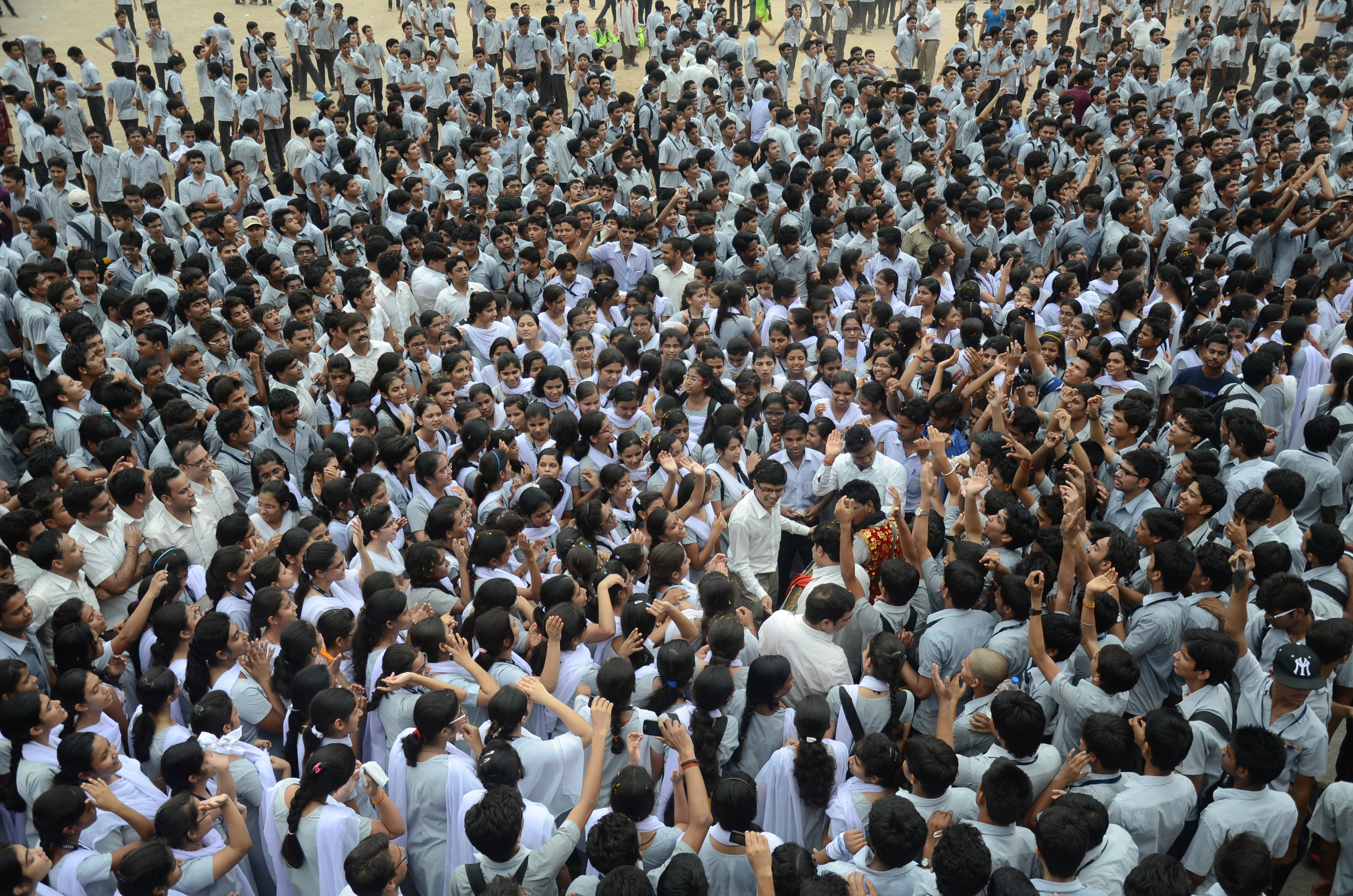
Recently, the suicide of three students within a span of 12 hours in Kota in Rajasthan made the headlines in the media. The three students, all boys, aged between 16 to 18 years, chose to kill themselves because they could not cope with the pressure they were under in a highly competitive environment where the emphasis was on succeeding and not enough care is taken to ensure the students’ happiness and emotional strength. The reason why their suicide made the news was because their deaths came within hours of each other. Otherwise if the numbers are anything to go by, there have been 15 deaths in the coaching town till now. And who knows, by the time this article is published there would have been a few more unsung, unnoticed deaths in Kota by a few more innocent souls unable to shoulder the burden of their parents’ unreasonable expectations or unable to cope with the crashing of their own aspirations and dreams.

And now we are inching toward the dreaded Board exams for students of Class 10 and 12 that are slated to start from mid-February. All around me I see worried parents with grim faces denying themselves all social contact because their ward will be sitting for the Board exams soon. The children who are preparing for the Boards are mostly slinking about with slumped shoulders as they carry a huge burden of responsibility of making a career for themselves and the unreasonable expectations of their parents on their frail shoulders.

While the bright ones are whipping themselves to perform even better and achieve that magical 100 per cent, the mid-level performers are doing all they can to improve their performance. And the below average student and their parents are virtually going through hell this time of the year. Some are even suffering breakdowns and a feeling of worthlessness along the way.

Relationships between parents and children are soured, with the students feeling worthless and the parents wondering where they went wrong. In some cases, the parents are arguing and blaming each other and nerves are frayed.

In schools, the teachers of higher classes are fretting over what the results will be this time for the boards. Tuition teachers are also under immense pressure to ensure their wards come out with flying colours. All this worrying and nail biting by the school managements, teachers and those giving tuitions is not because anyone cares about the children and their future or mental and emotional health. It’s because in our country education has become a business worth crores and how much money schools and tuition teachers can squeeze out of parents depends on how the children perform. The Guru-Shishya tradition that we Indians have always been so proud of has been lost to materialistic aspirations of schools, coaching institutions and private tutors.

Sadly, in all this, the parents’ expectations, the schools’ ambitions, avarice and the coaching institutions and tuition teacher’s lust for lucre, and deciding the worth of our students by the grades and the higher educational institutions they get in, we are killing our children.

As parents and teachers it is our first and foremost duty to look after the mental and emotional well-being of our children. It’s our duty to bring up well-adjusted, secure and happy humans who have good moral values and a humane nature who are also capable of making a reasonably successful living for themselves.

But sadly, what we really bring up is burdened and disturbed young adults who are labouring under the load of other people’s expectations, ambitions and worst of all the fear of “what will people say if you don’t take science and maths and go into humanities” syndrome that most Indian parents are afflicted with.

In all this, no one cares to ask the child what s/he wants. What their dreams and aspirations are. Or if they are even able to cope with the burden of education that we cast on them or in some cases they themselves take on, in order to fulfil their overambitious dreams.

It’s no wonder then that the mental and emotional health of our children is suffering. Depression, anxiety, eating disorders, sleep disorders, behavioural issues, aggressive behaviour, substance abuse are commonly reported conditions in adolescents and young adults in India. Every parent’s worst nightmare i.e. death by suicide is the third leading cause of death among young adults and is a significant problem among high school and college students in the country.

Unfortunately for our student population, mental health remains a low priority with parents and teachers alike. Hence, it remains undiagnosed and even when parents become aware that their children are showing signs of extreme mental stress and worrying behavioural changes, they are reluctant to seek professional help for their wards primarily due to the stigma attached to it or lack of proper information.

In fact, an eye-opening study by the renowned National Institute of Mental Health and Neurosciences (NIMHANS) has revealed that stigma inhibits nearly 80 per cent of those afflicted from receiving therapy themselves or getting treatment for their loved ones, despite facing mental health issues for over 12 months. This alone is an alarming statistic, given the social and economic impact of poor mental health and the rise in cases of crimes owing to lower thresholds of tolerance and an increasing number of people suffering from hair-trigger tempers.

Sometimes it is the parents’ own inability to come to terms with the fact that their child is facing mental health issues that prevents them from seeking the help of professionals to counsel the children. Even today most parents in India believe that “yeh stress-wess sab nakhra hai. Ek thappad maro sab akal thikane aa jayegi. Hamare zamane mein toh yeh sab nahi hota tha. (This talk about stress in children is all nonsense. One slap will fix everything. We coped with all this in our times and there was no counseling.)” This attitude is not something that is limited to the lower middle class; it is as prevalent in the upper middle class too. The super rich, too, suffer from such crippling ignorance or ego that prevents them from seeking help for their wards.

It’s no wonder that a recent Indian Council of Medical Research (ICMR) survey revealed that 12-13 per cent of students in India suffer from psychological, emotional and behavioural conditions.

Therefore, it’s vital for parents to teach their children not just to be successful but to be well-adjusted and happy individuals as well. So if in order to be able to do that you need the help of a professional counselor along the way, then so be it. There is no shame in going for therapy. In fact, the shamers should be ashamed of themselves.

Also, our focus should not be on material things but in teaching our children that even though it is important to have a career and be financially independent, creating a healthy work-life balance is vital too. Having and nurturing hobbies and interests in life is vital for emotional and mental well-being.

No one is saying that don’t push your children to do better and focus on their careers. Do motivate them, but don’t shame them if they fail. Help them to get up and try again. Remember, this present failure is just a bump on the long road of life that your child has to traverse.

Also, don’t push your dreams and aspirations on your children. Your definition of success may be your child becoming a doctor, or an actor or a famous cricketer or financial wizard, whereas your child might be inclined to becoming a teacher or social worker. Or you might want your child to be a lawyer and he might find becoming a dentist more satisfactory or becoming a chef or a veterinarian or interior designer or a deep sea diver or a car designer.

The thing is that most parents fail to realise that they have lived their life, now it’s time for the children to live their own life. They have the right to their own dreams, aspirations, passions and interests. What is good for you might not be good or satisfying for your offspring. They might have a different world view which might be starkly at variance from yours.

Just monetary success is not the measure of your worth or success, the amount of happiness and contentment you have in life matters to a very large extent. You may be the most successful person but if you are lonely, depressed or unhappy or worse DEAD, what use is all the wealth in the world to you?

Sadly, India’s ranking in the World Happiness Index has been falling each year and now we have got the 136th rank out of 146 nations. Some of the variables in the report apart from the usual per capita GDP related ones are Real Social Support, Generosity and most importantly, Freedom of Choice in One’s Life. Given that our happiness index is going south, more and more Indian schools need to focus on teaching children happiness like the “Happiness Curriculum” that is being taught in Delhi Government schools.

Else, we are destined to be a nation where 14 per cent of the young population is depressed, one in every six person suffers from mental health issues and the suicide rates of students are going up each year. Shockingly there has been a 17 per cent rise in suicide cases between 2019 and 2021 in India overall, not just in students. A 2021 UNICEF survey also found that around 14 per cent of 15 to 24-year-olds in India, or around one in seven, reported often feeling depressed or having little interest in doing things.

We have to realise that if a person is happy they will succeed in whatever they do. At the end of the day parents have to realise that the career choice of their children is here for life. Once the young person gets into a career stream s/he has to do the same thing till they retire 40 years on. So isn’t it better for our children to discover what they want to do on their own so that they choose a career stream which is of interest to them.

Extreme parental pressure to do well academically and to choose a career path that is lucrative has led to a generation that is depressed, has anxiety, low self-esteem, no contentment and mental health issues. Our children are suffering from behavioural and rage issues. Suicides among students are also increasing each year. Isn’t it time we realise that this aspirational parenting is killing our children. We must let our children dream, choose and fly. We are just here to shepherd them and provide the best care, facilities and environment to grow that we possibly can. Each child is a unique individual and not our carbon copy. So guide them along, but let them do as well as they can. Don’t let your unreasonable aspirations push your children to suicide.

Cornered, BJP may shift political narrative ahead of polls in 9 states

With the Congress relentlessly targeting the Central government on the issues of price rise and unemployment, the BJP is positioning to change the political discourse by diverting narratives in upcoming assembly polls, dubbed as a semi-final before 2024 polls, writes Mudit Mathur

At a time when the nation is facing its biggest problems of growing price rise and unprecedented unemployment with the sharp decline of production in Micro, Small & Medium Enterprises (MSME) and real estate sectors, the Bharatiya Janata Party (BJP) government is positioning to change the political discourse by diverting narratives in upcoming crucial elections of nine state assemblies in 2023 as a semi-finals to 2024 general parliamentary elections. The logjam continued in the prematurely concluded winter session of Parliament over clash between Indian and Chinese troops along the border in Arunachal Pradesh as Modi government did not concede opposition’s demand for a discussion to enable people to know truth.

Politically, the recent historic victory of Gujarat assembly elections is being depicted as overwhelming sign of Narendra Modi winning 2024 Lok Sabha elections, but his loss in Himachal Pradesh is being substantially downplayed. It is worth mentioning that both the state elections were fought with the Modi being the BJP’s mascot and double engine plank for development with religious overtones but Gandhi scion Priyanka Vadra Gandhi tirelessly worked reversing his fortunes. In Gujarat, Aam Admi Party damaged Congress prospects paving the way for saffron party to break the record of CPI (M), which ruled for record consecutive terms in West Bengal.

Now with the emerging trends suggesting that leadership of Narendra Modi is going to be under crucial challenge within and outside his party, and thus, upcoming assembly elections in 2023 in the nine states including Rajasthan, Madhya Pradesh, Karnataka, Chhattisgarh, Telangana, Tripura, Meghalaya, Nagaland and Mizoram may prove to be a litmus test for him. The government is likely to conduct the assembly elections in Jammu and Kashmir next year subject to availability of security forces and strengthening its organisational base. The elections results of these ten states in 2023 will surely indicate which party may have edge in the 2024 Lok Sabha elections.

On diplomatic front, the Tawang face off in Arunachal Pradesh remained one of the most contentious reasons for frequent disruptions in the prematurely concluded Parliament session on 23rd December which was scheduled to be held till 29th December, 2022. The opposition placed several notices in Parliament on the widespread issues of public importance including the LAC clash in Arunachal Pradesh, uncontrolled inflation, unemployment, misuse of investigation agencies etc. The national security breach was reported due to aggression of Chinese troops,who attempted to “unilaterally change the status quo” along the Line of Actual Control (LAC) in Arunachal Pradesh.

Ruckus was also caused in both houses – Lok Sabha and Rajya Sabha – over Congress leader Ajay Rai’s sarcastic remarks on Union minister Smriti Irani. Rai had accused the BJP leader of visiting her Lok Sabha constituency, Amethi, only to show her ‘latkas’ and ‘jhatkas’–an oblique reference to her dramatic appearance. In a retaliation, Irani challenged Congress MP Rahul Gandhi to show courage to contest from Amethi. Rahul lost 2019 general elections against her. That is how precious time of parliament stood spoiled discussing non-issues.

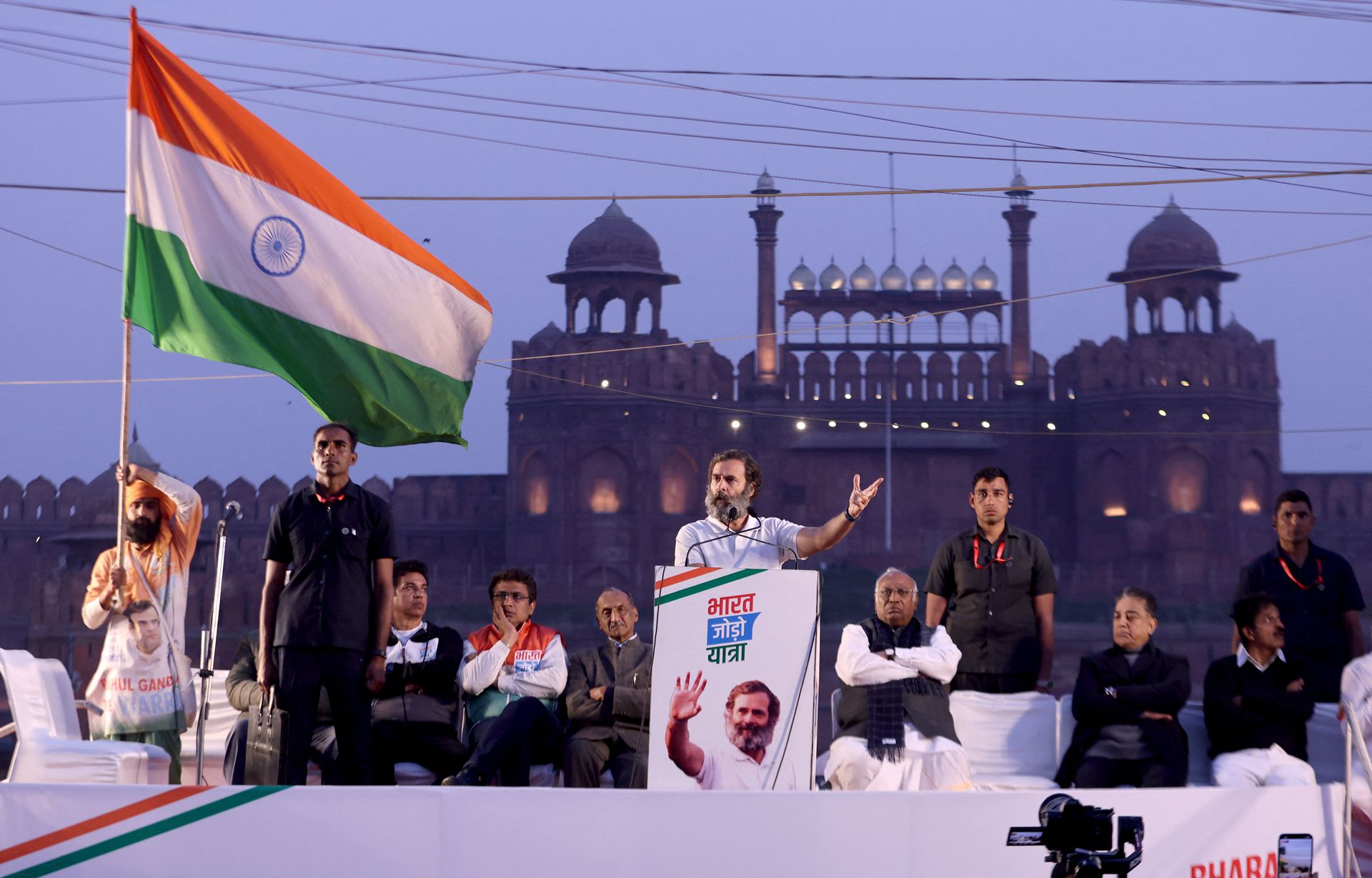
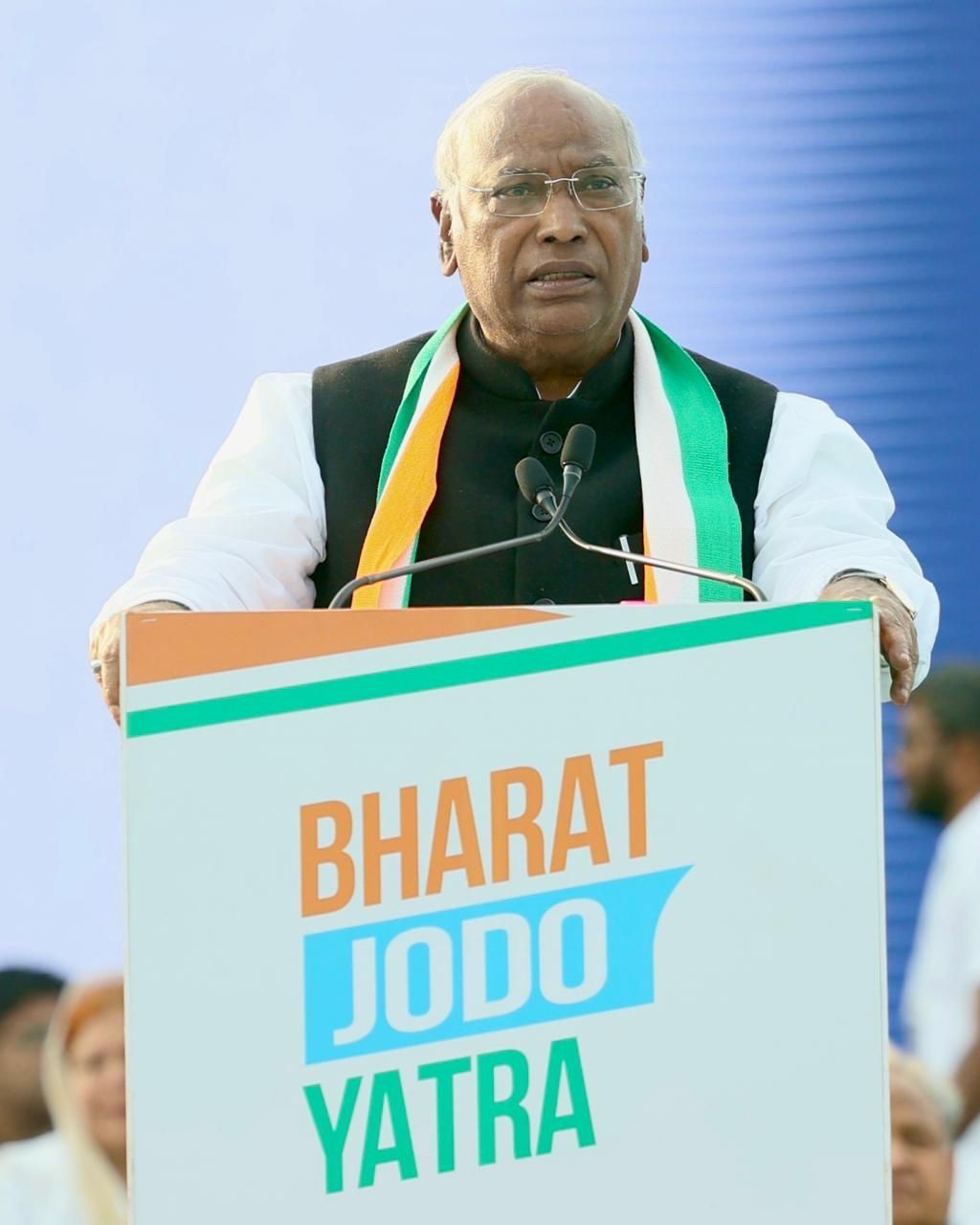
Leader of Opposition Mallikarjun Kharge’s ‘dog’ comment on the saffron camp also drew angry protests aimed at him in both Houses of Parliament. At a rally in Alwar, Rajasthan during the Congress party’s ongoing ‘Bharat Jodo Yatra’, Kharge said that,“Congress party stood for the national movement to secure independence of the nation but not even a dog of the BJP sacrificed its live for it.” The Congress president, however, defended himself saying that his statements during the “Yatra” were made outside Parliament, and thus, need not be discussed here.
As the Opposition tried to corner the Union government over Sino-Indian clash in Arunachal Pradesh, Union Home Minister Amit Shah,with all his diverting skills, hit back at Congress outside the Parliament House and raised the issue of Chinese donations to Rajiv Gandhi Foundation (RGF). Shah said the RGF had got Rs 1.35 crore from the Chinese embassy and its registration was cancelled as this was not according to FCRA rules. Earlier in October, the Union government cancelled the licence of RGF under Foreign Contribution (Regulations) Act (FCRA).

Home Minister’s attack provoked chairman of the Congress’s media department, Pawan Khera, who in a press conference ridiculed the Bharatiya Janata Party (BJP) for its “silence” on the issue of Chinese incursions in India, alleging links between policy foundations operating in the country and their ostensible links with the BJP and the Rashtriya Swayamsewak Sangh (RSS). The son of external affairs minister, S Jaishankar, Dhruva Jaishankar,was made the target of the party’s counter salvo. The retaliatory attack came in wake ofUnion Home Minister Amit Shah comments.

“The Observer Research Foundation (ORF), where Jaishankar’s son, Dhruva Jaishankar, works, has received funding from the Chinese Embassy in India.The foundation, whose unit in USA is headed by son of the Foreign Minister, had received funding from the Chinese Embassy, not once, not twice, but three times. This has happened recently,” Khera added, questioning– “Why was this funding received? What is the reason? What is the reason for which the government of India repeatedly maintains silence over China?” Dhruva Jaishankar joined ORF in 2019, as director of its US initiative, soon after his father was appointed foreign minister.

Khera also trained his guns on another policy research organisation, the India Foundation.“The India Foundation has a lot of people associated from the Sangh Parivar. Why does the foundation visit China so often? What relationship does it have with China?”, Khera asked.The India Foundation is a similar policy research centre that “focuses on the issues, challenges and opportunities of the Indian polity with which RSS ideologue and BJP functionary Ram Madhav and others closely associated with it.”

BJP rose to power in 2014 on the poll plank of prise rise, providing two crores employment every year and bring black money stashed off shores but it failed to deliver on all these counts after having two terms of majority governance coming to a fag end. The major decisions of demonetisation and GST followed with Covid-19 pandemic proved fatal to overall economic health of the nation.

The BJP had suffered a setback in the 2018 assembly elections of Madhya Pradesh and Karnataka but presently it manoeuvred to attain power in both the states by engineering defection in Congress party. In Madhya Pradesh in 2018, the Congress ousted the BJP from power and Kamal Nath became the Chief Minister, but the Congress could not handle its mandate carefully and a group of Congress MLAs led by Jyotiraditya Scindia broke away pulling down the government. After this, Shivraj Singh Chouhan of BJP again became the Chief Minister of the state.

There has been a direct fight between the BJP and the Congress in Rajasthan, Chhattisgarh and Madhya Pradesh. The recent “Bharat Jodo Yatra” of Congress leader Rahul Gandhi drew large crowds in these states on the streets as well as in public rallies which were organised with an aim to change the political discourse of alleged communally divisive polity and flagging the saffron ideology, responsible for demolishing constitutional institutions and blending religion into politics.

Addressing a public meeting in Faridabad on the last day of Bharat Jodo Yatra in Haryana in the first phase, Rahul Gandhi alleged that Prime Minister Narendra Modi spent thousands of crores in the past few years to defame me and the Congress party, but within a month he had changed their narrative and “burnt” all that expenditure.” “Modi ji spent thousands of crores to defame me and Congress in the last 6-7 or 8 years. They spread several lies about me, but I kept quiet and did not utter a word in all these years. “Aur phir ek mahine mein, inke hazaron crore rupayon ko jala diya meine… because the country saw that this person only has love for the nation, for the flag, for farmers, labourers… in his heart.”

“…This is not Modi’s government…Do not have this misunderstanding. This is the government of Adani and Ambani…Just like the media is controlled…Pradhan Mantri ke peeche bhi lagaam hai,” he added.

Political observers analysing the impact of the yatra feel that Rahul during his more than 3000-kilometre long yatra across the southern, western and cow belt states virtually washed away narratives with regard to his propagated trolled image of a “Pappu” (childish) and his image too a turn for better of a matured and serious politician having grass root understanding, deep foresight with a clean heart.” That’s why uneasy calm is quite visible in saffron camps.

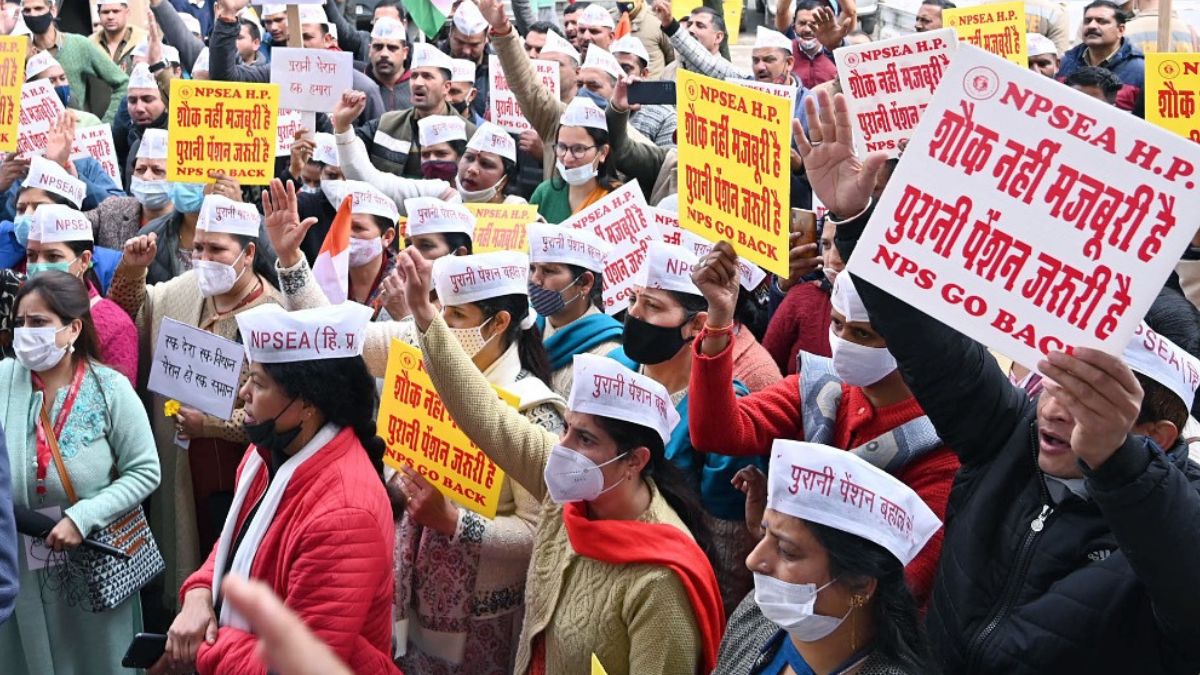
The Congress government fell in Madhya Pradesh where its chief minister Kamal Nath failed to sniff conspiracy to topple his government whereas Rajasthan and Chhattisgarh chief ministers Ashok Gehlot and Bhupesh Baghel outsmarted to survive such moves. The Congress party has implemented much contentious Old Pension Scheme in both the states keeping its electoral promises affecting a large number of people. Farm loans have been waived off, health care facilities have also been implemented, and vacancies are being notified for employment. Himanchal Pradesh victory also happened because of the promise to revive the Old Pension Scheme struck a chord with the youth and employees.

Chhattisgarh Chief Minister Bhupesh Baghel, had recently urged the Centre to refund over Rs 17,240 crore of state government employees enrolled under the New Pension Scheme (NPS). Baghel said the state government has restored the old pension scheme in Chhattisgarh to secure the future of government employees and their families. The money is deposited with National Securities Depository Limited (NSDL) till March 31 should be returned so that it can be put in the General Provident Fund of the employees.

Hitting out at Prime Minister Narendra Modi in Rajasthan during his Bharat Jodo Yatra, Rahul said the PM promised twice during elections in Rajasthan that the eastern Rajasthan canal project (ERCP) will be supported by the Centre and will be given national project status but that did not happen. Instead, the government is creating obstacle towards the work of state government which has allocated Rs 9,500 crore for the project.

Addressing a corner meeting at Kustala village in Sawai Madhopur, he said that senior Congress leaders including Gehlot, state party chief Govind Singh and former deputy chief minister Sachin Pilot are walking with him in this yatra and “…they are listening to the people.” He added, “I am hopeful that our government in the coming time will take action on what the people are saying.”

Rahul said that loans of Rs 14,000 crore of 22 lakh farmers have been waived off and the electricity bills of 8 lakh farmers are zero. Besides, people are getting health insurance of Rs 10 lakh under Congress’s “Chiranjeevi health insurance scheme’. Old pension scheme has been  revived for state employees and the urban employment guarantee scheme has been introduced, he said.

“The Bharatiya Janata Party (BJP) is trying to spread hatred in the country which will harm the nation. People from different castes and religions are participating in the yatra and they help and support each other.” he remarked.

In Karnataka, no political party got a majority in the 2018 assembly elections after the elections threw up a hung assembly. The Governor sworn in BS Yediyurappa as Chief Minister but he resigned after not being able to muster the majority. After this, the Congress and JDS together formed the government in the state. Again, as political turmoil cropped up, the BJP formed the government in the state in 2019 and again made B. S. Yediyurappa the Chief Minister, but in view of the strategy for the assembly elections to be held in 2023, four times chief minister B. S. Yediyurappa was replaced by Basavaraj Bommai to overcome anti-incumbency sentiments.

Telangana is ruled by Telangana Rashtra Samithi (TRS) and headed by K. Chandrasekhar Rao as Chief Minister who is trying to form a larger front with other opposition parties to defeat the BJP in the 2024 Lok Sabha elections. The BJP is trying to defeat him in his own bastion, Telangana in 2023, but there are no doubts that there will be a triangular contest between TRS, Congress and BJP.

Among the North-Eastern states, elections to the Legislative Assemblies are to be held in 2023 in Tripura, Meghalaya, Nagaland and Mizoram. Tripura is currently ruled by the BJP and as part of its election strategy to overcome anti-incumbency sentiment like Gujarat, the BJP has changed the face of the Chief Minister in Tripura as well. In Meghalaya and Nagaland, the BJP-backed government is in power, while in Mizoram, the Mizo National Front government is in power.

Centre for Monitoring Indian Economy in its latest report revealed that India’s unemployment rate inched up to 8 per cent in November 2022 from 7.8 per cent in October. It was 7 per cent a year ago, in November 2021. Over the past 12 months, the unemployment rate has averaged at about 7.4 per cent within a 6.4 – 8.3 per cent range. The 8 per cent unemployment rate in November is therefore on the higher side of the recent levels of the unemployment rate which is not reflecting recovery sign of unemployment scenario of the country.

The nine states are heading for assembly elections in 2023 and toughest challenge to win semi-final is before prime minister Narendra Modi, as his personality cult has overshadowed all other leaders of the party but it may result in tough resistance against him within his party if his magic wanes. His double engine poll plank for development of states may not attract people because of growing unemployment and price rise. The only strategy to galvanise support is obviously playing religious card in the name of Ram Temple in Ayodhya, whose construction is in full swing, and go for pro-poor welfare measures creating beneficiary class with reintroduction of free food grain supply etc. It will be interesting to see how far “Barat Jodo Yatra” could dent his overambitious plans for next term.


Why India spurned Zelenskyy’s plea to mediate Ukraine peace

The peace proposal spelt out by Zelenskyy during his telephonic talk with Modi on December 26 doesn’t find favour with India as Ukraine’s olive branch lacks full commitments for peaceful resolution to the conflict

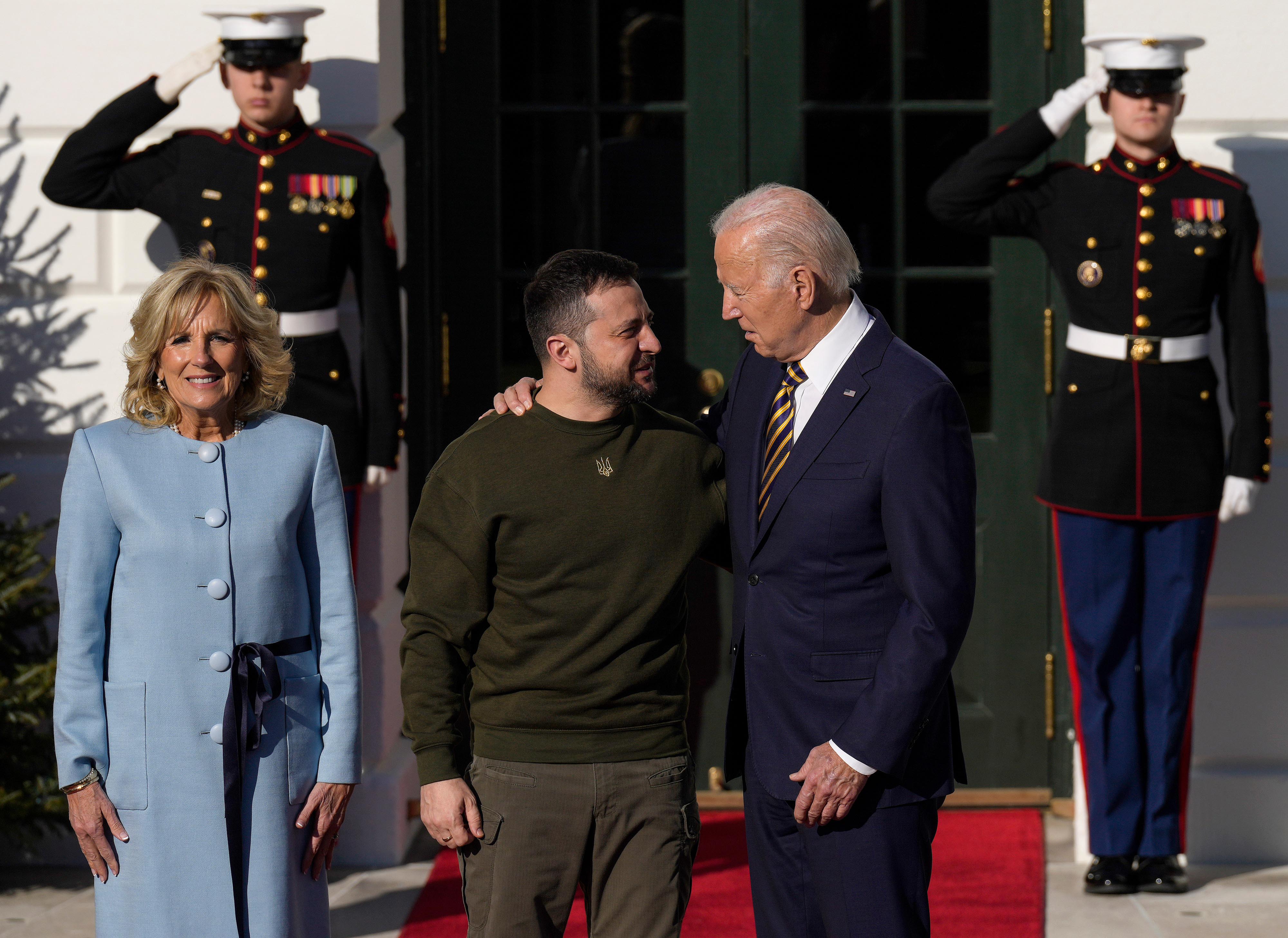
The peace overtures from the Ukrainian President, Zelenskyy, are being considered inadequate in New Delhi. He spoke to the Indian PM, Narendra Modi, on December 26 seeking his initiative, if not intervention, for restoring peace for ending the 10-month old conflict between Ukraine and its estranged neighbour, Russia. The reluctance of India can be traced to the peace proposal spelt out by Ukraine following deep consultations between Zelenskyy and his mentors in the White House. His 10-point peace proposals were first leaked in the Western press, later in some amended form were spelt out during the G-20 summit held in November at Bali in Indonesia, and again repeated recently, when he had telephonic conversation with Modi.

The terms of the document are unlikely to be accepted by the Russians, thus the peace remains elusive even with the dawn of 2023.

Modi has reiterated that the cessation of hostilities must end immediately, but the mandarins at the South Block, the headquarters of India’s foreign ministry, are cautious while taking any substantial diplomatic initiative for peace in this unnecessary conflict. With the Russians promptly rejecting the proposal, the possibility of any early peace in the region continues to be elusive.

G-20 and Peace

India is cautious that during her leadership of the G-20 during 2023, the organization should genuinely work for peace and prosperity. She has communicated to the membership that India is averse to the use of the organization as a platform for maligning Russia. It is believed that she expects that the major European powers, both UK and Germany, must seek the clearance from the White House before asking her to embark upon for a peace offensive.

Among India’s policy makers, there is an apprehension that instead of using India’s goodwill among the G-20, Zelenskyy might just use this forum for ‘maligning’ Russia; and it could be a good strategy for obtaining more funds and weapons from the developed western powers, but it might not be able to usher in peace in the Eastern European conflict.

Unless, Ukraine immediately agrees for ceasefire, it’s peace proposal will not lead to any peace process, but may intensify blame game in this ongoing fratricide, and it may also not help in camouflaging the world opinion. For the most of the strategic affairs specialists, the Russia-Ukraine War is just a ‘proxy war’ between America and Russia.

Seeking Putin’s Surrender

For many the ‘peace proposal’ is an attempt to get ‘signed surrender documents’ from the Russian President, Vladimir Putin. In spite of the claims of the Western media claiming the war is lost for the Russians, it appears that the Russians are being inspired by Tolstoy’s observation that  “the strongest of all warriors are those who adhere to the two key elements: Time and Patience.” The Ukrainian friends in NATO are facing bitter winters, that too without Russian gas. It is being asked that how long they would be trumpeting the small successes of the Ukrainian forces though they have suffered huge losses in the Kharkiv region and a substantial part of Kherson.

The peace deal offered to Russia resembles an ultimatum. In spite of the liberal flow of armaments and funds from the West, there is the ‘winter of discontent’ looming in Europe. It is also being stressed that the Russians have lost the stomach for the war, but it is difficult to accept it. Earlier, the peace proposal, which has reportedly been drawn up by some think tanks of western countries, especially the USA, could not initiate any meaningful negotiations for peace. Meanwhile, President Joe Biden’s security spokesman, John Kirby’s adverse comment against the Russian President, Vladimir Putin, does not appear to be encouraging for any peace initiative. Kirby’s scepticism about end of the war was reaffirmed, when he stated, “Putin has shown absolutely zero indication that he is willing to negotiate for ending the war.”

The Humiliating Dimensions

The proposed initiative for peace talks about a complete cessation of hostilities and the withdrawal of Russian troops from the Ukraine (to include Donetsk and Luhansk). The thorny question of Ukraine’s proposed entry into NATO would be postponed for next seven years. It would be taken up after this interval. A ‘security zone’ of 100-km wide would be running along the international borders of Russia, Ukraine and Belarus. It would be policed by six Western countries. Crimea will become a neutral area and the Russian navy would leave the Black Sea. This would be renegotiated after seven years. Russian speaking people and families will be given immunity from prosecution. Many strategic affairs specialists are bemused by the claim of some western experts that the peace deal is a better proposal than the Versailles or Nuremburg. It may be recalled that the Treaty of Versailles was a peace document signed at the end of World War I by the Allied and associated powers with Germany in the Palace of Versailles, France, on June 28, 1919. Earlier, the peace accord at Nuremberg in 1649 had ended the 30-year war (1618 -1648) in Europe.

It is being stated that the peace proposal needs an all inclusive document. In its present form will mean a certain defeat and humiliation for Putin. However, it goes to the credit of the Indian policy makers that they have so far successfully refused to endorse the Western media, which presumes Putin is out of chips. On the other hand, the Russians are not suffering from a lack of gas supplies. The reality is that the woes of the West, which is facing unprecedented recession perhaps for the first time after WW-II years, are compounded by economic and social unrest faced by these countries.

It appears that it could be an attempt to woo the Russian elites, who have already suffered huge financial losses due to the Western sanctions. Also, the proposal may be an escape route and immunity from prosecution at Hague, if ever the war trials begin.

Meanwhile, Putin has to all extent and purposes rejected the ‘peace deal’ with the continued bombing of Ukrainian infrastructure.  Perhaps it is intended to force a better deal; we are at a standoff with the Ukraine pushing for a continuation of the fight. At this historical juncture, the US-led western powers do not have a Henry Kissinger to resolve this conflict through diplomacy.

It may be a little embarrassing to ask Zelenskyy to shed off his past in the show business. He could be an excellent stage artist or comedian, but many Indians believe that he is being used by the Western powers, the military-industrial establishment, for serving their strategic interests against Russia. He knows how to use media or any international forum with optimum visual impact, but he is dealing with the lives of millions of people. He has to use his own strategy for peace instead of depending upon the Western media, and might find India as a strong ally for peace. PM Modi has been “strongly reiterating for an immediate cessation of hostilities, and has been asking that both sides should revert to dialogue and diplomacy to find a lasting solution”

Now, a twist in the Pappu story

The BJP is nervous because Pappu seems to be giving it a run for its money. Donning a sage-like beard, Gandhi is traversing the length and breadth of the country, touching a chord.

The word Pappu has interesting connotations.

Simply put, it means someone who is dumb. Of course the charitable would prefer substituting dumb with innocent or simple.

Nevertheless, in Bollywood and politics in that order, Pappu’s origins can be traced to the year 2007 when a comedy film Aur Pappu Paas ho gaya was released. A year later, the lyrics, Pappu can’t dance sala…broke all records.

At the political level, it was initially the Election Commission that cashed in on the Pappu terminology and generously used it to woo voters to come out and vote in a local election.

If it alternated between Pappu vote nain deta to Pappu vote dal le, to woo the electorate, the Election Commission cashed in on the Pappu terminology as never before.

Advertisement giants, too, got into the act and came up with their own Pappu versions: if Cadbury’s found it a good hook to marketing chocolates with a celebratory catchline, Pappu paas ho gaya, Maruti Suzuki used the jingle to dissuade people from buying fake parts, Maruti genuine parts lagaoge to pappu nahin kahlaoge, if you use genuine car-parts you would not be dismissed as Pappu. 

 What has however stood the test of Time, if one may use the phrase in a lighter vein, is the Pappu-Rahul Gandhi connect. It has worked like nothing ever in the recent past. At least politically.

There are different versions of whodunnit, started it all: whether it was BJP’s Amit Shah who slammed Rahul Gandhi or one of Congress’ own who referred to the Congress scion as Pappu, in a bid to praise him or else AAP’s Kumar Vishwas who took on the Gandhi heir during the 2014 elections or even godman turned rape accused, Asaram some two years earlier mocking at Rahul Gandhi at a public rally.

Irrespective, Pappu became a mock-name for Rahul Gandhi and it is one that has stuck like an indissoluble adhesive would.

The BJP, on its part, used it to the hilt to poke fun at him. That Rahul Gandhi turned the tables on the saffron party in Parliament is a different matter.

Minutes before the headline grabbing hug wherein Rahul Gandhi walked across the aisles to give a bear hug to a startled Narendra Modi, he said in Parliament: “I may be a pappu for you. But despite this, I do not hold any anger against the Prime Minister,” Gandhi had said during the no-confidence motion in the Lok Sabha.

Clearly the day belonged to Rahul Gandhi; he not only stole the limelight but had made the BJP very, very nervous. The spotlight was then on Rahul Gandhi and the bear-hug.

Four years down the line, something similar seems to be happening. The BJP is nervous yet again because Pappu seems to be giving it a run for its money.

Donning a sage-like beard, which Assam Chief Minister Himanta Biswas said made him look like Saddam Hussein, Gandhi is traversing the length and breadth of the country.

Beginning September he embarked on a walkathon from Kanyakumari to Kashmir. Spanning a distance of 3500 kilometres on foot, Gandhi and his entourage, which transformed into an enthused crowd within days, targeted to walk for 150 days.

Ostensibly the walk or the Bharat Jodo Yatra as it is christened as, was designed to flag issues plaguing the Modi government: unemployment, inflation, polarisation to name a few. However, what it has ended up in doing is rebranding Pappu as a serious, toiling and committed politician rather than one who takes a vacation at the drop of a hat.

For the uninitiated, Rahul Gandhi’s vacations have been a talking point and one that the BJP has milked politically. However, this time around it seems to be running for cover.

With the kind of attention and adulation Rahul Gandhi is getting and the media attention the walk has generated is enough to give the ruling Party sleepless nights.

Even as the BJP has publicly ridiculed Gandhi’s herculean effort, be it on including what BJP perceives as “anti-India elements” or any other, the fact remains that it is developing cold feet over the people-connect that has visibly happened through these gruelling months. And now with Gandhi headed to Kashmir with a nothing can stop this yatra resolve, the saffron Party’s nervousness has peaked.

“We will”, Gandhi told an enthused crowd, “wave our flags in Srinagar”.

That this has coincided with a spurt of Covid cases is another matter.

The Government is clearly on an overdrive. Consequently, the Union Health Minister Mansukh Mandaviya shot off a letter to Rahul Gandhi urging him to suspend the yatra “in national interest”. Mandaviya’s plea: public health emergency and to save the country from the Covid pandemic, as stated in his letter.

Quite expectedly, the Congress sprang into action alleging that the BJP is gripped with a “fear psychosis”. It was none other than Rahul Gandhi himself who took on the BJP on grounds that Corona is where the yatra is: “It’s their new idea. They wrote a letter to me asking me to suspend the Yatra as a new wave of the novel coronavirus may hit the country. All these are excuses as they are scared of India knowing the truth,” Rahul Gandhi said, adding that the BJP sees Covid where the yatra is passing through.

Gandhi is not off the mark. The yatra-Covid has gripped the BJP and it seems to be running helter-skelter not knowing how to handle Rahul Gandhi, the walkman.

Irrespective of the politics, the fact remains that Rahul Gandhi has not only come into his  own but his connect with the people, his speaking from his heart has touched a chord.

All through the 3500 kilometres spread over 150 days, Gandhi showcased himself as a human being who had chosen to walk and see for himself how things are for the people of this country; how there is dearth of love in this, to borrow his quote, market of hate.

More importantly he has dispelled the impression of his being carefree, oblivious and ignorant to what was going on in the country. Therefore the Modi-led dispensation being rattled by what is unfolding, fits in.

The Corona demon may not be threatening for now, but it sure has come handy for the BJP to use as a red flag to checkmate the yatra. That it has, in the process, exposed itself is another matter.

This has also led objective minds to ask the powers that be: Where was this concern when devotees thronged the streets, not in hundreds and thousands but millions, during the Kumbh mela a year ago? Why were norms given a go-by when BJP, Prime Minister Modi included, was busy taking on West Bengal Chief Minister Mamata Banerjee and others during the Assembly elections in 2021?

The BJP was then on an overdrive both in the religious and political sphere and later stood to count the dead, thanks to their recklessness.

As against this, its early alert this time around may be a sagacious move but its track record belies its intent. And however much it may wish the people to believe otherwise, the fact remains that the Mandaviya letter is one to create roadblocks in the Rahul-walk which surely is a transformative one both personally and politically.

At the political level, the yatra has brought Congress centre-stage and pulled it out of its slumber.

As for Rahul Gandhi, he seems to have left Pappu far behind. Yet for those who still insist he remains one must accept that even if Pappu can’t dance, he sure can walk, walk well and traverse an enviable distance:  physically, symbolically and politically.

How Yatra is redefining the image of Rahul Gandhi

Taking a plunge from his polished youth and suave image to the bearded, grizzled look of a battle-hardened veteran, Rahul is out holding hands, hugging, chatting and walking alongside the common men, women and children. He says the yatra has redefined him, writes Aayush Goel

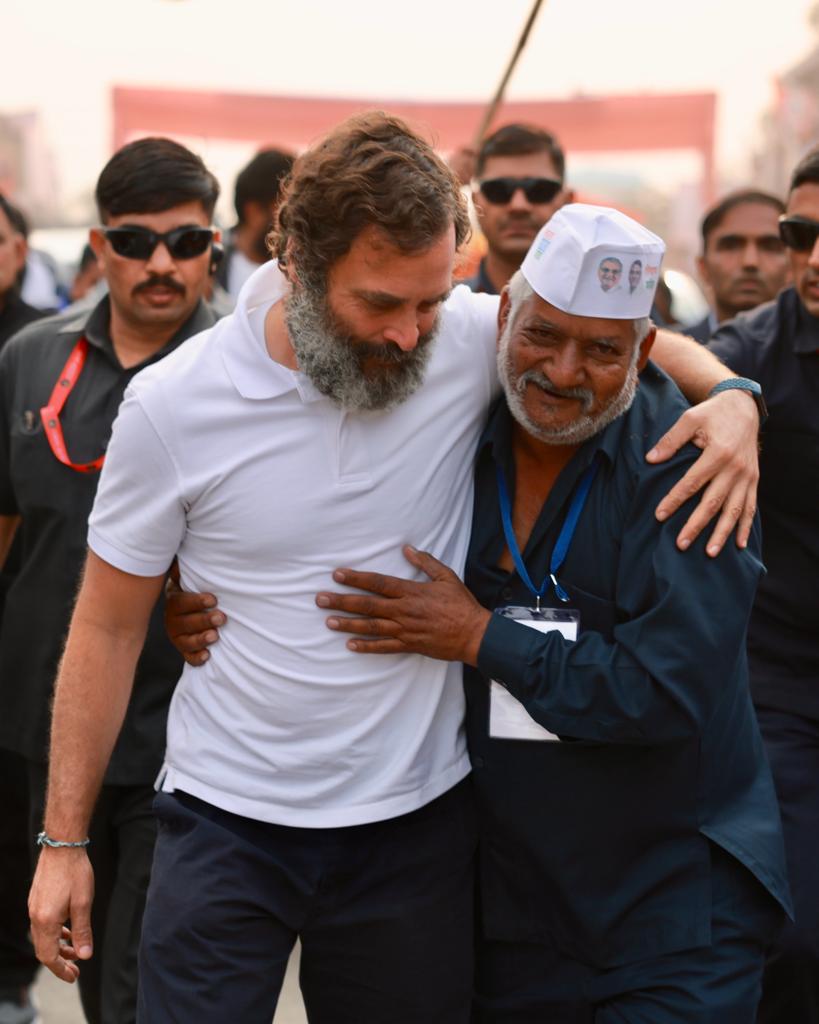
For a politician routinely ridiculed by opposition as a clueless dilettante and a ‘pappu’, Rahul Gandhi has taken a walk towards not just reviving the dying Congress but also redefining the image of Rahul Gandhi. Often written off as India’s first political family’s elite ‘touch me not’ scion, Gandhi has taken to the bumpy, tattered dusty roads of the country. Taking a plunge from his polished youth and suave image to the bearded, grizzled look of a battle hardened veteran, he is out holding hands, hugging, chatting and walking along the common men, women and children.

“This yatra has redefined me. You don’t learn, you don’t feel these things sitting in choppers or cars. The roads, the walk and people have taught me a lot. It has taught me what is true India today, what India aspires to be and what India needs to be”, says Rahul as his Bharat Jodo Yatra completes over 100 days. The 3,500 km walk over 150 days between Kanyakumari and Jammu and Kashmir is aimed at covering 12 states. The outcome of yatra is yet to be analysed but Gandhi during the course has struck many chords. “Main nafrat ke bazaar mein mohabaat ki dukaan kholne aaya hoon” said Rahul in Muslim dominated Mewat in Haryana. In a country where minorities openly voice fear, Rahul by openly confronting ‘nafrat’ has given hope to many in communally charged environs. “Hum tumhe todne nahi denge” (We won’t let you divide) has turned out to be a perfect slogan for forthcoming elections in 2024. Two accompanying slogans underlined by Rahul, “Bring prices down!” and “Provide employment!” is striking the right political chord.

Taking on Brand Modi

Amongst various other objectives, this yatra is the strongest challenge Congress has offered to brand Modi. The yatra aims to shatter the talisman of ‘Modi’ wave which did wonders for BJP in last two general elections and transformed into victory in many states. The BJP’s ‘people’s man’ is being termed as tyrant and dictator by Gandhi who is out urging people to stand against him. “He cannot withstand confrontation. You need to understand his personality. The moment you stand up to him he retreats. Our farmers did exactly the same. They put their foot down saying no to draconian farm laws and won and that’s what you need to do: stand up, look into the eyes and say No!,” says Gandhi. He even takes on alleged choking of political and media voices by BJP saying that is what brought him on roads. “They switch off mikes in Parliament when we speak. There, cameras don’t record us. So I came out to talk to people directly. We have walked miles but even the media doesn’t cover us because of pressure but if Modi ji walks even for 15 steps it’s a 23 hour news coverage. Right to freedom of speech and expression has been taken away and we are fighting to get it back”, says Gandhi. Calling this government a capitalist driven, Gandhi in a rally said, “Just like the media is controlled… pradhan mantri ke peeche bhi lagaam haiSarkar Modi ki nahi hai (Even the Prime Minister is reined in. The government is not Modi’s).Ye Adani aur Ambani ki sarkar hai (This government is of Adani’s Ambani’s)”.

The Congress Jodo Yatra

Though the final outcome of this yatra is yet to be exemplified, Rahul Gandhi so far has achieved one of its mottos. The yatra seems promising in revitalising his tired, demoralised, much-defeated party. In his course so far, he has to a large extent, lifted the morale and spirits of his almost dead-in-the-water party. He seems to be unifying the warring segments of the party. The arch rival leaders of the party are seen walking beside him together. The crowds that have walked with him include a fair number of old workers and loyal voters in the regions he’s been traversing. “One thing is clearly seen in the way that our party has united and the cohesion it has brought in the last over 100 days. The way we have started working on time. There is an Indian Standard Time and there is a Congress Standard Time,” says Congress MP and spokesperson Jairam Ramesh. The impact of the yatra will depend on the party and not Gandhi, he said. The yatra however is even ideologically rejuvenating the party’s state cadres. “This is a door-to-door campaign. This has not happened in many years and this used to be the peculiarity of the Congress, but we forgot this because we were in power for many years. But today there is a new start. Earlier, pamphlets used to get printed and then piled up in Pradesh Congress Committee offices, but now Sewa Dal workers are visiting households, distributing them to children and women,” says Jairam Ramesh. According to Congress, Rahul has since 2004 tried to de-feudalise the party. “Padyatra has been the core of Congress which we forgot over decades. It’s the comeback of the exercise which joins us with people. For the first time people have hit the road in large numbers at district and block levels. This is a big change in the party. It is a yatra of a political party and we are fighting political challenges like economic disparity, polarisation in the society,” adds Jairam Ramesh. Talking of causes like unemployment, inflation, violence against minorities and women, but what it is also doing is creating a snowballing impact on the voter’s perception of Congress.

Nothing but a re-launch of Rahul Gandhi: BJP

Opposition has already written off Rahul Gandhi’s yatra as a destination-less trek. Into its fourth month now, the yatra is yet to have the cascading effect, it says. The Opposition urges people to look beyond cheerleaders and see how it has failed to galvanise the Congress rank and file or revive the dying warring party. The videos of senior Congress leaders allegedly bowing down to Rahul’s laces or he shooing away a party worker trying to click selfie coupled with visuals of luxurious motorised caravan and the homes-on-wheels that accompany him with long army of attendants makes one doubt the attempt to transform from ‘raja beta ‘ to ‘mitti ka sapoot’. The party says that yatra remains an exclusive Congress enterprise and is political at its core, intending to re-launch Rahul Gandhi for the nth time so that he emerges as the foremost challenger to Prime Minister Narendra Modi. “They don’t know why they are walking and cannot even say what they have achieved so far. It’s nothing but a re-launch party of Rahul Gandhi which as usual will be a failure,” said BJP in an official statement. The party has now even dubbed the yatra as ‘Credit lo Yatra’. BJP spokesperson Shehzad Poonawala said, “Jairam Ramesh ji wants credit be it Cheetah or OROP. They should call it ‘Credit Le Lo’ yatra. Congress gets credit for 1) denying OROP 43 yrs, 2) National Water Mission for 50yrs 3) denying Rafales/bullet proof jackets 4) Attacking manobal of Sena using words like Pitai, 5) Scams.”

Yatra has rattled BJP: Congress

The Congress alleges that BJP is so much rattled by the success of the Bharat Jodo Yatra and that it is desperately trying to derail it and defame Rahul Gandhi. From Union health minister’s Covid caution letter to sending Intelligence Bureau sleuths to the yatra camp site to terrorise yatris, Congress claims BJP is doing all in its might to stop the yatra.

“Every BJP ruled state we went to, we faced issues. First they caution us to stop yatra citing Covid which is non-existent for BJP’s ongoing yatras in some states. Our posters are torn, electricity is disconnected on the way, roads being dug up and when nothing works they are out to terrorise people walking with us,” said Party Spokesperson Jairam Ramesh. He alleged that IB sleuths are tracking the social activists, ex-servicemen, and leaders of farmers’ organisations who met Rahul Gandhi during the yatra. Ramesh alleged that the Congress has received notices from the Election Commission and the National Commission for Protection of Child Rights, while the Prime Minister goes to Gujarat and has children campaign for him and his party, but the election Commission never even takes any notice.

OPS vs NPS sparks a tiff between Centre, states

More and more states have vowed to return to the OPS. But a discord has arisen after the central government rejected the demand of the states to refund employees’ fund held under NPS

Several states are going back to the old pension scheme (OPS). States like Rajasthan, Chhattisgarh and Jharkhand have already implemented the old pension scheme while Punjab and Himachal Pradesh have announced plans to implement it.  However, the big question is how much money is held under the National Pension System (NPS) which states are demanding but Centre has said no to it.

The Pension regulator, the Pension Fund Regulatory and Development Authority  (PFRDA) has rejected demands made by Rajasthan, Chhattisgarh and Jharkhand to return funds deposited under the National Pension System, after these states reverted to the old pension scheme.

Union Finance Minister Nirmala Sitharaman, who was in Shimla recently, made it clear that  “the money in the National Pension Scheme belongs to individual contributors and as per law, state governments cannot get it back”. Her junior, Bhagwat Karad. Union Minister of State for Finance, said the PFRDA has informed that there is no legal provision for a refund of NPS contributions.

Some opposition-governed states have vowed to return to the OPS, which offers 50% of the last pay drawn to government employees, instead of the NPS, where 10% of the salary is contributed by employees and a matching contribution is made by the employer. The money is then given to the designated fund managers. On retirement, the corpus is returned to the employee with the funds to be used to buy annuity covers.

According to the Ministry of Personnel, Public Grievances & Pensions, the National Pension System (NPS) was introduced for Central Government employees from 01.01.2004 vide Ministry of Finance (Department of Economic Affairs) Notification No. 5/7/2003-ECB & PR dated 22.12.2003 for all new recruits joining the Central Government service (except armed forces) from 01.01.2004.  On introduction of the National Pension System, the Central Civil Services (Pension) Rules, 1972 were amended. Accordingly, the benefits of the old pension scheme under the Central Civil Services (Pension) Rules, 1972 are not admissible to the Central Government civil servants appointed on or after 01.01.2004, under the amended rules.

The ministry made it clear that there is no proposal to reintroduce the old pension scheme to Central Government civil employees joined on or after 01.01.2004 under consideration of the Government of India.

State-wise data

As per the data shared by the Finance Ministry, there are over 20 lakh Central Government NPS subscribers while more than 50 lakh State Government Employees have subscribed to the scheme. The total AUM under NPS (Central Government) is over Rs 2 lakh crores while the total AUM of state employees is more than Rs 3.5 lakh crore as of 31st October 2022.

In fact within a year of bringing NPS, almost all the big states implemented it at their level. Till February 28, 2022, more than 50 lakh employees of state governments were under NPS, while more than 22 lakh central employees are its beneficiaries. Implementation of old pensions will also increase the challenges for the states. Following is the detailed break-up of Central and state-wise corpus under NPS.

Total AUM of State Government Employees under NPS:

Error! Filename not specified.Source: PFRDA/Data shared by Ministry of Finance in Rajya Sabha

Total AUM of Central Government Employees under NPS

Error! Filename not specified.

Refund request from States

“The state governments of Rajasthan and Chhattisgarh along with the state government of Jharkhand have sent a proposal to the Central Government/PFRDA to return the accumulated corpus of subscribers under the National Pension System (NPS). However, no such proposal has been received from the state government of Punjab,” Dr Karad said.

“PFRDA has informed the respective state governments that there is no provision under Pension Fund Regulatory and Development Authority Act, 2013 read along with PFRDA (Exits and Withdrawals under the National Pension System) Regulations, 2015, and other relevant Regulations, as amended from time to time, vide which the funds, which are already deposited both in the form of Government contribution and Employees’ contribution towards NPS, along with accruals, can be refunded and deposited back to the State Government,” Dr Karad said.

The question arises as to why there is a clamour for old pension scheme and why has it become a major election issue:

Old pension scheme (OPS)

In the OPS, upon retirement, employees receive 50 percent of their last drawn basic pay plus dearness allowance or their average earnings in the last ten months of service, whichever is more advantageous to them. A ten-year service requirement should be met by the employee.

Under OPS, employees are not required to contribute to their pensions. An incentive for taking government employment was the guarantee of a pension post-retirement and a family pension. Retirement corpus building was not pressured. OPS has become unsustainable for governments due to the rise in life expectancy.

The General Provident Fund facility is available in the Old Pension Scheme.

No deduction will be made from a salary for pension.

A fixed pension is given after retirement, i.e. 50% of the last salary is received as a pension.

The entire amount of the pension is given by the government.

If a government employee dies while in service, then the family dependent will be entitled to the pension.

New pension scheme (NPS)

In the NPS, those employed by the government contribute 10 percent of their basic salary to NPS, while their employers contribute up to 14 percent. Private sector employees can also participate in the NPS voluntarily, although some rules have changed.

With NPS, the customer has much greater flexibility and has a greater sense of control over her fate. A professional pension fund manager can ensure that superior returns and a larger retirement corpus are achieved, regardless of equity or debt.

Additionally, No General Provident Fund (GPF) facility will be available under NPS. A certain amount will be deducted every month from the salary. But there is no guarantee of fixed pension after retirement

The amount of pension for the employee will depend on the stock market return. A pension insurance company will give in NPS after buying an annuity. The benefit of inflation and pay commission will not be available in NPS.

Among the challenges related to the old pension scheme are that there will be a big adverse impact on the state budget. The burden on the state governments will increase with an increase in life expectancy. The government was finding it increasingly difficult to pay pensions forcing them to opt for the NPS system. However, with clamour rising for restoration of the old pension scheme, there is no clarity on what will happen to the money deposited in NPS till now and whether  the governments take back this money.

Cold-shouldered by BJP, HP apple belt looks to Sukhu govt for relief

Believed to have played a crucial role in dethroning of the Jai Ram government, the apple growers who are apparently under distress due to steep rise in inputs costs and other market factors, are pinning hopes on newly installed Congress government, reports Rajesh Moudgil

The recently held assembly poll results in Himachal Pradesh have two bitter takeaways for the ousted Bharatiya Janata Party (BJP) – aside from government employees’ demand for old pension scheme, Jai Ram Thakur-led BJP government also did not take apple growers’ demands for relief from various factors affecting the trade, seriously. Hence, the drubbing in the polls.

The apple trade, which contributes around 13.5% of the state’s gross domestic product (GDP) of around Rs 6,000 crore, engages more than 1.7 lakh families in the hilly state.

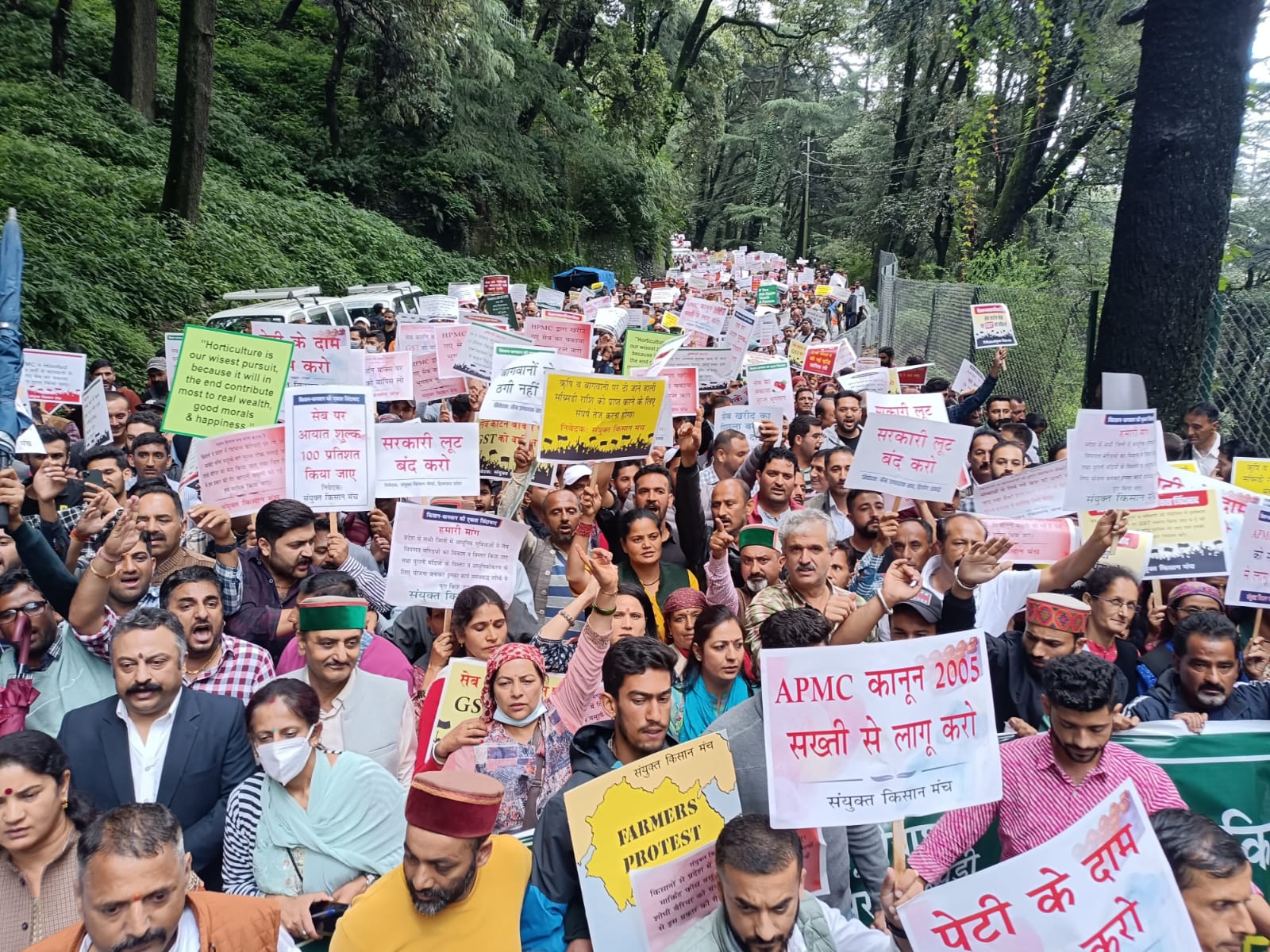
Stressed due to the consistent poor returns, the apple farmers had also repeatedly staged demonstrations at the state secretariat under the aegis of Himachal Kisan Manch a few months ago.

The 20-point demand charter given to the state by apple growers included many issues.

The main among them included restoration of subsidies on inputs on pesticides, fertilizers, implements, exempt GST of 18% on packing material, removal of all unhealthy marketing practices in state-owned marketing board followed through marketing committees, public sector procurement agencies and the private marketing players, introduction of the Market Intervention Scheme (MIS) on grading basis, implement insurance back-up in case of crop losses of apples due to inclement weather, transportation and marketing, increase in infrastructure like cold-storage and processing units from strategic points to apex levels, facilitating the exports removing to some constraints in quality standards, enhancement in the import duty to 100% from 70%,  support to growers to enhance productivity of apples per unit area, and establishing the state Horticulture Board and Commission.

The Bitter Dose

Since the BJP apparently failed to give a timely and satisfactory response to the anguished apple farmers, the apple farmers gave a bitter dose to its candidates as was evident from the poll results.

Spread in about 20 assembly seats in Kinnaur, Shimla, Mandi and Kullu districts, it is the apple belt that significantly influences the political contours of the state.

Sample this: In 2012, the Congress won six seats out of eight seats in the Shimla district and four in 2017, when the BJP came to power in the state, while Theog seat went to CPI-M leader Rakesh Singha.

This time, the Congress won 12 of the said 17 assembly seats which include seven seats out of total eight in Shimla; likewise, the other apple growing belt Kinnaur gave it one and Mandi and Kullu belts, two each.

The former CPI-M MLA from Theog and a farmers’ leader, Rakesh Singha, rues, what he terms as, the neo-liberal path of development which was resulting in apple cultivation becoming a loss making concern to the farmers as the state has withdrawn itself from state investments resulting in the cost of production to increase sharply and the returns have fallen sharply.

He opined that under such circumstances, broad-based farmers’ organisation would have to be built which had the capacity to get the government to provide assistance to the farmers in terms of subsidies at all levels from plantation to post harvesting storage facilities. No government in the present scenario would concede to the farmers unless they were able to build struggles as only guarantee for reversal of the “such a development’’, he added.

Singha also held that the commission agents violated the Himachal Pradesh agricultural and horticultural produce marketing (development and regulation) Act 2005 which needed to be enforced by the state machinery. “Crores of rupees are pending with the commission agents of the farmers which need to be provided to the farmers through the state intervention’’. This is one major issue that needs to be addressed.

Looking Ahead

Congress’ legislator from Kasumpti, district Shimla, Anirudh Singh, a three-time MLA and former Shimla Zila Parishad chairman, highlights the plight of apple growers of the state.

“Apple growers of the state who often bear the brunt due to the global warming – which adversely hit the fruits’ production – and the steep increase in the input costs in the recent years got a crippling jolt when the BJP government stopped the subsidies’’, Singh said and added that the woes of the apple growers further increased in the wake of spiralling prices of fertilisers, labour and packing costs.

Stating that the state’s apple farmers have also been struggling to cope up with the stiff competition with the corporate giants who have huge apple storing capacity, Singh said that the Congress government is planning to give subsidies to the apple growers as well as making fertilizers at controlled rates available to them, as a first step.

Shimla-based horticulturist and an expert on sustainable development, Prof Sushil Sharma further puts the issue in perspective.

“Apple cultivation in Himachal Pradesh engages over 1.7 lakh families in the state spread over 20 out of 68 assembly segments in the state. The apple orchards now cover over 1.09 lakh hectares – around 49% of the total area under fruit cultivation. On an average, the state contributes over 26% of the total of over 2.5 million MT of India’s apple produce’’, he says. The hilly state recorded the highest production of 8,92,112 MT more than a decade back in 2010. Ever since, the state has crossed the 7 lakh MT only thrice – 7,38,723 MT in 2013, 7,77,126 MT in 2015 and 7,15,253 MT in 2019. Even last year it was 6,11,901 MT. It touches the state GDP of over 5% and the state claims that the apple economy is around Rs 5,500 to 6,000 crore, he adds.

Prof Sharma opines that the state would have to have an umbrella body to oversee the implementation of horticulture policy-planning with sufficient financial back-up built on three pronged strategy of increasing horticulture production with competitive costs conforming to the international standards, building post-harvest  infrastructure and marketing network and enhancing desired human resources. Each component of the strategy needs the check and balance at every step’’, he says.


Punjab CM Bhagwant Mann releases calendar- 2023

Chandigarh: Punjab Chief Minister Bhagwant Mann released the calendar of the Punjab Government for the year 2023 at his office in Punjab Civil Secretariat- I, this morning.

Disclosing this here today a spokesperson of the Chief Minister’s Office said that the layout design of the calendar had been conceptualized and prepared by the Information & Public Relations Department and printed by the Controller Printing & Stationery Punjab.  Prominent amongst others who were present on the occasion included Chief Secretary Vijay Kumar Janjua, Additional Chief Secretary to CM A Venuprasad, Principal Secretary Information & Public Relations Department Rahul Bhandari, Director Information & Public Relations Department Sonali Giri and others.

MOST POPULAR

HOT NEWS