Will Satyapal Malik’s explosive revelations impact Modi govt?

Former J-K Governor Satya Pal Malik’s remarks about the Pulwama bombing that killed 40 CRPF jawans and about his role in the withdrawal of Article 370 have put the BJP-led government in a spot, writes Riyaz Wani. 

When Satyapal Malik was made governor of Jammu and Kashmir in August 2018,  he was the first politician governor the state had ever got. Before joining the BJP, Malik had previously been with the  Congress, Samajwadi Party, Lok Dal and had also worked with the former Prime Minister VP Singh. This gave him vast political experience and made him a fit candidate to lead a sensitive state such as J&K. 

 Malik lived up to his “politician” tag soon after he took charge. He made right noises of the kind that inspired confidence in his administration. He was candid enough to acknowledge that New Delhi has made mistakes in Kashmir which have alienated people. He was sympathetic towards Article 35A, which forbade outsiders to settle in J&K, saying even Himachal Pradesh and North East had similar laws and there was nothing wrong with it. Reassuringly enough, Malik also said that his position on Articles 370 and 35A had been endorsed by the Centre. 

“I am not an elected representative but my stand is that arguments on 35A should be deferred until there is an elected government in power,” Malik said. And significantly, he then also made it clear that he wouldn’t encourage a government formation resulting from defection.

 Statements like these calmed the then frayed nerves in Kashmir and also helped build faith in the administration. Also, the statements came as a pleasant surprise, considering Malik’s appointment had been made by the BJP-led central government whose ideologically rooted stance on the state had made the Valley inherently distrustful of its actions in the state. 

Action didn’t mirror words

 It is another matter that Malik then presided over a state of affairs that acted largely contradictory to his initial utterances.  On November 22, 2018, just four months after his takeover, when former chief minister Mehbooba Mufti faxed a letter to Malik’s office declaring a joint bid by her People’s Democratic Party and the National Conference, aided by the Congress, to form the government in the state – three parties held 56 of the 87 seats in the Assembly –  Malik claimed he didn’t receive it as there was no one at the office on the day. 

 But hours later Malik, without acknowledging receipt of the fax, ordered the dissolution of the Assembly. 

 “Fax is not an issue. There was Eid and both (Mehbooba and National Conference leader Omar Abdullah) are devout Muslims. They should know that offices remain closed (on holidays),” Malik said in his defence at the time. 

 “I did not have a cook, let alone a fax operator. There was no system,” he added. “They could have sent people in the morning (or a message or representative the) day before yesterday.”

 But Omar Abdullah, a former J&K chief minister, asked that if this was so, who had typed the letter that announced the dissolution of the Assembly?

Malik’s  J&K term 

 What happened thereafter is history: over the following year,  Malik presided over a rough-neck administration. With Malik at the helm, New Delhi was directly in charge of the affairs of the state. He took forward  ‘Operation All-out’ against militants and the NIA investigation against separatist leaders. The government also acted against the local media, holding it accountable for any coverage deemed anti-national. While Operation All-out was an ambitious attempt to finish off the militancy,  the NIA probe was geared to individually target separatists and make them pay for their support and alleged funding of the militancy and the unrest in the Valley.   

The administration under Malik started putting in place security and other measures in Kashmir to prepare ground for the withdrawal of Article 370. The Valley was more or less reigned in if not tamed. There was a new ruling in the region: the administration had succeeded in telegraphing the message of a no-holds barred reprisal should anyone come in the way of the execution of the BJP’s agenda in the state.

 By the time, J&K was stripped of its semi-autonomous status on August 5, 2019, New Delhi through Malik had cast its net wide, with the NIA systematically scrutinizing and calling for questioning well-known people from politics, business and media. The local media was picked up for special attention: among the people who were probed by the NIA or called for questioning were cub reporters and the editor of one of the largest selling dailies. This brought the reporting in the local newspapers more or less in line with the official line.

On the eve of August 5, 2019

 Malik’s conduct in the run-up to the revocation of Article 370 has also become memorable in J&K. Ahead of the erasure of Article 370, Malik had described apprehensions about its removal as mere rumours. But when the article was abrogated, amid unprecedented military siege, arrests of thousands of people and communication blackout. He took credit for that too. 

 People in Kashmir still remember August 5 eve with some degree of horror. On August 2, J&K Home Secretary Shaleen Kabra issued an order calling on pilgrims and tourists in the state to “immediately” curtail their stay and leave the state “as soon as possible”. The order cited an unspecified looming security threat for the extraordinary measure.  This instantly triggered panic. People rushed out of their houses to stock up on the essentials. Hundreds of vehicles lined up for fuel at the filling stations. Many people without vehicles were seen carrying fuel in cans, bottles and even vacuum flasks. 

 On the other hand, tourists and pilgrims were too seized with fear of the unknown. The government arranged transport to help ferry them outside the state. The challenge was bigger in the case of the ongoing annual pilgrimage to the high altitude cave shrine of Amarnath which was due to culminate in the next few days. Thousands of pilgrims on their way to the shrine or lodged at the base camps at Pahalgam and Sonmarg were asked to return.  

 Ironically, the government order asking outsiders to leave the Valley had followed within an hour of an assertion by the state’s top security brass at a press conference in Srinagar that the security forces had reigned in the once runaway separatist militancy and brought the situation under control. In fact, the reporters were informed by the state’s Director General of Police Dilbagh Singh and the then General Officer Commanding 15 Corps Lt General K J S Dhillon that the threat to Amarnath pilgrimage had been neutralized by the timely recovery of a Pakistan marked anti personnel mine  and a US made sniper rifle M24.  This had reassured people following a weeklong troop build-up in the state of around 38,000 more security personnel. Malik too was offering his own assurances, saying nothing would happen.  But, as it turned out, the re-assurance was short-lived. 

 Malik  was governor till October 2019 when  J&K formally became a union territory, and according to him, he couldn’t be downgraded to the role of a Lieutenant Governor.    

Kashmir hasn’t left Malik

 Since then,  although Malik  has left Kashmir, it appears that Kashmir has not left him. He has recurrently kept talking about his contentious stint in the Valley and generated controversy along the way.  The first such controversy  he raised was about an alleged bribe of Rs 300 crore that he was offered to clear two files when he was the governor of J&K. These were the files for awarding contracts for a group medical insurance scheme for government employees. The CBI has booked Anil Ambani’s Reliance General Insurance Company and Trinity Re-Insurance Brokers Limited in this case.

New revelations

 With recent revelations in an interview with The Wire, Malik has triggered a storm. Two of the controversies that stand out are his remarks about the Pulwama bombing that killed 40 CRPF jawans and about his role in the withdrawal of Article 370. 

 Malik accused the Indian system, particularly the CRPF and the home ministry, of “incompetence” and “laparvahi” which led to the devastating terrorist attack on soldiers in Pulwama. He further stated that the attack was a result of the government’s refusal to provide aircraft to transport CRPF jawans and ineffective sanitization of the route. At the time, Rajnath Singh was the home minister.

 He also revealed that he had raised these issues directly with Prime Minister Narendra Modi, who had called him from outside Corbett Park shortly after the attack. However, the Prime Minister had reportedly told Malik not to speak about the lapses and to keep quiet. Similarly, National Security Advisor Ajit Doval had also advised Malik to not talk about the matter. Malik believed that the intention behind this was to put the blame on Pakistan and gain electoral advantage for the government and the BJP.

 Malik further criticized the Prime Minister, stating that he was “ill-informed” and “ignorant” about the situation in Kashmir and would not speak about the Union home ministry’s lapses that led to the Pulwama attack. Malik’s comments shed light on the handling of the Pulwama attack and the government’s response to it.

As for Article 370, Malik said he was only told about the plan for revocation of the constitutional provision on the eve of August 5.   He stated that he was instructed to open a letter and approve it without objection, which he did. 

 “They did not tell anything to me whether they are doing it or not doing it. I was told they will send a letter and I have to send it back the following day after signing it,” he told The Wire. “I only told Mehbooba when she came to see me that this is not a small thing. They cannot just declare it, they will have to take it to Parliament.”    

Political import of the revelations

 Both, Malik’s remarks about the Pulwama attack which nearly triggered a war with Pakistan, and about the repeal of Article 370 have put the union government on a difficult wicket. The allegation that the BJP government made a political use of the killing of 40 jawans is serious.  This has provided the opposition parties with ammunition in an election year. No less than the veteran NCP leader Sharad Pawar has called for the probe into the death of 40 security personnel at Pulwama. 

 Sanjay Raut, the leader of the Shiv Sena led by  Uddhav Thackeray  questioned whether the 2019 Pulwama attack had been staged by the Centre with the aim of winning the Lok Sabha elections. 

 “People were aware at the time that some India-Pakistan incident will be manufactured for political gain,” Raut was quoted by the media as saying. “Was the terror attack staged with the aim of winning elections? Was there a plot to get 40 jawans killed for political gain? We [Opposition] had repeatedly tried to ask such questions at the time but were silenced by the ruling party and branded as ‘traitors.”

 Congress MP and former Union minister Manish Tewari said that Malik’s claims were disturbing.

“If what the former Hon’ble Governor is saying is correct it is very very disturbing to say the least,” Tewari wrote on Twitter. “It will play out very badly in the international arena.”

Removal of Article 370

 Similarly, Malik’s admission that he was unaware of the Article 370 revocation until the day before it was carried out has generated concerns about how it was done.  In Kashmir, the politicians have  said that it exposed the arbitrary manner in which the article was read down.   

 Both the National Conference (NC) and the Peoples Democratic Party (PDP) criticized former Jammu and Kashmir Governor Satya Pal Malik for revealing that the Indian government bypassed the mandated consultation mechanism before withdrawing Article 370.

 National Conference leader Aga Syed Ruhullah Mehdi argued that the decision to revoke the article was made by an appointed individual and that the fate of 14 million people in Jammu and Kashmir was decided without their consultation. He also pointed out that Clause 3 of Article 370 stipulates that the abrogation could not happen without the concurrence of the State’s Constituent Assembly, which was not obtained.

 “Mujhe kya, unko karna tha to karte, na karna tha to na karte, mujhe kya tha’ (What’s it to me? If they wanted to do it, they would; if they didn’t want to do it, they wouldn’t). This is how the fate of the people of J&K was decided on that day. This is how they lynched and murdered democracy,” senior NC leader and former Minister Aga Syed Ruhullah Mehdi said.

 PDP leader Naeem Akhtar echoed this sentiment, saying that any attempt to tamper with Article 370 should have been ratified by J&K’s Constituent Assembly of 1951. 

 He also criticized Malik for acting as the Constituent Assembly and signing the letter from Delhi without knowing its contents. 

Effect on the BJP’s political standing? 

Would Malik’s revelations affect the BJP’s vaunted political standing in the country and as a front runner in the general elections next year? Unlikely. There is little to indicate that Prime Minister Narendra Modi is any less popular, let alone facing an anti-incumbency sentiment. His name and persona are now entrenched in the national psyche. He is seen as a leader whose continuation in power people now take for granted. If notebandi, farmers’ protests, Chinese incursions, the COVID-19 pandemic and its widespread depredations couldn’t dent his image, nothing else can.  

The absence of a united opposition front and a consequent alternative political narrative have made the BJP’s job even easier. The unity of the opposition has been inherently hamstrung by the difficulty to rally people around a principal leader or a party. Since 2014, Congress has lost its pole position in India’s politics.   And  its leader Rahul Gandhi has struggled to match up to prime minister Narendra Modi’s overarching political appeal. 

As things are, the Hindutva ideology is the BJP’s trump card, overshadowing any governance or security failure. 

At the same time, politics is a dynamic process. A lot would also depend on how the opposition plans for the year ahead and whether it would be able to convince people about the failures and excesses of the government. There is a chance that the economic factor could play a role: unemployment, inflation, etc could force a critical mass of people to turn away from the government. Or just a sense of fatigue with the current leaders, a  certain disaffection with the prevailing state of affairs could do the trick. The coming weeks and months could be crucial on this score. 
Hindi’s fascinating evolution into ‘Fiji baat’

By Vivek Gupta

This year, India hosted the 12th World Hindi Sammelan in Fiji. As arbitrary as it might seem, Fiji was not a random choice off the face of the earth. The history of Indians in Fiji, and the evolution of Hindi into the local dialect called “Fiji Baat” make Fiji an interesting choice for hosting the Global Hindi Conference 2023.

 After the abolition of slavery in 1834, the demand for Indian indentured labourers increased immensely, and they started being taken to plantation colonies abroad producing high value crops like sugar. Initiated by Fiji’s first Governor Sir Arthur Gordon, the introduction of Indian indentured labour back in the early 1800s marks an important chapter in the development of the island nation. Over a 37 years period from 1879 to 1916, about 87 ship loads carried over 60538 labourers from the Indian subcontinent to the Fiji islands to work on the plantations there. This vastly increased the economic viability of the Fiji plantations and enabled colonial administration to minimize Fijian alienation from the land, forever changing the socio-political landscape of the then young colony.

 The Nukulau island, about 10kms from the capital Suva, was used as a quarantine port from where labourers where then deployed to their respective employers across the island chain, including but not limited to Colonial Sugar Refinery Company [CSR], Stanlake Lee, and the likes.

 The tens of thousands of Indians taken to Fiji by British colonialists to be sugar cane workers then continued to stay on the islands at the end of their unpaid contracts, thereby marking the beginning of an Indian hub across the South Pacific. Eventually, in consonance with the advancement of all civilizations, in 1912, Dr. Manilal became the leading voice of freedom of the indentured labourers and was instrumental in the foundation of the Indian Imperial Association. In 1920, a strike resulting in several people being injured saw the emergence of Sandhya as another prominent figure amongst the emigrants. Such eminent representatives of the Indian indentured labourers from the 1900s Fiji islands reported back to the Indian government on the condition of Indians in the Colony of Fiji and finally, indentured labour was abolished in 1920. 

 The Indian emigrants remained primarily on the two main islands of Viti Levu and Vanua Levu. By the 1940s, Indo-Fijians made up the majority of the population, outnumbering indigenous Fijians. Indo-Fijians, defined as anyone who has Girmit ancestry, make up 38 per cent of Fiji’s 910,000 people but own less than 2 per cent of the land. The Girmit Remembrance Day on May 14 marks the day the first ship carrying Indian workers arrived in Fiji.

 The total population of Indians in Fiji is 315,198, almost 40% of the total population of Fiji. The population of Fiji is spread across numerous islands, and much of the population does not travel between them. About 85 per cent of the Pacific island nation belongs to indigenous landowning units, administered through the government’s Native Land Trust Board, now known as the iTaukei Land Trust Board. The remainder is either freehold or government-owned land. Indo-Fijians can access land through 20-30 year agricultural leases and 50-99 year residential leases. Mahendra Chaudhary was Fiji’s first, and till-date the only, Indo-Fijian prime minister from 1999-2000, and later became the finance minister from 2007 to 2008. In fact, India today happens to be one of the few countries whose citizens do not need to apply for a visa in advance. They can get a Fiji visa upon arrival in Fiji provided they have the valid travel documents, and the visa application is done when their flight lands in Fiji.

 The need to find a common language between Indians from north and south settled in Fiji and for the children being left in day-care centers then required a common language too. Hindustani (an omnibus term covering both Hindi and Urdu) emerged as the convenient language of communication for the new settlers on the Pacific chain of islands. Hindi is now an official language in Fiji. In the 1997 Constitution, it was referred to as “Hindustani”, but in the 2013 Constitution of Fiji, it is simply called “Hindi”. Fiji Hindi, also known as Fiji Hindustani or Fijian Hindi, is a language which is spoken in Fiji by most Fijian citizens of Indian descent. It is derived mainly from the Awadhi and Bhojpuri language or dialects of Hindi and also contains words from a few other Indian languages. The first language of Fiji is actually a mix of Fijian and some English words along with the Hindi words spoken there gradually diverged significantly from the dialects of Hindi and Urdu spoken in India. This remixed language of communication popularly came to be known as “Fiji Baat”.

A Timeline:

1879 – 1916: 60553 Indians registered including labourers and any dependents such as children – Girmit status for 5 years

1917 – Education is provided for Indians

1919 – Political rights for Indians in Fiji considered

1920 – Indenture system abolished first day of the year

1929 – 3 representatives were elected into the Legislative council under the communal franchise 

1997 – Hindi included as official language but referred to as “Hindusthani” in the Constitution

1999 – First, and till date the only, Indian elected as PM in Fiji

2013 – Constitution of Fiji uses the word “Hindi”

Debate reignited over need to redefine and reform defamation law

The misuse of laws relating to criminal and civil defamation have become a talking point in the society as it is allegedly being selectively used against those leaders who raised questions with regard to crucial decisions about the affairs of the government, writes Mudit Mathur

The Constitution of India guarantees free speech and expression to be a fundamental right of every citizen which is not absolute but subject to certain reasonable restrictions; defamation being one of them. The recent political developments slapping criminal defamation cases on prominent politicians and journalists allegedly, as a tool to muzzle dissent and obstructing them from raising uncomfortable questions before the political leadership. This has reignited debate among legal fraternity to redefine and reform the scope of criminal defamation as reasonable restriction vis-à-vis constitutional guarantee of freedom of speech and expression in the light of Subramanian Swamy versus Union of India with special reference to Shreya Singhal’s case.

Whether it is the filing of Strategic Lawsuits against Public Participation (SLAPP) or other cases on infringement of private or public rights, defamation is adopted in defence as a matter of prerogative and that being right to reputation. Therefore, legal circles felt that it becomes imperative to re-examine these issues in the light of the judgement delivered so that clouds of doubt go away and give vent to an informed consensus on the issue of defamation.

Shreya Singhal’s case is a landmark judgement in the field of freedom of speech and expression. This landmark case brings forth various dimensions which are important facets of article 19(a). Section 66A which was widely criticised for its over breadth, vagueness and its chilling effect on speech was struck down by the apex court as it was unconstitutional. Regarding over breadth, apex court opined that the net cast by section 66A was so wide that virtually it covered any opinion on any subject. Nariman J’s opinion has highlighted that the liberty of thought and expression is not merely an aspirational ideal. It is also “a cardinal value that is of paramount significance under our constitutional scheme.”

On the purported justification offered by the state on grounds of defamation, incitement to an offence, and decency or morality, under article 19(2), the Supreme Court, ruled it as pithily dismissive. The court pointed out that there was no nexus whatsoever between the criminalisation of “grossly offensive” or “annoying” speech and the restrictions permitted under the constitution were self-evident.

But examining the constitutional validity of Section 499 and 500 of the Indian Penal Code, 1860, constituting defamation as an offence in the case of Subramanian Swamy vs Union of India (2016) 7 SCC 221, it was held that, “though right to freedom of speech and expression is a highly valued and cherished right but the constitution itself conceives of reasonable restrictions and Sections 499 and 500 of the IPC cannot be characterized as disproportionate restriction on free speech. Right to free speech was held to be not meaning that a citizen can defame others. Protection of reputation was also held to be a human and fundamental right, serving a social interest. “However, in Swamy’s case, Mishra J takes a different route and points out that there is a difference in the canvas on which the Shreya Singhal’s case has been made.

In a significant judgement of Delhi High Court protecting a news channel from civil defamation charges for telecasting a sting operation exposing milk adulteration racket in its “Satyamev Jayate” programme, observed, “Though the press and the media are not exempt or always protected from the general law relating to defamation but it is to be kept in mind that defamation law is not to be used to gag, silence, suppress and subjugate press and the media. It cannot be forgotten that the law of defamation has potential to be an unreasonable restriction on the freedom of speech and expression guaranteed by the Constitution of India and the courts owe a duty to ensure that the law of defamation is not so exploited.”

The Supreme Court has always upheld freedom of speech and expression right from 1950 in Romesh Thappar Vs State of Madras, Brij Bhushan Vs. State of Delhi and Sakal Papers (P) Ltd. Vs. The Union of India (1962) and Indian Express Newspapers (Bombay) Private Ltd. Vs. Union of India (1985). It was held that in today’s free world, freedom of press is the heart of social and political intercourse; the press has now assumed the role of the public educator; the purpose of the press is to advance the public interest by publishing facts and opinions without which a democratic electorate cannot make responsible judgments; the authors have to be critical of the actions of the government in order to expose its weaknesses. Such publications become an irritant or even a threat to power and the governments naturally take recourse to suppress such publications in different ways but it is the primary duty of all the national courts to uphold the said freedom and invalidate all laws or administrative actions which interfere with it, contrary to the constitutional mandate.

In the light of such landmark jurisprudence, the recent disturbing trend of weaponizing criminal defamation cases on various leaders of opposition, allegedly, targeting prominent leaders of opposition parties creates chilling effect on the society at large for ventilating their views on various actions and policies of the government concerning public at large, thereby hampering democratic atmosphere required for a healthy public discourse– which is a basic feature and constitutional mandate for the survival of a vibrant and participatory democracy.

The misuse of laws relating to criminal and civil defamation have become talking point in the society as it is being selectively used against those leaders who raised questions with regard to crucial decisions about the affairs of the government. Congress leader Rahul Gandhi stood convicted and sentenced to two years imprisonment in a criminal defamation case registered in Surat, Gujarat, over his controversial comments during general election campaigning in Kolar, Karnataka, in 2019, about fugitive scamsters Lalit Modi and Nirav Modi. “How come all thieves have Modi as the common surname?,” he had said allegedly targeting Prime Minister’s Modi community. He lost appeal before the session Judge who upheld his conviction and quantum sentence. Now, he is likely to file a writ petition before the High Court of Gujarat. Rahul Gandhi was disqualified as a member of Lok Sabha in view of his conviction.

Expressing his solidarity with Rahul Gandhi, the Aam Admi Party president and Delhi chief minister Arvind Kejriwal accused the government of conspiring to “eliminate” non-BJP parties and leaders by prosecuting them.We have differences with the Congress, but it is not right to implicate Rahul Gandhi in a defamation case like this. “It is the job of the public and the opposition to ask questions. We respect the court but disagree with the decision,” Kejriwal said in a tweet in Hindi. AAP Rajya Sabha MP Raghav Chadha said opposition forms the core of democracy and dissent should not be stifled.

The Gujarat High Court overturned a seven-year-old ruling by the Central Information Commission (CIC) that instructed Gujarat University to disclose information on Prime Minister Narendra Modi’s degree to Delhi Chief Minister Arvind Kejriwal. Allowing the Gujarat University’s appeal against the CIC order dated 29th April, 2016, Justice Biren Vaishnav also imposed a cost of Rs 25,000 on Kejriwal and asked him to deposit the amount within four weeks to the Gujarat State Legal Services Authority (GSLSA).The Aam Aadmi Party (AAP) said it would appeal against the order in the division bench.

“With this judgement, citizens have lost their right to seek information about the PM’s degrees. The cost imposed on Kejriwal, who was a respondent in this case, also came as a surprise for us,” said AAP Gujarat’s legal cell president Pranav Thakkar. In April 2016, the then CIC M Sridhar Acharyulu had directed the Delhi University and the Gujarat University to provide information to Kejriwal on the degrees that Modi had received.Three months later, the Gujarat High Court stayed the CIC order after the varsity approached it against that order.

The judgement of Gujarat High Court invoked mixed reactions and opinions across the political spectrum that culminated in slapping a criminal defamation case against Arvind Kejriwal and AAP’s Rajya Sabha member Sanjay Singh by Gujarat University registrar Piyush Patel for their alleged sarcastic and derogatory statements against the university. The court of Additional Chief Metropolitan Magistrate, Ahmedabad, Jayeshbhai Chovatiya has issued summons to Delhi Chief Minister Arvind Kejriwal in his personal capacity and Sanjay Singh in a criminal defamation case under Section 500 of IPC, related to issue of Prime Minister Narendra Modi’s academic degree on April 15 last.

The Delhi High Court on Tuesday summoned former Maharashtra Chief Minister Uddhav Thackeray, his son Aditya Thackeray and Rajya Sabha MP Sanjay Raut on a defamation suit filed by MP Rahul Ramesh Shewale for allegedly levelling frivolous corruption allegations against him and the Eknath Shinde-led Shiv Sena faction. Justice Prateek Jalan admitted the defamation suit and issued summons to Uddhav, Aditya and Raut. The High Court also asked Google, Twitter, Uddhav, Aditya and Raut to file their written statements within 30 days on the plea seeking removal of the alleged defamatory content from social media platforms.

Assam Chief Minister Himanta Biswa Sarma had threatened to file a defamation case against Delhi Chief Minister Arvind Kejriwal if the Aam Aadmi Party (AAP) leader alleges corruption cases against him outside the assembly. Kejriwal had reportedly said in the Delhi Assembly that there are cases against Sarma. “I wanted to sue him but like a coward, he spoke inside the assembly,” the Assam chief minister Sarma said. Last year, Sarma had filed criminal defamation case against AAP leader Manish Sisodia before Chief Judicial Magistrate, Kamrup over some allegations he levelled against him in a press conference. He went to the court for recording his statement.

A defamation case against DMK functionary for ridiculing TN Governor in a speech in the House. DMK functionary Shivaji Krishnamoorthy had made critical remarks against the Governor for skipping portions of the government-prepared address to the State Assembly. A Chennai City Public Prosecutor, had filed a criminal defamation complaint seeking to prosecute suspended DMK functionary Shivaji Krishnamoorthy, for his derogatory speech against Tamil Nadu Governor R N Ravi. The Public Prosecutor had moved the court after the State government accorded sanction.

Rashtriya Swayamsevak Sangh (RSS) leader Ram Madhav has sent a defamation notice to former Jammu and Kashmir governor Satya Pal Malik in response to his remarks during an interview where he alleged that Madhav attempted to influence him over a health insurance scheme deal involving a kickback of Rs 300 crore. Responding to Ram Madhav’s notice to sue for defamation, the former J&K governor Satya Pal Malik said that there was no question of him apologising to Madhav, instead he would send a written response to the notice. Malik added that someone may have “pressured him (Madhav) to send this notice”.

In October 2021, Malik claimed that a senior RSS functionary had offered him a bribe of Rs 300 crore to clear two files related to “Ambani” when he was the J&K governor. The Congress party held a press conference where they played up the interview and asked why the CBI or ED is not knocking at the doors of Ram Madhav following Satya Pal Malik’s allegations?

The apex court observed that fundamental rights and reasonable restrictions interact closely and should be tested on the anvil of the principle of proportionality. If a restriction is disproportional or excessive it defeats the purpose of the fundamental right and hence is ultra vires the Constitution. The law of defamation seeks to protect individual reputation. Its central problem is how to reconcile this purpose with the competing demands of free speech. Since both these interests are highly valued in our society, the former as perhaps the most dearly prized attribute of civilized human beings while the latter the very foundation of a democratic society.

A recent report by Common Cause and Lokniti-CSDS, based on a state-level survey, reveals, “nearly two out of three respondents are scared to post their political or social opinions for fear of legal action”. Today, Indians seem to have an intuitive understanding of the risks of voicing their opinions – they fear the letter of the law, in all its severity, will be weaponised against them and used as a tool to restrict their fundamental rights. Can reform on defamation be attempted in an environment of fear and social tensions?

A Supreme Court Advocate sums up the issue remarking, “We should worry about use of defamation law, beyond Rahul Gandhi case. The colonial era law can be used to restrict fundamental rights by the powerful. A reformed law is the need of the hour.”

SC seeks answers from Yogi govt over brazen killing of Atiq, brother

The Court has sought a “comprehensive affidavit” from the UP government on the steps taken to enquire into the killing of gangster-politician Atiq Ahmed and his brother Ashraf when they were being taken to a hospital for medical check-up in police custody,  writes Mudit Mathur

The Supreme Court on Friday, 28 April, sought a “comprehensive affidavit” from the Uttar Pradesh government within three weeks on the steps taken to enquire into the killing of gangster-politician Atiq Ahmed and his brother Ashraf Ahmed which took place on April 15 at Prayagraj when they were being taken to a hospital for medical check-up in police custody. The bench has also sought information on the inquiry into the encounter killings of the other accused in the Umesh Pal murder case, including Atiq Ahmed’s son Asad.

The Court has also directed the State to inform about the steps taken in pursuance of the report of the judicial enquiry commission led by Justice BS Chauhan which probed into the Vikas Dubey encounter killing of 2020.

The bench of Justices S Ravindra Bhat and Dipankar Datta was hearing a public interest litigation (PIL) plea by Advocate Vishal Tiwari seeking the constitution of an independent expert committee under the chairmanship of a former SC judge to probe the killings of both the brothers, which was caught on live television, and also 183 other encounter killings in the State of UP since 2017. Tiwari also questioned Justice Chauhan’s report which gave UP Police a clean chit in the Vikas Dubey encounter case.

During the hearing, the bench asked the UP Government how the killers got the knowledge that Ahmed brothers were being taken to hospital? The bench also asked why the police made Ahmed brothers walk till the hospital entry gate, instead of taking them till there in the ambulance?

Senior Advocate Mukul Rohatgi, on behalf of the UP government, passionately urged the bench to not issue notice, saying that the state government had been probing into the two deaths. “This man and his entire family are embroiled in heinous crimes for the last 30 years. It is probable that the two were killed by those whose wrath they had encountered. This is one of the angles we are looking into,” Rohatgi told the bench.

“Everyone saw the killings on the television. The killers came in the guise of news photographers. They had passes, were carrying cameras, and were even carrying identity cards that were later found to be fake. There were 50 people there and more people outside. This is how they managed to kill Atiq and Ashraf,” the senior counsel explained.

“How did they know?” Justice Bhat asked.

“Because of this court’s judgement, any accused in police custody must be taken for a medical examination every two days. These assailants have been going three days in a row,” Rohatgi responded.

Justice Datta asked, “Mr Rohatgi, why were they not taken to the hospital gate in an ambulance? Why were they made to walk and paraded?”

The senior counsel replied, “That distance is very short, Your Lordship.” Justice Bhat said, “Place whatever material you have. We will look into this.”

The PIL questioned the custodial killing of jailed gangster-turned-politician Atiq Ahmed and his brother, Ashraf late on Saturday, April 15, by three assailants while being taken for medical examination at Moti Lal Nehru Medical College during police remand under the escort of the Uttar Pradesh Police. His murder came just only two weeks after the Supreme Court rejected his plea in which he had expressed apprehensions about his safety.

A bench headed by Chief Justice DY Chandrachud took note of the submissions of advocate Vishal Tiwari who mentioned the matter of Atiq Ahmed’s murder seeking an urgent hearing. The plea has also sought an inquiry into the 183 encounters that have taken place in Uttar Pradesh since 2017. “The petition could not be listed on Monday, 24th April, due to non-availability of judges due to their ailments and other reasons,” the bench clarified on being mentioned.

Last week, Atiq Ahmed and his brother Ashraf were shot dead at point-blank range by three men posing as journalists in the middle of a media interaction, while police were escorting them to a medical college in Prayagraj for a mandatory medical check-up. They were speaking to reporters walking on foot towards the hospital emergency from its gate in handcuffs with his brother. Three young boys, posing as journalists, immediately surrendered on the spot, chanting “Jai Shri Ram”(Hail Lord Ram) slogans after shooting them dead at point-blank range.

“Atiq and Ashraf were in handcuffs,” recalled journalist Vikas Srivastava from ANI (Asian News International), who was on the spot along with other local journalists. “The police vehicles had stopped very near the gate of the medical centre and as the two men stepped out of a vehicle, we approached them for their bytes. While Ahmad merely completed his sentence before he was killed, Ashraf, who had been trying to speak, was shot before he could say much. Ahmad and Ashraf fell on the ground and amid chaotic atmosphere all the journalists dispersed to have a safe cover,” he described.

“Amid this, my cameraman, Shailesh Pandey, went missing. I found the camera and mike lying on the ground and tried to capture what was going on, but I did not know how to operate the camera professionally. Later, I shot the scene with my mobile phone,” Vikas revealed to media colleagues.

Police claim the three attackers – identified as Mohit alias Sunny Puraney (23), Lavlesh Tiwari (22) and Arun Kumar Maurya (18) – “wanted to finish the gang of Atiq and Ashraf and become famous”. After four days of police remand, all the three accused were sent back to the jail on Sunday, 23th April. “We are verifying information collected from the three accused,” sources in the Special Investigation Team (SIT) said.

Atiq (60), was a six-term legislator, including one term in the Lok Sabha. He successfully contested five state assembly elections from Allahabad (now called Prayagraj) West constituency – thrice as an independent candidate, once as a Samajwadi Party leader, and once as a candidate of his own Apna Dal party. The sixth time, Atiq contested the 2004 general elections on a Samajwadi Party ticket and became a member of parliament.

Atiq happens to be a notorious gangster with more than 100 criminal cases registered against him, including those of land grabbing, murders, kidnapping and extortion. He was convicted and jailed in 2019 for kidnapping a lawyer, Umesh Pal, who had testified against him in a 2005 murder case of a local legislator Raju Pal. His underworld connections in organised crime syndicate are under investigation of all the premier investigative agencies of Uttar Pradesh and central government including Income Tax and Enforcement Directorate.

The PIL plea, filed by Advocate Vishal Tiwari before apex court alleged that though the private assailants were arrested immediately by the UP Police, however, during the commission of the offence, there was no protection and retaliation from police’s end which raises a question of  transparency on the functioning of the police and proves that the incident was a pre-planned attack.

“The police, when becomes ‘Dare Devils,’ then the entire Rule of law collapses and generates the fear in the mind of people against police which is very dangerous for the democracy and this also results into further crime…In a democratic society the police cannot be allowed to become a mode of delivering final justice or to become a punishing authority. The power of punishment is only vested in the Judiciary,” the PIL emphasised.

The PIL pleaded that if any accused, who is under the police custody, gets killed, then it raises doubt on the police efficiency and also raises doubt and smells conspiracy. In this regard, referring to Ahmed brothers killings, it further states that there might be two conclusions: that either the crime was committed by some other gangsters or it was a conspiracy involving the system.

“…in a democracy the state should be a welfare state and not a police state, the function of police is to detect and investigate the crime and bring him to the Court of Law of a country. But in recent times our nation is witnessing the police encounters and deaths in the police custody which prima facie do not appear to be justified and if such practices remain unchecked and if such police officials remain unpunished then it is an alarming situation for the coming time,” the PIL asserted.

The PIL urged the apex court to issue of guidelines/directions to safeguard the Rule of law by constituting an Independent Expert Committee under the Chairmanship of Former Supreme Court Justice to inquire into the 183 encounters which had occurred since 2017 as stated by Uttar Pradesh Special Director General of Police (Law and Order) and also to inquire into the police custody murder of gangster turned politician Atiq and Ashraf.

Since 2017, when saffron clad Yogi Adityanath –led Bharatiya Janata Party (BJP) government assumed power in UP, the state has witnessed 10,900 police encounters, in which at least 183 people died and close to 5,000 others were injured, according to police data.

The series of events unfolded on April 12 when Atiq Ahmed, was taken from Sabarmati jail in Ahmedabad to UP in the Umesh Pal murder case. On April 13, Asad Ahmed and his aide Ghulam who had been wanted in the Umesh Pal murder case were killed in a police “encounter” in Jhansi by a team of STF. On April 15, he and his brother were shot dead in Prayagraj.

The UP Chief Minister Yogi Adityanath in his first reaction to the killing of gangster-politician Atiq Ahmed and his brother Ashraf in live telecast, on April 18, claimed that, “Now, no mafia or professional criminal can terrorise any businessman in UP. UP guarantees you the best law and order situation.” “The previous government run by Samajwadi Party in Uttar Pradesh was known for communal riots. The situation has now changed,” he claimed.

Shortly after mafia-turned-politician Atiq Ahmed and his brother Ashraf were shot dead in Prayagraj, former Uttar Pradesh chief minister and Samajwadi Party chief Akhilesh Yadav on 15thApril, said crime has reached its peak in the state and the morale of the “criminals” has grown by leaps and bounds.“Crime has reached its peak in UP and the morale of the criminals is high. When someone can be killed openly despite being surrounded by a security cordon, one can imagine the state of the general public. Due to this (alleged encounter killings), an ambience of fear is being created among the public. It seems that some people are deliberately creating such an ambience,” tweeted Akhilesh Yadav in Hindi.

The former Uttar Pradesh chief minister and BSP chief, Mayawati, said the killing of gangster-turned-politician Atiq Ahmad and his brother Ashraf in police custody in Prayagraj raises serious questions over the style of functioning of the Uttar Pradesh government. It would be better if the Supreme Court takes cognisance of this “extremely serious and worrisome” incident, which is being discussed across the country,” she suggested.

In a series of tweets, she said, “Now, instead of  ‘rule of law by law’ in Uttar Pradesh, how appropriate is it that it becomes ‘encounter Pradesh’? Something to think about.”  “The shooting down of Atiq Ahmad, who was brought from Gujarat jail and his brother Ashraf, who was brought from Bareilly jail last night in Prayagraj, in police custody, is just like the heinous Umesh Pal murder case. It raises serious questions on the law and order of the UP government, and its style of functioning,” she added in her twit’s series.

Reacting over the incident, West Bengal Chief Minister Mamata Banerjee said, “I am shocked by the brazen anarchy and total collapse of law and order in Uttar Pradesh. It is shameful that perpetrators are now taking the law in their own hands, unfazed by the police and media presence. Such unlawful acts have no place in our constitutional democracy.” She accused BJP for leading the nation towards anarchy and lawlessness! The assassination of criminal-turned-politician Atiq Ahmed in Prayagraj in the presence of the police should be a wakeup call for us.” “Justice evades BJP-ruled India!” she remarked.

Rajya Sabha MP and former Congress leader Kapil Sibal has said that two murders took place on Saturday night in Prayagraj – One of Atiq and his brother, and the other of the rule of law. Saying that there was nothing one could do about the first, as it had already happened, Sibal said the second one was more worrying. “If people can be killed in police custody, then obviously the situation is way too concerning. I have seen it. This is not happening for the first time; I saw it happen in Tihar Jail just the other day. If people are not safe in police custody, where are they safe?” Mr Sibal asked.

The UP government had announced the formation of a three-member judicial inquiry committee headed by Allahabad High Court judge (retired) Arvind Kumar Tripathi to probe the killing of Atiq Ahmed and his brother Khalid Azim alias Ashraf. Two other members of the committee include retired judge Brijesh Kumar Soni and former DGP, Subesh Kumar Singh. It has also constituted a two-member judicial commission comprising retired high court judge Rajeev Lochan Mehrotra and retired DGP Vijay Kumar Gupta to probe into the killing of Atiq Ahmed’s son Asad and his aide Ghulam in an encounter in Jhansi on April 13.

Meanwhile, the National Human Rights Commission (NHRC) has taken cognizance of complaints regarding the killings of Atiq and Ashraf Ahmed. It issued notices to the Director General of Police, Uttar Pradesh and the Commissioner of Police, Prayagraj and asked them to submit a detailed report on the entire incident within four weeks.

Spare a thought for kin of encounter victims

Earlier  the  term, encounter killings, seemed reserved only for those living in the  so called conflict  zones of  the country, but today  the strategy is being adopted by state to do away with just about  any ‘suspicious’ looking human form coming in way.

Atiq Ahmed and his brother Ashraf Ahmed’s blatant killings out in the open shook many. Bringing to the fore the basic vital – Are all criminals going to be killed in the open, gunned down  in broad daylight?

These killings so very blatantly targeted and one-sided that they go beyond the so called encounters! 

In fact, another vital that comes to the fore is the fact the Uttar Pradesh sarkar recently stated that more than 10,000 encounters have taken place between police and criminals in the state in the past six years, during which 63 criminals had been killed while a brave cop had also been martyred, according to the data released by the government.

To quote the details from one of the news reports: “The UP Police has conducted 10713 encounters since 2017 of which the highest 3152 were conducted by the Meerut police, followed by the Agra Police, which carried out 1844 encounters in which 4654 criminals were arrested while 14 dreaded criminals were killed and 55 cops were injured, and Bareilly where as many as 1497 encounters were conducted in which 3410 criminals were arrested while 7 died. During the encounters in Bareilly, 437 criminals were injured. In these operations, 296 brave police personnel were injured while 1 was martyred.” 

Shouldn’t the backgrounders to those done away with in the encounters get investigated by an independent commission? Yes, it gets significant to have this done.

Earlier  the  very term – encounter killings- seemed reserved only for those living in the  so called conflict  zones of  the country  or  for  those  fitted in the underworld, but today  the State seems to have  adopted  this strategy to  do away with just about  any ‘suspicious’ looking human form coming  in way. 

Victims could range from political opponents to those who are not part and parcel of the very nexus. The former  encounter-specialist of  Gujarat,  D.G. Vanzara’s resignation letter  published in cop  RB  Sreekumar’s  book-  Gujarat  Behind the  Curtain, relays volumes . To  quote from this book – “DIG  D.G. Vanzara, jailed since  April 2007 for the alleged  guilt of committing fake encounters, in his  resignation letter to the government of Gujarat, dated  1st September 2013, captioned –‘Tendering of  resignation from my service with renunciation of all post- retirement  benefits’ wrote ‘Gujarat  CID / Union CBI had arrested me and my officers in  different encounter cases,  holding us to be  responsible for carrying out alleged  fake  encounters, if that  is true,  then the CBI  investigating  officers of all the  4  encounter cases of  Sohrabuddin, Tulsi  Ram,  Sadiq  Jamal and  Ishrat  Jahan have to arrest the  policy  formulators also, as we, being  field  officers have  simply  implemented the conscious  policy of this  government, which was  inspiring , guiding and  monitoring our  actions from very  close  quarters. By this  reasoning, I am of the  firm opinion  that the place of  this  government, instead  of  being in  Gandhinagar,  should either  be  in Taloja  Central Prison at  Navi  Mumbai  or in the  Sabarmati  Central Jail in  Ahmedabad.’  ”

**** 

 Have we ever paused to reflect on what happens to the families of those killed or injured in the various encounters. They are ruined on any given front, with social and economic offshoots hitting them to such an extent that they find basic surviving to be near impossible. Not to overlook the fact that the ruined families could have little means and nil resources to seek justice …they have  little  choice but to carry  on with the tainted  image inflicted on  them.

This  brings me to write that  a few  years  after 19-year-old student Ishrat  Jahan’s killing in that  much  hyped encounter, on an empty stretch of road between  Ahmedabad and  Gandhinagar  in Gujarat,  by the  officers of the  Ahmedabad Police  Crime  Branch led by  D.G.  Vanzara,  I had  interviewed  her mother, Shamima  Begum , and also her younger  sister, Musarrat Jahan…It gets  difficult to describe the trauma they were facing. To quote  Musarrat, “It  was  such a blow on all possible fronts; emotionally,  socially,  financially   … ever since Ishrat was murdered  we have just  kept  to  ourselves  and  seldom  moved out,  we have  become  wary of stepping out  and  meeting  even the  neighbourhood  people. Our studies got disrupted … It was difficult to even survive, forget about books and studies. I sat blank, in a trance-like condition. I gave up studies, stopped going out, and didn’t meet even any of our relatives… Even financially our situation worsened. After my father had  died in 2002 because of  brain tumour, the  entire  responsibility  of   the  family  fell on the eldest of the  seven  sibling, Ishrat  Jahan …She had  begun  taking  up  part- time jobs and tuitions together with  her  college  level studies, to keep the  home fires burning. But with her killing we are ruined…toot se gai hain …we want justice for my sister. After all, that encounter in which my sister was gunned down was staged  only for  political  gains. It was a  well concocted  false charge  that  my sister  had  gone to  kill  the  then chief minister of  Gujarat and so  they   had  her  killed  in that  encounter!”

Musarrat  Jahan  had repeatedly said that though they are ruined  and  devastated,  but were determined to get justice. “For us  it  is  a fight for ‘insaaf’, to remove the terrorist tag thrown at  my innocent  sister, at  us , at  my   entire  family.  You can’t imagine how very difficult it’s been for us to survive.” 

They were fortunate enough to have had the well-known lawyer, Vrinda  Grover, fight their case. In fact, Grover had then told me that she had decided to  take up this case of  slain Ishrat  Jahan  because, “It was the conviction of the mother and family in Ishrat’s innocence and their determination to have her name cleared that persuaded me. They want their respect and dignity restored.”

*****

Mrinalini Sarabhai’s gesture

On Mrinalini Sarabhai’s upcoming 105th birth  day, on 11 May, leaving you readers with her sensitive outreach. Around the Spring of 2002, soon  after the  Gujarat pogrom,  I’d written a  piece for The Indian Express, along the strain: ‘Where is our God ?…Not  In  Bharat, Apparently!’  It was a painful cry from my heart. Perhaps, the cry was piercing enough to have touched Mrinalini Sarabhai. 

Within a week of the publication of that piece, I’d received a handwritten letter from her. Soothing, gentle, sensitive words, relaying that together we are going to fight this battle against communal poisoning and also that no matter what happens, we, the people of this country, have to put up a united front.

She had reached out to me at such a crucial juncture. This, when she didn’t know me…we had never met or spoken with each other. Yet, after reading my piece, she took pains to write to me on the Indian Express address which was later re-directed to me. 

Alarm bells for AAP as liquorgate shadow reaches Kejriwal’s door

While noose is tightening around jailed former Dy CM Sisodia, with the CBI filing a second chargesheet against him, the controversy has now embroiled the AAP supremo Kejriwal too who has been called for questioning by the agency in the case, writes Aayush Goel

TheLiquorgate controversy continues to brew further as Central Bureau of Investigation (CBI) has now filed a second chargesheet against the jailed Aam Aadmi Party leader, Manish Sisodia and three others alleging that jailed former deputy CM of Delhi “misused” his position and fraudulently introduced changes in the liquor policy to monopolize the wholesale and retail liquor trade in Delhi. Sisodia was arrested on February 26 after almost eight hours of interrogation. 

The agency has charged Sisodia, Arjun Pandey (an alleged middleman), Butchi Babu Gorantla, former auditor of K Kavitha, daughter of Telangana Chief Minister K Chandrasekhar Rao and Amandeep Singh Dhall (director of Brindco Sales Pvt Ltd) under sections 420 (cheating), 120B (criminal conspiracy) of the Indian Penal Code (IPC) and sections 7, 7A, 8 and 12 of Prevention of Corruption Act (which deal with paying and receiving of bribes to/by public servant). 

Besides, the agency has added the “destruction of evidence” charge under section 201 of the Indian Penal Code (IPC) as the investigation has revealed that Sisodia had destroyed his phones. The controversy has now also embroiled the party supremo Delhi CM Arvind Kejriwal who was also called for questioning in this case. 

The move left the youngest National Party and its supporters across the nation up in arms against ruling BJP for allegedly misusing agencies under political vendetta. The Central Bureau of Investigation (CBI) however insisted he was called to ascertain his role in the formulation and implementation of the now-scrapped policy. 

He was questioned for over nine hours. This questioning was preceded by protests and demonstrations by Aam Aadmi Party (AAP) leaders and workers which took Delhi by storm. Leaders such as Sanjay Singh and Raghav Chadha were among dozens detained by Delhi police from outside the CBI office, where Delhi Police had deployed close to 1,000 personnel.

Nothing but vendetta: Kejriwal

“I was the Commissioner in the Income Tax department and could have made crores. If I am not honest, then nobody is. Hard-core honesty is the basis of AAP and that is what has rattled them and they are hitting our core”, said Kejriwal. He said that BJP does not like the good work done in Delhi and in Punjab and was targeting them.

 “They cannot do the good work that we are doing. We are expanding, they want to finish AAP. It cannot be done, the people of the country are with us. These people are very powerful. They can send anyone to jail, and it does not matter if that person has committed any crime or not. I think the BJP has instructed the CBI that Kejriwal should be arrested. If BJP has given an order, then who is CBI? CBI is going to arrest me,” added Kejriwal just before his questioning. 

Kejriwal said that he was asked 56 questions. Though CBI didn’t reveal the details, a senior AAP leader revealed that the questions were focused on meetings around the time when the policy was being formed and implemented, the decision to fix 12% commission for wholesalers, and allegations of favouring certain politicians and businessmen from the South, allegedly for bribes. Retorting to Kerjiwal’s assertion against the probe agency, BJP’s Delhi president Virendra Sachdeva said that the AAP leader forgot the decorum of language and spoke a criminal’s language. “Arvind Kejriwal spoke the language of Atiq Ahmed. We saw similarities between the two – that is usually the case between two criminals”, he said. The BJP national spokesperson, Gaurav Bhatia claimed that Kejriwal was “trembling with fear” after the CBI summoned him and said it was time for showing accountability and not rhetoric. Highlighting the past remarks of Kejriwal attacking politicians from different parties over corruption, Bhatia said the Delhi Chief Minister should get himself a lie detector test done to make things clear. Former Delhi Congress chief Ajay Maken said that Kejriwal and his associates who face serious corruption charges should not be shown any sympathy or support.

Investigations

The CBI claimed that it had included ample evidence and statements of key witnesses, including Kejriwal, in a second chargesheet to establish that Sisodia is the main architect and kingpin in the entire excise policy formulation and implementation. “He introduced favourable provisions in the policy to facilitate the monopolization of wholesale and retail liquor trade in Delhi for the ‘South Group’ for siphoning off 6% out of 12% windfall profit margin for the wholesalers. The favour was given in lieu of upfront kickbacks worth Rs 90-100 crore paid by the South Group,” the chargesheet claimed.

The CBI in the court insisted that the former deputy CM “misused his official position and dishonestly introduced changes to the excise policy under the influence of South Group, through his close associate Vijay Nair”. The changes, it said, “not only facilitated the cartelization of the liquor trade in Delhi by South Group but also enabled it to recover the kickbacks paid by them upfront”. “As part of the conspiracy, Sisodia increased the wholesale profit margin from 5% to 12% without any justification. Investigation has revealed that the South Group was to recoup the money by way of such an increased profit margin (6% commission to be paid to the South Group from 12% profit margin set in policy),” CBI said in high court.

In the chargesheet, the agency further claimed the changes in policy were made by Sisodia with “malafide intention” in utter disregard to the recommendations by an expert committee headed by then excise commissioner Ravi Dhawan, as well as opinions received from legal experts (when these recommendations were put in public domain), since the same did not favour the South Group”. The file containing the cabinet note containing reference to such opinion of the legal experts is missing till date, it added. Besides, the CBI has claimed that Sisodia “threatened and pressurized various officials including the excise commissioners, when they did not accede to his directions”. It told the high court that the CM and the cabinet ministers have, during the course of investigation confirmed that the policy was formulated by Sisodia and executed by his excise department. The CBI has claimed in the chargesheet that out of Rs 90-100 crore bribe money, Rs 30 crore was paid through ‘hawala’ channels using Dinesh Arora, who was allegedly close to Sisodia. Subsequently, cash payments through ‘hawala’ channel were made by Nair to vendors engaged by AAP for Goa assembly election 2022. The Enforcement Directorate, which is conducting a parallel money laundering probe in the excise policy, has so far filed three chargesheets in the case and Sisodia is not named in any.

Delhi House passes a resolution

Taking a stern stance of questioning of chief minister Arvind Kejriwal, the state assembly passed a resolution against the purported misuse of federal agencies to destabilise the Delhi government. Initiating a discussion during the special one-day session, AAP legislator Rajesh Gupta claimed the BJP-led Centre is trying to trouble the AAP-led Delhi government. “The CBI and the ED do not question corrupt leaders belonging to the BJP… The BJP may use all its might, but Kejrwial will not budge. Arvind Kejriwal is doing good work in the capital, and I want to appeal to the BJP to not stop him,” said Gupta. The resolution was passed by voice vote.

Have turncoats handed Congress an advantage in Karnataka?

The Congress managers are pitching for a clear majority as they want to avoid a hung assembly, and don’t want to give the BJP a chance to poach its lawmakers, as in 2019. The BJP, which is facing a rebellion from within, has its task cut out. A report by Amit Agnihotri

The May 10 Karnataka assembly polls are being watched with interest across the country as the outcome on May 13 would not only impact on state politics, it will have a bearing on the Madhya Pradesh, Chhattisgarh, Rajasthan and Telangana elections to be held later this year.

The polls for the 224 assembly seats in Karnataka are being tightly contested between two national parties, the BJP and the Congress, as well as the regional party, Janata Dal-Secular which has a significant presence.

The Congress is bullish on its campaign and is claiming that it will get a comfortable majority to allow the grand old party to form a government of its own. The Congress managers are pitching for a clear majority as they want to avoid a hung assembly, as it happened in 2018, and don’t want to give the BJP a chance to poach its lawmakers, as in 2019.

In the 2018 assembly polls, the Congress had more seats (80) than the JD-S (37) but still offered the chief minister’s post to HD Kumaraswamy to keep the BJP (104) out of power.

The JD-S-Congress alliance was going fine till 2019 when the BJP came to power through a backdoor by defeating the HD Kumaraswamy government in a trust vote by poaching 17 Congress lawmakers.

If the Congress is able to wrest Karnataka from the BJP, it will be a booster for the grand old party in south India as well as in Madhya Pradesh, Rajasthan and Chhattisgarh, where the grand old party will directly fight the saffron party later this year.

The coming polls in the Hindi-speaking states will be considered a semi-final ahead of the 2024 national elections in which the Congress hopes to forge an anti-BJP front.

The Karnataka result will also have a spill-over effect in neighbouring Telangana where the coming contest will be between the ruling Bharat Rashtra Samithi, Congress and BJP, which is trying to gain a foothold in the southern state.

Rahul Gandhi has given a target of 150 seats to the Karnataka Congress which is trying its best to achieve that goal. Rahul, party president Mallikarjun Kharge and Priyanka Gandhi Vadra are campaigning in the state besides the state leaders. They are alleging that the double engine government has failed in the state.

Unity factor

The Congress is presenting the grand old party as a united block in contrast to the BJP, which has been suffering from infighting over ticket distribution and led to several of its leaders joining the grand old party.

Congress spokesperson Prof Gourav Vallabh quipped that while the party was giving tickets to candidates who wanted to contest the polls, the BJP was giving tickets to those who do not want to fight the elections.

The Congress has also appointed as many as 66 AICC observers to micro-manage the crucial contest. These observers are senior leaders, MLAs, MPs, and former ministers who will use their poll fighting experience on the ground. They will help in better coordination and work in a focussed way in the assembly seats assigned to them.

Congress insiders said there are many jobs to be done during the campaign like coordinating with the central leadership, fire-fighting and filing complaints with the Election Commission at the assembly seat level and the AICC observers come in handy there as the state unit in charge cannot be present everywhere.

Over the past months, state unit chief DK Shiv Kumar and CLP leader K Siddaramaiah conducted a mass outreach program called “Praja Dhwani” by travelling to around 150 seats.

Issues

The Congress is highlighting corruption in the state government as the biggest issue affecting the Karnataka voters. “One of the ministers was caught taking a bribe. The contractors’ association had alleged 40 percent commission in all government contracts. The people have made up their mind against the state government,” AICC in charge of Karnataka Randeep Surjewala said.

He claimed that the Congress had declared its candidates earlier than the BJP which was suffering from severe infighting over allotment of tickets.

The Congress is also taking its assurances like free power, free grains, unemployment allowance and women’s allowance to the voters while telling them about the failures of the Bommai government in a door-to-door campaign.

The party is further alleging that the BJP plays divisive politics and is citing the earlier anti-Hijab and anti-Halal campaigns to target the minorities. The party is highlighting how such campaigns hurt the IT hub image of Karnataka internationally.

BJP chief JP Nadda urged the voters to support his party if they wanted the PM to continue to bless the state but the Congress hit back saying the Kannadigas will choose their government wisely to take their state ahead. 

Exodus in BJP

The Congress is upbeat over the joining of over 45 leaders from both BJP and JD-S over the past weeks and claimed it was an indication of which way the wind was blowing in Karnataka. According to Prof Gourav Vallabh, over the past weeks, 45 leaders, including 23 from BJP, 19 from JD-S and 3 Independents joined the grand old party in Karnataka. The latest to join the Congress was BJP leader and ex-deputy chief minister Laxman Savadi and former chief minister Jagdish Shettar.

According to Congress strategists, Shettar’s joining will help the grand old party both in perception building as well as electorally not only in the crucial Hubli-Dharwad area but across the southern state.

Firstly, the ill-treatment of Shettar in the BJP, where he grew through the rank and file over the past decades, will showcase the chaos within the ruling party. Secondly, Shettar belongs to the powerful Lingayat community which can influence around 120 assembly seats spread across vast areas from Bidar to Tumkur.

The Bidar to Tumkur belt comprises around two thirds of the state in terms of area and Lingayats have an influence on around 120 assembly seats in the region. Besides, the Lingayat community has around 10,000 Mutts across the state which are very influential.

Shettar was the biggest Lingayat leader in the BJP after former chief minister BS Yediyurappa. According to Congress leaders, the BJP had to remove Yediyurappa over corruption charges but the party was forced to bring back the veteran in this election to deal with huge dissatisfaction among the Lingayats.

BJP

The BJP is also claiming victory in Karnataka but is facing strong anti-incumbency due to corruption charges against the Basavaraj Bommai government and severe infighting in the party over ticket distribution.

Many party lawmakers, ex MLAs, ex MPs and former chief minister Jagadish Shettar have joined the Congress due to infighting. Shettar is an influential Lingayat community leader besides being a grassroots BJP worker and can dent the saffron party’s prospects  in the Hubli-Dharwad area.

Karnataka is important for BJP as it is the only state where it could gain political power in the whole of south India. If it loses Karnataka, the BJP will have no representation across the entire south India in the 2024 national polls. As a result, the BJP will be seen majorly as a north Indian party and this will go against its claims of being the largest political party in the country.

PM Modi, Union Home Minister Amit Shah and BJP chief JP Nadda are campaigning in Karnataka to bolster the saffron party’s prospects besides the state leaders. They have been asking for a second term saying the double engine government will further push development in the state.

JD-S

JD-S leader and former prime minister HD Deve Gowda refused to have a pre-poll alliance with the Congress leaving the floor open for a three-cornered contest involving BJP, Congress and JD-S.

The Congress has alleged that both JD-S and AIMIM are the B team of BJP and helping the saffron party divide the anti-BJP votes in Karnataka.

The Congress said it backed the regional party in 2018 as to stop the BJP from coming to power. But the BJP came back to power in 2019 through Operation Lotus when they brought down an elected JD-S-Congress government.

Some new players have also entered the fray. The AAP, which recently got the national party status, plans to contest all the 224 seats in Karnataka, Asaduddin Owaisi’s AIMIM will contest 25 seats in the Muslim dominated areas while the NCP too will fight elections in the southern state. The CPI will support the Congress on 215 seats but will have a friendly fight on 7 seats.

Hullabaloo over marriages of same-sex couples

The apex court will first have to contend with the response from the Centre and now the Bar Council of India, which has said it is opposed to same-sex marriage.

A resolution passed by the Bar Council of India has urged the Supreme Court to avoid a decision on petitions seeking legal recognition for same-sex marriage, stating that it is the responsibility of the legislature to deal with such matters. The resolution claims that more than 99.9% of people of the country are opposed to “the idea of same sex marriage.” 

However, the contrary view is that by legalising same-sex marriage, India can join the 30-odd countries which allow it, and lead from the front in Asia where only Taiwan has legalised it. Indeed the LGBTQIA+ community will look for a definitive directive on this from the Supreme Court.

Earlier the Centre had maintained during hearing that the petitions before the court reflect urban elitist views for the purpose of social acceptance. “A decision by the court in recognising the right of same sex marriage would mean a virtual judicial rewriting of an entire branch of law. The court must refrain from passing such omnibus orders. Proper authority for the same is the appropriate legislature. Given the fundamental social origin of these laws, any change in order to be legitimate would have to come from the bottom up and through legislation a change cannot be compelled by judicial fiat and the best judge of the pace of change is the legislature itself,” stated the application by the Centre.

“This is the only constitutional approach permissible under the Constitution while recognising any socio-legal relationship as an institution with sanction under the law. The competent legislature is the only constitutional organ which is aware of the above referred considerations. The petitioners do not represent the view of the entire population of the nation,” it added. 

 “Any encroachment on the legislative powers solely reserved for the elected representatives would be against the well-settled principles of  ‘separation of powers’ which is held to be a part of the basic structure of the Constitution. Any such deviation from the concept of separation of powers would be thus, contrary to constitutional morality,” the application reads. It further states that, “The institution of marriage is necessarily a social concept and a sanctity to the said institution is attached under the respective governing laws and customs as it is given sanctity by law on the basis of social acceptance. It is submitted that social acceptance and adherence to societal ethos, common values, shared beliefs across religions, in case of recognition of “socio-legal institution of marriage” is not to be confused with majoritarianism.”

On the heels of Centre’s plea came a resolution by the Bar Council of India which notes that India is a socio-religiously diverse country, and any decision regarding such a sensitive matter may prove harmful to future generations. The responsibility of law making has been entrusted to the legislature under the Constitution, and laws made by the legislature are democratic as they are made after a consultative process.

 The resolution states that the issue of legal recognition of same-sex marriage is a matter of serious concern for the bar, and any decision of the apex court in such a sensitive matter may destabilize the social structure of the country in the coming days. The resolution urges the court to leave the question of recognizing same-sex marriage to the legislature, as it may arrive at an appropriate decision as per the societal conscience and mandate of the people of the country.

According to the resolution, marriage has been typically accepted and categorized as a union of biological man and woman for the twin purpose of procreation and recreation since the inception of human civilization and culture. Thus, it would be catastrophic to overhaul something as fundamental as the conception of marriage by any law court, however well-intentioned it may be.

A constitution bench of the Supreme Court began hearing a batch of pleas seeking recognition of same-sex marriage on April 18. The hearing began on a controversial note as the government urged the court to either put the case on hold till it consults with all the states on the issue or hear their concerns in open court. However, the hearing scheduled to continue on April 24 has been put on hold as two of the judges are indisposed. The resolution of the Bar Council of India raises important issues regarding the role of the judiciary and the legislature in shaping public policy and upholding constitutional values.

The issue before the SC is a legal one. The petitioners’ case is that when statutory laws do not recognise same-sex marriages, they violate fundamental rights. The touchstone here is the Constitution whose underlying principles are inconsistent with majoritarianism. The Supreme Court’s decision in this matter will have far-reaching implications for the rights of the LGBTQ+ community and the overall socio-cultural fabric of the country. It is essential that the court takes into account the diverse opinions and beliefs of all sections of the society while arriving at a decision that upholds the principles of equality and justice enshrined in the Constitution.

The Supreme Court has been seized of 15 petitions demanding legal recognition for same-sex marriages.  The top court had transferred to itself petitions pending in several High Courts and a Bench of Chief Justice D.Y. Chandrachud and Justices P.S. Narasimha and J.B. Pardiwala asked the Centre to file its reply to all the petitions. Petitioners are looking for an authoritative ruling legalising same-sex marriage, especially on the question of whether it will be brought within the ambit of the Special Marriage Act of 1954, which allows a civil marriage for couples who cannot marry under their personal law.  

Petitioners have argued that denying the community the same rights as heterosexual couples violates a clutch of fundamental rights on life and liberty including Articles 14, 19 and 21 of the Constitution and Article 16 of the Universal Declaration of Human Rights, to which India is a signatory. Article 16 says, “Men and women of full age, without any limitation due to race, nationality or religion, have the right to marry and to found a family”.

The apex court will first have to contend with the response from the Centre and now the Bar Council of India, which has said it is opposed to same-sex marriage, stating that judicial intervention will cause “complete havoc with the delicate balance of personal laws”.

There is a need revamp Indian bureaucracy

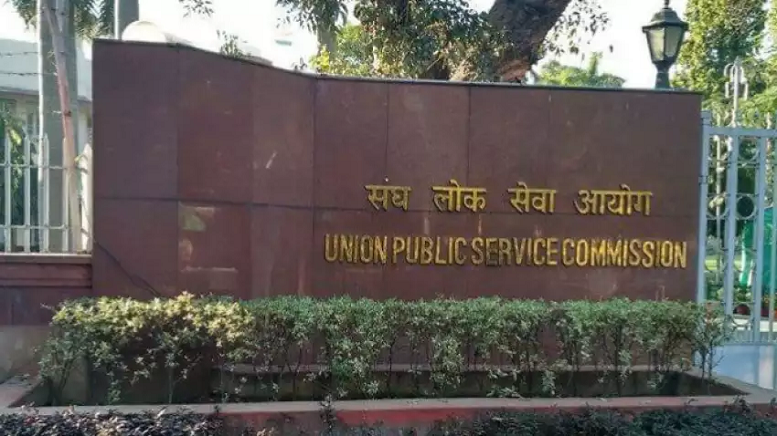
India’s bureaucratic system is dived into INDIAN ADMINISTRATIVE SYSTEM  IAS  GRADE -A and Lower level bureaucracy. There is a need to reform bureaucracy nowadays because our bureaucracy is facing the problem of credibility.

Bureaucrats fulfill the important roles like implementing laws, making and enforcing rules, and settling disputes through administration. Bureaucracy is the important pillar of Indian democracy. The function of running administration is to tactile the day to day administration in accordance with the rules, policies, laws, and decisions of the government.

There are various negative aspects of IAS System according to a survey there is a tendency to serve their political masters more than public. Ensured job security have made IAS officers indolent and arrogant.

There are negative aspects of lower level bureaucracy also according to the survey there is less concern for wasting public money and work was not done in an efficient and timely manner.

Promotions were based on seniority rather than merit. Some respondent argue that present bureaucratic system had features of the British – era legacy and do not touch me attitude.

54%believed that system is a complete failure and needed reform with a zero based approach necessary to improve it. Respondents were critical of present training as lacking in focus on attitude, humanity, and critical thinking and more emphasis on learning rule books, and file management.

No accountability, cost consciousness or consideration for delivery of quality service in Indian bureaucracy. It needs reform to introduce professionalism, accountability and efficiency and effectiveness to enable it to contribute to good governance.

One way to reform bureaucracy is to introduce NEW PUBLIC MANAGEMENT it breaks the hierarchy and rigidity through debureaucratization and de- centralization of decisions. 

Another way to reform bureaucracy is to change the way public officials interact with people which has witnessed a shift in the post of RTI (RIGHT TO INFORMATION) RTI act created a certain level of transparency among public servants. Initially citizens were unable to know the status of public services available to them and reason for their failure to access them. RTI has increased transparency of public officers.

Cat & mouse chase ends finally as Amritpal falls in police net

Radical preacher Amritpal and his aides have been sent to Dibrugarh Jail to avoid any disruption of peace in the state. Currently, he is being quizzed by central agencies for his connections with Pakistan’s ISI, Babbar Khalsa, his foreign funding etc, writes Aayush Goel

The 36 day long Amritpal Saga ended on April 23 with the dramatic arrest of a Khalistani separatist from the native village of Jarnail Singh Bhindranwale. Evading police for long, pro-Khalistani separatist leader Amritpal Singh was nabbed from outside Sant Khalsa Gurudwara in Rode village in Punjab’s Moga district at 6.45 am on Sunday under the National Security Act (NSA). Wasting no time, he was flown from Bathinda airport to Assam’s Dibrugarh Central Jail where his nine arrested associates are already lodged. 

The arrest was as dramatic as his chase by police, but was predictable in lots of ways. Amritpal styled himself by wearing a turban and robe similar to Bhindranwale before his arrest. It is the same village where Amritpal’s ‘dastar bandi’ (turban tying ceremony to bestow responsibility) was held on September 29, last year. The choice of the place and dress up was aimed to re-emphasise his fascination for Bhindranwale and a desperate attempt to establish that he was a worthy successor to his ideology.

Before walking out of Gurudwara, Amritpal addressed a small gathering boasting how he could have easily fled the country, but did not do so. In one of the viral videos from inside the Rode village gurudwara, Amritpal said, “I have decided to surrender and this arrest is not an end, it is the beginning.”

Bhindranwale’s nephew and former Jathedar of the Akal Takht Jasbir Singh Rode said that Amritpal had surrendered of his own will and was not arrested. The supporters and family of Amritpal insisted it was a surrender by ‘warrior’ but police refuted all claims. Punjab police IG (headquarters) Sukhchain Singh Gill announced the arrest saying they maintained the sanctity of Gurudwara by not stepping into its premises, but had cornered him in the village and finally arrested him. “He was located in Rode village, based on operational inputs. The village was surrounded from all sides by the Punjab police and he knew that he had no way to escape”, said Gill. He further added that there was a “relentless pressure by Punjab police for the last 36 days” and all the wings of Punjab police had worked in coordination for this special operation. He and his supporters were sent to Dibrugarh Jail to avoid any threat of jailbreak or disruption of peace in the state and to break his local network. Currently, he is being quizzed by Central agencies for his connections with Pakistan’s ISI, Babbar Khalsa, his foreign funding etc.

Peace and harmony priority: Mann

While the state virtually relived the decade old trauma for over a month CM Bhagwant Mann came with assurance of a brighter future after the arrest. Appearing more confident than ever before, Mann addressed the state through video saying the situation was in control. “I had got the information about the police operation on Saturday night. I remained awake the whole night. I was talking to police officers every 15 minutes. I wanted all this to end smoothly and peacefully.”

Responding to constant ridicule about police reportedly losing to Amritpal and his people’s ruckus at Ajnala, Mann said that they had made the choice. “He used Palki with Guru Granth Sahib to shield himself in Ajnala and cops did not retaliate to maintain its sanctity. Then and now we were clear that there will be no bloodshed from our side. Punjab police has been appreciated world over for this,” added Mann. Amongst other things, the entire episode drew attention to coordination between the Mann-led AAP government in Punjab and the Centre. A day prior to the arrest, Amit Shah had appreciated Mann in dealing with the issue and even announced that Amritpal could be arrested anytime. The duo had even met on March 02 and it is said that a crackdown was planned then. The opposition while taking pot-shots at Mann’s bonhomie with Shah, even calling Punjab government “the B team” of BJP, AAP’s Punjab chief spokesperson Malwinder Kang while talking to Tehelka said, ”National security is prime and way above politics. How can any connivance be thought about with what’s going on between us and Delhi?” Has this operation nudged Mann out of Kejriwal’s shadow remains to be seen.

MOST POPULAR

HOT NEWS