Scientific temper eludes India as superstitions galore!

Despite 1957 national science policy, which among others, intended to provide for growth of scientific temper, the development of the same has not been achieved. Surprisingly, even our scientists have generally failed to inspire scientific temper among the people, writes M.Y. Siddiqui

India, an ancient civilization, has been home to the largest number of superstitions and myths in the world. Indian society, amidst regional variations, has always been very conservative and superstitious. Mindset of people has hardly changed despite great reforms in the 19th and 20th centuries.

Average Indian consciousness is mostly clouded by obtrusive superstitions and prejudices. The country presents a bewildering picture about the prevalence and practices of superstitions, myths and illusions. Social sciences reveal that 98 per cent of the adult population of the earth carries some baggage of superstitions, myths and illusions over their inborn and inherent prejudices. The remaining two percent are rationalists, who also are not completely free from some prejudices or the other. The Indian sub-continent has been the greatest treasure house of art, culture, literature, religion, medicines, science, folklore and mythology. It is also the most fertile breeding ground of superstitions and myths, supported by hundreds of religious sects and institutions, thousands of self-styled god men, astrologers, palmists, numerologists, Vastu shastra practitioners and others. Rise of RSS Pariwar since 2014 has reinforced all such superstitions and added some more myths. Even the majority of scientists have fallen prey to such superstitions.

India’s superstitious myths go against the 1957 national science policy, which among others, intended to provide for growth of science, technology and scientific temper in the country. It also goes against Article 51A of the Constitution of India, which directs all citizens to “develop the scientific temper, humanism, and the spirit of inquiry and reform, (i) to safeguard public property and to abjure violence, (j) to strive towards excellence in all spheres of individual, and collective activity so that the nation constantly rises to higher levels of endeavor and achievements. The very basis of scientific temper is rational outlook, analytical mind and test of reasonableness.


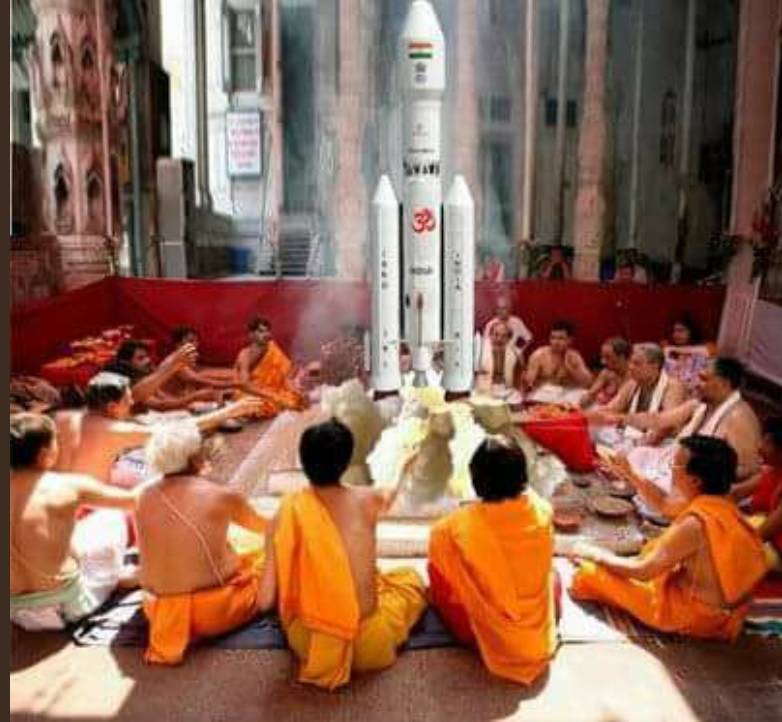
Unfortunately, development of the scientific temper has not been achieved. On the contrary, all rationalities are lost in the quagmire of religious fundamentalism. Surprisingly, even our scientists have generally failed to inspire scientific temper among the people. In fact, a 2007 survey, “World views and opinions of scientists in India” conducted by the Institute for the Study of Secularism in Society and Culture of the Trinity College along with the Centre for Inquiry (India), revealed certain startling facts about scientific temper. Accordingly, out of 1100 scientists from 130 institutions surveyed, 69 per cent approved strongly introduction of astrology in the courses of universities, 67 per cent supported seeking blessings from Tirupati before rocket launches, 38 per cent believed God could perform miracles, 24 per cent admitted that god men could do miracles, 16 per cent believed in faith healing and 14 per cent believed in Vastu.

A dangerous myth circulating has been the magical power of tiger meat, bones, skins and testes. Consumption of tiger meat and bones is believed to enhance the muscle power of the body. Yogis believe doing meditation sitting on tiger skin gives them enormous yogic power. Eating a tiger’s testes is aphrodisiac. Result, illegal trade in tiger body parts thrives in major cities worldwide so much so that this majestic animal is now on the brink of extinction. Added to this, three most important events in human life are birth, marriage and death. For all such occasions, superstitions and prejudices have been structured into compulsive rituals like the visit of eunuch for the new born babies being considered auspicious, which cannot be deviated from the average Indian like many other people of the world carries the burden of superstitions from birth to death. There is no denying the fact that a large number of average innocuous superstitions provide spice to daily life.

Superstitions like breaking coconut on various occasions, choosing a favourite number for the new vehicle, not eating eggs and bananas before going for exams, giving a spoonful of curd or putting a tilak of dahi and chandan before embarking on a journey, asking a person to sit down if he sneezes while leaving the house, putting lines of sandalwood paste on the forehead, putting the right foot first for men and for woman left foot first while stepping out of the house, not to accept money with the left hand, particularly bribery, hanging of a garland of lemons and chilies at the doors of shops, trucks etc. have become common superstitious practices that may not go away. It would be germane to mention, out of hundreds, a few most popular superstitions and myths in our society are, Rahu Kalam, each day in a week  for special God, washing of sins, Ganga water, cremation at Manikarnic Ghat.

 
Rahu kaal is considered the most inauspicious part of the day and shunned for ceremonies, journeys, etc. Millions of people in Southern India and many in the North, will never take bath, assume charge of a new assignment, start a journey, or conduct any ceremony like marriage and so on during the Rahu Kalam period. All days in the week have been assigned to various Gods and certain days and times are considered more auspicious than the others. Day of Lord Shiva is Monday, Lord Ganesh Wednesday, and Goddess Lakshmi Thursday, are considered special. Saturday is considered inauspicious and generally people don’t buy articles made of iron or start any ironwork. Similarly months of the year are assigned to various Gods and some months are considered auspicious for various ceremonies.

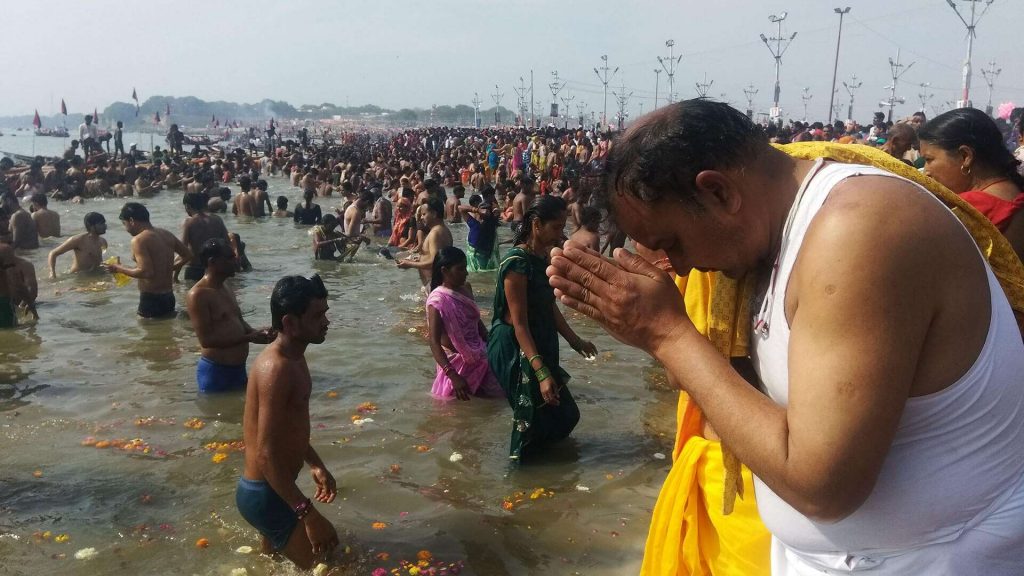
Millions do believe in the myth that a dip in the Ganga especially at the Triveni Sangam during the Kumbh will wash away all the past sins of life. There is age-old belief that the sacred river Ganga can never be polluted and Ganga water stored in copper vessels for years would not collect sediment or bacteria, has been proved as a myth as the Ganga water is highly polluted after certain portions of Uttarakhand, and not fit for bathing, not to speak of drinking. Yet another myth highly ingrained in people is that cremation at Manikarnika Mahashamashan of Varanasi, especially with sandalwood will enable the soul to rise to heaven.


More dangerous have been illusions about life, death, health, after-life, heaven and hell, salvation, road to prosperity, created by the religious sects, god men/god women, astrologers, palmists, occultists, Tantric, and fortune tellers. Besides, several god men and god women have crowned themselves as avatars (incarnations) to be worshipped like gods and goddesses. Their large followers have made them rich and they live in grand style with a retinue of volunteers, security staff and companions. Crimes, rape, sexual abuse, even murder in secrecy are not uncommon in these organizations.

It is a great irony that when a majority of Indian gods are women, our women folks have been the most suppressed lot. Infant girl or girl child is murdered at birth or before birth. Crimes against women like sati or bride burning for dowry are still rampant. There is also no parallel how widows are maltreated. Even today, in rural areas, widows are especially ostracized, not allowed to participate in religious rituals, wedding and entertainment programmes. Widows are supposed to wear white clothes, eat only vegetarian foods without onions and garlic that too once a day, observe all fasting rules, not to go out, and sleep on the floor.

Modern Indian history is replete with instances of the relentless fight against suppressions, obscurantism, bigotry and social evils spearheaded by Raja Ram Mohan Roy, Iswarchandra Vidyasagar, Henry Derozio, Swamy Vivekananda and Sister Nivedita. Raja Ram Mohan Roy, with Governor General Lord Bentinck, succeeded in banning Sati; Vidyasagar could stop child marriage and introduce widow remarriage. Swami Vivekananda stressed on liberal education for all men and women as the gateway to freedom and enlightenment removing the darkness of superstitions and casteism. But despite reform movements and India having the most liberal Constitution, the ground situation about social obscurantism, superstitions and discrimination is grim. The rationalists, a small minority in the country, are looked upon as the enemies of religion, live in fear. We have witnessed how some leading rationalists were killed in the recent past. Given all these facts together, the question is, will the era of scientific temper or reason ever dawn on us! Will we be humane and wholesome?
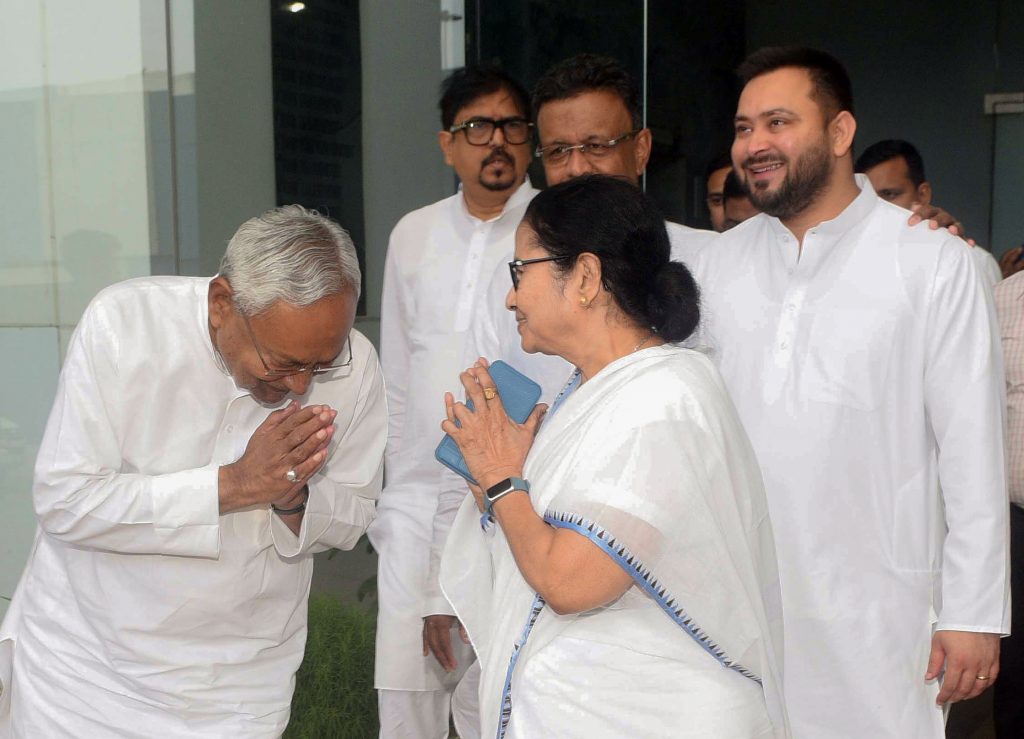


Karnataka win gives Cong pole position in oppn unity plans


The Congress expects that the Karnataka election results will make the parties like SP, AAP and TMC swallow their pride and let the grand old party spearhead the opposition charge against the Bharatiya Janata Party (BJP) in 2024 Lok Sabha election,  writes Amit Agnihotri


The Karnataka win has given a boost to the Congress’ plans of forging opposition unity ahead of the 2024 Lok Sabha elections but it may not be easy for the grand old party to bring the like-minded regional parties together.

Congress president Mallikarjun Kharge had been leading a group of 19 like-minded parties during the Budget Session of Parliament to counter the BJP-led Centre over the Adani-Hindenburg and other issues.

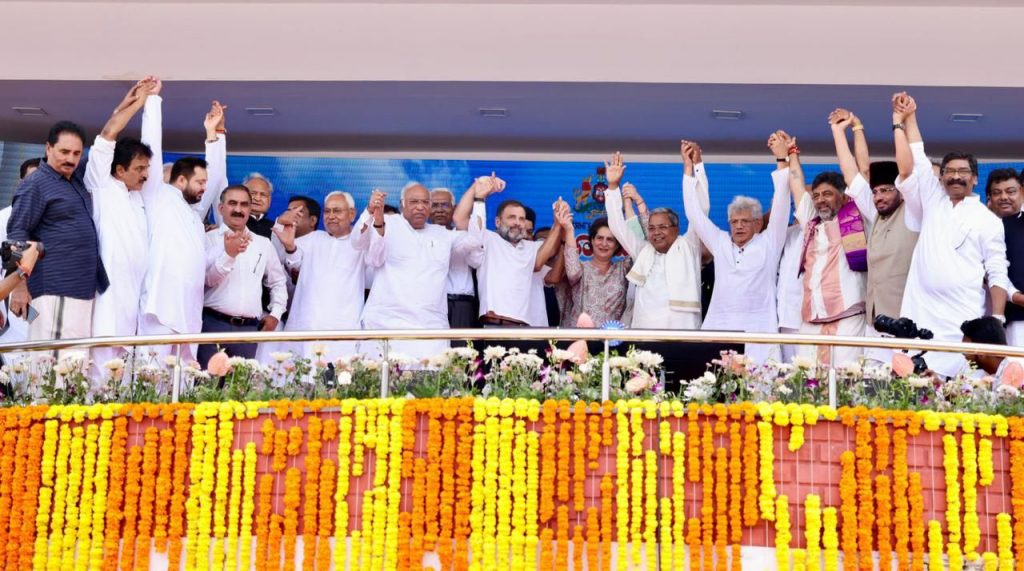
To take that unity forward, Kharge invited the like-minded parties for the swearing-in ceremony of Karnataka chief minister K Siddaramaiah on May 20. These included the NCP, Shiv Sena UBT, RJD, JD-U, DMK, CPI-M, CPI, RSP, Kerala Congress, IUML, JMM and TMC.

Besides JD-U leader and Bihar Chief Minister Nitish Kumar and his deputy Tejashwi Yadav of the RJD, Jharkhand Chief Minister Hemant Soren of the JMM, Nationalist Congress Party chief Sharad Pawar, Tamil Nadu Chief Minister M K Stalin of the DMK, Shiv Sena UBT MP Priyanka Chaturvedi, and National Conference president Farooq Abdullah attended the event.

West Bengal Chief Minister Mamata Banerjee was invited but skipped the event. BRS, BJD, AIADMK, AIMIM, YSRCP, TDP and AAP were not invited. Though Kharge had earlier spoken to AAP founder and Delhi chief minister Arvind Kejriwal, who had been called by the CBI for questioning in the liquor scam, the Delhi unit has been opposed to having any alliance with the AAP.

Kejriwal, who is opposed to a central government’s move to have control over transfer of officers, is trying to rally the regional parties to take on the BJP and defeat the central Ordinance during the coming Monsoon Session of Parliament.

The Congress said it will discuss the issue with like-minded parties and its Delhi and Punjab units before deciding whether or not to support the central Ordinance.

Ex-Delhi Congress chief Ajay Maken strongly opposed the idea to back Kejriwal saying the AAP founder had supported the BJP over removal of Article 370 from Jammu and Kashmir and had advocated that Bharat Ratna be taken away from former prime minister Rajiv Gandhi.


In the past, Kejriwal has been severely critical of both Sonia Gandhi and Rahul Gandhi and had attacked the Congress saying the grand old party was not able to take on the BJP. The TMC and the SP too had similar views. Many in the Congress see this as an impediment towards a larger opposition unity.

Besides the ordinance, the opposition parties also found a common ground in boycotting the inauguration of the new Parliament building by PM Modi saying the job should have been done by President Droupadi Murmu and slammed the PM for not inviting the President for the ceremony on May 28.

A joint statement of opposition parties said there was no point in attending the inauguration of the new Parliament building when the BJP had sucked the soul out of the institution by silencing the voice of the opposition. Rahul Gandhi said Parliament is not built by “bricks of ego” but through constitutional values.

Nitish Kumar’s role

Over the past weeks, Bihar Chief Minister Nitish Kumar and his deputy Tejaswi Yadav have been interacting with Mamata Banerjee and Arvind Kejriwal to push the opposition unity plan keeping the Congress in the loop.

After the Karnataka results, Nitish Kumar met Congress chief Kharge and former chief Rahul Gandhi in Delhi, days after he met Kejriwal, to fix a date for a big opposition meeting which was being planned before the Karnataka polls. Senior Congress leader KC Venugopal and JD(U) chief Lallan Singh also attended the meeting. Tejashwi Yadav had to drop out at the last minute as he was unwell.

After the meeting, Kharge said: “Now the country will be united, ‘The strength of democracy’ is our message! Mr. @RahulGandhi and we discussed the current political situation with the Chief Minister of Bihar, Mr. @NitishKumar today and took forward the process of giving a new direction to the country”.

Earlier, Nitish Kumar had also met BJD leader and Odisha chief minister Naveen Patnaik, who supports the BJP on specific issues.

Nitish Kumar had met Arvind Kejriwal and extended his “complete support” in the ongoing face-off with the Centre over the control of the bureaucrats working in the national capital.

During their meeting, both Nitish Kumar and Mamata Banerjee discussed a strategy to put up a single opposition candidate against the BJP across the country in the 2024 Lok Sabha polls.

“Strong regional parties should take on the BJP in 2024 on their home turfs and in turn, they would back the Congress in the 200-odd seats where the two national parties are in direct contest,” Banerjee said. “If you want some good thing, then you have to sacrifice yourself also in some areas,” she said.

It was the West Bengal Chief Minister who had suggested the idea of a mega meeting in Patna. “Bihar was a symbol of change in the Centre when JP’s (Jayaprakash Narayan) movement started. If we have an all-party meeting in Bihar, we can then decide where we have to go next,” Banerjee said.

The Congress felt that the Karnataka win will force the regional parties like TMC and AAP to have a rethink over their reservations to the issue of grand old party playing the anchor’s role in forging any opposition unity for 2024.

“The Congress has been trying to take other parties along and forge a national anti-BJP front for the 2024 Lok Sabha polls. The Karnataka results will send a strong message to the regional parties, including the TMC and AAP, and compel them to align with the grand old party for the bigger 2024 political battle,” AICC leader Vamshi Chand Reddy said.

Kharge also told the Congress workers, “If you want to protect democracy in the country you have to win the 2024 battle.”

The Congress described the Karnataka win as a defeat of PM Modi, who led the BJP’s campaign in the southern state and became the face of the saffron party.

In a positive gesture, the SP, AAP and TMC congratulated the Congress over the Karnataka win while Mamata Banerjee was quick to state that the Karnataka results marked the beginning of the end of the BJP and that she was ready to support the Congress wherever the TMC was not strong. Akhilesh Yadav too had expressed similar views.


2023 polls

Before 2024, the Congress hopes the Karnataka results will have an impact in the coming four assembly polls in Madhya Pradesh, Rajasthan, Chhattisgarh and Telangana this year. But in three out of these four states, the Congress fights directly with the BJP. In Telangana the grand old party fights the ruling BRS.

“The people of Karnataka have indicated which way the wind is blowing. The results in Karnataka would have an impact not only in the coming assembly polls in Madhya Pradesh, Rajasthan, Chhattisgarh and Telangana, they will also strengthen our claim of being the only credible national alternative to the BJP,” Vamshi Chand Reddy said.

“See, the PM Modi-led BJP had been trying for a Congress-free Bharat since 2014. But now the people of Karnataka have given a BJP-free south India. The five southern states including Andhra Pradesh, Telangana, Karnataka, Tamil Nadu and Kerala have 129 Lok Sabha seats. So that is a straight loss to the BJP which has been badly defeated in Karnataka. Over the coming months, the BJP’s claims of being the largest political party in the world and a pan India party will be exposed,” said Reddy.

“In comparison, the Congress vs BJP type of contest will gain ground in public discussion. After we take MP from them which they stole from us in 2020 and retain Chhattisgarh and Rajasthan, the Congress’ nationwide presence will get projected in public mind and will play a role in ensuring the BJP’s defeat in the 2024 national polls,” he said.

The Congress leader acknowledged that Kharge’s background as a Dalit leader who could reach the top party post helped the grand old party project its democratic credentials and resonated with the marginal sections of Karnataka.

“It will also send a message across the country. Plus, due to his personality, all opposition leaders find it easy to associate with Khargeji,” he said.

Reddy further mentioned that the pro-people promise the Congress made in Karnataka convinced the voters, adding that a detailed common minimum programme would have to be worked out along with the other parties to set the agenda for the 2024 national elections.

The AICC functionary acknowledged that while the people were tilting towards the Congress again, the grand old party would have to put its house in order and regroup.

“The Karnataka elections took precedence over the party reforms we had approved during the Plenary Session in February. Now, there will be several changes in the organization and everything will be geared towards the larger 2024 battle,” Reddy added.

G-7 cheer for India, Japan South Economic Corridor initiative


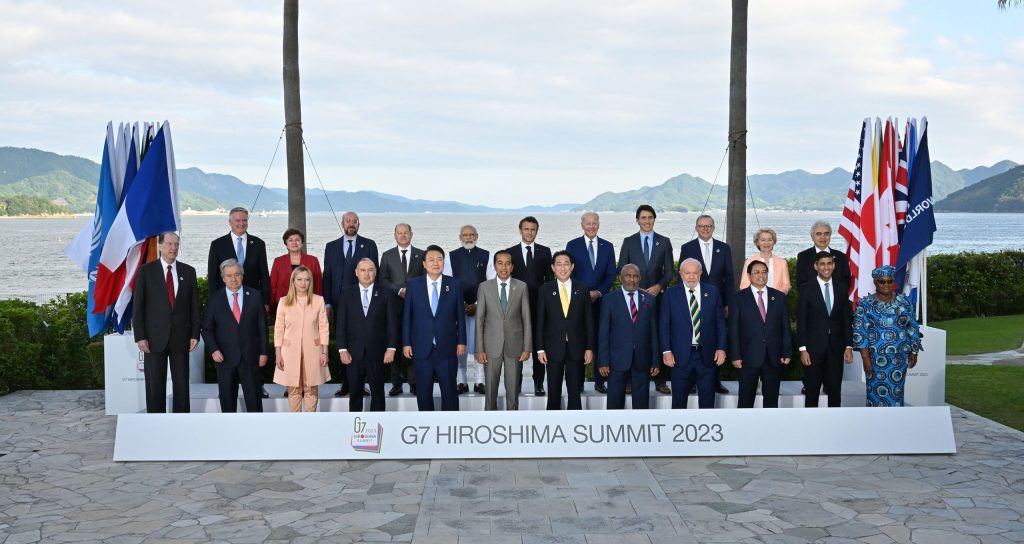
On the sidelines of the Hiroshima summit, India and Japan have moved ahead to develop a new trade hub, Southern Economic Corridor (SEC), aimed at turning India’s north eastern states and countries like Bangladesh, Thailand  and Vietnam into an industrial manufacturing hub.

The G7 could not offer any substantial peace initiative at its summit held on May 19-20, 2023, at Hiroshima, Japan, in ending the ongoing East European conflict i.e. Russia-Ukraine War, but on the sideline of this high-table summit, India and Japan have moved ahead for developing a new manufacturing and trade hub, Southern Economic Corridor (SEC) in the Indo-China.

The proposed SEC envisages India-Japan economic co-operation for turning India’s north-eastern states and other countries of the region, including Bangladesh, Thailand and Vietnam, into an industrial manufacturing hub. It has stated to have received approval from the G-7 nations, who too are keen to diversify the supply chain, which is  dependent upon China.    

Indian Prime Minister Narendra Modi, perhaps, was the only among the world leaders to talk about a peaceful resolution of the Russia-Ukraine War. He reiterated his agenda, when he met the Ukrainian President, Zelenskyy, promising that his government would do her best to usher in peace in Eastern Europe. With the stiffening of the attitude within G-7, there appears to be no early solution to the 15-month old ongoing conflict.. Most of the G-7 leaders were seen vying with one another in offering financial and weapon support to Ukraine.

The war is being called fratricide, because both Russians and Ukrainians are intertwined with each other having common religious affinity, close family ties, marriages having common history fighting aggressions. They had together defeated Hitler’s forces during the W.W.-II, but in recent years the deliberate western penetration has created a deep wedge between the two nations.

Unfortunately, instead of working out any strategy for peace, the G-7 members comprising the USA, Canada, U.K., France, Germany, Italy and Japan, were seen offering state-of-the art weapons and funds to Ukraine.

 
The Anti-Bomb Resolution

Few took the resolution for a nuclear-weapon free world adopted at the G-7 seriously. It could have been just a rhetoric intended to pay tribute to the victims of Hiroshima, when the Americans had dropped an atom bomb instantly killing more than 100 thousand people, and the survivors have been suffering the effects of radiation since then. The Americans never told the world why they used the ultimate weapon against Japan, a country already defeated in World War-II and was in the process of surrendering before the allied forces.

Meanwhile, the decision of the summit to further arm the Ukrainians has already received sharp reaction from Russia. It is feared that the conflict might escalate, especially when China has extended its support to Russia with its strong economy. Its peace proposal is already pending with Ukraine. There is little possibility that the West could actually force Russia to end the conflict without agreeing to a proper peace package. It is stated that the main hurdle in the peace process is that Ukraine does not want to assure Russia that it would not join the NATO (North Atlantic Treaty Organization). The West is also not ready to concede the Russian demand that it would not enrol the Eastern European countries, which were once a member of the Warsaw Pact.  

The Russians are also unhappy that while they were refused membership of NATO, the Americans are quietly enrolling the Eastern European nations. It is also stated that Moscow has been apprehensive regarding the recent expansion of NATO, which is being considered an attempt to dilute the Russian influence in the region. Amidst these developments, the repression of the Russian-speaking population in Ukraine caused further anxiety at the Kremlin, which had finally led to the Russian aggression against Ukraine.

Apart from Modi, the president of the European Commission, Von der Leyen, also attended the summit. It is being interpreted as a symbol of the unity of the European Union, a “non-enumerated member”. Interestingly, Modi, who was attending the summit as a guest at the invitation of the Japanese PM, Fumio Kishida, did not evince any interest to become a member of the G-7 replacing Russia, which has ceased to be its member following the outbreak of the Ukraine conflict. India, however, hopes that if the peace process begins Russia might resume its legitimate role in this powerful forum.

Media Comments against Modi

Few in New Delhi take the western media comments against Modi seriously, especially following the revelation that the US administration has already investigated how much Chinese funds have been pumped into the major dailies like the New York Times and a few media channels. It, however, is yet to be known how the American administration is preventing the inflow of the huge funds from the Chinese government-owned corporate accompanied by large doses of advertisements. In New Delhi, it is being jokingly asked whether their description of Modi’s presence at the high table as the biggest supporter of Russians is serving the Western interests or it is being done to please the Dragon. Meanwhile, the American media’s recent maligning of India shows that despite American rhetoric against China, the western powers are unable to counter the influence of the Chinese penetration in their systems. The media, academia and real estate continue to be under the influence of the Dragon.

Undeterred by such adverse anti-India publicity, the President Joe Biden during the summit walks towards Modi to hug him warmly. It could not be just a photo opportunity, but it has given a clear message that the democratic nations trust India despite having some perception-differences with her.

 
Biden’s Flies to Japan

Joe Biden, who had cancelled his visit to Papua New Guinea and Australia due to the impending debt crisis, has assured the G-7 nations that America would honour its securities. It is being stated that if the issue could not be resolved within this month i.e. if the US fails to en-cash the securities, the world economy might face the much-feared worldwide economic slow-down.

Earlier, it was hoped that Biden’s decision to attend the G-7 summit, in spite of the looming debt crisis, that some substantial peace process might be initiated; instead US commits to give F-16 fighters to Ukraine, offers to train its pilots to use this fifth generation fighter aircraft to be used against Russia. In other words, there is no immediate hope that the world’s rich nations will genuinely be taking any peace initiative.

It is not known what impact would have on the G-7 economies if the conflict in Europe is not ended. It is being stated that the US debt crisis might further intensify, if peace is delayed. As of January 2023, the five countries owning the most US debt are Japan ($1.1 trillion), China ($859 billion), the United Kingdom ($668 billion), Belgium ($331 billion), and Luxembourg ($318 billion). Therefore, in spite of American rhetoric against China, the western economies depend upon China.  

The proposed S.E.C., which envisages industrial value chain, perhaps, offers a practical approach to the economic issues of the Indo-China region. Also, it might reinvigorate the economies of the region. The idea was discussed during the G-20 meetings in September held in India between the Japanese PM Kishida and Modi, and now it is poised to take off to serve the other nations of the region.

Don’t we have a spirit of sportsmanship anymore?

Recently, fans abused Shubman Gill on social media and even targeted his sister and threatened sexual violence against her. All in all it was a low thing to do, which no real sports lover should ever indulge in

Everyone feels performance pressure. It does not matter what we do, whether we are students, housewives, pen pushers, babus, corporate slaves or head honchos, performance pressure is always there. And it’s more intense if one is a celebrity, like an actor or sportsperson where the expectations of the fan base are immense.

This burden of expectation is a thousand times worse if one is a cricketer in a cricket crazy nation like ours, where people literally worship legendary players like Sunil Gavaskar, Kapil Dev, Mohinder Amarnath, MS Dhoni, Rahul Dravid and Virat Kholi to name a few.

So, obviously, when cricketers, great or small, go out on the field to play they are stressed out like any normal human being facing immense performance pressure. That’s understood and to be expected. But what is not understood and expected is the added burden of worry for their own safety and that of their family that some “fans” have started placing on the shoulders of our sportsmen.    

The latest example of this boorish and unacceptable behaviour is the trolling of and threats to cricketer Shubman Gill and his sister Shahneel by some so-called fans. The nasty episode was triggered when the Gujarat Titans opening batter scored his second successive hundred that handed his team another victory in the Indian Premier League 2023. However, GT’s victory resulted in Virat Kohli-captained Royal Challengers Bangalore’s (RCB’s) exit from the tournament.


While the losing team accepted the loss gracefully and King Kohli even acknowledged Gill’s ton with an embrace post the match, the ouster of RCB from the tournament didn’t go down well with some fans, or maybe bookies. Fans began abusing Gill on social media and even targeted his sister and threatened sexual violence against her. All in all it was a distasteful and low thing to do, which no real sports lover should ever indulge in and which no sportsperson should ever be put through for just doing their job well or even badly on any given day.

Thankfully some fans came out strongly in defence of the duo who were facing a volley of abuse and called out the trollers and the Delhi Commission for Women (DCW) chairperson Swati Maliwal, too, initiated action against the harassment of the cricketer and his sister.

In a tweet, Maliwal said, “Extremely shameful to see trollers abusing Shubman Gill’s sister just because the team they follow lost a match. Previously we had initiated action against people abusing Virat Kohli’s daughter. DCW will take action against all those who have abused Gill’s sister as well. This shall not be tolerated!” And it should not be tolerated too, because this sick targeting of sportspersons seems to be becoming a habit with us now, all thanks to the anonymity and facelessness of social media.

Not too long ago another hapless player became a victim of this festering intolerance when India lost the Asia Cup match with Pakistan. India pacer Arshdeep Singh dropped an easy catch against Pakistan in a keenly-fought match where emotions and tempers were running high because the fight was between the old arch-rivals. However, what happened after the match was worse. Angry “fans” tampered with his Wikipedia page, hurled abuses at him, called him a traitor and threw slurs like “Khalistani” at him just because he hails from a minority community. This could have happened to anyone, but more often than not on-field blunders of minority players are not easily forgotten or forgiven. People who trolled and abused Arshdeep failed to realize that he is just a 23-year-old who doesn’t have the eons of experience that the other players have. So, he dropped the catch. And we lost a match we would have liked to have won.

As an Indian, I can understand the sense of anger, disappointment and loss that all Indians felt. But just think of how much more terrible a youngster who was in a way responsible for his country losing a “mooch ki ladai with Pakistan” would be feeling after dropping that all-important catch! So why add to his woes by abusing and threatening him?

Thankfully, senior players, past and present, came out in support of Arshdeep and shamed the shamers and his parents stood by him and gave him solid support, as did some political parties. But things should not have come to such a pass and this kind of hatred would certainly have shaken his confidence and added to his on and off field stress.

This incident makes me wonder, what happened to our deep-rooted Indian traditions of tolerance and Ahimsa? We were never like this. In fact, when we were growing up it used to be a running joke during an India-Pakistan match that the Pakistani players have to do well because if they don’t they will be flogged as punishment in their own country.

When our sportsmen did not do well they were wrung out to dry by sports journalists but that used to be incisive, knowledgeable, constructive criticism as well as fixing responsibility and accountability.

It was not threats of personal harm to the sportspersons and their kin just because their performance was not to our liking or they belonged to a team we were not supporting.

However, slowly and surely this has been changing.  Over the years our sportsmen have been subjected to death threats and fear of physical harm to them and their loved ones for various reasons. Earlier, before the advent of social media, some cricketers had the windows of their houses broken. Now, our players are subjected to online trolling, bullying and threats.

 For instance, in November last year, the DCW chief had issued a notice to the Delhi Police asking them to take action against obscene messages targeting Indian cricket captain Virat Kohli’s family, including his daughter after his team lost a match.

In 2017, former Indian captain Sourav Ganguly got a death threat via letter at his home in Kolkata in which the offender had warned him not to attend a local college-level event.

Shockingly, months after MS Dhoni and his team won the cherished 2011 World Cup for India, he was threatened by Maoists. Even Rahul Dravid has been threatened by Maoists in the past. And it’s not just cricketers in India who get threatened, it’s a sick trend that is prevalent across all sports in India and all over the world.

For instance, Scottish shuttler Kirsty Gilmour shocked fans when she disclosed that she was receiving death and rape threats on social media from bookies and gamblers. However, Gilmour was just lifting the veil of the ugly reality of the lives of hundreds of sportspersons, no matter what sport they play or where they are.

I can’t even begin to imagine the mental state of the sportspersons because they have to be accessible to their fans while at the same time remaining safe. It must be nerve-wracking because you never know who is an adoring fan and who is out there in the crowd with evil intent!

 
Losing and winning are what sports is all about! Unfortunately, due to some intolerant fans and bookies playing sports has become dreadful and toxic. It has come to a point where sportspersons can’t just play for the love of the game, they have the consequences of losing or winning to worry about.

The weight of the expectation of an entire nation made a seasoned player like Virat Kohli feel down and lonely and sent him into depression. How much more is the weight of hatred or threats to family members on a youngster’s fragile shoulders? Did we stop to think of that before abusing and trolling Gill and his sister? Just because we have access to social media and the security of anonymity in most cases, we can spew hatred against anyone? When did we turn into trollers? Did the advent of social media and the anonymity it offers change our character so much? Or was it that we were always like this but we didn’t have an outlet then? It makes me wonder don’t we have a sportsman spirit anymore?


Haryana’s Nuh emerges as the new cybercrime hotspot!

Nuh district of Haryana has eclipsed the infamous Jamtara district of Jharkhand, touted as the cybercrime capital of the country, if the recent police findings and crackdowns in the state’s district bordering Uttar Pradesh and Rajasthan are an indication. A report by Rajesh Moudgil

Just about a fortnight ago, Haryana police launched a crackdown in a bid to check a deluge of cybercrimes by blocking over 20,500 mobile numbers issued on fake and forged documents and flagging on its portal, over 34,000 other mobile numbers involved in cyber fraud operating from across the state including 40 hotspot villages of the state’s Nuh district which borders Delhi, Uttar Pradesh (UP) and Rajasthan.

According to the spokesperson of the Haryana police’s nodal agency, out of the total identified mobile numbers issued on fake ID, maximum 12,822 mobile numbers had been issued from Andhra Pradesh, 4,365 from West Bengal, 4,338 from Delhi, 2,322 from Assam, 2,261 from other North East states and 2,490 from Haryana; all these numbers were operating from different areas of Haryana and the same had been intimated to the Department of Telecom to block them.

The agency spokesperson said that about 14,000 more mobile numbers involved in cyber fraud would also be blocked soon through the Department of Telecom, Government of India. The spokesperson says at present, Haryana is at the top position in blocking mobile numbers used in cyber fraud.

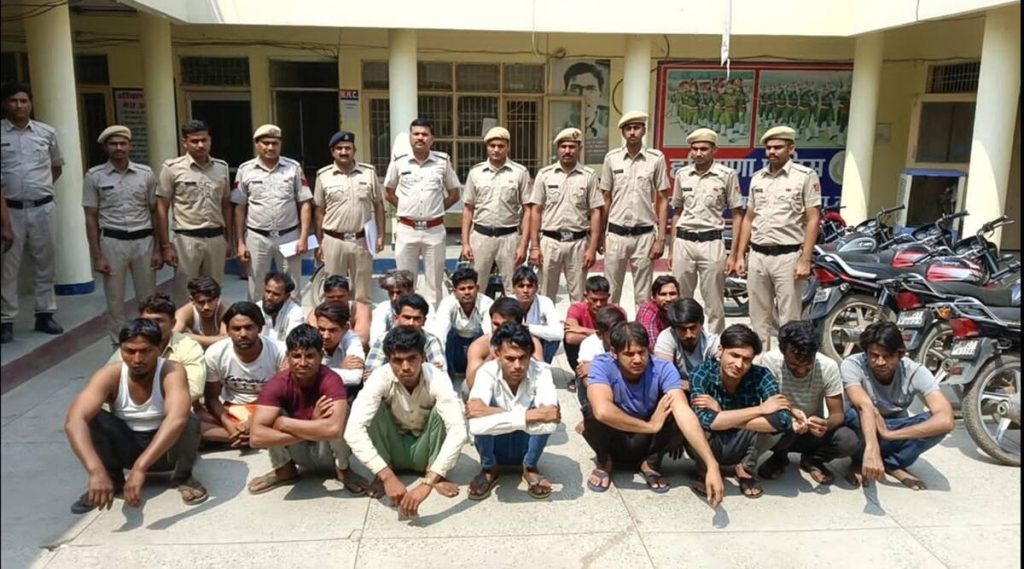
This step had a background. Last month only, over 100 teams involving 5,000 police personnel of the state police had raided 14 cybercrime hotspots villages in Nuh district. Claiming that the police had apprehended 125 hackers and cyber offenders after carrying out simultaneous raids that progressed throughout the night in several villages of Nuh, the spokesperson held that that the highest number of 31 cyber offenders were nabbed from Nai village, followed by 25 from Luhinga Kalan village, 20 each from Jaimat and Jakhopur, 17 each from Khedla and Tirwara, and 11 from Aminabad.

A criminal carrying a reward of Rs 10,000 was also nabbed during these raids, the police had said, adding that a total of 66 smartphones, 65 fake SIMs, 166 Aadhaar cards, 3 laptops, 128 ATM cards of different banks, 2 ATM swipe machines, 1 AEPS machine, 6 scanners and 5 PAN cards were also recovered from the criminals and hackers, besides 7 country-made pistols, 2 cartridges, 2 cars, 4 tractor-trolleys and 22 motorcycles. The raids were conducted by the police targeting 69 accused involved in cyber and other criminal cases.

According to reports, the Nuh police claimed to have solved a large number of cybercrimes involving frauds worth over Rs 100 crore by registering about 1,300 cases against suspects from Nuh in coordination with the Indian Cybercrime Coordination Centre of the Union Home Ministry and seeking information about fake bank accounts and SIMs etc to trace the suspects.

The Haryana State Crime Branch chief and Additional Director General of Police (ADGP), O P Singh, says the state crime branch, as the state nodal agency for cybercrime, has a team of 40 highly skilled cyber police personnel deployed at Helpline 1930 to promptly register reported incidents and collect relevant data. Hamid Akhtar, an IPS officer currently serving as DIG in the State Crime Branch, has been appointed as the nodal officer of this coordination centre.

Mewat region, the new epicentre

Meanwhile, according to available information, Jharkhand’s Jamtara district is now said to have been surpassed by the Mewat region – a region which is broader than the Nuh district (earlier known as Mewat) of Haryana – as regards the cybercrimes. The Mewat region – home to Meo Muslims – comprises Bharatpur and Alwar districts of Rajasthan and Mathura of Uttar Pradesh, besides Haryana’s Nuh district which shares borders with the two states.


According to media reports, Bharatpur tops the chart of cyber frauds followed by Mathura and Nuh, in order of their standing. Haryana’s Gurugram and Rajasthan’s Alwar districts are also among the top 10 hotspots from where the more than half of the cybercrimes are reported in the country, originate.
Media reports say that the official data which shows a sharp rise in the number of cybercrimes in the past three years also indicates that the most of the cybercrimes reported in the country originated from these spots from Mewat region and that, significantly enough, the victims and the perpetrators had often been in locations separated by hundreds of miles. In numbers, about 16% of the cybercrimes originated from Bharatpur, 14% from Mathura and 12% from Nuh. Even Jamtara district too reported 12% cybercrimes across the country during this period.

Simply put, while Mewat region has emerged as the new hub for the cybercrimes and cyber frauds, Jharkhand (for its Jamtara district) continues to be the single largest state from where about 26% of the country’s total cybercrimes originate. Jharkhand is followed by Haryana with 22% such cases and Rajasthan with 20.1%, according to reports.
Interestingly enough, such was the notoriety of the cyber frauds originating from Jamtara that it had inspired a Netflix series a few years ago!

Uninformed the sitting ducks

According to police, the cybercrimes – a side-effect of the tech revolution – are because of lack of information or education among a huge section of society who lack knowledge as to how to protect themselves; they are the sitting ducks for these fraudsters who simply talk to them into sharing their one-time-password (or OTP) number while offering them a variety of “schemes’’.
Espousing an advanced training and equipment for police personnel, the investigators also opine that the hotspots happen to be areas with a large population with hardly any job opportunities and factors that could lead many to break the law to make a fast buck with help of phone SIMS obtained on the basis of fake documents. Places like Nuh are another challenge for the investigators because of the jurisdiction factors as it is located in close proximity to UP, Delhi and Rajasthan towns and this factor hinders the cops’ chasing the scamsters red-handed or say, in real-time before their trail goes cold and they destroy the evidence!

Conserving the Greater adjutant

The protection of the species from intensive campaign for building awareness among locals to daily monitoring by saviours in the Kadwa floodplain area of Bhagalpur has scripted success, writes Deepanwita Gita Niyogi

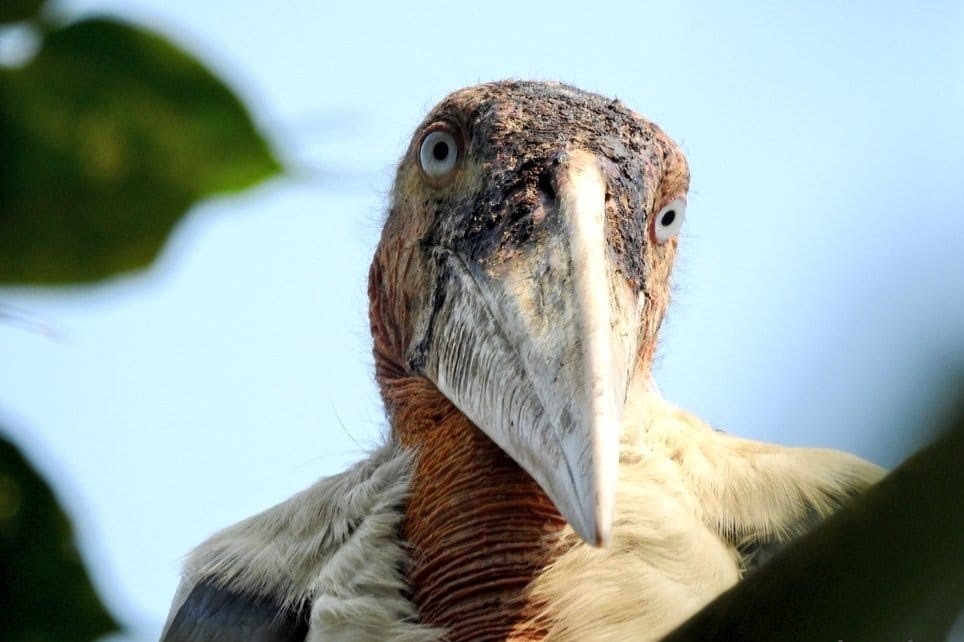
When Bihar’s birdman Arvind Mishra found a handful of nests belonging to the Greater adjutant stork, popularly called the garuda locally, in Bhagalpur district around 2006, he was delighted. Just two years before this, he had come to know of the Lesser adjutant stork in Purnea, another district of Bihar.

As the Greater adjutant is an endangered species, Mishra was determined to protect it. He started an intense campaign in the Kadwa diyara (floodplain) area of Bhagalpur where the bird is found apart from Assam and Cambodia. “It was a tough job initially as the area was not safe and had no easy access. But the locals were motivated to protect the bird when informed about its importance. When I started working, Kadwa lacked roads. At that time only 16 nests were found.”

The remarkable conservation journey has been possible thanks to constant vigil by garur saviours and garur guardians, who are local residents working voluntarily to conserve the Greater adjutant.

One such saviour is Rajeev Kumar who has been working since 2006 on garuda conservation. He is based in Kadwa which lies near the Kosi river bank and where many birds are found. “People like me monitor the nests. There are over 100 nests now. If the birds fall from trees or become ill, they are attended to quickly.”

Protecting the Garuda

Conservation work is on to save the Greater adjutant stork in Bhagalpur ever since Mishra found the nests. Santosh Kumar has been working for a decade now on a voluntary basis towards this cause. To earn his livelihood, he offers private tuition to students.

Both the garuda saviours had no idea about the importance of the bird till Mishra arrived on the scene. “He urged all of us to protect the Greater adjutant. Now, there are over 100 nests. Arjun, semal and bargad trees are preferred for nests. If they fall ill, I take care of them.” There is a committee comprising about 20 such saviours in Kadwa.

Monitoring is not the only thing. To protect the birds, a high tension wire has been laid underground in the area. The birds used to die because of the wire, said bird guide and wildlife enthusiast Ashutosh Kumar. He also informed that apart from the saviours, a few members of the Srishti Ganga Prahri Environment and Welfare Society, a non-profit, is also looking into conservation of the bird.

In order to treat sick and injured birds, the forest department manages the Greater adjutant rescue centre, the only one in the world, in Bhagalpur. To protect the birds, nets have been installed in the Kadwa diyara area which is the natural breeding zone of the Greater adjutant to save them. The population of Greater adjutants in the world is around 1600.

“The forest department conducts a survey every year. At present, there are 600 birds in Bhagalpur. The saviours and guardians were pressed into service by Arvind Mishra who first discovered the birds in 2006 here. He has worked with the community since then,” said Bhagalpur divisional forest officer Bharat Chintapalli.

Already some 40 to 80 people are working towards conservation. Still, when the department gets a call, a rescue team is sent to the spot. Efforts have borne fruits. The bird population has increased from about 75 in 2006 to the current 600.

Conservation journey in Bihar

Apart from electric wires, pesticides pose a threat to the birds. The dominant crops in the area are paddy, wheat and maize. The high-tension electric wire was, however, a recent thing.  Mishra recalled when he first found the birds in Bhagalpur, there was no power connectivity in the area.

But poaching was common. “Locals weren’t concerned and poachers used to kill the birds and steal eggs from the nests. When we informed them that it is a rare bird they were convinced. Rapport building took time over tea and meetings. I associated conservation with religion too,” the bird man added.

Bird conservation is not a new thing in Bihar as there have been attempts made from time to time. Chintapalli said in 2001, the forest department conducted a bird site development programme for a month in Bhagalpur as part of which people were trained as bird guides. Some are still continuing while others are into new jobs now. A few of them were from Kadwa.

The forest officer also recalled the first state bird festival of Bihar organised in Jamui district, a Naxal hotbed. It was called Kalrav. Today, visitors can visit the Naginakti bird sanctuary in Jamui where 180 species of birds have been documented. It is a wetland.

Conservation and the fight to protect an endangered species aren’t easy. Mishra did not give up. At one time he had spotted a Greater adjutant on sand bars. “They were juveniles. We monitored the nests but they were dismantled.”But his search continued and he found the nests in Kadwa.


Diversity in terms of characters, locales striking in these stories

The stories in ‘A String of Broken Dreams – Fifty  Short  Stories’,  authored by Lucknow-based writer Syed Rizwan are as concise as they could possibly be. These are straight to the point, not complicated but easy to absorb and read. Words and phrases and sentences flow along…rather too effortlessly. Letting nothing really come in between, neither the passage of time nor the expanse of days and months and years.  A book review by Humra Quraishi

The very  first and foremost aspect that  hit  me about this recently  launched book, is the  fact that these  fifty  short stories  have  been written in 30 days!  Also, they are as concise as they could possibly be. Some contained in a page whilst several others extending somewhat, to a couple of pages.

And what prompted the Lucknow-based writer Syed Rizwan to come up with these short stories. Not to overlook the fact that his earlier books are primarily non-fictions. To mention the titles of some of his earlier published books –Survivors of a Mutiny 1 &11, Regarding Lucknow,The Taming of  Islamophobia.

Why these short stories and that too fifty of them, written as briskly as possible? And this is what Rizwan details in the Preface to this book, “About a month back, I wrote a short story that fit within a page. That pleased me. So I sat down to write a bunch of such stories. In the process, I learnt short stories bring out  the  specialness of  common things using the  minimum of  words…these  stories  are  of  common people for  the  common people written by  a  common man.”  He also adds, “The good thing about short stories is they are not strenuous; they end before the weather or the mood changes. Having said that, they can change the mood from sombre to sonorous and solemn to scintillating.”

And as I read these fifty short stories, the diversity in terms of the characters and locales and settings and themes did impress.  Together with that, these stories are straight to the point. Nah, not complicated but easy to absorb and read. Words and phrases and sentences flow along…rather too effortlessly. Letting nothing really come in between, neither the passage of time nor the expanse of days and months and years.

In fact, when I was writing the foreword to this book, nostalgia tightened its hold. Taking me back to the  Jhansi  of the  1960s, when Rizwan’s  father was posted as the district magistrate of  Jhansi and my  father was also posted there as one of  the engineers supervising the construction of the upcoming dams in  and around  Jhansi. Our families were close and met rather regularly but then  things changed with their passing away. Death of our parents relayed an end of an era…of those good old days when simplicity and sincerity held sway.

Title of the book- A String of Broken Dreams – Fifty  Short  Stories 

Author – Syed Rizwan

Publisher –Petrichor Publications

Pages  –  138

Price – Rs 275

NIA raids three locations in Jammu and Kashmir’s Budgam

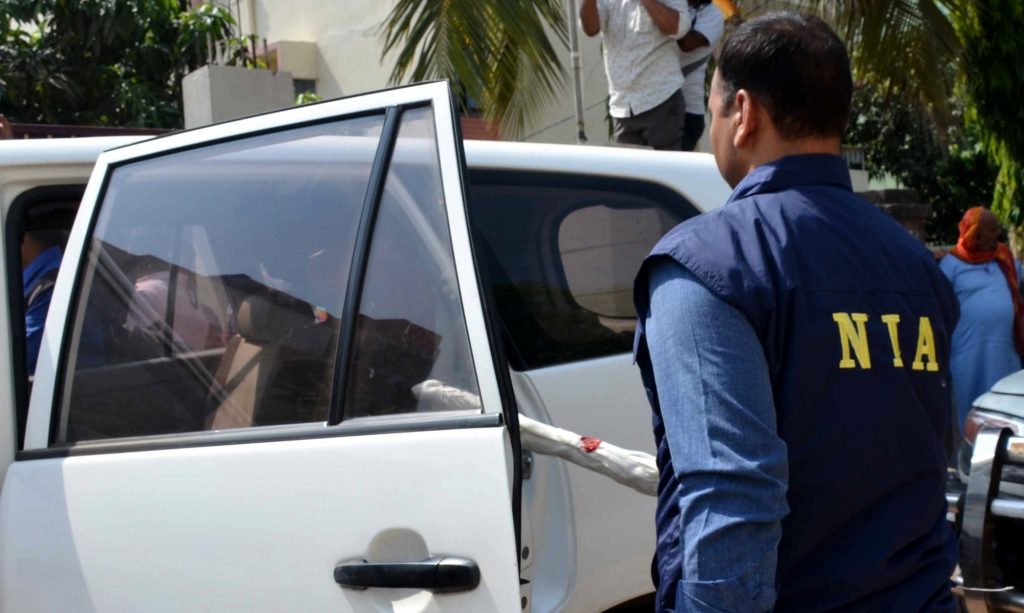
The National Investigation Agency (NIA) carried out raids at three locations in Budgam district of central Kashmir as part of its ongoing crackdown. 

The raids were conducted in connection with a case registered by the NIA. 

The NIA teams, along with the assistance of the Jammu and Kashmir police and CRPF, searched the residences of Farooq Ahmad Bhat and Zubair Ahmad Dar in Aripathen village. 

Another team raided the house of Ali Mohammad Dar in the same village. The NIA officials have not provided detailed information about the case at this time.

The NIA has been carrying out sustained raids in Jammu and Kashmir over the last four years to investigate cases filed against people allegedly funding terror in the union territory. 

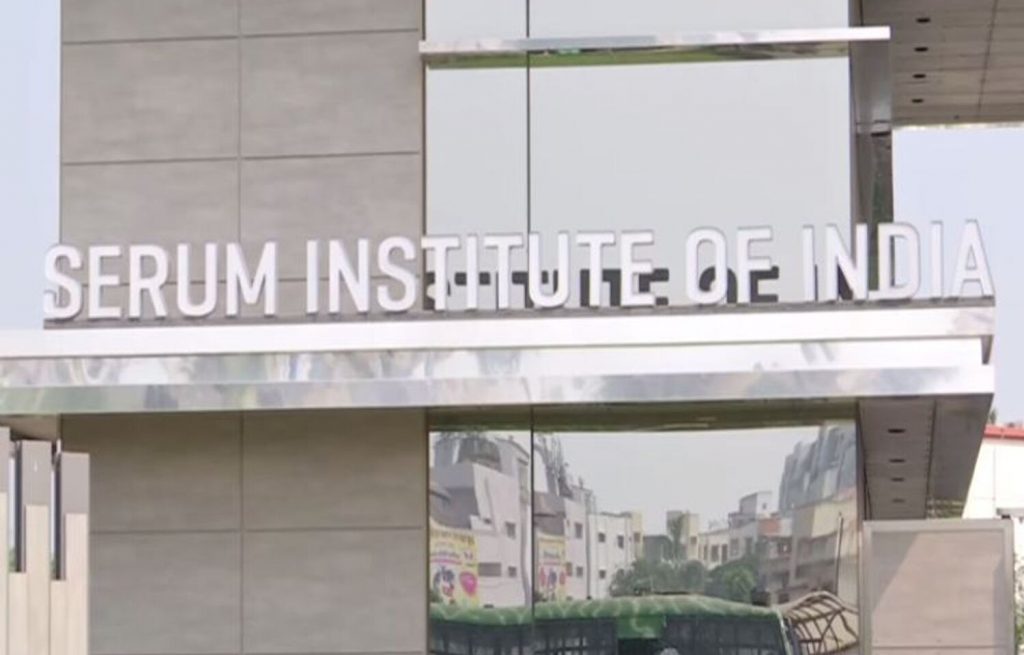
Serum Institute writes to govt, seeks in-house testing of its injection for detection of latent TB

New Delhi:  The Serum Institute of India (SII) has urged the Union health ministry to allow in-house testing of its Cy-Tb injection for the detection of latent tuberculosis, saying the testing facility for this product is not available in any government lab in the country, official sources said on Wednesday.

A letter in this regard was written by Prakash Kumar Singh, Director at SII, they said. The Drugs Controller General of India (DCGI) approved market authorisation of Cy-Tb injection on May 9, 2022, but even after a year of approval, Cy-Tb is not available in the market due to the non-availability of testing facility in any government lab in India, Singh said in the letter.

Rahul Gandhi  reiterates caste census demand, accuses BJP-RSS of attacking Constitution

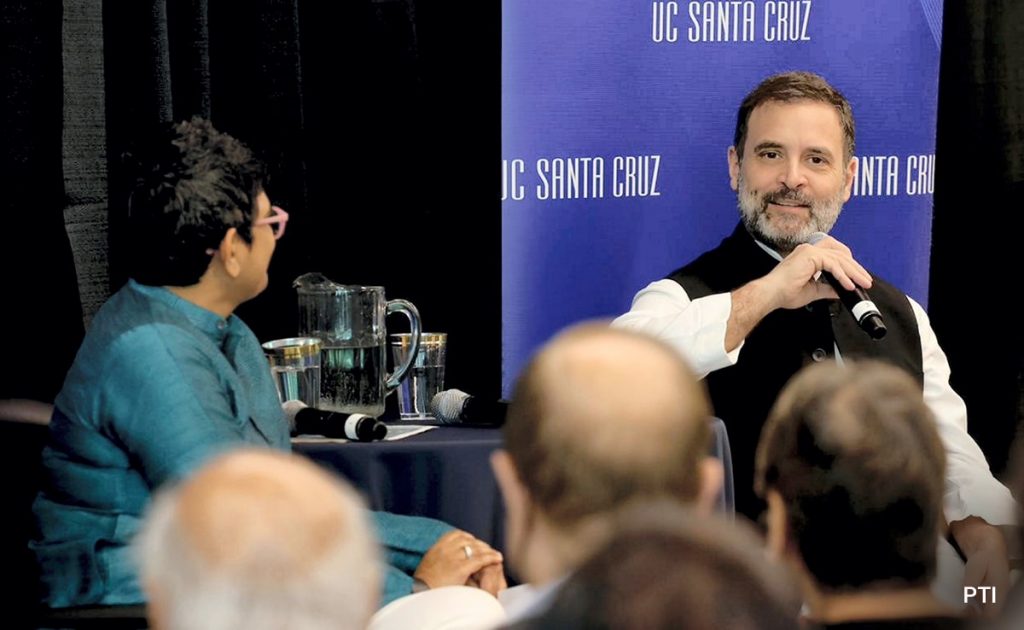
New Delhi : Former Congress President Rahul Gandhi, who is on a six-day US visit, has once again reiterated his demand for caste-based census and has accused the BJP and RSS of attacking the Constitution of India.

He also said that the beauty of India is its diversity and attack on any language is an attack on the Constitution of the country, which he will not allow to happen.

Interacting with the Indian diaspora here, Rahul Gandhi, who is on a six-day visit to the US said, “India has never rejected an idea. Everyone who has come to India, India has welcomed them with open arms and absorbed their ideas. And that is the India we like, which is humble, which respects, that listens and that is affectionate.”

He dubbed the Indians based in the US as the ambassadors of Indian culture and said that “it is the reason why all of you are here”.

Taking a potshot at the BJP, he said, “And if you had believed in hatred, anger and arrogance then you would not be sitting here but in the BJP meeting and I would be doing ‘Mann Ki Baat’. So thanks to everyone for holding our culture, allowing them to learn from our culture and allowing us to be proud as you all are our ambassadors. If the US says that Indians are intelligent, masters in IT, it is because of you all because you are holding the idea of respect and culture of India.”

To a question about the central government trying to impose the idea of one language, the former Wayanad Lok Sabha MP said, “The definition of India in the Constitution is a union of states. And within our Constitution the idea of language, culture, history and each one of them has to be protected.”

Slamming the BJP and the Rashtriya Swayamsevak Sangh (RSS), he said, “The BJP and the RSS are attacking that idea and the Constitution. For me Tamil is more than a language to Tamil people. It is not just a language, but it is their history, culture and their way of life. And I will never ever allow the Tamil language to be threatened because for me threatening the Tamil language is threatening the idea of India. Threatening Bengali, Punjabi, Kannada and Hindi all are attacks on India. Our strength comes from our diversity. Our strength comes from accepting that we are all different but we can work together.”

The former Congress chief once again reiterated his party’s push for the caste census.

“When we were in the system, we had carried out a caste census. The idea behind the caste census was to have an X-ray of Indian society to find out what are the exact demographics of the society, how many people of different communities, and different castes are there. So without knowing the demographics and who is who, it is difficult to distribute wealth and power effectively.

“And that is the reason why we are pushing the BJP for issuing caste census and they are not doing that and when we come to power we will do that, ” he said.

He also said that Congress is committed to make India a fair place and “we understand that India today in terms of treatment of Dalits, tribals, poor and minorities, is not a fair place.”

“There is a Nyay Scheme which can provide minimum income to every Indian, schemes like MGNREGA, increase in public education, public healthcare and I think these are things that can be done to make it a more fair place, ” he said.

On a question over the women empowerment and the delay in the passage of the Women’s Reservation Bill in Parliament, the Congress leader said, “We are committed to it and we tried to pass it in last government but some of our allies were not happy with it and they didn’t allow to pass that bill.”

“So I am confident if we come to power we will pass that bill. We believe in empowering women and their participation in politics. Involving them in governance, business and politics is the way to empower them, ” he added.

Rahul Gandhi arrived here on Tuesday morning. He was travelling on an ordinary passport as he had surrendered his diplomatic passport following his disqualification as a MP.

Indian Overseas Congress Secretary Virendra Vashistha said that Rahul Gandhi’s visit to the US is to spread the idea of love, and he will be interacting with different groups during his six-day visit.

MOST POPULAR

HOT NEWS