Joshimath Crisis and After Violations for Cash

A Tehelka SIT report reveals how property agents help prospective property buyers in the hill towns of Uttarakhand get around building by-laws by acting as a go-between for them and the corrupt officials

“Just bribe the officials of the Lake Development Authority [LDA], Nainital, and get all the clearances for building a resort on your land in Nainital district, no matter whether you follow their guidelines or not.” This is Karan Sah for you. A real estate agent from the Himalayan state of Uttarakhand, working in Bhowali town of Nainital district, Karan claimed while speaking to Tehelka reporter that he himself had got the construction map of a house approved from the LDA after greasing palms of the officials. Karan further gave us an LDA official’s number, through which, he claimed, we could get our house map approved in return for cash even if there are building by-law violations.

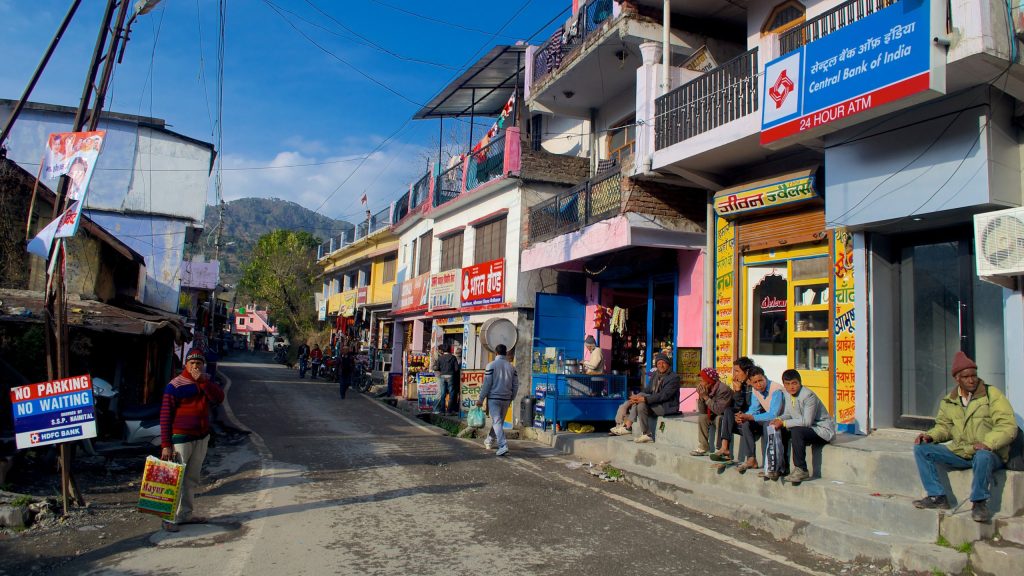
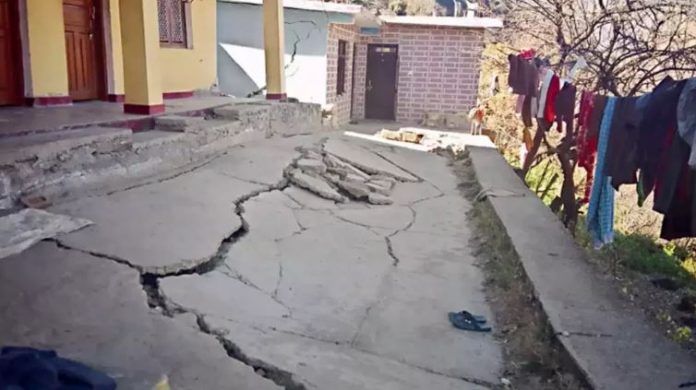
In the wake of the recent Joshimath crisis which occurred in January this year, where thousands of houses had developed cracks, Tehelka decided to travel to picturesque town of Nainital in Uttarakhand. This report exposes how unplanned and illegal constructions, which are blamed by experts for the situation Joshimath finds itself today, are still continuing unabated. It is believed that Joshimath is “gradually sinking.” But alarmingly, the phenomenon is not confined only to this holy town. Fear lurks among the residents of the other hill towns like Nainital, Mussorie, Karnaprayag, Uttarkashi, Guptkashi and Rishikesh as cracks have started appearing in buildings and roads there too.
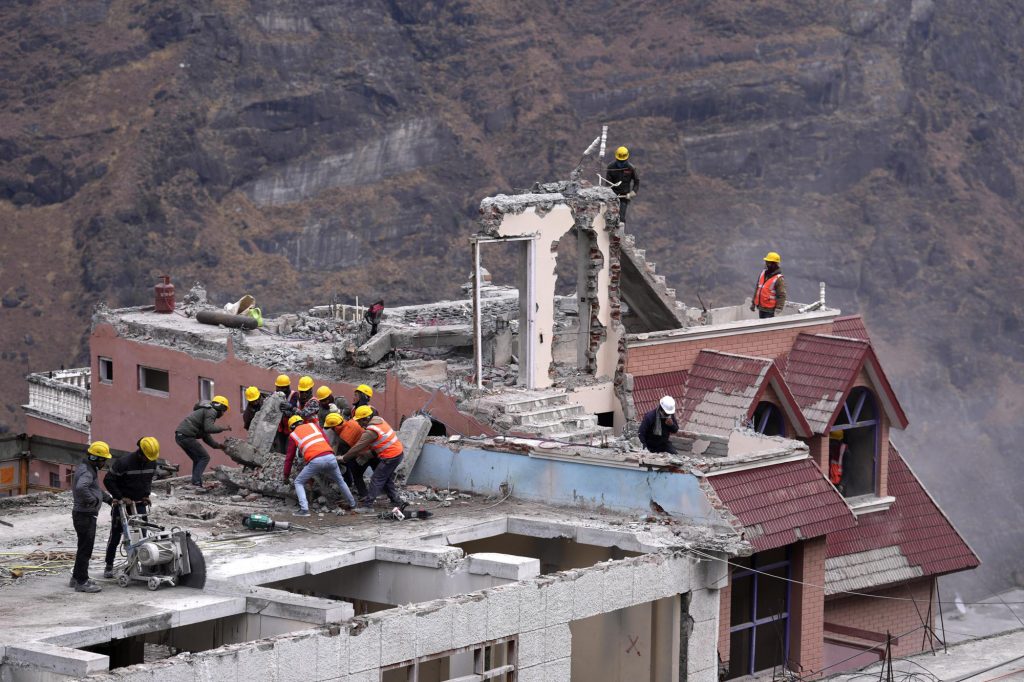

Nainital, a famous tourist destination in Uttarakhand, is also witnessing a situation similar to Joshimath. Cracks have appeared on the Mall Road in Nainital, triggering the alarm bells. Taking a quick action, the Public Works Department (PWD) filled the cracks and levelled the subsidence by applying cement. But this is not the first time that Mall Road has developed cracks. In the past too, cracks were seen at many places in the lower Mall Road near the Grand Hotel in the Mallital area. The PWD filled all the cracks with mud and sand which had washed away due to rain. Even before this, in August 2018, a part of the Mall Road broke and fell into the lake. Now again, as the pictures of the cracks have come to the fore, danger looms on lower Mall. Apart from this, some minor cracks have also been observed. Taking it on priority, the department filled the cracks with liquid, mud and sand. Incidentally, this time, cracks on the Mall Road are longer and wider than the last time.

Experts have spoken of the possibility of ground subsidence in the area more than ten years prior. The fact that Joshimath town is sinking is not shocking because no corrective actions followed whenever violations had raised hackles in the past. Several new multi-story structures are said to have sprouted up in and around not only in Joshimath, but in all the hill towns of Uttarakhand which are now reporting fractures in buildings and streets. Joshimath’s problem with slope instability has gotten worse as a result of unplanned construction that didn’t take the bearing capacity into account, according to a survey report by the Uttarakhand State Disaster Management Authority [USDMA] from August 2022. Several additional buildings could be developed in the landslide-prone area by building retaining walls. As a result, there is now increased strain on the weak slope.

Experts say that massive construction projects undertaken without enough planning, combined with rise in population, tourist load, illegal construction and vehicular pressure are creating a deadly cocktail that is hurting hill towns in Uttarakhand. Tehelka decided to investigate Nainital district, a famous hill station of north India, where in every nook and corner, you will find agents claiming that they will help you in getting your house or resort constructed in the Nainital district after getting all the necessary permissions from the District Level Development Authority of Nainital, known as Lake Development Authority [LDA]. They will also guide you to the LDA officials whom you can bribe after which you can undertake construction as per your wishes giving a wide berth to the building by-laws.

And all this is all happening after the recent Joshimath crisis caught the attention of entire nation. It just goes to show that we have not learned anything from our mistakes.

As part of this investigation, Tehelka first met Karan Sah, a real estate agent, in Bhowali in Nainital district. Karan hails from Uttarakhand. We gave a fictitious deal to Karan that we wanted to build a cottage in Bhowali, and said that we wanted hassle-free approvals, including cottage construction map, from the LDA. We told him that as the administration has got stricter with regard to the building norms in the backdrop of Joshimath crisis, we were a little apprehensive. However, Karan assured us that he would get the work done by the LDA, but for that we would have to cough up some money, which would include bribe as well as the official fee. Karan gave us the phone number of an LDA official, who is known to him. He assured us that the official would get our job done after getting the bribe.


Reporter- Accha ye bata LDA ka naksha agar pass karwana ho to kharcha kitna aayega

Karan- 1 to 1.25 lakh

Reporter- Itna kyun ?


Karan – Aata hi hai sir..

Reporter- Rishwat kitni hogi ismein ?

Karan- Rishwat pooch kar bataunga..

Reporter- Batana.. Joshimath ke baad darr lagne laga hai..

Karan – Nahi aisa nahi hai sir…haan khada plot leney mein aisa rehta hi hai..

Reporter- Ye LDA k ander hi kaam kartey hain..?

Karan- LDA ke ander k hi hain, naksha pass karwa denge…thoda aap inka badiya karwa dena…ye kum mein bhi karwa denge…inko khush kartey rehna..

[After assuring us of all help in getting the cottage map approved, Karan gave us an LDA official’s phone number who, according to him, will help us in getting all the approvals after he is paid off.]

According to Karan, LDA officials come for the building inspection and return after taking money ignoring all violations done during the construction. They generally don’t return for inspection for five months after this visit. Karan said that the phone number of the official he has given to us is the man who did all the inspection of the buildings constructed during the Gram Sabha time before LDA came into existence.

Karan- Aapko to zyada paisa lagega na jaaney mein inse direct karwa lijiye ga kaam…ab jitney bhi gram panchayat se bane hain na ye buildings ka nirakshan aisey hi kartey hain apna paisa lekar chale jaatey hain..to 5-6 mahiney tak shant rehta hai mamla…ab aap inse direct baat karke naksha pass karwa lijiyega…

Reporter- Accha gram panchayat ki jo buildings bani hai. Apartments baney hain unka inspection kartey hain LDA wale..?

Karan- Haan kartey hain, kuch nahi kartey bas paisa lekar chaley jaate hain..

Reporter- Paisa lekar?.. matlab rishwat lekar ?

Karan- Rishwat lekar yehi to lekar jaatey hain XXXXX ji..Rishwat khaoo hain, Aadmi achey hain waise.

Reporter- Inspection yehi kartey hain XXXXX ji..?

Karan- Haan inspection yahi kartey hain..

[ Karan explained how the LDA officials who came for the inspection for the building constructed during Gram Sabha period turned blind eye to the violations once their palms were greased. Karan claimed the LDA official he was referring to was the “most corrupt person.”]

Now, Karan again assured us that he will get our house construction map approved from the LDA. To buttress his argument, he said that he himself had got a house map approved from the LDA after paying Rs.1.50 lakh, including the bribe money.

Reporter- LDA se naksha pass ho jayega..?

Karan- Main karwa dunga pakka.

Reporter- Rishwat kitni hogi..?

Karan- Rishwat wagera aap baat kar lena..

Reporter- Tu ne karwaye hain pehle.?

Karan- Haan karwaye hain..inse nahi karwaye jinse karwaye hain wo ab wahan par hain..ye Rudrapur..

Reporter- Tu ne karwaya hai naksha pass?

Karan- Naksha karwaya hai pass, jinka karwaya tha unke lagbhag dedh lage they (1.5 lakh).

Reporter- Rishwat mila ke..?

Karan- Sab mila ke..simplex banwaya tha unhoney..

[ Karan again assured Tehelka reporter that he will get our house construction map approved by the LDA. He told us that in the past, he himself had got one house map approved from the LDA at the cost of Rs 1.50 lakh, which also included the bribe. ]

When asked whether we’ll get our construction approval from the LDA even if don’t follow their construction guidelines, Karan said we will get all the clearances after paying money. He told us to talk directly to the LDA official about the money, whose number he had given to us.

Reporter- Accha chahey poori cheezein fulfil na hoti hon tab bhi ho jayega.?

Karan- Matlab.?

Reporter- Jaisey LDA ka koi guidelines hain ki ye cheeezein honi chahiye aur who agar nahi bhi ho hamarey plot mein tab bhi naksha pass kar denge..

Karan- nahi aisa kuch nahi hai..tab bhi kar dengey..usmein sir aisa karwa denge..ye XXXXX  ji. karwa denge aapka sara kaam.

Reporter- XXXXXX ji…inko kitna paisa dena padega..?

Karan- Mein inko bol dunga aap baat kar lena karwa denge…kya pata 1 lakh se kam mein hi karwa de..?

Reporter- 50k-1 Lakh mein..?

Karan- Haan..ek baar aap baat kar lena..aapko khush kar dunga aisey karke baat kar lena.

Reporter- Mein direct bol doon.?

Karan – Bol do abhi pehle plot ki baat kar lo…

[ Karan assured us that since we are paying money, the LDA official whom we are supposed to contact will ignore all the violations. He will give green signal for construction by approving our construction map. Karan told us to talk to him directly about the money. He said he too would talk to the LDA official about our work, adding that the latter might agree to give us some discount.]

Joshimath crisis seems to have made little difference to unscrupulous property agents in Uttarakhand. They are out in the market offering various deals of unplanned and illegal constructions to their clients with a promise that they would broker their deal with the officials of the LDA to fecilitate illegal construction.

Now, Tehelka met another real estate agent, Mohammed Osama alias Chirag in Bhowali, district Nainital. Osama is working as a sales head with a reputed construction company of Uttarakhand.

To Osama also, we gave a fictitious deal that we want to build a cottage in Nainital after buying a land at this famous tourist destination, and sought his help in obtaining all the approvals, including construction map, from the LDA. Osama agreed to our demand, and told us about the amount we will have to pay as bribe for all the approvals.

Reporter- Aur LDA se naksha pass.?.

Osama- Sari cheez karwa dunga..


Reporter- LDA se karwa dogey naksha pass, kitna kharcha aa jayega usmein ?

Osama- For example maan kar chaliye 1 lakh rupees k aas pass..

Reporter- Usmein kya kya hoga..?

Osama- Ye mein lumsum bata raha hoon.

Reporter- Matlab 1- 1.25 lakhs rishwat hogi..?

Osama- Haan, matlab ye aapka jayega paisa..

Reporter- Matlab rishwat ke hongey na..?

Osama- Haan agar jaldi kaam karwana hai.

Reporter- Ye fees hai LDA ki ya rishwat hai..?

Osama- Rishwat hai…

Osama- Aapka kum bhi ho sakti hai, 50-60 hazar mein bhi kaam ho sakta hai.

[Osama assured Tehelka reporter that he will arrange all the approvals for the construction of our cottage in Nainital from LDA as a quid pro quo for the bribe.]

After this, Osama touched upon his ‘accomplishments’ as real estate agent which, unfortunately, might have put many human lives in danger in Bhimtal, Uttarakhand. He disclosed how by bribing an LDA official, he wangled a administrative nod for a residential construction at a place where high tension electric wires were passing above. He said he had got the deal done two and a half years ago after paying a bribe of Rs 1.20 lakh to the LDA officials. Osama boasted that to get approval for such a site is almost impossible but he had still managed to do it.

Reporter- Aapney karaye hain aisey pass nakshey..?

Osama- Haan bahut karwaye hain, Bhimtal mein high tension wire jaati hain na wo waley bhi hamney karwaye hain.

Reporter- LDA se ?

Osama- LDA se…

Reporter- Hota nahi hai waisey ?

Osama- Hota nahi hai…jugaad ki baat hai, time time ki baat hai…

Reporter- Abhi hai banda aapka LDA mein..ho jayega saara kaam..?

Osama- Ho jayega.

Reporter- Aur kitni rishwat gayi Bhimtal mein..?

Osama- Sir hamney usko diye 1 lakh 20,000 (1.20lakh)

Reporter- Poorey rishwat ke ?

Osama- Poore rishwat ke..

Reporter- Aur agar high tension wire gir gaya uspar..phir ?

Osama- Ab dekhiye usne kar bhi diya kaam hamara..bas ye hai ho jayega, us kaam mein koi tension nahi hai, 2.5 saal ho gaye

[Osama’s boast about how he managed an administrative approval for a residential construction at a place with high tension wires looming overhead in Bhimtal left us far from impressed]


Osama has no regret that he has put so many human lives in danger. Instead, he said it has been 2.5 years since he got approval for the house, but nothing untoward has happened so far. Acts of people like Osama lay foundation of bigger tragedies in future. And he has laid one in Bhimtal by his own confession. But who knows who is the Osama of Joshimath and other hill towns of Uttarakhand, where buildings and roads are showing cracks.?

Osama made another startling disclosure to Tehelka that there are many buildings in the Nainital district which have come up without approval from any authority; neither from Gram Sabha nor from LDA. According to Osama, mostly, people from Batla House in Delhi have undertaken construction work in these hill regions, with no approval from any authority. They constructed the buildings after bribing the Gram Pradhan of the village. That is why there was no resistance from any quarter against illegal construction. Villagers got  employment  at the construction site, and Gram Pradhan the money. This made everyone turn a blind eye to the illegal work, added Osama.

Reporter- Ye LDA 19-20 mein aaya hai…to 19 aur 20 se pehley, jo Gram Sabha k through bann gayi hain wo theek hai ?

Osama- Theek hain, bahut si aisi society hain jinhone Gram Sabha se bhi naksha nahi pass karwaya.

Reporter- Accha matlab gram sabha se bhi naksha pass nahi hai.

Osama – Haan, matlab aaapka proper agreement hona chahiye, mohar lagi ho, XXXX valley ka to mein sara bhej dunga,..iska nahi hai..

Reporter- Matlab ye gram sabha se bhi approved nahi hai. Ye matlab kisi se bhi aprooved nahi hai, ye matlab totally illegal ho gayi…

Osama- Matlab aap ye maan kar chaliye k aap safe nahi hain.

Reporter- Agar ye gram sabha se bhi aproove nahi hai to bann kaise gayi..?

Osama- Sir yahan par kya hai zyada tar builder Batla House ke hain..

Reporter- Delhi ke ?

Osama- Haan Delhi ke, zameen le li , 4-5 partner hue milkar bana li, pehle koi poochta hi nahi tha, pahadon par kaun ata tha. Bana kar bech diya.

Reporter- Gram sabha ke log objection nahi kartey they ?

Osama- Koi bhi nahi karta tha, unhe kya hai, unhein rozgar milta tha

Reporter- Gram sabha walon ko.?

Osama- Jaisey gaon waley hotey they unhe rozgar mil jata tha.

Reporter- Gram Pradhan ko to rozgar nahi mil raha tha..

Osama- Paisey de diya Gram Pradhan ko .Kaam start kar diya…usey paisey se matlab tha, kaam start.

Reporter- Aise to bahut building hongi..?

Osama- Bahut hain.

Reporter- Gram Sabha se bhi aproove nahi thi.?.

[Osama explained how Batla House builders from Delhi were involved in the business of illegal construction in Nainital district after acquiring land from the Gram Sabha, before LDA came into existence. And how different stakeholders had own axe to grind as they remained tight-lipped while illegal buildings came about in the district]


How some real estate agents are working in the hills, can be judged from the fact that Osama showed us a penthouse for purchase. Ten minutes after we saw that penthouse, Osama changed his mind as he explained that the said penthouse was an illegal construction. Just imagine, Osama was selling illegally constructed penthouse to us. Who knows, how many others illegally constructed units he would have sold to other clients ?

Reporter- Kuch society aisi hain jo gram sabha se bhi aproove nahi hain?

Osama- Ye jo saamney flat bana hua hai ye 2010 se pehley ka hai.

Reporter- Jo panthouse aap mujhe dikhaney le gaye they.. arey baap re to ye to phir illegal hai,…mujhe kyun bikwa rahe they aap illegal?

Osama – Mainey socha aap lena cha rahe ho.

Reporter- Arey nahi bhai kyun phasa rahe ho.?

[Osama offered us a penthouse for purchase. But he later revealed that the penthouse was illegally constructed without any approval. This shows Osama’s intention. Like us, he would have offered or sold illegally constructed properties to other clients too ? ]

After Osama, Tehelka met another real estate agent, Sanjay Pathak at Bhowali in Nainital district. Sanjay is working as a General Manager in a Delhi-based real estate firm, which runs several resorts in various hill stations of north India, including Nainital. To Sanjay also, we gave the same fictitious deal that we want to buy a cottage in Nainital, but with all the approvals from LDA as we are fear the administration has gotten tough with the violators  after Joshimath crisis. Sanjay offered us a 100 sq yard plot in his Nainital resort with the assurance that he will get all the necessary approvals, required for the construction of a cottage, from the LDA. He also told us the amount we would have to pay as bribe for all the approvals, which ranges between Rs 2.50 lakh and Rs 3 lakh. He said the bribe money is hiked to Rs 3.50 lakh to 4 lakhs if the builder comes into the picture. Since it will be an approval for an individual, so the amount will be less, added Sanjay.

Reporter- Accha ye bataiye LDA se hum jo naksha aprove karwayengey, uska kitna kharcha aayega?

Sanjay- Usmein kam se kam 2.5 to 3 lakh aayega..

Reporter- 2.5 se 3 lakh,, itna kyun sir.?.

Sanjay- Naksha approve kartey hain, visit kartey hain, kuch receipts kaat tey hain, kuch under the table letey hain….ye to aapka independent hoga isliye 2.5 se 3 lakh lagega, humse to 3.50 se 4 lakh tak le letey hain, kyunki builder ka ek stamp aa jata hai na…

Reporter- 3.5 se 4 lakh tak letey hain LDA ke log..to kis baat ka.. fees to unki kum hogi..?

Sanjay- Wo to theek hai sir lekin XXXXXX ko bhi jata hai na sir, XXXXX hai..hahahah

Reporter- Matlab rishwat jaati hai ?

Sanjay- Khuli hai yahan pe..XXXXX ke time par thoda darr tha logon ko ke kabhi bhi anti-corruption mein aa sakta hai, yahan par to registration ke liye jo baithi hai lady ya jo baitha hai, wo bolta hai, upper XXXXX ki photo lagi hui hai, bolta hai ki wahan tak file bhejunga.

Reporter- Kahan tak jata hai, XXXXXX ji tak ?


Sanjay- Sabhi corrupt hai..

Reporter- Accha.

Sanjay- Koi doodh ka dhula thodi hai… wo to kisi tarah se manage karke rakhey gaye hain, jab ki wo deserve nahi kartey.

Reporter- Registrar kaun hai abhi LDA ka?

Sanjay-LDA ka registrar to mujhe pata lagana padega…

Reporter- To naksha to aap approve karwa dengey, aisa to nahi ke ‘if and but’ karein LDA ke log.?

Sanjay- Bilkul bhi nahi.

[Sanjay told us about the amount we will have to pay including bribe for getting all the necessary approvals for the construction in Nainital. He assured us that after paying bribe, our work will be done.]

When asked what will be the bribe money out of Rs 2.50-3 lakh?, Sanjay said he will get the LDA officials to sit across the table with us. So that we can discuss the issue with them.

Reporter- 2.5 to 3 lakhs bata rahe hain aap, usmein rishwat ka kitna hoga.?

Sanjay- Ab sir aapko aamney saamne baitha dunga aap khud baat kar lijiyega…

Reporter- Haan ye theek hai, kuch kam ho jaye.


[Sanjay assured that that he will provide us an opportunity to negotiate with the LDA official the amount of bribe to be paid.]

Sanjay now claimed that he had got the construction map of various cottages and apartments of his Nainital resort approved by the LDA. He also claimed that the LDA officials would demand money even if one follows all construction by-laws. For officials, inspection visits are a mean to line their pockets. This has become a norm, Sanjay claimed.


Reporter- To yahan kara chuke hain aap, LDA se approve?

Sanjay- Ye ek, upper ke do…corner mein jo cottage bann raha hai teen, peechey jo apartment bann raha hai chaar..aise hain bahut sare…chal hi raha hai kaam..

Reporter- Ye sab LDA se approved hain..?

Sanjay- Sara Sara…mainey LDA ki copy bhi bheji thi..

Reporter- Accha normal way mein wo kartey nahi hongey…?

Sanjay- Sir unko aapki registry chahiye, naksha chahiye, aapke PAN aur Aadhar chahiye…

Reporter- Nahi.. aapke sare documents OK hain…tab bhi wo rishwat lenge..?

Sanjay- Kuch na kuch portion to lenge…

Reporter- Bina uske nahi karengey..?

Sanjay- Wo to sir ek  standard hai…aap aamney saamney baith lo.. sab karwa dunga.. kyunki hamara ek engineer hi karwata hai..he will work out.. mein sir saamney isliye nahi aata ki mere political connections bahut hain…mujhe phir har jagah kaam karna hai…to state govts. Har jagah alag alag hain…

[Sanjay said that even if we comply with all construction by-laws, LDA officials will still demand money for okaying the building. Corruption, he said, has become a norm ]

Sanjay assured us that since LDA official will take money from us, they will turn a blind eye towards all violations done by us in the construction of our cottage in Nainital.

Sanjay- Jab aap plot lengey tab tak mein sir ismein retaining wall lagwa dunga,…plot aisa kar dunga ki wo aakar dekhengey unko to bas plot taiyyar dikhna chahiye.

Reporter- Phir chahe usmein koi bhi kami ho wo mana nahi karengey ?

Sanjay- Kami…? Paisa le rahe hai to kis baat ki kami.

Reporter- Haan paisa le rahe hain…

[ Sanjay said that since we are paying bribe, LDA officials will ignore by-law violations, if any, at our proposed cottage in Nainital]

Memories of Uttarakhand tragedy of 2013 are still fresh in our minds, when flash floods wiped out settlements and decimated lives in Kedarnath, Rambara and Gaurikund. More than 5700 people died in the disaster. Today, the world is watching the as Joshimath, where a total of 561 establishments reported fractures that appeared after soil subsidence in January this year, is gripped by crisis. In other hill towns also, houses and roads have developed cracks. It seems we did not learn any lessons from the 2013 tragedy nor has the Joshimath crisis made us any wiser? As experts say, unplanned, illegal and heavy construction is one of the reasons for all the natural disasters witnessed in the hill state so far. The Tehelka report has exposed how illegal and unplanned constructions are still going on in the hill towns of Uttarakhand with the help of land mafia, who are acting as a go-between for the land owners and the authorities, helping the former to get all necessary construction approvals despite the by-law violations in return for an inducement.



Joshimath, the sinking town and land mafias

Tehelka Cover Story ‘That sinking feeling’ published in the January issue exposed how authorities had ignored early warning signals precipitating the Joshimath crisis. The preliminary report of them National Remote Sensing Centre of the ISRO shows that the entire Joshimath town which is considered a gateway to shrines in the Himalayas and is of strategic significance since the Army Cantonment here is close to the China border, may sink.  Satellite images by the ISRO show that the Himalayan town sank 5.4 cm in just a fortnight triggered by a possible subsidence event in January 2023 while between April and November 2022, Joshimath had sunk by 8.9 cm while cracks had developed in many households, streets and retaining walls.

Tehelka Special Investigation Team (SIT) probed the matter further as reports were pouring in suggesting that cracks had developed in the Shankaracharya Math.  To coincide with this, Joshimath Bachao
Sangharsh Samiti threatened to intensify its agitation while noted geologist Navin Juyal made his views known that the historic town of Joshimath in Uttarakhand may be washed out if the under-construction
Tapovan-Vishnugad Hydropower and Helang Bypass projects were not shelved. Idea was to expose how illegal and unplanned constructions were still going on in the hill towns of Uttarakhand with the help of
land mafias, who are acting as a go-between for the land owners and the authorities in return for inducements.

Our Cover Story ‘Violations for Cash: Joshimath Crisis and After’ in this issue explains how haphazard construction was still going on in and around Joshimath and for prospective property buyers in the hill
towns of Uttarakhand, getting around the building by-laws is a breeze thanks to some corrupt officials. Real estate agents, recorded on camera, claimed “Just bribe the officials and get all the clearances
for building a resort, a house or any other project”.  Our SIT found that violations are not only confined to this holy town but fear lurks among the residents of the other hill towns like Nainital, Mussoorie,
Karnaprayag, Uttarkashi, Guptkashi and Rishikesh as cracks have started appearing in buildings and roads there too. Nainital, a famous tourist destination in Uttarakhand, is also witnessing a situation
similar to Joshimath because cracks have appeared on the Mall Road too.

As part of the investigations, Tehelka met several real estate agents offering them fictitious deals in lieu of hassle-free approvals for facilitating construction of cottages, resorts and other projects. The agents (recorded on camera) not only assured us that they would get the work done by the LDA but also shared contact numbers of officials who would get our jobs done – including approval of the map plans and
subsequent building inspections in exchange for cash. These agents also assured of an administrative nod for residential construction at a place where high tension power lines were passing above as a quid
pro quo for cash.  The agents disclosed that there were many buildings owned by powerful people and builders from the national capital which had come up without approval from any authority. Is there anyone to watch?

Alarm bells ring as rare Alligator Gar fish is spotted in Dal lake

The Alligator Gar fish, characterized by its crocodile-like head and formidable razor-sharp teeth, has raised concerns among experts who fear it could become an invasive species and disrupt the delicate balance of the natural aquatic ecosystem in Dal Lake. A report by Riaz Wani

An Alligator Gar fish was recently discovered in Dal Lake, sparking worries about the potential threat it may pose to the native fish species in the region. This is the first recorded instance of this rare species, native to North America, being found in Kashmir. It can also be found in parts of Bhopal and Kerala.

The Alligator Gar fish, characterized by its crocodile-like head and formidable razor-sharp teeth, has raised concerns among experts who fear it could become an invasive species and disrupt the delicate balance of the natural aquatic ecosystem in Dal Lake. While some experts have suggested that the fish may not be harmful, experts have cautioned about the potential risks it poses to the local fish varieties in the Kashmir valley.

The Jammu and Kashmir Lake Conservation and Management Authority in collaboration with the fisheries department, is currently working to analyze the situation and investigate how the Alligator Gar fish made its way into the lake.

“This is an Alligator Gar fish which is normally found in North America and some parts of India like Bhopal’s upper lake and Kerala’s backwaters,” Dr. Shafeeqa Peer, a scientist at the LCMA, told media. “Being a predator fish and a carnivore, it poses a threat to native species of Dal Lake.”

Peer added, “What will be the fate of our native fishes? In certain places like Bhopal, it has been banned as it thrives on other small fishes. It poses a threat to other species and we have not yet come across this type of species here.”

This discovery follows previous incidents in 2016 when a Grass Carp fish was found in Dal Lake, and another in Manasbal Lake, further emphasizing the need for thorough research to protect the local aquatic life and preserve the ecosystem of Dal Lake.

Already, the introduction of carp varieties and trout in the water bodies is blamed for the decline in the production of the native Schizothorax fish species. Some of its species have become extinct now over the past some decades. Biologist Jakob Heckel during his visit to Kashmir in 1838 had reported the presence of 16 fish species in his book ‘Fische Aus Caschmir’, 12 of them those of Schizothorax. Now only five species can be found.

The carnivorous nature of trout has led to the consumption of Schizothorax eggs and fingerlings, while carp have encroached upon the breeding grounds of the local fish. The rising pollution levels, encroachment, and water diversion have further exacerbated the destruction of Schizothorax breeding grounds.

The decline of Schizothorax disrupted the local fisheries ecosystem. Now the discovery of Alligator Gar fish is apprehended to attack the ecosystem of carp species and pose an additional threat to the existing fish species in Kashmir’s water bodies.

Executive Engineer LCMA, Masood Ahmad Khan said that Alligator Gar feeds on larval fishes and insects, adding that adult fish will eat whatever they can catch, consuming primarily fish, but occasionally taking birds, mammals, and other animals.

Alligator gar can ambush a predator and then attack with its large jaws,” Khan said. The Gar’s good vision and ability to sense chemicals seem to be the main means by which they detect prey in the water.”

Environmental scientist M.R.D. Kundangar has also raised concerns over the finding, and warned of potential disastrous consequences. He highlighted the carnivorous nature of the Alligator Gar, stressing that its predatory behavior could lead to the decimation of other fish species inhabiting the water body.

“It will destroy other animal fauna of the lake and will be dangerous for the swimmers,” Kundangar said. “Alligator gar has already become a nuisance in Telangana and Andhra Pradesh and reports of the fish breeding fast and becoming invasive in water bodies of Tamil Nadu are also pouring in.

Did Rijiju’s run-ins with judiciary led to his exit from law ministry?


Rijiju however has dismissed suggestions that he was moved from the Law Ministry to relatively low-key Ministry of Earth Sciences because his outspokenness had not gone down well with party brass. He, instead, attributed the shuffle to PM Modi’s vision. A report by Mudit Mathur


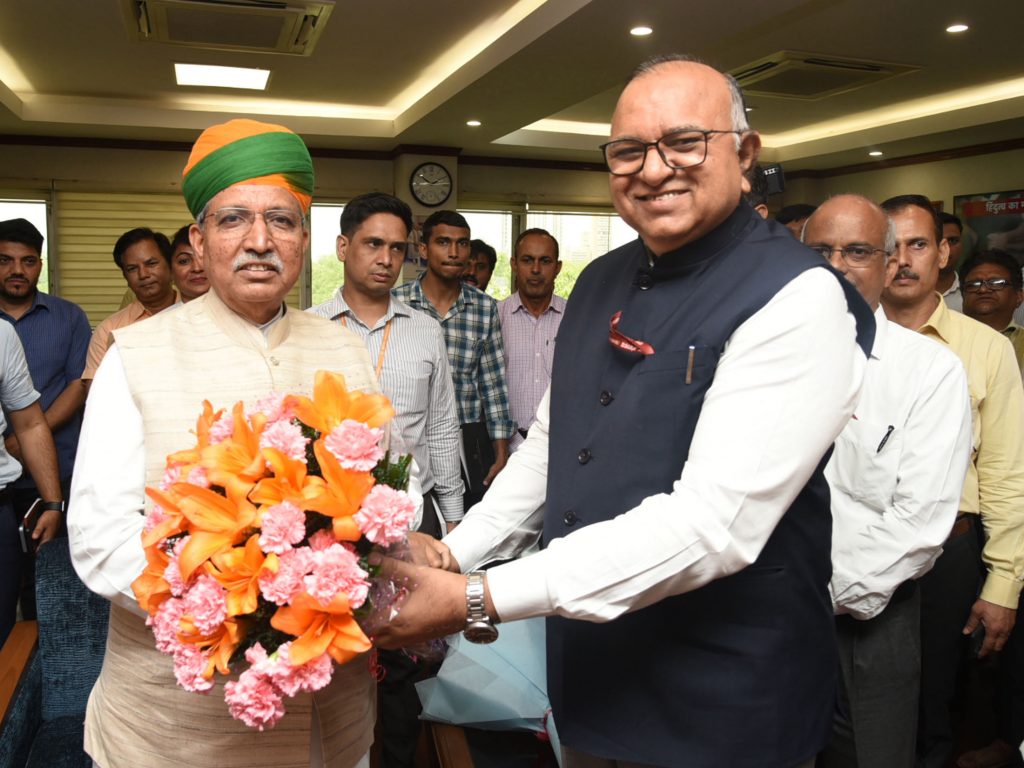
Union Minister Kiren Rijiju was unceremoniously shunted out from Law and Justice Ministry as a firefighting measure amid ongoing tug of war of supremacy between the executive and the  judiciary. The charge he held earlier has now been assumed by Arjun Ram Meghwal, Minister of State who comes from the Dalit community of Rajasthan.

The sudden change in belligerent temper of Modi government became evident after spectacular defeat of BJP in Karnataka assembly elections and political setback from apex court over series of contentious issues including unilateral appointment of election commissioners of its choice, stringent remarks over the brazen toppling of Shiv Sena government in Maharashtra, faceoff over losing its intruded rights to transfer and posting of IAS officers in National Capital Region against the federal structure of democratic governance.

In his farewell tweet, Kiren Rijiju summed up his stint as, “It has been a privilege and an honour to serve as Union Minister of Law & Justice under the guidance of Hon’ble PM Shri @narendramodiji.” “I look forward to fulfilling the vision of Hon’ble PM Sh @narendramodi ji in the Earth Sciences Ministry with the same zeal and vigour I have imbibed as a humble karyakarta of @BJP4India.” Thus, he made it clear that he followed his master’s guidance and will continue fulfilling his vision with the same zeal and vigour.

The nation witnessed over indulgence of the Modi government in running spat with the Supreme Court, through trusted frontier Kiren Rijiju, former Union law minister. His unbridled utterances outraged people not only in judiciary and legal fraternity but in the bureaucracy and civil society at large over the free speech and expression including dissenting views and criticism of the government which allegedly was sought to be branded as “unpatriotic” or “anti-India” constitutionally.
In 2022, Kiren Rijiju had called the collegium system, where sitting judges appoint new judges to constitutional courts, “opaque” and “alien to our Constitution”. “I am not critical about the judiciary or the judges, but I state a fact which is the reflection of the thinking of the common people of India… The Collegium system is opaque and is not accountable. Judges and lawyers too believe this,” he had said last November.


He had further implied that the higher judicial appointments were made based on personal associations, asserting that “the fittest” should be appointed and not those known to the collegium. The Supreme Court bench hearing a contempt petition over deliberate delay in appointment of judges after apex court collegium reiterated its recommendations in many cases expressed its displeasure over his utterances.
While participating in a conclave of leading media house on March 18 this year, Rijiju said, “It is a few of the retired judges, few – maybe three or four – few of those activists, part of that anti-India gang. These people are trying to make the Indian judiciary play the role of the opposition party. Some people even go to court and say that and please rein in the government, please change the policy of the government.”
When the moderator asked Rijiju if he was alleging that a senior MP of being part of the “tukde tukde gang” he bobbed his head in agreement. He said the government had insights about foreign funding enabling a “calibrated attack” on India, from outside and within. Replying to what measures the government has taken against the “tukde tukde gang”, Rijiju said, “Actions will be taken, actions are being taken as per law. The agencies will take action as per the provisions of the law. Nobody will escape. Don’t worry, nobody will escape. Those who have worked against the country will have to pay a price for that.”


While condemning hectoring and bullying remarks in unambiguous terms, more than 300 lawyers from across the country on March 29, wrote an open letter, demanding Union law minister Kiren Rijiju to withdraw his comment that a few retired judges are “part of an anti-India gang” which are unbecoming of the high office held by the minister.


“The allegations of anti-nationalism against people who have dedicated their lives to upholding the rule of law, and the naked threat of reprisals against them, marks a new low in the public discourse of our great nation,” the letter said. “By bracketing the critics, that too without naming them, as an ‘anti-India gang’, the minister has transgressed all limits of constitutional propriety by claiming that the members of this ‘anti-India gang’ wanted to “make the judiciary play the role of the opposition,” it added.

The letter further said: He pointedly threatened these retired Supreme Court judges that “no one will escape” and “those who work against the country will pay the price.” “By threatening retired judges, the law minister is clearly sending a message to every citizen, that no voice of dissent will be spared.”

Deprecating the unwarranted attack launched against retired judges of the Supreme Court of India by Union Law Minister Kiren Rijiju, lawyers practicing in diverse courts around the nation observed, “We may remind the minister that criticism of the government is neither against the nation, nor unpatriotic, nor ‘anti-India’. He must remember that the government of the day is not the nation, and the nation is not the government,” the letter emphasised.

“We are compelled to remind Shri Rijiju that as a Member of Parliament, he is sworn to uphold and bear true faith and allegiance to the Constitution of India, and as Minister of Law and Justice, it is his duty to protect the judicial system, the judiciary and the judges, both past and present. It is not part of his duty to single out some retired judges with whose opinion he might disagree, and to issue public threats of action by law enforcement agencies against them,” the lawyers asserted.

An association of lawyers in Mumbai has approached the Supreme Court challenging the Bombay high court’s dismissal of its petition seeking action against vice president Jagdeep Dhankhar and Union law minister Kiren Rijiju for their remarks on judiciary and the collegium system for appointment of judges.

While it is unclear which statements the petition is referring to, Rijiju has repeatedly criticised the collegium system. Dhankhar, meanwhile, has questioned the landmark Kesavananda Bharati (1973) verdict, which established the basic structure doctrine.

The Bombay Lawyers Association, in their special leave petition before the top court, argued that the duo has “disqualified themselves” from holding constitutional posts by showing a “lack of faith” in the constitution and attacking its institution, i.e., the Supreme Court, “and showing scant regard for the law laid down by it”.

A group of former civil servants on March 30 wrote an open letter in response to the comments made by Union law minister Kiren Rijiju, saying that he is “confusing the government with the country, construing criticism of the government as disloyalty to the country”.

“You seem to believe that if a person disagrees with the views of the government, that is enough to permanently label him or her as “anti-national”. Using that label, the government then initiates all manner of punitive action, and attempts to suppress dissent of any kind,” the letter signed by 90 former civil servants, who are part of the Constitutional Conduct Group, said.

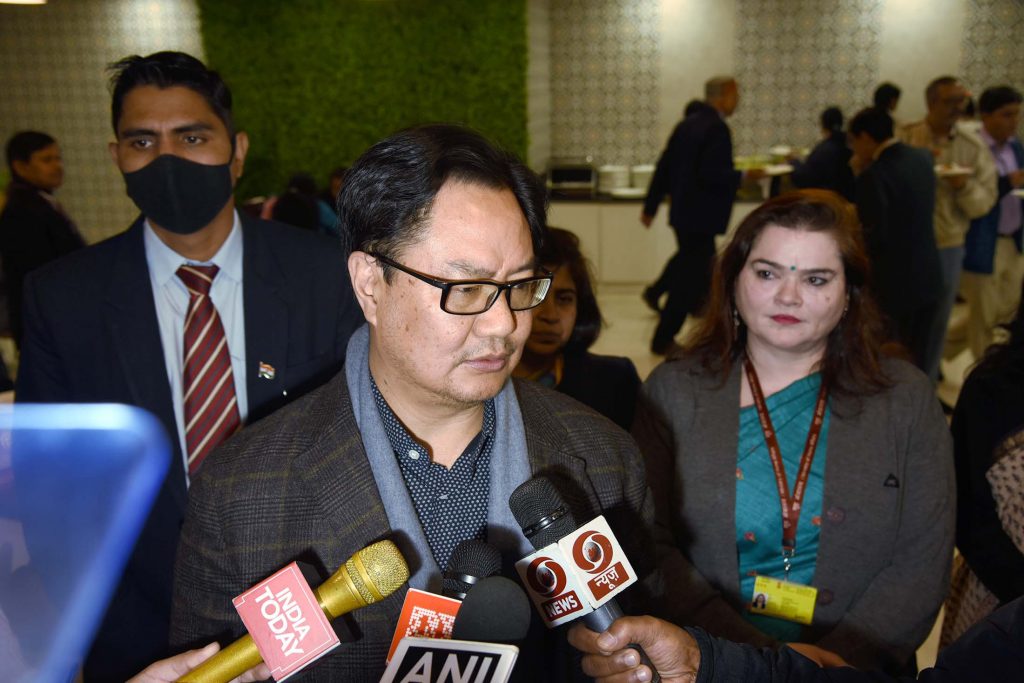
After assuming charge as Earth Sciences Minister, Senior BJP leader Kiren Rijiju dismissed suggestions that he was removed as minister of law and justice due to some wrongdoing. “Don’t ask questions related to the previous ministry as they are no longer relevant,” Rijiju said to queries of media persons whether he was shunted out for his frequent run-ins with the judiciary?

“Where is the wrongdoing? (Galti thodi hua hai?)  Do you feel this has happened because of some wrongdoing,” Rijiju countered to questions on whether his sudden departure from the law ministry was due to some wrongdoing.

“These changes and assigning different responsibilities are the way a government functions. It is the prerogative of the prime minister to assign responsibilities as per his thinking. Why do you feel that something is amiss,” he further added.

Rijiju, a three-term Lok Sabha member from Arunachal Pradesh, has served in the Modi government as Minister of State for Home, Minister of State for Minority Affairs, and Minister of State (Independent Charge) for Youth Affairs and Sports before being elevated to the Cabinet rank as Law Minister in 2021.

Cong dithers as AAP rallies support against ordinance on Delhi services

Though the Congress is dagger drawn with Kejriwal and his party, it may eventually decide to back him in his bid to block the bill with the support of other parties in the Rajya Sabha in view of the grand old party’s ongoing fight against policies of the government, reports Mudit Mathur

The Ordinance brought by Modi government snatching back reins of services of IAS officers posted under the government of National Capital Territory of Delhi from the elected government to its representative, Lieutenant Governor has triggered a political row. Other regional party leaders have also come forward supporting Aam Admi Party chief minister Arvind Kejriwal on the issue. Kejriwal has spearheaded a campaign to rope in other opposition parties to ‘save the federal character’ of the Constitution of India as envisaged in its basic structure.

Kejriwal has been on a nation-wide tour with his party leaders to garner support against the Centre’s move. “When we came to power in Delhi, they snatched all our powers by releasing a simple notification. We fought against that in the court for eight years. When the Supreme Court ordered in favour of us, they imposed an ordinance on the day when the court was going on vacation. They are making a mockery of democracy,” Kejriwal said in his meetings with non-BJP chief ministers.

West Bengal Chief Minister and TMC chief Mamata Banerjee, Bihar Chief Minister Nitish Kumar, Nationalist Congress Party chief Sharad Pawar, former Maharashtra chief minister of Shiv Sena, Uddhav Thackrey have expressed support to block the Bill in the Rajya Sabha when it will be tabled for replacement of Ordinance as per Constitutional requirement. Pawar’s support might be instrumental to bring the Congress on board with the Rajya Sabha strategy. Kejriwal  is scheduled to meet Telangana chief minister K Chandrashekhar Rao of Bharat Rashtra Samithi (BRS) to seek his support.

Though Congress party is not having cordial relations with Kejriwal and his party but it may have a rethink on the issue of supporting him in view of its ongoing fight against the actions and dogmatic policies of Modi government. Kejriwal sought time to meet Congress President Mallikarjun Kharge and Rahul Gandhi to seek Congress support in Parliament against undemocratic and unconstitutional ordinance passed by BJP government and also to discuss ‘general assault on federal structure’ and prevailing political situation.

The Congress also reckoned that it was open to joining like-minded parties in opposing in Parliament a Bill that the BJP government is likely to table to replace its controversial ordinance seeking to regain control over administrative services in Delhi. The Congress had always spoken out against any “assault” on federalism, attempts to “trample over the rights of states”, and “attacks against elected state governments”.

Obtaining support of Congress is essential if AAP has to win the Rajya Sabha battle. The party has 31 MPs in the upper house. The Trinamool Congress has 12 MPs, NCP has four, and Shiv Sena (UBT) has three members and AAP has 10 MPs. The bill on the matter is expected to be brought in parliament in the monsoon session and the BJP is confident that it will sail through in both the Houses.

West Bengal Chief Minister Mamata Banerjee extended support of TMC to her Delhi counterpart and Aam Aadmi Party (AAP) convener Arvind Kejriwal against the Central ordinance that seeks to control appointments and transfers of bureaucrats in the National Capital. She announced that the Trinamool Congress (TMC) will oppose the Bill in both Houses of Parliament.

After an hour-long meeting with Kejriwal, Punjab Chief Minister Bhagwant Mann, and senior AAP leaders Sanjay Singh, Raghav Chadha and Atishi at state secretariat Nabanna, Banerjee said: “If we do not unite now, the people of this country will not forgive us. This government (at the Centre) is of the bulldozer, by the bulldozer and for the bulldozer. This country will survive only if democracy exists.”

Explaining the modus operandi of Modi Rule, Kejriwal said, “They (BJP) employ three tactics when they are defeated in a state. Either they purchase MLAs to form the government or use the CBI, the Enforcement Directorate, or other central agencies against that party. They also misuse the law to stop the other party from doing work. They are basically anti-democracy and never think about the future of our country. If we can defeat them in the Rajya Sabha, it may become semi-final before the 2024 Lok Sabha elections.”

The Union government promulgated an ordinance to nullify the decision of the Constitution Bench of the Supreme Court whereby it handed over the reins of ‘Services’ which gave it the power to transfer bureaucrats posted under the domain of government of National Capital Territory of Delhi to the elected government under Chief Minister Arvind Kejriwal. The Ordinance overturned the constitutional bench judgement of the apex court to give more teeth to the Lieutenant Governor to regain decisive role in controlling services of bureaucrats posted with the Delhi government.

The President of India promulgated “the Government of National Capital Territory of Delhi (Amendment) Ordinance, 2023”on Friday (May 19) whereby it has now established the National Capital Service Authority (NCCSA) to make recommendations to the Delhi Lieutenant Governor regarding matters concerning transfer, posting, vigilance and other service-related incidental matters who shall have sole discretion.

The NCCSA shall consist of the chief minister as the ex-officio chairperson, the chief secretary of GNCTD and the principal home secretary, GNCTD, as ex-officio member secretaries. The NCCSA will make “recommendations” to the LG regarding “transfer, posting, vigilance and other incidental matters.” It reduced the democratically elected chief minister to just a mute spectator rather than a decision maker.

The Ordinance in effect reverses an important judgement passed by the Supreme Court last week, which had given executive power in services matters, including the transfer and posting of officers in the national capital, to the Delhi government. The Constitution Bench of Supreme Court unanimously held that Delhi government has control over administrative services in the National Capital, excluding matters relating to public order, police and land.

The Supreme Court, on May 11, in a unanimous ruling by a five-judge Constitution bench headed by Chief Justice DY Chandrachud, said that the Delhi government has legislative and executive powers over administrative services in the national capital. With Chief Justice Chandrachud other justices of the Bench include Justice MR Shah, Justice Krishna Murari, Justice Hima Kohli and Justice PS Narasimha. The judgement held that the legislative assembly of NCTD embodies the principle of representative democracy and thus, Article 239AA must be interpreted in a manner to further the interest of representative democracy.

The Bench was of the view that if the officers feel they are insulated from the control of the government, it will dilute accountability and affect governance. “If a democratically elected government is not given the power to control the officers, the principle of triple chain of accountability will be redundant. If the officers stop reporting to the Ministers or do not abide by their directions, the principle of collective responsibility is affected,” the Bench had observed.

“The SC passed the order after years and did justice to the people of Delhi, gave them their rights. The central government took away all those rights by bringing an ordinance. When this law will come in the Rajya Sabha, it should not be allowed to pass under any circumstances. Will meet presidents of all political parties and seek their support,” appealed Delhi chief minister Kejriwal.

“This fight is not only for the people of Delhi. This fight is a fight to save Indian democracy, a fight to save the constitution given by Baba Sahib, a fight to save the judiciary. This fight is a fight to save the country. I expect everyone’s support in this. I am going across the country for the rights of the people of Delhi,” Kejriwal added.

New abode of democracy and protesting wrestlers

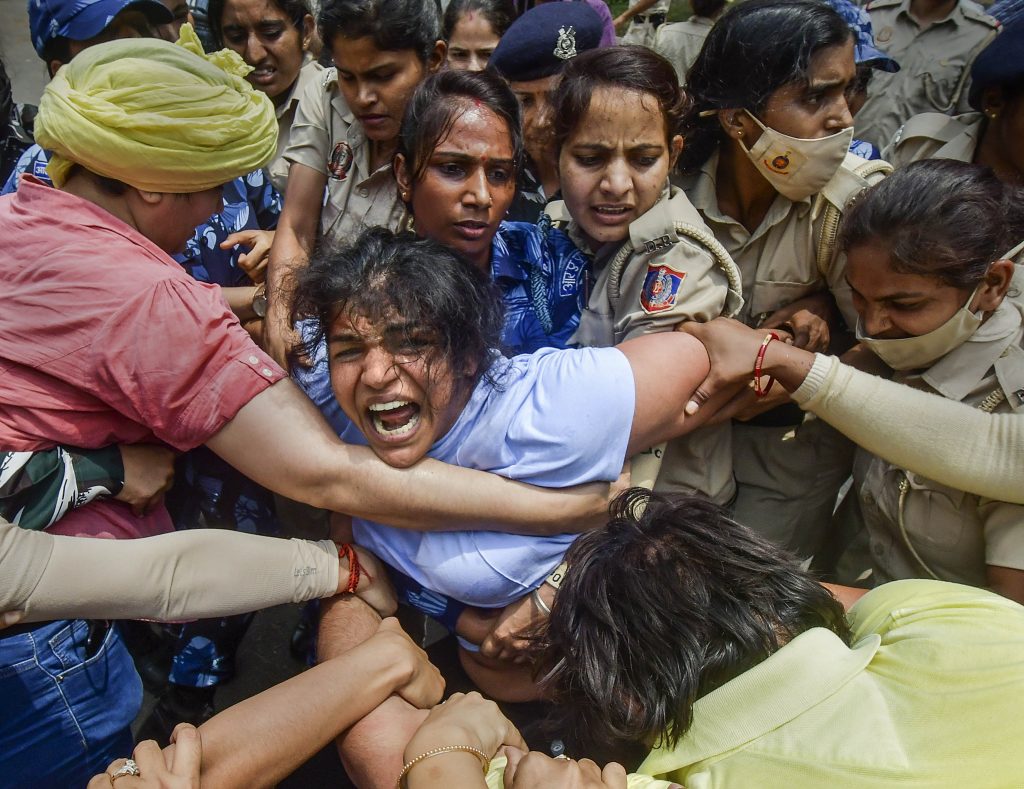
On the historic day that saw PM Modi inaugurating the new Parliament building, protesting women wrestlers were allegedly manhandled and detained by cops after they  tried to march to towards Parliament to demand the arrest of WFI President. A report by Sumiti Gaba

The Prime Minister installed the Sengol with Nandi at the top facing East-West direction in the new Parliament House. He also lit up the Diya and offered flowers to the Sengol observing that there are few moments in every nation’s history that are immortalized like this one in “Amrit Mahotsav”. He said that this is not merely a building but is a reflection of the aspirations and dreams of 140 crore Indians and the new Parliament building connects “planning to reality, policy to realization, will power to execution, and sankalp to siddhi”.

Referring to the establishment of sacred Sengol, the Prime Minister said that in the great Chola empire, Sengol was seen as a symbol of the path of service duty and nation.  He said under the guidance of Rajaji and Adheenam, this Sengol became the sacred symbol of the transfer of power. The Prime Minister once again bowed to the Adheenam saints who came to bless the occasion this morning. “It is our good fortune that we could restore the dignity of this sacred Sengol. This Sengol will keep on inspiring us during the proceedings of the House”, he said. The world’s largest democracy moved to the new home, the 64,500 sq metre, four-storey complex, built at a cost of Rs 971 crore taking  over from the iconic circular building that was inaugurated in colonial era in 1927 to function as the legislature of a British India. The Prime Minister said that the new Parliament will give new energy and strength to the largest democracy of the world.

“This new building will become a means of realising the dreams of our freedom fighters,” he added. The speech reflected Modi’s satisfaction with India’s new found confidence and the world’s growing interest in it and said the building would go long further. He said the rest of the world had an important stake in India’s progress. “The faith of India has supported the faith of other countries. And, therefore, when a country like India — full of diversity, a country with such a large population, a country fighting so many challenges — moves forward with belief, it also inspires many other countries. Every success of India is going to be a reason for inspiration in the coming days in the form of the success of different countries in different parts of the world. Today, if India removes poverty fast, it also inspires many countries to come out of poverty. India’s determination to develop will become the strength of many other countries. That’s why India’s responsibility becomes bigger,” he said. “When India moves forward, the world moves forward,” he added.

The same day when lawmakers moved to a new building with 20 political parties boycotting the event, the police detained more than 100 protesters, including champion grapplers Sakshi Malik, Bajrang Punia and Vinesh Phogat. The sit-in site at Jantar Mantar was vacated and according to an FIR, the wrestlers and their supporters ignored a warning by the police that creating a ruckus during the inauguration ceremony would ‘harm national prestige’. The FIR also stated that at least 15 personnel, mostly policewomen, were injured in a scuffle with the protesters.

Olympic medal-winning wrestlers from India have led a protest against WFI President and BJP Member of Parliament Brij Bhushan Sharan Singh for more than a month, calling for his arrest for alleged sexual harassment. An FIR was filed against the organizers of the wrestlers’ protest, including Vinesh Phogat, Sakshi Malik and Bajrang Punia, under various sections of the Indian Penal Code (IPC).   Ironically the wrestlers who had brought pride into the nation were treated with no respect and dignity. They have kept their nose to the grindstone to earn what they deserve so their demands ought to be taken into account.

Chaos reigned at Jantar Mantar after protesting wrestlers were detained while trying to march to the new parliament building which was being inaugurated. The Delhi Police reported that 700 people, including 109 protesters, were detained throughout the capital. Later that evening, the female detainees were freed. After the wrestlers were detained and pushed into a bus from where they were taken to unknown locations, the Delhi Police cleared the protest site by removing cots, mattresses, coolers, fans and the tarpaulin ceiling along with other belongings of the wrestlers.

Brij Bhushan Sharan is accused by not just by one or two, but seven female wrestlers including one minor, of sexual harassment. Out of the seven, two of the wrestlers Sakshi Malik and Vinesh Phogat are some of India’s most decorated sportswomen- Sakshi Malik got us the first Olympic medal by a female in wrestling for India, and Vinesh Phogat is the first Indian woman wrestler to win gold in the Commonwealth and Asian games. Every young girl who happens to be a part of aspirational India looks up to these wrestlers. But now their dreams are shattered as this unwarranted action by the Delhi police has become a deterrent as parents will now think twice before sending their daughters for sports training.  

The wrestlers are demanding the arrest of WFI chief Brij Bhushan Sharan Singh for sexually exploiting women grapplers are now contemplating their next move.  The action by Delhi Police on wrestlers has received a barrage of criticism from people from the sports fraternity including Javelin champion Neeraj Chopra and former shooter Abhinav Bindra. Besides, opposition parties have also slammed the Centre for not taking action against Bhushan who is also a BJP MP from Kaiserganj. The protesting wrestlers said that they would throw their hard-earned medals into river Ganges and sit on a hunger strike “until death” at the India Gate.

The Jantar Mantar pandemonium might not have happened had the government been proactive about addressing the wrestlers’ grievances. The situation spun out of control because the protesters felt that they were not being taken seriously by the powers that be. The least that the government can do now is to ensure a free, fair and time-bound probe into the serious allegations. Athletes who win laurels for the country in the global arena deserve remedial action and justice.

Decoding Karnataka: Some key takeaways

The election result has again shown that people cannot be crushed beyond a point: Rise they will and once they do, parties which presume they are deeply entrenched, may scramble for space.


have told Modi, “causing me a real problem. Next month, we have a dinner for you in Washington. Everyone in the whole country wants to come. I have run out of tickets. You think I am kidding…You are too popular,” sources quoted President Biden telling Modi.

The icing on the cake, however, was Biden asking Modi for an autograph: “I should take your autograph”, he reportedly said light-heartedly.

In June, when Modi is slated to go to the US on an invitation from the US President Biden, a state dinner is scheduled at the White House.

Sharing Biden’s dilemma was none other than the Australian Prime Minister Anthony Albanese. During the Quad leaders meeting in Tokyo, Albanese claimed that he, too, had a flood of requests from prominent citizens to attend events where PM Modi would be speaking.

According to sources, PM Albanese has said that he was unable to accommodate all the requests he has received for tickets to the community reception in Sydney.

Modi did win accolades overseas but back home, things were not as hunky dory. Modi’s party, the BJP, got a drubbing in the elections in Karnataka.

Despite a high-voltage campaign wherein Modi was the central figure, the BJP lost the southern state. It was not the win but the tally that held a surprise. The Congress scored a “resounding victory” going well beyond the simple majority of 113 seats it needed to form the government on its own.

This despite the fact that Amit Shah had claimed a full majority in the state: “PurnaBahumat”, absolute majority, to quote Shah.  A kind of an Utopian dream because the Congress swept the polls, leaving the
BJP to run for cover.

Logically, expectedly and understandably Congressmen were jumping with joy. The win was clearly a morale booster for the sagging fortunes of the beleaguered Party.

However, what drew attention was outgoing Chief Minister Basavaraj Bommai’s statement: “In spite of the efforts  of the Prime minister and party workers, we could not make the mark”. The statement is significant because it underlines the failed efforts of Prime Minister Modi who ran a gruelling campaign, addressing several rallies and roadshows.

Or Amit Shah telling the electorate about the Karnataka election being one to “hand over the future of the state to Modiji”.

Add to this, Rahul Gandhi’s message of nafrat and mohabbat, love and hate, a take-off from his much-hyped yatra when he had spoken about “nafrat ke bazaar mein mohabbat ki dukan khol raha hoon”.

Post Karnataka victory, Rahul said that hate had lost to love and this will happen in other states too. In other words, the Congress not only stands to count but can be a strong contender in the forthcoming
elections in the states of Chattisgarh, Madhya Pradesh and Rajasthan among others.

But is the Karnataka-win only about electoral victory or defeat? Is it about brand Modi losing its sheen? Or there being hope for the Congress? Is it about Rahul Gandhi taking on Modi? Or about Modi being
invincible?

Analysts should perhaps look beyond the narrow prism and see the victory or defeat in the context of India, the country, rather than a political party being in or out of power.; or whether a leader has climbed or tripped.

Against this backdrop, the Karnataka election brings hope and a message that the ink on the Modi seal can fade away and the brand is not cast in stone.

More importantly, it reaffirms the faith in the Indian people that if push comes to  shove, the people will use their mind rather than their heart.

Therefore Modi may be loved, endeared and even revered but in the event of their interests being jeopardized, the electorate would look for other options like it has in Karnataka recently and Himachal
Pradesh some months ago. Therefore, the larger issue is that the 2024 election may not be “done deal” as the saffron Party is propagating it to be. The refrain: we are focussing on 2029 because brand Modi has secured 2024 for the BJP.

In other words it is a cakewalk. The other states may not go the Karnataka way or they may but the
larger issue is that the electorate can neither be taken for granted or trifled with.

For parties, BJP or any other, it may be bad news but for the country nothing could be better: it demonstrates that the Indian people have a spine, can think and will uproot those who fail them either in intent or action.

More importantly, it reiterates that the people cannot be crushed beyond a point: Rise they will and once they do, parties which presume they are deeply entrenched, may scramble for space.

It is too early to write BJP’s political obituary because a state election does not demonstrate the national mood; 2023 is not necessarily the preface for 2024 but it sure is a light at the end of tunnel and a signal that the people of India are not in deep slumber.


They may let go for a long time but once they move they would alter the status quo. So for all those who are sitting smug for 2024 need to sit up and decode the Karnataka script.

G20 event in Kashmir was less about tourism and more about geopolitics

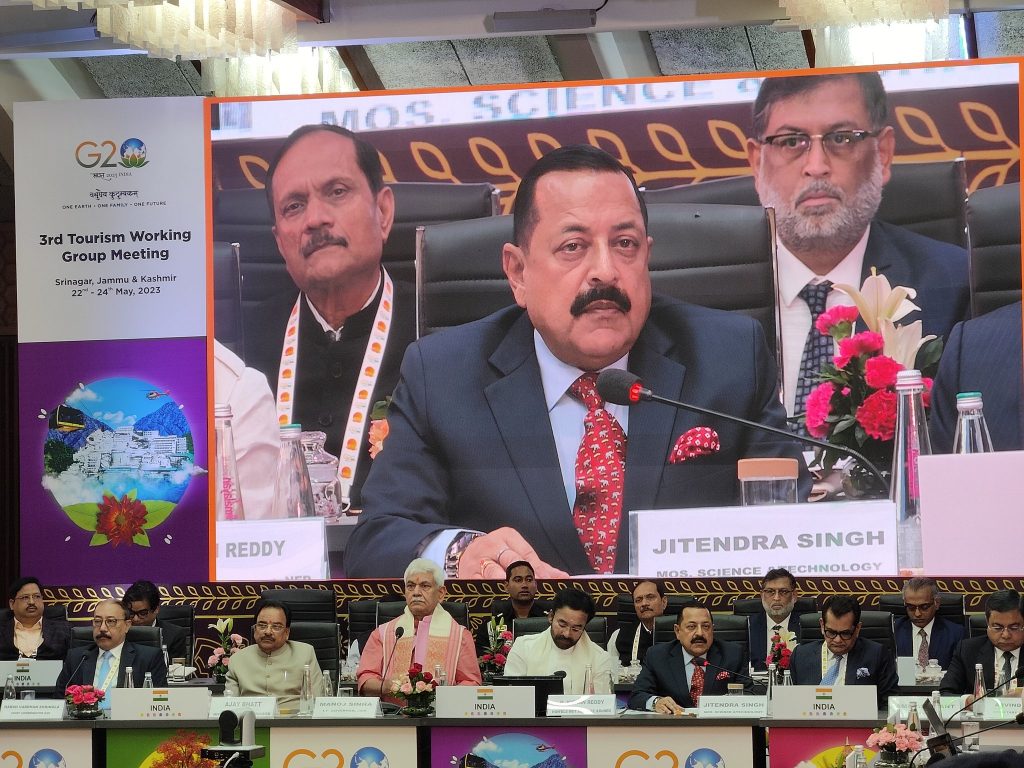
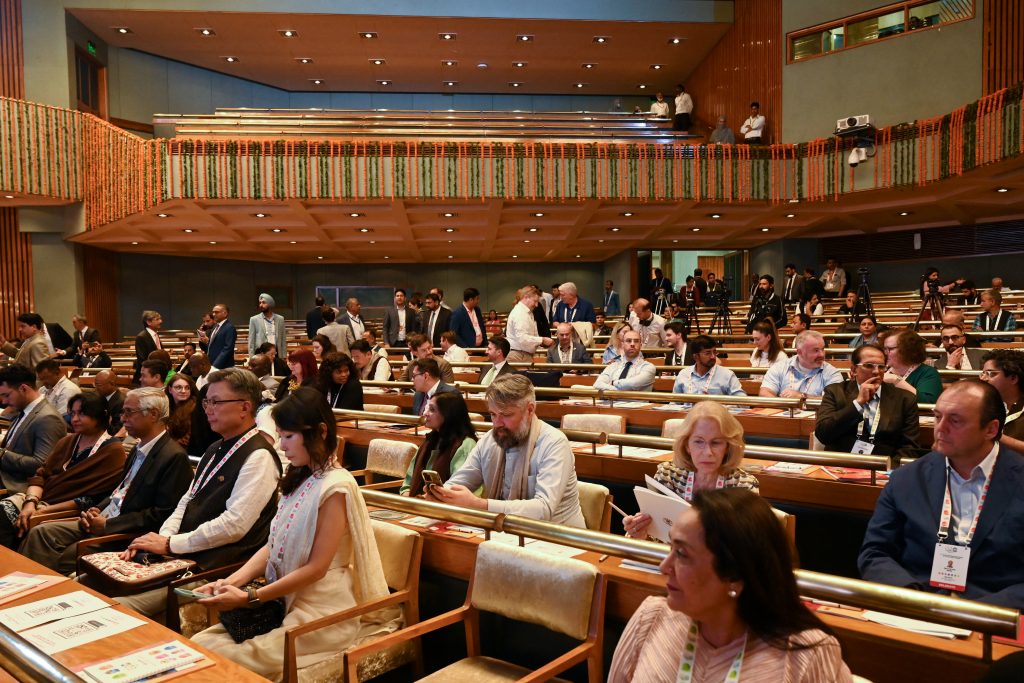
The 3-day G20 meeting held from May 22-24 is the most significant international event held in J&K since the revocation of Article 370 in 2019. The presence of 60 foreign delegates at the event is being seen as world’s implicit support for India on Kashmir,  reports Riaz Wani

The three-day G20 tourism working group meeting from May 22-24 brought some fresh attention to Kashmir. After a long time, even foreign media was allowed to cover the region and they produced reports that were more nuanced in their description of the prevailing situation. Besides, the meeting drew a strong statement from China which cited the region’s “disputed” status as the reason for not attending it. Besides, four other countries – Turkey, Saudi Arabia, Egypt and Oman – didn’t participate. But they stopped short of issuing any statement. 

The rest did attend, although with a scaled-down presence, among them the three Islamic countries – UAE, Indonesia and Bangladesh. This is being billed as a triumph of sorts for India’s stance on Kashmir. More so, as the countries are members of the Organization of Islamic Conference, a 57-country grouping which has a stand similiar to that of China on Kashmir.

Over the course of three days, the G20 delegates engaged in meetings and some sightseeing in a small area around the famous Dal Lake. Some far-off resorts such as Gulmarg which were earlier a part of their itinerary were dropped at the last minute, in view of the security issues.

At the end of it, both the union government and the local administration said they had every reason to be satisfied with the outcome. For one, the event passed without an incident despite the threats from the militant groups, a turn of events that was reflective of both the unprecedented security measures put in place by the government and the decline of militancy. High-security arrangements were made on the route to the airport and the delegates were taken in a cavalcade of vehicles to their accommodations along Dal Lake.

However, the shadow of the recent ambushes in Armoury and Pooch in Jammu division that between them killed ten security personnel loomed over the event as the security agencies feared that the militants might try to replicate the attack in the Valley. But the government was able to prevent it, a success that added to the perception of the normalcy in the region that the government was keen to convey to the outside world. 

“The youth in Kashmir has moved on from the days when life used to come to a standstill and they no longer want to be identified with the past when Islamabad used to sabotage any important events by making a herbal call which would lead to shops in All Chow downing their shutters,’’ Union Minister of Science and Technology Dr Jitendra Singh said at a press conference during the event. “The mindset of people in J&K is changing. Strike calls are being issued from Pakistan and in Srinagar as well but the people don’t pay any heed now.”

He added that 61 delegates from 29 countries had taken part in the meetings in Kashmir and experienced the region’s natural beauty and normalcy first hand. 

“The event will falsify all the false narratives created by vested interests or by cynics or self-styled critics. The event is a moment of rejuvenation and reincarnation. This is just returning to the Shammi Kapoor- era, who shot most films here. Kashmir is a cost-effective place with a variety of locations,” Singh said.

J&K lieutenant governor Manoj Sinha in a subsequent press conference which capped the event expressed optimism about the situation in the Valley. He said that J&K would soon rise as one of the world’s top 50 global tourism destinations while affirming the government’s commitment to promoting region as a diverse and inclusive destination.

“The way every section of the society enthusiastically participated in the G20 event is a sign of the rise of new and emerging Jammu and Kashmir,” Sinha said.


Political significance

The G20 meeting was one of the most significant international events held in J&K since the nullification of Article 370 in 2019. By hosting this event, the union government showed that most of the major world powers not only endorsed the move but also acknowledged the prevailing normalcy. The effort of both the central government and the LG administration is now to build on the gains in achieving peace and use it to bring more tourists to the region. 

But it is also true that the significance of the event didn’t stem from its focus on tourism. On the contrary, the G20 meetings in the Valley acquired a geopolitical significance of their own.  The general drift of the opinion in India is that the event was an endorsement of New Delhi’s revocation of Article 370 and, as such, represents a significant shift in the approach of major powers on Kashmir.

“By agreeing to hold the G20 event in Kashmir, the international community is sending a clear message of support for India’s actions (in the region),” read an editorial in a local daily.  “This is a significant shift in global geopolitics, as traditionally, the major powers have been reluctant to take sides on Kashmir.” 

This is seen as a significant psychological coup for New Delhi, cementing the notion that the post-2019 Kashmir is a fait accompli. 

Since 1989, Kashmir has been a site of unmitigated unrest and violence which have claimed thousands of lives. But in August 2019, the central government took the unprecedented step of revoking Kashmir’s special status. Ever since, New Delhi has taken a series of measures to control the unrest in the Valley and restore peace. And in the past three and a half years, the situation, has to a large extent, been brought under control. Kashmir now gives the appearance of being a normal place, giving New Delhi confidence to hold an event of international significance in the union territory.

Mixed bag

However, the overall take away from the event was a mixed bag for New Delhi. Around 122 delegates, including 60 foreigners, visited Srinagar for the G20 meeting. This also included powerful western countries, and so the event is seen as an implicit support for India on Kashmir. But the scaled-down diplomatic presence of the countries and the boycott of five countries, including a surprise absentation of Saudi Arabia, has detracted from the event’s positive fallout for India. 

There was  some opposition to the event by some human rights organizations, including the UN’s  Special Rapporteur on Minority Issues, who in a statement said that “The Government of India is seeking to normalize what some have described as a military occupation by instrumentalizing a G20 meeting and portray an international ‘seal of approval.”

“International human rights obligations and the UN Declaration of Human Rights should still be upheld by organizations such as the G20”, he added, concluding that “the situation in Jammu and Kashmir should be decried and condemned, not push under the rug and ignored with the holding of this meeting”.

India’s mission to United Nations slammed Special Rapporteur over his comments terming them “baseless and unwanted.”

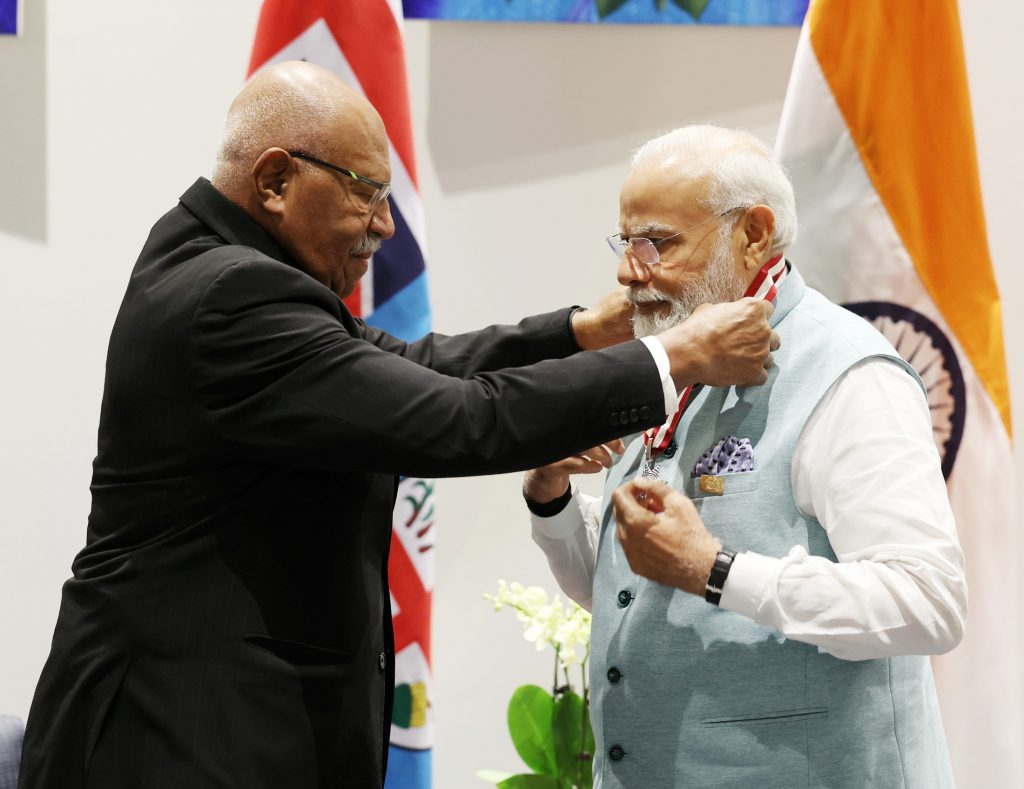
Incidentally, the support for the G20 event in Kashmir comes a month before Prime Minister Narendra Modi will travel to the US for an official state visit from June 21 to 24, where he will be hosted by US President Joe Biden at the White House. This will be PM Modi’s first state visit to the US during his nine-year long reign as prime minister and is seen as a loud acknowledgment of India as a global geopolitical player and a recognition of the country’s growing diplomatic heft.

How ‘Hindu-Muslim’ lollipop has lulled us into silence

Reason for our not speaking out even as the living conditions of the jailed and others are fast deteriorating is that the masses don’t realize that communal politics will breed a whole generation of haters

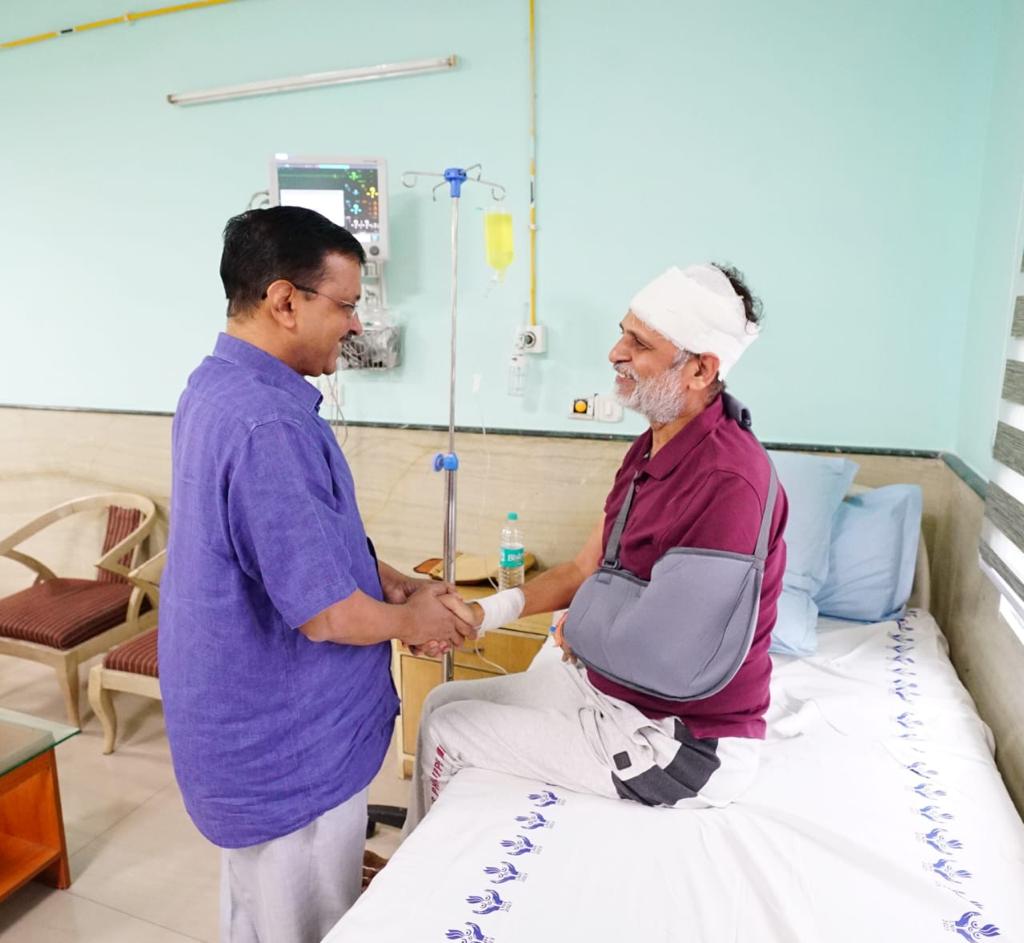
The  news that caught my attention this  morning –25  May,  the day I’m filing this column, is  AAP leader and former Delhi minister Satyendar Jain collapsing in the bathroom  in Tihar Jail,” due to dizziness’.  Not to overlook the fact that this is the second time Jain has fallen in the Tihar jail bathroom during his imprisonment. Jain has been lodged in prison since his arrest by the Enforcement Directorate in connection with a money laundering case.

Bring to the fore the vital and basic queries – What are the prevailing jail conditions not just in one particular jail but jails across the country? What if Jain wasn’t a senior AAP leader and a former minister, then would the news of his collapsing in the confines of the jail come to the fore? What are the prevailing conditions for the prisoners’ well-being and upkeep?  How do we get to know the physical and mental health of those lodged behind those high walls? Why should prisoners be deprived of the facilities; not to overlook the significant fact that a large percentage of those imprisoned are under-trials, so technically innocent. But even if they are convicted they should be given humane treatment. After all, they were not born criminals but circumstances and conditions drove them towards crime with disastrous offshoots. Another factor is that petty criminals could be mere foot soldiers, seemingly under the control of the political mafia, with the master players roaming about freely, untouched and un-arrested.

The wellness-cum-development of a land can be judged on the basis of how its government treats the women and children and the young, and also how it treats its prisoners. We seem lagging… what with rapists, molesters, killers and hate speech givers, roaming round rather too freely.

Nah, we aren’t reacting, not speaking out, even as the living conditions of the jailed and even of the not-so-jailed are fast deteriorating.


We all seem to have given a lollipop called: Hindu- Muslim! To cause deep communal divisions between the two communities under the various garbs and guises and alibis and camouflages. Conned and quiet we sit.

I don’t  have one specific answer for this collective quiet. Just a series of ‘perhaps’!

Perhaps, the masses don’t realize that communal politics will breed a whole generation of haters! Haters and destroyers who will create havoc.

Perhaps, the  masses have  not  viewed the film , Hotel Rwanda,  which  bares those  grim  details  of  civil  strife …the two warring  tribes   not  just  start  killing  each other but  destroying just about  any structure, human and otherwise! And then it’s just about too late for the destruction to halt.

Perhaps,  the masses  haven’t  heard these  lines of   German  pastor, who was  persecuted  by the   Nazis   –  Reverend  Martin  Niemoller’s  lines: ‘In  Germany, they  first  came for the / communists, and  I  did  not  speak  up /  because  I was  not a  communist.  Then /they came for the  Jews  and  I did  not / speak  up  because  I was  not a  jew/Then they  came for the trade / unionists,  and  I did  not speak  up  / because  I was  not a   trade  unionist  /Then they  came   for the   homosexuals /  and  I did  not  speak  up because  I was / not a    homosexual  /Then they came for the Catholics / and  I did   not speak  up  because   I was  / Protestant /  Then they came for me  …but  by / that time  there was   no  one  left to / speak  up.’

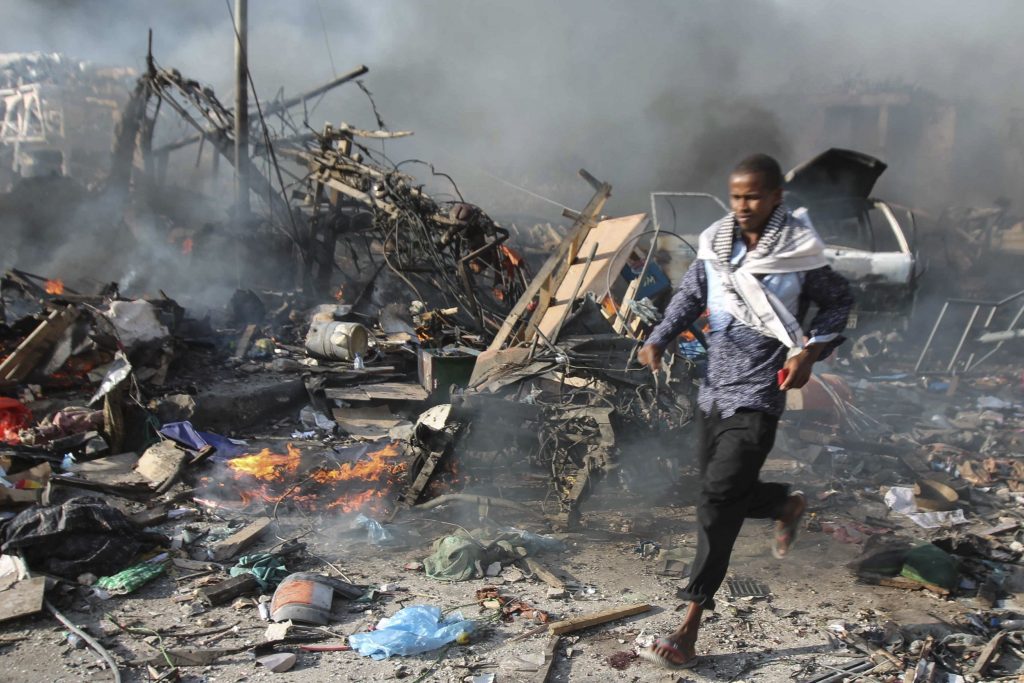
Perhaps, my countrymen  haven’t  seen  images of  the  wreckage  that  civil  strife can unleash. Years  back, when I had asked  actor turned politician Sunil  Dutt  what  can be  that one possible  solution to  halt communal  violence, he  had  said :“There can  be one solution. Only  last  night  I was going through the  latest  ‘Time’  magazine  and the  horror photographs of the  civil war ridden  Somalia  shocked  me  so much that  I couldn’t eat. It was dinner time but I couldn’t touch a morsel. Just couldn’t! Those  horrifying  pictures of human  beings  dying , sitting injured and  ill, crawling about,  rendered  so frail  and weak  that they couldn’t even walk. Those human disasters because of the  ongoing civil strife in Somalia. I’m  going to   suggest that  those  pictures  be  displayed  all  over our towns and  cities, at all public  places. And  displaced  with  this caption: See what internal  war  or  strife or  unrest  can do  to you, to your  country, to your fellow countrymen!”

Perhaps, we prefer to sit in that so-called safe positioning, under the notion that we just got to keep on living, somehow or anyhow!

Ending with this verse of Nida Fazli whose own life was ruined because of the Partition upheavals.

These lines from Nida Fazli’s ‘Just keep on Living’ (Translated  from Urdu  by Baidar  Bakht and Lesilie Lavigne):


‘Just keep on living /

Just keep on living like this /

Say nothing /

When you get up in the morning /

Take a head count of the family /

Slouch in the chair and read the paper /

There was a famine there /

And a war raged somewhere else /

Be thankful that you are safe/

Switch on the radio and listen to the new pop songs /

When you leave the house /

Paste a smile on your face/

Pack handshakes in your hands /

Keep a few meaningless phrases on your lips /

Be passed through different hands like a coin/

Say nothing /

A white -collar /

Social respect /

A few drinks everyday/

What else do you need /

Just keep on like this /

Say nothing.’

Why IITs are rocked by students ‘suicides’?

Students typically react to the high-pressure environment in two ways—they either get extremely competitive or go into a depressive phase. Those unable to cope become vulnerable

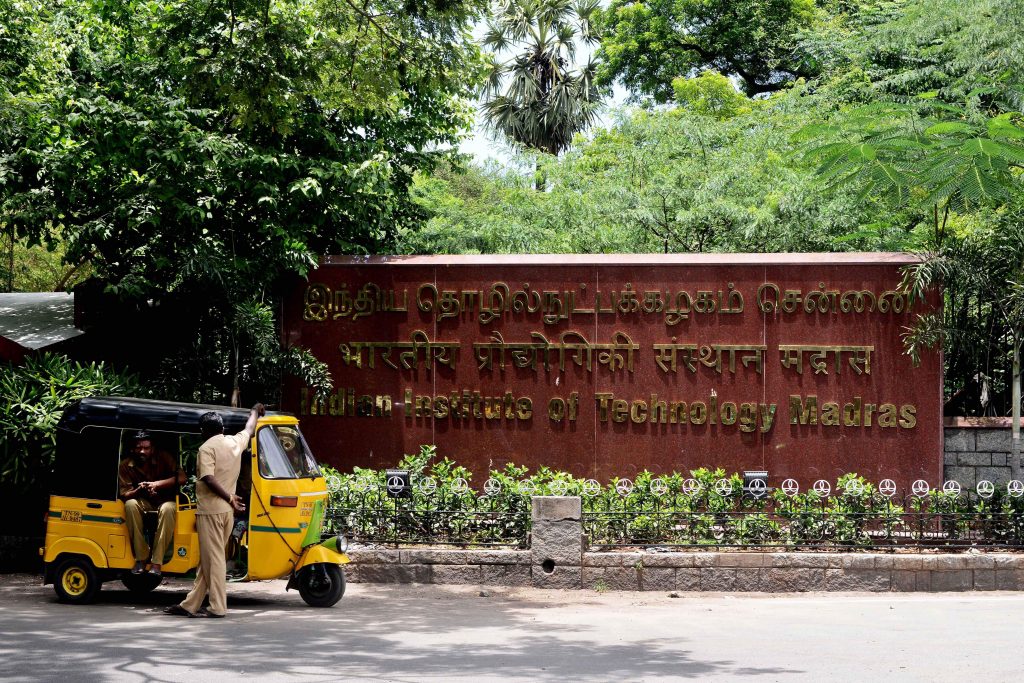
Suspected cases of suicide in Indian Institutes are becoming a matter of concern.  The IIT-Madras campus was rocked by the death of a postgraduate student recently. Just before, the suspected suicide of a first year IIT-Mumbai had sent alarm bells ringing. While a student was found hanging in a hostel room at the IIT Madras in Chennai on April 21, 2023, on April 1, a 32-year-old Ph.D student of IIT-Madras from West Bengal, allegedly died by suicide in his room. In March, a third-year student, who was a resident of Andhra Pradesh, died by suicide on the campus.  In February, a research scholar from Maharashtra was found hanging in his room.


In December 2021, the Lok Sabha was informed that 122 students of such institutes had taken the extreme step during 2014-21.  In December 2021, Education Minister Dharmendra Pradhan had informed the Lok Sabha that 122 students of such institutes (including IITs, IIMs, NITs, NITIEs and Central Universities) had died by suicide during 2014-21. Six students, three each from IITs and the National Institute of Technology, died by suicide in 2023. Eight IIT students died by suicide in 2022, four in 2021 and three in 2020.

According to data from the National Crime Records Bureau (NCRB), student suicides saw a rise of 4.5 per cent in 2021.  The statistics have pointed to boys and girls being driven to ending their lives even earlier — while receiving coaching for admission to IITs, etc. Reasons could be the pressure of studies, stiff competition and ragging or discrimination. But the pressures of IIT life are clearly telling.

V Vaipu Pushpak Sree Sai, 20, a third-year B.Tech student from IIT Madras, died by suicide on March 14 in his hostel room. This was the second such incident on the campus in one month. Stephen Sunny, an MS Research Scholar, had died by suicide on February 13. A day earlier, a first-year student Darshan Solanki had died by suicide on the IIT Mumbai campus.  Mystery still shrouds the death of Darshan Solanki, an 18-year-old B.Tech student of the Indian Institute of Technology (IIT), Bombay – who died after a fall from the seventh floor of his hostel building in Mumbai’s Powai on Sunday. Solanki hailed from Ahmedabad. Though the police have registered a case of accidental death, a student group on the IIT Bombay campus alleged on social media he was driven to suicide. The deceased had enrolled three months ago and his first semester exams concluded on Saturday.


Why has this been happening?

Students opine, “An IIT campus can isolate you very easily. The culture inside the campus itself is very exclusive. Academia has its own problems and students with a strong social and economic background can cope with them easily, while others can’t.” “IITs sell merchandise including T-shirts that say ‘born to be an IITian’, becoming an IITian must be dependent on one’s education and not birth,” say students.
“Academic stress, family and personal reasons and mental health issues are some of the reasons for such suicides,” Subhas Sarkar, the Union Minister of State for education, told Parliament on March 27. His statement came while disclosing a grim statistic: 33 students had died by suicide on IIT campuses since 2018. With two more added to this horrific tally in April, this number was one higher than the 34 students in the country’s 23 IITs who died by suicide in the eight years between 2014 and 2021, another revelation that came on the floor of Parliament on December 20, 2021. And this is excluding the unsuccessful suicide attempts. On February 13, a first-year B.Tech. student attempted to kill himself at IIT Madras, the very day that Stephen Sunny, a second-year MS research scholar in Electrical Engineering, ended his life in his hostel room.

From high societal expectations for academic performance, peer pressure, inability to cope with the rigorous schedules, language barriers, increasing class sizes, caste discrimination, little personal connect with faculty to poor outreach by on-campus counsell­ors, a whole host of factors may contribute to the spike in suicidal tendencies. Students typically react to the high-pressure environment in two ways—they either get extremely competitive or go into a depressive phase. While those with strong social and economic support systems find it easier to deal with the ecosystem, others are more vulnerable.
Then there is an 85% attendance rule and if you fail to meet this requirement, you have to repeat the course. The institutes are arbitrary in applying the rule.  Then most of those who come to the IITs have been through coaching centres where they are taught to solve the problems mechanically.  In the formative years of their teens, they neither get any societal exposure nor build relationships of any kind, not even with their closest family members. In short, they have no internal mechanism for emotional support. In stress, they have no one to fall back on.”

Crowd of toppers


Nearly all the students who land up at the IITs are used to being toppers—in their schools and in the neighbourhood. When they come to the IITs, they find themselves in a crowd of toppers, where they are one among many and not necessarily the top of the pack. Many come from vernacular medium schools and find it difficult to grasp tough concepts as the medium of instruction is mostly English. They start clocking poor grades, have high backlogs and fear that they will not live up to the high hopes everyone places on them.
Eventually some students stop socialising with friends after getting backlogs in his semesters.  Campus placements are another time when the morale of students who don’t get placed on so-called high packages takes a beating. Those with a vernacular background are allegedly discriminated against. Concerned with the grim situation, all courses at IITs have now been introduced in regional languages to reduce stress among the students who had studied in vernacular-medium backgrounds.

The way out


As a part of this initiative, the All India Council for Technical Education has released the complete syllabus of 12 different technical courses in regional languages. The institutions are also focusing on extracurricular activities, including sports and cultural programmes, and assign one faculty advisor per 10 students to help with their academics and monitor the progress. Students, wardens and caretakers are sensitised to alert the authorities to signs of depression in fellow students so that timely clinical consultation can be provided. Rattled by the increasing incidents of suicide, several IITs are taking preventive measures such as counselling and mentorship for students with low grades and backlogs in their course loads, reducing the curriculum requirements and creating a positive environment on the campuses.


Most mental health experts suggest that IITs should have longer induction schedules before regular courses begin so that students from diverse backgrounds get enough time to adjust to campus life. The IITs across the country have set up counselling cells to help students deal with their mental health problems but these cells have not been functioning at their full capacity, say different sources.  Students say, “The counselling cell is a joke. In one IIT, we have three full-time counsellors for ten thousand students and people who have gone to them say that they don’t have caste and gender sensitization.”

MOST POPULAR

HOT NEWS