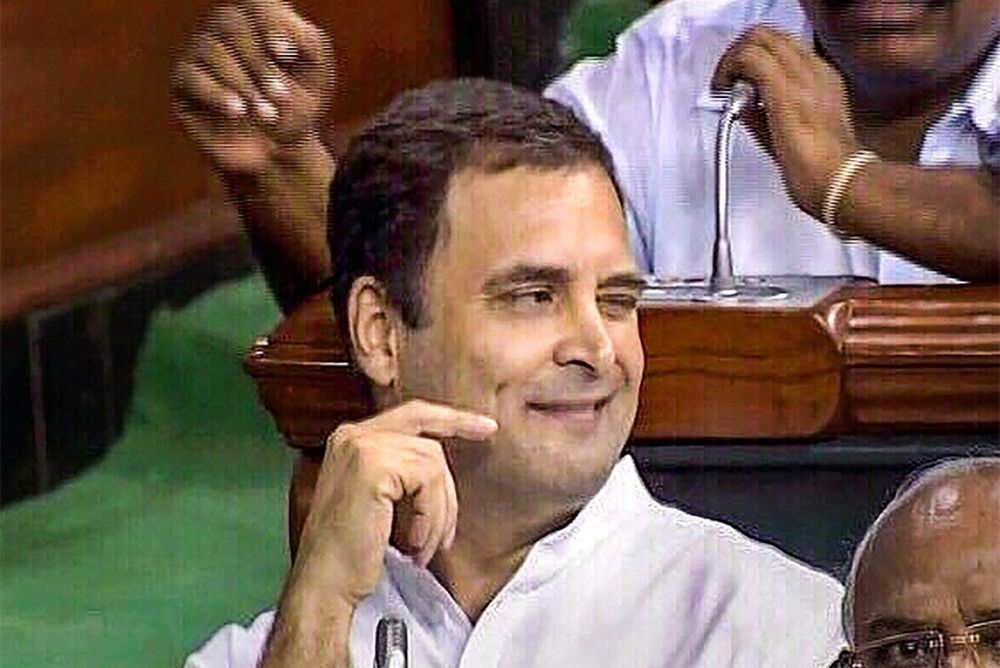
A hug, a wink and a flying kiss

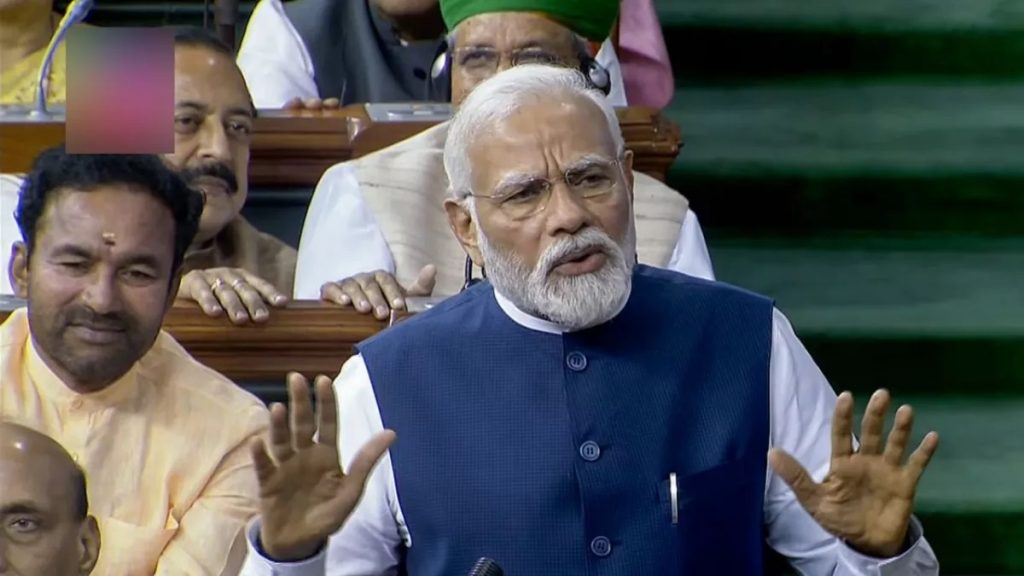
Rahul Gandhi’s speech in Parliament did not pan out the way it was expected to. If anything, the PM demolished Gandhi’s mohabbat ki dukan, in one single stroke and took on the INDIA alliance


The apex court has restored what petty politics tried to destroy.

If the intention was to take away Congress scion Rahul Gandhi’s status as an MP and also keep him away from electoral politics then the saffron Party had kind of succeeded. But it was the apex Court that stepped in and willy nilly turned the tables on them. It put on hold Rahul Gandhi’s conviction in a defamation case.

This also meant that his disqualification as a Lok Sabha member stood revoked.

The Congress danced; the Opposition celebrated and the BJP ran for cover.

The whole idea was flawed from the start.

Gandhi was dragged to the court over his remarks during an election rally in Karnataka in 2019. Rahul Gandhi had then said: “How come all thieves have Modi as the common surname?” The reference was to three well-known Modis: a fugitive Indian diamond tycoon, a cricket executive banned from the Indian Premier League and the Prime Minister.

The Court sentenced Gandhi to two years imprisonment. He was also disqualified as an MP.  

The conviction was, however, stayed by the Supreme Court which also led to the  Lok Sabha Secretariat revoking his disqualification.

Rahul Gandhi finally set his foot yet again in the House which had temporarily closed its doors on him: the House where he had delivered some fiery speeches including branding the Modi government as suit boot ki sarkar,  a government for the rich; his two Indias – one for the rich and one for the poor – remark; the shehanshah and idea of a king coming back and of course walking over to the Treasury benches and actually hugging a somewhat startled Prime Minister Narendra Modi.

It is in that House that Rahul Gandhi has managed to stage a come-back.

His come-back was, however, noisy enough, at least figuratively.

When he chose not to be the opening speaker in the No Confidence Motion that the Opposition alliance had moved against the Modi government, the Treasury Benches charged him with developing cold feet; others labelled him an escapist: “Maybe Rahul Gandhi was not prepared; maybe he got up late,” remarked a BJP MP even as Congress’s Gaurav Gogoi led the opposition charge in Lok Sabha.  

Gandhi opting out as lead speaker could be strategy rather than chance. With all eyes on the Gandhi scion, expectations were high. The fear was not that he would not match up but strategically it was better to bring him towards the end for more impact. That he spoke half way through the three-day debate is another matter.

As for impact, it was unexpectedly a lack-lustre speech. Except for a few punches here and there, Gandhi’s speech was short on content. So even while decibel levels were high, Gandhi was somewhat out of depth.

Gandhi did manage to pull a few punches though, like the one about Raavan listening to only two people, adding that the Prime Minister too only listens to two people: Amit Shah and Adani.

Or the quote about killing Hindustan in Manipur: “You killed the voice of India in Manipur, Bharat Mata was murdered in Manipur…Bharat Mata is my mother…you have murdered my mother”.

These were quotable quotes but they lacked the punch.  

While on Bharat Mata, Union Minister Smriti Irani castigated the Congress for thumping desks over the ‘India being murdered’ reference. But that was only one part.

Gandhi’s head was on the chopper block on another count: a gesture that was dubbed as misogynist.

Even as Irani was speaking, Gandhi is alleged to have blown a flying kiss in her direction: “The person who spoke before me misbehaved. Only a misogynistic man can gesture a flying kiss to female parliamentarians,” Irani said.

This, however, is not Gandhi’s first. He has in the past been caught winking at fellow Parliamentarians.

Rewind to 2018 and the debate in Parliament when Rahul Gandhi took everyone by surprise when he walked up to the Prime Minister and hugged him. On his way back, he winked at a colleague.  

So BJP was not off the mark when its national spokesperson Shehzad Poonawalla said: Last time aankh maari, he winked and this time he blows a flying kiss”.

Even while the jury is out on this one, one must concede that Gandhi’s temporary disqualification did him more good than harm, quite like his being locked out from his official residence post disqualification.

Getting both back has certainly given a martyr-hero status and helped him play the victim card to the hilt. It has also made the BJP dispensation appear vindictive.

Going beyond the hug-wink and kiss persona, Gandhi has led from the front and seizes every moment to attack Prime Minister Modi. He was centre-stage in the multi-party alliance called I.N.D.I.A.

It is the name rather than the combine that is giving jitters to the BJP. Equally it is true that the Prime Minister, in his reply to the No Confidence Motion in Parliament did somewhat retrieve the situation by saying that they broke India into pieces by adding the dots.

That notwithstanding, the name I.N.D.I.A. is, undoubtedly, a masterstroke.

Despite the full stops, it gives a nationalistic feel. It also kind of reduces the BJP to a political party versus the alliance being flagged as country-driven. This, more than anything else, is bound to fire the imagination of the people.

For critics, it is godsent because they will go to town about the dangers India is facing at the hands of the current dispensation be it its divisive and bulldozer politics or its brazenness in destroying or saffronizing institutions.

The nomenclature’s overtones cut across narrow political schisms and in one sense is overarching.

Therefore when Gandhi argued that the elections would be fought on an INDIA vs NDA plank, it had resonance. The game plan: to drive home the point that all those who are against the BJP “were INDIA”.

“The battle”, Gandhi said, “is for the idea of India. That is why we came up with this name. The Indian National Developmental Inclusive Alliance. That means INDIA. The battle is between the NDA and INDIA, their ideology and INDIA. And you know who wins when somebody stands against India”, he told the press.

Add to this, West Bengal Chief Minister Mamata Banerjee’s challenge: “NDA, can you challenge INDIA? BJP, can you challenge INDIA? Other people, can you challenge INDIA?”

This seems to be the singular strength of the I.N.D.I.A. alliance. The magic, as they say, is in the name

Therefore, the catchline: NDA versus I.N.D.I.A. may work as few things have in the past.

There is, however, a backstory to the I.N.D.I.A nomenclature.

 If reports are anything to go by, Gandhi, in tandem with West Bengal Chief Minister Mamata Banerjee, zeroed in on I.N.D.I.A or Indian National Developmental Inclusive Alliance.

Sources confirm that it was Rahul Gandhi who suggested that the alliance be called INDIA but wanted the clearance of Banerjee. Except for a minor change, she readily agreed.  Apart from what D or N should stand for there was a consensus on the nomenclature with a bit of hiccups of course.

Hiccups may be a minor word to use because alliances and the kind I.N.D.I.A. has stitched up will surely hit a roadblock on the question of seat sharing and leadership. For starters, Arvind Kejriwal’s Aam Aadmi Party has said that the issue of seat-sharing was more important than the name. Ditto Sitaram Yechury who also flagged problems that could crop up in states where the Congress and Left are rivals. The silver lining: Congress stating that it is out of the Prime Minister’s race and is willing to work in the spirit of accommodation.

For the uninitiated, over two dozen Opposition parties have come together to take on the BJP-led NDA in the elections next year. They made it known that I.N.D.I.A. is akin to the “idea of India” which is under attack under the present regime.

With Gandhi’s return to Parliament, there were echoes of India from the Opposition benches: “Garv se bolo INDIA, paschim bolo India, purv bolo India, despite the Chair’s warning.

The sum total: all eyes are on Gandhi; the big question: will he seize the moment and ride the wave?.

His speech in Parliament did not pan out the way it was expected to; nor did his flying kiss grab headlines. If anything, the Prime Minister demolished Gandhi’s mohabbat ki dukan, shop of love, in one single stroke and took on the alliance and the Gandhis. Yet politics being a game of surprises, it is foolhardy to write anyone’s epitaph.
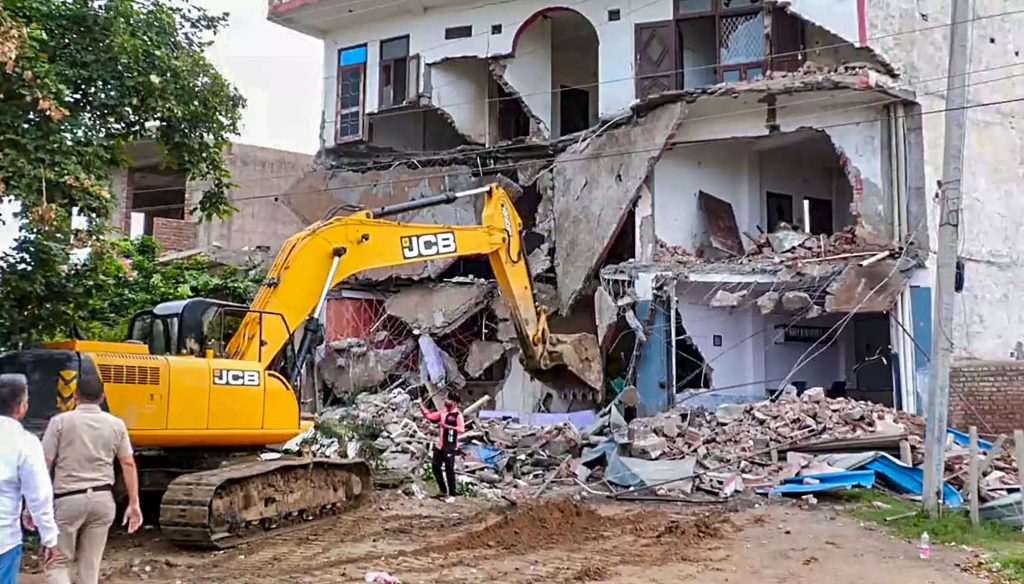


How bulldozer justice demolishes lives, livelihoods


Compounding the grim situation is the fact that the Mewat region in Haryana, where homes of Meos have been bulldozed, is one of the most under-developed Muslim-populated regions in the country.


Surcharged civil strife seems to be spreading out from Manipur to Haryana’s Mewat region. Havoc and horrific onslaughts and targeted attacks on the vulnerable communities are happening. Ask the families who have been ruined, perhaps for generations to come!

I was just reading a news report published in a daily which states that within days, dozens of homes of the Meos have been demolished and destroyed and bulldozed in the Mewat region.

This entire exercise of bulldozing homes seems so very barbaric and brutal and unfair and unjust. You’re not just destroying a structure but along with it also destroying lives and livelihoods. Will the affected men and women and children be able to even survive without a roof over their heads? Where can they go? Who will house them as communally surcharged frenzied atmosphere is peaking as never before! Biases and communal onslaughts have been erupting as never before.

Compounding the grim situation is the fact that the Mewat region continues to be one of the most under-developed Muslim-populated regions in the country. It seems it’s been kept sans development by the successive political rulers and governments. And to add to the dismal-bleak scenario, the major source of  livelihood for the  Meos — cattle raising-grazing- supplying, has been severely  affected, with  goon brigades attacking them along the alibi of cow protection.

Meo families have been sliding down the graph, with unemployment and joblessness hitting as never before. Have you read news reports focusing on the grim socio-economic-health conditions of the Meos and of the dismal education and health facilities in the region? Do read. Then, perhaps, you’d realize the gravity of the situation for the Meos. Today, their very survival is at stake. Tragedies after tragedies inflicted on them! This, when this martial race, the Meos, did not migrate to Pakistan, during the Partition phase. They had opted to stay put in their country, Hindustan, and not shift to the new country.  Also stands out the fact that the Meos of the Mewat region, fought for the country’s Independence. The Meo freedom fighters were hated by the British rulers. Hated to such an extent that the entire Mewat region was kept backward on all possible spheres. And  there seems little change in this day and age …many could be reciting these lines of  Ahmed  Rahi ( tucked in the  pages of  Anthems of  Resistance by Ali Husain Mir and Raza Mir-  India India/Roli  Books):

“Our lives were spent in despair; hope had begun to stir in our hearts

We thought our destiny would change, but alas, we were deceived.”


******

Let’s face the basic and crucial fact.  The targeted assaults and hounding of the Muslim community took off in the BJP ruled states, with the Right-Wing government coming centre stage. There’s ongoing apprehension and  fear and restlessness prevailing in the Muslim community as goons and Hindutva brigades have been unleashed on them and  they seem to  be going about  uncontrolled, unleashing terror. Muslims have been voicing their concerns as biases and discriminations and prejudices have been experienced by them at the governance stage. But there seems no one out there to see their plight or even hear their woes and grievances!

In these recent years, several Right-Wing parliamentarians have used absolutely gutter-abusive language in the context of the Muslims of the country. It wouldn’t be incorrect to state that it’s becoming fashionable to blast Muslims and their faith. In recent years, I have heard many of the so-called Right-Wing ‘who’s who’ beginning or ending their disgust with the Muslim community along the strain, “These Muslims! They can do anything! They cut and chop …bloody marrying four times, producing children all the time…These dirty filthy Muslims!”

Such is the level of third class propaganda. Such is the extent of the negativities spread out about the Muslims of the country. It seems a horrifying picture, far away from reality. Yet the gullible are fed on this anti-Muslim diet, as the political mafia is made to flourish on the lethal combination of hate and hatred.

Today, as steady deterioration spreads out on several fronts, affecting the masses, when I’m asked  what’s the difference between a  Muslim  poor  and  a  Hindu poor, my  answer is:  no difference  except that the  Muslim is  sitting amidst  insecurity and  apprehensions of the  worst kinds. Yes, the Indian Muslim is living in insecurity and fear. Mind you, not from his fellow countrymen but from the state-unleashed terror, in the form and shape of goon-brigades, political mafia, and biased machinery.

A pity that the various Ministries and Commissions have done  little  to counter these build- ups  and vicious  propaganda against the  largest minority community in the country. And if individuals react there’s that expected backlash.

Today Muslims cannot openly voice their disgust or dissent for fear of the aftermath. They could be branded militants or anti- nationals; with that killed or dumped in jails. Apprehensive is the Muslim community, as fears mount of the killing of the very spirit of the minority population. Dents on the very identity of the Muslims. Gone are the days of living-on-par. …In all these years I haven’t felt so disillusioned as in the last few years. There is a growing sense of hopelessness, with fair play and justice just about a hazy dream.

Why is there no apparent halt to the poisonous propaganda spread about the  Muslims? Why should every single Muslim looked at as some devil at work! Not to overlook the  fact that  any terror or  criminal activity gets directly or indirectly linked to the  Muslims, more than relaying that beware of  Muslims as they are some sort  of terror striking wolves! Nobody even  bothers to question or query  –  how  could  ISIS or the  Al-Qaeda or any of the  propped up  terror outfits survive or exist without the  support of the superpowers of the world. The  tragedy is that  today nobody even bothers to question the very authenticity of  ISIS; fed that we are on a  heady dose of  outrageously biased propaganda against the  Muslims.

Do  the  political  men and the   administrators and  planners  realize what this attitude would lead to! What happens when you push an entire community to the wall…hound in every possible way!

Mind you, a Muslim’s anger is not against the Hindu but against the fascist Hindutva forces. I would go to the extent to say that whatever little chance of  survival holds out for the Muslim community  is because of the liberal Hindus who refuse to be part of the  Hindutva  brigades. As they say,today it’s  a clash between the sane and the destroyers of this land.

The  only  hope for  survival  seems  the cushioning provided by the Hindus and Sikhs and Christians; hundreds of our brave fellow citizens who are  speaking out, taking on all possible risks and challenges to  protect the minority communities, coming forward to protect the vulnerable, striving  against all possible odds to  see that the fabric isn’t ruptured and we live on peacefully …all  together.

No-trust vote turns out be war of words between PM and INDIA alliance

While Congress slammed the PM for giving only three minutes to Manipur in his two-hour long speech, the former hit back saying that HM Amit Shah had already given a comprehensive response and charged the opposition of  “playing politics” on the issue, writes Amit Agnihotri

The no-confidence motion debate in Parliament turned into a war of words between PM Modi and the opposition bloc INDIA which is trying to defeat him in the 2024 Lok Sabha elections.

The no-confidence motion was debated in the Lok Sabha from Aug 8 to 10 with both the sides levelling charges against each other. The opposition block INDIA walked out in protest against the PM’s reply in the Lok Sabha on Aug 10 after which the motion was defeated in a voice vote.

That was a foregone conclusion given the BJP’s majority in the Lok Sabha but the debate provided a chance to the opposition to showcase unity and compel the Prime Minister to speak in the House.

“This was not about numbers. We wanted the PM to come to the Parliament and speak on the ongoing crisis in Manipur. We had been urging the PM to speak in either House of Parliament and had even moved several adjournment motions so that the Manipur issue be discussed but the government was not ready for a detailed discussion but only a small discussion,” Congress deputy leader in the Lok Sabha, Gourav Gogoi, who moved the no-confidence motion, said.

“Manipur has been suffering for the past three months. The PM should have visited there but instead, our leader Rahul Gandhi had to go there and appeal for peace. The people of the state need a healing touch. Manipur is a border state and affects our national security also. The BJP is in power at the Centre and in the state but still it failed to bring peace to the north-eastern state,” he said.

As the debate was on, West Bengal Chief Minister Mamata Banerjee said that the Bharatiya Janata Party- led government at the Centre should quit Delhi. She made the remarks on the occasion of the Quit India Movement’s 81st anniversary. In the Lok Sabha, TMC MP Mahua Moitra slammed the Centre over the Manipur issue. “Everyone asks if not Modiji then who? After this inaction on Manipur, India will say, ‘anyone but Modi,” she said.

“We (opposition), in turn, have felt compelled to ask what about the violence in Haryana. I want to tell this House that Manipur is different and I will tell you why. The issue of Manipur is of a hate crime against a particular community where it is understood that the police personnel of one community, possibly the same community as of the chief minister, handed over women of another community to be raped and pillaged by a mob and made every attempt to prevent those women from seeking justice,” she alleged.

After the debate, the Congress slammed the PM for giving a two-hour long speech which mentioned Manipur only for three minutes saying the premier did not answer the questions raised by the opposition over the crisis in the north-eastern state.

The opposition block had been protesting over the Manipur issue since the start of the monsoon session July 20 demanding a discussion on Manipur and the PM’s statement.

The stand-off in Rajya Sabha continued with the opposition sticking to its demand of a longer discussion on Manipur under Rule 267 while the Centre had agreed to only a shorter discussion under Rule 176. The Rajya Sabha chairman Jagdeep Dhankhar had requested the two sides to resolve the stalemate so that discussion can take place.

The Parliament cleared a crucial legislation during the session that takes away the control from Delhi government over posting and transfer of officers in the national capital. The bill replaced an ordinance enforced earlier by the central government. The INDIA block opposed the bill but the Centre managed to get it passed in both the Houses. Later, AAP leader and Delhi chief minister Arvind Kejriwal thanked Rahul Gandhi and Congress chief Mallikarjun Kharge for opposing the bill.

Congress leader in the Lok Sabha, Adhir Ranjan Chowdhury was suspended on Aug 10 for misconduct. Chowdhury said he had said nothing wrong against the Prime Minister and called his suspension the “tyranny of the majority.”

Congress president Mallikarjun Kharge said the suspension of Chowdhury was “undemocratic” and “unfortunate”. It “reflects the arrogance of power and malice. This tradition will prove fatal for both the Constitution and parliamentary democracy. We strongly condemn it,” he said.

The session ended on August 11, ahead of the scheduled Aug 17.

 
Rahul slams PM

The no-confidence motion debate provided another opportunity to former Congress chief Rahul Gandhi, who returned to Parliament after four months, to attack PM Modi over communal violence in the north-eastern Manipur and Haryana bordering Delhi.

Rahul was disqualified from the Lok Sabha on March 24 a day after he was convicted and sentenced to a two-year jail term by a Surat court in a 2019 criminal defamation case involving the PM’s surname. In February, Rahul had attacked the PM in Lok Sabha and questioned his alleged links with businessman Gautam Adani and demanded a JPC probe into the issue.

Later, the Congress had alleged that Rahul’s conviction and disqualification was part of a conspiracy by the BJP as he had been asking tough questions from the government. The entire party had launched a nation-wide satyagraha against the BJP for targeting its leader and alleged that the government was not doing anything to address the more pressing public issues like price rise and high unemployment in the country.

Rahul’s House membership was restored when the Supreme Court stayed his conviction on August 4 after a long legal battle. The case would go on and would be decided by the apex court in due time. When Rahul was re-allotted his old official bungalow that had been taken away due to disqualification, the former Congress chief remarked that the entire country was his home. He stayed with his mother Sonia Gandhi for the past four months.

“India is a voice, a voice of the heart. You have killed that voice in Manipur. You have murdered Bharat Mata in Manipur. You are traitors. My mother is sitting here. The other mother, Bharat Mata, was killed in Manipur. That is why the Prime Minister does not visit Manipur. You are not protectors of Bharat Mata, you are her killer,” Rahul said in the House.

“The BJP has murdered India in Manipur and is now trying to set Haryana on fire. The Prime Minister has not gone to Manipur because he doesn’t consider it a part of India. You (BJP) have divided Manipur,” Rahul said.

He alleged that the centre could stop violence in Manipur by calling in the Army, but had not acted yet.

Invoking the epic Ramayana, Rahul said Ravan was not killed by Lord Ram, but by his arrogance. “You have sprinkled kerosene everywhere, you have set fire to Manipur, you are now trying the same thing in Haryana,” he said.

The former Congress chief was referring to recent communal clashes in Gurugram and Nuh that killed six people.

Rahul also recounted his Bharat Jodo Yatra saying when had started from Kanyakumari in Tamil Nadu for Srinagar in Jammu and Kashmir, he was confident of his fitness and did not expect it to be difficult. “But this country does not tolerate arrogance. Within a few days, an old injury resurfaced and I was in pain,” he said.

The Congress leader recounted how he derived strength and courage from the people he met during the march and also felt their pain and hardship. Rahul also recounted his conversations with two women in the relief camps set up to shelter those displaced due to ethnic violence in Manipur.

“People used to ask me why you started the Yatra. I was not even aware why I started the Yatra. I realised that I started the Yatra to understand the country. I also wanted to understand why I was abused for 10 years. To listen to the nation’s voice, we will have to give up on arrogance and hatred,” he said.

 
PM’s speech

The PM attacked the opposition and said that Union Home Minister Amit Shah had already given a comprehensive response on Manipur but the opposition only wanted to “play politics”.

The PM blamed the opposition for the events in Manipur, saying it was the result of Congress politics and highlighted the separatist movements in several northeastern states.

Recalling the last such motion moved by Telugu Desam Party in 2018, PM Modi said: “Even then I had said, the motion is not a floor test of our government but theirs. In a way, the opposition no-confidence motion is a good omen for us”.

He predicted another such motion in 2028, which, he said, will pave the way for victory in 2029.

Before the PM, various BJP leaders like Amit Shah and Jyotiraditya Scindia slammed the opposition block for bringing the no-confidence motion.

To this, Rahul said that the PM ridiculed the crisis in Manipur and was laughing during his Lok Sabha speech. Congress leader KC Venugopal said that the people will express their no-confidence against the NDA in 2024 alluding to the general election to be held in that year.


It’s time we sized up AI’s environmental impact

Without doubt,  AI has enabled us in making a quantum leap in technological advancements and has helped in easing our lives. But on the flip side, its exponential use is also causing environmental damage


 Even though Artificial Intelligence (AI) has been around for decades, by and large there was not much awareness about how deeply embedded it has become in our lives. For the common man the first perceptible brush with AI was limited to interactions with virtual assistant Siri and then its arch-rival Alexa. For the privileged children it was Pleo the Camarasaurus dinosaur that was their introduction to the world of AI in 2006. Since then, AI has taken a quantum leap.

Even though we are living in a tech-friendly world, with the young and even the elderly adapting quickly to any new tech that makes our lives easier, very few of us grasp AI’s impact.

It pervades nearly every aspect of our lives. Starting from Siri and Alexa, AI runs recommendation systems, inventory optimisation and fraud detection systems in e-commerce platforms; fraud detection, risk management and investment advice systems in financial institutions; natural language processing (NLP) for chatbots and customer service; image and facial recognition in security systems; medical diagnosis and healthcare systems; personalized content recommendations on streaming platforms; navigation apps; industrial uses like developing new drugs and treatments, diagnosing diseases, and providing personalised care; automated tasks, optimising production, and improving quality control in the manufacturing industry and for developing self-driving cars; optimising traffic flow, and predicting demand in the transportation sector. You name it and AI does it!

Despite the fears expressed off and on by various professionals and human rights organizations about AI taking over much-needed jobs, this technology is here to stay and it is rapidly evolving. Significantly, Governments are looking at AI to optimise public services like transportation, healthcare and even in the field of education.

AI is being used to develop new technologies for reducing pollution and protecting the environment and in a complex and demanding field like space exploration.

While there is no doubt that AI has enabled us to make a quantum leap in technological advancements and has by and large been responsible for easing our lives, there is a flip side of the coin too, and that is the environmental damage that its exponential use is causing.

For those who are as yet unaware of this debate that is raging in Big Tech offices, scientific communities and environmental organizations around the world, AI has a massive carbon footprint that is a worrying factor in a world that is literally battling for its survival due to the exacerbated threat of climate change. But, sadly, there is not much drawing room conversation around AI’s impact on the environment, mostly because of lack of awareness. Hence, there is a crying need to raise awareness on the issue because if we don’t do that we will be hammering another nail into our own coffins by exacerbating climate change.

For instance, in 2019 researchers at the University of Massachusetts Amherst analysed different NLP training models to calculate the power required to teach them. The researchers calculated that the carbon footprint of training a single big language model was equal to around 300,000 kg of carbon emissions. In layman terms this is equivalent to 125 round-flights between New York and Beijing!

It doesn’t end here. More emissions are created when the model is applied in the real world. So each time we brouse an online platform that prompts us with different choices or an online translator translates a word, or a chatbot answers a question, there is an environmental impact. In fact, this use in real life can potentially account for up to 90 per cent of the emissions in an AI’s life cycle.

Apart from this, the data crunching that takes place in data centres requires a lot of computing power and is energy-intensive. In fact, to quote Anne Mollen, researcher, Algorithm watch, “The entire data center infrastructure and data submission networks account for 2-4 per cent of global carbon emissions and AI accounts for a large part of it.”

Plus, data centres require huge amounts of water to keep the servers cool, to the extent that some areas which are water stressed have accused tech giants of causing drought-like conditions by stressing their meager water sources further.
 
It’s time to find solutions to these issues but it can’t be looked at in isolation. We have to look at the production chain and all the challenges to sustainability linked to it like carbon emissions, energy consumption, material toxicity and the tonnes of electronic waste that is generated, say experts.

Some of the solutions are easy to find but depend on the cooperation of Governments and the will of Big Tech companies to be more sustainable even at the cost of shaving their profit margins. For instance, why place servers in places where they rely on non-renewable energy sources or in places where it’s hot, thereby requiring huge amounts of water to keep them cool. Why not place them in cold countries, particularly those which are largely dependent on renewable energy. This way the servers won’t need water for cooling and use of renewable energy will reduce the emission levels.

A step has already been made in the right direction with some of the data centres of Big Tech firms being placed in Iceland, where geothermal power is a main source of energy and lower temperatures make cooling servers easier.

The fact of the matter is that mankind has got used to the convenience that AI brings to our lives. Never in our history have we ever given up a technology that has made our lives as easy as AI has done. The sky is the limit where the applications of AI are concerned, and it will play a much bigger role in our lives than it already is playing right now because investment in AI is growing rapidly. To give you a clearer picture of how serious scientists and Big Tech is about AI, the global AI market is expected to grow to nearly $2 trillion by 2030.

So, given all these factors, it’s important to discuss the environmental impact of AI and how it will play a big part in global warming and speed up a water crisis if we don’t address the issues right now. Big Tech has to go back to the drawing board and come up with something to make AI more environment-friendly. Governments, too, have to form policies that will encourage Big Tech companies to make AI and their data centres more sustainable. Third World and Developing countries in particular should force Big Tech companies to make AI more sustainable because right now they are the ones who are majorly impacted by the bad decisions taken by the privileged West in its quest for industrialisation and in the race for development and wealth.

To quote the Intergovernmental Panel on Climate Change (IPCC), “Progressive changes will result in higher overall temperatures and altered water cycle, leading to a rise in sea level and shifting of climatic zones. These effects include lower agricultural yields, exacerbated weather events like droughts and floods, and increased vulnerabilities.”

According to the World Bank, “More than 140 million economically disadvantaged people from Sub-Saharan Africa, South Asia, and Latin America will be forced to migrate internally due to climate change impacts including water shortages, decreasing agricultural productivity, and rising sea levels by 2050. Alarmingly, in 2019 alone, climate change caused 24.9 million weather-related displacements.”

IPCC, UNEP, COP28 that will be held in the United Arab Emirates in November-December, and a host of other global fora that discuss climate change should also bring the issue out in the open in a major way and create awareness to the point that Big Tech firms are forced to look for a solution before we destroy ourselves in our endless search to make our lives more comfortable, more privileged and in our greed for money. Big Tech companies would do well to join hands with climate change scientists and experts right from the inception and design stage and get their valuable inputs so that we don’t endanger the planet any more than it is already threatened by climate change. We all have to understand one thing, that we have messed with nature enough and if we don’t make our future technologies sustainable, there will be no one left to use that tech in the end. The conversation on the environmental impact of AI has to be had now.

Quota move for Paharis piques Gujjar, Bakerwal communities

Gujjars and Bakerwals, who have historically been designated as scheduled tribes, are vehemently opposed to the move. They fear that the inclusion of Paharis will lead to a dilution of their own benefits and representation, and push them into perpetual poverty, writes Riaz Wani

In a move that has sparked some controversy, the union government recently introduced the Constitution (Jammu and Kashmir) Scheduled Tribes Order (Amendment) Bill, 2023, proposing to include the Paharis, among other groups, in the Scheduled Tribe list. While this change is seen by some as a step towards social justice, it has drawn opposition from the Gujjar community, who fear adverse consequences.

Gujjars and Bakerwals, who have historically been designated as Scheduled Tribes, are vehemently opposed to the inclusion of Paharis. They argue that Paharis are not a tribal group and mostly belong to upper castes. They fear that the inclusion of Paharis will lead to a dilution of their own benefits and representation, potentially pushing them into perpetual poverty.

Anwar Choudhary, leading the Gujjar-Bakerwal Joint Action Committee, said that the underlying reason for the BJP’s attempt to give reservation to Paharis is to diminish the protective measures and advantages of their ST status. 

“The BJP has strategized that granting Scheduled Tribe (ST) status to the Pahari community would lead to their alignment with the BJP’s established voter support, thereby contributing to the party’s success throughout the Rajouri-Poonch region,” he said, adding that unlike the Pahari community, the Gujjar-Bakerwal community consists entirely of Muslims.

Advantage BJP?

When Union Home Minister Amit Shah visited Jammu and Kashmir in October 2022, he addressed two rallies –  one at Rajouri in Jammu and another at Baramulla in Kashmir. In both, Shah reached out to Gujjar, Bakerwal and Pahari communities. It was when he first announced the implementation of the Scheduled Tribe (ST) status for economically disadvantaged communities. The Home Minister justified it saying that minorities and Dalits living in the Union Territory would not have gotten reservation rights if there was no abrogation of Articles 370 and 35A in 2019. And in Baramulla, he reiterated the reservation promise to the three communities.

The ST quota in J&K carries 7 percent reservations in government jobs and educational institutions.

The decision to give reservations to the communities is seen as a clever pre-poll gambit by the BJP. Largely Muslims, Gujjars, Bakerwals, and Paharis comprise 40 percent of the population in border districts. And if the gambit succeeds as looks likely, it could persuade a large section of these tribal communities to vote for the BJP, further ensuring its victory in the Jammu division and also enabling the party to make some inroads in Kashmir Valley. 

Eight assembly seats in the Rajouri and Poonch districts of the Jammu division are decidedly influenced by the Paharis, the Gujjars, and the Bakerwals. For any political party hoping to form the government in J&K, these seats are crucial. If the BJP wins these seats, it can hope to sweep the Jammu division with 43 seats, fortifying its chances to form a government with support from a Kashmir-based party. 

There is a catch here though: Gujjars and the Bakerwals already have ST status, enjoying it since 1991, so they are worried about the dilution of their Scheduled Tribe (ST) quota, with Paharis also partaking in the pie. And as a result, the BJP may not end up benefiting to the extent it expected. 


BJP’s reaction

The BJP has defended the move saying it gives justice to the long-ignored Paharis. The party’s state president Ravinder Raina said the lifestyle of Paharis is similar to the Gujjar-Bakerwal. 

“In 1991, Paharis were removed from the Scheduled Tribe (ST) list under suspicious circumstances.” Raina said. “Paharis have similar culture, same eating habits, live in similar geographical terrian, do seasonal migration, rear cattle and have dhoks in higher reaches.” 

As the debate continues, it remains to be seen how the Indian government will navigate the concerns and interests of both the Gujjar, Bakerwal and Pahari communities, and what impact this move will have on the intricate social fabric of Jammu and Kashmir.

How Kashmir has changed in four years after Art 370 abrogation

While mass protests have almost vanished in the valley, the overall sense of uncertainty among the residents hasn’t. The government will need to reach out to people and make them a part of the ongoing peace building process to make exercise look more credible. A report by Riaz Wani

“In four years, we have travelled a distance in Jammu and Kashmir that most people could not imagine. And we have framed a roadmap of the next 25 years about the changes going to happen in the union territory,” J&K Lieutenant Governor Manoj Sinha said in an interview to a national daily to make a point about the transformation underway in Kashmir after the abrogation of Article 370 on August 5, 2009. 

Sinha however did not elaborate upon the roadmap and how an administration could make the one for a quarter of a century for a region when it is bound to be replaced by a successor government in a democracy. 

That said, Kashmir has come a long way since the withdrawal of its special status as asserted by the LG Sinha. On the face of it, the union territory looks like any other normal place. Kashmir Valley is no longer a witness to frequent protests, stone-pelting and shutdowns. Separatist politics has all but disappeared. Tourism is booming, with over one crore tourists having visited the union territory in the last six months. Tourists are also visiting the hitherto no-go zones near the border with Pakistan. 

But does this constitute normalcy? Apparently yes. But look deeper, and the situation appears contrary to its outward appearance. While mass protests may have vanished, the overall sense of uncertainty hasn’t. And if there has to be a real peace in the Valley, the government will need to reach out to people to make them a part of the ongoing process than go about doing things without their consent. 

The ongoing transformation is principally driven by the suppression of separatist politics, decline in militancy and the growth in tourism. 


Extinct separatist politics

It is true that the once-vaunted separatist conglomerate Hurriyat Conference has become extinct. Many of the grouping’s top leaders continue to be in jail or are under house arrest. This has hobbled its capacity to organize any political activity. 

But even if the separatist leaders were free – and some of them are free – the situation would hardly be different. The government has outlawed any sign of separatist activity in whatever form and disproportionately raised the cost for any leader or an activist to go out and champion the cause. 

Administrative, legal changes

There have also been far-reaching administrative and legal changes right from the domicile laws to new land laws. As a result, J&K citizenship and the buying of land have been thrown open to outsiders. The government has also overturned Roshni Act whereby occupants of state land were allowed to own it against payment determined by the government.  Scores of other laws have been extended to the former state that is aiding the process of fundamentally altering the facts on the ground. 

At the same time, the government has changed the electoral map of J&K by creating District Development Councils, a third tier of the grassroots democracy,  whose members unlike in any other state in India are being directly elected. The DDCs are expected to not only undermine the role of the gram sabhas and the Block Development Councils – the first and second tier of Panchayati Raj respectively – but also detract from the powers of the Assembly.  The 14-member DDC headed by a chairperson is largely in charge of the district. Their decisions override those of a panch, sarpanch, and a BDC member. Similarly, a future Member of Assembly despite being a member of the DDC will have no role in the election or removal of its chairperson.

Militancy is no longer a threat

In the Kashmir Valley, the number of militants, according to an estimate, has dwindled to less than 50. Ever since the withdrawal of Article 370, over 550 militants have been killed in the region, most of them local youth. But despite the reduction in the number of militants, violence has persisted, flaring up only now and then. On August 5, militants killed three security force personnel during an encounter on a hill at Kulgam in South Kashmir. Also, over the last two years, militants have targeted soft targets, such as civilians, panchayat workers, J&K police personnel visiting home, outsiders, and minorities.  Security forces, as a result, now not only have to combat militancy but also protect a large section of population including many from among their own ranks. 

But the resurgence in violence has not dented the larger drift of normalcy in the Union territory yet. And if the militants continue to be killed without replenishment as has largely been the case over the last four years, the militancy could very well be staring at its end.

However, the occasional spikes in militant violence in Jammu division since 2021 have confronted the security forces with a different challenge. A low-key revival of militancy in the region is seen as an attempt by Pakistan or Pakistan-based militant organizations to shift the war theatre  away from Kashmir which has the highest concentration of troops. But overall militancy has remained strictly within the manageable levels. It hasn’t escalated to a point where it can be called a challenge for the security forces.    

Growth in tourism 

Tourism has witnessed a runaway growth in recent years. Last year saw an estimated over one crore people visit the union territory. Although, two-third of this number comprised of pilgrims, the number of holidaymakers still was the highest ever to the Valley. What is more, foreign tourists are wending their way back to the Valley. In the first six months of this year, over 15,000 foreign tourists have flocked to the Valley. The surge in international tourists is a big leap from the figures of the previous year when only 4,028 foreign visitors arrived during the same period. 

Srinagar city itself has emerged as a hub for high-profile events in the country, as pointed out by the LG Sinha. The city has hosted several important events such as the G20 tourism meeting, one by Indian System of Medicines, Engineer’s Association, Chartered Accountant Association, and even 18 Supreme Court judges took part in a meeting.  This has contributed to a feel-good environment in which tourism has thrived. The administration has set an ambitious goal of hosting two crore tourists in the UT in 2023. While this will be a massive target to meet, what is important is that tourists are visiting Kashmir in droves.

Where do we go from here

Though an uneasy peace has held in the Valley since August 2019, people are far from reconciled to the loss of autonomy as a fait accompli. They have been watching the unfolding state of affairs silently. The public protests have ceased, and so has incidents of stone pelting. Hartals have become scarce. But despite these outward manifestations of peace, the Valley is more alienated than ever.

So what is the solution? Under the circumstances, the holding of polls will go a long way to engage and involve people in the new state of affairs spawned by the revocation of Article 370. But that is not happening. The central government is exhibiting reluctance to hold polls, lest all it has accomplished in the UT over the past four years might unravel. But given the prevailing situation in the Valley,  it is about time that New Delhi confronts and overcomes this reluctance. 

How lingering grievances of ethnic groups powered Manipur strife

The judgment of Chief Justice MV Muralidaran of the Manipur High Court to grant Scheduled Tribe status to the Meitis ignited a spark in the tinderbox and rekindled old anxieties between the Meiteis  and the hill tribes leading to unprecedented ethnic violence, writes Mithun Dey


Let us look back into the history of Manipur to know the causes of violence. The state is still burning for nearly three months. Every day, cases of killings and snatchings are being reported. Reportedly, more than 150 people have been killed and more than 50000 rendered homeless so far.  Now, let us discuss the reasons behind Manipur violence. As we know, the state of Manipur is wedged among hills on all sides and the centre point of the state is a valley area. According to Manipur Land Revenue and Land Reforms Act, 1960, Nagas and Kukis are living in the state’s 90 per cent of hill area with 45 per cent population. On the other hand, Meitei Hindus and Buddists are living in just 10% valley area with 55% population.

According to the Land Reforms act, Christian Nagas and Kukis have the right to live in both the hill and valley districts and they have an authority to take the land ownership in both the areas of Manipur. What about the Meitei Hindus or Manipuri Hindus? Only the valley is inhabited by the Meitei Hindus who can neither buy land nor live in hill districts of Manipur. Meiteis feel this is an act of injustice to them. This is the first friction point in the conflict between Meitei Hindus and Christian Kukis.

Almost, 200-300 years ago, there was no Christian missionary in Manipur. Manipuri Hindus often ask, why is the state inhabited by 45 per cent Christians? They came to the state in the later part of the 19th century. While the Hindu religion first emerged in Manipur in the late 15th century. Meiteism is an ethnic religion in the northeastern state of Manipur, Meitei people claim. In ancient times, Nagas and Kukis used to live together in hilly regions of Manipur and they were Adivasis, thus, they worshipped the nature spirits.

Also, Manipur shares a 350-km long border with Myanmar. Consequently, in 1819, Burma (now Myanmar) attacked the kingdom of Manipur. The seven-year long war was a far-reaching conflict between the kingdom of Manipur and Burma. During the war, Prince Gambhir Singh took the help of the British forces and he regained his kingdom of Manipur eventually with the help of the British.

Subsequently, on the conclusion of war, the kingdom of Manipur became a British protectorate. It was quite hard to take British colonialism for Prince Gambhir Singh and did not agree with the British Raj. Later, the Anglo-Manipur war was an armed conflict. The war lasted between 31sth March and 27th April 1891 and ended in a British victory. As a result, the British started mass conversion of Adivasi people in hilly areas. Also, Nagas and Kukis made a colony in the valley area of Manipur.

Meitei Hindus protested that they live in just under 10 per cent of the valley area of the state. Meiteis argued that they were recognised as a ST during the British period and they wanted to get back their ST category. They also argued that if Nagas and Kukis have a right to purchase land in the valley region, why can’t Meitei people buy land in over 90 per cent of the state? The order related to the Meitei community was passed by a single-judge bench of acting Chief Justice MV Muralidaran of the High Court on April 19, 2023. The judgement had revived old anxieties between the majority Meitei community and the hill tribes in the northeastern state, leading to violent clashes and deaths.

On the other hand, Nagas and Kukis argued that Meiteis are very strong politically, they are educated enough, and they have all the power in politics. They ruled over the state from the ancient period. There are 60 assembly seats in Manipur. People from the hilly area claim that only 20 MLAs are from 90 per cent of Manipur and 40 MLAs are from 10 per cent of the state. Also, Kuki students protested that if Meiteis are granted ST status, they would be able to buy land in hill districts of the state. Kukis believe that they have nothing except the land in the hilly region. The other reason for the conflict is that Myanmar Christian people have been living illegally with their Kuki brothers in the hilly area of Manipur for a long time. One of the major causes of violence is Kuki people’s unhappiness over the Manipur government’s massive drive against large-scale illegal poppy cultivation in the hill districts.

The remedies

According to Harekrishna Deka, one of the foremost writers and intellectuals of Assam, to establish permanent peace in Manipur,Biren Singh ministry should be forthwith dismissed or he should be allowed to resign forthwith. Following this, the PM should pay a visit to the state after imposing President’s rule with 2 or 3 senior advisers (one of them should be the Principal Adviser), he said. Deka said that the principal adviser should be a highly experienced IAS officer and the one in charge of Home should be a highly experienced retired IPS officer and none of them should be too old. Full discretion should be given to them to deal with the situation. They should devise a mechanism to involve civil society from the warring communities through a consultative process. They must earn the trust of people by showing absolute neutrality. They should undertake a drive to recover all the stolen weapons from the police armoury. Public order should be restored by professional approach without favour shown to any community but treating them neutrally and restoring their trust and confidence. Intelligence machinery should be revamped and made professionally efficient, Deka said.

 Deka also added, “An officer from IB may temporarily be posted there to head the state intelligence machinery. Public should be asked to surrender all illegal weapons by a definite date and following this, a drive against illegal weapons should be launched. The hill communities are losing faith with the central government and due to the PM remaining mum, particularly him equating the happenings of Manipur with those of Rajasthan and Chhattisgarh, has become highly unpopular. He has done a blunder and has proved himself partisan in the eyes of neutral observers. The Manipur situation should not be politically used and diluted in this manner. During the President’s rule, development work throughout the state should be expedited to benefit all communities equally. The Manipur-Myanmar border should be sealed at once”.

In sum, the Manipur-Myanmar border or international border must be closed. All should be assured that all must remain calm and help restore peace. After all, all are part of India. Reservation category will be on the basis of financial condition and not on caste or religion. Right to purchase land should be given to everyone equally. Our Prime Minister should take the help of the CM of Nagaland, Neiphu Rio who is also a part of NDA since the citizens of Nagaland have a good rapport with the Kukis. And of course, the suspension of the state government is a must and the President’s rule must be imposed in the state.


Hry’s demolition drive against Nuh accused draws court fire

Under the pump for the recent communal clashes in Nuh and Gurugram districts that left six dead, Haryana government also attracted flak from Punjab & Haryana HC for its subsequent bulldozer drive against “illegal structures’’ owned by the accused, writes Rajesh Moudgil

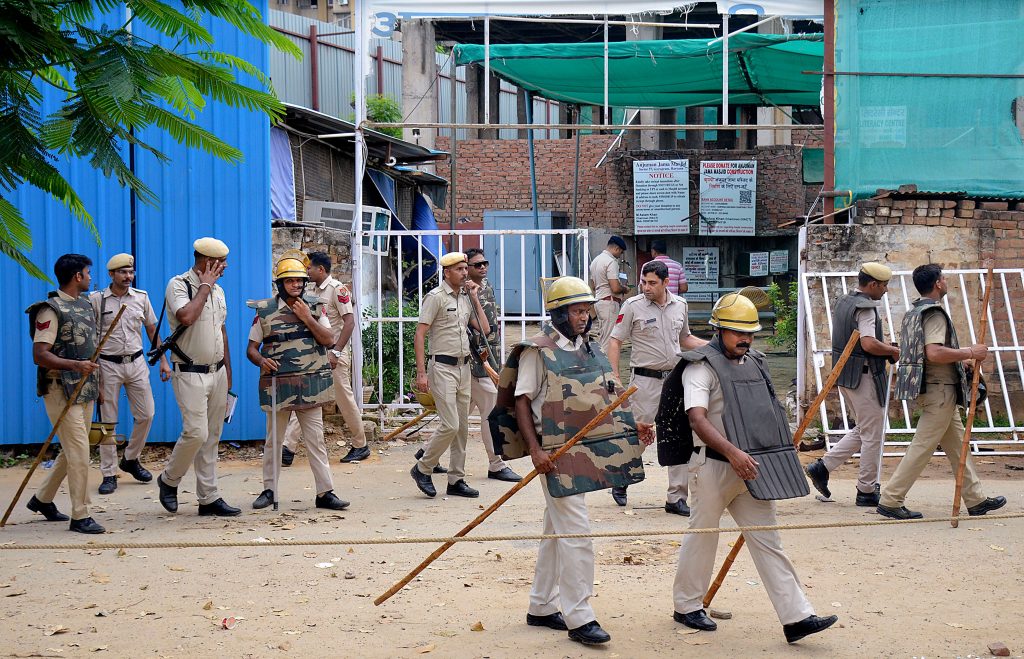
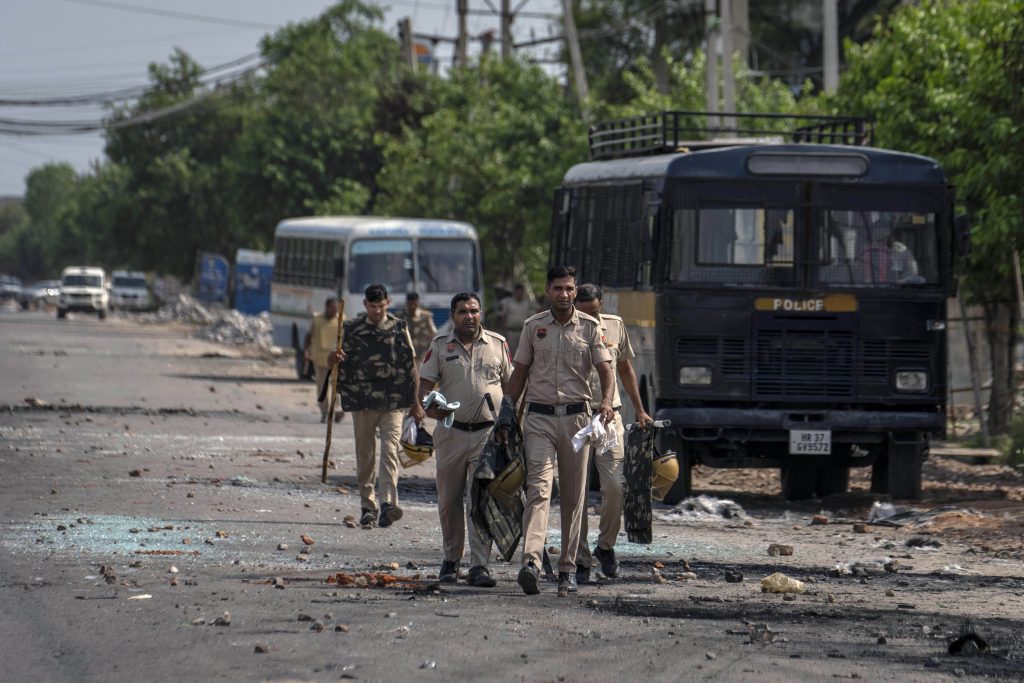
Normalcy is yet to return to the Nuh, Gurugram and adjoining districts of Haryana after the July 31 communal clashes in Muslim-dominated Nuh town shook the state and took lives of six persons including two Home Guards and a naib imam of a mosque and caused massive damage to public and private properties in the region.

The deceased have been identified as Home Guards – Neeraj and Gursev, naib imam Mohd Saad, and three youths – Abhishek, Shakti Kumar and Pradeep Sharma, according to media reports which add that about 300 suspects of rioting had already been arrested among whom two accused were nabbed after a brief encounter with police on August 10 last.

For the record, the communal clashes had erupted after a religious procession “Brij Mandal Jalabhishek Yatra’’ taken out by Vishwa Hindu Parishad (VHP) and Bajrang Dal was reportedly attacked by mobs of “miscreants’’ who started pelting the procession with stones following which mobs indulged in arson and setting on fire a scores of private and police vehicles.

According to reports, the immediate trigger for the clash in the communally sensitive Nuh was after the cow vigilante Monu Manesar, one of the main accused in the recent infamous case of brutal killing of Nasir-Junaid in Bhiwani (Haryana), announced – in an online post – that he would be joining the said religious procession – much to the chagrin of the aggrieved groups.

Though Monu did not take part in the procession, another cow vigilante allegedly provoked – through social media – the rival group which had objected to Monu’s participation in the procession despite their repeated calls against it to Rajasthan and Haryana police.

Result? The communal clashes have already left a death toll of six, grievous injuries to dozens of people including police personnel and massive damage to public and private property. Curfew is still imposed in Nuh and prohibitory orders against assembly of four or more persons in the many parts of the National Capital Region (NCR) are in force since.

Backlash of Nuh violence

Since the communal violence spilled over to several areas of adjoining Gurugram district immediately after clashes in Nuh, mobs vandalised a religious place and scores of temporary shops and other structures in some parts of it.

While a mosque was set on fire in sector 57 in Gurugram by mobs carrying petrol bombs hours after July 31 clashes in which one of its employee, a naib imam, who was sleeping inside, was also reportedly shot dead, mobs of miscreants vandalised many shops mostly selling “briyani’’ in Badshahpur and other shops in Sector 66 of Gurugram. The mobs of over 200 motorcycle or cars-borne men who hurled petrol bottles, did it, reports said.

Not only this, a few days later in Panipat too, a group of over two dozen miscreants who had their faces covered with masks, vandalised several shops and stalls of street vendors belonging to members of minority community in Sector 25 and injured some people reportedly in retaliation of the killing of Abhishek, a youth hailing from the city in Nuh violence.

They vandalised a meat shop and a barber shop besides several other stalls of street vendors and injured some of their owners. Police held that they had detained more than a dozen suspects in the case.

Demolition drive

Meanwhile, post communal violence in Nuh, followed a demolition drive by the state administration in Nuh as well as other parts of the adjoining areas.

In Nuh a three-storey hotel from where stones were said to have been pelted during communal clashes was bulldozed, besides several other “illegally’’ erected temporary shops and shanties reportedly belonging to those accused of rioting and arson.

Several residents in Nuh said that the shops demolished outside the Shaheed Hasan Khan Mewati Government College and Hospital had also been razed though these were legal and the owners of these structures had not been given any notices about it beforehand.

According to media reports over 1,000 temporary and other structures were razed in the area since July 31.

Nuh MLA rues panchayats’ ‘ban’

Meanwhile, in another development, the Nuh legislator Aftab Ahmed rued demanded strict action against some panchayats which had recently called for “banning’’ the entry Muslim traders into their villages.

Aftaf, who is deputy leader of the Congress in the state assembly, sought strict action against them and said that it was totally unconstitutional and that it would also further vitiate the social harmony in the state.

However, some of the sarpanches of these panchayats held that they had only talked about verifying the credentials of the outsiders and not called for any ban against anyone.

HC slams brakes on demolition drive

Meanwhile, the Punjab and Haryana High Court on August 7 stayed the “demolition drive’’ in Nuh, Gurugram and asked if it was as per law.

Taking a suo motu cognizance of the demolitions drive, the High Court bench of Justice G S Sandhawalia and Justice Harpreet Kaur Jeewan, halted the same observing that one of the issue arising was whether the state was conducting “ethnic cleansing’’ and asked the state to file an affidavit about the details of numbers of buildings bulldozed during the past two weeks and whether it had issued notices before the action.

The bench held that the issue also arises whether the buildings belonging to a particular community are being brought down under the guise of law and order problem and an exercise of “ethnic cleansing’’ is being conducted by the state.

The matter now would be placed before the chief justice on August 18, 2023.

Attack on cyber station a matter of concern

Meanwhile, expressing its concern over the miscreants’ attack on its cyber police station, the Haryana police has claimed the said attack in guise of communal clashes, aimed at destroying the substantial evidences of the cyber crimes and criminals,contained there following the massive raids in the district about three months ago.

A police spokesperson said that the miscreants had attempted the attack in a planned manner to destroy evidences contained there to avoid prosecutions.

Terming the raids as the biggest ever such action against cyber fraudsters in the country, the police said that the raids in Nuh district involving 5,000 personnel in Haryana, had also unearthed cyber frauds worth about Rs 100 crore. The spokesperson said as many as 320 hideouts of cyber criminals spread across 14 villages in Nuh district were raided and busted.


How Khattar govt’s failure to heed alerts led to Nuh violence

On the basis of inputs from Nuh, ADGP CID Alok Mittal wrote to Nuh SP and DC Parshant Panwar on July 27 expressing fears of violence erupting during the Yatra. He also cautioned DGP Parshant Aggarwal but apparently the alerts were ignored, writes Pawan Kumar Bansal

Violence during Jal-abhishek Yatra organized by Vishwa Hindu Parishad (VHP) and Bajrang Dal at Shiv temple, Nalhar, in Nuh district of Haryana has earned a bad name for Haryana Government to the extent that even Punjab and Haryana High Court while ordering a halt to its bulldozer campaign of demolishing establishments of a particular community has come down heavily on it questioning the purpose of campaign and asking whether it is a form of ethnic-cleansing?

The entire administration of Nuh district including Superintendent of Police, Deputy Commissioner, Additional Deputy Commissioner, Deputy Superintendent of Police and District Public Relations Officer has been transferred.

About a hundred persons have been arrested and a massive hunt is going on in nearby Bharatpur district of Rajasthan as it is believed that some persons accused of violence in Nuh are hiding.there.

Enough damage has been done. Six persons including two home guard Jawans on duty have lost their lives and property worth crores have been burnt or damaged.

In nearby Gurugram, a mosque was damaged and its twenty year old Imam was killed by an unruly mob. Four persons were arrested by Gurugram Police in this connection but Hindu Maha -panchayat has demanded their release, failing which they have threatened to launch an agitation.

Even after violence, during protest-demonstrations by VHP and Bajrang Dal all over the State, provocative slogans advocating boycott of a particular community were raised in the presence of police. The members of the community were even threatened to leave the area during sloganeering.

For three days, hundreds of houses and a hotel at Nuh, which the government claims was used for throwing stones on the Yatra, were bulldozed until the campaign was stayed by the Punjab and Haryana High Court.

Despite reports of apprehension of violence during the Yatra from both sides. i.e by organisers of Yatra and those opposing it, the Nuh administration and the police failed to undertake adequate measures to prevent the ugly situation.

To add salt to injury, CM Manohar Lal commented that since the police force was less as compared to the population of the state, hence everyone cannot be provided police security.

The contradictory stands and statements of the Haryana Home Minister Anil Vij, Inderjit, Union Minister and MP from Gurugram, and Deputy Chief Minister Dushyant  Chautala on the issue have further complicated the situation.

The traditional Yatra which was started three years back was scheduled for 31st July. A week before the Yatra, Vishavjit, Inspector, CID, Nuh, sent input to headquarters apprehending violence during Yatra adding that the organiser will wave naked swords during Yatra.

Monu Manesar, a cow vigilante, against whom a case of murdering two youths of a community on suspicion that they were cow killers is registered in nearby Bharatpur district of Rajasthan, had announced that he would join Yatra and had appealed people to join in large numbers.

Rajasthan CM Ashok Gehlot has stated that Haryana Police did not cooperate with Rajasthan Police when it went into Haryana for arresting him. Haryana CM Manohar Lal however has denied the charge saying that none had sought any help.

Videos carrying provocative messages from saffron activists went viral announcing that they were coming asking the opposite groups to be ready for their welcome which further aggravated the situation leading to tremendous resentment among  members of a community.

In the state assembly, Maman Khan, Congress MLA from Nuh, while speaking about the alleged high-handedness of Monu Manesar, self-styled cow-vigilante, threatened that if Monu Manesar entered Nuh, he would be crushed like an onion.

On the basis of inputs received from Nuh, ADGP CID Alok Mittal reportedly wrote to Nuh SP and DC Parshant Panwar on 27th July alerting them about the apprehension of violence during the Yatra.

Nuh SP Varun Singla proceeded on leave all of sudden and SP of nearby Palwal district Lokender Singh was given additional charge.

Alok Mittal also cautioned DGP Parshant Aggarwal about apprehension of violence but he didn’t share this either with Home Minister Anil Vij or with CM Manohar Lal for reasons best known to him as efforts to know his version bore no result as he didn’t pick up his phone.

However Anil Vij said that the information was not shared with him.

Nuh deputy commissioner Parshant Panwar put the inputs in the meeting of the peace-committee composed of prominent persons of both the communities, who assured that nothing untoward would happen. The Administration and the police should have taken adequate arrangements but they apparently failed to understand the seriousness of the situation and believed the assurance given by members of the peace-committee.

Now we come to the statements of Union Minister Inderjit, Deputy Chief Minister Dushyant Chautala, Home Minister Anil Vij and D.P.Vats, Rajya Sabha member of BJP.

Inderjit questioned why the organisers of Yatra were carrying weapons?

Deputy Chief Minister Dushyant Chautala said that the organiser of Yatra did not give complete information about route of Yatra to administration and hence the trouble.

D.P.Vats alleged that violence at Nuh was a conspiracy by Pakistan.

Deputy CM Dushyant Chautala told newsmen at Chandigarh that he got information about Nuh’s situation in the morning whereas state Home Minister Anil Vij said that at 3 p.m, a private person informed him about violence at Nuh.

It is interesting to mention here that while delegations of Haryana Pradesh Congress Committee and Aam Aadmi Party were not allowed by administration to visit Nuh , entire administration including ADGP Mamata Singh met the BJP delegation led by Om Parkash Dhankhar at Circuit house and briefed about the steps taken by the police and the administration.

Targeting Congress and AAP for violence, Dhankhar warned that those involved in violence will not be spared.

Nuh Police is worried as organisers of Yatra are planning to resume the Yatra, which could not be completed due to violence, from August 28

The Indian Reserve battalion has been shifted from Bhondsi to Nuh and VHP national Joint Secretary Surinder Jain has demanded that para-military forces should be permanently posted at Nuh as police alone cannot check anti-social and communal elements.

Nuh SP Narender Brijaniya said that he was hopeful of controlling the situation adding that none responsible for violence will be spared.


How to avoid hidden charges by banks?

A report says the banks collected over Rs 35,000 crore since 2018 on account of penal charges for non-maintenance of minimum balances, additional ATM transactions, and SMS services

Having a bank account is crucial for sound financial management.  There is no one right bank account for every person. Choosing the right bank starts with knowing your bank usage and individual preferences. However, equally important is knowing hidden bank account charges and tips on avoiding some like a pro!

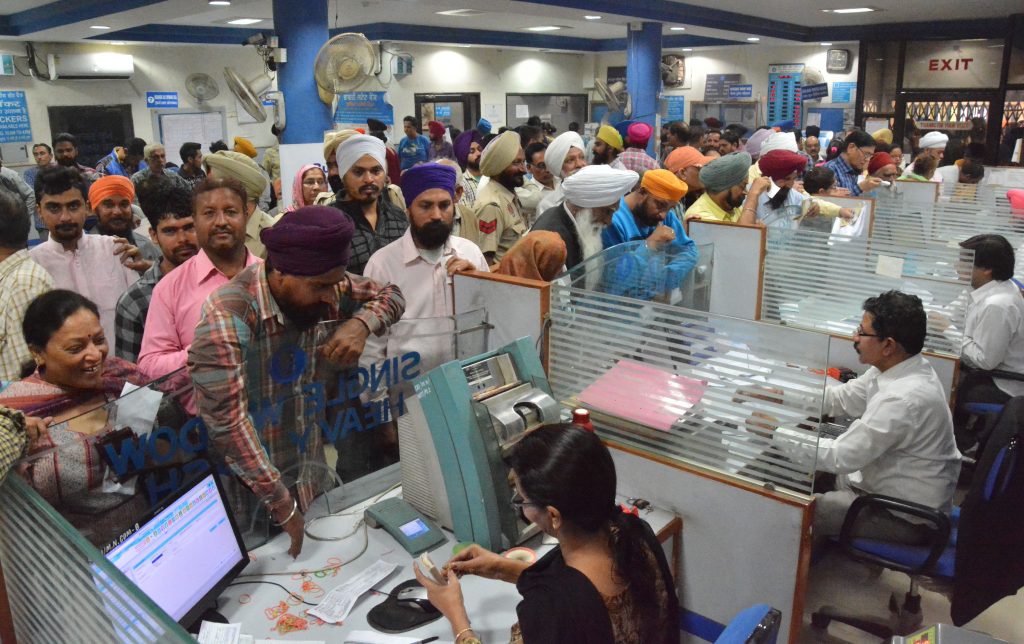
This becomes all the more important when we take into account that banks collected over Rs 35,000 crore since 2018 on account of penal charges for non-maintenance of minimum balances, additional ATM transactions, and SMS services. Significantly, Bhagwat Karad, Minister of State for Finance, shared data figures collected from public-sector banks and major private sector banks, including Axis Bank Ltd., HDFC Bank Ltd., ICICI Bank Ltd., IndusInd Bank Ltd. and IDBI Bank Ltd in the last five years.

These banks collected Rs 21,044.4 crore on account of non-maintenance of the minimum bank balance, Rs 8,289.3 crore for additional ATM transactions, and Rs 6,254.3 crore from SMS services. With effect from April 1, 2015, banks are permitted to fix reasonable penal charges when it comes to the non-maintenance of the minimum bank balance in savings accounts, according to the Reserve Bank of India’s master circular on customer service in banks.

The RBI circular said banks were required to put in place a system of online alerts for all types of transactions. However, in order to ensure reasonableness, the central bank has advised banks to ensure that such charges were levied to customers on an actual basis. Regarding ATM transactions, banks offer savings-bank account holders a minimum of five free financial transactions in a month irrespective of the location, according to the RBI’s updated ATM guidelines as of November 2022. For financial transactions from ATMs of other banks, customers are also eligible for three free transactions in metro cities and five from non-metro locations in a month.

How to avoid bank charges?

Here are the top eight hidden bank account charges you should know about and tips on avoiding some like a pro!

Account maintenance fee

One of the widespread hidden bank account charges that banks charge from their customers is the account maintenance fee. This is a monthly fee that is deducted from the accounts every month. The charge amount is usually allocated towards funding the human and tech resources used to maintain the accounts.

Minimum balance fee

Another significant change you might learn about is the minimum balance fee. This is charged when the account balance exceeds the minimum required balance. The fee helps banks to maintain regulatory requirements. However, fortunately, only some banks charge this fee. So, if you are looking for banking options, keep an eye on this charge.

The RBI circular permits banks to fix penal charges regarding non-maintenance of minimum balance in savings accounts, as per their Board approved policy, while ensuring that all such charges are reasonable and not out of line with the average cost of providing the services. Further, RBI advised banks “to ensure reasonableness and equity in the charges levied by banks for sending SMS alerts to customers and to leverage the technology available with them and the telecom service providers to ensure that such charges are levied on all customers on actual usage basis”.

Online banking fee

Even with the world moving towards complete digitization, many banks still charge for their online banking or remote banking services as one of their bank account charges. Online banking isn’t something that can be avoided since it gives you the flexibility and convenience of accessing your account 24/7 from anywhere. You can either find a bank offering online banking facilities free of cost or find payment service providers as an alternative to traditional banks to avoid this fee.

Overdraft fee

If you withdraw money from the account when there are insufficient funds for the transactions, your transaction is covered by an overdraft. However, you are charged a fee for every overdraft, which can become quite expensive for a student. Almost all banks charge overdraft fees, among other bank account charges. However, fortunately, many banks offer unique benefits including overdraft bonuses, incentives, and low overdraft fees. Other benefits, like 0-interest overdrafts, can also compensate for the fees. So, check out the bank’s overdraft policies carefully while looking for banking options.

Inoperative bank accounts fee

Not using your bank account for a stretched period of time can enable your bank to charge you an inactivity fee along with other bank account charges. Depending on your bank’s policies, this idle period can be anywhere between 1 year to 5 years. For example, you open an account but abandon it since you decided to go with a new bank account. However, you suddenly start using the account after three years of inactivity. In this scenario, the bank will charge fees for the inactivity period. If you have money in an inactive account, the bank will automatically deduct various bank account fees from your money.

So, how exactly do you avoid this fee? Just keep using the bank account. Make sure you are making transactions regularly, and you should be safe from one of the most common hidden bank account charges! If not, it is better to pull your money out of the bank account or close the account if you plan on not using it anymore. This way, you can make sure the bank doesn’t charge you any bank account fees automatically.

Statement fee

Checking your bank statement? You might get charged a small fee for it. The fee is justified by the cost of paper and the printing of your statement receipt. Fortunately, this charge can be easily avoided by any account holder. Since online banking options are popular and you can retrieve your bank statement digitally, the paper-printed statement fee is wholly eradicated. You can also use payment service provider apps to retrieve your bank statement digitally without any hassles or additional fees.

Debit card fee

Usually, banks charge multiple types of fees for debit cards. If you don’t have a debit card and are applying for one, you will be charged for a new debit card. Similarly, if your debit card expires, you are charged a renewal fee for a new card. In case of loss or theft of the debit card, banks charge you a small fee for blocking your old card and then replacing it with a new one. Many banks also charge their customers annual or quarterly debit card fees, account service, and maintenance fees.

ATM transaction fee

Another one of bank account fees that banks may charge you is ATM transaction fees. Depending on your bank’s policies, this is charged for every transaction or after a specific number of transactions. Banks might charge this fee for excessive transactions and transactions after you have crossed your transaction limit. This fee also includes the printing cost of the transaction receipt that you may take after your transaction. Avoid this and opt for paperless, digital receipts to eradicate this small fraction of the transaction fee.

In June of last year, the RBI granted banks permission to charge up to Rs. 21 per transaction at an ATM (Automated Teller Machine) in addition to the monthly free transaction cap, beginning on January 1, 2022. According to the RBI circular dated June 10, 2023, “Customers are eligible for five free transactions (inclusive of financial and non-financial transactions) every month from their own bank ATMs. For financial transactions from ATMs of other banks, customers are also eligible for three free transactions in metro cities and five from non-metro locations in a month.

However, there are ways to avoid paying your ATM fees, such as using your own bank’s ATM, finding a partner ATM, or using an account that refunds ATM fees.  It should be noted that transactions include financial and non-financial transactions at ATMs.

MOST POPULAR

HOT NEWS