Is this the end of the road for Imran Khan?

Is the outgoing Pakistan PM Shehbaz Sharif’s boast about his proximity to the GHQ in a speech on the eve of the dissolution of the National Assembly an indication which way the wind will blow in general election to be held next year ?

With Queen or the old ‘Begum’ of the political harem of Islamic Republic of Pakistan, Imran Khan Niazi, a former PM, finally being dumped with the help of Kangaroo courts, the decks have now been cleared for fresh polls to ensure a landslide victory for the ruling coalition considered to be a ‘hybrid regime’ led by PM  Shehbaz Sharif. A hybrid regime comprises civilian leadership as the face of the government, but the actual power lies with the army.

Imran Khan, a cricketer-turned politician, despite being convicted and arrested, continues to be the most popular figure in Pakistan. His absence in the elections gives the ruling coalition a chance to return to power without much opposition.

It may be recalled that just on the eve of the 2018 polls, the then PM, Nawaz Sharif, was implicated in false cooked up corruption cases and was convicted, thus paving the way for Khan to win the polls. Five years, later, the history is being repeated, now this time the target is Khan and his party, Pakistan Tehreek-i-Insaf (PTI).

After being ousted from power, Khan’s opponents had adopted twin strategy of forming an alliance of the opposition parties and also befriending the then army chief, General Qamar Jawed Bajwa. It has given them rich political dividends.  The two major but rival political parties Pakistan Muslim League- Noon (PML-N) and Pakistan People’s Party (PPP) had supported the extension of Bajwa, thus renewing their ties with the GHQ. It also ended army’s political dependence on Khan.

Khan’s confrontation with Army

The protest of Khan’s supporters including the attacks on military facilities in Lahore might lead to his trial before the military courts. Pakistani Defence Minister Khawaja Muhammad Asif  has said the military courts are a necessary for handing out punishment for rebellion against the state. “Whatever was happening on that day, it was a political party attacking the Pakistan army or air force,” he further stated in a media interview that “We are acting in response to that war which was declared on [the] Pakistan army on May 9.”

With their winning the support of the GHQ, the coalition comprising as many as 11 disparate political outfits, formed in 2020 under the banner of the Pakistan Democratic Movement (PDM), is now well-entrenched in the country’s power game. On April 10, 2022 through a no-confidence motion, PDM finally ousted Khan and his PTI from power. Earlier, it appeared that PDM’s agenda was not only to oust Khan from power, but also assert civilian supremacy in the country’s governance, but later, Shehbaz Sharif, was seen echoing his loyalties towards the GHQ. 

Earlier, PDM’s slogan was ‘Vote ko izzat do’, i.e. meant ‘give respect the sanctity of the vote’. It had also accused the army and its intelligence outfit, ISI, for manipulating and rigging the 2018 elections in favour of Khan.

Khan, however, was disillusioned with the army following his defeat on the floor of the National Assembly in 2022. Since then, he has been accusing GHQ’s active role in ousting him and has been holding big protest rallies in major towns of Punjab accusing army for his ouster from the power. Earlier, during his tenure as PM, differences with his mentor, General Bajwa, on the issue of the posting of ISI chief Faiz Hamid as a corps commander, had hit the headlines. Faiz Hamid, who had ensured Khan’s elevation to the coveted office of the prime minister, was aspiring to become army chief. The removal of Khan from power had finally shattered his hope to lead the army.   

Nawaz Sharif may return to Pakistan

Much political drama is in store if the former PM Nawaz Sharif finally returns to Pakstan. He had accused in his speech broadcast from London, that the then army chief  Bajwa and Faiz Hamid for installing Khan as prime minister by rigging the 2018 General Elections. 

It has been political acumen of Shehbaz Sharif and the chief of the PPP, Asif Ali Zardari, for finally wresting power from the army supported Khan and PTI. The apprehension is that Khan, an icon of the youths, and having a sizeable support of the army generals and the apex judiciary might comeback. If his conviction is stayed till the polls, he might win the polls.

On his part, Khan is conducting himself like a ‘docile’ political leader, ready to take instructions from the GHQ. He has been telling the real rulers, GHQ at Rawalpindi, that during his tenure as PM, he was sincerely following the directions being given by the army. His anti-India rhetoric was scripted by the ISI. According to Pakistani watchers, the foreign minister, Bilwal Bhutto’s anti-India uttering too echoed the ISI’s directions.

It is being recalled that the army’s proxies in media and among Muslim clergy had declared Nawaz Sharif, during his tenure as PM, a stooge of India; therefore, Khan cannot be blamed for winning India’s friendship.

The real reason for his ouster could be his failure to manage the army’s growing needs for more funds. The defence budget of Pakistan takes away more than 55 per cent of the national resources for maintaining its one million soldiers, including five lakh reserves. In this figure, the strength of para-military, estimated to be nearly 6.5 lakh, is not included. 

Khan’s Pleas Ignored

Before he was convicted for five years, Khan had been pleading like an abandoned begum of Mughal harem directly to the GHQ and also before media that he was keen to meet the new army chief, Munir Ahmad, but his pleas were ignored. Since he had opposed his elevation to the coveted post of the army chief, he also lost the favour of the new leadership of the establishment.

A disenchanted Khan, who had been the most ‘docile’ prime minister, appears to be still confused why he was being ‘punished’; he had been toeing the policies of the GHQ, whether it was any issue against India, especially after the abolition of the Article 370 of the Constitution ending the special status to the Jammu and Kashmir state, or snapping trade ties with India. However, his supporters are ‘hopeful’ that the army bosses might not oppose him, and he might get a stay on his conviction from higher courts, thus paving the way for his political rehabilitation.

It was candied confessions of a sitting PM in Pakistan, when Shehbaz Sharif stated on the eve of the dissolution of the National Assembly that it matters little to him for being branded as a stooge of the armed forces, popularly called establishment. He even boasted his proximity to the GHQ, perhaps paving the way for his victory in the forthcoming polls expected to be held in next three months. He exposes that route to power in Pakistan is only through GHQ.

Army’s nominee is Caretaker PM

The GHQ, according to informed sources in Pakistan, has finally prevailed upon the outgoing PM, Shehbaz Sharif, and the opposition leader, Raja Riaz, to get its proxy, Anwaar-ul-Haq Kakar, Senator from Baluchistan, appointed as caretaker prime minister, till the polls, expected to be held next year.

Just two days before the appointment and a day after the dissolution of the National Assembly, the Supreme Court of Pakistan has declared the law giving the opportunity to the public figures for seeking review of their respective convictions before the apex court. The law could have helped the former PM Nawaz Sharif in seeking review of his conviction. It was enacted in May this year. 

Meanwhile, the possibility of giving stay to the conviction of Imran Khan, in the Toshakhana case is not being ruled out. He has been found guilty of selling a valuable gift, a wrist watch, received from the Saudi Prince, which  and sold in the market, and the details were not given about the proceeds. If Imran’s conviction is stayed till his appeals are being disposed off before higher courts, Khan might be allowed to contest the forthcoming polls.

It means that Khan, the most popular leader in the country, would be trouncing his political opponents in the coming polls.

Earlier, Kakar had served as spokesperson for the Baluchistan government and is known for his close relationship with the military establishment.

Former information minister Fawad Chaudhry in a statement, has observed that “Kakar’s nomination as caretaker prime minister certainly is something that would not bring joy for the camps of the ruling PML-N and PPP.
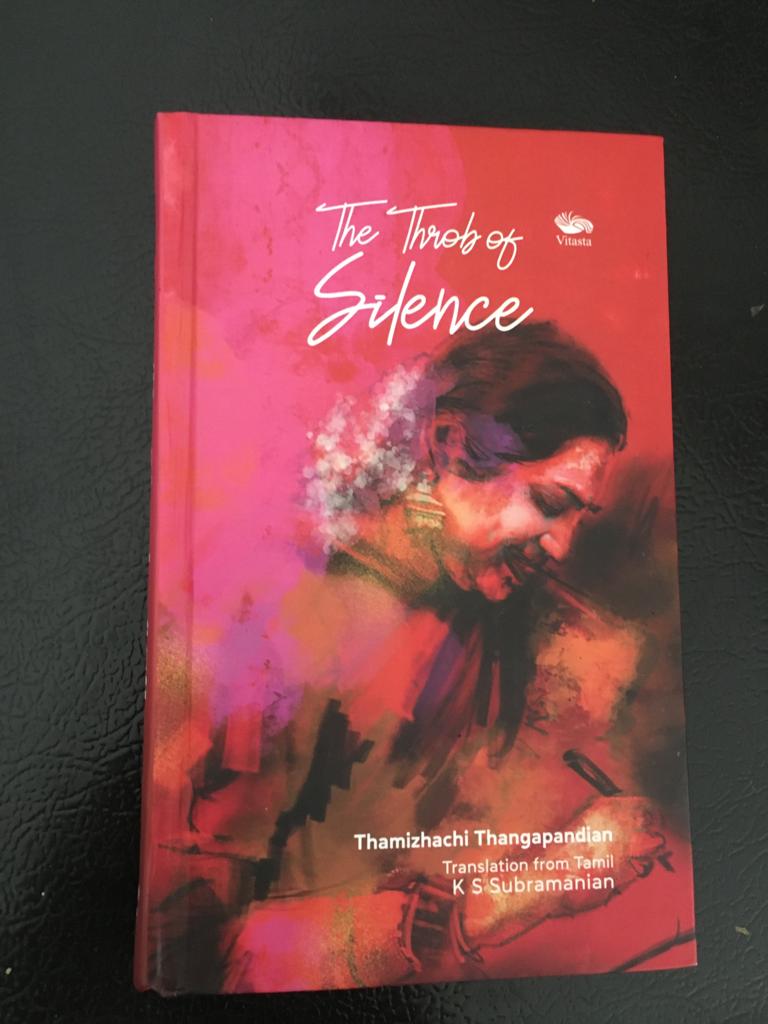
This poetry volume penned by a parliamentarian has a huge range

While focusing on her verse tucked in her poetry volume titled ‘The Throb of Silenc, there’s verse after verse which holds out. Accompanied by sleek sketches, which just about add to the intensity… there’s  a diversity to her verse but what hold out all along are subtle emotions engulfing each verse. A book review by Humra Quraishi

Title of the book – The Throb of  Silence

Author – Thamizhachi Thangapandian

Translation from Tamil to English –  K S  Subramanian

Publisher – Vitasta

Pages – 158

 Price – Rs 425

Last week at the Bangalore Poetry Festival, I met the graceful and beautiful Parliamentarian Dr T. Sumathy (aka) Thamizhachi Thangapandian. In fact, when she entered the venue auditorium, all of us turned to see her …she looked a beautiful heroine along the traditional  strain. Later, as I was introduced to her, one realized she’s a Parliamentarian (DMK) and a short story writer, a poet and an academic. Above all, a soft spoken, humble and modest person.

I have been reading her two freshly launched books. A poetry volume and also a short story collection. This week I’m focusing on her verse tucked in her poetry volume titled – The Throb of Silence.

There’s verse after verse which holds out. Accompanied by sleek sketches, which just about add to the intensity… there’s a huge range, a diversity to her verse but what hold out all along are subtle emotions engulfing each verse.

Leaving you with her this absolutely hitting verse. Titled – Al Janabi’s Sixth  Finger –   it  carries a vital  backgrounder to it:

Al Janabi’s Sixth Finger:

‘In Baghdad/

on a March noon/

with the grating and neighing/

of old and decrepit  horses/

Time knocked at your door/

With the stamp of youth still strong/

the grip of dominance on the one side/

the masculine arrogance/

on the other /

held captive/

Your  body  slipping /

as a lump of flesh/

as the sixth finger/

alienated from you,/

your six-year old sister watching you/

with the remnant of a sweet/

you had both shared/

still lingering in her molar /

In eerie silence they watched /

the violent rape of land and woman/

your mother hiding her veil/

and your  father at  gunpoint/

Inhaling the stench of rancid blood/

the doddering  horses panting away /

set out Time/

Only witnesses /

a flutter of  dove wings/

just a poem.

( Five American soldiers gang raped and killed 14-year old Abeer Qassim Al – Janabi. This is considered to be one of the significant atrocities of  American soldiers in Iraq).’

Exclusive- Manipur people believe that I am being paid by CM: Rohan

It was November 2017, on Diwali day when Rohan Philem, a 26 years old boy from Manipur got the idea to travel Indian cities on Cycle to create awareness in the country on different issues. Without any delay Rohan in January, 2018 set for his first cycling expedition called “Pollution Free India” from Delhi to Imphal. It took 30 days for Rohan to complete this journey. It was a successful journey, which made Rohan Philem a cyclist star in India, with almost all the leading media organizations of the country covered Rohan with title “Manipur Cyclist”. Since than Rohan has not looked back. He has done numbers of cycling expeditions since then on different subjects. The important one was from Jammu to Uttar Pradesh’s Greater Noida to raise funds for soldiers killed in Pulwama. It took nine days for Rohan to complete this journey. Rohan’s another famous expedition is when he cylces across India to feed the poor during pandemic. When violence broke out in Manipur, Rohan was in Bengaluru  as a motorcyclist, with the message of peace and raise funds for disabled people. He also urged Bengaluru residents to help people living in relief camps in Manipur following ethnic violence. Rohan is also known for opening a First North-East Deaf Community restaurant in Imphal with the name “Voice”. When Rohan was in class 2nd his parents got separated. His father died when he was in class 12th. So he grew up of orphanage background. According to Rohan, he was supported by the church and that’s how he was converted into Christianity from Hinduism. Today Rohan Philem with his NGO “Cycling For Humanity” is on a different mission. He is traveling across India to educate  misled Christian community  who think that in Manipur Christians and Hindus are at war. Rohan says in Manipur Hindus and Christians are not at war.  Neither RSS is involved in the violence as many Christians think. During his ongoing mission Rohan Philem Exclusively spoke to Tehelka in Delhi. The excerpts of his edited Interview are given below.

Q1. Who is responsible for present violence in Manipur ?

After speaking to both Metei and Kuki. After considering all religious angles. And after considering all angles. I came to a conclusion that drug mafia is responsible for the present violence in Manipur. Biren Singh government targeted Kuki’s  illegal poppy cultivation. I myself went to Kuki’s poppy cultivation fields to destroy them. After this Kuki started playing minority, Tribal and Christian card.

Q2. Who is more against you, Kuki or Meitei ?

If I go in the Kuki area, I won’t come alive. They don’t see me as Christian. They see me as Meitei. I am a Meitei christian still living safely amongst them. This is the reason why pastors houses are been burnt by Kuki. 200-300 Meitei Christians houses were burnt in Churachandpur Kuki dominated area.

Q3. Is this Hindu v/s Christian war in Manipur ?

Kuki are Christian, despite that they attacked converted Meitei Christian Churches. Hindu Metei on the other hand have attacked Kuki Churches. So when Kuki attacking converted Meitei Christian Churches mean Christian attacking Christian have nothing to do with religion. So European Union cannot say it is a Hindu-Christian war.

Q4. Why did you embraced Christianity ?

I was Metei Hindu. When I was in class 2nd  my mother got divorced. When I was in class 12th, my father died. I grew up of orphanage background. I was supported by the Church and that’s how I converted to Christianity.

Q5. How you are managing fund to run your NGO and cycle expeditions ?

I endorse brands. I approaches NGO for funds. I do fund raising through crowd funding etc. I use the amount for my NGO and some for managing myself. Sometime people get my air ticket booked, sometime my hotel booked. Sometime they give me 5k to 10k in cash when I meet them.

Q6. What are your future plans ?

I have to go to Mumbai, Kerala, Chennai etc to meet as many Christians leaders as possible, and will tell them that it is not a Hindu-Christian war in Manipur as many mislead Christian think. And RSS is also not involved in the violence.

Q7. After this people will say that you are being paid by Biren Singh ?

This fake allegation on me is already on since long. People say that I have being paid by the CM. Some Christian when I approached them called me RSS agent, paid by them.

Q8. I have heard lots of stories that forced conversions is happening in Manipur ? I have also heard that some pastors are running an agenda . After converting five people into Christianity they ask for money from the higher authority, that is Church council, that they have converted five people so they should be paid now.

Hizb terrorist’s brother hoists Tricolour in Jammu and Kashmir

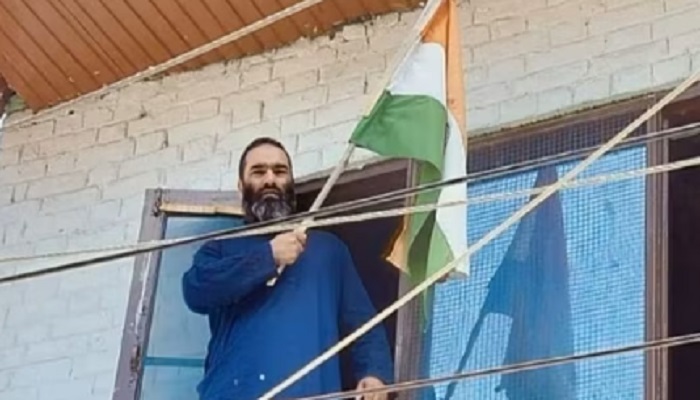
Rayees Mattoo, the brother of Hizbul Mujahideen terrorist Javid Mattoo, raised the tricolour at his residence in the north Kashmir town of Sopore. The act was captured in a video where Rayees Mattoo could be seen waving the flag from a window.

Javid Mattoo, also known by aliases such as Faisal, Saqib, and Musaib, is an active member of the Hizbul Mujahideen terror group and has been listed as one of the top 10 targets by security agencies in the valley.

In the lead-up to Independence Day, Indian Prime Minister Narendra Modi had called upon citizens to participate in the ‘Har Ghar Tiranga’ (Every Home a Flag) movement, which encouraged the widespread display of the national flag between August 13 and 15. Sunday witnessed a significant ‘Tiranga’ (Tricolour) rally in Srinagar, with the participation of the region’s Lieutenant Governor, Manoj Sinha. During the event, Sinha emphasized the strong attachment of the region’s youth to the national flag, asserting that the people of Jammu and Kashmir hold the flag in high regard, just like any other part of the country.

Surrender of J&K sovereignty to India was absolutely complete: Supreme Court

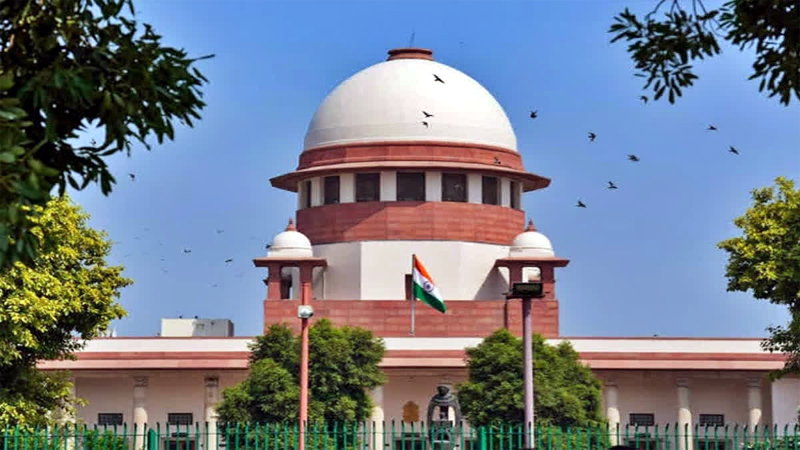
The Supreme Court on Thursday reaffirmed the absolute and complete surrender of Jammu and Kashmir’s sovereignty to India upon the state’s accession to the Indian Union in October 1947. The court’s five-judge constitution bench, headed by Chief Justice DY Chandrachud, made this assertion while addressing the issue of Article 370 of the Constitution, which granted special status to the erstwhile state.

The bench emphasized that the process of accession, as stated in Article 1 of the Constitution declaring India as a Union of States, including Jammu and Kashmir, signified the full transfer of sovereignty in all aspects. The judges firmly rejected any notion that elements of sovereignty were retained by the state post the enactment of Article 370.

The central argument of the petitioners challenging the abrogation of Article 370 centered on the scope of powers granted to the Indian government under the Instrument of Accession. They contended that the central government was constitutionally limited to matters of defense, communication, and external affairs.

Senior advocate Zaffar Shah, representing the Jammu and Kashmir High Court Bar Association, one of the petitioners, argued that the state’s constitutional autonomy was enshrined in Article 370. The court, however, questioned the permanence of Article 370 and its relevance, especially if the state were to voluntarily adopt the laws of the rest of the country.

The judges also discussed whether the process followed by the central government in abrogating Article 370 was legally permissible. They pondered whether the absence of the Constituent Assembly of Jammu and Kashmir – which could have recommended the abrogation – made Article 370 permanent. The petitioners maintained that only the Constituent Assembly could have recommended such a move, and its absence rendered the abrogation unconstitutional.

The court session also addressed the delicate balance of powers between the central government and states, acknowledging that while there are restraints on the power of Parliament to enact laws for states, these restraints do not detract from the overall sovereignty vested in India.

The hearing remained inconclusive and is set to resume on August 16. The case involves several petitions challenging the abrogation of Article 370 and the reorganization of Jammu and Kashmir into two Union Territories in 2019. 

Drop in female sex ratio in Haryana

A recent report from the NITI Aayog said sex ratio at birth nationwide has dropped from 906 in 2012-2014 to 900 in 2013-2015. The number of girls born for every 1,000 boys In 17 States in the country witnessed a drop with Gujarat state  performing the worst declining 53 points. While this is a highly disturbing trend, it is not new for India, which has seen a consistent downfall in girls as compared to every 1000 male children. The number of girls born is naturally lower than the number of boys because of the preference for  for the male child.
Shockingly, In case of Haryana state Sex Ratio (SR) in male and female in eight districts including Rohtak, Mohindergarh, Sonipat Karnal, Charkhi Dadri, Kaithal, Bhiwani and Gurugram  has been observed less than 900 girls as compared to 1000 boys. In-spite of state health department efforts there is no control over illegal ultrasound centres across the state involved in detecting pre-natal sex of unborn child in pregnant, which usually charge amount between Rs 30000 to 40000 for determination of sex of child in womb and there are several private hospitals and ‘Jhola-chhap’ doctors charging amount between Rs 80000 to Rs 1 lakh for termination of pregnancy in case of female child in the womb. However, the health department has arrested a large number of persons including owners of ultrasound centres involved in this illegal practice. 

Government of Haryana had started ‘Beti Bachao-Beti Padao’ campaign from Panipat in year 2015 when in the year 2019 male-female sex ratio (SR) in newborns in Haryana state slashed down to 923 in 2019  and was recorded as 906 in July 2022. Information reveals, the use of ultrasonography and aborted female foetuses was first established through research in Bangladesh. Consequently, the Health Ministry of our country strictly banned the use of ultrasonography to determine sex of an unborn child. In February 2020, the High Court also banned gender detection to protect unborn female babies and pregnant women. Despite these efforts, gender detection of the unborn is still a common practice in the country. A study in this regard reveals that due to strictness in this illegal business in Haryana state, there are large number illegal ultrasound centres and few private hospitals still involved in this illegal practice in neighboring states Punjab, Rajasthan, Uttar Pradesh and Delhi, even large number of ‘Jhola-chhap’ doctors are doing this illegal business in rural places, residential houses and in mobile vans with portable ultrasound machines through a network of agents in Haryana.

A recent study reveals that male-female SR was observed as 945 in Jind district in the state followed by 931 in Sirsa and fatehabad districts, On the other hand male-female SR jumped from 893 to 931 in Kurukshetra and Jhajjar districts in past seven months. In fact, male-female SR winessed increase in seven districts in Haryana state and fall in 15 districts in the past about a year in the state. State health department  Haryana study in December 2022 also reveals that in a period of seven months ta otal number of 2,93,926 children were born, which included 1,54,223 male child and 1,39,703 female child. The maximum number of fall in birth in newborns was found in Fatehabad, Rohtak, Charkhi Dadri, Gurugram, Kaithal, Karnal , Bhiwani, Nuh, Panchkula, Narnaul and Palwal districts. It is believed that male children are believed to be better earners and capable and caring for their parents in old age, while female children are often regarded as a financial burden due to dowry expectations during marriage, limited opportunities for education and career advancement and these misconceptions cause preferences for male children.

Tax on online gaming & casinos : Centre to seek introduction, passage of bill to amend GST Act

New Delhi : The central government on Friday will seek the introduction and passage of the Central Goods and Services Tax (Amendment) Bill, 2023 and Integrated Goods and Services Tax (Amendment) Bill, 2023 in the Lok Sabha.

The union cabinet earlier this week had cleared the two bills.

The amendment in the Central Goods and Services Tax Act will allow introduction of a 28 % goods and services tax rate on horse racing, online gaming and casinos.

Similarly, states too will have to amend their individual GST legislations separately.

If the bill is passed in the day, the new tax system will become applicable from October 1, as was decided in the GST council meeting held earlier this month.

It was decided in that meeting that 28 per cent levy on online gaming, casinos and horse racing will become applicable from October 1 onwards and will be reviewed for six months, and if need arises, changes could be made in the tax structure after that.

Friday being the last day of the monsoon session of Parliament, Finance Minister Nirmala Sitharaman will introduce the two bills and if the House business continues, then it will also seek to get the two bills passed.

Considering the fact that the GST council had to meet twice within a month owing to continuous representations from the gaming industry, seeking to ease the 28 per cent tax slab on gaming, the bills are likely to be pushed for passing as the applicability of the new tax slab is October 1.

Concessional blood platelets service for the poor by Rotary

Rotary Club Chandigarh gifts 200 apheresis kits for use of economically challenged

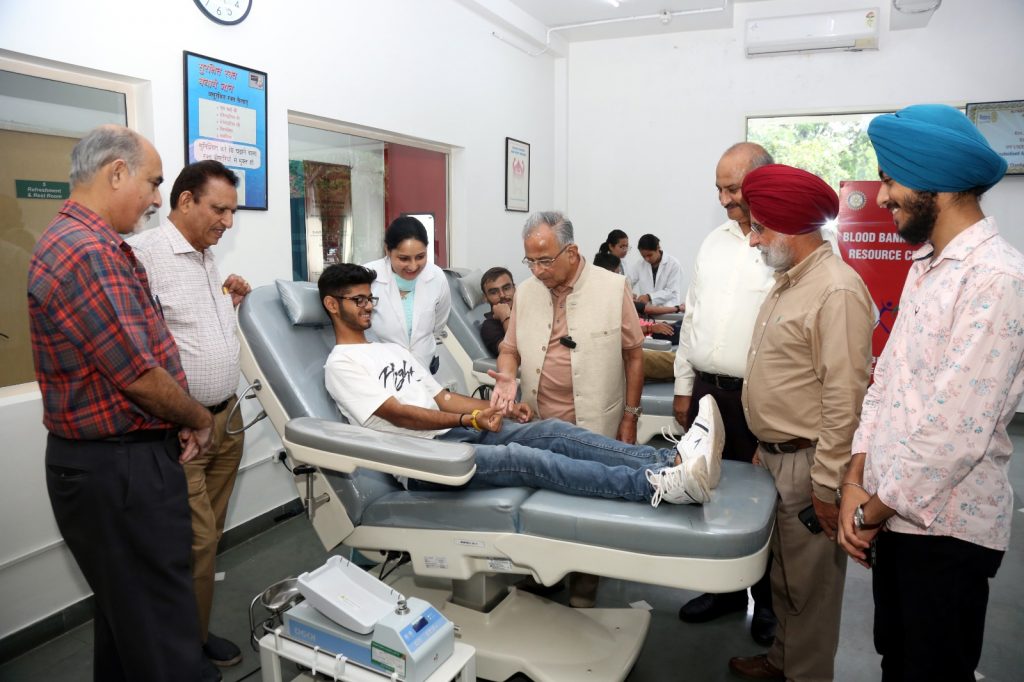
Chandigarh :   Rotary Club of Chandigarh 200 single-user apheresis kits to the Rotary and Blood Bank Society Resource Centre in Sector 37, here today.

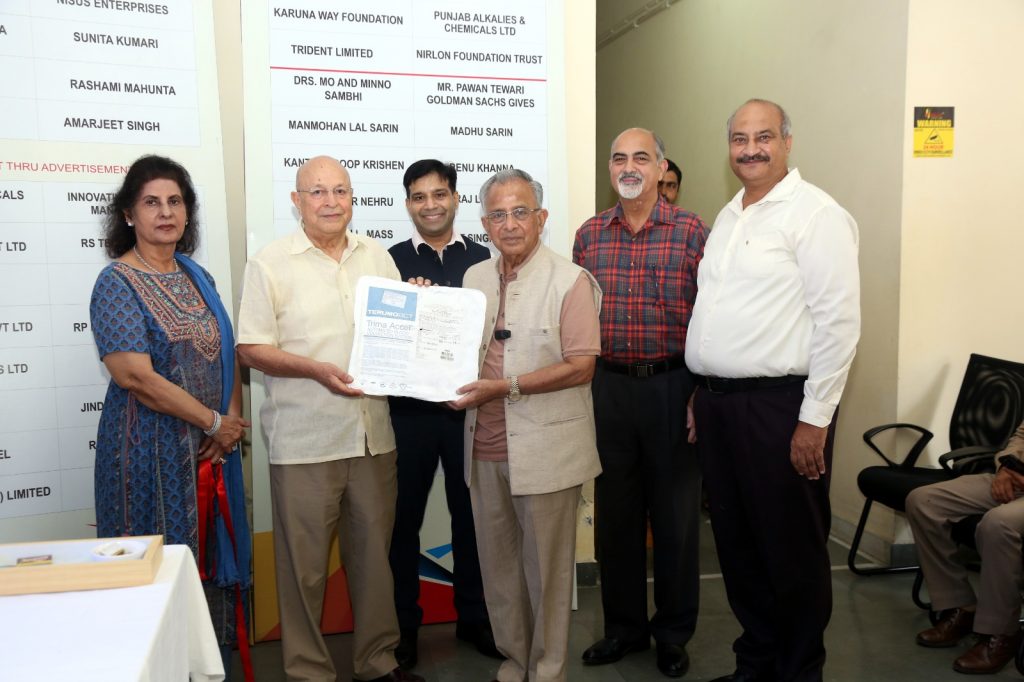
Past Rotary International President Rajendra K. Saboo handed over the kits used for extracting platelets from blood, to the Chairman of the Centre, Arun  Nehru.

These 200 kits costing about Rs.16.6 lakh have been made possible through the efforts of Rtn. PJ Singh, managing director of the IPF Vikram India Pvt Ltd, which contributed the amount through its CSR funds.

With the availability of the kits, the economically challenged can obtain the platelets at 50 percent of the cost, informed Club President Anil Chadda. 

The blood centre was established with the joint collaboration of Rotary Club Chandigarh and the Blood Bank Society, which has become today a centre of excellence, meeting the growing demand of blood and its units to the hospitals and nursing homes in the tricity.

The Apheresis facility for providing much-in-demand platelets to the critical patients was added at the Centre on 1st October last year.

Rotaractors from  various Rotaract Clubs also donated blood on this occasion.  On this occasion the 89th birthday of former world president of Rotary International Rajendra K. Saboo was also celebrated who had been instrumental in launching numerous humanitarian projects including the establishment of the blood centre, Rotary House, free heart surgeries for the poor children, and also international medical missions which also comleted 25 years of its commencement

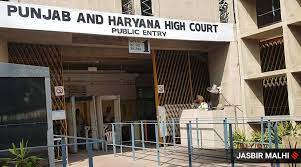
New bench of Punjab and Haryana HC to hear stay on Nuh demolitions

Chandigarh- Just a day before the highly sensitive hearing regarding the stay on demolitions in violence-hit Nuh in Haryana, a new bench has been constituted to hear the case.

A bench of Justices Arun Palli and Jagmohan Bansal will be hearing the case on Friday.

The High Court on Monday restrained the Haryana government from the ongoing demolition drive in Nuh district that witnessed communal violence last week, leaving six people dead.

A high court bench, headed by Justice G.S. Sandhawalia, took suo moto cognisance of the matter and had asked the state to not carry out any further demolition exercise until further orders.

“We are constrained to issue notice to state as it has come to our notice that Haryana is using force and is demolishing buildings on account of the fact that some riots have occurred in Gurugram and Nuh, ” it observed.

“Apparently, without any demolition orders and notices, the law and order problem is being used as a ruse to bring down buildings without following the procedure established by law.

“The issue also arises whether the buildings belonging to a particular community are being brought down under the guise of law and order problem and an exercise of ethnic cleansing is being conducted by the state.

“We are of the considered opinion that the Constitution of India protects the citizens of this country and no demolitions as such can be done without following the procedure prescribed in law.”

Accordingly, the bench issued directions to Haryana to furnish an affidavit as to how many buildings have been demolished in last two weeks, both in Nuh and Gurugram and whether any notice was issued before demolition.

“If any such demolition is to be carried out today, it should be stopped if the procedure is not followed as per law, ” said the bench while listing the case for next hearing on August 11.

Horizontal landing of Chandrayaan 3 is a challenge says ISRO

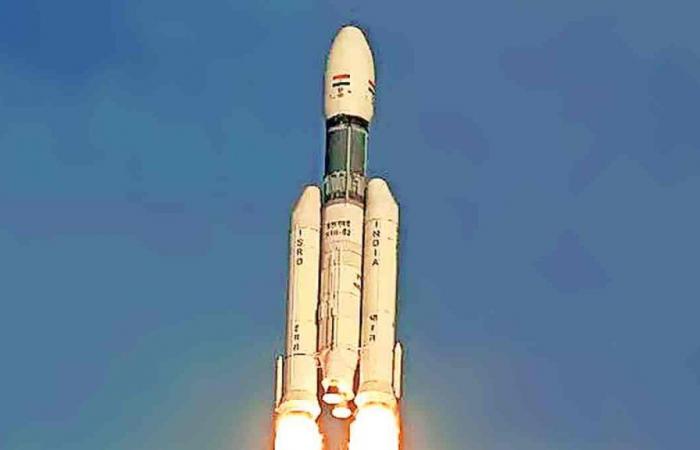
Bangalore- Vikram, the lander of India’s third lunar mission Chandrayaan-3, will be able to make a soft-landing on the Moon’s surface on August 23 even if all the sensors and two of its engines do not work, ISRO Chairman S Somanath said on Tuesday. The entire design of the lander ‘Vikram’ has been made in a manner that makes sure that it would be able to handle failures, Somanath said during a talk on ‘Chandrayaan-3: Bharat’s Pride Space Mission’, hosted by the non-profit organization Disha Bharat.“If everything fails, if all the sensors fail, nothing works, still it (Vikram) will make a landing. That’s how it has been designed — provided that the propulsion system works well,” Somanath said.

Chandrayaan-3 blasted into Space on July 14 and it entered into lunar orbit on August 5. There will be three more de-orbiting manoeuvres — exercises to bring it closer to the Moon so that Vikram lands on the Moon’s surface on August 23. These de-orbiting manoeuvres will be performed on August 9, August 14, and August 16 till its orbit reduces to 100 kmx100 km from the Moon, Somanath said.

A lander propulsion module separation exercise will be taken up subsequently, soon after lander “deboost”, a process that slows down the craft. It will be followed by landing on lunar surface on August 23, he explained. “We have also made sure that if two of the engines (in Vikram) don’t work this time also, it will still be able to land,” the ISRO chairman said.“So the whole design has been made to make sure that it (Vikram) should be able to handle many failures, provided the algorithms work properly,” he added.

The biggest challenge before the ISRO team, according to him, is to make a horizontal ‘Vikram’ land vertically on the lunar surface. Somanath said once the lander separates from the orbiter, it will move horizontally. Through a series of manoeuvres, it will be brought to a vertical stance in order to land safely on the Moon.

This exercise is crucial, as ISRO failed to get its lander to touchdown safely on the Moon’s surface during the Chandrayaan-2 mission.“The ability to transfer from horizontal to vertical direction is the trick we have to play here. Here only we had the problem last time,” Somanath pointed out. The challenge is also to make sure that the fuel consumed is lesser, the distance calculations are correct and all the algorithms work properly, the ISRO chief said.

However, the ISRO team this time has made arrangements to ensure that Vikram makes an attempt to land properly even if there are some variations in the calculations, Somanath explained. According to him, the lander will have four payloads: Chandra’s Surface Thermo Physical Experiment (ChaSTE) will carry out the measurements of thermal properties of lunar surface near polar region.

RAMBHA-LP payload will measure the near surface plasma (ions and electrons) density and its changes with time; Laser Retroreflector Array from NASA for accurate positioning measurement of the lander on lunar surface by future orbiters; and Instrument for Lunar Seismic Activity.

The rover named ‘Pragyan’ will have three payloads: The Laser Induced Breakdown Spectroscope (LIBS) will determine the elemental composition of lunar soil and rocks around the lunar landing site. The Alpha Particle X-Ray Spectrometer (APXS) payload will derive the chemical composition and infer mineralogical composition to further enhance our understanding of the lunar surface.

Spectro-polarimetry of Habitable Planet Earth (SHAPE) is an experimental payload in Pragyan to study the spectro-polarimetric signature of the habitable planet Earth in the near-infrared (NIR) wavelength range.

MOST POPULAR

HOT NEWS