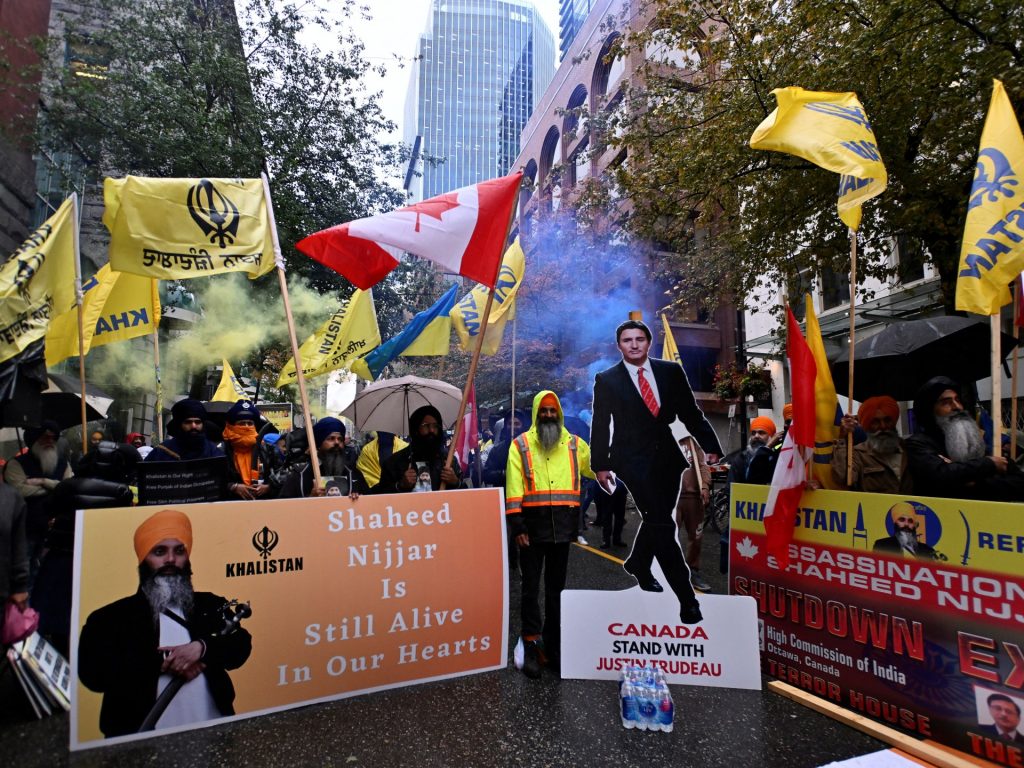
Sikh separatism casts its dark shadow on India-Canada ties

The last few months saw deepening of rift between two countries over Khalistani propaganda on Canadian soil. The tipping point came on September 18 when Canadian PM Trudeau alleged Indian government’s role in the killing of separatist Nijjar in Canada, writes Aayush Goel

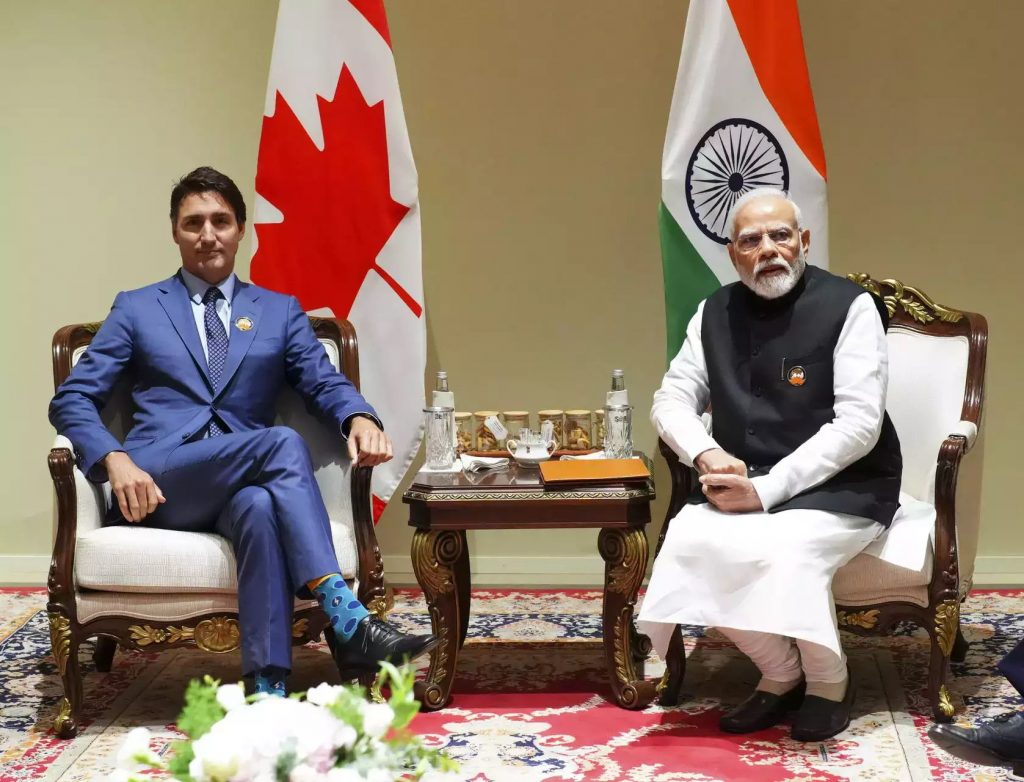
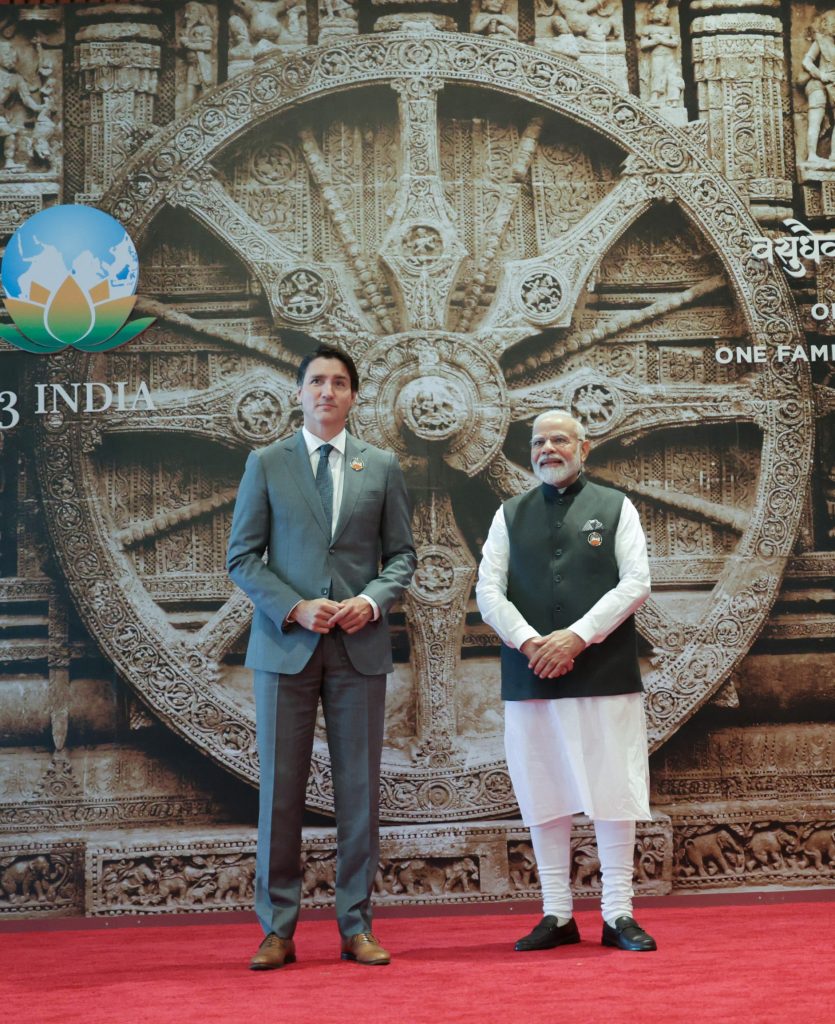
While India toiled hard to ensure that the recent G 20 summit held in Delhi helped it cement its ties with partner nations, the rift between Canada and India grew wider with the latter taking up the issue of Khalistani patronisation. The diplomatic relations between two countries are continuously headed southwards since the last few months over alleged nurturing of anti-India Khalistani activities on Canadian soil. While many expected Justin Trudeau’s visit to G 20 summit to bridge the gap he, unlike other Western leaders, did not hold formal bilateral talks with the Indian Prime Minister Narendra Modi. The two leaders instead raised serious concerns with each other on the sidelines of the summit. Modi brought up “continuing anti-India activities of extremist elements in Canada”, Trudeau responded with complaints of alleged interference of Indian officials in his country’s domestic politics and insisted on freedom of speech and protest to all Canadian citizens.

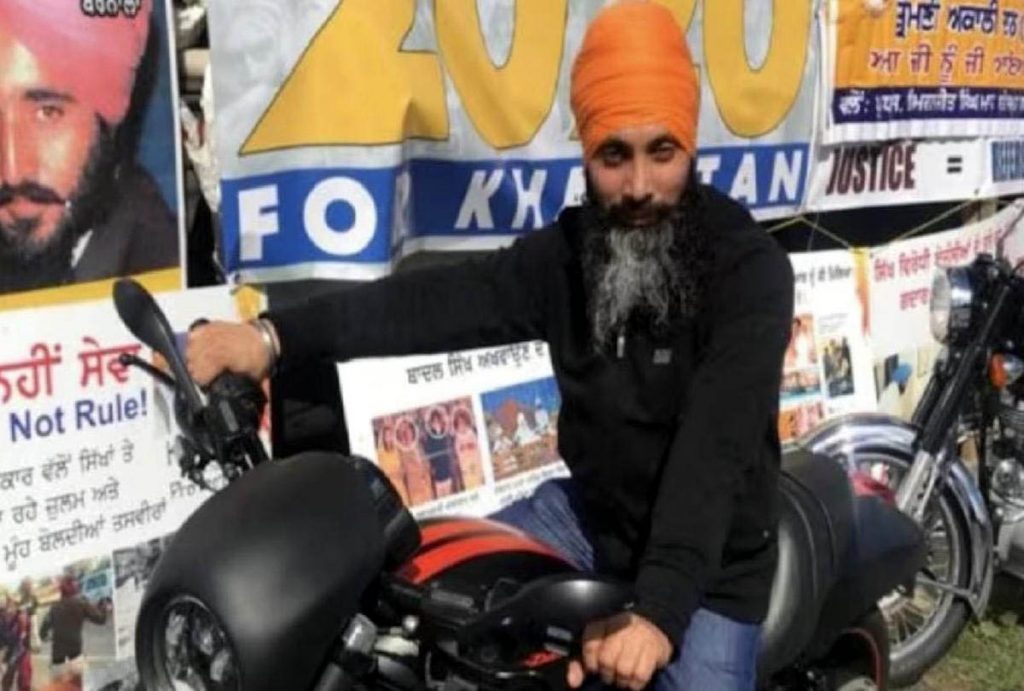
The relationship hit an unprecedented rock bottom on September 18 when back from summit, Trudeau made an explosive statement before the Canadian Parliament claiming Ottawa was pursuing ‘credible allegations’ from Canadian intelligence against New Delhi for playing a role in the assassination of a prominent Canadian resident (designated Khalistani terrorist by India) Hardeep Singh Nijjar.

The Ministry of External Affairs called Trudeau’s accusation “absurd and motivated”. It said he had made similar allegations during his meeting with the PM, which had been ‘completely rejected’.
The diplomatic escalation happened quickly with Canada taking the first step of expelling a senior Indian Diplomat, India responded by expelling a Canadian diplomat based in New Delhi. India then issued a travel advisory for Indian nationals travelling to Canada, as well as a caution for the Indian community in Canada. Students, professionals, and tourists were asked to be cautious because, the advisory said, the Indian community could be targeted. While Canada went to its ‘five eye’ allies and continued to insist on intelligence inputs backing allegations, India accused it of being a “safe haven” for “terrorists, extremists and organised crime” a term generally reserved for Pakistan and Afghanistan diplomatic circles. BLS International, a visa processing firm, carried a notice from the Indian mission in Canada stating visa operations had been suspended till further notice.

India asked Canada to cut the number of its diplomats in India, saying there are more Canadian diplomats in India than there are Indian diplomats in Canada. While Canada insists on fair investigation and dependable intelligence inputs, nothing concrete has so far been shared with India, says the Ministry of External Affairs. The diplomatic row which is worsening by the day has left Indians in both nations jittery hoping for a speedy resolution.

Who was Hardeep Singh Nijjar?

While the Canadian patronage to Khalistani extremism has shadowed Indo- Canadian relations since the 1980s, the immediate provocation for the current rift has been cited as the recent murder of Khalistani terrorist Hardeep Singh Nijjar. Forty six-year old Nijjar was designated as Canada-based chief of pro-Khalistani outfit Khalistan Tiger Force (KTF) and head of the Guru Nanak Sikh Gurdwara Sahib, Surrey. It was in June this year that he was shot dead by unidentified men. The Canadian police investigations held gang rivalry as prima facie reason. However, as this murder happened three days after another UK-based outfit Khalistan Liberation Force (KLF) chief Avtar Singh Khanda died under mysterious circumstances in a hospital in Birmingham, London, UK, the Khalistanis started accusing India of orchestrating the crime. Nijjar along with Khanda had been named in the wanted list of the National Investigation Agency (NIA) just a few days before their death. Both were accused of training and planting a Khalistani separatist, who is now jailed, Waris Punjab De chief Amritpal Singh in Punjab.

Nijjar had aggressively protested against crackdown on Amritpal and accomplices in Punjab and was on the forefront of vandalisation of the Canadian high commission in March. He was in lead in the recent tableau parade which celebrated assassination of former PM Indira Gandhi.  Interestingly, both Trudeau and Canadian Foreign Minister Melanie Joly called Nijjar a “Canadian citizen” in their statements though according to Indian agencies after being rejected multiple times, Nijjar got his citizenship after the first red corner notice was issued against him and communicated to Canadian authorities. Nijjar arrived in Canada in 1997 with a false identity of one “Ravi Sharma” whom he was accused of murdering.

His father and brother were taken in custody by Indian authorities for Khalistani activities and he fled to Canada. He sought asylum and was denied the same as immigration authorities found no credibility in his claims of being under threat from India. He then chose plan B of entering into ‘Marriage of Convenience’ with a woman from British Columbia who sponsored him to immigrate as her spouse. However, his application was again rejected. When India questioned Nijjar’s citizenship, Canada’s Immigration Minister Marc Miller took to social media platform X, on Tuesday (September 19), and shared a post saying Nijjar was granted citizenship on March 3, 2015. However when a red corner notice issued in 2014 was highlighted, he switched stand saying he erred on dates and Nijjar became a Canadian citizen on May 25, 2007.

Vote bank politics behind free rein to Khalistans

Canadian PM Justin Trudeau risking ties with India over Khalistani terrorist Hardeep Singh Nijjar seems to be a Deja vu of his own father’s tenure. Trudeau’s father Pierre Trudeau, who was Prime Minister from 1968 to 1979 and then from 1980 to 1984, was also known as a sympathiser of Khalistani terrorists. It was in 1982, when at the peak of the Khalistani movement, the then Canadian PM Pierre Trudeau refused to hand over Babbar Khalsa terrorist Talwinder Parmar to India. Three years later, Khalistani terrorists placed a bomb inside Indian plane Kanishka. The mid-air explosion killed 329 people. Terry Milewski’s book “Blood for Blood: Fifty Years of the Global Khalistan Project (2021)” hold ‘vote bank politics’ as a key reason behind Trudeau senior and junior’s support for decades. “It is a question often asked by Indians: why do Canadian politicians pander to Sikh extremists? The short answer is that it is not easy to look out at a throng of 100,000 on Vaisakhi Day (in Canada), knowing they might vote for you if you keep your mouth shut, and then to open it instead and risk losing the votes”, the book elaborates.

As per the 2021 Canadian census, Sikhs account for 2.1 per cent of Canada’s population, and are the country’s fastest-growing religious group. Estimates suggest that of the about 20 lakh Indian diaspora, only about 8 lakh are Sikhs. Of which, Indian estimates say, only about 1% — 8,000-9,000 people — are pro-Khalistan radicals.

But this small population of Khalistanis control 12-15 Gurudwaras, where they generate funds and organise political mobilisation by voting en bloc for Canadian political candidates. The constituencies in which they have a say are mostly in Brampton in Ontario province, and Vancouver and Surrey in British Columbia.

After India, Canada is home to the largest population of Sikhs in the world. The Sikhs have reached top political and law enforcement positions. The Trudeau government is a minority government being run in support of the New Democratic Party (NDP) headed by Khalistani sympathiser Jagmeet Singh. The NDP has 24 seats in parliament, whose support is critical for the survival of the Trudeau government. The Canadian Prime Minister therefore cannot afford to antagonise Singh, because of the extraordinary leverage his NDP enjoys with the Liberals.

After the 2019 elections, Singh and Trudeau signed a popularly known ‘confidence-and-supply agreement’ effective till 2025. Singh’s support to Trudeau during opposition’s attacks on China’s suspected interference in Canada’s elections strengthened the pact. Singh had aggressively opposed the crackdown operation against Khalistanis in Punjab, and ever since Khalistani supporters have openly been indulging in anti-India activities and protests in Canada since last few months. On the Blue Star anniversary, the Khalistanis took out a parade with afloat celebrating assassination of former PM Indira Gandhi. In addition to vandalisation of Indian diplomatic buildings and temples, Khalistanis, especially the terrorist groups like Sikhs for Justice (SFJ), have been organising referendum events. Threats are being issued to Indian diplomats and riding high on Trudeau’s support, SFJ supremo and terrorist Gurpatwant Singh Pannun has also issued threats to Hindus staying in Canada to leave immediately as they support India.

The global politics

Canada is an important strategic partner for major western powers — it is part of the G7 grouping and shares the table with the US, UK, Germany, France, Italy, and Japan. It also shares intelligence with the ‘Five Eyes’ grouping with the US, UK, Australia, and New Zealand.
All these countries are also close strategic partners of choice for India. India has the Quad partnership with the US, Australia, and Japan, and strong and growing bilateral ties with each of them. While the majority of these nations are opting out of taking any sides, the United States has said that it “publicly and privately” urged the government of India to cooperate in the Canadian investigation into Nijjar’s murder.The US also said that the investigation must proceed and called for the perpetrators to be brought to justice. US State Department spokesperson Matthew Miller emphasised the importance of a thorough investigation into Canada’s allegations. “We are deeply concerned by the allegations referenced by (Canadian) Prime Minister (Justin) Trudeau. We remain in close contact with our Canadian partners,” Miller stated. Prior to this, United States Ambassador to Canada David Cohen officially confirmed there was “shared intelligence among Five Eyes partners” which informed the Canadian Prime Minister about the Indian government’s possible involvement in the murder.
However, he did not clarify if the intelligence which informed about the investigation of the Canadian government was both human and surveillance-based, or if it had ‘Signals’ intelligence of Indian diplomats.

Punjab left in jitters

The ongoing diplomatic tension between India and Canada, suspension of Visa by the latter and Hinduphobic threats by Khalistanis has left Punjab worried. According to the Ministry of External Affairs, over 16 lakh Indians are residing in Canada and over 3 lakh are students. Canada is the top choice among Punjabis for migrating abroad due to its flexible education policy, work opportunities, easier post-graduation immigration possibilities and strong political say. Immigration, Refugees and Citizenship Canada (IRCC) welcomed 5.51 lakh new international students in 2022, of which 2.26 lakh (41%) were from India. It was followed by applicants from China, Philippines, France and Nigeria.

As many as 3.19 lakh Indian students were already living and studying in Canada as on December 31, 2022. According to government data, Canada receives a capital of around Rs 68,000 crore each year from Punjab.

As per the data of the IRCC, as many as 2,26,450 visas had been approved for the Indian students in 2022. Of these, nearly 1.36 lakh students were from Punjab last year, who were pursuing various courses of an average duration of two to three years. With the Canadian diaspora and local Punjabis worried, leaders from across party lines have moved to central leadership seeking safeguarding of Punjabis.

“At this moment the safety of Punjabis, especially students, is our top priority. I have written to the PM to ensure they are safe and away from any collateral damage of this situation. Canada is behaving like Pakistan and we need to keep our people safe,” said Punjab Congress MP Ravneet Singh Bittu.

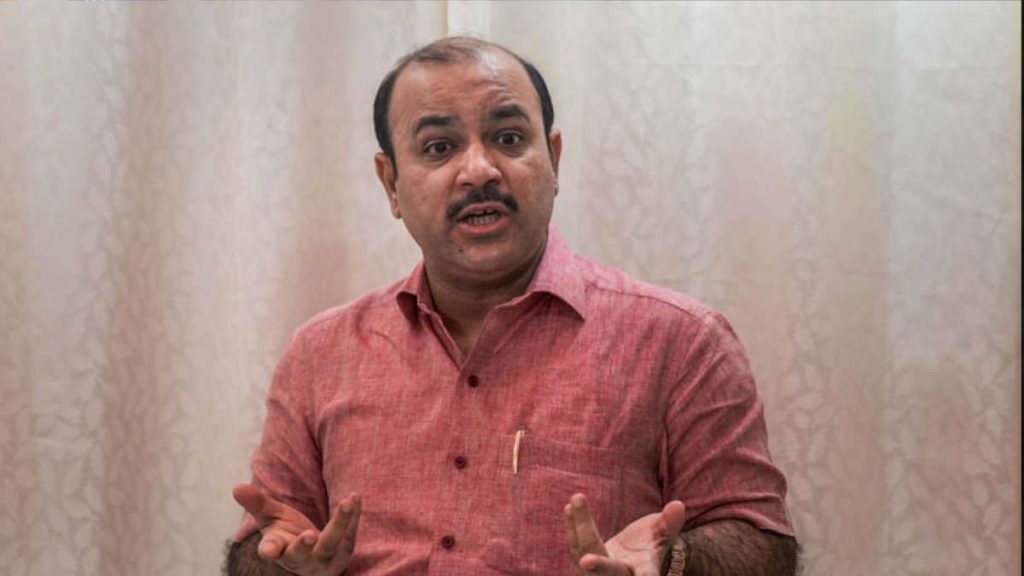
AAP’s Rajya Sabha MP from Punjab Vikramhit Sahney while talking to Tehelka said, “I have requested the government of India that hostilities lead us nowhere. Shutting down the issuance of Visa is not a prudent step at all. There are lakhs of Punjabis who reside in Canada, one wrong step and they will have to face the collateral damage.”

“Increasing incidents of hate crimes against Punjabis were already a cause of concern and now the ongoing India-Canada diplomatic row has added to the worries of parents who have sent their children to foreign countries for a prosperous and safe future. I urge the Ministry of External affairs to resolve the issue with the counterparts in Canada at the earliest, besides ensuring the safety of all the students amid the tense situation”, quips Punjab Congress President Amarinder Singh Raja Warring. Other leaders across party lines like Shiromani Akali Dal President Sukhbir Badal met Home Minister Amit Shah seeking his intervention for the Sikh community.
India-Canada row: A storm in a teacup?

Has the Indian media allowed itself to play into the hands of separatist Khalistanis by blowing the ongoing stand-off between India and Canadian PM  Trudeau over the killing of Sikh radical Nijjar out of proportion?

It is estimated that the total Indian presence in Canada is about 1.85 million or 5.1 per cent of the country’s population. The deep cultural and political ties between Canada and India are being further strengthened by a growing network of official dialogues, agreements, memoranda of understanding and working groups.

They work in key areas such as foreign policy, trade and investment, finance and at the official-level the two countries have regular working groups that focus on such sensitive issues like counter-terrorism and security. It may also be recalled that underCIRUS (Canada India Reactor Utility Services), India’s first nuclear research reactor was set up at the Bhabha Atomic Research Centre in Trombay near Mumbai in 1954.

However, during the recent weeks, a section of Indian media is seen indulging in publishing news about the growing rift between India and Canada, which many believe is uncalled for.

There could be many dimensions of this sudden decline in the relationship between the two countries, especially when they are witnessing low-tide in their close ties caused by some frivolous reasons in recent weeks. Apart from the sudden rise of the Sikh separatists under the banner of the Khalistani movement, the enthusiasm or yearnings of a section of Indian media projecting Indian PM Narendra Modi in his ‘macho avatar’ too could be one of the reasons. In a bid to project Modi as an invincible nominee in media for the top office for the 2024, the key issues regarding international relations and economics are being often compromised.

There is no denying that the strong presence of the Khalistanis in Canada has been adversely influencing Canada’s political system. Since India and Canada are committed to fight against terrorism and they already have a working group, it is being rightly asked why this mushrooming of radical Sikh groups was being allowed. It shows Indian diplomacy in poor light that before the candid talks between Modi and the Canadian PM on the sidelines of G-20, the Indian high commission did not address the strong Indian presence in the host country, thus enabling a small minority of the separatists to affect the ties of two countries.

It is often stated that successive governments in New Delhi as well as the incumbent one seldom cared about the play of the international forces in embarrassing India by harnessing these separatists for their agenda. It is quite known that with their help, China and Pakistan are propelling the anti-India narrative and even harnessing the western media. Instead of working out a well-planned strategy to tackle this challenge, a section of Indian media’s recent observations have not only reached to ridiculous heights, their keenness of replicating Dragon’s ‘Wolf warrior diplomacy’ also appears to be undermining the country’s long-term interests as well as immediately hurting Indian diplomacy known worldwide for its soft power and elegance.

 In China, president Xi Jinping has adopted this ‘coercive diplomacy’ opposed to the policies of his predecessors, Deng Xioping and Hu Jintao. In India, nearly 10 years after the regime of Prime Minister, Manmohan Singh, who had been known for his emphasis on cooperation and the avoidance of unnecessary controversies, the present establishment appears to be toeing Beijing’s new policy. Most of the old hands in New Delhi, known for their expertise in foreign affairs, do not subscribe to this confrontational and combative approach in international relations, especially in the context of a friendly country like Canada.

The recent efforts of the pro-ruling party or the Modi-bhakta in the media trying to use it as yet another effort for projecting Modi as a knight errant like Don Quixote to be always seen in shining armour. For the ruling party, Modi has to project an all-weather political brand. Interestingly, these propaganda channels have been trumpeting for Modi since the conclusion of the after G-20 Summit in September this year. It, perhaps, is being done for projecting Modi as an invincible world leader for the 2024 polls.

The Unnecessary Rhetoric     

Modi’s tenure as the country’s PM, since 2014, will be remembered for its noisy rhetoric. The noisy television debates appear to have eclipsed serious media debates about the issues related to governance. This decline has not come suddenly. Either the government or its cronies in the corporate world are known to be quietly nibbling the country’s freedom of expression. It, perhaps, had begun six years ago with the unceremonious sacking of Paranjoy Guha Thakurta, editor of Economic & Political Weekly (EPW) for exposing Adani Power’s tax evasion. The group emboldened by its masters in the government has recently taken over NDTV.

The suspicion of the growing nexus between the corporate and the powers that be in New Delhi is now being reconfirmed with a few media platforms rallying in support of Adani Group. They are also accusing anyone questioning the financial deals of the corporation being branded anti-national! They are also hopeful of manipulating the proceedings pending before the Supreme Court regarding the alleged financial bungling being exposed in the Adani-Hindenburg case. The inability of the Securities and Exchange Board of India (SEBI) to file the status report about the case has delayed its final hearing. The SEBI has now informed the Supreme Court that it has completed the probe in all but two allegations against the Adani group, and is still awaiting information from five tax havens on the actual owners behind the foreign entities that have invested in the conglomerate. As expected, on its part, the Adani group has rejected all allegations.

Erosion of Key Institutions

The rise of the government-friendly media, which has already eclipsed quality journalism, is now adversely affecting the key areas of strategic and foreign affairs. The decline is also accompanied by the erosion of the role of the established institutions such as Comptroller and Audit General or the dilution of the Right to Information Act (RTI) 2005.The Digital Data Protection legislation is yet another reminder of the colonial era, when the official secrecy had to be imposed for subjugating the Indian subjects of the British crown. Another example is the dumping of the Planning Commission. It has now been replaced by National Institution of Transforming India (NITI), a toothless body. The present government, thus, has cleverly eliminated from the public domain the process of evaluating all of the country’s resources, replenishing those that were insufficient,

The Diplomacy

The perennial mission of branding Modi as political rhetoric is now adversely affecting the sensitive issues related to foreign policy. The country appears to be always in an election mode. Interestingly, the political slogans generally earmarked for domestic politics were much pronounced during the G-20 Summit in New Delhi. The Indian media’s over indulgence accompanied by hyperboles towards the ruling establishment, especially Modi as the brand, has diverted the issues necessary for the country’s vital interests. The Indian media has never discussed why the Chinese President, Xi Jinping, did not attend the G-20 summit.

Facts are Facts

Indian diplomacy accompanied by strong media support has always enjoyed worldwide respect for projecting Indian issues in a logical framework without compromising truth or indulging in unnecessary rhetoric. However, instead of giving a befitting reply to the separatists active under the banner of Khalistan, the Indian media has been focusing on the stand-off between Modi and the Canadian PM Justin Trudeau on the issue of reining in the Khalistanis. It has allowed the assassination of the Khalistani terrorist Hardeep Singh  Nirjhar in British Columbia in Canada to become a human rights issue. But our diplomacy could not tackle or even register a case against the Khalistani terrorist, Gurpatwant Singh Pannum for threatening Modi, Home Minister, Amit Shah, and External Affairs Minister S. Jaishankar .

I.N.D.I.A  hopes its ‘caste census’ pitch will swing LS seats in Bihar, UP

Rahul Gandhi, Congress Leader

The Congress believes that by mobilising the OBC community, it can counter the BJP effectively ahead of the 2024 Lok Sabha polls in which the saffron party will intensify its Hindutva politics.  A report by Amit Agnihotri

The Congress is banking on ‘caste census’ to forge greater unity within the opposition alliance INDIA and counter the BJP ahead of the 2024 national polls.

The INDIA parties believe that a focus on OBC issues would help them win a maximum of the 40 Lok Sabha seats in Bihar and 80 seats in UP besides coming handy in other big states given the OBCs are roughly 50 percent of the total population.

Keeping this in mind, the Congress had supported the Bihar government’s move to conduct a state-wide caste census which is now ready and is being processed for publication.

The previous UPA government too had conducted a caste census but could not publish it before the 2014 Lok Sabha polls were held. Later, the BJP government which came to power did not publish the caste census data and also skipped the 2021 census which was supposed to be held 10 years after the 2011 census.

The Congress argues that for effective delivery of social welfare schemes, having the exact number of various sections of society is needed.

Though the grand old party has been demanding a fresh caste census for long, the Congress started playing up the issue to counter the BJP which was claiming credit for passing the Women’s Reservation Bill that promises 33 percent quota for women in the Lok Sabha and the state Assemblies.

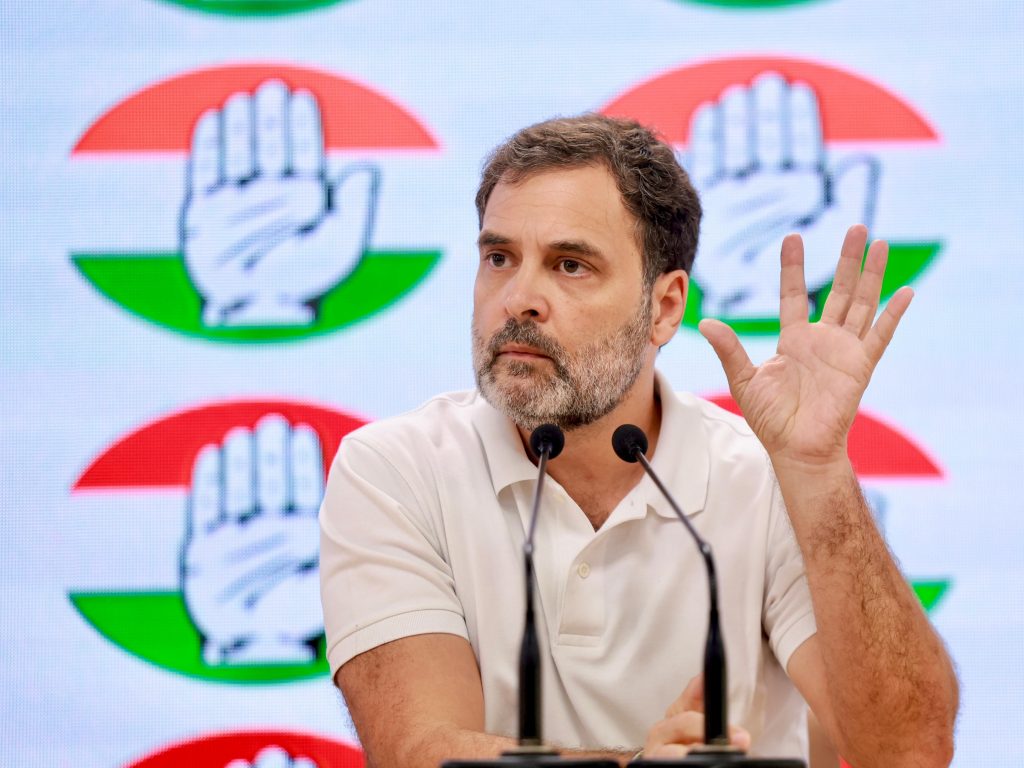
Former party chief Rahul Gandhi said the Women’s Reservation Bill was brought by the Centre suddenly during the Special Parliament Session from Sep 18-22 as a ploy to divert public attention from the caste census being demanded by him.

“The women’s reservation bill is not going to be implemented today, and every woman in India should understand this, it is going to be implemented 10 years from now. So, this is a diversionary tactic, it’s a way of making everyone’s attention move away. The question is what are they moving away from? And the answer is the caste census and I would like to explain why? In my research for my speech, I looked at how many officers in the Government of India, the senior most officers are Secretaries, how many Secretaries in the Government of India come from the OBC community? How many come from the Dalit community? How many come from the tribal community? And I was shocked to find that three officers in the government of India, Secretary level are OBC, first,” said Rahul.

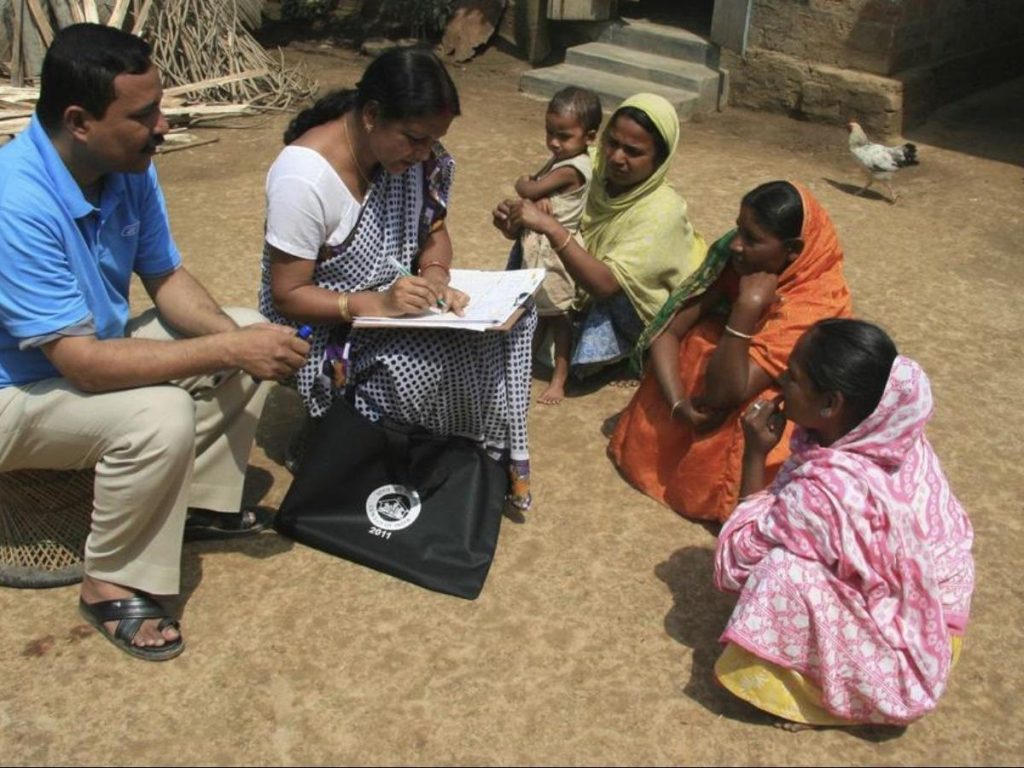
Census workers collecting information from residents of village

“And then I asked another question, what budget do they control? And they control five percent of the budget. OBCs, Dalits, Tribals all put together, control six percent of the budget. Tribal’s control zero point one something of the budget. So, this is a shocking finding and I said this in Parliament. My point being that if OBCs are five percent of India, is that the amount of participation we want from the OBC community. So, the central question is how many OBCs are there in India? How many different communities are there in India? If we want to distribute power to the people of India, we have to know this number, otherwise we are working without data and so I placed this on the floor of the house and I said- Look! Please, tell us how many OBCs we have the data of, I know, because the government of India has already done the census and all this data is available. Why is the Prime Minister not releasing this data? And second, what is this delay in the census,” he said.

The former Congress chief demanded that the last caste census data should be released at once. The OBCs roughly constitute around 50 percent of the population but do not get enough representation in governance, the Congress says. The party believes that by mobilising the OBC community, it can counter the BJP effectively ahead of the 2024 Lok Sabha polls in which the saffron party will intensify its Hindutva politics.

“What was the BJP’s answer, a very interesting answer, that it doesn’t matter how many OBCs are in the government of India? What matters is that we have MPs, and MLAs who are OBC. No! That’s not the point because you can ask any MP, or any MLA, how much they participate in law making? How much they participate in, how the money in India is spent, they will tell you, there is no participation. So, it is almost as if, they keep placing these OBCs MPs/MLAs into the Vidhan Sabha from one side, and taking away the real power of the OBCs from the other side,” Rahul said.

“And as the Prime Minister keeps saying he is an OBC leader, I want him to explain, why only three OBCs are there in the government of India? And why the OBC community, which is the backbone of this country, is responsible for only five percent of the Union budget? They have not been able to answer this question. In fact, when I said it, I saw in their face the panic. Because this is the truth, this is what they are trying to distract India from. The fact that the large mass of Indian people do not have any power,” he said.

The Women’s Reservation Bill had been initially passed during the previous UPA government in the Rajya Sabha in 2010 but could not sail through as Congress’ allies SP, RJD and even the BJP opposed the legislation.

The SP and the RJD had been demanding a quota of SC, ST and OBC women within the overall 33 percent reservation but the Congress did not subscribe to their views.

However, the Congress, which is spearheading the opposition block INDIA, recently tweaked its stand and demanded quota within quota in the women’s reservation bill.

“The INDIA parties like the Samajwadi Party, the Rashtriya Janata Dal and even DMK support our demand of quota for SC, ST and OBC within the overall 33 percent quota in the women’s reservation bill,” AICC OBC department chairman Ajay Yadav said.

“The INDIA alliance is one on this issue and we will keep pressing the demand for a fresh caste census over the coming days. The BJP may try to claim credit for passing the bill but the fact is that most parties supported the legislation in Parliament. Otherwise, getting such overwhelming support for the bill was not possible,” he said.

The head of AICC OBC department further said the party was not playing politics over the caste census and the quota within quota issues and was only pursuing its social justice agenda.

“You see, caste census has been on our social justice agenda and was included in the resolution passed at the Plenary Session in Raipur in February. How will social justice be delivered if we don’t have the numbers of various caste groups in the country? The UPA had conducted a caste census but the government has not published the data so far. When the INDIA bloc comes to power in 2024, we will get a fresh caste census done to ensure the issues of OBCs are addressed,” said Ajay Yadav.

“The quota within quota is needed because otherwise the SC, ST and OBC women will not be able to get the benefit of 33 percent reservation in the Lok Sabha and state Assemblies. The BJP has passed the bill but has not given any time line for it. We want the 33 percent quota to be implemented from the 2024 Lok Sabha elections,” he said.

“The views expressed by Rahul ji are extremely important and clearly lay down what the party thinks and envisions,” AICC functionary Gurdeep Sappal said. He said the change in the Congress view over quota within quota is based on the experience of the past 17 years that the OBCs did not get sufficient representation in governance under different regimes.

Verbal spats lowering the majesty of Parliament

Congress leader Rahul Gandhi and BSP leader Danish Ali

BJP MP Bidhuri’s communal slurs hurled at BSP MP Danish Ali in Parliament, have shocked the nation. Does the outburst underscores how strongly the hate has taken root in the country?

When Prime Minister Narendra Modi called for a new chapter in the history of Parliament asking members to “forget all past bitterness”, as they moved into a shiny new building last week, it aroused a new hope.  However, days after the PM’s inspiring words, communal slurs and abusive words were hurled at a Muslim MP by the ruling party MP Ramesh Bidhuri.

The words have been expunged from parliamentary records but Danish Ali of the Bahujan Samaj Party has demanded Bidhuri’s suspension from the Lok Sabha, describing his derogatory remarks against him as hate speech. He even went to the extent of quitting Parliament. The Speaker has issued a stern warning to the BJP MP, but the Opposition has been quick to term it as grossly inadequate. The ruling party has served a show-cause notice on the South Delhi MP, seeking a reply from him for the use of objectionable and unparliamentary words. The Defence Minister expressed regret in the House. But is that enough?

The outburst in Parliament underscores how deep hate has struck root in the country.  While moving into a shiny new building last week the Prime Minister Narendra Modi had observed, “Whatever we are going to do in this new Parliament building, it should be an inspiration to every citizen in the country.”  The conduct of the BJP MP was condemnable and the Union Defence Minister Rajnath Singh, who was present during the outrage did apologise to the House for the remarks. But soon after that, the party fielded several spokespersons to explain away the episode, and they accused the one who was at the receiving end of provoking the incident.

The new Parliament building must foster healthy dialogue among members, and between the institution and the people but a sitting Lok Sabha member Kunwar Danish Ali being abused by BJP MP Ramesh Bidhuri, who also threatened to settle scores with Ali outside Parliament, is utterly shocking.  Whether the remarks about Ali were off-the-cuff or planned as a part to build a new narrative?

Bidhuri is a Member of Parliament from the South Delhi seat and belongs to the Gujjar caste, recognised as an Other Backward Class (OBC) community. Is this, possibly, an incident that could wade off the potential damage that the Women’s Reservation Bill without a quota for the OBCs could do to the ruling dispensation’s electoral calculations? Is there a long-term strategy to consolidate different social groups?

One could argue that the modality of polarisation emerged from caste dynamics and sensibilities. Communalism and majoritarian dynamics are deeply marked by the sensibilities born out of managing the caste system and inequalities. This is the precise reason why RSS chief Mohan Bhagwat has said there can be no Hindutva without minorities.

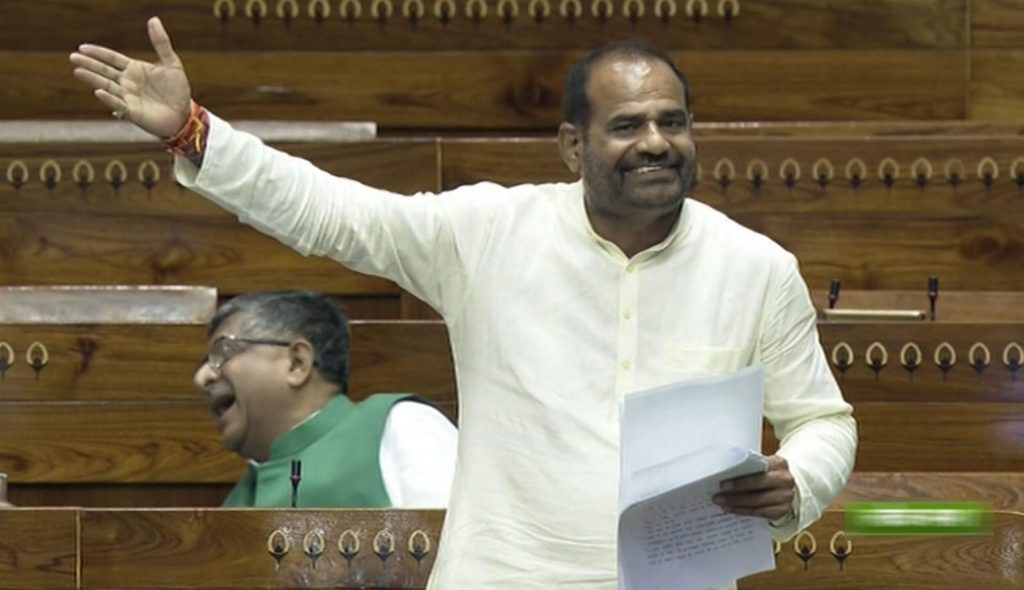
Members of Parliament have moved into the new Parliament House and on the first day of the special session, held in the old Parliament House, the PM recalled the many bitter-sweet memories of the building.  Scripting a new chapter in the conduct of our MPs would rate high on every citizen’s wish list. The government should work against the possibility of a decline in the respect for the institution which would erode all that the new building sets out to represent.  However, after the high of the ‘Naari Shakti Vandan Adhiniyam’, the BJP is battling getting a bad name because its South Delhi MP Ramesh Bidhuri got into a spat with BSP MP Danish Ali.  Former Health Minister Harshvardhan was sitting behind Bidhuri and former Union Law Minister, Ravi Shankar Prasad, was sitting right next to Harshvardhan.

The Bahujan Samaj Party MP later called for strict action against Bidhuri and threatened to quit the Lok Sabha itself if Bidhuri walked scot-free. Subsequently, Bidhuri met party President JP Nadda. The Party leader had been served a show cause notice after the outburst in Parliament that was caught on camera. A day after he was publicly abused during Parliament’s special session, a tearful Ali came on record saying that he had been unable to sleep and was on the verge of a mental breakdown.

 After the spat, TMC leader, Mahua Moitra tagging Lok Sabha Speaker Om Birla tweeted, “True paragon of impartiality has warned not to do this again. Wow. While other lesser non BJP mortals like Adhir Ranjan Chaudhary and Sanjay Singh suspended for far less. Kya hua Sir-abh maryada, Garima sab bhool gaye? TMC’s Aparuppa Poddar urged Birla to refer the matter to the Privileges Committee. “The precedents and practice show that the Committee of Privileges has the jurisdiction to examine questions of breach of privilege on statements made inside the House,” Poddar’s letter to Birla said.

Moving a privilege motion against Bidhuri, NCP’s Supriya Sule said the BJP MP’s statement “prima facie constitutes a Breach of Privilege and they undermine the dignity of the Lok Sabha.” The CPI (M) said the filthy abusive language used by BJP MP Ramesh Bidhuri against Danish Ali ( BSP) on the floor constitutes the worst kind of hate speech indicted by the SC. No MP can claim privilege for such speech. He should be arrested. Congress, Dravida Munnetra Kazhagam (DMK), Nationalist Congress Party (NCP), and Trinamool Congress have thrown their weight behind Ali by moving privilege motions against Bidhuri.

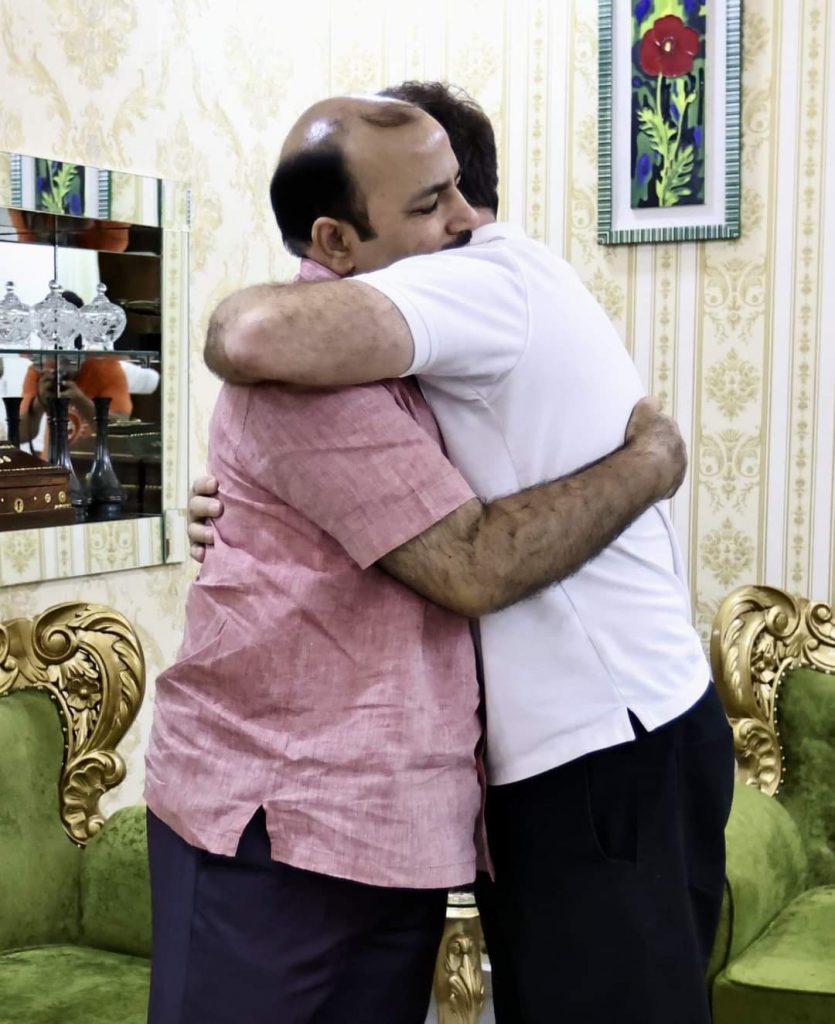
Congress leader Rahul Gandhi also called on Ali at his home to extend support. In a post shared on X (formerly, Twitter), Gandhi is seen hugging Ali with the caption Nafrat ke bazaar mein, mohabbat ki dukkan (In this marketplace of hatred, there is a shop of love).” Congress’s leader in Lok Sabha, Adhir Ranjan Chowdhury, also raised the issue with the Speaker, Om Birla, in a letter addressed to him. “Never in the history of the Parliament have such words been used against a member of the minority community, and that too in the presence of the speaker. Considering the circumstances and the brazen violation of all norms and rules relating to the functioning of the House, it would only be appropriate to have the matter examined in detail by the Privileges Committee and punitive action taken against the errant Member,” Chowdhury wrote in the letter. Congress leader Jairam Ramesh called Singh’s apology an “eyewash”. “It is a complete shame what Bhiduri said and Rajnath Singh’s apology is not acceptable. It was a half-hearted apology…it is an eyewash.”

Ali has written to Birla asking that Bidhuri’s comments be referred to the Lok Sabha privileges committee. He said that the episode “is most unfortunate and the fact that it has happened in a new parliament building under your leadership as Speaker is truly heartbreaking for me as a minority member of this great nation and an elected Member of Parliament as well”. “Since this is the only way out to discipline an experienced member so that the atmosphere of our country is not vitiated any further. I request your good self to kindly order an inquiry into the matter,” he wrote in the letter. The long wait is for action now.

Cong cries foul as Amethi hospital shut over medical negligence

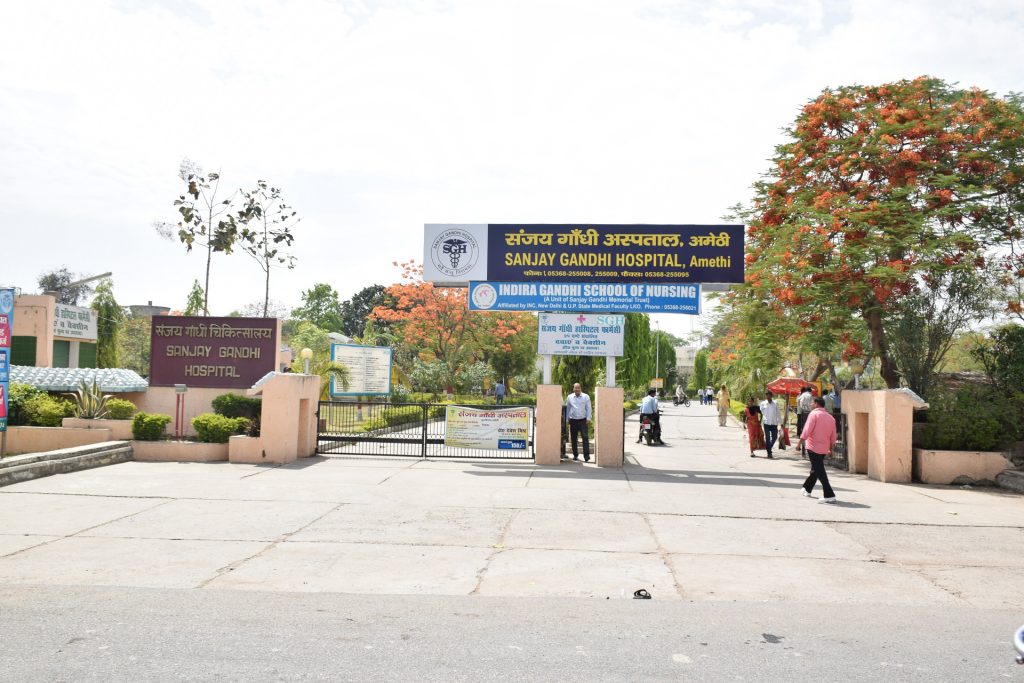
The Yogi Government suspended the licence of Amethi-based Sanjay Gandhi Memorial hospital, where a 22-year old woman died due to alleged medical negligence. The Congress however has dubbed the government’s move as ‘political vendetta’,  reports Mudit Mathur

Congress Party is up in arms over the way the Yogi government suspended the licence of Amethi-based Sanjay Gandhi Memorial hospital in Amethi where a 22-year old woman died due to alleged negligence in her treatment. Uttar Pradesh Congress has alleged that the state government’s action is the result of a ‘political vendetta’ even as he announced to launch agitation against the move.

In 1982, former Prime Minister Indira Gandhi had laid down the foundation of a 100-bed hospital in the memory of her son, Sanjay Gandhi, who was killed in a plane crash. The hospital has been operational in Munshiganj area of Amethi since 1989. The trust is being looked after under the chairmanship of former Congress president Sonia Gandhi.

The Amethi police registered a case under section 304-A of IPC against the Chief Executive Officer Avadhesh Sharma and three other doctors for causing death by negligence filed by one Anuj Shukla who alleged that his 22-year old wife, Divya Shukla was hospitalised complaining pain and it was found in ultrasound test that there were stones in her gallbladder.

It is further alleged that she was taken to the operation theatre in a normal condition on 14 September, but due to overdose of anaesthesia, her condition deteriorated. The complainant alleged that the CEO of the hospital delayed her shifting to higher speciality centre in Lucknow for hours and in the end a team took the patient to Medanta, Lucknow, and returned immediately before her treatment could even commence there. It shows negligence on the part of doctors and management, it was alleged.

Taking cognizance of the incident, district health officials also ordered a probe and constituted a three-member inquiry team, led by Additional Chief Medical Officer, Dr Ram Prasad, and comprising Deputy CMO Dr P.K. Upadhyay and Anaesthetist Dr Abhay Goyal of District Hospital. Within 24 hours, on September 18, the hospital’s licence was suspended by district health officials, citing prima facie evidence of medical negligence.

A day before, Brajesh Pathak, Deputy Chief Minister who also holds the Health Minister’s portfolio, tweeted, “Taking immediate cognizance of the case of death of a female patient due to doctor’s negligence in Sanjay Gandhi Hospital, Munshiganj, Amethi, I have instructed CMO Amethi to immediately conduct a preliminary inquiry into the matter through a three-member committee.”

“On the basis of shortcomings found in the preliminary investigation, orders have been given to the hospital administration to issue a notice for clarification under the Clinical Act. After receiving the clarification, strict action will be taken against the hospital administration on the basis of merits and demerits and registration of the said hospital. Action for cancellation and sealing will also be taken. Orders have also been given to complete all the proceedings as soon as possible and the hospital administration has been prohibited to admit new patients,” Pathak said.

Chief Medical Officer (Amethi) Anshuman Singh said that while the hospital was served a notice seeking an explanation in three months, the decision to suspend the licence was taken after prima facie evidence of laxity was found in the preliminary inquiry.

Awadhesh Sharma, the hospital’s CEO, accused the CMO of not giving them enough time to explain the incident, claiming the decision to revoke the hospital license was taken “in haste”. “With the license of the hospital being suspended, all services provided by the hospital including emergency and OPD have come to a standstill.” Sharma alleged the hospital didn’t get a fair hearing and called the suspension of its licence an “act of political vengeance”. “This is a one-sided action on the part of the administration, and we will move the court against this,” he added.

“We are going to appeal against the decision in the court. We were asked for an explanation about the September 14 incident by the officials and were given three months’ time, but orders were issued to suspend the licence of the hospital in the next 24 hours. We are not denying the incident and there can be an inquiry into it. An FIR has already been lodged,” Wing Commander (retd) Manoj Muttu, the administrator of Sanjay Gandhi Memorial Trust, told the Tehelka.

“Twelve surgeries that took place on that day (September 14) and about 10 operations, mainly of orthopaedic, general surgery and gynae, take place every day at the hospital,” he added. “Such an incident could happen even in government hospitals. But to close down the entire hospital with 450 staff, 600 nursing students, 200 paramedic students, that too without affording any opportunity of being heard? Is that justified? Under what rule? Therefore, we are going to make an appeal,” Muttu said.

Meanwhile, Congress leader KL Sharma, while expressing sympathy for the family of the 22-year-old woman, severely criticised the government’s decision. “The law will take its course but the way the hospital was closed down is not right. The one who is guilty should be punished and not the entire organisation. The hospital has been serving the people of Amethi for decades and now a lock has been put on it. The hospital is not of the Congress, it caters to all,” Sharma added.

State Congress president Ajay Rai has sent a letter to Chief Minister Yogi Adityanath, requesting to “immediately revoke the suspension of license”. “For the people of rural areas, this hospital provides cardiology, nephrology, gastro, dermatology, pulmonary, ENT, paediatrics among others as well as emergency services, blood bank… The hospital provides these services at nominal charge or free in some cases,” Rai wrote, expressing hope that the chief minister “with his positive direction would ensure that injustice is not done towards people of Amethi and the employees and doctors of the hospital”.

Deepak Singh, former Congress MLC, targeted Union Minister and BJP MP Smriti Irani over the Sanjay Gandhi Hospital’s registration being revoked. He said the suspension of registration was done at “short notice”.

“The way Sanjay Gandhi Hospital has been closed has made it clear that Smriti Irani has brought destruction in Amethi, not development (she represents Amethi in the Lok Sabha). Earlier, she closed down IIIT in education field and the Army Recruiting Office in the security sector. She also shut down many trains here. In the field of agriculture, she snatched away multiple projects. It is the health sector’s turn this time, and she has shut the hospital,” he alleged.

The Trust has now decided to knock the doors of judiciary against the alleged highhandedness of Uttar Pradesh government.

Addressing the mental health crisis in Kashmir

J-K administration has announced setting up of a dedicated mental health authority, in response to the growing mental health crisis in the UT, more so in Kashmir, writes Riaz Wani

On September 18, Jammu and Kashmir announced the setting up of a dedicated mental health authority, in response to the growing mental health crisis in the union territory, more so in Kashmir. The primary objective of this authority is to oversee and regulate all mental health facilities within the region, ensuring they are properly registered and conform to established guidelines.

The Jammu and Kashmir administration has already launched India’s first chatbot for people in mental distress on July 5 following a record number of distress calls to the Tele-Manas centre this year, reflecting the sweeping nature of the mental health crisis in the region. 

Tele Mental Health Assistance and Networking Across States (Tele-MANAS) initiative was launched by the Union Ministry of Health & Family Welfare during October 2022. It aims to provide free tele-mental health services all over the country round the clock, particularly catering to people in remote or under-served areas. Every Tele-MANAS centre has the facility of trained psychiatrists and counselors who refer the patients in acute psychological distress to locally available Government run mental health centres in case the need arises.

“We are number one state in terms of calls received per thousand population ,” said Professor Arshad Hussain at Government Institute of Mental Health and Neurosciences, adding their centre was among the three best in India. “Two others are Tamil Nadu and Maharashtra in terms of number of calls received and number of hours spent on calls. This rating is done centrally by IIT Bangalore.” 

In the nine months after the launch of Tele-MANAS in Kashmir on November 4, 2022, the Institute of Mental Health and Neurosciences (IMHANS), Srinagar, has received 23,000 calls from people facing mental health issues across the union territory.  The first-of-its-kind mental health helpline is a three-tier system that has mental health counselors, clinical psychologists and psychiatrists available for patients’ calls.

Given Kashmir’s ballooning mental health crisis, it is one of the neediest places for the helpline and the subsequent introduction of the chatbot. The persistent conflict in Kashmir has resulted in more than half of the region’s population suffering from psychiatric illness, with depression emerging as a predominant concern. According to a study, a striking 55.72% of the Kashmiri population is grappling with depression, with the most susceptible age group being individuals aged 15 to 25 years old. Worryingly, the burden of depression is reported to be disproportionately higher in rural areas, particularly among rural females. 

Lancet alert

Earlier this year, the Lancet in a report on the National Tele Mental Health Programme (NTMHP) in Kashmir – under which Tele-MANAS falls –  revealed the dire state of mental health in the region. 

“The current step is expected to ensure cost-and-time-effective and comprehensive services for the poorly served population of the region, strengthening mental health, an area that has been historically neglected in Jammu and Kashmir,” the Lancet article titled ‘Reducing the mental health treatment gap in Kashmir: scaling up to maximise the potential of telepsychiatry’ read.

The issue of mental health is not unique to Kashmir, as it remains a major concern in India as a whole. With a population of 1.4 billion, India faces numerous challenges such as poor awareness of mental illness, stigma, high treatment gap, and a shortage of mental health professionals to manage widely prevalent mental illnesses. Most of these professionals are concentrated in urban areas, leaving rural areas underserved. This despite the fact that India was one of the first lower- and middle-income countries to adopt the Mental Health Program in 1982.

But NTMHP does offer a hope: With an estimated 1.2 billion mobile phone users and 600 million smartphone users, the programme is expected to reach a large portion of patients, eventually reducing the colossal treatment gap. In Kashmir, the launch of mental health chatbot has made a further redeeming difference. 

A dedicated mental health authority will integrate mental health into the broader healthcare system, ensuring oversight and accountability.  

“There needs to be greater investment in mental health services, including training mental health professionals and increasing the number of psychiatric training institutes,” read an editorial in a local daily. “This is where the mental health authority will come in handy. It will go a long way to not only institutionalize but also deepen the penetration of the treatment of the mental health patients in the region.”

Separatist Mirwaiz walks free as govt takes foot off the pedal

Addressing the gathering at Srinagar’s Grand Mosque after he was released from the jail, marking  first concession by the government to separatist politics in Kashmir after the abrogation of Article 370, Mirwaiz reiterated Hurriyat stance on Kashmir in least controversial terms, writes Riyaz Wani

The release of the chairman of the moderate Hurriyat faction Mirwaiz Umar Farooq on the morning of September 22 and allowing him to address Friday sermon at Srinagar’s Grand Mosque marks a first concession to separatist politics in Kashmir since the withdrawal of Article 370 in August 2019.  

Addressing a large congregation of worshippers, an emotional Mirwaiz reiterated Hurriyat stance in least controversial terms. He called Kashmir a long-standing issue which warranted a solution for regional peace, and especially for the well-being of Kashmiris. 

“One part of Kashmir is with India and other two parts are with Pakistan and China and we believe that it will be complete after all the three parts are merged. We want a peaceful resolution,” Mirwaiz said. “We are not so-called separatists or peace disrupters but realist resolution-seekers,” he added.

His release was met both with a sense of relief and surprise. It was seen as a rare digression from the extreme hardline policy adopted by the central government in Kashmir. Mirwaiz had earlier filed a petition with the Jammu and Kashmir High Court challenging his “illegal” detention and seeking “to avail the freedom and liberty guaranteed to him under the Constitution”.

The court had on September 15 sought a reply from the J&K administration. Subsequently, the administration chose to free him. 

Earlier on March 4, 2021 also, the administration had released Mirwaiz from house detention. At the time, the release was believed to have been the outcome of the then India, Pakistan ceasefire agreement signed two months earlier. Pakistan has long pressed for the release of the detained separatist leaders as one of the conditions for re-engagement between the two countries. And New Delhi probably chose Mirwaiz as he is considered dovish in his politics and subscribes to an idea of  settlement of Kashmir on flexible terms, acceptable to India, Pakistan and Kashmiris. But two days later, the administration refused to allow him to address Friday sermon at the grand mosque, where the people were waiting for him. And when Mirwaiz didn’t turn up, they protested inside the mosque. 

The scene, however, was not repeated this time. Mirwaiz arrived at the mosque to a warm and emotional welcome. Unlike in the past, the prayers by and large passed off peacefully. After namaz was over, a group of youth shouted pro-freedom slogans. They were subsequently arrested by police.  

What does Mirwaiz’s release imply? What about the space for his separatist politics which is now strictly deemed anti-national? Will any space be afforded for his ideology? What will be the redline? These are the questions whose answers will become clear in the days and weeks ahead.

In the last four years, the administration has dealt with separatist groups and the leaders with a very heavy hand. All major separatist leaders such as JKLF chairman Yaseen Malik, Shabir Shah, Masarat Alam, Naeem Khan, Shahidul Islam and others are behind bars with little sign of their being let off any time soon. More so that of Yaseen Malik, who has been convicted and sentenced to life imprisonment. The death of Syed Ali Shah Geelani, the chairman of Hurriyat G faction, in September 2021 has left separatism without one of its most identifiable faces, who also commanded a wide support base. 

The situation now has come to a point where the once-vaunted separatist conglomerate Hurriyat Conference has become extinct. Jailing of the grouping’s top leaders has hobbled its capacity to organize any political activity. 

But even if the separatist leaders were free, the situation would hardly be different. The government has outlawed any sign of separatist activity in whatever form and disproportionately raised the costs for any leader or an activist to go out and champion the cause. So, it would be interesting to see how Mirwaiz would conduct himself in the drastically altered situation. 

Bidhuri’s communal rant reflects decay spreading out in system

BJP MP Ramesh Bidhuri having a go at BSP MP Danish Ali in Parliament

If  BJP MP Bidhuri could  hurl such crude-communal stuff  standing  right inside Parliament, one can well imagine what obnoxious stuff he must be mouthing on the streets of South Delhi – his constituency!

What do you say to the communal slurs, obnoxious comments unleashed by BJP MP from South Delhi, Ramesh Bidhuri, in the Lok Sabha during the special session of Parliament? Don’t they relay the utter decay and degeneration spreading out in that most uncontrolled way? Don’t they leave you feeling disgusted, just about too fed up with the communal lot ruining us in every sense of the term?

Ramesh Bidhuri unleash could be termed not just communal but crude and uncouth and nauseating enough to be aptly dealt with, in the severest possible way.

Danish Ali

He was heaping communal comments, one after another, on the BSP MP, Danish Ali. Mind you, all this is taking place right inside the Parliament. And instead of asking him to keep shut or control his unleash, the two BJP parliamentarians sitting next to him were seen smiling and semi-laughing! All too well captured in that video.

Lurking in the backdrop is the grim fact that this is not the first time a parliamentarian has unleashed and hurled obnoxious-communal comments on the largest minority community of India, the Muslims.

And also stands out the fact that each time the communal politicians go unpunished and uncontrolled. This has only added to the mess getting messier. Mind you, this trend of hurling hurtful- obnoxious- communal comments and abuses at Muslims and getting away with it, seems part of the governing tactics of the Right-Wing. And with these blatant onslaughts on the rise one can well imagine the fear and apprehensions the minority community goes through.

Let me hasten to add that if this parliamentarian Bidhuri could  vomit such  crude-uncouth- communal stuff  standing  right  inside the  Parliament, then one can well imagine  what obnoxious stuff he must be shrieking and shouting on the streets of South Delhi – his constituency! What would be the fate of the minority communities residing in and around South Delhi! Yes, do ponder on this. Don’t overlook the offshoots and graver dimensions to it!

When my friends can’t  understand or comprehend  the apprehensions and insecurities an Indian Muslim is facing, I tell  them to go about in the traditional attire – he in a shervani, she  in a burqa or hijab, and greet with a ‘as- salaam – alaikum’– in public places or even in the  drawing rooms of the political and bureaucratic supposed who’s who. Then see what response comes their way! Or just about spell out a Muslim name and surname and address of a Muslim-dominated area. In fact, my Kashmiri friends tell me that the Valley address and a Muslim name and face is adequate for the cops to get suspicious! And then question in every possible way! And in certain locales if  ‘Mian’ is  prefixed to the name or surname of a  Musalman man, then that stereotype ‘image’ looms large!

How times have changed – when I was a young girl, the very prefix ‘Mian’ to a Muslim gentleman would be in terms of respect, but in today’s scenario it’s used with an obnoxiously communal slant!

It’s not just shocking but simply dismaying to realize how the various Ministries are doing little to harness the way and manner in which a Muslim is looked at, because of the heap of myths and misconceptions.

Why should a Muslim be dis-respected in her or his own country? What is the government and all the men under its command doing to halt this dangerous trend? Why should a citizen of this democracy be looked at with disrespect or suspicion or go through those humiliating rounds of questions and queries?

Injustices would  have been accepted  if it was one of those erstwhile  times where the kings ruled as they  wished to. Not in a democracy. Don’t we realize the basic fabric is being  systematically ruptured…I’d  never  visualized that  we would be  at this strange juncture; where one is left with only two choices  – either sit back conned by all possible distractions or  else stand  hunched  in that corner, as a second or third class citizen. You can’t even argue or dissent or counter. Remember, you are living these strange times, where it takes not long for those in the establishment to heap a couple of charges on your head together with -‘off – with -it’ orders! Today encounters are taking place so very blatantly yet we are not crying ‘halt’ nor questioning the State might!

Why we, as a people, are not standing up, speaking out. Why should only Muslims speak out if they are lynched? Why should only Christian leaders speak out if churches and priests are targeted?  Why should only Hindus speak out if there’s hounding of their community? Why should only Sikhs speak out if tortures are inflicted on the Sikh community?  Why should  bureaucrats and  civil servants bare the blatant truths only and only after they sit retired in that safe positioning?

Today, how many amongst us are trying to counter the communal madness surcharging ahead? Are we, as a people, taking on the political mafia? No, as most of us sit like mute spectators, inhaling  the poisonous propaganda in circulation.

Gone are personalities like Khushwant Singh. Nostalgia hitting. Images spreading out of the dos hosted  by Khushwant  Singh  at his Sujan Singh Park apartment during that fixed one-hour slot, 7 to 8  pm, when he would  talk of the various  political characters together with the ‘fundoos’ ( fundamentalists) and their destructive  unleash. On countless occasions I’d  heard him  argue  and  argue rather too vehemently with the likes of Swaraj Pauls and also with VS Naipaul for their pro-Right  slants.

Khushwant was Khushwant.  When I had asked  him what are the regrets in his life, he’d quipped, “Wish I’d taken on these fundoos years back. They are hell bent on destroying this country. We don’t seem to realize the damage they are doing! I should have written more about their misdeeds, exposed many more of them.”

Woman of grit

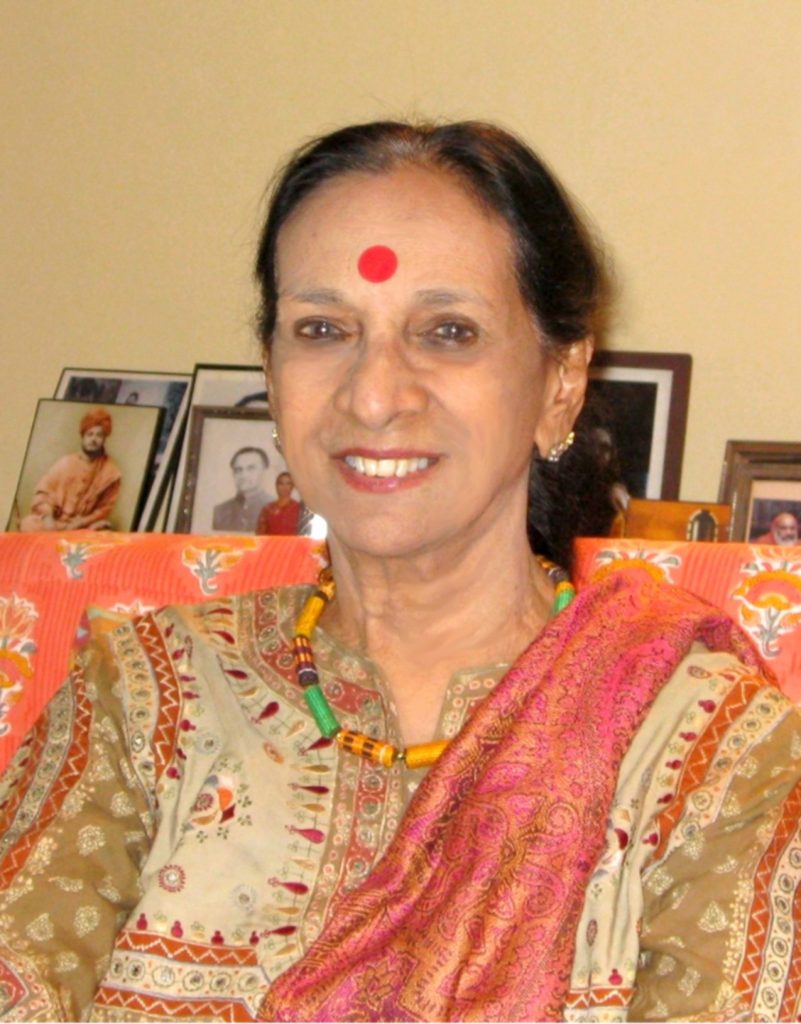
Gone also are the women of grit, like the  late  Mrinalini  Sarabhai who was one of the few to raise her voice in Ahmedabad  as the pogrom had peaked in 2002.

Mrinalini Sarabhai

I recall that soon  after the Gujarat pogrom, I’d written a  piece for The Indian Express, along the strain: ‘Where is our  God ?…Not  In  Bharat,  Apparently!’ It was a cry from my heart. Perhaps, the cry was piercing enough to have touched Mrinalini Sarabhai. Within a week of the publication of that piece, I’d received a handwritten letter from her. Soothing gentle words, relaying that together we are going to fight this  battle. No, she didn’t know me; after reading my piece, took pains to  write to me on the  Indian Express address which was  later  re-directed to me.

I’m sounding much too realistic or maybe a bit too far-sighted, but if   our  planners  don’t  take  corrective  measures now and right now, a  day could  soon come when the  Indian Muslims would  be compelled  to  equip themselves with an  ID card  or even  visiting  cards with  a footnote  printed along these  lines- “I’m a  Muslim …very  secular  and  not a  terrorist!”

That will be the saddest day for this democratic republic.

Political heat rises in Odisha as EOW raids Soumya-owned newspaper

Soumya Ranjan

Soumya, a BJD leader and Khandapada MLA, who has been critical of the BJD government led by Naveen Patnaik for the past some time, has also written scathing articles targeting the CM’s private secretary VK Pandian. A report by Arabinda Mohapatra

Political atmosphere in Odisha has heated up following the recent raid of Economic Offences Wing (EOW) of Odisha Police at the office of leading Odia daily Sambad which is owned and edited by senior Biju Janata Dal (BJD) leader and Khandapada MLA Soumya Ranjan Patnaik.

Soumya, who happens to be the son-in-law of former chief minister JB Patnaik, who was the face of the Congress party for a long time in Odisha, has been critical of the BJD government led by Naveen Patnaik for the past some time. He also wrote scathing articles targeting the chief minister’s private secretary VK Pandian, questioning his visits to different districts which allegedly undermined the authority of elected public representatives.

The raid on the Sambal office was conducted by separate teams of EOW on September 18 after the investigating wing of the state police registered a case under different sections of the IPC including 420 (cheating) and 120-B (conspiracy). The raiding parties are reported to have seized important documents.

Sambad, on the other hand, has clarified that the paper fully cooperated with the enforcement agency. It also termed the entire issue as “a clear case of political vendetta and an attack on the freedom of the press.” It is pertinent to mention that the ruling BJD on September 12 had removed Soumya from the post of party’s vice-president after he wrote some controversial editorial pieces targeting the government and made statements on television channels raising questions on the rising influence of bureaucrats in the government and the party.

The case against Sambad was  registered following allegations that a large number of employees of the paper were forced to take personal loans under threat. The loan amount running into crores of rupees was not given to the employees but allegedly used by their employer company Eastern Media Limited. The case was registered on September 16 this year against Baijayanti Kar (HR Manager), Soumya Ranjan Patnaik (Editor) and others following a complaint by Asim Mohapatra, an ex-employee of Sambad.

Mohapatra, in his complaint, made serious allegations of bank loan fraud involving cheating, forgery and criminal intimidation.  He said he was allegedly forced by the accused to sign some bank loan forms against his will and paying capacity. He was allegedly threatened that if he did not do what he was asked to he would lose his job. Under pressure, he was forced to sign many blank forms including some blank cheques. The former employee said he did not know the details, but later came to know that a loan of Rs 5 lakh was taken in his name but it was actually used by Sambad or Eastern Media Limited.  

“He did not get a single penny out of this loan. He was forced to sign for such loans on two different occasions in two different banks,” the investigating agency said adding that more than 300 employees of Sambad/Eastern Media limited were forced to sign on forged documents and about Rs 50 crore have thus been fraudulently secured by Soumya Ranjan Patnaik using these forged papers. During the course of the investigation, the EOW is said to have examined some vital witnesses.

The raids have triggered a political storm since Soumya has been critical of not only the style of chief minister Naveen Patnaik’s functioning but also his powerful private secretary, V.K. Pandian. The Congress and the BJP described the raid as political vendetta. “Why were the Sambad employees silent for such a long time? They have suddenly woken up. Are they being prompted by someone?” asked a veteran Congress leader.

Soumya became a thorn in the government’s side after he began questioning Pandian’s style of functioning and his visits to different districts at government’s expense. Soumya’s daughter,  Tanaya Patnaik wrote on social media that the government was using pressure tactics against her father and his media house.

Significantly, the raids come at a time when major parties in the state are busy preparing for the next general election which is going to be crucial for all of them but especially for chief minister Naveen Patnaik who will be seeking a straight sixth term in office. If he succeeds, he will become the longest serving chief minister of the country.

Soumya, who is a media baron, carries the tag of being a party hopper. He has had stints in the Congress and the BJP and had also floated his own party. He joined the BJD much later and was nominated to the Rajya Sabha by the party. He resigned his seat and contested and won the Khandapara assembly seat on BJD ticket in 2019.  

Sources said that Soumya had high hopes of getting a ministerial berth in the Naveen Patnaik government but he was disappointed when he was not included in the ministry. After that his paper gradually started criticizing the government on one pretext or the other. While he was critical of the chief minister’s style of functioning in his columns, trouble began when he began questioning the activities of CM’s private secretary VK Pandian who has been touring districts to know about the problems of people. Soumya questioned Pandian’s style of work despite the chief minister’s statement that his private secretary was visiting the districts on his instructions.

Many BJD leaders including some ministers and MLAs have targeted Soumya for making statements which would harm the image of the government and the chief minister. They feel that the editor-cum-politician is doing this deliberately to embarrass the government ahead of the elections. “This is an attempt to tarnish the image of the government and this is being done by Soumya because he knows that in all likelihood will not get a BJD ticket to contest the next elections. He wants to put pressure on the government but such tactics do not always work,” said a senior BJD leader who did not wish to be named.

Nuh clashes: Haryana govt turns the heat on accused finally

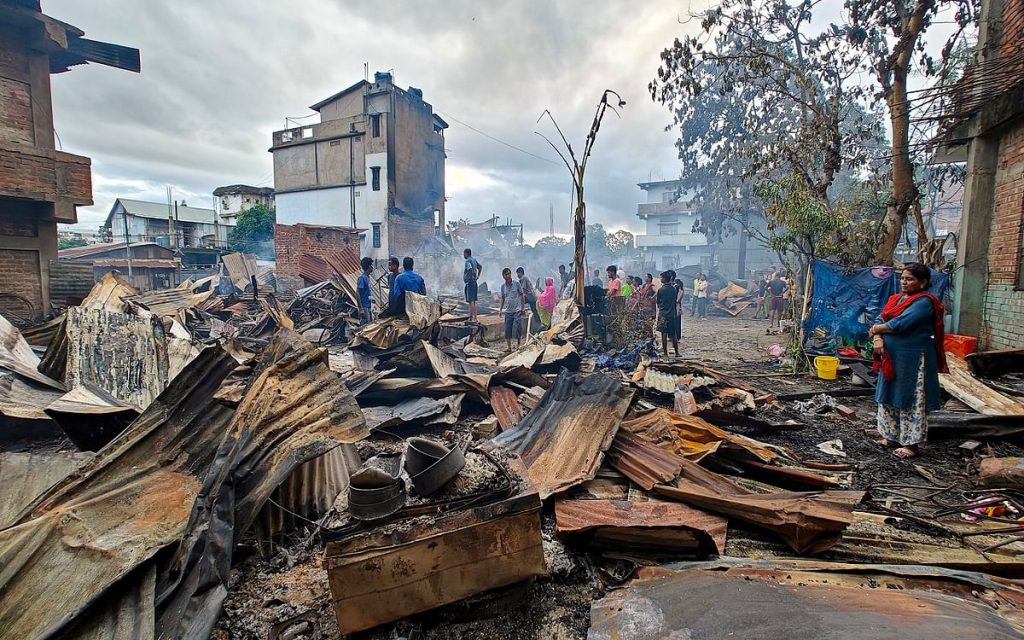
Scene of destruction in the aftermath of Nuh Violence

By arresting Nuh’s Congress legislator Mamman Khan after bringing two “cow vigilantes’’ to the book in connection with the violence, the ruling BJP-JJP government seems to have made up its mind to deal with such incidents with firm hand, reports Rajesh Moudgil

The July 31 communal clashes in Nuh town and adjoining areas of Haryana caught the state government napping leading to six casualties and massive damage to public and private properties. For, there were immense indications of the possibility of the situation turning ugly ahead of it in view of hatred being spread through social media for several days, and yet it happened.

The venom-filled rants on the social media were galore prior to July 31 violent clashes that erupted between the two communities during a religious procession taken out by Vishwa Hindu Parishad and Bajrang Dal after the cow vigilante Monu Manesar, one of the main accused in the infamous case of brutal killing of two Muslim youths cattle traders Nasir and Junaid in Bhiwani town of Haryana, announced to join the said religious procession. This provoked sharp reactions from the members of other communities triggering the said hatred spread on the social media from both sides.

Even though Monu did not take part in the procession, another cow vigilante Bittu Bajrangi allegedly provoked the rival groups which had objected to Monu’s announcement to take part in the procession despite their repeated calls against it to Rajasthan and Haryana police.

The clashes erupted when miscreants pelted stones on the religious procession – Brijmandal Jalabhishek Yatra, and quickly spread to not only in various areas of the Muslim-dominated Nuh district (also popularly called Mewat) but also the nearby Sohna town of Gurugram district bordering Delhi. Result? Six people including two Home Guards, two Bajrang Dal activists and a naib imam were killed over 80 others, mainly police personnel, grievously hurt and dozens of vehicles set on fire, besides massive damage to public and private properties.

Even though Nuh remained under curfew and without mobile internet services for days together, the situation in the area again later became tense with several Hindu outfits holding a “maha panchayat’’ in Palwal and announcing to resume the same procession in the Nuh on August 28.

However the day passed off peacefully, with the government being extra vigilant and again putting heavy police deployment of about 2,000 personnel of Haryana police and 24 companies of paramilitary forces to keep a strict watch, deploying drones, putting check-points at various inter-state as well as intra and inter-district points across the district, besides taking other measures.

The government did not allow the religious procession but remained on alert about the small groups of people including the right-wing leaders as well as priests visiting the Nalhar temple in Nuh with police teams accompanying them so as to allow the event on the last Monday of the holy month of “Shravan’’ (August 28).

Police acts, nabs Bajrangi, Monu

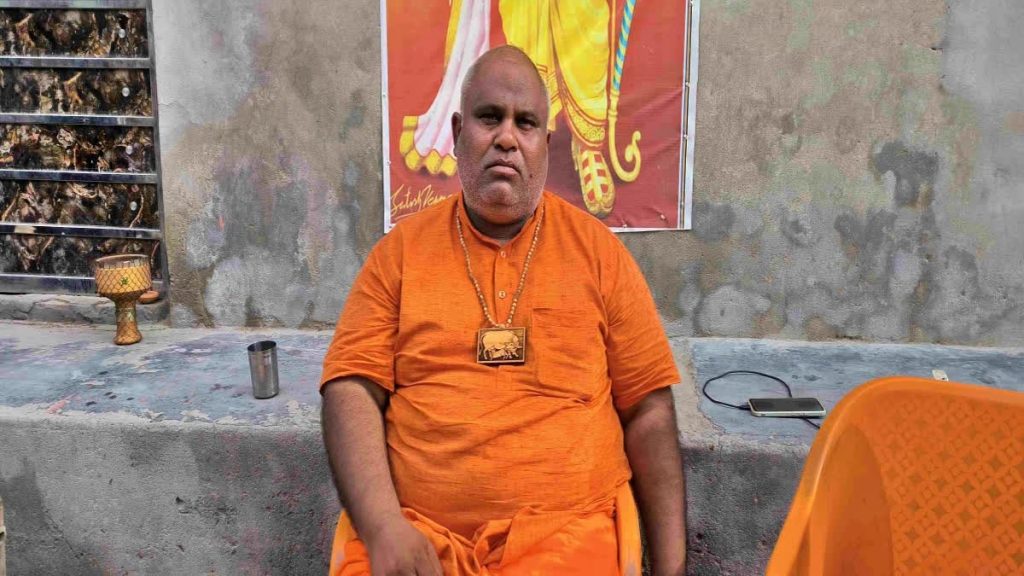
The Haryana police which had registered over 140 FIRs for the said clashes and arrested over 500 accused by August-end, arrested Bittu Bajrangi, a self-proclaimed cow vigilante on August 15 (He was granted bail on August 31). After the arrest he was sent to one-day police remand and 14-day judicial custody. Bajrangi was also arrested earlier on August 1 by Faridabad police over a viral video in which he was seen in saffron attire with a song with threatening lyrics in the background, but was left off on bail.

Bittu Bajrangi

However, in another significant step, the police nabbed the fugitive Monu Manesar from Gurugram and recovered a pistol and three cartridges from his possession on September 12.

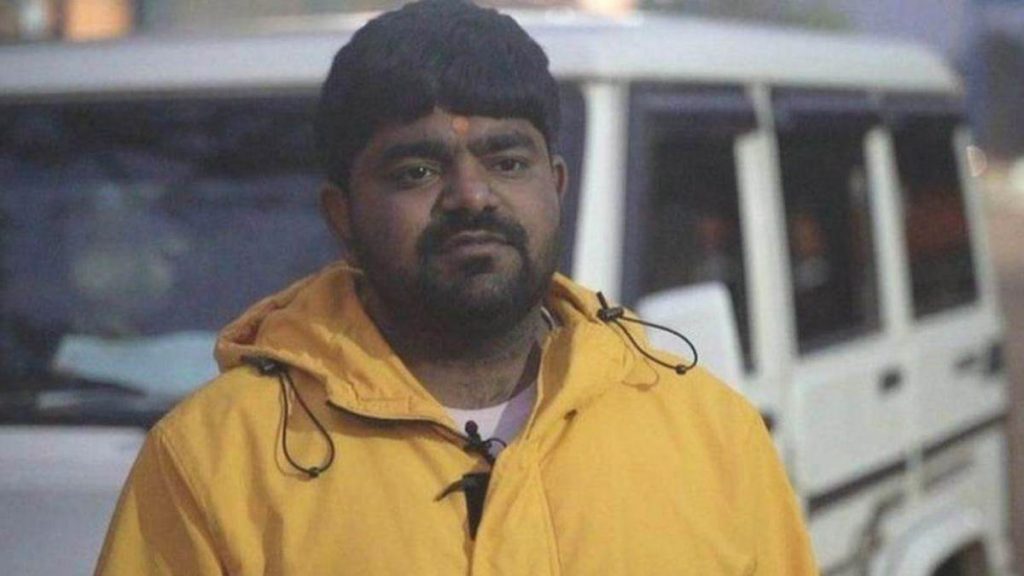
Notably, Monu Manesar, 28, (real name – Mohit Yadav) who was accused of inciting the communal violence in Nuh was also wanted by the Rajasthan police in the case in which charred bodies of two Muslim cattle traders, namely Junaid and Nasir, were found in a burnt vehicle in a Bhiwani area of Haryana on February 16, last.

Monu Manesar

The two were residents of Ghatmika village of the Bharatpur district of Rajasthan, who were allegedly abducted and burnt to death in Bhiwani district.

Monu was thus handed over to the Rajasthan police the same day evening and has now been shifted to high security Ajmer jail since September 22.

Home Minister blames Congress

Meanwhile, Haryana Home Minister Anil Vij had also alleged that the preliminary probe into the July 31 violence in Nuh indicated the role of the opposition Congress party. He went on to allege that wherever violence had taken place in Nuh, Congress MLA Maman Khan had gone there on July 28, 29 and 30. Vij also alleged that many persons were called from Rajasthan for Nuh violence.

MLA Mamman Khan in judicial custody

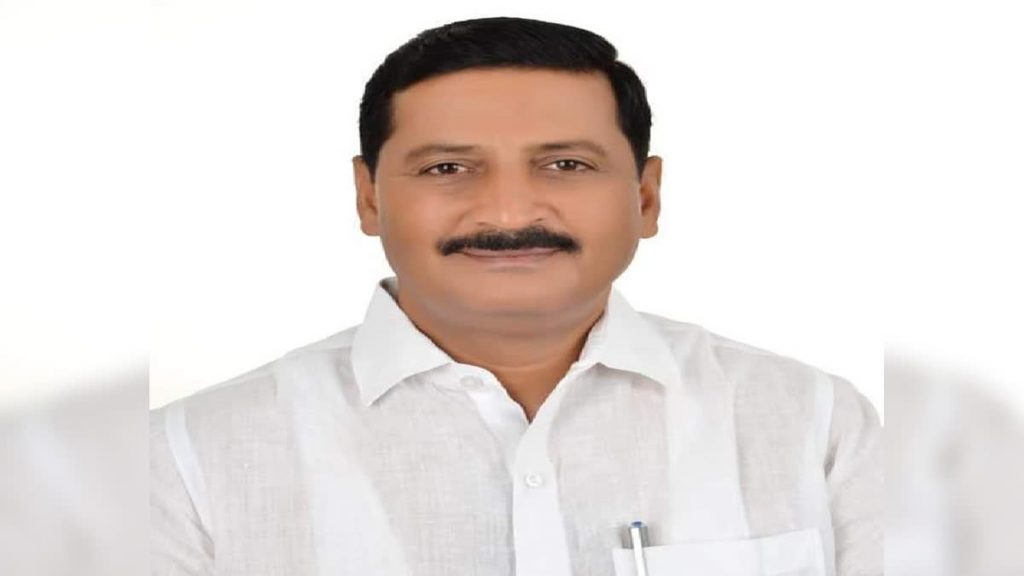
The Congress MLA Mamman Khan, who is an MLA from Ferozepur Jhirka seat in district Nuh, and who was arrested by Haryana police from Rajasthan on late September 14 night in connection with the July 31 communal violence was first sent to two-day police remand on September 15, subsequent to which the court had extended his police remand for two more days. He was subsequently sent to 14-day judicial custody by a Nuh court on September 19.

His arrest was anticipated as he had failed to appear before the police twice despite police notices asking him to join its probe – on August 31 and September 10 – and also there being no relief to him subsequently by the Punjab and Haryana High Court where he had sought an urgent hearing against his arrest as he claimed, he was being falsely implicated.

Mamman Khan

 Khan was named in different cases and the charges against him included promoting enmity between different groups on religious grounds. Police held that in cases of vandalism and arson that took place, Khan not only had a role in instigating but also conspiring the violence.

However, the state government held he was wanted in a case registered against him and that he was in constant touch with another suspect namely Taufiq who had already been arrested in the case. The police claimed that he was on the spot and not only had a role in instigating but also conspiring the violence, police held. He charges he faces include promoting enmity between different groups on grounds of religion.

MOST POPULAR

HOT NEWS