Uncertainty looms as Bangladesh awaits another chaotic elections

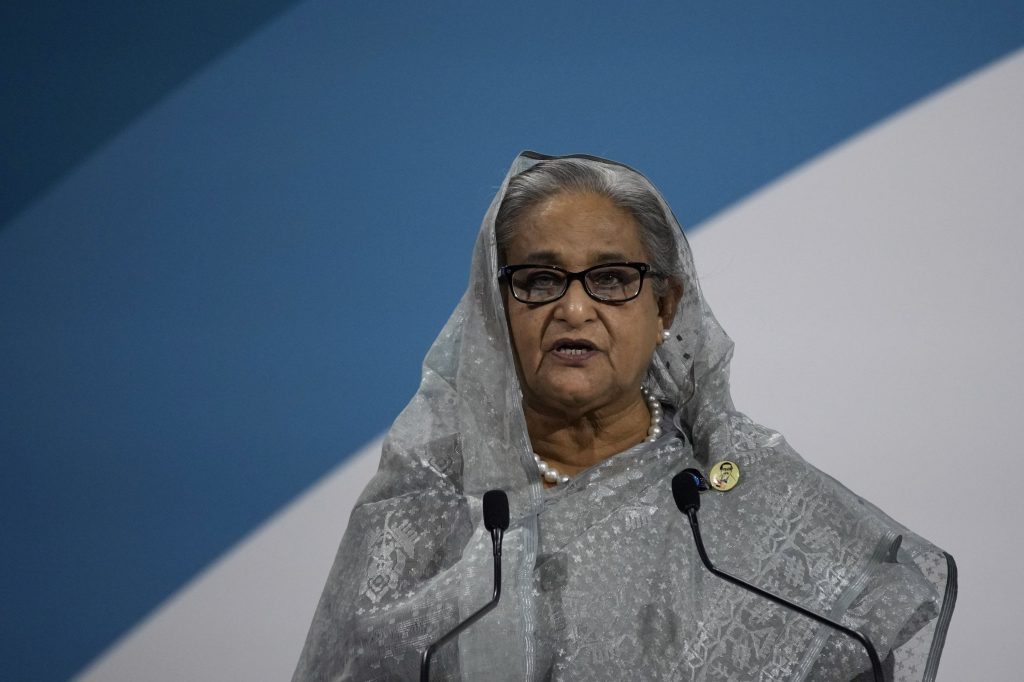
Sheikh Hasina, Prime Minister of Bangladesh

As Awami League gears up to seek a mandate for PM Sheikh Hasina’s fourth consecutive term in office during Bangladesh polls slated for January 2024, the main opposition party, BNP, insists that elections should be held under neutral caretaker administration, writes Nava Thakuria

The coming year will witness national elections in three countries which were incidentally one nation prior to its independence in 1947. India, Pakistan and Bangladesh are expected to grace Parliamentary elections early next year and it’s presumed that the post-poll scenario will grossly impact the south Asian scenario for security, trade and tourism. While India, now opted to be reintroduced as Bharat, is destined to be a democratically elected government in New Delhi, speculations are afloat about its two neighbours slipping into the hands of armed dictators after chaotic polls. Both Islamabad and Dhaka have witnessed military coups from time to time.

As Bangladesh goes to general elections in January 2024, the ruling party (Awami League) will seek the mandate from nearly 120 million voters for Prime Minister Sheikh Hasina’s fourth consecutive term in office. Prime opposition party of the poverty-stricken country, Bangladesh Nationalist Party (BNP) today faces a difficult situation as its uncontested leader Begum Khaleda Zia (77) continues to be unwell and its acting chairperson Tarque Rahman is exiled in London since 2008. But a recent demonstration by thousands of BNP supporters in Dhaka demanding the resignation of PM Hasina for a free and fair election drew the attention of international media.

BNP leaders are sticking to their demand for a neutral caretaker administration in Dhaka to conduct the forthcoming elections, as they publicly allege that the ruling AL and its allies will rig the polls. The opposition alliance, led by BNP, believes that the ruling alliance will lose the elections if held in a free and fair manner. So they are yet to agree to participate in polls unless PM Hasina (75) endorses a non-partisan caretaker government to oversee the electoral process. Otherwise, they may boycott the polls, as they did in 2014 and 2018 national elections. But the world’s longest-serving female government head refused to step down prior to the elections citing that it’s not mandatory under the Constitution of Bangladesh.

No doubt, BNP and its allies, particularly Jamaat-e-Islami and other Islamist groups, will not sit ideally  in favour of the incumbent PM. They will go for more street protests across the country in the coming days and many demonstrators may adopt violent means for national and international media attention. Even the turmoil can continue in the post-poll scenario, if the opposition alliance does not participate in the elections. The intense and uninterrupted political chaos may also invite the ‘men in uniform’ to step into the political space and finally another dictator can emerge in Dhaka, as Bangladesh has a history of military interventions in politics.

The ruling AL alliance won over 250 Parliamentary seats in December 2018 elections and thus enjoys an absolute majority in the 350-member Jatiya Sangsad, the highest legislative body of Bangladesh, which does not have provincial legislative assemblies like India or Pakistan. The daughter of Bangabandhu Sheikh Mujibur Rahman -who is respected as Bangla’s Father of the Nation – still enjoys the reputation as an influential leader and lately gained more political mileage after the special invitation from New Delhi to attend the G20 summit. PM Hasina was the only South Asian government head to be invited to attend and she also enjoyed a bilateral discussion with her host Indian counterpart Narendra Modi.

Over the years, the USA along with many western nations have repeatedly urged PM Hasina to hold the elections in a transparent way where all opposition parties can participate and the electors can vote freely. Days back, the USA and UK diplomats met the Bangladesh chief election commissioner and other officials to enquire about the poll preparations. European Union leaders are planning to send election observers to Bangladesh, which is welcomed by the AL government arguing that its Election Commission is capable enough to run the exercise honestly and independently.

Reacting to a recent observation by over 175 global leaders including Nobel laureates, elected officials, business and civil society leaders, where they firmly stated the two previous elections in Bangladesh lacked legitimacy, PM Hasina hit back with suggestions that they should send international election experts to observe the Bangla polls. But in reality, the general elections (precisely after Bangladesh transformed into a fully Parliamentary democracy from the clutches of military rulers in 1990-91) usually witness enormous chaos and violence. The BNP tried to manipulate the 1996 elections, but it had to succumb to massive public protests. Since then the idea of an election time caretaker government came to exist in Bangladesh.

The open letter by eminent personalities including Ban Ki-moon (former UN secretary general), Barack H. Obama and Hillary Rodham Clinton (former US President and secretary of State respectively), Shirin Ebadi, Orhan Pamuk with hundred other Nobel laureates, Narayana Murthy (founder, Infosys), etc also urged PM Hasina to suspend all legal proceedings against Professor Muhammad Yunus (83), the one and only Nobel laureate of Bangladesh. Commending the laudable progress made by Bangladesh in various sectors like education, health, poverty alleviation, women empowerment, etc since its independence in 1971, they however expressed concern over the deteriorating scenario for human rights and media freedom.

It was preceded by another letter to PM Hasina regarding her government’s ill treatment of Prof Yunus. The letter, endorsed by 40 global personalities, was published as an advertisement in Washington Post (7 March 2023). A minister in PM Hasina’s cabinet made a critical comment over the letter terming it as an advertisement only and not a media statement (meaning a lesser important approach). But days back, 34 eminent Bangladeshi nationals came forward raising voices for Prof Yunus. They opined that using various biased hostilities against the most awarded Bangladeshi gentleman, the incumbent government in Dhaka was only inviting negative comments from the international community.

Recently, the United Nations human rights office also issued a statement supporting Prof Yunus, who is globally recognised as an economist teacher-turned a revolutionary baker turned a unique social business entrepreneur, and currently facing a number of legal complaints in his home country. Terming that the revolutionary thinker has been put to harassment and intimidation for almost a decade, the statement added, “We are concerned that smear campaigns against him (Prof Yunus), often emanating from the highest levels of government, risk undermining his right to a fair trial and due process in line with international standards.” It also pursued many other human rights defenders in Bangladesh who have been facing continued harassment and detention from the authorities.

Probably PM Hasina was aware of the negative development in advance and hence she seemingly planned adequate media space in her favour. The politically conscious people of Bangladesh witnessed over a hundred newspaper-articles in various countries within a few weeks, where those articles were claimed to be prepared by independent experts on Bangladesh politics. The issue was later exposed by the Paris-based Agence France-Presse (AFP), where it explained that many of the writers had dubious backgrounds.

AFP reportedly analyzed more than 700 articles published in at least 60 domestic and international news sites with bylines attributed to 35 names, all of which appeared for the first time. While it was not possible to prove if all investigated bylines were real, no online presence apart from the articles could be found and none had a visible social media profile. The articles overwhelmingly endorsed narratives pushed by the AL government in Dhaka, with some of those were found posted on various Bangladesh government websites.

Speaking to this writer from Dhaka, a Bangladeshi editor informed that he too received a number of articles (with the prediction of PM Hasina’s convincing win in the forthcoming polls) with a request for kind publication. The young editor (who wanted anonymity) admitted that some of those articles were published in various Bangladeshi newspapers (including his one), certainly in good faith. But soon, he stopped publishing those articles after discovering that one particular article was re-sent with a different byline and the trend repeated for weeks. Finally, he agreed to the public perception that PM Hasina may lose the battle of ballots this time.
Congress balks as Nitish rallies for INLD’s inclusion in INDIA bloc

Some 35 years ago, Devi Lal, the then Haryana CM had brought all left and right wing parties together to form a grand alliance against Congress. Now his son, former CM O.P. Chautala is struggling for a spot in I.N.D.I.A, an alliance of anti-BJP parties. A report by Pawan Kumar Bansal

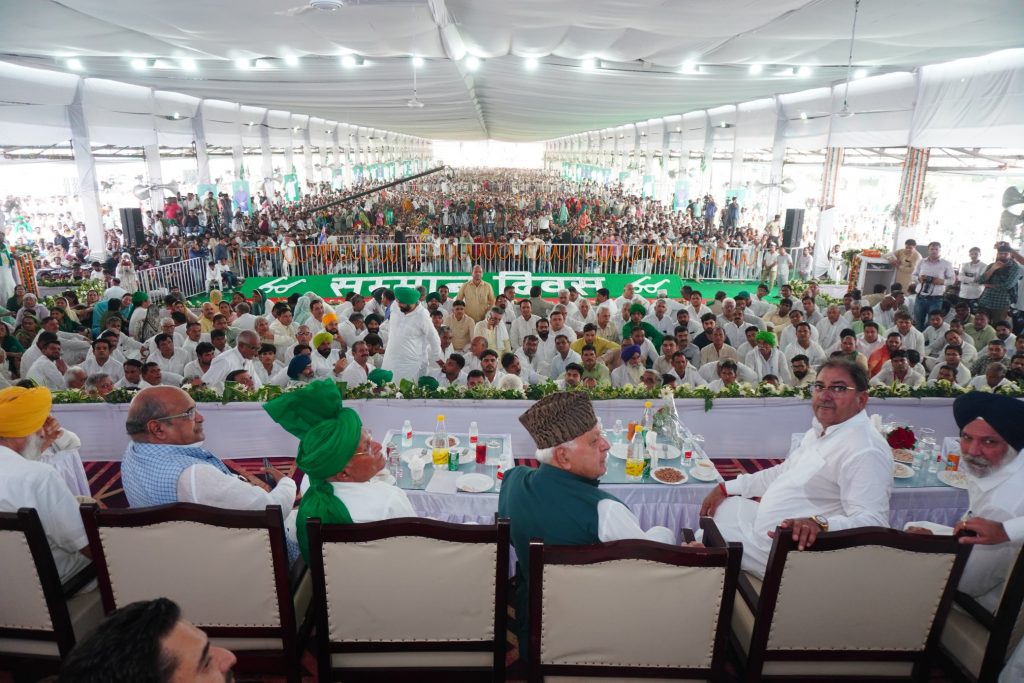
Om Parkash Chautala’s efforts to woo Congress and  Aam Aadmi Party came a cropper as both the parties did not send even their representatives to the rally organized by Indian National Lok Dal (INLD) to celebrate the birthday of the former Deputy Prime Minister Devi Lal at Kaithal in Haryana.

The alliance formed by Devi Lal had succeeded in ousting Congress from power paving the way for V.P. Singh to become the Prime Minister of the country.

Interestingly, the alliance was against Congress and BJP was part of it, but the present alliance is against BJP with Congress as its partner.

Bihar Chief Minister Nitish Kumar, a confidante of Devi Lal, is trying his best to have Indian National Lok Dal headed by Om Parkash Chautala included in the alliance.

Although INLD claims to be a national party, its influence is confined only to Haryana. There too, the party has only one MLA, Abhay Chautala in the 90-member state assembly.

It is learnt that strong opposition by former Haryana Chief Minister and senior Congress leader Bhupinder Singh Hooda  to INLD  joining as partner of the grand anti-BJP alliance has virtually sabotaged the efforts of Nitish Kumar. Hooda is stated to be of the view that there is no need of any alliance in Haryana as Congress is capable of contesting and winning all the 10 seats of  Lok Sabha.

Abhay Chautala had personally invited Congress President Mallikarjun Kharge to attend the rally organized to celebrate the birthday of Devi Lal at Kaithal in Haryana but considering the opposition raised by Bhupinder Singh Hooda, Kharge did not give his consent for attending the rally. He cryptically said that as Devi Lal was also pro-poor and worked for down-trodden, Congress and he were on the same wave-length.

But none of the representatives of Congress and AAP attended the Kaithal rally.

Nitish Kumar is working on a formula in which the INLD and Aam Aadmi Party could be given two or three Lok Sabha seats, thus uniting all anti-BJP parties on one platform.

Another opposition party, JJP of Dushyant Chautla is part of Haryana Government. But, it is not sure whether JJP will contest Lok Sabha polls in alliance with BJP or not. Both BJP and JJP had contested last assembly polls separately but later came together and formed a government as the BJP fell short of majority for forming the Government.

Interestingly, both Om Prakash Chautala and Dushyant Chautala are trying to encash the legacy of Devi Lal.While Om Prakash Chautala organised rally to celebrate birthday of Devi Lal at Kaithal in Haryana, Dushyant Chautala  held rally at Sikar in Rajasthan.

It is interesting to mention here that Devi Lal had won the Lok Sabha poll from Sikar in 1989 defeating Balram Jakhar of Congress.

According to political commentators, it is impossible for Congress high command to ignore the plea of Bhupinder Singh Hooda who enjoys considerable influence among Jats, who matter in at least three Lok Sabha seats, namely Hisar, Sonipat and Rohtak.

Besides Bhupinder Singh Hooda other Congress stalwarts, Randeep Surjewala, Kumari Selja and former Minister Kiran Chaudhary are also reportedly not happy with the prospects of INDIA allying with Om Parkash Chautala’s INLD  although Kumari Selja has stated that the party will obey the decision of high command.

Bhupinder Hooda and Randeep Surjewala had personal-political differences with Om Prakash Chautala. While Bhupinder Singh Hooda had thrice defeated Devi Lal from Rohtak Lok Sabha seat, Randeep Surjewala and Chautala had  locked horns at Narwana assembly constituency in the past.

Congress president Mallikarjun Kharge, Bihar CM Nitish Kumar, West Bengal CM Mamata Banerjee, NCP leader Sharad Pawar and Akhilesh Yadav were expected to attend  Kaithal rally but could not come and instead sent their representatives.

SAD leader Sukhbir Badal, former J&K Chief Minister Farooq Abdullah and K.C. Tayagi has advocated that for defeating BJP, all opposition parties must unite under one banner.

Spreading message of conservation through art

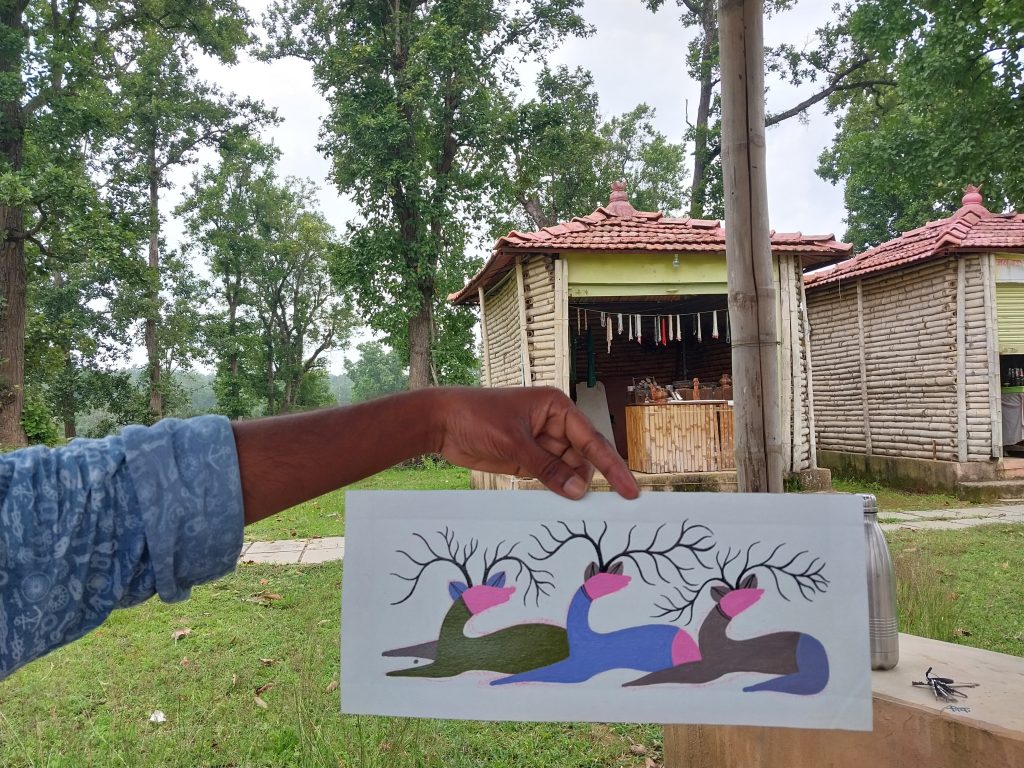
The barasingha, Kanha’s iconic animal, comes alive through Gond art. Photo by Deepanwita Gita Niyogi

The Gond and Mandana art forms which depict nature and wildlife can be tools for environmental awareness, writes Deepanwita Gita Niyogi

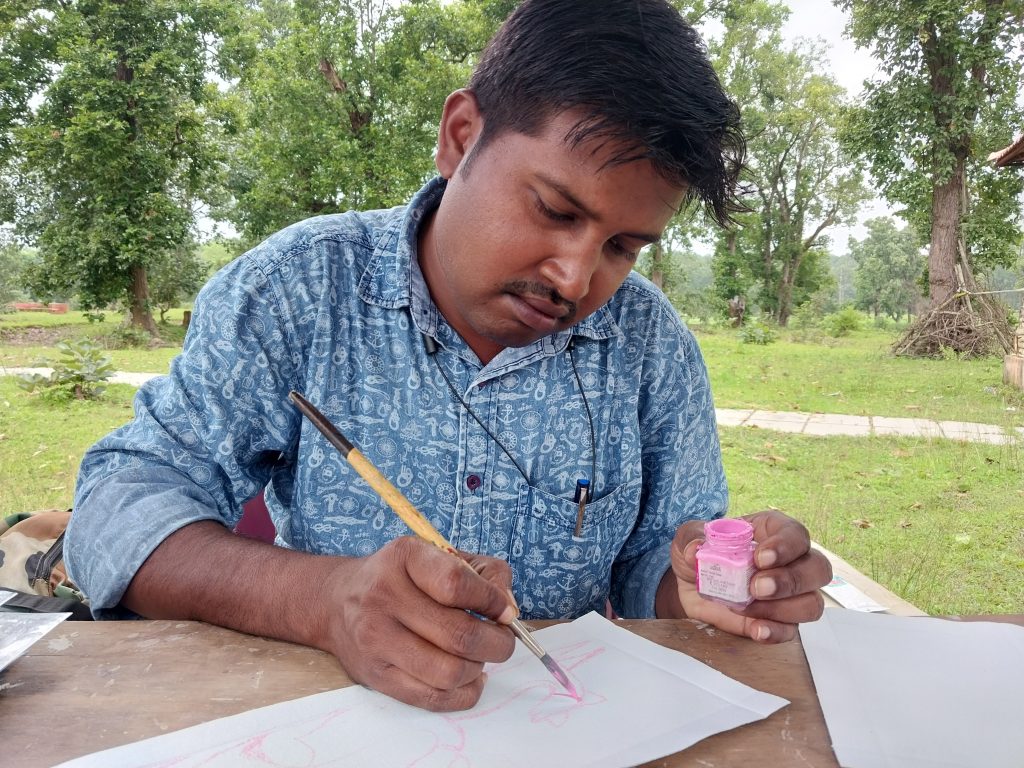
On a windy afternoon punctuated by intermittent rains, Gond tribal artist Rameshwar Dhurwey filled his painting of a barasingha or hard ground swamp deer with bright colours at the Baiga Haat of  Kanha National Park where there are several stalls selling wooden items, clothes and jewellery.

The colour palette used in Gond art is vast, informed Dhurwey, who owns a shop at the place. “One can use almost any colour but the selection has to be proper for the effect to come alive on canvas and even on paper,” the artist based in Madhya Pradesh said.

Earlier, when acrylic colours were not in vogue and the paintings used to be made on mud walls in villages, artists used colours obtained from nature. For instance, neem and sem (Indian green bean) leaves were crushed to obtain shades of green to depict trees and animals.

According to Dhurwey, acrylic colours dry in eight hours, last long and are suitable for canvas and paper. “Though natural colours are not used that much these days, I still use the colour obtained from Palas flower on paper as well as canvas.”

Message of environmental conservation

The Gond art focuses on the depiction of animals like deer and tigers. The tree, often called the tree of life, is also an important feature of this art, added Dhurwey.

Through the paintings of birds, elephants, plants and flowers, the message of environmental conservation through the Gond art is clear.

The artist’s paintings, mostly executed on canvas with acrylic colours, are priced at Rs 3000 to Rs 6500. The minimum price is Rs 1000 for smaller paintings. “The Gond art is linked to nature and the tree of life is an important aspect of almost every image. Trees are important in tribal life. We worship the Saja tree a lot and pray to trees during important festivals,” said Dhurwey while first making an outline with a coloured chalk.

Gond artist Rameshwar Dhurwey at work. Photo by Deepanwita Gita Niyogi

Dhurwey’s family members are also into Gond art. But at the insistence of his family, he completed his higher education. “Though my parents wanted me to do a regular job, I wanted to become an artist after completing my studies in Bhopal and Gwalior. I feel people should keep on doing creative things or else these will vanish forever.”

For medium-sized paintings, Dhurwey takes at least 10 hours as there are subtle designs and lines to be executed. The artist, who recently attended an exhibition in Chennai, admitted that there is a change coming in the art making it more modern.

“I feel that along with the tribal culture, the message of conservation has to be highlighted through Gond art. I try to capture various seasons apart from wildlife. One need not always fill up the entire canvas and white space can be left.”

Nature comes alive on walls

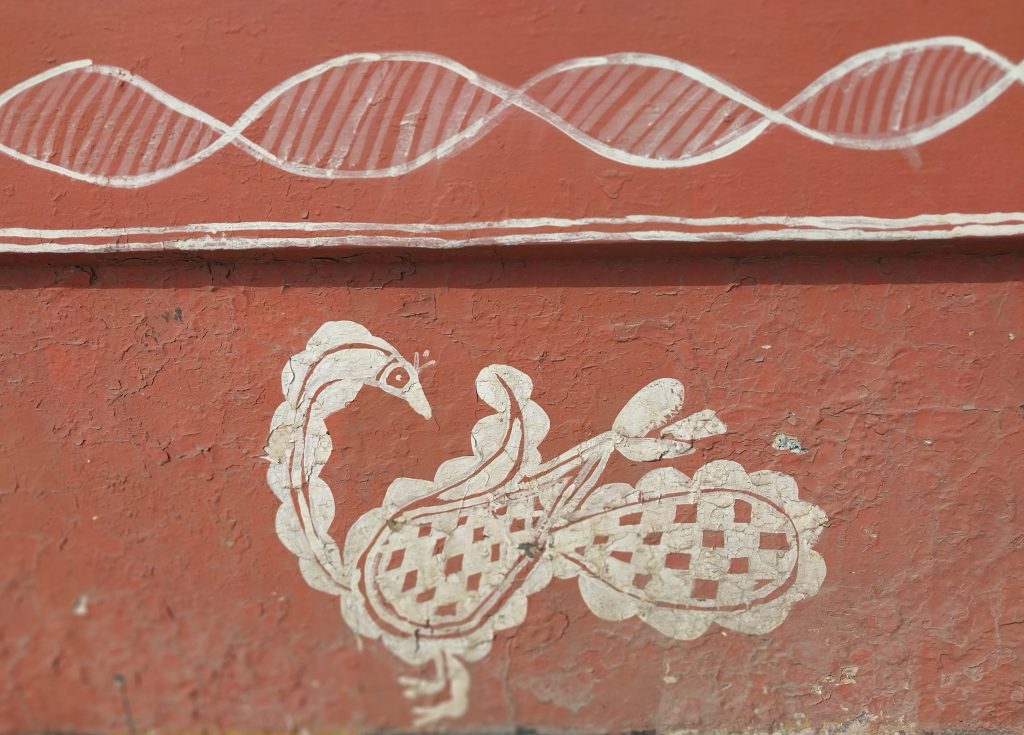
In the state of Rajasthan, just like the Gond art, the Mandana wall murals capture wildlife, especially the tiger. In the city of Sawai Madhopur famous for the Ranthambore Tiger Reserve, images of tigers, peacocks, lotus, birds and even elephants can be seen etched in white against reddish walls.

In this tiger land, the traditional Mandana wall art is dedicated to nature. Once limited to the Meena Adivasi community, it has spread among others and undergone transformation with time. Modern influences have crept in with the disappearance of mud walls. In many villages, the colourful wedding art is now often seen in place of the traditional Mandana executed with white chalk on red to dark brown walls. Sometimes, a lighter shade of brown is also used.

A depiction of a peacock through the Mandana art form in Sawai Madhopur, Rajasthan. Photo by Deepanwita Gita Niyogi

The Gond and Mandana paintings reflect the primeval connection of human beings with nature and celebrate a sustainable lifestyle close to earth. But the construction of concrete houses is taking its toll on such age-old traditions in both the states.  At an abandoned house in Bandha village of Sawai Madhopur, floral patterns made on mud floors were spotted. The family has shifted to a pucca house but the women return here around the time of Diwali to make the Mandana murals in white.

Divya Khandal, who runs social enterprise Dhonk, based in Ranthambore, said, “Once widespread in the entire region, the traditional Mandanaart is slowly vanishing.”

Art forms like the Gond art and Mandana murals point to the deep tradition of communities attached to forests for centuries. To sever their connection with nature in the name of development will not only kill art, but also impact tourism. Instead, such art forms can be promoted to convey the message of conservation at a critical time of deforestation and climate change.

For this very reason, Khandal does outreach programmes involving school students. “I organise competition on Mandana around Diwali and every year the theme is wildlife. In Ranthambore, there is a lot of tiger paintings as a result of the reserve. Involving students sends across the message of art and conservation at the same time.” This year too, Dhonk will try to reach out to 5,000 students in an effort to highlight the art. Apart from girls, even boys are also showing interest.

Delving deep into the crisis bedevilling Afghanistan

Syed  Nooruzzaman, a  veteran  journalist and columnist,  has  been  focusing extensively on  the  West Asian countries, and also on  Afghanistan,  Iran, Pakistan. In this book, he has put together his features and articles and columns of the last over two decades, focusing on the
situation in Afghanistan. A book review by Humra Quraishi

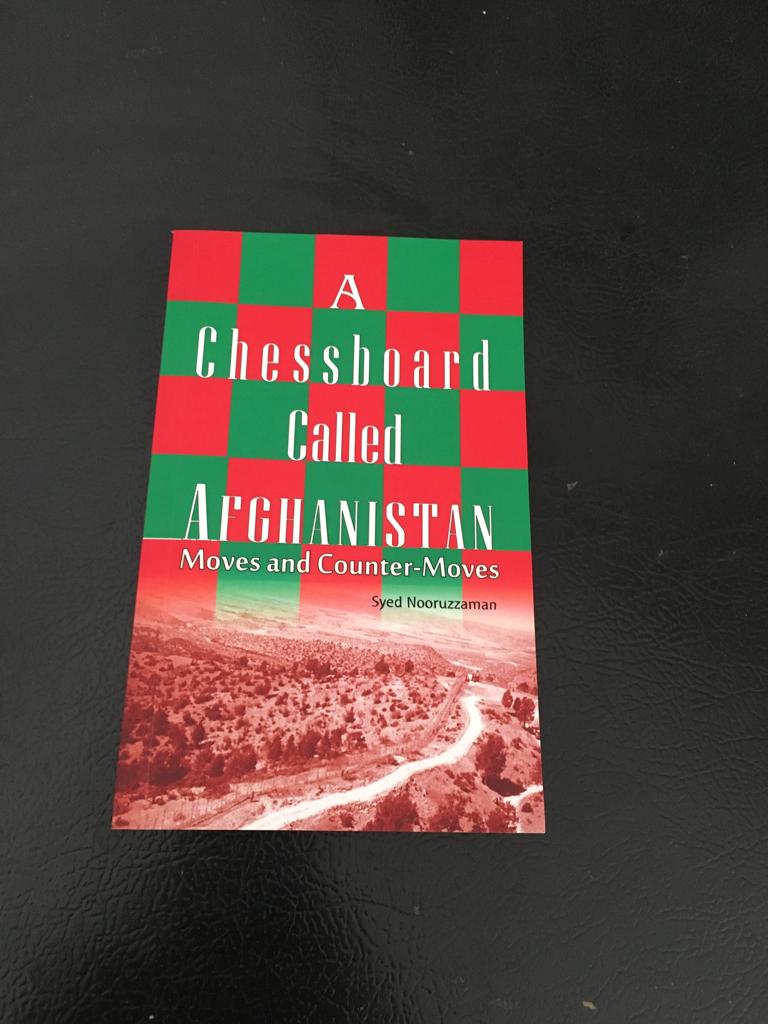
Title of the book-   A  Chessboard  Called  Afghanistan- Moves and Counter-Moves

Author-  Syed  Nooruzzaman

Publisher – The New Thinker Media Trust

Pages – 81

Price –Rs 250

As you’d grasp by the number of pages to this book that it’s a slim book yet contains a wide range of details to the situation in Afghanistan. It could be termed useful for researchers and students and, of course, readers keen to delve deep into the turmoil the country has been facing because of the international intrusions.

Syed  Nooruzzaman, a  veteran  journalist and columnist,  has  been  focusing extensively on  the  West Asian countries, and also on  Afghanistan,  Iran, Pakistan. And in this book, he has put together his features and articles and columns of the last over two decades, focusing on the situation in Afghanistan.

This book does provide some very basic facts together with the complex build-ups, in the changing, if not already changed world order. The grim reality is all out there; the impact of the deadly intrusions of the international powers and superpowers, on this country and its people. One of the most telling reality is in the form of casualties. Deaths and more deaths of human lives and livelihoods and aspirations, and also of the traditional-cultural patterns and much more along the strain.

To quote political columnist, A.J.Philips from his foreword to this book, “Nooruzzaman’s writings unveil the struggles faced by the Afghans as they navigate the treacherous waters of a  rapidly evolving  political landscape. He skillfully highlights the challenges inherent in transplanting a foreign democratic framework onto a society known for its deeply entrenched cultural and tribal dynamics. Through his  keen  observations,  the author reveals the delicate  balance  between progress and  preservation,  shedding  light on the  tensions  that  arise  when ancient traditions collide with modern aspirations. He takes us beyond the headlines, exposing the intricate web of geopolitical interests and regional rivalries that have shaped Afghanistan’s destiny. His writing are a  poignant reminder that the  Afghan  people are not  mere pawns on the  global chessboard but also the  bearers of a  rich heritage and vision for their own  future.”

Though there’s that heavy overdose of the vested interests playing havoc in Afghanistan, with trickle down aftermath all around, but there seems  no way out from the dead end! Yes, it’s a rather dismaying situation for the Afghans. Vulnerable people and their homeland used as a base by the vested powers!  Call it a tragedy heaped on the Afghans by the political manipulators on the international level, hell bent on destroying an age old civilization… ruining civilians and an entire civilization with their expansionist policies and plans, with their modern day political intrigues and manipulations and master plans!

BJP serves notice to 8 Kashmir based BJP leaders over anti-party activities

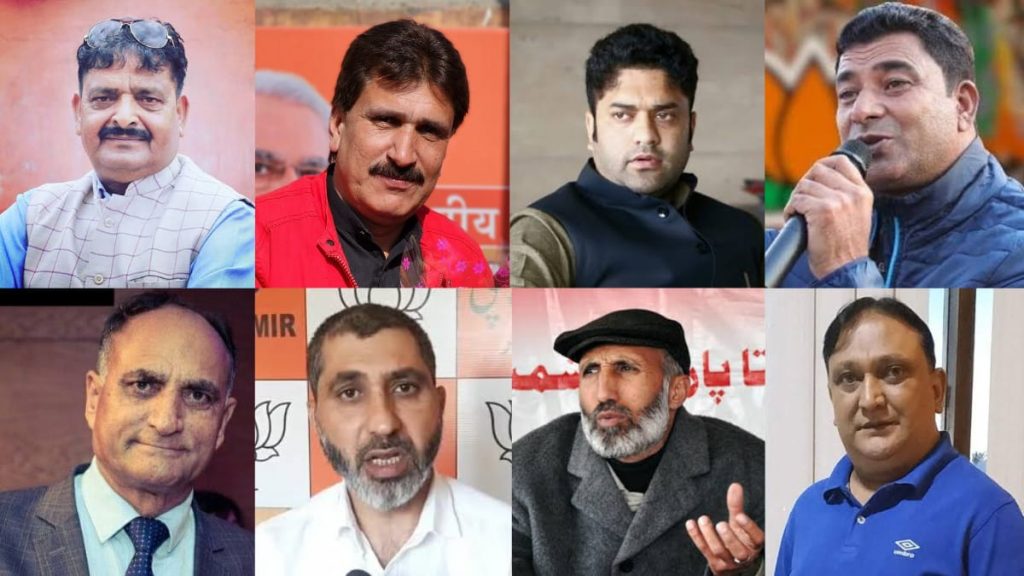
Eight Kashmir-based BJP leaders have been served notices by the party’s disciplinary committee for their alleged involvement in anti-party activities. The leaders, including Sofi Yousuf, Altaf Thakur, Manzoor Bhat, Anwar Khan, Arif Raja, Ali Muhammad Mir, G M Mir, and Aasif Masoodi, have acknowledged receiving the notices.

Sunil Sethi, the Chairman of the disciplinary committee, confirmed the issuance of the notices and stated that it has been observed that these leaders are engaged in anti-party activities. He further mentioned that the leaders have been given a chance to apologize for their actions. If they fail to do so, further disciplinary procedures will be initiated against them.

Ashok Koul, the Party’s General Secretary (Organization), also noted that the leaders have been instructed to submit their apologies to the disciplinary committee for their anti-party activities. The committee is currently awaiting the response of the leaders.

RBI likely to keep REPO rate unchanged in ensuing policy review

New Delhi : RBI is expected to keep the policy interest rate unchanged in the ensuing meeting of Monetary Policy Committee in the wake of global and domestic factors including inflationary concerns, a majority view emerged amongst top economists and bankers at a brainstorming session jointly organised by   ASSOCHAM and EGROW Foundation. ASSOCHAM and EGROW Foundation organised a Shadow Monetary Policy Meeting ahead of the meeting of the RBI Monetary Policy Committee on October 6, 2023. 

”The consensus view of economists, bankers and experts in the field of global financial markets is that given the backdrop of slowing growth and rising inflation in global markets, India has managed to strike a good balance between growth and measures to tame inflation,” ASSOCHAM Secretary General Mr Deepak Sood said, complementing an eminent panel for their insight about the state of global economy, particularly in the context of emerging economies.       

The intense discussions touched upon not only the likely outcome of the RBI-MPC meeting but also several macro-economic issues. Dr. Surijit Bhalla, Former Executive Director-India of the International Monetary Fund, stated, “Maintaining the current monetary policy stance is crucial, with consensus among experts. Rate cut uncertainty depends on various economic factors.”

He raised concern about the U.S. economy, saying, “U.S. economic patterns are unusual due to high bond yields from Japanese and Chinese disinvestment.”  “Seasonally adjusted rates benefit the U.S., with month-on-month inflation at 0.2%-0.3%, that is annualizing to around 3%.” He emphasised, “This low inflation implies a historically unusual real interest rate of about 2.5%.” He is expecting an economic slowdown but dismisses an imminent recession in the U.S.

Rajkiran Rai G, Chairman, ASSOCHAM National Council for Banking and MD, National Bank for Financing Infrastructure and Development said RBI is likely to maintain the policy rate amidst high retail inflation Explaining his views on the economy he said “India’s remains the world’s fastest-growing economy. Economic indicators for the first half of 2023 signal expansion driven by domestic demand, government capital expenditure, and improved capacity utilisation. However, concerns of a potential growth slowdown in upcoming quarters due to election-related capex moderation, along with urban and rural demand disparities, monsoon uncertainty, export slowdown, and global financial conditions persist. We anticipate a gradual, sector-specific recovery, despite challenges. Key export sectors like petroleum, gems, jewellery, handicrafts, textiles, garments, and chemicals have experienced a decline in growth. Initiatives such as the PLI scheme and trade deals aim to boost exports.

Manipur Violence: Massive protests even reach Chief Minister’s Home Turf

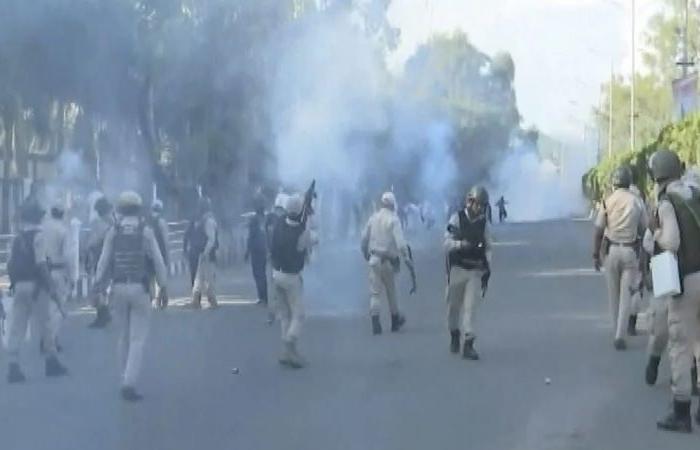
Imphal : The atmosphere in Manipur has grown tense, marked by the unmistakable and increasingly frequent sounds of tear gas canisters being fired. This underscores the state government’s mounting challenges in maintaining order. Highlighting the severity of the situation, a large crowd believed to be from various valley districts made a significant move by attempting to besiege the residence of Chief Minister N Biren Singh in Luwangsangbam on Thursday evening.

This mobilization was not merely an impulsive act of unrest. The crowd was an integral part of a broader protest movement, demanding that the state administration apprehend those responsible for the tragic deaths of two students from the Meitei community – Hijam Linthoingambi and Phijam Hemjit. Images capturing the harrowing final moments of these young individuals, as well as haunting shots of their lifeless bodies, rapidly spread across social media platforms. The profound grief and indignation evoked by these images have struck a particularly poignant chord with those residing in the valley districts, especially among members of the Meitei community. Their collective call for justice and accountability grows louder with each passing day.

Following the escalation at Chief Minister N Biren Singh’s residence, valley areas have become a hotspot for clashes between protestors and security forces. The state has borne witness to numerous demonstrations, resulting in swift and often heavy-handed reactions from the authorities. These confrontations have left many injured in their wake.

In a particularly intense episode from yesterday’s late-night protest, participants denounced the alleged overuse of force by security personnel during a demonstration led by the student community on September 27. This specific incident, which resulted in multiple student injuries, has ignited a series of similar confrontations across the region.

The standoff that transpired last night persisted well into the early hours of today. Beginning around 8 p.m., it reached its peak intensity at around 1.30 a.m. From northern and southern vantage points, determined protestors sought to converge on the chief minister’s residence. Despite stern warnings from the security forces, the crowd’s palpable frustration and anger towards perceived governmental shortcomings overpowered their sense of restraint. Their relentless march was met with an equally unyielding response, as security forces deployed tear gas and smoke bombs to disperse the swelling ranks of protesters.

This prolonged clash underscores the volatile atmosphere in Manipur and the deep-rooted grievances felt by its citizens. As dawn breaks, the aftermath of such an intense night leaves the state, its leaders, and its people at a critical crossroads.

Centre introduces amendments to cable television network rules

New Delhi: Ministry of Information and Broadcasting, Government of India has issued a notification amending the Cable Television Network Rules, 1994, thereby introducing a procedure for the renewal of Multi-System Operator (MSO) Registrations.

In addition, an enabling provision has been inserted in the Rules for the sharing of infrastructure by the Cable Operators with Broadband Service providers to promote internet penetration to the last mile.

Salient features of the amended Rules for MSO Registration are :-

MSOs shall apply for the registration or renewal of registration online at the Broadcast Seva Portal of MIB.

MSO registrations shall be granted or renewed for a period of ten years;

The processing fee of Rs. One lakh is kept for the renewal of registration also; 

The application for renewal of registration shall be within a window of seven to two months before the expiry of the registration.

The renewal procedure is in line with the Government’s commitment to ease of doing business as it will provide certainty to cable operators to continue their services without interruption and therefore make the sector attractive for foreign investment.

IB Ministry has further said that MSOs whose registration is expiring within 7 months are required to apply online through the BroadcastSeva Portal. In case any assistance is required, the helpline number available on the portal may be contacted, or an email may be sent to sodas-moiab@gov.in .

Earlier, only fresh MSO registrations were granted under the Cable Television Networks Rules, 1994. The Rules did not specify the period of validity for MSO registrations, nor did they recognize the mandatory filing of online applications.

The inclusion of a provision related to the sharing of infrastructure by cable operators with broadband service providers will provide the twin benefit of enhanced internet penetration and efficient utilization of resources. It will also reduce the need for additional infrastructure for broadband services.

India emerging as alternative supply source : Hardeep Puri

New Delhi : As the global supply chains are realigning, India is emerging as an alternative supply source given its raw materials, low labour costs, growing manufacturing knowhow, and entrepreneurial ability, Petroleum Minister Hardeep Puri said on Friday,

Addressing the annual meeting of industry chamber PHDCCI, Puri said that with the transition witnessed by energy sector in recent years, India is simultaneously pursuing both traditional fuel exploration and energy transition.

The minister said that India aims to increase its net geographic area under exploration from 8 per cent (0.25 million square km) to 15 per cent (0.5 million sq. kms) by 2025.

India is a global exporter of petroleum products, and boasts the fourth-largest refining capacity globally, he added.

Referring to the significant milestones achieved in biofuel revolution, he noted that the ethanol blending that has increased from 1.53 per cent in 2013-14 to 11 per cent in 2023.

About India’s manufacturing aspirations, Puri said that the manufacturing sector currently comprises 17 per cent of the nation’s GDP and over 27.3 million workers. The minister said that economic reforms and policies such as GST, IBC, asset monetisation, labour law reforms, PLI, National Infrastructure Pipeline, and Gati Shakti mission for multimodal connectivity, have fixed many structural deficits.

Manipur Violence: Irate Demonstrators Demand Accountability, Target Government Offices

The brutal killings of two Meitei students, purportedly by Kuki extremists, have ignited a powder keg of pent-up frustration and rage in the populace. As student-led demonstrations spread throughout the heart of Imphal, the masses converged en masse, casting a fierce and accusatory glare at Chief Minister N Biren Singh and the apparent failure of security forces to stabilize the situation.

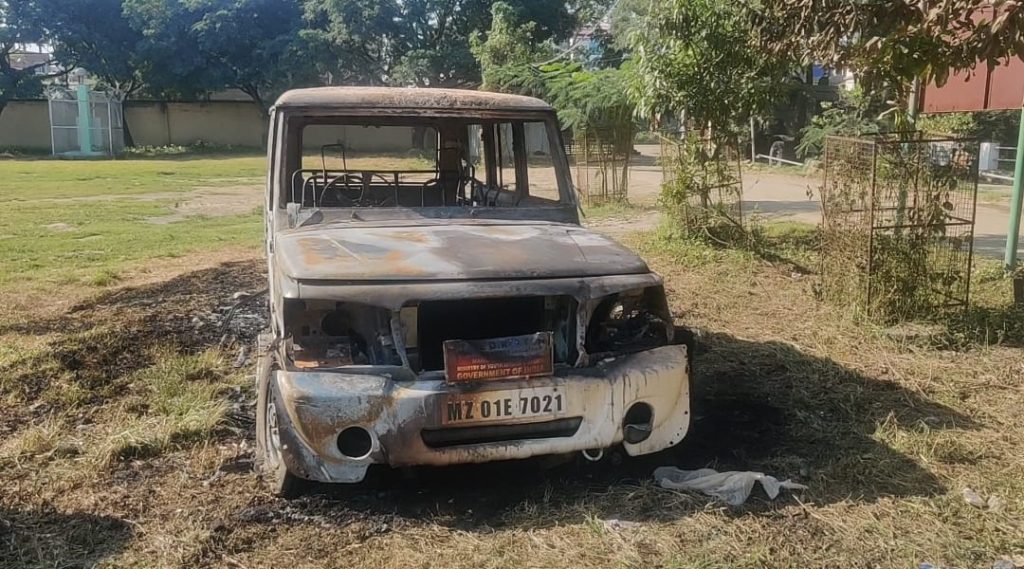
In a particularly intense episode, hordes of enraged citizens, coming from all directions, descended upon the Deputy Commissioner’s Office of Imphal West District at Lamphelpat in the early hours on Thursday. Their fury manifested in significant property damage: torching two vehicles, causing considerable damage to two more, and vandalizing light poles at the entrance of the complex.

On Wednesday evening, in an increasingly volatile situation, the streets of Imphal bore witness to more pronounced manifestations of public resentment. Black plumes from burning tyres and logs were seen throughout the city, symbolizing the people’s deep-seated discontent with the government’s perceived inadequacies in preventing the tragic deaths of the two students. The situation escalated when security forces resorted to tear gas, prompting protesters to retaliate using slingshots and by hurling stones. The stretch of road from Yaiskul to Singjamei Bazaar emerged as the epicenter of confrontations between demonstrators and security personnel. Numerous students reportedly sustained injuries amidst these skirmishes.

Yesterday, the Manipur Police subsequently released an official statement, shedding light on an alarming incident where a mob allegedly targeted a police vehicle, setting it ablaze and assaulting an officer, culminating in the snatching of his firearm. The police asserted their intent to take decisive action against those involved in such offenses, highlighting that an intensive search operation was in motion for the recovery of the weapon and the apprehension of the culprits. In the wake of these events, the Manipur Commission for Protection of Child Rights intervened with a plea to the security forces. Advocating for the welfare and rights of the younger population, the Commission urged the authorities to refrain from using measures like lathi-charge, tear gas, and rubber bullets, especially against adolescent protesters. Around 100 students were injured in a clash on Wednesday.

The tragic deaths of two Meitei students have sent shockwaves throughout Manipur in an unprecedented manner. Images circulating online, capturing the students’ final moments and their lifeless forms, have ignited a firestorm of anger among the citizenry. Amidst the palpable anguish, calls for Prime Minister Narendra Modi to break his silence grew louder. Many questioned his apparent reticence, wondering if he remained silent because the victims were not naked. Although a few individuals from the Meitei community committed the deplorable act, it was predominantly members of the same community who intervened to protect these women from further harm.

For nearly five months, Manipur’s residents have yearned for stability and peace, but hope seems to wane with every passing day. The prevailing sentiment suggests a growing disillusionment not just with the state’s Chief Minister, but also with Prime Minister Modi, as they yearn for empathetic leadership and decisive action.

MOST POPULAR

HOT NEWS