Is conservation activism ignoring communities?

Broom making is a source of income for many residents inside Achanakmar. Photo by Deepanwita Gita Niyogi

For a successful conservation programme, there is a need for an inclusive policy for locals and need to understand their issues. But on many occasions both these attributes have been found lacking in the conservation drives, writes Deepanwita Gita Niyogi

In the dense forest of Chhattisgarh’s Achanakmar Tiger Reserve, a five-and-a-half years-old tigress has been keeping trackers on toes ever since its release on April 28 this year. The animal’s release, and possibly of three more towards the end of this year or early next, has expedited talks of relocation which has been hanging in the air for years. 

In Barighat, there are some 13 households. Rituraj Baiga remains unfazed. As the Baiga village lies in the buffer range, it may not be shifted. But life is hard. Residents depend on solar stand posts for lighting homes and charging mobile phones. They do not own agricultural lands.

Barighat’s residents are either employed in casual labour or sell bamboo items, the most common being the jhaua, used for carrying soil. It is sold to traders at Rs 40 per piece.

Sonuram Baiga, in his 20s, travels eight km up and down daily. He slogs for hours on others’ fields during sowing and harvesting. In exchange, the young man receives 28 kg rice and Rs 3,000 monthly. He also does odd jobs for the forest department which ensures income of Rs 355 daily. Sonuram’s family has been living in Barighat for six generations.

The Achanakmar Tiger Reserve, which shares a border with Kanha, has only five tigers according to the Status of Tigers, Co-Predators and Prey in India census report 2022. The April release is part of its tiger recovery plan. The reserve has 19 villages. One of its biggest villages is Achanakamar which has a few shops, roadside hotels, school and a primary health centre. Though talks about relocation is a hot topic here, it is not on the radar. Villages Birarpani, Tilaidabra and Chhirhatta lying in the core will be relocated.

Conservation and displacement

In India, mining and developmental projects have historically displaced forest-dwelling communities. Social justice also eludes them in the name of forest protection and wildlife conservation, especially tiger conservation.

The country launched Project Tiger in 1973 to augment the species’ falling population. Over the years though tiger conservation has been hailed as an achievement, communities living inside tiger reserves have suffered due to restrictions put on them. India currently has 3682 tigers. From just nine tiger reserves in the 1970s, there are 54 now.

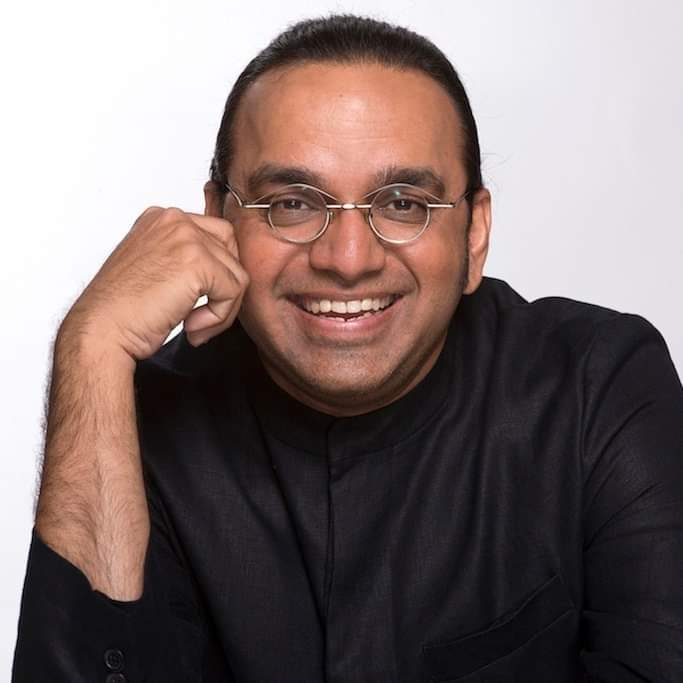
According to cricketer-turned-conservationist Saad Bin Jung, once the British took over, protection laws were enacted and communities no longer remained keepers of forests. “After Independence, the Indian government retained the exclusionary laws of the British. Conservation was more or less defined as protection of the environment. There has been zero effort to take along people.”

As India plans to increase tiger numbers for tourism, more displacement is possible in future. Conservationists argue relocation of villages is the only way out to minimise human-animal conflict which is high in many places.

Leading tiger expert Ullas Karanth pointed out that in many key habitats, forest dwellers are volunteering to relocate if adequate welfare facilities are created. In reality, the issue is complex. Often, post displacement, people get poor quality lands and lose access to livelihood based on forest wealth.

To go or not to go

Of the 25 villages inside Achanakmar tiger reserve, six were resettled 20-30 km away in 2010. The old cash compensation package of Rs 10 lakh has been revised to Rs 15 lakh to make it more attractive. Those willing to get land can settle for two hectares. The relocation of three villages will gain momentum after the assembly polls scheduled in November.
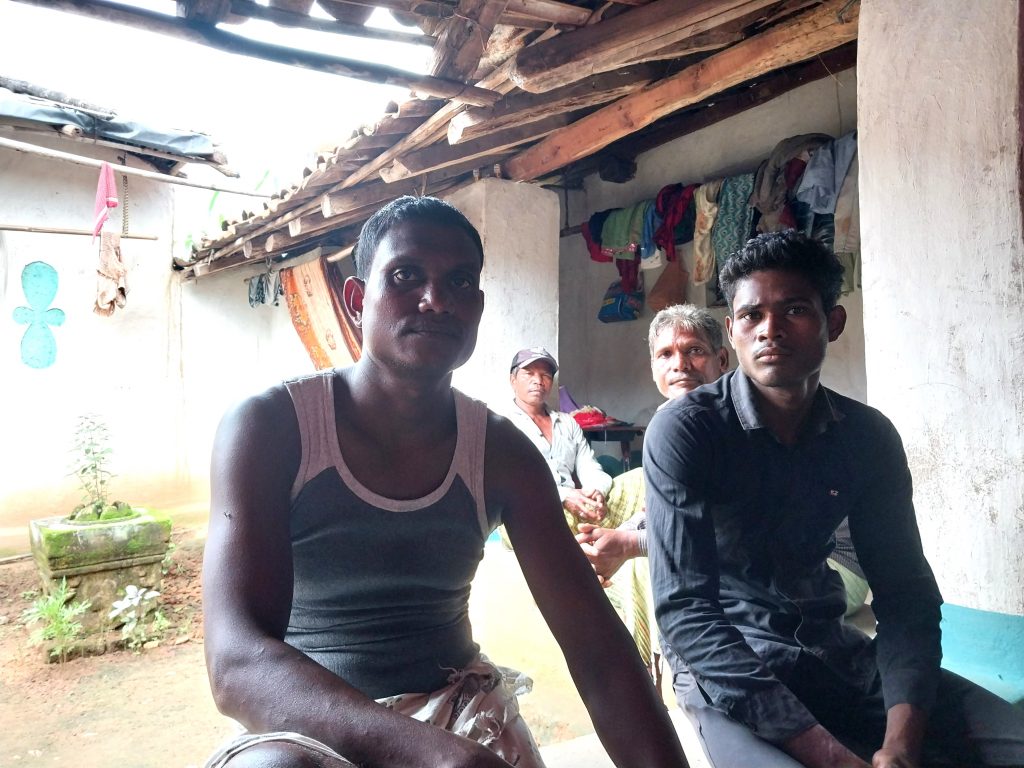
Residents of Bindawal village are divided over the issue of relocation

People, however, are divided on the issue. Some feel leaving is best as facilities are denied. Bindawal’s Raju Singh said remaining close to one’s roots was a better option as stepping outside could give rise to problems. The village has a population of about 1200. But Anjor Singh was quick to point out frequent crop damage by wild animals. He owns 3.75 acres of land.

The lure of livelihood often pushes people outside. One of Anjor Singh’s sons went to Bengaluru for two months to work as a helper to a juice shop seller. But he returned after being cheated of his payment.

Though many residents of Bindawal consented to relocate a decade back, the process is stuck. “Those who left in 2010 have concrete houses. Some of us want to leave right away but the residents of those villages where we want to settle down aren’t giving their consent,” added Singh, who loses almost half of his produce of 75 quintals of paddy due to crop depredation.

There are other problems too. Young Manisha Siyam said that establishing marriage connections is a problem with outsiders unwilling to step here. In Chhaparwa village, Ram Singh Baiga informed that though villagers placed requests for pucca houses under the Indira Awas Yojana, a housing scheme for the rural poor, it has yet not been fulfilled. Now, that tigers are being released, living here will be difficult, he admitted. People are already plagued by elephants. 

Rakli Baiga’s LPG connection is of no use. The refill station is far and the condition of the road is bad, especially in monsoon. Firewood collection is scary with elephants roaming the jungle.

Meena Bai’s modest roadside hotel which serves tea and breakfast has seen a setback over the years.

“When elephants raided last year, my family stayed up the night on the roof of the pucca house built under the Indira Awas Yojana,” Santu Yadav of Bindawal village reminisced. Yadav was lucky to have it five years back for permission has been stalled for new ones.

Forest life vs outside

Andhiyar Baiga and his wife Sukhri are residents of Tilaidabra village which is on the relocation radar. They own two miniscule land plots and depend on the forest for livelihood. “The department told us to stay on guard inside the forest because of the tigress. We came to know after it was released. But I am afraid of elephants too,” said the man who collects mushrooms and sells bamboo brooms at Rs 10-12 per piece.

A Chhattisgarh forest officer, not wishing to be named, explained people living inside forests form a connection with nature. Settling down outside servers that and comes as a shock for many. He feels that the way out is to make communities aware. But often there is a communication gap, people aren’t consulted beforehand and only when conflicts arise, forest officials approach communities. But by then it is too late.

Women, who venture into forests for firewood collection, are afraid of elephants.

It is true that many people want to lead a better life outside, replete with facilities. In Achanakmar’s Katami village, forest guard Ravi Siyam said though there are obstacles in the path of relocation, many want to leave. In his village, to avail emergency health services, residents have to go elsewhere, the nearest being Bamni, two km away. Siyam said last year during the monsoon, an elderly woman died due to snake bite while being taken across the Maniyari river which overflows in monsoon.

It is being hoped Achanakmar Tiger Reserve will turn things around for Chhattisgarh where tiger count has dwindled from 46 in 2014 to 17 at present. But for a successful conservation programme, there is a need for an inclusive policy for locals, feels chief conservator of forests P Kathirvel of Rajasthan, where the new Dholpur-Karauli Tiger Reserve has been recently announced, sparking off the displacement debate.

Kathirvel admitted conflict in Ranthambore Tiger Reserve where the government is trying to provide arms to forest guards. “It was not an issue before, but now many are turning against us. Cattle roam the forest and when the staff try to prevent them from grazing, confrontation occurs. Locals are our stakeholders in conservation. There is a need to understand their issues. Many lack other sources of income.”

Andhiyar Baiga and his wife Sukhri are residents of Tilaidabra village which is on the relocation radar.

In Achanakmar Tiger Reserve, the landless are willing to relocate. Meena Bai’s modest roadside hotel which serves tea and breakfast has seen a setback over the years. Her daily income has come down to Rs 300-400 from Rs 1500-2000. It is because a few buses plying inside the reserve do not halt at Achanakmar, her village. They stop for a minute at the check post and move on. 

Life is hard for women who venture inside jungles for firewood. Perhaps that is the reason why in Chhaparwa village, a few women are willing to opt for the cash package and move out. “None of us wants land as we don’t have any. If we stay back, we may die of hunger. The tiger reserve has made life unbearable. Pucca houses are not permitted and the patchy road is not repaired,” said Rekha Sakat.

Cash package seems safe as going for land is tricky. After displacement, the residents of Bahaud, one of the six villages relocated earlier, received infertile land. They have been betrayed, the women told in unison.

Raipur-based wildlife activist Nitin Singhvi said in Achanakmar Tiger Reserve, all the 19 villages were supposed to be shifted by 2020 but that did not happen. Now, he fears that some degree of development has taken place which may act as a deterrent. There are already pucca houses. Piped water supply under the Jal Jeevan Mission has also been established.

While it is true that India’s tiger turnaround happened due to conservation activism, Karanth said it happened before activism became fashionable recently. Conservation is considered vexatious, often ignoring people.

Conservationist and wildlife historian Raza Kazmi said it would be wrong to say conservation activism does not take people into account. “Conservationists of the new generation care about people. One could argue that until the early 2000s, conservation activism did not focus much on community-related issues. However, that has undergone a radical shift. Conservationists have realized that without taking into account the aspirations of communities, conservation does not work in the long run.”

Achanakmar is gearing up to receive more tigers either from Maharashtra or Madhya Pradesh following an approval from the National Tiger Conservation Authority. The tigress released in April in a core range is doing well.

(The story has been covered under the Narender Revelli National Media Fellowship 2023 administered by Turaga Foundation and the Department of Communication, University of Hyderabad.)
Getting back to the teachings and basic philosophy of the Sufis

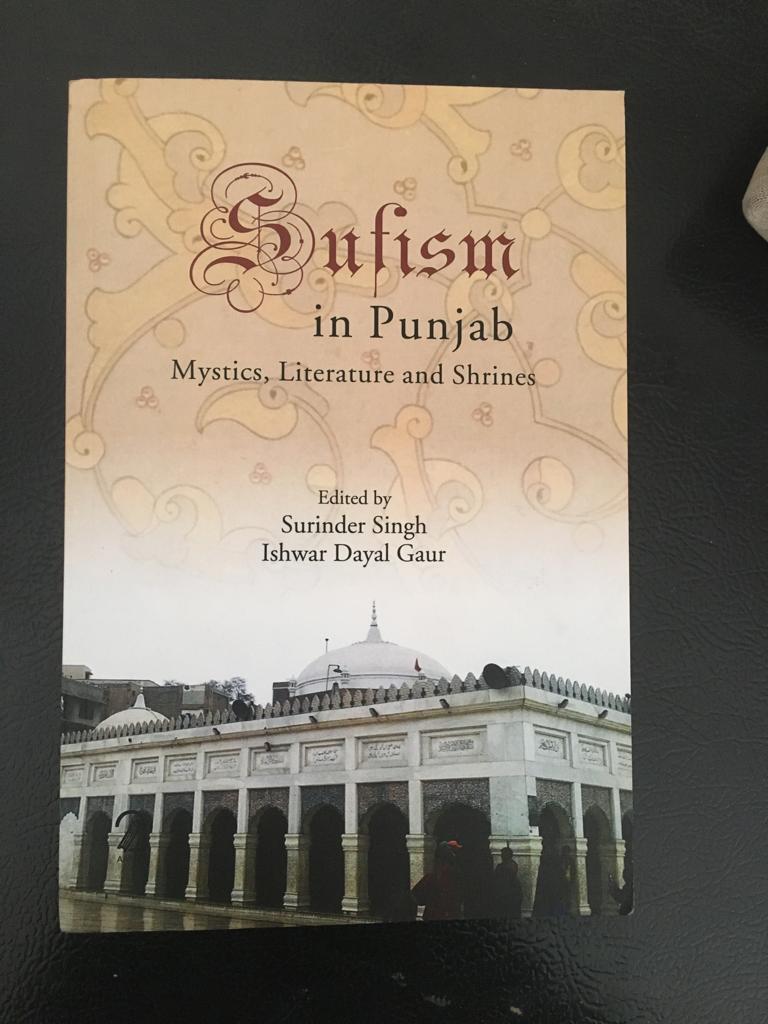
Edited by two academics – Surinder Singh and Ishwar Dayal  Gaur –  this  book in its  revised second  edition, carries essays of several writers, academics and historians, focusing on the various aspects to Sufis and sufism. And what caught immediate attention is the core fact that one of the prominent regions that had attracted Sufis coming from other lands and countries, was the Punjab region.  A book review by Humra Quraishi

Yes, Sufis and Sufism have been long associated with the Punjab region. For years and decades, one has been hearing of the Sufis, and of their mysticism that held sway in the region.

Edited by two academics – Surinder Singh and Ishwar Dayal  Gaur, this  book was  first  published  in  2009, and  now its  revised second  edition has hit the stands. It carries essays of several writers, academics and historians, focusing on the various aspects to Sufis and sufism.

And what caught immediate attention is the core fact that one of the prominent regions that had attracted Sufis coming from other lands and countries, was the Punjab region. To quote from this book, “the crystallization of the culture of Punjab began with the advent of sufism. In due course, sufism imbibed vernacularity of  the  region to such an extent that it  permeated every  aspect of the Punjabi  lived  experience. Unfortunately, sufism remained  marginalized in the historiography of Punjab, owing to the communitarian consciousness  of  the  colonial  period, the  partition  of  the  province  in 1947 and the subsequent communal  politics.”

Written more along the text book strain, it seems apt for research scholars. Though I do wish there was a somewhat easy flow to the text so that it would be free flowing and an easy read. And with that, attract the young readers and school students too. Also, if only there were many more couplets and verses of the Sufis, it would have only been an added attraction.

In these dark-stifling times, getting back to the teachings and writings and the basic philosophy of the Sufis is important. It is absolutely relevant and essential to delve deep into the lives of the Sufis and try and absorb the core values of their teachings…guiding one towards a more peaceful existence, sans the materialistic cravings and sans the synthetic.

Fresh snowfall hits Kashmir’s higher reaches, temperature drops

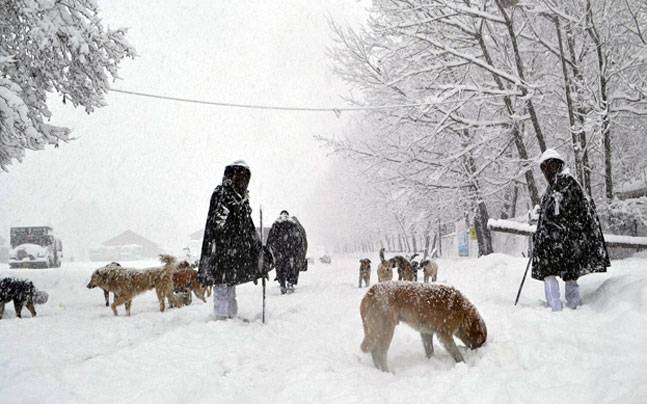
The higher reaches of the Kashmir Valley were blanketed in a fresh layer of snow on Monday morning,  while the plains received heavy rainfall, causing a noticeable decrease in maximum temperatures.

According to officials, the higher areas of the valley experienced snowfall, while the plains were drenched by heavy rains. The continuous rain and snowfall in areas such as Razdan Top and its surroundings led to the closure of the Bandipora-Gurez Road.

A fresh snowfall has also been recorded on Mughal road. Officials said that the Peer Ki Gali and adjoining areas  along the historic route which connects Kashmir valley with Poonch also experienced the snowfall.

Meanwhile, Metrological Department Jammu and Kashmir has forecasted widespread rainfall in Jammu and Kashmir while snowfall is predicted to occur in higher reaches.

Additionally, rain showers drenched various other parts of the Kashmir valley, resulting in a significant drop in maximum temperatures.

Due to fresh snow accumulation at the Zojila pass, authorities have taken the precaution of closing the Srinagar-Kargil road for traffic movement.

These weather conditions have impacted travel routes and daily life in the region, with both road closures and cooler temperatures being notable effects of the snowfall and rainfall.

Rahul to participate in Telangana bus yatra from Oct 18

Hyderabad : Congress leader Rahul Gandhi will participate in the bus yatra in Telangana for three days from October 18 as part of the party’s campaign for next month’s assembly elections.

He will cover a distance of about 190 km covering five assembly constituencies in Mulugu, Warangal, Karimnagar and Nizamabad district.

State Congress chief Revanth Reddy said Rahul Gandhi will address public meetings, undertake padyatra and also interact with various sections of people.

He will visit Ramappa temple in Mulugu constituency on the evening of October 18.

He will then address a public meeting in Mulugu town to formally launch the bus yatra.

The Congress MP will participate in the bus yatra from Mulugu town to Bhupalapally, covering a distance of 35 km. He will subsequently participate in the padyatra in Bhupalpally. He will walk with unemployed youth to know their problems. On the next day, Rahul Gandhi will visit Ramagundam constituency, where he will interact with leaders of workers’ unions of Singareni, NTPC and RFCL and also contract workers.

He will then participate in the bus yatra from Ramagundam to Peddapalli, covering a distance of 30 km.

He will address a public meeting and interact with the Rice Millers Association and farmers. Rahul Gandhi will then travel in the bus from Peddapalli to Karimnagar, a distance of 35 km.

He will participate in the padyatra in Karimnagar for one hour in the evening.

On October 20, Rahul Gandhi will cover Bodhan, Armur and Nizamabad district. In Bodhan constituency, he will interact with the ‘beedi’ rollers and families of Gulf migrant workers.

The MP will also visit Nizam Sugar Factory. He will then participate in bus yatra from Bodhan to Armur, a distance of 50 km.

In Armur, he will address a public meeting and also interact with turmeric and sugarcane farmers.

This will be followed by bus yatra from Armur to Nizamabad, a distance of 25 km.

He will conclude three-day visit with padyatra at Nizamabad with padyatra in the evening.

BJP MP claims Mahua Moitra took ‘cash & gifts’ to ask questions in Parliament

New Delhi :  BJP’s Lok Sabha MP Nishikant Dubey on Sunday accused Trinamool Congress MP Mahua Moitra of taking “cash and gifts” from businessman Darshan Hiranandani to “ask questions in Parliament”.

Moitra, on her part, responded to the allegations, saying the CBI is welcome to investigate the matter.

Dubey wrote to Lok Sabha Speaker Om Birla seeking an inquiry against Moitra and her immediate suspension from the House for taking cash for question.

In his letter, Dubey said that he is in receipt of a letter from Jai Anant Dehadrai, an advocate, wherein, he has shared irrefutable evidence of bribes exchanged between Moitra and Darshan Hiranandani, a well known business tycoon, to ask question(s) in Parliament in exchange for ‘cash’ and ‘gifts’.

“It appeared that the representationist, Dehadrai has made elaborate and painstaking research on the basis of which he has concluded that quite recently, Moitra asked approximately 50 questions in Parliament of the total 61 posted by her, which shockingly pertain to the protect the business interests of Darshan Hiranandani and his company, ” the BJP MP alleged.

He further said that the entire conspiracy does not end here but an attempt has been cleverly crafted to target Prime Minister Narendra Modi and Home Minister (Amit Shah) so that everybody gets an impression that being in opposition, Moitra is criticising the government.

“The representationist has also forwarded all the relevant papers/documents in support of his information which I am enclosing along with my instant letter, ” he claimed.

“After having meticulously gone through all the papers or documents, there is not an iota of doubt about a criminal conspiracy hatched by Moitra, Member of Parliament to garner and protect the business interests of Hiranandani – by asking Parliamentary Questions, which is reminiscent of ‘Cash for Query’ episode of 12 December, 2005. All these nefarious and abhorable acts of Moitra is a clear case of ‘Breach of Privilege’, ‘Contempt of the House’ and also a criminal offence under Section 120-A of the Indian Penal Code, ” he said.

He further said that whenever there is Parliament session, the shouting brigade of All India Trinamool Congress, led by Moitra and Saugata Roy, are in habit of disrupting the proceedings of the House by their continual abuses on each and every body on one pretext or the other.

“I along with scores of other Members of Parliament were always perplexed as to why this ‘shouting brigade’ of TMC, lead by Moitra indulges in such tactics, which is purely snatching the Constitutional rights of other members to debate and discuss the issues of common people and policies of the government, ” Dubey said.

“Now, with the unmasking of quid pro quo in form of the ugly and deliberate motive of Moitra to raise money from a businessman in lieu of asking questions in Lok Sabha, it has become amply clear that the edifice of ‘morality’ being exhibited by Moitra was nothing but a ‘Machiavellian Camouflage’ for committing a crime by entering into a criminal conspiracy and at the same time enjoying the title given to Smt Mahua Moitra as a ‘firebrand Memb of Parliament’, which is nothing but a sham, ” he alleged.

“Since the instant episode is nothing but a re-emergence of ‘Cash for Query’ by Moitra, I humbly request your goodself to constitute an ‘Inquiry Committee’, by following the past precedent. I also request you that during the interregnum period, i.e. constitution of an ‘Inquiry Committee’ and its submission of Report, Moitra may be immediately suspended from the services of the House so that she may not be able to enter into Parliament precincts and does not further attempt to vitiate the serene atmosphere of Parliament, ” Dubey added.

Meanwhile, reacting to Dubey’s allegation, Moitra hit back and took to X, and in a series of tweets, said: “Multiple breach of privileges pending against fake degreewala and other BJP luminaries. Welcome any motions against me right after Speaker finishes dealing with those. Also waiting for ED and others to file FIR in Adani coal scam before coming to my doorstep.”

“Also welcome CBI enquiry into my alleged money laundering right after they finish investigating Adani’s offshore money trail, over invoicing, benami accounts. Adani may use BJP agencies to browbeat competition and buy airports but just try doing it with me, ” she added.

AAP slams BJP govt over Agniveer Scheme

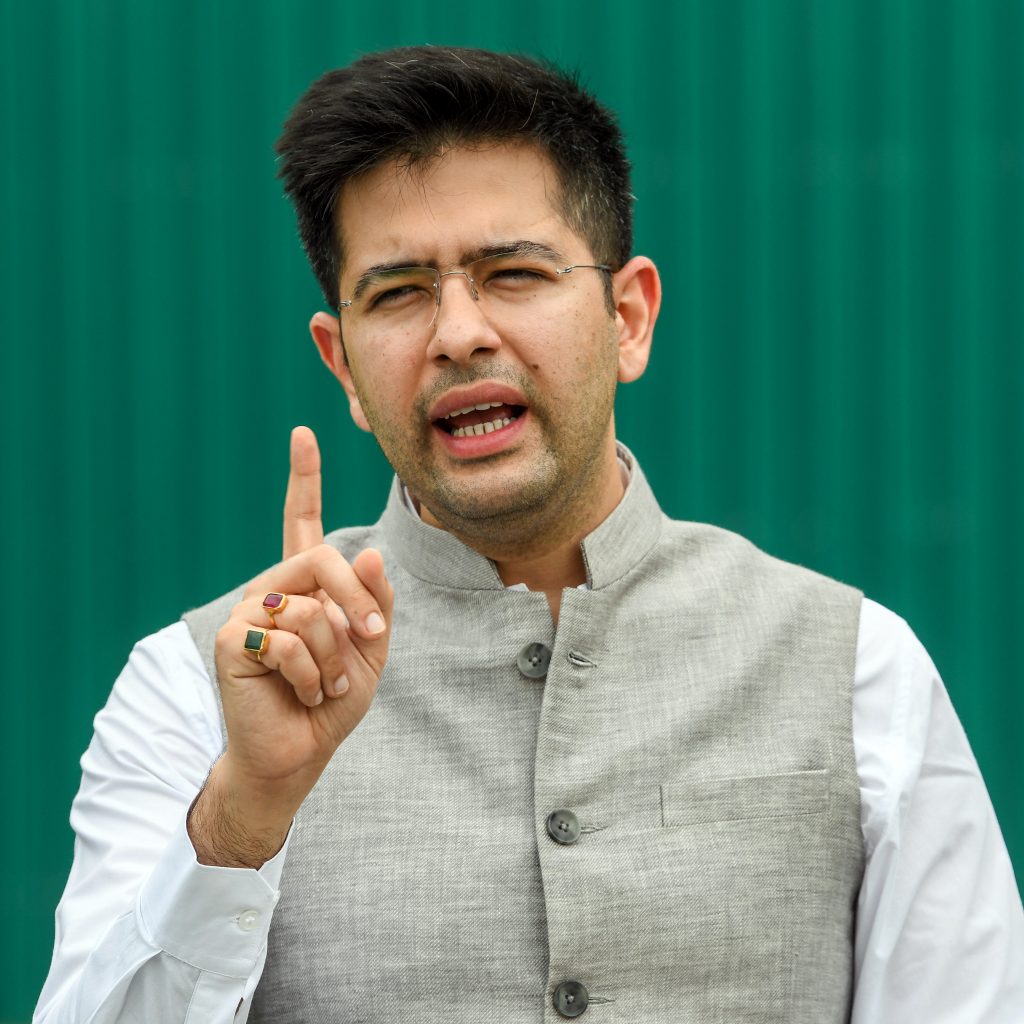
New Delhi, July 20 (ANI): Aam Aadmi Party (AAP) MP Raghav Chaddha addresses the media at Vijay Chowk, in New Delhi on Wednesday. (ANI Photo)

New Delhi:  Aam Aadmi Party (AAP) on Sunday slammed the government over its Agniveer scheme saying the real truth about scheme has emerged as Amritpal Singh didn’t receive military honors or status of ‘martyr’.

Addressing a press conference at the party headquarters AAP Rajya Sabha MP Raghav Chadha said, “Agniveer Amritpal Singh, who was born in Punjab, passed away on October 11, 2023, in the Rajouri sector while on duty at the Line of Control.”

He said that when his mortal remains were brought to his village in Punjab’s Mansa district, the truth of the Agniveer scheme came to the light in front of the country.

“When the BJP government launched the Agniveer Yojana concerning the recruitment of soldiers in the army, many concerns were being raised about this scheme. The AAP also expressed significant concerns about the Agniveer scheme and raised several important questions related to it, but at that time, the BJP-led central government turned a deaf ear, ” Chadha alleged.

He said that when the mortal remains of Amritpal were brought to his village, no unit of the army accompanied them and only a Havildar of the army and two soldiers in civilian attire brought his body in a private ambulance.

“No army vehicle was provided for them. The most shocking part is that no military honors were given to him during the final farewell. Due to the Agniveer Yojana, neither he nor his family will receive any pension, and he will not be granted the status of a soldier who died on duty, ” the AAP leader said.

Slamming the government, Chadha said, “Shame on the central government for not respecting soldiers who died in the line of duty.”

“Is this the real truth of the Agniveer scheme?” Chadha asked.

He said that Arvind Kejriwal’s AAP cannot tolerate any disrespect to the soldiers and is always standing for the honor of soldiers and their families.

“The AAP’s Punjab government has decided to provide a Rs 1 crore honorarium amount to the family of Agniveer Amritpal. The Punjab government will stand shoulder to shoulder with the bereaving family, ” he said.

Blasting the BJP government at the Centre, Chadha said that when the BJP-led Central government did not provide any military honors or a final farewell to Agniveer Amritpal, the police of Mansa district in Punjab gave him the state honors during his last rites.

“This incident raises a significant question mark on the policies of the BJP government at the center. This country stands tall because of its soldiers, not because of the leaders. The sooner the BJP government understands this, the better it is for the country. Since the beginning, we have said that the Agniveer Yojana is a dangerous experiment with the country’s army, ” he said.

The AAP leader said that it will have an impact somewhere on the strength of the army and the morale of the soldiers.

“Don’t implement this scheme, but the BJP government won’t even listen to a word of criticism. An example of this has been seen today in the case of fallen soldier Amritpal. This scheme has been introduced in a rush, and it has proven nearly all the concerns about it to be true, ” he added.

UP govt to felicitate retiring employees on last day of each month

Lucknow : In a heartwarming gesture, the Uttar Pradesh government has decided to hold farewell and felicitation functions for all its officers and employees at a special programme to be organised on the last working day of the month of their retirement.

The retiring employees will be given mementoes and a One District One Product (ODOP) stole. The government will also ensure that all the dues of those retiring persons are cleared well before they bid adieu to the government which they served for years.

The superannuating staff will also be requested to travel down memory lane and share experiences that could inspire colleagues and others. This is for the first time that directives have been issued for showing due courtesy and respect to retiring officers and employees as they say goodbye.

“I have been asked to say that farewell and felicitation functions should be organised on the last working day of every month for all categories of officers/employees at the offices of heads of department, public sector undertakings, commissions and institutions. In addition to this, respective heads of department, divisional commissioners and district magistrates should ensure that their retirement dues- PPO (pension payment order, gratuity and computation), leave encashment. group insurance payment and 90 per cent of government provident fund is paid at the same function as per rules.

” Keeping in view the long service period of retiring officer/employee, they should be given a memento and ‘angvastram’ (stole) of ODOP and their experiences should be shared to inspire others, ” said Chief Secretary Durga Shankar Mishra in an order sent to all the departmental heads, district magistrates and others on October 13.

Mishra said the state government had come to know that the payment of dues of retiring officers and employees was being delayed despite simplification of the procedure.

“It has come to the state government’s notice that payment of retirement dues is being delayed at district and head of department level offices though the state finance department simplified the procedure for payment of dues, ” he said.

Leaders of various serving and retired employees’ unions said the payment of dues in some cases was being delayed for even one or two years despite the state government’s directives for timely payment.

Uttar Pradesh Retired Employees Association senior vice president B.L. Kushwaha said the orders for timely payment of retirement dues were not being implemented effectively. He said the decision to hold a farewell and felicitation function on the day of retirement was a welcome move.

“To show courtesy is a good gesture and will help in timely clearance of the dues, ” said Kushwaha.

Corruption, separatist agendas, anti-India ecosystem are challenges in J&K: LG

Jammu and Kashmir Lieutenant Governor Manoj Sinha on Friday identified three critical problems in the Union Territory: corruption, separatist agendas, and anti-India ecosystems.

In a recent address at the inauguration of the Apsara Road project under the Smart City initiative in Jammu, Sinha asserted that the administration, under the Government of India, has not provided support to these groups.

Regarding a statement attributed to him regarding the desire to contest elections in Jammu and Kashmir, Sinha clarified that he did not make such a statement and attributed it to a media report. He emphasized that his role was not to contest elections but to work in the interests of the Union Territory.

“I have not come here to contest elections. I have contested elections in the past and will contest in the future too,” Sinha told reporters on the sidelines of the function.

In reply to another question about his reported remarks that 80 percent people would vote in favour of the current system of central rule if a survey is conducted in Jammu and Kashmir, he said, “I have not said anything like this.”

Anupam Sharma on ‘Brand Bollywood Down Under’

DEHRADUN: Noted Documentary Filmmaker Anupam Sharma, who has directed the documentary ‘Brand Bollywood Down Under’, has said that the need to make the film originated from the urge of celebrating Hindi mainstream cinema in all its glory.

Stating his reasons for creating the documentary, he said, “There is need for a documentary for every aspect of Australia and Bollywood. There is a need for a global documentary on Bollywood or popular Indian cinema. There is a need for a documentary on Australia and India film links from trade, film, political and social points of views.”

“Everyone was apologising for Bollywood, sheepishly being embarrassed, and scared of ridicule. I hated that. Hindi popular cinema no matter what you call it Bollywood, mainstream, popular, is deeper in form and content and ‘seriously entertaining’ and needed to be celebrated. As Anupam Kher says in our film, ‘We make 1.4 billion people happy. We do sell misery of life, we celebrate life’. Hence, the need for this documentary particularly for the west,” he added.

Having studied films abroad and living in the west, he is amazed that when one Googles Bollywood, they will find over 1.51 billion hits in 3 seconds, that’s 1/3 of a second.

“You look around, there are Bollywood dance classes, shows and theme parties. Still, there is nothing comprehensive on why it is called Bollywood, who named it, how popular Hindi cinema got the name of Bollywood, what are its origins and many such questions which have never been addressed cohesively and comprehensively.”

Recently, music composer duo Salim-Sulaiman teamed up with superstar singer Arijit Singh for a dance number for the film.

Describing the song, Salim-Sulaiman said: “Anupam was very clear. He wanted a foot-tapping song that represents Indian cinema in a very cultural and a beautiful way.” 

They explained that the mood and the emotions were more metaphorical than direct.

Describing the hook line, they said, “When a maker wants to make a film, he wants to invite the audience to come and sit in the theatre and watch the film. That’s the basis of this hook line.”

The filmmaker received a lot of appreciation from the members of the Hindi cinema.

He said: “Documentaries are not commercial and are labour of love, so I was overwhelmed with gurus like Anupam Kher and well-wishers like Sajid N, and Vipul Shah, and giants like Samir Nair, Amit Khanna, Ritesh Sidhwani Harman Baweja and his whole family, Farhan Akhtar and Fardeen along with internationally renowned Leena Yadav and Srishti Behl who gave their time for interviews.”

Rakesh Roshan, Aamir Khan Productions and SRK Red Chillies, VCP films and other film studios also helped the makers.

Arvind Kejriwal urges parents to attend 2 days delhi’s school PTM

Delhi Chief Minister Arvind Kejriwal announced that government schools in the national capital will host large-scale Parent-Teacher Meetings (PTMs) on October 13 and 14, urging all parents to be part of this initiative.

Kejriwal encouraged parents to visit their children’s schools and engage with teachers to discuss their students’ progress and explore ways to further enhance their educational journey. In a post on a social media platform, AAP’s national convenor emphasized the substantial impact parents have on their children’s success, designating these two days as “Parents’ Day” in both Delhi Government and MCD (Municipal Corporation of Delhi) schools.

He extended an invitation to parents to join the Mega-PTMs, which are taking place over these two days in all Delhi government and MCD schools, and encouraged them to openly converse with teachers about their children’s progress and how to collectively improve their future prospects. Kejriwal emphasized the ongoing partnership between parents and educators, fostering a collaborative approach for the future.

The Department of Education (DoE) also stressed the importance of the parent-teacher partnership in a student’s overall development through a circular, highlighting the crucial role that PTMs play in facilitating this connection.

The two-day Mega PTMs provide flexibility to parents and guardians, allowing them to choose either day for their participation, thus ensuring the maximum involvement of parents in this crucial dialogue.

MOST POPULAR

HOT NEWS