Spare a thought for dog attack victims

Those demanding a humane approach towards abandoned animals need to stop and think of the cost of all this, the lives that were snuffed out and the toll it takes on those left behind.

When Parag Desai stepped out of his house for his routine walk, little did he or his family know that it would be the last time or his last walk. 

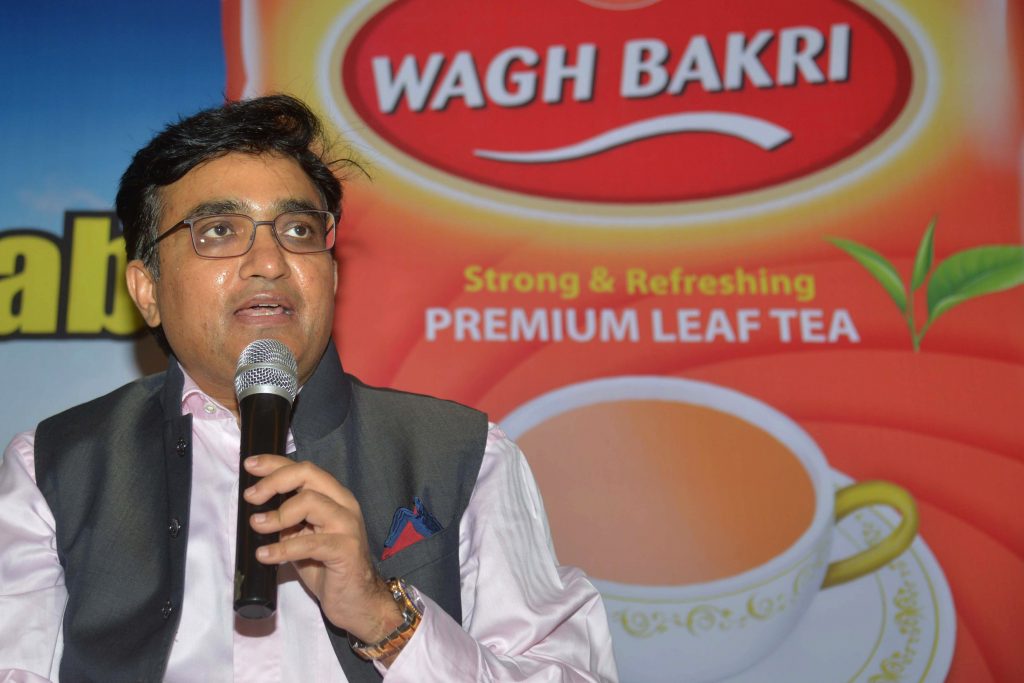
Tea taster Parag Desai was Executive Director of the well-known Wagh Bakri tea brand. He was a fourth generation member of the Desai family which successfully steered the company, Parag’s great grandfather had set up way back in 1892. 

At 49, Parag’s death was untimely.

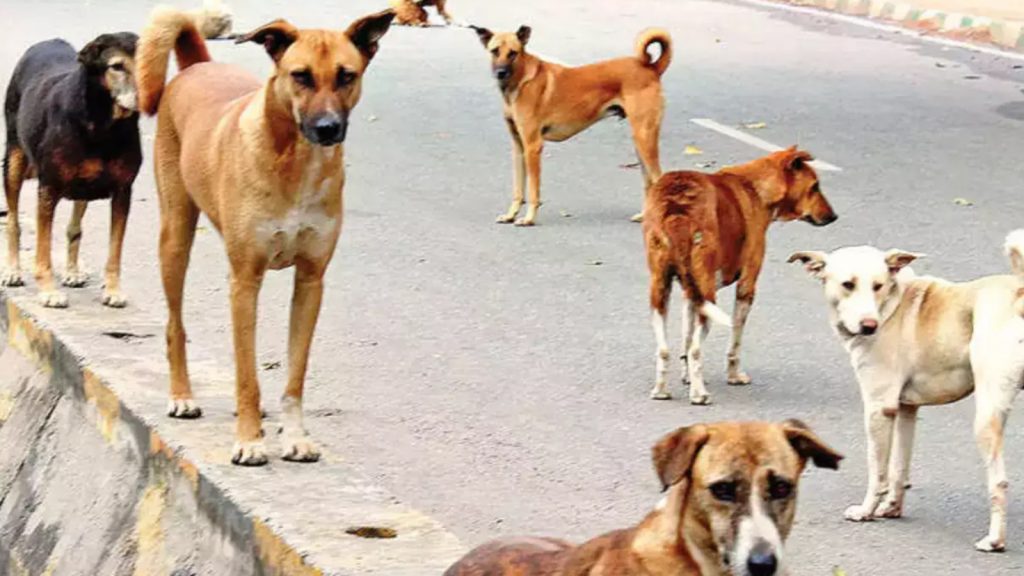
Tragedy apart, it is the cause that made everyone sit up: stray dogs. 

The ill-fated day was October 15.  Desai was trying to ward off stray dogs when he fell and suffered a brain haemorrhage. He was rushed to the hospital where he, unfortunately, lost the battle for life.  

Reports confirm Shri Desai was taking a walk in his residential society close to his bungalow when stray dogs rushed towards him. He ran but lost his balance and fell, resulting in a brain haemorrhage.  

The press note that the hospital issued confirmed that he fell down after being chased by dogs, adding that the hospital has been getting “a lot of cases due to dog bites or accidents caused by stray animals”. 

Desai’s is not the only case resulting in death due to the stray dogs menace. 

In March this year, two siblings were mauled to death by stray dogs in India’s capital city, Delhi. 

Earlier this year, a four-year old was mauled by a pack of strays in Hyderabad; last year, a baby died after being bitten by a stray dog in Noida in Uttar Pradesh; a two-year old attacked by four strays in Surat, Gujarat; while in Bihar as many as 70 people were attacked by one single dog; doctors in Punjab put the figure of dog bites to 40 per month adding that in November last year as many as 145 cases were reported.

The issue is not of deaths, dog bites or attacks; it is a menace which seems to have gripped several parts of the country. It has also reopened the debate among activists and citizens particularly those that were affected or have suffered. 

The Kannur district panchayat had moved the court seeking permission to euthanize wild dogs stating that stray dog bites and road accidents had multiplied and hence needed to be tackled. Petitions vacillated between elimination of stray dogs versus the issue being addressed according to the provisions of the Prevention of Cruelty to Animals Act and the Animal Birth Control (Dog) Rules, 2023. 

The Animal Birth Control Rules necessitate stray dogs to be rounded up, vaccinated and then released, the focus being to control the canine population without cruelty.

The Prevention of Cruelty to Animals Act, on the other hand, advocates prevention of inflicting pain or suffering on animals. It also defines animals as “any living creature” other than a human being. 

Courts apart, stray dogs roam the streets and more often than not, are aggressive. Efforts to control them through sterilization have come to a naught because of lack of funds and will. 
The problem, it is largely agreed, is not about policies not being in place; it is about non execution, rather inefficient execution of sterilization programmes that have led to the failure to control the menace. 

As for the people, they are clearly divided on how the problem should be addressed. The two are often at loggerheads. If dog lovers and activists say that feeding them is an “act of kindness”, others cry foul over the number of deaths due to attacks by stray dogs.  

A tweet by a senior officer best sums up the acrimony: “Carry a stick to keep safe from stray dogs on morning walks. If there are dog lover activists in your area, carry a bigger stick,” he tweeted, adding that dog lovers  need to “acknowledge and understand” that stray dogs are a problem.

In one sense, statistics substantiate this. According to the World Health Organisation, India accounts for 36 percent of the rabies deaths in the world.  

While there is no obvious solution or straight answers on how to resolve this, one must agree that a balance has to be maintained between people being safe versus caring, nurturing and loving stray dogs. 

Courts did suggest that dog lovers who feed dogs should bear responsibility for vaccinating them and footing the bill for medical expenses, but it is easier said than done because on the ground there are gaps in this Utopian measure.

It is no one’s case to say “abandon the animal” or advocate an indifferent approach but a line needs to be drawn: love must come with a sense of responsibility.  

 Of course activists have come up with weird suggestions about do’s and don’ts when a dog approaches you: “Don’t run, don’t scream, don’t jump. That will lead to a reaction. Simply stand still,” is what an activist has suggested. 

Absurd to say the least, because when a dog approaches you, fear grips and logic fails. And what about kids being attacked? Their normal reaction on seeing a dog is to run which can trigger a reaction and lead to a disaster, to say the least. 

Another suggestion, equally absurd, is the task of identifying aggressive dogs from the docile with the help of the local people: “A dog”, said a naysayer, “is a dog and all this glib talk fails in the face of an attack. Ask those who were attacked or have lost a loved one and all this sounds gibberish”. 

Quite right, because loving a dog is one thing but being victim to one, quite another. And looking at the number of deaths and attacks, this is a problem that goes beyond love for an animal; it is one about human lives and often about a bread earner in the family; it is one about losing a child or crippling a teenager.  Therefore while sensitivity to an animal is a given, it is time to weigh the cost of a human life and the trauma of those left behind versus the love for a dog. 

In the face of tragedies which in the case of dog attacks seem to be multiplying by the day, solutions which are in the public domain are miniscule. The blame game between administrators and activists will continue but the ground reality stares and stares hard as loved ones, be it Parag Desai’s wife and daughter, or a parent whose child was mercilessly mauled, perform last rites fighting back tears.

Therefore those demanding a humane approach towards abandoned animals need to stop and think of the cost of all this, the lives that were snuffed out and the toll it takes on those left behind. They sure can profess their love for animals, dogs or any other, but they should also shoulder responsibility and accountability for untoward incidents. So even while their hearts beat for the dogs, they should spare a thought for victims and human lives. And in this all of us, the activists, the naysayers, dog and animal lovers, those who do and those who don’t must stand together.  
Can Sharif step into the political void created by Imran’s  incarceration? 

While chances of Sharif’s return to power look bright, it would be difficult to discount Imran Khan, who enjoys a wide popular support. However performance of his party, the PTI, will depend on several factors, most significant of which will be fairness of election process., writes Riyaz Wani

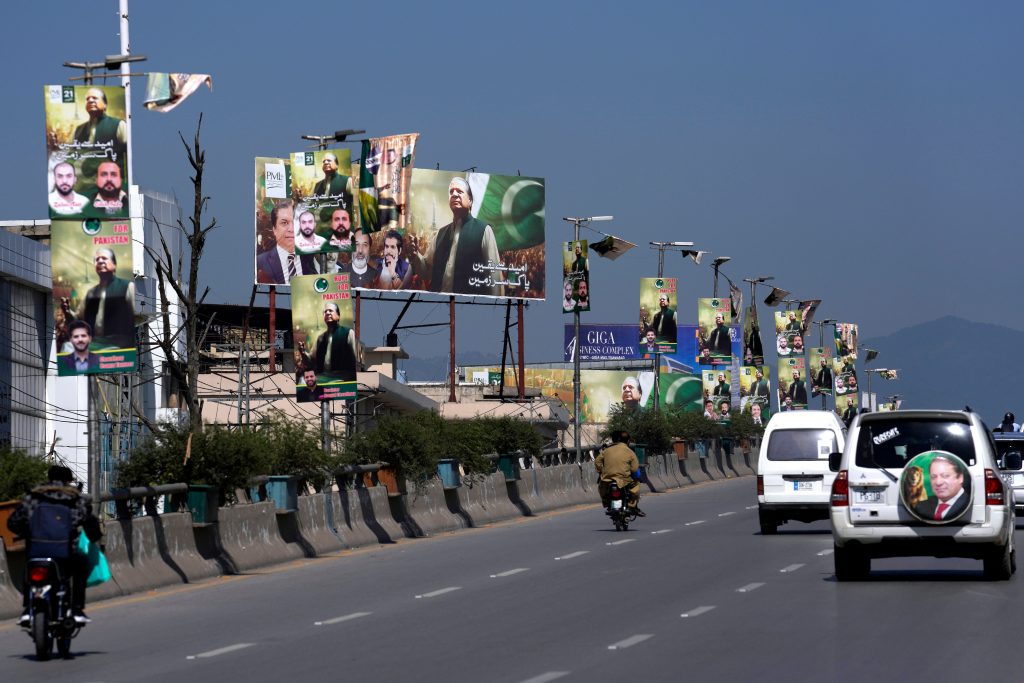
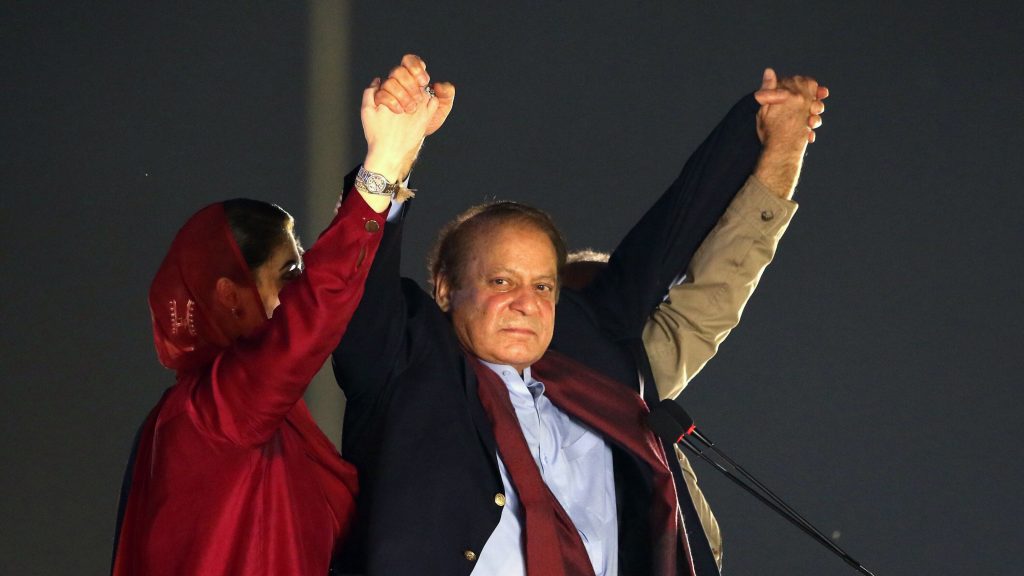
Former Pakistan prime minister Nawaz Sharif’s return to Pakistan on October 21 from his voluntary exile and his unprecedented welcome has introduced a new factor in Pakistan’s politics. Sharif has arrived in the run up to the national polls in Kashmir which are set to be held by January next year and as things stand he could very well be the new prime minister of Pakistan. His job has been made easier by the fact that the former Pakistan prime minister Imran Khan continues to remain behind the bars, and seems unlikely to be released until after the elections are held. Sharif’s return was further facilitated  by the bail a Pakistani court granted him two days before his arrival.

But a massive rally at Minar-e-Pakistan in Lahore has put at rest the speculations that Sharif’s charisma may have faded and is a testament to a politician’s ability to reinvent himself. However, his popularity will be further tested in the weeks and months to come. It also remains to be seen whether the alliance among the opposition parties, more so between Sharif’s PML(N) and the PPP, will hold. That is, should Sharif emerge as the dominant player on the scene. And he might, considering he is re-entering the fray after four years, giving his presence a certain novelty. 

Besides, Sharif’s return shows that his chequered relationship with the Army has improved, clearing the decks for his return to power should his party do well in the upcoming polls. But then it would be premature to write a political obituary of jailed Imran Khan. After his loss of power following the successful no-confidence motion against his government in 2022, Khan’s PTI emerged as a party with overwhelming support in Pakistan. That is until the Army stepped in and took control. Khan has since been sent to jail where he may continue to languish indefinitely. Besides, jailing of the other major leaders of his party and the crackdown on his supporters has curtailed PTI’s activities. The situation is now such that even while Khan may be enjoying a purported unprecedented public support, it doesn’t matter. What matters is that the Pakistani Army is no longer invested in him. And so it has ensured that Khan’s alleged public support comes to nought. 

Would Sharif’s potential return to power make any redeeming difference in Pakistan? It seems unlikely. In the case of Pakistan, the saying that “more things change, more they remain the same,” seems an absolute fit. One more hybrid government experiment that combines democratic and Army rule is a recipe for the same outcome as that of the one Khan’s PTI was party to.

But with Sharif in the saddle there can be hope for improvement in relations with India. The Sharif family is generally seen as friendly towards India and there is hope that a PMLN-headed government could take steps to restore some kind of a relationship with India. When Prime Minister Narendra Modi was sworn in 2014, Nawaz Sharif was among the invited regional leaders who visited India for the ceremony. And later in 2015, Modi had made an impromptu visit to Lahore to attend the wedding of Sharif’s grand-daughter. But the bonhomie between the two countries was cut short when the militants traced to Pakistan attacked an Army base in Pathankot. From thereon, the relationship went steadily downhill reaching its nadir when New Delhi abrogated Article 370 of constitution in August 2019. 

 The neighbours tried to pick up the pieces with the surprise re-affirmation of the 2003 ceasefire along the Line of Control in February 2021. Ever since, however, they have failed to build upon the truce and restore the dialogue process between them. 

Besides, the dialogue faces the main sticking points of ‘Kashmir’ and ‘terrorism’. This makes the conditions for engagement between the neighbours irreconcilable. Pakistan wants to place Kashmir at the front and centre of its dialogue with New Delhi which is unacceptable to the Modi-led government. Pakistan also wants India to restore Article 370 that granted J&K its semi-autonomous status within India which again India sees as irreversible.  The unmistakable signal to Pakistan is to temper its expectation about the extent to which India can accommodate it on Kashmir.

But New Delhi wants Pakistan to take steps to end support for terrorism and nurturing militant groups which Pakistan denies doing. So, the situation has become much more complex than it was previously. Sharif, however, could certainly be expected to reach out. Speaking at the rally soon after his arrival, Sharif talked about friendly relations with India and the resolution of Kashmir. 

“We will have to have better relations with our neighbours and the world. We cannot grow when fighting with our neighbours and cannot be friends with the world either,” Sharif said. “We have to establish good relations with everyone, for the solution of Kashmir as well we will have to move forward in an honourable and dignified manner.” 

The statement is a change from the hawkish stance adopted by Khan who refused to engage with India until the latter restored Article 370. Would Sharif give up the demand if he returns to power remains to be seen. However, doing so wouldn’t have to be only his decision. Pakistan Army has to be necessarily on board for any engagement with India. And considering Sharif has lost power during his three stints as Pakistan Prime Minister due to his differences with Army, he or for that matter any other Pakistani leader would be chary of alienating the establishment on a crucial foreign policy issue. More so, on Kashmir, which is politically a very sensitive issue in the country. 

That said, while chances of Sharif’s return to power look bright, it would be difficult to ignore Imran Khan who despite his incarceration enjoys a wide popular support. But whether this support translates into a majority for his party depends on several factors, most significant of which being the free and fair elections. Khan’s chances will also be hobbled by his continued incarceration and also that of the other senior leaders of his party. In recent months, Khan’s party has also largely disintegrated. Senior leaders have left Khan in what is said to be under duress. This has undermined the PTI’s capacity to mount a robust election campaign. 

So, it is unlikely that the outcome of the elections would go against what the Army has intended. This is not how things play out in Pakistan. Democracy for all its trappings isn’t organic. The establishment is widely believed to have a role in who rules the country. Khan himself was accused of being propped by the Army and now the current dispensation and the parties like the PMLN and the PPP are also facing the same accusation. And the very fact that Sharif could return home despite court cases against him shows that it may be part of an elaborate plan which could include his rehabilitation. 

Ex-militants’ wives in a tizzy as panel turns glare on valley’s illegal foreigners

J-K administration’s decision to establish a high-powered panel with an objective of identifying foreign nationals who have been residing illegally or overstaying in the Union Territory since January 1, 2011 is worrying Pakistani-origin women married to Kashmiris. A report by Riyaz Wani

The Jammu and Kashmir government’s decision to establish a high-powered panel with the objective of identifying foreign nationals who have been residing illegally or overstaying in the Union Territory since January 1, 2011 is worrying Pakistani-origin women married to Kashmiris. 

The panel’s primary responsibility is to compile a monthly report identifying foreign nationals who have gone missing within Jammu and Kashmir. These reports are to be submitted to the Ministry of Home Affairs by the 7th of each month.

There are nearly 350 women from Pakistan and Pakistan-occupied Kashmir, married to Kashmiri men. The women came to Kashmir in the years after 2010 as part of the rehabilitation policy announced by the then state government for the Kashmiri youth who had crossed over to Pakistan or PoK for arms training and wanted to return to a normal life in the state. These women are the wives of these former militants. 

Around 450 youth had returned, many of them with their wives, under the rehabilitation policy. The state government had opened “channels” for them to return without arms and resume normal life. The government had selected four entry points – Poonch-Rawalakote (Poonch), Uri-Muzaffarabad (Uri), Wagah (Punjab) and Indira Gandhi International Airport, New Delhi from where the youth could  enter J&K following necessary clearance. But after the BJP came to power at the centre in 2014, the plan was all but shelved. This, despite the fact, that the then Chief Minister Mehbooba Mufti  who headed a coalition government with the BJP had suggested “legalising Nepal route” for those Kashmiri youths who had now shunned the path of violence and wished to return home. 

The women have since not been recognized as bonafide citizens of India. What is more, in 2021, during the District Development Council polls, the government stopped the counting of votes from the constituencies where two of them were contesting and looked favourite to win. Somaya Sadaf was one of the two. Originally, a resident of Muzaffarabad in Pakistan occupied Kashmir (PoK), Sadaf  came to Kashmir in 2010 after marrying a local militant from village Batargam in North Kashmir district of Kupwara who had crossed the Line of Control (LoC) for arms training in the nineties. A successful entrepreneur, she stood as an independent candidate in the District  Development Council polls. Her symbol was laptop.

Similarly Shazia Aslam, who also hails from Muzaffarabad in PoK and is married to an ex-militant was contesting from Banyari in Hajin. Government’s reason for not counting their votes was that they are no legal residents of J&K. This despite the fact that the union government treats PoK as a part of India. In 1994, the parliament had passed a resolution to this effect.

Many of these women who are from PoK are therefore technically citizens of Jammu and Kashmir. India claims the entire J&K as their own, making people living in divided parts of the region legal citizens of either country.  

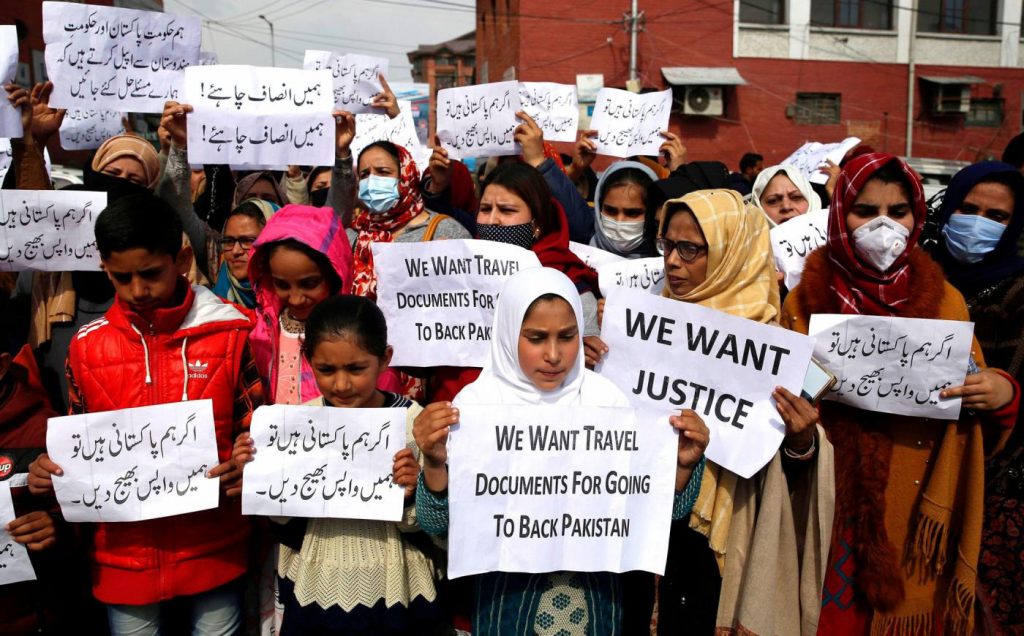
The women now fear that they could be asked to leave J&K after being branded as foreigners.  Since their arrival, the women have already been denied any legal documents, making them citizens of neither country. One reason for their statelessness is that the rehabilitation policy was essentially about the return of the former militants, it had no provision for their wives and children. But the problem with them is that the women and their children have now been living in Kashmir for over a decade now. 

“What do we do now? We have houses, families and children. Deportation will uproot us,” said a PoK-origin woman on the condition of anonymity. “The tragedy is we are Indian citizens. We don’t belong anywhere else. And it is time we are recognized as such.”

Will Nawaz Sharif’s return herald paradigm shift in Pak politics?

A rapturous welcome accorded to the former PM on his arrival in Lahore after a four-year self-exile in London, apparently with the blessings of the establishment, has put apparently with the blessings of the establishment, has put paid to the plans of both Zardari Bhutto’s PPP and Imran-led

There were shrieking headlines in Pakistan’s major newspapers and media channels that the saviour of the country has finally arrived, when Pakistan’s three-time prime minister Nawaz Sharif finally returned to his homeland after a four-year self-exile to London on October 24 to receive a grand, perhaps unprecedented, welcome. His arrival has to be scripted as a historical event, especially for the people of the present day Pakistan.

In 1947, the British Parliament had delivered twins, a partitioned India and a state having two wings, the Muslim majority regions of East Bengal and West Punjab. In 1971, however, its eastern wing seceded to become Bangladesh, but its western wing comprising West Punjab, Sind, the Pakhtoon region and Balochistan were huddled together to form the remaining Pakistan.   For the past 52 years,  its disparate people accompanied by nearly eight million Muslims of Delhi, UP and Bihar, who had been on the forefront of the movement for Pakistan before 1947, are facing existential challenges. The situation further worsened following the army’s experiment of installing a hybrid civilian government by getting Imran Khan, a cricketer-turned politician, installed as the prime minister. For this, a three-time Prime Minister Nawaz Sharif was humiliated and deposed by implicating him in cooked-up corruption cases.

Unlike his predecessors, Nawaz Sharif, who was neither hanged nor assassinated, was convicted and jailed. He, however, managed to go to London and remain in exile. Four years later, he has bounced back. He was much luckier than Z.A. Bhutto, who was sent to gallows with the connivance of a judiciary subservient to the army headquarters or GHQ. He was implicated in a false murder case; and without substantial proof, was unceremoniously hanged.

Decades later, the generals, fed up with democratically elected political leaders, decided to groom a non-political face, Imran Khan, a cricketer-turned politician, for the top job. It is said that Raheel Sharif, an army chief during the previous tenure of Nawaz Sharif as PM, who reportedly was seeking extension of his tenure as the chief, had reportedly become so furious after being denied the extension, that that he asked his successor, Qamar Jawd Bajwa, and Faize Hamid, one of his confidants, for elevating Imran Khan as the country’s new PM. Bajwa was elevated as the army chief by Nawaz Sharif, but he and his crony, Faize Hamid blatantly implemented the Raheel Sharif scheme.

Faize Hamid, who initially was an officer in the Intelligence Bureau, was later promoted as the ISI (Inter-Services Intelligence) chief. They had successfully manipulated 2018 polls in favour of Khan and his political outfit Pakistan Tehreek-i-Insaf (PTI). There were reports of a large-scale bungling in the elections, thus ensuring defeat of the candidates of Sharif’s Pakistan Muslim League- Noon (PMLN). However, due to the failure of the Khan government, the mainline political parties, PML-N and the PPP joined hands and perhaps with the tacit approval of the GHQ, ousted Imran Khan’s government by passing a no-confidence vote in the National Assembly.

Nawaz Sharif’s grand welcome has upset the apple carts of the country’s main political outfits. It is not only the Zardari-Bhutto’s Pakistan People’s Party (PPP), the main ally of the erstwhile coalition government,  which is unhappy, the PML-N’s sworn political enemy, the PTI,  is also indignant as the jam-packed welcome rallies at Lahore and Islamabad seems to have overshadowed its popularity in Punjab. The rallies were a delight for the participants as well as to the Pakistanis glued to television or online video platforms watching the event. For nearly 90 minutes, flowers were showered from aircrafts to welcome Sharif and the participants in the rally. Indeed. It was the return of a living icon back to home politics. Both, PPP and PTI have strongly reacted   to the prompt permission given by the Civil Aviation Authority to two aircrafts showering flower petals on the party rally.

Judiciary mends its ways

Earlier, Pakistan’s former minister and the daughter of Nawaz Sharif, Maryam, had disclosed in a rally two years ago that the Accountability Court Islamabad Judge Arshad Malik, who had sentenced Sharif to a seven-year imprisonment in the Al-Azizia corruption case, later confessed in his conversation with PML-N supporter Nasir Butt that he was “blackmailed and forced (by hidden forces or the ISI)” to give verdict against the former premier.

She said Judge Malik had categorically declared that there was no evidence of money laundering, commission or any other wrong financial transaction against Nawaz Sharif but he had “orders to send him to jail for which I am repenting.”

Apart from these confessions, the mood of the high judiciary too has undergone change with the appointment of the current chief justice Qazi Faez Isa on17 September 2023. The decision of the judiciary to give prompt relief indicates that the judiciary, like the GHQ, too appears to be now correcting its past mistakes. Earlier, Umar Ata Bandial, Isa’s predecessor, was known for his proximity with Bajwa and Faize Hamid. It is believed that under the influence of BajwaPakistan’s Supreme Court had dismissed Nawaz Sharif from the office of the PM in July 2017, purportedly on a cooked up charge for lying in a parliamentary wealth declaration.

The fast-track relief being given to Nawaz Sharif by the Islamabad High Court granting him protective bail in the Avenfield and Al-Azizia references till October 24 is being criticised by some opposition leaders. They are angry that the court barring the National Accountability Bureau (NAB) from arresting Sharif, under which authorities could not arrest him until he himself appears before the designated court as scheduled. In 2018, Nawaz Sharif was convicted in two cases on corruption charges, which he had vehemently denied. He was sentenced to a total of 14 years in prison.

 It is quite known that in 201, Nawaz Sharif was ousted with the connivance of the then army chief, Qamar Jawed Bajwa, and his crony, Faize Hamid, the ISI chief. Faize Hamid had reportedly suffered gun-shot injuries, when his wife opened fire finding him bedded with a pretty winsome socialite claiming herself to be a journalist. The woman was stated to be the daughter of General Rani, a close friend of the former Army dictator Yahia Khan in 1971. Later, she had migrated to India to be a girl-friend of a former chief minister of the Indian state of Punjab.

Faize Hamid, who was much junior to the present incumbent General Asim Munir, was aspiring to be the army chief. However, the two conspirators parted company, and in this power game finally Imran Khan was ousted by a no-confidence vote in the National Assembly. General Munir was being sidelined by Bajwa, but finally was elevated to the position on 29 November 2022. It is being stated that Nawaz Sharif had advised his younger brother, Shahbaz, the then PM leading of the coalition government, to appoint Munir, who was the senior most general, to the coveted post.  Thus, with the change of guards, the mood in the apex court and the army appears to have become friendly towards Nawaz Sharif.

With the dramatic ascendance of Sharif’s political  graph in the Pakistani politics again, PML-N’s coalition partners of the erstwhile government , PPP, has become so bitter that the party might not have any alliance with the Punjab’s major political outfit, PML-N. The PPP’s leader and former foreign minister, Bilawal Bhutto, and Imran Khan’s PTI have bitterly criticised Sharif’s grand welcome in Lahore as well as at Islamabad.

With a special court in Pakistan indicting Imran Khan, the decks appear to be now being cleared for the return of the Mehboob, or the beloved, Nawaz Sharif, the savior of Pakistan facing unprecedented economic crisis and political stalemate.

Rift between Punjab Governor, CM deepens over House meet

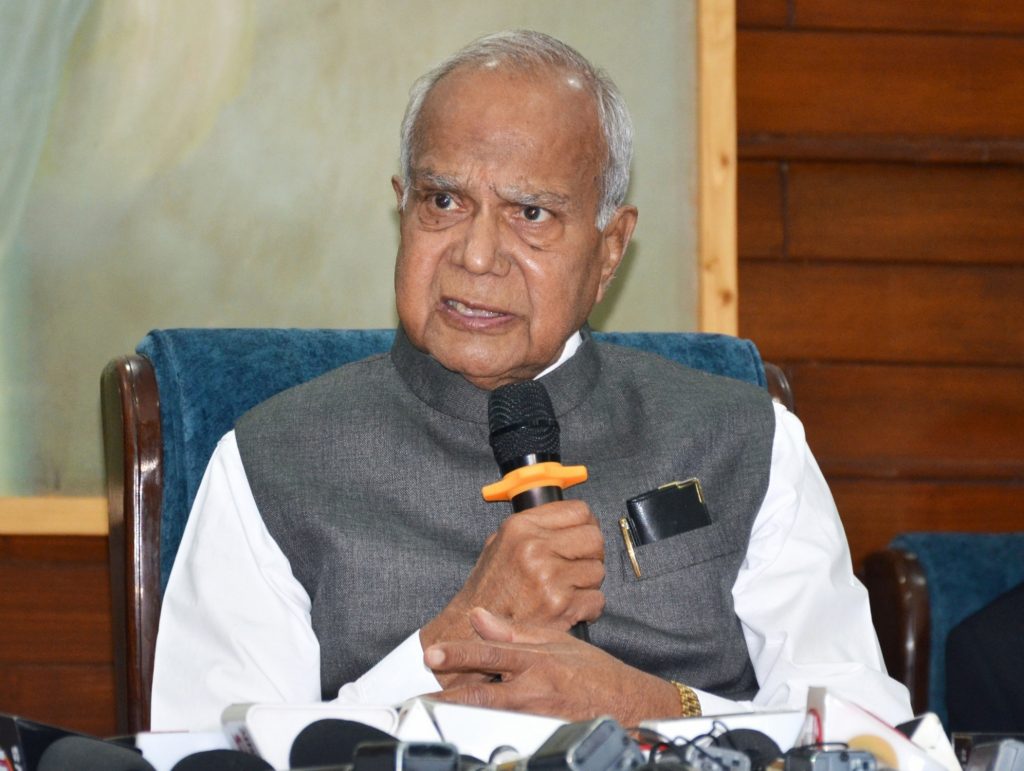
The already sour relationship between the Punjab Governor Banwarilal Purohit and CM  Bhagwant Mann has taken a turn for worse after they locked horns over the legality of recent two-day sitting of extended budget session of the state assembly,  A report by Rajesh Moudgil

The two-day sitting of the so-called “extended’’ budget session of the Punjab assembly which was scheduled to be held for two days from October 20 was cut short on the day one itself in the wake of the governor Banwarilal Purohit’s objections over its legality.

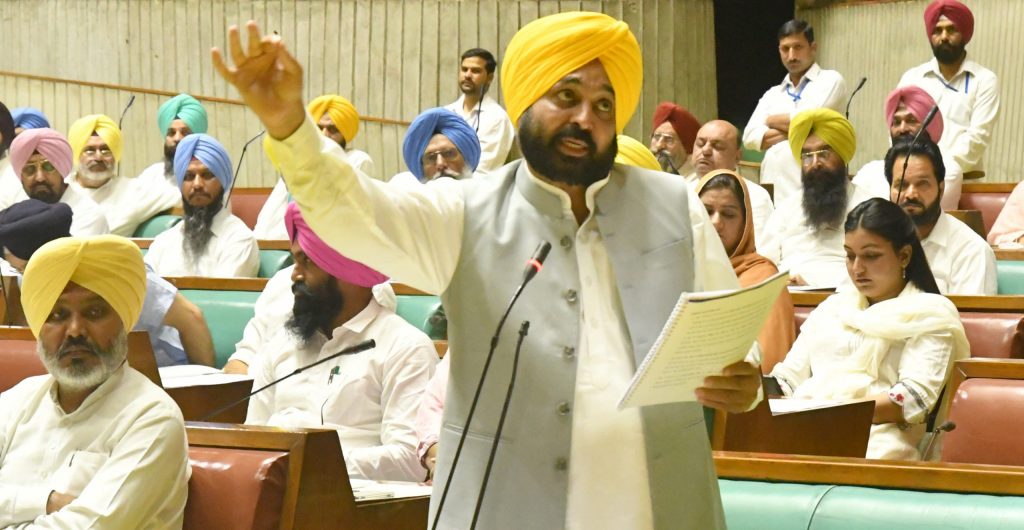
Mann informed the House in the midst of the day one sitting that since the governor Banwarilal Purohit had not given his assent to the three money Bills passed in the last sittings, the Aam Aadmi Party (AAP) government would now resume the session after settling this issue.

In the same breath, Mann said that the government would move the Supreme Court against the Governor’s terming the session illegal and file a petition in the top court on October 30 against the governor’s recent letter in which he had termed the session illegal. He asked  Speaker Kultar Singh Sandhwan to adjourn the session sine die so that it could be called again after the decision of the apex court.

Notably, during the session only, the Leader of the Opposition (LoP) and Congress leader Partap Singh Bajwa had flagged the issue pertaining to objections by the governor, stating that Punjab was facing a “constitutional crisis’’, something it had never seen in the past. And when he also asked Speaker Sandhwan to clarify whether this two-day session was legal after the governor’s objections, the latter held the session was legal.

A day ago – on October 19 – Purohit had written to the Chief Minister withholding his approval for the three Bills, to be tabled in the two-day assembly session beginning October 20.

He said he had received three money bills – Punjab Fiscal Responsibility and Budget Management (Amendment) Bill, 2023, the Punjab Goods and Services Tax (Amendment) Bill, 2023 and the Indian Stamp (Punjab Amendment) Bill, 2023 – for his approval for presentation in the special session. He said that he had already indicated that the calling of such a session was “patently illegal, against the accepted procedures and practice of the legislature, and against the provisions of the Constitution’’.

As the budget session stood concluded, any such extended session was bound to be illegal, and any business conducted during such sessions was likely to be unlawful, and ab initio void, he wrote and added that in spite of these communications, disregarding the possibility of taking an unconstitutional step, it appeared that a decision had been taken to call the session. For these reasons, he withheld his approval to the above-mentioned Bills, he wrote.

 Earlier on October 17, Mann had categorically held that the upcoming session was fully valid and legal and many pro-people Bills would be tabled during the said session. On October 12 too, the governor’s office had written to the secretary Punjab assembly that any such extended session was bound to be “illegal”, and any business conducted during such sessions is “unlawful, and ab initio void”.

 The AAP government had called the session amid the raging political row over the Sutlej Yamuna Link (SYL) canal following the October 4 Supreme Court order asking the Centre to survey the portion of land in Punjab which was allocated for the construction of a part of the SYL canal in the state and make an estimate of the extent of construction carried out there.

This is the second time this year that a row between the AAP government and the Raj Bhawan has erupted over the summoning of the House sitting. The governor had earlier called the June 19-20 special sitting as “patently illegal”.

 For the past a-year-and-a-half, Mann and Purohit have been at loggerheads over a number of contentious issues, including fiscal prudence, steps taken against the drug menace, appointment of vice-chancellors, besides the latest – convening of special assembly sessions.

Opposition takes on Mann

Post adjournment of the House on October 20, came the scathing attack of the opposition. The principal opposition party Congress went on to seek Mann’s resignation for calling this “illegal’’ session.

 The Leader of the Opposition (LoP) in Punjab assembly, Partap Singh Bajwa has sought the resignation of Speaker, Kultar Singh Sandhwan and chief minister Bhagwant Mann on moral grounds for squandering Punjab’s exchequer on an “illegal’’ house session.

Bajwa said that Sandhwan had abruptly called off the ongoing session and adjourned it sine die. “The haste with which the session was adjourned proves that the session was illegal. Therefore, someone from the government must bear the onus of calling the house session in the first place’’, he said and added that neither did the AAP table any bill nor did it hold any discussion on Punjab issues in the session. Hence, what was the point of holding this session, he asked, adding that all the chief minister did was announce that they would move to the Supreme Court of India against the governor’s letter terming the session “illegal’’.

Stating that the ruling of the Speaker that the “session was legal’’, could not be unsettled by the CM, he said that there had never been such a casual approach to summon the House without a decision on the business to be transacted.

Bajwa went on to say that it took around Rs 75 lakh to hold an assembly session for a day and it was Punjab’s taxpayers’ hard-earned money that the AAP government had wasted recklessly which the AAP government must deposit in the exchequer from its party funds.

For the record, in the House of 117, the ruling AAP has 92 members, the main opposition party Congress has 18, Shiromani Akali Dal (SAD) three and its ally BSP, one, while BJP has two MLAs and there is only one independent legislator.

Omar Abdullah calls for investigation into Apple’s snooping alerts

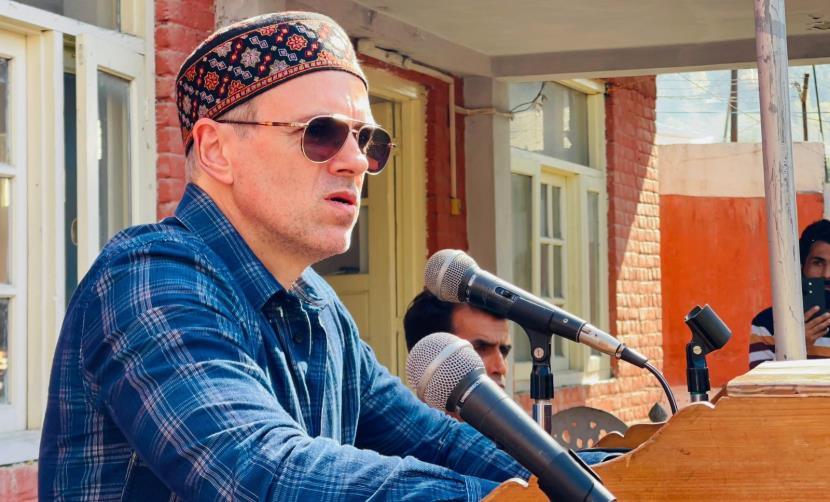
Former Chief Minister of Jammu and Kashmir, Omar Abdullah, has called for a thorough investigation into the probe alerts sent out by Apple to opposition leaders.

Abdullah, who currently serves as the vice-president of the National Conference, expressed concerns over potential snooping activities and urged Apple to share all pertinent information regarding the alerts.

“It should be investigated. Information was received earlier also that Israel’s software Pegasus was sold to this country and used to spy on people,” Abdullah said during his address at a rally at Karnah in North Kashmir district of Kupwara. “Apple should share all the details and after proper investigation, the truth should be told to the people.”  

Abdullah also criticized the central government for the delay in holding elections and pledged that his party, the National Conference, would make every effort to reinstate statehood to Jammu and Kashmir. He firmly stated, 

“The NC will participate in the elections and will get Statehood back, come what may,” he said.

Abdullah reiterated his stance regarding his direct participation in elections held under the Union Territory. He announced that he would not personally contest the polls, but assured that the National Conference would actively engage in every election to represent the interests of the people.

PM Modi greets people of fives states on their formation day

New Delhi : Prime Minister Narendra Modi on Wednesday greeted citizens on the foundation day of Madhya Pradesh, Chhattisgarh, Haryana, Andhra Pradesh and Karnataka.

In a series of posts, Modi wishes citizens on the occasion.

“On the momentous occasion of Andhra Pradesh Formation Day, my heartfelt felicitations to the people of this dynamic state. With their exceptional talent, unwavering resolve and steadfast perseverance, the people of AP have etched their mark across diverse domains of excellence. I pray for their continued prosperity and success, ” he posted on X wishing people of Andhra Pradesh on its formation day.

“On this Kannada Rajyotsava, we celebrate the spirit of Karnataka – a cradle of ancient innovation and modern enterprise. Its people, a blend of warmth and wisdom, fuel the state’s relentless march towards greatness. May Karnataka continue to thrive, innovate and inspire, ” Modi greeted people of Karnataka in another post.

The Prime Minister also greeted people of Madhya Pradesh, Chhattisgarh and Haryana on their formation day on X.

Gaza: Why have world leaders not stepped in?

It is difficult to describe the tragedies hitting the Palestinians. When all they want is to live on their own homeland, which was robbed from them, and were made to sit like refugees on their own land.

Can’t believe we humans are living in a developed civilized world, amidst all the propaganda of peace forums and platforms!

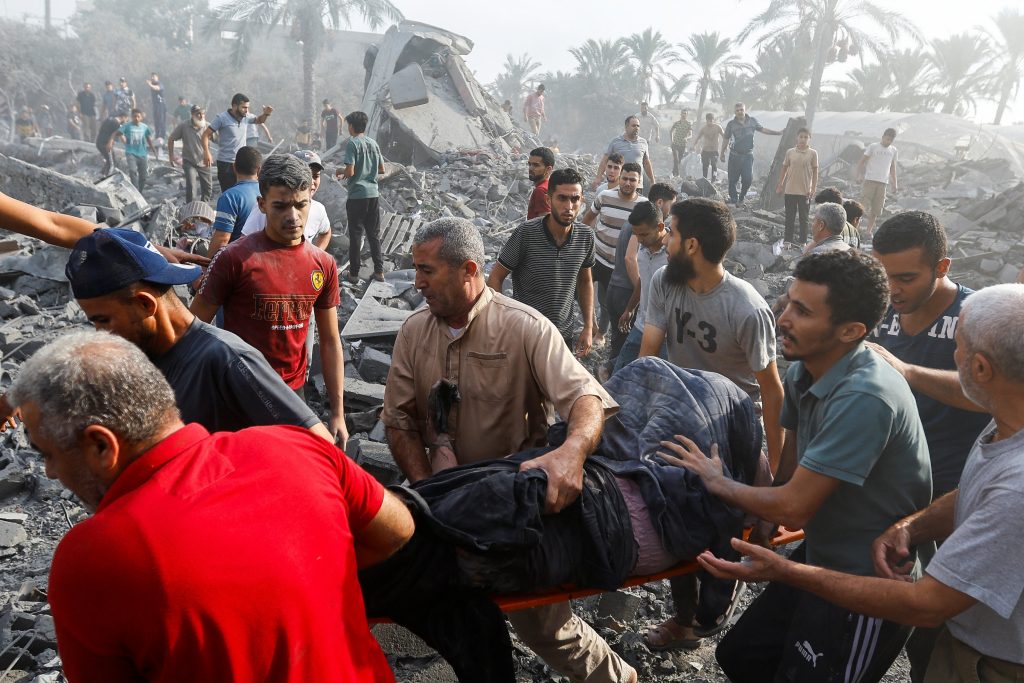
What is happening in Gaza is sheer genocide! Yet none of the so-called world leaders have shown any urgency for a ceasefire or even for truce talks. Tell me, how many more Palestinians will have to perish in targeted attacks before these ongoing killings can be halted.

It is difficult to describe the tragedies hitting the Palestinians. When all they want is to live on their own homeland, which was robbed from them, and with that they were made to sit like hapless refugees on their own land. Today, even that basic right to survive seems ripped off, snatched from them, as hundreds are dying, if not already dead!

One is left asking: Where are the superpowers? Can’t they hear human cries! Can’t they see dead forms of babies and adults and the elderly? Can’t they see entire buildings and homes and hearths destroyed? Can’t they visualize the offshoots of this genocide? Can’t they grasp the far-reaching consequences of these ongoing killings of hapless people?

It’s just too shocking to see the balancing acts of the rulers of the day. Several heads of State have even sided with Israel; perhaps, because of the rather too obvious political motives and expansionist plans. But in their synthetic speeches, these rulers should confine their preferences to themselves and to their governments. Why drag the masses? After all, the masses are not naïve and are mature enough to see the brutalities and killings spreading out. They are also well aware of the just and legitimate demand of the Palestinians. Yet, there is complete bypassing of the human tragedy of this level.

Each time I see  television shots of  hundreds  killed in explosions, homes and buildings bombarded, dying  children and  fleeing  families, entire settlements  razed to the  ground,  I have  been asking myself:  Who is behind these mass scale killings! Who all are in the collective lot, destroying humans in every possible way.

And as Noam Chomsky had said during the  course of an interview  with me – “In  the  Reagan  years  alone,  the  US-sponsored  state  terrorists  in Central America left  hundreds  of thousands  of tortured and mutilated corpses, millions orphaned  and four countries  in ruins. In the same year, Western-backed South  African depredations  killed 1.5 million  people. I need not speak of  West Asia or much else …All of  this, however, is barred from  the annals of terrorism by a simple device, the term ‘terrorism’ like  most  terms  of  political   discourse  has two  meanings — a  literal one and a propagandistic one. Needless to add that the propagandistic version is preferred and  pursued  by the US. Terrorism is terrorism that is directed against the US and its friends and  allies.” Chomksy had also drawn parallels between the US  and the Nazis, “The  Nazis, for   example,  bitterly  condemned  terrorism  and conducted what they called  counter  terrorism against terrorist  partisans. The US basically agreed and  it organized and conducted  similar  counter  terrorism in the post war years.”

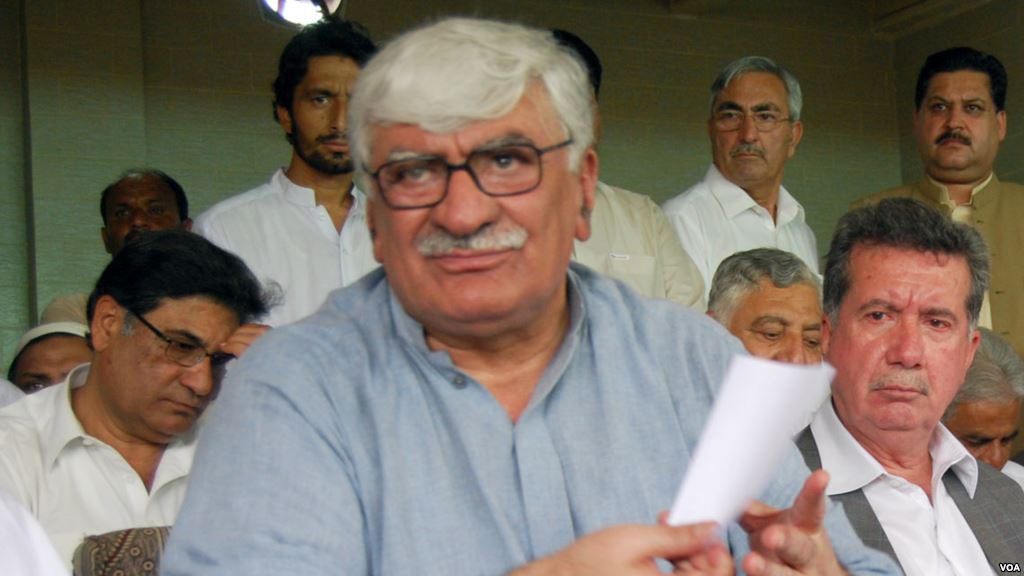
Asfandyar Wali Khan

And during  the  course of an earlier interview with me, Khan Abdul Ghaffar  Khan’s  grandson, Asfandyar Wali Khan, had  come up with this rather simplistic explanation to the growing turmoil in today’s world:  “If you have  two  badmashes (bad guys) in a  village it’s okay, because the two will be busy settling scores with each other. But there will be chaos and confusion if there is only one badmash left! That’s the trouble in today’s world. There is only one badmash left! Also, where’s the leadership of calibre in today’s Muslim world. Religion was  used by Americans  in Afghanistan to create their  base, otherwise Afghan  struggles  had  been  based  on  nationalism and not religion. Also, the  ongoing atrocities  against the Palestinians are  hurting  the Muslims  the  world over. Post 9/11, the situations in Iraq and Afghanistan are being looked at as if they are similar, which is not the case. The true  essence and  meaning of Islam is being  overshadowed  in this  chaos which is  unfortunate, for  Islam stands for  justice and   peace. … it’s a  known fact that way back in early  90s, madrasas and other religious institutions under the  various  camouflages,  had been set  up  by the  CIA, along the Afghan- Pakistan  borders!”

And  if  we  were   to  focus  on Latin  American countries, it’s best to hear what  the  well-known Mexican writer and columnist Juan Miguel De Mora had to tell me during  the course of an interview whilst  he was  visiting  New  Delhi  in 2004. When  I had  queried about the US,  he began  by quoting two former Mexican  presidents: “Mexican  president   General  Porfirio  Diaz had  said  way back  ( he was  president till 1910 ) ‘Poor  Mexico so far from God and so  close to the  US.’ Then another  Mexican  President  – Adolfo Lopez  Mateos  –had  said that  the  biggest problem faced  by  Mexico is  ‘the   US.’ Together  with that  Mora   came  up  with  his own comments: “But  in  my  opinion  both Mexican presidents  were too diplomatic. President’s Bush‘s democracy  is  like Stalin’s and I have  been writing  in  my columns that Bush’s policies are a  danger to  humanity.”

And in 2001, when I had  interviewed  Libya’s erstwhile ruler Colonel Muammar Gaddafi’s son,  Saif – EL Islam, I  had  asked  him to comment on the  ‘terror tags’ heaped by the Western  Powers on his  father and  on his   government, along the strain that they  are  funding  terror groups. He had told me, “It all depends on your  perception. Many liberation leaders were viewed as being terrorists but later they became heroes. In the sense when Nelson Mandela was in trouble we helped him out, when Mugabe was having problems we helped him too, so does that mean we helped terrorist outfits!  Mind you, both these men  fought  liberation wars and later emerged as  heroes. In fact, in my own  country’s war for  liberation from the Italians we had lost about  three-quarters of our population, so  realize the  problems involved …it’s all a matter of  perception and  image.”

******

Getting back to the people of Palestine, there ought to be an urgent call for ceasefire, truce talks, and together with that a lasting solution to the  demands of the Palestinians.

Leaving you with this verse of the Palestinian poet Mahmoud Darwish:

‘The war will end/

The leaders will shake hands/

The old woman will keep waiting for her martyred/

son/

The girl will wait for  her  beloved  husband/

And those children will wait for their  hero father/

I don’t know who sold our homeland/

But I saw who paid the price.’

Delhi air quality continues to remain ‘very poor’

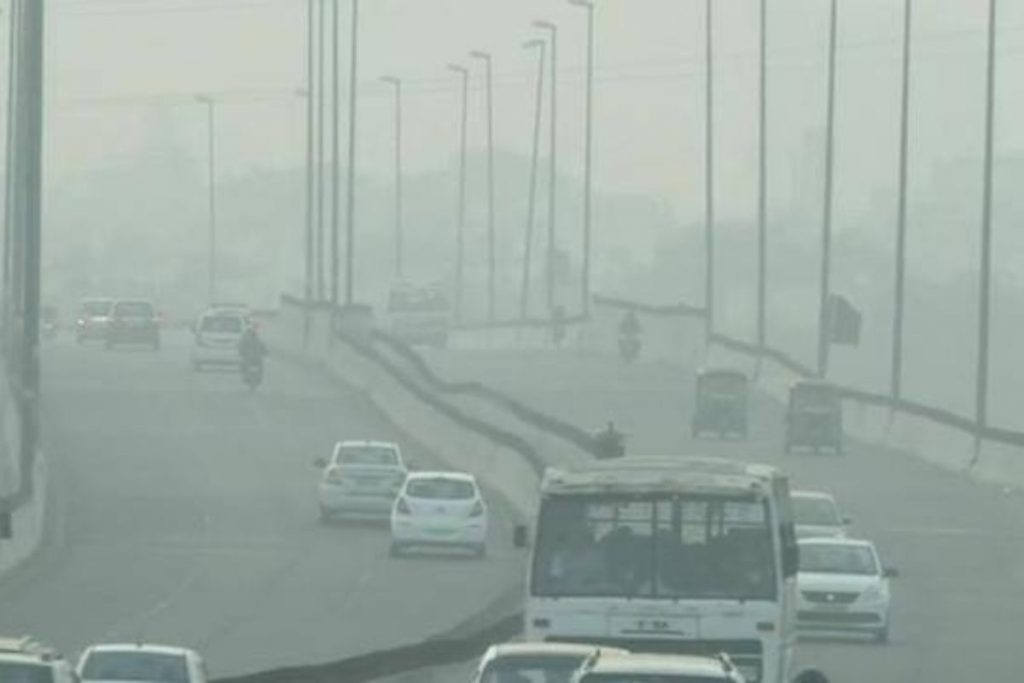
New Delhi : The air quality in the national capital continued to remain in the ‘very poor’ category as the overall Air Quality Index (AQI) reached 336 on Wednesday morning, according to data from the System of Air Quality and Weather Forecasting And Research (SAFAR).

The AQI at Dhirpur with PM 2.5 was at 380 under a ‘very poor’ category. In Pusa and Delhi University the AQI recorded PM 2.5 at 311 and 391 in the ‘very poor’ category.

At Lodhi Road, the Air Quality Index with PM 2.5 concentration was at 317 in the ‘very poor’ category and the PM 10 stood at 219 also in the ‘poor’ category.

At IIT Delhi station the PM 2.5 was at 329, a ‘very poor’ category while the PM 10 reached 188, in the ‘moderate’ category.

The Air Quality Index at the city’s Mathura Road fell under the ‘poor’ category with PM 2.5 at 286 and PM 10 concentration at 362 in ‘very poor ‘ category.

According to the forecast from the SAFAR, the air quality of the city will on Thursday deteriorate further to the ‘very poor’ category with PM 2.5 reaching 342 and the PM 10 concentration to be at 286 in ‘poor’ category.

The Air Quality Index of Delhi’s neighbouring cities of Noida stood at 357 and the PM 10 concentration at 391 both were under the ‘very poor’ category, while Gurugram’s AQI was reported at 323 under ‘poor’ category and the PM 10 concentration of 191 in ‘moderate’ category.

The AQI between zero and 50 is considered ‘good’, 51 and 100 ‘satisfactory’, 101 and 200 ‘moderate’, 201 and 300 ‘poor’, 301 and 400 ‘very poor’, and 401 and 500 ‘severe’.

Meanwhile, the minimum temperature in the national capital on Wednesday settled at 16.4 degrees Celsius, seasonal average, according to the India Meteorological Department (IMD).

However, the maximum temperature is expected to hover around 32 degrees Celsius with clear skies on Wednesday. On Tuesday the maximum temperature had reached 32.2 degree Celsius, one notch above the normal.

The relative humidity at 8.30 a.m. on Wednesday was recorded at 85 per cent.

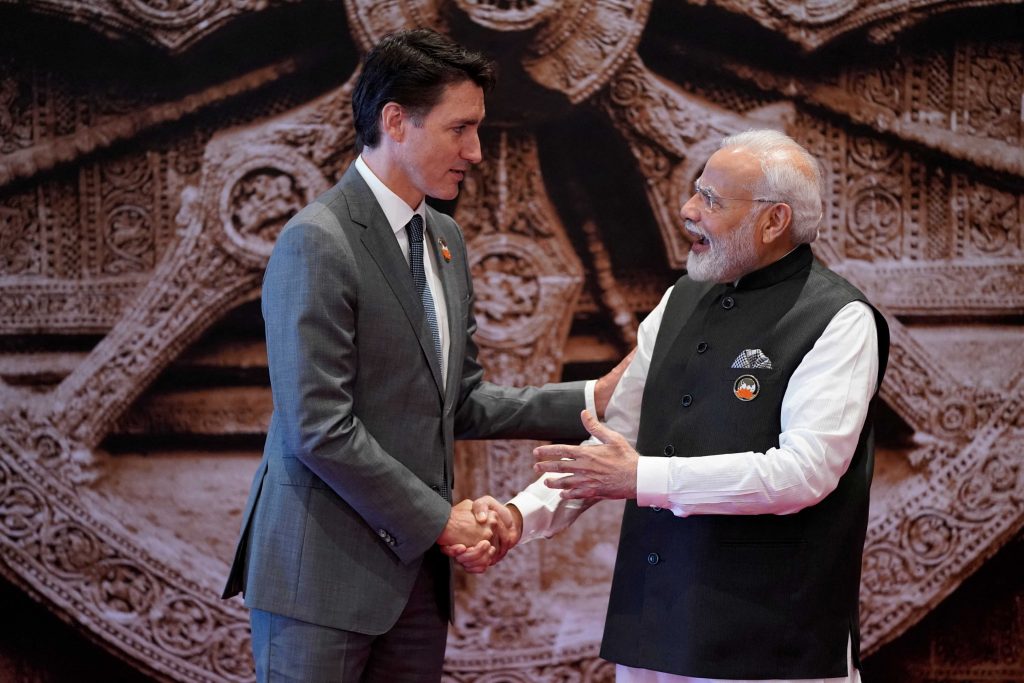
A sharp plunge in India-Canada ties after Trudeau’s Nijjar killing charge

Ties between India and Canada which were exceptionally strong during PM Modi’s bilateral visit eight years ago, have hit a new low after Canada President Trudeau alleged that Indian agents were involved in killing of Khalistani separatist Nijjar.  A report by Pawan Kumar Bansal

Pro-Khalistani elements who are citizens of Canada often indulge in anti-India and anti-Hindu activities with tacit support of the government. They demonstrate in front of the Indian High Commission, burn the Indian flag and raise pro-Khalistani slogans. Both Canadian and Indian media give them undue publicity. It suits the ruling dispensations both in Canada and India. 

Canada’s ruling Liberal Party is eyeing around eight lakh Sikhs living in Canada. Here in India, BJP is eyeing Hindu voters of Punjab by keeping the fear of Khalistan in their minds. Interestingly Indian media calls them as Khalistanis whereas they are the citizens of Canada propagating pro-Khalistani movement. They don’t miss any occasion, Indian festivals and national festivals, to indulge in anti-India propaganda.

Canadian President Justin Trudeau is not taking any action against these so-called Khalistanis although they are citizens of Canada, perhaps his government and Liberal party is dependent on support of the MPs of Sikh community in Parliament. Although ninety five percent of around eight lakh Sikhs living in Canada don’t support the concept of Khalistan but because of fear of radical elements they prefer to keep mum. These radical elements working under the banner of Sikhs for Justice and World Sikh Organisation allegedly also sponsor visas of Punjabi youth for visiting Canada.

They control the majority of the gurudwaras in Canada and conduct radical –religious congregations, vandalize Hindu temples with anti-India graffiti and even do not hesitate to attack the office of Indian High Commission in Ottawa.

Canada-India relations are at an all-time low after the murder of Khalistani separatist Nijjar, especially after the Canadian government alleged the hand of Indian agents in the murder without any evidence.

As a result, a diplomatic stand-off between Canada and India has escalated to the level of calling many diplomats from Canada and expulsion of Canadian diplomats from India.

Elite of Canada give what is called deep state support to these Khalistani elements with money and moral support. Those who oppose them are attacked. Deepak, a journalist, was attacked in Brampton and no action was taken against the accused. He saved his life by running away from the scene.

Even Ujjal Dosajh, former premier of British Columbia was attacked by the so-called Khalistani elements. In the guise of working for the cause of Khalistan, these  elements indulge in crimes like drug peddling.

Liberal Party of President Justin Trudeau and the New Democratic Party headed by Jagmeet are supporting the Khalistan  movement. The Conservative party is adopting  a balanced stand on the issue of Khalistan. Its MP, Chandra Arya  has criticized these pro-Khalistani elements. A video on his Twitter account says, “Few days back Khalistani movement leader in Canada and president of Sikhs for Justice which organized the so-called referendum, Gurpatwant Singh Pannu attacked Hindu-Canadians asking them to leave Canada and go back to India. I have heard from many Hindu-Canadians who are fearful after this targeted attack.”

“I urge Hindu-Canadians to stay calm but vigilant. The Khalistani movement leader is trying to provoke the Hindu and Sikh communities in Canada. Let me be clear. Vast majority of our Canadian Sikh brothers and sisters do not support the Khalistan movement. Most Sikh Canadians may not publicly condemn the Khalistan movement for several reasons but they are deeply connected to the Hindu-Canadian community. I can’t understand how glorification of terrorism or a hate crime targeting a religious group is allowed in the name of freedom of speech and expression.”

These Khalistani elements drew support from USA and Australia apart from Canada. The Canadian government is also using these elements to intimidate India.

On condition of anonymity an Indian, now a resident of Toronto, said that although Indian Foreign Minister Jaishankar is doing very well, much more is required to be done by boldly calling the bluff of the Canadian Government for accusing India of murder of Nijjar without any evidence.

MOST POPULAR

HOT NEWS