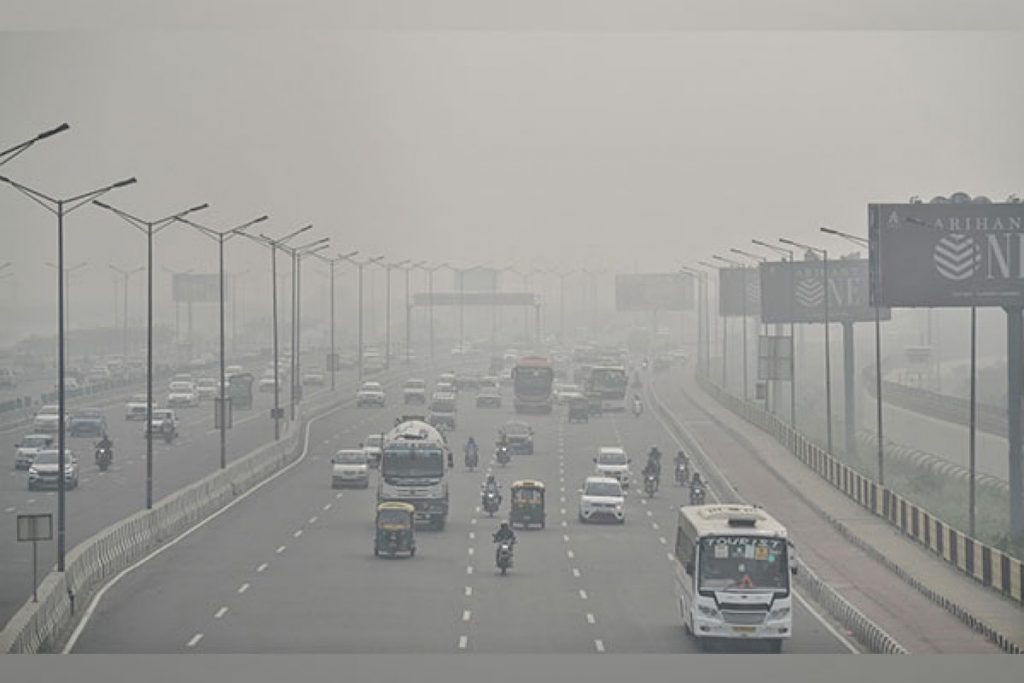
New Delhi : The air quality in the national Capital continued to remain under the ‘very poor’ category at several AQI stations across the city on Thursday morning. Meanwhile, the India Meteorological Department said that the minimum temperature in the national Capital was registered at 9.2 degrees Celsius, seasonal average.
The weather department predicted that on Thursday the maximum temperature is likely to hover around 26 degree Celsius while there will be clear sky.
On Thursday morning at 10 a.m., the air quality at Anand Vihar entered the ‘severe’ category with PM 10 at 424 and PM 2.5 at 397, in the ‘very poor’ category, while the NO2 reached 133, in the moderate category while CO was at 95 or ‘satisfactory’, as per the Central Pollution Control Board (CPCB).
The Bawana station recorded PM 2.5 at 424, in the ‘severe’ category while the PM 10 reached 388, in the ‘very poor’ category, while the CO reached 78, or ‘satisfactory’ levels.
The AQI monitoring station at Dwarka Sector 8 recorded PM 2.5 at 369, in the ‘very poor category’ while PM 10 was at 262 or ‘poor’ while the CO was at 66, in ‘satisfactory’ levels.
The AQI at the ITO station was in the ‘very poor’ category with PM 2.5 at 387 and PM 10 at 272, in the ‘poor’ category, while the NO2 was at 106, in the moderate category and the CO was at 80, in the ‘satisfactory’ level.
The PM 2.5 at Okhla Phase-II was recorded at 368 and PM 10 at 306, both in the ‘ very poor’ category while NO2 was at 128 and CO reached 106, under the ‘moderate’ category.
Nasser Faizi, Secretary of Sunni Yuvajana Samgam (SYS) — youth wing of Samastha Kerala Jem-iyyathul Ulama — on Wednesday alleged that the CPI-M is engaged in propagating interfaith marriages in the name of secularism.
“Muslim girls are being taken away and forced into marriages with Hindus. This is being done by organisations having links with CPI-M, SFI and DYFI. The CPI-M promotes Muslim girls to marry Hindus as they think it is secular in nature, ” Faizi said while addressing a function at Koilandy in Kozhikode.
He asked the Muslim religious bodies to keep watch on this new phenomenon which is becoming rampant in the state.
Faizi has always remained in the news due to controversies. During last FIFA World Cup, he had opposed the game claiming that it is becoming addictive.
“The restriction is only intended to prevent people from acting in ways that are against Islamic beliefs, ” he had said.
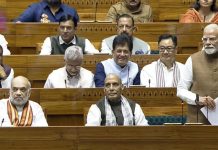
Opposition members in the Lok Sabha pressed for a clear timeline regarding assembly polls in Jammu and Kashmir during discussions on two bills related to the region on Tuesday.
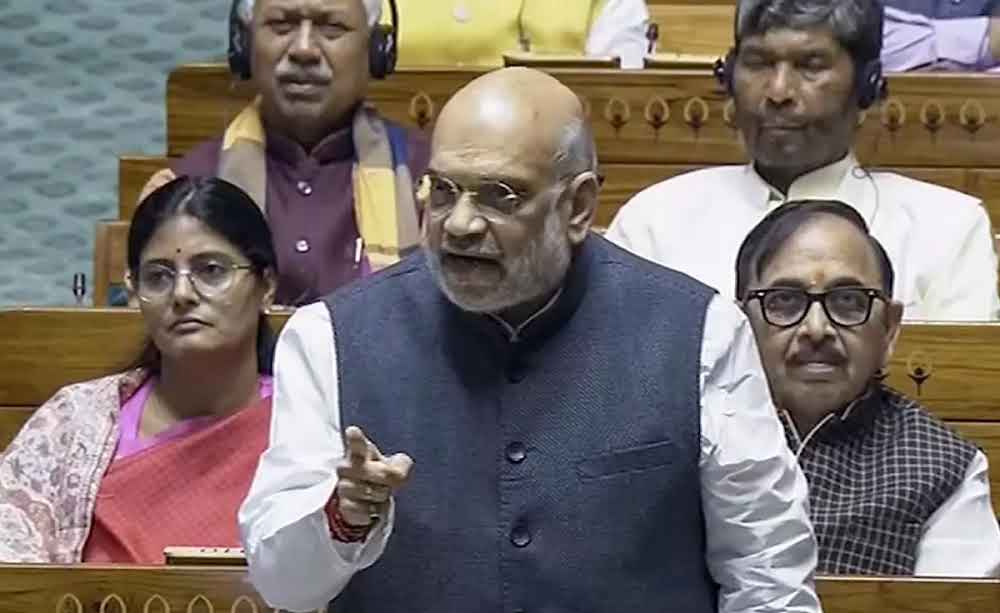
Home Minister Amit Shah introduced the Jammu and Kashmir Reservation (Amendment) Bill, 2023, and the Jammu and Kashmir Reorganisation (Amendment) Bill, 2023 for consideration and passing in the Lok Sabha, where both bills were deliberated simultaneously.
In the debate, initiated by Congress member Amar Singh, opposition representatives criticized the government’s delay in conducting elections in Jammu and Kashmir. They highlighted the government’s emphasis on improved law and order in the region but expressed concern over the absence of assembly elections.
Several members, including Saugata Roy from the Trinamool Congress, urged the government to announce a definitive timeframe for the forthcoming polls in Jammu and Kashmir. Roy emphasized the need to reinstate the statehood of Jammu and Kashmir and questioned the rationale behind making significant changes without a functioning Legislative Assembly in place.
He pointed out the unprecedented conversion of a state into a Union Territory under Home Minister Amit Shah’s tenure and questioned the necessity of these changes without an elected legislative body. Roy urged the government to prioritize conducting elections in Jammu and Kashmir rather than hastily implementing alterations in the region. The Home Minister is expected to address these concerns and respond to the debate on Wednesday.
Patna : After a big jolt for the Congress party in three states, JD(U) MLC and chief spokesperson Neeraj Kumar has advocated implementation of the ‘one seat, one candidate’ formula in the Lok Sabha elections in 2024.
“The BJP won in three states and lost the election in Telangana. Narendra Modi is taking credit for the victory but he has to take blame for the loss too. Due to his political sins in Manipur, he did not dare go to neighbouring Mizoram for campaigning, ” Kumar said. “Now the time has come for all regional parties, Left parties and the Congress to prepare strategies for the ‘one seat, one candidate’ formula to defeat the BJP in the Lok Sabha elections in 2024, ” Kumar said.
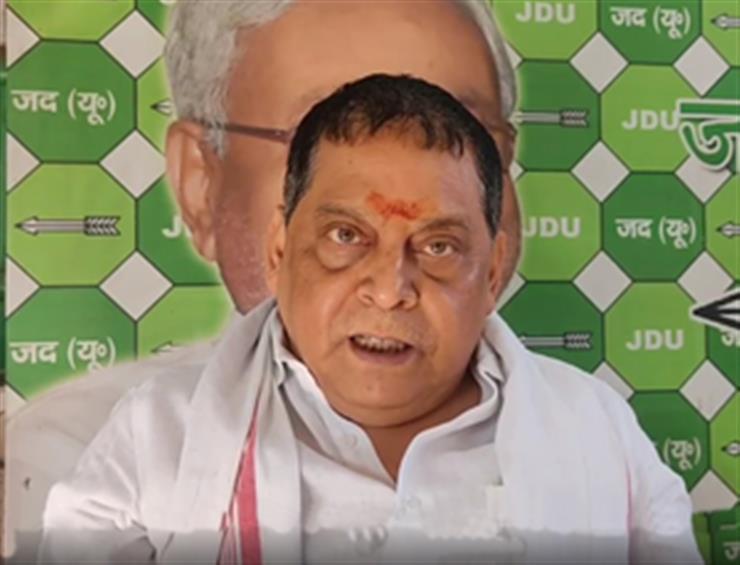
Following the defeat of the Congress party, JD(U) spokesperson Nikhil Mandal said, “The INDIA bloc should go according to Nitish Kumar. As the Congress party was busy in the elections of five states, its leaders were not paying attention to the INDIA bloc. Now the Congress has contested elections and the results are also out. Nitish Kumar was the anchor of the INDIA bloc and he is capable of crossing the victory line.”
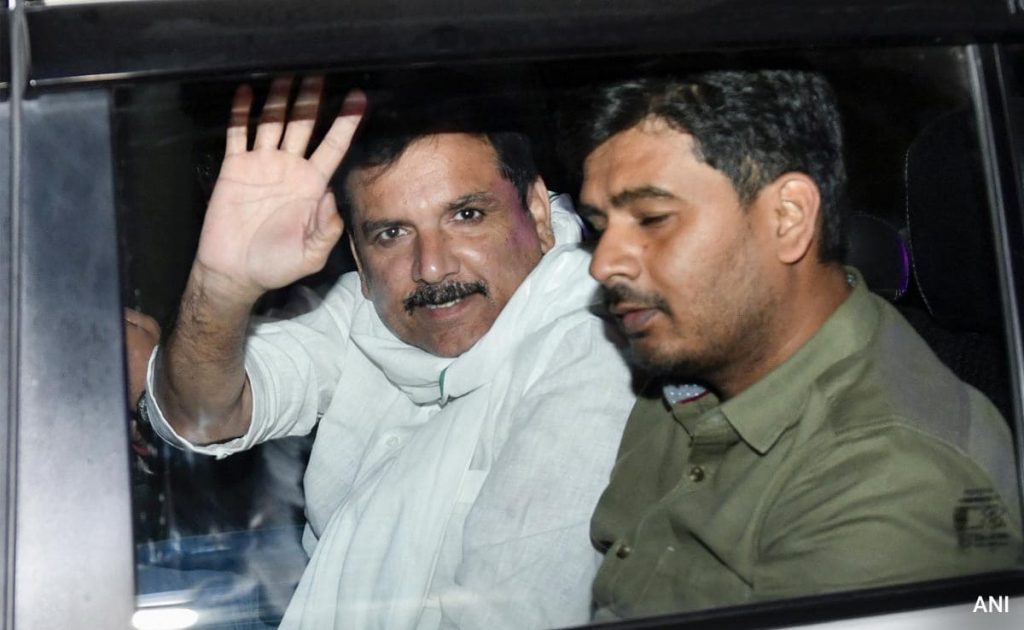
New Delhi : A Delhi court on Monday extended the judicial custody of AAP Rajya Sabha member Sanjay Singh by 7 days in connection with a money laundering case into the now-scrapped excise policy.
The AAP leader was produced before Special Judge M.K. Nagpal of Rouse Avenue Court on expiry of his previously granted 10-day judicial custody.
Last week, the court had issued notice to Enforcement Directorate (ED) on Singh’s bail application in the case, and had asked the central probe agency to file a reply by December 6.
The financial probe agency on December 2 filed a supplementary charge sheet against Singh in the case.
On Monday, the judge asked the ED to provide a copy of the supplementary charge sheet to Singh’s lawyer.
As the ED moved an application stating that names of certain protected witnesses were mistakenly mentioned in the supplementary charge sheet, the court then granted permission to the agency to redact the sections containing these names.
It has directed the court staff to keep the file sealed.
As Singh, on the other hand, had accused the ED of leaking details of the charge sheet to the media during the hearing, the judge reviewed a news article provided by Singh and remarked that the information in the report was old.
“There is nothing new in this report. Everything is from the remand papers that were filed by the agency earlier.”
The judge has now put up the matter for arguments on December 6.
Earlier, the judge had allowed Singh to sign some documents related to development work as a Member of Parliament. He had directed the authorities concerned to produce him before a court in Punjab after it was informed that a production warrant had been received from a court in Amritsar in a defamation case there.
Judge Nagpal had also allowed Singh to sign certain cheques as he requested to do so for his family expenses, and other work he is obliged to do as a Member of Parliament. The jail authorities concerned were directed to ensure proper treatment to Singh, including from his private doctor.
“Court sees no reason to refuse private treatment to the accused. Hence, the jail superintendent concerned is directed to ensure the appropriate treatment, ” the judge had said.
Singh, who had moved the Delhi High Court against his arrest and remand, was denied any relief as Justice Swarna Kanta Sharma dismissed his plea calling it premature. Singh then moved the Supreme Court against the High Court order that upheld his arrest and remand by the ED.
The financial probe agency on October 4 arrested Singh, under Sections of the Prevention of Money Laundering Act (PMLA), after carrying out searches at his residence in the North Avenue area.
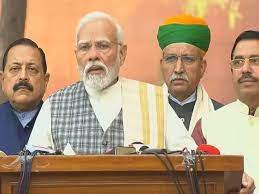
New Delhi- A day after the results of Assembly elections in four states were announced, Prime Minister Narendra Modi on Monday said the results showed that “people have rejected negativity” and urged the opposition “not to vent the frustration of defeat” inside Parliament.
The Prime Minister was addressing the media ahead of the Winter Session of Parliament.
He also said the results of the Assembly elections were very encouraging for those who are committed to the welfare of the common people.
The Prime Minister said, “Political temperature is soaring.”
He said that on Sunday the results of the four-state elections came out.
“The results are very encouraging. Encouraging for those who are committed to the welfare of the common people of the country and to the bright future of the country, ” PM Modi said.
“After the election results, this session presents a golden opportunity for the opposition to progress with a positive mindset. I request all MPs to come to Parliament with preparation. They must shed the negativity they have been carrying for nine years and proceed with positivity. Please do not vent the frustration of defeat in Parliament, ” the Prime Minister said.
He also urged the opposition not to protest “for the sake of it”.
“This is for your benefit. The Opposition has a significant role in a democracy. Please understand it. The country does not want to halt on the road to development, ” the Prime Minister said.
The Prime Minister also reiterated that there are only four “castes” in the country — women, youngsters, farmers and the poor.
“Those focused on the empowerment of these groups through proper policies and last-mile delivery get a lot of support, ” he said.
The jibe at the opposition parties came a day after the BJP’s thumping victories in the Assembly elections of Madhya Pradesh, Rajasthan and Chhattisgarh.
Parliament’s Winter Session is beginning on Monday and will conclude on December 22.
April- 28, 2022-SRINAGAR: Jammu and Kashmir Former Chief Minister and National Conference Vice-President Omar Abdullah addressing a press Conference at the Party headquarter Nawa-e-Subha, in Srinagar on Thursday 28 April 2022.Photo/ Mohammad Amin War
Former Jammu and Kashmir Chief Minister Omar Abdullah said on Sunday that democracy in India ends where J&K begins.
Addressing During a zonal workers’ convention at Tikri in Jammu’s Udhampur district, Omar lamented the absence of elections in Jammu and Kashmir. He highlighted the discrepancy between the democratic process witnessed in other states and the lack thereof in J&K, stating, “We can only witness the spectacle in other states, not here. Democracy ends where J&K begins.”
Abdullah criticized the actions of central government, suggesting a deliberate suppression of democratic institutions within Jammu and Kashmir. He expressed dismay over the union government’s reluctance to involve locals in decisions affecting the region.
“They not only disdain the idea of an assembly but also disregard panchayats and ULBs. It wouldn’t be surprising if they dismantle DDC councils too,” Omar said. “What fault lies with the people of Jammu and Kashmir that they’re denied their democratic rights, even the chance to elect their assembly?”
Abdullah further questioned the government’s narrative regarding Article 370, pointing out the lack of tangible benefits resulting from its revocation for the people of J&K. He highlighted the advantages the article had provided, including land rights and access to free education up to university level, particularly benefiting the marginalized sections of society.
“These individuals speak incessantly about the negatives of Article 370, yet its revocation brought no substantial change for the people of J&K,” Omar said.
“Contrarily, Article 370 safeguarded our people’s land rights and facilitated free education, benefiting numerous, including the landless, poor, and workers, regardless of their religious or regional affiliations. Its abrogation, however, has led to the people’s suffering,” he added.
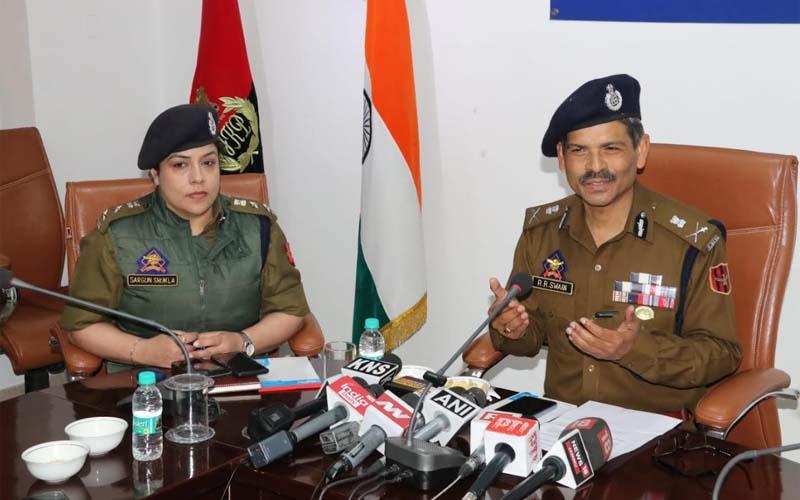
Jammu and Kashmir will take a strict action against the misuse of social media to propagate content that could disrupt communal harmony or threaten the security of the region, the Director General of Police, RR Swain, said on Thursday.
This means that sharing any material on social media promoting separatism, terrorism, or communal tensions will soon be considered a criminal offense.
The decision follows an incident involving a student accused of posting offensive content on social media which triggered protests across colleges in Srinagar.
Swain emphasized that stringent action will be taken against individuals found sharing such content, utilizing a new law under Section 144 of the Code of Criminal Procedure. The police are actively investigating cases to ensure appropriate legal procedures are followed.
Swain highlighted concerns regarding messages originating from across the border, particularly from Pakistan, aiming to disrupt peace and stability in the Union Territory. He urged the public to be vigilant against anti-national elements seeking to exploit the situation for their disruptive agendas.
The UT sees a steep rise in violence with Jammu division turning into new hotbed of militancy as insurgents retreat into dense forests posing a new challenge to security forces, writes Riyaz Wani
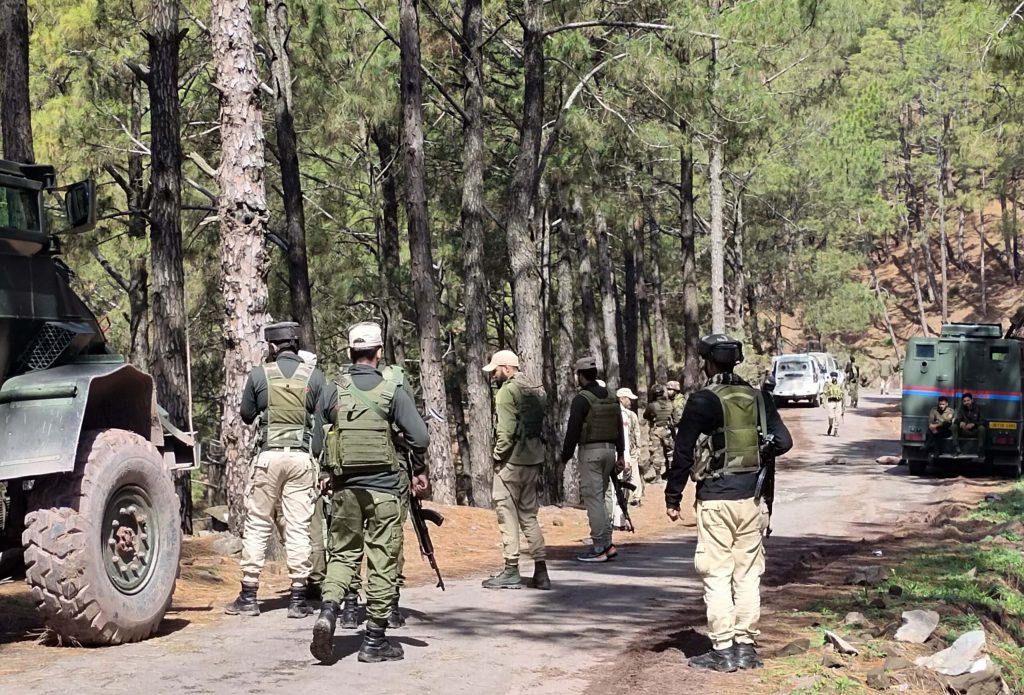
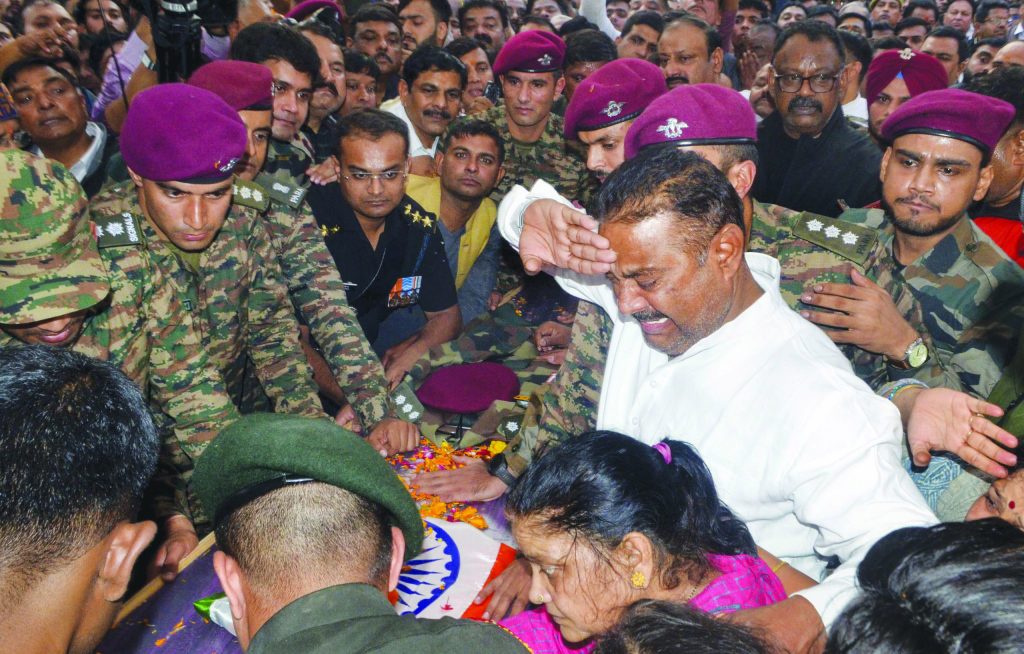
The Pir Panjal forest in Jammu and Kashmir has become a new headache for security forces due to a string of encounters in recent years. Making use of the dense cover of the forests, militants strategically conceal their positions, capitalizing on the intricate terrain that includes treacherous mountains and dense jungles. In the latest encounter on November 22, two Army captains and three soldiers were killed in action in Kalakote forests of Rajouri district in Jammu division. Two militants were also killed which makes it different from the earlier encounters when they had escaped unscathed.
This year alone, around 30 security personnel have lost their lives in a series of gunfights, some of which were initiated by militants themselves. The first such encounter took place on April 20 at Bhata Dhurian area in Rajouri, where militants ambushed a security vehicle. They were reported to have fired piercing bullets at the vehicle from all sides and later blown it up with an IED. Subsequently, when the Army launched an operation to flush the militants out from their hideouts in the surrounding forests on May 5, they used an IED to halt the advance of approaching security personnel, in which five more soldiers lost their lives. The militant outfit, People’s Anti Fascist Front, later released a video accepting the responsibility.
Ever since, several more encounters – some of them also in Kashmir Valley – have taken place claiming more lives of personnel of security forces. In September, a seven-day long encounter in the forests surrounding Gadool village in South Kashmir’s Kokernag area resulted in the death of five personnel, including Col Manpreet Singh and Maj Ashish Dhonchak from the 19 Rashtriya Rifles, and DySP Humayun Bhat of J&K Police. Major Dhonchak was a recipient of the Sena Medal in 2023. The Resistance Front (TRF), a shadow group reportedly backed by Pakistan’s Lashkar-e-Taiba, was believed to be behind this attack.
The attacks have occurred intermittently, disrupting the uneasy calm that has prevailed in the union territory over the past four years. Though the Kashmir Valley has witnessed scores of encounters in recent years, a predominant majority of them have led to the killings of militants rather than those of security personnel. Ever since the withdrawal of J&K autonomy in August 2019, over 500 militants have been killed in the UT, most of them local youth. This has thinned out the presence of militants, and also reduced the violence. According to an estimate by Jammu and Kashmir Police, there are now only 40 local combatants among 111 active militants. This marks a significant decrease from the 137 active militants recorded the previous year. This is the first time since 2015 that the ratio between foreign and local militants has altered in favour of the former, reflecting a drastic dip in the local recruitment, which earlier replenished the depleted militant ranks due to the killings. However, with the influx of foreign militants, it appears that efforts are being made to compensate for the setback to local militancy.
But drying up of the local militancy represents a profound shift in the existing situation for the security agencies, prompting former DGP Dilbagh Singh, who retired recently, to conclude that militancy has all but finished in the valley now.
“This year, only 10 (local) youths have joined militancy. Last year, 110 had become militants. How good it would have been if none had joined the ranks because even among the 10, six have been killed, and the remaining four will also get killed,” Singh said shortly before his retirement on October 31.
On the other hand, the official figures suggested that around 160 locals had joined militancy in 2020 and 125 in 2021.
On the back foot because of their depleting numbers, local militants have in recent years chosen to attack soft targets – civilians, panchayat workers, J&K police personnel visiting home, outsiders and minorities – instead of engaging security personnel. Security forces, as a result, now not only have to combat militancy but also protect a large section of the population including many from among their own ranks.
But as things stand, the militancy seems to be evolving to regain its loosening grip.
Militants shift tack
Earlier, encounters between security forces and militants in Jammu and Kashmir rarely occurred in hilly terrain, except when they happened along the Line of Control. Does this show that the militants are withdrawing from the residential areas into the forests? Indeed, it does.
In recent years, security forces have achieved complete area domination and intelligence penetration in the urban areas and the countryside, making it increasingly fraught for militants to take shelter in residential areas. While this strategy has brought about peace in the otherwise volatile countryside in South Kashmir, militants have shifted to forests, making it more difficult for security forces to track them down
This is also apparent from the militancy-related violence in the union territory this summer, most of which has been concentrated in the hilly terrain stretching from Poonch and Rajouri in Jammu division up to the districts in South Kashmir.
The hill warfare has confronted security forces with new formidable challenges. More so, in a largely hilly and mountainous terrain of Kashmir. The militants operating out of forests are difficult to locate and once located, difficult to be engaged in an encounter as has been clear in the successive gunfights this year. Most of the militancy related violence in which security personnel have been killed has taken place inside or close to forests.
The new development has shattered the notion that militancy in the region was on the wane, proving the age-old belief that no matter how many militants you kill in Kashmir, the militancy may not necessarily go away. The reason is that it requires a small group of militants to mount a sensational attack and disrupt the prevailing sense of calm.
Militancy makes a comeback
At a time when the militancy in Kashmir Valley has been at a low ebb, it is once again rearing its head in Jammu division, where it had been non-existent for almost two decades. Since 2021, Jammu has witnessed a steep spike in violence, leading to the killing of dozens of soldiers by the militants. And the fact that the militants who carry out these killings are mostly at large and their number remains unknown makes the future uncertain. It is likely that more violence is in store until the security forces track the militants down. So far, the extensive search in the jungles has yielded no result, but it may in the near future. Instead, contacts with militants have led to more casualties for security forces.
The situation has been made even more concerning by the fact that the forest area where the militants are hiding extends to Shopian in South Kashmir, the district that has been a hotbed of militancy in recent years. But the militants have chosen to largely stay in Jammu only, possibly because the region has a lower concentration of security forces than the Valley and also a warmer climate throughout the year.
The rise in militant activity in Jammu areas is linked to the thinning of the presence of security forces in the region in the last two years, a fact being exploited by the militants. Two reasons are offered for this state of affairs: one, the ceasefire along the Line of Control between India and Pakistan, which was renewed in early 2021, and has since held despite predictions to the contrary. Second the consequent redeployment of the Rashtriya Rifles, the main counter-insurgency force in Jammu and Kashmir, to the Line of Actual Control in Ladakh following China’s incursions along the border. This is believed to have created a void along the border in Jammu, which may have been taken advantage of by militants, resulting in a resurgence of violence in Jammu.
The militants who have infiltrated from across the border are believed to be very well-trained. It was obvious from the Kalakote encounter. One of the slain militants was identified as Qari, a Pakistani national, tasked with reviving terrorism in the region, a Jammu-based Defence spokesman told media at the time.
“He has been trained on the Pakistan and Afghan Front. He is a highly ranked terrorist leader of Lashkar-e-Taiba,” said the spokesman. “He has been active in Rajouri-Poonch along with his group for the past one year. He is also believed to be the mastermind of Dangri and Kandi attacks.”
In the Dangri twin terror attack, which occurred on January 1 and 2, 2023, at the Dangri village of Rajouri district, a shooting incident had resulted in the death of four and injuries to nine others. In the second attack, an IED exploded near the same attack site, resulting in the death of a child at the scene and injury to five others. A second child injured in that blast died from injuries, raising the overall death toll to six.
The rising militant activity in the Jammu division has become a huge source of concern for the security forces.
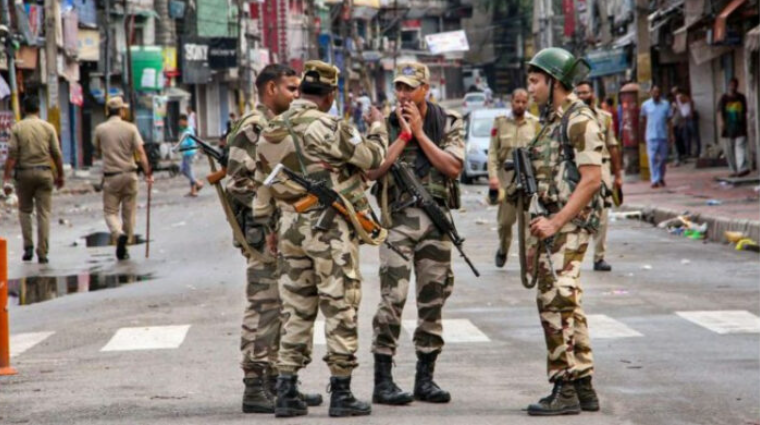
The government is now working on a plan to replicate the counterinsurgency strategy adopted in Kashmir Valley, to curb the rising violence in Jammu. This includes identification and arrest of over-ground supporters of militants, proactive counter-insurgency operations, deployment of police, Army, Central Armed Police Force (CAPF) and night patrolling and area domination, which are believed to have helped check infiltration to a large extent in the Kashmir region.
“In Kashmir, we adopted a 360-degree approach to maintain peace. My government succeeded to a large extent,” said Lieutenant Governor Manoj Sinha in a recent statement “Jammu was peaceful earlier, but Rajouri and Poonch districts have witnessed some unfortunate incidents in the recent past. However, the plans adopted by security and intelligence agencies to finish terrorism in the Kashmir Valley are now being implemented in the twin border districts of Rajouri and Poonch to ensure that peace returns in these regions as well.”
Local and foreign militants
It is not clear whether the local and foreign militants coordinate their attacks or cross paths. But it is obvious they generally don’t. While local militants continue to live in residential areas, where they usually get easily tracked down and killed in brief gunfights, foreigners now mostly inhabit forests. Locals are poorly armed and trained whereas the foreigners are battle-hardened. However, the foreign militant-related violence has so far remained confined to forests, so it hasn’t affected the general drift of normalcy prevailing in Kashmir in the last four years.
For security agencies, the main worry has been the local recruitment into militancy, which has waxed and waned, but has never stopped altogether. All efforts so far to bring local recruitment to zero have not succeeded. But this year has been different, with a least number of local youth joining the militancy. The coming weeks and months will be crucial as to how things will evolve on this score. An end to local recruitment could render foreign militants ineffective, as local militants and overground workers act as eyes and ears of their foreign counterparts.
Gaza factor
On October 25, a high-level security review meeting was convened in Srinagar in the backdrop of the ongoing Middle East crisis to discuss its potential impact on Jammu and Kashmir.
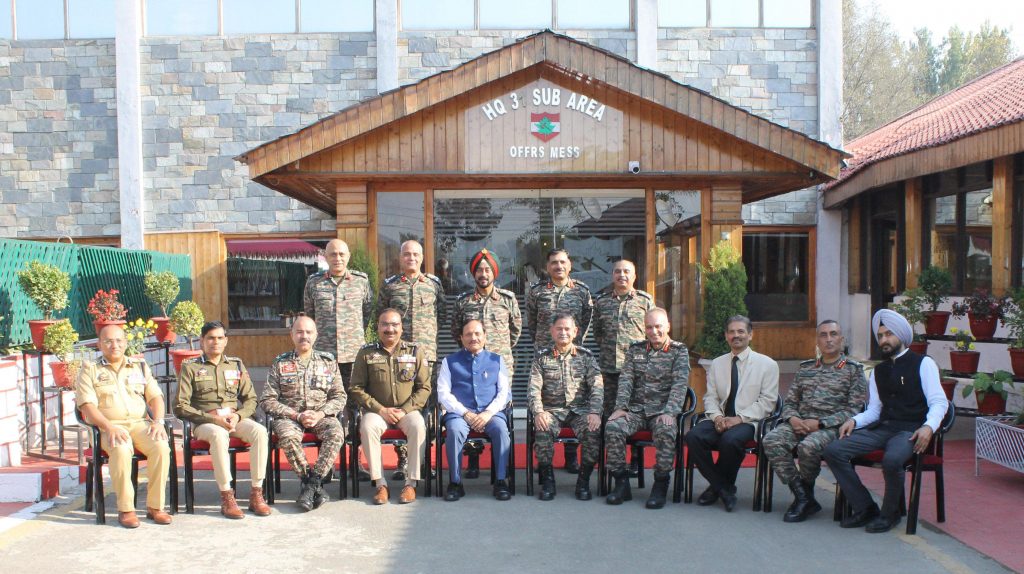
The meeting took place at the headquarters of the 15 Corps in Srinagar and was chaired by R R Bhatnagar, Advisor to J&K, and Lieutenant General Upendra Dwivedi, Army Commander, Northern Command, along with other top intelligence officers.
Its primary objective was to coordinate and strategize security measures in response to the Israel-Palestine conflict. Various senior officials from the military, administration, and security agencies, including DGP, J&K police, Dilbag Singh and the Chinar Corps Commander, were in attendance.
During the discussions, numerous aspects related to the prevailing security situation in the Union Territory were addressed. The ongoing situation in the Middle East was deliberated upon, and contingency scenarios were discussed to ensure preparedness for any potential development.
Over a month since the outbreak of Israel-Hamas hostilities, Kashmir has remained calm. But it is also true that the anger and resentment has remained largely subterranean.
But the question is whether October 7 Hamas attacks followed by Israeli invasion would have an impact in Kashmir? Many would say that the disproportionate Israeli response and so far futility of the Hamas action in terms of furthering the Palestinian cause might act as a dampener for Kashmiri separatists. But as the high-level security review underlines, there are genuine fears that the Gaza situation may stir things up in Kashmir sooner or later.
It is apprehended that Kashmiri militants may have been watching the progress of war right from the Hamas attack on October 7 and may be interested in seeing what its outcome would be. The October 7 attack suddenly made Israel’s vaunted deterrence look vulnerable, and it has since been trying hard to reinstate its disproportionate military superiority over Hamas. But it is not clear whether Israel has dented the combative power of Hamas whose members are believed to be holed up in a network of underground tunnels. This will only be clear when the war ends.
However, look closely and it becomes clear that there can be no plausible comparison between what is happening in Palestine and that in Kashmir. These are different issues. Militancy in Kashmir has now reduced drastically. In fact, it is barely managing to keep itself afloat. Hamas, on the other hand, is said to have a 40,000-strong military wing, a military academy training, a range of specialisations including cyber security, and a naval commando unit. It has also put together a military infrastructure in the form of hundreds of miles of underground tunnels. This has enabled the group to mount a veritable invasion of Israel through land, water and air. And the mighty nuclear-armed military of Israel has been struggling to eliminate Hamas.
That said, the conflicts do feed off each other. The tactics adopted by militants in one part of the world are adopted in the other. This is what makes the October 7 attack on Israel a source of worry for the governments around the world. This could embolden militant groups operating in different parts of the world to stage copycat attacks, creating a dire need for the countries dealing with local conflicts to reorient their military and even political responses.
“Over the past nine years, more so, over the past four years, New Delhi has adopted an iron-fist security centric approach to deal with Kashmir,” said a Kashmiri politician who didn’t want to be identified. “It is about time that the union government extends a political outreach to the Valley and to begin with, it needs to restore statehood forthwith.”
In the recent past, the Jammu region has witnessed an increase in terror activities. Five Army personnel, including two captains of special forces, were killed in an encounter in Jammu and Kashmir’s Rajouri district. During the gunfire, two terrorists, including a Lashkar-e-Taiba commander, were also killed. The official data confirms that eight grenade and 13 improvised explosive device attacks were recorded in the Jammu region in the recent past. In April-May this year, Poonch and Rajouri border districts witnessed two ambushes claiming the lives of 10 soldiers in a spurt in terrorist activity. In 2023 alone, at least 120 people, including more than 80 terrorists and over 25 security personnel, have been killed in militancy-related violence in J&K.
Tehelka Cover Story – The Terror Returns by Special Correspondent Riyaz Wani explains how the UT’s Jammu region has turned into a new hotbed of militancy as ultras have retreated into dense forests, with Pir Panjal forest in Jammu and Kashmir becoming a new headache for security forces due to a string of encounters in recent years. However, overall, violence has been on the decline in recent years, nevertheless, stricter action is required to further bring down the numbers and create conditions conducive for resuming the electoral process.
The message is loud and clear: Pakistan’s terror designs remain firmly in place. Infiltration of highly trained foreign terrorists into the ranks of militants in Jammu and Kashmir is all the more a matter of serious concern. It is a fact that local recruitment is not happening now. Several foreign trained terrorists have reportedly entered the border districts of Rajouri and Poonch to step up the ante. Reports of Pakistan army sending in retired personnel across the border leave no scope for any let-up in the state of alertness for India. The 31-hour encounter in Rajouri recently where a top Lashkar-e-Taiba commander and his associate were gunned down, while the Army suffered five casualties, including two Captains, points to the complex situation.
There is no denying the fact that casualties among the police and the security forces in terror attacks actually marked a decrease of 13 per cent as 29 personnel lost their lives and 32 others were injured in various attacks post the abrogation Article 370, the figures stood at 33 deaths and 42 injuries prior to this during the same period, states the official data. There has been only one weapon snatching, 19 stone-pelting and 16 hartal and bandh calls — showing 80 per cent, 62 per cent and 42 per cent decline, respectively, compared to the period of nearly four years prior to the abrogation of Article 370, it reveals. Yet there still is dire need to strengthen the oft-quoted ‘360-degree security mechanism’ in the Jammu division to eliminate the terrorists’ support system.