It is time to log off 2023, the year in which India had a lot to celebrate – we rejoiced when our moon mission Chandrayaan-3 made history by achieving a successful lunar landing, making India the first and only country to achieve this feat, with more hope. The year saw the parliamentarians moving to the new Parliament, an effective rescue mission to drill out 41 people stuck inside a collapsed tunnel and Nifty and the Sensex soaring to record highs. In the momentous year, India had the honour of hosting the G20 Summit and also overtaking China as the world’s most populous country. At the fag end of the year in the Assembly elections in a few states, BJP swept through Hindi heartland while Congress solidified its presence in the South. Of course there was a heartbreak as the hearts of 1.4 billion Indians collectively sank when our ODI World Cup dream slipped away despite mounting a formidable campaign, and the year also witnessed the disqualification of senior Congress leader Rahul Gandhi from the Lok Sabha and the Supreme Court staying his conviction leading to reinstatement of his membership. In a nutshell, 2023 was the Year of India and a roller-coaster ride for the country.
Incidentally, 2024 is also the year when Tehelka would enter its 21st year of publication. Through its tumultuous journey, it has set new benchmarks in journalism of public interest. Tehelka cover story in this issue done by our Special Investigation Team– “Farmhouse parties: Throwing norms to wind” reveals a disconcerting reality, exposing farmhouses willing to host parties without adhering to the mandated alcohol consumption license requirement, and also flouting numerous excise regulations. The stark reality is that some organisers are even advertising these rave parties on social media platforms boasting “we go again” with these as billed as “New Year’s Eve Special”.
Some organisers said on camera to our reporters of SIT, “No policeman can enter my farmhouse. I can assure you that at my farmhouse, nobody will bother you. Your party will go on uninterrupted, and nobody can stop it, so you need not to worry”. The time is ripe for decisive action by the excise department to address these blatant violations and ensure accountability within the farmhouse community. The urgency of this matter cannot be overstated; immediate intervention is imperative to uphold the integrity of regulatory frameworks. As of now, India does not have a specialized anti-rave law, but time has come for a specific law to check these, as rave parties are becoming increasingly popular amongst people. It is time to bring these under legal scrutiny by booking those found indulging in activities involving controlled substances at such parties.
On this note, Tehelka wishes its readers and patrons a very happy and healthy New Year! We wish 2024 to be the year full of hope, aspirations and achievable New Year resolutions!
In several villages of Damoh and Chhattarpur districts of Madhya Pradesh, which come under the dry Bundelkhand region, farmers are experimenting with fruit trees alongside crops. A report by Deepanwita Gita Niyogi
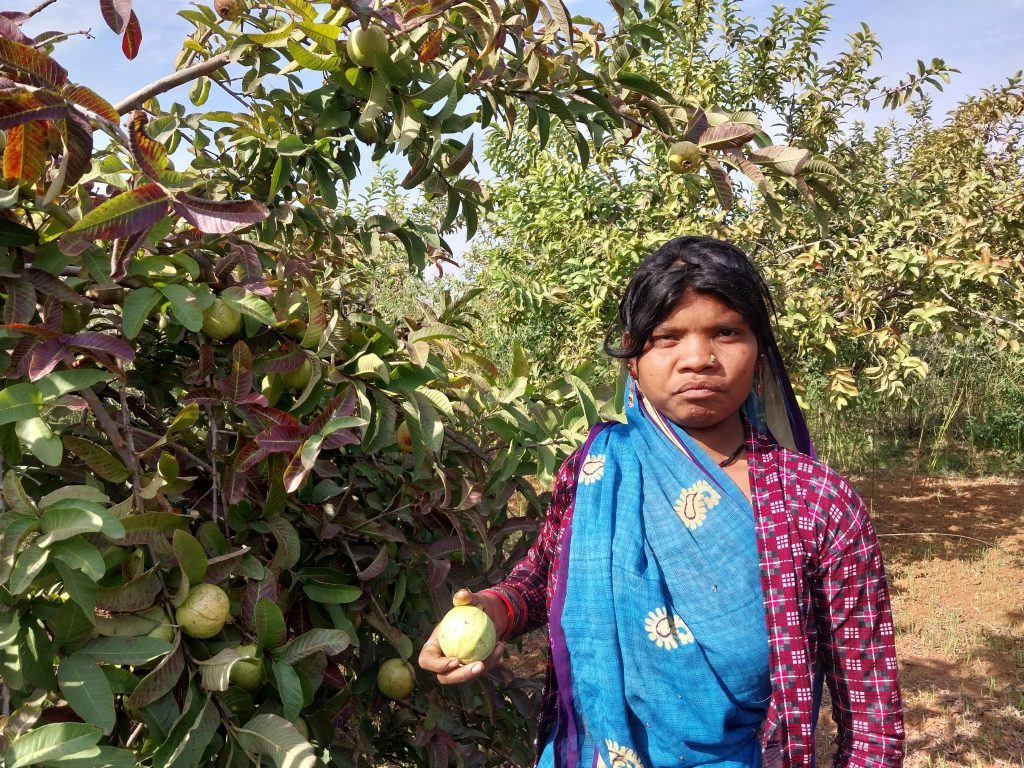
Sukka Bai, a Bhil Adivasi woman, is a resident of Surajpura village in Madhya Pradesh’s Damoh district. On a sunny afternoon, Bai proudly showed around her favourite crops in the field: bright red chillies and luscious tomatoes.
“Click a few good photos of the chillies,” said Bai, who spends a major part of the day in her land spread over a few acres. Apart from these two crops, the woman also has a few vegetables and chickpea.
“Earlier, farmers in my village could not grow two crops a year. So, in winter, families migrated for work as they failed to cultivate wheat due to water scarcity,” said Bai, who has herself worked in Rajasthan and Gujarat for a meagre Rs 300 per day. But the pandemic changed that. “I have not stepped outside since then.”
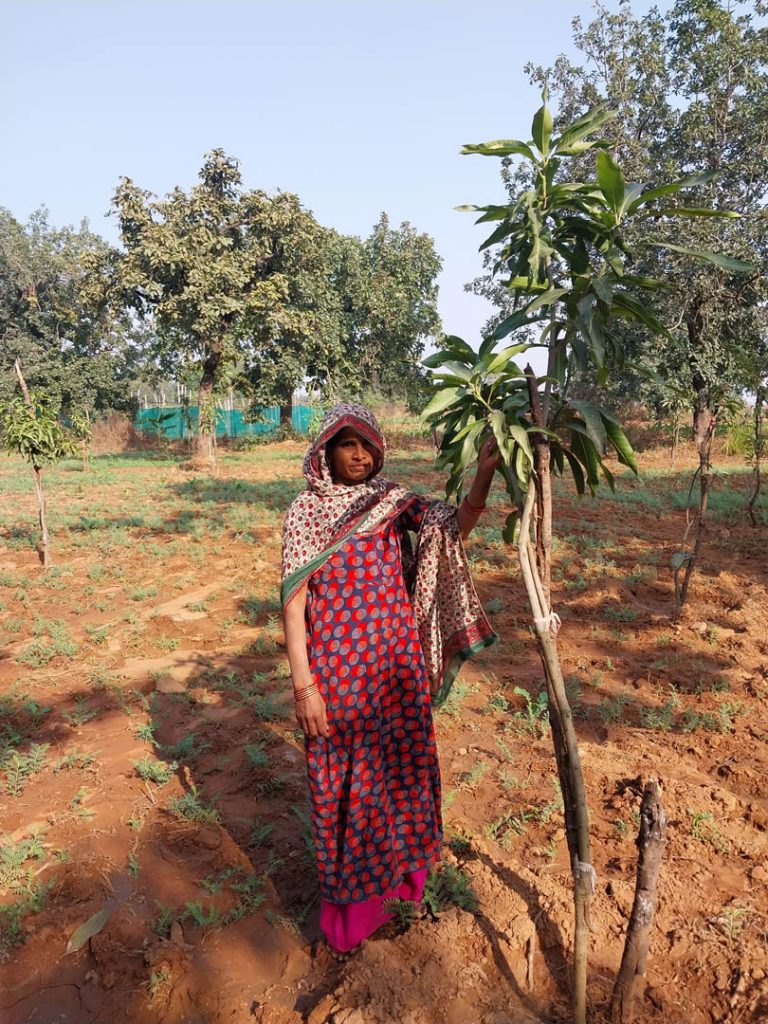
To help farmers improve their farm income, non-profit Haritika has distributed saplings of fruit trees like guava, mango and the Indian gooseberry. Bai’s plants are yet to bear fruits but she has started taking good care of them.
Two days before visiting Sukka’s house in Surajpura, guide Natthu Pal accompanied the reporter to Kishangarh gram panchayat dominated by the Rajgonds. Pal pointed out that as part of natural resources management in the water-scarce Bundelkhand region, trees were planted, check dams constructed and water bodies created to help in irrigation. “Besides, Peyjal samitis have been formed in villages for water supply through borewells to individual houses. In many villages, small in size and surrounded by forest all around, water tanks have been built for storage,” said Pal, who has been working in Haritika for over a decade.
Taking care of irrigation needs
In Bundelkhand, water harvesting structures are the biggest assets as they help in cultivation during the winter months. Monsoon rainfall helps farmers carry out Kharif season cultivation whereas water stored in talabs (ponds and reservoirs) ensures wheat irrigation during the Rabi season.
Near a huge talab called Amarkund, farmers Surender Adivasi and Hakka Adivasi informed they were residents of Jharkuwa village, about a kilometre away from the spot. This time, both of them have sown wheat and chickpea.
“In monsoon, we grow oilseeds (til) and urad (black gram). Farmers could not grow wheat before. The talab was dug around 2013. Since then, farmers from two villages, Jharkuwa and Ganeshganj, have benefitted from water supply from the talab in Rabi,” said Hakka.
His friend, Surender, explained that earlier, many people relied on goats for income or went to work in Delhi and other big cities for Rs 200-Rs 300 per day after the Kharif harvest. “People migrated as borewells are not a success at many places.”
At the talab which was almost on the verge of drying up, there was a flurry of activity as several people tried to catch fish. “The region gets adequate monsoon rainfall. As a result, the talab was full of water even a few months back. Wheat crop sometimes matures with fewer number of irrigations but at least five times is best. As water has fallen short, winter rains will be a boon now,” added Hakka. A farmer named Kumma Adivasi, who owns five acres of land, said he could afford to irrigate his wheat crop only two times.
Benefit of extra income
Keeping in mind such situations, farmers across Chhattarpur and Damoh districts are being encouraged to grow fruit trees for additional income throughout the year.
At the orchard of Manta Adivasi, ripe guavas are ready for consumption. Apart from guava trees which dominate her orchard, the woman also grows amla trees.
Pal explained that after digging a borewell and fencing the entire area for safety, Manta’s land was covered with seasonal crops and fruit trees. Manta on her part cooks at home and comes to stay at a small and neat hut constructed in her land to keep watch.
A resident of Patna village in Chhattarpur district of Madhya Pradesh, Manta informed that her husband had migrated for work. “My mother in-law sells the guavas in the market.”
Chhotelal Adivasi, another resident of Patna village, said the average yearly income of many families from farming stands at Rs 20,000-Rs 25,000. Many also engage in labour work and gather tendu leaves as well as mahua flowers from forests.
In Purba, located near Patna village, Paramlal Adivasi, a former sarpanch, admitted that the fruit trees had been of huge help. “There is no extra space needed to grow the trees as they share space with crops. But water is an issue in the village and borewells work for an hour only. Wells are not a success here as the surface is rocky,” said Paramlal, who cultivates chickpea and wheat in winter on his four acres of land. In monsoon, urad and til are his preferred crops.
In Sukka’s village, farmer Jamna Adivasi has sown barley which needs less water. He said that this time the monsoon was not adequate. Farmers in the village get irrigation water from a huge talab, said Haritika staff member Shubham Pathak. About 70 farmers benefit from it. Jamna’s barley needs just one more irrigation. In the Kharif season, he sows maize and gets 10 quintals of produce, out of which he keeps about five quintals for consumption.
Sukka is not interested in migrating anymore. “People used to migrate but now they can grow two crops a year. If I go away, who will take care of my trees and crops?” In a few places, multi-layered machans have been built to support creepers like bottle gourd.
Avani Mohan Singh, executive director at Haritika, said about 80 villages have been covered in some four districts of Madhya Pradesh. The number of trees stands at 10 lakh with 750 trees planted per hectare. “Fruit trees were procured from private nurseries and distributed to farmers. The beneficiaries will be able to take carbon credit after five years.”
After hurting the party badly in 2022 assembly polls, the spectre of factionalism has come back to haunt the Punjab Congress with several party leaders, including former legislators, raising a banner of revolt against former state party chief Navjot Singh Sidhu. A report by Rajesh Moudgil
The timing of the bitter bickering within could not have been worse for Aam Aadmi Party (AAP)-ruled Punjab’s principal opposition party Congress, with the 2024 parliamentary polls being just a few months away.
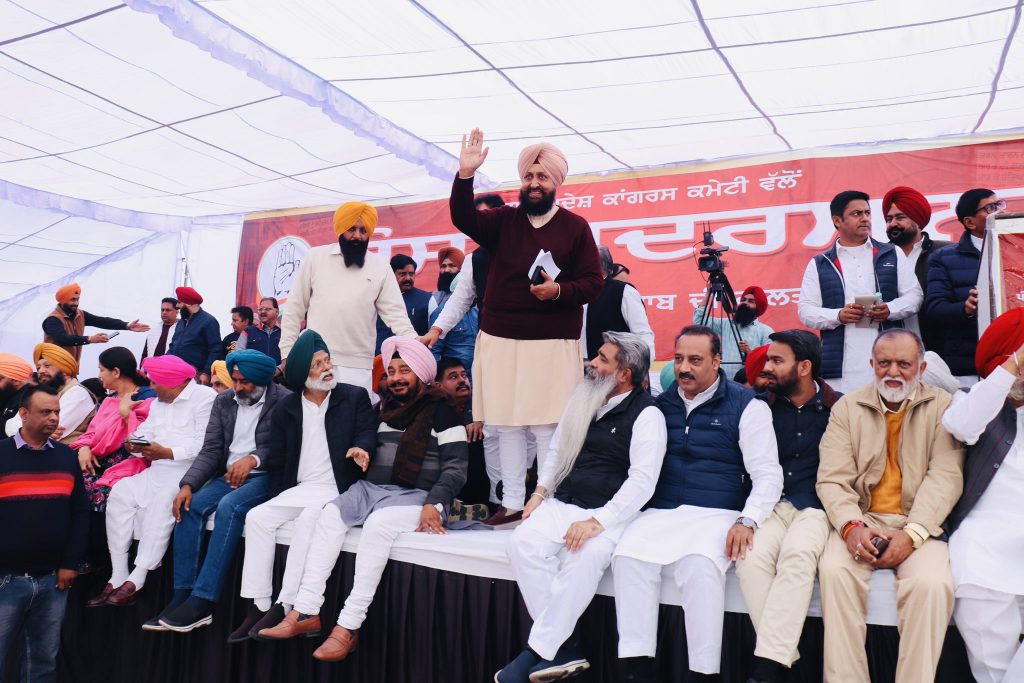
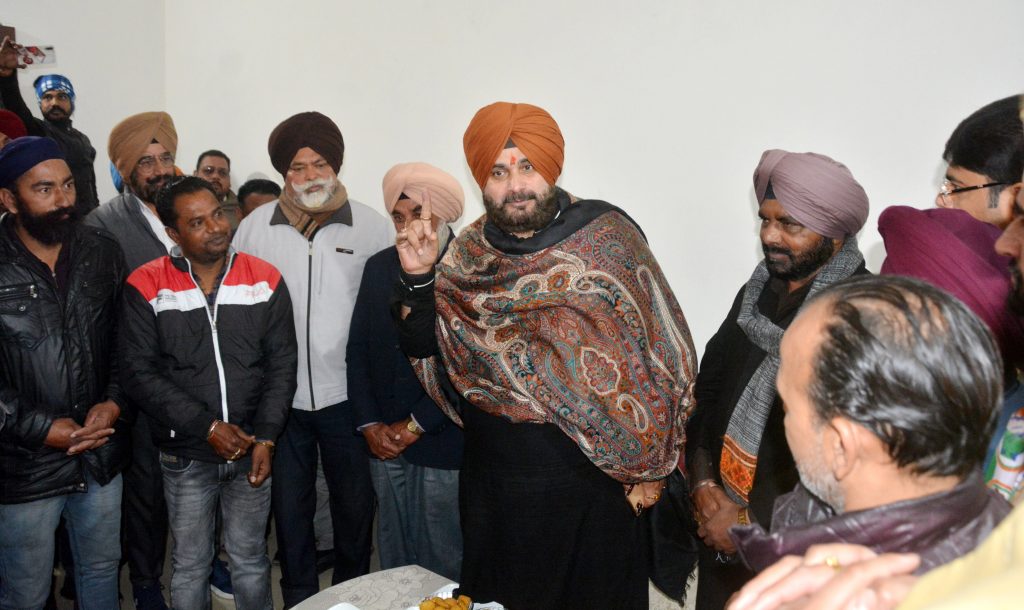
The latest example of the infighting has come to fore a few days ago when several Congress leaders including former legislators, namely Kulbir Singh Zira, Davinder Ghubaya, Lakhvir Singh Lakha, Inderbir Bolaria and Amit Vig and the sitting MLA Barindermeet Singh Pahra, Punjab Youth Congress chief Mohit Mohindra and others, including Khashbaz Jattana and Navjot Dahiya, came out in open demanding expulsion of former state party chief Navjot Singh Sidhu.
They demanded in a joint statement that it was time that the Congress high command showed the door to former state president – Sidhu. Stating that though they respected him (Sidhu), his action often worked against the interests of the party.
In their statement they went on to add that till date Sidhu had only focussed on self-glorification and had never supported the party’s agenda. This was something which needs to stop, the leaders added.
The said development was triggered after Sidhu took on former chief ministers Charanjit Singh Channi and Capt Amarinder Singh during his recent rally in Bathinda in which he held Channi responsible for the Congress’ drubbing in 2022 assembly polls.
Irked over it, the Leader of the Opposition (LoP) Partap Singh Bajwa asked Sidhu to refrain from holding his “parallel shows’’ and join his colleagues at the party programmes. Requesting Sidhu to act with some maturity, Bajwa went on to point out that the Congress had come down from 78 seats to 18 seats in the said polls during Sidhu’s stint as the state party chief.
Bajwa also questioned Sidhu’s stance in which Sidhu had espoused for trucks with all opposition parties under the INDIA bloc. Bajwa objected to it as the state Congress was the principal opposition party in the Aam Aadmi Party-ruled Punjab.
The state party chief Amarinder Singh Raja Warring, who avoided to comment on the demand of party leaders for Sidhu’s removal from the party, however, said that he would also request Sidhu to come on the party platform to raise issues in the interest of the state.
Sidhu hits back
Sidhu on the other hand, chose to post on X a joint statement released by several former MLAs, namely, Nazar Singh Manshaiah, Kaka Rajinder Singh, Jagdev Singh Kamalu, Vijay Kalra, Maheshinder Singh and Raminder Awla, who tore into LoP Bajwa ruing that neither them nor Sidhu were welcome at the state party programmes.
They wrote: “Respected Bajwa Saab Ji, we Congress office bearers and workers want to ask that neither we nor Navjot Sidhu are invited to Punjab Congress functions. And if we hold a rally on the invitation of party workers for the betterment of Congress with 8,000 persons in attendance, why are we being called bad instead of encouraging us? We, office bearers and workers, are busy day and night for the upliftment of the Congress party. But why are we being discriminated against in the party due to our closeness to Navjot Sidhu”.
“For the last one month, you as the opposition did not hold any big event, while we put the questions of the people …… before the government by holding an open rally’’, they added.
Sidhu’s former advisor Malwinder Malli also blasted Bajwa and others and blamed them for the rout of the party in the last state polls. He said in the post that he (Bajwa) was responsible for the party’s fall to 18 seats from 78 after Channi was announced as the chief ministerial candidate for the 2022 polls by playing the dalit card dismissing Sidhu’s agenda.
Rumblings over tie-up with AAP
Pertinently, the bickering in the party comes at a time when the Congress-backed INDIA bloc was in the final rounds of dialogue on seat sharing for the upcoming 2024 polls to fight BJP-led NDA, while Congress in Punjab seemed to be plagued with internal bickering.
Talks are already rife that several of the senior Congress leaders in Punjab are already rolling up their sleeves against the said grand alliance. Obviously, they included who had either been arrested or booked by the Punjab state vigilance bureau.
In case of dissent on the issue, a vertical split in the state unit of Congress is imminent – causing an adverse impact in the upcoming polls. While the party chief Warring has held that high command was supreme in the context and he would abide by its decision on the alliance, Bajwa has been vocal about his opposition against the alliance. Several other senior leaders have also pointedly opposed it with a few even terming ruling chief minister Bhagwant Mann-led Aam Aadmi Party (AAP) to be a B-team of BJP.
Kharge seeks details
However, it is in the wake of the ongoing tiff that the AICC president Mallikarjun Kharge is reported to have sought details of all the remarks of Sidhu, Bajwa and all the others in the context.
Meanwhile, according to media reports, Warring is also said to have written to Punjab party affairs incharge about Sidhu’s stance even as he has also been flagging – without naming Sidhu – the need for discipline in the party and saying that it was not right to speak against party leaders in public. Also, according to information, Warring had also written to party leadership last year seeking that a show-cause notice be issued to Sidhu for his alleged anti-party activities.
The leaders backing Sidhu, on the other hand, are also said to have brought the matter about the rival camp to the notice of party high command.
However, the bottom-line seems to be that the bickering which caused irreparable damage to Congress in 2022 assembly polls, is back in the state Congress ahead of May 2024 general elections. What would be its impact or the extent of damage, only time will tell.
While frustrations, anger and disgust surge, who’s there to hear us out? Most of us are just accepting whatever is being dished out by Humra Quraishi
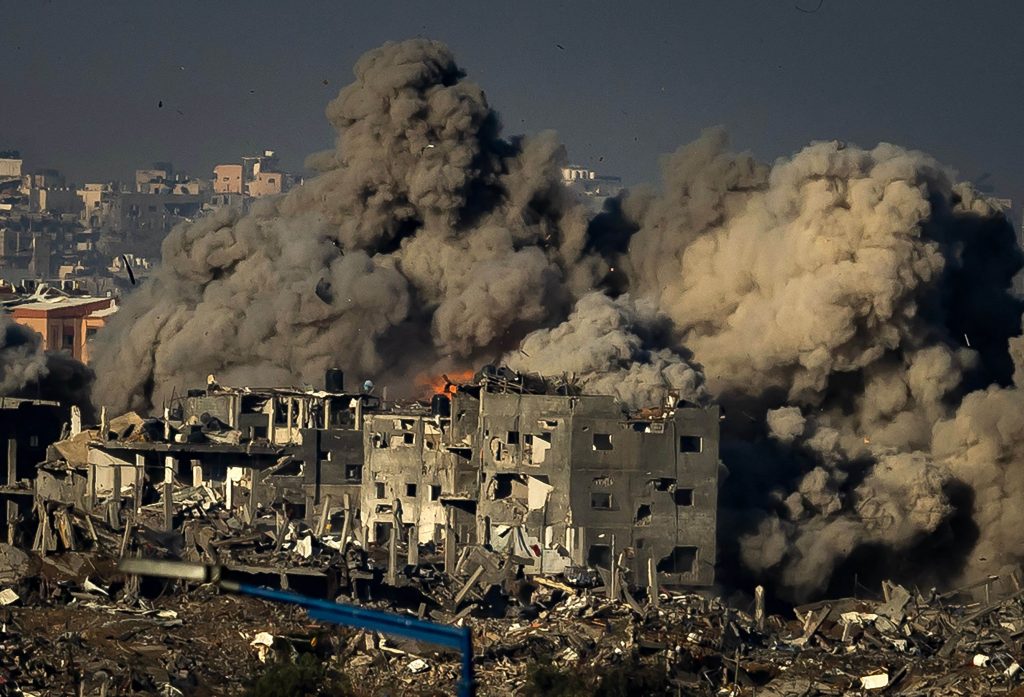
By the time you’d be getting to read this column, it will be the start of the New Year; leaving behind a year full of violence, killings and tragedies. For the past several years I haven’t really had the grit to ‘celebrate’ the ushering in of any of the new years. And this year, the pain has only compounded. In Palestine, in the last eleven weeks (from October 7, 2023 till date), more than 21,000 human beings have been massacred and many more have been left homeless and without food and water and the very basics to survival. Genocide is on; ethnic cleansing is ongoing; and brutalities are peaking. The very basic terms – ceasefire, truce talks, discussions and agreements and negotiations, stand redundant as Israeli forces continue targeted air strikes and onslaughts.
Here, in our country, democracy is getting destroyed, slowly and steadily. The latest assault is the suspension of the MPs. And in this scenario – with 146 MPs suspended from the Parliament – the Lok Sabha passed three amended criminal bills: The Bharatiya Nyaya (Second) Sanhita, 2023, the Bharatiya Nagarik Suraksha (Second) Sanhita, 2023 and the Bharatiya Sakshya (Second) Bill, 2023.
Quite obviously the Opposition is furious at these latest developments. The Members of Parliament were suspended because they queried about the security breach and the relevant details to the investigation. Strange or bizarre it may seem but the particular BJP MP, on whose name the intruders could come right inside the Parliament, hasn’t been suspended! After all, the visitor pass was issued in the name of Bharatiya Janata Party (BJP) MP from Mysuru, Pratap Simha. What if he wasn’t from the BJP; would he have been spared from rounds of interrogations and slurs and much more? What if he was from any of the disadvantaged communities? What if he was from any of the Opposition political parties?
Even as frustrations, anger and disgust are going overboard but who’s there to hear us out! Most amongst us are just accepting whatever is getting heaped or thrust or forced on us.
After those official and unofficial orders in the now BJP-ruled states of Rajasthan, Madhya Pradesh and Chhattisgarh, on the sale and consumption of non-vegetarian food items from roadside vendors, came the communal twist to halaal meat. Also, came in disturbing news from Uttar Pradesh’s capital city Lucknow. News reports which focus on Kashmiri dry fruit sellers assaulted with their ware thrown about and destroyed in targeted attacks on them. All out in the open! Their fault? Travelling miles, from the Kashmir valley to Lucknow, to sell dry fruits!
It’s a known fact that Kashmiris travelling from Kashmir Valley to various cities and towns of the country, find the going tough. Tougher it gets for them in these surcharged ruthless times. In fact, in my recently published book – ‘The Diary of Gull Mohammad: A Kashmiri Muslim boy’s Journey from Kashmir to Kerala’ (OUP), there’s focus on the tough times this Kashmiri teenager, 14-year-old Gull Mohammad, goes through, as harsh and hitting ground realities stand out.
Disquiet over EVMs
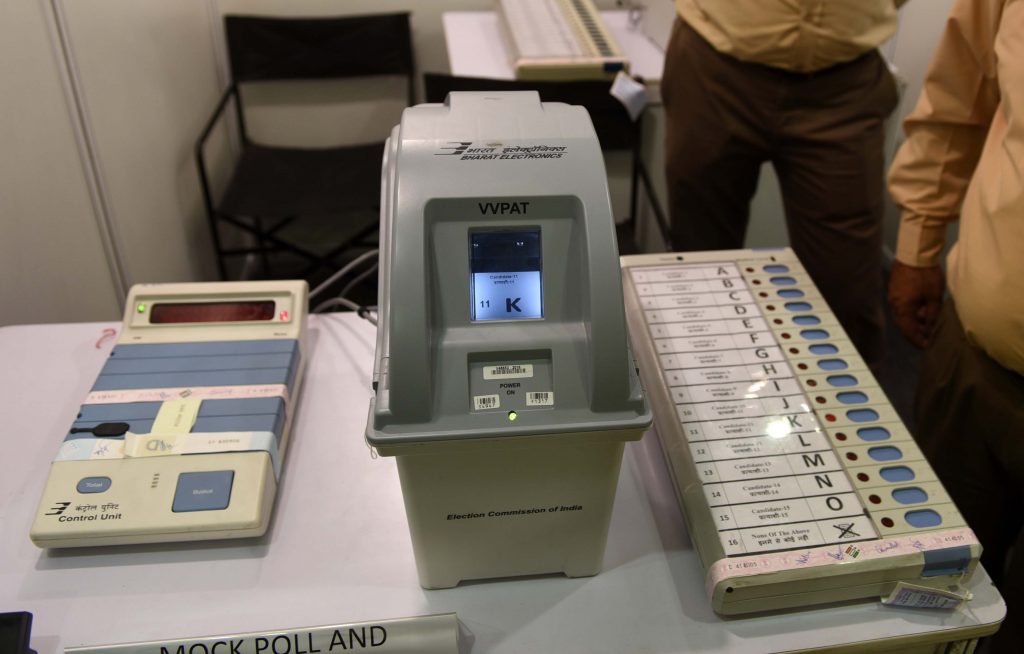
And as 2024 Elections near…there’s a strange sort of unease-cum-disbelief amongst the voters to the elections results in the backdrop of the EVMs and many of the connected factors.
Last month, on 8 December 2023, M.G. Devasahayam, a former bureaucrat and now an activist and coordinator of the Citizens Commission on Elections (CCE), sent to the Election Commission of India and the Election Commissioners a memorandum, which was signed by thousands of voters.
To quote Devasahayam on this: “Electronically, so far by over 6500 voters. In addition, over 10,000 citizens have signed the Memorandum physically which is being sent separately. This has been done with our limited resources clearly indicating the huge trust-deficit that exists on the conduct of free and fair elections by the Election Commission. We are sending this by email because of late ECI has sealed itself and is not accessible to ordinary citizens like us who constitute the Indian democratic republic.”
Details of the demands mentioned in this memorandum are: “Ensure the integrity of voting and counting. The VVPAT system should be re-calibrated to be fully voter-verifiable. A voter should be able to get the VVPAT slip in her hand and cast it in a chip-free ballot box for the vote to be valid. These VVPAT slips should be fully counted first for all constituencies before the results are declared. For this purpose, VVPAT slips should be larger in size and must be printed in such a manner that they can be preserved for a minimum of five years. … Subsequently, if need be, the results of the counting of VVPAT slips should be cross verified with the electronic tallies of the EVMs for every constituency before the results are declared. In case of any mismatch, the counting of the VVPAT slips should be treated as the final result as also laid down in Rule 56(d)(4)(b) of The Conduct of the Election (Amendment) Rules, 2013. Forms 17A (Register of electors) and Forms 17C (Account of votes recorded) must be tallied and be publicly disclosed at the end of polling on the polling day itself. Forms 17A and 17C should also be tallied with the manual count of VVPAT slips before the declaration of results.”
In this memorandum there’s also focus on another crucial aspect: “Integrity of electoral rolls… To prevent arbitrary deletions, the ECI must ensure that prior notice is issued to every voter whose name is proposed to be deleted. This has also been directed by the Supreme Court in its recent judgment dated 4-8-2023 in which it was stated: “No deletion should be done without following due process of law as contained in the R P Act, 1950 and the Registration of Electors Rules, 1960. In all cases, a notice must be issued to the elector and must be duly served on him. This is critical to ensure that no voter is left behind. The ECI should immediately implement a transparent and public system of Social Audit of Electoral Rolls. Voter’s lists must be publicly displayed in the most accessible manner and also made available on the ECI website in a searchable database. Citizens should be empowered to check their own information as well as that of bogus names and duplicates in their area.”
Also, the ECI must strongly advocate for transparency in political party funding and ensure that money-power does not sway elections and their outcome. It must oppose electoral bonds that provide for unlimited anonymous funding of political parties.
The Enforcement Directorate has served third summons to Delhi CM Arvind Kejriwal in connection with the Delhi excise policy scam while he was away in Punjab for Vipassana triggering a major political row between the BJP and the AAP. A report by Aayush Goel
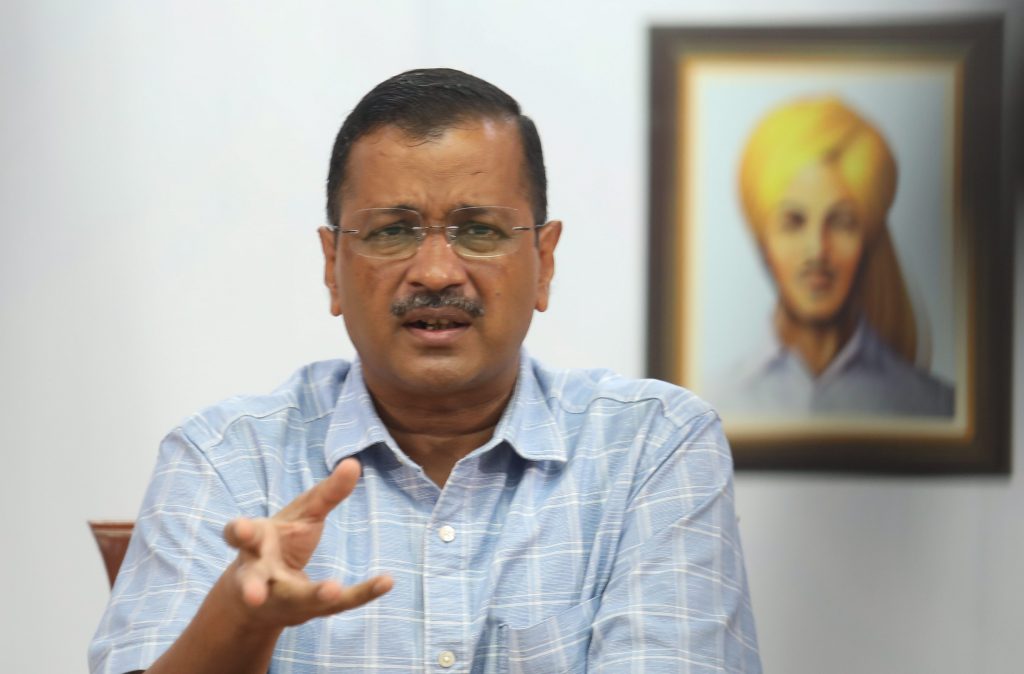
The Delhi liquorgate scam case has hit headlines yet again as Delhi chief minister and AAP supremo Arvind Kejriwal has been summoned by the ED (Enforcement Directorate) asking him to appear on January 3 in connection with the money laundering case linked to Delhi Excise policy scam. This is the third summons to Kejriwal after he skipped the previous two. The serving of summons to Kejriwal while he was away for Vipassana in Punjab has snowballed into a major political war between BJP and AAP that involves not just allegations and counter allegations but even fake viral tweets to support claims.
Kejriwal was summoned by the ED first on November 2. He skipped the summons and said he had governance-related work in Delhi ahead of Diwali and was also scheduled to campaign for the party in Madhya Pradesh and Chhattisgarh. The ED issued the second summons asking him to be present on December 21. Kejriwal went to attend Vipassana a day before and skipped the second summons too. Interestingly, the third summon came on the very day when AAP Rajya Sabha MP Sanjay Singh was denied bail. The court while denying the same said that the case against him was genuine and the evidence presented showed his involvement in the alleged money laundering.
Sanjay Singh was the second AAP leader who was arrested on October 4 in connection with the same case. The former Deputy CM Manish Sisodia was arrested in February in the liquor excise scam case and the court during hearing has extended his judicial custody till the next date of hearing on January 19, 2023.
BJP’s national spokesperson Sambit Patra while calling Kejriwal ‘liquorgate kingpin’ said that he was using the meditation camp as a means to escape from questioning. “He should have delayed the camp but he fears he might get arrested according to his own leaders. You can do Vipassana in jail also,” said Patra.
Case politically motivated: Kejriwal
While Kejriwal remains unavailable to comment on third summons, he had filed a detailed reply to ED after receiving his second summons a day before he was to leave for his Vipassana meditation course.
“The timing of your summons leaves much to desire and strengthens my belief that the summons being sent to me are not based upon any objective or rational yardstick but for extraneous considerations at the behest of political rivals who wish to silence the voice of opposition to the ruling dispensation at the Centre to create sensational news in the final few months leading up to the Parliamentary elections in early to mid-2024. On the eve of my departure for Vipassana meditation course, which has been widely published and largely circulated all over the media in the country as well as officially announced, to my utter dismay and concern, I have received the subject summons,” Kejriwal said in his reply. He alleged that the summons appears to be a fishing and roving enquiry and claimed that this meditation was an annual feature of his life since last 25 years. Meanwhile, AAP will take legal opinion on the ED’s fresh summons to Kejriwal after he returns from his Vipassana, senior party leader Gopal Rai said. He also said that the party has extended and intensified the ongoing signature campaign ‘Main Bhi Kejriwal’ for 10 more days till December 30 asking people of Delhi if Kejriwal should resign or run government from jail in case of ‘conspired’ arrest.
Tale of a fake tweet
As the news of Kejriwal, being away for meditation while third summons were served, spread, a screenshot of X (formerly Twitter) post claiming to be shared by him in 2012 went viral on social media. According to the screenshot, Kejriwal had said, “As a patriot Indian, my head hangs in shame when our corrupt leaders do not appear before ED and CBI even after multiple summons by the investigating agencies, when they should have resigned from their posts immediately as soon as the allegations were made.” The screen shot was found to be fake but went viral after being shared by various BJP leaders like Union Minister of Earth Sciences Kiren Rijiju, BJP MP Parvesh Sahib Singh and BJP national spokesperson Gaurav Bhatia.
Far-&-Wide : – With the Colorado Supreme Court disqualifying the ex-president from even contesting the primary, Democrats believe it will pave the way for President Biden’s second term at the office even as Trump’s Republican rivals rally to his defence by Gopal Misra
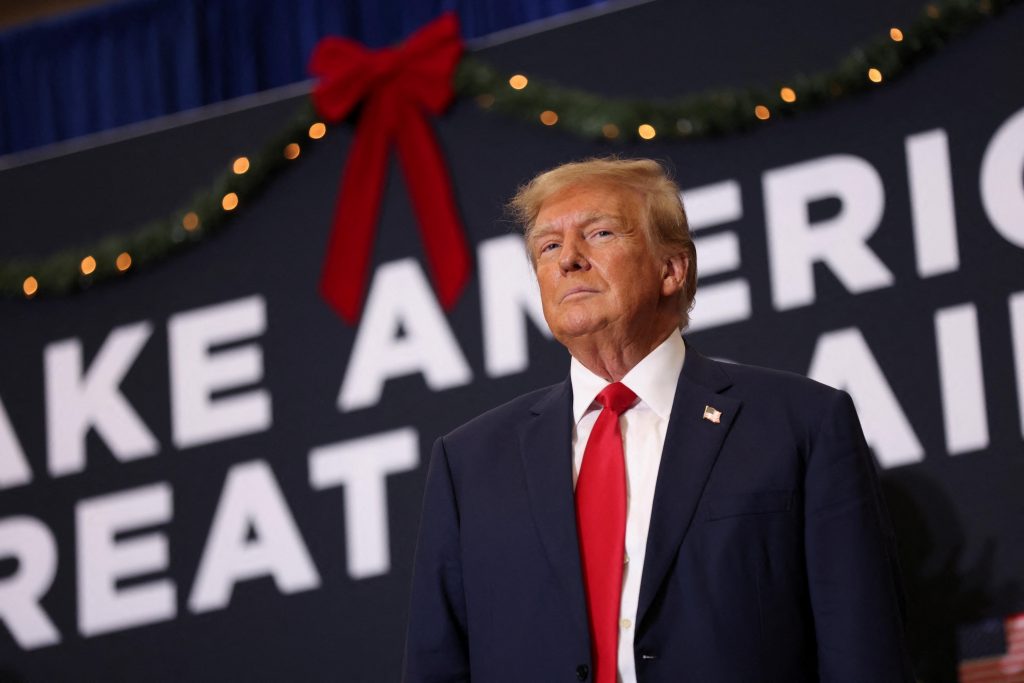
The recent surge in the popularity of the former US President Donald Trump, seeking the Republican nomination for the presidential poll in the world’s most powerful democracy is facing unprecedented political firework. With the Colorado Supreme Court disqualifying Trump from even contesting the primary in the state, Democrats appear upbeat that it might pave the way for President Joe Biden’s return to the White House again.
In a bid to prevent his arch rival from contesting the poll later this year, Biden supporters have already initiated legal procedures against Trump in various states. On the other hand, Trump and his supporters have challenged Biden’s legitimacy for the second term by alleging large scale financial bungling by his son, Hunter, in various deals involving companies of Ukraine and China.
The recent verdict of the Supreme Court of the U.S. State of Colorado in a 4-3 split order barring Trump from even contesting the primaries in Colorado is being considered a political vendetta by those supporting the former President. The court’s order says that Trump had violated a constitutional clause enacted in 1868 relating to engaging in an “insurrection or rebellion” under the Section 3 of the country’s 14th Amendment, when he reportedly incited his supporters to enter Capitol in Washington on January 6, 2021; alleging bungling in the poll and also blocking ‘peaceful transfer’ of power to Biden. The dissenting judges, however, have opined that Trump is being punished even before a proper trial, a basic right even of a criminal defending his case. The court, however, stayed its order till January 4, 2024, enabling Trump to seek review by the US Supreme Court. Earlier, a district court had declined to stop Trump from contesting on the grounds that it was unclear whether the 14th Amendment covered the presidency.
Interestingly, Vivek Ramaswamy, who is one of the Republican aspirants seeking nomination for the presidential nomination, has asked Nicky Hailey, Christ Christie and Ron DeSantis, Governor of Florida, to boycott the Colorado primaries unless Trump is allowed to participate. DeSantis has demanded that the US Supreme Court “should reverse” the Colorado ruling. “The Left invokes ‘democracy’ to justify its use of power, even if it means abusing judicial power to remove a candidate from the ballot based on spurious legal ground,” he wrote on X.
Earlier, the Minnesota Supreme Court had also rejected a disqualification case filed against Trump. The lower courts in Michigan, Florida and New Hampshire have already dismissed them. Meanwhile, Trump’s campaign spokesman Steven Cheung has accused that the “all-Democrat appointed” panel in Colorado was doing the bidding of a “[George] Soros-funded, left-wing group’s scheme to interfere in an election on behalf of crooked Joe Biden”.
Biden’s supporters are apprehensive that the US Supreme Court, dominated by a conservative majority that includes three Trump appointees, might set aside the Colorado verdict. They are expected to focus on Trump’s other cases such as the trial before a US federal judge on March 4, 2024, for his election subversion conspiracy; on March 25, Trump will be facing charges over alleged hush money payments made to porn star Stormy Daniels before a New York court; and on May 20, 2024, he will be facing the charges of the alleged mishandling of classified documents after leaving office before a Florida court. A fourth trial could even open in 2024: Trump is also under indictment in Georgia, over an alleged conspiracy to overturn the results of the 2020 election he had lost to Joe Biden.
It is natural for Indians to be worried about the no-holds barred campaigns between the supporters of Biden and Trump. Since India has been promoting an all-encompassing worldview which establishes the blossoming of a multi-racial, multi-ethnic and multi-religious society under a democratic umbrella, the political crisis in the USA might affect her too. Like others, Indians also admire the American dream, coveted worldwide.
US cold-shoulders Gen Munir
Washington finally prevails upon Pakistan’s de-facto ruler, General Asim Munir, army chief, who was on a week-long visit to the US in December 2023, to expedite elections without any further delay, thus, forcing Pakistan’s Election Commission to schedule polls promptly for the National Assembly on February 8, 2024. The Americans believed to have rejected Munir’s plea that former PM Imran Khan and his party Tehreek-i-Insaf, might win absolute majority, which is an anathema to the GHQ as well as to White House.
In the US, however, he was refused any audience with President Joe Biden, and even the prominent figures of the Republicans at Capitol. He could only meet Secretary of State Antony Blinken and Secretary of Defence General Lloyd Austin. Interestingly, both the US and the Pakistani army are keen to get Nawaz Sharif reinstalled in Islamabad. It is yet to be seen whether their interests really converge.
A mirthless New Year dawns
Under the shadow of two wars, Russia-Ukraine in Europe and Israel-Hamas in West Asia, the 2023 Christmas celebrations despite illuminations from Singapore to London and even to New York could not cheer mankind. Unless some miracle happens, the peace would remain a mirage in 2024. The efforts to invoke Santa Clause could not bring any smile to us. The European War has become an unending conflict. In 2024, the people across the continents will meekly be witnessing continued blood bath in West Asia too, the holy lands where Jesus was born.
In India, the sad faces of the young Ukrainian couples serving here reflect the agony of war. As a writer, one may discuss India’s neutral stance or geo-political compulsions, but it is difficult to muster courage to give them any solace. The West Asian conflict between an irresponsible terror group has invited the mighty fire power of Israel. The victims are again the innocents, but neither the big powers nor the UN is unable to stop the ongoing carnage. Unfortunately, most of the news channels describe the killings as faceless statistics, but fail to share the agony of losing even one life; a mother loses her infant or hapless women being violated. Have we lost human concerns for life? Yet people like us are awaiting a Messiah to gift us peace, the most precious reward for mankind.
Prof Harish Narang has selected and translated Manto’s stories and arranged them under three clear sections – well known, less known, ill known! Curiosity takes one rather too swiftly towards the ‘ill known’ section. And there stand out these introductory lines: the last section includes those stories which were condemned as obscene writing and court cases were slapped against him. A book review by Humra Quraishi
BOOK- REVIEW
By Humra Quraishi
Title- Manto: Stories- Well known- Less Known- Ill Known
Selected and Translated by – Harish Narang
Publisher – Aakar Books
Pages – 284
Price – Rs 795
Saadat Hasan Manto and his works continue to stand out. Relevant and hitting, with the human factor intact in each one of his writings. Nah, nothing contrived or superficial. With that, that the raw intensity of his writings holds out.
This latest book on Manto’s writings has just got launched, where Professor Harish Narang has selected and translated his stories and arranged them under three clear sections – well known, less known, ill known!
Curiosity takes one rather too swiftly towards the ‘ill known’ section. And there stand out these introductory lines: the last section includes those stories which were condemned as obscene writing and court cases were slapped against him. To quote Narang, “Manto was accused of using obscene language and promoting a content that proposed to ‘corrupt’ young minds. Almost all of them were subjected to court cases, slapped by the State with allegations of charges ranging from ‘obscene’ writing to ‘disturbing public peace.’ ” And tucked in this particular section are these six translated stories of Manto – Smoke, Cold Meat, The Black Salwar, Smell, Above Below and in the Middle, Insult.
And if one were to ask, how difficult or challenging it’s been to translate the works of a writer of Manto’s stature, who wrote about the ground realities with such detailing and depth and emotions, Narang details, “Translating the writings of Manto has been for me an experience very different from translating other writers – from India or from outside the subcontinent. The first reason has been his incisive satire and also his love for irony, both of which are, at times, language specific and the impact of which is generally diluted if not altogether lost in translation. The second challenge came from Manto’s manner of narration…Like that of any other writer, Manto’s narratives too are rich in local flavour. There are words, expressions and names of culture items that are specific to his mother tongue Kashmiri or Urdu and these are not easy to put in English without explanatory expressions…In short, to capture Manto’s authorial voice – it is this voice that generally carries the burden of the author’s worldview – was quite challenging.”
Long after I read and re-read Manto’s stories, I kept thinking: What would he have written if he were alive today? After all, we are surviving in absolutely dark dismal hopeless times!
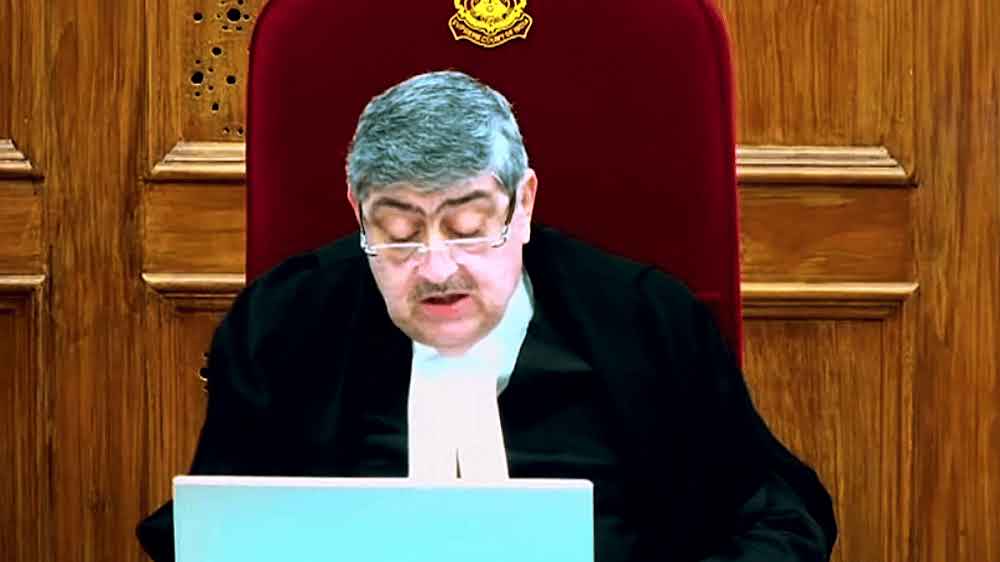
Justice Sanjay Kishan Kaul has advocated setting up a Truth and Reconciliation Commission in J-K to address the human rights violations that have scarred the region since the1980s. But the proposal is fraught with complexities in the present climate in the valley. A report by Riyaz Wani
When Justice Sanjay Kishan Kaul recommended establishing of a Truth and Reconciliation Commission in Jammu and Kashmir, it brought to the fore the memories of the long-buried past in Kashmir. The proposal aims to address the historical human rights violations that have occurred in the region since the 1980s, involving both state and non-state actors.
Justice Kaul emphasised the urgency of setting up the commission, highlighting that a generation has grown up amidst distrust, and it’s crucial to address these issues before they fade from memory. He stressed the importance of reparation, especially towards the youth who have been deeply affected by the conflict.
Moreover, he suggested that the commission’s approach should be empathetic and not resemble a criminal court. It should prioritize a humane and personalized process, enabling individuals to share their experiences openly, Justice Kaul said while stressing the significance of dialogue and inclusion of diverse perspectives in this process. He expressed hope for reconciliation, urging for an embracing of the past and facilitating the dignified return of those who were forced to migrate.
This proposition by Justice Kaul underlines the necessity for acknowledging past grievances, fostering dialogue, and seeking reconciliation to move towards a more peaceful future in Jammu and Kashmir.
The idea is not new
It was in summer 2008 when Omar Abdullah, as an opposition leader, mooted the idea of the Truth and Reconciliation Commission to probe human rights abuses in the divided parts of Kashmir. He said that if voted to power he will make sincere efforts in this direction. He was duly voted to power towards the end of that year and ruled the state for the following six years. To his credit, he sporadically spoke about the Commission but hardly made a serious effort to constitute it. Indeed, he couldn’t have done it of his own. He needed the concurrence of New Delhi and Islamabad for this. Omar envisaged an ambitious remit for the commission spanning the governments of India and Pakistan, something he reiterated at the National Conference function just a few days ago.
“I have always said a truth and reconciliation commission should be formed by India and Pakistan to find out what happened in Jammu and Kashmir during the last 25 years, and who is responsible for that,” he told the media in Srinagar.
In 2011, in a 27 page Action Taken Report submitted to the State Human Rights Commission over the then discovery of 2700 unmarked graves, J&K Government led by Omar said it wanted the Truth and Reconciliation Commission to investigate the issue. The report stated that the Government shall look into all the aspects relating to the establishment of such a Commission. The report further said that the forming of the Truth and Reconciliation Commission for the State would “require consultation and broad consensus among all the stakeholders”.
Omar also raised the issue of setting up of the Commission in the meeting of the National Integration Council held in New Delhi in September 2011. Also speaking in the J&K Assembly in the same year, Omar explained the Commission as “an Indo-Pak joint strategy in the form of a Jammu and Kashmir centric confidence building measure so that all aspects of militancy, its origin, its impact on people, issues of disappearance, migration and many more related concerns are studied threadbare and addressed accordingly for reconciliation and healing”.
And in 2014, Omar once again brought up the issue on the politically loaded day of January 19 which Muslims in Valley remember for the massacre of 52 people by the security personnel at Gawkadal in Srinagar and Kashmiri Pandits recall as the day of their exodus from Valley.
“Whether it’s the Kashmiri Pandit exodus or incidents like Gawkadal, that is why India and Pakistan owe J&K a truth & reconciliation commission,” Omar then wrote on micro-blogging site Twitter, now X.
However, National Conference rival and the now the would-be ruling party PDP has traditionally opposed such a commission. The party has argued that the Truth and Reconciliation Commission cannot be cut and pasted from South Africa to Kashmir. PDP has instead sought Justice and Resolution in Kashmir, explaining that “unless the state gives justice to its citizens, there cannot be reconciliation”.
Both parties may have a point. But the question is whether a Truth and Reconciliation is after all a practical proposition under the circumstances. In any case, such a commission can only be a post-resolution phase. But even then the truth and reconciliation, as Omar seeks it, will hardly serve the purpose. At the end of the day, those who have suffered will demand justice. Over the past 26 years, thousands of people have suffered. And if anyone has remained untouched by these sufferings, it is their perpetrators. Verbal acknowledgement of the atrocities does have its uses in salving the wounds but the true healing only starts when the people responsible for them are brought to account. To his credit, Omar has talked about the truth and reconciliation in the past. But a true closure is only possible if we add one more word to this improbable process, the justice: it should be Truth, Justice and Reconciliation.
Reconciliation after abrogation of Article 370
The political parties in Kashmir are seeing little prospect of a grand reconciliation following the withdrawal of Article 370 in August 2019 and its endorsement by the Supreme Court. When asked about Justice Kaul mooting the idea, the National Conference leader Tanvir Sadiq said the proposal was actually his party’s.
“We believe justice Kaul must have heard or seen Omar Abdullah’s discussions on truth and reconciliation commission since 2000’s. This is a cause we endorse,” Sadiq said in a statement. “Omar has been a steadfast proponent of establishing the commission, a position he has championed since his tenure as chief minister.”
The PDP, on the other hand, voiced skepticism about the commission, even though it didn’t seek resolution of Kashmir as a precondition for it as it did earlier. Party spokesman Mohit Bhan told media that there was a “void too big and the mistrust was too humongous” for the commission to be able to fill it.
People’s Conference chairperson Sajjad Gani Lone also supported the idea, tracing its advocacy to the party’s original vision document, ‘Achievable Nationhood’ authored by Lone.
Going forward it looks highly unlikely that the commission could ever become a reality. And should the commission be after all constituted in the prevailing situation, there is little that it could achieve in the bewilderingly complex and polarizing environment of Kashmir.
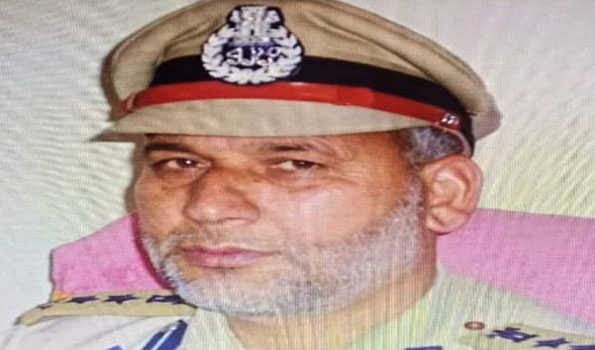
The killing of Mohammad Shafi Mir, a retired district police chief, in Gantmulla has taken the police by surprise and reinforced the belief that militancy is spreading to the areas in J-K where it didn’t exist earlier – be it parts of Jammu or those in Kashmir valley. A report by Riyaz Wani
On December 24, Mohammad Shafi Mir, a retired district police chief left his home at Gantmulla in North Kashmir’s Baramulla district for the local mosque. It was his daily responsibility to give a call for dawn prayer (adhan). This day also, he made ablutions and stood up near the mosque loudspeaker to call adhan. Midway through the call, a burst of fire rang out and there was silence. No one suspected anything until minutes later other worshippers arrived and found Mir lying dead in a pool of blood.
After his superannuation in 2012, Mir had settled down in his post-retirement life. The government had recently withdrawn his security detail. Also, he lived in an area where no violence had been reported even in the heyday of militancy in the nineties. This is why the killing of Mir has taken both people and security agencies by surprise. For it shows the spread of militancy to the areas in Jammu and Kashmir where it didn’t exist earlier – be it parts of Jammu or those in Kashmir Valley.
Mir’s killing took place soon after the killing of four jawans in an ambush at Poonch in Jammu followed by the death in custody of three civilians, sending violence spiking across the union territory. Although local militancy has drastically reduced in 2023, with J&K DGP RR Swain revealing that the number of local militants has diminished to fewer than 20, the foreign militants have stepped into the breach. And the hills of Poonch and Rajouri districts in Jammu have become more or less their main bases. In 2023, over twenty soldiers were killed in encounters with foreign militants in the twin districts.
According to the BSF Inspector General, Ashok Yadav, there are intelligence inputs that 250-300 militants are waiting at launch pads across the border. This means the militants along the PoK side of the border are poised to breach the region’s security barriers and infiltrate into the Valley.
But with militants striking in Gantmulla, there is reason to believe that far from being on the verge of being wiped out, the local militancy is spreading to hitherto militancy-free areas in Kashmir Valley. Only that it seems to have been pushed further underground by the ongoing security surge in the Valley, possibly making it difficult to know the exact number of active militants.
Dilbag Singh, former J&K DGP, who retired in November, had once said that the militancy in the Valley has become “faceless.” Another term used by the security brass to describe the current phase of militancy in the Valley is that it has turned “hybrid”. Both descriptions reflect the anonymity of new militancy in Kashmir. In this kind of militancy, a civilian is said to double up as a militant and go back to lead his normal life after carrying out an attack. Though many alleged hybrid militants have been arrested, it has not addressed the problem.
Security forces have killed over 500 militants since the revocation of Article 370 in August 2019, but the militancy continues to pose a formidable challenge. The militants have struck recurrently to announce their presence. The predominant targets of their attacks in the last two years have been civilians including those belonging to minorities.
As many as 184 civilians and 319 security personnel were killed in 791 incidents of violence perpetrated by militants in the union territory from 2018 to July 2023, Union Minister Nityanand Rai said in Rajya Sabha in August last. On the other hand, 35 more civilians were killed during encounters and counter operations.
“Achieving lasting peace in the Valley necessitates not just silencing guns but also addressing the undercurrents that fuel the cycle of violence,” an editorial in a local daily said. “It’s a collective endeavor that requires a concerted security and political effort to build a future where the echoes of conflict fade, allowing Kashmir to flourish in peace and prosperity.”
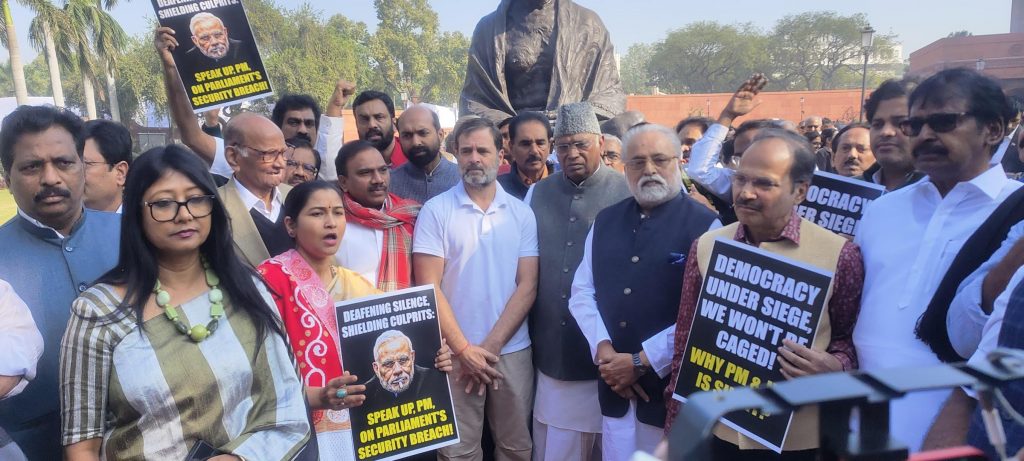
The 28-party INDIA bloc staged a protest at the Jantar Mantar in New Delhi where senior leaders of the alliance hit out at PM Modi for the suspensions even as they accused the BJP government of throttling democracy and subverting the constitution. A report by Mudit Mathur
The winter session of Parliament saw an unprecedented lapse in the security of the heavily fortified new building when two youths carrying smoke canisters jumped into the House chamber from the visitors’ gallery in the Lok Sabha while it was in session. Subsequently, in an unprecedented move, the Rajya Sabha Chairman and Lok Sabha speaker suspended 146 members of parliament who were demanding an official statement from the Union Home Minister over the incident. The government then sent shockwaves by clearing contentious legislations without any debate with Opposition Benches in both houses close to empty after a record number of suspensions. This compelled the angry opposition to hit the streets with a slogan to “Save Democracy” under the INDIA bloc from Jantar Mantar to all the states on the call of Congress Working Committee (CWS).
On the other hand, the Rajya Sabha Chairman Jagdeep Dhankhar blew the issue of his alleged mimicking by TMC MP Kalyan Banerjee in the parliament premises out of proportion. Congress leader Rahul Gandhi was seen making the video of Banerjee’s alleged act on his phone. This provided ammunition to ruling BJP to target opposition leaders. Even President Droupadi Murmu expressed her dismay at the manner in which Vice-President Jagdeep Dhankhar was “humiliated” in the Parliament complex.
At the recently held fourth meeting of its constituent 28 political parties on 19th December in Delhi, INDIA bloc resolved to further strengthen its unity even as the leaders discussed the seat sharing arrangement. The suspension of almost all opposition members from Parliament gave them further opportunity to come closer to fight for preserving parliamentary form of democracy, which they feel is being threatened and undermined by the government. The opposition alleged that the government was trying to silence the nation and both houses of parliament, where the elected representatives air aspirations and needs of the people they represent.
The suspensions continued amid ongoing politically predetermined legislative business, including the passage of proposed laws set to replace British-era criminal codes, regulate the telecom industry, and shape the selection of India’s top election officials, as the Opposition refused to budge on its demand for a statement from Home Minister Amit Shah on the Parliament security breach.
Meanwhile, many parliamentarians and legal experts feel that even in the redrafted form, the Bills “weaponised the police and the criminal justice system to give edge to the political leadership at all levels – centre, state and local, and even greater opportunity to abuse the criminal justice system for political gains through selective, targeted and politically biased prosecution against ideological and political rivals.
The 28-party Indian National Developmental Inclusive Alliance (INDIA) organised a protest against undemocratic treatment meted out to them at Jantar Mantar, Delhi, that was attended by all the leaders of its constituents who hit out at Prime Minister Narendra Modi. During what turned out to be a joint public protest of concerned voices, senior leaders of the INDIA bloc while delivering at the Jantar Mantar accused the BJP government of throttling parliamentary democracy and subverting the constitution.
Apart from the top Congress leaders, Nationalist Congress Party chief Sharad Pawar, Communist Party of India General Secretary D Raja, Communist Party of India (Marxist)’s Sitaram Yechury, RJD’s Manoj Jha, ST Hasan of the Samajwadi Party, Dravida Munnetra Kazhagam’s (DMK) Tiruchi Siva, CPI (ML)’s Dipankar Bhattacharya, RSP’s N K Premachandran, AAP’s national general secretary (organisation) Sandeep Pathak and representatives of the TMC, National Conference, JMM and RLD were among those present during the protest.
“When everyone comes together, Narendra Modi won’t be able to do anything,” Congress chief Mallikarjun Kharge said, highlighting the need to ‘save’ democracy, constitution and free speech. Kharge criticised the BJP government for not letting the Opposition speak when women and Dalits are allegedly assaulted, farmers are killed or the Constitution is violated. Meanwhile, opposition parties hit the streets and held protests across the country against a record number of members having been suspended from Parliament in the recently concluded winter session which had never happened in the parliamentary history before.
While hailing opposition unity, Kharge slammed the passage of key bills in Houses and asserted that everyone had the right to speak in a democracy and no one could snatch away that freedom. “When women or Dalits are assaulted, farmers are killed, and the Constitution is violated, we give notices in Parliament but are not even permitted to read them. What should I say? Should I say the BJP and its government would not allow a Dalit to speak?,” he questioned.
“In a democracy, everyone has a right to speak. You cannot snatch away that freedom. We got that freedom thanks to Jawaharlal Nehru, Mahatma Gandhi, and BR Ambedkar. These people gave us freedom. Even a mouse from your [BJP] house did not join the freedom struggle,” he said. “You threw away all Opposition MPs [Members of Parliament] and passed all the bills unopposed,” he added.
NCP chief Sharat Pawar said the leaders of the INDIA bloc were ready to pay any price to save the democracy. “Today, farmers are going on the path of suicide, the youngsters working in factories are not even getting proper wages. Therefore, we will have to take responsibility and work hard to remove the forces attacking democracy,” he said. “They think they can silence the Opposition by doing this. We are ready to pay any price to save our democracy,” Pawar added.
Congress leader Rahul Gandhi said opposition members were suspended for demanding answers from Home Minister Amit Shah over the Parliament security breach. “By shunting out 150 MPs from the Parliament, the government has shut out the voice of 60% Indians,” he said. Rahul, once again linked the breach to unemployment — an issue which he feels would strike a chord with the people.
Questioning on security breach, “The first question is how did they get inside? How did they bring the gas canisters inside Parliament? They could have brought something else too…The second question is why did they do the protest. The reason is unemployment. There is massive unemployment in the country…the youth of the country are not able to find jobs,” Rahul said.
RJD leader Manoj Jha said the government wants an “Opposition-mukt Parliament, resistance-free streets, player-free sports and question-free media. This battle is not just about suspended MPs. When he goes abroad, our Prime Minister proudly proclaims that he is from India, the mother of democracy. Now 150 MPs have been suspended… with what face you will say that you have come from the mother of democracy… The mother is ailing…is in the intensive care unit,” he said.
Communist Party of India General Secretary D Raja said the government was trying to make Parliament, which represents the sovereign will of the people, redundant. “If you eliminate the Opposition by hook or by crook, you are undermining Parliament, you are making Parliament redundant. If Parliament becomes redundant, democracy dies, democracy is killed. This is what Modi and his government is doing. This is what we call fascism, fascist dictatorship,” he said.
Communist Party of India (Marxist)’s Sitaram Yechury said the unprecedented suspensions raise questions on whether parliamentary democracy would survive if the BJP returns to power. Referring to the government’s claims about ‘Amrit Kaal’, Yechury said: “They are talking about Amrit Kaal… remember how Amrit was found. According to Vishnu Purana ‘Amrit’ came from the churning of the ocean, but it first fell in the wrong hands. Today, the ‘Amrit’ is in the wrong hands, we have to get it back, and that is our pledge,” he vowed.
Meanwhile, protests were held across state capitals on 22nd December, led by different parties. In Uttar Pradesh, workers of SP, the Congress, Rashtriya Lok Dal (RLD), Rashtriya Janata Dal (RJD) and CPI (M) took part in the protest in Lucknow. In Patna, the Congress, Janata Dal (United) and Rashtriya Janata Dal (RJD) participated in the protest. In Telangana, deputy CM Mallu Bhatti Vikramarka and several ministers participated in a dharna in Hyderabad. In Bengaluru, Ranchi and Jaipur, the Congress led the agitation.