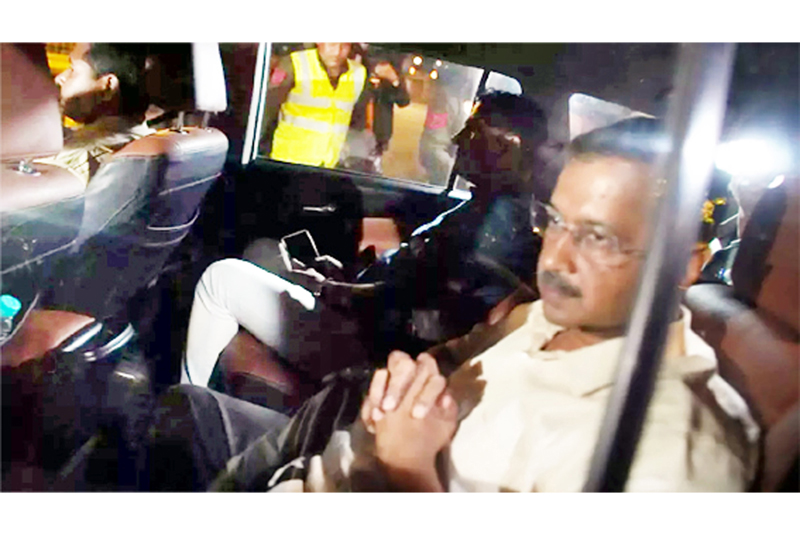
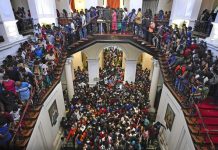
New Delhi : Delhi Chief Minister Arvind Kejriwal was arrested by the Enforcement Directorate (ED) on Thursday night in an excise policy-linked money-laundering case, officials said.
The arrest, the first of a sitting chief minister, came hours after the Delhi High Court refused to grant protection to the AAP national convener from any coercive action by the agency.
The 55-year-old leader’s arrest, amid campaign for the Lok Sabha elections, drew angry reactions from his Aam Aadmi Party (AAP).
Soon after the high court order, an ED team reached his residence and carried out searches. Subsequently, he was arrested, officials said.
Officials said the ED would produce the chief minister before a court here on Friday and seek his custody for interrogation.
As the ED officials carried out their action inside, additional Delhi Police personnel and Rapid Action Force (RAF) and CRPF teams were deployed around the chief minister’s residence.
The additional deployment was made as the ED sought extra security measures in anticipation of protests by AAP supporters, sources said.
A large number of AAP workers and leaders gathered near the chief minister’s residence and shouted slogans against the ED action.
During the day, Kejriwal moved the Supreme Court against the high court’s order denying him relief in the matter.
The ED’s action is virtually a replay of what transpired during the arrest last week of Bharat Rashtra Samithi (BRS) leader K Kavitha, who is now in ED custody in the same case.
The case pertains to alleged corruption and money-laundering in formulating and executing the Delhi government’s excise policy for 2021-22, which was later scrapped.
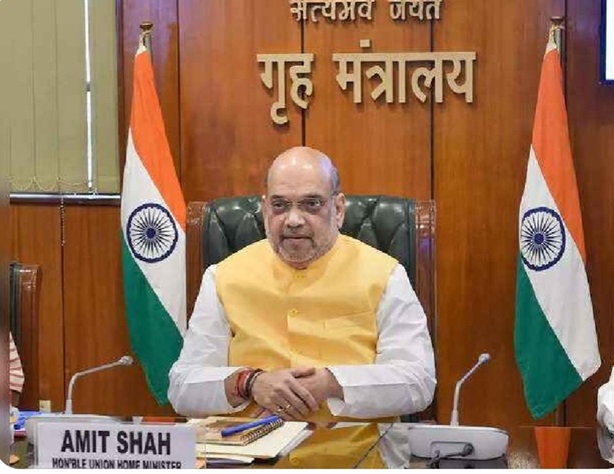
Union Minister of Home and Cooperation Amit Shah on Wednesday said that elections in Jammu and Kashmir would be held before September.
Speaking at the fourth edition of the CNN-News18 marquee leadership conclave — Rising Bharat Summit 2024 – which was held in New Delhi from March 19 to 20, the Home Minister said that the elections in the union territory will be held before September.
Supreme Court has given the government deadline until September this year to hold polls.
Home minister said that the three dynastic parties never allowed democracy to flourish in Kashmir.“However, for the first time during the Prime Minister Narendra Modi government, more than 30,000 Panch and Sarpanches have been elected,” Shah said. “I want to appeal to the Muslim brothers and sisters in Kashmir that if they want democracy to be deepened then do not vote for the three dynastic parties – the Congress, the Peoples Democratic Party, and the National Conference.”
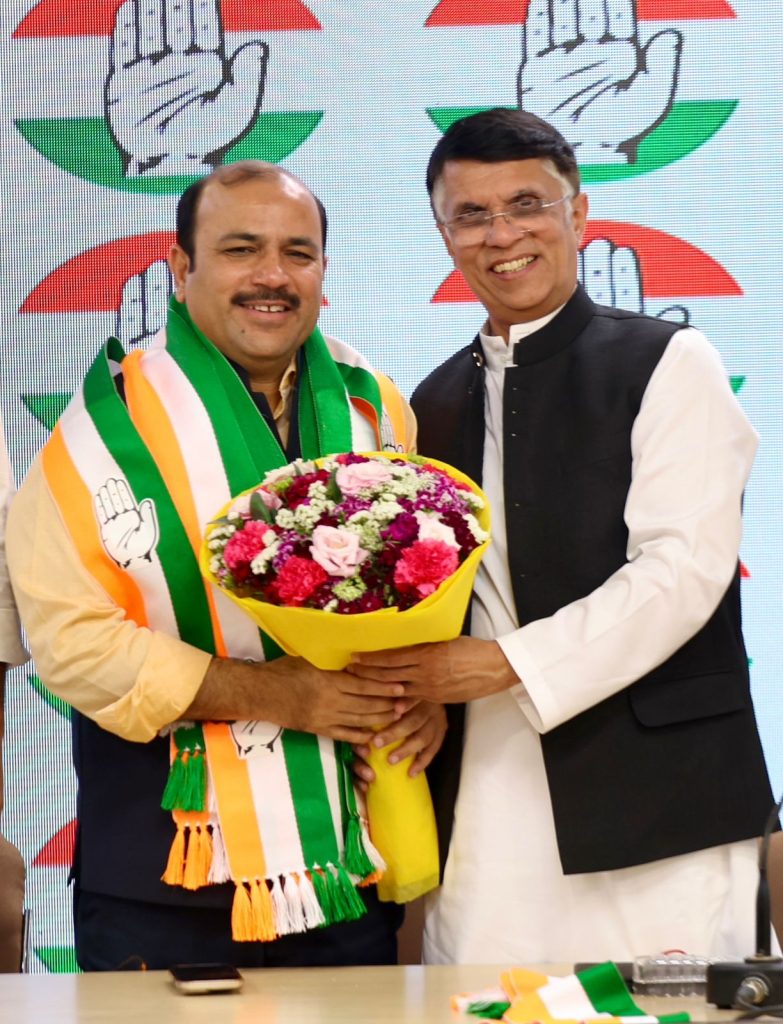
New Delhi : In a major development that will have significant bearing on General Elections in the states of Uttar Pradesh, Bihar, Jharkhand and Jammu and Kashmir, one sitting, two former MPs and a sitting MLA today joined the Congress at the party headquarters.
Congress spokesperson and Chairman of the Media and Publicity in the Communications Department of the AICC Pawan Khera, while briefing the reporters said that the joining of leaders from other parties was going to be a continuous process as the winds of change have started blowing. He pointed out, two sittings BJP MPs, one each from Rajasthan and Haryana had joined the party earlier and more leaders were to follow.
They include sitting BSP MP from Amroha Kanwar Danish Ali, five time MP from Bihar Pappu Yadav, two time MP from Jammu and Kashmir Lal Singh and three time MLA and party whip of the BJP in Jharkhand assembly Jai Prakash Patel.
While Yadav merged his regional political party Jan Adhikar Party, Singh merged his Dogra Swabhiman Sanghathan with the Congress.
These leaders were inducted into the party during separate functions held at the AICC headquarters here today.
Speaking on the occasion, five-time former MP and one time Bihar MLA, Pappu Yadav said, although he was heading his own regional political party, he was always influenced by the secular ideology of the Congress. He said, he had always felt ideologically closer to the Congress and felt happy merging his party with the Congress today.
Lal Singh, who has been a two-time former Congress MP from Udhampur parliamentary constituency in J&K said, in returning to the Congress, he felt like having come back to his home.
Danish Ali said that right now the country was standing at the crossroads as there was a battle going on between two ideologies. On the one side, he said, there was a divisive ideology and on the other hand there was an ideology represented by the Congress fighting for the rights of those exploited and marginalized. He said the choice was clear for him and he decided to join the Congress.
Jai Prakash Patel, a sitting MLA and party whip of the BJP said that under current circumstances in the county, Congress was the only alternative for the nation. He thanked the party leadership for inducting him into the party.
New Delhi : Blooming back with a leap stride, the Indian direct selling industry has registered Year-On-Year (YOY) growth of more than 12%, with the gross industry turnover at Rs 21,282 crore in 2022–23, according to an annual survey report released by the Indian Direct Selling Association (IDSA) here on Wednesday.
The survey, compiled by leading market research company KANTAR, released by G. Kamala Vardhan Rao, Chief Executive Officer, Food Safety and Standards Authority of India (FSSAI) in a function here. Shri Rao took this opportunity to congratulate IDSA on releasing this report.
According to the report, there has been a comprehensive improvement in all areas of the direct selling industry and the total sales have increased by Rs 2252 crore compared to the year 2021-22 which was partially marred by the pandemic. The average growth (CAGR) of the direct selling business in the four years from the year 2019-20 to 2022-23 has remained at 8.3 percent.
The Northern region continues to take the lead with 30% of turnover, followed by the East with 25%, West 22%, South 15%, and North East 9%. Maharashtra led at the top with 12%, followed by West Bengal and Uttar Pradesh with 10% each among the states, the survey highlights.
Wellness and nutraceutical products remained the preferred segment, accounting for 73.5% and cosmetics and personal care 11.3% of the gross turnover. The industry has recorded an 8.3% CAGR over four years, with the number of active direct sellers reaching around 86 lakhs, from 84 lakh in 2021–22, the survey says.
Vivek Katoch, Chairperson, IDSA, said, “The report showcases an encouraging trend for the direct selling industry in the country. The growth trajectory of the industry has been on a surge over the years. A CAGR of 8.3% is a testament to the fact that direct selling business in the country has made steady growth and is poised to strengthen further in the years to come on the back of a promising regulatory framework by the government for the industry.”
“I am happy to share that with sustained growth, India has improved its ranking by one step to climb to 11th place in 2022 on the global direct selling map, up from 15th in 2019. We are confident that with the growth exhibited by the latest survey, India will break into the top-5 direct selling markets in the globe much sooner than the earlier estimates,” said Mr. Katoch.
“Around 86 lakh direct sellers are actively self-employed in the direct selling industry in India. There has been a staggering growth in this area and the business as well that shows the growing trust and confidence in the direct selling business,” said Mr. Harish Pant, Vice Chairman, IDSA.
On this occasion, about 15 women entrepreneurs who have excelled in the field of direct selling were also honoured.
Aprajita Sarcar, Treasurer, Rajat Banerji, Secretary and senior dignitaries from the member companies, IDSA, were among the other dignitaries present on the occasion.
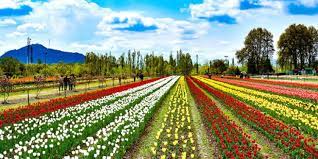
Asia’s largest Tulip Garden, also recognized as the Indira Gandhi Memorial Tulip Garden, located at Srinagar in Jammu and Kashmir is gearing up to welcome visitors from March 23, 2024. Nestled at the base of the Zabarwan mountain range, offering a picturesque view of the iconic Dal Lake, this garden promises to be a visual delight.
With an anticipated display of 1.7 million tulips, the upcoming tulip festival 2024 in Srinagar is expected to draw crowds of both local and international tourists. The Department of Floriculture, headed by Commissioner Secretary Sheikh Fayaz Ahmad, has confirmed the completion of groundwork to ensure a seamless experience for visitors. An additional four kanals (0.5 acres) of land have been allocated for parking to accommodate the influx of guests.
This year, the tulip garden boasts a total of 73 varieties of tulips, including five new additions. To accommodate the expanded collection, the garden area has been enlarged accordingly. Beyond tulips, visitors can revel in the beauty of other flowers, enhancing the garden’s allure.
Spanning approximately 15 hectares, the Indira Gandhi Memorial Tulip Garden first opened its gates to the public in 2008. Commonly referred to as ‘Siraj Bagh’, the garden, adorned with various unique tulip varieties, is poised to secure its place as the second-largest tulip garden globally after its inclusion in the World Book of Records (London).
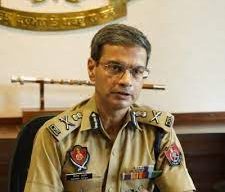
Chandigarh: In order to ensure free, fair and peaceful forthcoming General Elections 2024, Director General of Police (DGP) Punjab Gaurav Yadav on Tuesday, directed all the CPs/SSPs of the state to lay effective interstate/inter-district nakas to keep vigil on the movement of anti-social elements, drug smugglers and bootleggers, and mobilise maximum force for area domination and confidence-building measures.
The DGP was chairing a state-level meeting through VC at his office with senior police officers, Range ADGs/IGs/DIGs, CPs/SSPs, all gazetted officers posted in districts, and all SHOs in the state to review preventive measures ahead of elections and apprise them about the guidelines of the Election Commission of India (ECI).
Emphasising on the need to build a positive environment in the state, DGP Gaurav Yadav directed all the police officers to do professional policing and strictly adhere to all aspects of the Model Code of Conduct and follow all the instructions and guidelines from the ECI to hold free and fair elections. The instructions of the ECI should be further disseminated with the entire force, he said.
DGP Gaurav Yadav informed the officers that there is a complete ban on the issuance of new arms licenses. He also directed the CPs/SSPs to ensure the deposition of weapons in compliance with the ECI norms.
He also asked CPs/SSPs to frequently carry out checking at gun houses to review the security arrangements and ensure that foolproof arrangements have been made by the gun house owner for safe storage of firearms.
He directed the officers to carry out mapping of vulnerable areas to identify the sensitive and hyper-sensitive areas so that extra force could be deployed to avoid any untoward situation ahead of the General Elections. He also directed all the officers to make special efforts to nab accused persons involved in heinous crimes and expedite the investigation and prosecution of cases of election-related offences.
The DGP ordered officers to intensify the checking of vehicles, especially commercial vehicles, entering and exiting the state to check the influx of narcotics and illicit liquor. There should be no let up in the ongoing campaign against drug traffickers, criminals and gangsters, he said.
He said that a special campaign has already been launched to arrest Proclaimed Offenders (POs) and Parole Jumpers and for execution of non-bailable warrants (NBWs).
Pertinently, since the launch of special campaign from January 1, 2024, Police teams till now have arrested as many as 2890 POs, while, preventive action has been taken initiated against 2456 people under sections 107/151 of the CrPC act. Similarly, of a total 2110 Non-Bailable Warrants, 1175 NBWs have been executed successfully.
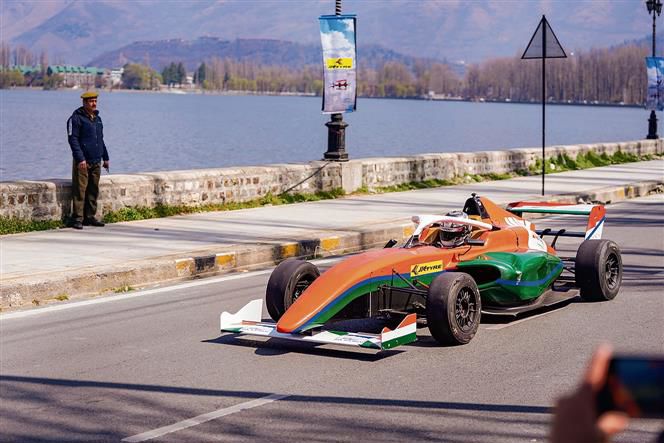
Srinagar’s Dal Lake on Sunday played host to the region’s first-ever Formula-4 car racing event. The picturesque Boulevard road witnessed sleek racing cars roaring against the backdrop of the majestic Zabarwan Hills, captivating spectators with a thrilling spectacle.
The racing demonstration along the banks of the Dal Lake was held to promote motorsports in Jammu and Kashmir.
Prime Minister Narendra Modi, in a social media post, appreciated the efforts of the organisers of the racing event.
“This is very heartening to see. It will help further showcase the beauty of Jammu and Kashmir. India offers great opportunities for motorsports to thrive and Srinagar is right on top of the places where it can happen!” PM Modi said in a post.
Divisional Commissioner Kashmir, Vijay Kumar Bidhuri, lauded the occasion as a symbol of the Valley’s progress, expressing optimism about its potential to elevate Kashmir’s profile, attract tourists, and stimulate the local economy.
Director of Tourism Kashmir, Raja Yaqoob, echoed this sentiment, emphasizing the region’s growing reputation as an adventure tourism destination and its commitment to nurturing local talent.
“With the introduction of high-octane events like this, we are not only entertaining but also investing in the future of Kashmir’s youth and tourism industry,” Yaqoob said.
He further highlighted that the race would serve as a platform for local talent, nurturing a new generation of sports enthusiasts with aspirations to compete on a global scale.
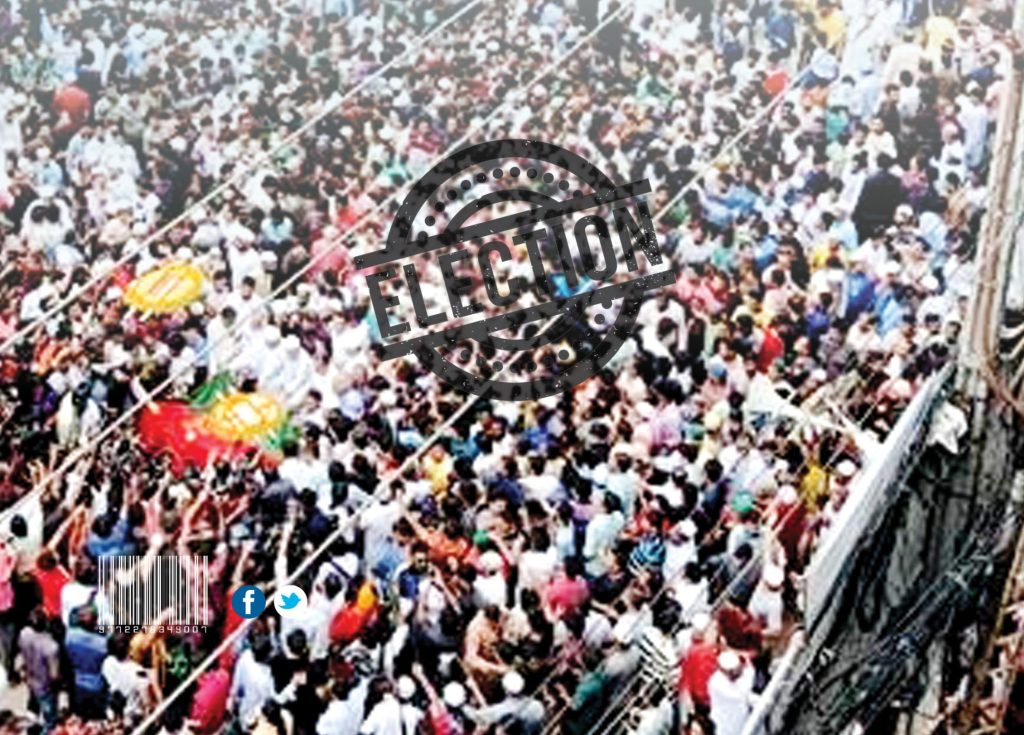
As the country gears up for 2024 general election, Tehelka SIT uncovers the shadowy industry involved in sourcing crowds at political rallies for a price.
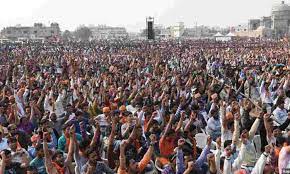
Crowd sourcing is fast turning into an industry in the realm of politics. Globally, there are companies which have established themselves in the business of mobilizing crowds for political and socio-economic causes. In the United States, companies like Crowds on Demand and Crowd for Rent, alongside the UK’s Envisage Promotion, thrive on orchestrating the assembly of crowds. But this phenomenon is not limited to these two countries, as evidenced by a Kenyan author’s book, “Crowd for Hire: How Kenyan politicians source crowds for events.” Indeed, crowd hiring has become ubiquitous, and no matter what clime you go to, professional crowd contractors can be seen plying their business profitably. The phenomenon of crowd hiring knows no bounds; professional crowd contractors thrive globally, serving a diverse clientele.
Politicians across the world love to gauge their popularity by the sheer magnitude of the crowds they can attract. But is this truly an accurate measure when many in attendance have been enticed with promises of food, alcohol, or cash? Numbers, particularly crowd size, hold significant sway in world politics, and India is no stranger to this phenomenon. From the United States and the United Kingdom to South Africa, Kenya and Nigeria, crowds serve a similar purpose: projecting strength, influencing public opinion, creating a perception of widespread support, and generating media buzz and optics.
With the 2024 general election around the corner, the stakes are high, and the tactics employed by political entities to gather crowds take center stage. It’s not uncommon to observe familiar faces at separate rallies hosted by different political parties. The advent of social media has exacerbated this trend, enabling the manipulation of crowd images through techniques like photo-shopping and the creation of fake videos to exaggerate their size.
In light of these developments, Tehelka has undertaken a long-awaited investigation into the sourcing of crowds, a practice rapidly evolving into a global industry. For years, whispers of “rented crowds” have lingered, but concrete proof remained elusive. This investigation by us marks the first time that media has captured contractors on camera who provide crowds for hire to any political party willing to pay.
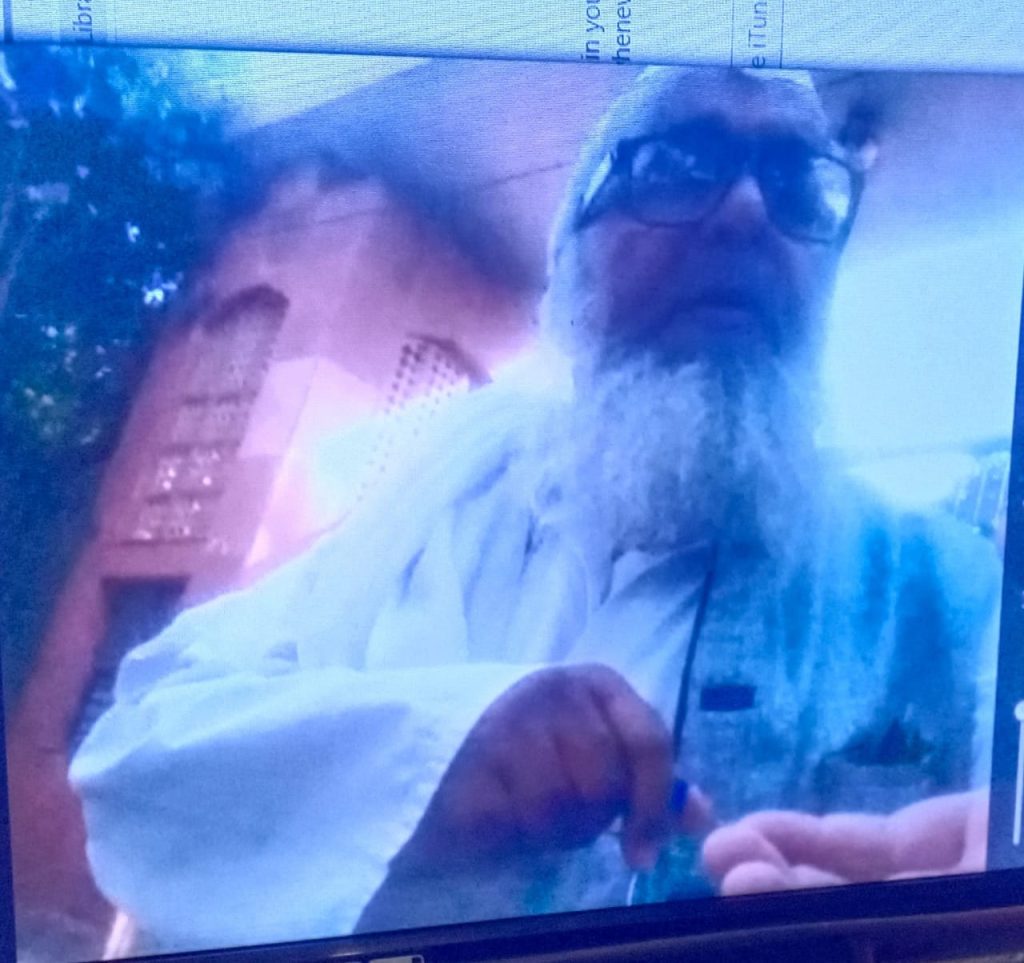
Now, allow us to introduce Junaid Ahmed, a crowd contractor based in Delhi. Junaid’s first-hand account sheds light on the harsh realities of the ‘industry’. “I was promised Rs 2500 for the bus expenses for transporting the crowd a political rally site in Delhi besides lunch for them by the organizers,” Junaid recalled. “I arranged for more than 100 people, but after the rally, they gave me only Rs 1500 instead of the agreed upon amount of Rs 2500. So it was Rs 1000 short of what they had promised.” Junaid further elaborated on the organizers’ failure to fulfill other commitments, stating, “And instead of lunch as promised, the people I had arranged only received bread pakoras.” This left him covering the shortfall from his own pocket. “I ended up paying Rs 1000 from my own pocket for transporting the people in the bus that I had arranged,” Junaid disclosed. “Next time,” he declared, “I will ensure that the crowd I arrange for any political party rallies receives the full amount promised to attend the rally.”
It may be mentioned that in November 2022, Karnataka witnessed a Junaid-like uproar when crowd at political rally protested, claiming they had been similarly shortchanged. According to their allegations, the local MLA had offered them Rs 500 each, but they only received Rs 200. Their task? To attend a political rally. More recently, the BJP released a video accusing Congress leader and former Karnataka Chief Minister Siddaramaiah of instructing party leaders to bring people to their rally after paying them Rs 500 each. The video, which went viral on social media, purportedly shows Siddaramaiah traveling in a bus with Congress state leaders and making these remarks. However, D K Shivkumar, the Karnataka Pradesh Congress Committee (KPCC) chief, swiftly dismissed the allegations. He claimed that the video was fake and insisted that the party did not engage in the practice of paying people to participate in their rallies.
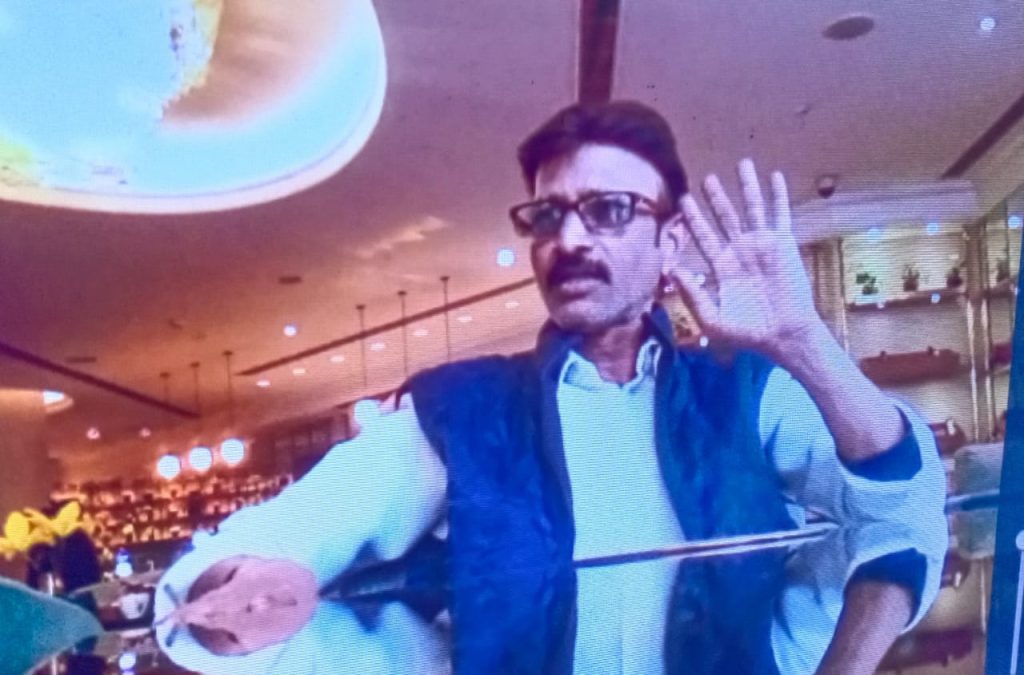
Meanwhile during the investigation, Tehelka first met with Murad Ahmed, a crowd contractor and activist. Murad, who works with a prominent NGO in Delhi overseeing multiple shelter homes, disclosed the number of people he could mobilize for our hypothetical political rallies during the upcoming 2024 general election. Initially, Murad explained, he could arrange 50 individuals for our out-of-town rally, all of whom would come from the shelter homes under his purview. For rallies within Delhi, he offered to organize 100 people. These figures, he assured, were just the starting point; as our confidence in him grows, he expressed his willingness to increase the numbers
Reporter- Aap kitno ki guarantee le rahe ho ye bata do mujhe.?
Murad- Dekhiye Delhi se bahar k to ye log bhi thoda sa,..Delhi k bahar to achey hi log bhejenge jab itna paisa de rahe hain, jab Rs 5000 de rahe hain per bande k hisab se.
Reporter- Ismein auratein bhi dekh lijiyega..?
Murad- Accha ismein aapne auratein…acha aapne choot de di hai jitney marzi le aao.
Reporter- Humein auratein bhi chaiye, bacche bhi, nabalik bachey bhi chahiye.. dikhaney k liye dekho nabalik ki bheed bhi aa rahi hai… kitni chahat hai netaji ki..
Murad- Kum se start karengey..ek aadh pehle trip mein chale jayenge na phir wo aan kar batayenge…..jo dikhta hai wo hi bikta hai, hum 1000 admi se keh de aur wo nahi jaaye…50 jayenge wo laut kar 50 ko batayengey,…isliye 50 log se hi shuru karengey jo acche hain…50 log aap bhi dekh lenge ki inke log kaisey hain.
Reporter- Sare NGO k log honge aapki..
Murad- Nahi nahi…sare hamare log hongey, hum NGO se nahi letey….Raien Basera k log hongey.. usmein se kuch aisey bhi hain 10th padh rahe hain, kuch graduation kar chuke hain,…kuch hum mein se bhi hongey.
Reporter- Accha sab hongey.. nabalik bachey bhi honge.. matlab aap 50 ki guarantee de rahe ho..?
Murad- Haan 50 ki, usmein mera bhi test ho jayega, aapka bhi test ho jayega.
Reporter- Aur agar local Delhi mein ho to.?
Murad- Local to 100 ho jayenge, 100 mainey abhi aap..jab waqt aayega to us samay ho sakta hai mein aapko 200 bhi kar doon..
[Our meeting with Murad Ahmed unveils his capacity to mobilize crowds for political rallies. His commitment to increase the number of attendees as trust develops underscores his confidence in meeting our needs for the upcoming elections.]
Murad now proposed a remuneration of Rs 25,000 for both himself and his partner to orchestrate the assembly of the crowd for the political rallies. Furthermore, he stressed the importance of maintaining strict confidentiality regarding this arrangement.
Reporter- Aur janey se 2 din pehle advance paise mein de dunga, mein nahi matlab wo de denge..kisko dene hai ye..aap bata dena.
Murad -Haan haan..mujhe de deina ya inhein de de..kisi ko bhi…koi dikkat nahi hai..
Reporter- Humko khamoshi se dena hai..?
Murad- Bilkul, ye hi mein aapse kehne wala tha..ye baat jo bhi hai bas yahin khatam ho…phone pe aap Wajahat se baat kar lena…koi show nahi, na aap saamne aayenge, na hum….aise kaam karengey kisi ko pata na chaley.
Murad- 25-25 k (hazaar) hum dono ko de dena..
Reporter- Kitna, 25-25 hazar aapko aur Wajahat ko…theek hai.. Mein baat kar lunga..
Murad- Aap baat kar lena jaisa bhi ho bata dena.
[Murad demanded Rs 25k each for himself and for his partner for arranging crowd even as he emphasized on maintaining a veil of confidentiality on the whole issue.]
Now, Murad disclosed that he had 10 years of experience in arranging crowds for various events. He boasted how he had organized crowds for numerous rallies in Delhi. Regarding the charges for crowd sourcing, Murad mentioned that there were no fixed rates. Depending on the client, it generally ranged between Rs 500 to Rs 1000 per person, along with allowances for food, etc, he informed. He said that the crowd would also raise slogans in favour of the party which would hire them!
Reporter- Pehle to mujhe ye batao aapko experience hai is kaam ka.?
Murad- dekhiye aapney jo kaam bataya hum us kaam se 10 saal se jude hain….ismein experience kya.. public hi to ikattha karni hai…experience matlab wo aadmi chahiye jiske aadmi end time par mana na kare.
Reporter- Aur wo bhi jise pehle se experience ho.
Murad- Haan ye kaam to main aapko bata hi diya main pehle kar chukka hoon, haan Delhi se bahar ka nahi kiya…Delhi se bahar na kisi ko bheja hai na koi gaya hai.
Reporter- Rally mein bheja hai bheed mein..?
Murad- Rally mein to bheja hai yahan.. Ramleela ground mein..aur jagah mein, juloos mein bhi.
Reporter- Kitney log bhej diye hongey aapne rally mein ?
Murad- Rally mein to bahut ho jatey hain, jaisey maan lijiye 100 hamarey pass hain 100 unke apney jaanney wale ho jatey hain.
Reporter- Unka kitna charge kartey hain rally mein jane ka..?
Murad- Wo party karti hai,…1000- 500 rupee per banda ..aur khana peena…alag alag hota hai.
Reporter- Accha naare unko wahi laganey hai, jo party paisa de rahi hai unke favour ke.?
Murad- Dekhiye wo to jhadu hoga to jhadu k lagege, haath hoga to haath k lagege aur phool hoga to uske,..wo to aap jo likh kar de dogey wo bol denge
Reporter- Jo paise de raha hai usi k haq mein..
Murad- Haan ..
[Murad’s extensive experience in crowd organization and flexible pricing structure highlight the complexity of crowd sourcing for events.]
Now, Murad issued a solemn warning, stressing the critical need for secrecy regarding his involvement in supplying crowds from the NGO’s shelter homes to rallies. He emphasized the potential consequences, including the risk of losing his job and the NGO facing bans or other repercussions.
Reporter- Accha ismein darr hota hoga NGO k malik ko pata na lag jaye,…unki knowledge mein nahi hota hoga ye.?
Murad- Haan ji..ye to hamarey haath mein hota hai, nahi to hamari NGO badnaam ho jayegi, aap aisa kaam kyun kar rahe ho?
Reporter- Aapki naukri chali jayegi?
Murad- Naukri chali jayegi…unki NGO ban ho sakti hai.?
[Murad explains to us the importance of being discreet in this business as he cautioned us against putting the word out on the deal.]
Murad not only agreed to provide a fake crowd for our political rallies, but also assured that the crowd would even raise provocative slogans if required. In fact, he didn’t stop there as he also mentioned that a few members from his crowd would be willing to hurl shoes and throw ink if required, although the charge for this task would be doubled. He explained that there are people at his shelter homes who are willing to engage in such negative actions if asked and paid.
Reporter- Accha ek to kaam ho gaya ye , aur ek maan lo koi khilaf ke naare lagwaney hain,..
Murad- Khilaf ka matlab…wo to paise ka hi khel hai ho jayega..
Reporter- Aapke hi khilaf maan lo nare lagwaney hain.
Murad- Paise double ho jayenge, wahan par to matlab lathi charge bhi ho sakta hai,..police bhi hoti hai, wo rookti hai.
Reporter- Joota phek de, siyahi phek de.
Murad- Haan par dande khane wali public bhi honi chahiye..
Reporter- Aisi public hai.?
Murad- Aisi public ho jayegi,..jo hamarey shelters mein hain, wo hi kar saktey hain,…joota maarna, gali dena aise kaam wo hi kar saktey hain… ho to jayenge, magar kam honge,…jaise 50 log hain unmein se 30 to sirf khade rahengey haan haan karney wale, 10 wo honge aage jakar bolne wale..murdabad ke naare laganey wale.
Reporter- Koi siyahi phek de, joota maar de ?
Murad- Dhoonde ge, wo bhi ho hi jayega,…par itni quantity mein nahi honge…kyunki har koi safe game khelta hai..
Reporter- Arey ismein koi zyada log thodi hi chahiye…joota, siyahi, mein to 1-2 log ka hi kaam hota hai, wo hi hit ho jata hai bas.
[Murad’s willingness to employ disruptive tactics, including provocative slogans and physical aggression, underscores the unethical depths of crowd manipulation in political rallies.]
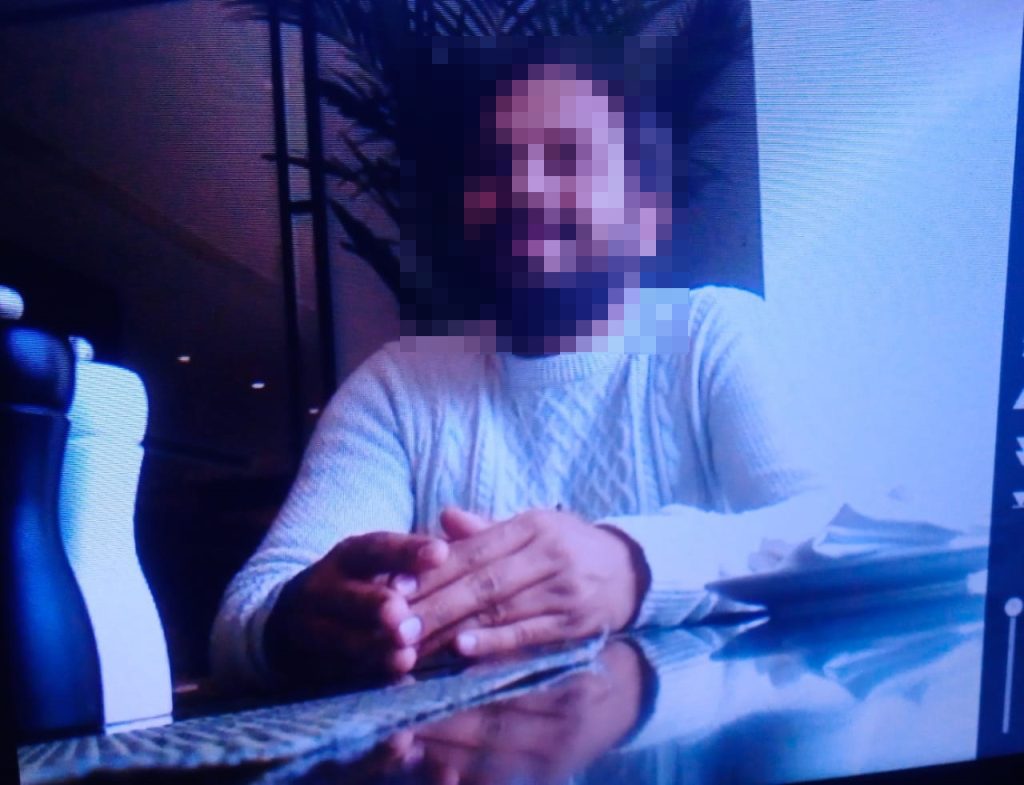
We now encountered Shashank Chawla, a Delhi-based crowd contractor and theatre artist known for his nukkad nataks (street plays). We informed Shashank of our requirement for crowd support for upcoming political rallies in the 2024 general election. He indicated that he could offer 100-120 people for rallies in Delhi.
Reporter- Agar local chahiye ho Delhi mein..?
Shashank- Delhi mein to mil jayega…koi dikkat nahi.
Reporter- Delhi mein kitna kara denge aap ?
Shashank- Sir dekhiye meri jo capacity hai.. wo 100-120 ke aas pass hai.
Reporter- Theek hai..
Shashank- Mein jhoot nahi bolunga ki 500-1000..itna na aa paye to phir, bekaar baat hai.. Delhi mein kab chahiye honge aapko..?
Reporter- Delhi mein main date bata dunga aapko..
Shashank- Aap kam se kam 15 din pehle bata dena..
Reporter- Haan mein aapko bata dunga..
[Our encounter with Shashank Chawla reveals his dual role as a crowd contractor and theatre artist, offering insight into the multifaceted nature of his profession. His assurance of providing a sizable crowd for political rallies demonstrates his capacity to meet specific event needs.]
When asked about the composition of the crowd he would provide, Shashank mentioned that children in the age group of 14-15 would also be included. However he hastened to add that they would appear older than their years and would not arouse any suspicion
Reporter– To is mein crowd mein bacchey, auratein, aadmi sab honge.?.
Shashank- Aadmi honge, auratein hongi, bacchon ka mein abhi mana hi karunga sir, mere liye bhi..thoda..haan to rahengey adult hi, 14- 15 saal itna chal sakta hai,..young boys and girls
Reporter- 14-15 saal to minor hi hue?
Shashank- Matlab aajkal to sab mature hi lagtey hain,..matlab aap 14 year k bachey ko dekh lenge to keh nahi saktey 14 ka hain…19-20 k to lagtey hi hain…aisey hi matlab jinka look mature ho, mein arrange karwa donga.
Reporter- Theek hai, 14-15 saal k karwa dijiyega..
Shashank- Theek, koi verification karney to baitha nahi hai.
[Shashank’s assurance that the assembled crowd would withstand scrutiny, even with underage participants who could pass for older, highlights the meticulous planning involved in crowd procurement.]
When asked about the demographics of the crowd he would provide for the rally, Shashank explained they would be individuals from poor and unemployed backgrounds. He emphasized this was to maintain an air of authenticity even as he disclosed that unemployed individuals often approached him seeking such opportunities as a means of earning a living.
Shashank- Maximum to maximum mainey abhi tak 80-85 crowd bhej rakha hai.
Reporter- 80-85?
Shashank- Haan, uskey baad kya hota hai..log judtey hain na ek doosre se, phir…bhai hame bhi karwa do, kai log ne mujhe bola bhai hamarey dost hain, unhe bhi jodiye, to judh saktey hain.
Reporter- Jodh lijiye matlab kis cheez mein..?
Shashank- Crowd ke ander hi, jinko kaam ki zaroorat hoti hai na, kuch hotey hain jo khali bethey rehtey hain, kaam ki zaroorat hoti hai, unhoney mujhe kaha ki hamey bhi jana tha, mainey kaha next time hoga to dekhenge,
Reporter- Unko paisa mil jayega 2000 rupees aur kuch nahi ..to kis type ka crowd hoga?
Shashank- Ab rally k liye aap mang rahe hain to rally k liye to gareeb, mangney wale hotey hain,..
Reporter- Haan ..haan.
Shashank- Rally k liye to yahi chalega….dikhana to padta hi hai, if I am not wrong.
[Shashank’s revelation brings into focus the socio-economic dynamics at play in the crowd-procuring industry. His emphasis on authenticity highlights the desperate circumstances that lead many unemployed individuals to engage in such activities for livelihood.]
When asked about the cost of procuring the crowd, Shashank initially diverted the conversation, mentioning his experience in arranging crowds for film shoots. However, he later quoted a price of Rs. 2,000 per person for providing crowd support at our rally, which we accepted.
Reporter- Inke charges kya honge Delhi ke..
Shashank- Aap bataiye sir…aapka kya hai.?.
Reporter- Agar aap thoda bataye to mujhe zyada comfortable hoga…..aapka kaam hai ye..
Shashank- Hmm, mera kaam to hai sir… mein zyada tar crowd shoots wagerah k liye provide karwata hoon.
Reporter- Ek bhi rally k liye nahi karwaya aapne.?
Shashank- Rally wagerah k liye, mainey aapko bataya than na, shoots wagerah k liye hum karwatey hain, matlab 2000 per head maan kar chaltey hain kyunki usmein aana jaana bhi rehta hai.
Reporter- 2000 per head theek hai.
[Shashank’s initial hesitancy followed by the agreement on a price reflects the intricate negotiation involved in crowd procurement for political rallies.]
Shashank then disclosed the commission he would deduct from the total amount we were to pay. He stated that his commission would be 30 percent of the total payment.
Reporter- Aapka kitna charge hoga.?
Shashank- Sir ismein hum, jo deduct kartey hain wo 30% deduct kartey hain..
Reporter- 30% matlab?
Shashank- 30% aap laga lijiye..
Reporter- Aap 100 log bol rahe hain na,100×2000
Shashank- 100×2000….Ek ka 2000…haan.
Reporter- Ek ka 2000 na, kitna ho gaya, 2 lakh
Shashank-Hmm.
Reporter- Uska 30% aapka matlab, 30,000.?
Shashank- Nahi.. 30 nahi Rs 60,000.
[Shashank’s disclosure of a 30% commission from the total payment underscores the financial dynamics involved in crowd procurement arrangements.]
We now met the third character in this story, Junaid Ahmed, a Delhi-based crowd contractor who also provides crowd for political rallies. Junaid recounted how he was cheated in 2018. An organizer of a political rally had approached him to provide a crowd for the event. He said he arranged the crowd as requested and was promised Rs 2500 for the bus to transport people to the rally site. However, after the rally, he was only paid Rs 1500, leaving him short by 1,000 rupees, which he claimed to have paid out of his own pocket. He lamented that the crowd, who had been promised proper lunch, were served with bread pakoras instead. With a firm resolve to protect the interests of his workers, Junaid vowed to fight for fair treatment in future.
Reporter- Aapne kitney log bheje they XXXXX ki rally mein..?
Junaid-100 se upar they..
Reporter- 100 se uper log bheje they aapne, sab aapke madarse k they ya kahan ke..?
Junaid- Wahin aas pass ke..
Reporter- Aapke elakey ke they.?… Ye madam XXX ki thi.?
Junaid- Lagta hai wohi … Madam se to hamari mulaqat hi nahi hui, unke bete se hui thi…1500 rupiya bus ka bhada de diya, 1000 humko jeb se dena pada, 2500 mein teh hua tha.
Reporter- Accha-acha, jo bheed ko le jana teh hua tha wo 2500 rupiya mein hua tha.
Junaid- 2500 mein bus teh hua tha…
Reporter- Jana unhein local delhi mein hi tha..public ko inhoney paise nahi diye ?
Junaid- Bread pakora khila kar bhej diye…khana tak nahi diye..
[Junaid Ahmed’s bitter experience underscores the exploitation faced by crowd procurement managers for rallies. He recounts how he was short-changed by rally organizers a few years ago.]
The Tehelka exposé has laid bare the connection between readily available young people for political rallies and the stark realities of unemployment, hunger, and profound poverty afflicting our nation. While the practice of renting crowds may be an old political tactic, India’s unemployment crisis, especially among its youth, provides fertile ground for such mobilization, regardless of its ethical implications. Many underemployed individuals, including idle youths, stand ready to be hired; their energies directed towards political causes that often do not reflect their own interests or beliefs.
The report sheds light on another key factor behind these large crowds: the pervasive poverty in India. This is where the dubious utility of crowd contractors, as exposed by us, becomes apparent. Many Indians who should be engaged in productive activities are instead lured by wages between Rs 500-1000-2500, often accompanied by a food packet and even liquor, to attend campaign rallies.
So, our special investigative report has exposed the complex interplay between poverty, unemployment, and political mobilization in India. By shedding light on the practices of crowd contractors, we aim to foster greater awareness and scrutiny of these ethically dubious tactics in the political arena.
Former J&K Chief Minister Omar Abdullah on Friday urged the Election Commission of India to prioritize the restoration of full democracy in the Union Territory (UT).
Talking to reporters, Abdullah emphasized the importance of scheduling both Parliament and Assembly elections to ensure democratic representation in the region.
Abdullah expressed his lack of expectations from the Election Commission, asserting that their primary focus should be on facilitating the democratic process in Jammu and Kashmir. He highlighted the prolonged absence of Assembly elections in the region, stressing that it has been a decade since the last such electoral exercise took place.
“We have no expectations from the Election Commission. The Election Commission should play a role in its mission of bringing democracy. It has been ten years since Jammu and Kashmir has seen Assembly elections,” Omar said.
Abdullah further questioned the disparity between the conduct of Lok Sabha elections and the delay in holding Assembly elections in Jammu and Kashmir. He called for simultaneous scheduling of both elections, underlining the need for equitable democratic representation across all levels of governance in the UT.
As elections near, crowd-outsourcing becomes a new avocation with zooming demand for people during campaigning, rallies, and processions. Though no candidates in the fray or political parties would admit this new phenomenon, the truth is one can find many people with no political affiliation and many a time not even knowing whom they are supporting, filling as crowds for ‘netas’ and political outfits. There is little doubt many ‘Rent-a-Crowd’ or ‘Crowds on Demand’ shops have mushroomed in recent times to make a killing. The thought behind this newfound business is that the size of the crowds in political rallies determines the strong credentials of ticket contenders and the graph of candidates in elections. So next time you attend a political rally, look at the enthusiastic crowds with a pinch of salt.
Tehelka Cover Story in this issue ‘Crowd on Rent’ tries to uncover the shadowy industry involved in sourcing crowds at political rallies for a price as the country braces up for the 2024 general election. Our Special Investigation Team found during its long-awaited investigation into the sourcing of surging crowds, a practice rapidly evolving into industry. For years, whispers of “rented crowds” have lingered, but concrete proof remained elusive. This investigation by us marks the first time that the media has captured contractors on camera who provide crowds for hire to any political party willing to pay. It is a fact that politicians love to gauge their popularity by the sheer magnitude of the crowds they can attract to create a perception and build a narrative, but is this truly an accurate measure when many in attendance have been enticed with promises of food, alcohol, or cash? No doubt, it is not uncommon to observe familiar faces at separate rallies hosted by different political parties.
Crowd contractors give their first-hand account of this new roaring, upcoming ‘industry’ when contacted on hidden cameras. A crowd contractor who doubles up as a functionary of a shelter home offered to arrange a crowd for Tehelka SIT’s hypothetical political rallies at a price. Our exposé has laid bare the connection between readily available young people for political rallies and the stark realities of unemployment, hunger, and poverty that lure people to participate in the crowd. The report unravels the dubious operation of crowd contractors to attract crowds with the offers of food packets, liquor, and cash to attend campaign rallies. Crowd contractors’ mantra for business is to convince ‘netas’ that “if you are surrounded by crowds and paparazzi, you are taken more seriously.” These crowd providers go to the extent of signing non-disclosure ‘guarantees’ to protect the client’s anonymity. The audacity with which they work can be seen in a company ‘Bheed Gnr8tr’ openly proclaiming on its website that it is ‘India’s first and only Rent-a-Crowd Platform”, offering ‘bheed’ or crowd for rent throughout India. We hope Tehelka’s story will foster greater awareness and scrutiny of these unethical tactics in the political arena!