Reforestation: Nursing the hills back to health in Darjeeling

A 25-year-long reforestation project, which kicked off in 1996 at Darjeeling to arrest deforestation, has paid off. A report by Deepanwita Gita Niyogi
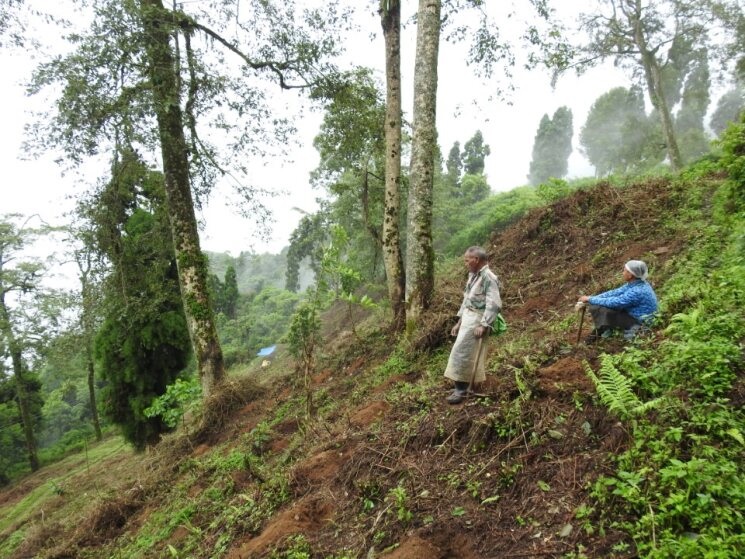
After his retirement as a tea garden worker, Birbahadur Yogi found a new vocation in life. In 2010, Yogi, a resident of Darjeeling district in West Bengal, started working with WWF-India on a hill restoration project which he continued actively for the next four years along with many of his companions.

A resident of Phoobsering tea estate area, which lies at an elevation of 1089 metres, Yogi was already a member of Sunakhari, an active self-help group in his village, with a population of about 2000. This helped him to work at the community level, the 72-year-old man said.

“I participated in the plantation work in Phoobsering which was carried out over an area of 20 hectares to restore the hills after I retired from work. Over the years, several community groups were also involved in the plantation activity carried out at various locations across Darjeeling,” Yogi said.
His village is about 13 km from Darjeeling. Most people in Yogi’s village work in tea gardens. Some have agricultural lands too where they grow vegetables for daily use.

Reviving the hills

Pasang  Lepcha, who worked on the WWF-India restoration project report, Reforesting the Darjeeling Hills (1996-2022), on the completion of 25 years, informed that restoration started way back in 1996 to revive degraded land and increase green cover in the Darjeeling Hills.

Pemba Tshering Bhutia from WWF-India, who has been with the non-profit for 22 years, admitted that high demand for fuelwood led to deforestation in the first place. The demand escalates during the long and harsh winter months.

“To control the situation, a plantation took place, where community members involved in the work planted local tree species. Now, with the arrival of gas cylinders, the pressure on forest for firewood has somewhat reduced,” Bhutia said.

According to Lepcha, restoring the hills through plantation was the main aim. Tree plantation happened in tea gardens, army lands, forest areas and community lands. One special place covered under the project was Margaret’s Hope tea estate.

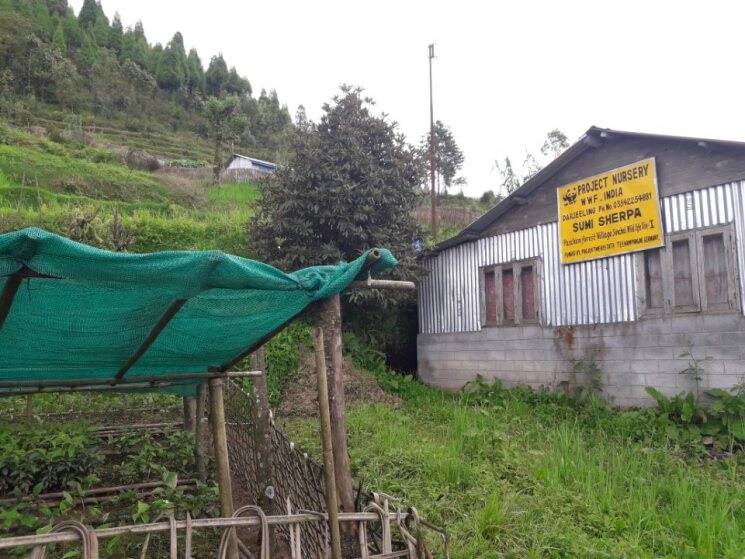
The project, which has been successful, may continue for five more years. The organisation has project nurseries for the purpose from where saplings are supplied. When the project was launched, 14 nurseries were established. At present, only two nurseries function. Over the year, a  total area of 510 hectares has been covered. It is a huge area to be covered in the hill slopes where there are multiple challenges.
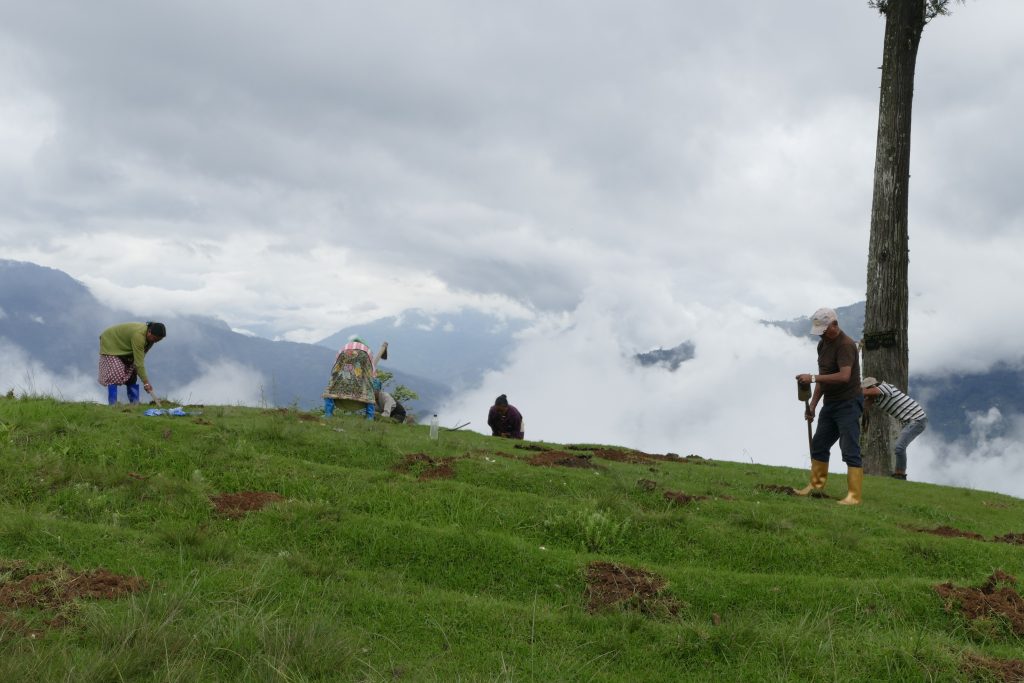
For Yogi, the work has been a rewarding experience as he has earned a lot of respect from his community members. “There is a healthy forest in and around the Phoobsering tea estate where birds are seen and even leopards have been spotted. At 72, Yogi still takes an active interest and keeps an eye over the plantation area. Along with Yogi, other retired people from the tea garden also carried out the work,” Lepcha added.

High pressure on the hills

Darjeeling, popular all over the world for tourism, fine tea and timber, is experiencing a high level of pressure from tourists in recent times. The place, known for rich biodiversity and cultural values, is running out of water. Darjeeling lies in the Eastern Himalayas and is part of the Indian Himalayan region.

Deependra Sunar, who once worked as a teacher in a school in neighbouring state Sikkim before becoming a part of WWF-India, said Project SERVE (Save the Environment and Regenerate Vital Employment) was a single-donor project which helped start the plantation activity in the 1990s. Tea estates, the forest department and community-based organisations have been partners in this project all along.

“The catchment area of Darjeeling falls in the Senchal wildlife sanctuary which is a protected forest area. There are several springs which act as the lifeline for the local population. The plantation of over three million saplings will also help revive these natural springs, besides addressing land degradation,” Sunar added. Local springs are an alternative source of drinking water in both urban and rural areas of Darjeeling. Some of them are in the heart of the town. Tree plantation will help recharge the groundwater.

Apart from degradation due to the loss of trees, weeds also spread in many areas. It was also a major problem that has been addressed through plantation activity. Another objective of the plantation is to arrest soil erosion. Pits are also being dug to conserve rainwater and prevent run-off.

Besides plantation activity which ensured the livelihood aspect of communities through the establishment of nurseries, communities are being encouraged and trained in beekeeping. Distribution of improved cook stoves has also taken place to reduce the dependency on forests or fuelwood.

According to Sunar, as a result of climate change, the rainfall pattern has changed in Darjeeling. “Now, it rains heavily over a short period of time which destroys the top soil. Earlier, it was not so.” Thus, it is important to work in this fragile, biodiversity-rich place.
Can AAP sail through the crisis sparked by Kejriwal’s arrest ?

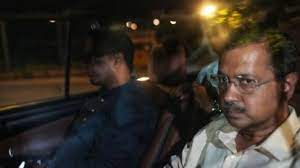
The arrest of Delhi CM Arvind Kejriwal, who led AAP’s rapid ascent over the last decade, has clouded the party’s future with uncertainty. The challenge for the party now lies in finding a worthy leader capable of managing both the party and the government in Delhi. A report by Aayush Goel

When Delhi Chief Minister Arvind Kejriwal was arrested on March 21 on corruption charges, it came as no surprise to the majority of people. This pre-Lok Sabha election drama had been long predicted and anticipated by almost the entire nation, as well as the Aam Aadmi Party itself.

The party had in fact in November 2023 run a door-to-door campaign, asking residents of Delhi whether the CM should resign or run his government from jail. The Enforcement Directorate arrested Arvind Kejriwal after his name was mentioned multiple times in the chargesheets related to the excise policy case. The AAP national convenor is accused of soliciting kickbacks from liquor traders in exchange for favours.

The ED has also accused him of being the “kingpin and key conspirator” in the now-scrapped policy. The agency has already arrested at least 14 leaders including top three: Manish Sisodia and Sanjay Singh and now Kejriwal. The agency is not stopping at that as the federal agency has approached the court seeking permission to investigate AAP, the party Kejriwal is heading,  as a beneficiary of the “proceeds of crime”.

Despite the arrest, which has triggered protest by party supporters and leaders across the country, Kejriwal remains undeterred while strongly denying the charges and accusing the BJP-led Centre of “manipulating investigative agencies for political motives”. The other opposition parties, part of the I.N.D.I.A block, call it BJP’s signature move to divert attention from its shortcomings, electoral bonds scam, this time. The Delhi CM is running his government from jail even as the Lieutenant Governor Vinai Kumar Saxena has strongly objected to the same, raising speculations of President’s rule in the national capital. Kejriwal has also moved the High Court against the arrest and the petition has been deferred for hearing to April 3.

What next?

Amidst the ongoing drama and constant allegations and counter allegations between the two parties, the episode has raised the biggest question: what next?.  One of the foremost issues of discussion and decision is constitutional conduct with a sitting CM attempting to function from prison. Delhi LG V K Saxena has said, “I can assure the people of Delhi that the government will not be run from jail.”  Until now, Kejriwal has shown no signs of relenting on his stand. His party is conveying at every point that the CM is issuing instructions from inside prison. This, by majority, is being seen as symbolic defiance by not quitting, especially when elections are, for all purposes, underway.

The scenario raises the prospect of suspension of the Delhi government under Article 239 AB. Unlike Article 356, which is the emergency provision for all states, there is no provision in Article 239 AB to obtain parliamentary approval within a stipulated time frame. So, if the Delhi assembly were to be suspended, there is no time limit on how long it could last. The powers would then rest with the Centre through LG. The timing of this, if executed, will be a political decision.

Meanwhile, in addition to the constitutional questions, AAP has been pushed into an existential crisis. The youngest national party, which registered a meteoric rise in the last 10 years under Kejriwal, is concerned about its future. Amidst the risk of losing power, if LG moves to invoke Article 239 AB, the party will be pushed into a ‘forced succession’ in what’s till now a one-man party. Third and the most relevant question is the role of the election umpire: the Election Commission of India.

Kejriwal’s arrest just after announcement of the polls has visibly tilted the level playing field in favour of the incumbent BJP. The World has its eyes set on the biggest democracy and maintaining legitimacy of electoral outcome is a herculean task now. So far, the arrest has invited comments from the US and Germany on following ‘fair and timely’ legal processes. India has strongly protested against both countries, summoning their senior diplomats to register its objection. 

A day after India summoned a US diplomat and objected to remarks on Delhi Chief Minister Arvind Kejriwal’s arrest, the United States reiterated its call for “fair, transparent, timely legal processes”. US State Department spokesperson Matthew Miller also said that it was aware of the Congress party’s allegations that tax authorities had frozen some of their bank accounts. “We continue to follow these actions closely, including the arrest of Arvind Kejriwal. We encourage fair, transparent and timely legal processes for each of these issues,” Miller said.

Atishi

The succession issue

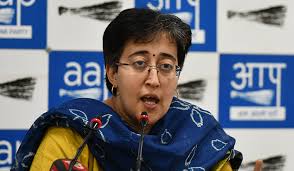
Kejriwal’s arrest in the alleged excise policy scam has sparked a leadership crisis in the AAP as well as the Delhi government, with his wife Sunita Kejriwal and cabinet ministers Atishi and Saurabh Bharadwaj being talked about as a possible replacement. Sunita has taken upon herself to present her husband’s case to the media while Atishi is a young cabinet minister who holds the most number of portfolios in the Delhi government. Considered a close aide of Kejriwal and party’s spokesperson, she is being seen as the party’s face in its fight against ‘political vendetta’ by BJP. 

Saurabh Bharadwaj, too, is a prominent member of the Delhi cabinet with several important portfolios, including health and urban development. Some quarters even are busy projecting Punjab CM Bhagwant Mann as man of the hour though he is also speculated to be the next ED target. Kejriwal’s arrest, contrasting his anti-corruption campaign that took India by storm in 2011, comes less than a month before India’s general elections kicks off on April 19. The AAP, of which he is the national convener, is part of the 27-party INDIA alliance aiming to challenge the governing BJP. In just over a decade, AAP, despite being a newcomer, has emerged as a formidable force. It has secured successive victories in Delhi’s state elections since 2013 and expanded its influence by winning crucial assembly polls in Punjab, where discontent against federal government policies prevailed.

All this has been credited to the AAP’s national convener Arvind Kejriwal, and the challenge before the party now is to come up with a worthy leader who can handle both the party and its government in Delhi and is at least close to Kejriwal’s stature. The urgency of the task becomes even more pressing as the AAP is gearing up to contest the Lok Sabha polls in Punjab, Delhi, Gujarat, Assam, and Haryana where Kejriwal was to be a key campaigner of the party.

 ‘It’s BJP vs People now’

Describing the arrest as a political vendetta, AAP expresses confidence that it will backfire on the BJP. “This election has become a very different kind of election. This is no longer an ‘AAP vs BJP’ or ‘INDIA bloc vs BJP’ election. After the arrest of Kejriwal, this is a ‘People vs BJP’ election. They thought they would be able to kill the party before elections but this move will benefit us electorally. People have now seen their limit of stooping and AAP will have their support and sympathy vote,” says party spokesperson and Delhi Cabinet Minister Atishi. 

According to political experts, the arrest will have a ripple effect in the state of Punjab. The one state where possible sympathy for Kejriwal may have the largest potential impact is Punjab, which has 13 Lok Sabha seats. “They have shot themselves in the foot by arresting Kejriwal. Punjabis have already seen through their tactics and anti-famer policies, and now this will ensure that voters go ahead supporting AAP even more,” Malwinder Kang, chief spokesperson of AAP, Punjab, told Tehelka. 

The BJP is weak in Punjab where there is a limited urban Hindu base. The contest in the state as of now seems to be between the AAP and the Congress, which are INDIA allies in Delhi, Goa, Gujarat and Haryana but are locked in direct contests in Punjab. If there is sympathy for Kejriwal in Punjab, the threat of losses will paradoxically loom large on the Congress that had won eight LS seats in 2019. It may be noted that post Kejriwal’s arrest, Ludhiana Congress MP Ravneet Singh Bittu and Jalandhar AAP MP Sushil Kumar Rinku have switched sides to BJP.

(Views expressed are the author’s own.)

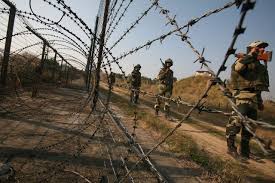
Army fires at Pakistani drone along LoC in Rajouri

Troops stationed along the Line of Control (LoC) in Rajouri district of Jammu and Kashmir took action in response to the presence of a Pakistani drone and suspected individuals in separate incidents, officials reported on April 1.

According to reports, a Pakistani quadcopter was detected in a forward area in Sunderbani, prompting the troops to fire at least four rounds to deter its entry into Indian territory. Despite the firing, the drone retreated to the Pakistani side of the LoC.

Simultaneously, suspicious movement of individuals suspected to be terrorists was observed in the Keri sector during the night between Sunday and Monday. Troops responded by firing several rounds, causing the suspected infiltrators to flee towards Pakistan-occupied Kashmir.

In response to the incidents, a thorough search operation was initiated to ensure the absence of any drone-dropped materials or suspicious items left behind by the fleeing individuals. The operation remained ongoing at the time of the latest reports.

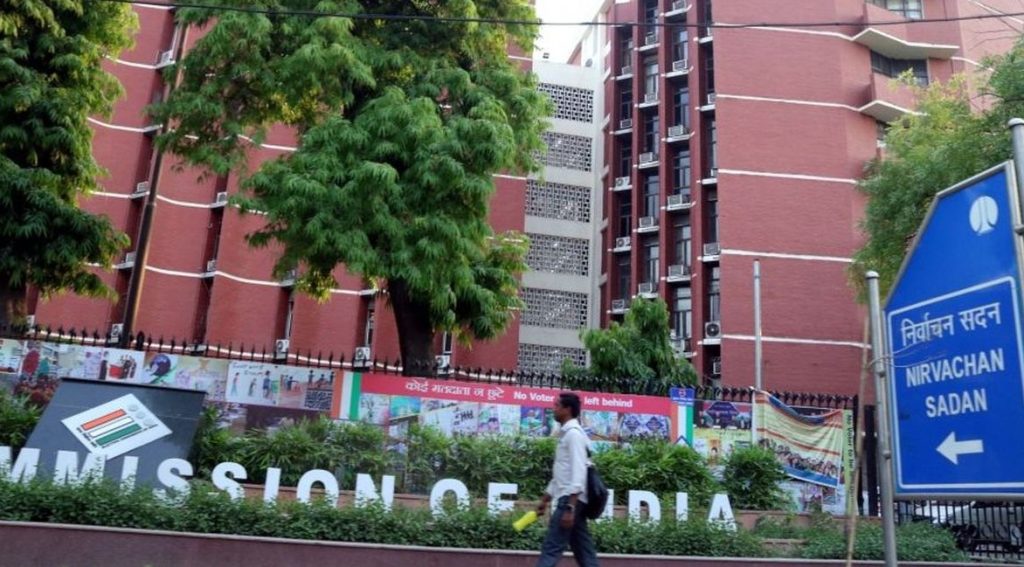
Task cut out for ECI to restore its credibility

Election Commission of India (ECI). (File Photo: IANS)

With only a few weeks left before the General Election 2024, the Election Commission of India stated that it was fully determined to tackle what it described as the ‘4 Ms’ — muscle power, money power, misinformation, and the model code of conduct violations. However, there remains an ambiguity as to how the ECI will tackle the troubling reality of rampant booth capturing.

Tehelka’s Cover Story ‘Booth Capturing for Cash’ uncovers booth capturing and other electoral malpractices in Jammu and Kashmir. It’s not that booth capturing is confined only to J&K but the sordid saga unravels how nefarious elements are active to capture polling booths in return for cash.  Agents who specialize in “poll management”, including booth capturing were recorded on camera by Tehelka’s Special Investigation Team “promising candidates a guaranteed victory” through this fraud by capturing booths and voting in place of genuine voters. The EVMs were introduced to make it impossible for booth capturers to capture ballot boxes, however, booth capturing continues to happen.

The agents claimed to have used muscle power to influence results in many elections in the past.  One such agent claimed, “For the right price, I’m willing to do anything. I have orchestrated booth capturing in the past elections. The cost of such operations varies from booth to booth. It can range from one lakh to two lakhs, or even escalate to five lakhs and ten lakhs, depending on the booth’s size. In Kashmir, when candidates realize they’re losing elections, they take recourse to staged stone pelting. They employ youth to throw stones, followed by their supporters seizing control of the booths.” With this expose’, Tehelka has kicked off an investigative series on the “4Ms,” starting with this edition’s focus on muscle power.

Our other story on electoral bonds data exposes the corporate-political nexus as one of the biggest quid pro quo scams, uncovering the alleged money trail in awarding huge government contracts, both before and after receiving donations from corporate business houses. The recent closure report filed by the CBI and a clean chit to the former Union Civil Aviation Minister into alleged irregularities in the leasing of aircraft by the National Aviation Corporation of India Limited raises suspicion. The former Nationalist Congress Party leader had switched over to the ruling dispensation a few months ago and now the probe agency finds no ‘evidence of any wrongdoing’.  The allegation by the Delhi Chief Minister that the approver in the liquor policy case in 2023, gave over Rs 50 crore to the ruling party through electoral bonds after he was arrested by the ED, calls for a probe in public interest.

It is said that “Caesar’s wife must be above suspicion,” but now the credibility of the CBI, the ED, the IT, and other agencies is at stake. The Election Commission has a task cut for it to ensure people at large that elections are fair and all political parties have been given a level playing field, and doubts on quid pro quo cleared.

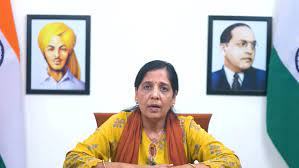
A masterstroke: ‘Mein Sunita Kejriwal….

The words may have been read from a script but the impact was not lost. Her words pierced many hearts. She could be playing politics but the concern for her husband’s well-being overrode all else. SPOTLIGHT by KUMKUM CHADHA

“Mein Sunita, Arvind Kejriwal ki dharm patni”, I, Sunita, Arvind Kejriwal’s wife: her words pierced many hearts; her distraught persona stumped others. 

The words may be rehearsed or read from a script but the impact was not lost: Here was a wife who was worried about the fate of her husband. 

Yet she had a duty to perform and that she did deftly. She could be playing politics but clearly the concern for her husband’s safety and well-being overrode all else. 

But she did not falter and conveyed what she had been asked to: her husband’s arrest; his being there to serve and every drop of his blood for the country: “I was born to fight. This arrest does not rattle me. There are many more fights lined up for me in the future too…” Kejrwal is quoted to have said, via Sunita, his wife.

She spoke for a little over three minutes. Her anxiety was palpable. More than the content, it was the tone and tenor that stole hearts. It was less about the message and more about the messenger; in this case, Sunita Kejriwal. On this count, she scored. 

Therefore “fielding” Sunita was AAP’s best bet to mouth her husband’s sugar-coated missive: sugar coated because he advocated “brotherhood” for the BJP: “Do not hate the people from BJP. They are our brothers and sisters,” Kejriwal is quoted to have said. 

If Kejriwal professed love for his opponents, he also batted for women. Once again Sunita mouthed Kejriwal’s lines underlining the worry of the women from Delhi: With “son and brother” Kejriwal in jail, will they get the rupees 1000 allowance?  

The obvious reference is to the scheme for women above 18 years to get Rs 1000 per month that Kejriwal had announced.

Apart from whipping up sympathy, it was an attempt to woo the women voters: quite like the Mein Sunita, Arvind Kejriwal ki dharm patni masterstroke.

Sift emotion from politics and the knives are out. There is the AAP crying foul versus the BJP saying that they have done the “holika dahan of corruption”.  

 For the uninitiated, Holika dahan precedes the main festival of colours and symbolizes the victory of good over evil. 

Delhi’s Chief Minister Arvind Kejriwal was arrested by the Enforcement Directorate on March 21 in a money laundering case that popularly came to be known as the ‘liquor scam’.

Kejriwal is the third leader to be arrested in this case after Manish Sisodia and Sanjay Singh who have been languishing in jail for several months now. The ED had also arrested another AAP minister Satyendra Jain for acquiring assets disproportionate to his known sources of income. 

That Kejriwal arrest was on the cards was a given. The Government can cry hoarse about the law taking its course, but the BJP’s fingerprints are more than visible. 

Central agencies do work under the government of the day and often bend over backwards to follow directions motivated by political considerations. Else, how would one explain the overzealousness of these agencies to go knocking the doors of only those who belong to opposition parties? Is this to suggest that there are no black sheep among the ruling elite? 

It is no one’s case to let off the guilty simply because they belong to the class of political elites. Neither is it to suggest that Kajriwal is a saint. Far from that. 

If his track record is anything to go by, he is unscrupulous and would go any lengths to achieve his end, political or otherwise. His entire crusade against corruption is eyewash. For someone whose political career began with cornering the then UPA government on corruption following the 2G and Commonwealth games scam, to forge an electoral alliance with the same party, Kejriwal’s journey is one of contradictions. 

Therefore when Anna Hazare, the original crusader, says that the arrest of the AAP chief is because of “his own deeds,” he is bang on. 

Hazare, it may be recalled, was at the helm of the anti-corruption movement where Kejriwal was a foot-soldier. That he out-beat others and rose to be a political fulcrum is another matter. 

But this is less about Kejriwal and more about the BJP’s game-play. It is about its nefarious designs to crush the Opposition and more particularly those who pose a threat to its self-styled invincibility. Kejriwal is one such. Preceding him was Jharkhand Chief Minister Hemant Soren who was also arrested some two months ago in a less than ten acre land case. 

Therefore while there are takers for the gallows for the corrupt theory, there is also unanimity on the timing gone horribly wrong theory about recent arrests. 

It is the why now question that seems to haunt the BJP and is also top of the mind for an electorate bracing for an election in a few weeks. 

The BJP could drum beat the logic of agencies and courts doing their work but they cannot wipe out the perception of this being vendetta politics of the ruling party: a politics which smacks of our way or the highway principle; a politics which says that swim with us else you will sink; a politics that spells vengeance and unfair play and one that strips political opponents of a level playing field. 

In Kejriwal’s case as also in Soren’s, it takes away the opportunity for them to effectively campaign for their respective parties in the forthcoming elections. Hence to merely say that the timing is suspect is down-playing the BJP’s intent and design. 

This then brings us to the crucial question: is the BJP nervous about the outcome of the forthcoming elections? Is the is baar 400 paar, winning 400 seats, a mere hype? And more importantly could the 2004 India Shining campaign repeat itself?

NDA’s India Shining campaign was the key slogan of Atal Bihari Vajpayee government in 2004 but it was an election that Vajpayee, a popular Prime Minister, lost. 

A 2004 repeat is far-fetched because a win this time around seems certain: what is not are the number of seats: the 400 paar figure is kind of a pipedream. 

It is here that one needs to juxtapose the nervous versus overconfidence syndrome: if the BJP is as confident that it is projecting itself to be then why is it orchestrating arrests of opponents? These acts do not point towards a party bracing for a comfortable and easy win. 

In this context, it is not the win that the BJP is nervous about: on that score it is perhaps overconfident because with Modi at the helm and his welfare schemes tucked under his arm, BJP will, in all likelihood, have a smooth sail. 

The nervousness is about the number of seats it will bag, the numbers being crucial for it to push its agenda. 

In the BJP’s current scheme of things, every seat counts and it will do what it takes to win it. And it is this desperation that is, perhaps, behind the ill-fated move of arresting opponents which political prudence sees as suicidal. It is no rocket science to guess that in one single stroke, BJP has made a hero out of an ordinary politician like Arvind Kejriwal. 

Given that BJP is a past master at strategy, this could not be a mistake. In fact it finds itself in a no way out situation which has pushed it into taking this fatal step. And this stems out of nervousness of the numbers which the Party feels could elude it. 

Therefore to the question whether BJP is nervous or overconfident, the answer is simple: BJP is vacillating between the two: overconfidence of winning and clearly nervous about the numbers.  

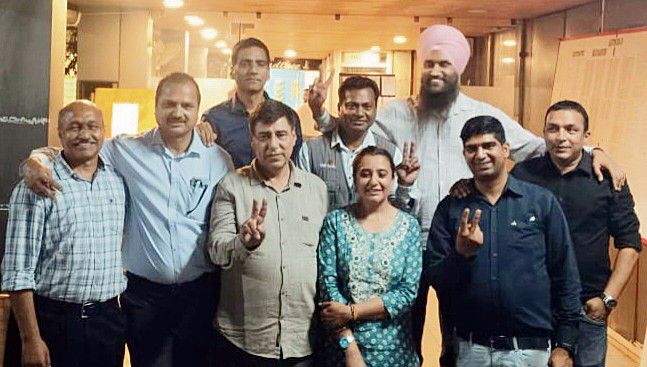
Nalin Acharya elected Chandigarh Press Club President, promises to fulfill guarantees

Nalin Acharya of Him Prabha has been elected the president of the Chandigarh Press Club for the 2023-24 session. His panel has won five posts while the rivals, the Rawat panel, won four seats out of the total nine posts.

It may be noted that established in 1980, the Chandigarh Press Club has been holding elections annually since 1984 without a miss. A total of 588 votes were polled on March 31, 2024, 40 more than last year.

Nalin Acharya secured 307 votes, defeating Barinder S Rawat of Dainik Jagran by 33 votes. Seven votes were declared invalid.

While Rawat lost the president’s post, his group was able to secure the positions of senior vice president, secretary general, joint secretary 1, and treasurer. Ramesh Handa of Punjab Kesari clinched the senior vice-president’s post, defeating his rival Jai Singh Chibber by 38 votes.

For the secretary general’s position, Umesh Sharma of News 18 got 298 votes against Jagtar Singh Bhullar of ABC Punjabi News who secured 280 votes. The winning margin was just 18 votes.

Both the posts of vice-president were secured by the Nalin Acharya panel. Amanpreet Kaur of Tv9 Bharatvarsh defeated independent journalist Arshdeep Arshi by just nine votes for the post of vice-president 1. Deepender Thakur of Punjab Kesari beat Karnail S Rana of Jag Bani for the post of vice president 2 by just two votes.

From the Nalin Acharya Group, Ajay Jalandhari of Swadesh News was elected as secretary by 57 votes. Ankush Mahajan of News Nation was elected as joint secretary 2 by 36 votes.

For joint secretary-I, Tarun Bhajni of Financial World narrowly lost by 10 votes to Amarpreet Singh of Punjabi Tribune. Dushyant S Pundir of The Tribune was elected treasurer by 11 votes. It is worth mentioning that it was almost a turnaround for the Nalin Acharya Panel which had lagged much behind the rival camp last year as far as the Panel votes are concerned because this year it not only covered the gap but also went past the rivals.

The newly elected President of Chandigarh Press Club Nalin Acharya said that his priority upon taking charge would be “to facilitate health facilities for press club members in tricity hospitals at  CGHS rates, arranging picnics for club members and their families, organizing social media workshops,  restarting publication of club magazine, to initiate awards for best story, best photo, best video, best headline, a creche for children of members, effective WIFI in club premises, e-charging for electric vehicles, 50 per cent fee waiver for members above 70, reservation of tables for senior members and to improve quality of food served”.  He sought the cooperation of all elected office bearers and Club members to take Chandigarh Press Club to new heights to restore its pristine glory.

The West risks coming to grief for promoting proxies in global politics

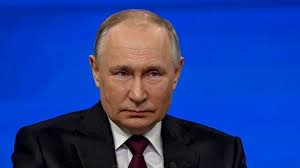
The initial response of Russian President Vladimir Putin to the Moscow concert hall carnage, which left 139 dead and hundreds injured, was not only a measured one but also hinted at Russia’s potential for serious retaliation. A report by Gopal Misra

In this era of technology, sooner or later, the real perpetrators of the Moscow carnage would soon be exposed. The initial response of Russian President Putin was not only a measured one, it also indicated that serious retaliation might be contemplated to the Moscow’ bloodbath of March 23, thus triggering sectarian violence across the continents. It is not surprising that this apprehension has sent shivers down the spine of European leaders.

A few weeks ago, the members of the European Union, who were seen vying with each other in rearming Ukraine with the state-of-the art lethal weapons, appear to have quietened down, at least for a while. They fear that the ongoing conflict with Russia might enter into a new phase of much bigger scale. The use of terrorism, as an effective weapon against Russia might become counterproductive, hitting the European powers hard.

Russia was alerted

It is difficult to predict whether the pre-warning to Moscow from the American authorities cautioning their counterparts in Moscow of an impending terrorist attack would wipe out the suspicion of Washington having played any mischief in the Moscow tragedy. It may also not be possible for India, despite having a close strategic alliance with the West to endorse the American narrative of the ‘terrorist attack’ in Moscow.

Meanwhile, the Biden administration is facing the growing challenge from the former US President Donald Trump in this election year. Trump, despite being implicated in various legal issues, has again become the Republican Party’s nominee, and is pitted against the incumbent president Joe Biden.

Earlier, in 2016, Trump had accused the former President Barack Hussain Obama of promoting terrorism through the dreaded outfit –  the ISIS. During the present tenure of Biden, the Republican Party has been accusing it of pursuing Obama policies. Interestingly, Obama’s recent visit to the U.K. too has raised unnecessary controversy linking it with the terrorists’ attack in Moscow. It is being linked with Trump’s statement that Obama has fathered ISIS. The issue is whether the claim of ISIS regarding its attack in Moscow could be acceptable to the world. The western media’s repeated assertion about ISIS’s claim and sharing information about the impending attack on Moscow is being considered as a Western propaganda for exonerating Washington even before a thorough enquiry. The rhetoric may fail to convince not only Russia or China, it will be difficult even for India to accept this much trumpeted narrative.

It is believed that the media noise could just be an attempt to assure that the US proxies did not pre-plan the unprecedented attack ruthlessly killing as many as 139 innocent unarmed people attending the music concert on the spot and leaving hundreds grievously injured. It is being rightly asked whether it has weakened President Putin’s position in his country. The initial reaction among people could be judged by the long queues of the blood donors at the hospitals, where the victims of the violence are struggling for their survival. The final death toll could leap to a much higher number in the coming days.

The media blitzkrieg accompanied by this claim, however, has caused much confusion about the nexus between Ukraine and ISIS. It is difficult to predict whether the appeal of the EU leaders, including the French President, asking Putin not to further escalate the on-going offensive against Ukraine would have any substantial impact. The statement of the Russian security official blaming the US, UK and Ukraine for the carnage indicates that the conflict may adversely affect other regions too.

ISIS has roots on the Afghanistan-Pakistan borders. Its terrorists are at war with the Afghan Taliban; and believed to be armed and trained by Pakistan’s dreaded intelligence agency, Inter Services Intelligence (ISI). The Indian security agencies have already busted a number of ISIS modules in Kerala and in some other areas. With its renewed activities, India too could be targeted any time.

The fallout

The western media has repeatedly asserted that Putin has accused Ukraine of being behind the terror attack, but has so far failed to give any details or evidence. He has also stated the radical Islamists were behind the attack. The arrested terrorists belong to Tajikistan, which was once a republic of the Soviet Union. It is natural for anyone to enquire whether the Tajiks hold any anger against Russia, but so far no evidence or information is available in this regard.

Similarly, it is yet to be probed why Ukraine, a country of orthodox Christians, should use the radical Islamists against Russia, a country following the same Christian cult. Meanwhile, Russian bombing of Ukraine has been further intensified. It indicates that much against the wishes of the US-led western powers, Putin’s domestic political stature continues to be strong and the ISIS attack has further strengthened the resolve of Russians to teach a lesson to Ukraine and the Islamists. The West has to remember that a section of Chechan Muslims also supports Russia. If they are unleashed in this proxy war, Paris and cities in the UK could be facing similar attacks, but it is difficult to predict whether the West would ever learn that peace could never usher in if they continue to escalate violence either directly or through proxies.

Frozen bank accounts ‘cripple’  Cong campaign ahead of polls

The Congress party, which has assumed the role of unifier in INDIA Bloc claims it is struggling to launch its poll campaign in the face of IT authorities freezing its bank accounts and imposing ‘disproportionate’ penalties for irregularities in its decades-old tax returns. A report by Mudit Mathur

Leaders of the INDIA bloc, who have decided to contest the 2024 Lok Sabha election unitedly against the growing trends of “dictatorship” under the Narendra Modi-led BJP government, are facing a tough challenge after the arrest of Delhi Chief Minister Arvind Kejriwal on charges of money laundering in the now scrapped Delhi liquor policy case. The development has upset the plans of the collective campaign strategy of opposition parties aimed at halting Narendra Modi’s march to regain power for the third time in succession in the 2024 elections. Kejriwal’s arrest has become the rallying point for the opposition’s unity to counter the BJP’s alleged quest for an “opposition-free” India

The poll campaign of the INDIA bloc has yet to take off due to the absence of a level playing field, resulting from a resource crunch and the continuous arm-twisting tactics employed by government investigating agencies. However, prominent BJP leaders have been fast-tracking their electioneering efforts, hosting massive public rallies in various parts of the states, often with great extravagance.

The Congress Party, which assumed the role of unifier in INDIA Bloc to consolidate regional political parties under its umbrella, is now grappling with an acute financial crisis as it prepares to launch its poll campaign. Income Tax authorities have frozen its accounts, allegedly imposing disproportionate penalties after discovering irregularities in its decades-old tax returns.

Subsequently, the IT department is anticipated to raise further demands against the Congress party for alleged unaccounted Rs. 523.87 crores from 2014-2021, traced after it conducted simultaneous raids in 52 locations before the 2019 Lok Sabha  polls on April 7, 2019, following the directive of Election Commission.

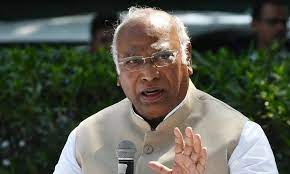
The Congress party in a press conference held by its top leadership including president Mallikarjun Kharge, former president Sonia Gandhi, and Rahul Gandhi has alleged that democracy in India has been frozen and accused the Modi  government of “crippling” the party financially by freezing its bank accounts ahead of the Lok Sabha elections.

“A systematic effort is underway by the Prime Minister to cripple the Indian National Congress financially,” said Sonia Gandhi. “Funds collected from the public are being frozen, and money from our accounts is being forcibly taken away. However, even under these most challenging circumstances, we are doing our best to maintain the effectiveness of our election campaign,” she added.

Referring to the Supreme Court’s judgment last month declaring electoral bonds “unconstitutional,” the former UPA chairperson said that the electoral bond scheme has “benefited the BJP hugely.” “On the other hand, the finances of the principal opposition party, the Congress, are under a determined assault. This is truly unprecedented and undemocratic,” she said.

 Rahul Gandhi, a prominent face of the opposition Congress, told media persons, “All our bank accounts have been frozen. We can do no campaign work. We cannot support our candidates. They cannot fly, forget that, they cannot even purchase a rail ticket. And this has been done before elections.”

“There are institutions in this country that are supposed to protect the democratic framework but nothing is happening. The Election Commission is not saying anything, the courts are not saying anything. Our ability to fight the elections has been damaged,” he added.

“This is a criminal action done by the prime minister and the home minister. The idea that India is a democracy is a lie; it is the world’s largest democracy is a lie. Twenty percent of India votes for us and we are not able to pay Rs 2 for anything. This is being orchestrated to cripple us in the elections. Even if our accounts are unfrozen today, a huge amount of damage has been done,” Rahul alleged.

Most of the potential opposition leaders have allegedly been targeted by the Modi government to discredit them through his extended weaponised arms –– ED, IT, and CBI (Enforcement Directorate, Income Tax, and Central Bureau of Investigation). The ED is the most powerful among the investigation agencies under the control of the Modi government. It has the unbridled powers under the Prevention of Money Laundering Act, 2005 to search and arrest without a warrant or assigning any reasons. Ever since Modi came to power in 2014, the ED has summoned, questioned, or raided around 150 politicians from the opposition including Congress Party leaders––Sonia and Rahul Gandhi for allegations of money laundering.

During the period of Congress rule from 2005 to 2014 ED carried out 112 searches and filed charges in 104 cases but without any convictions in contrast to Modi rule from 2014-15 to 2021-22 searches jumped to 3,010, charges were filed in 888 cases, and 23 people were convicted. During these raids, many NGOs and Human Rights organisations including Amnesty International halted operations in India whose accounts were frozen by  ED.

The party-wise break-up of the Opposition parties in the ED’s net since 2014 includes Congress (24), TMC (19), NCP (11), Shiv Sena (8), DMK (6), BJD (6), RJD (5), BSP (5), SP (5), TDP (5), AAP (3), INLD (3), YSRCP (3), CPM (2), NC (2), PDP (2), Ind (2), AIADMK (1), MNS (1), SBSP (1) BRS (1) and TRS (1).

The ED arrested the chief minister of the eastern state of Jharkhand, Hemant Soren, in a case related to alleged land fraud in January this year.  Soren’s party, Jhakhad Mukti Morcha (JMM),  is the ally of the Congress. He said hours before the arrest that he was the victim of a political conspiracy. After Soren, the  ED arrested Bharat Rashtra Samiti (BRS) leader K Kavitha of Telangana in Delhi liquor case for money laundering.

The Delhi Chief Minister Arvind Kejriwal is the latest arrest by the ED in Delhi liquor case after it had arrested his Deputy CM Manish Sisodia in the same case. The Delhi High Court refused to grant him interim relief saying it may have the impact of a final relief. The CBI conducted consecutive raids at four of the properties of expelled TMC MP Mahua Moitra on 23rd March after the Lokpal  referred cash for query complaints to it.

The whole approach of the BJP appears to entangle the opposition leaders to defend their cases before the courts so that they would not be able to compete with them in the electoral contest of the 2024 Lok Sabha. Many opposition leaders allege that BJP is resorting to vendetta politics to sideline them from the political arena. In the 2019 Lok Sabha election, the BJP secured 303 seats, improving upon its 2014 tally of 282 seats. The BJP-led NDA won a total of 353 seats, while the Congress was reduced to just 52 seats.

Prime Minister Narendra Modi has called upon its cadres to secure more than 400 Lok Sabha seats in the upcoming elections across the country. The primary focus areas for the BJP are the Hindi-speaking states – Uttar Pradesh, Madhya Pradesh, Chhattisgarh, Rajasthan, Uttarakhand, and Himachal Pradesh. While the party has minimal support in south Indian states, Modi has attempted to bridge the gap by reaching out to Tamil Nadu, leveraging the state’s traditional bond with Kashi, his parliamentary constituency.

The BJP has also sought to form alliances with the Biju Janata Dal, led by Naveen Patnaik in Odisha, and the Shiromani Akali Dal in Punjab, but the saffron party’s overtures have been spurned by both the parties. The party’s strategy is now focused on enticing leaders from opposition ranks to defect to its fold and consolidate Modi’s political strength.

Political observers acknowledge that Modi holds an advantage on the campaign trail, but crossing the much-touted mark of 400-plus seats would be a huge challenge.

Deepfakes in a democratic country like India a big concern: PM Modi

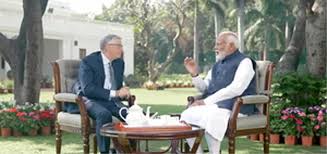
New Delhi : Prime Minister Narendra Modi on Friday said artificial intelligence (AI) presents a huge opportunity but there is a significant risk of misuse, especially deepfakes, if such a powerful technology is placed in unskilled hands.

Responding to a question from Microsoft Co-founder and billionaire philanthropist Bill Gates on how India looks at AI which is a huge opportunity but comes with its own challenges, PM Modi said proper training is must to handle technologies like AI.

“I have engaged with leading minds on AI and its risks. I suggested that we should start with clear watermarks on AI-generated content to prevent misinformation. Proper sources of AI-generated content should also be mentioned, ” PM Modi emphasised.

Deepfakes in a vast democratic country like India, which is going into general elections, is a real issue.

“Someone can even misuse my voice to deceive people and such a deepfake can trigger widespread uproar. We need to think about creating robust dos and don’ts on deepfakes, ” the Prime Minister told Gates.

Using AI as a magic tool or asking ChatGPT to write letters is a great injustice to this wonderful technology as we should rather compete with AI to improve ourselves and innovate further to solve real life problems, according to the Prime Minister.

“India has a myriad of languages and dialects and we need to push AI to recognise and adapt to those to help people, ” PM Modi told Microsoft Co-founder.

“I constantly present new challenges to AI whenever I get a chance to speak to a machine or a robot, fostering its growth and adaptability, ” the Prime Minister said.

INDIA bloc’s seat-sharing formula for Bihar announced

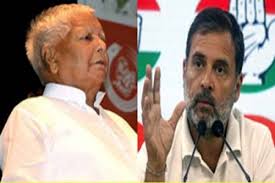
Patna :  INDIA bloc announced its seat-sharing arrangement for Bihar on Friday. RJD is contesting on 26 seats in this Lok Sabha election in Bihar, while Congress is given nine seats. CPI-ML will contest on three seats, CPI on one seat and CPI-M also on one seat in the state.

RJD will contest in Gaya (Reserved), Nawada, Jahanabad, Aurangabad, Buxar, Patliputra, Munger, Jamui (Reserved), Banka, Valmikinagar, Purvi Champaran, Sheohar, Sitamarhi, Vaishali, Saran, Siwan, Gopalganj (Reserved), Ujiarpur, Darbhanga, Madhubani, Jhanjharpur, Supaul, Madhepura, Purnea, Araria and Hajipur (Reserved) Lok Sabha constituencies in the 2024 general election.

Congress will contest in Kishanganj, Katihar, Bhagalpur, Muzaffarpur, Samastipur (Reserved), West Champaran, Patna Sahib, Sasaram (Reserved) and Maharajganj Lok Sabha constituencies.

CPI-ML will contest on Arrah, Karatak and Nalanda Lok Sabha seats. The INDIA bloc has also given the Agiaon assembly seat to CPI-ML for by-election. This seat was vacant after CPI-ML MLA Manoj Manjil was convicted in a criminal case this year.

CPI is given the seat of Begusarai, while CPI-M is given the Khagaria Lok Sabha seat for the upcoming elections.

MOST POPULAR

HOT NEWS