Pak’s finger pointing at India over Baloch terror has very few takers

Pakistan’s foreign office, the army and the ISI have teamed up to unleash a smear campaign against India who, they allege, is backing the jihadists active on its soil and targeting army installations in Balochistan and Khyber Pakhtunkhwa by Gopal Misra
The terror outfits ideologically groomed under the religious Muslim cults or sects of Barelvi and Deobandi in the nurseries or Islamic Madrasas have become a menace even for Pakistan. These terrorists, who are rightly being dubbed Frankenstein, were either directly funded by the US-led western powers or through Saudi Arabia. With the exit of the USA from Kabul and the Saudi leadership’s growing apathy towards the Jihadists; Islamabad, in recent years, has suddenly been facing financial crunch, especially for its establishment comprising a huge army of more than half-a-million combat troops, and a vast network of its secret police, Inter-Services Intelligence (ISI). The situation appears to be worsening with each passing day with the Pakistani terrorists, armed with the state-of-the weapons now challenging their creator like Frankenstein.

It is difficult to imagine how Mary Shelley, then in teens, could conceive a horrible creature or character in 1816. Two years later, in 1818, her legendary novel, Frankenstein,was first published anonymously, without her name. Three years later, her name appeared in its Paris edition. In 1816, according to a legend, Mary, her fiancé, Percy, John Polidori and Lord Byron had a competition to see who could write the best horror story. Mary, however, decided to pick up the gauntlet; thus the horror of Frankenstein blended with some romance was created. During the past three centuries, her novel is often being quoted about the people, who create a monster but fail to restrain or control it. Interestingly, Frankenstein is often mentioned in context of the Jihadists and terror groups groomed in Pakistan, a country that was carved out by partitioning India in 1947.

During colonial rule, the British used to promote Razakars, a militant group of Muslims, liberally funded through Muslim land lords and Nizam of Hyderabad. They had also participated in the mass killing of Hindus in the Kolkata massacre under the ‘1946 direct action’ of the Muslim League government in the then united Bengal. Even after the partition, Pakistan had used Muslim Jihadists in 1948 during its aggression in Jammu and Kashmir. Initially, these terrorists had a dual role: keep India engaged in low-key warfare, and keep the common people engaged in the communal warfare within the country itself.        

These elements were patronized and supported during the prolonged rule of the army; and even the tenure of the successive civilian governments was under the strict control of the GHQ. In contemporary Pakistan, the army has penetrated every walk of life.

The continuous interventions of the army and the ISI in the country’s politics have created a system of installing hybrid regimes. It ensures that each political outfit competes with each other to woo the generals for enjoying the fruits of political office. In this power game, ideological issues are seldom raised. The current political crisis is being attributed to the large-scale riggings in the 2018 elections for ensuring the victory of Imran Khan’s political outfit, Pakistan Tehreek-i-Insaf (PTI). Later, its inability to deliver the commitments made to the army that it would siphon off the funds earmarked to provinces under the constitution would be ensured. This crunch of funds forcing the army to lead an austere life finally led to the removal of the Prime Minister Imran Khan, a cricketer-turned politician.

In a bid to counter Khan’s popularity among younger people and dilute his political clout, the establishment has succeeded in installing a coalition of the Pakistan Muslim League–Noon (PML-N) and Pakistan People Party (PPP) and some other smaller political groups. However, during these political machinations, the Jihadists, who too were facing financial crunch, have regrouped, and this time their agenda is to fight for ensuring justice to the people of Khyber Pakhtunkhwa (KPK) and Balochistan. The proxies of the GHQ are engaged in large scale mining of precious minerals in Balochistan along with a number of Chinese companies. The people of the province are also enraged by the presence of the Chinese navy and fishing trawlers in Gwadar. The people of KPK also do not recognize, like their brethren in Afghanistan, the Durand Line dividing the Pashtuns.

India Blamed  

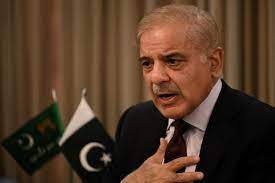
The new political face of Pakistan being led by Shahbaz Sharif and his mentors in the army has failed to address the grievances of the people of the KPK and Balochistan. Instead of curbing the secessionists, a group of Jihadists groomed and nurtured by ISI, he has decided to confront them with the might of the army. Meanwhile, Pakistan’s foreign office, the army and the ISI have unleashed a campaign against India who they allege is backing these jihadists. Interestingly, in this rhetoric, the establishment has succeeded in enlisting the support of journalists like Najam Sethi, known for their independent views. They have also blamed India for the ongoing attacks on the army installations in Baluchistan and KPK.

Eleven years ago, Sethi, who also edits Friday Times, had written about the two types of terrorists, the first grouping consisting of the Tehreek-i-Taliban (TTP), and the second a monolithic anti-Shia sectarian outfit operating under the banner of the Lashkar-e-Jhangvi. It is estimated that these hardliners had killed more than 500 Shias across Pakistan. However, it appears he has joined this rhetoric, especially the recent eruption of violence in the region.

In New Delhi, however, the Pakistani establishment’s blame game implicating India is being viewed with a pinch of salt. The Sunni terrorists, including the ISIS (Khorasan) either have ideological roots in the Barelvi or Deobandi sects; both preach for pure Islam. For them, Islam is a religion, which ensures a puritan lifestyle adhering strictly to the social and political dimension of the faith. It means that apart from offering the prayer committing to the God or Allah as told by the Prophet Mohammed, each Muslim has to be ready to commit himself to implement Sharia laws or Islamic jurisprudence. It also defines the role of women for strengthening Islam through procreation, i.e. producing more and more sons for the Jihads against infidels. They are also being told that Hindus and Jews were enemies of Islam, and their elimination is the holy duty of each Muslim. Therefore, it is difficult to accept the Pakistani logic that India under BJP would be promoting these jihadists.

Amidst this ongoing blame game against India, there are reports that the Pakistani establishment is seeking the US military support for curbing these terror outfits. Both the army and its civilian face are hopeful of the resumption of liberal flow of dollars. However, much will depend upon the outcome of the recently held two-hour video discussion between US President Joe Biden and his Chinese counterpart, Xi Jinping. It is yet to be ascertained whether the liberal financial help from the US would have Beijing’s approval.

Meanwhile, a piquant situation has emerged in world politics following the arrest of the terrorists from the Islamic state of Khorasan, who were allegedly involved in the Moscow blasts recently. They were hired by Ukraine with huge support of US dollars. In reality, there is an umbilical link between the TPP and other jihadists. Both use the services and expertise of Al-Qaeda terrorists from Central Asia and the Middle-East and are now being pitted against Russia through Ukraine. Amidst these developments, India’s reluctance to negotiate peace with Pakistan under a hybrid regime is natural.

Spare a thought for the incarcerated

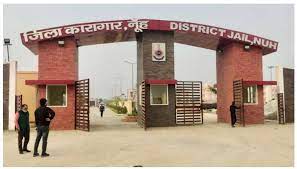
Jailed and the imprisoned are sitting at the mercy of the authorities. All talks of the so-called development don’t wash when our fellow jailed citizens are made to go through absolutely trying times by Humra Quraishi

In all the long and short speeches of those fighting the upcoming elections there seems little mention of the jailed. To be nearer precision: What efforts would be in place to ensure that there would be betterment or improvement in the living conditions of those amongst us sitting  jailed.

It is significant to take into account that in recent times there have been news reports of several prisoners getting infected with serious infectious ailments whilst jailed. Also, relays to over-crowded jail cells come up, with reports of prisoners attacking each other, or trying to break free from the overcrowded cells. And  definitely  not to  be overlooked the  fact  that  last fortnight, prisoner Mukhtar  Ansari’s  immediate  family accused the authorities of  poisoning Ansari …causing his death in that  jailed condition. They are not convinced by the ‘heart attack’ theory put forth by the authorities and are vetoing it all too completely. It is a very serious allegation. And needs immediate attention.

Jailed and the imprisoned are sitting at the mercy of the authorities. All talks of the so-called development seemed useless when our fellow jailed citizens are made to go through absolutely tough-trying times. Here it is significant to focus on what Mahatma Gandhi had  to say on the jailed … his views on those jailed are crucial and need to be relayed to the who’s who  manning the  very administrative system.

To quote Mahatma Gandhi from the November 1947 issue of  Harijan : “All criminals should be treated as patients and the jails should be hospitals admitting this class of patients for treatment and cure. No one commits crime for the fun of it. It is a sign of a diseased mind. The causes of a particular disease should be investigated and removed. They need not have palatial buildings when their jails become hospitals. No country can afford that, much less can a poor country like India. But the outlook of the jail staff should be that of physicians and nurses in a hospital. The prisoners should feel that the officials are their friends. They are there to help them regain their mental health and not to harass them in any way. The popular governments have to issue necessary orders, but meanwhile the jail staff can do not a little to humanize their administration.”

*****

Prison conditions could have been better in those decades gone past. That explains why Mahatma Gandhi, Pandit Jawaharlal Nehru and several  other freedom fighters  could write such  significant volumes whilst  lodged in prisons during British rule.

Here, let me hasten to add that in recent years, the books I have read by former prisoners have been written by them when they were out of the prison confines…when they were set free from that imprisoned state. Why couldn’t they write volumes whilst jailed!

Several other basic factors to the prisoners keep hitting: Can they cry out for open-jails, where they can perhaps experience some level of free movement of their limbs, in a less stressed out environment and atmosphere? And with that, feel less caged. But even there, hundreds of mosquitoes could make life hell and hellish for them. And though the sarkar talks of killing hundreds of the hapless two-legged human beings in endless encounters but can’t kill the small four-legged mosquitoes! Strange reality of the times!

Also, stands out the fact that a large percentage of those imprisoned in the country are under-trials, so technically innocent, yet so many years of their lives are wasted, as they sit languishing in jails. Such a waste of those precious years, of precious human lives. Can there be counselling centres and counselling sessions for small time or the first time offenders? Can there be guidance and more along the strain, so that the young can be saved from traumas and their lives not wasted? Can there be an earnest call to save lives in the actual sense of the term?

Yes, instead of imprisonment there ought to be something called forgiveness and pardoning by the State, if there is genuine remorse and willingness to improve. Moving on still further, why not a complete ban on hangings. Yes, stopping the death penalty. Why kill, when the State cannot give birth or even sustain those born! Maybe an innocent hanged!

Also stands out the fact that even the convicted ones were not born criminals! Perhaps, circumstances drove them towards crime with disastrous offshoots. Also, petty criminals could be mere foot soldiers, seemingly under the control of the political mafia. Many a time, the naïve and young framed and with that their lives completely messed up, as they are then ‘used’ by the nexus and  mafia at  work. Master political players, untouched and un-arrested, whilst the naïve arrested and with that ruined for times to come.

Also stands the fact more Muslims are jailed –   more in terms of their population ratio! Why? What are the reasons for this dismal reality? Also, a connected fact: Why so many Meo men, from the Mewat region, are in jails?

There are so many dismal and dark realities…dark enough to make one sit up and introspect and question and query.

Here’s how autobiographies ought to be written!

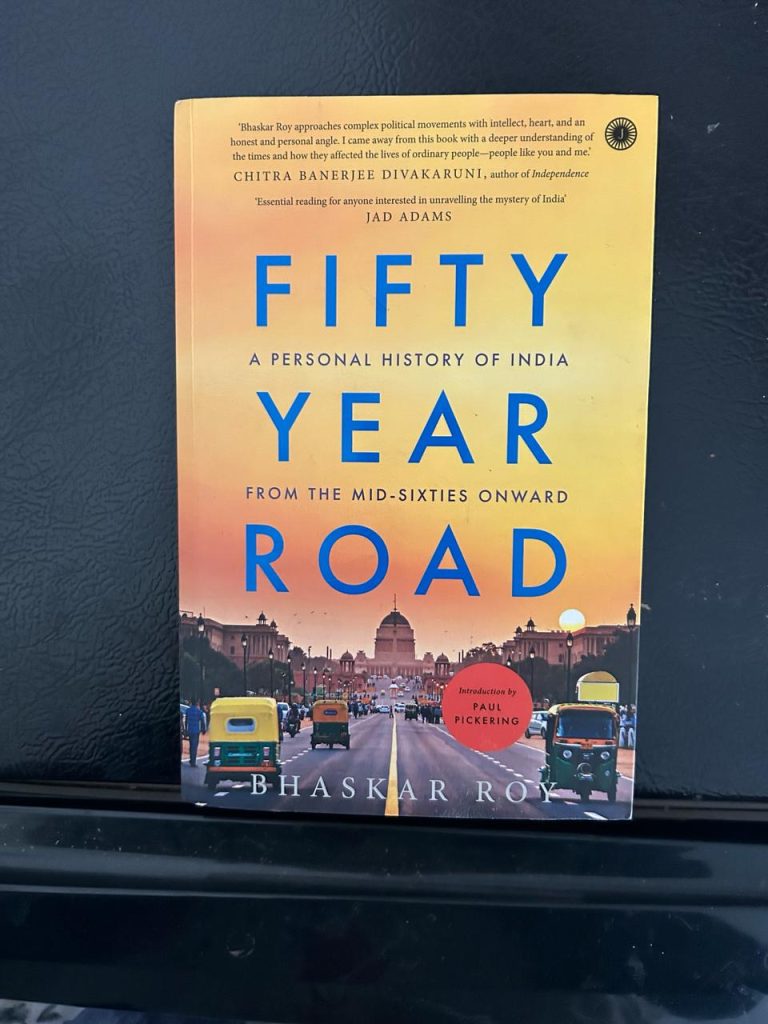
Fifty Year Road’ is one of those very well written autobiographies, where Bhaskar Roy, a Delhi based journalist-writer, has deftly webbed and  inter-webbed, political and also the not-so-political  realities he witnessed and observed and  experienced, right from the mid-60s, when  he was young  boy. There’s that great flow and with that the narration just flows along, along the dastangoi /story telling format. A book review by Humra Quraishi

BOOK REVIEW : Title of the book – FIFTY YEAR  ROAD

Author – Bhaskar Roy , Publisher –  Jaico Publishing  House

Pages – 295 ,  Price-Rs 599

Book Review by – Humra  Quraishi

The Delhi based journalist-writer, Bhaskar Roy, comes across as a quiet, soft-spoken person who doesn’t flaunt his knowledge of the ground realities of the recent and the not-so recent major happenings or turning points in the history of the country. But as one reads his recently launched memoir – ‘Fifty Year Road’ – one realizes how very observant he’s been. One is left impressed by his in-depth detailing and the also by the informal way of putting together all the significant aspects to those major turns together with the backgrounders.

It’s  one of those very well written autobiographies, where Roy has deftly webbed and  inter-webbed, political and also the not- so-political  realities he witnessed and observed and  experienced, right from the mid-60s, when  he was young  boy…I simply loved the way  he starts his autobiography by focusing on his mother and  her personality. Bringing to the  fore the  fact that his mother played a significant role in building his personality, introducing  him to the significant personalities of Bengal, of the mid-60s…There’s that offbeat touch to the way Roy  has put together details to his meetings and interactions with the various prominent personalities and also the ordinary characters. There’s that great flow and with that the narration just flows along, along the dastangoi /story telling format.

To quote Paul  Pickering , the London-based academic and poet, from the Foreword he has  written to this  book – “The writer and editor Bhaskar Roy’s book is so refreshing because he looks at the events after Independence in his own life, his intimate family relationships, that map out a  strange and bewitching  world that is  not chained to the  past, but in which that  past  jumps through the future, on every  page. This is a country where a  journey to the  moon or a twenty-trillion-dollar economy by 2040 is talked of  one minute, and the TV shows minority women  being  paraded through the streets next and gangraped. Bhaskar Roy knows this country and its fatal contradictions as the difficult birth of a superpower does not leave the killings and  violence behind with  Partition…”

Space constraints come in way of detailing much more from this autobiography but one aspect cannot be overlooked: Roy sure does show the way how events and happenings ought to be documented. Also, how autobiographies ought to be written! This book ought to be introduced  to students of  Journalism and  Media Studies and perhaps also to upcoming writers.

CM Bhagwant Mann meets Kejriwal in jail, says Delhi CM given terrorists-like treatment

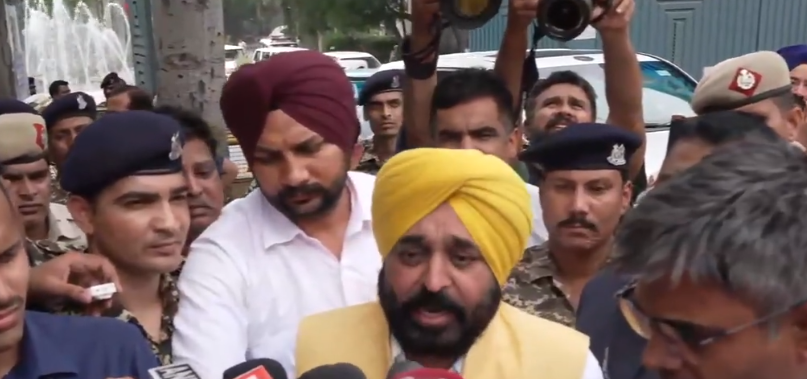
New Delhi:  Punjab Chief Minister Bhagwant Mann, who visited Delhi Chief Minister in Delhi’s Tihar Jail on Monday, said that he is being given terrorists-like treatment by the jail authorities.

“Kejriwal is given terrorists-like treatment by the jail authorities. He is not being provided basic facilities. There was a glass wall between me and him when we met, ” the Punjab Chief Minister said.

Sources said that the meeting between the two took place within the confines of the prison’s ‘Jangla Mulakat’ room, a space partitioned by a glass wall with intercom facilities on both sides.

Adhering to the protocols outlined in the jail manual, the Punjab Chief Minister entered Tihar Jail as a common visitor to meet Arvind Kejriwal.

After coming out of the Tihar prison premises, Mann spoke to reporters, saying that Kejriwal asked the people not to worry about him.

Kejriwal, who was arrested on March 21 by the Enforcement Directorate (ED) in the alleged excise scam, is lodged in Tihar’s Jail No-2.

The jailed Delhi CM, Kejriwal, has provided a list of six individuals, including the Chief Minister of Punjab.

A Delhi court had sent Kejriwal to judicial custody till April 15. He will be produced in court at 2:30 p.m. on the expiry of his judicial custody.

The ED has termed CM Kejriwal the “kingpin and the key conspirator” of the alleged excise scam in collusion with other ministers of the Delhi government, AAP leaders, and other persons.

Firing at Salman Khan’s Mumbai residence: Delhi Police launch probe

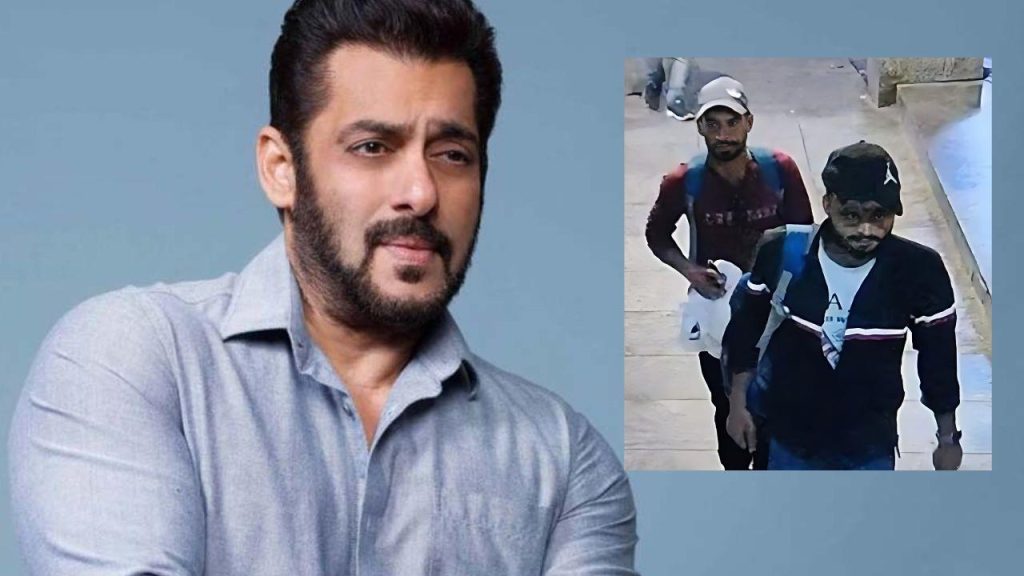
New Delhi: A team from Delhi Police’s Special Cell has begun probing the incident of firing outside Bollywood actor Salman Khan’s residence in Mumbai, sources told to media on Monday.

One of the shooters identified as Vishal @ Rahul, a resident of Gurugram, has over six criminal cases, including murder, registered against him in Haryana and Delhi.

“We have mounted technical and physical surveillance to get the clue regarding the accused, ” a source in the Special Cell said.

As per sources, Vishal was recently involved in the killing of a bookie in Rohtak under the instructions of jailed gangster Lawrence Bishnoi.

Additionally, sources indicate Vishal’s involvement in another murder at a roadside restaurant in Rohtak on February 29 this year.

In the early hours of Sunday, at least three to four bullets were fired at the actor’s Bandra West home in Mumbai.

The chilling act was committed by at least two unidentified persons sporting helmets who came speeding on a motorcycle and fired at least four shots in the direction of Galaxy Apartment, before zooming off on the dark and deserted road.

For the past several years, Salman Khan and his family have been facing death threats from certain Punjab-based mafia groups like the Bishnoi gang.

Salman Khan and his father Salim Khan have been issued death threats in different ways, including dropping a letter to the family.

In 2022, while on a morning stroll near his home, Salim Khan found a note saying “Salim Khan…Salman Khan… bahut jald aapka Moose Wala hoga” — a reference to Sidhu Moose Wala, a Punjabi rapper, who was brutally shot dead near his home on May 29, 2022, shaking the entertainment industry.

Following the multiple threats to the Mumbai-based actor, the city police have upgraded the security cover of Salman Khan, plus issued him a permit for a gun licence, and last year, the actor acquired a new bullet-proof SUV as additional protection to move around.

Amit Shah, Rajnath Singh, Sachin Pilot to address rallies in Jammu

As the Lok Sabha Elections draw nearer, political parties have intensified their campaigning efforts in various constituencies across the country. In Jammu, Union Home Minister Amit Shah is set to address a gathering at the Manhas Biradari Ground near Paloura. The rally aims to rally support for BJP candidates Dr Jitendra Singh and Jugal Kishore Sharma, who are contesting for the Udhampur and Jammu Parliamentary constituencies, respectively.

Meanwhile, the Congress Party is gearing up its campaign with Sachin Pilot, former deputy chief minister of Rajasthan, slated to hold a rally in Kathua on April 16. 

The electoral landscape in Jammu and Kashmir sees the first phase of polling scheduled for April 19, with the Udhampur constituency going to the polls. This will be followed by the second phase on April 26, where voting will be held for the Jammu Lok Sabha seat.

Adding to the campaign fervor, Defence Minister Rajnath Singh is poised to address a rally in Basohli, Kathua district, on April 15. 

Earlier, Prime Minister Narendra Modi and Uttar Pradesh Chief Minister Yogi Adityanath had already made their mark on the campaign trail with rallies in Udhampur and Kathua districts. 

Jalandhar Dalit leader leaves Akali Dal, joins AAP

Chandigarh:  Punjab’s ruling Aam Aadmi Party (AAP) got a boost in the Doaba region as a Dalit leader of Jalandhar and former Shiromani Akali Dal (SAD) legislator Pawan Kumar Tinu joined it on Sunday.

He is likely to be fielded from the Jalandhar (reserved) Lok Sabha seat.

Tinu was elected MLA twice from the Adampur assembly constituency of Jalandhar on the Akali Dal ticket – in 2012 and 2017. He also contested the Lok Sabha elections from Jalandhar in 2014 but lost to Congress leader Santokh Chaudhary.

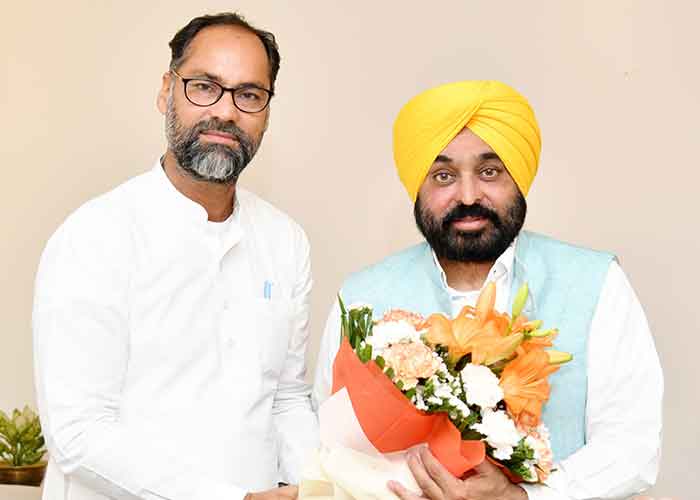
Chief Minister Bhagwant Mann formally inducted Tinu into the party and welcomed him to the AAP family. People who are serving Punjab or want to do that are continuously joining the Aam Aadmi Party and strengthening it, he said.

Along with Tinu, his party colleague and senior Akali leader Gurcharan Singh Channi also joined the AAP.

Tinu’s leaving the Akali Dal has given a big blow to it in Doaba ahead of the Lok Sabha elections.

After joining the AAP, Tinu said he had joined it to save the country’s democracy and constitution.

“The Aam Aadmi Party is the only party in the country that is fighting to save the Constitution, ” he said.

About his previous party, he said: “There is an atmosphere of uncertainty and insecurity in the Akali leadership from top to bottom. There is insecurity among the workers. When there is uncertainty and distrust among the people of any party, they cannot win. Now the people of Punjab do not have faith in the Akali Dal.”

Congress announces 10 candidates in Delhi, Punjab, UP

New Delhi :  The Congress on Sunday announced 10 more Lok Sabha candidates in Delhi, Punjab, and Uttar Pradesh.

The party has fielded veteran leader J.P. Agarwal from Chandni Chowk, former JNUSU President Kanhaiya Kumar from North East Delhi, and Udit Raj from North West Delhi (reserved for SC).

In Punjab, Gurjeet Singh Aujla will contest from Amritsar against BJP candidate and former envoy to the US, Taranjit Singh Sandhu, former Chief Minister Charanjit Singh Channi has been fielded from Jalandhar (reserved for SC), former AAP leader Dr Dharamvir Gandhi from Patiala against sitting MP and former Union Minister Preneet Kaur, who has shifted to the BJP, and sitting MLA Sukhpal Singh Khaira from Sangrur.

Ujjwal Rewati Raman Singh, the son of veteran SP leader Rewati Raman Singh, has been fielded from UP’s prestigious Allahabad seat. He had joined the Congress earlier this month.

Atishi calls for DJB CEO’s suspension after death in fight over water crisis

New Delhi: Delhi Water Minister Atishi has written to Lieutenant Governor V. K. Saxena asking him to immediately suspend the CEO, Delhi Jal Board (DJB), and take stringent and exemplary action against all concerned officers after a woman lost her life in a violent fight that started due to shortage of water supply in east Delhi.

She claimed that the onset of summer has barely started and many parts of Delhi are already facing water shortages, despite repeated directions to the Chief Secretary and DJB.

“For more than a year, the Chief Minister had given clear directions and a road map for improving water supply in Delhi. For the last 6 months, the undersigned gave repeated directions to the CEO of Delhi Jal Board and the Chief Secretary to ensure augmentation of water supply, so that there is no shortage of water when the onset of summer happens. However, despite repeated directions, no action has been taken to prevent this water crisis in Delhi, ” she said in the letter.

She further alleged that in the last few weeks, many reminders were given to the CEO, DJB, and Chief Secretary to ensure that water supply must be augmented through tube wells and water tankers.

“Grievances regarding water shortage have regularly been sent to the Chief Secretary on WhatsApp. As recently as April 3 directions for ensuring adequate water supply in the summers were given to Chief Secretary and I asked for an action-taken-report on the steps being taken by DJB. However, on April 4, the CEO of DJB had the audacity to send me a note stating that I would not be given any information regarding the water supply situation in Delhi because the Model Code of Conduct is in force, ” she claimed.

She said that it is a consequence of this callous inaction of the officers of Delhi Jal Board that today a woman has lost her life in violence due to water shortage.

“This inaction is tantamount to criminal negligence and cannot be ignored; immediate and exemplary action must be taken against the highest level of officers of DJB, ” she said.

Delhi Police on Sunday said that they have apprehended a 15-year-old girl for stabbing a neighbour to death after a quarrel over filling water from the common tap of the first floor of the house in Delhi’s Farsh Bazar area.

The deceased was identified as Soni, a resident of Bhikam Singh Colony in the Farsh Bazar area, and the incident occurred on Friday.

QR code to be printed on holy Saroops from now onwards: SGPC

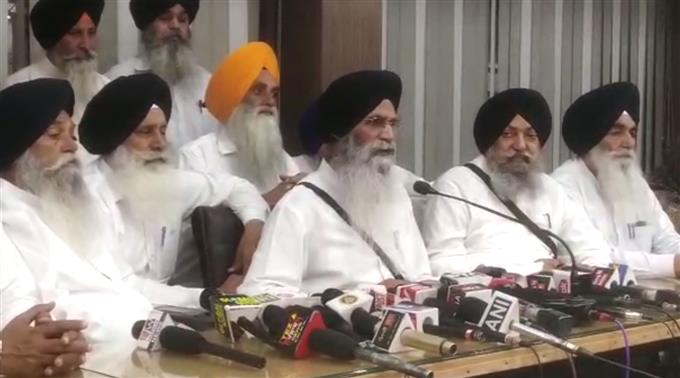
Amritsar, April 14 -The executive committee meeting of Shiromani Gurdwara Parbandhak Committee (SGPC) was held today under the leadership of SGPC President Harjinder Singh Dhami, in which, several important decisions were taken.

Talking to the media after the meeting, SGPC President Harjinder Singh Dhami said that apart from discussing strategy to observe upcoming centenaries related to Sikh history, the executive has taken several decisions.
He said that from now onwards, the SGPC will print holy saroops (scriptures) of Sri Guru Granth Sahib with QR Code technology to list their count and other related information. He said effort will also be made to cover those holy saroops as well which are presently available in different Gurdwaras and with the Sangat at their homes.

About another decision, the SGPC President said that it has been ruled that the employees of SGPC and its related institutions can avail maximum foreign leave of two years in their entire service tenure.

Sharing another development,  Dhami said that a decision has been taken to construct a big building for the Nishchay Civil Services Training Academy being run by SGPC in Chandigarh to prepare Sikh youth for UPSC (IAS, IPS, IFS), PCS and other competitive exams. He added that this building will be constructed at Gurdwara Sahib Bagh Shaheedan, Sector 44, Chandigarh and initially an amount of Rs 6.50 crore has been approved for this work.

He  said that to increase stay facility for Sangat arriving at Sachkhand Sri Harmandar Sahib, a decision has been taken to extend two floors of three Sarais (inns) each i.e. Sri Guru Arjan Dev Niwas, Sri Guru Hargobind Sahib Niwas and Mata Ganga Ji Niwas. He added that before starting this construction, the building department of SGPC will conduct an inspection of the foundation of these Sarais (inn). 

MOST POPULAR

HOT NEWS