Divided opposition boosts BJP’s poll prospects in J&K

With NC and PDP deciding to contest the LS polls independently, the INDIA bloc’s unity bid has drawn a blank in the Valley. Meanwhile, the polls are set to decide the fates of valley heavyweights such as Omar Abdullah, Mehbooba Mufti and Ghulam Nabi Azad. A report by Riyaz Wani
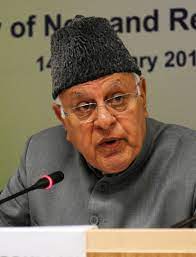
As the election campaign for Lok Sabha heats up in Jammu and Kashmir, the opposition parties are finding it increasingly difficult to retain any semblance of unity. The party interests have forced political outfits to go their separate ways. So much so that neither INDIA Alliance nor People’s Alliance for Gupkar Declaration (PAGD), originally formed to advocate for the restoration of Article 370, have survived.

To begin with, the National Conference (NC) decided to contest the forthcoming Lok Sabha elections independently. In the last parliamentary polls, the NC had won the three seats from Kashmir Valley while the two seats in Jammu division and the one in Ladakh in the then undivided J&K were won by the BJP.  The NC refused to part with its Valley seats and decided to support Congress in two seats in Jammu, now that Ladakh is a separate union territory. 

In response to the NC’s decision, the PDP has also decided to contest the three Valley seats. This will split the votes among the three parties. Votes will further fragment  with the other non-allied parties like People’s Conference, Apni Party and Democratic Azad Party – seen as close to the BJP – also throwing their hat in the ring. This will be a certain advantage for the BJP which will fight all the six seats in J&K and Ladakh.  

Incidentally, the NC and the PDP are also part of the Peoples Alliance for Gupkar Declaration (PAGD). The PAGD, formed with an objective of ensuring restoration of the special status of Jammu and Kashmir, faces an internal challenge as its constituent members which also include CPIM and Awami National Conference grapple with divergent interests and ambitions. But ever since its formation in 2020, the PAGD has become a distant memory, with the constituent parties not even meeting, let alone talking about the restoration of Article 370. 
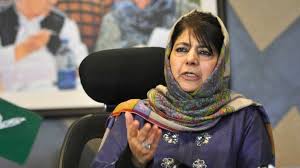
As things stand, a significant opinion in the NC and the PDP has grown increasingly skeptical about their alliance  and for very different reasons: the NC has come to see the PAGD as detrimental to its traditional standing as the largest J&K party and the PDP, in a sense, reciprocates the feeling. In the process, both the parties have gone slow on the demand for restoration of the former state’s autonomy as the centre turns up heat.

Though the parties again banded together when they joined the INDIA Alliance, they have since drifted apart. One of the factors for this is that J&K has too less a number of seats to share. However, the NC has expressed its willingness to go for seat-sharing on the three seats held by the BJP candidates, including the one in Ladakh. But in those seats, the Congress has been a bigger player than the PDP and so, a little consolation to the latter. The PDP has now decided to contest not just from the three seats in the Valley but also from the two seats in Jammu.  This will certainly be advantageous to BJP, more so in the two seats of Jammu where participation of the PDP and the other parties would once again split the anti-BJP votes. 

No wave in favour of any party

As things stand, there is no visible wave of support in favour of any party in the union territory, including the BJP. The political activity has generally been suppressed since the revocation of Article 370 in August 2019. Other than the BJP, no other party has found it safe to peddle its politics, nor have people been allowed to freely express their opinion. This has had a chilling effect. 

This has created a complicated situation. While the consequent discontent should go against the BJP in the union territory, particularly in its stronghold in Jammu, the party is anticipated to do well. This despite the fact that Jammu has experienced deep unease about the turn of events since the withdrawal of Article 370. Jammu has also feared loss of jobs, land and identity. People apprehend that the militancy in the Valley will persuade all eligible outsiders to settle in Jammu. People from outside are expected to find Jammu safer and culturally favourable. Besides, the new residency law has already granted citizenship to West Pakistan refugees, Gurkhas and Valmikis, who live in Jammu. 

In fact, other than the BJP, all other parties, including Congress, in Jammu have expressed their unhappiness with the existing situation. It remains to be seen whether any of this discontent would impact the prospects of the BJP. 

Alienation in Ladakh

The union territory carved out of J&K is now more alienated than ever before. Ladakh has experienced significant growth in its tourism sector, attracting an increasing number of visitors. This has played a big role in bolstering the local economy. However, the region’s transition to union territory status in August 2019 has increasingly confronted Ladakhis with challenges they had not foreseen. While initially celebrating this change, they now worry about the potential influx of outsiders without adequate constitutional safeguards against the settlement of non-local residents. With a small population of around 274,000 people, Ladakhis fear being overwhelmed and losing control over their economic activities.

The situation has come to a pass where the renowned climate activist Sonam Wangchuk has been forced to undertake a hunger strike for 21 days. His movement for safeguarding Ladakh’s rights continues. Would this impact the electoral outcome in Ladakh? Normally, it should. The BJP had won the parliamentary seat from the region in 2019. 

Heavyweights in fray

Other than the BJP whose star like elsewhere in the country remains in the ascendent in J&K, the ongoing Lok Sabha election will decide the fates of the heavyweight politicians such as Dr Farooq Abdullah and his son Omar Abdullah, Mehbooba Mufti and of course former top Congress politician Ghulam Nabi Azad. Azad is pitted against Mehbooba in South Kashmir’s Anantnag parliamentary constituency. After his exit from the Congress, Azad floated a new outfit DPAP in 2022. But it hasn’t so far found enough traction in the UT and Azad himself, once a high-flying politician at the national level has, more or less, receded into oblivion. The ongoing poll is thus a chance for him to resurrect his political career by winning his seat. Should Azad lose, he will further retreat into the shadows. More so, with the prospect of Assembly polls in the UT looking uncertain despite the Supreme Court deadline that the exercise be held before September this year.

Ditto for Mehbooba who needs a victory to shore up her party which has suffered large-scale desertions in recent years. And for Abdullahs, it is a fight to demonstrate that their party remains the pre-eminent political force in Jammu and Kashmir apart from the BJP which has dominated the scene over the past ten years, particularly in Jammu division. But for now, all we can do is keep our fingers crossed. 

Govt’s hint at AFSPA revocation marks major policy shift in J-K

Both HM Amit Shah and DM Rajnath Singh have indicated the potential withdrawal of the AFSPA from the Valley after the LS poll. Should this happen, it would be a big deal as the Centre so far has been steadfast in its refusal to withdraw the law, in force for the last 35 years. A report by Riyaz Wani

In a span of one week, both the home minister Amit Shah and defence minister Rajnath Singh have indicated the potential withdrawal of the Armed Forces Special Powers Act (AFSPA) from the Kashmir valley. This is the first time the BJP government has promised to revoke the law and that too by no less than by the second and third most powerful men in the cabinet. 

“The situation is getting normal. We are considering revocation of the AFSPA,” Shah said in an interview to J&K Television channel in the last week of March. “The government has already drawn a roadmap for the withdrawal of troops and the process will be initiated after elections.” 

Later, the Defence Minister in another interview to a New Delhi-based TV channel echoed Shah, saying the law can be withdrawn from J&K.

Though AFSPA has been in force in J&K for the last 35 years, its revocation has always been a metric of the return to peace. But the centre has so far stubbornly refused to withdraw the law, more so, the current BJP government.  

The AFSPA was enforced in the Kashmir Valley in 1990 – a year after the outbreak of militancy – and was extended to Jammu a decade later. The Act gives the armed forces immunity from prosecution while operating in the internal conflict zones. 

In 2013, the then J&K Chief Minister Omer Abdullah almost  got the then UPA government to agree to  a step-wise phase out of the AFSPA from the then state, starting with the areas with zero militant presence and, consequently, zero army footprint. But, zero footprint or no, the army consistently stonewalled any determined bid to remove the AFSPA by invoking worst-case security scenarios should the Act be lifted, even if partially.

Earlier in 2011, with militancy-related fatalities down to 183, the then General Officer Commanding of the Army’s 15 Corps in Srinagar, Lt General Syed Ata Hasnain, had even highlighted the unlikely possibility of Kashmir becoming an independent nation by 2014 should the AFSPA be withdrawn. The army typically becomes apprehensive anytime it perceives a threat from the potential power vacuum that the repeal of the AFSPA would create. Lt General Hasnain, in fact, raised the bogey when many in the UPA government, including the then home minister P Chidambaram, were inclined to review the Act. 

Last year, in February, the centre also decided to embark on a phased withdrawal of the Army from Kashmir. This is the first time since the separatist struggle broke out in Kashmir around 35 years ago, that New Delhi took the step. But did this make it significant? It didn’t. The Army was to be replaced by paramilitary forces that are equally trained in counter-insurgency operations. So, on ground, this made little difference. 

The withdrawal has a symbolic value though: It projects that normalcy has returned to the Valley following the withdrawal of the special status of the union territory in August 2019. 

The Rashtriya Rifles which was deployed in Kashmir was drawn from various infantry units in 1990 was to be withdrawn in three phases. It would start with a trial withdrawal of troops from South Kashmir districts such as Anantnag and Kulgam. The subsequent pullback was to take place after assessing the situation. 

Jammu and Kashmir, according to an estimate, has 1.3 lakh soldiers – 80,000 of them deployed along the border and rest of them in charge of anti-militancy operations. Similarly, of the 60,000 CRPF personnel in the union territory, 45,000 are deployed to Kashmir alone.  Jammu and Kashmir Police has 83,000 personnel, most of whom are engaged in fighting militancy. 

But the anticipated AFSPA withdrawal, should this happen, would be a very big deal. It would, for once, make security forces accountable for any violations they do. However, the Home Minister has promised any progress on this score after Lok Sabha elections. And that is, if the current dispensation retains power.  

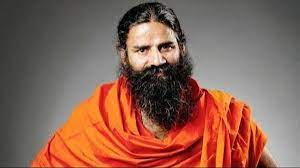
Trouble mounts for Ramdev as he comes under SC contempt glare

The sword of Damocles hangs on the head of Yoga Guru Ramdev and his deputy Acharya Balkrishna in the contempt case in connection with the publication of advertisements making fictitious claims about medicines marketed by their company, Patanjali Ayurveda. A report by Mudit Mathur

The sword of being punished for deliberately committing contempt of the apex court continues to hang on the head of Yoga Guru Ramdev and his deputy Acharya Balkrishna in the contempt case in connection with the publication of misleading advertisements making fictitious claims about medicines marketed by their company, ‘Patanjali Ayurveda.’

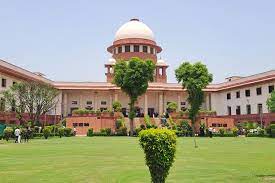
The Court has rapped the Uttarakhand government for the failure of its licensing authorities to take legal action against Patanjali and its subsidiary, Divya Pharmacy. The matter will be heard next on April 16. The Bench was hearing a plea filed by the Indian Medical Association (IMA) against an alleged smear campaign carried out by Patanjali and its founders against the COVID-19 vaccination drive and modern medicine.

Baba Ramdev faced backlash when he branded allopathy as a “stupid and bankrupt science.” He even attributed Covid-19 deaths to allopathic medicine. His remarks sparked outrage among doctors and health professionals, leading to a public outcry. Eventually, he withdrew his statement after criticism from the health minister. During the pandemic, Patanjali faced scrutiny for promoting an ayurvedic product as a care for Covid-19 without proper scientific evidence. Despite these controversies, Baba Ramdev continues to wield significant influence and remains a prominent figure in the realms of yoga, wellness, and business in India.

The bench comprising Justices Hima Kohli and Ahsanuddin Amanullah took strong exception for airing the advertisements in breach of an undertaking given to the Supreme Court in November last year and refused to accept the latest affidavit filed by Patanjali and its MD expressing “unconditional and unqualified apology.” The Court refused to accept the apology affidavit filed by Patanjali co-founder Baba Ramdev as well, who is also facing contempt proceedings.

When Senior Advocate Mukul Rohatgi defended Ramdev and Balkrishna saying, “People make mistakes”, Justice Kohli countered, “Then they suffer. We don’t want to be so generous in this case.” “Apology is on paper. Their back is against the wall. We decline to accept this, we consider it a deliberate violation of undertaking. Be ready for something next to rejection of affidavit,” Justice Kohli told Rohatgi.

“Why should we not treat your apology with the same disdain as shown to the court undertaking? We are not convinced. Now going to turn down this apology,” Justice Kohli further remarked.

Towards the end of the hearing, Rohatgi said that the contemnors are prepared to issue a public apology. But the court did not grant indulgence.

During the hearing earlier too, the bench had expressed dissatisfaction with an earlier affidavit of Patanjali MD since it contained certain comments terming the Drugs and Magic Remedies (Objectionable Advertisements) Act 1954 “archaic”.

In another curious development, the Court commented that Patanjali MD and Baba Ramdev tried to evade personal appearance before the court by making false claims of travelling abroad. After show-cause notices were issued, they attempted to “wriggle out of their physical appearance” by moving applications seeking exemption on the ground that they were traveling abroad. To demonstrate the said fact, affidavits were filed by them, referring to certain flight tickets, which are produced as annexures. The Court observed that though the applications were filed on March 30, the flight tickets produced as annexures, “strangely enough”, were dated March 31.

The court was upset about an advertisement issued by the company on December 4, 2023, after it had assured the court on November 21, 2023, that it would not make any “casual statements claiming medicinal efficacy or against any system of medicine”. In November 2023, the Supreme Court threatened to impose costs of Rs 1 crore per false claim made in each advertisement for Patanjali Ayurveda products that claim to cure diseases.

The top court had directed Patanjali not to publish false advertisements in the future. The Court imposed a temporary ban on such advertisements and issued contempt of court notices to the company and Balkrishna for making misleading claims. On March 19, the Court had directed Ramdev and Balkrishna to be personally present before it after they failed to file replies.

The Supreme Court also criticized the Uttarakhand government for being hand-in-glove with errant licensing officers while failing to take action on misleading ads published by Patanjali Ayurveda. It said: “We are appalled by the action of the State Licensing Authority and it shows nothing apart from pushing the files and the clear attempt by the State Licensing Authority was there to delay the matter. The State Licensing Authority remained in deep slumber and the person who holds the position of the Joint Director is holding the post for 9 months and it is enough to be aware of the matter.”

“The predecessor is also complicit in the case and he is to file an affidavit explaining the conduct on his part when misleading ads were being given by Divya Pharmacy (Patanjali) in violation of the Act. The disdain shown by Divya Pharmacy to the warnings of the State Authority is apparent from the tone and tenor of the reply,” Justices Hima Kohli and Ahsanuddin Amanullah observed in the orders.

Pointing out the contents of the affidavit of the Uttarakhand government, the Bench observed, “Please read the letter which you cited. See what is written…it is said medicines are manufactured by the undersigned companies…it says ads are suggestive in nature…this is in teeth of the [Drugs and Magic Remedies (Objectionable Advertisements) Act, 1954] Act…they waive their thumb under your nose and tell you that ad is suggestive and you accept it! They said the aim is to have people connected with Ayurveda. As if they were the first ones to have Ayurveda medicines.”

“…Divya Pharmacy stated that the object of the ad was to keep people connected with Ayurveda and that it was only suggestive in nature. This is in the teeth of the Drugs and Magic Remedies Act. The reply is as if this Court does not step in, then the State Authority can abdicate its duty. Besides the first contemnors, we could issue contempt notice to the present deponent of the affidavit Dr Mithilesh Kumar, and his predecessor…however as of now, we ask the predecessor to file an affidavit explaining his conduct in the three years he held the post.” The Court ordered that all officers who held posts as district Ayurvedic and Unani officers who held posts from 2018 till now shall file replies on actions taken by them.

Yoga Guru Baba Ramdev co-founded Patanjali Ayurveda Ltd and established the Divya Yog Mandir Trust in 1995. Baba wields tremendous political clout which helped him develop a business empire with an estimated net worth of over Rs.1,600 crore through manufacturing and marketing ayurvedic products, including food items, cosmetics, and herbal supplements. Beyond Patanjali, Baba Ramdev diversified into other business ventures. These include real estate, agriculture, and retail. His commercial instincts and tactical investments played a crucial role in his financial growth. His entrepreneurial ventures have propelled him to financial success.

The General Secretary of the National Consumer Welfare Council at Chandigarh, Bikramjit Singh, had filed a criminal complaint against Baba Ramdev and the Patanjali Ayurveda Limited, under Sections 275 (sale of adulterated drugs), 276 (sale of drug as a different drug or preparation), 468 (Forgery for purpose of cheating), and 307 (attempt to murder) of Indian Penal Code, and section 4 of Drugs and Magic Remedies (Objectionable Advertisement) Act, 1954.

The complaint alleged, “Baba misled people with their claim of 100 percent COVID-19 cure, without following the due process or the rigorous testing that is required. Such acts will cost the lives of millions who put blind trust in ‘Patanjali’ as a leading herbal products manufacturer. Earlier also, the respondents had made many claims, like having a cure for cancer, which turned out to be false.”

Singh alleged that medical products, tablets, pills, and capsules containing medicine for diseases and human consumption cannot be advertised without prior permission from the authority appointed by the government, and the permission is granted after the medical council and authorities inspect the quality and genuineness of the medicines.

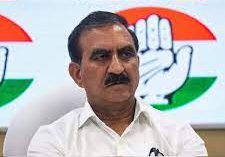
Both Cong and BJP grapple with internal strife in Himachal

While Congress deals with aftermath of rebellion of 6 party MLAs which resulted in the shock defeat of senior party leader Abhishek Manu Singhvi in RS election, the BJP faces backlash from aspirants after it rewarded the six Congress turncoats with tickets in assembly by-polls, writes Rajesh Moudgil

The political scenario in Himachal Pradesh has not seen a calm moment since the senior Congress leader Abhishek Manu Singhvi’s humiliating defeat in Rajya Sabha election in February owing to the rebellion of six of the 40 party MLAs in the House of 68; and a daunting challenge still continues to stare at the ruling Congress as well as the opposition BJP to address their internal strife ahead of the upcoming polls in the hill state, writes Rajesh Moudgil

In February this year, a major political storm hit Himachal Pradesh and tremors caused by it were felt across the country – Congress’ Rajya Sabha nominee Abhishek Manu Singhvi lost to BJP’s Harsh Mahajan despite having a clear majority of chief minister Sukhvinder Singh Sukhu-led Congress government.

How? In the House of 68, Congress had 40 MLAs, the BJP 25 and there were three independent members. Six Congress and three independent MLAs cross-voted leading to an embarrassing defeat of Singhvi.

This was just the beginning of a turmoil waiting to further unfold.

Even though Sukhu government survived and even got its budget passed in the following days, his own Cabinet minister Vikramaditya Singh, 34, son of six-time chief minister Virbhadra Singh, led the rebellion resigning from the post stating the party legislators were being ignored.

He had the backing of his mother, state Congress chief and the sitting MP from Mandi seat, Pratibha Singh, the widow of party stalwart late Virbhadra Singh.

Vikramaditya further held that the legacy of his late father was also not given due respect. Daring the state leadership, he said that such humiliation would not be tolerated and now the party high command would decide where the state Congress was headed next.

The six Congress rebels who openly flayed Sukhu’s leadership were Sudhir Sharma, Rajender Rana, Inder Dutt Lakhanpal, Chaitanya Sharma, Devinder Kumar Bhutto and Ravi Thakur. They joined BJP subsequently after they were disqualified for flouting the party whip to support the party and its budget. Independent MLAs were Ashish Sharma, Hoshiyar Singh and K L Thakur who had later resigned.

Rana claimed that more legislators feeling suffocated in the ruling Congress would also be leaving the party. Stating that they were in touch with them, he held that they too would be joining BJP in coming days.

Sudhir Sharma also lashed out at Sukhu alleging that the party workers were feeling frustrated as they found it extremely difficult to meet the chief minister.

Even as the strife within lingered, the top national leaders Sonia Gandhi, Priyanka Gandhi Vadra called and discussed various issues with Sukhu, deputy chief minister Mukesh Agnihotri and state party chief Pratibha Singh. The issues discussed concerned the elections to the four Lok Sabha seats as well as six assembly seats by-poll necessitated by the disqualification of the six party rebels.

Himachal Pradesh has four Lok Sabha seats – Mandi, Kangra, Hamirpur and Shimla and the six assembly segments which have simultaneous by-elections are – Dharamshala, Sujanpur, Barsar, Gagret, Kutlehar and Lahaul-Spiti. Polling to all these seats would be held along with the Lok Sabha election on June 1, the last phase of polls, and the vote would be counted on June 4.

After her return from Delhi, Pratibha Singh told newspersons that the message at the meeting to everyone was that the party should fight the upcoming polls unitedly sinking all differences. She further said that the Central leadership observed that Mandi was a high-stake seat hence the need to pick the right candidate – and many suggested Vikramaditya’s name. However the final call would be taken by the Central election committee, she added.

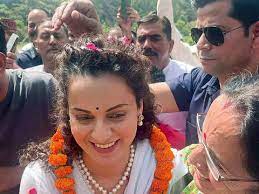
For record, the BJP has already announced to field actor Kangana Ranaut from the Mandi seat.

Sukhu told newspersons that the high command had sought his feedback on the political situation in the state and his government’s preparedness for the upcoming polls. He further said that Pratibha Singh was the state party chief and the elections would be contested under her leadership. He however, added that the party would give tickets keeping in mind winnability and clean image of the candidates.

The names of the probable candidates are likely to be shortlisted and submitted to the Central election committee around mid-April for its final call.

REBEL IN BJP TOO

The saffron party, on the other hand, too has had its own set of problems. The BJP wasted no time to name the six Congress rebels as its candidates to the assembly bypolls – Sudhir Sharma was named from Dharamshala assembly constituency, Rajender Rana was named from Sujanpur, Inder Dutt Lakhanpal from Barsar, Chaitanya Sharma from Gagret, Devinder Kumar Bhutto from Kutlehar and Ravi Thakur was fielded from Lahaul-Spiti.

They had switched over to BJP from Congress and were disqualified from the House for defying a party whip to be present and vote in favour of Congress-led government during cut motions and budget.

The BJP’s decision to give them tickets for the seats going to the by-poll triggered a rebellion in the saffron party.

Former minister and BJP leader from Lahaul-Spiti assembly seat Ram Lal Markanda resigned from the party against allotting the ticket to Thakur. Thakur had defeated Markanda in the last election by a margin of about 1,500 votes. As Markanda also decided to contest the by-poll, all the office-holders of the party block unit also resigned in his support.

There were also several BJP’s home-grown leaders who were upset over denial of tickets from the six seats for obvious reasons.

However, former chief minister Prem Kumar Dhumal held that while the party leadership was trying to pacify the leaders anguished over the distribution of tickets, these leaders would return to party fold as BJP was cadre-based party. Meanwhile, senior party leaders including former chief minister Jai Ram Thakur, party chief Rajiv Bindal and by-poll candidates including Rana and Lakhanpal had visited Dhumal to seek his blessings.

YET THE CRISIS PERSISTS

There does not appear an immediate crisis for the Sukhu government even though the Congress’ strength has dropped to 33 (excluding Speaker who has a voting right in case of a tie in the House) from its earlier 40 – with the disqualification of six Congress rebels – and even though now the House strength too has come down to 62 members from the earlier 68. The Sukhu government does not have immediate reason to worry even if Congress does not win any of the six by-polls necessitated by the six rebels’ disqualification.

As regards the fate of the three independent MLAs, the Speaker has not taken any decision on the resignation tendered by them.

The Congress, but, might witness an adverse impact of the rebellion in the upcoming Lok Sabha election; Even though the Congress has declared only Vikramaditya’s candidature from Mandi seat against BJP’s Kangana Ranaut, a cine actor, it has yet to name its nomine from Shimla, Hamirpur and Dharamshala seats. Besides Kangana, BJP has fielded its sitting MPs – Anurag Thakur from Hamirpur, Suresh Kashyap from Shimla (SC) and Kishan Kapoor from Kangra seat. Anurag, a four-time MP, is son of Prem Kumar Dhumal, a two-time chief minister and a tall BJP leader from the area.

LS Polls: BJP’s Hindutva card faces crucial test in UP

Uttar Pradesh is home to Hindu holy sites like Mathura-Kashi and others, which in many ways have functioned as the nerve centre of the BJP’s Hindutva politics. The upcoming  parliamentary polls have become a litmus test for the party’s sustained efforts in that direction.  A report by Mudit Mathur

Uttar Pradesh has become the laboratory of the “Hindu Rashtra” where saffron forces have long-nurtured big ambitious concept plans and dreams to replace the democratic system of Indian polity governed by the Constitution.  Now, Lok Sabha elections have become a litmus test for their sustained efforts in that direction. BJP stalwarts Prime Minister Narendra Modi and Chief Minister Yogi Adityanath have been seen synchronising their election speeches around this narrative aimed to polarise votes in this politically most crucial state which contributes 80 members to the Lok Sabha.

Political observers feel the BJP focus is mainly on sectarian issues which is likely to continue dominating voters’ minds. Uttar Pradesh has become ground zero for a certain type of Hindu-Muslim polarization and its impact on national politics, but the big question is: to which extent Muslim polarization would work to its advantage?.

The BJP campaign is aimed at discrediting opposition parties on the religious issues concerning the majority Hindu community citing their declining of the government’s invitation to attend the consecration ceremony of Ram Temple at Ayodhya. Amid continued victimization of prominent opposition leaders through central investigation agencies for alleged corruption and money laundering, Prime Minister Modi in his election rallies has kept accusing the Congress of making several attempts to stall the construction of the temple in Ayodhya and “insulting” the deity by “rejecting an invitation to the “pran pratishtha” (construction ceremony).

On Varun Gandhi’s turf, Pilibhit, PM Modi reminded them of the 1984 riots and the Congress’s alleged role in the same highlighting how the Samajwadi Party is standing with “this party” for the sake of appeasement politics.

Uttar Pradesh is home to many holy Hindu sites like Mathura-Kashi, which in many ways functioned as the nerve centre of the BJP’s Hindutva politics. The BJP has relied on a multifaceted Hindutva strategy in the state, leveraging socio-religious issues to consolidate its support base and secure electoral victories. The BJP ambitions are too high as the party claims it  will win all the 80 seats. UP is the heartland of the Hindutva project [Hindu identity] and thus, the stakes for the BJP are too high in the state to gain power in the country. A setback from this crucial state would be a big symbolic defeat for its Hindutva agenda.

BJP has been promoting a hardcore Hindu agenda in the state through Chief Minister Yogi Adityanath at its helm of affairs who is a Hindu hardliner monk and a senior member of the BJP. Yogi campaigned aggressively for the party in the 2017 elections in Uttar Pradesh and was rewarded by the RSS despite his lack of experience in government. His outfit, Hindu Yuva Vahini attained eminence by demonizing Muslims and by building  a strong Hindu base for him. His vigilante group was named often for violence, coercion, and threats against the minority community and was instrumental in bringing him to the central stage of the politics of eastern Uttar Pradesh.

During his tenure, Adityanath has pursued Hindu supremacist policies, replacing names of cities and towns that had a Persian or Islamic origin with Hindu names, revising textbooks to whitewash Mughal history and enacting a law banning “Love Jihad”—the supposed practice of converting Hindu women to Islam, through marriage to Muslim men and ‘Ghar Wapsi’ (religious conversion), which have stirred controversy and communal tensions in UP by targeting certain communities.

The BJP strategized to integrate Hindutva ideology with governance by implementing policies and initiatives aligned with Hindu nationalist principles, such as promoting Sanskrit education, renaming cities with Hindu historical names, and organizing religious festivals with state patronage. It promoted Hindu cultural symbols, traditions, and festivals as integral aspects of Indian identity, emphasizing the need to preserve and promote Hindu heritage. The issue of cow protection further polarised UP religiously where the party has advocated for stricter laws against cow slaughter and promoting initiatives for the welfare of cows.

The preparedness of the INDIA alliance grounds is marred with chaos and confusion due to indecision by the Congress Party which has yet to name its candidates for their pocketboroghs of Amethi and Raebareli, represented in the past by Rahul Gandhi and Sonia Gandhi, sending wrong signals among the electorates.  

FM’s economist husband hammers home ‘enormity’ of poll bond scam

Parakala Prabhakar, husband of FM Sitharaman, claims that the electoral bond scheme is not only the largest scam India has witnessed but also the largest globally. He said that following the exposé, the battlelines have been drawn between the BJP and people of India. A report by Mudit Mathur

Parakala Prabhakar

A series of interviews on various social media and news channel platforms by prominent political analyst and economist Parakala Prabhakar has triggered fresh political controversy across the nation about the survival of the Constitution of India and the democratic form of government through elections if Prime Minister Narendra Modi and the BJP return to power. He warned of a scenario “akin to the Ladakh-Manipur situation extending nationwide.” He remarked, “After electoral bond corruption became public, now the fight is not between two alliances but between the BJP and the people of India.”

The issue assumes significance because Prabhakar is the spouse of the incumbent Union Minister of Finance and Corporate Affairs of India, Nirmala Sitharaman who politely declined the offer given by BJP leadership to contest election citing financial constraints. In a TV show of a prominent media group, Sitharaman said, “After thinking over a week or ten days, I just went back to say… maybe not. I do not have that kind of money to contest. I also have a problem whether it is Andhra Pradesh or Tamil Nadu. It’s also going to be a question of various other winnability criteria that they use…Are you from this community or are you from that religion? Are you from this? I said no, I do not think I am going to be able to do it.”  “My salary, my earnings, my savings are mine and not the Consolidated Fund of India,” she replied to a loaded question.

Prabhakar has voiced concerns over potential implications if the Bharatiya Janata Party (BJP) secures victory in the 2024 Lok Sabha elections, suggesting a significant transformation in India’s landscape. “If PM Modi becomes PM again in 2024, India will never witness another election process. (Ek aur chunav ki ummed mat kijiye),” Prabhakar replied to the interviewer. “The constitution and map will change if PM Modi and his cabinet return to power. You would not be able to recognise this India, (Aap isko pehechan bhi nahin sakenge)”, Prabhakar boldly and fearlessly asserted. Citing inflammatory statements from BJP leaders and Modi himself, he warned of hate speeches escalating to the Red Fort in Delhi, suggesting a departure from subtlety.

Parakala alleged in an interview that the electoral bond scheme is not just the biggest scam India has seen, but the biggest scam globally. He says the BJP’s confidence that the common man is not able to understand the fallout of electoral bonds is false and that ‘Modi-gate’ will have an impact on this election.

The Congress Party further amplified the assertions of noted economist Parakala Prabhakar sharing his interview on its social media handle X on 7th April, purportedly lending credence to its ongoing campaigning echoing similar sentiments about the challenges before stressed democracy and survival of the Indian Constitution.

Prabhakar’s assertions about Prime Minister Modi have caused huge embarrassment to the ruling BJP as he is the spouse of none other than their own Finance Minister Nirmala Sitharaman. The West Bengal Congress president, Adhir Chowdhury heaped praise on Parakala Prabhakar, husband of Union Finance Minister Nirmala Sitharaman, for his views on the electoral bonds saying that he should be thanked for it and said that “electoral bonds were a systematic way to extort money”.

Reacting to the INDIA Bloc’s reactions over the growing concerns raised by Prabhakar, Prime Minister Narendra Modi in his Vidarbha rally launched a scathing attack on the Congress cautioning the people not to believe the INDIA bloc’s false narrative on the Constitution which was spreading falsehood on dilution of the Constitution, never implemented it in the entire country when in power.

“They have done injustice to the Constitution, whose architect was Dr Babasaheb Ambedkar. On the contrary, it was the NDA government that for the first time ensured its uniform implementation after the abrogation of Article 370. Through Article 370, Jammu and Kashmir was accorded separate rights,” Modi claimed.

‘Queen’ of controversies finally enters the fray

It is time Kangana Ranaut shifts focus from being a headline grabber to one who actually wins a Lok Sabha seat and adds to the BJP’s headcount of ‘is baar 400 paar… by KUMKUM CHADHA

From a Kangana who status to being handpicked by the BJP to contest the Lok Sabha election, film star turned politician Kangana Ranaut has come a long way. Not that her journey has been easy: on the contrary it has been a bumpy ride all through with her treading on rocky ground and stumbling. Yet she did not give up, her resilience being her armour and her ‘never say die’ spirit the sheath. 

Here, one has to begin from the beginning and address the Kangana who factor. 

Ranaut started off as a model before joining films less than two decades ago. She did get roles and also bagged a few awards but when it came to memorable performances she had very little to show. Her comic role in Hindi film Tanu weds Manu, did turn things around a bit but it was not as if she had arrived, so to speak. 

Talking purely objectively, as a film star Kangana Ranaut never actually made headlines. But she managed to stay in the news for all else. Therefore when a Congress minister dubbed her as the “queen of controversies” he was not off the mark. 

In fact, this best describes Ranaut both in and outside films.  

Before eyeing the political spectrum, she created enough ruckus in the film industry. 

Very few would have forgotten the Hrithik Roshan-Kangana Ranaut controversy wherein Kangana alleged their off camera relationship, to put it mildly. 

During media interviews that Kangana cashed in on, she said that while the duo was shooting for Krrish, there was a “romantic chemistry” between the two. 

Being a well-known and talented actor, Hrithik did not need any of this: he had a tough time denying the charges. 

Ranaut on her part made the most of it and continued her tirade against the actor. In fact, her claims were louder than Roshan’s denials. 

If Ranaut called Roshan her “silly ex,” and said that their relationship resulted in Roshan’s marriage breaking up, the actor said he would rather “date the Pope”. 

The controversy took a serious turn when Roshan sued Kangana, but by then it had helped her become a household name. 

Hrithik Roshan is not the only one. Ranaut also took on Karan Johar, another big daddy of the film industry. 

In a show hosted by Johar, Kangana called him the “flagbearer of nepotism”. 

This sparked a debate on whether star kids have it easy and “outsiders” continue to struggle. It also questioned Bollywood’s Big boys club which keeps out those who refuse to toe the line. 

The issue touched a chord because apart from exposing the dark underbelly in Bollywood, it brought to the fore the nexus between clan and class; a world where families take precedence over talent and merit. 

A journalist, who described Kangana  as  “a permanent outsider who can play the game better than most insiders” couldn’t have put it better. 

If the Roshan affair had projected Ranaut negatively, the nepotism controversy showed her up as one who dared: a rank outsider who has the guts to hit out at the exclusive club that dominates the film industry. 

But Ranaut’s speak out was not limited to Bollywood. She stepped out and made sensational comments about the country, its freedom and also about India’s first Prime Minister. In fact it is the last that is grabbing eyeballs but about that later. 

For those who think that Ranaut’s political adventure is sudden are in for a surprise. She has been flexing muscles for a while. True to her grain, she had taken on political parties time and again as she had challenged the might of Bollywood. 

She crossed swords with the then undivided Shiv Sena by comparing Mumbai to Pakistan occupied Kashmir. The Mumbai Police, she said, haunts her more than the mafias of Bollywood clearly pointing a finger at the state government then headed by Uddhav Thackeray.  

When Member of Parliament, Sanjay Raut used abusive language against Ranaut, she hit back saying that his goons can kill her but not stop her from entering Maharashtra. Raut had asked her not to enter the state.  

Ranuat seems to have chartered her political course deftly. It did take a while but has certainly paid off given that she could be BJP’s next Member of Parliament.

Be it by accident or design, Ranaut has been effusive about her praise for the BJP government. She has also made right noises about Prime Minister Narendra Modi and said things one would wish to hear.

Taking to Instagram, she had spoken about him being “extraordinary” and a “Mahapurush”, a great man. 

In the same strain, she said that India got “real freedom” in 2014 thereby implying that Mr Modi’s advent as Prime Minister was the real turning point. In the process, she belittled India’s freedom struggle on grounds that the 1947 azadi was a bheek, alms. But that is another matter. 

That apart, in keeping with the BJP’s ideology, Ranaut has made it known that she is a proud Hindu who “loves her puja”. She also heaped praise on the BJP-led government for the rise of Ram temple in Ayodhya “after 600 years of struggle”.

That apart, she has backed the saffron Party to the hilt including the controversial Citizenship Amendment Bill or the CAA. Commenting on the opposition that has followed, Ranaut asked the people to “understand” the legislation and what it stood for before opposing it. 

On that score, Ranaut leaves much to be desired. 

Recently, she displayed a complete lack of “understanding” of India’s history when she said that India’s first Prime Minister was Netaji Subhash Chandra Bose. 

For those who are aware of Kangana’s background would perhaps put it to sheer ignorance and brush this faux pas under the carpet. 

But the BJP being BJP turned it around and defended the blunder. 

Assam Chief Minister Himanta Biswa Sarma recalled that several countries had recognized Netaji’s Azad Hind government as the legitimate government of India, four years before India became independent. 

For the uninitiated Ranaut had, during a media interaction, called Bose India’s first Prime Minister. 

She later chided those mocking her on grounds that Netaji had formed the Azad Hind Fauj government in Singapore in 1943 and declared himself Prime Minister: “The joke is on you” she shot back at those giving her “gyan”, general knowledge on India’s first Prime Minister. 

However to set the record straight, it was none other than Netaji’s very own who stepped in to clear the air. His grandnephew, Chandra Kumar Bose rued the “distortion of history for political ambition”. 

Netaji’s kin also advised Ranaut for following Netaji’s ideology before referring to him. 

If Ranaut’s track record is anything to go by, she is unlikely to follow this advice. She is a law unto herself and one whom the BJP may find difficult to rein in. 

If reports are to be believed Party managers have asked her to speak “not more than a sentence” lest she muddies the waters in the forthcoming elections. And if she has to speak, then she should stick to the brief of propagating Prime Minister Modi’s welfare schemes.

Irrespective, it is time for Ranaut to understand that unlike films, politics is a different ball game and often headlines become a nightmare. However confident one may be of turning this to one’s advantage, during elections, things do not pan out the way they are planned. 

Therefore while controversies in the past have brought her to centre stage, it is time Ranaut shifts focus from being a headline grabber to one who actually wins a Lok Sabha seat and adds to the BJP’s headcount of is baar 400 paar… 

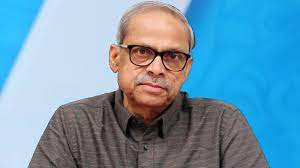
Happiness lies in being one with the Universe, says Dr. Saamdu Chetri

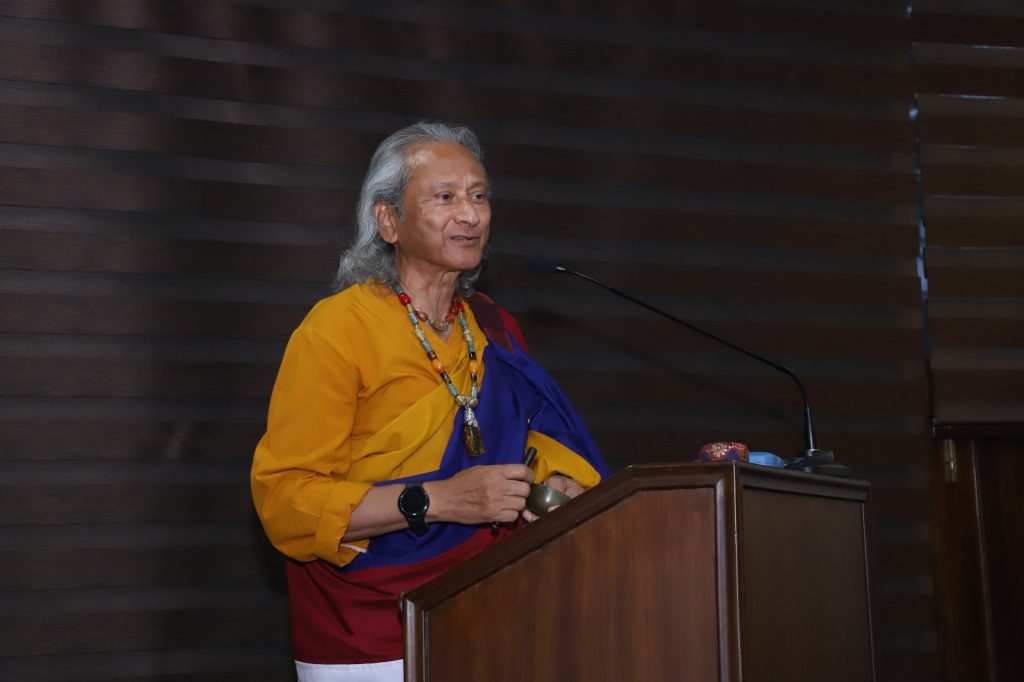
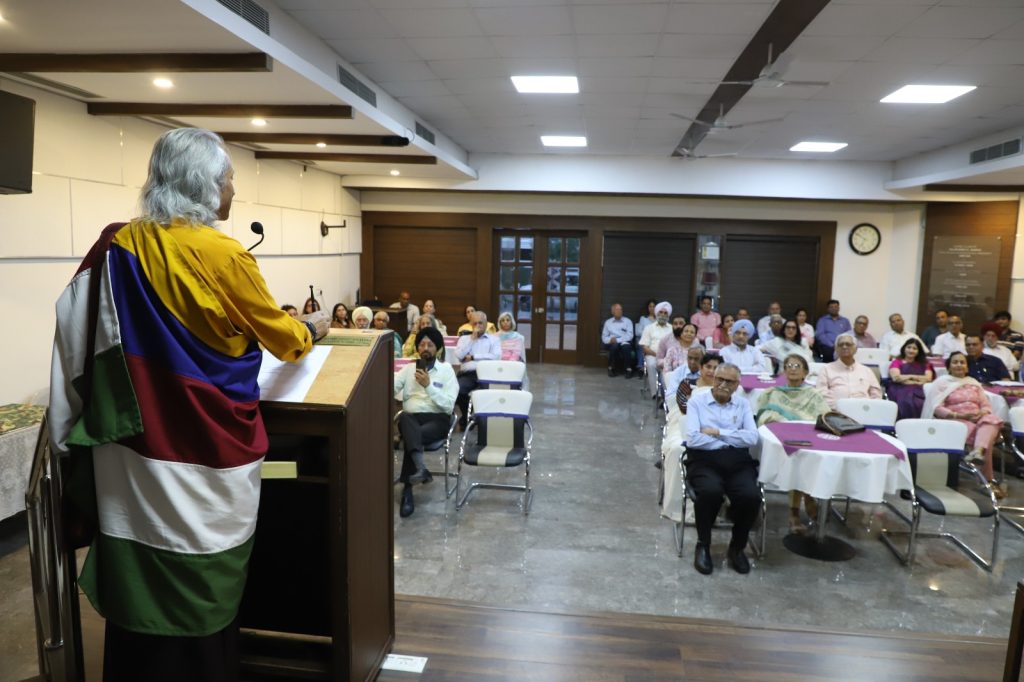
Chandigarh :  Dr Saamdu Chetri, the ‘Happiness Guru’, author, and principal architect of Gross National Happiness Centre in Bhutan, was in the city today to address Rotary Club of Chandigarh at Rotary House.

He spoke on ‘Know Thyself’ and explained how human body is so closely intertwined with all the five elements that constitute our universe, like earth, water, fire, air, and ether or space.

Human body draws trillions of cells within from Nature and our surroundings that have been proven by science, and therefore, to respect Nature is most essential to stay in tune with this universe and stay happy, he said.

If we continue to exploit and pollute these elements around us, our own cells would get equally degenerated, he added.

Dr Chetri who has joined the Shoolini University in September last to setup the Yogananda Centre for Happiness and Wellness at Solan, after having successfully setup a similar Centre of Excellence for the Science of Happiness, Indian Institute of Technology Kharagpur, which he served for five years.

Dr Chetri had been the Joint Secretary and Head of Good Governance in the first democratically elected Prime Minister’s Office and instituted the Gross National Happiness Centre as one of its founding members and headed it for five years.

A most sought after speaker who addressed even the House of Commons in the British Parliament, Senators of the Philippines, among others, said that there are diverse parameters of happiness and in the Bhtanese culture, the biggest happiness is being content with one’s present for tomorrow we might not be there to see the day.

Contentment, love for all, respect for Nature, gratitude for what we have, forgiveness to all human beings, are some of the key concepts that need to be imbibed and taught to the younger generation right from the childhood to live a happy life, he averred.

Jat vote may hold the key to power in Haryana yet again

The political permutations and combinations following the collapse of the ruling BJP-JJP alliance and the angst against BJP government among the Jats in state, have catapulted the community to the centre stage and jeopardized what was being predicted as an easy win for BJP, writes Aayush Goel

In the run-up to the Lok Sabha elections, a significant political shift in Haryana has yet again pivoted the elections around the prominent Jat community of the state. The shifting of leaders from one party to another, major being the return of former Union Minister Chaudhary Birender Singh along with his son, the incumbent MP from Hisar, Brijender Singh and wife Prem Lata, to the Congress after 10 years, the collapse of Jannayak Janta Party (JJP), speculations of its reunion with Indian National Lok Dal (INLD) and angst against BJP government amongst farmers, primarily Jats in state, has put community at the centre stage and jeopardised what was being predicted as an easy win for BJP.

Jat leaders have dominated Haryana politics since the formation of the state in 1966 even though the community accounts for only 28 percent of the state’s population. In the last 58 years, the state has been ruled by Jat chief ministers for 33 years. Bhagwat Dyal Sharma, Rao Birender Singh, Bhajan Lal, Manohar Lal Khattar, and current CM Nayab Singh Saini have been the members from the non-jat community, who have occupied the CM’s chair in the state so far. According to political analysts, though the community is focusing on forthcoming assembly elections influencing a minimum of 36 out of 90 assembly segments, but with changed equations now, they will be key deciding factors in at least four of the 10 parliamentary constituencies – Sirsa, Hisar, Rohtak, and Sonipat. Having virtually been out of power for 10 years the community is out to reclaim its supremacy in state.

Framers’ angst against BJP and JJP  

In Haryana, farmers are primarily Jats who have been up against the BJP led centre government since farmers protest in 2021,  and wrestler’s agitation thereafter. The sentiment seeped down and resulted in community’s antagonism towards the state’s BJP-JJP government, and flared up after the recent faceoff with farmers at Shambhu border in Ambala. The resentment is now showing up with farmers reportedly shooing away BJP and JJP leaders when they reach the villages for campaigning. Mohan Lal Badoli, BJP candidate from Sonipat parliamentary seat, went to campaign at Rohna village earlier this month, he was surrounded by hundreds of jeering and protesting farmers. The escalating situation forced Badoli to cut short his election speech and hurry away. 

Like Badoli, BJP candidates Ranjit Chautala (Hisar), Arvind Sharma (sitting MP Rohtak), and Ashok Tanwar (Sirsa) also faced protests. 24 villages under the Dahiya Khap have boycotted BJP and warned candidates against trying to approach them. The farmers’ anger is also directed towards the BJP’s former ally, JJP, as well, as former deputy CM Dushyant Chautala was stopped from entering the Nara village in Hisar, a Jat stronghold. Chautala’s mother Naina Singh, an MLA from Badhra, says he is paying price for allying with the BJP though had no power to alter the situation.

According to Pagri Sambhal Jatta, Kisan Sangharsh Samiti, a farmers’ union and constituent of the larger umbrella body, Samyukta Kisan Morcha (SKM), these protests are part of the ‘Jawab Do, Hisab Lo (seek answers, hold them to account)’ campaign – a concerted effort to hold the ruling establishment accountable for its work over the past five years.

Challenge to tap jat votes for BJP

As per the voting pattern observed in Haryana, in 2019 Lok Sabha and Vidhan Sabha elections, 39.8 percent of the Jat population voted for the Congress in Lok Sabha polls while 42.4 percent voted for the BJP, and the remaining voted for the JJP, INLD, and others. This was credited to the Modi wave as the pattern changed in assembly elections which were held within the next few months. In the assembly elections, the JJP secured 12.7 percent of Jat votes while the Congress share was 38.7 per cent. The BJP received 33.7 percent of Jat votes. It was this pattern that was blamed for the BJP’s poor performance in the 2019 assembly elections, in which five of its six jat candidates lost .

As a result, the party was forced to make alliance with newly formed JJP which was carved out of INLD following a fall out between Chautala brothers, Abhay and Ajay. This alliance became a saviour and JJP’s scion Dushyant Chautala was made the deputy CM of state. All was well till this winning ‘couple’ split in March this year. The BJP now faces a formidable challenge to garner votes in the Jat belts and tap the community voters who are clearly cut up with the BJP.  The split coupled with cold shouldering of prominent Jat leaders like former BJP chief OP Dhankar, Captain Abhimanyu, the exit of jat stalwart, former Union minister Chaudhary Birender Singh and his son Brijender Singh, and sole attention towards backward classes of have fuelled the growing mistrust in community against the BJP. Though the BJP has been trying to make inroads at strategic local levels, trying to connect with local jat leaders but it is not leading to any significant shift in the situation  so far. The BJP, however, says the opposition is misleading the farmers and voters and they will vote for development.

“The protests are all orchestrated by the Congress workers and not local residents. People will see through their game and vote for development as they have seen where BJP has brought them in 10 years”, says former CM and now party candidate from Karnal Manohar Lal Khattar.

Congress gains an upper hand in community

The parting of the JJP from the alliance and rising dissent against BJP among the community may prove to be a reviver for the Congress, which has been ailing with infighting and fractionalisation so far. The five-and-a-half-year-old JJP has been in crisis since its coalition with the BJP in the state ended in March. The JJP has been rocked by a spate of high-profile resignations like general secretary Kamlesh Saini, Haryana unit chief Nishan Singh, Mamata Kataria, former JJP state women’s secretary, and MLA  Jogi Ram Sihag. Majority of these leaders are speculated to join Congress. Though the party supremo, Ajay Chautala has expressed  wish for reunion with estranged father and INLD supremo OP Chautala, but his brother says the party has no place for traitors. With the JJP,  which caused a split in Jat votes during the 2019 elections, is virtually out of the picture and the INLD still struggling to survive, the Congress is gaining an upper hand. 

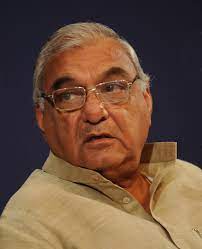
Bhupinder Singh Hooda

The community still fondly remembers the 10-year long spell of the Congress government led by Bhupinder Singh Hooda who is credited for consolidating them as a loyal voter base for the party. Having prominent Jat leaders like Hooda and Randeep Surjewala, Congress has got another boost with Birender Singh returning to the party after 10 years. He had departed from the Congress in 2014 and served as a Cabinet minister in the Modi government.

Being the grandson of the eminent farmer leader, Sir Chhotu Ram, and known for his clean image, he is a major vote puller. Though things seem to be falling in place for the party to reclaim its traditional vote bank, fractionalisation poses a major challenge,  especially in Lok Sabha elections. The three Jat leaders, Hooda, Birender Singh and Surjewala are not exactly on the same page and are striving to carve their own shares in the vote bank. The veterans, Birender Singh and Bhupinder Hooda, have expressed reluctance to contest Lok Sabha elections despite the high command’s wishes and recommended the names of their sons from Hisar and Rohtak, respectively. While Birender’s son, former IAS Brijender Singh is a sitting MP from Hisar and had recently quit BJP, Hooda’s son Deepender is Rajya Sabha MP for Congress from Rohtak.  INLD too is gripped with factionalism. But will this result in a good turn for BJP remains a big question.

Conserving rhinos in Jaldapara

From only 14 rhinos in 1985, which was an all-time low, there are 292 animals now in this national park in West Bengal’s Alipurduar district. A report by Deepanwita Gita Niyogi

Guide Bholaprasad Sharma spotted the two animals, partially hidden in the thick foliage. Perhaps, spending 19 long years as a safari guide has trained him to spot wildlife quickly.

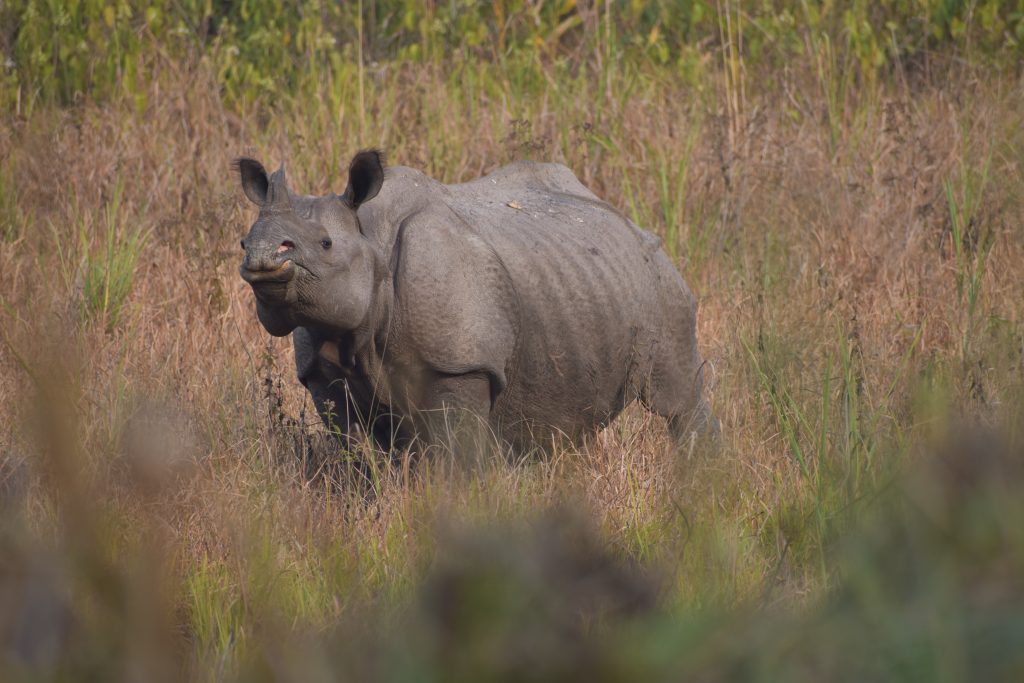
In the blazing sun, it took a few more minutes to see them prominently. Then they fully came into view: two beautiful rhinos, the pride of Jaldapara National Park in Alipurduar district of West Bengal.

Jaldapara has an interesting history. It was once the hunting ground of the Cooch Behar royal family. In 1941, it was declared a game sanctuary. In 1976, Jaldapara became a wildlife sanctuary, and in 2012, a national park.

Spread over an area of 216.51 sq km, Jaldapara is a riverine ecosystem crisscrossed by several important rivers which change their courses. The main rivers are Torsha, Hollong and Buri Torsha. The region’s grasslands offer a suitable habitat to the rhino population.

Rhino turnaround

At his office inside the Jaldapara National Park, Novojit De, assistant wildlife warden, talked about the turnaround of the rhino population. From only 14 rhinos in 1985, the lowest count ever, there are now 292 animals in Jaldapara as per the 2022 rhino census report. The turnaround happened due to several interventions.

“To create a suitable habitat for the animals, the forest department maintains fodder grass species like Madhua and Malsa. Some grasses like Kasia, Chepti and Ulu, however, occur naturally in the riverbed. Rhinos need these grasses for survival,” said De.

According to the forest officer, there is a successive change in Jaldapara’s vegetative landscape dominated mostly by Semul and Khair trees. This is due to the rivers changing their courses annually. “Initially grasses come up, followed by weeds and trees on riverbeds. On its part, the department intervenes and stops this succession as there is a need to maintain only good quality grasslands for rhinos. They prefer grasslands to forests. Thus, we keep grasslands intact and try to stop secondary succession like the growth of weeds and trees through removal, cleaning, burning and cutting back.”

Besides positive intervention measures to improve the habitat, there is heightened protection in place to counter poaching. Jaldapara is a sensitive place as there are about 32 villages in the fringe areas, Sharma said during the safari.

Rhino poaching is an organized crime. Demand is floated for horns in the global market and then crimes are planned. As it is lucrative, local communities often help poachers.

Keeping an eye

In Jaldapara, there are anti-poaching camps at all strategic locations where staff work in shifts and remain ever alert. Still, poachers have been active. Data provided by the department reveals that the last poaching case happened in 2021 during which one animal was killed. There was one case each in 2018 and 2019. In 2014, three poaching cases were recorded and in 2015 four such cases took place. No cases happened in 2016, 2017 and 2020, the lockdown year.

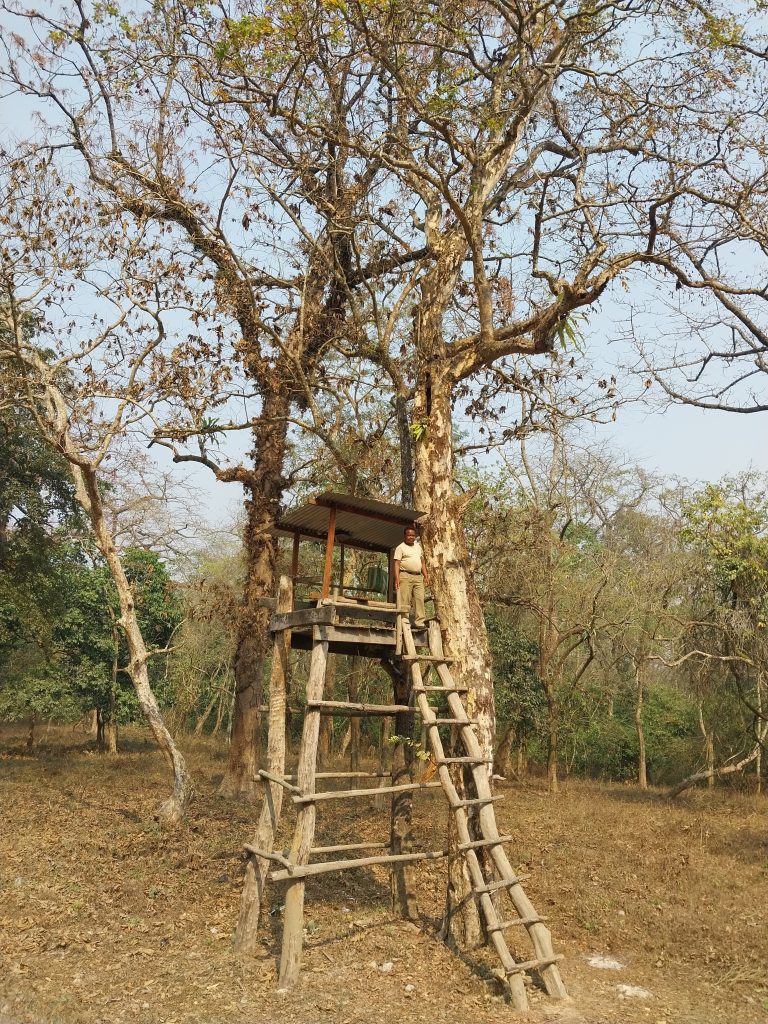
During the safari time in Jaldapara which stretched for about two hours, apart from the two rhinos, elephants, deer and peacocks were also spotted. As the vehicle sped along, staff quarters and watchtowers, locally called tongs, were seen. The guide explained that there is always a person on duty atop these watchtowers.

At a temporary watchtower resembling a machan set up on a tree where the vehicle halted for a while, Matiyas Kharia, a resident of Purba Madarihat village informed that he has been working in Jaldapara since 2014. “Many of us carry out foot patrolling and also do night duty on a rotational basis,” said Kharia whose tong is made of Sal tree wood. Apart from this one, there were other watchtowers seen along the stretch. Kharia is usually on duty from 12 pm to 6 pm. After he leaves, the night guard comes.

Abdul Kader Miya, whose duty changes after every 48 hours, informed that people residing in the villages help the department by informing on time about any conflict situation.

As there are many villages within two kilometers of Jaldapara, there is human-elephant conflict.

Sharma is from Meghnadsaha Nagar which is a forest village close by. In the last leg of the journey, the guide showed the Hollong tourist lodge built during the 1970s. Situated about six kilometres from the main gate, it offers remarkable sightings due to a salt lick where animals frequent in the evening. At Hollong, a herd of elephants kept visitors spellbound for about 10 minutes.

The guide, who was born so close to Jaldapara, feels a special connection with the landscape where there is constant pressure in the form of fuelwood collection and cattle grazing by locals. This also increases the risk of poaching.

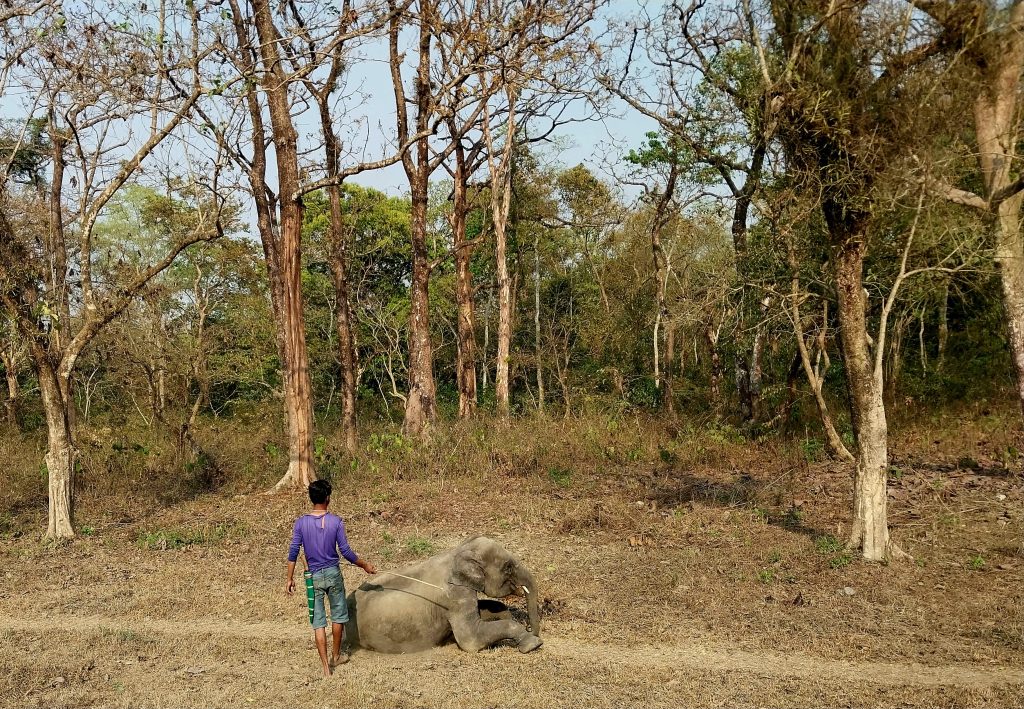
Though only poaching was not responsible for the low count of rhinos in the 1980s, there is an added layer of safety measures for protection. Besides watchtowers and foot patrolling, captive elephants also help in keeping an eye on rhinos. Mahouts are there to control these elephants. Trap cameras have been set up in several places and drone patrolling is also carried out.

De revealed that there are special teams to counter wildlife offences. Sometimes, there are issues with locals who enter inside the forest for firewood.

To conserve rhinos in the long run across critical habitats, the Indian Rhino Vision (IRV) 2020 programme was launched in 2005. Now, there is IRV 2.0 with a special focus on Assam which will continue till 2030. In West Bengal, besides Jaldapara, there are 52 rhinos in the Gorumara National Park.

MOST POPULAR

HOT NEWS