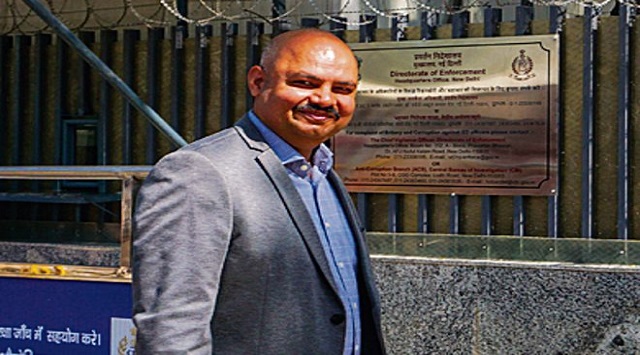
New Delhi: The Directorate of Vigilance of Government of Delhi has issued an order for termination of Bibhav Kumar, Chief Minister Arvind Kejriwal’s Private Secretary.
The order read: “Consequent upon the resignation of the Council of Ministers notified vide dated 14.02.2020 the term of the government has ended, and being a coterminous officer, the appointment of Bibhav Kumar will also have to be terminated.”
“However, in terms of DOPT OM dated 26.05.2014, the personal staff of the outgoing Minister can continue to hold their post for a period not exceeding 15 days.”
“Since Honourable CM has now desired that Bibhav Kumar should continue working with him as Private Secretary, to consider his fresh appointment, the earlier term of coterminous appointment shall have to be terminated first. Hence, the services of Bibhav Kumar may be terminated wef 16.02.2020 (A/N) and thereafter, his appointment as Private Secretary to CM wef 17.02.2020 (F/N) may be considered.”
The Vigilance Department has pointed out that since the individuals appointed on a coterminous basis are governed by the CCS (Conduct) Rules, it is important to consider Bibhav Kumar’s character and antecedents verification that was carried out at the time of his previous appointment as Private Secretary to the Chief Minister.
This is because, during his subsequent period of working in the government with the Chief Minister, there were no negative reports against him.
“However, it may be placed on record that in case any adverse report is received in future, in this office pertaining to this last five-year period, the officer would be liable for necessary action in terms of relevant rules in the matter. As of now, the appointment shall have to be made subject to the outcome of the case at Noida, Sector-20 police station, registered under sections 353, 504, 506 IPC, which was reported in his character and antecedents verification report from Delhi Police, ” the order further read.
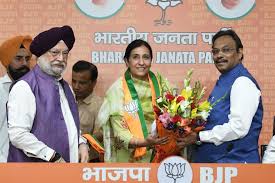
Chandigarh : In a big jolt to the Shiromani Akali Dal (SAD), its senior leader Sikandar Singh Maluka’s daughter-in-law and former bureaucrat Parampal Sidhu on Thursday joined the BJP in Delhi.
Sources said she is likely to be fielded against Akali leader and former Union Minister Harsimrat Kaur Badal.
Last week the 2011 batch officer of the Punjab cadre took voluntary retirement from the Indian Administrative Service (IAS). There is speculation that she may get the ticket to contest from the Bathinda parliamentary seat, currently represented by SAD leader Harsimrat Kaur Badal, wife of Akali Dal chief Sukhbir Badal.
Maluka’s son Gurpreet Singh also joined the saffron party in the presence of the party’s general secretary Vinod Tawde, Union Minister Hardeep Puri and other leaders. Senior Akali leader Maluka was the education minister of the Akali government till 2017
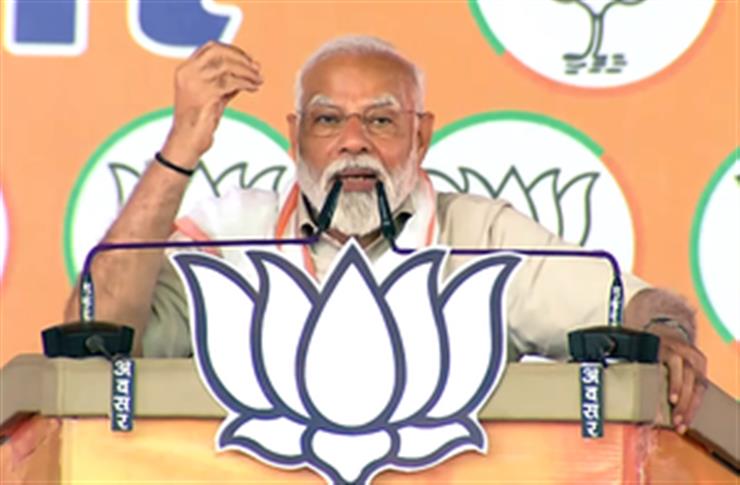
New Delhi: Prime Minister Narendra Modi on Thursday will address an election rally at Rishikesh in Uttarakhand and a public meeting at Karauli-Dholpur in Rajasthan for the Lok Sabha elections.
This is the second rally of Prime Minister Modi in Uttarakhand which will begin at 12 noon on Thursday before the voting for five Lok Sabha seats in the state on April 19. Earlier, the Prime Minister had also addressed a public meeting in Uttarakhand’s Pithoragarh on April 2.
Prime Minister Modi will address a public meeting on Thursday at 3:30 p.m. on the occasion of Gangaur in Karauli, Rajasthan.
The Prime Minister will address the Vijay Shankhnad rally in support of Indu Devi Jatav, the BJP candidate from Karauli-Dholpur Lok Sabha constituency. Along with the PM Modi, Rajasthan Chief Minister Bhajan Lal Sharma and other BJP leaders will also be present in the rally. The voting for this Parliamentary constituency is scheduled to take place on April 19 that is the first phase of polling.
Chandigarh: A relative of one of the assassins of late Prime Minister, Indira Gandhi, is contesting the parliamentary elections in Punjab from the Faridkot (Reserved) constituency as an Independent.
A Class XII dropout, Sarabjit Singh Khalsa (45) is the son of Beant Singh, one of the two killers of the late Prime Minister.
In 2014 and 2009, Sarabjit Singh Khalsa unsuccessfully contested the Lok Sabha polls from the Fatehgarh Sahib (Reserved) and Bathinda seats, respectively.
In 2019, he was the Bahujan Samaj Party candidate.
Beant Singh and Satwant Singh, bodyguards of then PM Indira Gandhi, had riddled her with bullets on October 31, 1984 at her residence.
In 2014, Sarabjit Singh Khalsa had declared assets to the tune of Rs 3.5 crore in the election affidavit.
His mother, Bimal Kaur, and his grandfather, Sucha Singh, became MPs from Ropar and Bathinda, respectively, in 1989.
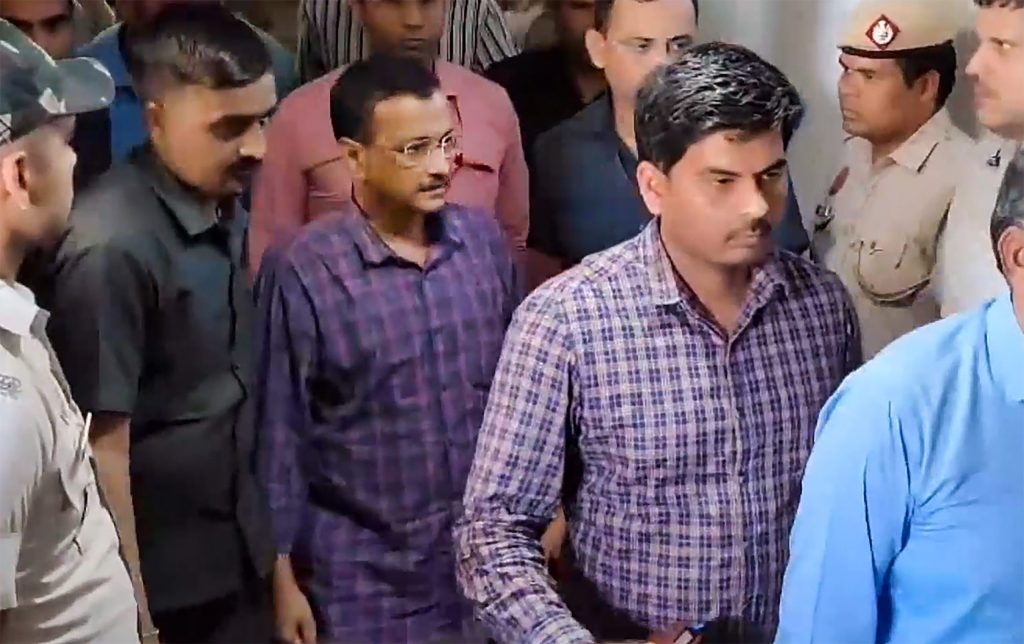
New Delhi: Delhi Chief Minister Arvind Kejriwal has approached the Supreme Court challenging the dismissal of his plea by the Delhi High Court against his arrest in the excise policy case.
It is highly anticipated that the special leave petition filed by CM Kejriwal will be mentioned Wednesday morning before Chief Justice of India (CJI) D.Y. Chandrachud seeking directions for urgent listing and hearing.
Earlier on Tuesday, the Delhi High Court dismissed CM Kejriwal’s petition challenging his arrest and the trial court order remanding him to the federal anti-money laundering agency’s custody.
A bench of Justice Swarana Kanta Sharma took note of the ED’s submission that the agency had enough material, including statements from approvers and allegations of involvement in the formulation of the excise policy, which had led them to arrest him.
It said, “The files and material placed before us reveal that the mandate of law was followed by the ED. The trial court order is not a two-line order. The statements with ED are of hawala dealers as well as AAP candidates in Goa elections.”
Immediately after he was taken into custody by the ED on March 21, CM Kejriwal moved the apex court seeking an urgent late-night hearing on his petition. On the very next day, before a special Bench of the Supreme Court could commence hearing the matter, he withdrew his plea and decided to contest remand proceedings before the trial court.
As the electoral frenzy grips Manipur, the political arena is ablaze with campaign fervor. With over 11 months of relentless violence casting a shadow, this election emerges as a pivotal juncture to reshape Manipur’s destiny, ushering in a new era of hope and transformation.
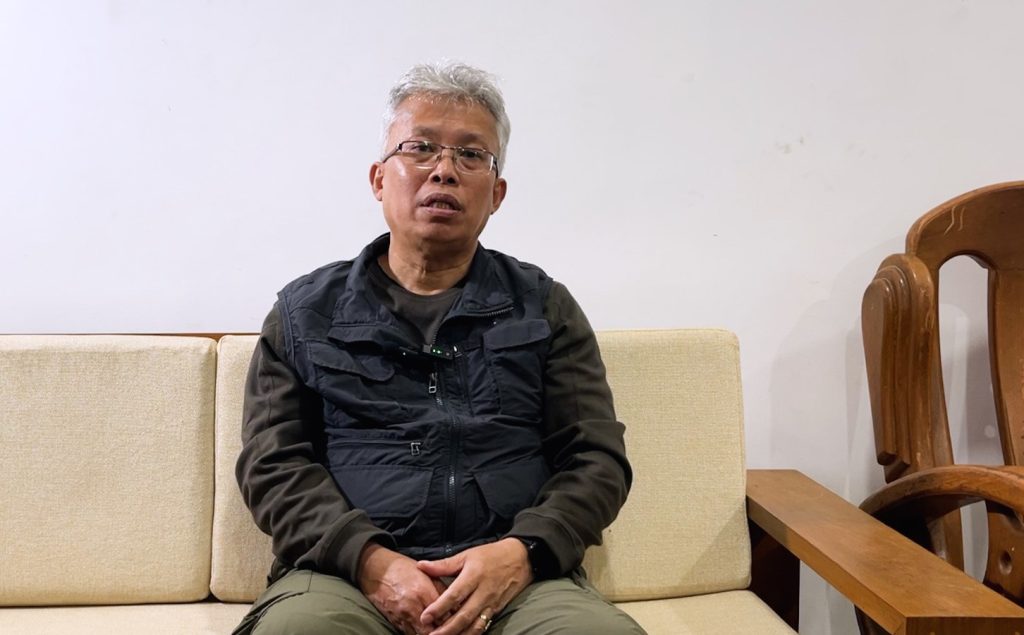
Among the multitude vying for change stands Dr. Angomcha Bimol Akoijam, an Associate Professor at the esteemed Jawaharlal Nehru University in Delhi. He steps into the electoral fray as an Indian National Congress candidate, bolstered by the backing of the INDIA bloc. In an interview with Tehelka, Dr. Bimol unveiled his intricate blueprint, envisioning a reinvigorated Manipur under his stewardship.
The electoral battlegrounds for the Inner Manipur seat are set for April 19, with the Outer Manipur Parliamentary constituency slated for April 26. Dr. Bimol finds himself in spirited competition, facing off against formidable opponents such as Thounaojam Basantakumar of the BJP, Maheshwar Thounaojam representing the Republican Party of India (Athawale), and three other independent contenders – RK Somendro (Kaiku), Moirangthem Tomtomsana Nongshaba, and Haorungbam Sarat, all vying for the Inner Manipur seat.
Q: With numerous candidates competing for the sole inner Manipur Lok Sabha seat, the public perceives that nearly all candidates are capable. In light of this, why should the public elect Dr. Angomcha Bimol Akoijam?
A: The public should delve into the roles and responsibilities of a Member of Parliament, gaining a comprehensive understanding of what an MP is capable of and what falls outside their purview. Afterward, the public should thoroughly examine candidates from various parties to assess their suitability for the position. The public needs to scrutinize whether a candidate can fulfill their promises and determine if they possess the capability to address the needs and desires of the electorate.
Q: As an educator at Jawaharlal Nehru University, renowned for its academic excellence, and having conducted extensive research, do you believe your scholarly expertise can significantly influence political decision-making?
A: Whether serving as a Member of a Legislative Assembly or a Member of Parliament, a lawmaker undertakes two primary functions, akin to the legs supporting a stride. The first function pertains to lawmaking, where legislative actions are tailored to address societal needs, from maintaining law and order to rectifying tax evasion or enhancing public healthcare accessibility. The second function involves oversight, a critical aspect ensuring the effective functioning of the executive and judicial branches. This oversight spans across various departments and policies, contributing to streamlined governance.
In political frameworks like the Westminister or presidential systems, the legislative body’s role is pivotal, particularly in scrutinizing budgets and policies proposed by the ruling government. This scrutiny ensures the relevance and efficacy of proposed measures in addressing societal challenges. Drawing from my background in social sciences, encompassing studies of society, economics, and beyond, I find a seamless integration of scholarly knowledge into political endeavors. This knowledge not only enriches public service but also provides a strategic advantage in navigating complex policy landscapes.
Nevertheless, it’s important to note that individuals specializing in physical sciences or other fields are not inherently unable to grasp the intricacies of social sciences and political systems. The knowledge and insights derived from social sciences are accessible and comprehensible to anyone who delves into them with an open mind and willingness to learn. The interdisciplinary nature of academic inquiry allows for a diverse range of perspectives and expertise to contribute meaningfully to understanding complex societal issues.
In my case, having devoted considerable time and effort to studying and researching issues specific to Manipur, along with my experience in guiding and supervising students in social sciences, has equipped me with a nuanced understanding and a practical advantage. This background not only enriches my ability to engage with diverse perspectives but also enhances my capacity to navigate the intricacies of political leadership effectively.
Q: Throughout numerous interviews, you’ve consistently emphasized your top priority of ensuring the safe return of displaced individuals to their homes. Could you elaborate on your additional priorities and outline your long-term vision for Manipur?
A: My utmost priority regarding the return of displaced individuals to their homes is centered on resolving the crisis they face. Facilitating the return of Meiteis to Churachandpur and Kukis to Imphal represents a significant step towards restoring normalcy. This effort is aimed at addressing the scars of past conflicts, reducing animosity, and fostering reconciliation. The act of returning home signifies a return to a sense of normalcy and aims to alleviate the strained relationships between the Meitei and Kuki communities. It’s not merely about individuals physically returning home; rather, it encompasses a broad spectrum of issues and challenges that need to be addressed comprehensively.
In terms of our long-term strategy, I have a comprehensive plan ready that I will unveil before the election. My message is that we mustn’t view this election in isolation; it’s an opportunity to delve into Manipur’s past, present, and future trajectory. As the 19th state of India, Manipur’s position within the country is intertwined with complex issues like insurgency, foreign relations, and Inner Line permits. These are all part of the broader political question: What is Manipur’s role in India? My primary goal is to address these intricacies and ensure a holistic approach to Manipur’s development.
I’ll steer clear of rhetoric and delve into the tangible aspects. In the context of globalization’s impact, I’ll outline how Manipur can effectively navigate these changes. What sets me apart from other candidates is my unique blend of experience and resources. For instance, I’ve educated students from diverse regions like Kashmir to Kanyakumari, and Rajasthan to Assam, and have established connections with senior faculty members across various universities.
Should I ascend to the role of Member of Parliament, my capabilities would extend beyond mere representation; they would embody a proactive engagement in legislative processes, addressing national imperatives, and shaping nuanced foreign policy agendas. This role demands a comprehensive approach that transcends regional concerns to encompass a holistic understanding of India’s evolving dynamics and its place in the global arena.
Having been a resident of Delhi for over three decades, I’ve keenly observed instances where Manipur’s narrative has been misrepresented or overshadowed. It’s incumbent upon us to chart a new trajectory, one that not only rectifies past missteps but also paves a robust path forward. By leveraging my network, experiences, and insights, I am poised to spearhead initiatives that reverse Manipur’s sense of isolation, fostering an era of inclusive growth and meaningful engagement within the national and international spheres.
Q: You’ve mentioned, “Send me to Parliament, and I will showcase what a Member of Parliament can achieve.” Could you elaborate on the roles an MP can undertake both within and outside the parliamentary setting?
A: There’s a common question: what impact can a single person truly have in Parliament? I firmly believe that one dedicated individual can indeed make a significant difference. Consider this scenario: if a hundred MPs remain silent and inactive, what’s the purpose of their presence? It’s disheartening to note that some MPs have entire terms without uttering a word in Parliament.
The essence of being an effective MP lies in the ability to serve and represent one’s constituency diligently. In my case, I am focused on the Inner Manipur Parliamentary Constituency, which comprises 32 assembly segments. While I won’t divulge my detailed plans at this juncture to prevent imitation, it’s crucial to note that being an MP encompasses much more than just delivering speeches in Parliament.
Internally, within my party, differences in opinions may arise. However, as an MP, I am committed to fostering unity and shaping the collective stance of the party on various issues. I firmly believe in the power of dialogue and consensus-building.
Furthermore, being an MP allows me to influence public opinion and correct any misconceptions regarding events or communities. For instance, in a recent interview with Karan Thapar, I had the opportunity to change negative perceptions about the Meitei community, leading to a positive shift in mindset.
In addition to parliamentary engagements, I am dedicated to actively working in my constituency for its betterment. While some initiatives can be undertaken without holding an MP position, the impact of full-time dedication to public service cannot be understated.
My vision as an MP is clear, and I am confident that my dedication and work ethic will surprise many. I aim to set a precedent for effective political leadership, inspiring others to elect leaders based on their deeds and contributions to society. Ultimately, I believe that demonstrating my capabilities will have a ripple effect, encouraging people to choose leaders who prioritize good governance and impactful actions.
Q: You described yourself as a modest teacher, yet we’ve seen politicians rely on muscle and money to sway votes. How do you intend to run your campaign without resorting to these unethical tactics?
A: In the past, not every politician resorted to distributing money in exchange for votes. However, their financial influence was undeniable. Unfortunately, our culture has normalized the practice of offering money for votes, contributing to our current situation. When I say I’m a modest teacher, it’s because I’m just one among thousands of faculty members in various universities across India. Like many others, I have monthly expenses such as EMIs and groceries that are essential for running my household. Contesting an election in the face of widespread money power worth crores is indeed a daunting task.
We also have a prevailing belief that large sums of money are required in rural areas during elections, while urban areas supposedly require less financial investment. I view this as a manifestation of the elitist mindset prevalent in places like Imphal. For instance, during the last assembly election in Manipur, the Keishamthong Assembly Constituency in Imphal saw substantial financial expenditures well before the actual election period. Despite this, some individuals continued to attribute electoral spending issues solely to rural areas.
It’s imperative to delve deeper into why such practices occur more prominently in urban areas, especially considering the concentration of educated individuals in these regions. Understanding these dynamics is essential for addressing and rectifying the root causes of electoral financial influence.
Despite these realities, there remains a lack of political consciousness among the public. However, it’s crucial for leaders to guide the public in the right direction. Unfortunately, many political figures exploit the vulnerabilities of the public, using them to their advantage to secure electoral victories. True leadership in politics requires a commitment to ethical practices and a genuine desire to serve the people, not manipulate them for personal gain.
Becoming a political leader involves more than just contesting elections; it requires proactive engagement and advocacy for principles such as free and fair elections without resorting to the distribution of money or other unethical tactics. It’s disheartening that some political leaders shift blame onto the people rather than taking responsibility and initiating meaningful changes within the system.
Q: What steps can be taken to find a solution and restore co-existence between the two communities affected by prolonged violence? How can we work towards fostering peace and communal harmony in the region?
A: We must recognize the contradiction between words and actions. Many people oppose divide-and-rule tactics and polarization, yet we witness a growing sense of division between communities, notably between the Meitei and Kuki communities. It’s crucial to assess our behavior: are we fostering separation or striving for reconciliation?
In Kuki areas, leaders have been quick to vilify Meiteis as monsters, while in the valley, there are voices denigrating Kukis in similar terms. This perpetuates the very divide-and-rule tactics that we condemn. Instead of bridging gaps, they sharpen divisions. One party blames the other, and vice versa, leading to a cycle of blame rather than constructive dialogue.
During my speech at Jantar Mantar in New Delhi, I emphasized the need to differentiate between condemning the elites and their divisive politics, rather than condemning entire communities. The ordinary people are often misled by elites who propagate false narratives, such as the idea that Meiteis aim to seize their lands. These narratives are not just spoken; they are written in newspapers and echoed by parliamentarians, further fueling misunderstandings and tensions.
Q: How would you articulate your appeal to the people of Manipur regarding the upcoming Lok Sabha election?
A: As I’ve emphasized numerous times, back in 2001, the public rallied to protect Manipur’s image. However, today, that image lies shattered, akin to a mirror’s frame remaining intact while the glass inside is irreparably broken. This state of affairs is unprecedented in Manipur’s history and is something our generation has not witnessed before. To rebuild and redefine Manipur, the transformation must begin with this election, creating a ripple effect that resonates throughout our society.
I implore the public to cast their votes based on the issues at hand. We must all be vigilant and prepared, considering the hardships we’ve endured. It’s imperative that this election is conducted with integrity, free from the influence of money and muscle power. Failing to uphold these principles will only hasten Manipur’s descent into further turmoil.
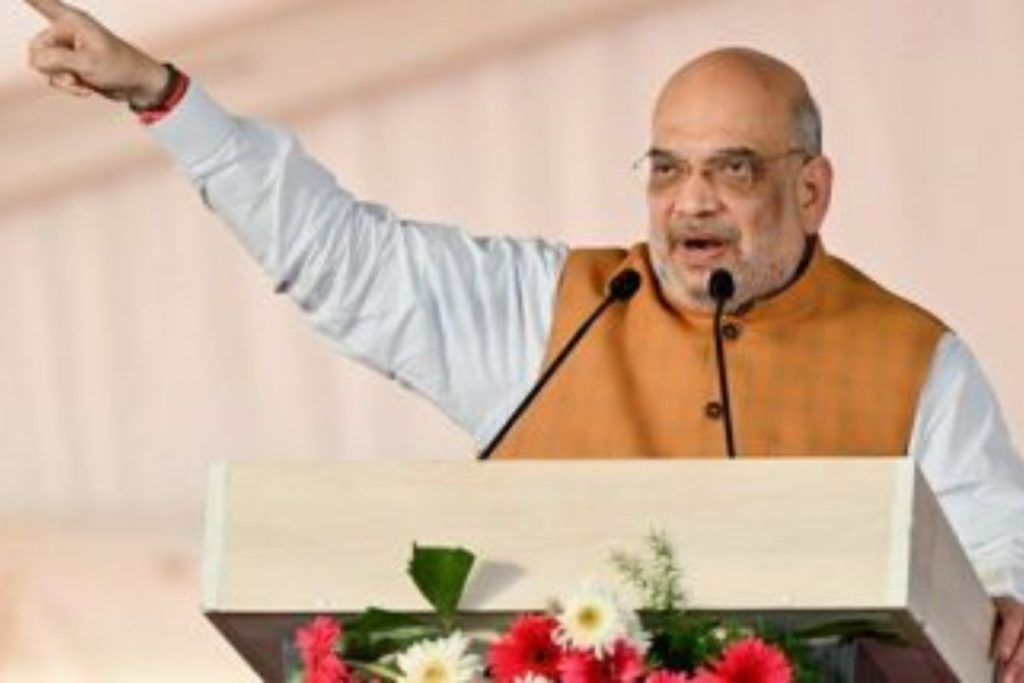
Guwahati : Home Minister Amit Shah will visit Assam on Tuesday where he is scheduled to hold a roadshow and address a public rally.
According to a senior BJP leader, HM Shah will address a public gathering in the Chukuli Bhoria area in the Lakhimpur Parliamentary constituency.
Lakhimpur seat is held by the BJP from where sitting MP Pradan Baruah is contesting against Congress leader Uday Shankar Hazarika.
HM Shah is also scheduled to take part in a roadshow from Chaliha Nagar to Thana Chariali in the Dibrugarh Parliamentary constituency, later on Tuesday.
Union Minister Sarbananda Sonowal is contesting from Dibrugarh Lok Sabha constituency.
HM Shah was supposed to campaign in Assam on April 8. However, changes were later made to the schedule of the top BJP leader.
Guwahati: Delhi Minister Atishi claimed on Monday that if Arvind Kejriwal decides to join the BJP, he would walk out of jail within a day.
Delhi Chief Minister is presently in judicial custody for his alleged involvement in the excise policy case.
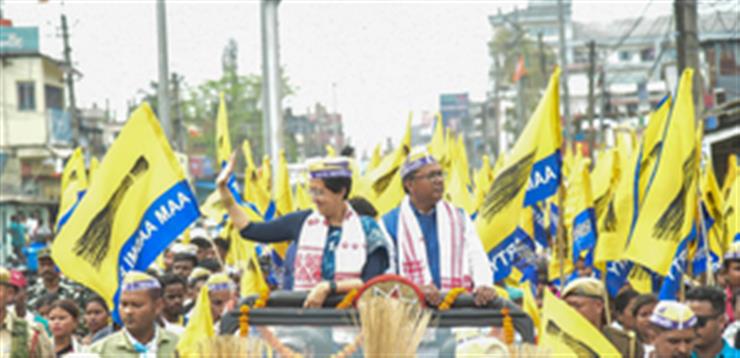
Atishi, who is in Assam for a three-day visit to the state to campaign for the AAP candidates in Dibrugarh and Sonitpur Lok Sabha seats, also attacked Assam Chief Minister Himanta Biswa Sarma.
“If Arvind Kejriwal joins the BJP like Himanta Biswa Sarma, he would be freed from jail within a day. But Kejriwal is a fighter. He will not surrender before BJP’s pressure tactics and will continue to serve the people of Delhi, Punjab, and Assam irrespective of whether he is in jail, ” the AAP leader said.
She also claimed that the people of Assam have shown their love for AAP in earlier elections as well.
“We have seen good results in the local body polls in Guwahati, ” she said.
Atishi, who holds the education portfolio in Delhi, among others, also alleged that the quality of education is poor in Assam.
“In the last few years, at least 8, 000 schools were shut down in Assam citing poor enrolment. People are not sending their children to government schools in Assam because they lack good infrastructure, ” she claimed.
According to Atishi, the AAP government has revamped the education system in Delhi where people are now opting for government schools over private institutions.
The AAP leader also spoke on the minimum wages of tea garden workers, which according to her is very low in Assam.
“Delhi has the highest minimum wage. We shall raise these issues during the polls, ” Atishi said.
Raipur: Prime Minister Narendra Modi on Monday launched a scathing attack at the Congress for turning down the invitation to attend the January 22 Pran Pratishtha ceremony of Ram Mandir in Ayodhya, while criticising the grand old party over its “appeasement tactics”.
Addressing a rally at Bastar Lok Sabha constituency in Chhattisgarh, PM Modi said: “The dream (Ram Mandir construction) came true after 500 years. It is natural for the people of Chhattisgarh to be happy, as it is the home of Lord Ram’s maternal grandparents. But the Congress and the INDIA bloc are angry over the construction of Ram Mandir.”
PM Modi also took a potshot at the Nehru-Gandhi family, saying “the royal family of Congress rejected the invite for Ram Mandir’s Pran Pratishtha”. “The Congress leaders, who termed this decision wrong, were removed from the party. It shows that the Congress can cross any limit for appeasement, ” he added.
PM Modi said the Opposition was in fear as his government had decided not to compromise with corruption.
“After Independence, the Congress thought that it had the license to loot the country, ” he said.
Addressing a massive gathering of people at the rally, PM Modi said they (Opposition) will abuse him because he has shut their shops.
“So who will protect me? The crores of people… my countrymen, my mothers, and sisters have become my ‘raksha kavach’ today, ” PM Modi said.
Continuing his criticism of the Congress, PM Modi said the party has always played politics of appeasement and used tribals for its own politics.
“The tribal community was always insulted by the Congress, but the daughter of the same tribal community is the President of the country today. The BJP has also given the first tribal Chief Minister to Chhattisgarh, ” PM Modi said.
Polling for the upcoming Lok Sabha elections will be held in Chhattisgarh in three phases.
The first phase of polling in the state is on April 19, while the second and third phases will be held on April 26 and May 7, respectively.
New Delhi: While the 1984-anti Sikh riots and massacre will continue to remain a blot for the country, it is also a grim reminder of the highly anguished moment and painful times that the Sikh community went through, post former Prime Minister Indira Gandhi’s assassination on October 31, 1984.
Even after 40 years of massacre, many riot victims vividly recall the horror tales of the massacre, allegedly sponsored by the then Congress regime. However, many of them are thankful to the Modi government for bringing ‘justice’ to their endless fight and also healing their decades-old wounds.
The first sense of closure for them came in 2022 when the SIT team, formed in 2019, arrested 44 accused after three years of investigations.
The deadly riots broke after former Congress PM Indira Gandhi was brutally killed by her two Sikh bodyguards. Thousands of Sikhs were killed in the riots and Delhi was worst hit, followed by Kanpur.
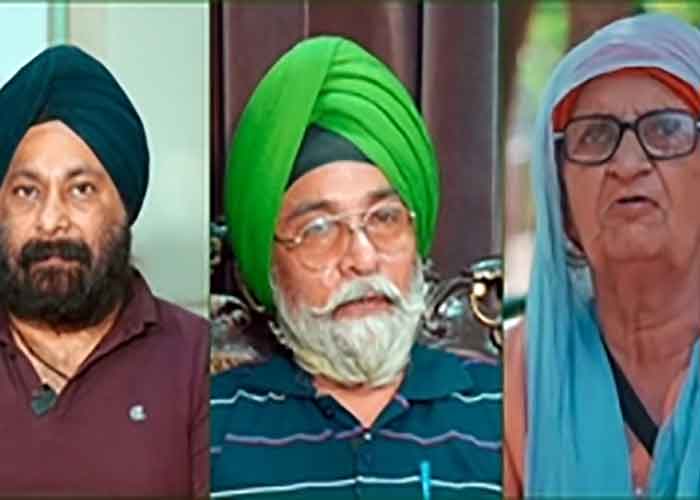
A couple of Kanpur residents on Sunday narrated the 1984 horror and also explained how the Modi government nursed their wounds in recent years.
Harjit Singh, a resident of Ashok Nagar, Kanpur
Harjit Singh, a victim of the 1984 anti- sikh riots, says that he lost his father and uncle in the bloodshed and also accused Congress of trying to save its leaders despite their direct involvement in the 1984 riots.
Harjit Singh, a resident of Ashok Nagar, Kanpur, who was just 14 years old during the riots, says, “My uncle’s (father’s younger brother) marriage was about to be fixed. My father was coming back from his shop when a peace protest march was being carried out by Sikhs of Kanpur against the riots. The mob attacked with stone pelting on the Sikh protest march at Bhadoyia Chauraha. My father was hurt during the stone pelting and when my uncle tried to help my father, someone from the mob fired bullets at him and then finally both my father & uncle were burnt alive along with the tractor”.
While putting the entire blame on Congress, Harjit Singh said, “At night, the mob came to burn our house but a Hindu family who were our tenants saved us”.
He further said, “My grandfather took care of the family and I had to leave my education and join our family business as the economic condition of the family was not good. I lost my mother due to a brain haemorrhage in 1989 as she couldn’t bear the loss of my father in riots. Congress never tried to give us any justice, rather they only saved their leaders who were involved in the riots”.
Thanking Modi government, he said, “We had lost all hope for getting justice but when PM Modi came in 2014, things moved quite fast. Many cases of Kanpur riots have been solved as the culprits have been put behind bars and the victims have received Rs 5 lakh compensation.”
Manjit Singh Chawla, another victim of anti-sikh riots in Kanpur
Manjit Singh Chawla, another victim of anti-sikh riots in Kanpur, says that highly irresponsible statements by top leaders of Congress triggered riots, resulting in the killing of innocent Sikhs.
Manjit Singh Chawla, recalling the horror, says, “When the word of Indira Gandhi’s death spread, the next morning itself our neighbours accompanied by hordes of mob started ransacking shops, assaulting people and looting houses. Hundreds of Sikhs were killed by the rioting mob. The mob went on a killing spree due to the protection of police officers, administration and leaders of the Congress government; though miscreant elements from all different sections of society were involved in the massacre.”
“The entire bloodshed took place under the political protection by leaders of Congress government and local administration to the goons. There were clear instructions not to leave anyone behind and kill all sardars. The people living in our neighbourhood changed all of a sudden and started attacking us. This was the utter failure of the Congress government at the time as no help was provided to rehabilitate the victims of anti-Sikh riots; we all have to struggle a lot to stand on our feet again and make a living for ourselves again. The government of the time clearly had a hand in the massacre and irresponsible statements by top leaders of the Congress government triggered riots when a mob went on a rampage. These wounds have been etched on our souls for this lifetime and cannot be healed ever again, ” Chawla said.
1984 riots were plotted by the Congress govt, says Gurinder Singh Vasu
Gurinder Singh Vasu Prince, the General Secretary of Shri Guru Singh Sabha Kanpur and a social worker says that he was in Class X at the time of the anti-Sikh riots of 1984.
Pinning the blame on the then Congress government, he said, “On the day of the incident, I was alone at home with my five sisters and mother when a mob of thousands of people attacked our house. Our entire family was inside the house, still, it was burnt by the rioters. All the wedding stuff kept in the house for my sister’s wedding was looted. There was violence in the locality for three days. The neighbouring Jain family protected us. These riots were pre-planned. The then government helped the rioters because they had lists of names and houses of Sikhs. We had to go to the camp to save our lives. My father was a senior Sikh leader and Ward Congress Committee President for 18 years but after the incident he quit the Congress. Culprits like Jagdish Tytler, Sajjan Kumar, Lalit Maken, and Kamal Nath should be punished. We are happy that the culprits are now being punished during the PM Modi government.”
He further said, “Sikh community will never forgive Congress who are the perpetrators of genocide of our mothers, fathers, brothers and sisters”.
Praising Prime Minister Narendra Modi, he said, “Modi ji has knowledge of Sikh religion. He has done many things for the Sikhs like opening the Kartarpur Corridor, and celebrating the martyrdom of Chhote Sahabzads at national and international levels.”