Peace in peril: Taiwan, Ukraine face escalating threats amid US inertia

Angered by the fresh supply of hi-tech military equipment to Ukraine by the West, Russian President Putin has warned the West to either work for peace or face the prospects of the Ukrainian conflict enveloping the entire Europe by Gopal Misra
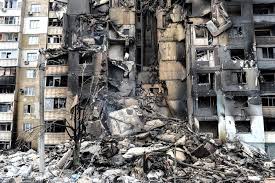
With China continuing with its aggressive postures against Taiwan and no early solution in sight to the ongoing conflicts in Europe and West Asia, peace continues to be elusive on the earth.

The sharp divisions within the American political establishment appear to have become much more pronounced with the conviction of the erstwhile US President Donald Trump in a case of hush money payment to silence a porn actress. It not only exposes the cesspool of the American establishment, its stink is ready to overwhelm democratic societies across the continents. And India is no exception.

The policy paralysis in Washington appears to have also encouraged Beijing to throw out the American influence or its proxies in its neighborhood by annexing Taiwan without any further delay.

In this backdrop, it is not surprising that the Russian President Vladimir Putin has warned the West to either work for peace or face the prospects of the Ukrainian conflict enveloping the entire Europe. Despite being enrolled in NATO, the European powers are aware of the fact that an angrier Kremlin might cause them more sufferings than they had endured during the World War-II.

The prospects of even an early truce either in Europe or West Asia appear to be bleak till 2025, when the new administration will be finally installed in Washington. It may be emphasised that the prospects of Trump returning to power cannot be ruled out despite his conviction.

In a recent hard-hitting frank discussion with the representatives of western media in Moscow, Russian President Vladimir Putin warned the West, especially the US, that if Ukraine is further empowered with new missiles, which could hit his motherland, Moscow would not hesitate to punish the supporters of Ukraine, especially Germany and the UK.

The confidence of the Russian President despite the prolonged European conflict could also be attributed to the growing cooperation between Russia and China in geopolitics. Both Putin and Xi Jinping have successfully blended the world’s second largest economy i.e China with his country’s formidable military, thus challenging the four-decades of American supremacy in the world affairs

It is now a foregone conclusion that  Russia would not hesitate to support China, if it annexes Taiwan. Meanwhile, there are reports that the Russians are training the Chinese in Cambodia in the latest air warfare with their sixth generation aircrafts. It is being stated that the leadership of the People’s Liberation Army or PLA is trying to update its air force. It could be a part of the strategy before making a final assault on Taiwan. It would not be violating the international laws, also the West has already conceded the one China policy by refusing to recognize Taiwan as a sovereign power.

It is also believed that with the conflicts continuing in Europe and West Asia, it could be an opportune time to invade Taiwan. It is being stated that most of the Chinese scholars on strategic affairs affiliated with the Shanghai institute are convinced that the contemporary leadership in the US and its allies cannot retaliate against China. During the past three decades, the Chinese have penetrated key American institutions through their various proxies. Their assessment is that if the Dragon decides to annex Taiwan, the US-led Western powers might not be able to put up any resistance. They would just be issuing statements. It may be recalled that the US and the West did not put up any sanctions against Beijing, when the Chinese President, Xi Jinping, violated the Chinese commitments ensuring two systems in one country in Hong Kong. The West did not react. It just succumbed to the Chinese might.

The reports regarding the presence of the Russian warships in the Caribbean could have caused worldwide concerns, but the White House has so far neither confirmed nor denied the reports in this regard. Its reluctance might also be interpreted as a ploy to malign its southern neighbours. It is also alleged that the US establishment is keen to punish Cuba and Venezuela by alleging that they are hosting the Russian Navy.

Venezuela is already facing US sanctions. It is being forced to sell its oil and gas at discounted rates. Like Iran’s oil, Venezuelan oil is also being purchased by China, the main business partner of the US and its allies in Europe. Since China has become the coveted destination of the US companies for manufacturing, the cheap oil, perhaps, is benefitting them financially. Thus, the US sanctions actually subsidize the energy needs of the manufacturing units in China producing American and European goods for the world markets.

It is yet to be explained by the American establishment that despite the American sanctions how it’s largest trading partner, China, could import oil from Iran and Venezuela. The successive US administrations have never asked China to stop buying oil from Iran and Venezuela.

Caribbean conundrum

There is yet another dimension to the news stories being circulated by the Associated Press and Reuters regarding the presence of the Russian Navy in the Caribbean. Quoting unknown sources, the news claims that the Russian naval ships have recently been seen in the Caribbean, especially near Cuba and Venezuela. It has, as expected, caused concern. Whether it could be a pretext for the White House to reassert its military might in the region or was it being deployed to deter Americans from throwing their weight behind Taiwan, if Dragon finally annexed is anybody’s guess.

Another dimension could be to enable the US President Joe Biden to invoke the two- centuries old Monroe Doctrine for boosting the prospects of his re-election in polls to be held later this year. It may be recalled that in 1823, the then US President, James Munroe, in his message to the Congress had warned the European powers to keep off from the Western hemisphere.

The Monroe doctrine was also invoked by the then US President, John Kennedy, in 1962, when he asserted that the US would not tolerate installation of missiles –equipped with nuclear bombs — by the USSR in Cuba. The nuclear confrontation between the USSR and the USA was fortunately averted.

Interestingly, it is yet to be explained why the US didn’t admit Russia in NATO, when in the nineties, its then president Yeltsinv had dissolved the Warsaw Pact. He was also keen that Russia should just be a European power. Instead, the US-led West not only enrolled countries like Poland in NATO, but also precipitated discord between Moscow and the republics of the erstwhile USSR. It naturally enraged Russia. It annexed Cremea, which was gifted to Ukraine during the USSR years for its brave fight against the Nazis of Germany.

Both the USA and Russia avoid direct confrontation against each other. However, the new hi-tech military equipment supplied recently to Ukraine might force Russia to target NATO members in Europe and also offer new weapons to countries like Venezuela.

Fragile Peace

The Chinese have not only learnt gunboat diplomacy from its financial partner, America, it is now pursuing it with an unprecedented vigor. India, having nearly 3000 kilometer border abutting Tibet, now under the Chinese occupation, has firsthand experience of the aggressive policy of the Dragon.

For the powers-that-be in Washington, it is a hard choice to assert against China. They have so far failed to weave a strong narrative against China in the current world politics. The much-trumpeted Ivy League academia, the think tanks being liberally funded by the country’s military-industrial corporate having full support of its much-dreaded deep state, Central Investigative Agency i.e. CIA. The Chinese penetration in the American establishment through its proxies has caused stalemate leading to an unprecedented confusion.

The American media too has lost its luster, especially following the Chinese fundings.

The news regarding the presence of the Russian Navy could also be a deliberate plant. During the Gulf War, the American media had claimed the presence of weapons of mass destruction in Iraq, but later it was proved wrong. It is now well-known that it was a pretext for the US to use its military to destroy the country. Similarly, the news of the presence of the Russian Navy in the Caribbean could also be used as a pretext to invade Venezuela.

 President Putin has warned that the Russian forces would hit hard, if the West decides to supply new generation weapons to Ukraine. He considers that Germany has violated the unwritten understanding arrived at after World War-II that it would maintain cordial relations with Russia but the supply of the new generation German tanks and artillery to Ukraine has undermined this truce. Thus, a full-scale conflict haunts Europe again.
Turnaround gives Haryana Cong a leg up ahead of state election

The Congress, which won five out of the 10 Lok Sabha seats in the state, saw its vote share climbing to over 43 per cent from 28 per cent in 2019. This resurgence is a shot in the arm for the party as it has registered a lead on 46 assembly segments out of total 90 in state.  A report by Aayush Goel

The 2024 Lok Sabha polls will always be remembered for the commendable comeback by the Congress in Haryana. Shattering the pompous pre-poll predictions of BJP’s clean sweep in state, Congress went on to win five out of the 10 Lok Sabha seats with its vote share increasing to over 43 per cent from 28 per cent in 2019. In 2014, the party had managed to win one parliamentary seat of Rohtak, while losing all 10 to the BJP in 2019.

The party proved its mettle even in BJP stronghold seats like Gurgaon where ‘outsider’ Raj Babbar gave Ahir stalwart and a six time MP and Central minister, Rao Inderjit Singh, a run for his money and brought down winning margin to a modest 75000. 

This resurgence is being viewed as a shot in the arm for the party ahead of assembly polls due in October as it registered a lead on 46 assembly segments out of 90 in state. The vote share of the BJP, which also won five seats, losing five others to the Congress, slipped from 58 per cent in 2019 to nearly 46 per cent this time. The AAP, which contested as part of the INDIA bloc on one seat, failed to open its account in Haryana with nearly 3.94 per cent vote share. While the result has given the Congress the much needed confidence, it has compelled the BJP and the AAP to rework their strategies for the forthcoming assembly polls.

Results at a glance

The most celebrated and anticipated wins for Congress were of former Union minister Kumari Selja and Deepender Singh Hooda. Selja defeated Ashok Tanwar of the BJP at Sirsa by a margin of 2.68 lakh votes, while Hooda defeated BJP’s Arvind Sharma by 3.45 lakh votes at Rohtak. Congress candidates Jai Parkash won from Hisar by 63,381 votes, while Varun Chaudhary clinched Ambala by 49,036 votes, and Satpal Brahmachari won Sonipat by 21,816 votes.

The detailed analysis of the impact of these wins on assembly segments highlights Congress’s winning strategy that left an impact despite lagging behind BJP in declaration of candidates.  Kumari Selja and Deepender Singh Hooda got more votes than their rivals in all 9 assembly segments each in Sirsa and Rohtak. Among the Congress candidates, they got the lead in five out of 9 assembly segments in Ambala, four out of 9 in Sonipat, and six out of 9 in Hisar. As for the seats won by the BJP, the Congress and AAP candidates got the lead on four out of 9 assembly segments in Kurukshetra, 3 out of 9 in Bhiwani-Mahendragarh, three out of 9 in Gurgaon, and 3 out of 9 assembly seats in Faridabad. Former chief minister Manohar Lal Khattar, however, had the lead in all 9 assembly segments falling under Karnal. Of the 10 assembly segments that Dushyant Chautala’s Jannayak Janata Party (JJP) won in October 2019, the Congress got the lead in 9, with only Barwala giving a lead of 11,657 votes to the BJP. 

Interestingly, Congress’s Jai Parkash led over his BJP rival by 37,319 votes in Dushyant Chautala’s Uchana seat, while another Congressman Rao Dan Singh led by 27,102 votes over the BJP contestant in Naina Chautala’s Badhra constituency.

Will return to power: Hooda 

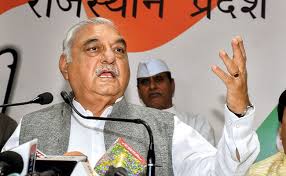
Leader of Opposition Bhupinder Singh Hooda said that party was confident of its performance in Lok Sabha and the results now indicate they will be winning with majority in Vidhan Sabha as well. “The people of Haryana have had enough of fake promises of BJP and the Lok Sabha results are an indication of a clear verdict against the party. We may have won 5 seats but if you analyse the remaining 5 we lost we had a major impact in BJP’s assembly segments. Our candidates have taken the lead on 46 assembly segments, which is more than half of the total seats. So while elections are three months away the trends reveal what the results will be even then. The issues during assembly polls are different and we will definitely get many more seats than 46 in the assembly polls. We will return to power in the state with a majority,” said Hooda while speaking to Tehelka. It may be noted that Hooda played a key role in ticket allocation of Lok Sabha polls amidst factionalisation in the party as 4 out of 5 winners are from Hooda camp. 

While the party is celebrating the comeback, many other veteran leaders’ results could have been much better if the party had not downplayed and ignored veterans like Kiran Choudhry and her daughter Shruti Choudhry. “We could have won three more seats if candidates were chosen keeping caste and impact equations. We could have easily won Gurgaon if I had been fielded. Cold shouldering Choudhry’s cost us Bhiwani-Mahendergarh. We just want to ensure that the party high command keeps this in mind while choosing assembly candidates,” says another Congress veteran and party’s OBC cell chairman, Captain Ajay Yadav, while talking to Tehelka. 

Alarm bells for BJP

Results of the Lok Sabha elections in the state have rung alarm bells for BJP that managed to retain only five seats. The party was completely wiped out in most of ‘Jatland’. 

In some assembly constituencies, where the party had claimed ‘permanent dominance’, its Lok Sabha candidates were defeated.  The foremost example of the same is the Ambala Lok Sabha constituency where BJP candidate Banto Kataria lost. In Naraingarh assembly segment, which was represented by chief minister Nayab Singh Saini in 2014-2019, Kataria was defeated by more than 20,000 votes. Similarly, in Jagadhri assembly segment, which is represented by Haryana minister Kanwar Pal, Kataria was defeated by around 15,000 votes. In Ambala city assembly segment, represented by state’s Transport Minister Aseem Goyal, Kataria lost by around 4,000 votes. However, in Ambala Cantonment segment, which is represented by former home minister Anil Vij, Kataria managed some lead over her Congress opponent. 

A similar situation of lead by Congress candidates was witnessed in assembly segments where party’s prominent leaders or ministers are MLAs, such as Pehowa, represented by controversial former minister and former Olympian Sandeep Singh, Kalayat represented by former minister Kamlesh Dhanda, Bawani Khera represented by minister Bishambar Balmiki, Nalwa represented by deputy speaker Ranbir Singh Gangwa, Rania in Sirsa (reserved) seat represented by Ranjit Chautala, and Loharu under Bhiwani-Mahendragarh Lok Sabha seat represented by state minister J P Dalal. 

In Nangal-Chaudhary represented by irrigation minister Abhay Yadav, the BJP candidate could only manage a lead of just a little more than 2,000 votes. The results have put the party in a review mode, which in addition to rampant anti-incumbency, also has to deal with resentment amongst MLAs, majority of whom did not care to support the party’s Lok Sabha choices. 

The party has failed to strike a chord with rural voters and Jats who could play a decisive role in the upcoming assembly elections. Jats, who constitute over 25 percent of the population, hold the key to around 40 assembly seats. Similarly 65 percent of the population resides in rural belts and villages and the party needs to win them over to do better in assembly elections.

Haryana BJP chief and party’s national secretary O.P. Dhankhar says “The results of the Parliamentary polls are not as per our expectation, and there is no denying that everyone in the party is worried about it, particularly because the assembly polls are due in October. We are on the job of identifying what went wrong and tweaking the strategy before the forthcoming assembly polls.”

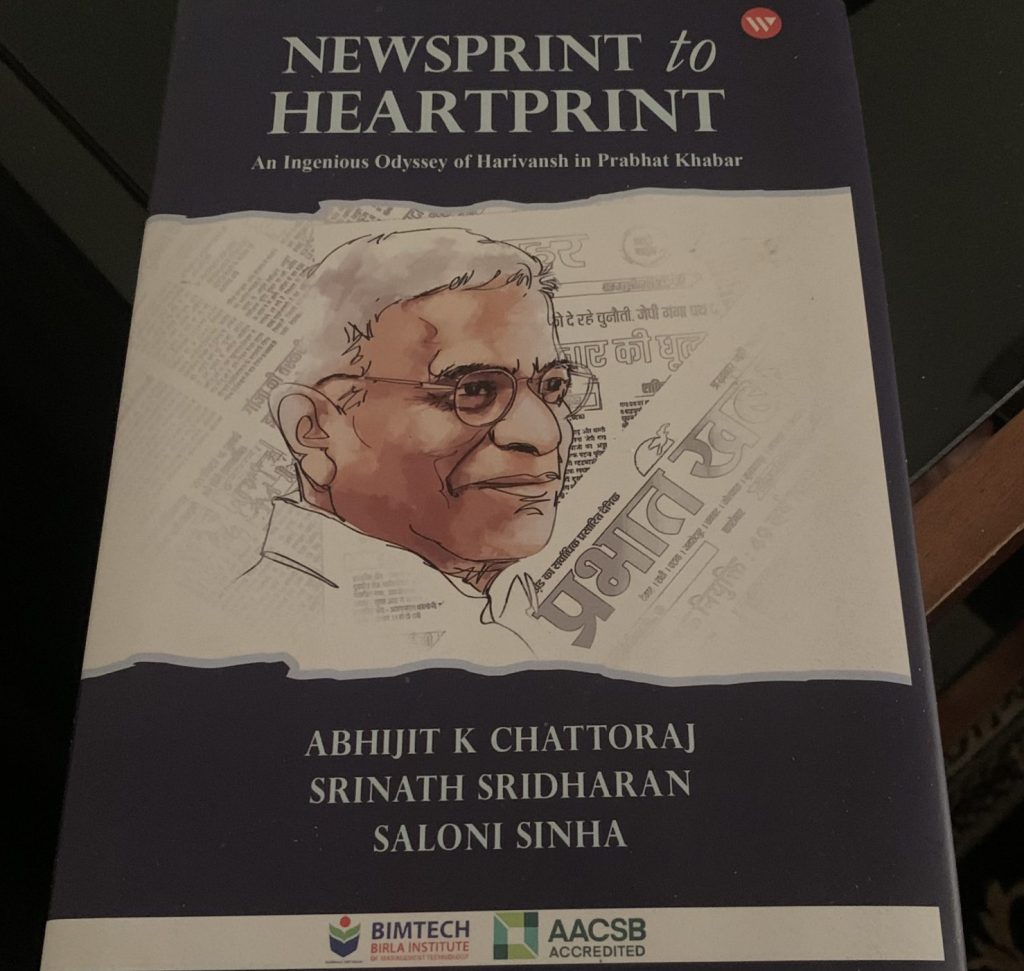
Unveiling the triumphs and trials of Harivansh and Prabhat Khabar

The book chronicles the remarkable turnaround story of the Ranchi-based Hindi daily, Prabhat Khabar. Co-authored by Chattoraj, Srinath Sridharan, and Saloni Sinha, it details the vital factors responsible for the resurrection of the once “dying” newspaper under its editor-in-chief Harivansh in Jharkhand, Bihar, West Bengal, and the Hindi-speaking regions of Odisha.  A book review by Manoj Prasad

Book: Newsprint to Heartprint: An Ingenious Odyssey of Harivansh in Prabhat Khabar  

Authors: Abhijit Chattoraj, Srinath Sridharan and Saloni Sinha

Publishers: Writersgram Publications

Price:  Rs 899

Pages: 216

I posted a while back about my aspiration to write my inner geek on Harivansh but failed. Then time passed, and years later, I found Abhijit Chattoraj, Srinath Sridharan, and Saloni Sinha had co-authored a book — ‘Newsprint to Heartprint: An ingenious Odyssey of Harivansh in Prabhat Khabar’.

This 216 -page text covers a remarkable success story of the Ranchi-based Hindi daily, Prabhat Khabar.

First, this book gives full details, including vital factors responsible for the ‘rise’, ‘challenges’ and ‘growth’ of a moribund Hindi daily Prabhat Khabar under its editor-in-chief Harivansh in Jharkhand, Bihar, West Bengal and Hindi belt of Odisha during the penultimate decade of the twentieth century and the first decade of the ongoing millennium.

I think the entire text of this book is specially meant for a serious student of journalism and business management.

The chapter under the heading ‘Revival from the verge of closure’ states a mind-boggling truth. Under the captainship of Harivansh, “Prabhat Khabar had to navigate with many challenges since its inception in 1989…with its circulation falling abysmally low to 400-500 copies…”

Interestingly, among the reasons considered responsible for the fall of this Hindi daily as a “dying newspaper” was the “Bhoot”(evil spirit). The Pundit’s assertion was centred around the plot of land where the headquarter office of Prabhat Khabar, Kokar Industrial Area, Ranchi, was located right outside the wall of a graveyard. While the graveyard continued to exit, ‘Bhoot’ disappeared and Prabhat Khabar under Harivansh grew and climbed up rapidly in the form of its dozen editions and thousands of readers-cum-subscribers.

The challenges overcome by Harivansh and his team were many. Though Ranchi-based private company Usha Martin Group of Industries owned Prabhat Khabar, which was being edited by Harivansh in 1987-88, a media expert three years later, according to the book (page 29) in 1991 “suggested in writing that Prabhat Khabar should be closed as early as possible as it had no future whatsoever.”

Then, while making monthly payments to editorial and office staff, the owner was not ready to invest, Harivansh was determined to print Prabhat Khabar through  “ramshackle Bandhu’s web offset printer.” And he did it. 

The next challenge overcome by Harivansh was in the form of a sudden invasion of Delhi and UP-headquartered popular Hindi dailies – Dainik Jagran, Dainik Bhaskar and Hindustan in 2000.

Harivansh’s entrepreneurial side came to the fore when in June 2000, a leading newspaper house in the country engineered an exodus of 33 key persons working in critical positions at Prabhat Khabar to “ensure that the next day’s Prabhat Khabar could not be published.” However, Harivansh mobilised his working staff and incorporated key new staff and ensured that the competitor’s designs were defeated.

Harivansh revamped the news packaging with a distinctive pro-people, pro-Bihar bifurcation, and pro-Jharkhand movement content fix while following the principle of ethical journalism, a feature needed to gain credibility among readers.

He ensured that Prabhat Khabar expressed a resonant voice for the voiceless and highlighted the impact of Naxalite violence and corruption. Using investigative journalism, he played a major role in highlighting multi-billion-rupee fodder scam cases in the 1990s.

(Manoj Prasad is Ex-Columnist of The Indian Express and Founding Editor, JharkhandStateNews.com)

Modi’s third term, and the Dahi Cheeni moment

Of course, things would unfold with Time and allies would flex their muscles. But as of now, a stable government is in everyone’s interest and that, for good or bad, can only happen with Modi at the helm. By KUMKUM CHADHA

On June 4, a few hours after the election results, Prime Minister Narendra Modi, the erstwhile conqueror, appeared vanquished: somewhat tired of the battle he thought he would not only win but bring home, a crown bigger than ever before. 

 But that was not to be. 

 Consequently, when he did make his first public appearance post results at the BJP headquarters, the enthusiasm and the bravado were missing. 

The ladoos, presumably in multiples of a hundred kilos, were nowhere in sight. Even the slogans were kind of muted: a far cry from the Modi, Modi chants in the past. 

Clearly, the shock was too much for both the audience and the protagonist.  

In his speech, Modi tried to reposition the case which, even in victory, was clearly a defeat:  BJP had the highest numbers but was short of a majority. 

Modi skipped that. Instead, he compared his feat to Jawaharlal Nehru’s: the man he has despised in the past. He told the not so cheering crowds that after Nehru he was the only person to secure a third term.

For record, Nehru was Prime Minister for three successive terms: something Modi claimed to have replicated. What he chose to ignore was that Nehru remained popular till he died. 

As against this, Modi’s third term is one where the electorate has delivered a blow. But on that, a little later. 

By June 5, Modi seemed to have recovered lost ground, though not entirely. 

 The NDA meeting of crucial constituents was still a few hours away and the support was neither sealed nor sacrosanct. 

On June 5, a Wednesday, Modi wore a bright green jacket. 

Astrologically, colors have a special significance. The green colour, worn on a Wednesday, symbolizes growth: much needed for a fractured mandate that the electorate had delivered to the BJP a day earlier.  

Whether Modi resorted to astrology is debatable but it is a matter of record that BJP’s Sushma Swaraj religiously followed colour-therapy, coordinating her sarees and even food choices according to the planets.  Every Wednesday, the dal cooked in her house would be green. Ditto the sarees she wore. 

By the time the swearing in was announced, Modi seemed to have recovered the lost ground. The initial uncertainty of whether he would get a third term was over; his body language had changed and he held sway: at least visibly. 

The cracks in the Cabinet formation that were anticipated, did not happen. By the look of it, Modi seemed to have had his way. Allies were accommodated but were unable to extract their pound of flesh. For instance, when the NCP said a Cabinet berth or nothing, Modi gave them nothing. 

Modi is known for springing surprises. Therefore, when it came to his Cabinet, one expected him to pull a rabbit out of a hat. Knowing Modi, it would not be one but several. 

Modi did surprise everybody when he announced his team: his maintaining a status quo being one such. Quite unexpectedly, Modi preferred continuity over change, retaining most ministers of the outgoing Cabinet.  

So, what does this indicate: is Modi being cautious? Or extra careful not to ruffle feathers? Is he presiding over a house of cards which, if a trifle nudged, can collapse? Will he go that extra mile? Or will he have the last word like he did in the past?

That it is a tight rope walk is a given. 

One the one hand, there are compulsions of running a coalition; on the other, the challenge of keeping his own house in order. His detractors, both within and outside, are waiting for him to stumble. In this context, RSS chief Mohan Bhagwat’s rap to the Modi government on Manipur, is significant. 

Interestingly, Modi and the alliance partners share a common problem: a long-term challenge to keep one’s flock together.  

Modi can ill afford any of the allies throwing a tantrum and walking out, if things don’t go their way. He could also face dissent.  The way things have panned out, the whip that came handy in the first two terms will perhaps gather rust. 

 Therefore, despite his demeanor of being in control, Modi is well aware of the problems that may crop up, both within and outside. 

As against this, the kingmakers, namely Chandrababu Naidu and Nitish Kumar, too, have to ensure that their MPs remain with them.  

BJP’s track record of splitting parties and buying out people either through fear or favour, is well known. Therefore, the allies have to guard against poaching or a straight buy out.  

In this context, JD(U) MPs may be more vulnerable, given that their leader Nitish Kumar has often shown the way, earning the paltu-ram nomenclature. 

Of course, things would unfold with Time and allies would flex their muscles. But that will be, when it will. 

As of now, a stable government is in everyone’s interest and that, for good or bad, can only happen with Modi at the helm. 

Equally, the Opposition, when united, did much better than expected but once you decode the numbers, it is a divided house. It is also one which has several claimants for the top job.

Under the circumstances, it was prudent for the INDIA alliance not to throw its hat in the ring. 

Rather than try and fail, it made more sense for it to wait and watch: opt to be a strong Opposition than function as a weak government. 

As for Modi, despite the divisiveness, one must concede that he is far sighted and decisive. 

One could differ with his politics but his governance model has takers. This despite it being interpreted as an agenda which conflicts with the spirit of the Constitution. 

Yet, a strong leader versus an amalgam of Opposition parties seems to be the immediate solution for a country that is fast developing. 

One cannot take away from Modi his welfare schemes, his women centric agenda, the houses the government built for the poor or the bank accounts it helped open. Nor can one undermine the fact that during his tenure, India stands to be counted on the world stage because when Modi speaks the world listens.  

Few would disagree that Modi is the immediate answer to India’s problems: someone who can hold the fort till the country and its political parties throw up a leader to match Modi’s prowess; someone who while steering the country to a path of development can also practice inclusive and constructive politics.   

 Time is ripe but the leadership is yet to evolve. And till that happens, one will have to contend with Modi and his dahi cheeni, sweetened curd, moment. 

Traditionally, one is fed dahi cheeni on auspicious occasions. 

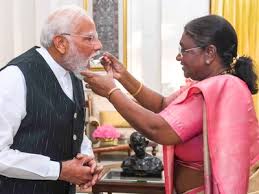
For the uninitiated, it was none other than President Droupadi Murmu who fed Modi, the Prime Minister-elect ahead of the swearing in ceremony, dahi cheeni: a move that drew flak on grounds that the President must appear to be non-partisan. It is unbecoming for a constitutional Head of State to display emotion.  

As for Modi being fed dahi cheeni, one will have to wait and watch whether History repeats itself. If the recent verdict is any indication, it may not.


Tracking the cat count in Eastern Himalayas

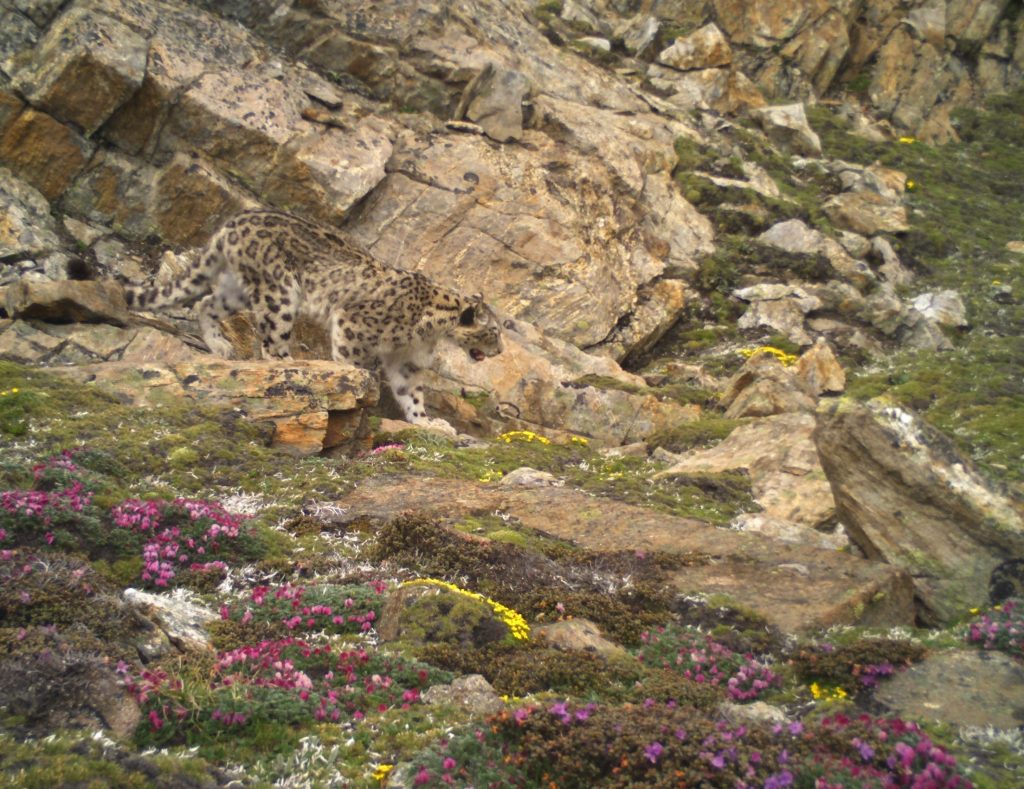
The Snow Leopard Population Assessment in India counted 718 individual animals in the country. Reaching snow leopard habitats in Sikkim and Arunachal Pradesh, part of the Eastern Himalayan region, was a challenge as they lie in inaccessible areas, writes Deepanwita Gita Niyogi

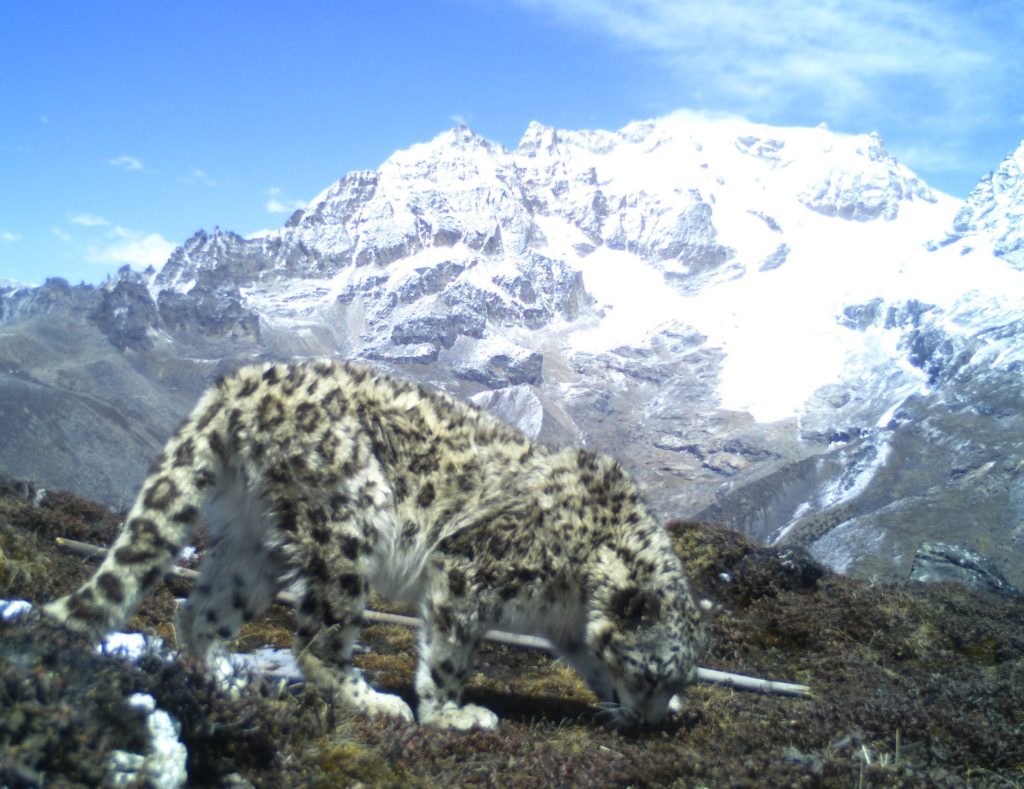
Rohan Pandit has been working on the conservation of the snow leopard by focusing on field surveys in the Eastern Himalayas to understand the habitat and the prey population of the species often called the ghost of the mountain for being elusive.

As a primary key field biologist working for WWF-India for almost six years, Pandit has been instrumental in the Snow Leopard Population Assessment in India (SPAI) programme which counted 718 individual animals in the country. The report was released earlier this year. In both Sikkim and Arunachal Pradesh, the non-profit worked with the forest department as the technical partner.

For this, he interacted with local communities as well as organised seminars and workshops at the initial stage. He also installed camera traps in Sikkim and Arunachal Pradesh, which lie in the Eastern Himalayas. “In Arunachal Pradesh, the training of field staff started way back in 2021. The initial work started in March and continued till October, during which all the field events happened and data compiled. I spent about eight months each in Arunachal and Sikkim. For Sikkim, the training happened during 2022-2023,” Rohan said at his office in Gangtok. Compiling the camera trap data also took a few months.

A difficult terrain

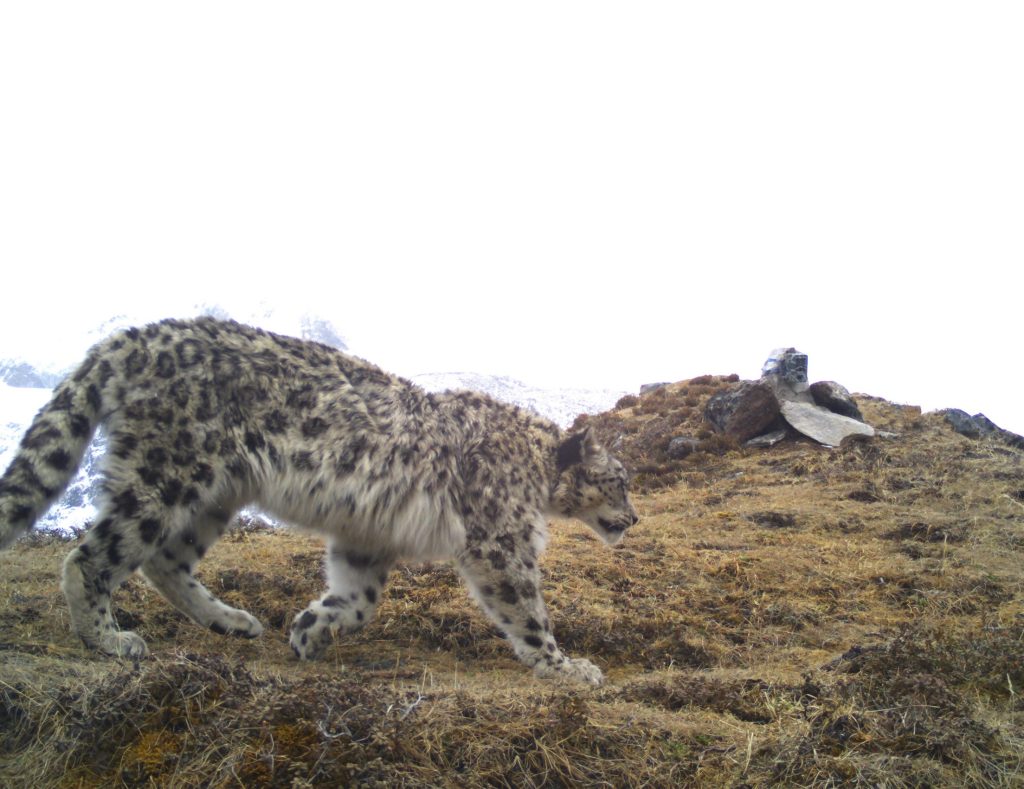
Apart from the Eastern Himalayas, there are snow leopard destinations in the Western Himalayas too. “In Sikkim and Arunachal Pradesh, the field staff came across signs but no direct sightings were made,” said Rishi Kumar Sharma, who heads the Himalayan conservation programme for WWF-India. This is because of the density factor. “In Spiti Valley and Ladakh (western Himalayas), the snow leopard population density is higher. There can be even five animals per 100 sq km there as the prey density is quite high. However, typically, one snow leopard is found per 100 sq km.”

The Eastern Himalayas are wetter with higher precipitation and the terrain is also more rugged when compared to the Western Himalayas. Pandit informed that reaching snow leopard habitats in Arunachal Pradesh was tough as they lie in inaccessible areas. Communities mostly reside in the lower regions. Sikkim is comparatively better.

“Training new people for the census was a challenge. Getting good work from people who had been newly trained was a problem as many of them were not familiar with snow leopard habitats,” Pandit added.

There are many ways of identifying snow leopard habitats. In Sikkim and Arunachal Pradesh, there was little prior information available. In the Eastern Himalayas, snow leopards are usually found at an elevation of 3000-5700 metres.

Tools and techniques which provide information on the terrain as well as topography are helpful. Scat marks and pug marks help field personnel in identification. Only a handful of people have actually seen snow leopards, and that includes even the Dokpa pastoralists of North Sikkim.

Conservation of an iconic species

Religious beliefs go a long way in wildlife conservation. In Arunachal Pradesh, people have placed a taboo on the killing of cats. Snow leopards feature in Buddhism. Arunachal’s Monpa tribe shares a deep relationship with them.

Sharma added that religion is now being used as a tool for wildlife conservation globally. Many religious institutions are supporting snow leopard conservation.

According to Sharma, for a successful conservation programme, the entire ecosystem should be studied and not just snow leopards as a species. For this, studying communities, and their beliefs and value systems help a lot. There are pastoral herders in snow leopard habitats.

Sharma’s colleague, Laktsheden Theeng said that in Sikkim everything connected to nature is considered to be holy. She talked of working with communities in gateway villages like Lachen and Lachung which lie in the snow leopard habitat. “When we make action plans, we sit with communities and involve them.  Even women are involved,” Theeng said.

Theeng informed that Lachen is over 100 km from Sikkim’s capital, Gangtok.  In remote areas, communities never understood the meaning of conservation and what kind of animals they were sharing spaces with in the past. In Lachen, many people depend on tourism.

“It helps when communities are informed that they live in important biodiversity areas, and if they protect wildlife, the tourist inflow will increase.One of the goals was banning of plastic water bottles which started in 2008.”

In Sikkim, there are an estimated 21 snow leopards and in Arunachal, 36 animals were counted in the census. Climate change has emerged as a big threat. As the weather has become erratic, predictions cannot be properly made about snowfall. As a result, the prey population of the snow leopard is likely to be impacted.

Udai Gurung, conservator of forest (wildlife), Forest and Environment Department of Sikkim, said WWF-India was already working on snow leopard research in the Eastern Himalayas since 2014. For the assessment, they collaborated with the department.

J&K security meet: Deploy full spectrum of counter-terror capabilities, PM Modi directs officials

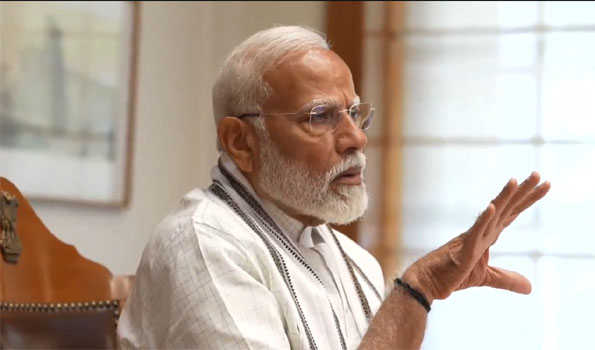
New Delhi:  Prime Minister Narendra Modi on Thursday directed the officials to deploy a full spectrum of counter-terror capabilities after chairing a review meeting on the security situation in Jammu and Kashmir, in the wake of multiple terror attacks in the last four days.

The topmost security officials including National Security Advisor (NSA) Ajit Doval attended the security review meeting and gave the Prime Minister a full overview of the security-related situation in the Union Territory.

Prime Minister was apprised of the counter-terror measures undertaken by the security forces. He was also briefed about the Army’s strategies and operations for neutralising the terrorists.

PM Modi directed the officials to deploy and utilise the full spectrum of counter-terror capabilities.

Besides the review meeting, PM Modi also spoke to Home Minister Amit Shah and discussed the deployment of security forces and how the forces were executing counter-terror operations.

Prime Minister also spoke to Jammu and Kashmir LG Manoj Sinha and took stock of the ground situation.

BJP to ‘retain’ Lok Sabha Speaker’s post

New Delhi:  The BJP is set to “retain” the post of Speaker for the 18th Lok Sabha, with a BJP MP expected to be elected for the role, sources said.

Dismissing media reports suggesting that BJP’s allies had demanded the Lok Sabha Speaker’s post, a senior party leader said that the matter would be first considered internally before discussing it with NDA allies to reach a consensus.

In the Modi government’s first term, Sumitra Mahajan, a BJP MP from Indore, Madhya Pradesh, served as Lok Sabha Speaker, while in the second term, Om Birla, a BJP MP from Kota, Rajasthan, held the position.

Although the BJP does not hold a majority as it did in 2014 and 2019, speculation was rife that the TDP and a JD(U) MP were vying for the Speaker’s post.

Sources indicate that the name of the new Lok Sabha Speaker will be deliberated upon after Prime Minister Narendra Modi returns from Italy.

If any suggestions or demands regarding the position arise from allies, the BJP will consider a new formula.

During the first session of the 18th Lok Sabha, starting on June 24, the BJP will reach out to opposition parties to ensure the Speaker is elected unanimously. If the opposition agrees to the government’s proposal, an election will not be necessary.

However, if the opposition fields its candidate, a vote for the new Speaker might take place on June 26, with the new Speaker assuming office on the same day.

On Wednesday, Parliamentary Affairs Minister Kiren Rijiju posted on X, “First Session of 18th Lok Sabha is being summoned from 24.6.24 to 3.7.24 for oath/affirmation of newly elected Members, Election of Speaker, President’s Address and discussion thereon. 264th Session of Rajya Sabha will commence on 27.6.24 and conclude on 3.7.24.”

Akhilesh, Awadhesh Prasad resigns from UP Assembly seats

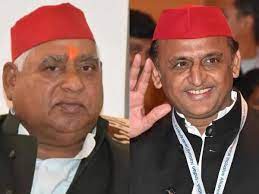
Lucknow :  Samajwadi Party chief Akhilesh Yadav on Wednesday formally forwarded his resignation from the Karhal Assembly seat in Uttar Pradesh to Speaker Satish Mahana.

Akhilesh Yadav, who won the recent Lok Sabha elections from UP’s Kannauj, also held the Karhal assembly seat.

In the Lok Sabha polls, Akhilesh secured his family’s stronghold Kannauj by garnering 6, 42, 292 votes, surpassing the incumbent BJP MP Subrat Pathak by a margin exceeding 1 lakh votes.

Samajwadi Party MLA Awadhesh Prasad also tendered his resignation from the Assembly after being elected as a Lok Sabha MP from Faizabad.

In the recently-concluded Lok Sabha elections in Uttar Pradesh, the Samajwadi Party clinched 37 seats, while the BJP won 33 seats. The Congress won six seats, two seats went to the Rashtriya Lok Dal (RLD), while the Azad Samaj Party (Kanshi Ram) and Apna Dal (Soneylal) bagged one seat each.

Terrorists launch third attack in 3 days on Jammu and Kashmir Army base

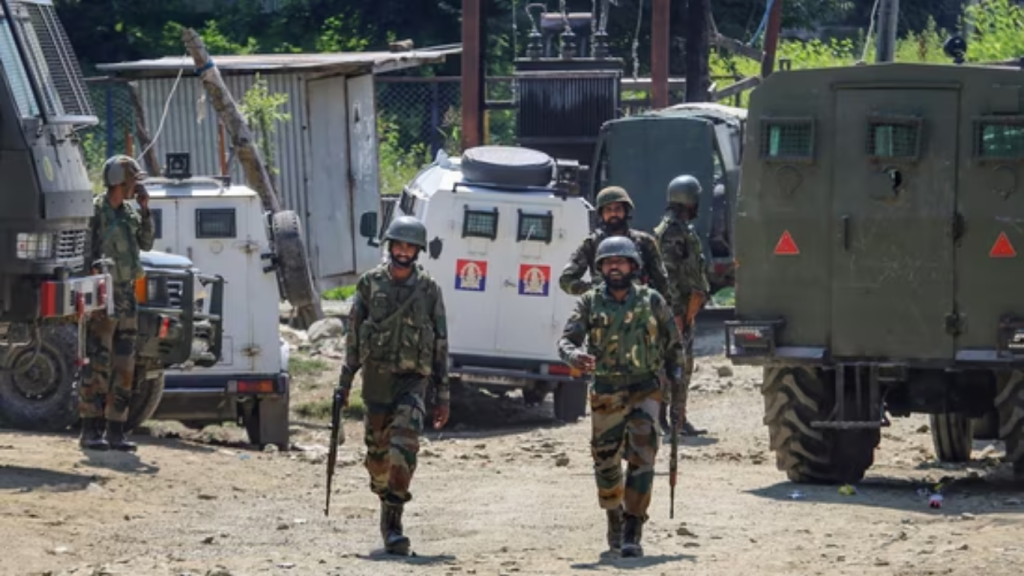
Terrorists attacked an army base in the Chattargala area of Doda late last night, marking the third such incident in the region over the past three days, according to police reports early this morning.

A joint checkpoint manned by the Army and Police in Chattargala was targeted in the assault. “The Army and Police joint checkpoint has engaged terrorists in the Chattargala area of Doda. Firefight is going on,” a police spokesperson said.

Initial reports indicate that two soldiers were injured during the early exchange of gunfire. The condition of the injured soldiers has not been disclosed.

This attack follows a deadly assault in Kathua district just hours earlier, where terrorists opened fire, killing one person and injuring two others. Three days ago, terrorists attacked a bus carrying pilgrims, causing it to crash into a gorge and resulting in the tragic deaths of nine passengers.

PM Modi to address farmers in Varanasi on June 18

Varanasi:  Prime Minister Narendra Modi will visit Varanasi on June 18 where he will address a farmers’ conference.

BJP Kashi region president Dilip Patel said that this will be the first visit of Prime Minister Modi to Varanasi after the formation of the Prime Minister Narendra Modi-led NDA government for the third time at the Centre.

Kashi region BJP media in-charge Navratan Rathi said that the Kashi region BJP is working to select a venue for the farmers’ conference which may be held in Rohania or Sevapuri Assembly constituency.

Varanasi BJP office-bearers’ meeting was held at the party office in Gulab Bagh to discuss the plan for the preparations regarding the visit of the Prime Minister. Patel added that after addressing the Kisan Sammelan, Prime Minister Modi will offer prayers to Baba Kashi Vishwanath and attend Ganga Aarti at the Dashashwamedh Ghat.

MOST POPULAR

HOT NEWS