Brutal attack on Punjab Shiv Sena leader casts AAP in poor light

The shocking incident of brutal attack on a Shiv Sena Punjab leader by three Nihang Sikhs in Ludhiana has put the ruling AAP government in a dock besides giving ample ammunition to the opposition parties to launch a scathing attack on CM Bhagwant Mann. A report by Rajesh Moudgil
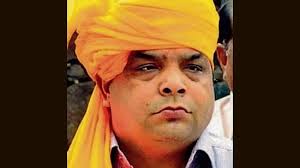
On July 5, a leader of Shiv Sena Punjab, Sandeep Thapar, alias Gora, 58, was brutally attacked with swords in broad daylight and grievously hurt by three Nihang Sikhs in the busy Civil Hospital area of Ludhiana city.

What also shocked one was how the armed gunman accompanying Thapar reportedly did not react to the situation, and instead walked away to a corner after being threatened by one of the accused, and remained a mute spectator to the brutal attack.

The CCTV footage of the incident showed that three accused followed Thapar on foot as he came out of the hospital with his gunman riding pillion and suddenly confronted him – as his scooter moved at a snail’s pace because of crowded area and the heavy traffic – attacking him on the head with the sword following which he lost control of his scooter and fell down, unconscious.

At one point, the sword of the accused even fell off, following which, his accomplice gave it to him and joined him in resuming the attack on Thapar. Both the assailants then fled the spot by riding Thapar’s scooter.

Thapar, who suffered multiple injuries on his head and other parts of the body was first rushed to nearby Civil Hospital and later to Dayanand Medical College (DMC) and Hospital, where he is undergoing treatment.

After the incident, a number of Shiv Sena as well as BJP leaders gathered at the hospital and shouted slogans against the police for its failure to protect the leader.

The police the next day held that two of the three accused had been held within hours of the incident. It was said that they had attacked Thapar as they were angry with Thapar’s viewpoints, including one in which he allegedly celebrated the anniversary of 1984’s Army’s Operation Bluestar.

Reacting sharply over the incident, Union Minister of State for Railway and Food Processing Industries, Ravneet Bittu, who has recently won from Ludhiana seat on BJP ticket, took to X to express his shock and anguish saying that ruling Aam Aadmi Party (AAP) had made a mockery of the law and order situation in Punjab.

The BJP national  spokesperson, R.P. Singh, who shared the video on X, said: “This is the law & order situation of Punjab in broad daylight on a busy road of Ludhiana near Civil Hospital, a leader of Shiv Sena Sandeep Thapar is brutally attacked & his securityman provided by Punjab Police remains mute spectator. This is not the first such case in Punjab’’.

The Shiv Sena leaders lamented that despite Thapar, who has been vocal against Khalistan and terrorism in Punjab, being under threat, the police had assigned him only one gunman

The state BJP chief, Sunili Jakhar also held that it was chief minister Bhagwant Mann’s callous attitude towards governance which was making Punjab bleed with an unabated wave of violence and hate crimes.

“First it was the fatal attack on Shiv Sena leader Sudhir Suri in Amritsar, then the fatal attack on Prabhakar in Nangal and now this. Any government would be concerned, but not this state government which is only interested in making “Rangla Punjab’’ through fake advertisements,” Jakhar said.

Other opposition parties – Congress and Shiromani Akali Dal (SAD) – also hit out at the AAP government alleging the administration is missing from the state. State Congress president Amarinder Singh Raja Warring, Leader of Opposition Partap Singh Bajwa and SAD chief Sukhbir Badal tore into the chief minister alleging that the state AAP government had proved to be an utter failure on the law and order front.

However, while condemning the attack on Thapar, AAP Rajya Sabha member Vikramjit Singh said the Shiv Sena leader should have exercised restraint while celebrating Operation Bluestar anniversary.

However, with the Punjab Governor Banwarilal Purohit visiting Thapar at the Hospital on July 7, the issue has further attained serious proportions. Purohit said that he would also monitor the case and rued that when security is provided to somebody, he is given a guarantee of total protection, but, in this case, there was a total failure of the security.
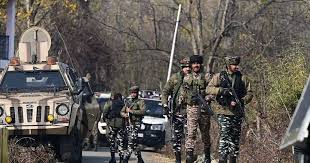

Four soldiers killed in fresh terrorist attack in Kashmir

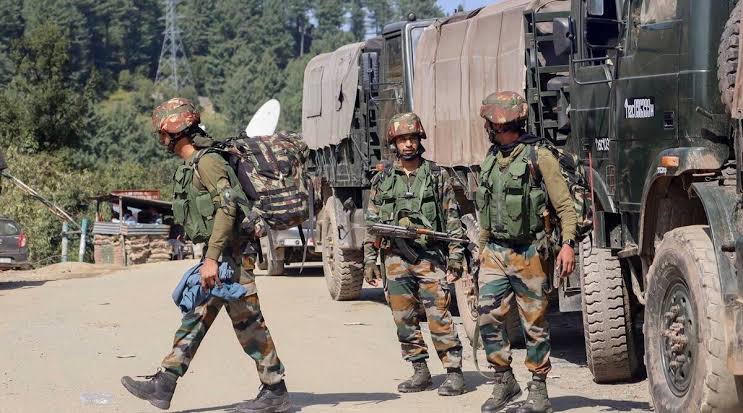
Four soldiers were killed in a gunfight with terrorists in Jammu and Kashmir on Monday night.

The incident took place during a search operation in the forests of Doda district in Jammu, where militants allegedly opened fire on the security forces.

Based on intelligence inputs, security forces launched a massive search operation in various parts of Doda district. Five soldiers were critically injured in the exchange of fire on Monday night, with four succumbing to their injuries later, the army posted on X.

Following the gunfight, Jitendra Singh, the Minister of State for the Ministry of Science and Technology and the Prime Minister’s Office, expressed his condolences: “Words fall short of condoling and condemning the martyrdom of our bravehearts.”

Singh, the MP for the Udhampur constituency, which includes Doda, added, “Let all of us join together to defeat the nefarious designs of the enemy and maintain peace and harmony for which Doda has always been known for.”

Last month, nine people were killed and 33 injured terrorists fired on a bus carrying Hindu pilgrims. Five soldiers were killed in an ambush in Kathua district last week.

Can UK and France poll outcomes hasten peace process in Europe?

Despite American reluctance to let the Russia-Ukraine conflict end, many believe that the outcome of the recently held elections in the U.K. and France might finally enable them to reinvent their role in geopolitics by Gopal Misra

The new British leadership, led by Labour Party Prime Minister Keir Starmer, is faced with the twin tasks of reviving the country’s perennially ailing economy and reclaiming its cherished role in geopolitics.

It reminds us of the role the Labour Party had played during the post World War-II years, when the then Prime Minister Clement Atlee had finally conceded the demand for Indian independence.  However, the partition of India was also legitimized during his tenure by an Act of British Parliament. Keir Starmer is talking about strategic ties with India and is also ready for free trade partnership, but the new ruling party has already been asking for a UN-led referendum in Kashmir. The Indian strategic affairs experts, however, are amused by this resolution. It is being stated that since the Kashmir issue is directly related to the British Act partitioning India, that too under the Labour Party regime, therefore, it should have been asking for a referendum in Sindh, Baluchistan and the north-western frontier, now renamed as Khyber Pakhtunkhwa.

It, indeed, is quite difficult for the present leadership of the Labour Party to reassert the role of Britain in geopolitics. If Clement Atlee had not implemented the plan of India’s partition envisaged by the outgoing PM Winston Churchill, a journalist-turned politician, an independent united India might have been an asset to the U.K.

The British politicians as well as academicians of its much-acclaimed universities have paid little attention to the historical blunder of communalising India’s plural society. The deliberate fragmenting of the jewel of the British crown i.e. India, has finally relegated Britain as just one of the European powers, perhaps much weaker than its rivals Germany and France.

Pax Britannica

The British politicians may be hesitant to discuss and reinterpret the concept of Pax Britannia. The hope, however, has been rekindled following the electoral victory of the Labour Party in the recently held polls. It is being asked whether the concept of Pax Britannica, for ending conflicts across the continents, is still relevant. The peace or truce during the colonial era among the then world powers vying with each other in occupying or subjugating vast territories in Africa, Asia, Australia and Americas had retained peace among themselves under this concept.

To regain the past glory in world politics and status, the British politicians have to visualize their country’s strategic ties with India. It is possible only by adopting a comprehensive approach.

The patchwork might give some instant relief in international ties. But with China now occupying the position of an economic superpower, the British have to insulate themselves from the profit oriented policies being envisaged in the Capitol and the Whitehouse. Neither the U.K nor France can really play any important role in the contemporary tricky geopolitics. For this, the new leadership in the two erstwhile colonial powers have to reinvent their role not as a military superpower, but symbolizing multi-ethnic, multi-religious and all inclusive representative democracy, a model to be admired worldwide.

Under the US Pressure

The challenge before the new government at Westminster is not just inflation or economic issues, but also to regain the proactive role for Britain in restoring peace in Europe. It is being asked whether the new government in London could play a pivotal role in ending the ongoing fratricide between Russia and Ukraine, but for this they have to reorient their traditional approach.

In 1947, the Labour Party government had ensured peaceful transfer of power to the Indian leadership. It, however, could not prevent India’s partition, which was brought about due to the communal and disruptive forces unleashed during the regime of Winston Churchill.

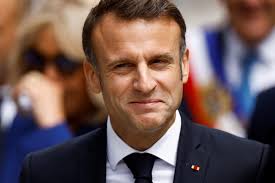
It is being widely believed that due to the pro-US regime of the Sunak Government, even the French  President Emmanuel Macron could not take any effective measures to end the European War. In spite of the inability of his political outfit, Renaissance Party, to get only 161 seats in the 577- strong National Assembly in the recently held polls, both France and Britain have to embark upon an effective initiative for peace. However, an Anglo-French plan to end the Russian-Ukrainian War has to wait for the outcome of the presidential poll in the US.

EU Initiative for Peace

Amidst the political developments in Britain and France, the visit of the Hungarian President Viktor Orban to Moscow has received worldwide attention this month. It reveals that despite seeking the NATO umbrella against Russia, Oban has met the Russian President Vladimir Putin. He flew to Moscow soon after assuming the presidency of the European Union or EU.

It, however, did not surprise anyone that this visit is being questioned by the lobbyists of the war industries in the US as well as in Europe. Their war-based industry is expected to suffer if the conflict finally ends.

Their anguish has further enhanced that despite being baptized in the US-led defence alliance, NATO, most of the EU countries are keen to end the European War.

They do not want to be in a perpetual conflict with Moscow. It may be recalled that in 1956, Hungry had suffered the wrath of the then USSR for electing pro-democracy leaders. During the 1990s, the USSR was dissolved, thus a number of independent states had emerged in the region.

Earlier, following the Bolshevik revolution in Russia, the USSR with its formidable military had finally trounced Hitler’s Germany in WW-II. During the cold war era, Hungary was brought under a repressive Communist regime. The Communists having a close alliance with the Soviets had penetrated the Hungarian secret police, AVH, and successfully captured power. In 1999 after the dissolution of the Warsaw Pact, Hungry joined NATO.  It was the period, when after the dissolution of the successor state of the USSR, the Russian Federation too wanted to join NATO, but they were denied its membership due to the British opposition. It is believed that the Anglo-American alliance thwarted the entry of Russia in NATO, but most of the former provinces of the USSR and its allies in Eastern Europe, now free from the Communists, had quietly enrolled in NATO.

Later, the Russians realized that the British prejudices against them nurtured during the Tsars have resurfaced in both the USA and the British. There were apprehensions that the Russians had become a threat to the British Empire during the colonial era, when Russia under the Tsars had brought the Central Asian region under its influence.

In spite of this perennial prejudice of the British and Americans against the Russians, the EU members, despite being enrolled in NATO, are fed up with the anti-Russian rhetoric. Also, there is a general perception that the Russian invasion of Ukraine was due to the provocative US policies under the umbrella of NATO. Its aim was to destroy the traditional influence of Moscow in the region, but they have not succeeded so far

The Challenge

The new government in London has a majority in the House of Commons, but it has to rebuild the country’s economy by not participating in the war efforts, helping more funds to Ukraine. It may not be approved by the Biden administration. On the other hand, the French President has successfully prevented the right extremists, but couldn’t muster a majority in the National Assembly. Also, the warmongers in the Biden Administration continue to prevent any peace initiative for ending the European War.

In spite of the American reluctance to end the conflict, many believe that the outcome of the recently held elections in the U.K. and France, might finally enable them to reinvent their role in geopolitics. These erstwhile formidable colonial powers, which had subjugated huge territories in Asia, Africa and Americas, have been enjoying much goodwill in the lands, which were under their rule. The British democratic traditions and the French Revolution continue to be a lighthouse for a global order and peace in the strife-torn global politics. However, much will depend upon their efforts for peace.

Assassination bid on Trump shows polarisation is complete

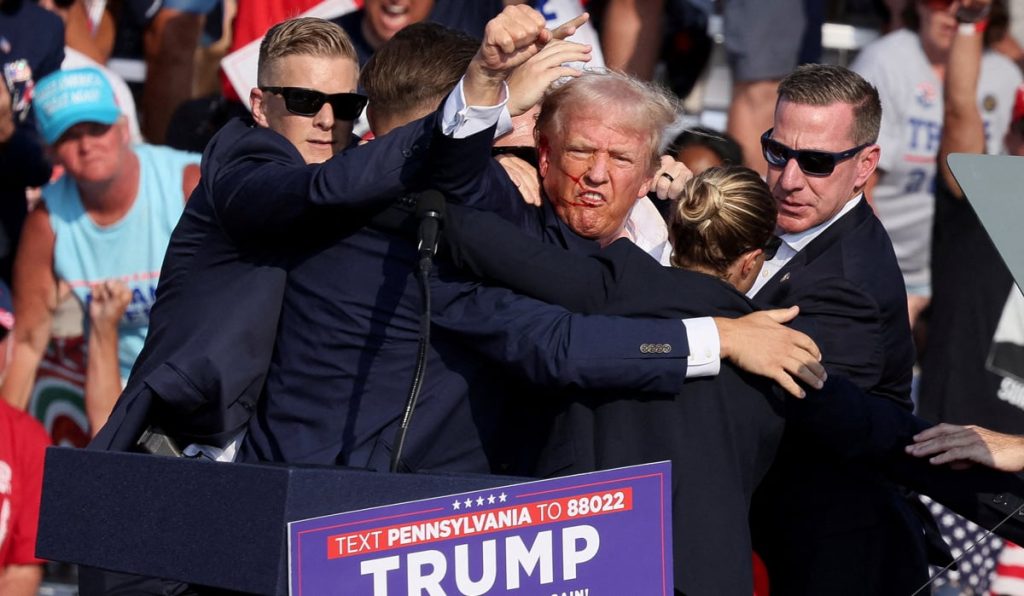
The image of former US President Trump raising fist when blood was streaking across his countenance moments after shots were fired at his election rally in Butler, Pennsylvania is a reminder of an imminent threat of deep polarisation in democracies across the world. The assassination attempt and a defiant Trump holding his fist up will give a boost to the campaign of a Republican contender but raise serious questions on the burgeoning gun culture and a toxic political milieu. Indeed, the attack may push Donald Trump’s prospects given the sudden change in messaging post-attack, and expected sympathy. Yet, the incident should worry the rest of the world as it has happened in the self-anointed custodian of the world’s oldest democracy.

From India, Prime Minister Narendra Modi and Leader of the Opposition Rahul Gandhi have strongly condemned the incident. One can heave a sigh of relief that Trump is safe and leaders across the spectrum have condemned the shooting. The incident would jeopardize the calculations of Democrats and Joe Biden in the race for the White House in the aftermath of his disastrous debate performance. America’s tryst with gruesome political violence and acrimonious debates is very long and such incidents instead of bringing an end to hate campaigns have been used by the leaders across party lines to incite feelings further. American democracy is replete with scars of many such murderous assaults.  Sadly, four American presidents have been assassinated while in office – Lincoln, Garfield, McKinley, and Kennedy, while many more including Reagan, Ford, Truman, and Roosevelt are among those who survived attempts on their lives.  It must be remembered that political violence has no place in a democracy where there is conflict of ideologies, which is the basis of a healthy democracy.  

Tehelka Cover Story

While we at Tehelka join in condemning the assassination bid and a threat to democracies across the world, our cover story in this issue – “It’s just not cricket” by the Special Investigation Team uncovers a massive fraud in ICC coaching certifications amidst never-ending echoes of the match-fixing scandal years ago. Tout boasts before the spy camera of a Tehelka reporter posing as a client: “You don’t need to worry about the selection process or the exam. I’ll take care of that as I’ve already obtained certificates this way.” The ICC, which serves as the global governing body for cricket, representing 108 member countries, conducts cricket coaching education courses for Levels one, two and three twice a year. The tout claims that he had leveraged his connections at the ICC headquarters in Dubai to arrange the certificates and all we need to do is send our candidates to Dubai for a week just to complete the Level 1 course — and he’ll handle the rest. That shows that all is not well with the gentleman’s game!

Significant strides in the battle against wildlife poaching

Though India passed the Wildlife Protection Act in 1972 to conserve wildlife, most of the times hunting and poaching take place for bushmeat as it is considered a delicacy. Animals are also killed to prevent crop raids. A report by Deepanwita Gita Niyogi

A campaign launched in December last year to prevent the hunting and poaching of wildlife has started giving the desired results in Telangana.

Talking about the initiative over phone, Mohan Pargaien, the former chief wildlife warden of Telangana, said ‘Catch the Trap’ was started as a mission mode across the state so that attention could be focused on this initiative particularly.

“This is because forest officials have a host of other activities to perform, such as tree plantation, which takes place in the long rainy season. Then there is also forest protection, including control of timber smuggling,” the senior forest officer, who was instrumental behind launching the campaign, added.

Though India passed the Wildlife Protection Act in 1972 to protect and conserve wildlife, most of the time hunting and poaching take place for bushmeat as it is considered a delicacy. At times when tigers, elephants and rhinos are killed, it is mainly for trade in body parts. There is also a demand for monitor lizards as its flesh is believed to be an aphrodisiac.

During the pandemic, there was a surge in hunting and poaching cases. Mostly, nets, live wires, traps and snares are used by poachers and hunters.

According to Pargaien, the forest department wanted to focus its attention on this menace. Apart from the deaths of 57 animals due to electrocution from 2021 till June this year, six human deaths also occurred as a result of electrocution from January 2023 to February 2024. “After this, the energy department started coordinating with the forest staff. There have been real impacts on the ground in just six months.” Since the drive was launched, only three cases of wildlife electrocution have occurred.

Tackling the problem

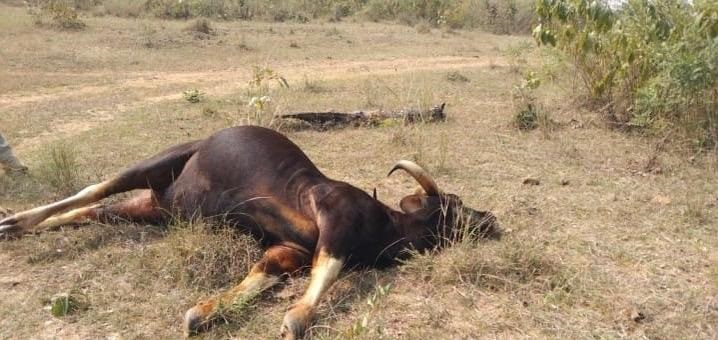
In the tribal-dominated Khammam district, there was a loss of human life due to electrocution by a live wire meant to trap wild animals. Apart from this, two gaurs or Indian bisons, a Schedule 1 species under the Wildlife Protection Act, were also killed. 

These two incidents exposed the serious nature of the problem and led to the formation of a district-level monitoring coordination committee, informed SiddharthVikram Singh, the divisional forest officer of Khammam.

“Generally, electric wires are laid by 6 pm and by 5 am they are removed. Patrolling by departmental staff was intensified in areas where there were a high number of poaching and hunting cases. Patrolling turned area specific and the identification of vulnerable and non-vulnerable areas took place to make the drive successful. Early morning and late evening patrolling became the norm.”

Special effort was made by beat and section officers of the forest department who checked transformers and removed illegal live wires. These wires drawn from transformers can be detected for up to 1.5 km.

Singh informed that after witnessing the heightened activities of the forest staff, local inhabitants became serious too. Earlier, people thought that it was a routine check-up.

“The forest department is into monitoring now and trying to gather as much information as possible. There is a district task force team which detects illegal wires and seize materials. Guns have also been seized from people who entered the state from outside.”

India passed the Forest Rights Act in 2006 to recognise the ownership of forest dwellers and tribal communities over forested areas. However, Singh pointed out that it has increased people’s foray inside forested areas through individual pattas or land titles given for cultivation. As regular wildlife movements take place, it is easy to hunt and poach animals.

Use of snares

Sometimes, snares (traps consisting of noose), which cover less surface area, are also used. When used, the animals either die or are badly injured. Snares arrest the movement of animals. After the animals are caught in it, poachers go and beat them to death.

Rudra Mahapatra of the Wildlife Trust of India said the non-profit has introduced anti-snare walks in southern India. There is a plan to introduce it in Odisha too by this year which has a high incidence of bushmeat hunting, especially in and around the Simlipal National Park. In that place, there is a hunting ritual called Akhand Shikar, traditionally carried out by tribals. Apart from Similipal, in the coastal areas, migratory birds are poached as well.

“The anti-snare walk is in collaboration with the forest department where experts walk and remove snares which are simple to make and can kill tigers too. I have even seen elephants receive injuries because of clutch wires used as snares. Currently, the walk is on in Tamil Nadu, Karnataka and Kerala,” Mahapatra said.

Mahapatra said snaring is a modern art and those involved in it know exactly where the animals are. He informed that last year in Kuldiha Wildlife Sanctuary, Balasore district, a bear was caught in a snare.

Coming back to Telangana, B Prabhakaran, the chief conservator of forests, Kaleshwaram circle, said that earlier too the department staff used to do the same work. “But now they are doing it with a concerted effort with the help of the slogan Catch the Trap. It has become a movement.”

Apart from hunting and poaching for bushmeat, farmers also lay wires to prevent wild boars from entering their fields. The aim is crop protection. “The department has seized such wires in remote villages and sent them to Hyderabad. This drive is being appreciated by people too.”

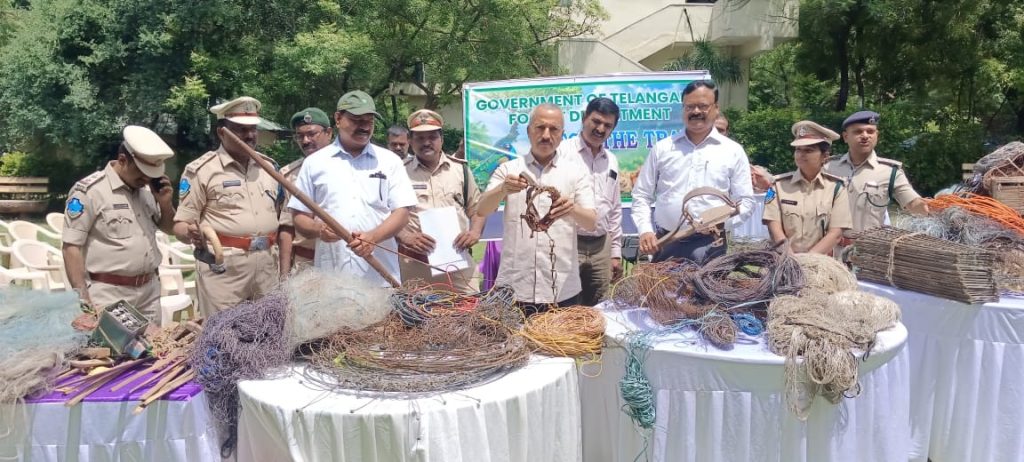
Sensing the success of the campaign, gram panchayats have started giving information based on incentives. The transportation of the seized materials to state capital Hyderabad has helped the department to collect data and study the methodologies used to kill wildlife. Since December 2023, 3810 traps and snares weighing 4872 kg have been seized by the department.

Parties pull out all stops to woo voters in poll-bound Haryana

While Congress is upbeat after turning it around in the LS poll, the ruling BJP, battling strong anti-incumbency, is ready with a 90-day grueling schedule during which it will do whatever it takes – from announcing welfare plans to holding samadhan shivirs – to woo voters, reports Aayush Goel

Spurred by recent Lok Sabha elections the political temperature in Haryana is charged up ahead of state assembly polls. The polls slated to be held in October will be an acid test for all parties with the ruling party giving it all for a record third tenure, chance for opposition to reclaim power after a decade, and regional parties fighting for their sustenance in state. From party hopping, padayatras, last-minute announcements of welfare schemes/sops by the ruling BJP, key appointments based on caste equations, pre-poll alliances, and daily exchange of allegations and counter-allegations have blown the poll bugle in the state.

Following muted performance in Lok Sabha elections, the ruling BJP is working hard to plug the holes. Battling a strong anti-incumbency wave in the state, the party is ready with a 90-day schedule announcing welfare schemes and holding ‘samadhan shivirs’, the party is doing all it takes to woo voters. It is trying to balance the caste equation to take on the Congress which has the support of Jat voters, through OBC Chief Minister Nayab Singh Saini, who was appointed just before Lok Sabha elections. Meanwhile having won five out of 10 Lok Sabha seats in state in Lok Sabha elections, Congress oozing with newfound confidence is out playing on the front foot and attacking the government. Party like JJP (Jannayak Janta Party) which was a vital part of state government and was ‘dumped’ right before Lok Sabha elections is trying to keep itself afloat and looking for alliances. The state this time is seeing the formation of a third front as well.

 Will the gamble pay off?

Amidst the biggest questions for BJP in these state elections is — will the Lok Sabha pre-poll gamble of changing former CM ML Khattar with Nayab Saini really pay off? Party in a bid to balance out caste equations which are decisive factors in the state made the change. If Saini’s appointment was cited as an attempt to woo OBC voters, the party made similar decisions for caste balancing. On July 9, the BJP named Mohan Lal Badoli, a Brahmin, as its state president. Khattar, a Punjabi, moved into the BJP-led Union Cabinet and was allotted key ministries — Power and Housing and Urban Development. Coming under the OBC category, Sainis are estimated to constitute just about 1 percent of the state’s population. However, various estimates put the OBC or backward class population at 30 percent in Haryana. BJP sources said that for the Rajya Sabha election, likely to be held in late July or early August, the party may field Banto Kataria, who lost in the Lok Sabha polls from the Ambala reserved constituency. Earlier, in April, the BJP sent Subhash Barala, a Jat, and former Haryana BJP President, into the Rajya Sabha.

Nayab Saini, who is under immense pressure to prove himself, is putting in his best efforts. From winning the Karnal by-poll to a whirlwind tour of the state, announcement of welfare schemes, improving response time and addressing day-to-day issues, Saini is out to woo voters and prove a worthy lead for the party. While his appointment as CM is still being debated amongst political circles, the BJP has announced to fight forthcoming assembly elections under his leadership. Even post Lok Sabha election, speculations were rife about yet another change of guard in the state. Union Home Minister Amit Shah made this announcement at the party’s state executive meeting attended by about 4,500 BJP workers.

The declaration, according to many BJP leaders, has already alienated other communities and left prominent leaders disappointed. The choice of Khattar over Rao Inderjit Singh in the union cabinet and alleged cold shouldering of ‘Ahirs’ in prominent positions in party ranks has left the community irate and voicing their concerns. The community vote can impact at least 15 assembly segments in the southern part of Haryana. “We shifted our loyalties from Congress to BJP in 2014 following indifference and lack of importance in the Hooda government. The issue is the same here. Ignorance of Rao Inderjit Singh, a six-time MP, in allotment of cabinet berths and non-consideration of Ahirs for important posts like BJP president or CM really makes us doubt our loyalty. If the party continues to choose the GT road belt over Ahirwal we have to rethink,” said Sandeep Yadav of Yadav Mahasabha.

Rao Inderjit, who has been known for his rebel streak, is not saying much even as his supporters are out screaming that he is the most deserving CM claimant. Rao has given pre-poll jitters to the BJP as he has announced his own pan-state tour program. Not just him, but many other leaders who were denied Lok Sabha tickets or have failed to make it to the state cabinet to date are miffed, hinting that the BJP has to take care of many internal battles before the October polls.

Cong hopes for a comeback

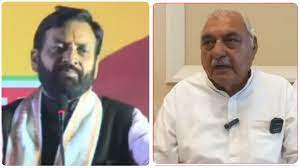
With this assembly election being speculated as the two-time CM and Jat stalwart leader Bhupinder Singh Hooda Congress is out to reclaim the state after a gap of a decade. On July 11, PCC president Udai Bhan, and Congress Legislature Party leader Bhupinder Singh Hooda released the Congress poll campaign plan. They were accompanied by senior Congress leader Birender Singh, who recently returned to the Congress after a decade in the BJP, and newly elected MPs and several MLAs. The party announced that they would be reaching out to every single voter and would be holding a ‘rath yatra’ and ‘padayatra’ across all 90 constituencies of Haryana. “We aim to cover at least two constituencies daily,” Bhan said. While the party is enthused with a five-seat win in Lok Sabha it still is battling factionalism. Many senior leaders have blamed Hooda’s influence on candidate selection for the party not registering a clean sweep in the state. These factions have found a new leader in Kumari Selja, a newly elected MP from Sirsa. She has announced a separate ‘padayatra’ across Haryana’s urban constituencies in the coming weeks. She said she chose these seats as the BJP was ahead of the Congress here in recently concluded Lok Sabha polls.

Another of Hooda’s arch rivals, Kiran Choudhry, perturbed over the non-allocation of ticket to her daughter Shruti Choudhry, the former MP of Bhiwani-Mahendragarh, has left Congress and joined BJP making it to the list of pre-poll party hoppers. The Tosham MLA was also one of the Congress’s four working presidents in Haryana and the switch is expected to cost the party in Bhiwani-Mahendergarh, where her supporters are cited as one of the key reasons behind Congress’s loss in the area.

 Third front formation

 While AAP has announced to contest all 90 seats in Haryana, a non-BJP non-Congress third front is already taking shape in the state. The INLD and BSP have announced their alliance. Rampal Majra, INLD’s state president, said the non-BJP and non-Congress parties should strengthen the INLD-BSP alliance. The regional parties, led by the INLD, would be in a better position to safeguard Haryana’s interests as both the Congress and BJP had failed to watch the state’s interests during their respective regimes, Majra said.

 The INLD which has been a strong votary of the “Third Front” is hoping for a fresh lease of life after tying up with the BSP and announcing Abhay Chautala as the alliance’s CM candidate. The situation of the other Chautala wing of the family is no better.

Having split from the BJP, the JJP leader and former deputy CM Dushyant Chautala is still coming to terms with an unceremonious split with the BJP. Since the party separated from the BJP, it has lost several MLAs and did not win a single Lok Sabha seat. The JJP has since dissolved all its district units and is now holding regular district-wise meetings to rebuild its organisation before the assembly polls. The party is now hopefully looking at Congress but is not getting much response.

Piyush Goyal holds talks with WTO Chief on free and equitable trade

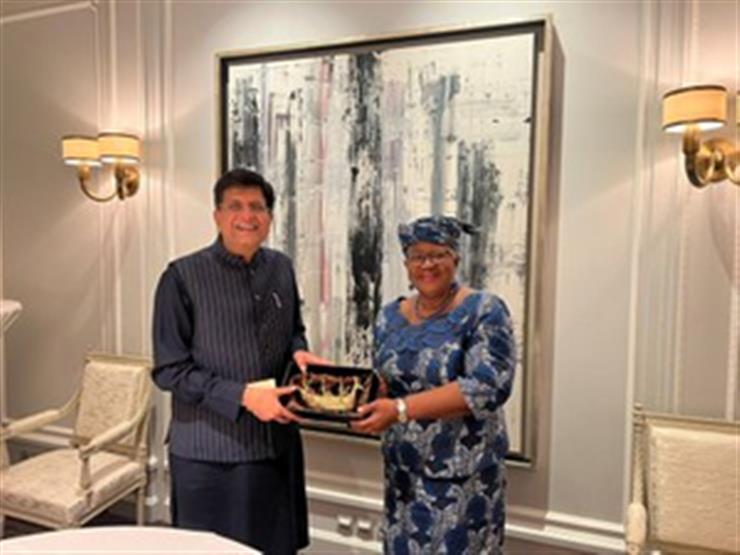
New Delhi:  Commerce and Industry Minister Piyush Goyal held a crucial meeting with WTO Director-General Ngozi Okonjo-Iweala, to discuss the ongoing negotiations and the progress made since the 13th Ministerial Conference of the global trade organisation, according to an official statement issued on Monday.

The conversation highlighted India’s commitment to achieving fair and meaningful trade outcomes and ensuring free and equitable trade among member nations.

The minister also convened a meeting with India’s WTO team in Geneva, led by the Ambassador and Permanent Representative of India at the WTO, along with senior officers from the Department of Commerce. They discussed priority issues currently under discussion or at various stages of negotiations in the WTO, reinforcing India’s strategic approach to international trade.

Goyal also met leading business figures and potential investors, including representatives from MSC Cargo. They discussed potential collaborations and investment opportunities in various sectors, aiming to attract investments and foster partnerships to support India’s growth and development.

The Minister also held a meeting with senior officials from Zurich Airport, including the Chairman of the Board of Directors, Zurich Airport, Josef Felder. They explored opportunities for collaboration in enhancing airport infrastructure and advancing ancillary air services in India. The discussions centred on leveraging best practices and innovations to significantly improve the Indian aviation sector.

The Minister also engaged with prominent members of the Indian diaspora in Zurich. He acknowledged their valuable contributions to the Swiss economy and Indo-Swiss relations, encouraging them to invest in India. He highlighted the extensive opportunities available in India and the newly signed India-EFTA TEPA.

Jammu and Kashmir: Army foils infiltration bid, kills three terrorists in Kupwara

The Indian Army thwarted an infiltration attempt near the Line of Control (LoC) in North Kashmir’s Kupwara district, resulting in the death of three terrorists. The operation is ongoing, and details regarding the identity of the slain terrorists have yet to be released, according to an Army statement on Sunday.

An army official reported that troops stationed at the LoC detected and challenged the militants as they tried to cross into Indian territory. When the militants opened fire, the soldiers retaliated, leading to a gunfight in which three militants were killed.

Weapons and other war-like materials were recovered from the deceased militants. The army has launched a search operation, deploying drones and helicopters to ensure no other militants managed to infiltrate.

This incident follows a series of operations in the region. Last week, six terrorists were killed in two separate encounters in South Kashmir’s Kulgam district on July 6 and 7, with the Army also losing two of its soldiers during the clashes. 

Four terrorists and one soldier were killed on July 6 in Chinigam, and another soldier was killed in Modergam. 

Jathedar Akal Takht asks SGPC to install portrait of top Khalistani activists in the Central Sikh Museum

Jathedar Akal Takht the highest Sikh temporal seat, Gyani Raghbir Singh has asked the Shiromnai Gurdwara Parbandhak Committee ( SGPC) to install the portraits of  top terrorists in the museum of Sri Darbar Sahib (Golden Temple) complex..

Asking the SGPC to install the portrait of three terrorists while describing them martyrs of Sikh community due to their contribution towards the community as they fought long battle against the wrong policies of the Indian Governments.

The three names which were raised by the Jatehdar Akal Takht were Hardeep Singh Nijjar, Paramjit Singh Panjwar and Gajinder Singh at the Central Sikh Museum in the Sri Darbar Sahib (Golden Temple) complex.

Jatehdar said the SGPC should display the portraits of the trio in view of their sacrifices and contribution towards the Sikh community.

However, Gajinder Singh, who in the year of 1981 had led the group of hijackers that hijacked an Indian Airlines aircraft to Lahore in 1981 to get the release of several Sikh leaders. He passed away recently in Lahore on July 3 this year.

Dal Khalsa founder and patron Gajinder Singh Khalsa reportedly died of a heart attack in the hospital of Pakistan at the age of 74. He was one of the five men who hijacked the Indian Airlines flight IC-423 which took off from Delhi’s Palam airport for Srinagar on September 29, 1981. Hijacked Indian Airlines flight, with 111 passengers and 6 crew members on board, forced the plane to land in Lahore to seek the release of several Khalistani extremists, including Sikh leader Jarnail Singh Bhindranwale. He was arrested and underwent imprisonment from September 30, 1981, to October 31, 1994, as part of their life sentence by a court in Pakistan.

The Central government had put Gajinder Singh’s name on the list of 20 “most wanted” in January 2002 and sought his extradition from Pakistan.

Hardeep Singh Nijjar who was supporting Khalistan moment while sitting in Canada used to speak against the Indian Government was killed in Canada on 18 June 2023. Born in India, Nijjar migrated to Canada in the mid-1990s. Sikh outfits  viewed Nijjar as a human rights activist, whereas the Indian Government   accusing  him of being a criminal and terrorist affiliated with the militant  outfit “Khalisthan Tiger Force”.

The third one Paramjit Singh Panjwar  (63) wanted Khalistani activist was shot dead by unidentified gunmen while he was out for a morning walk on Saturday near his residence in Lahore, the provincial capital of Pakistan’s Punjab province.  He was heading the Khalistan Commando Force-Panjwar group and was designated as a terrorist by India under the Unlawful Activities (Prevention) Act in July 2020.

Panjwar joined the KCF in 1986. He later headed this outfit and crossed over to Pakistan.      Before escaping to Pakistan in 1995-96, Panjwar was involved in a number of killings in Punjab, according to official sources.

Panjwar had been operating from Lahore and was involved in arranging arms training for youths in Pakistan. He was engaged in supplying arms and ammunition and subsequent infiltration into India for targeting VIPs and economic installations.

He was also involved in broadcasting highly seditious and separatist programmes on Radio Pakistan, intended to incite minorities against the Indian government. He was active in the smuggling of drugs and was a major conduit between smugglers and terrorists, India’s Ministry of Home Affairs had said in a notification that designated him a terrorist under UAPA. 

PM Modi inaugurates The Indian Newspaper Society Towers in Mumbai

New Delhi:  The Indian Newspaper Society is happy to announce the inauguration of the INS Towers, B-Wing, located in the prestigious Bandra Kurla Complex (BKC), Mumbai.

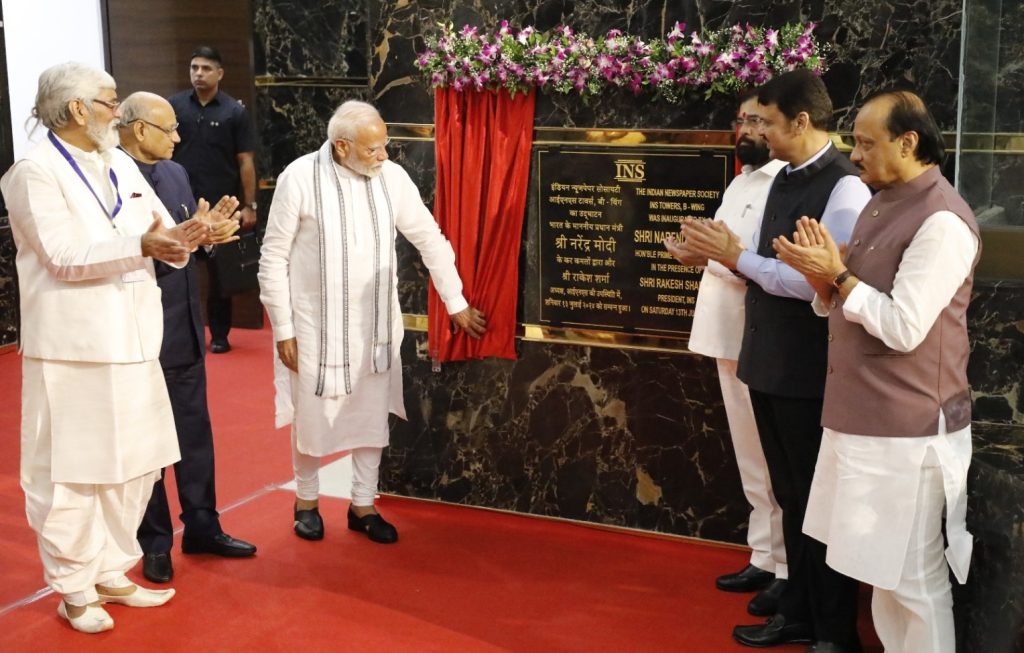
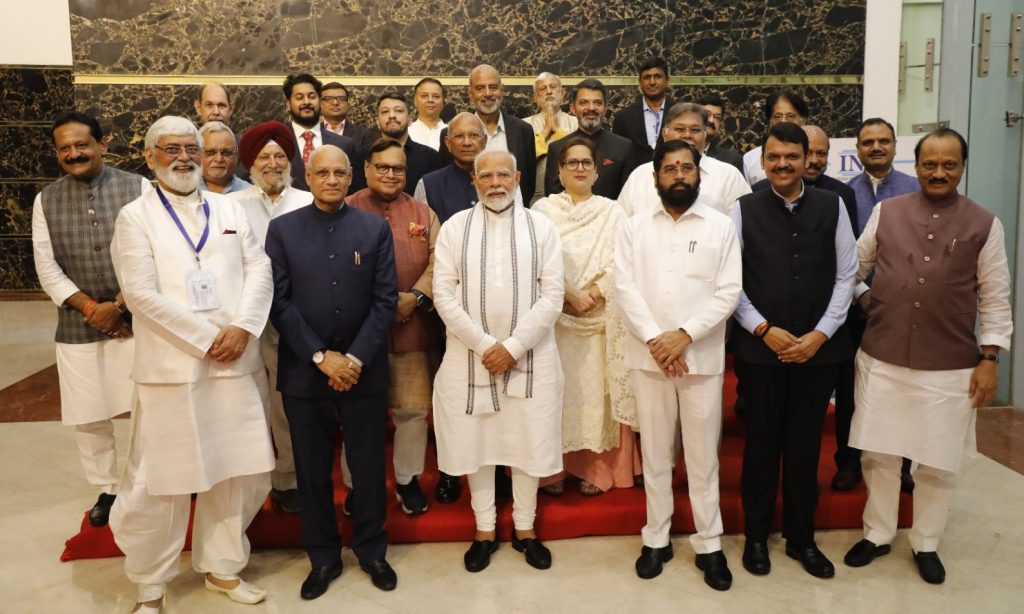
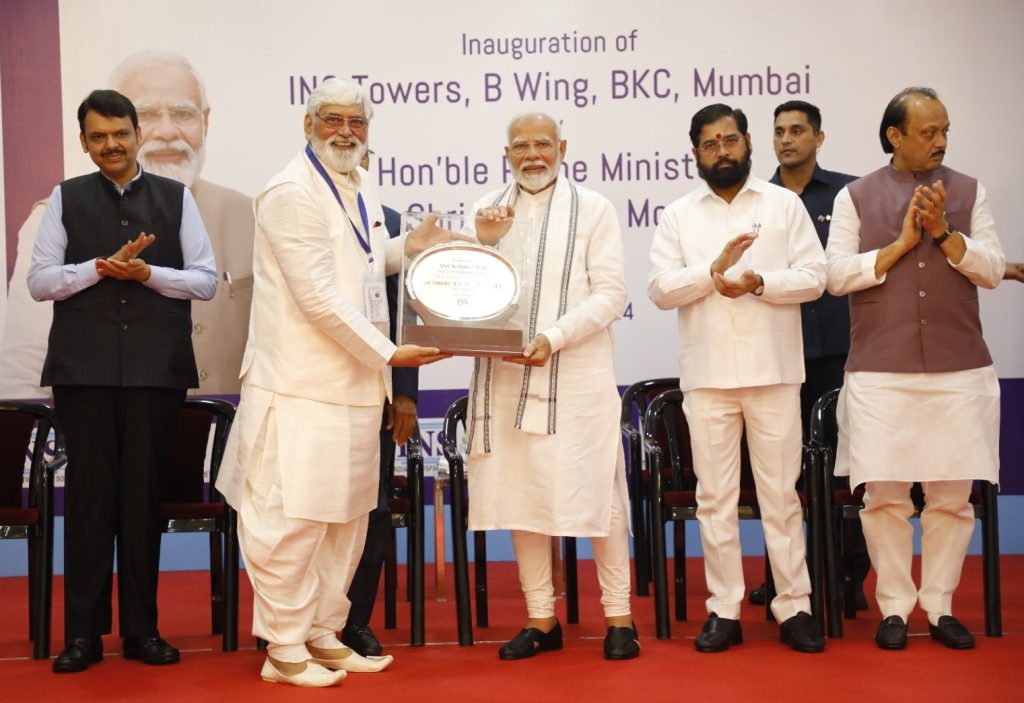
Today marks a momentous day as the Prime Minister of India, Narendra Modi has officially inaugurated the INS Towers, B-Wing at BKC, Mumbai. The event was a resounding success, attended by the Governor of Maharashtra, Ramesh Bais, Chief Minister of Maharashtra, Eknath Shinde, Deputy Chief Ministers of Maharashtra, Devendra Fadnavis and Ajit Pawar, Other Dignitaries, Industry Leaders, and Members of the print media fraternity.

The inauguration ceremony began with a ceremonial unveiling of the plaque followed by a very warm welcome of the Prime Minister Narendra Modi by  Rakesh Sharma, the President of Indian Newspaper Society, followed by an address of the Prime Minister.

Rakesh Sharma, President, INS also urged the Prime Minister to look into the recent issue of Self Declaration Certificates as well as the issues raised with the Finance Minister during a recent interaction.

The Prime Minister delivered an inspiring speech, highlighting the importance of the print media industry in India’s growth and development. In his address, Prime Minister Narendra Modi emphasized the pivotal role of the print media in disseminating news, thereby strengthening India’s media landscape. Addressing the gathering, he underscored the media’s historical role as a spokesperson for current affairs and stressed its significance in shaping the country’s future direction over the next crucial 25 years.

The Prime Minister urged the media industry to align with Governmental initiatives aimed at benefiting the people of India, emphasizing their non-partisan nature devoid of any political agendas or vote bank politics. He also encouraged the publishers to promote tourism through interstate promotional campaigns, by leveraging the media’s outreach.

Highlighting the need for global presence, the Prime Minister advised the publishers to consider translating their publications into languages spoken in United Nations countries, by harnessing the potential of microsites and social media for global outreach. He emphasized the importance of digital editions in amplifying India’s voice on the global stage.  

INS Towers, B-Wing, is set to become a landmark in Mumbai’s print media sector. Its strategic location in BKC, coupled with state-of-the-art facilities, positions itself as an ideal hub for the print media. It is a centrally air-conditioned state of the art building having 14 floors. 

We once again extend our heartfelt gratitude to the Honorable Prime Minister of India, Narendra Modi and the other dignitaries for their gracious presence and support.

The inauguration of INS Towers, B-Wing, marks a new chapter in our journey towards print media’s excellence and sustainability. 

MOST POPULAR

HOT NEWS