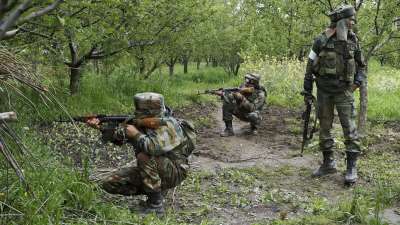
Two soldiers were injured in a fresh encounter between security forces and terrorists in Jammu and Kashmir’s Doda district early Thursday morning. The clash began around 2 am in Jaddan Bata village, Kastigarh area, when terrorists opened fire on the security personnel conducting a search operation.
Police reported that the soldiers sustained minor injuries during the exchange of fire. Efforts are ongoing to kill the terrorists involved.
The incident follows a recent encounter in the Doda region where four Army personnel lost their lives. In response, a large-scale search operation was launched in the Desa and nearby forest areas from Monday night into Tuesday.
Sources indicated that the latest attack occurred while Indian Army units had cordoned off a school in Kastigarh. Some troops were resting while others maintained their positions when the terrorists attacked with grenades, injuring two soldiers.
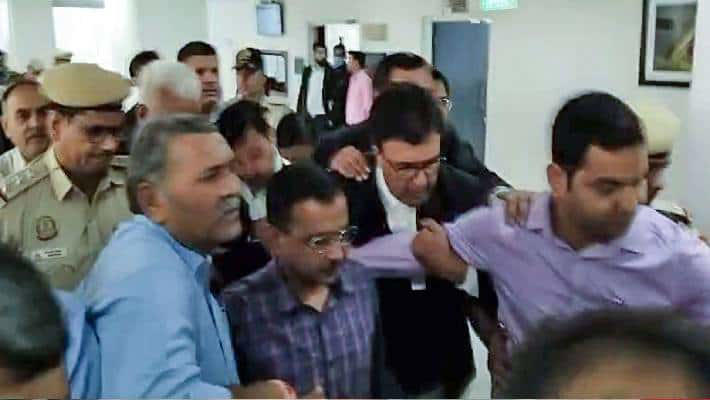
New Delhi: The Delhi High Court on Wednesday reserved its verdict on a plea filed by Chief Minister Arvind Kejriwal challenging his arrest by the CBI in the alleged liquor policy scam.
A bench of Justice Neena Bansal Krishna also reserved its verdict on CM Kejriwal’s plea seeking release on interim bail.
Earlier, the Delhi HC had asked the Central Bureau of Investigation (CBI) to file its response by July 17 to Kejriwal’s plea assailing the validity of his arrest by the agency and the subsequent custody.
On June 26, Kejriwal was formally arrested by the CBI when he was produced before Rouse Avenue Court and was sent to three-day CBI custody for interrogation.
His plea seeking regular bail in the CBI case will be taken up for hearing on July 29.
The Delhi High Court on Monday fixed August 7 for a hearing on the Enforcement Directorate’s (ED) plea against the trial court order granting bail to the AAP supremo in a money laundering case linked to the alleged liquor policy scam.
The Supreme Court, on July 12, ordered CM Kejriwal to be released on interim bail in connection with the money laundering case linked to the excise policy case. However, he was not able to walk out of jail since he was arrested by the CBI.
Meanwhile, a Delhi court last week extended till July 25 the judicial custody of Kejriwal in connection with the corruption case lodged by the CBI. Special Judge Kaveri Baweja of the Rouse Avenue Court passed the order upon the expiry of the previously granted judicial custody.
New Delhi : Raising alarm over the rising political violence in Tripura ahead of panchayat elections there, the Congress today alleged that it was “state sponsored” terrorism being committed in the North-East.
Addressing a press conference at the AICC headquarters , senior party leader and the AICC spokesperson, Dr Ajoy Kumar alleged that the violence was being carried out by the people belonging to the Bharatiya Janta Party, whom he described as the “congenital rioters”.
Dr Ajoy disclosed the level and extent of violence in Tripura was unimaginable and unexplainable and it was being carried out at the behest of the Prime Minister Narendra Modi and the union Home Minister Amit Shah. He said, this was being sponsored by the BJP top brass to win the panchayat elections.
He claimed, it was proved when a BJP minister, Tinku Roy visited a particular area and immediately after his visit rioting broke out there and fifty shops and houses were set afire there. If you are an ordinary worker, your chances of getting killed are high, he remarked.
Dr Ajoy Kumar alleged that it was the same script and gameplan of the BJP to divide and polarise people to win elections. He said, they did it in Manipur by dividing Meiteis and Kukis, who were otherwise living in harmony for over hundred years.
He said, now the BJP was applying the same formula in Tripura to create a division between tribal and non tribal population. He alleged that the BJP was only bothered about winning elections even at the cost of unity and harmony between the people.
He warned that India will become unsafe and divided, if such things were allowed to happen as the anti-India elements were active in border areas.
Taking a jibe at the Prime Minister and the Home Minister, he said, this is the new India of Modi and Shah.
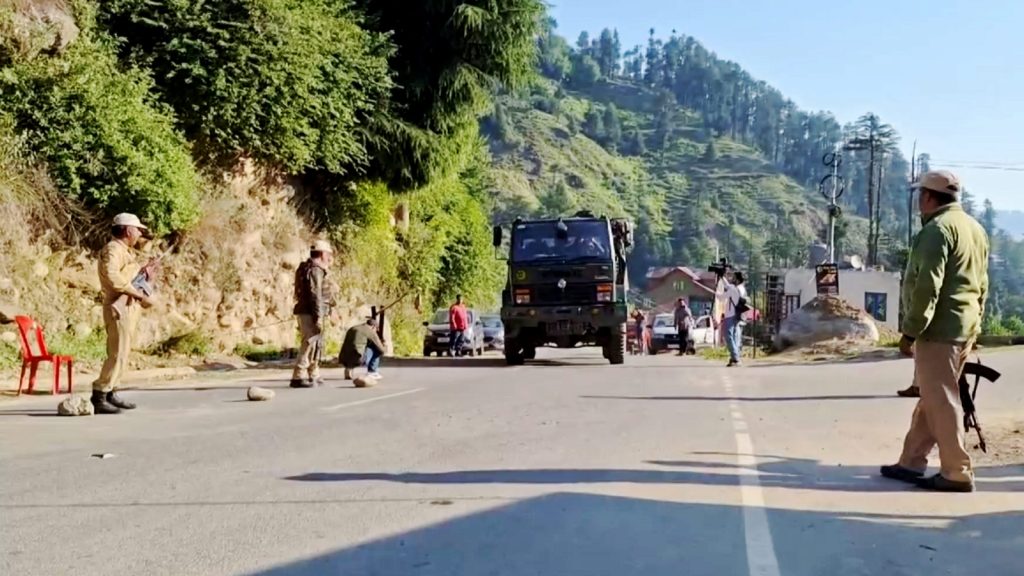
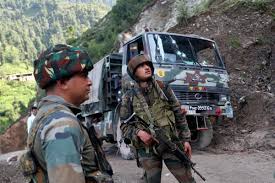
**EDS: GRAB VIA PTI VIDEOS** Doda: Security personnel during search and cordon operation after a terrorist attack, at Bhadarwah, in Doda district, Wednesday, June 12, 2024. A CRPF jawan was killed and six security personnel were injured in two overnight encounters with terrorists in Kathua and Doda districts of Jammu and Kashmir, officials said on Wednesday. (PTI Photo) (PTI06_12_2024_000050B)
A new exchange of gunfire took place between militants and Village Defence Group (VDG) members in the Doda district of Jammu province on July 17. According to officials, the brief firefight occurred on Wednesday morning in Malan village, located in the Dessa area of Doda district.
No casualties have been reported from the incident.
The latest contact with the militants follows the loss of four soldiers, including a Captain, in a firefight in the Urranbaggi area of Dessa.
Preliminary reports indicate that VDG members noticed suspicious movement and opened fire, leading to a brief encounter.
Security forces are continuing their search operation in the area, which has been the focus of a major anti-militancy operation since July 9, following reports of militant activity.
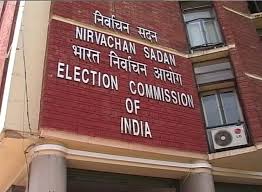
Despite the ECI’s commitment to stick to the Supreme Court’s September 30 deadline for holding elections in J&K, the sudden rise in militant attacks in the Jammu region may force the central government to reassess the situation before making a decision on holding polls, writes Riyaz Wani
The surge in militant attacks in Jammu and Kashmir has cast a shadow over the feasibility of holding assembly elections in the Union Territory. Despite the Election Commission of India’s (ECI) commitment to adhere to the Supreme Court’s September 30 deadline, the escalating violence is reportedly forcing a reevaluation of the situation. This is despite the fact that J&K has witnessed all elections since 1989 under the shadow of gun, with much worse violence.
The spate of attacks, particularly in Jammu division, has intensified concerns. According to the Union Home Ministry, there have been 26 militancy-related incidents reported in Jammu and Kashmir in 2024, with 10 occurring in the Jammu division alone. These attacks have resulted in the deaths of nine security personnel and caused injuries to 20 others, while 28 militants have been killed.
As the region grapples with the heightened threat, the Union government and security agencies are working to ensure a secure environment. However, the looming question remains: will Jammu and Kashmir be able to conduct its assembly elections as mandated by the Supreme Court, or will the security situation necessitate a delay? The coming weeks will be critical in determining the path forward for the Union Territory’s democratic process.
On the surface, however, the union territory seems to be on track to hold the polls later this year. This was indicated by the PM also in his speech during his recent Yoga Day visit to Srinagar.
“The time isn’t far away when, through your votes, you will be able to elect your own government in J&K,” the PM had said in Srinagar on June 20. “The day will come very soon when J&K will become a state again for its bright future.”
Since then, Union Home Minister Amit Shah, and the BJP president, J P Nadda, have held their separate Kashmir meetings, apparently to rally their party for the upcoming polls. While Shah’s meeting was held in New Delhi, Nadda flew to Jammu to meet the senior J&K BJP leaders.
Nadda held separate meetings with the J&K BJP core group, former MLAs, and MLCs in Jammu to strategize for the upcoming Assembly elections in the Union Territory (UT). According to sources, the main focus of these meetings was to review the party’s election strategy, expand its base, and address areas where the BJP’s vote share declined during the 2024 Lok Sabha elections.
The BJP is also considering strategic alliances and support for independent candidates to secure a majority and form the government in the erstwhile state. However, the delay in announcement of the polls by the Election Commission is sowing doubts in the minds of people that the union government may be interested in deferring the exercise yet again. And this time, on specious grounds of the surge in violence. However, regional politicians have expressed hope that Assembly elections will after all be held by the Supreme Court’s September deadline.
“The Supreme Court has mandated that elections be completed by September 30th. Both Prime Minister Modi and the Home Minister have assured timely elections, and the Election Commission is actively preparing. There is no room for doubt,” former J&K Chief Minister Omar Abdullah told the media.
“If the Prime Minister is not ready to bow down to these powers (militant outfits), then elections will be held on time. But if the Prime Minister and Home Minister waver and postpone the elections due to these attacks, it will be very bad for our country. If our central leadership wants to bow down to the powers that be, it will be their decision,” he added.
Similarly, the PDP, the Congress and the other political outfits have sought holding of Assembly elections before September.
“The spike in violence in Jammu is a grave concern, but it must not derail the effort to restore democracy in the union territory. J&K has not held an Assembly election since 2015,” read an editorial in a local daily. “Upholding the schedule for assembly elections, as advocated by Omar Abdullah, is critical to involve people in the decision making. It is a crucial step in affirming that the violence will not dictate the future of the region.”
Intro for cover story: While the echoes of the match-fixing scandal from years ago still reverberate, the cricket world now faces yet another crisis. An investigative report by Tehelka SIT has exposed a massive fraud in ICC coaching certifications.
“You don’t need to worry about the selection process or the exam. I’ll take care of it while sitting in India. Typically, certificates are issued three months after the exam, but I’ll arrange yours immediately after you complete the course — over the phone. I’ve already obtained two certificates this way: one for my younger brother and another for a relative. But I will secure a certificate for only someone close to you — not just anyone. Otherwise, people might accuse me of profiting from this.”
Meet Usman (he prefers his first name), an agent, local cricketer, and a man deeply involved in preparing sports grounds. Based in Delhi, Usman claims to have connections that allow him to fix International Cricket Council (ICC) Level 1 cricket coaching certificates directly from the ICC headquarters in Dubai.
Usman claims that he had arranged two such certificates years ago, one for his brother and another for his relative. Based on those certificates, the duo is now employed as cricket coaches in India, according to Usman. He made these startling claims to Tehelka reporter, who met him posing as a fictitious client looking to hire someone for the job of preparing a cricket ground.
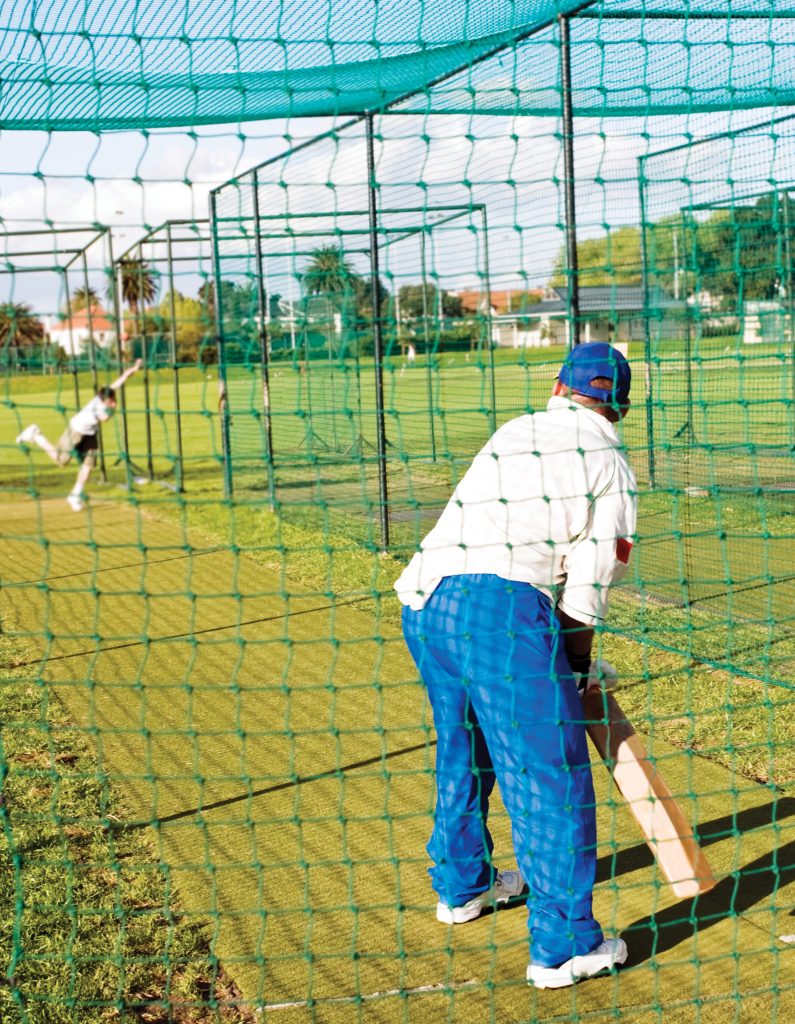
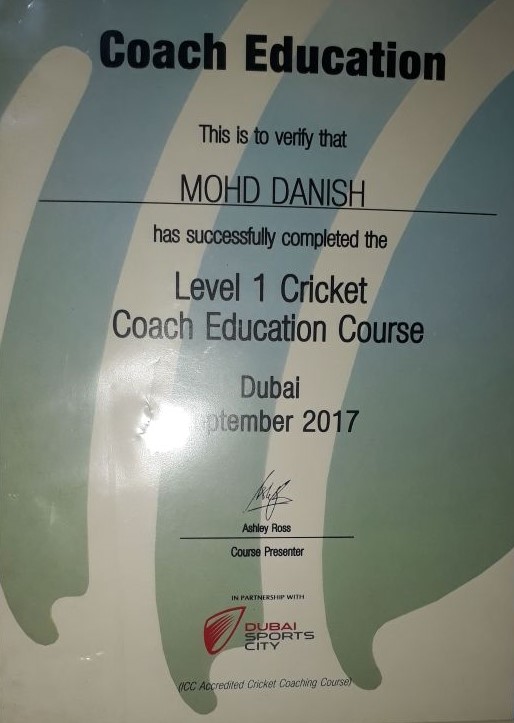
The ICC conducts cricket coaching education courses for Levels 1, 2 and 3 twice a year. Level 1 focuses on development and serves as the junior-most level. Level 2 builds upon Level 1 and represents the middle tier. Finally, Level 3 concentrates on coaching cricket at the highest level and stands as the senior-most tier. In 2017, Usman claimed that he had leveraged his connections at the ICC headquarters in Dubai to arrange the Level 1 cricket coaching course for his brother and relative. He ensured their selection and successful completion of the exam. Now, he promises the same for our candidate if we entrust him with the contract to prepare a cricket ground. According to Usman, all we need to do is send our candidate to Dubai for a week—the duration required to complete the Level 1 course — and he’ll handle the rest.
The International Cricket Council (ICC) serves as the global governing body for cricket, representing 108 member countries. Its primary responsibilities include administering the game and collaborating with member nations to promote cricket worldwide. As part of its efforts, the ICC offers a comprehensive training and education program designed to foster the development of coaches, umpires, scorers, and pitch curators across the globe. One crucial component of this program is the ICC Coaching Course Level 1. This course equips participants with the technical knowledge necessary to conduct cricket sessions for new and beginner players. However, before enrolling in the Level 1 course, aspiring coaches must successfully complete the ICC Coaching Foundation Certificate.
The Level 1 course consists of six modules, each covering essential aspects of coaching. Participants engage in assessments at the end of each module, aiming for a pass mark of 75% to progress to the next stage. Upon successful completion of all modules and assessments, participants receive a Certificate of Completion, officially accrediting them as ICC-certified coaches.
Usman, whom we’ve encountered during our investigative meetings, asserted that he could manipulate the certification process. He claimed to have secured two ICC coaching certificates — one for his brother and another for a relative — thus enabling them to become ICC-certified coaches. Now, he promised to replicate this feat for our candidate.
The topic of fixing ICC Level 1 coaching certificates was central to our interactions with Usman throughout. Right from our initial meeting, Usman confidently assured us that he could secure the coaching certificate for our candidate by simply contacting his source in Dubai.
Reporter- hoti sirf Dubai se hi hai..
Usman- Haan pehle dur tha ab inhone Dubai … main branch Dubai mein bana li hai…pehle London mein tha..
Reporter- ICC ka?
Usman- Pehle London mein tha.. ab Dubai mein branch kholi hai…to wahan jana padega, 3-4 din rehna padega wahan par….wo mein kara dunga.. usmein koi dikkat nahi hai…
Reporter- Wahan kya hota hai ?
Usman- Exam hota hai…wo mein nikalwa dunga , yahan se baithe baithe nikalwa dunga…pareshan mat ho.
[Usman informs that the ICC coaching exams are now conducted in Dubai instead of London, while assuring the reporter that he can arrange for the exam and certification for our person in Dubai from India without any issues. This reveals the worrying ease with which certifications can be manipulated.]
Now, Usman not only promised to fix the ICC Level 1 cricket coaching entrance exam for us, but also assured us that we would receive the coaching certificate immediately after completing the course, bypassing the ICC’s standard three-month waiting period.
Reporter- Kitne din rehna padega ?
Usman- Mere khayal se 5-6 din rehna padega….wo ‘hand to hand’ aapko certificate bhi de denge…
Reporter- Accha, waise procedure kya hai..?
Usman- Procedure hai 3 mahine mein certificate detey hain, par mein phone kar dunga ‘hand to hand’ certificate de denge.. wo aapko certificate de denge.. aap bas bag mein rakhkar laiyega…
[Drawing from the conversation, it’s evident that Usman can expedite the certification process through his connections, highlighting a significant loophole in the ICC’s certification system.]
Usman further revealed that he will call his source at the ICC in Dubai, ensuring that no one will ask many questions of our candidate. He explained that a four-person panel—comprising representatives from England, Australia, India and the UAE — will scrutinize our candidate for the coaching job. However, he said that he has contacts with the UAE representative, who will ensure our candidate passes through easily. He assured us that the certificate would be handed over without any issues, by leveraging his connections within the ICC’s management.
Usman- Wo aapse zyada nahi poochenge, mein phone kar dunga…
Usman (continues) – Lekin wahan par London ka bhi England ka coach aata hai.. 4 jagah ke log hotey hain, ek London ka tha, ek Australia ka tha, ek UAE ka tha, aur ek Indian tha, to Indian jo hai hamare side ka tha.. to unhoney maan liya tha sab.. wahan mein phone kar dunga.. koi pareshani ki baat nahi hai, jo XXXXX hai UAE ke, pehle jo they XXXXX bhai, wo bhi hain unse bhi kaam karwa dunga..to aapko certificate ‘hand to hand’ de denge..
Reporter- XXXXX bhai ICC mein hain..?
Usman- ICC mein hain wo pehle XXXX they UAE ke..ab wo management mein aa gaye hain..
[Usman brags about his connections within the ICC panel underscoring the potential for manipulation within the certification process.]
Now, Usman disclosed how he had managed to secure a Grade ‘A’ for his brother Danish in the ICC Level 1 coaching exam, which is otherwise difficult to achieve. He explained that the ICC follows a grading system for their exams, awarding Grades A, B, and C to candidates after they complete the respective courses. Grade A represents the best performance, Grade B is just below that, and Grade C is very poor. According to Usman, the ICC only issues certificates to candidates who achieve Grades A and B, but not to those with Grade C.He claimed to have secured a Grade A for his younger brother Danish and promised to do the same for our candidate.
Reporter- Nahi doosre logon ko kaise pass kartey hain, aap to apne ho.. karwa dogey..
Usman- Baki sab jo hain na, ye maan lijiye test de rahe hain wo..unke wahan grade system hai, agar grade C hai to aap qualify nahi kar paogey, Grade A hai to accha hai, nikal detey hain, B mein bhi wo nikal detey hain, lekin C wale ko nahi nikaltey, ye samajh lijiye 50-60 hazar rupees aapke phir aapko dubara dena padega,
Reporter- Grade C wale ko nahi nikaltey?
Usman- Nahi wo certificate nahi issue karenge…
Reporter- Grade B wale ko ?
Usman- De denge..
Reporter- Grade A wale ?
Usman- Grade A wale ho to aap next level par jaogey.. to uske liye aur aasani ho jayegi…
Reporter- To ye aap karwa dogey?
Usman- Karwa dunga.
Reporter- Grade A ka certificate dilwa dogey?
Usman- Koshish karunga.. thoda dimag lagana padega.. kyunki do aur hotey hain wahan London.. aur pata nahi kaun hoga.
Reporter- Danish bhai kis sey pass hua hain?
Usman- Grade A se, grade A se karwa diya tha maine. Phir wo jaantey bhi they pehley se.
[Usman assured that he could secure a pass for our candidate, emphasizing his ability to influence the ICC’s grading system. He emphasized his ability to manipulate the system, ensuring high grades for those he assists. This highlights the corruption involved in manipulation of the grading process.]
According to Usman, obtaining an ICC Level 1 coaching certificate is akin to earning a degree, which can open abundant employment opportunities for the candidate. He highlighted the value of a Grade A certificate, emphasizing that it significantly enhances job prospects. Additionally, Usman mentioned that completing the Level 1 certificate is a stepping stone to further qualifications and higher salaries, with the potential to pursue Level 2 certification within India.
Usman- Level A ke certificate mein apne aap mein ek baat hoti hai…aap ye samajh lijiye aapko degree ja rahi hai..
Reporter- Issey salary bhi mil jati hogi jahan aap coaching de rahe ho.
Usman- Haan, ek bat aur bata doon.. agar aapko naukri karni hai.. Level 1 kariye.. phir mein aapko bataunga 6 months ka course hota hai.. wo yahin ho jayega aapka India mein… wo aap kar lenge aur Level 2 kar lijiyega…koi nahi rok sakta aapko kisi bhi institute mein…
[Usman emphasizes job-fetching potential of the ICC Level 1 coaching certificate. The conversation also underscores the certificate’s critical role in advancing coaching careers]
Now, Usman assured us once again that he will ensure our candidate passes the ICC Level 1 cricket coaching exam. He revealed that he had previously fixed two ICC Level 1 coaching certificates, one for his brother Danish and another for a relative. However, Usman emphasized that he would like to help only those who are close to us to avoid the perception of profiteering. He also mentioned the importance of basic understanding for the candidate and suggested getting additional coaching if needed.
Reporter- Lekin aisa na ho ye banda pass na ho, ye aapki zimmedari hai.
Usman- Ye meri zimmedari hai..magar aap bhejiye to sahi ek baar..lekin thodi basics samajha dijiye agar nahi hain to 2-3 din de dijiye taki koi samjha dega..
Usman (continues)- Waise coaching karne ki zaroorat hi kya hai ?
Reporter- Nahi mainey bataya na mere bhai ka hai.
Usman- Haan to phir kar lijiye, jo bilkul khas ho na usi ka lena, abhi maine bhai ka karaya hai aur ek ladka aur hai, uska, baki logon ko mein mana hi kar deta hoon, kisi ke dimag mein ye na aa jaye ki hum paisa kama rahe hain..
Reporter- Wo ladka bhi khas hi hai aapka ?
Usman- Wo meri phoophi ka ladka hai.
Reporter- Ban gaya ya banwaogey ?
Usman- Ban gaya, wo Dubai chala gaya.
Reporter- Wo hi setting se..?
Usman- Haan, par ye dono khele hain bhai .. wo bhi university khela hua hai, wo bhi agra se hai..
Reporter- Hamey mila kar 3 log ho jayenge.. is certificate ke binah par naukri mil jayegi..?
Usman- Bilkul,..ICC mein.. mein to ye kahunga isko karne ke baad ek course hai, wo kar lena, uske baad na acche school mein.. college mein naukri mil jayegi..
Reporter- Wo to India mein hi hoga na doosra course?
Usman- Haan..
[Usman’s emphasis that he would only help close contacts to avoid suspicion reveals the ethical dilemmas in certification manipulation.]
Usman revealed that he had traveled to Dubai himself to ensure that his brother, Danish, obtained the ICC Level 1 coaching certificate without any hiccups. However, he hastened to add that while he arranged everything, Danish also possessed the necessary skills.
Reporter- Aap ne hi banwaya Danish ka certificate ICC ka..?
Usman- Haan mein saath mein hi gaya tha, maine hi karwaya tha.
Reporter- Poori setting aapne karwai ?
Usman- Haan…baki usko aata bhi tha..
[While Usman confessed to manipulating an ICC Level 1 coaching certificate for his brother, Danish, he again highlighted the importance of candidate having at least a basic understanding to make the process smoother.]
Thereafter, we had a second meeting with Usman, this time along with his brother, Mohammed Danish, who had received his ICC Level 1 coaching certificate from Dubai with Usman’s help. During this meeting, Usman informed us that to apply for the coaching course, candidates must have played cricket at the university level. When we revealed that our candidate had only played at the school level, Usman assured us he could arrange fabricated documents to help us fake a university-level cricket experience. This way, our candidate could still apply for the ICC Level 1 cricket coaching certification.
Usman- Bas yahin beithey beithey kaam karwa dunga aapka aap tension mat lo…
Reporter- Aap kagaz ka intezam karwa do, kagaz nahi hai university waley..
Usman- Mein baat karta hoon, tension mat lo….aap mujhe mail to karo..mujhe phone aaya tha XXXX bhai ka.. boley they naukri karni hai, same day dilwaya tha usi din management se..
Usman (continues)- Wo bas mujhe na aap mail kar do, school ke certificate bhi mujhe mail kardo.. uske hisab se main kuch karta hoon manage..
[Usman confirmed his ability to fabricate documents falsely showing university-level cricket experience for our candidate, facilitating their application for the ICC Level 1 coaching course. This underscores the unethical practice of document manipulation in obtaining coaching certifications.]
Danish, an ICC-certified coach, now explained ICC’s internal workings to our reporter, highlighting that interviews are conducted by a board rather than through traditional interviews. He assured that Usman would ensure our candidate’s passing by directly influencing ICC. Usman proposed sending our candidate’s photo to ICC, to simplify the certification process.
Reporter- Aapke time mein kitne log they..?
Danish-24 hi hotey hain..
Repoprter- Nahi nahi.. jo interview le rahe they kitne log they..?
Danish- Wo basically interview nahi letey wo board mein padhatey hain.. aapko practical karatey hain, samjhayenge phir..jaise aap entry karoge na, aapka naam hoga ..aapko samjhayenge..neeche aake aapko demo dena hai…
Reporter- Pass ki guarantee Usman bhai le rahe hain…?
Usman- Uski tension mat lo..mein phone kar dunga.
Danish- Haan ye phone kar dengey ho jayega kaam..
Usman- Aapko kuch na to baat karni hai, na kuch karna hai.. main yahan se photo bhej dunga aur unse keh dunga ye banda hai.. ye naam hai, ab aapko certificate dekar hi bhejenge..hand to hand dekar hi bhejenge..
[Danish’s assurance to our reporter that under Usman’s guidance, our candidate’s passing would be ensuredreveals the ease with which certifications can be manipulated through personal connections.]
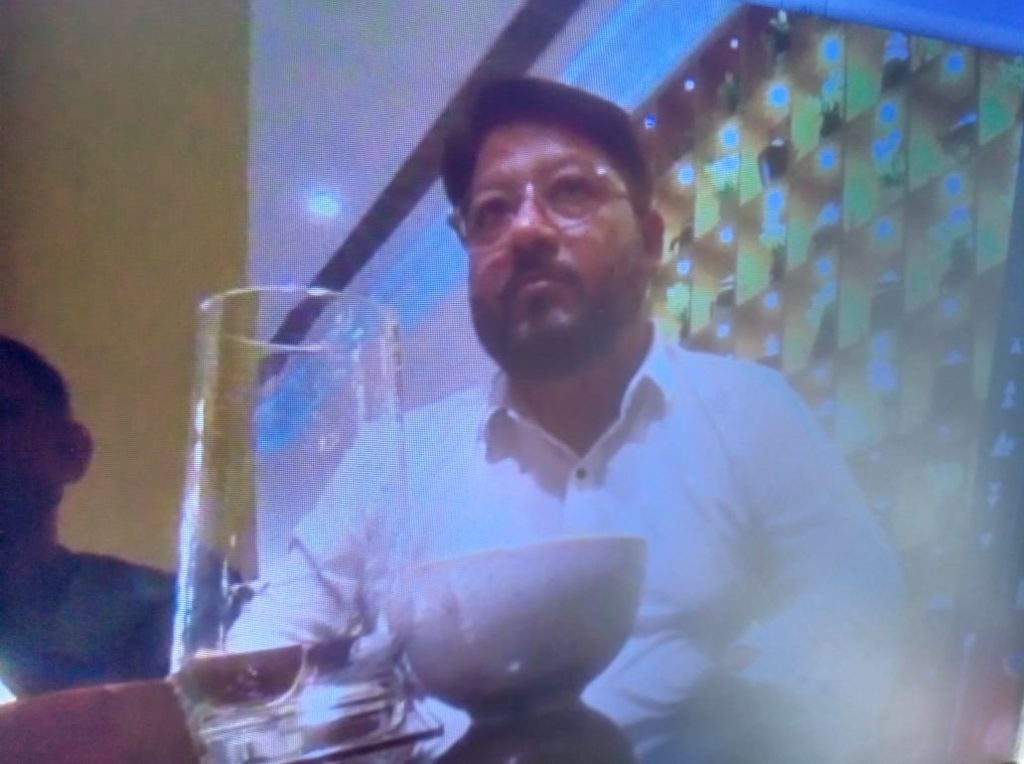
Now, we arranged a meeting with Usman – his third with us – and his business partner Rajbir at a five-star Delhi hotel. Usman and Rajbir work together as partners in preparing sports grounds. Rajbir assured that our candidate would secure ICC Level-1 coaching course admission through their connections. He also acknowledged having assisted numerous individuals with admissions in the past.
Reporter- Ismein aapki kya setting hai.. mein ye pooch raha hoon..?
Rajbir- Admission mein.
Reporter- Accha aap admission karwaoge ?
Rajbir- Haan pass to aap ho jaogey.. pehle level pe pass ho jaogey.. doosre mein aapko padhna padega..
Reporter- Accha coaching mein admission ke liye aapki setting hai ?
Rajbir- Haan.
Reporter- Admission aise nahi hota, kitne aatey hain admission mein..all over world kitne aatey honge ?
Rajbir- Asia se …50, Asia ke hi aatey hain..
Reporter- 50 mein se letey kitne hain ye..?
Rajbir- 50 seat hain.
Reporter- Aur aatey kitne hain ?
Rajbir- Aatey hain itne sare…(gesturing with hand)
Reporter- Admission kara rahe hain log?
Rajbir- Aisi baat nahi hai, kitne logon ki krayi hai..
Reporter- Accha!
[The conversation illustrates the impact of networking on competitive admissions and also highlights the potential for preferential treatment in the admissions.]
Cricket, often regarded as a gentleman’s game, has faced its share of challenges. There have been instances in the past when certain players failed to uphold its noble spirit, tarnishing its reputation with infamous match-fixing scandals. These scandals reverberated globally, casting shadows over the sport.
During these difficult times, the International Cricket Council (ICC) played a crucial role. Efficiently fulfilling its duty, the ICC ensured that players who tainted the image of this reputable sport faced justice. However, the latest scandal, exposed by Tehelka, takes an unexpected turn. This time, it’s not players but agents who are responsible for tarnishing cricket’s image. The question remains: Is the ICC aware of this situation?
As cricket enthusiasts, we hope that the guardians of the game continue to uphold its integrity and address any threats promptly. The battle against corruption and scandal is ongoing, and the ICC’s vigilance remains essential. It is imperative that the government addresses the concerns raised by our expose to safeguard the sport’s future.
There are always two sides to a story. The new laws are one such story: look at them as a reform and there is light at the end of the tunnel; pick holes and you would reach a dead end. by KUMKUM CHADHA
New laws and a new dawn or new laws and a dead end ?
This is the debate on the new criminal laws introduced by the Government.
The new laws kicked in on July 1, this year.
If the government version is anything to go by, these laws focus on a victim-centric approach to deliver justice.
However, the Government’s claim of these laws altering the criminal system in India and ushering in a modern justice system has received a mixed reaction.
Critics see it as yet another attempt of the BJP “selling a dream” to the people: one without substance. But, there is a section who prefers to “wait and watch” without jumping to any conclusion. And for some, it is a “progressive and reformative step”.
A cop, everyone would agree, is an entity very few would like to deal with. Ditto about visiting a police station.
Therefore, any ease in that direction is more than welcome.
The new laws do, to some extent, take care of this.
So, what do these changes entail? And do they make life easier for an average citizen?
As of now, there seem to be no clear answers. Yet, a beginning has been made and even the critics need to pause and ponder before writing off the Government’s attempts.
Even the greyest of clouds have a silver lining, however faint or dim.
As things appear, the clouds may be grey but the silver lining seems distinct and clear. And for that, the Government could expect a pat on its back.
Nitpicking apart, it cannot be denied that in the ecosystem of any country, archaic laws have no place. What the government has replaced, for good or bad, are laws that have been in existence since the colonial era.
To quote Union Home Minister Amit Shah, these laws are “made by Indians, for Indians and by an Indian Parliament and mark the end of colonial criminal justice laws” adding that “soul, body and spirit of the new laws is Indian”.
However, the nomenclature of the three laws is quite a mouthful: Bharatiya Nyaya Sanhita, Bharatiya Nagarik Suraksha Sanhita and Bharat Sakshya Adhiniyam.
The Government could have used a simpler language and easy to pronounce titles.
But the BJP government is focused on klisht hindi , chaste hindi, and would not, at any cost, dilute the language even if it seemed a tongue twister to the majority.
And this does not imply to the English-speaking elite which the Government has some kind of aversion to, but also to the ordinary people, including those in villages and small towns, who though well versed in the language, are not adept in high flown Hindi.
And what about the poor policemen who actually have to implement these laws? They decidedly and undoubtedly will have a rough time in correctly pronouncing uncommon words like Sanhita and Adhiniyam.
There are some who have slammed the Sanskritized Hindi and said that these laws will take us back to being a “land of snake charmers”.
But decoding the new laws, the Bharatiya Nyaya Sanhita replaces the 163-year-old Indian Penal Code; the Bharatiya Nagarik Suraksha Sanhita pushes out the 126-year-old Criminal Procedure Code and the Bharatiya Saksha Adhiniyam replaces the 151-year-old Indian Evidence Act.
Laws that were framed a century ago have no place in a fast-growing economy or a world that is rapidly changing. Therefore, there is enough merit in reworking laws that were caught in a time warp.
The refurbished laws provide for delivery of criminal case judgements within 45 days; charges to be framed within 60 days of the first hearing; state governments to ensure witness protection schemes; statements of rape victims to be recorded by a female police officer; child trade classified as a heinous crime; gangrape of a minor could attract death sentence or life imprisonment; punishment for abandoning women on a false promise of marriage; rights of victims to receive copies of the FIR and get regular updates on cases of crimes against women; introduction of zero FIRs and facility to report incidents via electronic communication; arrest details to be displayed at police stations; and gender to be redefined to include transgender people.
To quote Union Home Minister Amit Shah, the new laws focus on justice rather than punishment.
Credence is lent to this because of provisions like zero FIRs and obviating visits to a police station.
Those who have any first-hand experience would agree that visiting a police station is not only torturous but, in many situations, worse than the crime that has been committed. And in the event of a policeman who comes knocking at your door, the experience can be harrowing.
As for an FIR, registering one was very tedious and tough. More often than not, one was at the mercy of the police officer who rarely complied. On many occasions complaints either gathered dust or were consigned to the dustbin. In the absence of a deadline and accountability, the policemen played God and those seeking justice ran from pillar to post.
The new laws attempt to change this.
Much however depends on whether these changes would actually help victims or merely remain on paper.
If the Government were to succeed in implementing victim-relief, then it is a step in the right direction. Focus-shift apart, it also cuts the red tape and the never-ending processes.
On the face of it, it appears that the Police powers have been better channelized if not curtailed. But naysayers feel that the new acts have provisions that could be misused by the Police.
For instance, extending police custody from 15 to 90 days in serious offences could lead to the Police misusing its powers and committing excesses.
Under the new laws, terrorism has been redefined to include disturbing public order or destabilizing the country. This is prone to misuse because certain communities can be specifically targeted by a communal Government.
Mob lynching is a distinct offence and murder committed by a group of five or more on grounds of race, caste, place of birth, language etc could in many cases attract life imprisonment or even death penalty.
The new laws also call for a well spelt out speedy trial which if implemented in letter and spirit could come as a big relief in the face of the current situation of tareekh pe tareekh, or the never-ending postponements in courts.
Another reformative clause is the right of an arrested person to inform a chosen person immediately.
If implemented properly, this would eliminate an accused being at the mercy of the police officer who often denies all outside communication, thus preventing the accused from getting legal help immediately.
Of course there are misgivings about the why and how so to speak; critics are working overtime to find flaws; the Opposition is slamming the Government for what it sees as a hasty implementation.
There are several representations to seek postponement on grounds that there are discrepancies in many clauses; PILs have been filed; the legal fraternity has its own concerns on grounds that some provisions are unconstitutional. Naysayers have gone as far as stating that these laws are an attempt to “turn India into a Police state”. Others have rued the “lack of transparency”.
There are always two sides to a story depending on which page you want to turn. The new laws are one such story: look at them as a reform and there is light at the end of the tunnel; pick holes and you would reach a dead end.
Will the self-styled godman Bhole Baba, go unpunished and escape arrest? Also, why label this entire tragedy a ‘conspiracy’ when the SDM’s preliminary report on stampede did not indicate its possibility ? …by Humra Quraishi
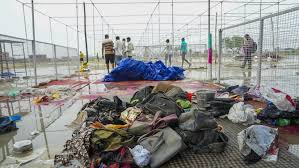
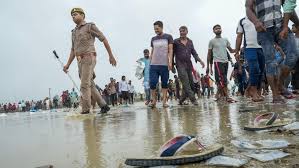
A total of 121 human beings declared dead during the stampede at Hathras!
On 2 July, deadly stampede happened after a ‘satsang’ (religious gathering), at a village in Uttar Pradesh’s Hathras, killing 121 people. Many more were injured and ruined and devastated!
Will the self-styled godman, Narayan Sakar Hari, also known as Bhole Baba, go unpunished and escape arrest? Bhole Baba seems to be tucked away in some safe refuge. It is strange that a certain political lobby and particular politicians appear to be adopting an obvious strategy to protect this man, who has had a rather tainted past record. News reports state that he was forced into compulsory retirement from the police department, where he served as a constable, after facing serious charges
Also, why label this entire tragedy a “conspiracy” when the SDM’s (Sub divisional magistrate) preliminary report on the stampede is this: “A crowd of more than 2 lakh people was present in the pandal. Around 1.40 pm, when Bhole Baba came out of the pandal, his followers started running towards him for ‘darshan’ and to collect the soil on which he had walked…Baba’s personal security and ‘sevadars’ started pushing and shoving the crowd due to which some people fell down. The crowd ran towards the open field where most of the people slipped and fell due to the wet slope.” Incidentally, this SDM gave permission for the ‘satsang’, and was also present at the venue when the incident occurred.
World Refugee Day
Every year on the World Refugee Day (20 June, 2024), I sit thinking of the sufis who had come from the Central Asian Republics and also from Iraq and Iran, seeking refuge in the Kashmir valley. They reached the Valley and did not move further. They settled down, and the local population accepted them.
Their dargahs and ziarats, dotted in and around Srinagar city, reminds one of that period in history when these sufis had travelled to the Kashmir valley. Many reached there as refugees, fleeing their home countries in search of peace. And in all probability must have found tranquility in such abundance in the Kashmir valley that none of them went back to their homelands.
Look how times have changed. Today, refugees in the world are finding the going to be tough…tougher it gets for them. Obviously the refugees of today cannot be expected to turn sufis or demonstrate mystical powers but surely they be accepted as they are. And don’t overlook the fact that seeking refuge is a state of mind. So many times don’t we just close our eyes and mentally transport ourselves, as though finding ways and means of escape, from one particular situation to the next, which could be a little further away from painful realities and insecurities of the day.
The tragic end of Guru Dutt
Guru Dutt’s birthday passed on July 9th. … And upcoming, in August, are the birthdays of some very extraordinary persons: poet Gulzar, writer Khushwant Singh, and veteran actress Vyjayanthimala Bali.
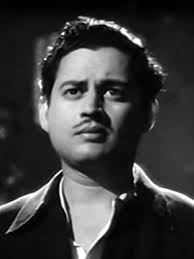
On the past several birthdays of Guru Dutt – 9 July – I do make it a point to read or rather re-read journalist Sathya Saran’s book – ‘Ten Years with Guru Dutt : Abrar Alvi’s Journey’ (Penguin). This book, launched several summers back, captures several details about Guru Dutt, the genius filmmaker and actor …In fact, let me add, Guru Dutt was a great looking genius! His emotionally charged eyes relayed much. He was one of those men equipped with a set of potent eyes!
Though I had never met him, I have been his ardent admirer. Each time I saw him on the big screen, I felt drawn to his emotion-laden eyes! Of course, not to brush aside all that melancholy hovering around his personality …till, of course, he took his life at the age of 39.
With this backgrounder, I never miss reading anything or everything related to him. I have read every possible input on him. I had also viewed Nasreen Munni Kabir’s documentary film on him – In Search of Guru Dutt.
I was keen to get answers to that tragic suspense – why did Guru Dutt kill himself? Those relevant ‘whys’ to that tragic end? Why was he going through that phase of severe depression? Why couldn’t his immediate family or even that supposed actress-lover be there for him? Why was he left all alone that night – that particular night when he was in acute depression, so much so that he killed himself during the course of that night?
In that documentary when Waheeda Rahman came on the screen, one was somewhat sure that she would utter something relevant. But I overlooked the fact that she was a seasoned actress. So, she spoke in that absolutely well-guarded way. She spoke only from the film’s point of view. No, she didn’t touch on the personal, but spoke only from the angle that he was a director of this or that film and those connected films – related aspects …She spoke in a synthetic way and left one hugely disappointed.
But, in contrast, Guru Dutt’s sister, Lalitha Lajmi, spoke out in that forthright way, in that documentary film…As the camera focused on her, her eyes seemed focusing on the floor and she’d said that her brother, Guru Dutt seemed to be possessed with one of those personalities that could be best described as “disturbed …on earlier occasions too he tried to commit suicide…once he was in coma for three days.”
And as the camera focused on Guru Dutt’s mother, sitting on what seemed like a wooden bed or takht, she spoke in a matter-of -fact tone, describing Guru Dutt’s childhood personality traits in these words: “He was very stubborn /ziddi …and did whatever obsessed him. And at times he would ask such questions that I thought I would go crazy answering them.”
It gets significant to point out that all the commentators came to one single conclusion – that Guru Dutt was a little too sensitive, a little too different, and little too passionate-cum- humane for the Bollywood industry. One of the commentators even said that if Guru Dutt would ever lie, his ears would ‘blush!’! I suppose, turn red! So obviously how could such an emotionally sensitive man survive in the harsh scenario of the filmi world!
Shatrughan Sinha carries a personality !
Shatrughan Sinha has been in the news, this time for apolitical reasons. I must say he and his spouse looked so very graceful at their daughter Sonakshi’s wedding reception… This brings me to write that Shatrughan Sinha is probably one of those actors-turned-politicians who is held in high regard in Bollywood. Years back, each time I interviewed Sunil Dutt, he would make it a point to tell me that only and only four Bollywood persons stood by him and his family when his son, Sanjay Dutt was arrested, and TADA cases slapped on him. “Only Dilip Kumar, Shatrughan Sinha, Rajendra Kumar and Pran saab were there, with me and my family… also some members from the South India Film Chambers. Nobody else.”
And years later, when I had interviewed Saira Banu, she again spoke very, very highly of Shatrughan Sinha… telling me that whenever a crisis hits he is there …She’d also detailed that he along with Dilip Kumar saab were there with Sunil Dutt, when Sanjay was arrested and the family was going through tough times.
It gets relevant to mention details of my meeting Shatrughan Sinha for an interview …I’d met and interviewed Shatrughan Sinha in1992, in New Delhi, when he was contesting as BJP candidate from the New Delhi constituency. He entered politics, joining the BJP in 1980 and made his electoral debut in 1992, contesting against fellow actor Rajesh Khanna in the by-election to New Delhi constituency. (He lost to Rajesh Khanna, the Congress candidate, by 25,000 votes.)
Taking you back to 1992. It was rather tough finding Sinha’s whereabouts but once that got over, the rest wasn’t too difficult …I recall it had taken me five days to find out where he was putting up in New Delhi and together with that his contact telephone numbers. And finally his brother, Dr Lakhan Sinha, gave the time for the interview at their apartment at the erstwhile controversial building the ‘White House ‘ ( then situated close to the Mandi House complex.)
And as I arrived there at the appointed time, I could meet Shatrughan Sinha in the lift itself …the lift taking us upwards to the eleventh floor where his apartment was situated. And before I could start off with my queries, I could see huge yellow-coloured marks on his kurta. He quickly explained the whys to it: “Oh no! This saffron scarf has left these marks … but this isn’t some BJP scarf but a “saropa” given to me at the gurdwara I just visited …just returning from there.”
And all through the hour-long interview with him, I kept wondering why on earth he’d decided to join the BJP, when he seemed some sort of a misfit in it! To my query why he joined the BJP in the context of its communal agenda, he exclaimed, “What communal! See, I’m not communal. See my track record… I’m friendly with the prime minister of Pakistan, Nawaz Sharif. I have been friendly with the late Pakistani prime minister, General Zia, so much so that for any of their family functions I am invited by them. Then, I’m friendly with some families in Saudi Arabia…These are my personal friendships …I don’t believe who is a Hindu or who is a Musalmaan or a Christian…just believe in Insaniyat.”
If he truly believes in this Insaniyat theory then why didn’t he join any other political party? Why did he opt to join the BJP? With his ‘broad-minded’ views and a rather liberal approach, was he facing problems in the BJP? “No, no …Why! They know me. …I have so many friends in the Press and all come to me and they tell me they like me but not my BJP party! Bhai, did any God have a one hundred percent following!”
On whom he considers his leader, pat came the spontaneous reply: “My wife! Actually all husbands are henpecked. Some say so, some don’t, but all are. But seriously speaking, without Poonam I am handicapped!” With that he detailed that she is the one who decides on his clothes and what he ought to wear. “Even this kurta, Poonam picked up from a boutique! First time, I am wearing it today …generally I wear plain ones …I don’t believe in colours or motifs or embroidered or showy stuff …no showy stuff or exhibitionism.”
As the interview went on and progressed, I asked him about his views on the Babri Masjid. And he said, “With due respect, if a masjid can be relocated in Saudi Arabia or in Pakistan, so why not here. Of course, to be done so with the consent of our Muslim brothers and for the sake of communal harmony…Big brother should give in …”
In this case, big brother here is the Majority community. Comment.
“ Yes, yes …But if that temple means”Mecca ” or”Medina ” to the Hindus so can’t the Muslims give in…There are 26 other mosques in and around Faizabad and nobody is asking for them; only this one, for it’s a matter of faith.”
But it’s said that the BJP has plans of ‘converting’ 30 other mosques into temples. Comment.
“I wouldn’t let that happen. Only this one and no further …I promise …I say this with folded hands.”
Even if your promise proves to be too costly for your political career or ambitions? “ Yes, at any cost …I will stand by my promise…always do.”
A Delhi court has sentenced activist Medha Patkar to five months of imprisonment in a 23-year-old defamation case filed by V.K. Saxena, now the Delhi LG. It is feared that the order will send a warning signal to people leading movements against state excesses. A report by Jag Mohan Thaken
The month of July started on a somber note for renowned social activist Medha Patkar when a Delhi court on July 1 sentenced her to five months of imprisonment and a fine of Rs 10 lakh in a 23-year-old criminal defamation case filed by Vinai Kumar Saxena, now the Delhi Lieutenant Governor (LG).
Giving relief for filing an appeal against the court order, while convicting Patkar for the offence of criminal defamation under Section 500 of the Indian Penal Code, 1860, Metropolitan Magistrate (MM) Raghav Sharma of the Saket Court Delhi, said that the conviction order will remain suspended for 30 days.
Medha Patkar is an Indian activist working on political and social issues for tribals, Dalits, farmers, laborers and women facing injustice in India. She is a founding member of ‘Narmada Bachao Andolan’ in Madhya Pradesh, Maharashtra and Gujarat. She was the national coordinator and then convenor of National Alliance of People’s Movements (NAPM) for many years and now continues to be an advisor to NAPM. Under the banner of NAPM, she has participated and supported various mass struggles across India against inequity, non-sustainability, displacement, and injustice in the name of development. She challenges casteism, communalism, and all forms of discrimination in her work.
Commenting over the court’s decision, an umbrella of farmers unions of India, Samyukta Kisan Morcha (SKM), in a statement issued on July 3, 2024 by its Media Cell, said, “The SKM is of the opinion that the verdict given by the Saket Court in Delhi against ‘Narmada Bachao Andolan’ (NBA) leader and renowned social activist Medha Patkar in a defamation case filed by the Lt Governor of Delhi, V K Saxena is highly unfortunate. It sends a wrong message for all the people’s movements for justice and livelihood protection who are fighting the state excesses.”
Narmada Bachao Andolan
Narmada Bachao Andolan is a social movement comprising Adivasis, farmers, environmentalists and human rights activists against a number of large dams being built across the Narmada river, which flows through the states of Gujarat, Madhya Pradesh and Maharashtra. Sardar Sarovar Dam in Gujarat is one of the biggest dams on the river and was one of the first focal points of the movement. Their mode of campaign includes hunger strikes and garnering support from film and art personalities (notably Bollywood actor Aamir Khan). Leading spokespersons of Narmada Bachao Andolan, Medha Patkar and Baba Amte, received the Right Livelihood Award in 1991.
Divulging about the NBA, SKM states, “The Narmada Dam Project is deficient in effective clauses for compensation, rehabilitation and resettlement amenities for tens of thousands of affected families. Medha Patkar and the ‘Narmada Bachao Andolan’ are continuing the struggle for justice to the project-affected people braving repression by successive State and Union Governments and consistent humiliation by a pro-corporate media and bureaucracy.”
Sharing the SKM release with this writer, SKM leader and National Vice-President of All India Kisan Sabha (AIKS), Dr. Inderjeet Singh quotes, “As an official post holder of J K Cement and Adani group since 1990, V K Saxena had opposed the movement for rehabilitation of Adivasis, Dalits, workers and peasants of the 244 villages affected by the Narmada Dam. During the long and tortuous struggle for rehabilitation of victim families of the Narmada project, VK Saxena had on several occasions attacked the NBA and Medha Patkar resulting in three complaint cases filed by her at different times. V K Saxena had charged Medha Patkar of receiving donation money from Lalji Bhai based on a fabricated cheque and receipt, printed as a story in the Indian Express. The defamation case against Saxena remains pending since 2000.”
The SKM media statement adds, “In 2000, Saxena had published an advertisement against Medha Patkar and ‘Narmada Bachao Andolan’ and publicly called for Medha Patkar ko “Phasi Do” and “Holika mein Dahan Karo” and motivated articles were published against her at his behest. He (Saxena) had also filed a PIL against her in the Supreme Court which was dismissed with a comment that it is a “Personal Interest Litigation” and was fined Rs 5000. He was also directly involved in a physical attack on her at a meeting at Sabarmati Ashram, which is registered as a case since 2002, but remains pending till today.”
Reacting to the court’s verdict, the activist Patkar said that her lawyers will challenge the order. “Truth cannot be defeated. Whatever work we are doing is for the poor, tribals and Dalits… We do not want destruction and displacement in the name of development,” she said. “We do not have any desire to defame anyone. My lawyers will take further legal recourse… We will challenge it (court order),” she said outside the courtroom.
So far, it was believed that Haryana assembly elections will essentially be a battle between Congress and BJP, and smaller parties like INLD and JJP will not cut much ice. But now with INLD forging an alliance with BSP, the state is set to see a triangular contest, reports Pawan Kumar Bansal
Both the Indian National Lok Dal (INLD) and the BSP were redundant in Haryana politics until now. But after the just forged tie-up between the two parties, the alliance has become a third force in the state. While the alliance may not win a significant number of seats, it will definitely cut into the votes of Congress, which is hopeful of forming the next government by riding the anti-incumbency wave against the BJP government. The newly formed alliance has jolted the Congress.
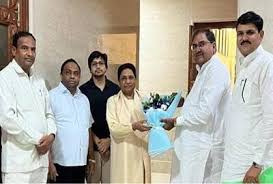
Bhupinder Singh Hooda, Leader of the Opposition and former Haryana CM, however has asserted that it will still be a direct contest between Congress and BJP, and claimed that INLD-BSP alliance has been formed not for winning the elections but to cut anti-BJP votes. The alliance is eyeing anti-BJP votes from Jat and Dalit communities. It was believed that Jats being anti-BJP and Dalits being pro-Congress, will vote for the Congress. But Abhay Chautala of INLD, a Jat leader, and BSP boss Mayawati can together sway the Jat and Dalit votes in favour of the alliance candidates making it a triangular contest.
Although the alliance in the past has not given even average results, how its candidates will perform this time will be keenly watched. Political commentator and analyst Devinder Singh Surjewala however said that people have already made up their mind to defeat BJP candidates due to anti people policies of the BJP government. As the natural choice for the people is Congress, the INLD- BSP alliance will have very little impact on the voting pattern, according to Surjewala.
Abhay Chautala said that the BSP will contest 30 seats out of ninety and his party will contest remaining fifty seven seats. He said that in case the alliance wins the election and forms the government, he will be the Chief Minister.
Meanwhile, the Aam Aadmi Party (AAP), which was part of the INDIA alliance in the Lok Sabha polls and its candidate Sushil Gupta contested the Kurukshetra seat, has now decided to contest all 90 seats. The party’s senior leader, Anurag Dhanda, claims that people will elect them, as they have seen how the governments of both the BJP and Congress in the past had failed to deliver. The Jannayak Janta Party (JJP) of Dushyant Chautala will also contest all 90 seats.
The BJP is pleased with the development as they believe the INLD- BSP alliance will divide the anti-BJP votes. For example, at the Kurukshetra Lok Sabha seat, where BJP candidate and industrialist Naveen Jindal won by a narrow margin, the result was primarily due to the fact that Abhay Chautala had cornered anti-BJP votes that would have otherwise gone to the INDIA alliance candidate Sushil Kumar Gupta
Meanwhile, instead of presenting any vision or addressing major problems such as poor health services, unemployment, and the poor law and order situation, almost all the parties are vying with each other in promising freebies to attract voters. The INLD-BSP alliance has taken the lead by promising Rs 7,500 per month as old age pension and employment for all unemployed youths, as well as free potable drinking water and electricity bill waiver up to Rs 500 per month. To lure the media, Congress has promised to increase the pension of retired journalists.
Union Home Minister Amit Shah has taken charge of the Haryana elections. The BJP has already announced a series of concessions including giving more power to village sarpanches by providing Rs 20 lakh for development works besides increasing their pay and perks.
Besides, the BJP, which has declared to contest all the ninety seats, above all is banking upon polarization of non-Jat votes in its favour. To strengthen this strategy, Rao Inderjit, Krishan Pal Gujjar and Manohar Lal, belonging to Ahir, Gujjar and Punjabi castes were inducted in the Modi government. Nayab Singh Saini of Saini community was made the chief minister of the state. And now with the appointment of a Brahmin Mohan Lal as state BJP chief the circle of polarization is complete. Besides, the BJP cadre draws confidence from the fact that the party is ruling at the centre.
As the Assembly elections, which are due in the month of October 2024, approach, the BJP may see the anti-incumbency factor becoming more prominent. As of now, the party is definitely worried by the anti-BJP winds blowing in the state.