Chandigarh: The cash-strapped AAP government in Punjab on Thursday increased the petrol price by 61 paise and diesel by 92 paise per litre and also scrapped subsidised electricity above loads of 7 KW.
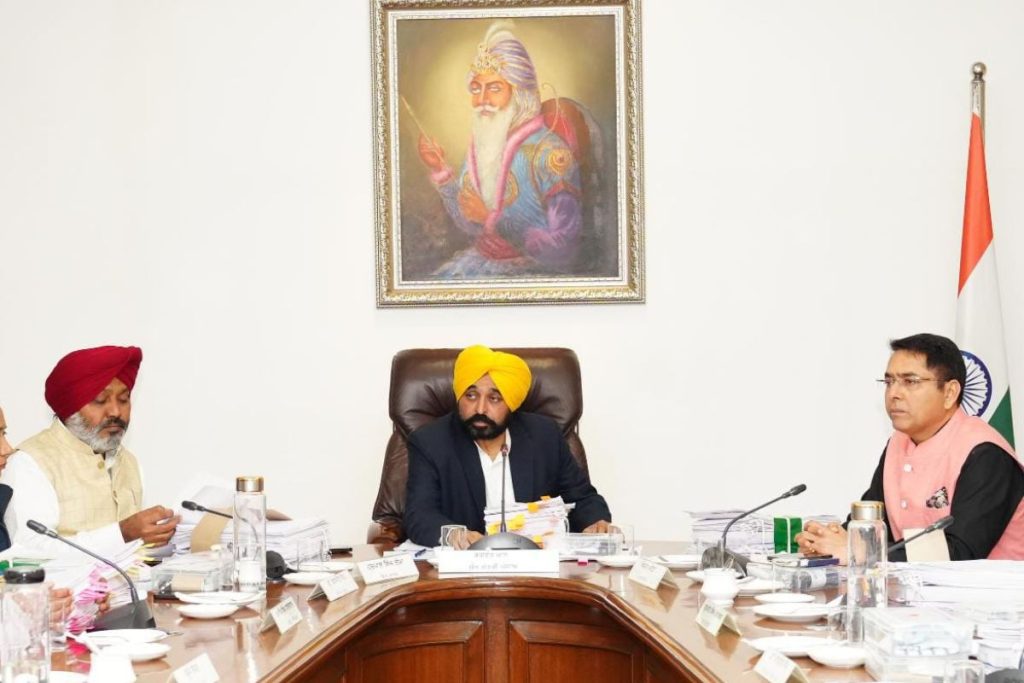
A decision was taken at a Cabinet meeting chaired by Chief Minister Bhagwant Mann here.
In another major decision, the government revoked the scheme of the previous Congress government to give subsidised electricity to those having electricity loads up to 7 KW.
Justifying the decisions, Finance Minister Harpal Cheema told the media that this would help mobilise Rs 1, 500-1700 crore.
The hike in fuel prices would help the state garner Rs 392 crore annually. However, the free electricity of 300 units per month to 90 per cent of domestic consumers would continue. This scheme has been in place since 2023. Also, the state provides free electricity to the agriculture sector.
Official sources said these decisions were efforts of the state government to generate additional revenue. But critics say the rise in the price of fuels will have a rippling effect on the cost of essential commodities.
Already, the price of certain essential items has been high and the surge in fuel prices is likely to aggravate the situation.
Saying the government is aiming at improving governance, AAP Punjab wrote on X, “CM @BhagwantMann chaired a crucial meeting with Cabinet Ministers today, addressing a range of key issues concerning Punjab’s progress. AAP Govt is aimed at improving governance and ensuring steadfast development in Punjab.”
However, voices of concern have started emanating. “The government is killing the petroleum trade as this is the third hike in the past two years, ” Monty Sehgal, a spokesperson for the Petrol Pump Dealers Association Punjab, told to media.
He said the government should reduce VAT on green fuels like CNG to make it cheaper than diesel and enhance its usage in Punjab.
The price before the Cabinet decision in Jalandhar was petrol Rs 96.17 and diesel Rs 86.32.
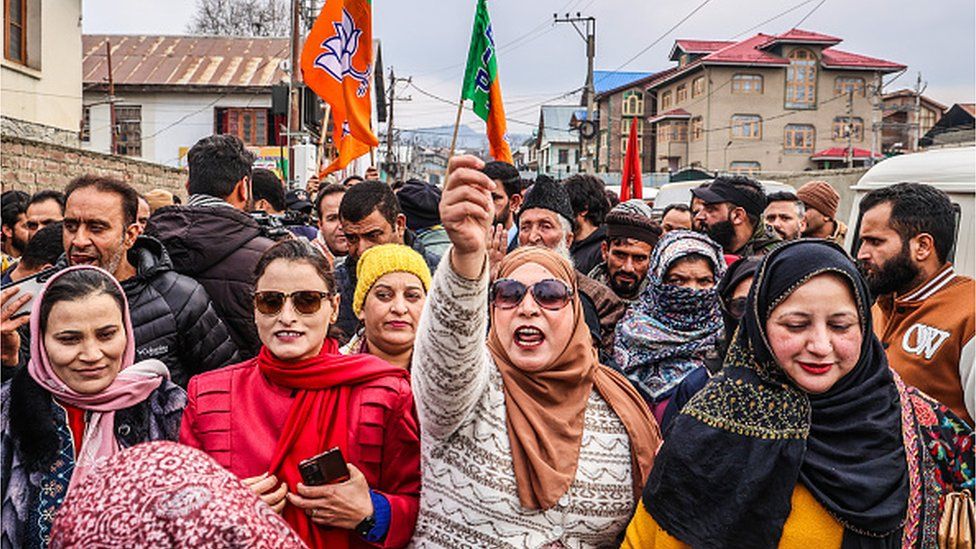
The BJP has announced that it will not field candidates in eight of the 24 seats up for election in the first phase of Jammu and Kashmir’s Assembly polls. The decision affects seats in South Kashmir, including Tral, Pulwama, Zainapora, DH Pora, Kulgam, Devsar, Dooru, and Pahalgam.
For the upcoming elections, the BJP has nominated candidates for 16 of the 24 seats in the first phase, with polling scheduled for September 18. The party’s revised candidate list follows the withdrawal of an earlier list of 44 candidates on August 26.
This election, the first since the abrogation of Article 370 in 2019, is seen as a significant test for the BJP as it faces competition from a rejuvenated Congress, which has allied with the National Conference. The results will be announced on October 8.
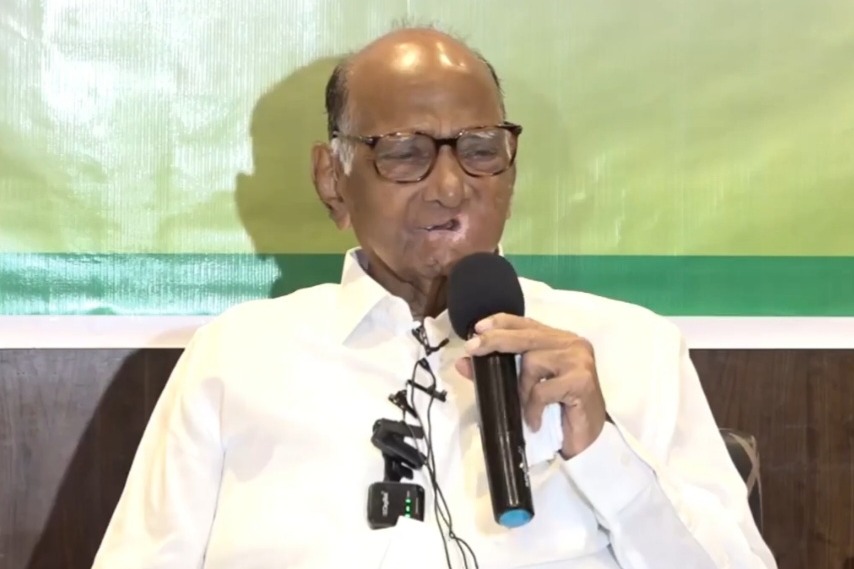
Kolhapur: Amid outcry over the incidents of crime against women in Maharashtra, NCP (SP) President Sharad Pawar on Wednesday made a strong case for the legislation to be passed by the state assembly on the lines of Aparajita Women and Child (West Bengal Criminal Laws Amendment) Bill, 2024 passed in the West Bengal Assembly on Tuesday.
“In the wake of the upcoming election, the Maharashtra Legislative Assembly will not meet in the near future. It will be our endeavour to include in the Maha Vikas Aghadi’s manifesto to propose legislation on the lines of the Aparajita Women and Child (West Bengal Criminal Laws Amendment) Bill, 2024 which calls for a time-bound action against those involved in rapes, ” he said extending his party’s support to the West Bengal’s legislation.
Pawar’s statement came a day after the veteran NCP (SP) leader and former home minister Anil Deshmukh on Tuesday held a dharna near Mantralaya in south Mumbai demanding the implementation of the Shakti Criminal Laws (Maharashtra Amendment) Bill, 2020 passed by the legislature during the Maha Vikas Aghadi government and now pending for the Presidential assent.
Pawar expressed serious concern over the daily reporting of cases of crime and violence against women in Maharashtra. He took a dig at the MahaYuti leaders blaming the opposition for doing politics over the sexual abuse cases including the Badlapur case in which two four-year-old girls from Badlapur’s reported school were sexually assaulted. He added that in Badlapur the people from that area had spontaneously staged an agitation and there was no involvement of opposition.
“If you see the newspapers, every day two to three cases of crime and violence against women are reported which is not a good sign in a state like Maharashtra. The state government especially the home department is not doing enough to instil confidence among the people by taking stern action. They are not discharging their responsibility fully which was not happening earlier in the state, ” he noted. He also condemned the police action against the agitators saying that there was nothing wrong in expressing their anger in the democracy.
Pawar also lashed out at the MahaYuti over the collapse of the Chhatrapati Shivaji Maharaj’s statue at Rajkot Fort in Malvan in Sindhudurg district saying that it was due to the corruption and the manner in which the work was carried out in haste by roping in an inexperienced sculptor. He also took a swipe at the MahaYuti leaders for their statements that the fall took place due to heavy winds.
Pawar strongly opposed the 802 km Nagpur-Goa greenfield project titled Shaktipeeth Highway which has been opposed by ruling and opposition parties citing its adverse impact on agriculture. In the wake of strong protests, Chief Minister Eknath Shinde recently announced that the proposed highway will not be forced on the people assuring the realignment of the route.
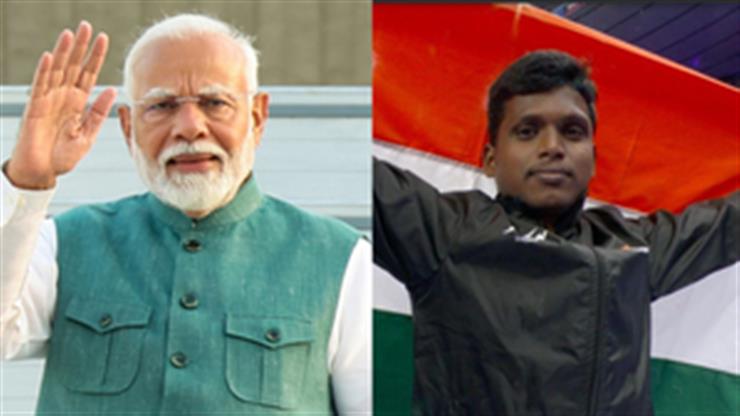
New Delhi: Prime Minister Narendra Modi on Wednesday congratulated India para-athletes Mariyappan Thangavelu, Sharad Kumar, Sundar Singh Gurjar and Ajeet Singh for their medal-winning performances at the Paris Paralympics.
Sharad clinched the silver medal in men’s high jump T63 with the best jump of 1.88m; setting the new Paralympic Record in T42 category; Sharad also upgraded his bronze medal from Tokyo in the event.
Thangavelu, meanwhile, bagged bronze medal with the best jump of 1.85m, making India’s second double podium finish in athletics at Paris Games. He also achieved the historic feat of becoming the first Indian para-athlete to win medals at three consecutive Games.
Thangavelu won the gold medal at Rio 2016 with a jump of 1.89m and silver at Tokyo 2020 with a 1.86m attempt.
“Sharad Kumar wins silver in Men’s High Jump T63 at #Paralympics2024! He is admired for his consistency and excellence. Congrats to him. He inspires the entire nation, ” PM Modi posted on X.
“Congratulations to Mariyappan Thangavelu on winning the bronze medal in the Men’s High Jump T63 event. It is commendable that he has won medals in three consecutive editions of the Paralympics. His skills, consistency, and determination are exceptional, ” the Prime Minister said.
Earlier in the day, Ajeet and Sundar won the silver and bronze medals, respectively, in the men’s javelin throw F46 class.
“A phenomenal performance by Sundar Singh Gurjar, bringing home the bronze in the Men’s Javelin Throw F46 at the #Paralympics2024! His dedication and drive are outstanding. Congratulations on this achievement!” PM said in another post.
“A phenomenal achievement by Ajeet Singh, as he wins the silver medal in the Men’s Javelin Throw F46 at the #Paralympics2024! His commitment to sports and perseverance have made India proud, ” he added.
India has now won an unprecedented 20 medals, more than its previous best of 19 medals from Tokyo 2020. India also surpassed the 50-medal mark at the Paralympics; as the current tally stands at 51 medals till now.
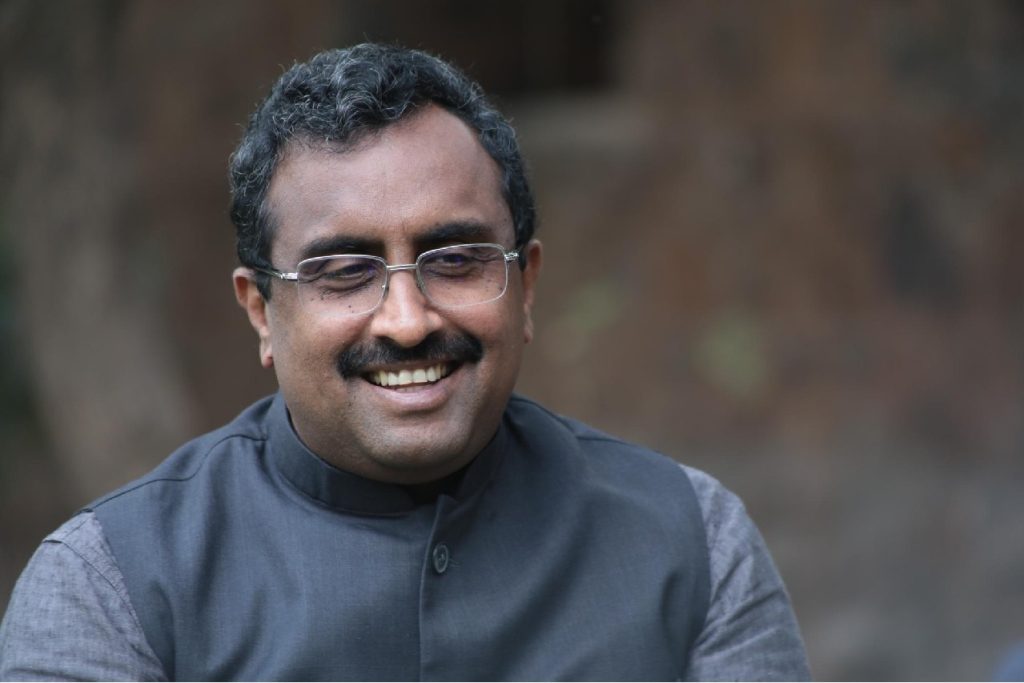
Ram Madhav, a senior BJP leader, has become a focal point in the ongoing Jammu and Kashmir Assembly elections, with his role and mission drawing attention by political parties.
Omar Abdullah, vice-president of the National Conference, has suggested that Madhav’s presence in Jammu and Kashmir is indicative of the BJP’s strategy to potentially reforge an alliance with the Peoples Democratic Party (PDP) led by Mehbooba Mufti. Abdullah referenced former governor Satya Pal Malik’s recent statements, which implied that the BJP might be preparing for a significant loss and thus seeking to collaborate with its former ally, the PDP.
“Ram Madhav has been sent to seek the support of Mehbooba,” Malik said in Delhi.
Madhav, known for his role in the 2015 alliance between the BJP and PDP, saw his influence wane during Prime Minister Narendra Modi’s second term.
“Ram Madhav was responsible for bringing the PDP and the BJP on one platform. He brokered the alliance. Perhaps he has been brought back for this purpose,” Omar Abdullah said.
In response, PDP leader Mehbooba Mufti criticized Abdullah’s statements, highlighting past instances where the National Conference had collaborated with the BJP and questioning the timing and intentions behind such accusations.
“It is they (NC) who brought Pota (Prevention of Terrorist Act) to this place and banned shahtoosh (shawls). They advocated an attack on Pakistan. When we joined hands with the BJP, we did it on certain conditions. We withdrew FIRs on 12,000 people. We brought a delegation from Delhi to talk to the Hurriyat,” she said.
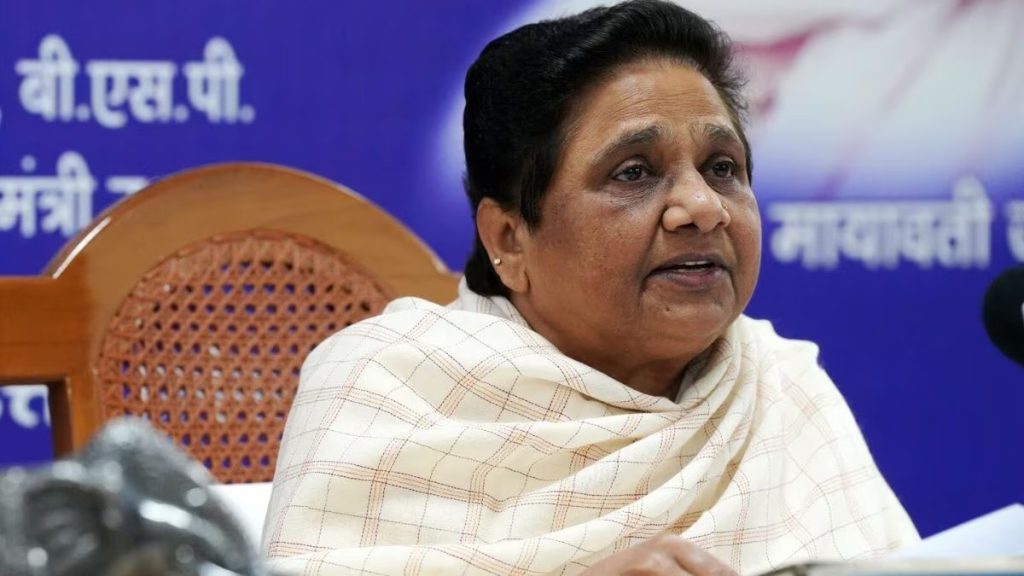
New Delhi: Bahujan Samaj Party (BSP) supremo Mayawati on Tuesday criticised the practice of “Bulldozer justice, ” urging the government to uphold the “Rule of Law by Law” rather than punishing the families of criminals.
Taking to her X handle, the former Uttar Pradesh Chief Minister stated, “Action against criminal elements in the country should be taken as per the law, and their family and close ones should not be punished for their crimes.”
She emphasised that her party’s government had previously demonstrated this principle by establishing the “Rule of Law by Law.”
Mayawati also addressed the recent trend of using bulldozers to demolish properties, urging that such actions should comply with decisions made by the Supreme Court.
She remarked, “It would be better if there is no need to use (bulldozers) because criminal elements can be dealt with under strict laws.”
“Instead of using bulldozers on the families and close ones of criminal elements, strict action should be taken against the concerned officials who, in collusion with such elements, do not give proper justice to the victims. All governments must pay attention to this, ” the BSP chief further argued.
The opposition parties have consistently criticised the BJP government for what they term “Bulldozer justice, ” accusing the ruling party of “punishing the families of accused individuals” before any legal proceedings have taken place.
Mayawati’s comments come in the wake of the Supreme Court’s deliberation on establishing pan-India guidelines against the demolition of properties belonging to individuals accused of criminal offences.
The apex court on Monday emphasised that even unauthorised constructions must be demolished “in accordance with law” and that state authorities cannot resort to the demolition of the property of the accused as a punishment. The court further clarified that this principle applies not only to the properties of accused individuals but also to those of convicted persons, stressing that its intention is not to protect unauthorised structures.
There are helpless victims, with parents too fragile or weak to protect their children from the mafia. Needless to say, in this dismal scenario, politicians are too busy distracting the masses with provocative tactics by Humra Quraishi
Rapes and sexual assaults are continuing… one after another. In the last one fortnight, news reports of rape and sexual assault cases have come in from Uttarakhand, Bihar, Uttar Pradesh and Maharashtra. Mind you, these are the reported cases. What about the hundreds of rape and sexual assault cases which go unreported!
There’s perversion and utter anarchy! Today, no woman or child or teenager feels safe and secure. There’s fear in every sense of the term. Let’s not overlook a connected fact: hundreds and thousands of women and girls go missing in the country. A total of 10,61,648 women went missing from 2019 to 2021 across the country. Simultaneously, 2,51,430 girls disappeared during the same period.
Last summer, 26 July, 2023, Minister of State for Home Affairs, Ajay Kumar Mishra told the Rajya Sabha: 10,61,648 women above 18 years and 2,51,430 girls below 18 years went missing between 2019 and 2021 across the country. “In 2019, the number of girls and women who went missing was 82,084 and 3,42,168 respectively, while in 2020, 79, 233 girls and 3,44,422 women went missing.”
According to the National Crime Records Bureau (NCRB): 82,619 girls went missing in 2019 and 49,436 were recovered. In the same year, 3,29,504 women went missing, and 1,68,793 were recovered. In 2020, 79,233 girls and 3,44,422 women went missing. Of these, 2,24,043 women were recovered while the number of girls recovered in 2019 was not given. “In 2021, 90,113 girls went missing and 58,980 were recovered. 3,75,058 women went missing and 2,02,298 were recovered.”
Safety and survival of a woman or even of a child is tough …tougher it gets. Let’s not forget the Kuki women raped and murdered in Manipur and also the Hindutva campaigns in favour of the rapists and murderers of the Kathua-based 8-year-old Asifa Bano, and also the cover-ups to the Hathras rape victim who was cremated in the dead of the night by the State machinery!
Helpless victims, with parents just too fragile or too weak to protect their offspring from the mafia. Needless to add that in this dismal scenario, the politicians are just too busy distracting the masses, with provocative tactics along the Hindu-Muslim strain!
Even if arrests are made of killers-murderers-rapists, don’t overlook the fact that today, even convicted rapists are given paroles…out on furloughs. All those Who’s Who rapists can be out for long or short breaks. Just to mention a couple of names – Asaram Bapu is out of jail and is on a seven-day parole. Dera Sacha Sauda’s Gurmeet Ram Rahim has been granted twenty-one day furlough… Not to overlook the fact that last year, those eleven men, convicted in the rape of Bilkis Bano, were prematurely freed, till of course, on Supreme Court’s order they were re-imprisoned.
And if one were to question along the strain that why this acceleration in crimes against women, it’s best to quote Brinda Karat from her latest book– Hindutva and violence against Women (Speaking Tiger Books) – “In India, we have, through the experience of our own history and through the freedom struggle, understood women’s status, including the multiple forms and methods of violence against women, within the context of the political, socio-economic, cultural realities, including the caste system. Looking at the issue of violence against women in this broader framework shows us the changing dimensions of violence against women in India today. By change, I don’t necessarily mean something ‘new’ – the intensification of existing, negative and sometimes toxic trends, which due to a host of factors become the dominant trend, also adds up to change. These changes are occurring as a result of the dominance gained by the right-wing communal and sectarian forces in India’s political and social life…”
Today, we can’t dare call ourselves developed, when just last week those disturbing shots stood out, of a man in Rajasthan tying his wife to his bike and dragging her all around, in full public glare. Why? Just because she dared to insist on visiting her sister’s home! This is the level of barbaric brutality we have reached!
Have we bothered to ponder on the dismal aspect that if this level of abuse and assaults are taking place in the public domain, then what must be happening in the so-called ‘heavily guarded places’ where inmates survive within those guarded gates and high walls all around. What could be taking place there!
Not to overlook the blatant violence unleashed on women and children during rioting and pogroms and forced shifts-cum-displacements. Easy targets, they are forced to keep shut about any of the sexual assaults. Otherwise, the political goons coupled with the mafia could tear them to pieces. Several victims of sexual violence during rioting had told me they had no choice but to keep quiet for the sake of their survival and that of their families and clans.
Today, safety and security of women seems to be at the very lowest rung, with the political mafia calling the shots. Not really surprising; with all round degeneration, the vulnerable are not just targeted but ruined for times to come. Look how helpless were the likes of national and international level champs – Sakshi Malik and Vinesh Phogat and several others. Their careers ruined, because the tainted men had to be protected under the various political guises!
And with the latest trend of bulldozing homes, women and their entire families are forced to sit or squat or stand outside their demolished dwellings. One is provoked to question: where are all those who harp on the safety of girls and women? Don’t they realize that with homes and abodes demolished, entire families are forced to survive without a roof over their heads. Vulnerable they are! Yes, their vulnerability at the peak, when they are forced to sit by the road side.
And just where are the day and night shelters where the human forms can survive? Absolutely hitting the dismal situation for those whose homes are bulldozed or where bulldozers are parked right in front of their lanes and by-lanes.
Homeless-jobless-penniless, is perhaps the worst combination to survival in these harsh times but thousands are facing exactly this reality. Compounded by the fact that the all too powerful land and the political mafia keeps an eye on them. As though the hawks are just waiting to pounce on the property of any of the hapless vulnerable!
In this atmosphere of political pollution, havoc continues. Instead of addressing the core issue with all its dimensions, politics takes over. It’s getting nauseating to see the perverse levels we have reached, where even rapists could get some level of advantage, get along with the political slants. The stark case was that of the three rapist men accused of raping a student of IIT Varanasi. They were formally arrested only after 60 days! Why the delay when their whereabouts were well splashed? The accused men were said to be close to the top brass! Ample photographic evidence of this has emerged, where they are seen posing with the rulers of the day! Mind you, this isn’t or wasn’t one of those rare cases.
And in the midst of these barbaric onslaughts we are told we are going ahead …progressing …Where to! Only towards disasters hitting the fragile human being, being fed on the stale diet of communal hatred and friction and frenzied onslaughts!
Where’s our collective outcry! Where are we heading in this atmosphere where the rulers of the day are playing games, whilst our bodies and souls are ruptured … hundreds of our fellow citizens assaulted and ruined and deadened!
Let’s get over and done with the hollow speeches rendered by the political lot on Women’s Day and on Human Rights Day! Hollow assurances mean nothing when ground realities continue worsening by the day.
From 25-30 cases of tigers entering villages per year in 2010-11 in the Sundarbans, it has come down to almost zero, a data shows. However, five people died in the past four years while they legally entered the forest to collect fish and crabs through permits, writes Deepanwita Gita Niyogi
Climate change is making the survival of tigers tough in the Sundarbans, the world’s largest delta spanning India and Bangladesh. Rising sea level is destroying the Sundari trees, the dominant mangrove species, found in the region. This is impacting tiger habitats.
According to a report published in 2019, there will be a decline in the Bengal tiger population and its suitable habitats in the Sundarbans in the near future.
Due to reduced freshwater inflow in the Indian Sundarbans, salinity has increased. Mangroves species like the Sundari, which thrive in less salty water, are dying. Saline water may give rise to the scarcity of fresh water sources. When natural habitats are destroyed, animals seek out new areas for survival. Sometimes, they enter villages which lead to human-wildlife conflict.
However, Jones Justin, deputy field director of the Sundarbans Tiger Reserve, said there is no direct evidence of tigers straying into villages as a result of water scarcity. Rich in biodiversity, the tiger reserve is spread over 2584.89 sq km, of which the critical tiger habitat is 1699.62 sq km and the buffer measures 885.27 sq km.
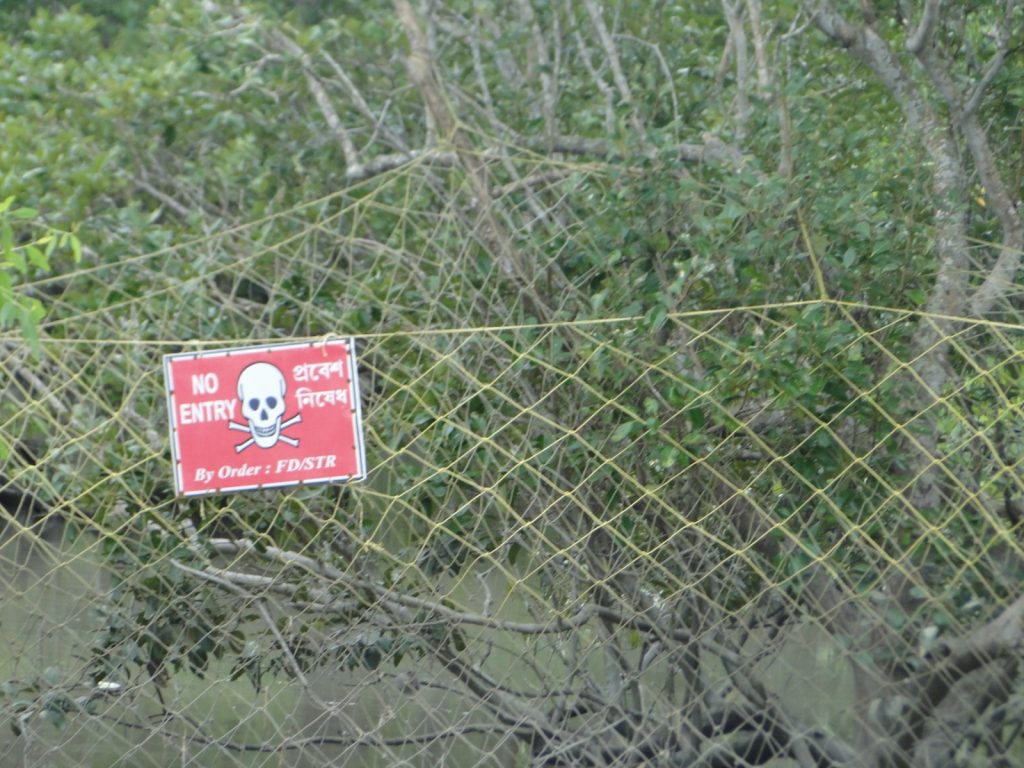
But the forest department has nevertheless taken measures such as the setting up of a nylon net fence which has helped. “From 25-30 cases of tigers entering villages per year in 2010-11, it is now almost zero,” Justin added.
A forest officer, who was posted here formerly, said on the condition of anonymity that in other tiger reserves, the animals have territorial zones ranging from 20 sq km to 60 sq km or even more. But this is not true in the case of the Sundarbans. There are some 100 tigers here thanks to Project Tiger and one tiger hardly gets adequate space. Infighting happens between adult tigers and juvenile males over territorial control and the older ones sometimes stray into villages.
Containing the conflict
Prabir Mahapatra from the Tagore Society for Rural Development said that the forest department started the nylon net initiative to prevent human-wildlife conflict. Based in Kolkata, Tagore Society is engaged in rural development and works on climate resilience in eastern India.
Prosanta Mukherjee has been based in the Sundarbans for the past five years and works with communities. His organisation is known as the Society of Integrated Life or SOIL in short. Mukherjee shared that in Samsher Nagar village, historically human-wildlife conflict has always been high. But the setting up of the nylon fencing to tackle human-tiger conflict has worked. The animals do not cross the fencing. The measure has proved to be effective.
According to the Sundarban Tiger Reserve website, the nylon net fencing has played an important role in preventing the straying of tigers from the forest area into nearby villages. A protocol for maintenance has been designed which involves maintenance involving communities as well as forest staff.
Justin said that the nylon net fencing does not cover the villages, but instead covers the forest boundary for a length of 108 km. There has been no incident of tigers straying in the past three years but there have been five human deaths in the past four years while the victims entered legally inside the forest area to collect fish and crabs by using permits.
Precarious existence
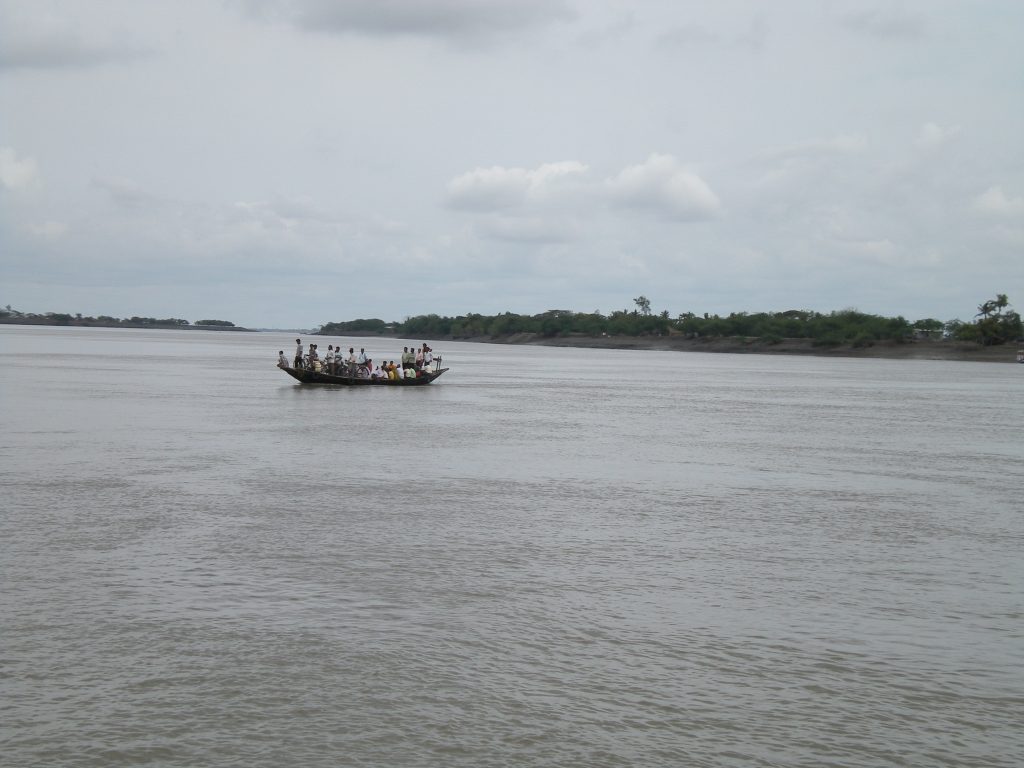
The Sundarbans is a maze of islands, estuaries, creeks and river channels. Though fencing has proved to be successful, there have been instances of people being killed in tiger attacks in the Sundarbans as the data above show. Fishermen and honey collectors sometimes get close to tiger habitats.
Susanta Giri of community-based organisation, Baikunthapur Tarun Sangha, explained that people here are poor. Those without lands enter forests for livelihood needs. The use of LPG cylinders is minimal and most people depend on firewood for cooking. At such times, tiger attacks do happen leading to deaths.
Apart from the risk of tiger attacks, rising instances of cyclones are a threat too, forcing people to migrate elsewhere in search of work. Due to a changing climate and rising sea level, there has been considerable submergence and a change in vegetation. The forest area has been impacted.
“There has been an increase in temperatures due to climate change. Salinity has adversely affected the Sundari trees which have decreased in number. They offer refuge to tigers and cannot survive in higher salinity. Now, Byne trees are mostly there as they can survive in high salinity,” Mahapatra explained.
Mukherjee pointed out that the Sundarbans is a monocrop area and has zero industry. Honey collection ensures money but is a seasonal occupation which lasts only for a few months and the gatherers do not get a fair price despite high risk involved in collection. “Crab is the only option for steady income. Crabs are collected and exported. Without proper permits, sometimes people catch illegally.”
After enjoying sole power from 2014 to 2019 during the Modi wave, the BJP formed a coalition with the newly created JJP, with the party head Dushyant Chautala as Deputy CM, from 2019 to 2024. Now, it stands alone, facing strong anti-incumbency. A report by Aayush Goel
Seeking a third term in the forthcoming Haryana assembly elections, the Bharatiya Janata Party (BJP) has a tough road ahead, especially following the recent setback in Lok Sabha elections. The party surely is not oblivious to the fact and is going to a great length to ensure that they manage to battle anti-incumbency and ensure maximum winnability. In the Lok Sabha elections that concluded in June, the BJP which was pompously laying claim to a minimum of 8 out of 10 seats in the state was confined to just five and witnessed a vote share drop by almost 15 percent.
The BJP led in 44 of the state’s 90 assembly segments, the Congress in 42, and the Aam Aadmi Party (AAP) in 4. The results were a morale booster for Congress and an eye opener for BJP whose last-minute CM-change formula failed to work. The Nayab Singh Saini-led government got in damage control and voter-wooing mood by making lucrative pre-poll announcements. Though the party is heavily banking on these, there are several issues plaguing its prospects.
According to the Leader of the Opposition, Bhupinder Singh Hooda, the elections will mark an end to BJP’s rule in the state and the return of Congress. “The BJP has done nothing in the name of development in Haryana in these 10 years. The ruling party has just tried to fool people with slogans. People are waiting for 5 October. The results on 8 October will mark the ouster of the BJP government from Haryana,” said Hooda.
The BJP, however, is confident of a third term as party spokesperson Sanjay Sharma says, “We have worked hard during our tenure of 10 years and people have felt the difference in their day-to-day lives. Even for this election, that party is ready to fight for a third victory. We have multiple teams on the ground assessing the situation and working on making any modifications to campaign plans. We have researched candidates and will prioritize winnability. We are activating our panna pramukhs. The workers are mobilized on one principle that every vote counts.”
A recent post-Lok Sabha poll survey titled Lokniti by Centre for the Study of Developing Societies (CSDS) indicates that Congress made substantial inroads into BJP’s traditional voter base in Haryana. According to the survey, while BJP retained most of its upper-caste votes, it saw a significant decline in OBC support, with nearly 29 percent shifting towards the Congress. The Congress also gained support among Dalit voters, with two-thirds of this bloc voting for it in the general elections. It further secured the crucial Jat vote, with two of every three Jats siding with them. Like Lok Sabha, Jats are expected to be the key deciding factor in Vidhan Sabha polls. The BJP’s fallout with Dushyant Chautala’s JJP (Janayak Janata Party) has dented its Jat voter base amidst other factors.
Anti-incumbency
Anti-incumbency is a strong sentiment in the state of Haryana. Since 1977, voters in Haryana have never given any party an absolute majority (more than 45 of the total 90 seats) for a second consecutive time. The party, having enjoyed sole power for five years from 2014-21019 during the Modi wave had a coalition government with newly formed JJP with Dushyant Chautala as Deputy CM from 2019 to 2024. It now stands alone facing strong anti-incumbency. The voters are questioning the party over national issues like unemployment, inflation, and local grievances like civic crises, pending recruitments, or resentment against incumbent legislators. The opposition Congress has found an easy campaign tool in the form of this anti-incumbency narrative as seen through its popular campaign ‘Haryana Maange Hisaab’ questioning the 10-year rule and highlighting reported failures.
Farmers’ discontent
Haryana is an agrarian state that simmered in anti-BJP sentiment after the 2021 farmer protests. Standing with Punjab farmers, who have continued the protests ever since, the farming community is upset over Haryana government sealing of Shambhu border in 2024 and alleged violence against farmers headed for Delhi. The Haryana government, then led by ML Khattar, stopped farmers from marching from Punjab to Delhi near Ambala and Hisar and they have been resenting ever since. The BJP leaders have faced the wrath during Lok Sabha elections where the majority were barred even from entering villages by farmers. As a damage control exercise, CM Saini has announced MSP on all 24 crops as against 14 earlier but it has not made any major impact. The farmer associations claim this a mere eyewash saying crops like ragi, soybean, kala seed (fennel), jute, khopra (copra), moong, niger seed, Suraj Mukhi (sunflower), jaun (barley), and jowar (sorghum) added to the list have marginal production in the state.
Amidst the resentment, the state government reportedly went on to nominate police officers who used “brutal force” against protesting farmers for gallantry medals on August 15. The furore left BJP rattled though they were never awarded. The latest factor adding to the fire was a recent statement issued by BJP MP from Himachal, Kangna Ranaut, through which she compared farmer protests with Bangladesh crises and alleged rapes and murders by protesting farmers. Though the BJP has distanced itself from the statement, the damage is done as Haryana farmers seek an apology and refuse to let BJP leaders campaign in their areas.
Caste dynamics and polarization
Though the BJP has tried to balance the caste equation by opting for an OBC CM, it is losing out on Jats who not just form a major chunk of voters but are decisive in the majority of state elections. The party’s failure to highlight any Jat leader prominently in Lok Sabha elections has weakened its support base in Jats. Similarly, the Ahirs of Ahirwal region which contributed majorly to Lok Sabha victory too are not happy.
The tallest leader and six-time MP, Rao Inderjit Singh was retained only as MoS while former state CM ML Khattar despite being one one-time MP was included in cabinet as Power and Housing Minister. The Ahirs which have clout in around 25 assembly segments are upset over alleged indifference by BJP. Ahir leaders like Rao Inderjit Singh’s daughter Arti Rao, and former Minister Rao Narbir have openly announced that they will contest elections with or without the party. Narbir has warned the BJP to choose the right people or it will be wiped off the Ahirwal. The party trying to make up to Rao Inderjit has been all for fielding Arti from the segment of her choice after denying her a ticket in 2014 and 2019.
The party also faces tough resistance from Meo-muslims who dominate five assembly segments. The Meos nurse anti-BJP sentiments after the 2023 riots and eventual bulldozer action, which was further aggravated by Home Minister Amit Shah’s statements about reservation to Muslims and the Waqf Board Bill.
While factionalism in the Haryana Congress has been the talk of the nation, BJP is not untouched by it either. Many party leaders are upset over extra attention to the GT road belt and Khattar camp. Union minister Rao Inderjit Singh is upset at not getting a Cabinet rank, his close associate Bhiwani MP Dharambir Singh too not just being vocal about the state leadership but has also announced this will be his last election. His brother, Rajbir Singh Lala has sought a Congress ticket from Tosham. Former Minister Rao Narbir Singh who was denied a ticket in 2019 too is upset and reportedly weighing all his options. The former Home Minister Anil Vij has been sulking ever since he was dropped from the state cabinet in March this year.
The Phogat factor
The party which has already been facing image crises owing to treatment meted out to the wrestlers during the protest against Wrestling Federation of India (WFI) former chief and former BJP MP Brij Bhushan Sharan Singh has been caught in the crossfire again after the Paris Olympics. Haryana contributed maximum to the country’s sports scene and was handed out one of the lowest funds in Khelo Bharat.
Vinesh Phogat’s disqualification from the Paris Olympics, where she was eyeing a gold medal, though not a political issue turned against BJP as videos of her being dragged during wrestlers’ protest went viral. The party was accused of warming up to her for political mileage after mistreatment. Wrestlers like Bajrang Punia and Sakshi Malik openly voiced the fact.
Congress MP Deepender Hooda has been at the forefront in welcoming Vinesh Phogat and Congress has managed to strengthen its base in the sporting community. The Agniveer issue, too, is believed to have led to a sizable dent in the BJP’s prospects in Haryana, with the Congress demanding its rollback.
Apart from coalition compulsions, the country’s changing demography, with the youth, who make up a critical portion of the voting population, turning vociferous in matters relating to education and employment, has made the Modi government to tread cautiously post-2024. By Dr. Anil Singh
While it is anybody’s guess whether the indecisiveness of the NDA government under Prime Minister Narendra Modi over pending legislative and policy initiatives —the Wakf Board Bill, Broadcasting Amendment Bill, or even the Lateral Entry Advertisement that was withdrawn — has been due to several factors. Unlike the decisive majorities that came about in the 2014 and 2019 Lok Sabha elections, the 2024 elections threw up a more fractured verdict. Although the BJP still holds the largest party position, it did not win an absolute majority and had to, therefore, count on coalition partners for forming the government. On their part, the imperatives of needing coalitions have already compelled it to be more accommodative — in other words, to bargain and compromise more — which, in turn, has made it much more careful in its approach to policy-making. The aftermath of the 2024 elections has generally been that of increased complexity, with an emboldened opposition and an ever-strident civil society.
This has spawned an environment wherein the government is increasingly under attack for its policies and faces more opposition to them. Contributing to the government’s circumspection have been the imperatives of coalition unity and not alienating any significant allies. The current economic difficulties faced by the country — inflation, unemployment and slow economic growth — have further heightened the political cost of the government implementing any meaningful reforms.
Coalition compulsions
For instance, the U-turn on the Wakf Board Bill can be explained by the general uproar and strong opposition coming in from different community groups and political parties who argue that the bill was geared toward undermining the autonomy of Wakf properties. The withdrawal of the Broadcasting Amendment Bill was similarly influenced by concerns of media organizations and freedom-of-speech advocates that the bill would result in government control over the media. The move to withdraw the Lateral Entry Advertisement, which was in its attempt to attract professionals from the private sector for government roles, was precisely criticized for largely circumventing the normal civil service recruitment process and giving the impression that this act is something close to favouritism without any transparency.
The other principal factor that has contributed to indecisiveness in the Modi government since 2024 is the geopolitical scene. Rising tensions with neighbours and increasing complexity required in management, quite naturally, have called for greater caution. Domestic policy initiatives had to be balanced against the requirements of foreign policy, leading quite often to delays and even reversals in decision-making. The internal dynamics of the BJP and the larger NDA coalition have also contributed. There are reports that differences among key leaders and coalition partners on opinions and priorities caused problems in reaching consensus over some issues. Such internal conflict has made the need for greater caution and consultation in governance imperative for the sake of unity and avoiding internal conflicts.
Another pressure on the government has been the increased public expectations and raised political consciousness. What is now witnessed is a more informed electorate ready to articulate their demands and concerns and scrutinize the actions of the government even more. This has put pressure on the government to be more responsive and adaptable, leading at times to reversals or delays in policies. The other issue, which cannot be under emphasised, pertains to the impact of social media and digital platforms. The faster flow of information and the quick mobilization of citizens in cyberspace have made for a much more dynamic and unpredictable political environment. It is in this kind of landscape that the government has been trying not to tread too gingerly, balancing decisiveness with the risk of public backlash.
The Modi government’s reform agenda was hampered by the bureaucratic red tape and the passive resistance from within the administrative machinery. Second, the federal structure of India —wherein significant powers are vested with state governments — muddled the implementation of central policies further. All this has resulted in lengthy negotiations and consensus-building leading to delays and several compromises.
Moreover, the government has to contend with judicial interventions and legal challenges against its policies. With the proactive role of the judiciary in reviewing and at times annulling decisions of the government, this further added a layer of burden onto the already complex policy-making process. This judicial review has been responsible for making one adopt a careful approach so that policies may survive legal scrutiny.
Public stirred
The government decisions have not been immune to public protests and movements. The farmers’ protests against the three reform laws in agriculture are an example of the strength organized groups in civil society can wield to question government policies. Seeing that the protests remained without any halt, the government was at last put to the wall and compelled to withdraw the controversial laws. Thus, public disapproval proved to be a great potential for ‘policy reversal’.
Of course, it was a reason for the cautious approach of the Modi government after 2024, as the political scene in India is witnessing rapid change. The emergence of regional parties at the centre and their strengthened role in national politics made coalition management increasingly complicated. Quite often, these regional parties represent very local interests and demands, which the central government needs to absorb to maintain a stable coalition. Therefore, policy was more of a negotiated type of making, rather than driven by a unilateral approach.
The second important factor that instigated the Modi government to tread cautiously post-2024 is changing demography. With the youth making up a critical portion of the voting population, they have turned vociferous and demanding in matters relating to opportunities in education and employment, with the need for social justice. This primed change in demography has called for policies intending to meet aspirations and concerns more equitably and inclusively.
It is a basic need in this regard that very careful planning and coordination with the concerned parties is done for the achievement of the number of goals of the government, be it the development of infrastructure through the construction of highways, railways, and other projects connected with urban development. Implementation of such gigantic projects is usually marred by problems of land acquisition and environmental clearances, among other logistic problems, which make them delayed. This is the caution added to by the necessity to provide all efficiency and sustainability in the manner they are executed. At least partly, the Modi government had to be sensitive toward the subtleties of India’s many-faced cultural and religious identity. No step is taken to introduce policies or any other measures that may rock the social boat at this juncture through their possible effect on certain communities, thereby disturbing social harmony. This has caused a more consultative approach to be taken through dialogue with community leaders and stakeholders for the sake of consensus.
The government policies have also been impinged on by an impetus toward bettering India’s standing within the comity of nations and attracting foreign investment. A measure of this nature was needed to ensure that there indeed existed a stable and predictable policy environment for retaining investor confidence. It has also meant the Government of India walking on a tightrope between bold reforms and giving a stable and supportive environment to business and investment.
Some of the main causes of the indecisiveness and over-cautious attitude of the Modi government since 2024 thus relate to coalition dynamics, opposition strength, economic challenges, geopolitical considerations, internal party dynamics, public expectations, the role of social media, the COVID-19 pandemic, bureaucratic resistance, judicial interventions, public protests, regional parties, social welfare and inclusive development, digital governance and technological advancement, environment and sustainability, demographic shifts, infrastructure development challenges, cultural-religious diversity, foreign investment, and healthcare and public health. These have combined to give a more measured and consultative approach to governance compared to an assertive one in the earlier terms.
The reasons as to why the Modi government has had no initiative-activeness about bold measures post-2024 are attributed to coalition management, enhanced opposition strength, economic troubles, and the need to respond to people’s pressure and opposition political pressures. It has resulted in a far greater degree of timorousness and dithering, especially when compared to policymaking taken with force after the elections in 2014 and 2019.
The way forward
The very fragility of the Modi-led NDA government calls for the Prime Minister to work in an ambience of consensus and transparency, which enables the smooth functioning of the government. Because of the reliance on allies in a coalition, it is important to genuinely pursue them with credible and unambiguous communication. Appropriate consultations and convincing answers to the concerns of coalition partners can enhance trust relationships and consociational follow-up. It is also for PM Modi to be positively engaged with the opposition parties, which are going to help end this gridlock in the legislature.
Positive initiations of dialogues along with seeking out bipartisanship support for the major policies will provide a more positive political environment. It follows that economic stability has been expected of the Modi government, along with public communication, institutional frameworks, social harmony, health and education, with a particular focus on women and senior citizens, to leave no neglected areas out of consideration, technology for better governance, and environmental concerns on a priority basis and balanced with encouraging public participation.