

A clamour is up to name Gujarat Chief Minister Narendra Modi as the BJP’s prime ministerial candidate at India’s general election next year. His backers say he should be judged for bringing development to his state. His opponents hold him responsible for the killing of Muslims in 2002 by Hindu sectarian and supremacist mobs. Just what do you think makes Modi a front-ranker?
A startling absence of talent in mainstream politics. Modi, the argument goes from the Right may be a killer, but he’s a developmental killer. So if a few thousand Muslim lives have to be sacrificed to build a solid electoral base, “modernise” Gujarat, and by extension, India, then why not? At least, they say, he’s not hypocritical. The Right see him as a potential unifier for their project, which is not as some on the Left argue, to create a fascist state in India, but to establish a long-term hegemony for the Right: an authoritarian ethno-religious populism on the basis of which Indian capitalism can be strengthened and its opponents weakened for at least a decade or two. The Congress, both in Gujarat and elsewhere, is incapable of taking him on and so accepts to fight on the battleground that the BJP has demarcated. A fatal weakness which no dynasty can transcend. How can the Nehru-Gandhis compete with the real epics of Hinduism?
A substantial section of India’s middle class, especially the educated English-speaking people, appears to solidly back Modi for prime minister. What is their motivation?
For the reasons I have stated above. And they want a period of stability, some control over corruption, some softish religion, so they can identify with in this time of uncertainties. The BJP fills the vacuum. Nehruvian nationalism is over. Its substitute is an ethno-religious chauvinism. This is the Indian version of the Muslim Brotherhood in Egypt, which also has large support within the middle classes. The BJP has its own equivalent of salafis and its ‘soft’ believers. Modi satisfies both sides.
Isn’t it ironic that Prime Minister Manmohan Singh, who was once the darling of the Indian middle classes, is now pilloried by them as ineffective, weak and inefficient? Why do you think the middle classes and the intelligentsia have turned their back on him?
Because for them (and for anyone else) he is ineffective, weak and inefficient. An old financial bureaucrat out of his depth in the swamp of Indian politics, he rules courtesy of Sonia Gandhi. He is a pathetic figure and they can’t cover this up any longer. Will Rahul Gandhi be any better? I doubt it, though he will project a pseudo-dynamism that will mean nothing in real terms and will not be able to confront the BJP.
In the last two years India has seen unprecedented focus from activists and common citizens on government corruption. Nationwide protests have been covered unendingly on television. A whole new political party has been launched by anti-graft activists. Where do you locate that public movement in today’s India? Do you fancy the electoral chances for this new political party?
I am, in general, favourable to activism and social movements and hostile to graft and corruption. But leaping from this to an anti-politics political party is usually little more than a thunderbolt from a blue sky. It startles but its impact is limited. Look at the Pirate Party in Germany and Sweden or the demagogic movement of the Italian clown, Beppe Grillo. The only continent where social movements have led to political parties that have pushed through serious social and political reforms is in South America. And the new Indian party is far removed from the latter.
You must have followed the news of the gruesome death by burning of a factory manager at India’s largest automobile company, Maruti, near New Delhi a few months ago. Workers protesting for months with a slew of demands had allegedly attacked him. How do you see that incident and what does it say about labour-industry relations in India’s liberalised economy?
In the old days, confident of their political strength, workers in many parts of the subcontinent developed the gherao: occupy a factory and lay siege to its owners/managers. They were never, as far as I can remember, killed. Today there is hardly any political self-confidence within the workers movement. A class in itself? Certainly. But a class for itself? Not really. Angry, embittered, desperate, abandoned by the mainstream parties, workers burn an individual to demonstrate their frustration. Tragic but the reasons are obvious.
India‘s foreign policy was once premised on the ends of social and political justice. It was one of the few nations described as the conscience keepers of the world. When and how did that change?
Whether it was ever premised on that rather than an enlightened self-interest is debatable. But in any case, all that has gone. The collapse of the Soviet Union in the 1990s was the decisive event in this regard. It witnessed the emergence of the US as the only global power and the Indian elite buckled under the pressure.
'India should be close to China, not US'
[Film Review] 'Aashiqui 2 seems to be lost in a sea of mediocrity'

I must confess I never saw Aashiqui, the 1990 cult romance that everybody remembered so fondly as the Bhatt publicity machine rammed the release of its ‘sequel’ down our collective throats last week. My mother did; she says the only thing she liked about it was that Rahul Roy chose a fire engine to make the customary dash to the airport in the climax, though she preferred Imran Khan’s horse in Jaane Tu… Ya Jaane Na. The film’s tremendous success made household names of Roy (who reportedly signed 47 films in 11 days to cash in on his new star status) and Anu Agarwal, both of whom promptly disappeared from the public consciousness after failing to make anything that came close to matching its popularity.
The theme of the man’s ego being hurt by his girlfriend’s success is ancient, and in Bollywood, movies which do so will invariably pale in comparison to Hrishikesh Mukherjee’s Abhimaan. Watching the beginnings of Aashiqui 2, as yet another ageing musician discovers new talent in the form of a wide-eyed girl he will launch into a successful career and fall in love with (“I’m not that kind of girl,” she says, establishing her chastity and assuring the audience that the mentor lusting over his protegée is completely kosher; they’re musicians after all), the sinking feeling that this is going to be the same film all over again sets in. But no, it’s a bait-and-switch. RJ (Roy Kapoor) frequently teases the jealousy angle, but doesn’t follow through, choosing instead to chart the even more familiar course of the alcoholic whose addiction is the obstacle in the path of true love. Sigh. So this is what Mahesh Bhatt meant when he said the film would be “more intense than the original and a superior product”.
RJ excuses his behaviour to the audience — who’re supposed to root for him, since he is fighting for Love — by telling Aarohi (Kapoor) that she should leave him, because his boozy presence is going to ruin her moment of fame. Aarohi refuses, naturally; her career isn’t as important as the man she loves, and she’ll fight to cure him of his addiction. Not through rehab or anything like that, but through pure, unadulterated Love. She probably got the dosage wrong, for RJ goes ahead and has his benders anyway, and the rest of the film is a long, agonising sequence of him losing his dignity bit by bit to the bottle and generally making an ass of himself. Aarohi’s response is never anger — that would be unfaithful to Love — but more of the same in increasingly cloying scenes that the acute lack of chemistry between the two makes unbearable to watch.
The film’s ‘intensity’ comes mostly from shouting that Roy Kapoor and Shaad Randhawa, who plays his manager Vivek, try to pass off as impassioned, and from RJ’s repeated drunken episodes, which get tedious very fast. RJ’s alcoholism, never really explored beyond the usual clichés (“Main marne ke liye nahin peeta, main peene ke liye marta hoon,” he says before driving off with a bottle of wine and ramming his car into a palm tree on the streets of Panjim), is treated with the usual moralising. Even the soundtrack, which was what made the original so iconic, is the generic Sufi-pop that the Bhatts have employed for the better part of a decade now, which might be doing well thanks to the untiring marketing, but is unlikely to be remembered a year from now.
With better writing, acting, directing and music, Aashiqui 2 could conceivably have expanded on a decent premise to be a truly great romance of our times. As it stands, however, it seems destined to be lost in the sea of mediocrity it never really tries to escape.
‘We are seeing the war of the future In Pakistan’
EDITED EXCERPTS FROM AN INTERVIEW

Much like the atom bomb was, the programme of targeted killings has been justified in the US for saving American lives. But did the government misread the consequences of covert action in a volatile country like Pakistan?
It’s yet to be determined what the long-term consequences of the drone strikes are, but there’s no question that the covert war in Pakistan has had a significant impact, both on America’s relationship with Islamabad and on the dynamics inside the country. Of course, the drone strikes by now are anything but “covert”, but the fact that they — at least officially — remain a secret allows all sides to advance their agendas even as reporters try to determine the basic facts. The civilian casualties from the drone strikes certainly have been much higher than the American government has ever acknowledged. There is growing public pressure on the civilian government in Islamabad to end the access to the drone flights but the powerful military and intelligence apparatus in Pakistan continues to permit the drone strikes. That doesn’t prevent some elements inside Pakistan’s government from fanning public anger about the strikes, and some American State Department officials I spoke to said that they very much wish that the programme could be public so they could openly discuss both the costs and benefits of the drone strikes.
How has the drone programme changed the conduct of future wars?
I think that what we are seeing in countries like Pakistan and Yemen is a model of war that is likely to be used far into the future — especially when you compare these wars to the “big wars” in Iraq and Afghanistan. But the United States will not have a near-monopoly on this kind of warfare for long. Dozens of other countries are developing drones. The United States has been setting the rules for drone strikes over the past decade, and it’s probably only a matter of time before Russia, Iran and other countries carry out drone strikes using the same justification that the United States has.
What has been the diplomatic impact of the CIA’s new role as manhunter?
There are opportunity costs when the CIA puts so much emphasis on manhunting. The basic work of intelligence collection and espionage gets less attention. This was very clear during the Arab Spring, where the CIA and other intelligence agencies were behind the curve in understanding the revolutions. One reason for this is that when the CIA focuses on manhunting operations, the agency is necessarily going to work closely with foreign spy services in countries like Egypt, Libya and Tunisia. But those foreign spy services are going to be the last ones to tell the CIA about a revolt that’s about to happen inside their countries.
There is some resistance now to the continuation of the CIA’s targeted killing mandate. What, if any, is the likelihood of a change?
John Brennan, the new CIA director, has signalled that he would like the CIA to give up some of its paramilitary activities and return to its core functions of intelligence collection and analysis. But I think that any change that happens would be gradual. The CIA wouldn’t entirely get out of the killing business, in part because American presidents will want to preserve the option of CIA drone strikes in the future. It will be interesting to see what Brennan does. During President Obama’s first term, he was the top White House counterterrorism adviser and oversaw the escalation of the targeted killings, especially in Yemen. It is hard to imagine that during his watch the CIA would entirely hand off the drone programme to the Pentagon. And, there is the broader point that an entire generation of CIA officers has now been socialised in war. The basic skills of espionage and stealing secrets are very different from manhunting and killing. Any fundamental shift inside CIA could take years.
ajachi@tehelka.com
Hope Alone

Davinderpal Singh Bhullar, then a professor of engineering in Punjab, had his 9/11 moment eight years before the rest of the world did. On 11 September 1993, a bomb went off half a mile from Parliament killing nine people, including two bodyguards of a Congress leader who was its alleged target and who survived. Two weeks before the other, bigger 9/11 of 2001, a trial judge in New Delhi said Bhullar should hang for his alleged role in the 1993 bombing. Now, a dozen years after his conviction, Bhullar’s chances to escape the gallows are thinnest ever. His family rests its hope in arguing that he is not fit psychologically and is, therefore, ineligible for the hanging. “He did not recognise me,” says his wife, Navneet Bhullar, who met him this week at New Delhi’s Tihar Central Prison. “His conviction devastated him as there was no evidence.”
Bhullar’s lawyer KTS Tulsi, one of India’s foremost human rights counsel, believes the case can still be argued in his favour on merit. As TEHELKA goes to print, Tulsi is preparing a petition to seek a review of a Supreme Court ruling last week that upheld then President Pratibha Patil’s rejection of Bhullar’s petition for mercy in 2011. Tulsi’s optimism stems from the fact that, back in March 2002, one of the three SC judges who heard Bhullar’s appeal against his conviction had acquitted him.
When Bhullar’s petition for a review came up before the same three judges in December 2002, the dissenting judge stuck to his ruling, as did the other two judges who had months earlier upheld his death sentence. Yet, the majority judgment on the review petition explicitly said that the views of the dissenting judge should be considered in deciding Bhullar’s mercy petition whenever it comes up subsequently. The reason was that the dissenting judge, MB Shah, being senior-most, was also the presiding judge.
“The government should have placed before the president the grounds on which the presiding judge acquitted Bhullar,” says Tulsi. Also, he says, the fact of the “split decision should have taken the conviction out of the ambit of the ‘rarest of rare cases’”. Tulsi’s reference is to a foundational ruling the SC gave exactly 30 years ago that said capital punishment should only be given in the “rarest of rare cases”. Another principle that ruling established is that there should be “incontrovertible” proof of the guilt of the accused. “But how can the proof be incontrovertible if a judge acquits him?”
Bhullar, now 47, was arrested in 1995 at the New Delhi airport after Germany rejected his plea for asylum and deported him. Delhi Police claimed he confessed to his role in the 1993 bombing. Bhullar said he was tortured and made to sign a blank paper. Strangely, the trial court acquitted his only other co-accused, who had been extradited from the US. Unlike Bhullar, the co-accused was not tried under TADA, a counter- terrorism law. TADA was widely abused for years before human rights activists forced the government to let it lapse, ironically in 1995, months after Bhullar was arrested under it. Since then, Germany has officially regretted its decision to deport him.
On 17 April, Amnesty International urged New Delhi not to execute Bhullar by saying his trial fell “far short of international standards for a fair trial”. His wife, who is a Canadian Sikh, says Ottawa has written to the Indian government against Bhullar’s death sentence. She has met with lawyers across Europe and North America, and now plans to move the UN.
But there is little in India’s judicial annals to offer optimism. Should the SC dismiss the upcoming review petition against its decision upholding the presidential rejection, Bhullar can go back to the judges with what is known as a “curative” petition. Such a petition, explains Tulsi, seeks to cure a “serious defect because so long as a (defective) judgment remains operative, it will continue to create confusion as it has precedent value”. If all else fails, Bhullar can file a second appeal for clemency with the president on grounds that he believes did not exist when he had filed his first.
That ground can only be his reportedly failing mental health.
[Film Review] Ek Thi Daayan and Lessons in Forgetting

Blame the fatuous analogy on the fatuousness of the IPL, but Ek Thi Daayan reminded me of the hapless Delhi Daredevils — who would go on to ruin the analogy by actually winning a match — for the immense pedigree of its cast and crew and the perplexing nature of its collapse after a promising beginning. Though never really scary except for a couple of moments, the first half of the Vishal Bhardwaj story is intriguing enough, and could have possibly been expanded into a better film than Ek Thi Daayan ultimately was. The second half, on the other hand, is genuinely scary in how bad it can get when one of the most accomplished storytellers in Bollywood goes off the rails.
I suppose part of the spleen stems from the presence of Emraan Hashmi in the film, even though he turns in a better performance than usual. It’s still telling that the best part of the film is the one he’s not in, a hypnosis-induced flashback where the young him is played by the excellent Vishesh Tiwari, who makes a great case for making children the protagonists of all future Bollywood horror films. He is helped by a menacing performance by Konkona Sen Sharma, and it is only in scenes involving the two that the film’s unintended comedy is replaced to some extent with horror.
Bhardwaj’s fondness for Shakespeare is well documented, but naming his fully-grown protagonist Bobo goes above and beyond what the Bard meant when he asked what’s in a name. Hashmi’s character is a famous magician called Bobo the Baffler — it should have been Bobo the Baffling, or more accurately, Bobo the Baffled — who is tormented by the memory of the witch he narrowly escaped as a child, and who has promised vengeance. Witches, it seems, recharge their powers by sacrificing a child during a lunar eclipse on 29 February, which she did by killing Bobo’s sister and now wants to do by killing his adopted son (one allows for suspension of disbelief, but back-of-the-envelope calculations suggest that such an astronomical phenomenon happens only every 584 years; the last time it happened, in 1504, Christopher Columbus used it to confound the native Americans). And the only way to kill a witch is by cutting her braid, which leads to many cringe-inducing efforts by Hashmi to do so. Those efforts, ultimately, sum up this well-intentioned mess of a film, which takes an adolescent premise and tries to pass it off as gripping drama.

The problem with Lessons in Forgetting, the National Award-winning film that had a limited release this week, on the other hand, is that it takes a mature premise, which could have made for gripping drama, and turns it into a fairly adolescent public service announcement. Not that it makes for a terrible film; Unni Vijayan’s adaptation of Anita Nair’s eponymous novel is an exercise in confronting India’s social ills with realism, with no hero on a white horse rushing in to save the day.
Adil Hussain plays JA Krishnamurthy, or Jak, who has to deal with questions of his daughter’s alleged promiscuity as he investigates her tragic accident in the fictional coastal village of Minjikapuram. As he puts together the accounts of her various boyfriends, the truth gradually emerges and he has to accept a different, more brutal truth that echoes similar stories across the country. And therein lies the film’s triumph; while the characters are too Manichean, good does not prevail and the only thing Jak can hope for is not justice, but closure. Filled with several believable and understated performances, Lessons in Forgetting is worth a dash to the cinema before it is replaced with familiar tripe.
[Film Review] The Sins of our Fathers

Director: Derek Cianfrance
Starring: Ryan Gosling, Bradley Cooper, Eva Mendes, Olga Merediz, Anthony Pizza
For a crumbling edifice of the American dream, the city of Schenectady, New York, does seem to inspire Hollywood — or at least, indie filmmakers — to create ambitious projects. Synecdoche, New York, Charlie Kaufman’s postmodern classic (“To say that [it] is one of the best films of the year or even one closest to my heart is such a pathetic response to its soaring ambition that I might as well pack it in right now,” gushed Manohla Dargis in The New York Times), looked at one man’s madness in his single-minded quest to capture life in a play. It stretched the theme of individual passion that is a central part of American culture (Schenectady was also the birthplace of General Electric after Thomas Edison, an American hero not only for his inventions, but his individual success, moved his operations there). Derek Cianfrance’s The Place Beyond The Pines, which gets its title from the Mohawk meaning of the city’s name, looks at that other central cultural trope: the family.
The family is the carrot that America has always dangled for its people as the culmination of individual success. As the idea of the family unit changed beyond recognition — it is no accident that Modern Family is the most successful sitcom in recent years — it has morphed from being an end in itself to a means to the larger goal of happiness. Cianfrance’s previous film, Blue Valentine, took an intimate look at the destruction of that happily ever after, juxtaposed with the heady days of its creation. In Pines, that happily ever after is what Luke Glanton (Gosling) wants more than anything, enough to quit his job as an itinerant stunt biker and settle down in Schenectady, where a previous fling with a local waitress (Mendes) has resulted in the birth of a son. Life has moved on, however, and his son is part of another family, in which Glanton is not welcome.
Thanks in large part to Gosling and Mendes’ performances, the first act of the film works as a gripping character study, as Luke begins robbing banks in order to support the family he wants to make his own. Much like Valentine, Cianfrance’s ability to succinctly capture his character’s layered personality makes it seem like a compelling short story, working its way up to its inevitable climax. Once that comes, however, a third of the way into the film, the lens widens and the film moves its focus to Avery Cross (Cooper), the policeman who finally puts an end to Luke’s life of crime. This is when the scale of Cianfrance’s ambition gradually becomes clear, for Pines is not the intimate slice-of-life piece that the first act seems to be, but a sprawling epic triptych spanning two generations that does full justice to the grandiosity of its title.
The film deals with the consequences of past actions on future generations, with the sins of the father being paid for by the son. As emotionally wrenching as Valentine, the latter stories, however, lack the assuredness of the first. A major reason is the acting: while Dane DeHaan and Emory Cohen are competent as the sons of Luke and Avery, an indie epic in the mould of Synecdoche or Sidney Lumet’s Before The Devil Knows You’re Dead requires a stellar ensemble cast to keep the audience involved through to the end. The Place Beyond The Pines is a great film, but soured by the feeling one gets in the end that its director might have bitten off more than he could chew.
ajachi@tehelka.com
‘Modi’s growth in Gujarat has not been inclusive’

Why do you oppose someone with credentials of development in his state from becoming the prime minister? Why should a single incident of violence be held against him?
Development is a misnomer. Has anyone even computed the ecological, social, ethical and moral cost of development? The English-speaking supporters of Narendra Modi think once he becomes the PM he will revive the economy and they will get Rs 20-25 lakh annual pay packages, which they don’t now. How many MoUs signed by Modi have materialised? He has been giving free land and subsidised power to industry. Gujarat’s growth is not inclusive. It has failed to benefit the tribal and rural people.
Isn’t Modi seen as an honest chief minister because he has no corruption charges against him?
If he was so honest, why did he need to suppress and neuter the Lokayukta? If you are the most honest, then your watchdog should be the strongest of all.
Modi has won three successive Assembly polls. Surely, the people of Gujarat have approved of his development work?
Modi became the chief minister in October 2001 replacing Keshubhai Patel. The massacre of Muslims happened in February-March 2002. He won the Assembly election in October. Where was development then? Isn’t it obvious that he won because of vote polarisation? Besides, it is a myth that the BJP has performed better under him in Gujarat. He won 126 out of 182 Assembly seats in 2002. In 2007, that came down to 117 and in 2012 to 115.
But if you part ways with the BJP, won’t you lose the upper-caste votes that came to you in recent elections because you were allied with it?
People are now speculating that if the BJP leaves the alliance, the upper castes won’t vote for the JD(U). But we believe that 25-30 percent of the upper castes would still vote for us because of the work that Nitish Kumar has done. The Brahmins had once supported the BJP because (former prime minister) Atal Bihari Vajpayee was its leader. It is unlikely they will support Modi. Vaishyas (an OBC community) have nationally always voted for the BJP. But because of our work we believe 20-25 percent of them would vote for us.
And Muslims?
Bihar’s Muslims know that Nitish is a secular man and that he alone runs the government. Only about 20-30 percent of Muslims voted for us the last time because of our ties with the BJP. Our pasmanda (backward) Muslim candidates, with long histories of struggles against dominant Muslim nobility, won. If we contest independent of the BJP, the Muslim vote will flood us.
But how do you explain the BJP winning Muslim-dominated constituencies such as Bhagalpur and Araria in the past Lok Sabha elections?
Muslims are divided wherever they are numerically stronger and there are many Muslim candidates. In such constituencies, Muslims have no fear and they vote normally. It is the Hindus there who come together to vote as a bloc.
Why is your party suddenly talking about secularism after cohabiting with the BJP for 17 years?
Every political party, especially the Congress, has played the Hindutva card. In the first Lok Sabha election of 1952, the Congress put up a sadhu against Acharya Narendra Dev. The party publicly called the socialist leader an atheist and asked Hindus to not vote for him. When a complaint was made to Jawaharlal Nehru, he did nothing. Indira Gandhi played the Hindu card in Jammu during elections. Rajiv Gandhi as the prime minister ensured that the gates of the Babri Masjid in Ayodhya were opened, which created a huge Hindu-Muslim divide. His capitulation in the Shah Bano case, whereby Parliament legislated to overturn a Supreme Court judgment allowing alimony to a divorced Muslim woman, widely created the impression in the minds of the Hindus that Muslims were being appeased.
[Film Review] Nautanki Saala!
 “Suicide is painless. It brings on many changes. And I can take or leave it as I please.”
Trying to hang yourself, on the contrary, can be quite painful. And unlikely to succeed if you’re trying to do it on the side of a Mumbai road, as Mandar (Kapur) does in the beginning of Rohan Sippy’s Nautanki Saala!. It’s not his fault; the movie he’s in is a remake of the French comedy Après Vous, and the plot demands that he be found by the protagonist RP (Khurana) before he can die. Then again, in that film, José Garcia was hanging himself in a deserted park through which Daniel Auteuil happened to be taking a short cut, but parks aren’t an abundant commodity in Mumbai. One does one’s best with what one has, I suppose.
Anyway, Mandhar’s suicide attempt does bring on many changes, so much so that RP, who becomes his “guardian angel”, is struck with insomnia by the end of the film. This would be the point where I would joke that I, on the other hand, fell asleep, but I didn’t: if not for the comedy, then because keeping track of the plot is a full-time job. Not that it’s a complex plot. Boy meets girl, girl dumps boy, boy attempts suicide, friend saves boy, friend tries to get boy and girl back together, friend and girl fall in love, boy finds out, and so on. A fairly commonplace comedy of errors, Nautanki Saala! fails because it fails to import the spirit of the original with the story, and ends up as confused as it is contrived.
The problem, as is usual in Bollywood, lies in the third act, the bit after the interval when, confident that no one who didn’t leave during the interval will do so now, films lay on the heart-wrenching emotional drama they avoid like the plague before the interval. It’s especially true of comedies of errors, as this act is always spent in the protagonist brooding over whether he should tell the truth and untangle himself from the web of lies he’s spun so far. In this film, the drama is more annoying than heart-wrenching, even though the premise cannot be faulted. RP, whose only flaw, we’re told, is that he thinks more about others than himself, has fallen in love with the woman he is trying to get back together with Mandar, and doesn’t know what to do. His course of action — a schizophrenic seesaw between avoiding and kissing her — does him no favours, and thanks to Pooja Salvi’s vanilla performance, makes these sequences downright unwatchable. The climax comes as a bolt from the blue, seeming to be included only to give the film the saccharine ending Bollywood revels in.
As for the comedy, there are a few genuine funny moments, especially when Kunaal Roy Kapur is on screen. In the Andy Kaufman biopic, Man On The Moon, he asks a yogi what the secret of being funny is. “Silence” is the reply, and Kapur has shown in Delhi Belly and this film that it is a maxim he follows. The best jokes flow simply from his bewildered expression and his conviction that the Universe is out to get him, as well as some hilarious non sequiturs (a sign at Mandar’s grandma’s house reads “Kripiya yahaan bomb na phodein; press waaley bahut tang karte hain”). Khurana is a great straight man in their shared scenes, but pales in comparison, especially since his idea of non-verbal communication seems to be to overuse the devil’s horns whenever something goes right. But Sippy loses the original’s devil-may-care lightness, and Indianises this madcap romcom to decidedly poor results.








Me, Myself & Adrenaline
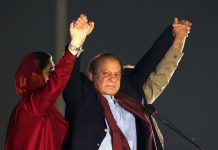
Narendra Modi is no longer the elephant in the room. He is the lion (from the Gir sanctuary in Gujarat, if you please) lording the jungle already, all but named its king. A receptacle of the hopes of a billion-plus nation, the messiah that everyone — the industrialist, the economist, the analyst, the nationalist, the jingoist, the optimist, the Hindu (of course), and, we are now told, even the Muslim — believes is just paces from seizing charge of this potentially great nation and shaping for it a destiny it deserves.
Or so runs the boilerplate. The BJP’s most incandescent poster boy since Lal Krishna Advani rode out into the sunset in 2009, Modi got four back-to-back chances at the lectern since last weekend to lay out his agenda, vision and programme of action for running India. All four of his speeches — including one at the “ladies” wing of the business chamber, FICCI, and another to (mostly non-Bengali) businessmen in Kolkata — became a sensation. Delighting his red meat base, Modi’s televised speeches were an imprimatur of his wishful ascension as India’s next prime minister after the 16th General Election that is due in a year, but some believe may even be called earlier.
Undoubtedly that last uncertainty is now informing Modi’s political strategy towards realising his goal. He has too much to pack to sell and too little time to run his campaign. Although clearly the most popular BJP leader in the country today, it is an open secret that he needs to constantly look over his shoulder to forestall an insurgency towards a factional coup, which isn’t all that unlikely given that Modi’s rise would decimate a generation of BJP leaders that has nursed ambitions for decades. Needing to fully use the little time that is left until the 2014 Lok Sabha election, Modi may well have already kicked off his campaign. His speechifying is only likely to increase.
But Modi is hampered not only by the paucity of time but also the messaging. His central pitch foregrounded in his four speeches during 6-9 April — in Ahmedabad, New Delhi and Kolkata — is this: I have run a flawless administration in Gujarat for 11-plus years. I have made everything incredibly better there since I became chief minister in 2001. Look at my initiatives across government, business and the social sector. The growth in Gujarat is unparalleled. The change is revolutionary because my ideas are. I’m modern and progressive and, importantly, an outlier who isn’t driven by political gamesmanship. Gujarat is a template for the nation. Ergo, I should be prime minister.
Not since VP Singh in 1987-89 has a politician (barring Advani in 2009) so categorically pitched himself as a front-runner. But Singh got a solid two-plus years for his campaign. And that dream run was gifted on a platter as then prime minister Rajiv Gandhi sank deeper and deeper in popular perception over his alleged role in the bribes a Swedish arms company, Bofors, paid to secure a sale to the Indian Army. By the time the 1989 Lok Sabha election arrived, Singh’s aura was such that nearly the entire non-Congress Opposition across India, including stalwarts such as NT Rama Rao from Andhra Pradesh, had banded behind Singh as he battled Gandhi’s Goliath.