
 The elections in Tripura seemed more of an ideological fight between the Right and the Left than an electoral one. The CPI(M) had certainly gone astray in this fight. In the era when BJP is blatantly expanding its
  the CPI(M) is enthralled in discussing whether Prime Minister Narendra Modi’s rule conforms to authoritarianism or fascism, or whether the CPI(M) should have a tactical alliance with the Congress. The results have proven that it was not enough to project that the people of Tripura would reject communal politics. It has been four years since the BJP government came in at the Centre, but various sections of society are still enamoured by PM Modi despite his myriad failures. The party has continued to grow electorally as well as ideologically. The party went about building individual party wings for the youth, women, SC, ST, OBC, minorities and farmers. Vistaraks were appointed to ensure there was no infighting and any dissidence did not brew to the surface. ‘Panna pramukhs’ were given one page each out of a 17-18 page voter list. Each page has a list of 60 voters. The ‘panna pramukh’ was supervising the needs of each of the 60 voters.
Apart from a social media team of young people fluent in English, Bengali and Kokborok, some 400 vistaraks were brought in from Assam in the final leg of the campaign. Apart from this, the BJP carried an arsenal containing all sorts of uncivil and anti-humanitarian weapons to gain victory. The Left’s campaigning was not modernised in a way it should have been. The Left front ran a door to door old-school campaign. Even the rigorous social media of CPI(M) campaign started quite late as compared to BJP. The ‘CPI(M) model of governance’ wasn’t sold well even though the party ruled Tripura for 25 years. The Left clearly had no counter to the vicious communal and sectarian campaign of the BJP.
The honest and austere image of CM Manik Sarkar certainly helped extending CPI(M) rule in Tripura but all it took to fail that was the BJP’s more powerful appeal — “The PM is much bigger than the CM and he will care for you too if you vote his party.”
BJP won the election by aligning with an outfit which operates from Bangladesh, a terrorist organisation which surely do not go with the RSS preaching of nationalism. But it is also true that the BJP had infiltrated into the CPI(M) voter base to a very great extent. The contest between the candidates was too close. In several constituencies like Matarbari, BJP gained votes because CPI(M), CPI(ML) and SUCI(C) were contesting against each bother instead of consolidating anti-BJP votes. Had there been a Left+Congress alliance, it would not have guaranteed victory for Sarkar but it could have brought the constituencies of Amarpur, Bamutia, Belonia, Karbook, Pencharthal, Nalchar, Panisagar in Left’s kitty, increasing its tally to around 22 seats. The CPI(M) was expected to drive the BJP, electorally as well as ideologically, out of Tripura by forging an umbrella of alliances with social movements, anti-BJP parties and organisations but this didn’t happen. Instead, the present and former general secretaries of the party were busy debating a tactical line.
The defeat of Left in Tripura was neither a question of Caste and Communal polarisation nor the same 2014 anti-incumbency situation that toppled the Congress. The Left front ruled Tripura for more than 25 years, which is possibly more than the total cumulative tenure of any BJP regime that has existed at the Centre+States in Indian history. The honest chief minister Manik Sarkar did not succeed in keeping up with the towering ambitions of the same people who were brought up through his social welfare. The Tripuri populace got education, ration, healthcare, and also a society free of political and communal violence under the Left Front government. With increased levels of literacy and the spread of educational opportunities, the aspiration of the tribals, particularly the youth, increased manifold. But the government failed to provide them the lifestyle they have now started desiring. However, within the given structure of political economy it was not feasible for any government to meet those aspirations.
There was indeed the problem of unemployment, but the tiny state of Tripura wasn’t the only state affected by it. We must not forget the fact that we are living in times when our Prime Minister considers ‘Pakoda selling’ as aspirational
employment. There is another aspect which cannot be ignored and that is the limitations of a tiny backward state government with a hostile Central government in the neoliberal era, though that’s another debate. But yes, Tripura had definitely become a bit rusted when it came to the standard of living in comparison with Kerala, another Left-ruled state. Manik Sarkar had nurtured the insurgency-affected state to normalcy and economic stability but after that could not catch up well on the economic front. If Kerala could do so much in so little time, Tripura could also have done the same. As things stand now, the CPI(M) or the Left Front is confined to the single state of Kerala.
As per public opinion, bagging 35 seats in Tripura wont have any impact on national politics since there are chances that BJP might face debilitation in Karnataka, Rajasthan and Madhya Pradesh which won’t be covered by this gain. But we now know that Left is not going to be an important player in fighting Fascism and Kerala being an exception, it evidently cannot win a straight contest with the BJP anymore. The constituencies of the Left are not ideologically aligned to the Left or betrothed to vote Communism as it used to be earlier in East India. A new program has to be adopted, and a new state like Bihar or Tamil Nadu with a strong communist history has to be focused upon for the growth of the party. The CPI(M) being down to one state is historically the worst situation ever. A tribal sectarian political outfit known as INPT, which was ally of Congress in 2013, wanted to join hands with CPI(M) this time but the former refused their offer. The CPI(M) exclusively fought election with Left ideology, without any alliance. It’s understandable that Congress has been CPI(M)’s main opponent in West Bengal, Kerala and Tripura but the party has limited itself as a state-level force by not intervening at the national stage, and not adopting a broader vision for the big fight is immature for the party struggling with “ideological concerns”.
The Tripura verdict has come as a major lesson and should be considered a defeat of stubborn ideological purism. It is the defeat of the strategy of trying to take on a mountain alone; the defeat of the possibility of a united Opposition.
Not only CPI(M) but the whole opposition representing different interests is in danger of losing their relevance. If the CPI(M) can seek forgiveness from the people of West Bengal then it should also try to forgive Congress for its failures. It must shed its inhibitions against the Congress for the greater cause of this country as they neither have the individual strength nor the resources to take on their rivals. The arguments put forward by those against the idea of a broader coalition even after Tripura results emphasises that these theoreticians lack utmost practicality. If the party is refusing to have an electoral understanding with the Congress, it shouldn’t expect a united fight against the BJP. The current line of CPI(M) benefits none other than the BJP and the RSS.
Modi taunted the Left party after Tripura victory by saying “Sun is red when it sets, turns saffron when it rises”. However, he didn’t realise the fact that every rising Sun sets in the end. In these adverse political and social circumstances, there is fertile ground for the Left parties to bounce back to relevance. The Left doctrine states that with the rise in discrimination and exploitation, the society will be split into two groups — the oppressor and the oppressed. The numerically larger oppressed will then unite and through their agitations, uproot the oppressor. But for this to succeed, the Left needs to be in a position to lead. If the Left is serious about the future of India’s politics and democracy, it needs to leave no stones unturned in trying to unite the Opposition. It is important to note that Prakash Karat in an interview to The Hindu was skeptical of the fact that there will ever be an understanding between SP and BSP. However, the recent political understanding between Samajwadi Party, BSP and all the Left parties to support the SP candidate for Gorakhpur and Phulpur Lok Sabha constituencies debunks his myth. The consistent sharpening left-right polarity at the state level in Kerala, Tripura and perhaps West Bengal too might make it easier for the CPI(M) and the Congress to come closer together nationally in the wake of preventing the BJP from winning the Lok Sabha elections once more in 2019. Politics is changing in the South. For example, Telugu Desam Party is feeling marginalised because PM Modi failed to keep the promises he made to Chandrababu Naidu. A regional party like TDP could be aligned with to cobble together a larger united front. However, the Tripura election result is a reminder of the limits of alliance building. If the CPI(M) is weakening, it is the Congress which is likely to ask what it will gain by tying up with the Left rather than the other way around.
The CPI(M) has lost in Tripura but it still was the single largest party with a dip in vote share of just 3 per cent as compared to previous elections, which means that the Party has been defeated, and not destroyed. It’s high time they increase their political strength and mass base, so as to provide a viable alternative national leadership. Additionally, it is time for the theologists to step aside and let mass leaders take over. Learning from its experiences, unless the CPI(M) starts to think politically rather than ideologically, the trend in Tripura will eventually lead to the West Bengal path. The attempt for a wider coalition is not only necessary for putting a halt to BJP’s ascent but also for strengthening future of the Left and the country’s democracy. Otherwise the future of the Communist Party of India (Marxist) is going to be scripted as Communist Party Of Kerala.
letters@tehelka.com










Khalistan was Nehru’s reply to Jinnah’s Pakistan
The first task one needs to undertake to solve any problem is to understand it. On Punjab, where we needlessly continue to insist on turning an asset into a liability, understanding has been the greatest casualty. Therefore, before we get prescriptive on the subject, let’s first get the diagnosis right. Let us, in other words, get our facts in place.
This guy called Jaspal Atwal who was at the heart of the controversy surrounding the recent trip of Canadian Prime Minister Justin Trudeau is one such “sole spokesperson” of the Sikhs. Quite embarrassing for the media that Atwal has since declared himself against all forms of violence, separatism, pledging himself to the unity and integrity of his country. “India is my country,” he declared the other day for emphasis.
It might surprise most people in the country and everyone in the media that the concept of an independent Sikh state was originally floated by none other than Pandit Jawahar Lal Nehru in the pre-independence period through a Sikh leader whose ear he had at that time. Although the term had popped up occasionally as a non-serious slogan by stray unrepresentative voices during the period leading up to the partition of the country into India and Pakistan, the concept was first given formal shape and the term Sikh Home Land first used by Master Tara Singh at Nehru’s behest as a “counterblast to Jinnah’s demand for an independent Muslim state, Pakistan.
Nehru had successfully converted the mercurial Sikh leader to a fake ‘political religion’ and persuaded him to demand a paradise not to secure it but only to deny it to someone else. In other words, the demand for Khalistan was first raised to counter and kill the demand for Pakistan. Thus, ironically, Khalistan was invented to preserve India’s unity and integrity, and not to break it. It was used to frighten the British away from the idea of Pakistan. The idea was to counter the geographical absurdity of partition with the geographical absurdity of another partition — in fact, many partitions to accommodate the Nagas, the Mizos, the Tamils, the Sindhis, the Pakhtoons, the Gurkhas, the Dogras and so on.
Sadly, Nehru himself later forgot to tell his party that the Sikh Home Land was nothing but a Congress sub-plot to defeat a larger plot.
Nehru knew better than anybody else that the British government and the people suffered from extreme political, moral and economic fatigue with regard to India. They wanted themselves out of the country as soon as possible. In fact, the creation of Pakistan itself, with the ridiculous absurdity of an East and West Pakistan separated by nearly the vast Indian stretch of over 2,000 kilometres, was the result largely of this British fatigue.
As the dream of a new country to be known as Pakistan drew closer to reality, the Sikh frustration over its realization grew stronger and stronger, culminating in Master Tara Singh drawing his long Kirpan (Sikh ceremonial dagger) out of it sheath to declare that Pakistan would be created only on his dead body. He threatened bloodshed in case Pakistan was created. Thus, the man who had raised the demand for a second partition of India Version — 2 was now threatening to die or kill — or both — in order to stall the Partition of India Version – 1.
Anyone familiar with the past and the present mood and conduct of the Sikhs has no problem in seeing that that every Sikh is as proud to be a Sikh as he is proud to be an Indian. In fact, the two identities are coterminous. Not many are aware that the first Guru of the Sikhs, Guru Nanak Dev ji, went to the extent of protesting even against God for subjecting his country — India — to a tragic repression and humiliation at the hands of the invading Mughals. “Khurasan khasmaana keeya, Hindustan draaya/ Aape dos na deyee kartaa, jum kar mughal chadhaaia (You have made the Mughals, these demons of death, from Khurasaan the Masters of my motherland/ So that you don’t get directly blamed for our tragedy, O God)”
This is the heritage from which every Sikh draws inspiration. No wonder then that their greatest icons include Arjun Singh, Marshall of the Air Force, and Lt Gen Jagjit Singh Arora and Lt Gen Harbaksh Singh, the heroes of the Bangla Desh and the 1965 wars with Pakistan.
The question then is: on whose behalf do all these “sole spokespersons” of a separate Sikh country named Khalistan speak? Whom do they represent when the whole Sikh community sings the hymns of Guru Nanak whose heart cries out for India?
There have been all sorts of noises surrounding the recent visit of the Canadian Prime Minister Justin Trudeau to India. Who were behind those noises? Was it the radical and radicalized yet marginalised section of Sikh politicos in India and abroad? Or was it the political opportunism and adventurism of Trudeau and his party in order to exploit the Sikh constituency for electoral gains at the expense of the Sikh community? Or could it be that some political parties in India who have been itching equally strongly to milk the so called ‘Hindu backlash’ for electoral gains were orchestrating these controversies?
Whoever is responsible for these dangerous games being played in the name of the so-called Sikh demands, he is doing this country a great disservice and is hurting its cause grievously. And the Sikhs are already feeling as if they were mere electoral fodder being fed upon from the opposite ends by contrary forces.
A vast majority of peace-loving Sikhs here have always believed that their whole community being given a bad name for the sins of a radical fringe which itself is sponsored by one or the other of the above forces. Worse, this vilification and demonization of the Sikhs is being done on purpose. If that is true, then we are falling into the trap laid by the arch enemy of our country — the ISI of Pakistan.
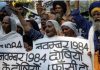
Ironically, it is obvious to everyone in Punjab that the Sikhs are the only people who really want a quick and quiet burial for these Khalistan noises. A vast majority of the peace loving Sikhs — both in India and abroad — firmly believe that Khalistan , or a bogey of it, is being thrust down the throat of a strongly protesting patriotic Sikh community by a combination of evil forces. None of these forces and elements represents the Sikh community nor do they have the interest of the community at heart. Whenever Khalistan makes headlines, the Sikhs view it as a sign of some dangerous game being played against them. The Sikhs know that these separatist noises in their name actually deflect focus away from their legitimate demands and the genuine causes and grievances of the community. If you look closely at these demands and grievances, it is easy to see that these are the causes, the grievances and the demands of the rest of the countrymen too: a cry for justice for the massacre of 1984 and a fair deal for Punjab, a solution to the problems of the peasantry in the country. There are also some grievances specific to the Sikhs and the community wants that these grievances can be and must be resolved within the ambit of the Constitution of the country.
The Sikhs also find it hard to believe that they are subjected to vilification even on demands which are perfectly reasonable, humane and within the nationalist and constitutional parameters. One of these demands relates to a constitutional recognition of Sikhs as a separate religion — not a separate country, mind you, just a separate religion. They react strongly to being dismissed as “not a religion but a mere branch of Hinduism”.
Similarly, Sikhs cannot understand why their countrymen should object to the description of the 1984 massacre of thousands of Sikhs (just because they were Sikhs) as a “genocide”. There is nothing in the dictionary meaning of the term genocide which can be even remotely construed as anti-national. Genocide refers to a large number of people belonging to a particular nation, ethnic group or religion or community or race being killed because of their religious, national, ethnic or communal identity. That is precisely the holocaust that the Sikhs had to endure in 1984. The Sikh grievances are against the Congress party or against the government of India for its refusal or failure to provide justice to the community as per the law of the land and the constitution of the country. Why should the killers of thousands of innocent Sikhs in 1984 be roaming free even 34 years after the tragedy struck the national capital?
The manner in which the government of India chose to respond to the questionable aspects of Justin Trudeau’s visit to India has left much to be desired. The government, it seems, chose the wrong language to speak the right stuff or chose the wrong signals to deliver the right message. Their handling of the issue further strengthened the impression about our failure or refusal — or both — to understand that Khalistan is a non-issue for a very vast majority of the Sikh community in India and abroad, including Canada. If Trudeau fumbled, blundered or played mischief by violating norms of diplomatic decency and did things that offend our national sensitivities, then the government of India also did not exactly cover itself with glory through its handling. If the radicals wanted to misuse the Trudeau visit to put the Khalistan issue on the front burner, then it seems the government merely obliged them. The government’s handling needed to be manicured in a manner that it should have denied any media or diplomatic mileage to those trying to internationalise a radical cause against India.
As for Trudeau, his mistakes or failures needed to be segregated from what suited the radicals. He needed to be confronted on the diplomatic high table on the causes of our hurt national sensitivities. The Government’s handling of the trip should never have strengthened the radical case that the country’s top executive suffers from bias against Trudeau because of the pre-eminent positions he has given to the Sikhs in his government. That’s the message that we ended up conveying.
The government needed to highlight how the interests of the peace-loving Sikh community are in direct contradiction with the vested stakes of the radicals fringe operating from abroad. The Sikhs in India know about this dichotomy. Even during this trip, all the mainstream Sikh voices — from the Akalis led by Sukhbir Singh Badal to the SGPC and the DSGMC led by Manjit Singh GK and even Punjab Chief Minister Capt Amarinder Singh — rubbished Khalistan as a “non-issue for the Sikhs”.
Why should our policy makers not be listening to these voices that actually represent the Sikhs?
The Sikhs regard their stakes and destiny as firmly tied with the destiny of their country India. They seek justice and fair-play as per the laws of our land, and they strive for their right to live in patriotic dignity. They fight against discrimination like any other Indian would: through peaceful and democratic means.
The only time a hardliner got a mandate in Punjab, including from the Hindus in the state, was in 1989 and then too, the candidates fielded by the party led by S S Mann actually went around and paid obeisance at Hindu temples during the campaign in order to wash the “radical” tag. This was extremely significant even as symbolism because this conclusively drove home the message that in order to win the confidence of the people of a predominantly Sikh Punjab, one has to take the route of moderation. Be it the Panchayats or the Parliament, the moderate, and not the radical, Sikh leaders rule the hearts and minds of the Sikh community. There is a message in this which the country needs to understand and respect.
The way to understanding Punjab and the Sikhs lies through the hearts and minds of the moderate mainstream. The Sikh community itself is surprised why the successive governments’ perception of Sikh aspirations is always different from how the Sikhs themselves view their destiny. But anyway, it is time we corrected our mistakes on Punjab in the past — especially with regard to instilling a sense of confidence and dignity in the minds of the patriotic Sikh community.
It is to be hoped that Prime Minister Narendra Modi, who has considerable direct experience of Punjab and has close affinity with its culture having served his party in various capacities in this region, would use his understanding and also his dynamism to change the national narrative on this sensitive and crucial issue. There is a lot he can achieve in this direction — and all of it would be a great service to the nation.
letters@tehelka.com